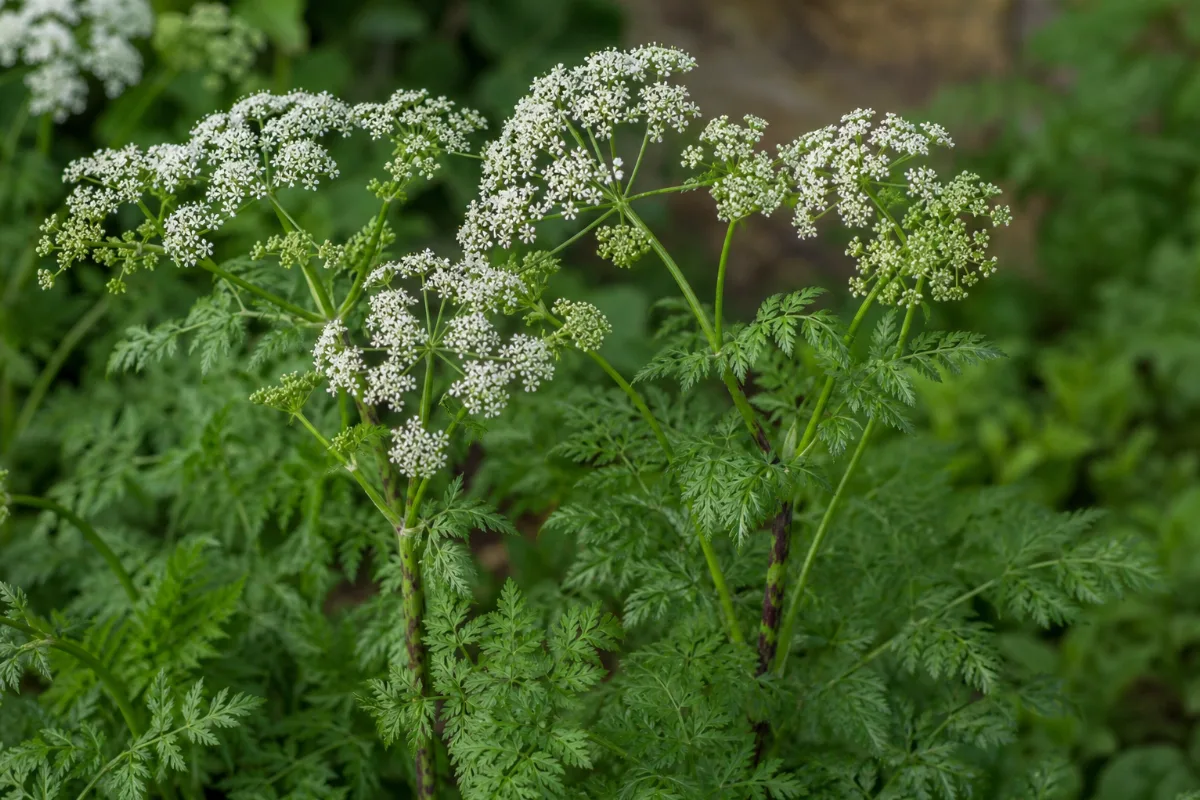
Herbs & Botanicals · Deadly poisonous plant
Hemlock
Conium maculatum · also called Poison hemlock
Hemlock, or poison hemlock, is a carrot-family plant that is one of the most dangerous in the world. Every part is poisonous. It has been used in old medicine and was the poison of Socrates, but there is no safe medicinal use today. If anyone may have eaten it, call Poison Control (US 1-800-222-1222) or emergency services right away.
General information, not medical advice. Last substantive update · Not medically reviewed. A named clinician has not signed off on this page. How this page is made
About Hemlock
Poison hemlock (Conium maculatum) is a very poisonous carrot-family plant. It is not a medicine. Poisonings come mostly from mistaking it for food plants.
Safety first
Poison hemlock is among the most poisonous plants. Every part, including leaves, seeds and root, contains poison. Eating it can cause vomiting, trembling, then paralysis and failure of the breathing muscles. People and livestock have died.
If you or someone else may have eaten it, or breathed smoke from burning it, call Poison Control (US 1-800-222-1222) or your emergency number now. Do not wait for symptoms. Do not use it as a herb in any form.
How poisonings happen
Case reports describe people mistaking hemlock for celery, parsnip, parsley or wild carrot. We do not give identification tips, because a checklist can fail. Never forage wild plants of the carrot family unless an expert identifies them in person.
Not water hemlock, and not the hemlock tree
Water hemlock (Cicuta) and hemlock water-dropwort (Oenanthe) are different plants. Their toxins cause seizures, and even a small amount can be severe. The hemlock tree (Tsuga) is an unrelated conifer. Hemlock is also a different plant from the herbs ground elder and lovage, which are covered on their own pages.
History
Hemlock was used as an execution poison in ancient Greece. A 2024 paper judges the death of Socrates a likely case of hemlock poisoning. Old medicine is said to have used it as a sedative and antispasmodic, but we could not verify that in the sources we read.
Coniine, its main poison, was the first alkaloid whose structure was worked out (1881) and the first made in the lab (1886).
What is in it
The poisons are piperidine alkaloids: coniine, gamma-coniceine and N-methylconiine, plus others. They act on nicotinic receptors, first over-stimulating and then blocking nerve-to-muscle signals. Amounts vary with the plant's age and conditions, which makes any plant unpredictable.
What the research shows
There is no clinical trial of hemlock for any use. Research is case reports of poisoning, lab and animal studies, and history. A review mentions research interest in coniine for pain, which is only an idea. A drug tested as a rescue treatment made poisoning signs worse in goats.
At a glance
Traditional uses history, not proof
- Historical sedative and antispasmodic (not verified)
- Execution poison in ancient Greece
Studied for research
- No benefit shown: insufficient evidence for every use
- Antidote search: against (made goats worse)
Main compounds
- Coniine
- Gamma-coniceine
- N-methylconiine
Common forms
- No safe preparation exists
Research links: Review: poison hemlock (PubMed) · Review: nicotinic plant poisoning (PubMed) · Case report: shared hemlock meal, 2026 (PubMed) · Death of Socrates, 2024 (PubMed) · Research Library · Genes & Biomarkers Library
The plant and its history
- Accepted scientific name
- Conium maculatum L.
- Naming authority
- GBIF species match read 2026-10-25: ACCEPTED, EXACT match, usageKey 3034807, confidence 99.
- Common names
- Hemlock (English); Poison hemlock (English); Cicuta (do not confuse; this is the water hemlock genus) (Latin)
- Botanical family
- Apiaceae (the carrot or parsley family).
- Classification
- Plantae > Apiales > Apiaceae > Conium > Conium maculatum
- Native range
- Europe, Western Asia and North Africa (stated in a 2026 case series); now a widespread weed elsewhere.
- Habitat
- A common weed of disturbed ground (nitrophile weed, per Vetter 2004).
- What the plant looks like
- Roots: Not described on purpose.; Stems: Not described on purpose.; Leaves: Not described on purpose.; Flowers: Not described on purpose.; Fruit: Not described on purpose.
- Cultivation
- Not covered. Not a plant to grow for use.
- Harvest and processing
- Not covered. No harvest or preparation is described.
- Look-alikes and adulterants
- Name: Edible carrot-family plants (wild carrot, parsnip, parsley, celery, fennel, anise); Note: Poisonings are reported after hemlock was mistaken for these. We give no identification tips on purpose. Never forage wild carrot-family plants unless an expert identifies them in person.; Name: Water hemlock (Cicuta) and hemlock water-dropwort (Oenanthe); Note: Different plants with a different poison that causes seizures. Both are also deadly.; Name: Hemlock tree (Tsuga); Note: An unrelated conifer tree. General knowledge, not source-checked here.
- Sustainability and conservation
- Not covered.
Traditional use and history history, not clinical proof
| Tradition or era | Documented use | Source |
|---|---|---|
| Ancient Greece | Used as a state execution poison; the death of Socrates (399 BCE) is judged a likely hemlock poisoning (2024 paper). | p38348840 |
| Chemistry | Coniine was the first alkaloid whose structure was worked out (1881) and the first made in the lab (1886). | p29135964 |
| Old European medicine | Reported historical use as a sedative and antispasmodic. NOT verified: no source we read documents it. | none |
| Portugal, river fishing | A 2025 case report says the plant is used as an old technique for stunning fish in rivers. | p40248547 |
Traditional use shows how a plant was used. It does not show that a supplement works or is safe today.
What is inside, and how it may work
What the plant contains and how those compounds act in cells and animals. Laboratory and animal mechanisms are not proven effects in people.
Main compounds
| Compound | Family | Where it is concentrated | Activity studied | Level of evidence |
|---|---|---|---|---|
| Coniine PubChem 441072 | piperidine alkaloids | Mature plant and seed | Blocks nicotinic receptors; main cause of poisoning. 13 4 9 16 | Animal research |
| Gamma-coniceine PubChem 442632 | piperidine alkaloids | Early growth | Precursor of the other hemlock alkaloids; the most potent of the group tested on muscle-type receptors. 6 9 16 | Animal research |
| N-methylconiine PubChem 169683 | piperidine alkaloids | Not specified | Less lethal than gamma-coniceine in mice; the forms differ in potency. 6 16 | Animal research |
| Conhydrine and pseudoconhydrine | piperidine alkaloids | Not specified | Listed as hemlock alkaloids. PubChem IDs not looked up. 13 | Review |
Mechanisms, receptors and pathways
| Target or pathway | Gene or receptor | What was found | Level |
|---|---|---|---|
| Nicotinic acetylcholine receptors | Nicotinic receptors, including muscle type | The alkaloids first over-stimulate then block nerve-to-muscle signalling, leading to paralysis and respiratory failure. 10 4 6 | Human case reports and animal |
| Developing fetus (livestock) | Not specified | Reduced fetal movement is thought to cause cleft palate and contracted joints in animals (the review links these to piperidine alkaloids). 2 7 | Animal research |
Absorption, metabolism and elimination
- Absorption
- Nicotine-like alkaloids are absorbed readily by all routes (stated for the group).
- Distribution
- They cross the blood-brain barrier and placenta and enter breast milk (group statement).
- Metabolism
- Mostly in the liver (group statement); hemlock-specific data not found.
- Elimination
- Rapid kidney elimination (group statement).
- Bioavailability
- Not established.
Isolated compounds versus whole extracts
Mouse tests of pure alkaloids differ in potency (gamma-coniceine more toxic than N-methylconiine). The whole plant mixes several alkaloids whose proportions change with plant age and conditions, so the risk of any plant is unpredictable.
Nutritional composition
Not a food or nutrient. Not edible.
4 not enough evidence1 evidence against
What is Hemlock good for?
Hemlock has no tested benefit. The rows show old claims and research ideas, and how weak the evidence is.
Benefits, one by one
Each card is a research question, not a promise. Tap a goal to filter. Open a card to see the studies, doses and limits.
Calming the nerves (historical sedative use)
Not enough evidenceHemlock was once used in old medicine as a sedative. Today there is no safe or approved medicinal use. The same alkaloids that dull nerves can stop the breathing muscles.
2 studiesNot applicable. No amount, preparation or form is recommended and non…
Studies, doses and limits
What the trials found
None. No clinical trial of any hemlock preparation as a sedative was found.
Results
None.
Effect sizes as reported
None.
Why this rating
Historical use only, not verified here. The margin between an effect and death is not known to be safe in any preparation.
Form and dose studied
Not applicable. No amount, preparation or form is recommended and none is described.
Who was studied
Not applicable
Limits
No trial, no safe preparation, and no approved use.
Why researchers looked
Historical medicine reached for hemlock because it quiets nerve and muscle activity.
Traditional use
We found no source in this round that documents the historical sedative use in detail. The claim is from general medical history and is NOT verified here.
Proposed mechanism Pharmacological theory
Coniine and related alkaloids act on nicotinic receptors (first stimulating, then blocking nerve-to-muscle signals). A calming effect and a lethal effect come from the same action.
A proposed mechanism does not show that the effect happens in people.
Poison hemlock is among the most dangerous plants. Do not eat, drink, smoke or apply it. See the safety tab.
Poison of Socrates (history, not a benefit)
Not enough evidenceThe ancient Greek philosopher Socrates is thought to have been executed with poison hemlock. A 2024 paper judges this a likely case of hemlock poisoning. This is history and shows how dangerous the plant is.
1 studiesNot applicable. No amount, preparation or form is recommended and non…
Studies, doses and limits
What the trials found
A historical analysis, not a clinical study.
Results
The author accepts the death as a limited case report of poison hemlock poisoning.
Effect sizes as reported
None.
Why this rating
A historical reading of a text written later from other people's accounts.
Form and dose studied
Not applicable. No amount, preparation or form is recommended and none is described.
Who was studied
One historical person
Limits
Not clinical evidence; it says nothing about any benefit.
Why researchers looked
It explains why hemlock is famous and why its action on nerves has been studied.
Traditional use
Described in Plato's Phaedo; the death took place in 399 BCE.
Proposed mechanism Human case report
Paralysis of nerve-to-muscle signalling, leading to failure of breathing.
A proposed mechanism does not show that the effect happens in people.
Poison hemlock is among the most dangerous plants. Do not eat, drink, smoke or apply it. See the safety tab.
Pain relief (a research idea only)
Not enough evidenceA 2017 review says there is renewed interest in medical uses of coniine, especially for pain relief without addiction. We found no study in people. Do not take hemlock for pain.
2 studiesNot applicable. No amount, preparation or form is recommended and non…
Studies, doses and limits
What the trials found
None. No trial in people.
Results
Interest is stated in a review; no data are given in the abstract.
Effect sizes as reported
None.
Why this rating
An idea in a review. No human data.
Form and dose studied
Not applicable. No amount, preparation or form is recommended and none is described.
Who was studied
Not applicable
Limits
Lab-stage idea only. Lethal doses in mice are low (about 5.5 mg/kg for coniine).
Why researchers looked
Coniine acts on nicotinic receptors, which are involved in pain signalling.
Traditional use
No traditional claim verified here.
Proposed mechanism Lab animal
Receptor blocking by coniine in cells and animals.
A proposed mechanism does not show that the effect happens in people.
Poison hemlock is among the most dangerous plants. Do not eat, drink, smoke or apply it. See the safety tab.
Muscle spasm and convulsions (historical use)
Not enough evidenceOld herbals used hemlock for muscle spasms and convulsive illnesses. We found no source we could read that confirms this, and no study. It is not a safe medicine today.
2 studiesNot applicable. No amount, preparation or form is recommended and non…
Studies, doses and limits
What the trials found
None.
Results
None.
Effect sizes as reported
None.
Why this rating
Historical claim, not verified, no trial.
Form and dose studied
Not applicable. No amount, preparation or form is recommended and none is described.
Who was studied
Not applicable
Limits
No trial; risk of fatal paralysis.
Why researchers looked
Hemlock paralyses muscle signalling, so old medicine tried it for spasm.
Traditional use
NOT verified here; stated from general medical history and the project brief only.
Proposed mechanism Pharmacological theory
Blocks nerve-to-muscle signals; the same action stops breathing muscles.
A proposed mechanism does not show that the effect happens in people.
Poison hemlock is among the most dangerous plants. Do not eat, drink, smoke or apply it. See the safety tab.
A drug to treat hemlock poisoning (tested in goats)
Evidence againstResearchers tested varenicline, a drug that acts on the same receptors, as a possible rescue treatment. It did not help goats given poison hemlock and made signs worse. Treatment of poisoning in people is supportive hospital care.
2 studiesNot applicable. No amount, preparation or form is recommended and non…
Studies, doses and limits
What the trials found
None. Animal and cell study only.
Results
Mouse lethal dose for coniine 5.5 mg/kg rose to 9.1 mg/kg with varenicline. Goat signs were made worse.
Effect sizes as reported
None.
Why this rating
In the only animal test found, the drug did not help and made signs worse.
Form and dose studied
Not applicable. No amount, preparation or form is recommended and none is described.
Who was studied
Cells, mice, goats
Limits
Not a treatment for people. No antidote is established.
Why researchers looked
There is no antidote for hemlock poisoning, so researchers looked for one.
Traditional use
Not applicable
Proposed mechanism Animal research
Varenicline competes at nicotinic receptors; it shifted lethal doses in mice slightly but worsened goats' signs.
A proposed mechanism does not show that the effect happens in people.
If poisoned, call Poison Control (US 1-800-222-1222) or emergency services at once.
Connections to the rest of health
How Hemlock connects to the rest of our health knowledge graph. Every link says what kind of connection it is. A safety link (for example to the liver) is a warning, not a benefit. A study that merely mentions a topic never creates a benefit link.
Explore every connection: goals, body systems, organs, symptoms, genes
B. Body systems
| Connected to | Kind of connection | Evidence status | Context | Studies |
|---|---|---|---|---|
| Respiratory system | Case report | Paralysis of breathing muscles can be fatal. Preparation or compound: Poison hemlock (coniine and relatives) |
12 10 | |
| Nervous system | Case report | Nicotine-like stimulation then paralysis. Preparation or compound: Poison hemlock (coniine and relatives) |
10 8 | |
| Reproductive system | Animal | Birth defects in livestock. Preparation or compound: Poison hemlock |
2 7 | |
| Nervous System | Biological association | Not enough evidence | Studied for: Calming the nerves (historical sedative use) Studied for: Poison of Socrates (history, not a benefit) | 4 10 1 3 7 5 |
L. Active compounds
| Connected to | Kind of connection | Evidence status | Context | Studies |
|---|---|---|---|---|
| Coniine | Biological association | Animal | Blocks nicotinic receptors; main cause of poisoning. Preparation or compound: Mature plant and seed |
13 4 9 16 |
| Gamma-coniceine | Biological association | Animal | Precursor of the other hemlock alkaloids; the most potent of the group tested on muscle-type receptors. Preparation or compound: Early growth |
6 9 16 |
| N-methylconiine | Biological association | Animal | Less lethal than gamma-coniceine in mice; the forms differ in potency. Preparation or compound: Not specified |
6 16 |
| Conhydrine and pseudoconhydrine | Biological association | Review | Listed as hemlock alkaloids. PubChem IDs not looked up. Preparation or compound: Not specified |
13 |
Each connection is stored with the ingredient, the connected record, the kind of connection, the evidence status, the supporting studies, the preparation or compound involved, and a review date (last reviewed October 25, 2026).
The evidence
The research centre for Hemlock. Every record here was checked against PubMed or the publisher's page; we never list a study we have not verified.
Evidence by outcome
Bars show how many studies we found for each outcome, not how well it works. People are added up across trials only (reviews are not added, to avoid double counting).
How we rate evidence
High certainty
Several well-run trials or reviews agree; further research is unlikely to change the picture much.
Moderate certainty
Good trials point the same way, but some doubt remains.
Low certainty
Small, short or inconsistent trials. The finding could change with better research.
Very low certainty
Very little or very weak human data. Treat as a possibility only.
Mixed findings
Trials or reviews disagree with each other.
Not enough evidence
Not enough human research to say either way.
Evidence against
Good research found no benefit, or found harm.
We take the reviewers' own risk-of-bias and GRADE statements where they exist, and otherwise judge from study size, design, consistency, directness and whether a product matches what is sold. Many publications do not make evidence high. Method note: We read our existing herb summary, searched PubMed, read the abstract of each PubMed record cited, and checked the plant name in GBIF and compounds in PubChem.
Study library: every study we checked 17
| Study | Design | People | Product, dose, length | Result |
|---|---|---|---|---|
| Dayan 2024 Death of Socrates: a likely case of poison hemlock (Conium maculatum) poisoning. Clin Toxicol (Phila) · PMID 38348840 · DOI |
Historical analysis |
Historical account (399 BCE, Plato's Phaedo) | Poison hemlock extract (as described in the history) Not stated Not given here Not given here · vs Not applicable |
Argues that the death of Socrates can be accepted as a limited case report of poison hemlock poisoning, after reinterpreting the Greek terms. Unpleasant effects (vomiting, belly pain, muscle twitching) may have been left out of the account on purpose. Not applicable Methods, limits and fundingOutcomes: Fit between the ancient account and modern poisoning reports Limitations: A historical interpretation based on a text written later from other people's accounts. Not clinical evidence. Funding and conflicts: No funding stated in the abstract. Read: abstract |
| Green 2012 Piperidine alkaloids: human and food animal teratogens. Food Chem Toxicol · PMID 22449544 · DOI |
Narrative review review |
Review of livestock and human data | Piperidine alkaloids from poison hemlock, lupine and tobacco Whole plants and alkaloids Not given here Not given here · vs Not applicable |
Piperidine alkaloids cause limb and joint deformities (multiple congenital contractures) and cleft palate in the young of cattle, pigs, sheep and goats. In people, maternal tobacco use is linked with oral clefts, and the authors suggest this may be partly due to related alkaloids. Hemlock itself is not shown to do this in people. Not applicable Methods, limits and fundingOutcomes: Birth defects Limitations: Narrative review. A human link to hemlock is a hypothesis, not shown. Read: abstract |
| Green 2024 The actions of varenicline on alkaloids from Conium maculatum (poison hemlock), Lupinus sulphureus (sulphur lupine) and Nicotiana glauca (tree tobacco). Toxicon · PMID 39577702 · DOI |
Animal and cell study animal |
Cultured cells, mice and goats | Pure alkaloids (coniine, gamma-coniceine, anabasine), plant alkaloid extracts, and varenicline Alkaloids; poison hemlock fed to goats Not given here Not given here · vs Not applicable |
In mice the median lethal doses were 5.5 mg/kg for coniine and 3.7 mg/kg for gamma-coniceine. Varenicline raised these only slightly (to 9.1 and 4.3 mg/kg). In goats given poison hemlock, varenicline made the signs of poisoning worse and was judged not useful. Not applicable Methods, limits and fundingOutcomes: Cell response, lethal dose in mice, signs in goats Limitations: Animal and cell work. Not a treatment for people. Authors work for the US Department of Agriculture. Read: abstract |
| Hotti 2017 The killer of Socrates: Coniine and Related Alkaloids in the Plant Kingdom. Molecules · PMID 29135964 · DOI |
Narrative review review |
Review of chemistry and biology | Coniine and related alkaloids Plant Not given here Not given here · vs Not applicable |
Coniine is a nicotinic receptor blocker and causes death by suffocation in mammals. It was the first alkaloid whose structure was worked out (1881) and the first synthesised (1886). Besides poison hemlock it occurs in some pitcher plants and Aloe species. The authors mention renewed interest in medical uses, particularly pain relief without addiction, which is a research idea only. Not applicable Methods, limits and fundingOutcomes: Chemistry, plant biology, medical interest Limitations: Narrative review; the pain-relief interest has no clinical data behind it here. Funding and conflicts: No conflict of interest declared. Read: abstract |
| Karakasi 2019 Conium maculatum intoxication: Literature review and case report on hemlock poisoning. Forensic Sci Rev · PMID 30594904 |
Case series and review review |
Three poisoning incidents (one fatal) plus literature review | Poison hemlock Not specified Not given here Not given here · vs Not applicable |
Poisoning is relatively rare but life-threatening. Most patients in the literature were men over 38. The course includes tremor, vomiting, muscle and respiratory paralysis, muscle breakdown (rhabdomyolysis) and acute kidney failure. Management is reducing absorption, close watching and breathing support. Survival is high with prompt treatment and recovery usually takes a few days. Not applicable Methods, limits and fundingOutcomes: Symptoms, risk factors, management Limitations: Small series. Abstract has no DOI. Read: abstract |
| Lee 2013 Stereoselective potencies and relative toxicities of γ-coniceine and N-methylconiine enantiomers. Chem Res Toxicol · PMID 23514442 · DOI |
Lab and animal study animal |
Cells with human muscle-type nicotinic receptors; mice | Synthetic gamma-coniceine and N-methylconiine Lab-made alkaloids Not given here Not given here · vs Not applicable |
Gamma-coniceine was the most potent of these alkaloids on the muscle-type receptor. Mouse lethal doses were 4.4 mg/kg for gamma-coniceine and 16.1 to 19.2 mg/kg for the N-methylconiine forms. Not applicable Methods, limits and fundingOutcomes: Receptor potency, lethal dose in mice Limitations: Lab and mouse data only. Read: abstract |
| López 1999 Biochemistry of hemlock (Conium maculatum L.) alkaloids and their acute and chronic toxicity in livestock. A review. Toxicon · PMID 10340826 · DOI |
Narrative review review |
Review of livestock literature | Poison hemlock Vegetative and flowering plant and seeds Not given here Not given here · vs Not applicable |
Eight piperidine alkaloids occur; gamma-coniceine and coniine account for most toxicity. Acute poisoning blocks nerve-muscle signals and kills when breathing muscles fail. In pregnant animals poisoned during organ formation, young are born with cleft palate or contracted joints; this damage is irreversible. No specific antidote exists. Alkaloids can pass into milk and poultry meat. Poisoned animals may return to eat the plant. Not applicable Methods, limits and fundingOutcomes: Acute and chronic toxicity in animals Limitations: Livestock review; effects in people are not established. Read: abstract |
| Nunes 2025 Acute Intoxication With Poison Hemlock (Conium maculatum). Cureus · PMID 40248547 · DOI |
Case report |
2 Two people poisoned by poison hemlock in Portugal |
Poison hemlock plant (piperidine alkaloids) Plant material (part not stated in abstract) Not given here Not given here · vs Not applicable |
Describes a nicotine-like picture with an early over-stimulation phase and a later inhibitory phase. Death comes from respiratory arrest and circulatory collapse. Both patients recovered fully with rapid diagnosis and supportive care. The authors note the plant is easily mistaken for celery, parsnip leaves or carrot roots. Not applicable Methods, limits and fundingOutcomes: Clinical picture, outcome Limitations: Two cases only. Not a measure of how often poisoning is fatal. Funding and conflicts: No funding or conflicts declared. Read: abstract |
| Panter 1988 Toxicoses in livestock from the hemlocks (Conium and Cicuta spp.). J Anim Sci · PMID 3049497 · DOI |
Narrative review review |
Review of livestock poisoning | Poison hemlock and water hemlock All parts of poison hemlock Not given here Not given here · vs Not applicable |
In poison hemlock the main toxins are coniine (mature plant and seed) and gamma-coniceine (early growth). Signs in livestock: weakness, trembling, early stimulation then depression and death by respiratory paralysis. Skeletal defects occur in young of cattle, pigs and sheep, and cleft palate in pigs, when eaten in specific periods of pregnancy. All parts of poison hemlock are toxic. Water hemlock is described as the most violently toxic plant known, with cicutoxin causing convulsions. Not applicable Methods, limits and fundingOutcomes: Signs, toxins, birth defects Limitations: 1988 review of livestock; not human data. Read: abstract |
| Schep 2009 Nicotinic plant poisoning. Clin Toxicol (Phila) · PMID 19778187 · DOI |
Systematic search review review |
Review of plants with nicotine-like alkaloids | Conium maculatum and other nicotinic plants Not specified Not given here Not given here · vs Not applicable |
Coniine and relatives act on nicotinic receptors. Poisoning is biphasic: early stimulation (belly pain, high blood pressure, fast pulse, tremor) then a delayed inhibitory phase (low blood pressure, slow pulse, shortness of breath, coma, respiratory failure). These alkaloids cross the placenta and enter breast milk (stated for the group). Supportive care is the mainstay and outcomes are good with prompt care. Not applicable Methods, limits and fundingOutcomes: Mechanism, clinical features, management Limitations: Group-level review; some statements cover nicotine-type plants as a class, not hemlock alone. Read: abstract |
| Schep 2009 Poisoning due to water hemlock. Clin Toxicol (Phila) · PMID 19514873 · DOI |
Narrative review review |
Review of water hemlock poisoning (Cicuta and Oenanthe) | Water hemlock (not poison hemlock) Not specified Not given here Not given here · vs Not applicable |
Water hemlock (Cicuta and Oenanthe species) is among the most poisonous plants in North America and the UK. Its toxins cicutoxin and oenanthotoxin block GABA in the brain and cause seizures; even a small amount can cause severe poisoning. It is a different plant from poison hemlock. Not applicable Methods, limits and fundingOutcomes: Toxins, features, management Limitations: About a different plant; included to separate the two. Read: abstract |
| Ucar 2026 Divergent clinical outcomes after shared poison hemlock ingestion: evidence suggesting a dose-related effect. Int J Emerg Med · PMID 41922968 · DOI |
Case report |
2 Two patients who ate the same meal of wild greens later identified as poison hemlock |
Wild greens containing poison hemlock Plant material (part not stated in abstract) Not given here Not given here · vs Not applicable |
One patient developed early breathing-muscle weakness and progressive ventilatory failure and needed a breathing tube and intensive care. The other had only mild, self-limited symptoms. The author suggests the amount eaten explains the difference. Not applicable Methods, limits and fundingOutcomes: Breathing muscle involvement, intensive care need Limitations: Two cases; the amount eaten was not measured, so a dose link is only a suggestion. Funding and conflicts: No competing interests declared. Read: abstract |
| Vetter 2004 Poison hemlock (Conium maculatum L.). Food Chem Toxicol · PMID 15234067 · DOI |
Narrative review review |
Review of chemistry, animal and human poisonings | Poison hemlock All vegetative parts, flowers and fruits Not given here Not given here · vs Not applicable |
Calls Conium maculatum one of the most poisonous higher plants. Lists the alkaloids (coniine, N-methylconiine, conhydrine, pseudoconhydrine, gamma-coniceine). All vegetative parts, flowers and fruits contain alkaloids and amounts vary with plant variety, conditions and age. Symptoms include stimulation then paralysis of motor nerve endings, vomiting, trembling, slow then fast pulse, convulsions, coma and death. Not applicable Methods, limits and fundingOutcomes: Alkaloids and symptoms Limitations: Narrative review from 2004; human data are mostly case reports. Read: abstract |
| s-gbif GBIF Backbone Taxonomy: Conium maculatum L. (usageKey 3034807) · Source |
Reference database n/a |
Methods, limits and fundingRead: full-text | ||
| s-mdpoison Poison hemlock, Maryland Poison Center blog · Source |
Poison centre page n/a |
Methods, limits and fundingRead: summary-only | ||
| s-pubchem PubChem compound records: coniine, gamma-coniceine, N-methylconiine · Source |
Reference database n/a |
Methods, limits and fundingRead: full-text | ||
| Şahin 2026 Conium Maculatum, one plant, four presentations: A case series. Am J Emerg Med · PMID 41643253 · DOI |
Case series |
4 Four patients poisoned by poison hemlock, Turkey |
Poison hemlock plant Plant material (part not stated in abstract) Not given here Not given here · vs Not applicable |
Four patients showed very different pictures, from breathing depression to heart-rhythm problems. Some had unique features, including cardiac arrest and a red skin rash. Early recognition and immediate supportive care shaped outcomes. The paper notes the plant resembles parsley and wild carrot. Not applicable Methods, limits and fundingOutcomes: Presentation and outcome Limitations: Four cases. Abstract does not list each outcome. Funding and conflicts: No competing interests declared. Read: abstract |
What we do not know yet
- No clinical trial of hemlock for any use.
- No safe preparation or approved use found.
- Regulator documents were not read.
- Historical medicinal claims are not verified.
How new research is added
New studies are found by a saved PubMed search and placed in a review queue. A person reads each one before it changes any rating or safety statement.
Lab markers
What changed in blood or saliva tests during trials. A changed number is not the same as feeling or being healthier, and we give no "normal ranges".
Safety
What studies and official sources say about side effects, medicines and who should check first. Each point shows what kind of evidence it comes from.
Main points to know 5
- One of the most dangerous plants; no safe medicinal use. Poison hemlock is described as one of the most poisonous higher plants. All parts contain poison, including the seeds and root. A review says all vegetative parts, flowers and fruits contain alkaloids. We found no safe or approved medicinal use. Do not eat, drink, smoke, juice or apply it. Case report 13 8 9
- Poisonings come from mistaking it for food plants. Case reports describe people poisoned after mistaking hemlock for celery, parsnip, parsley or wild carrot. Never forage wild plants of the carrot family unless an expert identifies them in person. A look-alike checklist is not safe enough. Case report 8 17 15
- Paralysis and breathing failure. Poisoning is biphasic: early nicotine-like over-stimulation, then weakness and paralysis. Death comes from respiratory arrest and circulatory collapse. In a shared meal, one person needed a breathing tube and intensive care while the other had mild symptoms. Case report 10 12 8
- Call for help at once. In the US call Poison Control on 1-800-222-1222 or emergency services. Outside the US, call your local emergency number or poison centre. Do not wait for symptoms to build. Treatment is supportive hospital care, because no antidote exists. Expert review 10 5 7
- Do not confuse it with other 'hemlocks'. Water hemlock (Cicuta) and the related hemlock water-dropwort (Oenanthe) are different plants with a different poison (cicutoxin, oenanthotoxin) that causes seizures; water hemlock is described as the most violently toxic plant known to livestock researchers. The hemlock tree (Tsuga) is an unrelated conifer; that statement is general botanical knowledge and was not checked in a source here. Expert review 11 9
Side effects 5
| Effect | How often | Severity and recovery | Evidence |
|---|---|---|---|
| Early phase: nausea, vomiting, belly pain, tremor, fast heart rate, high blood pressure Described for nicotine-like plant poisoning in general and for hemlock. | Not established | Moderate to severe Resolves if the person survives | Case report 10 13 5 |
| Muscle paralysis and respiratory failure Death is from respiratory arrest. Survival is high when treated promptly. | Not established | Life-threatening Recovery usually takes a few days with prompt breathing support | Case report 10 12 8 5 |
| Slow or abnormal heart rate, low blood pressure, cardiac arrest Cardiac arrest was a unique feature in one case series. | Not established | Life-threatening Not reported | Case report 17 10 |
| Muscle breakdown (rhabdomyolysis) and acute kidney failure Listed in a literature review. | Not established | Severe Not reported | Case report 5 |
| Red skin rash Seen in one case series; skin contact advice is in the poison-centre page named in our summary. | Not established | Mild to moderate Not reported | Case report 17 |
Liver
Hemlock is not a known cause of drug-style liver injury, but we did not look for it: LiverTox was not checked. The documented organ harms are nerve, muscle, heart and breathing failure, plus muscle breakdown and kidney failure in some reports. 5
How often. No data.
Monitoring. Hospital teams monitor breathing, heart and kidney function in poisoning. This is clinical care, not self-care.
This is a safety connection. It is not evidence that Hemlock supports liver health.
Medicines and supplements 3
| With | Why it matters | Importance | Evidence | What to do |
|---|---|---|---|---|
| Any medicine, supplement or herb general | No interaction study was found. Because hemlock must not be used at all, the question is mainly theoretical. | Not relevant if hemlock is avoided. | Insufficient Not enough evidence 10 | Do not use. Ask your doctor or pharmacist if you have been exposed. |
| Nicotine-like drugs (for example varenicline) pharmacology | Both act at nicotinic receptors. In goats given poison hemlock, varenicline made signs worse. | Animal data only; not a treatment. | Animal research Very low certainty 3 | Do not self-treat poisoning. Call Poison Control or emergency services. |
| Sedatives and other drugs that depress breathing or the nervous system theoretical | Could add to nerve and breathing depression. Reasoned from the mechanism only; no study. | Unknown. | Pharmacological theory Not enough evidence 10 | Avoid hemlock entirely. |
Who should check first 4
| Situation | Advice | Evidence |
|---|---|---|
| Everyone: any use by mouth, smoking, juicing or on the skin | Avoid. No safe medicinal use was found. | Expert review 13 8 |
| Pregnancy | Avoid any exposure. In livestock, eating hemlock at certain stages of pregnancy causes cleft palate and contracted joints in the young. Whether it harms human pregnancy is not established, but the alkaloid group crosses the placenta. | Animal research 2 7 9 10 |
| Breastfeeding | Avoid. Nicotine-like alkaloids are described as entering breast milk, and hemlock alkaloids have been found in livestock milk. LactMed was not checked. | Expert review 10 7 |
| Children and pets | Keep children and animals away from the plant. We did not verify a child death in the sources read; the risk is that any small body can be poisoned by a small amount. Do not let children handle or taste it. | Expert review 13 |
Overdose, product quality and regulators
Summary. Poison hemlock is among the most poisonous plants known. Severity seems to rise with the amount eaten.
Animal. Livestock show weakness, trembling, early stimulation then depression, and death by respiratory paralysis. Young born to mothers poisoned in specific periods of pregnancy have cleft palate or contracted joints. Animals may return to eat the plant. Mouse lethal doses: coniine 5.5 mg/kg and gamma-coniceine 3.7 to 4.4 mg/kg in different studies.
Human doses studied. None. No dose is given or recommended.
High dose or long term signals. Severity differed between two people sharing a meal, which the author linked to the amount eaten.
Overdose response. Call Poison Control (US 1-800-222-1222) or emergency services immediately. Hospital care is supportive, with breathing support first. No antidote exists.
Genotoxicity. Not covered in the sources read.
Toxic plant parts. All parts, including leaves, stems, flowers, seeds and root. Coniine predominates in the mature plant and seed; gamma-coniceine in early growth.
The risk is mix-ups, not product quality. Hemlock leaves and roots have been mistaken for food plants, and wild greens meals have caused poisonings.
Mistaken for edible plants. Case reports name celery, parsnip, parsley and wild carrot as plants it was confused with. 8 17
Alkaloids in food from animals. A review reports alkaloids can pass into milk and poultry meat from poisoned animals. 7
| Body | Action | Date |
|---|
When to get medical help
- Call Poison Control (US 1-800-222-1222) or emergency services right away after any eating, drinking or smoke exposure to a possible hemlock plant, even if you feel fine.
- Weakness, trembling, trouble breathing, vomiting, fast or slow heartbeat, collapse, or confusion after eating wild greens or roots.
Stop the supplement and contact a clinician or emergency service. In the US, Poison Control is 1-800-222-1222.
General information only, not medical advice. Ask a clinician or pharmacist before use, especially with medicines, in pregnancy or with a health condition. See the Natural Remedy Safety guide.
Frequently asked questions
Is hemlock safe to use as a herb?
What does hemlock poisoning feel like?
Can hemlock kill?
How do people get poisoned?
Is there an antidote?
Did hemlock kill Socrates?
A 2024 analysis judges it a likely case of poison hemlock poisoning. It is a historical reading, not a clinical study.
Is it the same as water hemlock?
Is it dangerous for pets and livestock?
Is hemlock safe in pregnancy or breastfeeding?
Can it interact with medicines?
No study exists. Because hemlock must be avoided entirely, ask a doctor or pharmacist if you have been exposed.
What should I do after touching or smoking it?
Call Poison Control for advice. A poison-centre page cited in our summary advises rinsing skin with lukewarm water and leaving the area if smoke was breathed in.
Has any regulator approved it?
We did not read any regulator document, so we cannot say. We found no approved medicinal use.
Explore by health goal
Editorial transparency
- Written by
- AlternativeMed editorial team. Research compiled with AI assistance, then checked against PubMed records.
- Medical review
- None. This page has not been reviewed by a physician or pharmacist.
- First published
- 2026-10-25
- Last substantive update
- 2026-10-25
- How we research
- We read our existing herb summary, searched PubMed, read the abstract of each PubMed record cited, and checked the plant name in GBIF and compounds in PubChem.
- How we rate evidence
- See "How we rate evidence" in the Evidence tab.
- Independence
- No product is promoted on this page. No affiliate links are shown.
Sources 17
Each source was opened and checked. Where we read only the abstract, it says so. The small numbers in the text point here.
- Dayan AD. Death of Socrates: a likely case of poison hemlock (Conium maculatum) poisoning.. Clin Toxicol (Phila). 2024. PMID 38348840. DOI 10.1080/15563650.2024.2309328. (abstract)
- Green BT, Lee ST, Panter KE, Brown DR. Piperidine alkaloids: human and food animal teratogens.. Food Chem Toxicol. 2012. PMID 22449544. DOI 10.1016/j.fct.2012.03.049. (abstract)
- Green BT, Lee ST, Welch KD, Cook D, Stonecipher CA. The actions of varenicline on alkaloids from Conium maculatum (poison hemlock), Lupinus sulphureus (sulphur lupine) and Nicotiana glauca (tree tobacco).. Toxicon. 2024. PMID 39577702. DOI 10.1016/j.toxicon.2024.108184. (abstract)
- Hotti H, Rischer H. The killer of Socrates: Coniine and Related Alkaloids in the Plant Kingdom.. Molecules. 2017. PMID 29135964. DOI 10.3390/molecules22111962. (abstract)
- Karakasi MV, Tologkos S, Papadatou V, Raikos N, Lambropoulou M, Pavlidis P. Conium maculatum intoxication: Literature review and case report on hemlock poisoning.. Forensic Sci Rev. 2019. PMID 30594904. (abstract)
- Lee ST, Green BT, Welch KD, Jordan GT, Zhang Q, Panter KE, et al.. Stereoselective potencies and relative toxicities of γ-coniceine and N-methylconiine enantiomers.. Chem Res Toxicol. 2013. PMID 23514442. DOI 10.1021/tx400050r. (abstract)
- López TA, Cid MS, Bianchini ML. Biochemistry of hemlock (Conium maculatum L.) alkaloids and their acute and chronic toxicity in livestock. A review.. Toxicon. 1999. PMID 10340826. DOI 10.1016/s0041-0101(98)00204-9. (abstract)
- Nunes J, Pina S, Oliveira AC, Moreno J, Pérez P. Acute Intoxication With Poison Hemlock (Conium maculatum).. Cureus. 2025. PMID 40248547. DOI 10.7759/cureus.80763. (abstract)
- Panter KE, Keeler RF, Baker DC. Toxicoses in livestock from the hemlocks (Conium and Cicuta spp.).. J Anim Sci. 1988. PMID 3049497. DOI 10.2527/jas1988.6692407x. (abstract)
- Schep LJ, Slaughter RJ, Beasley DM. Nicotinic plant poisoning.. Clin Toxicol (Phila). 2009. PMID 19778187. DOI 10.1080/15563650903252186. (abstract)
- Schep LJ, Slaughter RJ, Becket G, Beasley DM. Poisoning due to water hemlock.. Clin Toxicol (Phila). 2009. PMID 19514873. DOI 10.1080/15563650902904332. (abstract)
- Ucar AB. Divergent clinical outcomes after shared poison hemlock ingestion: evidence suggesting a dose-related effect.. Int J Emerg Med. 2026. PMID 41922968. DOI 10.1186/s12245-026-01159-4. (abstract)
- Vetter J. Poison hemlock (Conium maculatum L.).. Food Chem Toxicol. 2004. PMID 15234067. DOI 10.1016/j.fct.2004.04.009. (abstract)
- . GBIF Backbone Taxonomy: Conium maculatum L. (usageKey 3034807). . . (full-text)
- . Poison hemlock, Maryland Poison Center blog. . . (summary-only)
- . PubChem compound records: coniine, gamma-coniceine, N-methylconiine. . . (full-text)
- Şahin EA, Seida I, Balcioglu ZB. Conium Maculatum, one plant, four presentations: A case series.. Am J Emerg Med. 2026. PMID 41643253. DOI 10.1016/j.ajem.2026.01.037. (abstract)