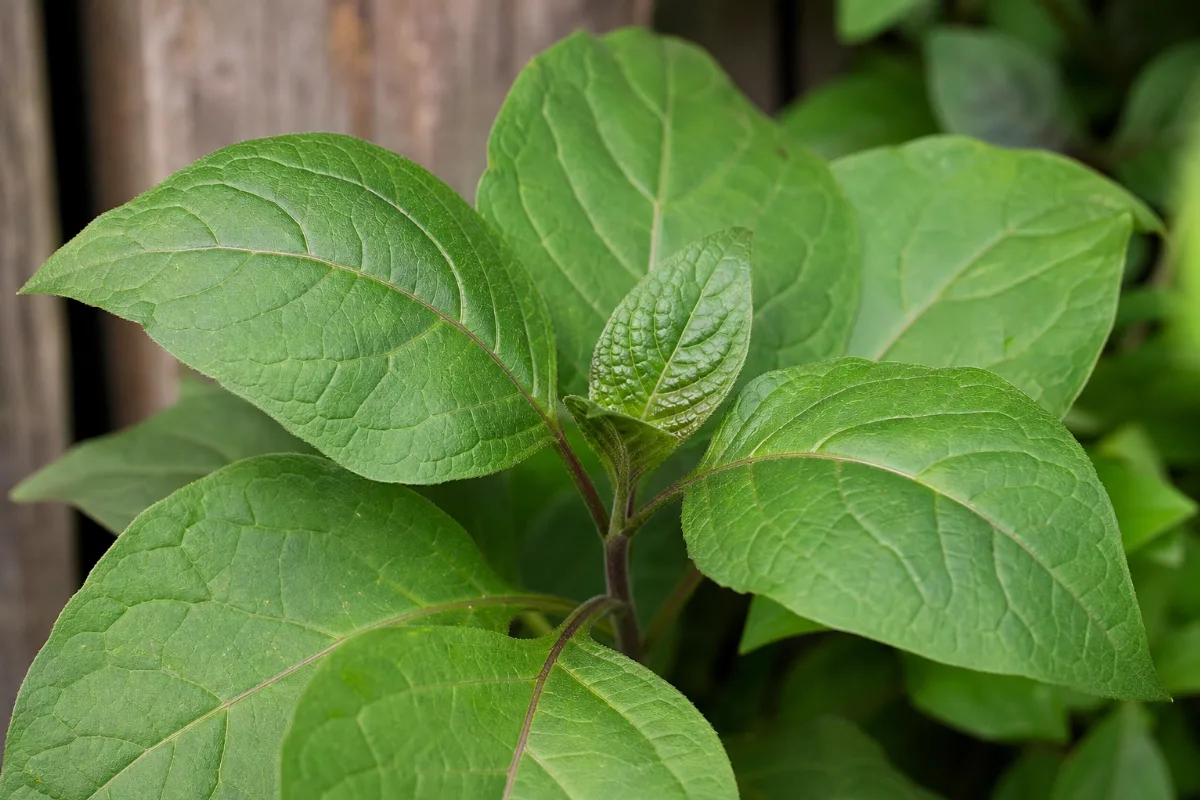
Herbs & Botanicals · Poisonous plant, source of atropine
Belladonna
Atropa belladonna · also called Deadly nightshade
Belladonna is a poisonous plant. Every part, including the berries, can cause serious poisoning and death, and children are at special risk. Its alkaloids are the source of the medicine atropine, and it was once used for cramps, but the plant is not safe to use and no trials support it. If anyone may have eaten any part, call Poison Control (US 1-800-222-1222) or emergency services right away.
General information, not medical advice. Last substantive update · Not medically reviewed. A named clinician has not signed off on this page. How this page is made
About Belladonna
Belladonna, or deadly nightshade (Atropa belladonna), is a poisonous plant in the nightshade family. Its alkaloids atropine, hyoscyamine and scopolamine are the source of real medicines, but the plant itself causes serious poisoning.
What it is
Deadly nightshade is a plant of the nightshade family, native to Europe, North Africa and Western Asia according to a 2026 review. The accepted scientific name is Atropa belladonna.
Poisonings often follow confusion with edible plants or other berries. We could not verify identification details from a source, so never eat a wild berry or leaf you cannot identify with certainty. Related nightshades (black nightshade, bittersweet) have different toxins.
Plant versus medicine
The alkaloids block acetylcholine, a nerve messenger. Purified atropine, hyoscyamine and scopolamine are standardised prescription drugs used for nausea, spasm, pupil dilation and more.
The plant is different: its strength varies, and LactMed notes a narrow safety margin. That is why doctors replaced it with standardised drugs.
How strong is the evidence?
No clinical trial of the plant was found. Four trials tested a prescription belladonna-and-opium suppository around urinary or pelvic procedures. Results were mixed: some gain in comfort or urgency in two small studies, no benefit over placebo in the 90-woman trial and a very small one.
Homeopathic Belladonna 30C did no better than placebo in a 253-person trial. Everything else is old use or lab pharmacology.
At a glance
Traditional uses history, not proof
- Cramping spasms of the stomach, gut and bile ducts (old German approval)
- Headache and airway narrowing (old uses)
- Folk remedy for jaundice (harmful)
- Breast paste to reduce milk (harmful)
Studied for research
- Bladder spasm and stent discomfort: a prescription belladonna-and-opium suppository, two small trials, low certainty
- Pain after surgery: no benefit in two trials of that suppository
- Homeopathic Belladonna 30C: no effect beyond placebo
- The plant itself: no clinical trials found
Main compounds
- Atropine
- Hyoscyamine
- Scopolamine (tropane alkaloids)
Common forms
- Not given. This page does not advise any preparation or use of the plant.
Research links: Deadly nightshade poisoning in 24 children, intensive care series (2024) · Severe neurotoxicity from Atropa belladonna, case report and review (2024) · Atropa belladonna intoxication in an 11-year-old (2012) · Toxic risks of nightshade species, review (2026) · Belladonna poisoning with late return of symptoms (2026) · Anticholinergic tropane alkaloids in therapeutics (2022) · Belladonna and opium suppository for stent pain, RCT (2017) · Belladonna and breastfeeding (LactMed) · Research Library · Genes & Biomarkers Library
The plant and its history
- Accepted scientific name
- Atropa belladonna L.
- Naming authority
- L.
- Common names
- Belladonna (English); Deadly nightshade (English)
- Botanical family
- Solanaceae (nightshade family)
- Classification
- Plantae > Solanales > Solanaceae > Atropa > Atropa belladonna
- Native range
- A 2026 review says the nightshade species it covers are native to Europe, North Africa and Western Asia.
- Habitat
- Not verified here.
- What the plant looks like
- Roots: Not described in sources read.; Stems: Not described in sources read.; Leaves: Not described in sources read.; Flowers: Not described in sources read.; Fruit: Berries; the main route of poisoning in reports (not described further here).
- Cultivation
- Not verified.
- Harvest and processing
- Prepared leaf (Belladonnae folium) was a German medicinal drug (secondary source).
- Look-alikes and adulterants
- Name: Other berries and edible wild plants; Note: Reports describe children eating the berries by mistake for other berries, and adults eating raw leaves by mistake. Botanical identification details were not verified from a source here.; Name: Black nightshade (Solanum nigrum) and bittersweet nightshade (Solanum dulcamara); Note: Related nightshades with different toxins (glycoalkaloids such as solanine). Poisonings from them are less common than from deadly nightshade (2026 review).
- Sustainability and conservation
- Not assessed here.
Traditional use and history history, not clinical proof
| Tradition or era | Documented use | Source |
|---|---|---|
| Ancient times to older European medicine | Nightshades have been used since ancient times in ritual and medicine (2026 review). Belladonna leaf was an antispasmodic in older European medicine; it has since been replaced by more specific, less toxic drugs (LactMed). | p41819152 |
| Germany (Commission E era) | Leaf approved for colicky spasms of the stomach, gut and bile ducts; finished medicines prescription-only. Wikipedia-style claims on witchcraft, poisoning or cosmetic pupil-widening use were NOT verified and are not stated. | s-altmeyers |
| Folk use for jaundice and milk suppression | A child was given belladonna for jaundice and was poisoned; belladonna paste on the breast was an old way to reduce milk and may have contributed to breast gangrene in rural India (LactMed). | p22655106 |
Traditional use shows how a plant was used. It does not show that a supplement works or is safe today.
What is inside, and how it may work
What the plant contains and how those compounds act in cells and animals. Laboratory and animal mechanisms are not proven effects in people.
Main compounds
| Compound | Family | Where it is concentrated | Activity studied | Level of evidence |
|---|---|---|---|---|
| Atropine PubChem 174174 | tropane alkaloid | roots, leaves, fruit (all parts) Not given; strength varies. | Blocks acetylcholine at muscarinic receptors. Purified atropine is a standardised prescription drug. 15 17 | Human pharmacology |
| Hyoscyamine PubChem 154417 | tropane alkaloid | all parts Not given. | Same anticholinergic action; used as a purified medicine. 15 17 | Human pharmacology |
| Scopolamine PubChem 5184 | tropane alkaloid | all parts Not given. | Anticholinergic; acts on the brain as well. Used as a purified medicine, for example for nausea. 15 17 | Human pharmacology |
Mechanisms, receptors and pathways
| Target or pathway | Gene or receptor | What was found | Level |
|---|---|---|---|
| Muscarinic acetylcholine receptors | muscarinic receptors (nicotinic also mentioned in the review) | Tropane alkaloids block the action of acetylcholine in the body and brain. This explains dry mouth, wide pupils, fast heartbeat, urinary retention, confusion and the old use for spasm. 17 | Human pharmacology |
Absorption, metabolism and elimination
- Absorption
- Not studied for plant material in sources read.
- Distribution
- Not studied.
- Metabolism
- Not studied.
- Elimination
- Not studied.
- Bioavailability
- Not established.
Isolated compounds versus whole extracts
Purified atropine, hyoscyamine and scopolamine are standardised prescription drugs with known strength; they are on the WHO essential medicines list per a 2022 review. The plant is the opposite: strength varies by part, season and plant, so accidental overdose is easy. LactMed notes the narrow safety margin and variable potency of non-standardised belladonna. The suppository trials on the other tabs used a pharmaceutical belladonna-and-opium product, not the plant.
Nutritional composition
Belladonna is a poisonous plant, not a food or a nutrient.
1 low certainty4 not enough evidence3 evidence against
What is Belladonna good for?
Belladonna is not a safe remedy. This table shows what was studied, mostly with a prescription suppository, and how strong the evidence is. None of it supports using the plant.
Benefits, one by one
Each card is a research question, not a promise. Tap a goal to filter. Open a card to see the studies, doses and limits.
Bladder spasm and stent discomfort after urinary surgery (prescription suppository)
Low certaintyTwo small hospital trials of a belladonna-and-opium suppository found less urinary urgency or pain with urination after ureteroscopy. This is a prescription product with opium, given once under medical care. It says nothing about taking the plant.
2 studiesNot given here. This page does not give amounts or tell anyone how to…
Studies, doses and limits
What the trials found
One double-blind placebo-controlled trial (71 people) and one smaller double-blind study (50 people).
Results
In the larger trial, quality of life and pain with urination were somewhat better by day 3 (p-values 0.03 to 0.05) but pain medicine use did not differ. The smaller study found less urinary urgency in recovery.
Effect sizes as reported
Small differences on some scales; no effect sizes in the second abstract.
Why this rating
Two small, single-centre studies with several outcomes; the product also contains opium; results are not consistent across urinary procedures (see the next item).
Form and dose studied
Not given here. This page does not give amounts or tell anyone how to use belladonna. The studied suppositories are prescription hospital products, not the plant. Ask a doctor or pharmacist.
Who was studied
Adults having urinary surgery.
Limits
Small trials; one study did not clearly describe randomisation.
Why researchers looked
Belladonna alkaloids relax bladder muscle, so doctors have used suppositories for bladder spasm after surgery.
Traditional use
Belladonna-and-opium suppositories are an old hospital product. They are not herbal supplements.
Proposed mechanism Human pharmacology
Plausible. Atropine-type alkaloids block the nerve messenger acetylcholine on smooth muscle (such as the bladder and gut), which relaxes spasm. Shown in pharmacology, not in plant-based products.
A proposed mechanism does not show that the effect happens in people.
Belladonna products can cause urinary retention, dry mouth and fast heartbeat. No urinary retention was seen in these trials.
Pain during bladder injections (prescription suppository)
Not enough evidenceIn a very small trial, a belladonna-and-opiate suppository did not reduce pain during in-office bladder injections.
1 studiesNot given here. This page does not give amounts or tell anyone how to…
Studies, doses and limits
What the trials found
One double-blind placebo-controlled trial of 26 people.
Results
Pain scores did not differ between suppository and placebo (p=0.94 mid-procedure, p=0.29 at the end). Urine left in the bladder was not significantly different.
Effect sizes as reported
Median pain 5 vs 4 (suppository vs placebo).
Why this rating
Only 26 people, so the trial could miss a real effect; the product contains morphine.
Form and dose studied
Not given here. This page does not give amounts or tell anyone how to use belladonna. The studied suppositories are prescription hospital products, not the plant. Ask a doctor or pharmacist.
Who was studied
Adults having bladder injections.
Limits
Underpowered.
Why researchers looked
Same bladder-relaxing idea, tried before a painful bladder procedure.
Traditional use
Hospital product, not a herbal remedy.
Proposed mechanism Human pharmacology
Plausible. Atropine-type alkaloids block the nerve messenger acetylcholine on smooth muscle (such as the bladder and gut), which relaxes spasm. Shown in pharmacology, not in plant-based products.
A proposed mechanism does not show that the effect happens in people.
Retention of urine was not increased in this small trial.
Pain after vaginal surgery (prescription suppository)
Evidence againstA 90-woman placebo-controlled trial found the belladonna-and-opium suppositories did not lower pain or morphine use after vaginal surgery.
1 studiesNot given here. This page does not give amounts or tell anyone how to…
Studies, doses and limits
What the trials found
One randomised double-blind placebo-controlled trial (90 women).
Results
Pain scores were the same in both groups at every time point; morphine use was a mean 57 mg versus 66 mg (p=0.43). Side effects were similar.
Effect sizes as reported
No difference.
Why this rating
A fairly well-run single-centre trial with a clearly null result for its main outcome.
Form and dose studied
Not given here. This page does not give amounts or tell anyone how to use belladonna. The studied suppositories are prescription hospital products, not the plant. Ask a doctor or pharmacist.
Who was studied
Women after vaginal surgery.
Limits
One centre.
Why researchers looked
Rectal belladonna-and-opium products are sometimes used for pain and spasm after pelvic surgery.
Traditional use
Hospital product, not a herbal remedy.
Proposed mechanism Human pharmacology
Plausible. Atropine-type alkaloids block the nerve messenger acetylcholine on smooth muscle (such as the bladder and gut), which relaxes spasm. Shown in pharmacology, not in plant-based products.
A proposed mechanism does not show that the effect happens in people.
Constipation and urinary retention occurred at similar rates in both groups.
Cramping spasms of the stomach, gut and bile ducts (old medicinal use)
Not enough evidenceBelladonna leaf was once approved in Germany for colicky spasms. No trial of the plant was found, and modern medicine has replaced it with safer, standardised drugs.
3 studiesNot given here. This page does not give amounts or tell anyone how to…
Studies, doses and limits
What the trials found
No clinical trial of belladonna plant products for gut cramps was found. The approval is known only through a secondary reference.
Results
Not tested in trials we found.
Effect sizes as reported
No numbers.
Why this rating
No trial; regulatory history known only from a secondary source (summary-only); strong safety concerns.
Form and dose studied
Not given here. This page does not give amounts or tell anyone how to use belladonna. The studied suppositories are prescription hospital products, not the plant. Ask a doctor or pharmacist.
Who was studied
Adults (historic).
Limits
No evidence base for the plant itself.
Why researchers looked
The alkaloids relax gut and bile-duct muscle. This is the reason for the old use.
Traditional use
Belladonna leaf was a standard antispasmodic in older European medicine; LactMed says it has been replaced by more specific, less toxic compounds.
Proposed mechanism Human pharmacology
Plausible from the drug action of atropine-type alkaloids. The plant's strength varies, which is why it was replaced.
A proposed mechanism does not show that the effect happens in people.
Narrow safety margin and variable strength of the plant (LactMed).
Homeopathic Belladonna 30C
Evidence againstA 253-person placebo-controlled trial found the ultra-dilute homeopathic remedy produced no more symptoms than placebo. This tests whether the remedy does anything at all, not whether it treats an illness.
1 studiesNot given here. See the safety tab: some low-dilution or badly made h…
Studies, doses and limits
What the trials found
One randomised double-blind placebo-controlled study in healthy adults.
Results
13.9% of the remedy group and 14.3% of the placebo group reported remedy-typical symptoms (difference -0.4%, 95% CI -9.3 to 10.1).
Effect sizes as reported
No difference.
Why this rating
A clear null result on the question tested. It does not test other homeopathic uses.
Form and dose studied
Not given here. See the safety tab: some low-dilution or badly made homeopathic belladonna products have caused poisoning.
Who was studied
Healthy adults 18-30.
Limits
Tests a proving model, not a treatment.
Why researchers looked
Homeopathy says very dilute belladonna can treat fevers, pain and other problems.
Traditional use
Homeopathic remedies are diluted so far that, at 30C, no plant molecules remain. That is different from the plant and from low dilutions.
Proposed mechanism None
No known mechanism for effects at this dilution.
A proposed mechanism does not show that the effect happens in people.
Quality problems with some homeopathic belladonna products are documented (see Safety).
Headache, airway narrowing and irritable bowel syndrome (old uses)
Not enough evidenceThese were old uses of belladonna. LactMed says it has been replaced by more specific and less toxic medicines. No trials of the plant were found.
1 studiesNot given here.
Studies, doses and limits
What the trials found
No trials found.
Results
Not tested.
Effect sizes as reported
No numbers.
Why this rating
No clinical research on the plant for these uses was found.
Form and dose studied
Not given here.
Who was studied
Adults (historic).
Limits
No evidence base.
Why researchers looked
The alkaloids affect nerves and smooth muscle, so they were tried in many conditions.
Traditional use
Used in older Western medicine.
Proposed mechanism Human pharmacology
Plausible drug action; not evidence of benefit for these conditions.
A proposed mechanism does not show that the effect happens in people.
Narrow therapeutic index and variable strength of plant material.
Jaundice (folk remedy)
Evidence againstA child given belladonna as a jaundice remedy was poisoned and needed intensive care. There is no evidence it helps jaundice.
1 studiesNot given here.
Studies, doses and limits
What the trials found
One case report of harm; no trials.
Results
Poisoning, not benefit.
Effect sizes as reported
No numbers.
Why this rating
The only evidence is a case of harm.
Form and dose studied
Not given here.
Who was studied
Children.
Limits
Single case.
Why researchers looked
Reported home remedy in one case.
Traditional use
Folk use in the case report.
Proposed mechanism None
None.
A proposed mechanism does not show that the effect happens in people.
Serious poisoning in an 11-year-old.
Reducing breast milk (old folk use)
Not enough evidenceBelladonna paste on the breast was an old way to reduce milk. LactMed says it may have contributed to breast gangrene in rural India, and advises avoiding it while breastfeeding.
1 studiesNot given here.
Studies, doses and limits
What the trials found
No trials. LactMed summarises older reports.
Results
Not tested.
Effect sizes as reported
No numbers.
Why this rating
Reports are old and anecdotal; harm is reported.
Form and dose studied
Not given here.
Who was studied
Women who are breastfeeding.
Limits
Anecdotal.
Why researchers looked
Anticholinergic action can lower milk production.
Traditional use
Very old use; still reported in rural India per LactMed.
Proposed mechanism Human pharmacology
Long-term use might reduce milk production by lowering prolactin (LactMed).
A proposed mechanism does not show that the effect happens in people.
Possible breast gangrene with topical use (LactMed).
Connections to the rest of health
How Belladonna connects to the rest of our health knowledge graph. Every link says what kind of connection it is. A safety link (for example to the liver) is a warning, not a benefit. A study that merely mentions a topic never creates a benefit link.
Explore every connection: goals, body systems, organs, symptoms, genes
B. Body systems
| Connected to | Kind of connection | Evidence status | Context | Studies |
|---|---|---|---|---|
| Urinary System | Biological association | Low certainty | Studied for: Bladder spasm and stent discomfort after urinary surgery (prescription suppository) Studied for: Pain during bladder injections (prescription suppository) | 13 9 12 7 |
| Digestive System | Biological association | Not enough evidence | Studied for: Cramping spasms of the stomach, gut and bile ducts (old medicinal use) | 8 2 17 |
I. Biomarkers
| Connected to | Kind of connection | Evidence status | Context | Studies |
|---|---|---|---|---|
| Ureteral stent symptom and quality-of-life scores | Biological association | Low certainty | Measured in trials: raised (quality of life). A lab change is not the same as a health benefit. | 13 |
| Urinary urgency in recovery | Biological association | Low certainty | Measured in trials: lowered. A lab change is not the same as a health benefit. | 9 |
| Pain score after surgery or procedure | Biological association | Evidence against | Measured in trials: lowered. A lab change is not the same as a health benefit. | 7 12 |
| Share of healthy people reporting remedy-typical symptoms | Biological association | Evidence against | Measured in trials: no change. A lab change is not the same as a health benefit. | 6 |
J. Genes, receptors and enzymes
| Connected to | Kind of connection | Evidence status | Context | Studies |
|---|---|---|---|---|
| Muscarinic acetylcholine receptors | Preliminary mechanism | Human pharmacology | Blocked by the plant's tropane alkaloids. | 17 |
L. Active compounds
| Connected to | Kind of connection | Evidence status | Context | Studies |
|---|---|---|---|---|
| Atropine | Low certainty | The best-known poisoning agent in belladonna; also a standardised prescription drug. The best-known poisoning agent in belladonna; purified atropine is a standardised prescription drug. Preparation or compound: main alkaloid |
17 16 | |
| Atropine | Biological association | Human pharmacology | Blocks acetylcholine at muscarinic receptors. Purified atropine is a standardised prescription drug. Preparation or compound: roots, leaves, fruit (all parts) |
15 17 |
| Hyoscyamine | Biological association | Human pharmacology | Same anticholinergic action; used as a purified medicine. Preparation or compound: all parts |
15 17 |
| Scopolamine | Biological association | Human pharmacology | Anticholinergic; acts on the brain as well. Used as a purified medicine, for example for nausea. Preparation or compound: all parts |
15 17 |
Each connection is stored with the ingredient, the connected record, the kind of connection, the evidence status, the supporting studies, the preparation or compound involved, and a review date (last reviewed October 25, 2026).
Evidence at a glance: what changed in 2 lab markers
Tap a number to show only those markers. Counts are markers, not people.
The evidence
The research centre for Belladonna. Every record here was checked against PubMed or the publisher's page; we never list a study we have not verified.
Evidence by outcome
Bars show how many studies we found for each outcome, not how well it works. People are added up across trials only (reviews are not added, to avoid double counting).
How we rate evidence
High certainty
Several well-run trials or reviews agree; further research is unlikely to change the picture much.
Moderate certainty
Good trials point the same way, but some doubt remains.
Low certainty
Small, short or inconsistent trials. The finding could change with better research.
Very low certainty
Very little or very weak human data. Treat as a possibility only.
Mixed findings
Trials or reviews disagree with each other.
Not enough evidence
Not enough human research to say either way.
Evidence against
Good research found no benefit, or found harm.
We take the reviewers' own risk-of-bias and GRADE statements where they exist, and otherwise judge from study size, design, consistency, directness and whether a product matches what is sold. Many publications do not make evidence high. Method note: We built on our existing summary, read PubMed abstracts for the trials, case reports and reviews, read a news report of an FDA statement, and checked GBIF and PubChem. Full texts were not read. One secondary herbal reference was used only through our earlier summary.
Study library: every study we checked 17
| Study | Design | People | Product, dose, length | Result |
|---|---|---|---|---|
| Acimovic 2026 Toxic Risks of Nightshade Species: A comprehensive review of the documented toxicity of Atropa belladonna, Solanum dulcamara, and Solanum nigrum Planta Medica · PMID 41819152 · DOI |
Narrative review |
Published poisoning reports (41 studies identified) | Deadly nightshade, bittersweet nightshade and black nightshade mainly berries not given here not applicable · vs none |
Poisoning from these plants mostly followed berry ingestion and typically produced the anticholinergic syndrome. The author says accidental poisonings still occur, often through confusion with edible plants or misuse of herbal and homeopathic preparations. Deadly nightshade alkaloids (atropine, hyoscyamine, scopolamine) are also widely used in modern pharmacology. Confirms the poisoning pattern Methods, limits and fundingOutcomes: Documented toxicity Limitations: Narrative review; abstract read only. Funding and conflicts: Author declared no conflict. Read: abstract |
| Altmeyers Encyclopedia n.d. Belladonnae folium (Altmeyers Encyclopedia of Naturopathy) altmeyers.org · Source |
Secondary herbal reference plant |
Adults | Belladonna leaf (Belladonnae folium) leaf not given here not given here · vs none |
Summary-only (from our earlier summary; not re-opened). Lists as contraindications narrow-angle glaucoma, enlarged prostate with urine left in the bladder, fast irregular heartbeat, bowel blockage, megacolon and fluid in the lungs; says tricyclic antidepressants, amantadine and quinidine may add to the anticholinergic effect; notes the old German Commission E approved the leaf for colicky spasms of the stomach, gut and bile ducts. Contraindications and interactions (secondary source) Methods, limits and fundingOutcomes: see results Limitations: Secondary reference of unclear date. Please check against a primary source. Funding and conflicts: not applicable Read: summary-only |
| Berdai 2012 Atropa belladonna intoxication: a case report Pan African Medical Journal · PMID 22655106 |
Case report |
1 An 11-year-old girl in Morocco |
Deadly nightshade given as a home remedy for jaundice berries/plant as described by the authors not given here not applicable · vs none |
The child developed a central anticholinergic syndrome, was treated in intensive care with supportive care and recovered. The authors note that roots, leaves and fruits contain atropine, hyoscyamine and scopolamine and that children are at risk because of possible confusion with other berries. Poisoning, recovered Methods, limits and fundingOutcomes: Clinical course Limitations: Single case. Funding and conflicts: Not stated in the abstract. Read: abstract |
| Boskabadi 2024 Severe Neurotoxicity due to Atropa belladonna Poisoning: A Case Report and Literature Review Case Reports in Neurological Medicine · PMID 39364183 · DOI |
Case report and review |
2 Two adults who ate raw leaves by accident (northern Iran) |
Accidental ingestion of raw deadly nightshade leaves leaf not given here not applicable · vs none |
Both had dry mouth, wide pupils, fast heartbeat and delirium. They were treated with fluids and sedating medicine for agitation (supportive care) and recovered. The review notes that severe poisoning can cause seizures, coma and death, and that physostigmine may be considered in severe cases. Two recoveries; review says death is possible Methods, limits and fundingOutcomes: Clinical signs and recovery Limitations: Two cases only. Funding and conflicts: Authors declared no conflicts. Read: abstract |
| Botan 2024 Deadly Nightshade (Atropa belladonna) and Other Weed Poisonings in the Pediatric Intensive Care Unit: Analysis of 54 Children Turkish Archives of Pediatrics · PMID 39540784 · DOI |
Retrospective case series |
54 Children admitted to one paediatric intensive care unit, 2010-2022 |
Accidental poisoning with deadly nightshade or other weeds plant (fruit, leaf as reported) not given here not applicable · vs none |
24 of the 54 children (44.4%) were poisoned by deadly nightshade. Common signs were flushing, vomiting, wide pupils, gibberish speech, dry mouth and fast heartbeat. Three children needed a breathing machine. 8 had severe poisoning with brain involvement (convulsions, coma, urinary retention). No child died. All deadly nightshade cases received neostigmine because physostigmine was not available. Serious poisoning, no deaths in this series Methods, limits and fundingOutcomes: Symptoms, severity, ICU stay, need for ventilation, deaths Limitations: One hospital; retrospective; mixes deadly nightshade with other weeds; the antidote choice reflects local supply, not a recommendation. Funding and conflicts: Authors declared no conflicts. Read: abstract |
| Brien 2003 Ultramolecular homeopathy has no observable clinical effects. A randomized, double-blind, placebo-controlled proving trial of Belladonna 30C British Journal of Clinical Pharmacology · PMID 14651731 · DOI |
RCT |
253 Healthy adults aged 18-30 |
Homeopathic Belladonna 30C (an ultra-dilute remedy) not applicable (homeopathic dilution) not given here 2 weeks of treatment plus 1 week follow-up · vs placebo |
13.9% of the Belladonna group and 14.3% of the placebo group reported such symptoms (difference -0.4%, 95% CI -9.3 to 10.1). The authors concluded the ultra-dilute remedy had no observable clinical effects. No difference from placebo Methods, limits and fundingOutcomes: Share of people who reported symptoms typical of the remedy ("proving") Limitations: Tests whether the remedy does anything in healthy people, not whether it treats an illness. Funding and conflicts: Not stated in the abstract. Read: abstract |
| Butler 2017 Randomized controlled trial of postoperative belladonna and opium rectal suppositories in vaginal surgery American Journal of Obstetrics and Gynecology · PMID 28040448 · DOI |
RCT |
90 Women after vaginal surgery (mean age 55) |
Belladonna-and-opium rectal suppository (a pharmaceutical combination product; belladonna alkaloids plus opium or morphine), not the plant belladonna alkaloids (extract) with opium not given here 3 suppositories over 24 hours · vs placebo suppository |
Pain scores were the same in both groups at every time point. Morphine use over 24 hours was a mean 57 mg versus 66 mg (p=0.43). Side effects, including constipation and urinary retention, were similar in both groups. The authors called the suppositories safe but not better than placebo. No benefit over placebo Methods, limits and fundingOutcomes: Pain score at 2, 4, 12 and 20 hours; morphine-equivalent use; recovery questionnaire Limitations: One centre; fixed procedure type. Funding and conflicts: Not stated in the abstract. Read: abstract |
| Drugs and Lactation Database (LactMed) 2021 Belladonna (LactMed entry) LactMed (NCBI Bookshelf) · PMID 30000920 |
Authoritative guidance |
Breastfeeding mothers and infants | Belladonna (Atropa belladonna), oral and topical plant not given here not applicable · vs none |
Says belladonna was used in the past for headache, airway obstruction and irritable bowel syndrome but has been replaced by more specific, less toxic drugs. Long-term use might lower milk production. Because of its narrow safety margin and variable strength, plant-based belladonna should be avoided by mouth and on the skin during breastfeeding. Homeopathic products are not likely to interfere with breastfeeding or cause toxicity (the entry gives no data for this). Avoid in breastfeeding Methods, limits and fundingOutcomes: Safety in breastfeeding Limitations: Summary entry; no direct infant data. Funding and conflicts: not applicable Read: abstract |
| Fetzer 2019 Effectiveness of a Pre-emptive Preoperative Belladonna and Opium Suppository on Postoperative Urgency and Pain After Ureteroscopy Journal of PeriAnesthesia Nursing · PMID 30528307 · DOI |
Prospective double blind study |
50 Adult outpatients having ureteroscopy |
Belladonna-and-opium rectal suppository (a pharmaceutical combination product; belladonna alkaloids plus opium or morphine), not the plant belladonna alkaloids (extract) with opium not given here single dose after anaesthesia; observed until discharge · vs routine care |
Urgency was significantly lower in the suppository group; fewer than half reported urgency at discharge. The abstract gives no numbers for pain. Less urinary urgency in recovery Methods, limits and fundingOutcomes: Urinary urgency and pain every 15 minutes Limitations: Small; the abstract says "assigned" to groups, not clearly randomised; no effect sizes given; contains opium. Funding and conflicts: Not stated in the abstract. Read: abstract |
| GBIF Secretariat 2026 GBIF Backbone Taxonomy: Atropa belladonna L. (species match) GBIF API · Source |
Database record plant |
not applicable | Atropa belladonna L. not applicable not given here not given here · vs none |
Queried 2026-10-25. Status ACCEPTED, exact match, key 3802655. Family Solanaceae, order Solanales. Identity confirmed Methods, limits and fundingOutcomes: see results Limitations: Taxonomy only. NCBI Taxonomy not checked. Funding and conflicts: not applicable Read: full-text |
| Hayashi 2026 A Case of Belladonna Poisoning With Late-Onset Reappearance of Anticholinergic Toxicity Clinical Case Reports · PMID 41550397 · DOI |
Case report |
1 One poisoned patient (Japan) |
Belladonna poisoning plant not given here not applicable · vs none |
Symptoms came back later together with a rise in the measured drug level. The authors suggest leftover alkaloids were re-absorbed while the gut moved slowly, and advise watching bowel movement during treatment. Symptoms can return after apparent recovery Methods, limits and fundingOutcomes: Symptom time course and blood drug level Limitations: Single case; abstract read only. Funding and conflicts: Authors declared no conflicts. Read: abstract |
| LeClaire 2018 Randomized controlled trial of belladonna and opiate suppository during intravesical onabotulinum toxin A injection American Journal of Obstetrics and Gynecology · PMID 29902447 · DOI |
RCT |
26 Adults having in-office bladder injections for urinary symptoms |
Belladonna-and-opium rectal suppository (a pharmaceutical combination product; belladonna alkaloids plus opium or morphine), not the plant belladonna alkaloids (extract) with morphine not given here single dose before the procedure · vs placebo suppository |
Pain change did not differ: median 5 with the suppository and 4 with placebo (p=0.94). Pain at the end: median 2 versus 3 (p=0.29). Urine left in the bladder above 200 mL at 2 weeks: 15% versus 25% (p=0.64). Most people in both groups were satisfied. No significant benefit Methods, limits and fundingOutcomes: Change in pain during bladder injections (0-10 scale); urine left in the bladder Limitations: Only 26 people, so a modest benefit could be missed. Funding and conflicts: Not stated in the abstract. Read: abstract |
| Lee 2017 Preoperative Belladonna and Opium Suppository for Ureteral Stent Pain: A Randomized, Double-blinded, Placebo-controlled Study Urology · PMID 27658661 · DOI |
RCT |
71 Adults having ureteroscopy with a ureteral stent (kidney or ureter stones, a few cancers) |
Belladonna-and-opium rectal suppository (a pharmaceutical combination product; belladonna alkaloids plus opium or morphine), not the plant belladonna alkaloids (extract) with opium not given here single dose before surgery; follow-up to stent removal · vs placebo suppository |
By day 3 the suppository group reported better overall quality of life (p=0.04), better quality of work score (p=0.05) and less pain with urination (p=0.03). Use of pain medicine did not differ (p=0.67). No urinary retention was seen. Small benefit on some comfort scores Methods, limits and fundingOutcomes: Stent symptom questionnaire, quality of life, pain on urinating, extra pain medicine Limitations: Small trial; several outcomes tested; the product also contains opium, so the effect cannot be credited to belladonna alone; one hospital. Funding and conflicts: Not stated in the abstract. Read: abstract |
| Maggie Fox (NBC News) 2017 Homeopathic Teething Aid Contains Toxic Belladonna, FDA Says NBC News (27 Jan 2017) · Source |
News report of regulator statement plant |
Parents of infants | Homeopathic teething tablets sold in the US belladonna (extract, homeopathic product) not given here not given here · vs none |
Read 2026-10-25. The FDA said laboratory analysis found inconsistent amounts of belladonna, a toxic substance, in certain homeopathic teething tablets, sometimes far above the label amount. The article says the maker had refused to recall them and the FDA issued a warning. Regulator warning Methods, limits and fundingOutcomes: see results Limitations: Secondary report; the FDA page itself returned 404 and was not read. An earlier FDA action in 2010 was NOT verified. Funding and conflicts: not applicable Read: full-text |
| NCBI PubChem 2026 PubChem compound records: atropine, hyoscyamine, scopolamine PubChem PUG REST API · Source |
Database record compound |
not applicable | Atropine, hyoscyamine, scopolamine not applicable not given here not given here · vs none |
Queried 2026-10-25. Atropine CID 174174 (C17H23NO3); hyoscyamine CID 154417 (C17H23NO3); scopolamine CID 5184 (C17H21NO4). Compound identity confirmed Methods, limits and fundingOutcomes: see results Limitations: Identifiers only. Funding and conflicts: not applicable Read: full-text |
| Schmoll 2022 Anticholinergic syndrome after atropine overdose in a supposedly homeopathic solution: a case report Clinical Toxicology · PMID 33988064 · DOI |
Case report |
1 A 53-year-old man in Germany |
A homeopathic liquid sold as Belladonna D4 extract not given here not applicable · vs none |
The man had confusion, anxiety, unsteady movement and slurred speech. The liquid contained about 3 mg/mL atropine sulphate, a roughly 600-fold overdose compared with what the label implied, due to a production error. He recovered without treatment. Manufacturing error caused poisoning Methods, limits and fundingOutcomes: Lab analysis of product and blood Limitations: Single case. Funding and conflicts: Not stated in the abstract. Read: abstract |
| Shim 2022 Beauty of the beast: anticholinergic tropane alkaloids in therapeutics Natural Products and Bioprospecting · PMID 36109439 · DOI |
Narrative review |
Tropane alkaloid medicines in general | Tropane alkaloids (from Atropa belladonna, henbane, Datura, mandrake and others) various plants not given here not applicable · vs none |
The plant alkaloids block acetylcholine at muscarinic and/or nicotinic receptors. As purified medicines they are used as antiemetics, anaesthetic aids, antispasmodics, bronchodilators and pupil-widening drops, are on the WHO essential medicines list and some have FDA approval. The review also discusses the link between anticholinergic medicines and cognitive decline. Background pharmacology Methods, limits and fundingOutcomes: Pharmacology and clinical use Limitations: Narrative review; abstract read only. Funding and conflicts: Authors declared no conflict. Read: abstract |
What we do not know yet
- No clinical trial of the belladonna plant was found.
- The suppository trials used a belladonna-and-opium product, so the effect cannot be credited to belladonna alone.
- No reliable lethal-amount data and no pregnancy data.
- EU and most US regulatory status not verified.
- Interaction claims rest on drug class and a secondary reference.
How new research is added
New studies are found by a saved PubMed search and are placed in a review queue. A person reads each one before it changes any evidence rating or safety wording.
Lab markers
What changed in blood or saliva tests during trials. A changed number is not the same as feeling or being healthier, and we give no "normal ranges".
Other 4
Ureteral stent symptom and quality-of-life scores
Raised (quality of life) in trials
Questionnaires about urinary symptoms, pain and daily life after a urinary stent is placed. Higher quality-of-life scores mean feeling better.
Low certaintyResults and what it means
Why it was measured
Main outcome of the stent trial.
Statistical vs. clinical meaning
Small gains on some scales in one trial.
Safety implication
No urinary retention in the trial.
| Study | Result | People | Product |
|---|---|---|---|
| 13 | Quality of life was higher (p=0.04) and pain with urination lower (p=0.03) at day 3 with the suppository. Pain medicine use did not differ. | 71 adults after ureteroscopy with stent | Belladonna-and-opium suppository, once before surgery |
Urinary urgency in recovery
Lowered in trials
How strongly patients felt an urgent need to pass urine while waking after surgery.
Low certaintyResults and what it means
Why it was measured
Main outcome of the ureteroscopy study.
Statistical vs. clinical meaning
Lower urgency, small unclear-design study.
Safety implication
Not reported in the abstract.
| Study | Result | People | Product |
|---|---|---|---|
| 9 | Urgency was lower with the suppository; fewer than half reported urgency at discharge. No numbers in the abstract. | 50 adults after ureteroscopy | Belladonna-and-opium suppository |
Pain score after surgery or procedure
Lowered in trials
Patients rated pain on a scale (0 to 10 or a visual scale). A fall means less pain.
Evidence againstResults and what it means
Why it was measured
Main outcome of the vaginal surgery and bladder injection trials.
Statistical vs. clinical meaning
No benefit over placebo in two trials.
Safety implication
Side effects similar to placebo.
| Study | Result | People | Product |
|---|---|---|---|
| 7 | Pain equal in both groups at every time point; morphine use 57 vs 66 mg (p=0.43). | 90 women after vaginal surgery | Belladonna-and-opium suppositories, 3 doses |
| 12 | Median pain change 5 vs 4 (p=0.94); end pain 2 vs 3 (p=0.29). | 26 adults having bladder injections | Belladonna-and-opiate suppository, once |
Share of healthy people reporting remedy-typical symptoms
No change in trials
In a homeopathic 'proving' healthy people take a remedy and record symptoms. This is not a clinical outcome.
Evidence againstResults and what it means
Why it was measured
Main outcome of the Belladonna 30C trial.
Statistical vs. clinical meaning
No difference from placebo.
Safety implication
None reported at this dilution.
| Study | Result | People | Product |
|---|---|---|---|
| 6 | 13.9% with Belladonna 30C and 14.3% with placebo; difference -0.4%, 95% CI -9.3 to 10.1. | 253 healthy adults | Homeopathic Belladonna 30C, 2 weeks |
Safety
What studies and official sources say about side effects, medicines and who should check first. Each point shows what kind of evidence it comes from.
Main points to know 6
- Every part of the plant is poisonous: do not eat it, make tea from it or use it as a remedy. Roots, leaves and berries all contain the alkaloids atropine, hyoscyamine and scopolamine. Poisoning from berries and leaves is documented in adults and children, and severe cases can cause seizures, coma and death. Reliable figures for a dangerous amount are not available, so any eating of belladonna is an emergency. Case reports and reviews 3 4 1
- Children are at special risk. Children can mistake the berries for other berries. In one intensive-care series 24 of 54 poisoned children were poisoned by deadly nightshade; none died but 3 children in the series needed a breathing machine and 8 had severe brain involvement. Case series 5 3
- Get emergency help at once. If someone may have eaten any part, call Poison Control (US: 1-800-222-1222) or your local emergency number immediately and go to hospital. Do not wait for symptoms. Symptoms can come back after the person seems better. Case reports 11 5
- Belladonna can add to other anticholinergic medicines. Antihistamines, tricyclic antidepressants, some bladder and Parkinson's medicines and others have similar effects. Combining them is expected to add up (mechanism-based; a secondary reference names tricyclics, amantadine and quinidine). Mechanistic and secondary 2 17
- Avoid with certain conditions and in pregnancy or breastfeeding. Narrow-angle glaucoma, enlarged prostate with urine retention, fast or irregular heartbeat, bowel blockage and some lung conditions are listed as reasons not to use it (secondary source). No pregnancy data were found. LactMed advises avoiding it by mouth or on the skin while breastfeeding. Secondary and authoritative 2 8
- Homeopathic products are a separate issue, but quality problems have caused harm. A US regulator warned in January 2017 about teething tablets containing inconsistent, sometimes much higher than labelled, amounts of belladonna. One German man was poisoned by a liquid labelled D4 that contained about 600 times too much atropine because of a production error. Regulator statement and case report 14 16
Side effects 4
| Effect | How often | Severity and recovery | Evidence |
|---|---|---|---|
| Anticholinergic syndrome: dry mouth, wide pupils, flushed warm skin, fast heartbeat, confusion, hallucinations, agitation Documented after eating berries or raw leaves. Dose-response figures are not reliable. | Not established | moderate to severe usually reversible with hospital care | Case reports and series 4 5 3 |
| High body temperature, urinary retention, unsteady movement, slurred speech, delirium Urinary retention and incoherent speech were more frequent in the severe group of children. | Not established | moderate to severe usually reversible | Case reports 4 5 16 |
| Seizures, coma, breathing failure and death No child died in a 54-child series, but 3 needed ventilation and the 2024 case review says death can occur. | Not established | life-threatening death is possible | Case series and review 4 5 |
| Symptoms returning hours later A 2026 report links the return to re-absorption of leftover alkaloids when gut movement is slow. | Not established | moderate treatable | Case report 11 |
Liver
No liver injury from belladonna was found in the sources read. LiverTox was not checked (not found quickly). The main danger is nervous system and heart poisoning, not liver harm. 5
How often. Unknown.
Monitoring. Not applicable. Emergency care is the priority for any ingestion.
This is a safety connection. It is not evidence that Belladonna supports liver health.
Medicines and supplements 4
| With | Why it matters | Importance | Evidence | What to do |
|---|---|---|---|---|
| Other anticholinergic medicines: first-generation antihistamines, tricyclic and some other antidepressants, antipsychotics, bladder-control antimuscarinics, some Parkinson's and motion-sickness medicines drug | Same drug action, so effects are expected to add up: confusion, fast heartbeat, overheating, urinary retention, constipation. | Potentially serious; mechanism-based, no controlled study of the plant. | Mechanistic and secondary source Low certainty 17 2 | Do not combine. Tell your doctor or pharmacist if you have used any belladonna product. |
| Tricyclic antidepressants, amantadine, quinidine drug | A secondary German reference says these may increase belladonna's anticholinergic effect. | Unknown; not re-checked against a primary source. | Secondary source Very low certainty 2 | Ask a pharmacist. |
| Cholinesterase-inhibitor medicines (physostigmine, neostigmine; also dementia drugs of this type) drug | These do the opposite of anticholinergics. In poisoning, physostigmine or neostigmine has been used as an antidote under hospital care. | Hospital treatment only; also means a person with dementia on these medicines may have the benefit of both blunted. | Case series Low certainty 5 4 | Never self-treat. Hospital staff decide on antidotes. |
| Anticholinergic burden and thinking problems condition | Anticholinergic medicines in general are discussed in relation to cognitive decline; the 2022 review disputes that tropane drugs themselves cause dementia. | Debated. | Review Not enough evidence 17 | Older adults should ask a pharmacist about total anticholinergic load. |
Who should check first 8
| Situation | Advice | Evidence |
|---|---|---|
| Any use of the plant, berries, leaves or roots as food, tea or home remedy | Do not. The plant is poisonous. | Case reports and reviews 1 4 |
| Narrow-angle glaucoma | Listed as a contraindication (secondary source). | Secondary source 2 |
| Enlarged prostate with urine left in the bladder; any urinary retention | Listed as a contraindication (secondary source). | Secondary source 2 |
| Heart disease with fast or irregular heartbeat | Listed as a contraindication (secondary source). | Secondary source 2 |
| Bowel blockage, megacolon, acute fluid in the lungs | Listed as contraindications (secondary source). | Secondary source 2 |
| Pregnancy | No safety data were found. Avoid. | Insufficient |
| Breastfeeding | Avoid by mouth and on the skin (LactMed). | Authoritative guidance 8 |
| Children | Keep out of reach. Poisoning is documented in children, including from a home remedy. | Case reports and series 3 5 |
Overdose, product quality and regulators
Summary. The poisonous action comes from tropane alkaloids that block acetylcholine. Poisoning has been reported from berries and raw leaves. No reliable lethal-amount figure is given here because the published figures conflict and strength varies by plant part and season.
Animal. Not reviewed (lean method).
Human doses studied. Not given here.
High dose or long term signals. Symptoms can last and can return after apparent recovery.
Overdose response. Hospital care is mainly supportive (fluids, sedating medicine for agitation, cooling). In severe cases physostigmine may be considered; in one series neostigmine was used because physostigmine was unavailable. Self-treatment is not safe.
Genotoxicity. Not reviewed.
Toxic plant parts. All parts: roots, leaves and fruit contain atropine, hyoscyamine and scopolamine.
Plant material has variable strength. Homeopathic products have had manufacturing and labelling errors.
Homeopathic teething tablets (US). In January 2017 the FDA said laboratory analysis found inconsistent amounts of belladonna, sometimes far above the label, in certain homeopathic teething tablets (read via NBC News). 14
Homeopathic liquid sold as Belladonna D4. A German case: about 3 mg/mL atropine sulphate in the liquid, a roughly 600-fold overdose from a production error. The man recovered. 16
Look-alike plants and berries. Poisonings often follow confusion with edible plants or other berries. One 2024 report describes raw leaves eaten by mistake. Related nightshades such as bittersweet and black nightshade have their own toxins. Identification details were not verified from a source here: never eat a wild berry or leaf you cannot identify with certainty. 1 4 3
| Body | Action | Date |
|---|---|---|
| FDA (US) (US) | January 2017 statement on inconsistent belladonna amounts in certain homeopathic teething tablets; consumers told to stop using them. An earlier FDA action in 2010 was NOT verified. source | 2017-01-27 |
| LactMed (NIH) (US) | Plant-based belladonna should be avoided orally and topically during breastfeeding. source | 2021-05-17 |
| Purified atropine, hyoscyamine, scopolamine (US / WHO) | Standardised medicines; a 2022 review says they are on the WHO essential medicines list and some have FDA approval. source | 2022 |
When to get medical help
- Anyone who may have eaten belladonna berries, leaves or roots: call Poison Control (US 1-800-222-1222) or emergency services now
- Wide pupils, very dry mouth, flushed hot skin, fast heartbeat
- Confusion, hallucinations, agitation, slurred speech or unsteady walking
- Seizure, collapse, difficulty breathing, high temperature or unable to pass urine
- Symptoms returning after seeming better
Stop the supplement and contact a clinician or emergency service. In the US, Poison Control is 1-800-222-1222.
General information only, not medical advice. Ask a clinician or pharmacist before use, especially with medicines, in pregnancy or with a health condition. See the Natural Remedy Safety guide.
Frequently asked questions
Is belladonna poisonous?
What should I do if someone ate belladonna?
What does belladonna poisoning feel like?
Are children at higher risk?
Is atropine the same thing as belladonna?
Does belladonna work for cramps, headache or bladder spasm?
What about homeopathic belladonna?
What happened with belladonna teething tablets?
In January 2017 the US FDA said lab tests found inconsistent, sometimes much higher than labelled, amounts of belladonna in certain homeopathic teething tablets. Parents were told to stop using them.
Does it interact with medicines?
Who should never be exposed?
How do I tell belladonna berries from other berries?
Is belladonna legal?
We could not verify EU or most US legal status. In the US the FDA has warned about belladonna in homeopathic teething tablets. Ask a doctor or pharmacist about medicines containing belladonna alkaloids.
Explore by health goal
Editorial transparency
- Written by
- AlternativeMed editorial team. Research compiled with AI assistance, then checked against PubMed records.
- Medical review
- None. This page has not been reviewed by a physician or pharmacist.
- First published
- 2026-10-25
- Last substantive update
- 2026-10-25
- How we research
- We built on our existing summary, read PubMed abstracts for the trials, case reports and reviews, read a news report of an FDA statement, and checked GBIF and PubChem. Full texts were not read. One secondary herbal reference was used only through our earlier summary.
- How we rate evidence
- See "How we rate evidence" in the Evidence tab.
- Independence
- No product is promoted on this page. No affiliate links are shown. If one is added later it will be labelled and kept apart from the evidence.
Sources 17
Each source was opened and checked. Where we read only the abstract, it says so. The small numbers in the text point here.
- Acimovic M. Toxic Risks of Nightshade Species: A comprehensive review of the documented toxicity of Atropa belladonna, Solanum dulcamara, and Solanum nigrum. Planta Medica. 2026. PMID 41819152. DOI 10.1055/a-2818-1813. (abstract)
- Altmeyers Encyclopedia. Belladonnae folium (Altmeyers Encyclopedia of Naturopathy). altmeyers.org. n.d.. (summary-only)
- Berdai MA, Labib S, Chetouani K, Harandou M. Atropa belladonna intoxication: a case report. Pan African Medical Journal. 2012. PMID 22655106. (abstract)
- Boskabadi SJ, Ramezaninejad S, Zakariaei Z. Severe Neurotoxicity due to Atropa belladonna Poisoning: A Case Report and Literature Review. Case Reports in Neurological Medicine. 2024. PMID 39364183. DOI 10.1155/2024/5411258. (abstract)
- Botan E, Boyraz M, Yuce S, Erdem Torun S. Deadly Nightshade (Atropa belladonna) and Other Weed Poisonings in the Pediatric Intensive Care Unit: Analysis of 54 Children. Turkish Archives of Pediatrics. 2024. PMID 39540784. DOI 10.5152/TurkArchPediatr.2024.23207. (abstract)
- Brien S, Lewith G, Bryant T. Ultramolecular homeopathy has no observable clinical effects. A randomized, double-blind, placebo-controlled proving trial of Belladonna 30C. British Journal of Clinical Pharmacology. 2003. PMID 14651731. DOI 10.1046/j.1365-2125.2003.01900.x. (abstract)
- Butler K, Yi J, Wasson M, Klauschie J, Ryan D, Hentz J, Cornella J, Magtibay P, Kho R. Randomized controlled trial of postoperative belladonna and opium rectal suppositories in vaginal surgery. American Journal of Obstetrics and Gynecology. 2017. PMID 28040448. DOI 10.1016/j.ajog.2016.12.032. (abstract)
- Drugs and Lactation Database (LactMed), NICHD. Belladonna (LactMed entry). LactMed (NCBI Bookshelf). 2021. PMID 30000920. (abstract)
- Fetzer SJ, Goodwin L, Stanizzi M. Effectiveness of a Pre-emptive Preoperative Belladonna and Opium Suppository on Postoperative Urgency and Pain After Ureteroscopy. Journal of PeriAnesthesia Nursing. 2019. PMID 30528307. DOI 10.1016/j.jopan.2018.09.011. (abstract)
- GBIF Secretariat. GBIF Backbone Taxonomy: Atropa belladonna L. (species match). GBIF API. 2026. (full-text)
- Hayashi T, Hirayama I, Nonaka M, Naraba H, Yano T, Ishii M, Kaizaki-Mitsumoto A, Numazawa S, Tominaga Y, Kamijo Y. A Case of Belladonna Poisoning With Late-Onset Reappearance of Anticholinergic Toxicity. Clinical Case Reports. 2026. PMID 41550397. DOI 10.1002/ccr3.71869. (abstract)
- LeClaire EL, Duong J, Wykes RM, Miller KE, Winterton TL, Bimali M. Randomized controlled trial of belladonna and opiate suppository during intravesical onabotulinum toxin A injection. American Journal of Obstetrics and Gynecology. 2018. PMID 29902447. DOI 10.1016/j.ajog.2018.06.004. (abstract)
- Lee FC, Holt SK, Hsi RS, Haynes BM, Harper JD. Preoperative Belladonna and Opium Suppository for Ureteral Stent Pain: A Randomized, Double-blinded, Placebo-controlled Study. Urology. 2017. PMID 27658661. DOI 10.1016/j.urology.2016.07.035. (abstract)
- Maggie Fox (NBC News), reporting an FDA statement. Homeopathic Teething Aid Contains Toxic Belladonna, FDA Says. NBC News (27 Jan 2017). 2017. (full-text)
- NCBI PubChem. PubChem compound records: atropine, hyoscyamine, scopolamine. PubChem PUG REST API. 2026. (full-text)
- Schmoll S, Romanek K, Zorn G, Eiglmeier H, Eyer F. Anticholinergic syndrome after atropine overdose in a supposedly homeopathic solution: a case report. Clinical Toxicology. 2022. PMID 33988064. DOI 10.1080/15563650.2021.1918704. (abstract)
- Shim KH, Kang MJ, Sharma N, An SSA. Beauty of the beast: anticholinergic tropane alkaloids in therapeutics. Natural Products and Bioprospecting. 2022. PMID 36109439. DOI 10.1007/s13659-022-00357-w. (abstract)