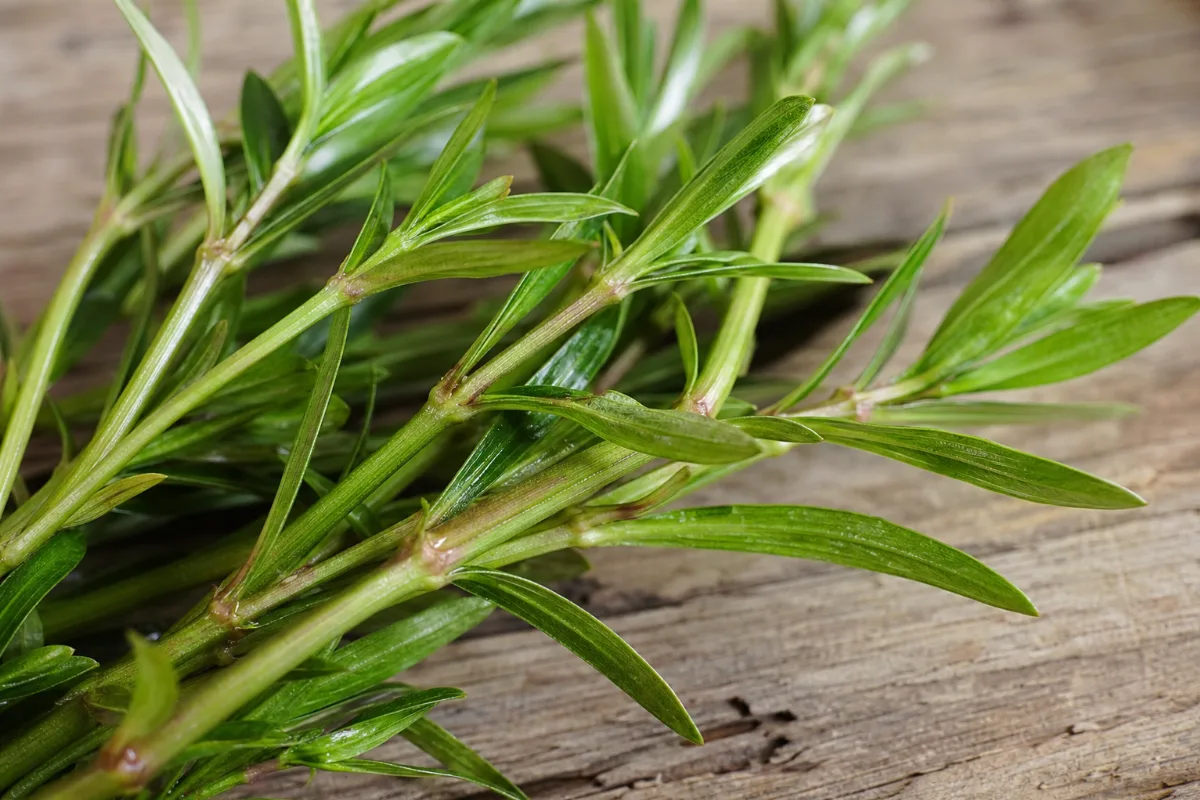
Herbs & Botanicals · Chinese parasitic-plant joint herb
Taxillus
Taxillus chinensis · also called Sang ji sheng, sangjisheng, Taxilli Herba
Sang ji sheng is the dried leafy stem of a mistletoe-like plant that grows on other trees. In Chinese medicine it is used for joint and back pain, weak knees and, traditionally, threatened miscarriage. No human trial of the herb itself was found, so these uses are unproven. The key caution is that it takes compounds from its host tree, including heart-active toxins from oleander, so its safety depends on which tree it grew on.
General information, not medical advice. Last substantive update · Not medically reviewed. A named clinician has not signed off on this page. How this page is made
About Taxillus
Sang ji sheng (Taxilli Herba) is the stem and leaf of Taxillus chinensis, a parasitic plant that lives on trees such as mulberry. It is used in Chinese medicine, mainly in formulas, for joint pain, back pain and threatened miscarriage. Evidence in people is essentially absent.
Safety first
The host tree matters. Taxillus passes chemicals from its host into the medicine. Herb grown on oleander contained cardiac glycosides, the heart-active family that digoxin belongs to, while herb grown on mulberry had none. A 2026 review warns that even hosts without those compounds may be hazardous and that the pharmacopoeia test is not enough.
Pregnancy: it is traditionally used for threatened miscarriage, but there is no human evidence and a review reports embryo toxicity at high amounts in animals. Bleeding or cramping in pregnancy needs a doctor. Avoid it unless a doctor tells you otherwise.
Heart, blood pressure and liver: ask a doctor or pharmacist first if you have heart disease, take heart or blood pressure medicines, or have liver disease. In a fish test, herb from five of six host trees showed some liver damage.
This is not European mistletoe. They are different plants with different medicines and safety records; do not mix up their data.
Which plant, and which host?
Taxillus chinensis is the main source. A close relative, Taxillus sutchuenensis, is also an accepted species and appears in research and trade; which species official standards list was not checked here.
Look-alikes and adulterants include Tolypanthi Herba and other mistletoe-family plants. Chemistry varies by host: herb from mulberry looks better on chemical quality scores than herb from camphor or Glyptostrobus hosts.
What the research shows
Two journal reviews (2022, 2026) summarise about 110 compounds, mostly flavonoids such as quercetin and avicularin, and many cell and animal findings. The authors call the field preliminary.
In people, the only trial-level evidence is for whole formulas: a meta-analysis of 18 kidney-tonifying formula studies (2,024 people) found lower blood pressure when added to routine treatment, with Taxillus one of six common herbs. The herb's own contribution is unknown.
Lab work includes a three-compound mix from the Angelica pubescens plus Taxillus pair easing disc-cell ageing in cells and rats, and two compounds blocking a uric acid enzyme in the test tube. None of this has been tested in people.
History and traditional use
Sang ji sheng has been used since the Eastern Han period for arthritis, joint pain, threatened abortion and high blood pressure, and is described as dispelling wind-dampness, strengthening bones and muscles and preventing miscarriage. It is listed in the 2020 Chinese Pharmacopoeia (second-hand through the reviews). It is usually boiled with other herbs, for example in the classic formula Duhuo Jisheng decoction.
At a glance
Traditional uses history, not proof
- Joint pain and rheumatism
- Weak lower back and knees
- Threatened miscarriage
- High blood pressure
Studied for research
- Joint pain: insufficient (tradition only)
- Inflammation (cells, rats): insufficient for people
- Disc wear (compounds in cells and rats): insufficient
- Blood pressure (rats; formulas in people): insufficient for the herb
Main compounds
- Quercetin
- Avicularin and other flavonoid glycosides
- Polysaccharides
- Host-derived cardiac glycosides (oleander host)
Common forms
- Dried leafy stems
- Decoction with other herbs
- Tea (regional)
- Extracts (lab and animal studies)
Research links: Qin 2022: comprehensive review of Taxillus chinensis (PubMed) · Ru 2026: host-dependent quality and safety review (PubMed) · Liu 2019: cardiac glycosides in Taxillus on oleander (PubMed) · Yang 2026: Angelica pubescens plus Taxillus compounds and disc cells (PubMed) · Wang 2022: kidney-tonifying formulas for hypertension (PubMed) · Research Library · Genes & Biomarkers Library
The plant and its history
- Accepted scientific name
- Taxillus chinensis (DC.) Danser
- Naming authority
- GBIF species match, read 2026-10-25: ACCEPTED species, key 4001208, family Loranthaceae. T. sutchuenensis (Lecomte) Danser is also ACCEPTED in GBIF (key 7288244) and is sometimes used for the same herb; which species the pharmacopoeia lists was not verified.
- Common names
- Sang ji sheng (Chinese (pinyin)); Sangjisheng (Chinese (pinyin)); Taxilli Herba (Latin (pharmacopoeia name))
- Botanical family
- Loranthaceae (mistletoe family; order Santalales), per GBIF.
- Classification
- Plantae > Loranthaceae > Taxillus > Taxillus chinensis
- Native range
- Not verified. Reviews place its medicinal use in southern China (for example Guangdong and Guangxi).
- Habitat
- A hemiparasite: it lives on host trees and takes water and minerals from them.
- What the plant looks like
- Roots: Haustoria (attachment organs) connect it to the host tree.; Stems: Medicinal part, together with leaves.; Leaves: Medicinal part. A 2022 review reports leaf flavonoid content about four times that of stems and branches.; Flowers: Not verified.; Fruit: Not verified.
- Cultivation
- A 2026 review urges standardised cultivation on safe hosts such as mulberry.
- Harvest and processing
- Not covered.
- Look-alikes and adulterants
- Name: Viscum album (European mistletoe); Note: A different plant and different medicine with its own poisoning and cancer-injection literature. Not interchangeable with sang ji sheng.; Name: Tolypanthi Herba; Note: A known adulterant that can be separated from Taxilli Herba by chemistry.; Name: Scurrula parasitica; Note: A related mistletoe also found on oleander; cardiac glycosides were detected in it there.
- Sustainability and conservation
- Not covered.
Traditional use and history history, not clinical proof
| Tradition or era | Documented use | Source |
|---|---|---|
| Eastern Han dynasty onward (Traditional Chinese Medicine) | Used for rheumatoid arthritis, joint pain, threatened abortion and high blood pressure; functions given as dispelling wind-dampness, strengthening bones and muscles and preventing miscarriage. | p36482376 |
| Chinese Pharmacopoeia 2020 | Listed as Taxilli Herba. | p36482376 |
| Folk use as tea in Guangdong and Guangxi | Stems and buds drunk as tea. NOT verified in this build (carried over from the existing herb summary). | p42650799 |
Traditional use shows how a plant was used. It does not show that a supplement works or is safe today.
What is inside, and how it may work
What the plant contains and how those compounds act in cells and animals. Laboratory and animal mechanisms are not proven effects in people.
Main compounds
| Compound | Family | Where it is concentrated | Activity studied | Level of evidence |
|---|---|---|---|---|
| Quercetin PubChem 5280343 | flavonol | Leaf more than stem | Anti-inflammatory and antioxidant in cells and animals. Also sold alone as a supplement; the lab results are for the compound, not the herb. 9 11 16 | Laboratory research |
| Avicularin PubChem 5490064 | flavonol glycoside | Stem and leaf | Diuretic effect reported in dogs and rats (second-hand from the 2022 review). 10 11 | Animal research |
| Polysaccharides | carbohydrate | Stem | Free-radical scavenging in the test tube and yeast. 11 | Laboratory research |
| Dihydromyricetin and oxyresveratrol | flavanonol and stilbene | Stem and leaf extract | Blocked xanthine oxidase in the test tube. 5 | Laboratory research |
| Cardiac glycosides (host-derived) | cardiac glycoside (steroid) | Stem and leaf on oleander hosts | Not made by the plant itself; absorbed from an oleander host. Heart-active. 6 7 | Laboratory detection |
Mechanisms, receptors and pathways
| Target or pathway | Gene or receptor | What was found | Level |
|---|---|---|---|
| Inflammation signals (NO, IL-6, TNF-alpha, NF-kB) | NF-kB; IL-6; TNF | Quercetin and lignans reduced inflammatory signals in cell and rat arthritis models (lab and animal). 11 1 | Laboratory research |
| Piezo1 / NF-kB in disc cells | PIEZO1; NF-kB p65 | A quercetin, osthole and columbianadin mix reduced pressure-induced cell ageing via this axis in cells and rats (lab and animal). 16 | Laboratory research |
| Xanthine oxidase | XDH/XO | Two compounds blocked the enzyme in the test tube. 5 | Laboratory research |
| MAPK, PI3K-Akt and TGF-beta (predicted) | MAPK; PI3K/AKT; TGF-beta | Computer-predicted pathways for the Cuscuta plus Taxillus pair in threatened abortion; not tested. 15 | Computational |
Absorption, metabolism and elimination
- Absorption
- 46 compounds from an ethyl acetate extract were found in rat blood; no human data.
- Distribution
- Not covered.
- Metabolism
- Not covered.
- Elimination
- Not covered.
- Bioavailability
- Not covered.
Isolated compounds versus whole extracts
Most lab results are for isolated quercetin, lignans or compound mixes, not for the boiled herb, and the herb's chemistry changes with its host tree. Isolated results therefore cannot be applied to the herb.
Nutritional composition
Sang ji sheng is a medicinal herb, not a food or a source of essential nutrients. Some regions drink it as tea.
9 not enough evidence
What is Taxillus good for?
The studied uses and how strong the evidence is. For sang ji sheng itself there is no human trial of the herb alone; everything below is tradition, lab or animal work, or formula research.
Benefits, one by one
Each card is a research question, not a promise. Tap a goal to filter. Open a card to see the studies, doses and limits.
Joint pain, rheumatism and weak back and knees (traditional use)
Not enough evidenceIn Chinese medicine sang ji sheng is used for joint pain, arthritis-type complaints and a weak lower back and knees. No human trial of the herb itself was found, so we do not know if it helps.
1 studiesUsed traditionally as the dried leafy stem, boiled in a decoction, us…
Studies, doses and limits
What the trials found
No human trial of Taxillus alone was found in the reviews or in our PubMed searches.
Results
The 2022 review lists rheumatoid arthritis and arthralgia (joint pain) among the traditional uses and describes the research as "preliminary". A formula called Duhuo Jisheng decoction, which includes it, is the usual traditional prescription for these complaints, but no trial of that formula is among our sources.
Effect sizes as reported
Not applicable
Why this rating
Insufficient: tradition only; no human trial of the herb alone was found.
Form and dose studied
Used traditionally as the dried leafy stem, boiled in a decoction, usually with other herbs. Ask a doctor or pharmacist about amounts.
Who was studied
No human trial of Taxillus alone was found.
Limits
Traditional claims only; formulas mix many herbs.
Why researchers looked
The Eastern Han period texts record it for "wind-dampness" complaints and for strengthening bones and muscles.
Traditional use
Traditional functions given by a 2022 review: "dispelling wind dampness, strengthening bones and muscles". Tradition, not trial evidence.
Proposed mechanism Laboratory
The review says flavonoids (quercetin, quercitrin, rutin, avicularin) are the likely active parts; this is lab-based, not shown in people.
A proposed mechanism does not show that the effect happens in people.
Do not use instead of arthritis medicines. See the safety tab: the host tree matters, and there is a pregnancy caution.
Inflammation and arthritis (lab and animal studies)
Not enough evidenceIn cells and animals, extracts and compounds from the plant lowered inflammation signals. These are lab and animal findings and do not show a benefit for people.
2 studiesUsed traditionally as the dried leafy stem, boiled in a decoction, us…
Studies, doses and limits
What the trials found
No human trial found.
Results
The 2022 review reports anti-inflammatory effects of extracts in mouse immune cells and in mice. A 2024 rat study of three isolated lignans from "Loranthus parasiticus" (possibly the same herb under an older name, not confirmed) found lower IL-6 and TNF-alpha in arthritic rats than in untreated arthritic rats.
Effect sizes as reported
Lower inflammation signals (IL-6, TNF-alpha) in rats; no effect size given in the abstract
Why this rating
Insufficient for people: cell and animal studies only; isolated compounds rather than the herb; one study uses an ambiguous plant name.
Form and dose studied
Used traditionally as the dried leafy stem, boiled in a decoction, usually with other herbs. Ask a doctor or pharmacist about amounts.
Who was studied
No human trial found.
Limits
Isolated compounds are not the same as boiled herb; rat models differ from human arthritis; plant-name ambiguity for the 2024 study.
Why researchers looked
Joint pain is the best-known traditional use, so researchers looked for anti-inflammatory activity.
Traditional use
Reviews and animal work point to flavonoids such as quercetin and to lignans.
Proposed mechanism Animal evidence
In cells, quercetin reduced nitric oxide release from immune cells; in rats, three lignans from "Loranthus parasiticus" lowered IL-6 and TNF-alpha.
A proposed mechanism does not show that the effect happens in people.
Lab results are not a reason to take it for arthritis. See the safety tab.
Disc wear and back pain (cells and rats, combined compounds)
Not enough evidenceA 2026 study tested compounds from the Chinese herb pair of Angelica pubescens and Taxillus on pressure-damaged disc cells and rats. It shows promise in the lab only and is not about the herb on its own.
1 studiesUsed traditionally as the dried leafy stem, boiled in a decoction, us…
Studies, doses and limits
What the trials found
No human trial found.
Results
A mix of quercetin, osthole and columbianadin (the study picked 50 micromolar, 6.25 micromolar and 12.5 micromolar for cell work) reduced pressure-induced cell ageing in disc cells and, when injected into rats, lessened disc damage on X-ray, MRI and tissue tests.
Effect sizes as reported
Not given as a single number in the abstract
Why this rating
Insufficient for people: lab and rat work with three isolated compounds from two herbs.
Form and dose studied
Used traditionally as the dried leafy stem, boiled in a decoction, usually with other herbs. Ask a doctor or pharmacist about amounts.
Who was studied
No human trial found.
Limits
Three isolated compounds, not the whole herb; Taxillus cannot be separated from Angelica; rats were injected; no human data.
Why researchers looked
Back pain and weak knees are core traditional uses. Duhuo Jisheng decoction is the classic formula, and this pair is its core.
Traditional use
The pair is the heart of the classic formula Duhuo Jisheng decoction (tradition).
Proposed mechanism Animal evidence
In the study the compounds blocked a pressure-sensing channel (Piezo1) and the inflammation switch NF-kB in disc cells.
A proposed mechanism does not show that the effect happens in people.
Back pain needs proper assessment; see a doctor, especially for numbness, weakness or bladder problems.
High blood pressure (traditional use; rat studies; formula meta-analysis)
Not enough evidenceSang ji sheng is used traditionally for high blood pressure and lowered it in rats. A meta-analysis of kidney-tonifying formulas that often include it found lower blood pressure, but it cannot say what Taxillus itself did.
2 studiesUsed traditionally as the dried leafy stem, boiled in a decoction, us…
Studies, doses and limits
What the trials found
The meta-analysis (18 studies, 2,024 people) is of whole formulas used with routine treatment; Taxillus alone was never tested.
Results
The 2022 review reports lower blood pressure in rats with the herb and with quercetin. A 2022 meta-analysis found kidney-tonifying formulas (Taxillus was one of the six most common herbs) plus routine treatment lowered systolic and diastolic pressure more than routine treatment alone, with no obvious adverse reactions reported.
Effect sizes as reported
No herb-specific effect size
Why this rating
Insufficient for the herb itself: the human evidence is for formulas of many herbs; the herb alone has only rat data.
Form and dose studied
Used traditionally as the dried leafy stem, boiled in a decoction, usually with other herbs. Ask a doctor or pharmacist about amounts.
Who was studied
Adults with high blood pressure in the formula trials; the herb alone untested.
Limits
Formula results cannot be credited to one herb; trial quality not stated in the abstract.
Why researchers looked
High blood pressure is a traditional use since the Eastern Han period.
Traditional use
Listed as a traditional use in the 2022 review.
Proposed mechanism Animal evidence
Rat work with the herb and with quercetin shows effects on nitric oxide, angiotensin II and endothelin; the formula review links core herbs to NOS3, TNF and calcium-signalling pathways.
A proposed mechanism does not show that the effect happens in people.
Do not replace blood pressure medicines. Extra blood pressure lowering with medicines is possible but unstudied. See the safety tab.
Threatened miscarriage (traditional use)
Not enough evidenceThe herb is traditionally used for bleeding and threatened miscarriage in pregnancy. No evidence was found that it works, and a review reports embryo toxicity in animals, so this is a use to avoid on your own.
2 studiesUsed traditionally as the dried leafy stem, boiled in a decoction, us…
Studies, doses and limits
What the trials found
No human trial found.
Results
The 2020 paper only predicted compounds, targets and pathways for the pair; no patient or animal was tested. The 2022 review reports that high amounts in animals showed genetic and embryo toxicity.
Effect sizes as reported
Not applicable
Why this rating
Insufficient: tradition and computer prediction only; animal toxicity signals point the other way.
Form and dose studied
Used traditionally as the dried leafy stem, boiled in a decoction, usually with other herbs. Ask a doctor or pharmacist about amounts.
Who was studied
No human trial found.
Limits
No testing in people, animals or cells; two-herb pair.
Why researchers looked
The traditional functions include "preventing miscarriage", and a Cuscuta plus Taxillus pair is traditionally used for it.
Traditional use
Traditional function from the 2022 review; the Tusizi (Cuscuta seed) plus sangjisheng pair is described as widely used.
Proposed mechanism Computational
A 2020 computer prediction linked the herb pair to MAPK, PI3K-Akt and TGF-beta pathways; this is a database exercise, not a test.
A proposed mechanism does not show that the effect happens in people.
Bleeding or cramping in pregnancy needs a doctor or emergency care, not a herb.
Uric acid and kidney strain (test-tube and computer work)
Not enough evidenceA 2025 study found compounds in an extract that block a uric acid enzyme in the test tube. It did not test uric acid or gout in animals or people.
1 studiesUsed traditionally as the dried leafy stem, boiled in a decoction, us…
Studies, doses and limits
What the trials found
No human trial found.
Results
Ethyl acetate extract: 92 compounds characterised, 46 found in rat blood. IC50 values for xanthine oxidase were 0.48 and 0.68 mg/mL, in the test tube only.
Effect sizes as reported
IC50 0.48 and 0.68 mg/mL
Why this rating
Insufficient: test-tube enzyme and computer work only.
Form and dose studied
Used traditionally as the dried leafy stem, boiled in a decoction, usually with other herbs. Ask a doctor or pharmacist about amounts.
Who was studied
No human trial found.
Limits
No disease model in the paper; the extract is a solvent extract, not a boiled herb.
Why researchers looked
An extract was earlier reported to help in animals with high uric acid kidney disease, so researchers looked for the responsible compounds.
Traditional use
No traditional use for gout is stated in our sources.
Proposed mechanism Laboratory research
Dihydromyricetin and oxyresveratrol blocked xanthine oxidase, the enzyme that makes uric acid, in the test tube.
A proposed mechanism does not show that the effect happens in people.
Do not use it for gout in place of treatment.
Blood sugar (mouse and cell studies)
Not enough evidenceFlavonoids and extracts improved blood sugar markers in mice and insulin sensitivity in liver cells. No human trial was found.
1 studiesUsed traditionally as the dried leafy stem, boiled in a decoction, us…
Studies, doses and limits
What the trials found
No human trial found.
Results
The 2022 review states improved blood sugar markers in mice and better insulin sensitivity in liver cells (original studies not read).
Effect sizes as reported
Not applicable
Why this rating
Insufficient: second-hand mouse and cell findings.
Form and dose studied
Used traditionally as the dried leafy stem, boiled in a decoction, usually with other herbs. Ask a doctor or pharmacist about amounts.
Who was studied
No human trial found.
Limits
Second-hand from a review; original studies not read.
Why researchers looked
Reviews list antihyperglycemic effects among the pharmacology findings.
Traditional use
Not a classic traditional use in our sources.
Proposed mechanism Animal evidence
Flavonoids; details not read in the review.
A proposed mechanism does not show that the effect happens in people.
If you take diabetes medicines, ask a doctor or pharmacist before adding any herb.
Antioxidant activity (test tube and yeast)
Not enough evidenceExtracts and polysaccharides mopped up free radicals in test-tube assays and in a yeast model. These tests do not show a health benefit in people.
1 studiesUsed traditionally as the dried leafy stem, boiled in a decoction, us…
Studies, doses and limits
What the trials found
No human trial found.
Results
The 2022 review reports free radical scavenging by water and ethanol extracts and by purified polysaccharides, and higher survival of yeast cells.
Effect sizes as reported
Not applicable
Why this rating
Insufficient: test-tube and yeast findings.
Form and dose studied
Used traditionally as the dried leafy stem, boiled in a decoction, usually with other herbs. Ask a doctor or pharmacist about amounts.
Who was studied
No human trial found.
Limits
Antioxidant assays do not predict benefit in the body.
Why researchers looked
Plant flavonoids and polysaccharides are routinely tested for this.
Traditional use
None specific.
Proposed mechanism Laboratory research
Radical scavenging in chemical assays.
A proposed mechanism does not show that the effect happens in people.
Not a reason to take it.
Cancer-cell, antiviral and other lab findings
Not enough evidenceExtracts and compounds slowed growth of cancer cells and tumours in mice and blocked a virus enzyme in the lab. No human trial was found, and nothing here suggests it treats cancer or infection.
1 studiesUsed traditionally as the dried leafy stem, boiled in a decoction, us…
Studies, doses and limits
What the trials found
No human trial found.
Results
The 2022 review reports that extracts and compounds such as quercetin and procyanidins slowed cancer-cell and mouse-tumour growth, an extract blocked a SARS-CoV enzyme and lowered hepatitis B surface antigen in cells, and isolated acids lowered viral load in infected ducklings.
Effect sizes as reported
Not applicable
Why this rating
Insufficient: cell and animal findings, second-hand.
Form and dose studied
Used traditionally as the dried leafy stem, boiled in a decoction, usually with other herbs. Ask a doctor or pharmacist about amounts.
Who was studied
No human trial found.
Limits
Second-hand from a review; original studies not read.
Why researchers looked
Broad pharmacology screening of a traditional herb.
Traditional use
None specific.
Proposed mechanism Laboratory research
Quercetin and related compounds; details not read.
A proposed mechanism does not show that the effect happens in people.
Do not use it in place of cancer or infection care.
Connections to the rest of health
How Taxillus connects to the rest of our health knowledge graph. Every link says what kind of connection it is. A safety link (for example to the liver) is a warning, not a benefit. A study that merely mentions a topic never creates a benefit link.
Explore every connection: goals, body systems, organs, symptoms, genes
A. Wellness goals
| Connected to | Kind of connection | Evidence status | Context | Studies |
|---|---|---|---|---|
| Joint Support | Not enough evidence | Joint pain, rheumatism and weak back and knees (traditional use): In Chinese medicine sang ji sheng is used for joint pain, arthritis-type complaints and a weak lower back and knees. No human trial of the herb itself was found, so we do not know if it helps. | 11 | |
| Mobility Support | Not enough evidence | Joint pain, rheumatism and weak back and knees (traditional use): In Chinese medicine sang ji sheng is used for joint pain, arthritis-type complaints and a weak lower back and knees. No human trial of the herb itself was found, so we do not know if it helps. | 11 | |
| Inflammation Balance | Preliminary mechanism | Not enough evidence | Inflammation and arthritis (lab and animal studies): In cells and animals, extracts and compounds from the plant lowered inflammation signals. These are lab and animal findings and do not show a benefit for people. | 11 1 |
| Joint Support | Preliminary mechanism | Not enough evidence | Inflammation and arthritis (lab and animal studies): In cells and animals, extracts and compounds from the plant lowered inflammation signals. These are lab and animal findings and do not show a benefit for people. Disc wear and back pain (cells and rats, combined compounds): A 2026 study tested compounds from the Chinese herb pair of Angelica pubescens and Taxillus on pressure-damaged disc cells and rats. It shows promise in the lab only and is not about the herb on its own. | 11 1 16 5 |
| Mobility Support | Preliminary mechanism | Not enough evidence | Disc wear and back pain (cells and rats, combined compounds): A 2026 study tested compounds from the Chinese herb pair of Angelica pubescens and Taxillus on pressure-damaged disc cells and rats. It shows promise in the lab only and is not about the herb on its own. | 16 |
| Blood Pressure Support | Preliminary mechanism | Not enough evidence | High blood pressure (traditional use; rat studies; formula meta-analysis): Sang ji sheng is used traditionally for high blood pressure and lowered it in rats. A meta-analysis of kidney-tonifying formulas that often include it found lower blood pressure, but it cannot say what Taxillus itself did. | 11 13 |
| Heart Health | Preliminary mechanism | Not enough evidence | High blood pressure (traditional use; rat studies; formula meta-analysis): Sang ji sheng is used traditionally for high blood pressure and lowered it in rats. A meta-analysis of kidney-tonifying formulas that often include it found lower blood pressure, but it cannot say what Taxillus itself did. | 11 13 |
| Womens Wellness | Not enough evidence | Threatened miscarriage (traditional use): The herb is traditionally used for bleeding and threatened miscarriage in pregnancy. No evidence was found that it works, and a review reports embryo toxicity in animals, so this is a use to avoid on your own. | 11 15 | |
| Blood Sugar Balance | Preliminary mechanism | Not enough evidence | Blood sugar (mouse and cell studies): Flavonoids and extracts improved blood sugar markers in mice and insulin sensitivity in liver cells. No human trial was found. | 11 |
| Cellular Protection | Preliminary mechanism | Not enough evidence | Antioxidant activity (test tube and yeast): Extracts and polysaccharides mopped up free radicals in test-tube assays and in a yeast model. These tests do not show a health benefit in people. Cancer-cell, antiviral and other lab findings: Extracts and compounds slowed growth of cancer cells and tumours in mice and blocked a virus enzyme in the lab. No human trial was found, and nothing here suggests it treats cancer or infection. | 11 |
B. Body systems
| Connected to | Kind of connection | Evidence status | Context | Studies |
|---|---|---|---|---|
| Reproductive system | Documented risk | Embryo toxicity at high amounts in animals; traditional miscarriage use unproven. Preparation or compound: Taxilli Herba (animal and review) |
11 | |
| Heart and circulation | Theoretical | Host-derived cardiac glycosides. Preparation or compound: Oleander-hosted herb |
6 7 | |
| Liver | Animal evidence | Some liver damage in zebrafish. Preparation or compound: Water extracts from five hosts |
11 | |
| Bones Joints Muscles | Biological association | Not enough evidence | Studied for: Joint pain, rheumatism and weak back and knees (traditional use) Studied for: Inflammation and arthritis (lab and animal studies) | 11 1 16 |
| Musculoskeletal System | Biological association | Not enough evidence | Studied for: Joint pain, rheumatism and weak back and knees (traditional use) Studied for: Disc wear and back pain (cells and rats, combined compounds) | 11 16 |
| Pain Inflammation | Biological association | Not enough evidence | Studied for: Inflammation and arthritis (lab and animal studies) | 11 1 |
| Heart Circulation | Biological association | Not enough evidence | Studied for: High blood pressure (traditional use; rat studies; formula meta-analysis) | 11 13 |
| Cardiovascular System | Biological association | Not enough evidence | Studied for: High blood pressure (traditional use; rat studies; formula meta-analysis) | 11 13 |
| Reproductive System | Biological association | Not enough evidence | Studied for: Threatened miscarriage (traditional use) | 11 15 |
| Kidney Urinary | Biological association | Not enough evidence | Studied for: Uric acid and kidney strain (test-tube and computer work) | 5 |
| Blood Sugar Support | Biological association | Not enough evidence | Studied for: Blood sugar (mouse and cell studies) | 11 |
| Wellness Prevention | Biological association | Not enough evidence | Studied for: Antioxidant activity (test tube and yeast) Studied for: Cancer-cell, antiviral and other lab findings | 11 |
I. Biomarkers
| Connected to | Kind of connection | Evidence status | Context | Studies |
|---|---|---|---|---|
| IL-6 and TNF-alpha (inflammation signals) in arthritic rats | Biological association | Not enough evidence | Measured in trials: lowered (in rats, isolated lignans). A lab change is not the same as a health benefit. | 1 |
| Ageing (senescence) markers in disc cells | Biological association | Not enough evidence | Measured in trials: reduced (in cells and rats, three-compound mix). A lab change is not the same as a health benefit. | 16 |
| Blood pressure in hypertensive rats | Biological association | Not enough evidence | Measured in trials: lowered (in rats). A lab change is not the same as a health benefit. | 11 |
| Systolic and diastolic blood pressure in people (kidney-tonifying formulas) | Biological association | Not enough evidence | Measured in trials: lowered with formulas plus routine treatment (Taxillus one of many herbs). A lab change is not the same as a health benefit. | 13 |
| Xanthine oxidase activity (uric acid enzyme), test tube | Biological association | Not enough evidence | Measured in trials: inhibited in the test tube. A lab change is not the same as a health benefit. | 5 |
K. Biological pathways
L. Active compounds
| Connected to | Kind of connection | Evidence status | Context | Studies |
|---|---|---|---|---|
| Quercetin | Biological association | In vitro | Anti-inflammatory and antioxidant in cells and animals. Also sold alone as a supplement; the lab results are for the compound, not the herb. Preparation or compound: Leaf more than stem |
9 11 16 |
| Avicularin | Biological association | Animal | Diuretic effect reported in dogs and rats (second-hand from the 2022 review). Preparation or compound: Stem and leaf |
10 11 |
| Polysaccharides | Biological association | In vitro | Free-radical scavenging in the test tube and yeast. Preparation or compound: Stem |
11 |
| Dihydromyricetin and oxyresveratrol | Biological association | In vitro | Blocked xanthine oxidase in the test tube. Preparation or compound: Stem and leaf extract |
5 |
| Cardiac glycosides (host-derived) | Biological association | Laboratory detection | Not made by the plant itself; absorbed from an oleander host. Heart-active. Preparation or compound: Stem and leaf on oleander hosts |
6 7 |
Each connection is stored with the ingredient, the connected record, the kind of connection, the evidence status, the supporting studies, the preparation or compound involved, and a review date (last reviewed October 25, 2026).
The evidence
The research centre for Taxillus. Every record here was checked against PubMed or the publisher's page; we never list a study we have not verified.
Evidence by outcome
Bars show how many studies we found for each outcome, not how well it works. People are added up across trials only (reviews are not added, to avoid double counting).
How we rate evidence
High certainty
Several well-run trials or reviews agree; further research is unlikely to change the picture much.
Moderate certainty
Good trials point the same way, but some doubt remains.
Low certainty
Small, short or inconsistent trials. The finding could change with better research.
Very low certainty
Very little or very weak human data. Treat as a possibility only.
Mixed findings
Trials or reviews disagree with each other.
Not enough evidence
Not enough human research to say either way.
Evidence against
Good research found no benefit, or found harm.
We take the reviewers' own risk-of-bias and GRADE statements where they exist, and otherwise judge from study size, design, consistency, directness and whether a product matches what is sold. Many publications do not make evidence high. Method note: We read our existing herb summary, searched PubMed, read the abstract of each PubMed record cited (and the full text of the 2022 review's toxicology and chemistry sections), and checked names in GBIF and compounds in PubChem. Pages that could not be opened are marked not found or not verified.
Study library: every study we checked 18
| Study | Design | People | Product, dose, length | Result |
|---|---|---|---|---|
| Bai 2024 The therapeutic effect of Loranthus parasiticus lignan derivatives on collagen-induced arthritis in rats through the SHBG/NFkB pathway. Inflammopharmacology · PMID 38227094 · DOI |
Animal experiment animal |
Rats with collagen-induced arthritis | Three lignan compounds extracted from "Loranthus parasiticus" compounds (not whole herb) not applicable not applicable · vs not applicable |
The three lignans lowered IL-6 and TNF-alpha in the rats compared with untreated arthritic rats and raised free androgen in the blood. Computer docking suggested (-)-nortrachelogenin binds sex hormone-binding globulin. The authors call the compound findings "promising" for rheumatoid arthritis. Anti-inflammatory signals in rats for isolated lignans (not applicable) Methods, limits and fundingOutcomes: Joint inflammation signals (IL-6, TNF-alpha), free androgen, NF-kB Limitations: "Loranthus parasiticus" is an older, sometimes ambiguous name; we could not confirm it is the same plant as Taxillus chinensis. Isolated compounds, rat model, no human data. Funding and conflicts: Funding not stated in abstract. Read: abstract (PubMed efetch) |
| GBIF 2026 GBIF species match: Taxillus chinensis GBIF API · Source |
Database record plant |
not applicable not applicable · vs not applicable |
GBIF species match (read 2026-10-25): Taxillus chinensis (DC.) Danser, rank SPECIES, status ACCEPTED, match EXACT, confidence 99, key 4001208, family Loranthaceae, order Santalales. not applicable (not applicable) Methods, limits and fundingOutcomes: Name check Limitations: Name only. Funding and conflicts: not applicable Read: API response | |
| GBIF 2026 GBIF species match: Taxillus sutchuenensis GBIF API · Source |
Database record plant |
not applicable not applicable · vs not applicable |
GBIF species match (read 2026-10-25): Taxillus sutchuenensis (Lecomte) Danser, rank SPECIES, status ACCEPTED, match EXACT, confidence 99, key 7288244, family Loranthaceae. not applicable (not applicable) Methods, limits and fundingOutcomes: Name check Limitations: Name only. This check does not say which of the two species the Chinese Pharmacopoeia lists. Funding and conflicts: not applicable Read: API response | |
| Le 2024 Phylogeny, character evolution and historical biogeography of Scurrulinae (Loranthaceae): new insights into the circumscription of the genus Taxillus. BMC Plant Biol · PMID 38778295 · DOI |
Plant phylogeny plant |
89 DNA from 89 mistletoe individuals |
Not applicable (plant genetics) not applicable not applicable not applicable · vs not applicable |
Taxillus and Scurrula diverged in the mid-Miocene. Phyllodesmis is recognised as a separate genus. The single African species, Taxillus wiensii, evolved independently from the Asian members, so the genus as then defined is not one family line. Not applicable (not applicable) Methods, limits and fundingOutcomes: Relationships among Taxillus, Scurrula and related mistletoe genera Limitations: Plant classification; says nothing about medicine. Funding and conflicts: Funding not stated in abstract. Read: abstract (PubMed efetch) |
| Liang 2025 Exploring the Material Basis of Taxillus chinensis in the Treatment of Hyperuricemia Nephropathy Through Absorbed Into Blood Component Analysis and Network Pharmacology. Biomed Chromatogr · PMID 40214159 · DOI |
Laboratory and computer animal |
Rat plasma analysis, computer network prediction and a test-tube enzyme assay | Ethyl acetate extract of Taxillus chinensis stem and leaf not applicable not applicable · vs not applicable |
92 compounds were characterised in the extract and 46 were found in the blood of rats given it. In the test tube, dihydromyricetin and oxyresveratrol blocked xanthine oxidase (a uric acid enzyme) with IC50 values of 0.48 and 0.68 mg/mL. The authors note earlier work showing benefit of the extract in hyperuricemic kidney disease in animals, but this paper did not test that. Test-tube enzyme block and computer predictions only (IC50 0.48 and 0.68 mg/mL (test tube)) Methods, limits and fundingOutcomes: Compounds in the extract and in rat blood; predicted targets; xanthine oxidase inhibition Limitations: No disease model in this paper; rats used only to see which compounds reach blood; IC50 values are high (mg/mL range), so the real-world meaning is unknown. Funding and conflicts: Funding not stated in abstract. Read: abstract (PubMed efetch) |
| Liu 2019 Identification and analysis of cardiac glycosides in Loranthaceae parasites Taxillus chinensis (DC.) Danser and Scurrula parasitica Linn. and their host Nerium indicum Mill. J Pharm Biomed Anal · PMID 31220703 · DOI |
Laboratory analysis plant |
Field samples of oleander (Nerium indicum) and the parasites growing on it; mulberry-hosted Taxillus as a control | Taxillus chinensis and Scurrula parasitica from oleander, mulberry and osmanthus hosts stem and leaf not applicable not applicable · vs not applicable |
29 cardiac glycosides were identified. 28 were found in T. chinensis growing on oleander (the oleander host passes its own glycosides to the parasite). None were found in T. chinensis growing on mulberry, nor in Scurrula growing on osmanthus. Heart-active compounds present in oleander-hosted material, absent in mulberry-hosted material (not applicable) Methods, limits and fundingOutcomes: Cardiac glycosides detected by mass spectrometry Limitations: Chemical detection only, no toxicity or human data; few samples; the abstract text on counts is slightly inconsistent between this paper and its Chinese-language companion (see notes). Funding and conflicts: Funding not stated in abstract. Read: abstract (PubMed efetch) |
| Liu 2019 [Correlation study on chemical constitutes of cardiac glycosides in Taxillus chinensis and its Nerium indicum host by UPLC-Q-TOF-MS/MS]. Zhongguo Zhong Yao Za Zhi · PMID 31359655 · DOI |
Laboratory analysis plant |
Field samples of oleander and Taxillus chinensis harvested from it; mulberry-hosted Taxillus as control | Taxillus chinensis from oleander and from mulberry stem and leaf not applicable not applicable · vs not applicable |
29 cardiac glycosides identified; 28 belonged to the oleander host, 5 to T. chinensis harvested from oleander, and none to T. chinensis harvested from mulberry. Same direction as the English-language paper: host-derived heart-active compounds in oleander-hosted herb only (not applicable) Methods, limits and fundingOutcomes: Cardiac glycosides detected by mass spectrometry Limitations: Chemical detection only; probably the same sample set as the English-language paper, so not independent confirmation. Funding and conflicts: Funding not stated in abstract. Read: abstract (PubMed efetch) |
| NCBI 2026 NCBI Bookshelf search for a LiverTox entry on Taxillus, Loranthus or mistletoe NCBI Bookshelf · Source |
Database search plant |
not applicable not applicable · vs not applicable |
A Bookshelf search (2026-10-25) returned a handful of unspecific hits and no entry that we could confirm for Taxillus or Sang Ji Sheng. We did not open them, so "no LiverTox entry" is not verified. not applicable (not applicable) Methods, limits and fundingOutcomes: Is there a LiverTox record? Limitations: Search only; a missing entry is not proof of safety. Funding and conflicts: not applicable Read: search count only | |
| PubChem 2026 PubChem: Quercetin (CID 5280343) PubChem PUG REST · Source |
Database record plant |
not applicable not applicable · vs not applicable |
PubChem name lookup (read 2026-10-25): Quercetin, CID 5280343, formula C15H10O7. not applicable (not applicable) Methods, limits and fundingOutcomes: Compound identity Limitations: Identity only. Funding and conflicts: not applicable Read: API response | |
| PubChem 2026 PubChem: Avicularin (CID 5490064) PubChem PUG REST · Source |
Database record plant |
not applicable not applicable · vs not applicable |
PubChem name lookup (read 2026-10-25): Avicularin, CID 5490064, formula C20H18O11. not applicable (not applicable) Methods, limits and fundingOutcomes: Compound identity Limitations: Identity only. Funding and conflicts: not applicable Read: API response | |
| Qin 2022 Taxillus chinensis (DC.) Danser: a comprehensive review on botany, traditional uses, phytochemistry, pharmacology, and toxicology. Chin Med · PMID 36482376 · DOI |
Narrative review plant |
Published literature on T. chinensis up to May 2022 | Taxillus chinensis (dried leafy stems, extracts, isolated compounds) stem and leaf not applicable not applicable · vs not applicable |
About 110 compounds identified, flavonoids the main group (quercetin, quercitrin, rutin, avicularin). Reported effects are anti-inflammatory, antioxidant, anticancer, antimicrobial, antiviral, diuretic, blood-pressure-lowering and blood-sugar-lowering, from cell and animal work. The authors call the research "preliminary". Toxicology section (full text read): reports are mainly liver and embryo toxicity; toxicity depends on the host tree; zebrafish tests of water extracts from six hosts found no liver damage with the mulberry host and some liver damage with five others; high amounts in animals showed genetic and embryo toxicity; few toxicology studies exist. No human trial is described. No human efficacy data; lab and animal findings only (not applicable) Methods, limits and fundingOutcomes: Botany, traditional uses, chemistry, pharmacology, toxicity Limitations: Narrative review, not systematic; most cited work is Chinese-language lab and animal work; toxicology data are second-hand from the review. Funding and conflicts: Funding not stated in abstract. Read: abstract (PubMed efetch) and PMC full text (toxicology, chemistry and pharmacology tables) |
| Ru 2026 Host-Dependent Medicinal Quality of Taxilli Herba: A Comprehensive Review on Chemical Profiles and Bioactivities. Biomolecules · PMID 42650799 · DOI |
Narrative review plant |
Published literature on how host trees change the quality and safety of Taxilli Herba | Taxilli Herba (Taxillus chinensis stems and leaves) from different host trees stem and leaf not applicable not applicable · vs not applicable |
The host tree changes the herb in three ways: its chemistry (including compounds taken from the host), its toxicity (the authors say even hosts without cardiac glycosides may pose hazards), and its activity. They say the cardiac glycoside test in the current Chinese Pharmacopoeia is not enough to guarantee safety for herb from many hosts. They propose restricting approved hosts and promoting cultivation on safer hosts such as mulberry (Morus alba). Not applicable (quality and safety review) (not applicable) Methods, limits and fundingOutcomes: Host effects on chemistry, toxicity and activity Limitations: Narrative review; abstract read only for the details here (full text not read); recommendations are the authors' opinion. Funding and conflicts: Funding not stated in abstract. Read: abstract (PubMed efetch) |
| Wang 2022 Traditional Chinese medicine method of tonifying kidney for hypertension: Clinical evidence and molecular mechanisms. Front Cardiovasc Med · PMID 36465462 · DOI |
Meta analysis of herbal formulas |
2024 18 studies, 2,024 people with high blood pressure |
Kidney-tonifying herbal formulas plus routine treatment (many different herbs; Taxillus chinensis was one of six "core" herbs found by data mining) various not applicable not applicable · vs not applicable |
Formulas plus routine treatment beat routine treatment alone for systolic and diastolic blood pressure, blood lipids and symptoms; no obvious adverse reactions were reported. Data mining listed Eucommia, Vitex negundo, Taxillus chinensis (sangjisheng), Ligustrum, Astragalus and Rehmannia as the six most common herbs. PROSPERO CRD42022358276. Benefit is for whole formulas; the effect of Taxillus alone cannot be separated (not applicable) Methods, limits and fundingOutcomes: Blood pressure, blood lipids, vessel function, symptoms Limitations: Formulas varied; Taxillus is one herb among many; the trials were mostly small and probably open-label (not stated in the abstract); the herb gave no separate result. Funding and conflicts: Funding not stated in abstract. Read: abstract (PubMed efetch) |
| Wu 2021 Quality Evaluation of Taxilli Herba from Different Hosts Based on Simultaneous Determination of Multiple Bioactive Constituents Combined with Multivariate Statistical Analysis. Molecules · PMID 34946568 · DOI |
Laboratory analysis plant |
45 45 samples of Taxilli Herba and the look-alike Tolypanthi Herba |
Taxilli Herba from various host trees; Tolypanthi Herba (adulterant) stem and leaf not applicable not applicable · vs not applicable |
Statistics could tell Taxilli Herba from its adulterant Tolypanthi Herba, and Taxilli Herba overall scored better in quality. Herb from mulberry (Morus alba) scored better; herb from camphor (Cinnamomum camphora) and Glyptostrobus pensilis hosts scored relatively poorly. Chemical quality differs by host and species (not applicable) Methods, limits and fundingOutcomes: 33 constituents (flavonoids, organic acids, amino acids, nucleosides) Limitations: Chemical content only; "quality" is a chemistry score, not a measure of benefit or safety. Funding and conflicts: Funding not stated in abstract. Read: abstract (PubMed efetch) |
| Yang 2020 Systems Pharmacology-Based Research on the Mechanism of Tusizi-Sangjisheng Herb Pair in the Treatment of Threatened Abortion. Biomed Res Int · PMID 32775426 · DOI |
Computer prediction computer |
Database and computer analysis (no patients, no animals) | Two-herb pair: Cuscuta seed (tusizi) plus Taxilli Herba (sangjisheng) seed and stem/leaf not applicable not applicable · vs not applicable |
From a herbal database, 75 ingredients were collected, 12 screened as bioactive, and 153 protein targets predicted; 31 targets and 3 pathways (MAPK, PI3K-Akt, TGF-beta) were linked to threatened abortion. The paper says the pair is "widely used" traditionally, but it did not test it in any patient or animal. A computer prediction only; no evidence the pair prevents miscarriage (not applicable) Methods, limits and fundingOutcomes: Predicted compounds, protein targets and pathways Limitations: No lab, animal or human testing; database predictions; a two-herb pair, so Taxillus cannot be separated out. Funding and conflicts: Funding not stated in abstract. Read: abstract (PubMed efetch) |
| Yang 2026 Mechanistic study on components of Angelica Pubescens-Taxillus Chinensis in improving compression-induced intervertebral disc degeneration via piezo1/NF-kB signaling axis. Front Cell Dev Biol · PMID 42889204 · DOI |
Cell and animal experiment animal |
Human-style disc (nucleus pulposus) cells under pressure in the lab, and rats with a tail-disc compression injury | Mixture of three isolated compounds (quercetin, osthole, columbianadin) from the Angelica pubescens and Taxillus chinensis pair, as in the classic Duhuo Jisheng decoction compounds (not whole herb) not applicable not applicable · vs not applicable |
The best compound mix reduced pressure-induced ageing of disc cells and blocked a pressure-sensing channel (Piezo1) and NF-kB signalling. In rats it was given by injection into the abdomen and the disc damage looked less severe on X-ray, MRI and tissue tests. Computer docking suggested the compounds can bind the same targets. Benefit in cells and rats for a three-compound mix, not for the herb (not applicable) Methods, limits and fundingOutcomes: Cell ageing markers; Piezo1 and NF-kB signals; X-ray, MRI and tissue findings in rats Limitations: Isolated compounds from two herbs, not Taxillus alone; rat tail model; injected, not eaten; no human data. Funding and conflicts: Funding not stated in abstract. Read: abstract (PubMed efetch) |
| Yuan 2023 Metabolite Profiling and Transcriptome Analysis Explain the Difference in Accumulation of Bioactive Constituents in Taxilli Herba from Two Hosts. Genes (Basel) · PMID 37239400 · DOI |
Laboratory analysis plant |
Taxilli Herba from mulberry (Morus alba) and sweetgum (Liquidambar formosana) | Taxilli Herba from two hosts stem and leaf not applicable not applicable · vs not applicable |
Flavonol compounds (flavonol aglycones and glycosides) were higher in herb from the mulberry host than from the sweetgum host. The gene work suggests sugar-attaching enzymes help build the flavonoid glycosides. Flavonoid content differs by host (not applicable) Methods, limits and fundingOutcomes: Gene activity and 81 identified compounds Limitations: Chemistry and gene activity only; two hosts. Funding and conflicts: Funding not stated in abstract. Read: abstract (PubMed efetch) |
| Zhou 2025 [Analysis of impact of host plants on quality of Taxilli Herba based on widely targeted metabolomics]. Zhongguo Zhong Yao Za Zhi · PMID 40686108 · DOI |
Laboratory analysis plant |
Taxilli Herba from mulberry, weeping willow and cassia (cinnamon) hosts and the host branches | Taxilli Herba from three host trees stem and leaf not applicable not applicable · vs not applicable |
717 metabolites were detected. The three host groups separated clearly. Each host passed its own characteristic compounds to the herb (32 characteristic metabolites in mulberry-hosted, 8 in willow-hosted and 26 in cassia-hosted herb). Host tree changes the chemical make-up of the herb (not applicable) Methods, limits and fundingOutcomes: Metabolites detected by mass spectrometry Limitations: Chemistry only; no activity or safety testing. Funding and conflicts: Funding not stated in abstract. Read: abstract (PubMed efetch) |
What we do not know yet
- No human trial of Taxillus alone for any use was found.
- Original toxicology papers (liver, embryo, genetic) were not read; they are second-hand from a review.
- No poisoning case report was found, so the heart risk from oleander-hosted herb is inferred from chemistry.
- Which species and which hosts official standards allow was not verified.
- No data in pregnancy, breastfeeding or children.
How new research is added
New studies are found by a saved PubMed search and placed in a review queue. A person reads each one before it changes any rating or safety wording.
Lab markers
What changed in blood or saliva tests during trials. A changed number is not the same as feeling or being healthier, and we give no "normal ranges".
Other 5
IL-6 and TNF-alpha (inflammation signals) in arthritic rats
Lowered (in rats, isolated lignans) in trials
IL-6 and TNF-alpha are signalling proteins that drive joint inflammation; many arthritis drugs target them.
Not enough evidenceResults and what it means
Why it was measured
Judges anti-inflammatory activity in animal arthritis.
Statistical vs. clinical meaning
Animal result for isolated compounds; plant-name unconfirmed.
Safety implication
See safety section.
| Study | Result | People | Product |
|---|---|---|---|
| 1 | Three lignans lowered IL-6 and TNF-alpha compared with untreated arthritic rats (no numbers in the abstract). | Rats with collagen-induced arthritis | Lignans from 'Loranthus parasiticus' |
Ageing (senescence) markers in disc cells
Reduced (in cells and rats, three-compound mix) in trials
Senescent cells have stopped dividing and give off inflammatory signals; they build up in worn discs.
Not enough evidenceResults and what it means
Why it was measured
A cell-level marker of disc degeneration.
Statistical vs. clinical meaning
Lab and rat result for a compound mix; not shown in people.
Safety implication
See safety section.
| Study | Result | People | Product |
|---|---|---|---|
| 16 | The optimal compound mix reduced senescence markers in pressure-stressed disc cells and lessened disc damage in rats. | Disc cells in the lab; rats with tail-disc compression | Quercetin, osthole, columbianadin mix |
Blood pressure in hypertensive rats
Lowered (in rats) in trials
Pressure of blood against artery walls.
Not enough evidenceResults and what it means
Why it was measured
Judges blood-pressure-lowering effect in animals.
Statistical vs. clinical meaning
Animal result only; not shown in people.
Safety implication
If you take blood pressure drugs, ask a doctor or pharmacist before combining.
| Study | Result | People | Product |
|---|---|---|---|
| 11 | The herb (and quercetin) lowered blood pressure in rats and changed nitric oxide, angiotensin II and endothelin levels (second-hand from the review). | Spontaneously hypertensive and renal-hypertensive rats | Taxilli Herba or quercetin |
Systolic and diastolic blood pressure in people (kidney-tonifying formulas)
Lowered with formulas plus routine treatment (Taxillus one of many herbs) in trials
The two blood pressure readings taken at the arm.
Not enough evidenceResults and what it means
Why it was measured
A clinical risk measure for heart disease and stroke.
Statistical vs. clinical meaning
Credit cannot be given to Taxillus.
Safety implication
Possible extra lowering with blood pressure medicines; unstudied for Taxillus.
| Study | Result | People | Product |
|---|---|---|---|
| 13 | Formulas plus routine treatment lowered both pressures more than routine treatment alone (numbers not in the abstract). | 18 studies, 2,024 people | Kidney-tonifying herbal formulas (Taxillus among six core herbs) |
Xanthine oxidase activity (uric acid enzyme), test tube
Inhibited in the test tube in trials
Xanthine oxidase is an enzyme that makes uric acid.
Not enough evidenceResults and what it means
Why it was measured
A lab marker for uric-acid-lowering potential.
Statistical vs. clinical meaning
Test-tube result only.
Safety implication
See safety section.
| Study | Result | People | Product |
|---|---|---|---|
| 5 | Dihydromyricetin and oxyresveratrol blocked the enzyme with IC50 0.48 and 0.68 mg/mL. | Enzyme assay | Compounds from the ethyl acetate extract |
Safety
What studies and official sources say about side effects, medicines and who should check first. Each point shows what kind of evidence it comes from.
Main points to know 5
- The host tree decides how safe it is. Taxillus grows on other trees and takes up compounds from them. On oleander it carried heart-active glycosides; on mulberry none were found. In zebrafish tests, herb from mulberry did not harm the liver while herb from five other hosts did. A 2026 review says even hosts without cardiac glycosides may be hazardous and that the pharmacopoeia test is not enough. Buyers rarely know the host. Laboratory+animal 6 7 11 12 18
- Pregnancy: avoid unless a doctor says otherwise. It is traditionally used for threatened miscarriage, but there is no human evidence that it works. A review reports genetic and embryo toxicity at high amounts in animals. Bleeding or cramping in pregnancy needs medical care, not a herb. Traditional+animal 11 15
- Heart conditions and heart medicines. Oleander-hosted material contains cardiac glycosides, the family that digoxin belongs to. That is a theoretical risk for people with heart disease or heart rhythm problems or who take heart medicines. No case report was found in our sources. Theoretical+laboratory 6 7 12
- Not the same as European mistletoe. Taxillus chinensis is a different plant from European mistletoe (Viscum album). They share the habit of living on trees and the family trait of host-dependence, but their medicines and safety profiles are different. Do not apply the mistletoe page's cancer-injection or poisoning data to this herb, or the reverse. Taxonomic 2 4
- Few safety studies exist. A 2022 review says very few toxicology studies exist and calls for a full evaluation. Missing reports are not proof of safety. Absence of data 11
Side effects 2
| Effect | How often | Severity and recovery | Evidence |
|---|---|---|---|
| No human adverse-effect rates for Taxillus alone were found. The 2022 review reports liver and embryo toxicity in lab and animal tests and notes few toxicology studies. Absence of reports is not proof of safety. | Not established | unknown Not stated | Absence of data 11 |
| Possible heart-glycoside effects (slow or irregular heartbeat, nausea) from oleander-hosted herb. This is an inference from the chemistry; no human case was found. Inference only; flagged for human review. | Not established | potentially serious Not stated | Theoretical+laboratory 6 7 |
Liver
A 2022 review states the plant shows liver toxicity. Its main data point is a zebrafish study of water extracts from six host trees: herb from mulberry did not damage the liver, but herb from five other hosts (including oleander, weeping willow and chinaberry, as named in the review) did to some degree. No human liver-injury case was found. 11 8
How often. Unknown.
Monitoring. No monitoring advice found. People with liver disease should ask a doctor first.
This is a safety connection. It is not evidence that Taxillus supports liver health.
Medicines and supplements 4
| With | Why it matters | Importance | Evidence | What to do |
|---|---|---|---|---|
| Heart medicines (digoxin and other heart-rhythm drugs) drug | Oleander-hosted Taxillus contains cardiac glycosides; digoxin belongs to that family. | Possible added heart effects, rhythm problems or toxicity. No clinical report found. | Theoretical+laboratory Very low certainty 6 7 | Ask a doctor or pharmacist before combining. |
| Blood pressure medicines drug | Lowered blood pressure in rats; traditional use for hypertension. | Possible extra drop in blood pressure (dizziness). No interaction study found. | Theoretical+animal Very low certainty 11 | Ask a doctor or pharmacist before combining. |
| Diabetes medicines drug | Mouse and cell studies reported better blood sugar markers. | Theoretical; unproven in people. | Theoretical+animal Very low certainty 11 | Ask a doctor or pharmacist before combining. |
| Other herbs in the same formula herb | Usually boiled with Angelica pubescens, Cuscuta, eucommia and others. | Nothing is known about combined safety beyond tradition. | Traditional Not enough evidence 15 16 | Tell your doctor about every herb you take. |
Who should check first 5
| Situation | Advice | Evidence |
|---|---|---|
| Pregnancy and trying to conceive | Avoid unless a doctor tells you otherwise. Embryo toxicity was reported in animals at high amounts; the traditional use for miscarriage is unproven. | Traditional+animal 11 15 |
| Heart disease, heart rhythm problems or heart medicines | Ask a doctor first because of possible host-derived cardiac glycosides. | Theoretical+laboratory 6 12 |
| Liver disease | Ask a doctor first; liver toxicity was reported for some hosts in a fish test. | Animal research 11 |
| Breastfeeding | No data. Avoid unless a doctor advises otherwise. | Absence of data 11 |
| Children | No data found. Avoid unless a doctor advises otherwise. | Absence of data 11 |
Overdose, product quality and regulators
Summary. The 2022 review reports liver and embryo toxicity and says toxicity depends on the host tree. High amounts in animals showed genetic and embryo toxicity. Few studies exist.
Animal. Zebrafish: water extracts from six hosts; mulberry-hosted not liver-toxic, five others showed some liver damage. Rats/mice: genetic toxicity and embryonic development toxicity at high amounts; no teratogenic effect in rat embryos but embryo toxicity with a high-amount decoction (second-hand from the review, original studies not read).
Human doses studied. None; amounts are not advice.
High dose or long term signals. Long-term safety unknown.
Overdose response. Not found.
Genotoxicity. The review reports genetic toxicity at high amounts in animals (second-hand).
Toxic plant parts. Stem and leaf are the medicinal parts. Toxicity comes mostly from compounds absorbed from the host tree (for example oleander's cardiac glycosides).
The main documented issues are the host tree, species substitution and quality variation. Wild-harvested batches may also contain heavy metals or pesticide residues, but the review that says this did not cite a source in the part we read, so treat it as unverified.
Host-derived cardiac glycosides. 28 of 29 cardiac glycosides detected were in oleander; five were in Taxillus growing on it; none in mulberry-hosted Taxillus. 6 7
Host changes chemistry. Each host passes characteristic compounds to the herb (717 metabolites compared across mulberry, willow and cassia hosts). Flavonol content is higher from mulberry than from sweetgum, and mulberry hosts scored better than camphor or Glyptostrobus hosts in one quality study. 18 17 14
Species substitution. Tolypanthi Herba is a known adulterant that can be told apart by chemistry. Sold material may also come from other Taxillus species or other Loranthaceae; which species is officially accepted was not verified. 14 2 3
Pharmacopoeia test not enough. A 2026 review argues the cardiac glycoside test in the current Chinese Pharmacopoeia cannot guarantee safety across many hosts. 12
| Body | Action | Date |
|---|
When to get medical help
- Slow, fast or irregular heartbeat, fainting or chest pain
- Nausea and vomiting with vision changes or confusion after taking it
- Yellow skin or eyes, dark urine or severe stomach pain
- Vaginal bleeding or cramping during pregnancy
- Swelling of the face or throat, or trouble breathing
Stop the supplement and contact a clinician or emergency service. In the US, Poison Control is 1-800-222-1222.
General information only, not medical advice. Ask a clinician or pharmacist before use, especially with medicines, in pregnancy or with a health condition. See the Natural Remedy Safety guide.
Frequently asked questions
What is sang ji sheng?
Does it work for joint or back pain?
Is it the same as European mistletoe?
Why does the host tree matter?
Is it safe in pregnancy?
Can it affect the heart?
Can it lower blood pressure?
Can it harm the liver?
A review reports liver toxicity. In a fish test, herb from mulberry was not liver-toxic but herb from five other hosts caused some liver damage. No human liver-injury case was found.
What are the active compounds?
Can I be sure of what I am buying?
Is it used with other herbs?
Where can I ask about amounts?
A doctor or pharmacist who knows your medicines, or a qualified practitioner who can name the host tree.
Explore by health goal
Joint SupportMobility SupportCellular ProtectionInflammation BalanceBlood Pressure SupportHeart HealthWomens WellnessBlood Sugar Balance
Editorial transparency
- Written by
- AlternativeMed editorial team. Research compiled with AI assistance, then checked against PubMed records.
- Medical review
- None. This page has not been reviewed by a physician or pharmacist.
- First published
- 2026-10-25
- Last substantive update
- 2026-10-25
- How we research
- We read our existing herb summary, searched PubMed, read the abstract of each PubMed record cited (and the full text of the 2022 review's toxicology and chemistry sections), and checked names in GBIF and compounds in PubChem. Pages that could not be opened are marked not found or not verified.
- How we rate evidence
- See "How we rate evidence" in the Evidence tab.
- Independence
- No product is promoted on this page. No affiliate links are shown.
Sources 18
Each source was opened and checked. Where we read only the abstract, it says so. The small numbers in the text point here.
- Bai J, Zhang C, Liu Y, Kuang N, Xu L, Xu Z et al. The therapeutic effect of Loranthus parasiticus lignan derivatives on collagen-induced arthritis in rats through the SHBG/NFkB pathway.. Inflammopharmacology. 2024. PMID 38227094. DOI 10.1007/s10787-023-01409-4. (abstract (PubMed efetch))
- GBIF. GBIF species match: Taxillus chinensis. GBIF API. 2026. (API response)
- GBIF. GBIF species match: Taxillus sutchuenensis. GBIF API. 2026. (API response)
- Le CT, Lu L, Nguyen VD, Chen Z, Omollo WO, Liu B. Phylogeny, character evolution and historical biogeography of Scurrulinae (Loranthaceae): new insights into the circumscription of the genus Taxillus.. BMC Plant Biol. 2024. PMID 38778295. DOI 10.1186/s12870-024-05126-0. (abstract (PubMed efetch))
- Liang J, Zhu H, Yang Q, Li Z, Meng X, Fan L et al. Exploring the Material Basis of Taxillus chinensis in the Treatment of Hyperuricemia Nephropathy Through Absorbed Into Blood Component Analysis and Network Pharmacology.. Biomed Chromatogr. 2025. PMID 40214159. DOI 10.1002/bmc.70066. (abstract (PubMed efetch))
- Liu R, Su B, Huang F, Ru M, Zhang H, Qin Z et al. Identification and analysis of cardiac glycosides in Loranthaceae parasites Taxillus chinensis (DC.) Danser and Scurrula parasitica Linn. and their host Nerium indicum Mill.. J Pharm Biomed Anal. 2019. PMID 31220703. DOI 10.1016/j.jpba.2019.05.071. (abstract (PubMed efetch))
- Liu RY, Huang FY, Guo M, Lu HL, Zhu KX, Qin WH et al. [Correlation study on chemical constitutes of cardiac glycosides in Taxillus chinensis and its Nerium indicum host by UPLC-Q-TOF-MS/MS].. Zhongguo Zhong Yao Za Zhi. 2019. PMID 31359655. DOI 10.19540/j.cnki.cjcmm.20190415.202. (abstract (PubMed efetch))
- NCBI. NCBI Bookshelf search for a LiverTox entry on Taxillus, Loranthus or mistletoe. NCBI Bookshelf. 2026. (search count only)
- PubChem. PubChem: Quercetin (CID 5280343). PubChem PUG REST. 2026. (API response)
- PubChem. PubChem: Avicularin (CID 5490064). PubChem PUG REST. 2026. (API response)
- Qin M, Huang Q, Yang X, Yu L, Tang Y, Zhang C et al. Taxillus chinensis (DC.) Danser: a comprehensive review on botany, traditional uses, phytochemistry, pharmacology, and toxicology.. Chin Med. 2022. PMID 36482376. DOI 10.1186/s13020-022-00694-5. (abstract (PubMed efetch) and PMC full text (toxicology, chemistry and pharmacology tables))
- Ru M, Su R, Guo M, Yin Z, Li W, Li P et al. Host-Dependent Medicinal Quality of Taxilli Herba: A Comprehensive Review on Chemical Profiles and Bioactivities.. Biomolecules. 2026. PMID 42650799. DOI 10.3390/biom16081131. (abstract (PubMed efetch))
- Wang Q, Lin J, Li C, Lin M, Zhang Q, Zhang X et al. Traditional Chinese medicine method of tonifying kidney for hypertension: Clinical evidence and molecular mechanisms.. Front Cardiovasc Med. 2022. PMID 36465462. DOI 10.3389/fcvm.2022.1038480. (abstract (PubMed efetch))
- Wu N, Li L, Cai ZC, Yuan JH, Wang WX, Yin SX et al. Quality Evaluation of Taxilli Herba from Different Hosts Based on Simultaneous Determination of Multiple Bioactive Constituents Combined with Multivariate Statistical Analysis.. Molecules. 2021. PMID 34946568. DOI 10.3390/molecules26247490. (abstract (PubMed efetch))
- Yang M, Luo J, Li Y, Xu L. Systems Pharmacology-Based Research on the Mechanism of Tusizi-Sangjisheng Herb Pair in the Treatment of Threatened Abortion.. Biomed Res Int. 2020. PMID 32775426. DOI 10.1155/2020/4748264. (abstract (PubMed efetch))
- Yang F, Feng C, Li G, Deng J, Gou Y, Yang B et al. Mechanistic study on components of Angelica Pubescens-Taxillus Chinensis in improving compression-induced intervertebral disc degeneration via piezo1/NF-kB signaling axis.. Front Cell Dev Biol. 2026. PMID 42889204. DOI 10.3389/fcell.2026.1935597. (abstract (PubMed efetch))
- Yuan J, Wu N, Cai Z, Chen C, Zhou Y, Chen H et al. Metabolite Profiling and Transcriptome Analysis Explain the Difference in Accumulation of Bioactive Constituents in Taxilli Herba from Two Hosts.. Genes (Basel). 2023. PMID 37239400. DOI 10.3390/genes14051040. (abstract (PubMed efetch))
- Zhou DL, Chai ZS, Ru M, Huang FY, Zhang XJ, Guo M et al. [Analysis of impact of host plants on quality of Taxilli Herba based on widely targeted metabolomics].. Zhongguo Zhong Yao Za Zhi. 2025. PMID 40686108. DOI 10.19540/j.cnki.cjcmm.20250314.101. (abstract (PubMed efetch))