Herbs & Botanicals · Chinese bone and tendon root
Xu Duan (Dipsacus)
Dipsacus asper · also called Xu duan, chuan xu duan, Sichuan teasel, Dipsaci radix
Xu duan is the root of a teasel plant used in Chinese and Korean medicine for weak bones, fractures, sore joints and, traditionally, to support pregnancy. Most research is lab, animal or prescribing data, and no good human trial tests it alone. The main caution is pregnancy: do not self-treat, because mouse studies show harm at high doses and human safety is unproven.
General information, not medical advice. Last substantive update · Not medically reviewed. A named clinician has not signed off on this page. How this page is made
About Xu Duan (Dipsacus)
Xu duan is a root from a teasel plant used in Chinese medicine for bones, joints and pregnancy. The evidence for people is thin, and pregnancy and clotting are the main cautions.
What it is
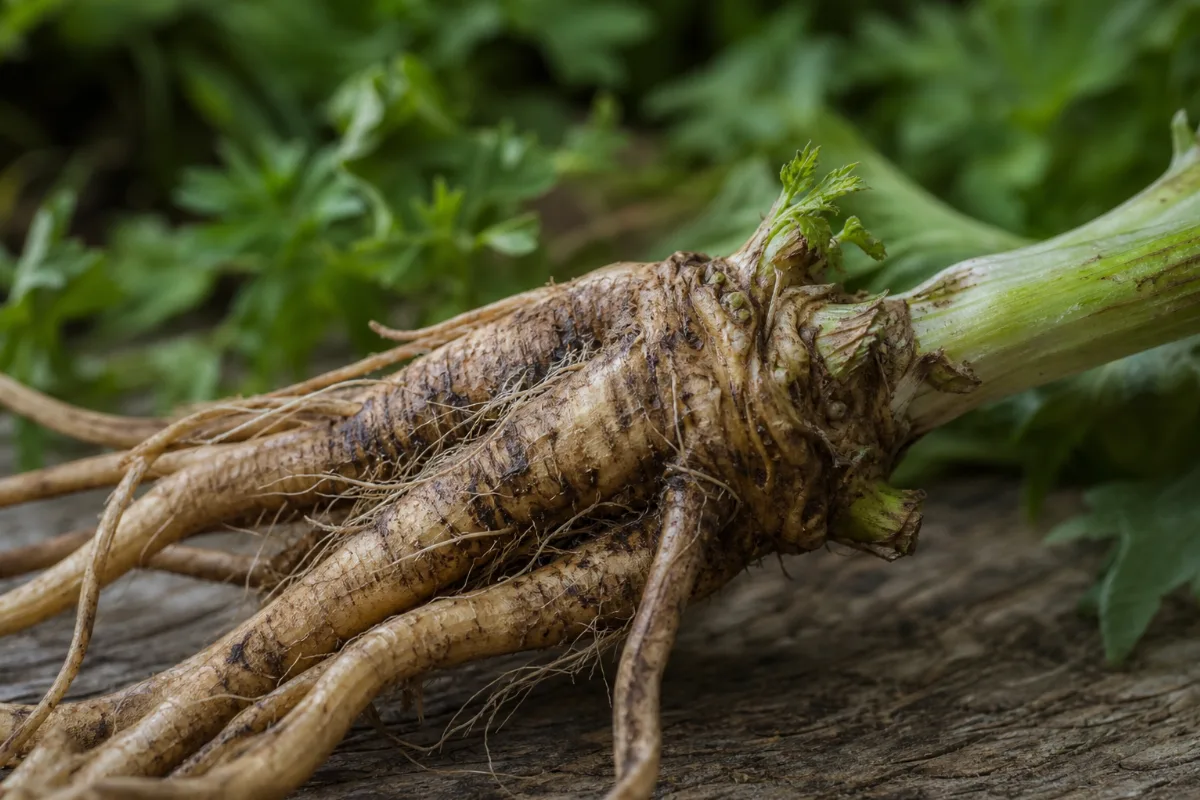
Xu duan is the dried root of Dipsacus asper (also called Dipsacus asperoides), a plant in the honeysuckle family. The Latin name of the root is Dipsaci radix. It is listed in the Chinese and Korean pharmacopoeias, according to a review.
Several plants are called teasel. European teasel (Dipsacus fullonum) and Dipsacus japonicus are different species, and 'Japanese teasel' can mean either. A look-alike root, Phlomidis radix, is sold in its place in Korean markets.
How it may work
The root holds more than a hundred compounds. The main marker, asperosaponin VI, affects bone-forming signals in cells and animals. Traditional wine-frying and salt-frying raise its level.
These are lab findings. No study shows how well the compounds are absorbed by people.
What the research shows
We found no randomised trial of xu duan on its own. Reviews of Chinese herbal medicines for osteoporosis report some gains in bone density, but the products are mixed and the Cochrane authors call the benefit uncertain.
A Taiwanese database study found herbal prescriptions with xu duan at their core linked to better hip-fracture outcomes. It cannot show that xu duan was the cause.
Pregnancy
Xu duan is a traditional remedy for threatened miscarriage in China, usually given in formulas by a practitioner. No human trial of benefit or safety was found.
In mice, a root extract raised birth defects and delayed bone growth at high doses, and the authors say high-dose, long-term use should be unsafe in pregnancy. Do not use it on your own. Bleeding or pain in pregnancy needs a doctor or midwife straight away.
At a glance
Traditional uses history, not proof
- Chinese and Korean medicine for low back and knee pain, osteoporosis and fractures
- Rheumatic joint pain and tendon injuries
- Traditional use for uterine bleeding and threatened miscarriage, usually in formulas under a practitioner
Studied for research
- Bone loss and osteoporosis, insufficient evidence for the herb alone
- Fracture recovery, very low certainty (observational, mixed formulas)
- Pregnancy support, insufficient (no human trial; mouse harm at high doses)
- Knee and joint cartilage, insufficient (animal only)
- Lyme disease claims, insufficient (they concern a different species)
Main compounds
- Asperosaponin VI (akebia saponin D), the main marker compound
- Dipsacus saponin C, linked to a clotting signal in the lab
- Iridoids such as loganin and sweroside
Common forms
- Dried sliced root
- Wine-fried or salt-fried root
- Multi-herb Chinese formulas and patent medicines
- Extracts (strength varies)
Research links: Review of Dipsacus and Scabiosa (PubMed) · Mouse embryo study of the root (PubMed) · Cochrane: Chinese herbal medicines for osteoporosis · Platelet study of Dipsacus asper (PubMed) · Research Library · Genes & Biomarkers Library
The plant and its history
- Accepted scientific name
- Dipsacus asper Wall. ex DC. (GBIF: ACCEPTED, usageKey 7491014). The name Dipsacus asperoides C.Y.Cheng & Ai, used in the Chinese and Korean pharmacopoeias and much of the literature, is listed by GBIF as a synonym (7301026).
- Naming authority
- Wall. ex DC.
- Synonyms
- Dipsacus asperoides C.Y.Cheng & Ai (GBIF synonym)
- Common names
- Xu duan (Chinese (pinyin)); Chuan xu duan (Sichuan teasel) (Chinese/English); Dipsaci radix (Latin pharmacopoeia name); Himalayan teasel root (English)
- Botanical family
- Caprifoliaceae (honeysuckle family, order Dipsacales)
- Classification
- Plantae > Tracheophyta > Magnoliopsida > Dipsacales > Caprifoliaceae > Dipsacus > Dipsacus asper
- Native range
- Not verified from a primary source. A review says the herb is produced mainly in Sichuan, Yunnan, Hubei, Hunan, Xizang, Jiangxi, Guizhou and Guangxi in China.
- Habitat
- Not verified.
- What the plant looks like
- Roots: Dried root pieces are about 5 to 15 cm long and 0.5 to 2 cm across, collected in autumn (review).; Stems: Not verified.; Leaves: Not verified.; Flowers: Not verified.; Fruit: Not verified.
- Cultivation
- Not verified.
- Harvest and processing
- Root is collected in autumn. Traditional wine-frying, salt-frying and sweating processes are used and raise asperosaponin VI content (review).
- Look-alikes and adulterants
- Name: Phlomis umbrosa (Phlomidis radix); Note: Sold in place of xu duan in Korean markets; lacks some xu duan marker compounds (review).; Name: Dipsacus fullonum (European teasel); Note: Separate accepted species (GBIF 8435025); used in Europe, linked to Lyme disease folk claims.; Name: Dipsacus japonicus (Japanese teasel); Note: Separate accepted species (GBIF 4102897); roots used traditionally in China and Vietnam (review).; Name: Scabiosa species; Note: Same family, different genus; used in Mongolian medicine for liver disease (review).
- Sustainability and conservation
- Not verified. No IUCN assessment was retrieved.
Traditional use and history history, not clinical proof
| Tradition or era | Documented use | Source |
|---|---|---|
| Chinese and Korean traditional medicine | Roots used for low back and knee pain, osteoporosis, fractures, rheumatic arthritis, traumatic bruising, uterine bleeding and threatened miscarriage. The review says it was used for centuries and is listed in the Chinese and Korean pharmacopoeias. | p37175164 |
| Pregnancy disorders in Chinese medicine | The mouse-study authors state the root has been used for pregnancy disorders for thousands of years (NOT verified from historical texts). | p24184264 |
| Modern fracture care in Taiwan | Xu duan is among the most prescribed single herbs from mid to late fracture recovery. | p30363858 |
Traditional use shows how a plant was used. It does not show that a supplement works or is safe today.
What is inside, and how it may work
What the plant contains and how those compounds act in cells and animals. Laboratory and animal mechanisms are not proven effects in people.
Main compounds
| Compound | Family | Where it is concentrated | Activity studied | Level of evidence |
|---|---|---|---|---|
| Asperosaponin VI (akebia saponin D) PubChem 14284436 | triterpenoid saponin | Root Content varies with processing; numbers not verified here. | Main marker compound; promotes bone-forming signals and has other effects in lab and animal work (review). 11 14 | In vitro and animal |
| Dipsacus saponin C PubChem 3083455 | triterpenoid saponin | Root | Made platelets clot-promoting in the lab and increased clot formation in rats. 7 14 | In vitro and animal |
| Hederagenin PubChem 73299 | triterpene | Root (main triterpenoid group per review) | Described as protecting against kidney fibrosis in cells (review). 6 14 | Laboratory research |
| Loganin, sweroside and loganic acid PubChem 87691 | iridoid glycosides | Root; loganin and sweroside were absent from the look-alike root (review) | Used as quality markers. Other CIDs: sweroside 161036, loganic acid 89640. 6 14 | Not assessed |
| Chlorogenic acid PubChem 1794427 | phenolic acid | Root (listed as a key compound in a review) | Not described in a source read. 6 14 | Not assessed |
Mechanisms, receptors and pathways
| Target or pathway | Gene or receptor | What was found | Level |
|---|---|---|---|
| Bone-forming signalling | BMP/Smad, Wnt/beta-catenin, PI3K/AKT | Asperosaponin VI promoted bone formation through these pathways in lab and animal models. Reviewers say mechanisms are mostly correlational. 11 | In vitro and animal |
| Bone-resorbing cell formation | RANKL pathway | Compounds from xu duan, eucommia and drynaria were tested against RANKL-driven osteoclast formation in cells (details not read). 3 | Laboratory research |
| Progesterone receptor activation | Progesterone receptor | Extract showed progestogenic activity in a reporter assay. A review says akebia saponin D activated the progesterone receptor in decidual cells in the lab. 1 6 | Laboratory research |
| Platelet procoagulant activation | Calcium, ATP, caspase-3 pathway | Dipsacus saponin C raised intracellular calcium, drained ATP and triggered apoptosis-like events in platelets, leading to clot-promoting activity. 7 | In vitro and animal |
Absorption, metabolism and elimination
- Absorption
- No human data found. Reviewers say pharmacokinetic data are missing.
- Distribution
- Not found.
- Metabolism
- Not found.
- Elimination
- Not found.
- Bioavailability
- Not established in humans.
Isolated compounds versus whole extracts
The root contains over one hundred compounds. Asperosaponin VI is the main marker and is increased by traditional processing, but no study shows it alone accounts for the root's reported effects, and a different saponin (dipsacus saponin C) is the one linked to the clotting signal. Results for isolated compounds or saponin tablets cannot be assumed for the whole root, and the reverse.
Nutritional composition
Xu duan is not a food nutrient and no vitamin or mineral role was found.
1 very low certainty6 not enough evidence
What is Xu Duan (Dipsacus) good for?
The studied uses and how strong the human evidence is for each. No good human trial tests xu duan on its own.
Benefits, one by one
Each card is a research question, not a promise. Tap a goal to filter. Open a card to see the studies, doses and limits.
Bone loss and osteoporosis
Not enough evidenceXu duan is a traditional Chinese and Korean bone herb. Large reviews of Chinese herbal medicines for osteoporosis show some gains in bone density, but they do not show which herb did the work, and the Cochrane authors call the benefit uncertain. Nothing here shows xu duan alone helps.
4 studiesNot covered; no dose advice is given.
Studies, doses and limits
What the trials found
A 2022 meta-analysis pooled 30 randomised trials (2,723 adults) of seven Chinese patent medicines for osteoporosis and found higher bone density than comparison treatment, but its abstract does not say which products contain xu duan. A 2014 Cochrane review of 108 randomised trials (10,655 people) of 99 different Chinese herbal medicines found risk of bias unclear in most trials and concluded the effect on bone density is still uncertain. No trial reported death or serious adverse events; minor effects such as nausea and diarrhoea were reported.
Results
Higher bone density in many trials of mixed products; fracture results small and inconsistent; no result can be assigned to xu duan.
Effect sizes as reported
Patent medicines: lumbar spine BMD mean difference 0.08 (95% CI 0.03 to 0.13), femoral 0.05 (0.02 to 0.07). Cochrane example: Kanggusong capsules vs placebo MD 0.06 g/cm3 (0.02 to 0.10).
Why this rating
Real trial data exist for Chinese herbal products in general, but none isolates xu duan. The Cochrane reviewers rate the bone-density benefit as uncertain.
Form and dose studied
Not covered; no dose advice is given.
Who was studied
Adults with osteoporosis in Chinese trials.
Limits
The trials tested many different products. Xu duan cannot be separated from the other herbs. Most trials had unclear risk of bias.
Why researchers looked
The root has been used for centuries for back and knee pain, weak bones and fractures, so researchers test formulas that contain it.
Traditional use
Chinese and Korean medicine have used the dried root for low back pain, knee pain, osteoporosis and fractures. A review notes both countries list the root in their pharmacopoeias.
Proposed mechanism In vitro and animal
Lab and animal work suggests the main compound, asperosaponin VI, nudges bone-forming cell signals (BMP/Smad, Wnt/beta-catenin, PI3K/AKT). Reviewers say this is mostly correlation in single models, and human pharmacokinetic data are missing.
A proposed mechanism does not show that the effect happens in people.
Not shown to be harmless. See the Safety tab, especially pregnancy, liver and clotting questions.
Fracture recovery and hip fracture
Very low certaintyDoctors of Chinese medicine commonly prescribe xu duan after fractures. In a Taiwanese database study of hip fracture patients, people who used Chinese herbal prescriptions had lower death, readmission and reoperation, with xu duan the core herb. This is an association in mixed formulas, not proof.
2 studiesNot covered; no dose advice is given.
Studies, doses and limits
What the trials found
A population database study of hip fracture patients linked Chinese herbal medicine use to lower overall death (adjusted HR 0.47, 95% CI 0.30 to 0.73), readmission (HR 0.67, 0.46 to 0.97) and reoperation (HR 0.57, 0.40 to 0.79). The commonest co-prescription was eucommia followed by xu duan, and xu duan was the core prescription. A separate hospital study of fracture outpatients found xu duan among the top single herbs from the middle to late recovery period, and described prescribing habits only.
Results
Association with fewer deaths, readmissions and reoperations in herb users; no controlled trial.
Effect sizes as reported
Adjusted HR 0.47 (death), 0.67 (readmission), 0.57 (reoperation) for herbal medicine users vs non-users.
Why this rating
Observational data on mixed formulas. People who choose herbs may differ from those who do not in ways the study cannot see.
Form and dose studied
Not covered; no dose advice is given.
Who was studied
Hip fracture patients in Taiwan.
Limits
Cannot separate xu duan from other herbs or from differences between users and non-users.
Why researchers looked
Fracture care is one of the oldest uses of the herb in Chinese traumatology.
Traditional use
Taiwanese hospital records show xu duan among the most prescribed single herbs from the middle to late weeks after a fracture.
Proposed mechanism Pharmacological theory
Not tested in these studies. The idea is that bone-building and circulation-moving effects help healing (traditional theory and lab work).
A proposed mechanism does not show that the effect happens in people.
Fractures need medical care. Tell the surgeon or doctor about any herb, because of the clotting question on the Safety tab.
Bone-cell effects in the lab (asperosaponin VI)
Not enough evidenceIn cell and animal studies the root and its main compound affect cells that build and break down bone. This shows a possible reason bone use arose, but it is not proof in people.
2 studiesNot covered; no dose advice is given.
Studies, doses and limits
What the trials found
A 2026 systematic review of asperosaponin VI found over one hundred compounds in the root and listed bone-forming effects in lab and animal work. Its authors point out single-model designs, mostly correlational mechanisms, and missing pharmacokinetic and clinical data. A 2019 cell study tested compounds from xu duan, eucommia and drynaria against osteoclast formation (title and opening lines read only). This is lab and animal evidence only.
Results
Lab and animal findings only.
Effect sizes as reported
None in people.
Why this rating
No human evidence; lab findings often fail to carry over.
Form and dose studied
Not covered; no dose advice is given.
Who was studied
Cell cultures and animals.
Limits
Single models, correlation-level mechanisms. The 2026 review has two authors employed by a pharmaceutical company.
Why researchers looked
Researchers look for a chemical reason the root is a traditional bone herb.
Traditional use
Chinese and Korean medicine describe the root as strengthening bones and tendons.
Proposed mechanism In vitro and animal
Asperosaponin VI promotes bone formation in lab and animal models through BMP/Smad, Wnt/beta-catenin and PI3K/AKT signalling. Compounds from xu duan, eucommia bark and drynaria were tested together against RANKL-driven bone-resorbing cell formation in cells.
A proposed mechanism does not show that the effect happens in people.
None specific.
Threatened miscarriage and pregnancy support (traditional use)
Not enough evidenceXu duan is a traditional Chinese remedy for threatened miscarriage and is often used in formulas for it. We found no human trial. Lab work shows both a progesterone-like signal and, in mice, harm to embryos at high doses. Never use it on your own in pregnancy.
4 studiesNot covered; no dose advice is given.
Studies, doses and limits
What the trials found
No human trial was found. A cell assay of 13 Chinese herbs found Dipsacus asperoides was the only one with progesterone-like activity (100 ug/mL equal to 31.45 ng/mL progesterone in the assay). In pregnant mice, a root water extract lowered the mothers' weight at the two higher doses and raised fetal malformations in a dose-dependent way (significant only at the highest dose, with delayed bone formation). The authors say those doses were about 4.3 and 17.2 times the usual human daily amount and conclude high-dose, long-term use should be unsafe in pregnancy.
Results
No human data. Lab: progesterone-like activity. Mice: harm at high doses.
Effect sizes as reported
Mouse study: malformation rate significant at the highest dose only (P<0.001). Cell assay: 31.45 ng/mL progesterone equivalence at 100 ug/mL.
Why this rating
No human evidence on benefit or harm in pregnancy. The only safety data are mouse and cell studies.
Form and dose studied
Not covered; no dose advice is given.
Who was studied
Pregnant mice and cell cultures; no pregnant women.
Limits
Animal doses were many times human use; whole-pregnancy outcomes in women are unstudied; the multi-herb rat finding cannot be assigned to xu duan alone (second-hand through a review).
Why researchers looked
Chinese medicine has used the root for pregnancy problems for a very long time, so researchers have tested whether it is safe.
Traditional use
Roots are used in Chinese and Korean medicine for uterine bleeding and threatened miscarriage. The mouse study authors describe it as ranked first among herbs chosen clinically to prevent miscarriage, while noting there was not enough evidence on its safety.
Proposed mechanism In vitro and animal
A water extract of the root showed progesterone-like activity in a cell reporter test; its main compound was reported to activate the progesterone receptor in decidual (uterine lining) cells in the lab. A multi-herb preparation containing the root reduced pregnancy loss caused by mifepristone in rats. All lab or animal.
A proposed mechanism does not show that the effect happens in people.
Not for self-treatment. Any vaginal bleeding or pain in pregnancy needs a doctor or midwife straight away. See the Safety tab.
Knee and joint cartilage (animal and traditional)
Not enough evidenceThe root is used for rheumatic joint pain, and in rats with induced knee osteoarthritis an alcohol extract eased weight bearing and lowered inflammation markers. No human trial was found.
1 studiesNot covered; no dose advice is given.
Studies, doses and limits
What the trials found
A 2023 review describes the root and its marker compound as having anti-arthritic effects in lab and animal studies. No trial in people with arthritis was found in our searches.
Results
Animal findings only.
Effect sizes as reported
None in people.
Why this rating
Animal evidence only.
Form and dose studied
Not covered; no dose advice is given.
Who was studied
Rats and cell cultures.
Limits
Second-hand description of animal studies through a review.
Why researchers looked
Joint and tendon complaints are among the traditional uses.
Traditional use
Chinese and Korean medicine use the root for rheumatic arthritis, low back and knee pain.
Proposed mechanism In vitro and animal
Animal findings include changes in cartilage genes and Wnt/beta-catenin signalling (as reported by a review).
A proposed mechanism does not show that the effect happens in people.
None specific.
Liver, heart, nerve and kidney protection (lab and animal only)
Not enough evidenceReviews list protective effects of the root and its compounds on liver, heart, kidney and nerve cells in the lab and in animals. None has been tried in people, so these are ideas to test, not benefits.
2 studiesNot covered; no dose advice is given.
Studies, doses and limits
What the trials found
Two reviews (2023 and 2026) list these effects as lab or animal findings. The 2026 review notes single-model designs and missing clinical data. This is lab and animal evidence only.
Results
Lab and animal only.
Effect sizes as reported
None in people.
Why this rating
No human evidence.
Form and dose studied
Not covered; no dose advice is given.
Who was studied
Cells and animals.
Limits
Reviews only; the individual studies were not opened. The 2026 review has industry-linked authors.
Why researchers looked
Researchers screen traditional herbs for many effects once they find active compounds.
Traditional use
The root is also traditionally said to improve liver and kidney function.
Proposed mechanism In vitro and animal
Antioxidant and anti-inflammatory effects in cell and animal models.
A proposed mechanism does not show that the effect happens in people.
None specific.
Lyme disease claims (European teasel, a different species)
Not enough evidenceTeasel root is promoted online for lingering Lyme symptoms. That claim concerns the European teasel, not xu duan. A 2023 review found no animal or human trial data for these herbs. Lyme disease needs proper medical treatment.
2 studiesNot covered; no dose advice is given.
Studies, doses and limits
What the trials found
A 2023 narrative review of 18 herbs used for persistent symptoms attributed to Lyme disease names teasel root (Dipsacus fullonum) among those searched. Seven herbs showed lab activity against the Lyme bacterium and teasel was not named among them; in-vivo data and clinical trials are lacking. Full text was not read.
Results
No clinical evidence.
Effect sizes as reported
None.
Why this rating
No trial or animal data found; a different species from xu duan.
Form and dose studied
Not covered; no dose advice is given.
Who was studied
Not tested.
Limits
Abstract-level read only; the review's teasel section was not opened.
Why researchers looked
Herbal protocols popular on the internet name teasel root.
Traditional use
A review notes the European species has been used traditionally for Lyme disease.
Proposed mechanism Not established
No mechanism was shown for teasel against the Lyme bacterium in the sources read.
A proposed mechanism does not show that the effect happens in people.
Do not replace prescribed treatment for Lyme disease with herbs.
Connections to the rest of health
How Xu Duan (Dipsacus) connects to the rest of our health knowledge graph. Every link says what kind of connection it is. A safety link (for example to the liver) is a warning, not a benefit. A study that merely mentions a topic never creates a benefit link.
Explore every connection: goals, body systems, organs, symptoms, genes
A. Wellness goals
| Connected to | Kind of connection | Evidence status | Context | Studies |
|---|---|---|---|---|
| Bone Health | Traditional use | Not enough evidence | Bone loss and osteoporosis: Xu duan is a traditional Chinese and Korean bone herb. Large reviews of Chinese herbal medicines for osteoporosis show some gains in bone density, but they do not show which herb did the work, and the Cochrane authors call the benefit uncertain. Nothing here shows xu duan alone helps. Fracture recovery and hip fracture: Doctors of Chinese medicine commonly prescribe xu duan after fractures. In a Taiwanese database study of hip fracture patients, people who used Chinese herbal prescriptions had lower death, readmission and reoperation, with xu duan the core herb. This is an association in mixed formulas, not proof. | 4 5 6 11 2 9 |
| Recovery Optimization | Traditional use | Very low certainty | Fracture recovery and hip fracture: Doctors of Chinese medicine commonly prescribe xu duan after fractures. In a Taiwanese database study of hip fracture patients, people who used Chinese herbal prescriptions had lower death, readmission and reoperation, with xu duan the core herb. This is an association in mixed formulas, not proof. | 2 9 |
| Bone Health | Not enough evidence | Bone-cell effects in the lab (asperosaponin VI): In cell and animal studies the root and its main compound affect cells that build and break down bone. This shows a possible reason bone use arose, but it is not proof in people. | 11 3 | |
| Womens Wellness | Traditional use | Not enough evidence | Threatened miscarriage and pregnancy support (traditional use): Xu duan is a traditional Chinese remedy for threatened miscarriage and is often used in formulas for it. We found no human trial. Lab work shows both a progesterone-like signal and, in mice, harm to embryos at high doses. Never use it on your own in pregnancy. | 10 1 6 11 |
| Fertility Support | Traditional use | Not enough evidence | Threatened miscarriage and pregnancy support (traditional use): Xu duan is a traditional Chinese remedy for threatened miscarriage and is often used in formulas for it. We found no human trial. Lab work shows both a progesterone-like signal and, in mice, harm to embryos at high doses. Never use it on your own in pregnancy. | 10 1 6 11 |
| Joint Support | Not enough evidence | Knee and joint cartilage (animal and traditional): The root is used for rheumatic joint pain, and in rats with induced knee osteoarthritis an alcohol extract eased weight bearing and lowered inflammation markers. No human trial was found. | 6 | |
| Mobility Support | Not enough evidence | Knee and joint cartilage (animal and traditional): The root is used for rheumatic joint pain, and in rats with induced knee osteoarthritis an alcohol extract eased weight bearing and lowered inflammation markers. No human trial was found. | 6 | |
| Cellular Protection | Not enough evidence | Liver, heart, nerve and kidney protection (lab and animal only): Reviews list protective effects of the root and its compounds on liver, heart, kidney and nerve cells in the lab and in animals. None has been tried in people, so these are ideas to test, not benefits. | 6 11 | |
| Immune Support | Traditional use | Not enough evidence | Lyme disease claims (European teasel, a different species): Teasel root is promoted online for lingering Lyme symptoms. That claim concerns the European teasel, not xu duan. A 2023 review found no animal or human trial data for these herbs. Lyme disease needs proper medical treatment. | 8 6 |
B. Body systems
| Connected to | Kind of connection | Evidence status | Context | Studies |
|---|---|---|---|---|
| Bones Joints Muscles | Biological association | Not enough evidence | Studied for: Bone loss and osteoporosis Studied for: Fracture recovery and hip fracture | 4 5 6 11 2 9 3 |
| Musculoskeletal System | Biological association | Not enough evidence | Studied for: Bone loss and osteoporosis | 4 5 6 11 |
| Reproductive System | Biological association | Not enough evidence | Studied for: Threatened miscarriage and pregnancy support (traditional use) | 10 1 6 11 |
| Liver Detox | Biological association | Not enough evidence | Studied for: Liver, heart, nerve and kidney protection (lab and animal only) | 6 11 |
| Cardiovascular System | Biological association | Not enough evidence | Studied for: Liver, heart, nerve and kidney protection (lab and animal only) | 6 11 |
| Immune Support | Biological association | Not enough evidence | Studied for: Lyme disease claims (European teasel, a different species) | 8 6 |
C. Body parts and organs
E. Health conditions
| Connected to | Kind of connection | Evidence status | Context | Studies |
|---|---|---|---|---|
| Pregnancy | Contraindication | Not enough evidence | Traditional use for threatened miscarriage, but mouse embryo harm at high doses and no human data. Do not self-treat. Embryo harm at high doses in mice; no human data. Preparation or compound: Root water extract (mouse study) |
10 6 |
| Blood clotting | Drug or supplement interaction | In vitro | Clot-promoting platelet activity in the lab and in rats. Preparation or compound: Dipsacus saponin C; Dipsacus asper extract |
7 |
| Osteoporosis | Traditional use | Not enough evidence | Mixed-product trials show some bone-density gains; benefit called uncertain. Preparation or compound: Chinese herbal products (mixed, not xu duan alone) |
5 4 |
I. Biomarkers
| Connected to | Kind of connection | Evidence status | Context | Studies |
|---|---|---|---|---|
| Bone mineral density (BMD) | Biological association | Not enough evidence | Measured in trials: raised. A lab change is not the same as a health benefit. | 4 5 |
| Death, readmission and reoperation after hip fracture | Biological association | Very low certainty | Measured in trials: lowered. A lab change is not the same as a health benefit. | 2 |
| Progesterone-like activity in a cell assay | Biological association | Not enough evidence | Measured in trials: raised. A lab change is not the same as a health benefit. | 1 |
| Platelet clot-promoting activity (lab and rat) | Biological association | Not enough evidence | Measured in trials: raised. A lab change is not the same as a health benefit. | 7 |
J. Genes, receptors and enzymes
| Connected to | Kind of connection | Evidence status | Context | Studies |
|---|---|---|---|---|
| Progesterone receptor (PGR) | Preliminary mechanism | In vitro | Activated by extract in a reporter assay. | 1 |
K. Biological pathways
| Connected to | Kind of connection | Evidence status | Context | Studies |
|---|---|---|---|---|
| Wnt/beta-catenin and BMP/Smad signalling | Preliminary mechanism | In vitro and animal | Bone formation signalling affected by asperosaponin VI in lab and animal models. | 11 |
L. Active compounds
| Connected to | Kind of connection | Evidence status | Context | Studies |
|---|---|---|---|---|
| Asperosaponin VI (akebia saponin D) | Biological association | In vitro and animal | Main marker compound; promotes bone-forming signals and has other effects in lab and animal work (review). Preparation or compound: Root |
11 14 |
| Dipsacus saponin C | Biological association | In vitro and animal | Made platelets clot-promoting in the lab and increased clot formation in rats. Preparation or compound: Root |
7 14 |
| Hederagenin | Biological association | In vitro | Described as protecting against kidney fibrosis in cells (review). Preparation or compound: Root (main triterpenoid group per review) |
6 14 |
| Loganin, sweroside and loganic acid | Biological association | Not assessed | Used as quality markers. Other CIDs: sweroside 161036, loganic acid 89640. Preparation or compound: Root; loganin and sweroside were absent from the look-alike root (review) |
6 14 |
| Chlorogenic acid | Biological association | Not assessed | Not described in a source read. Preparation or compound: Root (listed as a key compound in a review) |
6 14 |
Each connection is stored with the ingredient, the connected record, the kind of connection, the evidence status, the supporting studies, the preparation or compound involved, and a review date (last reviewed October 25, 2026).
Evidence at a glance: what changed in 4 lab markers
Tap a number to show only those markers. Counts are markers, not people.
The evidence
The research centre for Xu Duan (Dipsacus). Every record here was checked against PubMed or the publisher's page; we never list a study we have not verified.
Evidence by outcome
Bars show how many studies we found for each outcome, not how well it works. People are added up across trials only (reviews are not added, to avoid double counting).
How we rate evidence
High certainty
Several well-run trials or reviews agree; further research is unlikely to change the picture much.
Moderate certainty
Good trials point the same way, but some doubt remains.
Low certainty
Small, short or inconsistent trials. The finding could change with better research.
Very low certainty
Very little or very weak human data. Treat as a possibility only.
Mixed findings
Trials or reviews disagree with each other.
Not enough evidence
Not enough human research to say either way.
Evidence against
Good research found no benefit, or found harm.
We take the reviewers' own risk-of-bias and GRADE statements where they exist, and otherwise judge from study size, design, consistency, directness and whether a product matches what is sold. Many publications do not make evidence high. Method note: We started from our existing xu duan summary, re-opened the PubMed records it relied on, added safety searches, and checked names with GBIF and PubChem.
Study library: every study we checked 14
| Study | Design | People | Product, dose, length | Result |
|---|---|---|---|---|
| Ahmed 2014 Molecular screening of Chinese medicinal plants for progestogenic and anti-progestogenic activity. Journal of Biosciences · PMID 24845509 · DOI |
Cell assay cell assay |
Cultured cells with a progesterone-response reporter gene; extracts of 13 Chinese medicinal plants | Dipsacus asperoides extract not stated in abstract Not stated here; no dose advice n/a · vs n/a |
Dipsacus asperoides was the only one of the 13 extracts with progestogenic (progesterone-like) activity, dose-dependent; 100 micrograms per mL was equivalent to 31.45 ng per mL of progesterone activity in the assay. Ten other herbs showed anti-progestogenic-like activity. Equivalent to 31.45 ng/mL progesterone at 100 ug/mL extract (n/a) Methods, limits and fundingOutcomes: Progesterone-like and anti-progesterone-like activity Limitations: Cell reporter assay only; says nothing about effects in a body; plant part not given in the abstract. Funding and conflicts: Not stated in the abstract Read: abstract |
| Cheng 2019 Effects of Chinese Herbal Medicines on the Risk of Overall Mortality, Readmission, and Reoperation in Hip Fracture Patients. Frontiers in Pharmacology · PMID 31244656 · DOI |
Observational database study human (observational) |
Hip fracture patients in a Taiwanese population-based database | Chinese herbal medicine prescriptions (many different formulas); xu duan was the core herb in the prescription patterns root (as a single herb within prescriptions) Not stated here; no dose advice n/a · vs n/a |
Chinese herbal medicine use was linked to lower overall death (adjusted HR 0.47), readmission (HR 0.67) and reoperation (HR 0.57). The commonest co-prescription was Du-Zhong (eucommia) followed by Xu-Duan; Xu-Duan was the core prescription. The authors call herbal medicine an adjunct that may benefit hip fracture patients. Adjusted HR 0.47 (death), 0.67 (readmission), 0.57 (reoperation) (Death 0.30-0.73; readmission 0.46-0.97; reoperation 0.40-0.79) Methods, limits and fundingOutcomes: Death, readmission, reoperation; prescription patterns Limitations: Observational database study: people who used herbs may differ from people who did not in ways the adjustments miss. Mixed formulas, so no effect can be given to xu duan alone. Funding and conflicts: Not stated in the abstract Read: abstract |
| Cheng 2019 Protective effects and network analysis of natural compounds obtained from Radix dipsaci, Eucommiae cortex, and Rhizoma drynariae against RANKL-induced osteoclastogenesis in vitro. Journal of Ethnopharmacology · PMID 31291608 · DOI |
Cell study cell |
Cell culture model of bone-resorbing cell formation (osteoclastogenesis) | Natural compounds from Radix dipsaci, eucommia bark and drynaria rhizome root Not stated here; no dose advice n/a · vs n/a |
Per its title, the study tested compounds from these three herbs against RANKL-induced osteoclast formation in cell culture and used network analysis. The numbers were not read, only the title and opening lines were seen. Not read (n/a) Methods, limits and fundingOutcomes: Effect on RANKL-induced osteoclast formation in cells Limitations: Cell study only; results not read in detail; does not show effects in people. Funding and conflicts: Not read Read: abstract (opening lines only) |
| Jia 2022 Chinese patent medicine for osteoporosis: a systematic review and meta-analysis. Bioengineered · PMID 35184684 · DOI |
Meta-analysis |
2723 Adults with osteoporosis in 30 randomised trials of seven kinds of Chinese patent medicine |
Chinese patent medicines (the abstract does not say which contain Dipsacus) not stated Not stated here; no dose advice n/a · vs n/a |
Bone density was higher with the patent medicines than with control treatment: lumbar spine MD 0.08 (23 trials), femoral MD 0.05 (15 trials). Pain, overall effectiveness and adverse events also favoured the patent medicines versus standard Western treatment. The abstract does not say which products contain xu duan, so nothing can be assigned to this herb. Lumbar spine BMD MD 0.08; femoral BMD MD 0.05 (Lumbar 0.03 to 0.13; femoral 0.02 to 0.07) Methods, limits and fundingOutcomes: Bone mineral density, pain, adverse events Limitations: Cannot be tied to xu duan; the authors call their findings suggestive; trial quality was not summarised in the abstract. Funding and conflicts: No competing interests declared Read: abstract |
| Liu 2014 Chinese herbal medicines for treating osteoporosis. Cochrane Database of Systematic Reviews · PMID 24599707 · DOI |
Systematic review |
10655 Adults with primary osteoporosis in 108 randomised trials |
99 different Chinese herbal medicines (not specific to xu duan) various Not stated here; no dose advice n/a · vs n/a |
Bone density gains were seen in some trials against placebo, no treatment or conventional drugs, but risk of bias was unclear in most trials, fracture results were small and inconsistent, and the authors conclude the benefit for bone density is still uncertain. No trial reported death or serious adverse events; some reported minor effects such as nausea and diarrhoea. e.g. Kanggusong capsules vs placebo BMD MD 0.06 g/cm3 (0.02 to 0.10) Methods, limits and fundingOutcomes: Fracture, bone mineral density, quality of life, harms Limitations: Search ended in January 2013; the abstract does not say which trials used xu duan. Funding and conflicts: No affiliations or financial interests declared Read: abstract |
| Skala 2023 Dipsacus and Scabiosa Species-The Source of Specialized Metabolites with High Biological Relevance: A Review. Molecules · PMID 37175164 · DOI |
Narrative review review of animal/lab/traditional literature |
Review of lab, animal and traditional-use literature on Dipsacus and Scabiosa species | Dipsacus asper / asperoides root (Dipsaci radix) and other Dipsacus species root Not stated here; no dose advice n/a · vs n/a |
Reports centuries of use in Chinese and Korean medicine for bone and joint problems, lists the root in the Chinese and Korean pharmacopoeias, and describes lab and animal bone, joint, liver, heart, kidney and platelet findings. Safety section reports one older human saponin-tablet study (second-hand), a rat study and the mouse embryo study. Not pooled; narrative review (n/a) Methods, limits and fundingOutcomes: Traditional uses, chemistry, lab and animal findings, safety Limitations: Narrative review of mostly lab and animal work; human data are scarce; sections read by keyword search of the full text rather than line by line; second-hand reports of other studies were not checked in the originals. Funding and conflicts: No conflict of interest declared; funded by the Medical University of Lodz Read: abstract + full-text sections |
| Song 2012 Procoagulant and prothrombotic effects of the herbal medicine, Dipsacus asper and its active ingredient, dipsacus saponin C, on human platelets. Journal of Thrombosis and Haemostasis · PMID 22405282 · DOI |
Lab and animal study human cells and rat |
Human platelets in the lab and rats | Dipsacus asper herbal tea extract and its compound dipsacus saponin C root Not stated here; no dose advice n/a · vs n/a |
Of 21 herbal tea extracts screened, Dipsacus asper strongly pushed human platelets into a clot-promoting state, and dipsacus saponin C was the key compound. In rats, giving the saponin or the herb led to more clot formation. The authors conclude such herbs might carry clotting risks. Not stated as a number in the abstract (n/a) Methods, limits and fundingOutcomes: Platelet procoagulant activity, clot formation in rats Limitations: Lab and rat study only; whether drinking the tea or taking the root does this in people is not known. Funding and conflicts: Not stated in the abstract Read: abstract |
| Thompson 2023 A Comprehensive Review of Herbal Supplements Used for Persistent Symptoms Attributed to Lyme Disease. Integrative Medicine (Encinitas) · PMID 37101730 |
Narrative review review |
18 herbal supplements used for persistent symptoms attributed to Lyme disease | Includes teasel root (Dipsacus fullonum), a different species from xu duan root Not stated here; no dose advice n/a · vs n/a |
Seven of the 18 herbs had lab activity against the Lyme bacterium (teasel was not among the seven named). In-vivo data and clinical trials are lacking. Many of the herbs have drug interactions and additive effects that could raise bleeding, low blood pressure and low blood sugar risks. Not applicable (n/a) Methods, limits and fundingOutcomes: In-vitro activity, safety, drug interactions Limitations: Narrative review; teasel is only named as a searched herb in the abstract; full text not read. Funding and conflicts: Not stated in the abstract Read: abstract |
| Tseng 2018 Utilization Pattern of Traditional Chinese Medicine among Fracture Patients: A Taiwan Hospital-Based Cross-Sectional Study. Evidence-Based Complementary and Alternative Medicine · PMID 30363858 · DOI |
Cross sectional prescribing study human (prescribing data) |
Traditional Chinese medicine outpatients with fractures, Taiwan, 2000-2015 | Chinese herbal products; xu duan among the most prescribed single herbs from the middle to late recovery period root (as a single herb) Not stated here; no dose advice n/a · vs n/a |
From the middle to the late fracture period the most prescribed single herbs were Xu-Duan, Gu-Sui-Bu and Yan-Hu-Suo. The study describes what doctors prescribe, not whether it works. Not applicable (n/a) Methods, limits and fundingOutcomes: Which herbs and formulas are prescribed at different stages after fracture Limitations: Shows prescribing habits only; no outcomes were measured. Funding and conflicts: Not stated in the abstract Read: abstract |
| Xiao 2014 The evaluation on embryotoxicity of Dipsaci Radix with mice and embryonic stem cells. Journal of Ethnopharmacology · PMID 24184264 · DOI |
Animal and cell study animal and cell |
Pregnant ICR mice (4 groups plus vitamin A control); mouse embryonic stem cells and 3T3 cells | Dipsaci Radix water extract root of Dipsacus asper Multiples of the human daily amount (4.3x and 17.2x at the higher groups); no human dose advice Pregnancy period in mice · vs Distilled water; vitamin A positive control |
Maternal body weight was lower in the two higher-dose groups. Fetal malformations rose with dose in all treated groups, but the rise was statistically significant only at the highest dose, where delayed bone formation and mineralisation were also seen. Stem cell and 3T3 cell toxicity were similar. The authors say the two higher doses were about 4.3 and 17.2 times the recommended human daily amount and conclude that high-dose, long-term use should be unsafe in pregnant women. Malformation rate significant at the highest dose only (P<0.001) (n/a) Methods, limits and fundingOutcomes: Maternal weight, fetal malformation, fetal bone development, cell toxicity Limitations: Animal and cell study; human pregnancy outcomes were not studied; doses were many times human use; a single extract type. Funding and conflicts: Not stated in the abstract Read: abstract |
| Zou 2026 Research progress on chemical metabolites, processing technologies, and pharmacological activities of asperosaponin VI: a systematic review and critical evaluation. Frontiers in Pharmacology · PMID 42038282 · DOI |
Systematic review review of animal/lab literature |
Literature on asperosaponin VI from Dipsacus asper up to 2025 (lab and animal work) | Asperosaponin VI (main marker compound) and Dipsacus asper root root Not stated here; no dose advice n/a · vs n/a |
Over one hundred compounds are known in the root; asperosaponin VI is the main marker. Traditional wine-frying, salt-frying and sweating raise its content. In lab and animal work it promotes bone formation and has nerve, liver, heart and anti-miscarriage effects through pathways such as BMP/Smad, Wnt/beta-catenin and PI3K/AKT. The reviewers say studies use single models, mostly show correlation only, and lack pharmacokinetic and clinical data. Not pooled (n/a) Methods, limits and fundingOutcomes: Chemistry, processing, lab pharmacology Limitations: Lab and animal literature; no human trial data; industry-linked. Funding and conflicts: Two authors were employed by Hubei Hengen Fulin Pharmaceutical Co., Ltd.; the others declared no commercial relationships Read: abstract |
| n/a 2026 Regulator and database pages checked, not found or not read NCBI Bookshelf (LiverTox, LactMed), EMA/HMPC, NCCIH, WHO (checked 2026-10-25) · Source |
Database or regulator record n/a |
n/a | n/a n/a n/a n/a · vs n/a |
A Bookshelf search for LiverTox or LactMed entries on dipsacus and teasel returned no entries; the search for xu duan did not complete (rate limit). No EMA/HMPC, NCCIH or WHO monograph was located or opened for this herb. n/a (n/a) Methods, limits and fundingOutcomes: Regulatory and clinical-reference status Limitations: Not finding a page is not proof that no statement exists. Funding and conflicts: n/a Read: full-text |
| n/a 2026 GBIF Backbone: Dipsacus asper Wall. ex DC. (usageKey 7491014); synonym D. asperoides C.Y.Cheng & Ai (7301026); D. fullonum L. (8435025); D. japonicus Miq. (4102897) GBIF (api.gbif.org species/match, checked 2026-10-25) · Source |
Reference database n/a |
n/a | n/a n/a n/a n/a · vs n/a |
Dipsacus asper is the accepted species (family Caprifoliaceae, order Dipsacales). D. asperoides is listed as its synonym. D. fullonum and D. japonicus are separate accepted species. NCBI Taxonomy search for Dipsacus asper returned id 516548 (record page not opened). n/a (n/a) Methods, limits and fundingOutcomes: Accepted names and family Limitations: Taxonomy databases differ; the pharmacopoeias use D. asperoides. Funding and conflicts: n/a Read: full-text |
| n/a 2026 PubChem compound records for Dipsacus root constituents (checked 2026-10-25) PubChem (NCBI) · Source |
Reference database n/a |
n/a | n/a n/a n/a n/a · vs n/a |
CIDs confirmed by name: asperosaponin VI (also called akebia saponin D) 14284436 (C47H76O18); dipsacus saponin C 3083455; hederagenin 73299; loganin 87691; sweroside 161036; loganic acid 89640; chlorogenic acid 1794427. n/a (n/a) Methods, limits and fundingOutcomes: Compound identity Limitations: A name match confirms identity of the compound, not that it is in a given product. Funding and conflicts: n/a Read: full-text |
What we do not know yet
- No randomised trial of xu duan alone for any use.
- Osteoporosis meta-analyses do not say which products contain xu duan.
- No human data on pregnancy safety, or on clotting and blood-thinner effects.
- EMA/HMPC, NCCIH, WHO, LiverTox and LactMed entries were not located.
How new research is added
New studies are found by a saved PubMed search and placed in a review queue. A person reads each one before it is added.
Lab markers
What changed in blood or saliva tests during trials. A changed number is not the same as feeling or being healthier, and we give no "normal ranges".
Other 4
Bone mineral density (BMD)
Raised in trials
A scan measure of how dense the bones are.
Not enough evidenceResults and what it means
Why it was measured
The main outcome in osteoporosis trials.
Statistical vs. clinical meaning
Density rises in several trials of mixed products, but this does not show xu duan works, and density is not the same as fewer fractures.
Safety implication
None specific.
| Study | Result | People | Product |
|---|---|---|---|
| 4 | Higher than controls in trials of Chinese patent medicines: lumbar spine MD 0.08 (95% CI 0.03 to 0.13), 23 trials; femoral MD 0.05 (0.02 to 0.07), 15 trials. Products not identified as containing xu duan. | Adults with osteoporosis | Chinese patent medicines (mixed) |
| 5 | Gains in some trials, for example Kanggusong capsules vs placebo MD 0.06 g/cm3 (0.02 to 0.10); overall effect called uncertain. | Adults with primary osteoporosis | Chinese herbal medicines (99 different products) |
Death, readmission and reoperation after hip fracture
Lowered in trials
Whether patients died, came back to hospital, or needed another operation.
Very low certaintyResults and what it means
Why it was measured
Used to judge whether herb users did better after a hip fracture.
Statistical vs. clinical meaning
Observational association; cannot be credited to xu duan alone.
Safety implication
None specific.
| Study | Result | People | Product |
|---|---|---|---|
| 2 | Herbal medicine users had adjusted HR 0.47 for death, 0.67 for readmission, 0.57 for reoperation versus non-users; xu duan was the core herb in the prescriptions. | Hip fracture patients, Taiwan | Chinese herbal prescriptions (mixed formulas) |
Progesterone-like activity in a cell assay
Raised in trials
A lab test of whether an extract switches on the progesterone receptor in cells.
Not enough evidenceResults and what it means
Why it was measured
Used to explore why the root is traditional in pregnancy support.
Statistical vs. clinical meaning
Cell result only; unknown in people.
Safety implication
Possible hormone-sensitive concern (theory).
| Study | Result | People | Product |
|---|---|---|---|
| 1 | Dipsacus asperoides was the only one of 13 Chinese herb extracts with progestogenic activity; 100 ug/mL was equivalent to 31.45 ng/mL progesterone. | Cell assay | Dipsacus asperoides extract |
Platelet clot-promoting activity (lab and rat)
Raised in trials
How strongly platelets are pushed into a state that helps clots form.
Not enough evidenceResults and what it means
Why it was measured
Checked in herbal tea screening for clot risk.
Statistical vs. clinical meaning
Lab and rat result; not shown in people.
Safety implication
Possible clotting concern, especially with blood-thinning medicines (theory).
| Study | Result | People | Product |
|---|---|---|---|
| 7 | Of 21 herbal tea extracts, Dipsacus asper strongly raised platelet procoagulant activity; dipsacus saponin C was the key compound; rats given the saponin or herb formed more thrombus. | Human platelets and rats | Dipsacus asper extract; dipsacus saponin C |
Safety
What studies and official sources say about side effects, medicines and who should check first. Each point shows what kind of evidence it comes from.
Main points to know 5
- Pregnancy: traditional use, but safety unproven. Xu duan is traditionally used in China for threatened miscarriage, usually in formulas under a practitioner. We found no human trial of safety or benefit. In pregnant mice a root extract raised fetal malformations in a dose-dependent way and delayed bone formation at the highest dose, and the authors call high-dose, long-term use unsafe in pregnancy. Do not self-treat. Bleeding or pain in pregnancy needs a doctor or midwife. Animal research 10 6
- Possible effect on clotting. In the lab and in rats, a compound from the root (dipsacus saponin C) made platelets more clot-promoting and increased clot formation. Whether the root does this in people is unknown. Tell your doctor if you take blood thinners, have had a blood clot, or have surgery planned. In vitro and animal 7 6
- Hormone-sensitive conditions: an unanswered question. An extract showed progesterone-like activity in a cell test. This has not been tested in people, but anyone with a hormone-sensitive condition should ask a doctor first. Laboratory research 1
- Liver: little human data. No case report of liver injury from xu duan was found, and no LiverTox entry. A review describes an older human study of saponin tablets in which some people had raised ALT, a liver blood test (second-hand, original not read). Stop and seek care for yellow skin or eyes, dark urine or severe stomach pain. Authoritative guidance 6 12
- Make sure it is the right plant. Xu duan is the root of Dipsacus asper (also called D. asperoides). European teasel (D. fullonum), Dipsacus japonicus and the look-alike root Phlomidis radix from Phlomis umbrosa are different plants. Phlomidis radix has been sold in place of the true root in Korean markets. Results for one plant or product may not apply to another. Review 6 13
Side effects 4
| Effect | How often | Severity and recovery | Evidence |
|---|---|---|---|
| Mild stomach discomfort, constipation, swollen gums, dysphoria (saponin tablets, second-hand report) A review describes an older study of a total-saponin tablet given to volunteers for six months with only mild effects. The original was not read, and it is an extract, not the whole root. | Not established | mild Not stated | Human study second hand 6 |
| Raised ALT (liver blood test) Listed among the effects in the same second-hand report. Clinical meaning not known. | Not established | Unknown Not stated | Human study second hand 6 |
| Nausea and diarrhoea (Chinese herbal medicines for osteoporosis in general) The Cochrane review found no deaths or serious adverse events, only minor effects, across 99 different herbal medicines. Not specific to xu duan. | Not established | mild Not stated | Systematic review 5 |
| Effects on embryos at high doses (mouse) Animal result at doses many times human use. Human significance unknown. | Not established | Possibly serious Not applicable | Animal research 10 |
Liver
No published human case of liver injury from xu duan was found in our searches, and a search of NCBI Bookshelf found no LiverTox entry for dipsacus or teasel (the search for xu duan did not complete). A review reports a human saponin-tablet study with raised ALT in some people (second-hand) and a 13-week rat study with no deaths or pathological changes. Not finding reports is not proof of safety, and many Chinese formulas combine xu duan with other herbs. 6 12
How often. No frequency is available.
Monitoring. No monitoring advice was found. Stop and seek care for yellow skin or eyes, dark urine or severe stomach pain, and tell a doctor if you have liver disease.
This is a safety connection. It is not evidence that Xu Duan (Dipsacus) supports liver health.
Medicines and supplements 4
| With | Why it matters | Importance | Evidence | What to do |
|---|---|---|---|---|
| Blood thinners and antiplatelet medicines (warfarin, DOACs, aspirin, clopidogrel) prescription | Lab and rat work shows a root compound promotes clot-forming platelet activity; this could in theory work against a blood thinner. A review also notes wine-processed root has been described as anticoagulant, so the direction is uncertain. | No human interaction study. Direction and size are unknown. | In vitro and animal Very low certainty 7 6 | Do not add it without your prescriber, who may want to watch your clotting tests. |
| Hormonal medicines (hormone therapy, contraceptives, progesterone or progestins, fertility drugs, hormone-blocking cancer drugs) prescription | Progesterone-like activity of an extract in a cell reporter assay. | No human data. A theoretical concern only. | Laboratory research Very low certainty 1 | Ask your doctor or pharmacist before combining. |
| Medicines or supplements that can affect the liver prescription | Raised ALT was reported in a saponin-tablet study (second-hand). No interaction mechanism is known. | Unknown. | Human study second hand Very low certainty 6 | Tell your doctor or pharmacist about all products. |
| Other herbs in multi-herb Chinese formulas herb | Xu duan is usually prescribed with other herbs such as eucommia; effects and risks belong to the whole formula. | Cannot be assigned to xu duan. | Observational Very low certainty 2 | Know every ingredient in a patent medicine. |
Who should check first 7
| Situation | Advice | Evidence |
|---|---|---|
| Pregnancy (self-treatment) | Do not use on your own. The herb is traditionally given for threatened miscarriage by practitioners, but there is no human safety trial and mouse data show harm to embryos at high doses. Ask an obstetric doctor or midwife. | Animal research 10 1 6 |
| Breastfeeding | No data. Avoid unless a clinician advises. No LactMed entry was found. | Gap 12 |
| Children | No data. Avoid unless a clinician advises. | Gap 12 |
| Hormone-sensitive conditions (for example some breast, uterine or ovarian cancers, endometriosis, fibroids) | Ask your doctor first. The concern is a cell-test result, not a human finding. | Laboratory research 1 |
| Taking blood thinners, history of blood clots, or a clotting disorder | Ask your doctor first because of the lab clotting signal. | In vitro and animal 7 |
| Liver disease | Ask your doctor first; human liver data are thin. | Human study second hand 6 |
| Planned surgery | Tell the surgeon and anaesthetist about any xu duan or formula that contains it, because of the unresolved clotting question. | In vitro and animal 7 |
Overdose, product quality and regulators
Summary. No formal toxicity assessment by a regulator was found. Cell tests found the extract not toxic to normal cells up to 500 ug/mL, and a 13-week rat study at doses up to 2 g/kg a day showed no deaths or pathological changes (both second-hand through a review). The notable animal signal is embryo harm in pregnant mice at high doses.
Animal. Mouse embryo study: lower maternal weight at the two higher doses; dose-dependent rise in malformations, significant at the highest dose, with delayed bone formation. Rat study (second-hand): no deaths at the doses tested over 13 weeks.
Human doses studied. Not given here; no dose advice.
High dose or long term signals. Authors of the mouse study call high-dose, long-term use unsafe in pregnancy.
Overdose response. Not found.
Genotoxicity. Not found in the sources read.
Toxic plant parts. The root is the medicinal part. Other plant parts were not assessed.
The main quality problem is substitution and species confusion. The marker compound content also varies a lot between root samples and processing methods, so one product may not match another.
Look-alike root. In Korean herbal markets, Phlomidis radix from Phlomis umbrosa is often sold instead of Dipsaci radix or mixed with it, because the dried roots look and are named alike. Lab fingerprints showed some xu duan marker compounds were not detected in the look-alike. 6
Different Dipsacus species. European teasel (D. fullonum) and Dipsacus japonicus are separate species with their own traditions. Xu duan evidence should not be read across to them, or the other way round. 13 6
Processing changes content. Wine-frying, salt-frying and sweating raise levels of the main compound, asperosaponin VI, so processed and raw root differ. 11
| Body | Action | Date |
|---|
When to get medical help
- Vaginal bleeding, cramping or pain in pregnancy: get medical care now, do not rely on herbs.
- Yellow skin or eyes, dark urine, or severe pain in the upper right belly.
- A swollen, painful leg, sudden chest pain or sudden shortness of breath (possible blood clot).
- Unusual bleeding or bruising, especially if you take a blood thinner.
- A swollen face or throat, hives or trouble breathing.
Stop the supplement and contact a clinician or emergency service. In the US, Poison Control is 1-800-222-1222.
General information only, not medical advice. Ask a clinician or pharmacist before use, especially with medicines, in pregnancy or with a health condition. See the Natural Remedy Safety guide.
Frequently asked questions
What is xu duan?
Is xu duan the same as Japanese teasel?
Is it the same as the teasel used for Lyme disease?
Does it help osteoporosis?
Does it help fractures heal?
Is it safe in pregnancy?
Unknown. It is traditionally used for threatened miscarriage under practitioners, but there is no human safety trial, and a mouse study found harm to embryos at high doses. Do not self-treat; see a doctor or midwife.
Can it prevent miscarriage?
Can it affect blood clotting or blood thinners?
Can it harm the liver?
No liver injury case was found, but human data are thin. A review mentions raised ALT in an older saponin-tablet study. Stop and seek care for yellow skin or dark urine.
Is it safe with hormone-sensitive conditions?
Unknown. An extract showed progesterone-like activity in a cell test. This is not proven in people, but ask your doctor if you have one.
How do I know I have the right root?
Look for the Latin name Dipsacus asper (or asperoides) and the plant part. A look-alike root, Phlomidis radix, has been sold in its place in Korean markets.
How much should I take?
This page does not give amounts, because no trial tested xu duan alone. Ask a doctor or pharmacist, especially if you are pregnant or take medicines.
Explore by health goal
Bone HealthRecovery OptimizationWomens WellnessFertility SupportJoint SupportMobility SupportCellular ProtectionImmune Support
Editorial transparency
- Written by
- AlternativeMed editorial team. Research compiled with AI assistance, then checked against PubMed records.
- Medical review
- None. This page has not been reviewed by a physician or pharmacist.
- First published
- 2026-10-25
- Last substantive update
- 2026-10-25
- How we research
- We started from our existing xu duan summary, re-opened the PubMed records it relied on, added safety searches, and checked names with GBIF and PubChem.
- How we rate evidence
- See "How we rate evidence" in the Evidence tab.
- Independence
- No product is promoted on this page. No affiliate links are shown. Industry links are flagged where an abstract states them.
Sources 14
Each source was opened and checked. Where we read only the abstract, it says so. The small numbers in the text point here.
- Ahmed HM, Yeh JY, Tang YC, Cheng WT, Ou BR. Molecular screening of Chinese medicinal plants for progestogenic and anti-progestogenic activity.. Journal of Biosciences. 2014. PMID 24845509. DOI 10.1007/s12038-014-9434-z. (abstract)
- Cheng CF, Lin YJ, Tsai FJ, et al.. Effects of Chinese Herbal Medicines on the Risk of Overall Mortality, Readmission, and Reoperation in Hip Fracture Patients.. Frontiers in Pharmacology. 2019. PMID 31244656. DOI 10.3389/fphar.2019.00629. (abstract)
- Cheng CF, Lin JC, Tsai FJ, et al.. Protective effects and network analysis of natural compounds obtained from Radix dipsaci, Eucommiae cortex, and Rhizoma drynariae against RANKL-induced osteoclastogenesis in vitro.. Journal of Ethnopharmacology. 2019. PMID 31291608. DOI 10.1016/j.jep.2019.112074. (abstract (opening lines only))
- Jia Y, Sun J, Zhao Y, et al.. Chinese patent medicine for osteoporosis: a systematic review and meta-analysis.. Bioengineered. 2022. PMID 35184684. DOI 10.1080/21655979.2022.2038941. (abstract)
- Liu Y, Liu JP, Xia Y. Chinese herbal medicines for treating osteoporosis.. Cochrane Database of Systematic Reviews. 2014. PMID 24599707. DOI 10.1002/14651858.CD005467.pub2. (abstract)
- Skala E, Szopa A. Dipsacus and Scabiosa Species-The Source of Specialized Metabolites with High Biological Relevance: A Review.. Molecules. 2023. PMID 37175164. DOI 10.3390/molecules28093754. (abstract + full-text sections)
- Song JS, Lim KM, Kang S, et al.. Procoagulant and prothrombotic effects of the herbal medicine, Dipsacus asper and its active ingredient, dipsacus saponin C, on human platelets.. Journal of Thrombosis and Haemostasis. 2012. PMID 22405282. DOI 10.1111/j.1538-7836.2012.04685.x. (abstract)
- Thompson A, Hynicka LM, Shere-Wolfe KD. A Comprehensive Review of Herbal Supplements Used for Persistent Symptoms Attributed to Lyme Disease.. Integrative Medicine (Encinitas). 2023. PMID 37101730. (abstract)
- Tseng CY, Huang CW, Huang HC, Tseng WC. Utilization Pattern of Traditional Chinese Medicine among Fracture Patients: A Taiwan Hospital-Based Cross-Sectional Study.. Evidence-Based Complementary and Alternative Medicine. 2018. PMID 30363858. DOI 10.1155/2018/1706517. (abstract)
- Xiao TT, Xu M, Yang XH, et al.. The evaluation on embryotoxicity of Dipsaci Radix with mice and embryonic stem cells.. Journal of Ethnopharmacology. 2014. PMID 24184264. DOI 10.1016/j.jep.2013.10.001. (abstract)
- Zou S, Hou Z, He H, et al.. Research progress on chemical metabolites, processing technologies, and pharmacological activities of asperosaponin VI: a systematic review and critical evaluation.. Frontiers in Pharmacology. 2026. PMID 42038282. DOI 10.3389/fphar.2026.1725604. (abstract)
- n/a. Regulator and database pages checked, not found or not read. NCBI Bookshelf (LiverTox, LactMed), EMA/HMPC, NCCIH, WHO (checked 2026-10-25). 2026. (full-text)
- n/a. GBIF Backbone: Dipsacus asper Wall. ex DC. (usageKey 7491014); synonym D. asperoides C.Y.Cheng & Ai (7301026); D. fullonum L. (8435025); D. japonicus Miq. (4102897). GBIF (api.gbif.org species/match, checked 2026-10-25). 2026. (full-text)
- n/a. PubChem compound records for Dipsacus root constituents (checked 2026-10-25). PubChem (NCBI). 2026. (full-text)