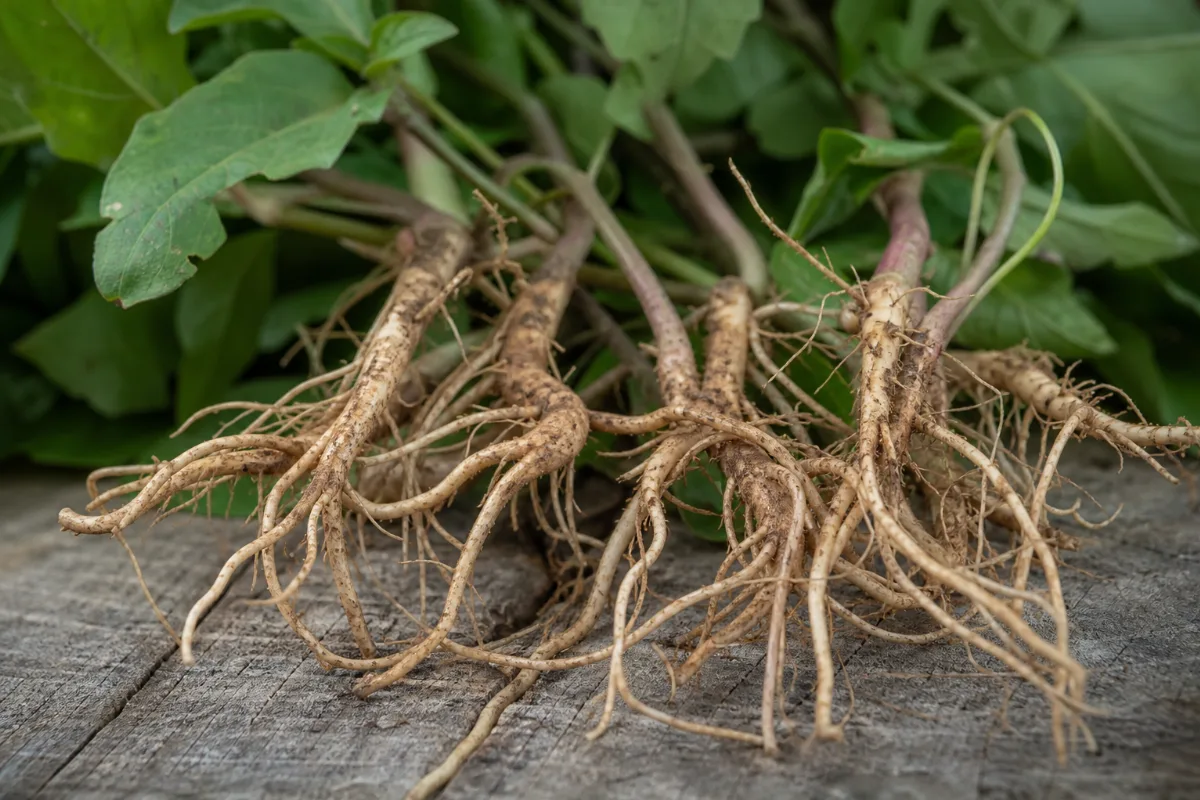
Herbs & Botanicals · Chinese joint and lower-body root
Achyranthes
Achyranthes bidentata · also called Niu xi, huai niu xi, ox knee, Chinese cow-knee
Achyranthes, or niu xi, is the root of a plant used in Chinese medicine for sore knees, low back pain and menstrual problems. Rat studies show higher bone density, but no human trial of the root alone was found. It is traditionally avoided in pregnancy, so ask a doctor or pharmacist before using it.
General information, not medical advice. Last substantive update · Not medically reviewed. A named clinician has not signed off on this page. How this page is made
About Achyranthes
Niu xi is the root of Achyranthes bidentata, used in Chinese medicine for knees, back and periods. Human evidence for the root alone is missing, and the key cautions are pregnancy and plant mix-ups.
Safety first
Pregnancy: niu xi is traditionally used to bring on periods and aid delivery, and a Hong Kong herb database says to use it with caution in pregnancy. An extract was reported to reduce implantation in mice, and a leaf extract of the related Achyranthes aspera harmed rat embryos. Avoid it in pregnancy and when trying to conceive.
Periods and bleeding: because it is traditionally used to "move blood", ask a doctor before use if you have heavy periods, unexplained bleeding or a bleeding disorder.
Medicines: no interaction studies were found. A herb pair containing it lowered blood pressure in mice, and blood-thinning and diabetes effects are possible but unstudied. If you take blood pressure, blood-thinning or diabetes medicines, ask a doctor or pharmacist first.
Wrong plant: Achyranthes aspera and Cyathula officinalis are different plants, and the Cyathula root is also called niu xi.
Liver, breastfeeding and children: no data were found, and there is no LiverTox entry.
Get urgent help for bleeding or cramping in pregnancy, heavy bleeding, signs of allergy, or yellow skin or eyes.
Which plant? Achyranthes bidentata, A. aspera and Cyathula
Niu xi is the root of Achyranthes bidentata (huai niu xi). Achyranthes aspera is a separate species with its own folk uses and pregnancy warnings. Cyathula officinalis (chuan niu xi) is another plant, swapped for it in some prescriptions.
Studies on one of these plants do not automatically apply to the others. This page covers the A. bidentata root and says so where it uses data on the others.
What the research shows
Two meta-analyses of rat studies found higher bone density with the root or its ingredients. These are animal studies with some bias, not proof for people.
Reviews describe anti-inflammatory effects of root saponins in cells and arthritis models in animals. No human trial of the root alone was found.
One small open trial added a 15-herb recipe that contained niu xi to celecoxib in people with a spine-joint disease and saw better scores. The root cannot be separated from the other 14 herbs.
At a glance
Traditional uses history, not proof
- Aching low back and knees, weak legs
- Absent or painful periods
- "Conducting blood downward" in formulas
Studied for research
- Bone density (rats): insufficient for people
- Joint pain and back pain: very low
- Arthritis and cartilage (lab): insufficient
Main compounds
- 20-Hydroxyecdysone (beta-ecdysterone)
- Triterpenoid saponins
- Polysaccharides
Common forms
- Dried root
- Decoction with other herbs
- Root extract (animal studies)
Research links: Lian 2023: rat osteoporosis meta-analysis (PubMed) · Yang 2024: root extract in osteoporotic rats (PubMed) · Yang 2026: comprehensive review of the root (PubMed) · He 2015: 15-herb recipe trial (PubMed) · Hong Kong PolyU herb database · Research Library · Genes & Biomarkers Library
The plant and its history
- Accepted scientific name
- Achyranthes bidentata Blume
- Naming authority
- GBIF species match, read 2026-10-25: ACCEPTED species, key 3085175.
- Common names
- Niu xi (Chinese (pinyin)); Huai niu xi (Chinese); Ox knee (English); Chinese cow-knee (English); Two-toothed achyranthes (English)
- Botanical family
- Amaranthaceae (amaranth family), per GBIF.
- Classification
- Plantae > Amaranthaceae > Achyranthes > Achyranthes bidentata
- Native range
- Not verified.
- Habitat
- Not verified.
- What the plant looks like
- Roots: The dried root is the medicinal part (reviews exclude stems, leaves, fruit and seeds from the medicinal definition).; Stems: Not verified.; Leaves: Not verified.; Flowers: Not verified.; Fruit: Not verified.
- Cultivation
- Not covered.
- Harvest and processing
- Raw and processed (for example salt-processed) roots are used; processing methods are covered in the 2026 review, not read in full.
- Look-alikes and adulterants
- Name: Achyranthes aspera; Note: A different species (GBIF key 3085168) with its own folk uses and its own pregnancy warnings; its data do not transfer to A. bidentata.; Name: Cyathula officinalis (chuan niu xi); Note: Another plant also called niu xi, a different genus in the same family (GBIF key 5548543); substituted for A. bidentata in some prescriptions.
- Sustainability and conservation
- Not covered.
Traditional use and history history, not clinical proof
| Tradition or era | Documented use | Source |
|---|---|---|
| Traditional Chinese Medicine | Used for amenorrhea, dysmenorrhea, waist and knee pain, muscle and bone weakness, stranguria, edema, headache, dizziness, toothache and mouth ulcers (a 2026 review of traditional records). Hong Kong PolyU: replenish liver and kidney, strengthen sinews and bones, dispel stasis and stimulate menstruation, conduct blood downward. | p42302952 |
| Traditional Chinese Medicine (two roots) | Huai niu xi (A. bidentata) and chuan niu xi (Cyathula officinalis) can substitute for each other in specific prescriptions. | p40795998 |
Traditional use shows how a plant was used. It does not show that a supplement works or is safe today.
What is inside, and how it may work
What the plant contains and how those compounds act in cells and animals. Laboratory and animal mechanisms are not proven effects in people.
Main compounds
| Compound | Family | Where it is concentrated | Activity studied | Level of evidence |
|---|---|---|---|---|
| 20-Hydroxyecdysone (beta-ecdysterone) PubChem 5459840 | ecdysteroid (steroid) | Root | Studied in lab and animal work; a 2026 review describes its in-body behaviour (pharmacokinetics). 11 15 | Laboratory research |
| Triterpenoid saponins (e.g. chikusetsusaponin V) | saponin | Root | Anti-inflammatory and anti-arthritis activity in cells and animals. 17 19 | Laboratory research |
| Polysaccharides | sugar chains | Root | Antioxidant, antitumour, anti-osteoporosis and anti-inflammatory activity in vitro and in animals. 2 | Laboratory research |
| Other phytoecdysteroids | ecdysteroid | Root | 281 ecdysteroids characterised; used to tell species apart. 16 | Analytical |
Mechanisms, receptors and pathways
| Target or pathway | Gene or receptor | What was found | Level |
|---|---|---|---|
| NF-kB, MAPK and PI3K/AKT signalling | NF-kB; MAPK; PI3K/AKT | Root compounds reduced inflammation and cartilage breakdown in cell and rat arthritis models (lab and animal). 17 19 | Laboratory research |
| Bone-building markers | Not specified | Root and ingredients raised bone density and bone gla protein and lowered alkaline phosphatase in osteoporosis-model animals (animal). 7 14 | Animal research |
Absorption, metabolism and elimination
- Absorption
- A 2026 review says pharmacokinetic work has clarified the in-body behaviour of beta-ecdysterone and triterpenoid saponins; details not read.
- Distribution
- Not covered.
- Metabolism
- Not covered.
- Elimination
- Not covered.
- Bioavailability
- Not covered.
Isolated compounds versus whole extracts
Most lab findings are for isolated saponins, ecdysteroids or polysaccharides. The only human study used a 15-herb recipe. Results for isolated compounds do not carry over to the whole root, and neither carries over to a different species.
Nutritional composition
Niu xi is a medicinal root, not a food or a source of essential nutrients.
1 very low certainty5 not enough evidence
What is Achyranthes good for?
The studied uses and how strong the evidence is. For niu xi itself there is no human trial of the root alone; most results are from rats, cells or a mixed-herb recipe.
Benefits, one by one
Each card is a research question, not a promise. Tap a goal to filter. Open a card to see the studies, doses and limits.
Bone density and osteoporosis (animal studies)
Not enough evidenceTwo meta-analyses of rat studies found higher bone density after the root or its ingredients. No human trial was found, so it is not known whether this helps people.
2 studiesUsed traditionally as the dried root, usually boiled with other herbs…
Studies, doses and limits
What the trials found
No human trial of the root for bone health was found.
Results
Meta-analysis 1 (9 animal studies, 196 animals): higher femoral-neck bone density, calcium, phosphorus, bone gla protein and bone strength; lower alkaline phosphatase. Meta-analysis 2 (11 rat studies, 222 animals): higher bone density with root extract. Both are animal studies.
Effect sizes as reported
Bone density SMD 2.09 (95% CI 1.29 to 2.89) and 1.64 (95% CI 0.52 to 2.77) in rats
Why this rating
Insufficient for people: only animal studies, with publication bias and high variation between studies. Whether it works in people is unknown.
Form and dose studied
Used traditionally as the dried root, usually boiled with other herbs. Ask a doctor or pharmacist about amounts.
Who was studied
No human trial of the root alone was found.
Limits
Rat osteoporosis models differ from human disease; publication bias; high variation between studies; whole root and isolated ingredients were mixed.
Why researchers looked
Niu xi is traditionally used to strengthen "sinews and bones", so researchers tested it in rats with osteoporosis.
Traditional use
Used in Chinese medicine to strengthen bones and sinews (tradition, not trial evidence).
Proposed mechanism Animal evidence
Reviews say the root contains ecdysteroids (such as 20-hydroxyecdysone), saponins and polysaccharides that affected bone-building markers in animals.
A proposed mechanism does not show that the effect happens in people.
Do not use instead of bone-density medicines. See the safety tab: avoid in pregnancy; species mix-ups are common.
Joint, knee and back pain (traditional use; one mixed-herb trial)
Very low certaintyIn Chinese medicine niu xi is a classic herb for sore knees, weak legs and low back pain. No trial of the root alone was found. One small open trial of a 15-herb recipe that included it showed better scores, but the root cannot be separated out.
3 studiesUsed traditionally as the dried root, usually boiled with other herbs…
Studies, doses and limits
What the trials found
One 4-week open-label trial in 54 people with axial spondyloarthritis tested celecoxib with or without a 15-herb recipe containing two-toothed achyranthes root.
Results
In the trial, 76.92% of the recipe group vs 50.00% of the celecoxib-only group reached ASAS 20 (P<0.05). Most disease scores improved more with the recipe. No obvious adverse reactions were reported.
Effect sizes as reported
ASAS 20: 76.92% vs 50.00%
Why this rating
Very low: one small open study, no placebo, 15 herbs together, so the root alone cannot be judged. Traditional use is not proof.
Form and dose studied
Used traditionally as the dried root, usually boiled with other herbs. Ask a doctor or pharmacist about amounts.
Who was studied
No human trial of the root alone was found.
Limits
Open design, 4 weeks, many herbs; no trial of niu xi alone.
Why researchers looked
The root is traditionally used to carry other herbs down to the lower body and relieve aching of the low back and knees.
Traditional use
Hong Kong PolyU database: aching of the lumbar and knee joints with leg weakness is a listed traditional indication. Often paired with other herbs such as eucommia.
Proposed mechanism Mixed
Cell and animal work suggests anti-inflammatory and cartilage-protecting actions (see the next entry).
A proposed mechanism does not show that the effect happens in people.
Pain in the joints or back can have serious causes; see a doctor. See the safety tab: avoid in pregnancy; species mix-ups are common.
Inflammatory joint disease and cartilage (rheumatoid arthritis, knee osteoarthritis; lab and animal)
Not enough evidenceReviews describe anti-inflammatory effects of compounds from niu xi in cells and animals, including arthritis models. This is lab work, not proof for people.
3 studiesUsed traditionally as the dried root, usually boiled with other herbs…
Studies, doses and limits
What the trials found
No human trial of the root or the saponin extract for arthritis was found.
Results
Rat knee osteoarthritis study (48 rats, 4 weeks): the saponin extract lowered inflammatory signals and cartilage-breakdown proteins and was linked to less cartilage damage. The 2025 review covers Achyranthes and a different plant, Cyathula, together.
Effect sizes as reported
Not applicable (animal and lab results)
Why this rating
Insufficient: lab and animal work only; reviews themselves call for clinical research.
Form and dose studied
Used traditionally as the dried root, usually boiled with other herbs. Ask a doctor or pharmacist about amounts.
Who was studied
No human trial of the root alone was found.
Limits
Isolated saponin extract is not the whole root; the review mixes two different plants; abstracts only.
Why researchers looked
Researchers study the root saponins and other compounds in arthritis models.
Traditional use
Niu xi is used in many traditional joint formulas.
Proposed mechanism Animal evidence
A 2025 review lists 22 plant compounds with anti-arthritis actions (NF-kB, MAPK, PI3K/AKT pathways). In rats with knee osteoarthritis, a total saponin extract lowered TNF-alpha, IL-1 beta and cartilage-breakdown enzymes.
A proposed mechanism does not show that the effect happens in people.
None specific beyond the general cautions. See the safety tab: avoid in pregnancy; species mix-ups are common.
Absent or painful periods and "moving blood" (traditional use)
Not enough evidenceNiu xi is traditionally used to bring on periods and ease painful ones. No human trial was found. This is also why it is traditionally avoided in pregnancy.
2 studiesUsed traditionally as the dried root, usually boiled with other herbs…
Studies, doses and limits
What the trials found
No human trial found.
Results
Not applicable.
Effect sizes as reported
Not applicable
Why this rating
Insufficient: tradition only.
Form and dose studied
Used traditionally as the dried root, usually boiled with other herbs. Ask a doctor or pharmacist about amounts.
Who was studied
No human trial of the root alone was found.
Limits
Traditional claims only.
Why researchers looked
Chinese medicine says the root "dispels stasis and stimulates menstruation".
Traditional use
Hong Kong PolyU database lists amenorrhea with mass formation as a traditional indication; a 2026 review lists amenorrhea and dysmenorrhea among traditional uses.
Proposed mechanism Traditional
Not established in people.
A proposed mechanism does not show that the effect happens in people.
Avoid in pregnancy. See the safety tab.
Blood pressure (mouse study of a two-herb pair)
Not enough evidenceIn mice with high blood pressure, a pair of herbs that included Achyranthes lowered blood pressure. It is not known what the root does alone or in people.
2 studiesUsed traditionally as the dried root, usually boiled with other herbs…
Studies, doses and limits
What the trials found
No human trial found.
Results
A. bidentata plus Paeonia lactiflora lowered blood pressure and improved ejection fraction in hypertensive mice.
Effect sizes as reported
Not applicable (animal study)
Why this rating
Insufficient: a mouse study of a two-herb pair only.
Form and dose studied
Used traditionally as the dried root, usually boiled with other herbs. Ask a doctor or pharmacist about amounts.
Who was studied
No human trial of the root alone was found.
Limits
Two-herb pair; mice; effect of Achyranthes alone unknown.
Why researchers looked
Niu xi is traditionally used to "conduct blood downward" and appears in formulas for dizziness and headache.
Traditional use
A 2026 review lists dizziness and headache among traditional uses.
Proposed mechanism Animal evidence
In the mouse study the pair affected oxidative-stress and inflammation pathways; paeoniflorin from the peony partner is highlighted.
A proposed mechanism does not show that the effect happens in people.
If you take blood pressure medicines, ask a doctor or pharmacist first: an added effect is possible but unstudied.
Other lab effects (immune, blood sugar, nerve, tumour, kidney)
Not enough evidenceA 2026 review lists many effects in cells and animals. These are early findings; the authors say studies on single compounds and their action in the body are limited.
2 studiesUsed traditionally as the dried root, usually boiled with other herbs…
Studies, doses and limits
What the trials found
No human trial found.
Results
Not applicable.
Effect sizes as reported
Not applicable
Why this rating
Insufficient: cell and animal evidence only.
Form and dose studied
Used traditionally as the dried root, usually boiled with other herbs. Ask a doctor or pharmacist about amounts.
Who was studied
No human trial of the root alone was found.
Limits
Lab and animal only; abstracts only.
Why researchers looked
The root contains saponins, ecdysteroids and polysaccharides that show activity in the lab.
Traditional use
Not applicable.
Proposed mechanism Laboratory research
Lab effects listed for saponins, steroids and polysaccharides; polysaccharides from the root and from Cyathula show antioxidant, antitumour and anti-inflammatory activity in vitro and in animals.
A proposed mechanism does not show that the effect happens in people.
None specific. See the safety tab.
Connections to the rest of health
How Achyranthes connects to the rest of our health knowledge graph. Every link says what kind of connection it is. A safety link (for example to the liver) is a warning, not a benefit. A study that merely mentions a topic never creates a benefit link.
Explore every connection: goals, body systems, organs, symptoms, genes
A. Wellness goals
| Connected to | Kind of connection | Evidence status | Context | Studies |
|---|---|---|---|---|
| Bone Health | Preliminary mechanism | Not enough evidence | Bone density and osteoporosis (animal studies): Two meta-analyses of rat studies found higher bone density after the root or its ingredients. No human trial was found, so it is not known whether this helps people. | 7 14 |
| Joint Support | Very low certainty | Joint, knee and back pain (traditional use; one mixed-herb trial): In Chinese medicine niu xi is a classic herb for sore knees, weak legs and low back pain. No trial of the root alone was found. One small open trial of a 15-herb recipe that included it showed better scores, but the root cannot be separated out. | 6 12 15 | |
| Mobility Support | Very low certainty | Joint, knee and back pain (traditional use; one mixed-herb trial): In Chinese medicine niu xi is a classic herb for sore knees, weak legs and low back pain. No trial of the root alone was found. One small open trial of a 15-herb recipe that included it showed better scores, but the root cannot be separated out. | 6 12 15 | |
| Inflammation Balance | Preliminary mechanism | Not enough evidence | Inflammatory joint disease and cartilage (rheumatoid arthritis, knee osteoarthritis; lab and animal): Reviews describe anti-inflammatory effects of compounds from niu xi in cells and animals, including arthritis models. This is lab work, not proof for people. | 17 19 15 |
| Joint Support | Preliminary mechanism | Not enough evidence | Inflammatory joint disease and cartilage (rheumatoid arthritis, knee osteoarthritis; lab and animal): Reviews describe anti-inflammatory effects of compounds from niu xi in cells and animals, including arthritis models. This is lab work, not proof for people. | 17 19 15 |
| Womens Wellness | Not enough evidence | Absent or painful periods and "moving blood" (traditional use): Niu xi is traditionally used to bring on periods and ease painful ones. No human trial was found. This is also why it is traditionally avoided in pregnancy. | 12 15 | |
| Blood Pressure Support | Preliminary mechanism | Not enough evidence | Blood pressure (mouse study of a two-herb pair): In mice with high blood pressure, a pair of herbs that included Achyranthes lowered blood pressure. It is not known what the root does alone or in people. | 18 15 |
| Heart Health | Preliminary mechanism | Not enough evidence | Blood pressure (mouse study of a two-herb pair): In mice with high blood pressure, a pair of herbs that included Achyranthes lowered blood pressure. It is not known what the root does alone or in people. | 18 15 |
B. Body systems
| Connected to | Kind of connection | Evidence status | Context | Studies |
|---|---|---|---|---|
| Reproductive health | Documented risk | Traditional pregnancy caution; reduced implantation in mice (summary-only); A. aspera leaf harmed rat embryos. Preparation or compound: Achyranthes root (tradition) and extracts (animal) |
12 10 13 | |
| Bones Joints Muscles | Biological association | Not enough evidence | Studied for: Bone density and osteoporosis (animal studies) Studied for: Joint, knee and back pain (traditional use; one mixed-herb trial) | 7 14 6 12 15 |
| Musculoskeletal System | Biological association | Not enough evidence | Studied for: Bone density and osteoporosis (animal studies) Studied for: Inflammatory joint disease and cartilage (rheumatoid arthritis, knee osteoarthritis; lab and animal) | 7 14 17 19 15 |
| Pain Inflammation | Biological association | Very low certainty | Studied for: Joint, knee and back pain (traditional use; one mixed-herb trial) Studied for: Inflammatory joint disease and cartilage (rheumatoid arthritis, knee osteoarthritis; lab and animal) | 6 12 15 17 19 |
| Reproductive Health | Biological association | Not enough evidence | Studied for: Absent or painful periods and "moving blood" (traditional use) | 12 15 |
| Reproductive System | Biological association | Not enough evidence | Studied for: Absent or painful periods and "moving blood" (traditional use) | 12 15 |
| Heart Circulation | Biological association | Not enough evidence | Studied for: Blood pressure (mouse study of a two-herb pair) | 18 15 |
| Immune Support | Biological association | Not enough evidence | Studied for: Other lab effects (immune, blood sugar, nerve, tumour, kidney) | 15 2 |
I. Biomarkers
| Connected to | Kind of connection | Evidence status | Context | Studies |
|---|---|---|---|---|
| Bone mineral density (femoral neck) in rats | Biological association | Not enough evidence | Measured in trials: improved (in animals). A lab change is not the same as a health benefit. | 7 14 |
| Bone blood markers (alkaline phosphatase, calcium, phosphorus, bone gla protein) in rats | Biological association | Not enough evidence | Measured in trials: improved (in animals). A lab change is not the same as a health benefit. | 7 |
| Inflammation signals (TNF-alpha, IL-1 beta) and cartilage-breakdown enzymes in rats | Biological association | Not enough evidence | Measured in trials: lowered (in animals). A lab change is not the same as a health benefit. | 19 |
| ASAS 20 response and disease scores in axial spondyloarthritis | Biological association | Very low certainty | Measured in trials: improved (with a 15-herb recipe plus celecoxib). A lab change is not the same as a health benefit. | 6 |
| Blood pressure in hypertensive mice | Biological association | Not enough evidence | Measured in trials: lowered (in mice, herb pair). A lab change is not the same as a health benefit. | 18 |
K. Biological pathways
| Connected to | Kind of connection | Evidence status | Context | Studies |
|---|---|---|---|---|
| NF-kB / MAPK / PI3K-AKT signalling | Preliminary mechanism | In vitro | Anti-inflammatory actions in arthritis models. | 17 |
L. Active compounds
| Connected to | Kind of connection | Evidence status | Context | Studies |
|---|---|---|---|---|
| 20-Hydroxyecdysone (beta-ecdysterone) | Biological association | In vitro | Studied in lab and animal work; a 2026 review describes its in-body behaviour (pharmacokinetics). Preparation or compound: Root |
11 15 |
| Triterpenoid saponins (e.g. chikusetsusaponin V) | Biological association | In vitro | Anti-inflammatory and anti-arthritis activity in cells and animals. Preparation or compound: Root |
17 19 |
| Polysaccharides | Biological association | In vitro | Antioxidant, antitumour, anti-osteoporosis and anti-inflammatory activity in vitro and in animals. Preparation or compound: Root |
2 |
| Other phytoecdysteroids | Biological association | Analytical | 281 ecdysteroids characterised; used to tell species apart. Preparation or compound: Root |
16 |
Each connection is stored with the ingredient, the connected record, the kind of connection, the evidence status, the supporting studies, the preparation or compound involved, and a review date (last reviewed October 25, 2026).
The evidence
The research centre for Achyranthes. Every record here was checked against PubMed or the publisher's page; we never list a study we have not verified.
Evidence by outcome
Bars show how many studies we found for each outcome, not how well it works. People are added up across trials only (reviews are not added, to avoid double counting).
How we rate evidence
High certainty
Several well-run trials or reviews agree; further research is unlikely to change the picture much.
Moderate certainty
Good trials point the same way, but some doubt remains.
Low certainty
Small, short or inconsistent trials. The finding could change with better research.
Very low certainty
Very little or very weak human data. Treat as a possibility only.
Mixed findings
Trials or reviews disagree with each other.
Not enough evidence
Not enough human research to say either way.
Evidence against
Good research found no benefit, or found harm.
We take the reviewers' own risk-of-bias and GRADE statements where they exist, and otherwise judge from study size, design, consistency, directness and whether a product matches what is sold. Many publications do not make evidence high. Method note: We read our existing herb summary, searched PubMed, read the abstract of each PubMed record cited, read the Hong Kong PolyU herb database page, and checked names in GBIF and NCBI Taxonomy and compounds in PubChem. Pages that could not be opened are marked not found or not verified.
Study library: every study we checked 19
| Study | Design | People | Product, dose, length | Result |
|---|---|---|---|---|
| Bernstein 2021 Is it safe to consume traditional medicinal plants during pregnancy? Phytother Res · PMID 33164294 · DOI |
Narrative review mixed (mostly animal) |
Review of preclinical studies of herbs in pregnancy | Many medicinal plants, including Achyranthes aspera varied not applicable not applicable · vs not applicable |
The review lists Achyranthes aspera among plants to avoid during pregnancy because of abortifacient or teratogenic signals in preclinical studies. A. bidentata is not named in the abstract. Not applicable (not applicable) Methods, limits and fundingOutcomes: Abortifacient and teratogenic signals in preclinical studies Limitations: Based on preclinical studies; names A. aspera, not A. bidentata; abstract only. Funding and conflicts: Funding not stated in abstract. Read: abstract (PubMed efetch) |
| Chai 2024 Oligo/polysaccharides from Cyathula officinalis and Achyranthes bidentata: a review of structures and bioactivities J Pharm Pharmacol · PMID 38243389 · DOI |
Narrative review mixed (mostly lab and animal) |
Review of sugar-chain compounds from two niuxi roots | Polysaccharides from Achyranthes bidentata and Cyathula officinalis root not applicable not applicable · vs not applicable |
The two plants have similar sugar-chain structures and activities in vivo and in vitro (antitumour, antioxidant, anti-osteoporosis, anti-inflammatory); they differ in their sugar make-up, which can be used as an identification mark. Purified compounds are less studied. Not applicable (not applicable) Methods, limits and fundingOutcomes: Structure and biological activity of polysaccharides Limitations: Review; lab and animal work; abstract only. Funding and conflicts: Funding not stated in abstract. Read: abstract (PubMed efetch) |
| GBIF 2026 GBIF species match: Achyranthes bidentata GBIF API · Source |
Database record plant |
not applicable not applicable · vs not applicable |
GBIF species match (read 2026-10-25): Achyranthes bidentata Blume, key 3085175, rank SPECIES, status ACCEPTED, family Amaranthaceae, order Caryophyllales. Not applicable (not applicable) Methods, limits and fundingOutcomes: Name check Limitations: Name only. Funding and conflicts: Not applicable Read: API response | |
| GBIF 2026 GBIF species match: Achyranthes aspera GBIF API · Source |
Database record plant |
not applicable not applicable · vs not applicable |
GBIF species match (read 2026-10-25): Achyranthes aspera L., key 3085168, ACCEPTED, same genus and family as A. bidentata. A separate species. Not applicable (not applicable) Methods, limits and fundingOutcomes: Name check Limitations: Name only. Funding and conflicts: Not applicable Read: API response | |
| GBIF 2026 GBIF species match: Cyathula officinalis GBIF API · Source |
Database record plant |
not applicable not applicable · vs not applicable |
GBIF species match (read 2026-10-25): Cyathula officinalis K.C.Kuan, key 5548543, ACCEPTED, a different genus in the same family (Amaranthaceae). Not applicable (not applicable) Methods, limits and fundingOutcomes: Name check Limitations: Name only. Funding and conflicts: Not applicable Read: API response | |
| He 2015 Adjunctive treatment of axial undifferentiated spondyloarthritis by Qiangji Recipe: a clinical study Zhongguo Zhong Xi Yi Jie He Za Zhi · PMID 25790672 |
RCT open label |
54 54 adults with axial undifferentiated spondyloarthritis (50 finished) |
Qiangji Recipe, a 15-herb decoction that includes two-toothed achyranthes root, plus celecoxib root (one of 15 herbs) Amounts stated in the abstract; not repeated here (not advice) 4 weeks · vs Celecoxib alone |
The recipe plus celecoxib group had more ASAS 20 responders (76.92% vs 50.00%, P<0.05) and better scores on most indices. No obvious adverse reactions were reported. Achyranthes is one of 15 herbs, so its own effect cannot be judged. ASAS 20: 76.92% vs 50.00% (not applicable) Methods, limits and fundingOutcomes: ASAS 20 response, BASDAI, BASFI, ASQoL, ESR, CRP Limitations: Open study, 4 weeks, no placebo, 15-herb mixture; the root cannot be separated out. Funding and conflicts: Funding not stated in abstract. Read: abstract (PubMed efetch) |
| Lian 2023 Antiosteoporosis effect and possible mechanisms of the ingredients of Radix Achyranthis Bidentatae in animal models of osteoporosis: systematic review and meta-analysis of in vivo studies J Orthop Surg Res · PMID 37496077 · DOI |
Animal meta analysis animal |
196 Nine animal studies (196 animals) of osteoporosis models |
Radix Achyranthis Bidentatae (RAB) or its ingredients (IRAB) root and ingredients not applicable not applicable · vs not applicable |
In osteoporosis-model animals, RAB or IRAB raised F-BMD (SMD 2.09, 95% CI 1.29 to 2.89), calcium, phosphorus, BGP and bone strength, and lowered ALP. Egger test showed publication bias for the main outcome. Large standardised differences, but in animals only and with publication bias (F-BMD SMD 2.09, 95% CI 1.29 to 2.89) Methods, limits and fundingOutcomes: Femoral-neck bone mineral density (F-BMD), calcium, phosphorus, alkaline phosphatase (ALP), bone gla protein (BGP), bone strength (M-STRESS) Limitations: Animal studies only (9 studies, 196 animals); high heterogeneity (I2 76% for BMD); publication bias; says nothing proven about people. Funding and conflicts: Funding not stated in abstract. Read: abstract (PubMed efetch) |
| Meng 2025 Achyranthes bidentata Bl. (Huai NiuXi) and Cyathula officinalis Kuan (Chuan NiuXi): ethnopharmacology, phytochemistry, and pharmacology of two frequently used traditional Chinese medicine J Pharm Pharmacol · PMID 40795998 · DOI |
Narrative review mixed (mostly lab and animal) |
Review comparing two roots both sold as niu xi | Achyranthes bidentata (Huai Niuxi) and Cyathula officinalis (Chuan Niuxi) root not applicable not applicable · vs not applicable |
The two roots are used as substitutes for each other in specific prescriptions and share many chemicals and pharmacological activities, but there are relatively few studies on Cyathula. Not applicable (not applicable) Methods, limits and fundingOutcomes: Traditional use and chemistry of the two roots Limitations: Narrative review; abstract only; shows the two plants are commonly swapped, so a product called niu xi may not be Achyranthes. Funding and conflicts: Funding not stated in abstract. Read: abstract (PubMed efetch) |
| NCBI Bookshelf 2026 NCBI Bookshelf search: Achyranthes + LiverTox NCBI E-utilities · Source |
Database record plant |
not applicable not applicable · vs not applicable |
Search on 2026-10-25 returned 0 results, so no LiverTox entry for Achyranthes was found. This is not proof that the root is liver-safe. Not applicable (not applicable) Methods, limits and fundingOutcomes: Is there a LiverTox entry? Limitations: Absence of an entry; no regulator pages (EMA/HMPC, NCCIH, MSK, WHO) were found for A. bidentata in our earlier summary. Funding and conflicts: Not applicable Read: API response | |
| PROSEA / Pl@ntUse 2022 Achyranthes (PROSEA) Pl@ntUse · Source |
Database record plant |
Plant resources entry for the genus Achyranthes | Achyranthes species whole plant / root not applicable not applicable · vs not applicable |
Summary-only (from our earlier herb summary; page not re-opened today): reports use to aid delivery and an anti-fertility / anti-implantation effect of an extract in mice for A. bidentata; its explicit pregnancy contraindication in China refers to A. aspera. Not applicable (not applicable) Methods, limits and fundingOutcomes: Traditional uses and animal findings Limitations: Not re-opened for this profile; treat as summary-only. Funding and conflicts: Not applicable Read: summary-only (earlier herb summary) |
| PubChem 2026 PubChem: 20-Hydroxyecdysone (beta-ecdysterone) PubChem PUG REST · Source |
Database record plant |
not applicable not applicable · vs not applicable |
PubChem name search (read 2026-10-25): 20-Hydroxyecdysone, CID 5459840, formula C27H44O7. Not applicable (not applicable) Methods, limits and fundingOutcomes: Compound identity Limitations: Identity only. Funding and conflicts: Not applicable Read: API response | |
| School of Nursing 2026 Twotoothed Achyranthes Root (Chinese Herbal Medicine Database) Hong Kong PolyU Chinese Herbal Medicine Database · Source |
Database record plant |
Monograph of the dried root of Achyranthes bidentata | Dried root of Achyranthes bidentata Bl. root not applicable not applicable · vs not applicable |
Page read 2026-10-25. Traditional actions: replenish liver and kidney, strengthen sinews and bones, dispel stasis and stimulate menstruation, conduct blood downward. Indications include aching lumbar and knee joints with leg weakness and amenorrhea. Cautions: use with caution during pregnancy. Adverse reaction report: no data. The only clinical study listed is the 15-herb Qiangji Recipe trial. Not applicable (not applicable) Methods, limits and fundingOutcomes: Traditional actions, indications, cautions Limitations: A database of traditional use; not a safety trial. Funding and conflicts: Not applicable Read: page text read 2026-10-25 |
| Teshome 2021 Developmental Toxicity of Ethanolic Extracts of Leaves of Achyranthes aspera, Amaranthaceae in Rat Embryos and Fetuses J Exp Pharmacol · PMID 34104006 · DOI |
Animal experiment animal |
Pregnant Wistar rats | Ethanolic LEAF extract of Achyranthes aspera (a different species and plant part) leaf 250, 500 and 1000 mg/kg (animal doses, not advice) gestation days 6 to 12 · vs Pair-fed control |
At the highest animal amount the extract reduced implantation sites (about 8.3 vs 11.2), slowed embryo development, cut crown-rump length (2.31 vs 2.82 cm) and raised fetal resorptions and deaths. No external malformations were seen. Used in Ethiopian folk medicine for fertility control. Harm to rat embryos at the highest amount (not applicable) Methods, limits and fundingOutcomes: Implantation sites, embryo development, fetal size, resorptions Limitations: A. aspera leaf, not A. bidentata root; rats; high animal amounts. Funding and conflicts: Funding not stated in abstract. Read: abstract (PubMed efetch) |
| Yang 2024 Osteoprotective effect of Achyranthes bidentata root extract on osteoporotic rats: a systematic review and meta-analysis Pharm Biol · PMID 39363520 · DOI |
Animal meta analysis animal |
222 Eleven rat studies (222 animals) of osteoporosis |
Achyranthes bidentata root extract root not applicable not applicable · vs not applicable |
The extract group had higher bone mineral density than the model group (SMD 1.64, 95% CI 0.52 to 2.77). The authors say the findings support future clinical studies. Higher bone density in rats (SMD 1.64, 95% CI 0.52 to 2.77) Methods, limits and fundingOutcomes: Bone mineral density, bone shape under the microscope, bone strength, bone blood markers Limitations: Rats only; wide confidence interval; the abstract gives no quality rating. Registered in PROSPERO (CRD42023418917). Funding and conflicts: Funding not stated in abstract. Registration: PROSPERO CRD42023418917 Read: abstract (PubMed efetch) |
| Yang 2026 Achyranthis bidentatae radix: A comprehensive review of botany, processing methods, ethnopharmacology, phytochemistry, pharmacology, quality control, toxicity, and pharmacokinetics J Ethnopharmacol · PMID 42302952 · DOI |
Narrative review mixed (mostly lab and animal) |
Literature review of Achyranthis bidentatae radix (root only) | Achyranthis bidentatae radix (niu xi) root not applicable not applicable · vs not applicable |
204 compounds isolated (triterpenoid saponins, steroids, polysaccharides, alkaloids, flavonoids and others). Main pharmacology listed: anti-osteoporosis, anti-inflammatory, immune and anti-tumour effects, plus many others, from lab and animal work. The authors say toxicology studies confirm general safety at conventionally recommended amounts, and that studies on single active compounds and in-body mechanisms are limited. Not applicable (not applicable) Methods, limits and fundingOutcomes: Traditional use, chemistry, pharmacology, toxicity, pharmacokinetics Limitations: Narrative review; abstract only (full text not read); the safety statement comes from the review authors and is not a human safety trial. Funding and conflicts: Funding not stated in abstract. Read: abstract (PubMed efetch) |
| Yao 2023 Comparative identification of phytoecdysteroids in Achyranthes bidentata Blume and its three analogous species and application in differentiation between processing products from different species J Pharm Biomed Anal · PMID 36796274 · DOI |
Laboratory study plant |
Chemical analysis of A. bidentata and three similar species all called niuxi in Chinese | Raw and processed roots of A. bidentata, Cyathula officinalis and two other niuxi species root not applicable not applicable · vs not applicable |
281 ecdysteroids were characterised. 16 chemical markers separated raw and processed A. bidentata from Cyathula officinalis, which helps quality control of look-alike roots. Not applicable (not applicable) Methods, limits and fundingOutcomes: Ecdysteroid profiles and markers separating species Limitations: Laboratory method paper; says nothing about health effects. Funding and conflicts: Funding not stated in abstract. Read: abstract (PubMed efetch) |
| Zhang 2025 Effects and molecular mechanisms of Achyranthes bidentata Blume and Cyathula officinalis K.C. Kuan in the treatment of rheumatoid arthritis Front Pharmacol · PMID 40777991 · DOI |
Narrative review mixed (mostly lab and animal) |
Review of lab and animal studies of two "niuxi" roots in rheumatoid arthritis models | Achyranthes bidentata and Cyathula officinalis (two different plants, both called niuxi) and their compounds root not applicable not applicable · vs not applicable |
The review lists 22 compounds (for example chikusetsusaponin V and IVa) with several anti-arthritis actions in cells and animals, via NF-kB, MAPK and PI3K/AKT pathways. It states that in-depth mechanism studies and clinical research are needed. Not applicable (not applicable) Methods, limits and fundingOutcomes: Anti-inflammatory and joint-protective actions of plant compounds Limitations: Review of mostly cell and animal work; covers two different plants together; abstract only. Funding and conflicts: Funding not stated in abstract. Read: abstract (PubMed efetch) |
| Zhang 2026 Multitarget mechanisms of the herb pair Achyranthes bidentata and Paeonia lactiflora Pall. in ameliorating hypertensive cardiomyopathy: combining network pharmacology and functional exploration Front Pharmacol · PMID 41756239 · DOI |
Animal experiment animal |
Mice with induced high blood pressure and heart strain | Two-herb pair: Achyranthes bidentata plus Paeonia lactiflora root (both herbs) not applicable not applicable · vs not applicable |
The herb pair lowered blood pressure and natriuretic peptide levels and improved ejection fraction in hypertensive mice, with changes in oxidative-stress and inflammation markers. Paeoniflorin from the peony is highlighted; the effect of Achyranthes alone is not separated. Lower blood pressure in mice (pair) (not applicable) Methods, limits and fundingOutcomes: Blood pressure, natriuretic peptides, heart ejection fraction, oxidative and inflammatory markers Limitations: Mouse study of a two-herb combination; cannot tell how much comes from Achyranthes; no human data. Funding and conflicts: Funding not stated in abstract. Read: abstract (PubMed efetch) |
| Zhuang 2025 Mechanism of action of total saponin Achyranthes in treating knee osteoarthritis explored using network pharmacology and animal experimentation Iran J Basic Med Sci · PMID 40343288 · DOI |
Animal experiment animal |
48 48 rats with surgically induced knee osteoarthritis (six groups) |
Total saponin extract of Achyranthes root saponins Dose levels given in the abstract; not repeated here (not advice) 4 weeks · vs Model group and sham group |
The saponin extract lowered blood levels of TNF-alpha and IL-1 beta and the cartilage-breakdown proteins MMP-9, MMP-13 and ADAMTS-5, and was linked to less cartilage damage in rats. Authors propose action through MAPK/Akt/NF-kB signalling. Improved joint markers in rats (not applicable) Methods, limits and fundingOutcomes: Joint swelling, Lequesne score, cartilage under the microscope, TNF-alpha, IL-1 beta, cartilage-breakdown enzymes Limitations: Rats only, isolated saponin extract not the whole root; eight rats per group. Funding and conflicts: Funding not stated in abstract. Read: abstract (PubMed efetch) |
What we do not know yet
- No human trial of Achyranthes root alone for any use was found.
- Bone findings are from rats, with publication bias.
- Pregnancy, liver, kidney, breastfeeding and drug-interaction safety are untested in people.
- No EMA/HMPC, NCCIH, WHO or LiverTox entry was found: not verified.
- Species mix-ups (A. aspera, Cyathula) make product contents uncertain.
How new research is added
New studies are found by a saved PubMed search and placed in a review queue. A person reads each one before it changes any rating or safety wording.
Lab markers
What changed in blood or saliva tests during trials. A changed number is not the same as feeling or being healthier, and we give no "normal ranges".
Other 5
Bone mineral density (femoral neck) in rats
Improved (in animals) in trials
Bone mineral density is the amount of mineral in a bone; low values mean weaker bones.
Not enough evidenceResults and what it means
Why it was measured
The main measure of osteoporosis.
Statistical vs. clinical meaning
Animal result only; not shown in people.
Safety implication
See safety section.
| Study | Result | People | Product |
|---|---|---|---|
| 7 | Higher femoral-neck bone density with the root or its ingredients (SMD 2.09, 95% CI 1.29 to 2.89). | 9 animal studies, 196 animals | Radix Achyranthis Bidentatae or ingredients |
| 14 | Higher bone density with root extract (SMD 1.64, 95% CI 0.52 to 2.77). | 11 rat studies, 222 animals | A. bidentata root extract |
Bone blood markers (alkaline phosphatase, calcium, phosphorus, bone gla protein) in rats
Improved (in animals) in trials
Blood tests that reflect bone building and breakdown.
Not enough evidenceResults and what it means
Why it was measured
Show how bone is turning over.
Statistical vs. clinical meaning
Animal result only.
Safety implication
See safety section.
| Study | Result | People | Product |
|---|---|---|---|
| 7 | Lower alkaline phosphatase and higher calcium, phosphorus and bone gla protein in model animals. | 9 animal studies, 196 animals | Radix Achyranthis Bidentatae or ingredients |
Inflammation signals (TNF-alpha, IL-1 beta) and cartilage-breakdown enzymes in rats
Lowered (in animals) in trials
Blood and tissue proteins that rise with joint inflammation and cartilage wear.
Not enough evidenceResults and what it means
Why it was measured
Used to judge inflammatory joint damage in animals.
Statistical vs. clinical meaning
Rat result with an isolated extract.
Safety implication
See safety section.
| Study | Result | People | Product |
|---|---|---|---|
| 19 | Total saponin extract lowered TNF-alpha, IL-1 beta, MMP-9, MMP-13 and ADAMTS-5 in knee osteoarthritis rats. | 48 rats, 4 weeks | Total saponin extract of Achyranthes |
ASAS 20 response and disease scores in axial spondyloarthritis
Improved (with a 15-herb recipe plus celecoxib) in trials
A standard measure of 20% improvement in pain, function and global well-being.
Very low certaintyResults and what it means
Why it was measured
Judges whether treatment helps people with inflammatory back disease.
Statistical vs. clinical meaning
Open, short, mixed-herb study.
Safety implication
See safety section.
| Study | Result | People | Product |
|---|---|---|---|
| 6 | 76.92% vs 50.00% reached ASAS 20 at week 4 with the recipe plus celecoxib vs celecoxib alone. | 54 randomised, 50 finished | Qiangji Recipe (15 herbs including achyranthes root) plus celecoxib |
Blood pressure in hypertensive mice
Lowered (in mice, herb pair) in trials
Pressure of blood against artery walls.
Not enough evidenceResults and what it means
Why it was measured
Judges antihypertensive effect in animals.
Statistical vs. clinical meaning
Mouse result; two-herb pair.
Safety implication
If you take blood pressure drugs, ask a doctor or pharmacist before using niu xi.
| Study | Result | People | Product |
|---|---|---|---|
| 18 | Blood pressure and natriuretic peptides fell and ejection fraction improved with the Achyranthes plus peony pair. | Hypertensive mice | A. bidentata plus Paeonia lactiflora |
Safety
What studies and official sources say about side effects, medicines and who should check first. Each point shows what kind of evidence it comes from.
Main points to know 4
- Avoid in pregnancy. Chinese medicine traditionally uses niu xi to stimulate menstruation and aid delivery, and the Hong Kong PolyU herb database says to use it with caution in pregnancy. The animal evidence is on related material: an extract was reported to reduce implantation in mice for A. bidentata (summary-only), and an A. aspera leaf extract harmed rat embryos at high amounts. No human pregnancy study was found. Do not use while pregnant or trying to conceive unless your doctor agrees. Traditional+animal 12 10 13 1
- Two plants, two names: A. bidentata vs A. aspera. Niu xi is Achyranthes bidentata root. Achyranthes aspera is a different species, with its own folk uses and its own pregnancy warnings. Another plant, Cyathula officinalis (chuan niu xi), is also called niu xi and is swapped for it in some prescriptions. Check that a product names the species and the root. Botanical 3 4 5 8
- Medicines for blood pressure, blood thinning or diabetes: ask first. No interaction study was found. The root is traditionally used to "move blood" and in mice a herb pair containing it lowered blood pressure, so extra effects with these medicines are possible but unstudied. Ask a doctor or pharmacist. Theoretical 12 18
- Heavy periods and bleeding. Because it is traditionally used to stimulate menstruation and move blood, people with heavy periods, unexplained bleeding or a bleeding disorder should ask a doctor before use. This is a traditional caution, not a trial finding. Traditional 12
Side effects 1
| Effect | How often | Severity and recovery | Evidence |
|---|---|---|---|
| No adverse effect rates for the root alone were found. The Hong Kong database lists "no data" for adverse reactions, and one 4-week trial of a 15-herb recipe containing it reported no obvious adverse reactions. Absence of reports is not proof of safety. | Not established | unknown Not stated | Absence of data 12 6 |
Liver
No liver injury case for Achyranthes bidentata was found, and a search of the NCBI Bookshelf found no LiverTox entry (0 results), so no LiverTox rating exists. A 2026 review says toxicology studies confirm general safety at conventionally recommended amounts, but that is the authors' summary of animal and lab work (full text not read). 9 15
How often. Unknown.
Monitoring. No monitoring advice found. People with liver or kidney disease should ask a doctor first.
This is a safety connection. It is not evidence that Achyranthes supports liver health.
Medicines and supplements 5
| With | Why it matters | Importance | Evidence | What to do |
|---|---|---|---|---|
| Blood pressure medicines drug | Mouse study of an Achyranthes plus peony pair showed lower blood pressure; added effect with medicines is plausible but unstudied. | Possible extra drop in blood pressure (dizziness). | Theoretical+animal Very low certainty 18 | Ask a doctor or pharmacist before combining. |
| Anticoagulants, antiplatelets and other blood-thinning medicines or supplements drug | Traditional "move blood / dispel stasis" action; no clotting study was found. | Possible bleeding risk, not shown. | Theoretical Very low certainty 12 | Ask a doctor or pharmacist before combining. |
| Diabetes medicines drug | Reviews list blood-sugar-lowering effects in animals; nothing in people. | Possible low blood sugar, not shown. | Theoretical+animal Very low certainty 15 | Ask a doctor or pharmacist; monitor as advised. |
| Hormonal medicines, fertility treatment or contraception drug | Traditional menstrual action and reported anti-implantation effect of an extract in mice (summary-only). | Unknown. | Traditional+animal Very low certainty 12 10 | Ask a doctor first. |
| Other herbs in a formula herb | Niu xi is nearly always boiled with other herbs, so side effects of a formula cannot be assigned to it. | Unclear. | Traditional Not enough evidence 6 | Check each ingredient with a pharmacist. |
Who should check first 5
| Situation | Advice | Evidence |
|---|---|---|
| Pregnancy | Avoid. Traditional caution plus animal signals for the genus. | Traditional+animal 12 10 13 |
| Trying to conceive | Avoid unless a doctor agrees; an extract reduced implantation in mice (summary-only). | Animal research 10 |
| Breastfeeding | No data found (LactMed entry not found; not verified). Better avoided unless a doctor agrees. | Absence of data |
| Children | No data found. | Absence of data |
| Heavy periods or bleeding problems | Ask a doctor first (traditional caution). | Traditional 12 |
Overdose, product quality and regulators
Summary. A 2026 review reports general safety at conventional amounts based on toxicology studies, but the abstract gives no figures. Developmental toxicity was shown in rats for an A. aspera leaf extract (a different species and plant part) at the highest amount tested.
Animal. A. aspera leaf extract at the highest amount gave fewer implantation sites, slower embryo growth, more fetal resorptions and deaths, no external malformations.
Human doses studied. Not given; amounts are not advice.
High dose or long term signals. Not found for the root. Long-term safety is unknown.
Overdose response. Not found.
Genotoxicity. Not found in the sources read.
Toxic plant parts. Root is the medicinal part. Leaf and whole-plant material of A. aspera is a different product with its own warnings.
The main documented issue is species substitution: Cyathula officinalis and other plants are also called niu xi.
Substitution. Reviews say A. bidentata and Cyathula officinalis can be substituted for each other, and a lab study found 281 ecdysteroids and 16 markers that separate the plants. Nothing was found on heavy metals, pesticides or adulteration with drugs in products. 8 16
| Body | Action | Date |
|---|---|---|
| Hong Kong PolyU Chinese Herbal Medicine Database (Hong Kong) | Use with caution during pregnancy; no adverse reaction data. source | 2026 |
When to get medical help
- Vaginal bleeding or cramping during pregnancy
- Heavy or unusual bleeding, easy bruising
- Hives, swelling of the face or throat, trouble breathing (allergy)
- Yellow skin or eyes, dark urine
- Fainting or severe dizziness if you take blood pressure medicines
Stop the supplement and contact a clinician or emergency service. In the US, Poison Control is 1-800-222-1222.
General information only, not medical advice. Ask a clinician or pharmacist before use, especially with medicines, in pregnancy or with a health condition. See the Natural Remedy Safety guide.
Frequently asked questions
What is niu xi?
Is it safe in pregnancy?
Does it help bones or osteoporosis?
Does it help knee or back pain?
Can it help rheumatoid arthritis or osteoarthritis?
Is Achyranthes bidentata the same as Achyranthes aspera?
What is chuan niu xi?
Does it lower blood pressure?
A herb pair containing it lowered blood pressure in mice. Nothing is known in people. If you take blood pressure medicines, ask a doctor or pharmacist first.
Can I take it with blood thinners?
No interaction study exists. It is traditionally used to "move blood", so ask a doctor or pharmacist before combining.
Is it good for liver or kidneys?
What active compounds does it contain?
Where can I find the right amount?
Ask a doctor or pharmacist about amounts and your medicines. This page does not give amounts.
Explore by health goal
Joint SupportBone HealthMobility SupportInflammation BalanceWomens WellnessBlood Pressure SupportHeart Health
Editorial transparency
- Written by
- AlternativeMed editorial team. Research compiled with AI assistance, then checked against PubMed records.
- Medical review
- None. This page has not been reviewed by a physician or pharmacist.
- First published
- 2026-10-25
- Last substantive update
- 2026-10-25
- How we research
- We read our existing herb summary, searched PubMed, read the abstract of each PubMed record cited, read the Hong Kong PolyU herb database page, and checked names in GBIF and NCBI Taxonomy and compounds in PubChem. Pages that could not be opened are marked not found or not verified.
- How we rate evidence
- See "How we rate evidence" in the Evidence tab.
- Independence
- No product is promoted on this page. No affiliate links are shown.
Sources 19
Each source was opened and checked. Where we read only the abstract, it says so. The small numbers in the text point here.
- Bernstein N, Akram M, Yaniv-Bachrach Z, Daniyal M. Is it safe to consume traditional medicinal plants during pregnancy?. Phytother Res. 2021. PMID 33164294. DOI 10.1002/ptr.6935. (abstract (PubMed efetch))
- Chai JH, He TT, Jiang SL, Zhu XH, Zhang QY, Ji MC, Liang J, Xia YG. Oligo/polysaccharides from Cyathula officinalis and Achyranthes bidentata: a review of structures and bioactivities. J Pharm Pharmacol. 2024. PMID 38243389. DOI 10.1093/jpp/rgae007. (abstract (PubMed efetch))
- GBIF. GBIF species match: Achyranthes bidentata. GBIF API. 2026. (API response)
- GBIF. GBIF species match: Achyranthes aspera. GBIF API. 2026. (API response)
- GBIF. GBIF species match: Cyathula officinalis. GBIF API. 2026. (API response)
- He MY, Fan FY. Adjunctive treatment of axial undifferentiated spondyloarthritis by Qiangji Recipe: a clinical study. Zhongguo Zhong Xi Yi Jie He Za Zhi. 2015. PMID 25790672. (abstract (PubMed efetch))
- Lian Y, Zhu H, Guo X, Fan Y, Xie Z, Xu J, Shao M. Antiosteoporosis effect and possible mechanisms of the ingredients of Radix Achyranthis Bidentatae in animal models of osteoporosis: systematic review and meta-analysis of in vivo studies. J Orthop Surg Res. 2023. PMID 37496077. DOI 10.1186/s13018-023-04031-w. (abstract (PubMed efetch))
- Meng KY, Yu X, Wu T, Sun A, Zhao N, He TT, Chai JH. Achyranthes bidentata Bl. (Huai NiuXi) and Cyathula officinalis Kuan (Chuan NiuXi): ethnopharmacology, phytochemistry, and pharmacology of two frequently used traditional Chinese medicine. J Pharm Pharmacol. 2025. PMID 40795998. DOI 10.1093/jpp/rgaf059. (abstract (PubMed efetch))
- NCBI Bookshelf. NCBI Bookshelf search: Achyranthes + LiverTox. NCBI E-utilities. 2026. (API response)
- PROSEA / Pl@ntUse. Achyranthes (PROSEA). Pl@ntUse. 2022. (summary-only (earlier herb summary))
- PubChem. PubChem: 20-Hydroxyecdysone (beta-ecdysterone). PubChem PUG REST. 2026. (API response)
- School of Nursing, Hong Kong Polytechnic University. Twotoothed Achyranthes Root (Chinese Herbal Medicine Database). Hong Kong PolyU Chinese Herbal Medicine Database. 2026. (page text read 2026-10-25)
- Teshome D, Tiruneh C, Berhanu L, Berihun G, Belete ZW. Developmental Toxicity of Ethanolic Extracts of Leaves of Achyranthes aspera, Amaranthaceae in Rat Embryos and Fetuses. J Exp Pharmacol. 2021. PMID 34104006. DOI 10.2147/JEP.S312649. (abstract (PubMed efetch))
- Yang H, Tang R, Wu HL, Li JH, Zhang C. Osteoprotective effect of Achyranthes bidentata root extract on osteoporotic rats: a systematic review and meta-analysis. Pharm Biol. 2024. PMID 39363520. DOI 10.1080/13880209.2024.2407531. (abstract (PubMed efetch))
- Yang Z, Deng B, Song R, Gao C, Sun Y, Zhu T, Zhu L, Sheng H. Achyranthis bidentatae radix: A comprehensive review of botany, processing methods, ethnopharmacology, phytochemistry, pharmacology, quality control, toxicity, and pharmacokinetics. J Ethnopharmacol. 2026. PMID 42302952. DOI 10.1016/j.jep.2026.122048. (abstract (PubMed efetch))
- Yao C, Wang Y, Qu H, Li J, Hou J, Chen X, Zhang J, Wei W, Bi Q, Guo DA. Comparative identification of phytoecdysteroids in Achyranthes bidentata Blume and its three analogous species and application in differentiation between processing products from different species. J Pharm Biomed Anal. 2023. PMID 36796274. DOI 10.1016/j.jpba.2022.115187. (abstract (PubMed efetch))
- Zhang LB, Yan Y, Lian WW, Zhou W, Xia CY, He J, Xu Y. Effects and molecular mechanisms of Achyranthes bidentata Blume and Cyathula officinalis K.C. Kuan in the treatment of rheumatoid arthritis. Front Pharmacol. 2025. PMID 40777991. DOI 10.3389/fphar.2025.1619776. (abstract (PubMed efetch))
- Zhang Y, Wang Y, Liu J, Zhao Y, He Y, Yan P, Ren S, Lyu Y, Jia W, Sun Y, Lin S, Lin Y. Multitarget mechanisms of the herb pair Achyranthes bidentata and Paeonia lactiflora Pall. in ameliorating hypertensive cardiomyopathy: combining network pharmacology and functional exploration. Front Pharmacol. 2026. PMID 41756239. DOI 10.3389/fphar.2026.1717533. (abstract (PubMed efetch))
- Zhuang S, Chen Q, Guo X, Zhao W, Qiu Y. Mechanism of action of total saponin Achyranthes in treating knee osteoarthritis explored using network pharmacology and animal experimentation. Iran J Basic Med Sci. 2025. PMID 40343288. DOI 10.22038/ijbms.2025.83153.17974. (abstract (PubMed efetch))