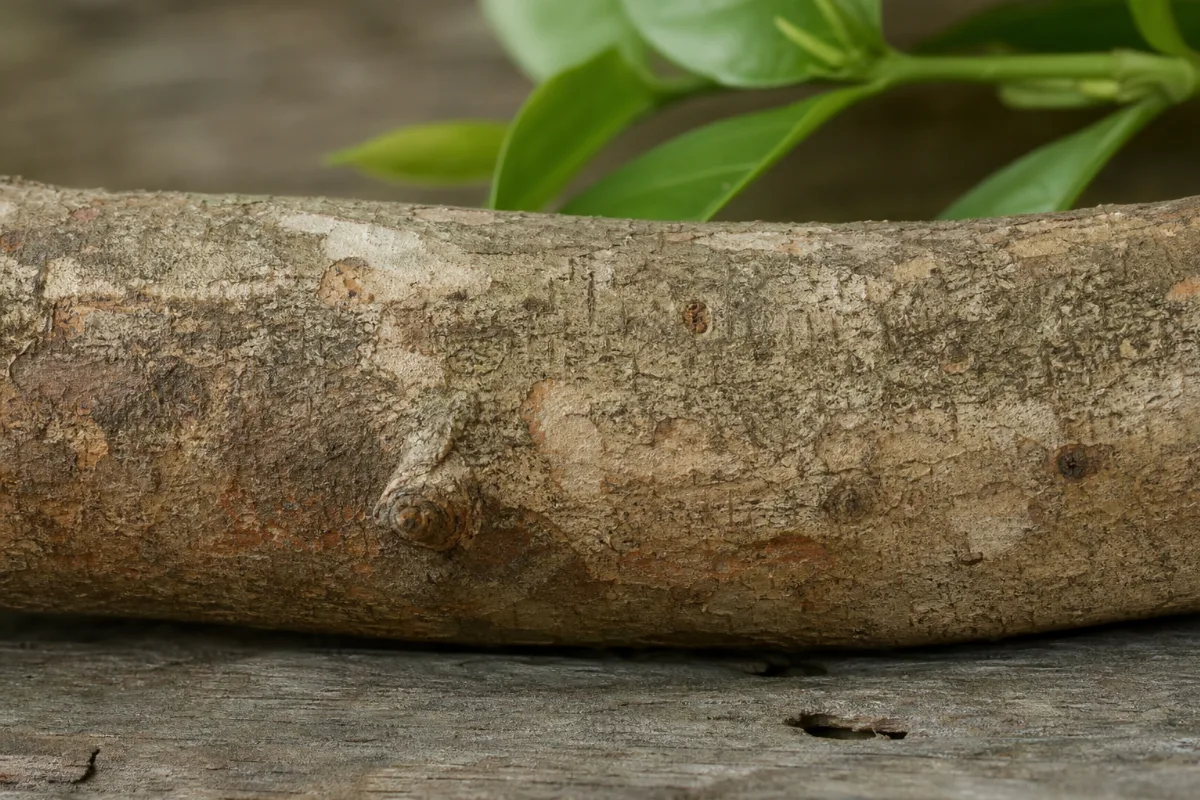
Herbs & Botanicals · Ayurvedic bark for loose stools
Kutaja
Holarrhena pubescens · also called Kurchi, kutaj, Holarrhena antidysenterica
Kutaja is the bark (and seed) of a small tree from India, used in Ayurveda for diarrhoea, dysentery and piles. Evidence in people is thin: one tiny colitis trial and a few old or mixed-herb reports. It contains strong alkaloids, and serious diarrhoea needs a doctor, not a herb. Avoid it in pregnancy and check the label, since a look-alike tree is also called kutaja.
General information, not medical advice. Last substantive update · Not medically reviewed. A named clinician has not signed off on this page. How this page is made
About Kutaja
Kutaja is an Ayurvedic bark for loose stools with little human proof. It holds strong steroidal alkaloids, animal studies show harm at high doses, and infections like dysentery need medical care. Avoid it in pregnancy.
What it is
Kutaja (kurchi) is the bark, seed or root of Holarrhena pubescens, an Indian tree also known by the older name Holarrhena antidysenterica. Bark and seed are the usual medicines.
A different tree, Wrightia tinctoria, is also sometimes called kutaja and has been recorded as an adulterant of true kurchi bark. Check the Latin name.
How it may work
The main active compound is conessine, a steroidal alkaloid. In dishes it helps antibiotics beat resistant bacteria by blocking their pumps. A bark extract also blocked cholera toxin binding in a dish.
None of this has been shown to work in people with diarrhoea.
What the research shows
The only human trial with kutaja alone that we could read had 30 people with ulcerative colitis. All groups improved, and the herbal tablet group had the best symptom scores. It is too small to prove anything.
The rest is old reports seen through a review, or lab, insect and animal work. We found no trial in ordinary diarrhoea or infectious dysentery.
At a glance
Traditional uses history, not proof
- Bark for diarrhoea, dysentery and bleeding piles (Ayurveda)
- Seeds for worms, dysentery and diabetes
- Flowers for diarrhoea
- Root traditionally called an abortifacient (a reason for caution)
Studied for research
- Ulcerative colitis (one very small trial), very low
- Amoebiasis and giardiasis (old small reports, mixed), very low
- Diarrhoea and dysentery (traditional; rat and lab work only), insufficient
- Antibiotic helper in bacteria (lab, isolated conessine), insufficient
- Bleeding piles (multi-herb reports), insufficient
Main compounds
- Conessine (PubChem CID 441082), the main steroidal alkaloid
- Related steroidal alkaloids such as conessimine and conimine
- Catechin-type phenolics in bark extract
Common forms
- Bark powder
- Bark decoction
- Tablets
- Seed preparations
- Ingredient in multi-herb formulas
Research links: Zahara 2020: review of Holarrhena pubescens (PubMed) · Johari 2016: kutaja tablet vs mesalamine in colitis (PubMed) · Mustafa 2026: conessine review (PubMed) · Charla 2022: plants against cholera toxin (PubMed) · Research Library · Genes & Biomarkers Library
The plant and its history
- Accepted scientific name
- Holarrhena pubescens (Buch.-Ham.) Wall. ex G.Don (GBIF ACCEPTED, exact match, confidence 98)
- Naming authority
- (Buch.-Ham.) Wall. ex G.Don
- Synonyms
- Holarrhena antidysenterica (Roth) Wall. ex A.DC.
- Common names
- Kutaja (Sanskrit/Hindi); Kurchi (Hindi); Kutaj (Hindi)
- Botanical family
- Apocynaceae (dogbane family)
- Classification
- Plantae > Tracheophyta > Magnoliopsida > Gentianales > Apocynaceae > Holarrhena > Holarrhena pubescens
- Native range
- Indian subcontinent, with related uses in Africa and tropical Asia (2020 review).
- Habitat
- Not covered in the sources read.
- What the plant looks like
- Roots: Root is used traditionally and is the part reputed to be an abortifacient.; Stems: Stem bark is the usual medicine.; Leaves: Not covered.; Flowers: Used in Ayurveda for diarrhoea.; Fruit: Not covered.; Seeds: Seeds are used for worms, dysentery and diabetes.; Cultivation: Not covered.
- Harvest and processing
- Not covered in the sources read.
- Look-alikes and adulterants
- Name: Wrightia tinctoria; Note: Different species in the same family, also sold as kutaja or kurchi, and recorded as an adulterant of true kurchi bark.; Name: Holarrhena floribunda; Note: A related African species with its own studies; not the same plant.
- Sustainability and conservation
- Not covered in the sources read.
Traditional use and history history, not clinical proof
| Tradition or era | Documented use | Source |
|---|---|---|
| Ayurveda and other Asian traditions | Bark for diarrhoea, dysentery, piles and worms; seed for dysentery and diabetes; flowers for diarrhoea; root called an abortifacient and aphrodisiac. | p32962166 |
Traditional use shows how a plant was used. It does not show that a supplement works or is safe today.
What is inside, and how it may work
What the plant contains and how those compounds act in cells and animals. Laboratory and animal mechanisms are not proven effects in people.
Main compounds
| Compound | Family | Where it is concentrated | Activity studied | Level of evidence |
|---|---|---|---|---|
| Conessine PubChem 441082 | Steroidal alkaloid | Bark and seed | Main alkaloid. Lab work shows antibacterial help for antibiotics and efflux-pump blocking; also reported as a histamine H3 receptor blocker (cited in a review, not read). 8 12 13 10 | Lab |
| Other steroidal alkaloids (isoconessine, conessimine, conimine, conessidine, conkurchicine, holarrhimine) | Steroidal alkaloids | Bark | Listed by the 2020 review as constituents. 14 | Lab |
| Epigallocatechin, epicatechin and protocatechuic acid | Phenolics | Bark | Key phenolics found in a bark extract and detected in treated flies. 1 | Lab |
Mechanisms, receptors and pathways
| Target or pathway | Gene or receptor | What was found | Level |
|---|---|---|---|
| Bacterial efflux pumps (MexAB-OprM) | Pseudomonas aeruginosa pumps | Conessine lowered antibiotic MICs at least 8-fold in a pump-overproducing strain. 12 13 | Lab |
| Cholera toxin binding to GM1 | GM1 ganglioside | Extract blocked over 50% of binding in a lab test; not shown in animals for this plant. 2 | Lab |
| Gut barrier and antioxidant defence | Wnt/beta-catenin, JAK-STAT signalling | Bark extract protected the gut in flies. 1 | Animal research |
Absorption, metabolism and elimination
- Absorption
- No human study found. Phenolics from a bark extract were detected in treated flies.
- Distribution
- Not found.
- Metabolism
- Not found.
- Elimination
- Not found.
- Bioavailability
- Not known in people.
Isolated compounds versus whole extracts
Most lab work is on isolated conessine, which is not the same as bark powder or tablets. Whole-plant extracts show different findings and a three-month extract was harmful to rat livers.
Nutritional composition
Kutaja is not a food nutrient and no vitamin or mineral role was found.
2 very low certainty8 not enough evidence
What is Kutaja good for?
The studied uses and how strong the human evidence is for each. For kutaja, none is established in people.
Benefits, one by one
Each card is a research question, not a promise. Tap a goal to filter. Open a card to see the studies, doses and limits.
Diarrhoea and dysentery (traditional use)
Not enough evidenceIn Ayurveda the bark is a classic remedy for diarrhoea and dysentery. No good human trial supports this use.
1 studiesAsk a doctor or pharmacist about amounts.
Studies, doses and limits
What the trials found
A 2020 review says PubMed holds no clinical trials under the plant's name and that the human studies it found elsewhere are small and mostly from India. We found no controlled trial of kutaja for ordinary diarrhoea or infectious dysentery.
Results
No trial result to report.
Effect sizes as reported
Not applicable.
Why this rating
Long traditional use but no controlled human trial for diarrhoea or dysentery.
Form and dose studied
Ask a doctor or pharmacist about amounts.
Who was studied
Not tested in a trial for infectious diarrhoea.
Limits
Tradition is not proof. Dysentery with blood or fever can be a dangerous infection.
Why researchers looked
The name antidysenterica means against dysentery. Interest in it comes from centuries of use in India and wider Asia.
Traditional use
Bark, seed, flowers and other parts are used in Ayurvedic, Unani and other systems for loose stools, dysentery and piles.
Proposed mechanism Traditional use
The bark and seeds contain steroidal alkaloids, mainly conessine, and astringent tannin-type compounds. How these might act in the human gut is not shown.
A proposed mechanism does not show that the effect happens in people.
Infectious diarrhoea and dysentery need medical care, with fluids and sometimes antibiotics. Do not rely on a herb.
Chronic ulcerative colitis (one very small trial)
Very low certaintyOne tiny trial found that a single-herb tablet eased colitis symptoms about as well as the standard drug. It is too small to rely on.
2 studiesAsk a doctor or pharmacist about amounts.
Studies, doses and limits
What the trials found
A 2016 randomised single-blind trial in India put 30 adults with chronic ulcerative colitis into three groups of 10: mesalamine, a herbal tablet containing H. antidysenterica extract, or both. A review also mentions a 43-patient trial of a kutaja tablet that reduced bowel frequency; we did not read that one.
Results
All groups improved. Blood in the stool cleared and haemoglobin rose. The herbal-only group had the largest drops in pain, diarrhoea and stool-frequency scores. No side effects or relapse in the herbal groups; half of the mesalamine-only group relapsed after stopping.
Effect sizes as reported
No effect sizes or confidence intervals in the abstract.
Why this rating
Only 10 people per group, single-blind, one centre, no published confidence intervals, and mixed reports on how the herbal product was made.
Form and dose studied
Ask a doctor or pharmacist about amounts.
Who was studied
Adults with chronic ulcerative colitis in India.
Limits
Tiny numbers; short follow-up; cannot show safety; the authors' conclusion is stronger than the data allow.
Why researchers looked
Kutaja is used in Ayurveda for bloody, loose stools, which overlap with colitis symptoms.
Traditional use
Bark is a classic remedy for bloody diarrhoea (raktatisara) in Ayurveda.
Proposed mechanism Pharmacological theory
Possibly astringent and anti-inflammatory; not shown in this trial.
A proposed mechanism does not show that the effect happens in people.
Colitis is a serious condition. Do not stop prescribed treatment for a herb. Tell your gastroenterologist if you use it.
Amoebiasis and giardiasis (old, small reports)
Very low certaintyOld reports on gut parasites are mixed: one small study saw a response, an early alkaloid trial saw no benefit and severe pain.
1 studiesNot assessed.
Studies, doses and limits
What the trials found
A 2020 review describes (a) a 1930 trial in which an injected mixture of total alkaloids gave no improvement in amoebic hepatitis and the patient complained of severe pain, and (b) a study of 40 patients with intestinal amoebiasis or giardiasis where 70% had a response in the Entamoeba cyst count. We did not read the original papers.
Results
Mixed: no benefit and pain in one report, a response in another.
Effect sizes as reported
Only 'response in 70%' of 40 patients, as quoted by the review.
Why this rating
Old, small reports seen only through a review; no control group described.
Form and dose studied
Not assessed.
Who was studied
Patients with amoebic hepatitis or amoebiasis/giardiasis.
Limits
Originals not read; methods unknown.
Why researchers looked
The plant has long been used for amoebic dysentery.
Traditional use
Used for amoebic dysentery and worms in India.
Proposed mechanism Laboratory research
Conessine has shown antiprotozoal activity in lab work; this does not prove a treatment effect.
A proposed mechanism does not show that the effect happens in people.
Parasite infections need proper diagnosis and medicine. The alkaloid injection caused severe pain in the early report.
Cholera toxin blocking (lab only)
Not enough evidenceIn a dish, an extract blocked cholera toxin binding. It did not carry through to an animal gut test.
1 studiesNot applicable.
Studies, doses and limits
What the trials found
No human study.
Results
Hydro-alcoholic extract of H. antidysenterica lowered cAMP in toxin-treated cells and blocked over 50% of toxin binding. The mouse gut model was run only for three other plants.
Effect sizes as reported
More than 50% binding inhibition (as reported).
Why this rating
Cell-free and cell tests only; not carried into animals for this plant.
Form and dose studied
Not applicable.
Who was studied
None (lab).
Limits
Not a model of real cholera; gives no treatment guidance.
Why researchers looked
Traditional anti-diarrhoea plants were screened for action against cholera toxin.
Traditional use
Listed among traditional diarrhoea medicines in India.
Proposed mechanism Laboratory research
An extract reduced toxin binding to its gut receptor (GM1) by more than 50% in a lab test.
A proposed mechanism does not show that the effect happens in people.
Cholera needs rehydration and urgent medical care.
Anti-diarrhoea effect in rats (seed extract)
Not enough evidenceIn rats, a seed extract reduced diarrhoea caused by castor oil. That is not the bark and not people.
1 studiesNot applicable.
Studies, doses and limits
What the trials found
No human trial of seed.
Results
At the middle and top test doses the ethanol seed extract cut castor-oil diarrhoea about as much as loperamide. In the E. coli model there was no clear difference from controls.
Effect sizes as reported
Significant at p<0.05 for castor-oil diarrhoea (as stated).
Why this rating
One small rat study.
Form and dose studied
Not applicable.
Who was studied
Rats.
Limits
Different plant part from the usual bark; animal only; E. coli result unclear.
Why researchers looked
Checks whether the seed's traditional anti-diarrhoea use shows up in animals.
Traditional use
Seeds are used for loose stools and worms.
Proposed mechanism Preliminary mechanism
Not shown.
A proposed mechanism does not show that the effect happens in people.
Seed and bark are not interchangeable; seeds also carry alkaloids.
Gut lining protection in an insect model
Not enough evidenceA bark extract protected the gut in fruit flies with chemical gut injury. This is a very early signal only.
1 studiesNot applicable.
Studies, doses and limits
What the trials found
No human study.
Results
In flies exposed to a detergent, bark extract improved survival, feeding and weight and reduced gut leakage.
Effect sizes as reported
Not given in the abstract.
Why this rating
Insect model; sponsor-affiliated group.
Form and dose studied
Not applicable.
Who was studied
Fruit flies.
Limits
Flies are far from human guts.
Why researchers looked
Models inflammatory bowel disease to look for gut-protecting effects.
Traditional use
Bark used for bowel complaints.
Proposed mechanism Animal research
Protected the gut barrier and raised antioxidant defences in flies; changed Wnt and JAK-STAT gene activity.
A proposed mechanism does not show that the effect happens in people.
Not tested for safety in people.
Antibacterial help for antibiotics (lab and larvae)
Not enough evidenceConessine, the main alkaloid, helped an antibiotic work better against resistant bacteria in dishes and moth larvae. No human study.
3 studiesNot applicable.
Studies, doses and limits
What the trials found
No human study.
Results
Conessine cut antibiotic MICs at least 8-fold in a strain with an overactive pump; with levofloxacin it improved survival of infected larvae without detectable larval toxicity, but only in some strains.
Effect sizes as reported
MIC reduction at least 8-fold (as reported).
Why this rating
Lab and insect work; isolated compound, not a bark product.
Form and dose studied
Not applicable.
Who was studied
Bacteria; wax-moth larvae.
Limits
Isolated conessine is not the same as bark powder; toxicity in mammals is not addressed.
Why researchers looked
Bacteria resist drugs by pumping them out; conessine may block some pumps.
Traditional use
Used for fever, infections and dysentery.
Proposed mechanism Laboratory research
Appears to block efflux pumps in Pseudomonas aeruginosa.
A proposed mechanism does not show that the effect happens in people.
Conessine is a research compound. Do not self-treat infections.
Bleeding piles (small multi-herb reports)
Not enough evidenceTraditional use for piles. The few studies mix kutaja with other herbs.
1 studiesNot applicable.
Studies, doses and limits
What the trials found
A 2020 review describes a 22-patient study of a seven-herb capsule (20 of 22 felt well) and a later report that bark powder helped stop bleeding. We did not read either.
Results
Cannot be attributed to kutaja because of the other herbs.
Effect sizes as reported
Not stated.
Why this rating
Small, uncontrolled or multi-herb; seen only through a review.
Form and dose studied
Not applicable.
Who was studied
People with piles in India.
Limits
Rectal bleeding can have serious causes and needs a doctor.
Why researchers looked
Bark is a classic Ayurvedic piles remedy.
Traditional use
Used for bleeding piles (arsha).
Proposed mechanism Traditional use
Astringent action, not shown.
A proposed mechanism does not show that the effect happens in people.
See a doctor for any rectal bleeding.
Blood sugar (seed, traditional; no human data)
Not enough evidenceThe seeds are traditionally used for diabetes. We found no human trial.
1 studiesNot applicable.
Studies, doses and limits
What the trials found
No human trial found.
Results
None.
Effect sizes as reported
Not applicable.
Why this rating
Tradition only.
Form and dose studied
Not applicable.
Who was studied
None.
Limits
No blood sugar data we could read.
Why researchers looked
A 2020 review says seeds are widely used as an antidiabetic.
Traditional use
Seeds used for diabetes in India.
Proposed mechanism Traditional use
Not shown.
A proposed mechanism does not show that the effect happens in people.
If you take diabetes medicine, a herb may change your control; talk to your doctor.
Gum and mouth complaints (multi-herb)
Not enough evidenceMixed-herb products that include kutaja were tried for gum disease and a bad taste in children. They cannot show what kutaja adds.
1 studiesNot applicable.
Studies, doses and limits
What the trials found
The 2020 review describes a randomised trial of an eight-herb tooth powder for plaque and gingivitis (both it and the control improved) and a 32-child study of a nine-herb tablet.
Results
Both groups improved in the toothpowder trial.
Effect sizes as reported
Not stated.
Why this rating
Mixtures cannot isolate one herb.
Form and dose studied
Not applicable.
Who was studied
Adults; children aged 3 to 12 years (other trial).
Limits
Seen only through a review.
Why researchers looked
Kutaja is one ingredient in Ayurvedic tooth powders and tablets.
Traditional use
Ingredient in compound formulas.
Proposed mechanism Traditional use
Not applicable.
A proposed mechanism does not show that the effect happens in people.
Not tested for safety of kutaja itself in children.
Connections to the rest of health
How Kutaja connects to the rest of our health knowledge graph. Every link says what kind of connection it is. A safety link (for example to the liver) is a warning, not a benefit. A study that merely mentions a topic never creates a benefit link.
Explore every connection: goals, body systems, organs, symptoms, genes
A. Wellness goals
| Connected to | Kind of connection | Evidence status | Context | Studies |
|---|---|---|---|---|
| Digestive Support | Traditional use | Not enough evidence | Diarrhoea and dysentery (traditional use): In Ayurveda the bark is a classic remedy for diarrhoea and dysentery. No good human trial supports this use. Amoebiasis and giardiasis (old, small reports): Old reports on gut parasites are mixed: one small study saw a response, an early alkaloid trial saw no benefit and severe pain. | 14 |
| Gut Health | Traditional use | Not enough evidence | Diarrhoea and dysentery (traditional use): In Ayurveda the bark is a classic remedy for diarrhoea and dysentery. No good human trial supports this use. | 14 |
| Digestive Support | Potential benefit | Very low certainty | Chronic ulcerative colitis (one very small trial): One tiny trial found that a single-herb tablet eased colitis symptoms about as well as the standard drug. It is too small to rely on. | 5 14 |
| Inflammation Balance | Potential benefit | Very low certainty | Chronic ulcerative colitis (one very small trial): One tiny trial found that a single-herb tablet eased colitis symptoms about as well as the standard drug. It is too small to rely on. | 5 14 |
| Immune Support | Traditional use | Very low certainty | Amoebiasis and giardiasis (old, small reports): Old reports on gut parasites are mixed: one small study saw a response, an early alkaloid trial saw no benefit and severe pain. | 14 |
| Gut Health | Preliminary mechanism | Not enough evidence | Cholera toxin blocking (lab only): In a dish, an extract blocked cholera toxin binding. It did not carry through to an animal gut test. Gut lining protection in an insect model: A bark extract protected the gut in fruit flies with chemical gut injury. This is a very early signal only. | 2 1 |
| Digestive Support | Preliminary mechanism | Not enough evidence | Anti-diarrhoea effect in rats (seed extract): In rats, a seed extract reduced diarrhoea caused by castor oil. That is not the bark and not people. | 11 |
| Inflammation Balance | Preliminary mechanism | Not enough evidence | Gut lining protection in an insect model: A bark extract protected the gut in fruit flies with chemical gut injury. This is a very early signal only. | 1 |
| Immune Support | Preliminary mechanism | Not enough evidence | Antibacterial help for antibiotics (lab and larvae): Conessine, the main alkaloid, helped an antibiotic work better against resistant bacteria in dishes and moth larvae. No human study. | 12 13 8 |
| Blood Sugar Balance | Traditional use | Not enough evidence | Blood sugar (seed, traditional; no human data): The seeds are traditionally used for diabetes. We found no human trial. | 14 |
B. Body systems
| Connected to | Kind of connection | Evidence status | Context | Studies |
|---|---|---|---|---|
| Digestive System | Biological association | Not enough evidence | Studied for: Diarrhoea and dysentery (traditional use) Studied for: Chronic ulcerative colitis (one very small trial) | 14 5 2 11 1 |
| Immune System | Biological association | Very low certainty | Studied for: Chronic ulcerative colitis (one very small trial) Studied for: Antibacterial help for antibiotics (lab and larvae) | 5 14 12 13 8 |
| Cardiovascular System | Biological association | Not enough evidence | Studied for: Bleeding piles (small multi-herb reports) | 14 |
| Endocrine System | Biological association | Not enough evidence | Studied for: Blood sugar (seed, traditional; no human data) | 14 |
E. Health conditions
| Connected to | Kind of connection | Evidence status | Context | Studies |
|---|---|---|---|---|
| Infectious diarrhoea and dysentery | Contraindication | Expert opinion | Needs medical care; no human trial of kutaja. Preparation or compound: Kutaja bark |
14 |
| Pregnancy | Contraindication | Traditional use | No safety data; abortifacient reputation for the root. No safety data; abortifacient reputation. Preparation or compound: Kutaja root and bark |
14 |
| Liver disease | Adverse effect or risk | Animal | Rat liver toxicity after 3 months. Preparation or compound: Ethanol bark extract |
14 |
| Ulcerative colitis | Traditional use | Very low certainty | One very small trial. Preparation or compound: Kutaja tablet |
5 |
I. Biomarkers
| Connected to | Kind of connection | Evidence status | Context | Studies |
|---|---|---|---|---|
| Blood in stool and haemoglobin (ulcerative colitis) | Biological association | Very low certainty | Measured in trials: mixed. A lab change is not the same as a health benefit. | 5 |
| Bowel frequency, diarrhoea and pain scores (ulcerative colitis) | Biological association | Very low certainty | Measured in trials: lowered. A lab change is not the same as a health benefit. | 5 |
| Cholera toxin binding to gut receptor (lab) | Biological association | Not enough evidence | Measured in trials: lowered. A lab change is not the same as a health benefit. | 2 |
| Defecation after castor oil (rats) | Biological association | Not enough evidence | Measured in trials: lowered. A lab change is not the same as a health benefit. | 11 |
| Antibiotic minimum inhibiting concentration (lab) | Biological association | Not enough evidence | Measured in trials: lowered. A lab change is not the same as a health benefit. | 12 |
| Infection burden in moth larvae | Biological association | Not enough evidence | Measured in trials: lowered. A lab change is not the same as a health benefit. | 13 |
K. Biological pathways
L. Active compounds
| Connected to | Kind of connection | Evidence status | Context | Studies |
|---|---|---|---|---|
| Conessine | Biological association | Lab | Main alkaloid. Lab work shows antibacterial help for antibiotics and efflux-pump blocking; also reported as a histamine H3 receptor blocker (cited in a review, not read). Preparation or compound: Bark and seed |
8 12 13 10 |
| Other steroidal alkaloids (isoconessine, conessimine, conimine, conessidine, conkurchicine, holarrhimine) | Biological association | Lab | Listed by the 2020 review as constituents. Preparation or compound: Bark |
14 |
| Epigallocatechin, epicatechin and protocatechuic acid | Biological association | Lab | Key phenolics found in a bark extract and detected in treated flies. Preparation or compound: Bark |
1 |
Each connection is stored with the ingredient, the connected record, the kind of connection, the evidence status, the supporting studies, the preparation or compound involved, and a review date (last reviewed October 25, 2026).
Evidence at a glance: what changed in 6 lab markers
Tap a number to show only those markers. Counts are markers, not people.
The evidence
The research centre for Kutaja. Every record here was checked against PubMed or the publisher's page; we never list a study we have not verified.
Evidence by outcome
Bars show how many studies we found for each outcome, not how well it works. People are added up across trials only (reviews are not added, to avoid double counting).
How we rate evidence
High certainty
Several well-run trials or reviews agree; further research is unlikely to change the picture much.
Moderate certainty
Good trials point the same way, but some doubt remains.
Low certainty
Small, short or inconsistent trials. The finding could change with better research.
Very low certainty
Very little or very weak human data. Treat as a possibility only.
Mixed findings
Trials or reviews disagree with each other.
Not enough evidence
Not enough human research to say either way.
Evidence against
Good research found no benefit, or found harm.
We take the reviewers' own risk-of-bias and GRADE statements where they exist, and otherwise judge from study size, design, consistency, directness and whether a product matches what is sold. Many publications do not make evidence high. Method note: We started from our existing kutaja summary, read the 2020 review in full, re-checked the PubMed abstracts and added a few targeted searches. Plant names were checked in GBIF and compound IDs in PubChem. No regulator record was found.
Study library: every study we checked 14
| Study | Design | People | Product, dose, length | Result |
|---|---|---|---|---|
| Balkrishna 2026 Holarrhena pubescens (Kutaj) bark extract mitigates SDS-induced IBD-like pathologies in Drosophila melanogaster by preserving barrier integrity and antioxidant defense Frontiers in Pharmacology · PMID 42422073 · DOI |
Animal research animal |
Drosophila melanogaster | H. pubescens bark extract bark n/a n/a · vs n/a |
In fruit flies with detergent-induced gut injury, a bark extract improved survival, feeding, excretion and weight, protected the gut lining and raised antioxidant markers. Catechin-type compounds were detected in the flies. Not applicable Methods, limits and fundingOutcomes: Gut injury, survival, antioxidant markers Limitations: Insect model only. Authors are from the Patanjali research group, which sells herbal products, but declare no commercial relationships. Funding and conflicts: Patanjali-affiliated authors; no conflict declared Read: abstract |
| Charla 2022 In Vitro and In Vivo Inhibitory Activities of Selected Traditional Medicinal Plants against Toxin-Induced Cyto- and Entero- Toxicities in Cholera Toxins · PMID 36287918 · DOI |
In vitro and animal in-vitro |
Cell lines; mice (other plants) | Hydro-alcoholic extract of H. antidysenterica unspecified n/a n/a · vs n/a |
A hydro-alcoholic extract of H. antidysenterica lowered cAMP in cholera-toxin-treated cells and blocked more than 50% of cholera toxin binding to its receptor in a lab test. It was not among the three plants carried into the mouse ileal-loop model, which were Careya arborea, Punica granatum and Psidium guajava. Not applicable Methods, limits and fundingOutcomes: Cholera toxin binding, cAMP Limitations: Cells and mice only; the kutaja extract was not shown to work in the animal gut model. Funding and conflicts: No conflict declared Read: abstract |
| GBIF 2026 GBIF Backbone Taxonomy species match: Wrightia tinctoria GBIF API (checked 2026-10-25) · Source |
Database or regulator record n/a |
n/a | n/a n/a n/a n/a · vs n/a |
Wrightia tinctoria R.Br. returned ACCEPTED, exact match, confidence 97, family Apocynaceae (same family as Holarrhena), usage key 5536686. GBIF did not return Holarrhena antidysenterica as a separate species match (it fell back to the family), consistent with it being a synonym. Not applicable Methods, limits and fundingOutcomes: Identity or regulatory status Limitations: Taxonomy only. Read: full-text |
| GBIF 2026 GBIF Backbone Taxonomy species match: Holarrhena pubescens GBIF API (checked 2026-10-25) · Source |
Database or regulator record n/a |
n/a | n/a n/a n/a n/a · vs n/a |
Holarrhena pubescens (Buch.-Ham.) Wall. ex G.Don returned ACCEPTED, exact match, confidence 98, family Apocynaceae, order Gentianales, usage key 3169748. Not applicable Methods, limits and fundingOutcomes: Identity or regulatory status Limitations: Taxonomy only. Read: full-text |
| Johari 2016 A Randomized Single Blind Parallel Group Study Comparing Monoherbal Formulation Containing Holarrhena Antidysenterica Extract with Mesalamine in Chronic Ulcerative Colitis Patients Ancient Science of Life · PMID 28182023 · DOI |
Controlled trial |
30 Adults with chronic ulcerative colitis, Gujarat, India |
Monoherbal tablet containing Holarrhena antidysenterica extract unspecified n/a n/a · vs n/a |
30 patients in three groups of 10 (mesalamine, herbal tablet, both). All groups improved. Blood in stool reversed and haemoglobin rose. The herbal tablet group had the largest drops in abdominal pain, diarrhoea, bowel frequency and stool scores. No side effects or relapse in the herbal groups; 50% of the mesalamine-only group relapsed with diarrhoea and flatulence after stopping. All groups improved; herbal group largest symptom score drops (no effect size in abstract) Methods, limits and fundingOutcomes: Stool blood, haemoglobin, pain, diarrhoea, stool scores, side effects, relapse Limitations: Very small, single-blind, short report from one centre; results given as mean +/- SEM; cannot show safety. Authors declare no conflict. Funding and conflicts: No conflict declared Read: abstract |
| Journal of Pharmacy and Pharmacology record 1962 Wrightia tinctoria bark, an adulterant of kurchi (bibliographic record only) Journal of Pharmacy and Pharmacology · Source |
Database or regulator record n/a |
n/a | n/a n/a n/a n/a · vs n/a |
The title records Wrightia tinctoria bark as an adulterant of kurchi bark. Not applicable Methods, limits and fundingOutcomes: Identity or regulatory status Limitations: Only the record title is known from our existing summary; the paper's findings were not read. Read: summary-only |
| Mandal 2023 Bioaccumulation of industrial heavy metals and interactive biochemical effects on two tropical medicinal plant species Environmental Science and Pollution Research · PMID 36670223 · DOI |
Observational lab plant |
Plants near industry and control site, India | Leaves leaf n/a n/a · vs n/a |
Leaves of Holarrhena pubescens and Wrightia tinctoria from two industrial areas had heavy metals (Cr, Cu, Fe, Mn, Ni, Pb, Zn) above WHO limits; control-area plants had the least. Not applicable Methods, limits and fundingOutcomes: Heavy metals vs WHO limits Limitations: Leaves, not bark; shows pollution can raise metals in these plants, not that products are contaminated. Read: abstract |
| Mustafa 2026 Conessine, a steroidal alkaloid from Holarrhena antidysenterica: Ethnomedical roots, pharmacological insights, and formulation strategies for modern drug development Steroids · PMID 42134430 · DOI |
Narrative review mixed |
Review of lab and computer work | Conessine bark/seed alkaloid n/a n/a · vs n/a |
Says conessine is the main steroidal alkaloid, with antimicrobial activity and some efflux-pump inhibition, plus antiviral, antiplasmodial, anti-inflammatory and neuroprotective reports from experimental and computer studies. Notes that extraction, formulation and safety are barriers to development. Not applicable Methods, limits and fundingOutcomes: Pharmacology and safety challenges Limitations: Abstract only. Two authors work for a pharma company (Adex Pharma) but declare no competing interests. Read: abstract |
| NCBI 2026 LiverTox / NCBI Bookshelf search for Holarrhena (no record found) NCBI Bookshelf (checked 2026-10-25) · Source |
Database or regulator record n/a |
n/a | n/a n/a n/a n/a · vs n/a |
No LiverTox entry for Holarrhena or kutaja was found in a quick search. Not applicable Methods, limits and fundingOutcomes: Identity or regulatory status Limitations: A quick search only; absence of a record is not evidence of safety. EMA/HMPC, NCCIH and LactMed were not found for this herb in the time budget and are marked not verified. Read: summary-only |
| PubChem 2026 PubChem compound record: conessine (CID 441082) PubChem PUG REST (checked 2026-10-25) · Source |
Database or regulator record n/a |
n/a | n/a n/a n/a n/a · vs n/a |
CID 441082, formula C24H40N2. Not applicable Methods, limits and fundingOutcomes: Identity or regulatory status Limitations: Chemistry record only. Read: full-text |
| Sharma 2015 Evaluation of antidiarrheal activity of ethanolic extract of Holarrhena antidysenterica seeds in rats Veterinary World · PMID 27047049 · DOI |
Animal research animal |
Wistar rats | Ethanolic extract of H. antidysenterica seeds seed n/a n/a · vs n/a |
In rats, an ethanol seed extract at the middle and top test doses reduced castor-oil diarrhoea about as well as loperamide. In the E. coli diarrhoea test, weight change in treated rats did not differ from the negative control or gentamicin groups. Not applicable Methods, limits and fundingOutcomes: Castor-oil and E. coli induced diarrhoea Limitations: Rat study, seed not bark, ethanol extract; does not show benefit in people. Read: abstract |
| Siriyong 2017 Conessine as a novel inhibitor of multidrug efflux pump systems in Pseudomonas aeruginosa BMC Complementary and Alternative Medicine · PMID 28806947 · DOI |
Laboratory research in-vitro |
P. aeruginosa strains | Conessine plant alkaloid n/a n/a · vs n/a |
Conessine lowered the minimum inhibiting concentration of all tested antibiotics at least 8-fold in a strain overproducing one efflux pump, and tests suggested it blocks that pump. Not applicable Methods, limits and fundingOutcomes: Antibiotic MIC, efflux pump activity Limitations: Bacteria in a dish; only the start of the results was read here. Read: abstract |
| Siriyong 2018 Steroidal alkaloids and conessine from the medicinal plant Holarrhena antidysenterica restore antibiotic efficacy in a Galleria mellonella model of multidrug-resistant Pseudomonas aeruginosa infection BMC Complementary and Alternative Medicine · PMID 30340578 · DOI |
Animal research animal |
P. aeruginosa; wax-moth larvae | Conessine and steroidal alkaloids from H. antidysenterica plant alkaloids n/a n/a · vs n/a |
With levofloxacin, conessine and the steroidal alkaloid fraction improved bacterial inhibition in the lab and in infected moth larvae. No detectable toxicity to larvae. Benefit was seen only in some bacterial strains. Not applicable Methods, limits and fundingOutcomes: Antibiotic efficacy, larval mortality Limitations: Cells and insect larvae; shows no benefit in people. No competing interests declared. Funding and conflicts: No conflict declared Read: abstract |
| Zahara 2020 Metabolic Diversity and Therapeutic Potential of Holarrhena pubescens: An Important Ethnomedicinal Plant Biomolecules · PMID 32962166 · DOI |
Narrative review mixed |
Review of plant, animal and human reports | Holarrhena pubescens (bark, seed, root, leaf) mixed n/a n/a · vs n/a |
Reviews traditions, chemistry, toxicity and the few human studies. Says PubMed lists no clinical trials under the term Holarrhena; Indian studies found elsewhere are small, often multi-herb. Reports 30% deaths in mice given stem bark at high oral doses, and liver toxicity in rats given an ethanol extract for 3 months at 10 to 20 times the human dose. Reports the root is traditionally called abortifacient. Not applicable Methods, limits and fundingOutcomes: Traditional use, chemistry, toxicity, clinical reports Limitations: Narrative review, not systematic. Several human studies it describes were not opened by us. Authors declare no conflict. Funding and conflicts: No conflict declared Read: full-text |
What we do not know yet
- No controlled human trial of kutaja for ordinary diarrhoea or infectious dysentery.
- The colitis tablet trial is tiny; other human studies in the 2020 review were not opened.
- No data on pregnancy, breastfeeding, children, interactions or long-term safety.
- EMA/HMPC, NCCIH, LiverTox and LactMed records were not found.
How new research is added
New studies are found by a saved PubMed search and placed in a review queue. A person reads each one before it changes any rating or safety wording.
Lab markers
What changed in blood or saliva tests during trials. A changed number is not the same as feeling or being healthier, and we give no "normal ranges".
Organ function 1
Blood in stool and haemoglobin (ulcerative colitis)
Mixed results in trials
Hidden blood in stool shows gut bleeding; haemoglobin is the oxygen-carrying protein in blood.
Very low certaintyResults and what it means
Why it was measured
Bleeding colitis can cause anaemia.
Statistical vs. clinical meaning
All groups improved including mesalamine, so the change cannot be credited to the herb alone.
Safety implication
None reported in the small trial.
| Study | Result | People | Product |
|---|---|---|---|
| 5 | Occult blood in stool reversed significantly in treated groups and haemoglobin rose; numbers not given in the abstract. | 30 adults with chronic ulcerative colitis | Herbal tablet, mesalamine, or both |
Other 5
Bowel frequency, diarrhoea and pain scores (ulcerative colitis)
Lowered in trials
Symptom scores for pain, loose stool and number of bowel movements.
Very low certaintyResults and what it means
Why it was measured
Main symptoms patients notice.
Statistical vs. clinical meaning
Symptom scores in a single-blind trial of 10 people per group are weak evidence.
Safety implication
No side effects reported.
| Study | Result | People | Product |
|---|---|---|---|
| 5 | Herbal-only group showed the largest reductions in abdominal pain, diarrhoea, bowel frequency and stool consistency scores versus mesalamine alone; numbers not given in the abstract. | 10 per group | Herbal tablet alone |
Cholera toxin binding to gut receptor (lab)
Lowered in trials
How well toxin sticks to its receptor (GM1) on gut cells.
Not enough evidenceResults and what it means
Why it was measured
Binding is the first step in cholera diarrhoea.
Statistical vs. clinical meaning
Lab binding does not equal an anti-cholera effect in people.
Safety implication
None assessed.
| Study | Result | People | Product |
|---|---|---|---|
| 2 | More than 50% binding inhibition in a lab test. | Cell-free test | Hydro-alcoholic extract of H. antidysenterica |
Defecation after castor oil (rats)
Lowered in trials
Amount of loose stool in rats given castor oil.
Not enough evidenceResults and what it means
Why it was measured
A standard screen for anti-diarrhoea drugs.
Statistical vs. clinical meaning
Animal screening result.
Safety implication
Not assessed here.
| Study | Result | People | Product |
|---|---|---|---|
| 11 | Reduced significantly (p<0.05) at 200 and 400 mg/kg, about as effective as loperamide. | Wistar rats | Ethanol seed extract |
Antibiotic minimum inhibiting concentration (lab)
Lowered in trials
The lowest antibiotic amount that stops bacteria growing.
Not enough evidenceResults and what it means
Why it was measured
Lower values mean the antibiotic works better.
Statistical vs. clinical meaning
Lab result in bacteria only.
Safety implication
Not assessed.
| Study | Result | People | Product |
|---|---|---|---|
| 12 | Conessine reduced MICs of all antibiotics tested by at least 8-fold in a MexAB-OprM-overproducing strain. | P. aeruginosa strain | Conessine plus antibiotics |
Infection burden in moth larvae
Lowered in trials
Number of bacteria and death rate in infected larvae.
Not enough evidenceResults and what it means
Why it was measured
Checks whether lab synergy carries into a living host.
Statistical vs. clinical meaning
Insects are far from human infection.
Safety implication
No toxicity to larvae detected.
| Study | Result | People | Product |
|---|---|---|---|
| 13 | Conessine plus levofloxacin lowered larval bacterial burden versus either alone, in the parent strain and two pump-overproducing strains. | Galleria mellonella larvae | Conessine or steroidal alkaloids with levofloxacin |
Safety
What studies and official sources say about side effects, medicines and who should check first. Each point shows what kind of evidence it comes from.
Main points to know 4
- Serious diarrhoea or dysentery needs medical care. Blood or mucus in stool, fever, severe belly pain, dehydration or diarrhoea lasting more than a couple of days can mean a bacterial or parasite infection. Kutaja has no controlled human trial for these conditions. Do not self-treat; see a doctor. Expert opinion 14
- It contains potent steroidal alkaloids. The bark and seeds hold conessine and related steroidal alkaloids. A review reports 30% deaths within 96 hours in mice given stem bark at very high oral doses, and liver injury in rats given an ethanol extract for three months at 10 to 20 times a human dose. Human safety over time is not established. Animal research 14 8
- Avoid in pregnancy and breastfeeding. No safety data in pregnancy or breastfeeding were found. The root is traditionally called an abortifacient. Avoid unless a clinician advises otherwise. Traditional use 14
- Do not confuse with Wrightia tinctoria. A different tree, Wrightia tinctoria, is also sold or called kutaja or kurchi, and its bark has been recorded as an adulterant of true kurchi. Check the Latin name on a product. Authoritative guidance 6 3
Side effects 3
| Effect | How often | Severity and recovery | Evidence |
|---|---|---|---|
| Adverse effects in people The 2020 review says traditional use is without obvious adverse effects, but gives no systematic human safety data. The one small colitis trial reported none in the herbal groups. Neither can show safety. | Not established | Unknown Unknown | Gap 14 5 |
| Severe pain after an injected total-alkaloid mixture (1930 report) Described by a review; original not read; not oral use. | Not established | Severe pain reported Not reported | Case series 14 |
| Dullness and writhing in mice at very high stem-bark doses Mouse data do not translate directly to people. | 30% mortality within 96 h in one mouse study | Fatal in some mice n/a | Animal research 14 |
Liver
No human case of liver injury from kutaja was found, and no LiverTox record was found. In rats, a three-month ethanol extract at 10 to 20 times the human dose caused liver toxicity. Treat liver safety as unknown. 14 9
How often. No frequency of liver injury in people is available.
Monitoring. No monitoring advice found. Stop and seek care for yellow skin or eyes, dark urine, severe tiredness or pain in the upper right belly.
- .
- .
This is a safety connection. It is not evidence that Kutaja supports liver health.
Medicines and supplements 4
| With | Why it matters | Importance | Evidence | What to do |
|---|---|---|---|---|
| Heart rhythm, heart failure and blood pressure medicines prescription | No interaction study exists. Steroidal alkaloids can act on the body in complex ways, and diarrhoea from any cause changes fluid and potassium balance, which matters for heart drugs and diuretics. Conessine is also reported to block histamine H3 receptors (cited in the 2020 review; original not read). | Unknown. Theoretical only. | Pharmacological theory Very low certainty 14 | If you take heart or blood pressure medicine, ask your prescriber or pharmacist before using kutaja. |
| Antibiotics and antiparasitic medicines prescription | In lab and larvae tests conessine boosted levofloxacin against resistant bacteria. Whether bark does anything like this in people is unknown. | Unknown in people. | Laboratory research Very low certainty 13 12 | Do not use it in place of treatment for an infection. |
| Mesalamine and other colitis medicines prescription | Used together in one small trial, with no side effects reported. | One 10-person group; cannot show safety. | Controlled trial Very low certainty 5 | Tell your gastroenterologist. |
| Diabetes medicines prescription | Seeds are used traditionally for diabetes; no human data on blood sugar. | Unknown. | Traditional use Very low certainty 14 | Check blood sugar more often and tell your doctor if you use the seed. |
Who should check first 5
| Situation | Advice | Evidence |
|---|---|---|
| Pregnancy and breastfeeding | Avoid. No safety data; the root has an abortifacient reputation. | Traditional use 14 |
| Children | No safety data found; avoid unless a clinician advises it. | Gap 14 |
| Liver disease | Avoid or ask a clinician; rat liver toxicity at high extract doses. | Animal research 14 |
| Heart disease or taking heart or blood pressure drugs | Ask your prescriber first; no data either way. | Pharmacological theory 14 |
| Bloody, severe or lasting diarrhoea; fever; dehydration | Seek medical care instead of self-treating. | Expert opinion 14 |
Overdose, product quality and regulators
Summary. Seed extracts were not toxic in rats up to 2000 to 3000 mg/kg in several acute studies, but a stem-bark study in mice caused 30% deaths at high doses and a three-month ethanol extract damaged rat livers.
Animal. Acute oral tests of seed extracts found no toxicity in rats at up to 2000 to 3000 mg/kg. Stem bark: Swiss mice at 500 to 2000 mg/kg showed dullness and writhing with 30% deaths within 96 hours, while rats given 50 to 200 mg/kg for a longer period showed no blood or tissue changes. Ethanol bark extract with polyvinyl pyrrolidone for 3 months at 10 and 20 times a human dose caused rat liver toxicity.
Human doses studied. No safe human intake is established. One tiny colitis trial reported no side effects.
High dose or long term signals. Liver toxicity in a three-month rat study.
Overdose response. No human overdose case found.
Genotoxicity. Not assessed in the sources read.
Toxic plant parts. Bark, seed and root all contain steroidal alkaloids. The root is the part with the abortifacient reputation. Use of any part outside traditional guidance is unstudied.
Look-alike bark and pollution are the main quality concerns. No product testing was found.
Look-alike species. Wrightia tinctoria bark is recorded in a 1962 paper title as an adulterant of kurchi. Only the title was seen; findings not read. GBIF lists Wrightia tinctoria as a separate accepted species in the same family. 6 3
Heavy metals. Leaves of H. pubescens and W. tinctoria from industrial areas in India exceeded WHO heavy-metal limits (Cr, Cu, Fe, Mn, Ni, Pb, Zn). Leaves, not bark. 7
| Body | Action | Date |
|---|
When to get medical help
- Blood in the stool, black stool, high fever, severe belly pain or signs of dehydration (dry mouth, very little urine, dizziness).
- Yellow skin or eyes, dark urine or severe tiredness.
- Irregular or very slow heartbeat, fainting or chest pain.
- Vaginal bleeding or cramps in pregnancy.
Stop the supplement and contact a clinician or emergency service. In the US, Poison Control is 1-800-222-1222.
General information only, not medical advice. Ask a clinician or pharmacist before use, especially with medicines, in pregnancy or with a health condition. See the Natural Remedy Safety guide.
Frequently asked questions
What is kutaja?
Does kutaja work for diarrhoea?
Can I use kutaja for dysentery?
No. Dysentery, especially with blood, mucus or fever, can be a serious infection needing medical care and sometimes antibiotics. See a doctor. Kutaja has no controlled trial in dysentery.
Does it help ulcerative colitis?
One tiny 2016 trial of 30 people reported improvement with a kutaja tablet, with no side effects. It was too small to prove benefit or safety. Do not replace prescribed treatment.
Is kutaja toxic?
Animal studies show toxicity at high doses: 30% of mice died with high stem-bark doses and a three-month ethanol extract damaged rat livers. Seed extracts were not toxic in rats at high acute doses. Human safety is not established.
Is it safe in pregnancy or breastfeeding?
Avoid. No safety data exist, and the root is traditionally called an abortifacient.
Is it safe for the liver?
Does it interact with heart or blood pressure medicines?
No study tested this, so neither a problem nor safety is shown. Diarrhoea itself changes fluid and potassium balance, which matters for these drugs. Ask your prescriber or pharmacist first.
Is kutaja the same as Wrightia tinctoria?
What is conessine?
Does it help with piles or diabetes?
Traditional uses only. Piles reports mixed kutaja with other herbs, and no human diabetes data were found. See a doctor for rectal bleeding.
When should I get urgent help?
Seek care for blood in the stool, high fever, severe belly pain, signs of dehydration, yellow skin or eyes, fainting or an irregular heartbeat.
Explore by health goal
Digestive SupportGut HealthInflammation BalanceImmune SupportBlood Sugar Balance
Editorial transparency
- Written by
- AlternativeMed editorial team. Research compiled with AI assistance, then checked against PubMed records.
- Medical review
- None. This page has not been reviewed by a physician or pharmacist.
- First published
- 2026-10-25
- Last substantive update
- 2026-10-25
- How we research
- We started from our existing kutaja summary, read the 2020 review in full, re-checked the PubMed abstracts and added a few targeted searches. Plant names were checked in GBIF and compound IDs in PubChem. No regulator record was found.
- How we rate evidence
- See "How we rate evidence" in the Evidence tab.
- Independence
- No product is promoted on this page. No affiliate links are shown. Industry links are flagged where an abstract shows them.
Sources 14
Each source was opened and checked. Where we read only the abstract, it says so. The small numbers in the text point here.
- Balkrishna A, Kauts S, Kumar S, et al.. Holarrhena pubescens (Kutaj) bark extract mitigates SDS-induced IBD-like pathologies in Drosophila melanogaster by preserving barrier integrity and antioxidant defense. Frontiers in Pharmacology. 2026. PMID 42422073. DOI 10.3389/fphar.2026.1841227. (abstract)
- Charla R, Patil PP, Bhatkande AA, et al.. In Vitro and In Vivo Inhibitory Activities of Selected Traditional Medicinal Plants against Toxin-Induced Cyto- and Entero- Toxicities in Cholera. Toxins. 2022. PMID 36287918. DOI 10.3390/toxins14100649. (abstract)
- GBIF. GBIF Backbone Taxonomy species match: Wrightia tinctoria. GBIF API (checked 2026-10-25). 2026. (full-text)
- GBIF. GBIF Backbone Taxonomy species match: Holarrhena pubescens. GBIF API (checked 2026-10-25). 2026. (full-text)
- Johari S, Gandhi T. A Randomized Single Blind Parallel Group Study Comparing Monoherbal Formulation Containing Holarrhena Antidysenterica Extract with Mesalamine in Chronic Ulcerative Colitis Patients. Ancient Science of Life. 2016. PMID 28182023. DOI 10.4103/0257-7941.195409. (abstract)
- Journal of Pharmacy and Pharmacology record. Wrightia tinctoria bark, an adulterant of kurchi (bibliographic record only). Journal of Pharmacy and Pharmacology. 1962. (summary-only)
- Mandal K, Dhal NK. Bioaccumulation of industrial heavy metals and interactive biochemical effects on two tropical medicinal plant species. Environmental Science and Pollution Research. 2023. PMID 36670223. DOI 10.1007/s11356-023-25396-9. (abstract)
- Mustafa G, Musa SI, Shinde P, et al.. Conessine, a steroidal alkaloid from Holarrhena antidysenterica: Ethnomedical roots, pharmacological insights, and formulation strategies for modern drug development. Steroids. 2026. PMID 42134430. DOI 10.1016/j.steroids.2026.109799. (abstract)
- NCBI. LiverTox / NCBI Bookshelf search for Holarrhena (no record found). NCBI Bookshelf (checked 2026-10-25). 2026. (summary-only)
- PubChem. PubChem compound record: conessine (CID 441082). PubChem PUG REST (checked 2026-10-25). 2026. (full-text)
- Sharma DK, Gupta VK, Kumar S, et al.. Evaluation of antidiarrheal activity of ethanolic extract of Holarrhena antidysenterica seeds in rats. Veterinary World. 2015. PMID 27047049. DOI 10.14202/vetworld.2015.1392-1395. (abstract)
- Siriyong T, Srimanote P, Chusri S, et al.. Conessine as a novel inhibitor of multidrug efflux pump systems in Pseudomonas aeruginosa. BMC Complementary and Alternative Medicine. 2017. PMID 28806947. DOI 10.1186/s12906-017-1913-y. (abstract)
- Siriyong T, Voravuthikunchai SP, Coote PJ. Steroidal alkaloids and conessine from the medicinal plant Holarrhena antidysenterica restore antibiotic efficacy in a Galleria mellonella model of multidrug-resistant Pseudomonas aeruginosa infection. BMC Complementary and Alternative Medicine. 2018. PMID 30340578. DOI 10.1186/s12906-018-2348-9. (abstract)
- Zahara K, Panda SK, Swain SS, et al.. Metabolic Diversity and Therapeutic Potential of Holarrhena pubescens: An Important Ethnomedicinal Plant. Biomolecules. 2020. PMID 32962166. DOI 10.3390/biom10091341. (full-text)