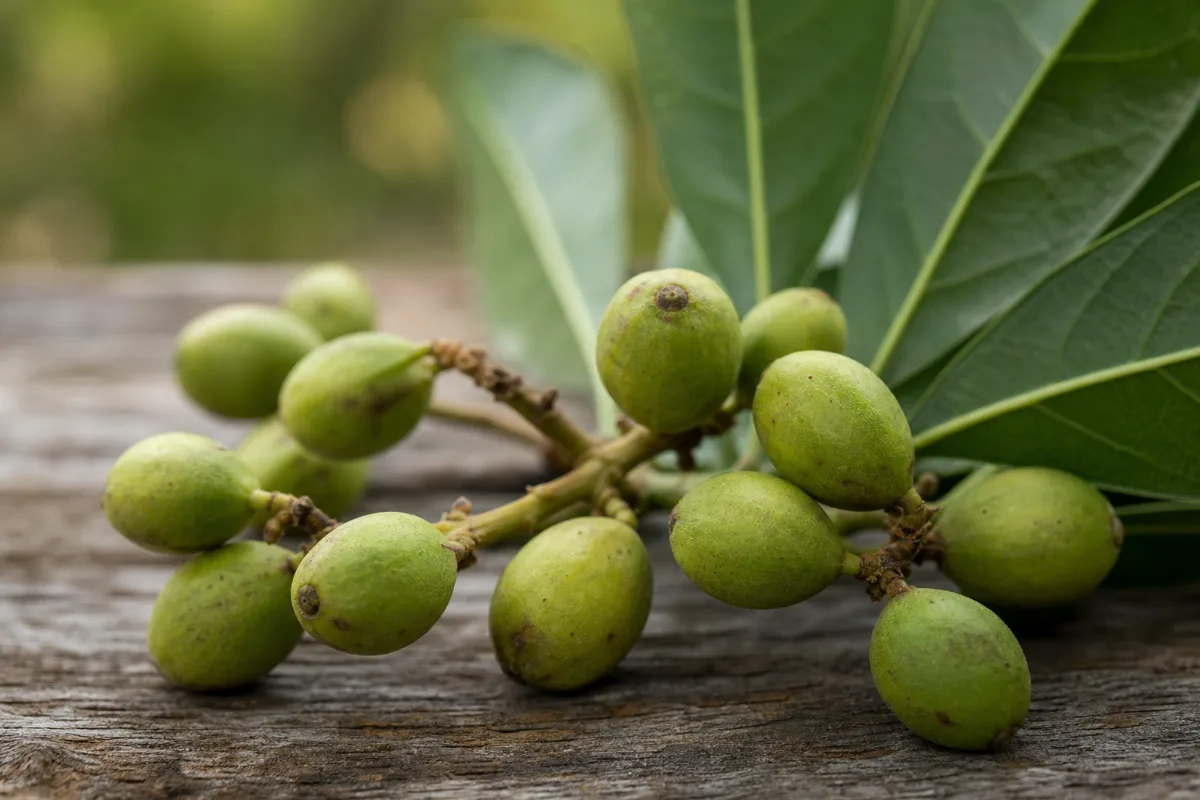
Herbs & Botanicals · Herbs · Ayurvedic three-fruit formula known as a mild laxative and mouth rinse, with limited evidence
Triphala
Formula of Phyllanthus emblica L., Terminalia bellirica (Gaertn.) Roxb. and Terminalia chebula Retz. (fruits) · also called Triphala churna, trifala, three fruits; amalaki, bibhitaki, haritaki
Triphala is a traditional Ayurvedic formula of three dried fruits: amla, bibhitaki and haritaki. It is rich in tannins, other polyphenols and vitamin C. It is used as a mild laxative and digestive tonic, and as a mouth rinse. The best-studied use is mouthwash for plaque and gum inflammation, where small trials found it similar to chlorhexidine. Evidence for constipation, cholesterol, weight and eyes is weak or mixed. Cautions include loose stools, possible drug interactions, and the variable quality of Ayurvedic products.
General information, not medical advice. Last substantive update · Not medically reviewed. A named clinician has not signed off on this page. How this page is made
About Triphala
Triphala is an Ayurvedic blend of three dried fruits. Small trials suggest the mouthwash works about as well as chlorhexidine for gum inflammation. Evidence for the laxative use is traditional, and other uses are weakly supported. Watch for loose stools, drug interactions, and poorly tested products.
What it is
Triphala means three fruits. It is made from amla (Phyllanthus emblica), haritaki (Terminalia chebula) and bibhitaki (Terminalia bellirica). The fruits are rich in tannins and other polyphenols, and amla is high in vitamin C.
Because it is a blend, the make-up differs between products. Results for amla alone or for a mouthwash do not carry over to every triphala product.
What the research shows
The best-supported use is a mouth rinse for plaque and gingivitis: several small trials and meta-analyses show results similar to chlorhexidine, with a lot of variation between trials. For constipation, no triphala-only trial was found.
A review of 12 trials found some cholesterol, weight and blood sugar changes, but the best placebo-controlled trial (combined with guggulu) found no benefit. Immune, gut bacteria and eye studies are small and early.
At a glance
Traditional uses history, not proof
- Mild laxative and digestive tonic (Ayurveda)
- Rejuvenating tonic (rasayana)
- Eye care and oral care in Indian traditional practice
Studied for research
- Plaque and gingivitis mouthwash, low
- Constipation and IBS, insufficient
- Gut bacteria, insufficient
- Cholesterol, very low
- Weight and waist, very low
- Blood sugar in diabetes, very low
- Immune cell counts, very low
- Dry eye and eye strain (topical), very low
Main compounds
- Gallic acid
- Ellagic acid and ellagitannins (chebulagic and chebulinic acid, corilagin)
- Vitamin C (mainly from amla)
Common forms
- Dried fruit powder (churna)
- Capsules and tablets
- Water extracts and mouthwash
- Eye preparations in ghee or drops (Ayurvedic clinics)
Research links: Memorial Sloan Kettering: Triphala · Triphala mouthrinse meta-analysis (PubMed) · Triphala, guggulu and cholesterol placebo trial (PubMed) · Research Library · Genes & Biomarkers Library
The plant and its history
- Accepted scientific name
- Triphala is a formula (three-fruit blend), not one plant species. The fruits come from Phyllanthus emblica L. (amalaki/amla), Terminalia bellirica (Gaertn.) Roxb. (bibhitaki) and Terminalia chebula Retz. (haritaki).
- Naming authority
- GBIF (read 2026-10-25): all three names ACCEPTED (keys 5381660, 3189390, 3189388). Emblica officinalis Gaertn. is a SYNONYM of Phyllanthus emblica. The spelling Terminalia bellerica resolves to T. bellirica.
- Synonyms
- Emblica officinalis (= Phyllanthus emblica); Terminalia belerica / bellerica (= T. bellirica); Triphala churna (powder form); Trifala (alternate spelling)
- Common names
- Triphala (Sanskrit (three fruits)); Amalaki / amla / Indian gooseberry (Sanskrit, Hindi, English); Haritaki / chebulic myrobalan (Sanskrit, English); Bibhitaki / belleric myrobalan (Sanskrit, English)
- Botanical family
- Two plant families: Phyllanthaceae (amla) and Combretaceae (haritaki and bibhitaki)
- Classification
- Plantae > Tracheophyta > Magnoliopsida > Malpighiales (P. emblica); Myrtales (both Terminalia) > Phyllanthaceae (P. emblica); Combretaceae (both Terminalia) > Phyllanthus; Terminalia > P. emblica; T. chebula; T. bellirica
- Native range
- Not verified in the sources read (the formula is Indian in origin per the reviews read).
- Habitat
- Not verified.
- What the plant looks like
- Roots: Not verified.; Stems: Not verified.; Leaves: Not verified.; Flowers: Not verified.; Fruit: Dried fruits of all three plants are used (MSK: dried powdered fruits).
- Cultivation
- Not verified.
- Harvest and processing
- Not verified.
- Look-alikes and adulterants
- Name: Single-herb amla or haritaki products; Note: These are not triphala; evidence for one fruit does not carry over to the blend.
- Sustainability and conservation
- Not assessed in the sources read.
Traditional use and history history, not clinical proof
| Tradition or era | Documented use | Source |
|---|---|---|
| Ayurveda (India) | Triphala is called a cornerstone of Ayurvedic digestive and rejuvenative treatment and a mild laxative. | p28696777 |
| Traditional use list (MSK) | Dental caries, anaemia, jaundice, constipation, asthma, fever, chronic ulcers, obesity and immune support. | s-msk-triphala |
| Regulatory history | No EMA/HMPC monograph or NCCIH page found (see Safety tab). | s-ema-none |
Traditional use shows how a plant was used. It does not show that a supplement works or is safe today.
What is inside, and how it may work
What the plant contains and how those compounds act in cells and animals. Laboratory and animal mechanisms are not proven effects in people.
Main compounds
| Compound | Family | Where it is concentrated | Activity studied | Level of evidence |
|---|---|---|---|---|
| Gallic acid PubChem 370 | phenolic acid / building block of tannins | Fruit About 2% in one brand's powder and tablets (Choudhury 2007) | Antioxidant; proposed contributor to triphala's effects (MSK, reviews). 3 13 25 | Laboratory research |
| Ellagic acid PubChem 5281855 | polyphenol | Fruit | Antioxidant polyphenol; content in triphala not read. 25 | Laboratory research |
| Chebulagic acid PubChem 442674 | hydrolysable ellagitannin | Terminalia fruit | Named in the 2018 review as one of the acids with cytoprotective and antifungal properties. 30 25 | Laboratory research |
| Chebulinic acid PubChem 99937814 | hydrolysable ellagitannin | Terminalia fruit | As above. 30 25 | Laboratory research |
| Corilagin PubChem 73568 | ellagitannin | Fruit | Identity only; not discussed in the sources read. 25 | Laboratory research |
| Vitamin C (ascorbic acid) PubChem 54670067 | vitamin | Amla fruit Not read; the 2018 review says triphala is rich in vitamin C. | Antioxidant; amla is the main source in the blend. 30 25 | Laboratory research |
Mechanisms, receptors and pathways
| Target or pathway | Gene or receptor | What was found | Level |
|---|---|---|---|
| Mild laxative action | Not specified | Reviews attribute a mild laxative effect and gut-lining support to the fruits. Not shown in a controlled human trial of triphala alone. 30 20 | Review |
| Liver CYP enzymes | CYP1A2, CYP3A4, CYP2C9, CYP2D6 | Extract blocked these enzymes in human liver preparations (IC50 about 24 to 94 ug/mL) and raised blood levels of test drugs in rats. 19 | Lab and animal |
| Gut microbiota | Bacterial taxa | A 4-week human pilot found personal, inconsistent shifts; polyphenol-microbe interactions are described in reviews. 21 20 | Human (pilot) and review |
| Iron binding by tannins | Dietary non-heme iron | Pure tannic acid lowered iron absorption in women; triphala itself not tested. 10 | Human (other substance) |
| Platelet aggregation | ADP and collagen pathways | Amla extract (one fruit) reduced platelet aggregation in two small human studies; triphala not tested. 6 12 | Human (component only) |
| NF-kB, COX-2, antioxidant pathways | Proposed by MSK | MSK lists these as proposed mechanisms from lab and animal studies; anticancer effects only seen in the laboratory. 13 | Lab and animal |
Absorption, metabolism and elimination
- Absorption
- Not read; no human pharmacokinetic study of triphala was found.
- Distribution
- Not read.
- Metabolism
- The 2017 review says gut bacteria transform triphala polyphenols into other anti-inflammatory compounds (review claim, not read in primary data).
- Elimination
- Not read.
- Bioavailability
- Unknown.
Isolated compounds versus whole extracts
Triphala is a blend, so results depend on the proportions of the three fruits, the extraction method and the maker. A review of the blend and a single-fruit study are not the same thing: amla studies (including a branded extract) cannot be assumed to apply to triphala. Eye and mouthwash preparations are different products from capsules or powder.
Nutritional composition
Triphala is not a food. Amla fruit is a vitamin C source, but the amount in a triphala dose was not read.
1 low certainty5 very low certainty3 not enough evidence
What is Triphala good for?
The main proposed uses and how strong the human evidence is for each. These are small studies, and a mouthwash that is spat out says little about swallowing triphala.
Benefits, one by one
Each card is a research question, not a promise. Tap a goal to filter. Open a card to see the studies, doses and limits.
Plaque and gum inflammation (triphala mouthwash)
Low certaintyIn small trials, rinsing with triphala mouthwash worked about as well as chlorhexidine, a standard dental rinse, for plaque and gum inflammation. Results varied a lot between trials, and in children the two were not different.
6 studiesMouthwash made from the three-fruit blend, rinsed and spat out. Produ…
Studies, doses and limits
What the trials found
A 2020 meta-analysis of 7 trials found triphala mouthwash similar to chlorhexidine, with very high variation between trials (I2 92% to 96%). A 2024 meta-analysis of 5 children's studies found no significant difference from chlorhexidine. A 90-person trial from India had a placebo group and found triphala and chlorhexidine both beat placebo and did not differ from each other. A wider 2023 analysis of herbal plaque agents gave a plaque-index estimate for triphala whose confidence interval just crossed zero. A 24-person trial in people with diabetes and gum disease found similar pocket-depth gains with triphala and chlorhexidine.
Results
Similar to chlorhexidine in most small trials; one placebo-controlled trial shows better than placebo.
Effect sizes as reported
Meta-analysis 2020: gingival index WMD -0.29 (95% CI -0.40 to -0.17), plaque index WMD -0.43 (-0.54 to -0.31) versus chlorhexidine at follow-up (heterogeneity very high). Children 2024: no significant difference (p = 0.83, 0.96). 2023: triphala plaque index SMD -0.65 (-1.32 to 0.03).
Why this rating
Many small trials with very high variation, short follow-up and no standard product. The reviewers did not give a GRADE rating in the abstracts. A statistically similar result to chlorhexidine does not by itself prove either works well.
Form and dose studied
Mouthwash made from the three-fruit blend, rinsed and spat out. Product strength varied by trial and was not read.
Who was studied
Adults and children with gingivitis; some with type 2 diabetes.
Limits
Abstracts only. Mouthwash is not swallowed, so these results say little about triphala capsules or powder.
Why researchers looked
Plaque bacteria cause gingivitis. Triphala is rich in tannins and other polyphenols, and researchers wanted a cheap, low-side-effect rinse.
Traditional use
Triphala is used in Ayurveda for oral health. Mouth rinsing with a water extract is a modern research form.
Proposed mechanism Preliminary mechanism
Tannins and polyphenols may reduce bacteria and stick to proteins in plaque. This idea comes mostly from lab work.
A proposed mechanism does not show that the effect happens in people.
Side effects of the rinse were not described in the abstracts read.
Constipation and bowel regularity
Not enough evidenceTriphala is traditionally taken as a gentle laxative. We found no controlled trial of triphala alone for constipation. The one trial we found tested a three-ingredient mix that also contained psyllium and senna.
4 studiesNot applicable for a laxative claim; the trial used a proprietary com…
Studies, doses and limits
What the trials found
Two narrative reviews describe a mild laxative action. A 2011 open-label study of 34 people used a combination powder (psyllium husk, senna extract and triphala extract) for 14 days: weekly bowel movements went from 10.19 to 18.29 and stool form and straining improved, but there was no control group and senna and psyllium are laxatives on their own.
Results
Traditional use. Human evidence for triphala alone is missing.
Effect sizes as reported
Combination study: bowel movements per week 10.19 to 18.29 (P < 0.05), no control group.
Why this rating
No randomized trial or systematic review of triphala alone was found. The one human study is uncontrolled and used a mix with two known laxatives.
Form and dose studied
Not applicable for a laxative claim; the trial used a proprietary combination powder.
Who was studied
Adults with functional constipation (combination study).
Limits
The reviews are narrative. The trial cannot separate triphala from senna and psyllium.
Why researchers looked
Triphala is one of the best-known Ayurvedic digestive formulas, and tannin-rich fruits can loosen stools.
Traditional use
Ayurveda uses triphala as a mild laxative and a general digestive tonic. MSK also lists constipation among traditional uses.
Proposed mechanism Pharmacological theory
The fruits' plant acids and polyphenols may act on the gut lining and speed passage. This is described in review articles, not shown in people.
A proposed mechanism does not show that the effect happens in people.
A laxative effect can cause loose stools and cramps; see Safety.
Irritable bowel syndrome and other functional gut problems
Not enough evidenceA review says triphala may help lower gut symptoms in irritable bowel syndrome, but it points to no completed trial that proves this.
1 studiesNot applicable.
Studies, doses and limits
What the trials found
The 2018 Chin Med review says triphala holds potential for lower gut symptoms in IBS and recommends clinical studies. We found no triphala-only IBS trial.
Results
No human trial found.
Effect sizes as reported
None.
Why this rating
A narrative review proposes it; no trial found.
Form and dose studied
Not applicable.
Who was studied
People with IBS (hypothetical).
Limits
Review conclusions rest on lab studies and traditional use.
Why researchers looked
Triphala is promoted for general gut health and IBS.
Traditional use
Traditional digestive tonic in Ayurveda.
Proposed mechanism Preliminary mechanism
Possible gut-lining and anti-inflammatory effects, mostly from lab and animal work.
A proposed mechanism does not show that the effect happens in people.
Triphala's laxative action could worsen diarrhoea-type IBS (inference).
Gut bacteria
Not enough evidenceIn a small 4-week trial in healthy adults, triphala changed gut bacteria differently in each person. No bacteria changed in everyone, and no health benefit was measured.
2 studiesCapsules, 2,000 mg a day in one trial.
Studies, doses and limits
What the trials found
A pilot trial gave 2,000 mg a day for 4 weeks to healthy adults (9 triphala completers, 11 placebo). Changes were highly personal. A trend toward a lower Firmicutes to Bacteroidetes ratio and more Akkermansia was seen but not uniform.
Results
No clear group effect.
Effect sizes as reported
No uniform bacterial change; trends only.
Why this rating
Very small pilot; no health outcome; a trend is not a finding.
Form and dose studied
Capsules, 2,000 mg a day in one trial.
Who was studied
Healthy adults.
Limits
Nine triphala completers. The first author also wrote a 2017 review whose conflict statement lists the Chopra Foundation.
Why researchers looked
Triphala's polyphenols reach the large bowel, where gut bacteria break them down.
Traditional use
Not part of traditional descriptions.
Proposed mechanism Preliminary mechanism
Bacteria may turn triphala polyphenols into other compounds, and the compounds may in turn shape which bacteria grow. This comes from lab and review work.
A proposed mechanism does not show that the effect happens in people.
None reported in the abstract.
Cholesterol and blood fats
Very low certaintyA review of 12 trials found lower LDL cholesterol, total cholesterol or triglycerides in 6 of them. The best-controlled trial, a 90-person placebo trial of triphala plus guggulu, found no benefit over placebo.
4 studiesTriphala capsules or powder in most trials; one trial used triphala w…
Studies, doses and limits
What the trials found
The 2021 systematic review (12 RCTs, 749 people) reported improvements in 6 studies but pooled nothing and urged larger trials. In the Italian placebo-controlled trial (90 adults, 3 months, triphala with guggulu), LDL fell about 4.8% in both groups and total cholesterol fell 3.3% versus 1.9%: no difference from placebo. A 2023 Pakistani trial of triphala capsules reported lipid improvement but its abstract gives no numbers and contains an apparent mix-up with okra powder, so we treat it as very weak. MSK also notes the negative placebo trial.
Results
Mixed. Some small trials positive; the best-controlled trial negative (and it tested a combination).
Effect sizes as reported
Review: LDL, total cholesterol or triglycerides lower in 6 of 12 trials. Italian trial: LDL -4.8% (combination) vs -4.9% (placebo).
Why this rating
Mixed results, small and short trials, regional trials with poor reporting, and the one rigorous trial was negative. The reviewers asked for larger, better trials.
Form and dose studied
Triphala capsules or powder in most trials; one trial used triphala with guggulu.
Who was studied
Adults with high cholesterol or obesity.
Limits
Abstracts only. Mixed products and no pooled analysis.
Why researchers looked
Triphala's polyphenols have lowered blood fats in animals, which prompted human trials.
Traditional use
MSK lists obesity and high cholesterol among traditional uses.
Proposed mechanism Preliminary mechanism
Polyphenols may slow fat absorption or change bile acid handling. This is mainly from lab and animal work.
A proposed mechanism does not show that the effect happens in people.
Two of 46 people in the combination arm had a hypersensitivity rash (4.3%); none on placebo. Not a substitute for prescribed cholesterol treatment.
Body weight, BMI and waist size
Very low certaintyThe 12-trial review found lower weight, BMI or waist in 5 trials in obese people. The placebo trial of triphala plus guggulu found no change in BMI or waist.
2 studiesTriphala in several products.
Studies, doses and limits
What the trials found
The 2021 review reported weight, BMI or waist reduction in 5 trials in obese people. The 90-person placebo trial found no difference in BMI or waist at 3 months.
Results
Mixed; best-controlled trial negative.
Effect sizes as reported
Review: 5 trials showed lower weight measures (no pooled number). Italian trial: no difference.
Why this rating
Small trials, mixed results, no pooled analysis, and a negative placebo trial.
Form and dose studied
Triphala in several products.
Who was studied
Obese or overweight adults.
Limits
Abstracts only.
Why researchers looked
Triphala is promoted for weight control.
Traditional use
Used in Ayurveda in formulas for weight loss.
Proposed mechanism Preliminary mechanism
Not studied in the trials read.
A proposed mechanism does not show that the effect happens in people.
A laxative effect could cause temporary weight change through fluid loss (inference).
Blood sugar in people with diabetes
Very low certaintyThe 12-trial review found lower fasting blood sugar in people with diabetes, but not in people without diabetes. It did not pool results and asked for bigger trials.
1 studiesNot read.
Studies, doses and limits
What the trials found
In the 2021 systematic review, fasting blood glucose fell significantly in people with diabetes but not in people without.
Results
Possible small effect in diabetes.
Effect sizes as reported
Not pooled.
Why this rating
Review-level statement from small trials, no pooled estimate, no HbA1c result in the abstract.
Form and dose studied
Not read.
Who was studied
People with diabetes.
Limits
Abstract only.
Why researchers looked
Animal studies suggested triphala lowers blood sugar.
Traditional use
Triphala is described as an antidiabetic agent in Indian traditional use (one brand-analysis paper says so).
Proposed mechanism Preliminary mechanism
Slowing carbohydrate digestion and antioxidant effects are proposed, mostly from lab work.
A proposed mechanism does not show that the effect happens in people.
If triphala lowers blood sugar, it could add to diabetes medicines; see Safety. Check blood sugar closely if combining.
Immune cell counts
Very low certaintyA small phase I study in healthy Thai volunteers found higher counts of killer T cells and natural killer cells after 2 weeks of triphala capsules. Counts are a lab marker, not proof of better protection from illness.
1 studiesTriphala capsules (Thai formulation).
Studies, doses and limits
What the trials found
Healthy volunteers took 3 capsules a day for 2 weeks and were followed for 4 weeks. Cytotoxic T cells and NK cells rose; cytokines did not change; no adverse effects were reported.
Results
Cell counts rose in a small open study.
Effect sizes as reported
Increases in CD3-CD8+ and CD16+CD56+ counts (numbers not in the abstract).
Why this rating
Small, open, group size not given in the abstract, no health outcome.
Form and dose studied
Triphala capsules (Thai formulation).
Who was studied
Healthy volunteers.
Limits
Abstract only.
Why researchers looked
Mouse studies had suggested triphala affects immune cells.
Traditional use
Triphala is called a rasayana (tonic) in Ayurveda.
Proposed mechanism Preliminary mechanism
Polyphenols may affect immune cell signalling; not shown here.
A proposed mechanism does not show that the effect happens in people.
In theory, immune stimulation could matter for people with autoimmune disease or transplants (inference, not tested).
Dry eye and eye strain (eye drops and Ayurvedic eye treatments)
Very low certaintySmall Indian trials tested triphala applied to the eye, not swallowed. One found no advantage over plain ghee for dry eye. Another reported more improvement with triphala drops than placebo for computer eye strain, but it was a regional study with limited detail.
2 studiesEye drops or ghee preparations applied by trained staff or as directe…
Studies, doses and limits
What the trials found
A 30-person open randomized trial of triphala ghrita eye therapy (tarpana) versus ghee manda found equal relief in both groups. A 141-person study of computer vision syndrome found marked improvement in 48.9% with triphala eye drops, 54.7% with drops plus an Ayurvedic mineral tablet, and 7.0% with placebo.
Results
Mixed, very low-quality evidence.
Effect sizes as reported
Eye strain: marked improvement 48.9% / 54.7% vs 7.0% placebo. Dry eye: 73.3% moderate relief in both groups.
Why this rating
Regional journals, small, partly open-label, unclear blinding, topical Ayurvedic preparations that differ from products sold as capsules.
Form and dose studied
Eye drops or ghee preparations applied by trained staff or as directed in the study.
Who was studied
People with dry eye or computer eye strain in India.
Limits
Abstracts only. These are not oral supplements; do not use home-made preparations in the eye.
Why researchers looked
Triphala is described in India as used to refresh the eyes.
Traditional use
Ayurvedic eye care (Shalakya Tantra) uses triphala preparations, per the trial authors.
Proposed mechanism Preliminary mechanism
Not studied in these trials.
A proposed mechanism does not show that the effect happens in people.
Putting non-sterile herbal liquids in the eye can cause infection (general eye-care caution, not from these abstracts).
Connections to the rest of health
How Triphala connects to the rest of our health knowledge graph. Every link says what kind of connection it is. A safety link (for example to the liver) is a warning, not a benefit. A study that merely mentions a topic never creates a benefit link.
Explore every connection: goals, body systems, organs, symptoms, genes
A. Wellness goals
| Connected to | Kind of connection | Evidence status | Context | Studies |
|---|---|---|---|---|
| Digestive Support | Potential benefit | Low certainty | Plaque and gum inflammation (triphala mouthwash): In small trials, rinsing with triphala mouthwash worked about as well as chlorhexidine, a standard dental rinse, for plaque and gum inflammation. Results varied a lot between trials, and in children the two were not different. | 1 14 11 24 26 13 |
| Digestive Support | Traditional use | Not enough evidence | Constipation and bowel regularity: Triphala is traditionally taken as a gentle laxative. We found no controlled trial of triphala alone for constipation. The one trial we found tested a three-ingredient mix that also contained psyllium and senna. Irritable bowel syndrome and other functional gut problems: A review says triphala may help lower gut symptoms in irritable bowel syndrome, but it points to no completed trial that proves this. | 30 20 15 13 |
| Gut Health | Traditional use | Not enough evidence | Constipation and bowel regularity: Triphala is traditionally taken as a gentle laxative. We found no controlled trial of triphala alone for constipation. The one trial we found tested a three-ingredient mix that also contained psyllium and senna. Irritable bowel syndrome and other functional gut problems: A review says triphala may help lower gut symptoms in irritable bowel syndrome, but it points to no completed trial that proves this. | 30 20 15 13 |
| Gut Health | Biological association | Not enough evidence | Gut bacteria: In a small 4-week trial in healthy adults, triphala changed gut bacteria differently in each person. No bacteria changed in everyone, and no health benefit was measured. | 21 20 |
| Digestive Support | Biological association | Not enough evidence | Gut bacteria: In a small 4-week trial in healthy adults, triphala changed gut bacteria differently in each person. No bacteria changed in everyone, and no health benefit was measured. | 21 20 |
| Cholesterol Balance | Potential benefit | Very low certainty | Cholesterol and blood fats: A review of 12 trials found lower LDL cholesterol, total cholesterol or triglycerides in 6 of them. The best-controlled trial, a 90-person placebo trial of triphala plus guggulu, found no benefit over placebo. | 23 4 29 13 |
| Heart Health | Potential benefit | Very low certainty | Cholesterol and blood fats: A review of 12 trials found lower LDL cholesterol, total cholesterol or triglycerides in 6 of them. The best-controlled trial, a 90-person placebo trial of triphala plus guggulu, found no benefit over placebo. | 23 4 29 13 |
| Metabolic Health | Potential benefit | Very low certainty | Cholesterol and blood fats: A review of 12 trials found lower LDL cholesterol, total cholesterol or triglycerides in 6 of them. The best-controlled trial, a 90-person placebo trial of triphala plus guggulu, found no benefit over placebo. Body weight, BMI and waist size: The 12-trial review found lower weight, BMI or waist in 5 trials in obese people. The placebo trial of triphala plus guggulu found no change in BMI or waist. | 23 4 29 13 |
| Weight Management | Potential benefit | Very low certainty | Body weight, BMI and waist size: The 12-trial review found lower weight, BMI or waist in 5 trials in obese people. The placebo trial of triphala plus guggulu found no change in BMI or waist. | 23 4 |
| Blood Sugar Balance | Potential benefit | Very low certainty | Blood sugar in people with diabetes: The 12-trial review found lower fasting blood sugar in people with diabetes, but not in people without diabetes. It did not pool results and asked for bigger trials. | 23 |
| Immune Support | Preliminary mechanism | Very low certainty | Immune cell counts: A small phase I study in healthy Thai volunteers found higher counts of killer T cells and natural killer cells after 2 weeks of triphala capsules. Counts are a lab marker, not proof of better protection from illness. | 22 |
B. Body systems
| Connected to | Kind of connection | Evidence status | Context | Studies |
|---|---|---|---|---|
| Digestive system | Adverse effect or risk | Low certainty | Loose stools and cramps are the expected effect of a laxative; frequency unknown. Preparation or compound: Triphala (swallowed) |
13 30 |
| Blood and platelets | Drug or supplement interaction | Not enough evidence | Amla lowered platelet aggregation in small studies. Preparation or compound: Amla extract (one component) |
6 12 |
| Digestive system | Traditional use | Not enough evidence | Traditional mild laxative; no triphala-only trial found. Preparation or compound: Triphala (swallowed) |
30 |
| Digestive System | Biological association | Low certainty | Studied for: Plaque and gum inflammation (triphala mouthwash) Studied for: Constipation and bowel regularity | 1 14 11 24 26 13 30 20 15 21 |
| Cardiovascular System | Biological association | Very low certainty | Studied for: Cholesterol and blood fats | 23 4 29 13 |
| Metabolism Weight | Biological association | Very low certainty | Studied for: Cholesterol and blood fats Studied for: Body weight, BMI and waist size | 23 4 29 13 |
| Endocrine System | Biological association | Very low certainty | Studied for: Blood sugar in people with diabetes | 23 |
| Immune System | Biological association | Very low certainty | Studied for: Immune cell counts | 22 |
I. Biomarkers
| Connected to | Kind of connection | Evidence status | Context | Studies |
|---|---|---|---|---|
| Gingival index (gum inflammation score) | Biological association | Low certainty | Measured in trials: lowered. A lab change is not the same as a health benefit. | 1 24 |
| Plaque index | Biological association | Low certainty | Measured in trials: lowered. A lab change is not the same as a health benefit. | 11 14 |
| Weekly bowel movements | Biological association | Very low certainty | Measured in trials: raised. A lab change is not the same as a health benefit. | 15 |
| Gut bacteria profile | Biological association | Not enough evidence | Measured in trials: mixed. A lab change is not the same as a health benefit. | 21 |
| LDL cholesterol | Biological association | Very low certainty | Measured in trials: mixed. A lab change is not the same as a health benefit. | 23 4 |
| Fasting blood glucose | Biological association | Very low certainty | Measured in trials: lowered. A lab change is not the same as a health benefit. | 23 |
| Natural killer and cytotoxic T cell counts | Biological association | Very low certainty | Measured in trials: raised. A lab change is not the same as a health benefit. | 22 |
J. Genes, receptors and enzymes
| Connected to | Kind of connection | Evidence status | Context | Studies |
|---|---|---|---|---|
| CYP3A4 | Preliminary mechanism | Lab and animal | Inhibited by triphala extract in lab tests; MSK lists it. | 19 13 |
| CYP2D6 | Preliminary mechanism | Lab and animal | Weakest inhibition in lab tests; named by MSK. | 19 13 |
| CYP1A2 | Preliminary mechanism | Lab and animal | Strongest inhibition (IC50 23.6 ug/mL) in lab tests. | 19 |
L. Active compounds
| Connected to | Kind of connection | Evidence status | Context | Studies |
|---|---|---|---|---|
| Gallic acid | Biological association | In vitro | Antioxidant; proposed contributor to triphala's effects (MSK, reviews). Preparation or compound: Fruit |
3 13 25 |
| Ellagic acid | Biological association | In vitro | Antioxidant polyphenol; content in triphala not read. Preparation or compound: Fruit |
25 |
| Chebulagic acid | Biological association | In vitro | Named in the 2018 review as one of the acids with cytoprotective and antifungal properties. Preparation or compound: Terminalia fruit |
30 25 |
| Chebulinic acid | Biological association | In vitro | As above. Preparation or compound: Terminalia fruit |
30 25 |
| Corilagin | Biological association | In vitro | Identity only; not discussed in the sources read. Preparation or compound: Fruit |
25 |
| Vitamin C (ascorbic acid) | Biological association | In vitro | Antioxidant; amla is the main source in the blend. Preparation or compound: Amla fruit |
30 25 |
Each connection is stored with the ingredient, the connected record, the kind of connection, the evidence status, the supporting studies, the preparation or compound involved, and a review date (last reviewed October 25, 2026).
The evidence
The research centre for Triphala. Every record here was checked against PubMed or the publisher's page; we never list a study we have not verified.
Evidence by outcome
Bars show how many studies we found for each outcome, not how well it works. People are added up across trials only (reviews are not added, to avoid double counting).
How we rate evidence
High certainty
Several well-run trials or reviews agree; further research is unlikely to change the picture much.
Moderate certainty
Good trials point the same way, but some doubt remains.
Low certainty
Small, short or inconsistent trials. The finding could change with better research.
Very low certainty
Very little or very weak human data. Treat as a possibility only.
Mixed findings
Trials or reviews disagree with each other.
Not enough evidence
Not enough human research to say either way.
Evidence against
Good research found no benefit, or found harm.
We take the reviewers' own risk-of-bias and GRADE statements where they exist, and otherwise judge from study size, design, consistency, directness and whether a product matches what is sold. Many publications do not make evidence high. Method note: We searched PubMed, read the abstract of every PubMed study cited, read a summary of the Memorial Sloan Kettering triphala page, and checked plant names in GBIF and NCBI Taxonomy and compounds in PubChem. Not verified: NCCIH (page not found), EMA/HMPC (search only), LiverTox (not opened), LactMed, FDA and WHO. Most studies were read as abstracts only. Certainty ratings are the compiler's reading.
Study library: every study we checked 31
| Study | Design | People | Product, dose, length | Result |
|---|---|---|---|---|
| AlJameel 2020 Effect of triphala mouthrinse on plaque and gingival inflammation: A systematic review and meta-analysis of randomized controlled trials Int J Dent Hyg · PMID 32383334 · DOI |
Meta-analysis |
Adults and children with plaque-induced gingivitis; 7 RCTs | Triphala mouthwash fruit (three-fruit blend) not read follow-up as reported in trials · vs Chlorhexidine mouthwash |
All 7 trials reported triphala mouthwash worked about as well as chlorhexidine; heterogeneity was very high (I2 92% for gingival index, 96% for plaque index). Pooled mean difference for gingival index -0.29 and plaque index -0.43. GI WMD -0.29; PI WMD -0.43 (versus chlorhexidine at follow-up) (GI -0.40 to -0.17; PI -0.54 to -0.31) Methods, limits and fundingOutcomes: Gingival index (primary), plaque index Limitations: Very high heterogeneity. The abstract calls the pooled difference significant while also saying the two mouthwashes were equally effective, so the direction of the difference is unclear from the abstract. Small trials. Trials were not placebo-controlled for this comparison. Read: abstract |
| Arpornchayanon 2022 Safety of the Oral Triphala Recipe from Acute and Chronic Toxicity Tests in Sprague-Dawley Rats Toxics · PMID 36136479 · DOI |
Animal research animal |
Rats | Triphala recipe by mouth fruit 5,000 mg/kg once; 600, 1,200 and 2,400 mg/kg daily Single dose; 270 days · vs Control |
No signs of acute toxicity; no abnormalities in tissue samples after 270 days. Some blood changes (glucose, urea nitrogen, red cells, haemoglobin, haematocrit, MCV) were seen. Not applicable (Not applicable) Methods, limits and fundingOutcomes: Toxicity signs, blood tests, tissue studies Limitations: Rat data, not people. The abstract does not say which direction the blood changes went. Funding and conflicts: No conflict declared. Read: abstract |
| Choudhury 2007 Elemental characterization of trifala powders and tablets by instrumental neutron activation analysis, thermal analysis and spectral studies of gallic acid J Herb Pharmacother · PMID 18285305 · DOI |
Other in-vitro |
One brand (Zandu, Mumbai) of triphala powder and tablets | Triphala powder and tablets fruit n/a n/a · vs n/a |
Powder and tablets differed widely in elements; gallic acid about 2%. The abstract lists lead, mercury and cadmium among the elements measured but gives no values. Not given (Not given) Methods, limits and fundingOutcomes: Elements measured (including Hg, Pb, Cd) and gallic acid content Limitations: One brand only; abstract gives no metal values, so no safety conclusion can be drawn. Read: abstract |
| Donato 2021 Guggulu and Triphala for the Treatment of Hypercholesterolaemia: A Placebo-Controlled, Double-Blind, Randomised Trial Complement Med Res · PMID 33242870 · DOI |
Controlled trial |
90 Adults with raised cholesterol at low to moderate heart risk, Italy |
Guggulu (Commiphora mukul) plus triphala combination fruit (triphala) and resin (guggulu) three times daily 3 months plus 3 months follow-up · vs Placebo |
Total cholesterol fell 3.3% on the combination and 1.9% on placebo; LDL fell about 4.8% in both groups. No difference from placebo. Two people on the combination (4.3%) developed a hypersensitivity rash; none on placebo. LDL -4.8% vs -4.9% (no difference) (Not given in abstract) Methods, limits and fundingOutcomes: Total cholesterol, LDL and HDL cholesterol, BMI, waist, adverse events Limitations: This is a two-product combination, so it cannot show what triphala alone does. 3 months only. Read: abstract |
| EMA 2026 EMA/HMPC herbal monograph search for triphala, Terminalia chebula, Terminalia bellirica, Phyllanthus emblica ema.europa.eu · Source |
Authoritative guidance |
A web search on 2026-10-25 found no HMPC monograph for any of these. Not found is not the same as confirmed absent: the EMA site was not searched directly. Methods, limits and fundingLimitations: Search-engine result only. Read: not-found | ||
| Fatima 2014 Study of pharmacodynamic interaction of Phyllanthus emblica extract with clopidogrel and ecosprin in patients with type II diabetes mellitus Phytomedicine · PMID 24291054 · DOI |
Controlled trial |
10 People with type 2 diabetes, India |
Phyllanthus emblica (amla) extract alone and with clopidogrel or aspirin (ecosprin) fruit extract (one of the three triphala fruits) 500 mg twice daily 10 days · vs Clopidogrel or aspirin alone |
Amla extract reduced platelet aggregation on its own and bleeding and clotting time were prolonged by all treatments. Well tolerated. Significant platelet-aggregation reduction versus baseline (Not given) Methods, limits and fundingOutcomes: Platelet aggregation, bleeding and clotting time Limitations: Amla alone, not triphala; 10 people; open-label crossover. It supports a theory that triphala may add to blood-thinner effects but does not show it. Read: abstract |
| GBIF 2026 GBIF backbone: Phyllanthus emblica L. (key 5381660), Terminalia chebula Retz. (key 3189388), Terminalia bellirica (Gaertn.) Roxb. (key 3189390) api.gbif.org · Source |
Database plant |
All three names are ACCEPTED. Emblica officinalis Gaertn. (key 3077565) is a SYNONYM of Phyllanthus emblica. Terminalia bellerica matches Terminalia bellirica (fuzzy). Methods, limits and fundingLimitations: API read 2026-10-25. Read: full-text | ||
| Gangamma 2010 A clinical study on 'Computer vision syndrome' and its management with Triphala eye drops and Saptamrita Lauha Ayu · PMID 22131717 · DOI |
Clinical trial |
141 People with computer-related eye strain, India |
Triphala eye drops (group A), eye drops plus Saptamrita Lauha tablets (group B) fruit; applied to the eye not read not read · vs Placebo eye drops and tablets |
Marked improvement in 48.9% (drops), 54.7% (drops plus tablets) and 7.0% (placebo). Marked improvement 48.9% / 54.7% vs 7.0% (Not given) Methods, limits and fundingOutcomes: Marked improvement in symptoms Limitations: Regional journal; abstract gives no method details on blinding or allocation; second group added another product (Saptamrita Lauha, which in Ayurveda is a mineral preparation). Not an oral triphala study. Read: abstract |
| Hore 2022 Health Remedies as a Source of Lead, Mercury, and Arsenic Exposure, New York City, 2010-2019 Am J Public Health · PMID 36179284 · DOI |
Other |
584 584 health-remedy samples collected in New York City poisoning investigations |
Health remedies, including rasa shastra Ayurvedic medicines various n/a n/a · vs n/a |
Rasa shastra Ayurvedic medicines could contain very high lead, mercury and arsenic, and users had higher blood lead. Not given in abstract (Not given) Methods, limits and fundingOutcomes: Metal levels in products; blood lead in users Limitations: Not triphala-specific; the abstract does not name triphala. Read: abstract |
| Jaramillo 2015 Effect of phytic acid, tannic acid and pectin on fasting iron bioavailability both in the presence and absence of calcium J Trace Elem Med Biol · PMID 25544113 · DOI |
Clinical trial |
28 Healthy adult women, Chile |
Tannic acid (a purified plant tannin, not triphala) n/a 100 mg tannic acid with 5 mg iron Single test meal · vs Iron alone |
Tannic acid lowered fasting iron absorption from 25.0% to 16.8%. The effect disappeared when calcium was also taken. Iron absorption 25.0% vs 16.8% (Not given) Methods, limits and fundingOutcomes: Non-heme iron absorption Limitations: Used pure tannic acid, not triphala. Applying it to triphala is an inference because triphala fruits are tannin-rich. Read: abstract |
| Javed 2023 Ayurvedic and herbal plaque control agents in gingivitis: A systematic review and meta-analysis of randomized controlled trials J Educ Health Promot · PMID 38144032 · DOI |
Meta-analysis |
2,806 gingivitis patients across 41 RCTs of Ayurvedic and herbal agents (triphala was one subgroup) | Triphala (subgroup) among Ayurvedic and herbal plaque agents fruit not read not read · vs Control (as defined by each trial) |
For triphala the plaque index change was SMD -0.65, and the confidence interval crossed zero. Triphala PI SMD -0.65 (-1.32 to 0.03) Methods, limits and fundingOutcomes: Plaque index, gingival index, bacterial colony counts Limitations: Triphala was a small subgroup. The authors' conclusion is positive for the whole group of agents, but the triphala interval includes no effect. Funding and conflicts: Authors declared no conflict of interest. Registration: PROSPERO CRD42021274656 Read: abstract |
| Khanna 2015 Supplementation of a standardized extract from Phyllanthus emblica improves cardiovascular risk factors and platelet aggregation in overweight/class-1 obese adults J Med Food · PMID 25756303 · DOI |
Clinical trial |
Overweight adults, USA | Standardized Phyllanthus emblica fruit extract (CAPROS, a branded product) fruit extract (one of the three triphala fruits) 500 mg twice daily 12 weeks · vs Baseline visits (before-and-after, no placebo group in the abstract) |
LDL and hs-CRP fell and ADP- and collagen-induced platelet aggregation fell. Not given (Not given) Methods, limits and fundingOutcomes: LDL, hs-CRP, platelet aggregation Limitations: Amla alone, branded extract, no placebo group in the abstract. Funding not stated in the abstract (the product is a commercial one). Registration: NCT01858376 Read: abstract |
| Memorial Sloan Kettering Cancer Center (Integrative Medicine) 2022 Triphala: Purported Benefits, Side Effects & More MSK About Herbs · Source |
Authoritative guidance |
Page last updated 5 January 2022. Human data are limited. Mouthwash studies suggest anti-plaque effects comparable to chlorhexidine but are not definitive. The guggulu plus triphala double-blind study showed no benefit on cholesterol, BMI or waist. Adverse reactions: rare gastrointestinal side effects. Triphala inhibits CYP3A4 and CYP2D6; patients taking drugs cleared by these enzymes are told not to use it. The page has no statement on pregnancy, breastfeeding or surgery. Methods, limits and fundingLimitations: Read via a page summary on 2026-10-25, not line by line. Cited papers on the page were not all read. Read: summary-only | ||
| Minervini 2024 Comparative anti-plaque and anti-gingivitis efficiency of Triphala versus chlorhexidine mouthwashes in children: a systematic review and meta-analysis J Clin Pediatr Dent · PMID 39275820 · DOI |
Meta-analysis |
Children; 5 studies | Triphala mouthwash fruit (three-fruit blend) not read not read · vs Chlorhexidine mouthwash |
No significant difference between triphala and chlorhexidine for plaque or gingivitis in children (p = 0.96 and 0.83). No significant difference (Not given in abstract) Methods, limits and fundingOutcomes: Plaque index, gingival index Limitations: Abstract only. Small trials; no placebo comparison. Funding and conflicts: Authors declared no conflict of interest. Read: abstract |
| Munshi 2011 An open-label, prospective clinical study to evaluate the efficacy and safety of TLPL/AY/01/2008 in the management of functional constipation J Ayurveda Integr Med · PMID 22022157 · DOI |
Clinical trial |
34 Adults with functional constipation, India |
Combination powder: isabgol (psyllium) husk, senna extract and triphala extract husk, leaf extract and fruit extract not read 14 days · vs None (open label, no control group) |
Weekly bowel movements rose from 10.19 to 18.29 (P < 0.05) and stool form and straining improved. Well tolerated. Bowel movements +8.1 per week from baseline (Not given) Methods, limits and fundingOutcomes: Weekly bowel movements, stool form, straining Limitations: Combination with psyllium and senna, so the effect cannot be credited to triphala. No control group. 34 people. A proprietary product; who paid for the trial is not stated in the abstract. Funding and conflicts: Conflict of interest: none declared. Read: abstract |
| NCBI 2026 NCBI Taxonomy: Phyllanthus emblica (taxid 296036), Terminalia chebula (155022), Terminalia bellirica (155021) eutils.ncbi.nlm.nih.gov · Source |
Database plant |
The three taxon ids were returned by the NCBI Taxonomy search on 2026-10-25. Methods, limits and fundingLimitations: Taxon ids only; lineage not read. Read: full-text | ||
| NCCIH 2026 NCCIH page for triphala (not found) nccih.nih.gov · Source |
Authoritative guidance |
The address returned HTTP 404 on 2026-10-25. NCCIH has no triphala page that we could find. Methods, limits and fundingLimitations: A missing page is not proof NCCIH has said nothing elsewhere. Read: not-found | ||
| NIH LiverTox 2026 NIH LiverTox search for triphala or Terminalia chebula ncbi.nlm.nih.gov/books/NBK547852 · Source |
Authoritative guidance |
A web search on 2026-10-25 found no LiverTox entry. The LiverTox site was not opened or searched directly, so absence is not confirmed. Methods, limits and fundingLimitations: Search-engine result only. Read: not-found | ||
| Nontakham 2022 Inhibitory effects of Triphala on CYP isoforms in vitro and its pharmacokinetic interactions with phenacetin and midazolam in rats Heliyon · PMID 35785236 · DOI |
Animal research animal |
Human liver microsomes, Caco-2 cells and rats | Triphala extract fruit extract 500 mg/kg in rats Single dose · vs Medicine alone |
Extract blocked CYP1A2, 3A4, 2C9 and 2D6 in the test tube (IC50 24 to 94 ug/mL). In rats it raised blood levels of phenacetin by about 61% and midazolam by about 41%. The effect appeared reversible. Bioavailability +61% (phenacetin), +41% (midazolam) in rats (Not given) Methods, limits and fundingOutcomes: CYP enzyme activity; blood levels of test drugs Limitations: Lab and rat data. Not shown in people. Effect size in humans unknown. Funding and conflicts: No conflict declared. Read: abstract |
| Peterson 2017 Therapeutic Uses of Triphala in Ayurvedic Medicine J Altern Complement Med · PMID 28696777 · DOI |
Narrative review |
Literature review | Triphala fruit n/a n/a · vs n/a |
Summarises laxative action and many lab-based effects; says triphala polyphenols may shift gut bacteria. Not a systematic review. Not applicable (Not applicable) Methods, limits and fundingOutcomes: Laxative action, microbiome and other proposed uses Limitations: Narrative review. Authors are linked to the Chopra Foundation, which promotes Ayurveda. Funding and conflicts: Conflict statement: one author partly funded by, and one a founder and co-owner of, the Chopra Foundation and Chopra Center. Read: abstract |
| Peterson 2020 Modulatory Effects of Triphala and Manjistha Dietary Supplementation on Human Gut Microbiota: A Double-Blind, Randomized, Placebo-Controlled Pilot Study J Altern Complement Med · PMID 32955913 · DOI |
Controlled trial |
31 Healthy adults, USA (9 triphala, 9 manjistha, 11 placebo completers) |
Triphala capsules fruit powder 2,000 mg daily 4 weeks · vs Placebo |
Responses were highly personal and no bacteria changed in everyone. A trend toward lower Firmicutes to Bacteroidetes ratio and higher Akkermansia was seen in both herb groups. No uniform change (Not given) Methods, limits and fundingOutcomes: Gut bacteria profile Limitations: Pilot with 9 triphala completers. No health outcome measured. The first author also wrote the 2017 review whose conflict statement lists the Chopra Foundation; funding for this trial is not stated in the abstract. Funding and conflicts: Registered NCT03477825; funding not stated in abstract. Registration: NCT03477825 Read: abstract |
| Phetkate 2012 Significant increase in cytotoxic T lymphocytes and natural killer cells by triphala: a clinical phase I study Evid Based Complement Alternat Med · PMID 23243435 · DOI |
Clinical trial |
Healthy volunteers, Thailand | Triphala capsules (a Thai triphala formulation) fruit 3 capsules per day 2 weeks, observed for 4 weeks · vs Control samples (before-and-after comparison; not a placebo group per the abstract) |
Cytotoxic T cell and natural killer cell counts rose; cytokine levels did not change; no adverse effects reported. Increase in CD3-CD8+ and CD16+CD56+ cell counts (Not given) Methods, limits and fundingOutcomes: Immune cell counts, cytokines, side effects Limitations: Small open phase I study; group size not in the abstract; immune cell counts are a lab marker, not proof of better defence against illness. The authors frame it as relevant to HIV/AIDS, which was not tested. Read: abstract |
| Phimarn 2021 Effects of Triphala on Lipid and Glucose Profiles and Anthropometric Parameters: A Systematic Review J Evid Based Integr Med · PMID 33886393 · DOI |
Systematic review |
749 12 RCTs, 749 people, including obese and diabetic patients |
Triphala (various products) fruit varied varied · vs Placebo or other controls |
Lipids improved in 6 of 12 studies; weight, BMI or waist improved in 5 trials in obese people; fasting glucose fell in people with diabetes but not in people without. No serious adverse events were reported. Not pooled (Not given in abstract) Methods, limits and fundingOutcomes: LDL, total cholesterol, triglycerides, weight, BMI, waist, fasting glucose Limitations: No pooled analysis and no risk-of-bias result in the abstract; mixed products; the authors say large well-designed trials are needed. Funding and conflicts: Authors declared no conflicts. Read: abstract |
| Pradeep 2016 Triphala, a New Herbal Mouthwash for the Treatment of Gingivitis: A Randomized Controlled Clinical Trial J Periodontol · PMID 27442086 · DOI |
Controlled trial |
90 Adults with chronic generalized gingivitis, India |
Triphala mouthwash fruit (three-fruit blend) rinse twice daily 60 days · vs Placebo mouthwash and chlorhexidine mouthwash |
Triphala and chlorhexidine both beat placebo on all measures, with no significant difference between them. Triphala similar to chlorhexidine; both better than placebo (Not given in abstract) Methods, limits and fundingOutcomes: Plaque index, gingival index, oral hygiene index, bacterial counts Limitations: Single-country, single-centre, 60 days. Mouthwash is spat out, so this does not show effects of swallowing triphala. Read: abstract |
| PubChem 2026 PubChem compounds: gallic acid CID 370; ellagic acid CID 5281855; chebulinic acid CID 99937814; chebulagic acid CID 442674; L-ascorbic acid CID 54670067; corilagin CID 73568 pubchem.ncbi.nlm.nih.gov · Source |
Database n/a |
Names and formulas confirmed through the PubChem API on 2026-10-25. Methods, limits and fundingLimitations: Identity only. Read: full-text | ||
| Rathod 2023 Comparative Evaluation of the Effectiveness of Triphala and Chlorhexidine in Full-mouth Disinfection Treatment of Periodontitis in Type 2 Diabetes Patients J Contemp Dent Pract · PMID 38152913 · DOI |
Controlled trial |
24 People with type 2 diabetes and periodontitis, India |
Triphala used for full-mouth disinfection fruit not read 6 months · vs Chlorhexidine |
Pocket depth fell about 3.4 mm in both groups; attachment gain was not significantly different. The authors called triphala slightly better. PPD reduction 3.38 mm (triphala) vs 3.39 mm (chlorhexidine) (Not given) Methods, limits and fundingOutcomes: Pocket depth, attachment gain, plaque and bleeding indices Limitations: Only 24 people (12 per group). The abstract's wording of triphala being slightly better is not supported by near-identical numbers. Read: abstract |
| Saper 2004 Heavy metal content of ayurvedic herbal medicine products JAMA · PMID 15598918 · DOI |
Other in-vitro |
70 70 Ayurvedic products from South Asia bought in Boston-area stores, 2003 (not triphala-specific) |
Ayurvedic herbal medicine products various n/a n/a · vs n/a |
14 of 70 (20%) contained lead, mercury or arsenic; taken as the maker advised, each could exceed regulatory limits. 20% contaminated (11% to 31%) Methods, limits and fundingOutcomes: Lead, mercury, arsenic Limitations: Not triphala-specific; 2003 products. Read: abstract |
| Saper 2008 Lead, mercury, and arsenic in US- and Indian-manufactured Ayurvedic medicines sold via the Internet JAMA · PMID 18728265 · DOI |
Other in-vitro |
193 193 Ayurvedic products bought online (not triphala-specific) |
Ayurvedic medicines of many kinds various n/a n/a · vs n/a |
20.7% of products had detectable lead, mercury or arsenic (95% CI 15.2 to 27.1). Products using rasa shastra (herb plus metals) had more (40.6% vs 17.1%). All metal-containing products exceeded at least one daily-intake standard. 20.7% contaminated (15.2 to 27.1) Methods, limits and fundingOutcomes: Lead, mercury or arsenic detected Limitations: Not triphala-specific; the abstract does not say how many products were triphala or whether any triphala product had metals. Products were bought in 2005. Read: abstract |
| Sarosh 2023 Determination of chemical composition and investigation of potential of triphala powder in hypercholesterolemia in men in controlled randomized trial Pak J Pharm Sci · PMID 37548212 |
Controlled trial |
Men with high cholesterol, Pakistan | Triphala powder capsules fruit powder two capsule strengths tested 10 weeks · vs Control group |
The abstract reports significant lipid improvement but gives no numbers, group sizes or comparison details. Not reported in abstract (Not given) Methods, limits and fundingOutcomes: Lipid profile Limitations: Regional, small-journal trial with an unclear abstract (the abstract describes okra pod powder composition, which looks like an error). Treat as very weak evidence. Read: abstract |
| Tarasiuk 2018 Triphala: current applications and new perspectives on the treatment of functional gastrointestinal disorders Chin Med · PMID 30034512 · DOI |
Narrative review |
Literature review | Triphala and its three fruits fruit n/a n/a · vs n/a |
Describes a mild laxative action and says triphala holds potential for lower gut symptoms in irritable bowel syndrome. It cites no new controlled trial of triphala in IBS in the abstract. Not applicable (Not applicable) Methods, limits and fundingOutcomes: Lower gut symptoms, IBS Limitations: Selective narrative search; a review, not a trial. Read: abstract |
| Timmapur 2020 Efficacy of Triphala Ghrita and Goghrita Manda Tarpana in the management of Shushkakshipaka w.s.r. to dry eye syndrome: An open labelled randomized comparative clinical trial Ayu · PMID 34566385 · DOI |
Controlled trial |
30 People with dry eye symptoms, India |
Triphala ghrita (triphala in clarified butter) used as an Ayurvedic eye treatment (tarpana) fruit prepared in ghee; applied to the eye, not swallowed 7 days of treatment 7 days with follow-up for 2 months · vs Cow ghee manda (clear part of ghee) |
Moderate relief in 73.3% in both groups and marked relief in 26.7% in both. The comparison group did as well or slightly better for some symptoms. No clear advantage of triphala ghrita (Not given) Methods, limits and fundingOutcomes: Dry eye symptom relief scores Limitations: 30 people, open label, alternate allocation, no placebo, Ayurvedic procedure that is not a simple eye drop. Cannot show triphala itself worked. Funding and conflicts: No conflict declared. Read: abstract |
What we do not know yet
- No triphala-only trial of constipation or IBS.
- No published measurement of heavy metals in triphala products with values; general Ayurvedic surveys only.
- Interaction data are lab, rat and single-fruit studies.
- No pregnancy or breastfeeding safety data; NCCIH and EMA pages not found; LiverTox and LactMed not checked directly.
- No large, well-designed trial for cholesterol, weight or blood sugar.
How new research is added
New studies are found by a saved PubMed search and placed in a review queue. A person reads each one before it changes any rating or safety wording.
Lab markers
What changed in blood or saliva tests during trials. A changed number is not the same as feeling or being healthier, and we give no "normal ranges".
Metabolic 2
LDL cholesterol
Mixed results in trials
The cholesterol carried in low-density particles.
Very low certaintyResults and what it means
Why it was measured
A heart risk marker.
Statistical vs. clinical meaning
A marker, not heart attacks or strokes.
Safety implication
Not a substitute for prescribed treatment.
Fasting blood glucose
Lowered in trials
Blood sugar after an overnight fast.
Very low certaintyResults and what it means
Other 5
Gingival index (gum inflammation score)
Lowered in trials
A dentist's score of gum redness and bleeding.
Low certaintyResults and what it means
Why it was measured
Main outcome in gingivitis trials.
Statistical vs. clinical meaning
A clinician's score, not a long-term gum health outcome. Very high variation between trials.
Safety implication
None found for a rinse that is spat out.
Plaque index
Lowered in trials
A score of how much plaque covers the teeth.
Low certaintyResults and what it means
Why it was measured
Plaque is the cause of gingivitis.
Statistical vs. clinical meaning
The interval for triphala includes no effect.
Safety implication
None found.
Weekly bowel movements
Raised in trials
How many times a person passes stool in a week.
Very low certaintyResults and what it means
Why it was measured
Main outcome in constipation studies.
Statistical vs. clinical meaning
No control group and two other laxatives in the mix; says nothing about triphala alone.
Safety implication
More frequent stools could mean loose stools.
| Study | Result | People | Product |
|---|---|---|---|
| 15 | 10.19 to 18.29 per week after 14 days (P < 0.05) | 34 adults with functional constipation | Combination powder with psyllium, senna and triphala extract |
Gut bacteria profile
Mixed results in trials
Which bacteria are present in stool samples.
Not enough evidenceResults and what it means
Why it was measured
Used to test whether a food or herb changes the gut community.
Statistical vs. clinical meaning
A research marker. It does not show better health.
Safety implication
None reported.
| Study | Result | People | Product |
|---|---|---|---|
| 21 | Responses highly personalized; trend toward lower Firmicutes/Bacteroidetes ratio and higher Akkermansia; Rikenellaceae lower | 31 healthy adults | Triphala 2,000 mg daily for 4 weeks |
Natural killer and cytotoxic T cell counts
Raised in trials
Counts of immune cells that attack infected or abnormal cells.
Very low certaintyResults and what it means
Why it was measured
A lab sign of immune activity.
Statistical vs. clinical meaning
A rise in counts does not mean better health.
Safety implication
None reported.
| Study | Result | People | Product |
|---|---|---|---|
| 22 | Counts of CD3-CD8+ and CD16+CD56+ cells rose; cytokines unchanged | Healthy Thai volunteers | Triphala capsules for 2 weeks |
Safety
What studies and official sources say about side effects, medicines and who should check first. Each point shows what kind of evidence it comes from.
Main points to know 4
- Laxative effect: loose stools, cramps and fluid loss. Triphala is used as a mild laxative, so loose stools and cramping are the expected effect of taking too much or being sensitive. MSK lists rare gastrointestinal side effects. We found no trial or case report that measured diarrhoea or dehydration from triphala, so how often this happens is unknown. Dehydration is a reasoned risk, not a documented one, and matters most for older adults, young children, and people already losing fluid, on water pills or with kidney disease. Authoritative guidance 13 30
- Product quality and heavy metals: the label may not tell you what is inside. Studies of Ayurvedic products in general found lead, mercury or arsenic in about one in five products bought in the US (2004 and 2008 JAMA studies), mostly in rasa shastra products made with metals. These studies did not report triphala results, and plain fruit powders are not rasa shastra products. One Indian paper measured lead, mercury and cadmium in one brand of triphala powder and tablets but its abstract gives no values. We found no published measurement showing metal contamination of a triphala product. Quality still varies; we cannot say a given product is clean. Laboratory research 27 28 9 3
- Drug interactions: mostly lab and animal data. In test-tube and rat studies, triphala extract blocked liver enzymes (CYP1A2, 3A4, 2C9, 2D6) and raised blood levels of two test drugs by about 61% and 41%. MSK tells people on drugs cleared by CYP3A4 or CYP2D6 not to take it. This has not been shown in people. Ask a pharmacist before combining triphala with any regular medicine. Animal research 19 13
- Pregnancy and breastfeeding: no safety data found. We found no study of triphala in pregnancy or breastfeeding, and the MSK page has no statement on them. Traditional advice to avoid it in pregnancy is commonly repeated but we did not read a source that states it, so it is NOT verified. A laxative herb is generally not advised in pregnancy without medical advice (inference). Ask a doctor first. Authoritative guidance 13
Side effects 4
| Effect | How often | Severity and recovery | Evidence |
|---|---|---|---|
| Loose stools, diarrhoea, cramping MSK says rare gastrointestinal side effects; a review describes a mild laxative action. No trial in the abstracts read counted diarrhoea. | Not established | mild to moderate (expected from a laxative action) Not stated in sources read | Authoritative guidance 13 30 |
| Hypersensitivity rash A combination product, so the cause could be guggulu, triphala or both. | 2 of 46 people (4.3%) on the guggulu plus triphala combination; 0 of 44 on placebo | Not described Not stated | Controlled trial 4 |
| No adverse effects in healthy volunteers over 2 weeks Short, small phase I study. | 0 reported (group size not in the abstract) | None Not applicable | Clinical trial 22 |
| No serious adverse events in the trials of a systematic review Reviewers did not state how well trials looked for harms. | No serious events reported in 12 RCTs (749 people) | None serious Not applicable | Systematic review 23 |
Liver
We found no published human case of liver or kidney injury attributed to triphala in our PubMed searches (not exhaustive). A web search found no NIH LiverTox entry for triphala or Terminalia chebula, but the LiverTox site itself was not opened, so this is NOT verified. In rats, 270 days of triphala up to 2,400 mg/kg a day caused no tissue damage, though some blood tests changed (glucose, urea nitrogen, red cells, haemoglobin, haematocrit and MCV; direction not given in the abstract). Animal studies also describe liver protection in mice, which is not a safety guarantee for people. Contamination with metals, if present, is a separate kidney and liver risk (see below). 18 2
How often. No human case reports found; frequency unknown.
Monitoring. No agency monitoring advice found. People with liver or kidney disease should ask a doctor before regular use.
This is a safety connection. It is not evidence that Triphala supports liver health.
Medicines and supplements 7
| With | Why it matters | Importance | Evidence | What to do |
|---|---|---|---|---|
| Medicines cleared by liver enzymes CYP3A4, CYP2D6, CYP1A2 or CYP2C9 liver-enzyme substrate drugs | Triphala extract inhibited these enzymes in human liver preparations and raised blood levels of phenacetin and midazolam in rats. | MSK advises against use with CYP3A4/2D6 substrate drugs. Human effect not measured. | Animal research Low certainty 19 13 | Ask a pharmacist, especially for drugs with a narrow safe range. |
| Diabetes medicines (insulin, sulfonylureas, metformin and others) blood sugar medicine | A systematic review found lower fasting glucose with triphala in people with diabetes, so additive lowering is plausible. | Possible low blood sugar if combined. No interaction trial found. | Pharmacological theory Very low certainty 23 | Check blood sugar more often and tell the diabetes team. |
| Blood pressure medicines blood pressure medicine | No data found on triphala and blood pressure in the sources read. Fluid loss from loose stools could in theory lower blood pressure. | Not studied. | Pharmacological theory Not enough evidence 30 | Not enough information; mention it to a pharmacist. |
| Blood thinners and antiplatelet drugs (warfarin, aspirin, clopidogrel) anticoagulant or antiplatelet | One of the three fruits, amla extract, lowered platelet aggregation by itself and lengthened bleeding and clotting time in 10 diabetic people, alone and with clopidogrel or aspirin. A branded amla extract also reduced platelet aggregation over 12 weeks. Triphala itself was not tested. | Possible additive effect on bleeding. No triphala bleeding reports found. | Pharmacological theory Very low certainty 6 12 | Tell the prescriber, and stop only on medical advice before surgery. |
| Iron supplements and iron-poor diets mineral absorption | Purified tannic acid lowered non-heme iron absorption from 25.0% to 16.8% in 28 women. Triphala fruits are tannin-rich, so a similar effect is possible, but triphala itself was not tested. The 270-day rat study found changes in haemoglobin, haematocrit and MCV (direction not given). | Could matter for people with iron deficiency or anaemia. | Pharmacological theory Very low certainty 10 2 | Take iron at a different time and discuss with a clinician. |
| Other laxatives (senna, cascara) and diuretics laxative or fluid loss | Added laxative effects can increase loose stools and loss of fluid and potassium (general pharmacology). | Not studied with triphala. | Pharmacological theory Not enough evidence 15 | Avoid stacking laxatives without advice. |
| Immune-suppressing medicines immune medicine | Triphala capsules raised killer T and NK cell counts in healthy volunteers. | Theoretical conflict with anti-rejection or autoimmune drugs; not tested. | Pharmacological theory Very low certainty 22 | Ask the transplant or autoimmune team first. |
Who should check first 5
| Situation | Advice | Evidence |
|---|---|---|
| Pregnancy and breastfeeding | No safety data. Avoid unless a doctor advises. Traditional avoidance is NOT verified in a source we read. | Authoritative guidance 13 |
| Diarrhoea, inflammatory bowel disease flares, dehydration, bowel obstruction | Avoid, because of the laxative action (inference from a mild laxative effect described in reviews). | Pharmacological theory 30 |
| Before surgery, and with blood thinners | Discuss with the surgeon or prescriber; an amla component can lengthen bleeding time. No agency statement on surgery found. | Pharmacological theory 6 |
| Iron deficiency or anaemia | Ask a clinician; tannins can reduce iron absorption. | Pharmacological theory 10 |
| Children | Mouthwash trials included children; swallowed triphala was not studied in children in the sources read. Ask a paediatrician. | Authoritative guidance 14 |
Overdose, product quality and regulators
Summary. Triphala showed no signs of acute toxicity at 5,000 mg/kg in rats and no tissue damage after 270 days of daily dosing, though some blood tests shifted. Human toxicity data are limited to short trials with no serious events.
Animal. Rats: single 5,000 mg/kg dose and daily 600 to 2,400 mg/kg for 270 days; behaviour, organ weights and tissue slides normal; changes in glucose, urea nitrogen, red cells, haemoglobin, haematocrit and MCV (direction not given). Sex organ weights decreased after the acute dose.
Human doses studied. Trials used 2,000 mg daily for 4 weeks (microbiome pilot) and 3 capsules daily for 2 weeks (immune phase I); other doses not read.
High dose or long term signals. None identified in people. The longest human trials in our sources were months.
Overdose response. No overdose data found.
Genotoxicity. Not covered by the sources read.
Toxic plant parts. Not applicable: fruits are the part used. Contamination, not the plants, is the documented toxic route.
Metal contamination is documented in Ayurvedic medicines in general; triphala-specific results were not found.
US store survey. 14 of 70 (20%) South Asian-made Ayurvedic products bought in Boston in 2003 contained lead, mercury or arsenic; each could exceed daily limits if taken as directed. 27
Internet survey. 20.7% of 193 Ayurvedic products bought online in 2005 had detectable metals, similar for US- and Indian-made; rasa shastra products had more (40.6% vs 17.1%). 28
Poisoning investigations. New York City samples from poisoning investigations showed very high lead, mercury and arsenic in rasa shastra products and higher blood lead in users. 9
One triphala brand. One Indian brand of triphala powder and tablets was analysed for metals including lead, mercury and cadmium, with wide differences between powder and tablet. Values are not in the abstract. 3
Reporting quality. A 2023 trial abstract describes okra pod powder under a triphala heading, a sign of poor reporting. 29
| Body | Action | Date |
|---|---|---|
| Memorial Sloan Kettering Cancer Center (United States) | Patient information page: human data limited; rare GI side effects; avoid with CYP3A4/CYP2D6 substrate drugs; no pregnancy statement. source | 2022-01 |
When to get medical help
- Severe or bloody diarrhoea, or diarrhoea with dizziness, very dry mouth or very little urine
- Severe belly pain or vomiting
- Rash, swelling of the face or trouble breathing
- Unusual bleeding or bruising if taking blood thinners
- Signs of metal poisoning from a questionable product: belly pain, constipation, tiredness, numbness, confusion
Stop the supplement and contact a clinician or emergency service. In the US, Poison Control is 1-800-222-1222.
General information only, not medical advice. Ask a clinician or pharmacist before use, especially with medicines, in pregnancy or with a health condition. See the Natural Remedy Safety guide.
Frequently asked questions
What is triphala?
Is triphala a laxative?
Does triphala mouthwash work for gums?
Does triphala lower cholesterol or help with weight loss?
Can triphala help with blood sugar?
A review found lower fasting blood sugar in people with diabetes, but the evidence is small and not pooled. If you take diabetes medicine, ask your doctor or pharmacist before adding it, because the effects could add up.
What are the side effects of triphala?
Could triphala interact with my medicines?
Possibly. In lab and rat studies it blocked liver enzymes that clear many drugs (CYP3A4, 2D6, 1A2, 2C9), and MSK advises against use with such drugs. Amla, one of the three fruits, lowered platelet aggregation, so blood thinners are a concern in theory. None of this has been tested in people with triphala. Ask a pharmacist.
Is triphala safe for the liver and kidneys?
Can triphala contain heavy metals?
Studies of Ayurvedic products in general found lead, mercury or arsenic in about one in five products, mostly those made with metals. These studies did not report triphala results, and plain fruit powders are not made with metals, but quality varies. One brand of triphala was analysed for metals but the abstract gives no values.
Does triphala affect iron?
The tannins in the fruits may reduce iron absorption. This is a reasoned risk from a study of pure tannic acid in women, not a test of triphala. If you have low iron, ask your clinician.
Is triphala safe in pregnancy or breastfeeding?
No safety studies were found, and MSK has no statement. Many sources advise avoiding it in pregnancy, but we did not read a source that says so. A laxative herb is best avoided unless a doctor advises it.
Explore by health goal
Digestive SupportGut HealthMetabolic HealthCholesterol BalanceHeart HealthWeight ManagementBlood Sugar BalanceImmune Support
Editorial transparency
- Written by
- AlternativeMed editorial team. Research compiled with AI assistance, then checked against PubMed records.
- Medical review
- None. This page has not been reviewed by a physician or pharmacist.
- First published
- 2026-10-25
- Last substantive update
- 2026-10-25
- How we research
- We searched PubMed, read the abstract of every PubMed study cited, read a summary of the Memorial Sloan Kettering triphala page, and checked plant names in GBIF and NCBI Taxonomy and compounds in PubChem. Not verified: NCCIH (page not found), EMA/HMPC (search only), LiverTox (not opened), LactMed, FDA and WHO. Most studies were read as abstracts only. Certainty ratings are the compiler's reading.
- How we rate evidence
- See "How we rate evidence" in the Evidence tab.
- Independence
- No product is promoted on this page. No affiliate links are shown.
Sources 31
Each source was opened and checked. Where we read only the abstract, it says so. The small numbers in the text point here.
- AlJameel AH, Almalki SA. Effect of triphala mouthrinse on plaque and gingival inflammation: A systematic review and meta-analysis of randomized controlled trials. Int J Dent Hyg. 2020. PMID 32383334. DOI 10.1111/idh.12444. (abstract)
- Arpornchayanon W, Subhawa S, Jaijoy K, et al.. Safety of the Oral Triphala Recipe from Acute and Chronic Toxicity Tests in Sprague-Dawley Rats. Toxics. 2022. PMID 36136479. DOI 10.3390/toxics10090514. (abstract)
- Choudhury RP, Kumar A, Garg AN. Elemental characterization of trifala powders and tablets by instrumental neutron activation analysis, thermal analysis and spectral studies of gallic acid. J Herb Pharmacother. 2007. PMID 18285305. DOI 10.1300/j157v07n02_02. (abstract)
- Donato F, Raffetti E, Toninelli G, et al.. Guggulu and Triphala for the Treatment of Hypercholesterolaemia: A Placebo-Controlled, Double-Blind, Randomised Trial. Complement Med Res. 2021. PMID 33242870. DOI 10.1159/000510985. (abstract)
- EMA. EMA/HMPC herbal monograph search for triphala, Terminalia chebula, Terminalia bellirica, Phyllanthus emblica. ema.europa.eu. 2026. (not-found)
- Fatima N, Pingali U, Muralidhar N. Study of pharmacodynamic interaction of Phyllanthus emblica extract with clopidogrel and ecosprin in patients with type II diabetes mellitus. Phytomedicine. 2014. PMID 24291054. DOI 10.1016/j.phymed.2013.10.024. (abstract)
- GBIF. GBIF backbone: Phyllanthus emblica L. (key 5381660), Terminalia chebula Retz. (key 3189388), Terminalia bellirica (Gaertn.) Roxb. (key 3189390). api.gbif.org. 2026. (full-text)
- Gangamma MP, Poonam, Rajagopala M. A clinical study on 'Computer vision syndrome' and its management with Triphala eye drops and Saptamrita Lauha. Ayu. 2010. PMID 22131717. DOI 10.4103/0974-8520.72407. (abstract)
- Hore P, Alex-Oni K, Sedlar S, et al.. Health Remedies as a Source of Lead, Mercury, and Arsenic Exposure, New York City, 2010-2019. Am J Public Health. 2022. PMID 36179284. DOI 10.2105/AJPH.2022.306906. (abstract)
- Jaramillo A, Briones L, Andrews M, et al.. Effect of phytic acid, tannic acid and pectin on fasting iron bioavailability both in the presence and absence of calcium. J Trace Elem Med Biol. 2015. PMID 25544113. DOI 10.1016/j.jtemb.2014.11.005. (abstract)
- Javed D, Dixit AK, Anwar S, et al.. Ayurvedic and herbal plaque control agents in gingivitis: A systematic review and meta-analysis of randomized controlled trials. J Educ Health Promot. 2023. PMID 38144032. DOI 10.4103/jehp.jehp_204_23. (abstract)
- Khanna S, Das A, Spieldenner J, et al.. Supplementation of a standardized extract from Phyllanthus emblica improves cardiovascular risk factors and platelet aggregation in overweight/class-1 obese adults. J Med Food. 2015. PMID 25756303. DOI 10.1089/jmf.2014.0178. (abstract)
- Memorial Sloan Kettering Cancer Center (Integrative Medicine). Triphala: Purported Benefits, Side Effects & More. MSK About Herbs. 2022. (summary-only)
- Minervini G, Marrapodi MM, Tirupathi S, et al.. Comparative anti-plaque and anti-gingivitis efficiency of Triphala versus chlorhexidine mouthwashes in children: a systematic review and meta-analysis. J Clin Pediatr Dent. 2024. PMID 39275820. DOI 10.22514/jocpd.2024.103. (abstract)
- Munshi R, Bhalerao S, Rathi P, et al.. An open-label, prospective clinical study to evaluate the efficacy and safety of TLPL/AY/01/2008 in the management of functional constipation. J Ayurveda Integr Med. 2011. PMID 22022157. DOI 10.4103/0975-9476.85554. (abstract)
- NCBI. NCBI Taxonomy: Phyllanthus emblica (taxid 296036), Terminalia chebula (155022), Terminalia bellirica (155021). eutils.ncbi.nlm.nih.gov. 2026. (full-text)
- NCCIH. NCCIH page for triphala (not found). nccih.nih.gov. 2026. (not-found)
- NIH LiverTox. NIH LiverTox search for triphala or Terminalia chebula. ncbi.nlm.nih.gov/books/NBK547852. 2026. (not-found)
- Nontakham J, Siripong P, Sato H, et al.. Inhibitory effects of Triphala on CYP isoforms in vitro and its pharmacokinetic interactions with phenacetin and midazolam in rats. Heliyon. 2022. PMID 35785236. DOI 10.1016/j.heliyon.2022.e09764. (abstract)
- Peterson CT, Denniston K, Chopra D. Therapeutic Uses of Triphala in Ayurvedic Medicine. J Altern Complement Med. 2017. PMID 28696777. DOI 10.1089/acm.2017.0083. (abstract)
- Peterson CT, Pourang A, Dhaliwal S, et al.. Modulatory Effects of Triphala and Manjistha Dietary Supplementation on Human Gut Microbiota: A Double-Blind, Randomized, Placebo-Controlled Pilot Study. J Altern Complement Med. 2020. PMID 32955913. DOI 10.1089/acm.2020.0148. (abstract)
- Phetkate P, Kummalue T, U-Pratya Y, et al.. Significant increase in cytotoxic T lymphocytes and natural killer cells by triphala: a clinical phase I study. Evid Based Complement Alternat Med. 2012. PMID 23243435. DOI 10.1155/2012/239856. (abstract)
- Phimarn W, Sungthong B, Itabe H. Effects of Triphala on Lipid and Glucose Profiles and Anthropometric Parameters: A Systematic Review. J Evid Based Integr Med. 2021. PMID 33886393. DOI 10.1177/2515690X211011038. (abstract)
- Pradeep AR, Suke DK, Martande SS, et al.. Triphala, a New Herbal Mouthwash for the Treatment of Gingivitis: A Randomized Controlled Clinical Trial. J Periodontol. 2016. PMID 27442086. DOI 10.1902/jop.2016.130406. (abstract)
- PubChem. PubChem compounds: gallic acid CID 370; ellagic acid CID 5281855; chebulinic acid CID 99937814; chebulagic acid CID 442674; L-ascorbic acid CID 54670067; corilagin CID 73568. pubchem.ncbi.nlm.nih.gov. 2026. (full-text)
- Rathod A, Jaiswal P, Kale B, et al.. Comparative Evaluation of the Effectiveness of Triphala and Chlorhexidine in Full-mouth Disinfection Treatment of Periodontitis in Type 2 Diabetes Patients. J Contemp Dent Pract. 2023. PMID 38152913. DOI 10.5005/jp-journals-10024-3573. (abstract)
- Saper RB, Kales SN, Paquin J, et al.. Heavy metal content of ayurvedic herbal medicine products. JAMA. 2004. PMID 15598918. DOI 10.1001/jama.292.23.2868. (abstract)
- Saper RB, Phillips RS, Sehgal A, et al.. Lead, mercury, and arsenic in US- and Indian-manufactured Ayurvedic medicines sold via the Internet. JAMA. 2008. PMID 18728265. DOI 10.1001/jama.300.8.915. (abstract)
- Sarosh I, Shaukat R, Mustafa A, et al.. Determination of chemical composition and investigation of potential of triphala powder in hypercholesterolemia in men in controlled randomized trial. Pak J Pharm Sci. 2023. PMID 37548212. (abstract)
- Tarasiuk A, Mosinska P, Fichna J. Triphala: current applications and new perspectives on the treatment of functional gastrointestinal disorders. Chin Med. 2018. PMID 30034512. DOI 10.1186/s13020-018-0197-6. (abstract)
- Timmapur GM, Fiaz S. Efficacy of Triphala Ghrita and Goghrita Manda Tarpana in the management of Shushkakshipaka w.s.r. to dry eye syndrome: An open labelled randomized comparative clinical trial. Ayu. 2020. PMID 34566385. DOI 10.4103/ayu.AYU_108_18. (abstract)