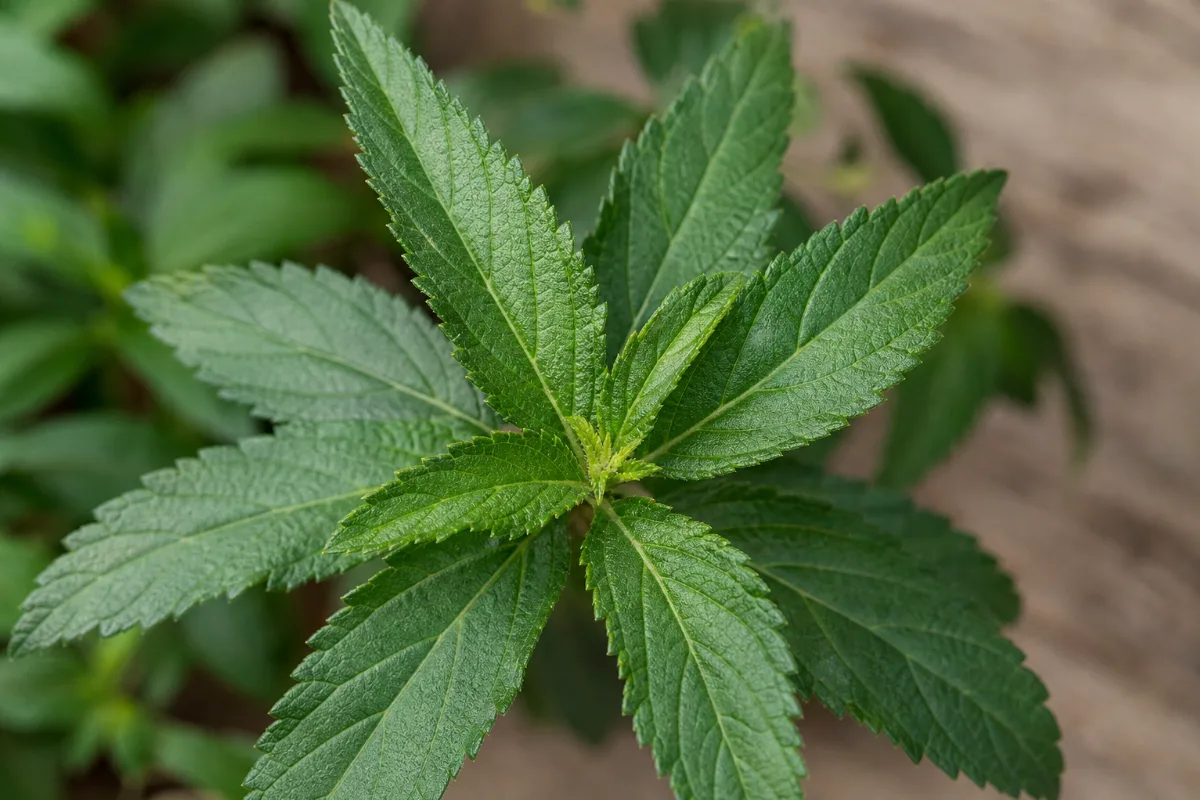
Herbs & Botanicals · Herbs · Old Mexican aphrodisiac and tonic leaf, with no human trial of damiana on its own
Damiana
Turnera diffusa Willd. ex Schult. (also called Turnera aphrodisiaca) · also called Damiana, damiana de Guerrero, oreganillo, Mexican holly, thé bourrique (French)
Damiana is a small shrub of Mexico, Central America and South America whose leaves are used as a tea, extract or ingredient in sexual-health, energy and weight products. Human studies tested only mixed products, and several found gains on questionnaires, but none can separate damiana from the other ingredients. Safety data are thin, and cautions apply for diabetes medicines, hormone-sensitive conditions, pregnancy and unlabelled products.
General information, not medical advice. Last substantive update · Not medically reviewed. A named clinician has not signed off on this page. How this page is made
About Damiana
Damiana (Turnera diffusa) is a Mexican shrub with a long reputation as an aphrodisiac. Human studies tested only mixed products. Animal and lab work supports most other claims. Safety information is limited.
What it is
Damiana is a shrub of Mexico, Central America and parts of South America. The leaf is the part most used. GBIF lists it in the family Turneraceae; some papers call the family Passifloraceae. Old papers use the name Turnera aphrodisiaca for the same plant.
Its main chemicals include flavonoids such as apigenin and pinocembrin, the compound arbutin, and cyanogenic glycosides reported in the genus. It is often said to contain caffeine, but a 2026 study of authenticated plant found none.
Traditional and current uses
Traditional uses include aphrodisiac and tonic, diabetes, cough, stomach and women's health complaints, and as a mild diuretic or laxative. Today it is mostly sold in sexual-health, energy and weight products and in smoking blends.
One thing to know: different old and new papers sometimes mix damiana with related Turnera species or with a plant called 'false damiana'. Their results are not damiana results.
What the research shows
No trial tested damiana alone. In products with several ingredients, two small trials found women reported better sexual satisfaction or desire than on placebo, while a larger trial in cancer survivors found no sexual benefit. A men's trial and a menopause trial were also positive on questionnaires, and a three-herb weight product slowed stomach emptying. None of these can show that damiana did the work.
Rat studies suggest damiana extracts help sluggish males mate. Mouse studies suggest anxiety-like behaviour falls. Lab work found aromatase blocking, liver-cell protection and, in animals, mixed blood-sugar results.
At a glance
Traditional uses history, not proof
- Aphrodisiac and general tonic in Mexican and Latin American traditional medicine
- Diabetes, cough, stomach and women's health complaints (genus-level reports)
- Diuretic and laxative (MSK)
Studied for research
- Women's sexual function (damiana-containing formulas), mixed
- Men's erectile function (damiana-containing formulas), very low
- Menopausal symptoms (four-ingredient formula), very low
- Appetite and weight (three-herb formula), very low
- Anxiety, mood, blood sugar, hormones and liver: animal or lab only
Main compounds
- Flavonoids (apigenin, pinocembrin, acacetin and others)
- Arbutin
- Terpenoids (teuhetenone A) and the liver-protective C-glycoside hepatodamianol
- Cyanogenic glycosides (reported in the genus)
- No caffeine found in a 2026 analysis
Common forms
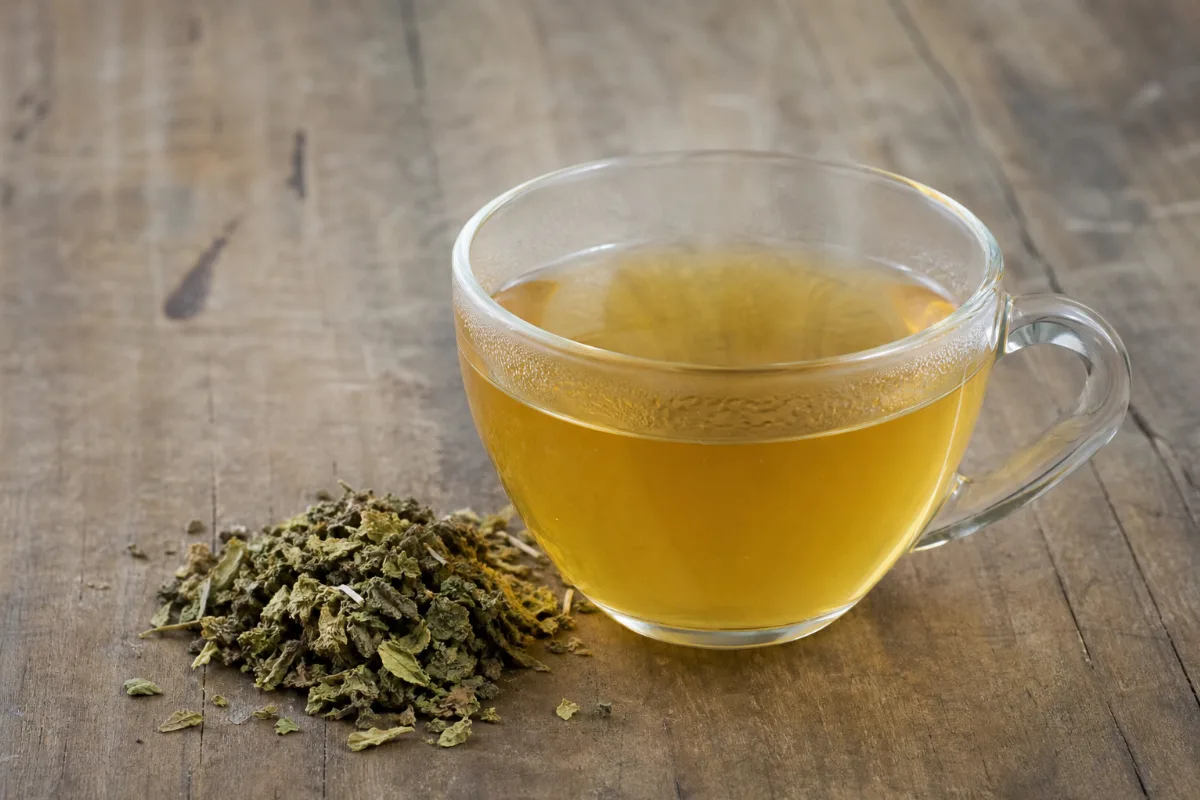
- Dried leaf as tea
- Extracts and liquid tinctures
- Capsules and tablets, often in mixed products
- Smoking and vaping blends (a product-quality risk)
Research links: MSK Cancer Center: Damiana · Review: Bioactivity of the genus Turnera (2023) · Review: Herbal sexual enhancers, psychiatric and neurological adverse effects (2020) · Research Library · Genes & Biomarkers Library
The plant and its history
- Accepted scientific name
- Turnera diffusa Willd. ex Schult.
- Naming authority
- Willd. ex Schult.; ACCEPTED in the GBIF backbone (key 2874847) and an active species in NCBI Taxonomy (taxid 329212). Both checked 2026-10-25.
- Synonyms
- Turnera aphrodisiaca Ward (a SYNONYM of Turnera diffusa var. aphrodisiaca (G.H.Ward) Urb., accepted in GBIF, key 4161195); Turnera microphylla Desv.; Turnera pumilea Poir.; Turnera humifusa Endl.; Turnera pringlei Rose
- Common names
- damiana (English, Spanish); damiana de Guerrero (Spanish); oreganillo / orégano cimarrón (Spanish); rompe camisa macho (Spanish); Mexican holly (English); thé bourrique (French)
- Botanical family
- Turneraceae in GBIF. Several papers (Szewczyk 2014; the 2020 review) place damiana in Passifloraceae, the family that modern classifications fold Turneraceae into. Both names appear in the literature.
- Classification
- Plantae > Tracheophyta > Magnoliopsida > Malpighiales > Turneraceae > Turnera > Turnera diffusa
- Native range
- MSK: Mexico, Central America and parts of South America. The 2023 review describes the genus in semi-arid areas of Mexico, Central America, the Caribbean and South America.
- Habitat
- Semi-arid areas (genus-level statement in the 2023 review). Not verified for the species in other sources.
- What the plant looks like
- Roots: Not verified in the sources read.; Stems: Not verified in the sources read; MSK calls it a wild shrub.; Leaves: Leaf is the part most used; description not verified.; Flowers: Not verified in the sources read.; Fruit: Not relevant to medicinal use.
- Cultivation
- Not verified; no cultivation guidance was read.
- Harvest and processing
- Not verified.
- Look-alikes and adulterants
- Name: Chrysactinia mexicana A. Gray ('false damiana', Asteraceae); Note: A different plant also used as an aphrodisiac; a 2016 rat study calls it 'false damiana'.; Name: Turnera ulmifolia / Turnera subulata; Note: Related species with their own studies; the 2023 review mixes them with T. diffusa. Their results are not damiana results.; Name: Turnera diffusa var. diffusa vs var. aphrodisiaca; Note: Two varieties; the 2023 review notes they differ in phenolic content.
- Sustainability and conservation
- Not assessed in the sources read.
The plant and the parts used
Traditional use and history history, not clinical proof
| Tradition or era | Documented use | Source |
|---|---|---|
| Traditional medicine of Mexico and the Americas | Aphrodisiac and tonic; also for anaemia, bronchitis, cough, diabetes, fever, fungal disease, stomach complaints, pain, skin disorders and women's health problems. Turnera species were also used as abortives, expectorants and laxatives (genus-level). | p24468305 |
| Modern integrative medicine summary | MSK lists traditional use as diuretic, laxative, stimulant, aphrodisiac and for diabetes and venereal diseases. | s-msk-damiana |
| Ethnopharmacology review of the genus (2014) | Szewczyk and Zidorn called T. diffusa one of the most highly appreciated plant aphrodisiacs and named the aphrodisiac effect a priority for research. | p24468305 |
| Claims about Maya use or about damiana in 19th-century American pharmacopoeias | NOT verified: widely repeated, but no source we read confirmed them. PubMed lists two 1879 US medical-journal items titled 'Damiana (Turnera Aphrodisiaca)'; we saw only the titles. |
Traditional use shows how a plant was used. It does not show that a supplement works or is safe today.
What is inside, and how it may work
What the plant contains and how those compounds act in cells and animals. Laboratory and animal mechanisms are not proven effects in people.
Main compounds
| Compound | Family | Where it is concentrated | Activity studied | Level of evidence |
|---|---|---|---|---|
| Arbutin PubChem 440936 | hydroquinone glycoside | Leaf (MSK calls it a major constituent) | Protected the rat stomach lining in two ulcer models; no toxicity seen in cells or animals. 28 20 | Animal research |
| Apigenin PubChem 5280443 | flavone | Aerial parts | Identified in animal experiments as the pain-relieving (antinociceptive) principle. 27 | Animal research |
| Pinocembrin PubChem 68071 | flavanone | Leaf | Strongest aromatase blocker among 24 compounds (IC50 10.8 uM) and showed estrogenic activity in yeast. 31 | Laboratory research |
| Acacetin PubChem 5280442 | flavone | Leaf | Blocked aromatase (IC50 18.7 uM) and human MAO-B (IC50 50 nM) in test tubes. 31 7 | Laboratory research |
| Acacetin 7-methyl ether (5-hydroxy-7,4'-dimethoxyflavone) PubChem 5281601 | flavone | Leaf | Selective, reversible MAO-B inhibitor in a test tube (IC50 198 nM; more than 500-fold selective over MAO-A). 7 | Laboratory research |
| Apigenin 7-glucoside PubChem 5280704 | flavone glycoside | Leaf | Estrogenic activity in a yeast test (EC50 10 uM). 31 | Laboratory research |
| Teuhetenone A PubChem 15153216 | terpenoid | Aerial parts | Lowered blood glucose in normal and diabetic mice when injected; did not block alpha-glucosidase. 22 | Animal research |
| Hepatodamianol | C-glycoside | Aerial parts | Protected liver cells in a dish about four times better than silibinin; antioxidant. 8 | Laboratory research |
| Cyanogenic glycosides (seven reported in the genus) | cyanogenic glycosides | Not stated | Compounds that can release cyanide; no human toxicity from damiana was found. Which ones occur in damiana leaf was not verified. 27 23 | Laboratory research |
| Caffeine | purine alkaloid | None found Below 4 micrograms per daily serving (NMR, 2026) | Earlier papers (including a 2009 rat study) reported caffeine; the 2026 NMR study found none and traces the claim to miscitation. 24 9 | Laboratory research |
Mechanisms, receptors and pathways
| Target or pathway | Gene or receptor | What was found | Level |
|---|---|---|---|
| Aromatase inhibition | CYP19A1 (aromatase) | Methanolic leaf extract IC50 63.1 ug/mL; pinocembrin and acacetin strongest. 31 | Laboratory research |
| Estrogenic activity | Estrogen receptor (yeast assay) | Extract and apigenin 7-glucoside, Z-echinacin and pinocembrin were estrogenic in a yeast test; a cell test of a damiana-containing product found none; MSK calls findings mixed. 31 26 20 | Laboratory research |
| Nitric oxide pathway and central nervous system | Nitric oxide synthase | L-NAME blocked the pro-sexual effect of an aqueous extract in rats, mainly at brain level. 10 | Animal research |
| MAO-B inhibition | MAOB | Acacetin 7-methyl ether selectively and reversibly blocked human MAO-B. 7 | Laboratory research |
| Drug-metabolising enzymes and receptors | CYP3A4, CYP1A2, PXR (NR1I2), AhR (AHR) | Leaf extract blocked CYP3A4 (IC50 about 6 ug/mL) and CYP1A2 (about 14 ug/mL) and activated PXR (four-fold or more) and AhR (ten-fold or more). 23 | Laboratory research |
| Blood-sugar lowering | Not identified | Teuhetenone A lowered glucose in mice, not through alpha-glucosidase blocking; an extract did not lower glucose in another mouse study. 22 1 | Animal research |
| Stomach protection | IL-6, IL-10, TNF-alpha, lipid peroxidation | Arbutin changed these markers while protecting the rat stomach. 28 | Animal research |
| Mechanism in people | None | No human mechanism study of damiana was found. | Insufficient |
Absorption, metabolism and elimination
- Absorption
- Not studied in people.
- Distribution
- Not studied.
- Metabolism
- No human data. In lab tests the leaf extract blocked CYP3A4 and CYP1A2.
- Elimination
- Not studied.
- Bioavailability
- Unknown.
Isolated compounds versus whole extracts
Most traditional uses and lab activities cannot yet be linked to a single compound. Apigenin is a named exception for pain in animals. Findings differ between whole extracts and isolated compounds: an isolated terpenoid lowered glucose in mice while an extract did not in another study, and sexual-behaviour effects in rats came from extracts whose active compounds are unknown.
Nutritional composition
Damiana is used as a herb, not as a source of nutrients. No nutrient values were read.
1 mixed findings3 very low certainty8 not enough evidence
What is Damiana good for?
The main proposed uses and how strong the human evidence is for each. 'Insufficient' means no human trial of damiana was found. Rows that mention a formula describe products with several ingredients, not damiana alone.
Benefits, one by one
Each card is a research question, not a promise. Tap a goal to filter. Open a card to see the studies, doses and limits.
Sexual desire and function in women (damiana-containing formulas, not damiana alone)
Mixed findingsSeveral small trials gave women a supplement that contained damiana plus other ingredients. Two early trials found self-reported gains. A later, larger trial in cancer survivors found no sexual benefit. No trial tested damiana alone.
6 studiesCapsule or tablet formulas with many ingredients; amounts are not giv…
Studies, doses and limits
What the trials found
Women: ArginMax for women (L-arginine, ginseng, ginkgo, damiana, vitamins, minerals). Ito 2001: 77 women, 4 weeks, 73.5% vs 37.2% reported better satisfaction (p<0.01). Ito 2006: 108 women with low desire, 4 weeks, better desire in premenopausal (72%, p=0.03) and postmenopausal women (51% vs 8%, p=0.008). Greven 2015: 186 female cancer survivors, 12 weeks, no difference from placebo in desire, arousal, lubrication, orgasm, satisfaction or pain. Palacios 2019: 29 postmenopausal women took a four-herb product (fenugreek, damiana, tribulus, ginkgo) for 2 months with no control group; the FSFI score rose from 20.15 to 25.03. Every product held several ingredients, so damiana's own part cannot be separated.
Results
Mixed. Two small placebo-controlled 4-week trials were positive on self-report; one larger 12-week trial in cancer survivors was null on sexual outcomes; one pilot had no control group.
Effect sizes as reported
Ito 2001: 73.5% vs 37.2% improved in satisfaction (p<0.01). Greven 2015: no difference on any FSFI domain at 12 weeks. Palacios 2019: FSFI 20.15 to 25.03 (p=0.0011), uncontrolled.
Why this rating
The results disagree, every product held several ingredients, and the positive trials were short, small and self-reported. We rate damiana's own contribution as insufficient.
Form and dose studied
Capsule or tablet formulas with many ingredients; amounts are not given in the abstracts read.
Who was studied
Women with low desire; pre-, peri- and postmenopausal women; female cancer survivors; postmenopausal women (pilot).
Limits
Combination products; short follow-up; the same group ran the early trials; possible industry links not verified; damiana share unknown.
Why researchers looked
Damiana has a long reputation as an aphrodisiac, so it is added to sexual-health products.
Traditional use
Traditionally used in Mexico and Central America as an aphrodisiac and tonic (Szewczyk review; MSK).
Proposed mechanism Preliminary mechanism
Animal work links damiana to the nitric oxide pathway and to central (brain) effects. This is not shown in women.
A proposed mechanism does not show that the effect happens in people.
No serious problems were reported in these trials, but they were short.
Erectile function and men's sexual function (damiana-containing formulas)
Very low certaintyTwo small studies used multi-ingredient products that included damiana in men with mild or moderate erectile problems. Both found improvement, but neither can show that damiana did anything.
3 studiesCapsule, tablet or sachet products with several ingredients.
Studies, doses and limits
What the trials found
Ito 1998: 25 men with mild-to-moderate erectile dysfunction took ArginMax for 4 weeks with no control group; of 21 who finished, 88.9% improved in keeping an erection and 75.0% in satisfaction. Cai 2024: 164 men with erectile dysfunction (per protocol 52, 55, 57) were randomised to Icarifil (nine ingredients including damiana), Icarifil plus tadalafil 5 mg daily, or tadalafil alone for 3 months. IIEF-5 rose +4.1, +7.4 and +5.1; the add-on group did best. The tadalafil-alone group also improved a lot, and there was no placebo group.
Results
Very low certainty. One uncontrolled pilot and one randomised trial of a nine-ingredient product without a placebo group.
Effect sizes as reported
IIEF-5 change: +7.4 (Icarifil plus tadalafil), +4.1 (Icarifil), +5.1 (tadalafil) at 3 months; p<0.001 for add-on vs the other two. SEP improvement: 94.0%, 56.9%, 82.3%.
Why this rating
Combination products, no placebo group in the better trial, no control in the pilot, and damiana's dose and share are not given.
Form and dose studied
Capsule, tablet or sachet products with several ingredients.
Who was studied
Men with mild-to-moderate erectile dysfunction.
Limits
No placebo group; blinding not stated; unclear who funded; damiana is one of up to nine ingredients.
Why researchers looked
Damiana is a traditional male aphrodisiac and is combined with other herbs in men's products.
Traditional use
Used traditionally to spark sexual drive in men (Szewczyk review).
Proposed mechanism Preliminary mechanism
Rat studies suggest a nitric-oxide-linked effect in the brain, similar to sildenafil in one model. Not shown in men.
A proposed mechanism does not show that the effect happens in people.
Do not combine herbal sexual products with erectile-dysfunction drugs without asking a doctor; some sold products have been found to contain hidden drugs (see Safety).
Sexual behaviour in animals (rat studies)
Not enough evidenceIn rats, damiana extracts made sluggish or exhausted males mate more readily. This is animal work only.
3 studiesAqueous or fluid extracts given by mouth or injection to rats.
Studies, doses and limits
What the trials found
No human study of damiana alone for sexual function was found. Arletti 1999: oral fluid extracts at 1 mL/kg improved mating in sluggish or impotent rats but not in potent rats. Estrada-Reyes 2009: 80 mg/kg of an aqueous extract helped sexually exhausted rats. Estrada-Reyes 2013: 10 mg/kg shortened ejaculation latency, like sildenafil, and L-NAME blocked it.
Results
Positive in rats; unknown in people.
Effect sizes as reported
Doses 10 to 80 mg/kg of aqueous extract, or 0.25 to 1 mL/kg of fluid extract, in rats.
Why this rating
Animal work cannot show an effect in people.
Form and dose studied
Aqueous or fluid extracts given by mouth or injection to rats.
Who was studied
Male rats (sluggish, exhausted, potent).
Limits
Rodent doses cannot be turned into human amounts; one rat paper's caffeine finding is disputed.
Why researchers looked
These studies are the main basis for the aphrodisiac reputation.
Traditional use
Traditional aphrodisiac.
Proposed mechanism Animal research
One study found that blocking nitric oxide production cancelled the effect, and that the effect acted mainly in the brain. The compounds responsible are not known; flavonoids are suspected.
A proposed mechanism does not show that the effect happens in people.
None found in these studies.
Anxiety and low mood
Not enough evidenceDamiana is traditionally used as a mild calming tonic. Mouse studies found anxiety-like and depression-like behaviour fell. No human trial was found.
4 studiesAqueous or methanol extracts given to mice.
Studies, doses and limits
What the trials found
None found in people. Mouse extract studies: Kumar 2005 (T. aphrodisiaca methanol extract) and a 2019 study (aqueous leaf extract, 10 to 200 mg/kg) found anxiety-like and depression-like behaviour fell without a change in movement. MSK says human studies are lacking.
Results
Anxiolytic-like and antidepressant-like effects in mice; no human data.
Effect sizes as reported
Mouse results only; no human effect sizes exist.
Why this rating
Mouse behaviour tests do not predict human anxiety treatment.
Form and dose studied
Aqueous or methanol extracts given to mice.
Who was studied
Mice.
Limits
No human trial; mouse tests have a poor record of predicting human results.
Why researchers looked
Old herbals list damiana for nervous exhaustion and low spirits.
Traditional use
Traditional use for anxiety and as a nerve tonic (MSK; Szewczyk review).
Proposed mechanism Laboratory research
Possible effects on brain chemistry (a lab study found one damiana flavone blocks the enzyme MAO-B in a test tube). Not tested in people.
A proposed mechanism does not show that the effect happens in people.
One animal study reported no neural side effects over 28 days; see Safety.
Stimulant, tonic and energy
Not enough evidenceDamiana is called a stimulant or tonic. MSK says there is limited evidence. It is also often said to contain caffeine, but a 2026 analysis found none.
3 studiesTea, leaf, extract and blends.
Studies, doses and limits
What the trials found
No human trial of damiana for energy or tiredness was found. MSK states evidence of stimulant effects is limited. One 2009 rat paper reported caffeine in an extract by HPLC-MS; the 2026 NMR study of authenticated plant material found none.
Results
No human effect data.
Effect sizes as reported
Not available.
Why this rating
No human trial; the caffeine question is only partly settled (two lab studies disagree).
Form and dose studied
Tea, leaf, extract and blends.
Who was studied
None studied.
Limits
Products sold as energy blends may add other stimulants; damiana alone is not shown to energise.
Why researchers looked
A traditional stimulant, often sold in energy and libido blends.
Traditional use
Traditional stimulant and tonic (MSK).
Proposed mechanism Laboratory research
No established mechanism. Caffeine was once reported in damiana, but a 2026 NMR study found none (below 4 micrograms per daily serving) and traces earlier claims to miscitation.
A proposed mechanism does not show that the effect happens in people.
Tell your doctor if a product mixes damiana with caffeine-containing herbs such as guarana or yerba mate.
Menopausal symptoms (four-ingredient formula 'Lady 4')
Very low certaintyOne trial gave women a four-ingredient capsule that included damiana. Symptom scores improved more than with placebo over 4 weeks. It is one short trial of a combination product.
2 studiesCapsules with four ingredients.
Studies, doses and limits
What the trials found
Yakoot 2011: 120 women with menopausal symptoms were randomised to Lady 4 (evening primrose oil, damiana, ginseng, royal jelly), 2 capsules daily, or placebo for 4 weeks. Both groups improved on the Menopause Rating Scale II; the product group improved more (p<0.001). 86.7% of the product group and 56.7% of the placebo group rated the treatment as 'much' or 'very much' improved. MSK mentions this study as a small one needing confirmation.
Results
Combination product beat placebo on a self-rated scale in one 4-week trial.
Effect sizes as reported
MRS-II improvement larger with Lady 4 (p<0.001); 'much improved' 86.7% vs 56.7%.
Why this rating
One short trial, four ingredients, no way to isolate damiana, abstract only.
Form and dose studied
Capsules with four ingredients.
Who was studied
Women with menopausal symptoms.
Limits
Single clinic; short; not replicated in the sources read.
Why researchers looked
Damiana is traditionally used in women's health, so it appears in menopause blends.
Traditional use
Traditional use in women's health (Szewczyk review).
Proposed mechanism Laboratory research
Not known. A lab study found some damiana compounds act on estrogen-related targets, but a cell test of a damiana-containing product found no estrogen-like action.
A proposed mechanism does not show that the effect happens in people.
No safety findings given in the abstract.
Appetite, stomach emptying and weight (three-herb 'YGD' formula)
Very low certaintyTwo small trials used a three-herb product (yerba mate, guarana and damiana). It slowed stomach emptying and lowered food eaten at one meal. One trial reported weight loss over 45 days. Damiana's own part is unknown, and the other two herbs contain caffeine.
3 studiesCapsules or tablets of YGD, taken before meals.
Studies, doses and limits
What the trials found
Andersen 2001: 47 overweight adults took YGD capsules or placebo before meals for 45 days: weight fell 5.1 +/- 0.5 kg vs 0.3 +/- 0.08 kg. In seven volunteers gastric emptying took 58 +/- 15 min vs 38 +/- 7.6 min on placebo (P=0.025). A 12-month follow-up of 22 people had no control group. Harrold 2013: 58 women ate 59.5 g (16.3%; 112.4 kcal, 17.3%) less at lunch after YGD than without it, in a placebo-controlled crossover; inulin fibre alone also lowered intake. The 2023 review notes most anti-obesity work used YGD, so damiana alone cannot be judged.
Results
Short-term fall in food eaten; weight loss in one very small trial.
Effect sizes as reported
Andersen: weight -5.1 vs -0.3 kg at 45 days; gastric emptying 58 vs 38 min. Harrold: -112.4 kcal (17.3%) at one lunch.
Why this rating
Tiny, short trials of a three-herb product; the weight result is large for what the abstract describes and was not confirmed in other trials we read; diet not controlled.
Form and dose studied
Capsules or tablets of YGD, taken before meals.
Who was studied
Overweight adults; normal-weight to slightly overweight women.
Limits
Combination product; guarana and yerba mate contain caffeine; no data on lasting weight loss; funding not stated in the abstracts.
Why researchers looked
Slower stomach emptying could make people feel full longer.
Traditional use
Not a traditional use of damiana alone.
Proposed mechanism Preliminary mechanism
The formula delayed gastric emptying on ultrasound in seven volunteers. Which ingredient did this is unknown.
A proposed mechanism does not show that the effect happens in people.
Slower stomach emptying could change how fast other medicines are absorbed; ask a pharmacist if you take medicines that must be taken at set times.
Blood sugar (animal and lab results only)
Not enough evidenceMouse studies are mixed: one isolated damiana compound lowered blood glucose, but a damiana extract in another mouse study did not. No human trial exists.
4 studiesIsolated compound by injection; various extracts.
Studies, doses and limits
What the trials found
No human trial found. Teuhetenone A (injected, 1 and 5 mg/kg) lowered glucose in normal and diabetic mice. A water-ethanol extract of T. diffusa showed no glucose-lowering in mice in a 2002 study. The 2023 review also describes rat studies in which oral hydroalcoholic extract (150 mg/kg for 5 or 8 weeks) did not change blood glucose in diabetic rats, and other work reporting lower glucose.
Results
Mixed in animals; unknown in people.
Effect sizes as reported
Teuhetenone A: about 40% fall in normal mice and about 30% in diabetic mice (as summarised by the 2023 review); extract: no effect in one mouse study.
Why this rating
Mixed animal results and no human trial.
Form and dose studied
Isolated compound by injection; various extracts.
Who was studied
Mice and rats.
Limits
Injected isolated compound is not the herb; results disagree.
Why researchers looked
Damiana is a traditional remedy for diabetes in Mexico.
Traditional use
Traditional use for diabetes (MSK; Szewczyk review).
Proposed mechanism Animal research
A compound called teuhetenone A lowered glucose in mice by a route other than blocking the sugar-digesting enzyme alpha-glucosidase.
A proposed mechanism does not show that the effect happens in people.
MSK says damiana may affect blood sugar based on animal studies; people on diabetes medicines should ask their doctor (see Safety).
Hormone-related effects (lab studies only)
Not enough evidenceIn test tubes, damiana extracts and some compounds blocked aromatase (an enzyme that makes estrogen) and some compounds showed estrogen-like action. MSK says the picture is unclear and mixed. No human data.
5 studiesExtracts and isolated compounds.
Studies, doses and limits
What the trials found
None found in people for hormone changes by damiana alone. One uncontrolled four-herb pilot reported higher testosterone and lower SHBG in women. A 2023 review mentions that a damiana extract bound the progesterone receptor in a lab test but was judged neutral in a follow-up assay.
Results
Lab effects in both directions; unknown in people.
Effect sizes as reported
Aromatase IC50 63.1 ug/mL for the extract; 10.8 uM for pinocembrin; 18.7 uM for acacetin.
Why this rating
Test-tube results only and they disagree about estrogen-like action.
Form and dose studied
Extracts and isolated compounds.
Who was studied
Enzyme and yeast assays.
Limits
Lab results do not show a hormone effect in people.
Why researchers looked
Damiana is used in women's and men's sexual health, so hormone effects are of interest.
Traditional use
Not a defined traditional claim.
Proposed mechanism Laboratory research
Pinocembrin and acacetin blocked aromatase; apigenin 7-glucoside, Z-echinacin and pinocembrin acted like estrogen in a yeast test. A separate cell test of a damiana-containing product found no estrogen-like activity.
A proposed mechanism does not show that the effect happens in people.
People with hormone-sensitive conditions should ask a doctor before using damiana (see Safety).
Liver and cell protection (lab and animal results only)
Not enough evidenceIn cells and rats, damiana compounds protected against chemical damage. This is lab work. Liver injury in people is a safety question and is covered under Safety.
2 studiesIsolated compound; aqueous leaf extract in rats.
Studies, doses and limits
What the trials found
No human study found. Hepatodamianol protected HepG2 cells about four times better than silibinin. The review describes 80 mg/kg of aqueous leaf extract for 28 days reducing liver enzyme rises in rats given amitriptyline.
Results
Protective in cells and rats.
Effect sizes as reported
Cells: about 4-fold better than silibinin in one test.
Why this rating
No human data; protective in animals does not mean safe or helpful in people.
Form and dose studied
Isolated compound; aqueous leaf extract in rats.
Who was studied
HepG2 cells; rats.
Limits
Cells and rats only.
Why researchers looked
Damiana is used traditionally for liver complaints.
Traditional use
Traditional use for hepatic illness (hepatodamianol study).
Proposed mechanism Laboratory research
A compound called hepatodamianol protected liver cells from carbon tetrachloride damage and acts as an antioxidant. A rat study with amitriptyline-induced liver damage found lower ALT, AST and ALP with an aqueous leaf extract, as summarised by the 2023 review.
A proposed mechanism does not show that the effect happens in people.
Liver safety is covered under Safety.
Stomach lining protection (rat results only)
Not enough evidenceArbutin, a main compound in damiana, protected the stomach lining of rats from ulcers. No human study.
2 studiesPurified arbutin.
Studies, doses and limits
What the trials found
None in people. Arbutin protected the stomach in aspirin and ethanol ulcer models in rats, without toxicity in cells or animals. MSK lists anti-ulcer activity as an animal finding.
Results
Protective in rats.
Effect sizes as reported
Not available in the abstract.
Why this rating
Rat study of a single purified compound.
Form and dose studied
Purified arbutin.
Who was studied
Rats.
Limits
Not whole damiana.
Why researchers looked
Damiana is traditionally used for stomach complaints.
Traditional use
Peptic ulcer use noted in the study.
Proposed mechanism Animal research
Arbutin lowered a fat-damage marker and changed inflammation signals in rat stomach tissue.
A proposed mechanism does not show that the effect happens in people.
None reported for arbutin in this study.
Cancer cells in the lab (not a treatment)
Not enough evidenceSome damiana extracts killed breast cancer cells in lab dishes, but the 2023 review notes that most extracts also harmed non-cancer cells. It has not been shown to treat cancer in people.
2 studiesExtracts in cell culture.
Studies, doses and limits
What the trials found
None in people. MSK: not shown to treat cancer in humans and not studied in cancer patients. The 2023 review reports that extracts and compounds were toxic to cells at some concentrations.
Results
Cell-killing in dishes; no clinical meaning.
Effect sizes as reported
Not applicable.
Why this rating
Lab dishes only; no animal or human evidence of benefit.
Form and dose studied
Extracts in cell culture.
Who was studied
Cell lines.
Limits
Cannot be used to treat cancer.
Why researchers looked
Plant extracts are often screened against cancer cell lines.
Traditional use
Not a traditional use.
Proposed mechanism Laboratory research
Cell killing in dishes.
A proposed mechanism does not show that the effect happens in people.
Do not replace cancer treatment with damiana.
Connections to the rest of health
How Damiana connects to the rest of our health knowledge graph. Every link says what kind of connection it is. A safety link (for example to the liver) is a warning, not a benefit. A study that merely mentions a topic never creates a benefit link.
Explore every connection: goals, body systems, organs, symptoms, genes
A. Wellness goals
| Connected to | Kind of connection | Evidence status | Context | Studies |
|---|---|---|---|---|
| Blood sugar balance | Drug or supplement interaction | Not enough evidence | Possible additive effect with diabetes medicines; animal results mixed. Preparation or compound: Damiana extracts and teuhetenone A (animal) |
20 22 1 |
| Womens Wellness | Potential benefit | Mixed findings | Sexual desire and function in women (damiana-containing formulas, not damiana alone): Several small trials gave women a supplement that contained damiana plus other ingredients. Two early trials found self-reported gains. A later, larger trial in cancer survivors found no sexual benefit. No trial tested damiana alone. Menopausal symptoms (four-ingredient formula 'Lady 4'): One trial gave women a four-ingredient capsule that included damiana. Symptom scores improved more than with placebo over 4 weeks. It is one short trial of a combination product. | 16 17 13 21 20 27 30 |
| Libido Support | Potential benefit | Mixed findings | Sexual desire and function in women (damiana-containing formulas, not damiana alone): Several small trials gave women a supplement that contained damiana plus other ingredients. Two early trials found self-reported gains. A later, larger trial in cancer survivors found no sexual benefit. No trial tested damiana alone. Erectile function and men's sexual function (damiana-containing formulas): Two small studies used multi-ingredient products that included damiana in men with mild or moderate erectile problems. Both found improvement, but neither can show that damiana did anything. | 16 17 13 21 20 27 15 6 |
| Mens Vitality | Potential benefit | Very low certainty | Erectile function and men's sexual function (damiana-containing formulas): Two small studies used multi-ingredient products that included damiana in men with mild or moderate erectile problems. Both found improvement, but neither can show that damiana did anything. | 15 6 20 |
| Mens Vitality | Preliminary mechanism | Not enough evidence | Sexual behaviour in animals (rat studies): In rats, damiana extracts made sluggish or exhausted males mate more readily. This is animal work only. | 4 9 10 |
| Libido Support | Preliminary mechanism | Not enough evidence | Sexual behaviour in animals (rat studies): In rats, damiana extracts made sluggish or exhausted males mate more readily. This is animal work only. | 4 9 10 |
| Anxiety Support | Preliminary mechanism | Not enough evidence | Anxiety and low mood: Damiana is traditionally used as a mild calming tonic. Mouse studies found anxiety-like and depression-like behaviour fell. No human trial was found. | 19 2 7 20 |
| Mood Balance | Preliminary mechanism | Not enough evidence | Anxiety and low mood: Damiana is traditionally used as a mild calming tonic. Mouse studies found anxiety-like and depression-like behaviour fell. No human trial was found. | 19 2 7 20 |
| Calm Relaxation | Preliminary mechanism | Not enough evidence | Anxiety and low mood: Damiana is traditionally used as a mild calming tonic. Mouse studies found anxiety-like and depression-like behaviour fell. No human trial was found. | 19 2 7 20 |
| Energy Boost | Traditional use | Not enough evidence | Stimulant, tonic and energy: Damiana is called a stimulant or tonic. MSK says there is limited evidence. It is also often said to contain caffeine, but a 2026 analysis found none. | 24 9 20 |
| Reduce Fatigue | Traditional use | Not enough evidence | Stimulant, tonic and energy: Damiana is called a stimulant or tonic. MSK says there is limited evidence. It is also often said to contain caffeine, but a 2026 analysis found none. | 24 9 20 |
| Menopause Support | Potential benefit | Very low certainty | Menopausal symptoms (four-ingredient formula 'Lady 4'): One trial gave women a four-ingredient capsule that included damiana. Symptom scores improved more than with placebo over 4 weeks. It is one short trial of a combination product. | 30 20 |
| Weight Management | Potential benefit | Very low certainty | Appetite, stomach emptying and weight (three-herb 'YGD' formula): Two small trials used a three-herb product (yerba mate, guarana and damiana). It slowed stomach emptying and lowered food eaten at one meal. One trial reported weight loss over 45 days. Damiana's own part is unknown, and the other two herbs contain caffeine. | 3 14 23 |
| Metabolic Health | Potential benefit | Very low certainty | Appetite, stomach emptying and weight (three-herb 'YGD' formula): Two small trials used a three-herb product (yerba mate, guarana and damiana). It slowed stomach emptying and lowered food eaten at one meal. One trial reported weight loss over 45 days. Damiana's own part is unknown, and the other two herbs contain caffeine. | 3 14 23 |
| Blood Sugar Balance | Preliminary mechanism | Not enough evidence | Blood sugar (animal and lab results only): Mouse studies are mixed: one isolated damiana compound lowered blood glucose, but a damiana extract in another mouse study did not. No human trial exists. | 22 1 23 20 |
| Metabolic Health | Preliminary mechanism | Not enough evidence | Blood sugar (animal and lab results only): Mouse studies are mixed: one isolated damiana compound lowered blood glucose, but a damiana extract in another mouse study did not. No human trial exists. | 22 1 23 20 |
| Hormone Balance | Preliminary mechanism | Not enough evidence | Hormone-related effects (lab studies only): In test tubes, damiana extracts and some compounds blocked aromatase (an enzyme that makes estrogen) and some compounds showed estrogen-like action. MSK says the picture is unclear and mixed. No human data. | 31 26 21 23 20 |
| Liver Support | Preliminary mechanism | Not enough evidence | Liver and cell protection (lab and animal results only): In cells and rats, damiana compounds protected against chemical damage. This is lab work. Liver injury in people is a safety question and is covered under Safety. | 8 23 |
| Digestive Support | Preliminary mechanism | Not enough evidence | Stomach lining protection (rat results only): Arbutin, a main compound in damiana, protected the stomach lining of rats from ulcers. No human study. | 28 20 |
| Healthy Aging | Preliminary mechanism | Not enough evidence | Cancer cells in the lab (not a treatment): Some damiana extracts killed breast cancer cells in lab dishes, but the 2023 review notes that most extracts also harmed non-cancer cells. It has not been shown to treat cancer in people. | 20 23 |
B. Body systems
| Connected to | Kind of connection | Evidence status | Context | Studies |
|---|---|---|---|---|
| Hepatic system | Drug or supplement interaction | Not enough evidence | May affect how the liver processes medicines; not shown in people. Preparation or compound: Leaf extract (CYP3A4 and CYP1A2 blocking, lab) |
23 |
| Reproductive System | Biological association | Mixed findings | Studied for: Sexual desire and function in women (damiana-containing formulas, not damiana alone) Studied for: Erectile function and men's sexual function (damiana-containing formulas) | 16 17 13 21 20 27 15 6 4 9 10 30 |
| Nervous System | Biological association | Not enough evidence | Studied for: Sexual behaviour in animals (rat studies) Studied for: Anxiety and low mood | 4 9 10 19 2 7 20 24 |
| Stress Mood | Biological association | Not enough evidence | Studied for: Anxiety and low mood | 19 2 7 20 |
| Endocrine System | Biological association | Very low certainty | Studied for: Menopausal symptoms (four-ingredient formula 'Lady 4') Studied for: Blood sugar (animal and lab results only) | 30 20 22 1 23 31 26 21 |
| Digestive System | Biological association | Very low certainty | Studied for: Appetite, stomach emptying and weight (three-herb 'YGD' formula) Studied for: Stomach lining protection (rat results only) | 3 14 23 28 20 |
| Metabolism Weight | Biological association | Very low certainty | Studied for: Appetite, stomach emptying and weight (three-herb 'YGD' formula) Studied for: Blood sugar (animal and lab results only) | 3 14 23 22 1 20 |
| Hepatic System | Biological association | Not enough evidence | Studied for: Liver and cell protection (lab and animal results only) | 8 23 |
| Immune System | Biological association | Not enough evidence | Studied for: Cancer cells in the lab (not a treatment) | 20 23 |
I. Biomarkers
| Connected to | Kind of connection | Evidence status | Context | Studies |
|---|---|---|---|---|
| Estrogen | Biological association | Not enough evidence | Aromatase blocking and estrogen-like action in lab tests; unclear in people. Preparation or compound: Pinocembrin, acacetin, apigenin 7-glucoside (lab) |
31 20 |
| Female Sexual Function Index (FSFI) and related self-reports | Biological association | Mixed findings | Measured in trials: mixed. A lab change is not the same as a health benefit. | 13 17 21 |
| IIEF-5 erectile function score | Biological association | Very low certainty | Measured in trials: raised. A lab change is not the same as a health benefit. | 6 |
| Cancer-survivor quality of life (FACT-G) | Biological association | Low certainty | Measured in trials: raised. A lab change is not the same as a health benefit. | 13 |
| Testosterone and SHBG (women, uncontrolled pilot) | Biological association | Very low certainty | Measured in trials: raised. A lab change is not the same as a health benefit. | 21 |
| Menopause Rating Scale II (MRS-II) | Biological association | Very low certainty | Measured in trials: lowered. A lab change is not the same as a health benefit. | 30 |
| Body weight (three-herb YGD formula) | Biological association | Very low certainty | Measured in trials: lowered. A lab change is not the same as a health benefit. | 3 |
| Stomach emptying time | Biological association | Very low certainty | Measured in trials: raised. A lab change is not the same as a health benefit. | 3 |
| Food and calories eaten at a meal | Biological association | Low certainty | Measured in trials: lowered. A lab change is not the same as a health benefit. | 14 |
| Blood glucose (animals) | Biological association | Not enough evidence | Measured in trials: mixed. A lab change is not the same as a health benefit. | 22 1 |
| Aromatase enzyme activity (lab) | Biological association | Not enough evidence | Measured in trials: lowered. A lab change is not the same as a health benefit. | 31 |
J. Genes, receptors and enzymes
| Connected to | Kind of connection | Evidence status | Context | Studies |
|---|---|---|---|---|
| CYP19A1 (aromatase) | Preliminary mechanism | In vitro | Blocked by damiana extract and pinocembrin in a test tube. | 31 |
| MAOB | Preliminary mechanism | In vitro | Blocked by acacetin 7-methyl ether in a test tube. | 7 |
| CYP3A4 and CYP1A2 | Preliminary mechanism | In vitro | Blocked by leaf extract in lab tests. | 23 |
| PXR (NR1I2) and AhR (AHR) | Preliminary mechanism | In vitro | Activated by leaf extract in lab tests. | 23 |
K. Biological pathways
| Connected to | Kind of connection | Evidence status | Context | Studies |
|---|---|---|---|---|
| Nitric oxide synthesis | Preliminary mechanism | Animal | Pro-sexual effect in rats depended on it. | 10 |
L. Active compounds
| Connected to | Kind of connection | Evidence status | Context | Studies |
|---|---|---|---|---|
| Arbutin | Biological association | Animal | Protected the rat stomach lining in two ulcer models; no toxicity seen in cells or animals. Preparation or compound: Leaf (MSK calls it a major constituent) |
28 20 |
| Apigenin | Biological association | Animal | Identified in animal experiments as the pain-relieving (antinociceptive) principle. Preparation or compound: Aerial parts |
27 |
| Pinocembrin | Biological association | In vitro | Strongest aromatase blocker among 24 compounds (IC50 10.8 uM) and showed estrogenic activity in yeast. Preparation or compound: Leaf |
31 |
| Acacetin | Biological association | In vitro | Blocked aromatase (IC50 18.7 uM) and human MAO-B (IC50 50 nM) in test tubes. Preparation or compound: Leaf |
31 7 |
| Acacetin 7-methyl ether (5-hydroxy-7,4'-dimethoxyflavone) | Biological association | In vitro | Selective, reversible MAO-B inhibitor in a test tube (IC50 198 nM; more than 500-fold selective over MAO-A). Preparation or compound: Leaf |
7 |
| Apigenin 7-glucoside | Biological association | In vitro | Estrogenic activity in a yeast test (EC50 10 uM). Preparation or compound: Leaf |
31 |
| Teuhetenone A | Biological association | Animal | Lowered blood glucose in normal and diabetic mice when injected; did not block alpha-glucosidase. Preparation or compound: Aerial parts |
22 |
| Hepatodamianol | Biological association | In vitro | Protected liver cells in a dish about four times better than silibinin; antioxidant. Preparation or compound: Aerial parts |
8 |
| Cyanogenic glycosides (seven reported in the genus) | Biological association | In vitro | Compounds that can release cyanide; no human toxicity from damiana was found. Which ones occur in damiana leaf was not verified. Preparation or compound: Not stated |
27 23 |
| Caffeine | Biological association | In vitro | Earlier papers (including a 2009 rat study) reported caffeine; the 2026 NMR study found none and traces the claim to miscitation. Preparation or compound: None found |
24 9 |
Each connection is stored with the ingredient, the connected record, the kind of connection, the evidence status, the supporting studies, the preparation or compound involved, and a review date (last reviewed October 25, 2026).
The evidence
The research centre for Damiana. Every record here was checked against PubMed or the publisher's page; we never list a study we have not verified.
Evidence by outcome
Bars show how many studies we found for each outcome, not how well it works. People are added up across trials only (reviews are not added, to avoid double counting).
How we rate evidence
High certainty
Several well-run trials or reviews agree; further research is unlikely to change the picture much.
Moderate certainty
Good trials point the same way, but some doubt remains.
Low certainty
Small, short or inconsistent trials. The finding could change with better research.
Very low certainty
Very little or very weak human data. Treat as a possibility only.
Mixed findings
Trials or reviews disagree with each other.
Not enough evidence
Not enough human research to say either way.
Evidence against
Good research found no benefit, or found harm.
We take the reviewers' own risk-of-bias and GRADE statements where they exist, and otherwise judge from study size, design, consistency, directness and whether a product matches what is sold. Many publications do not make evidence high. Method note: We searched PubMed, read the abstract of every PubMed study cited, read the 2023 genus review and the 2020 herbal-aphrodisiac safety review in full, read the public part of the MSK damiana page, and checked plant names in GBIF and NCBI Taxonomy and compounds in PubChem. Not verified: EMA, NCCIH, FDA, LiverTox, LactMed, German Commission E and WHO had no damiana page we could confirm (NCCIH and a guessed EMA address returned page-not-found). The animal-toxicity details come second-hand from the 2023 review. Certainty ratings are the compiler's reading.
Study library: every study we checked 31
| Study | Design | People | Product, dose, length | Result |
|---|---|---|---|---|
| Alarcon-Aguilar 2002 Investigation on the hypoglycaemic effects of extracts of four Mexican medicinal plants in normal and alloxan-diabetic mice. Phytother Res · PMID 12112298 · DOI |
Animal study animal |
Healthy and alloxan-diabetic mice | Water-ethanol extract of Turnera diffusa (tested with three other plant extracts) not stated in abstract Not stated in abstract (injected into the abdomen) Up to 240 minutes · vs Controls |
The Turnera diffusa extract did not show any glucose-lowering activity; three of the other four plant extracts did. Null result for damiana in this model (Not applicable) Methods, limits and fundingOutcomes: Blood glucose Limitations: Mice; one extract type; short. Funding and conflicts: Not stated in the abstract Read: abstract |
| Ana María 2019 Neurobehavioral and toxicological effects of an aqueous extract of Turnera diffusa Willd (Turneraceae) in mice. J Ethnopharmacol · PMID 30818006 · DOI |
Animal study animal |
Adult male and female mice, and young and older males | Aqueous extract of Turnera diffusa leaf (stated in the 2023 review) 10 to 200 mg/kg (acute); 28 days and 35 days of treatment Single dose; 28 and 35 days · vs Controls |
Anxiety-like and antidepressant-like effects without changing movement. After 28 days no behavioural side effects and no change in organ function or structure; a sex-dependent lower weight gain occurred. The highest dose improved testis cell turnover in older mice. Anxiolytic- and antidepressant-like effects in mice; no organ harm at the doses tested (Not applicable) Methods, limits and fundingOutcomes: Anxiety-like and depression-like behaviour; neurobehaviour; organ structure; sperm quality Limitations: Mice; aqueous extract; doses not comparable to human use. Funding and conflicts: Not stated in the abstract Read: abstract |
| Andersen 2001 Weight loss and delayed gastric emptying following a South American herbal preparation in overweight patients. J Hum Nutr Diet · PMID 11424516 · DOI |
Randomized trials (several small parts) |
47 Healthy overweight adults in primary care; seven healthy volunteers for the gastric emptying part |
YGD capsules (yerba mate leaf, guarana seed, damiana leaf) damiana leaf is one of three ingredients 3 capsules before each main meal 10 days, 45 days (placebo-controlled) and 12 months (uncontrolled) · vs Placebo |
Gastric emptying took 58 +/- 15 minutes after YGD vs 38 +/- 7.6 after placebo (P=0.025, 7 volunteers). Weight loss over 45 days was 5.1 +/- 0.5 kg with YGD vs 0.3 +/- 0.08 kg with placebo (47 people). The 12-month part had no control group. Weight loss with the three-herb product in one small trial (Not reported) Methods, limits and fundingOutcomes: Gastric emptying time (ultrasound); body weight Limitations: Very small parts; the size of the weight loss is large and has not been confirmed in the abstracts we read; diet was not monitored; the product also contains two caffeine-containing herbs. Funding and conflicts: Not stated in the abstract Read: abstract |
| Arletti 1999 Stimulating property of Turnera diffusa and Pfaffia paniculata extracts on the sexual-behavior of male rats. Psychopharmacology (Berl) · PMID 10227074 · DOI |
Animal study animal |
Sexually potent and sexually sluggish male rats | Fluid extracts of Turnera diffusa and Pfaffia paniculata (single and combined) not stated in abstract 0.25, 0.50 and 1.0 mL/kg orally Not stated · vs Vehicle |
No effect in sexually potent rats; in sluggish or impotent rats the highest dose (1 mL/kg) or the combined 0.5 mL/kg of each raised ejaculation rates and shortened latencies. Neither extract changed movement. Helped only the sluggish rats (Not applicable) Methods, limits and fundingOutcomes: Mating behaviour Limitations: Animal only; a second herb was tested alongside. Funding and conflicts: Not stated in the abstract Read: abstract |
| Brunetti 2020 Pharmacology of Herbal Sexual Enhancers: A Review of Psychiatric and Neurological Adverse Effects. Pharmaceuticals (Basel) · PMID 33066617 · DOI |
Systematic literature review |
Review of reports of psychiatric and neurological side effects of 15 herbal sexual enhancers, including damiana | Herbal aphrodisiacs (damiana among 15 plants) various Not applicable Literature to June 2020 · vs None |
Most selected herbs appeared safe at usual doses but harm can follow overuse or unstandardised products; drug interactions are more concerning. For damiana the full text says no psychiatric or neurological side effects were reported and no reports of side effects were found. No damiana side-effect reports found in that search (None) Methods, limits and fundingOutcomes: Psychiatric and neurological adverse effects Limitations: Absence of reports is not proof of safety; search stopped June 2020. Funding and conflicts: No conflict of interest declared Read: full-text |
| Cai 2024 Icarifil(®) in Association with Daily Use of Tadalafil (5 mg) versus Standard Tadalafil Daily Dose (5 mg) or Alone: Results from a Controlled, Randomized Clinical Trial. J Clin Med · PMID 38731094 · DOI |
Randomized trial |
164 Men with mild-to-moderate erectile dysfunction (per-protocol 52, 55 and 57 per group) |
Icarifil (multi-ingredient: L-citrulline, L-carnitine, Eruca vesicaria, Panax ginseng, Tribulus terrestris, Turnera diffusa, taurine, vitamin E, zinc), alone or with tadalafil 5 mg daily damiana leaf is one of nine ingredients One sachet daily (product); tadalafil 5 mg daily 3 months · vs Tadalafil 5 mg daily alone; Icarifil alone; Icarifil plus tadalafil |
IIEF-5 rose in all groups: Icarifil plus tadalafil +7.4, Icarifil alone +4.1, tadalafil alone +5.1 (differences between groups stated as p<0.001). Improvement on the SEP questionnaires was seen in 94.0% (add-on), 56.9% (Icarifil alone) and 82.3% (tadalafil alone). Add-on group did best; damiana's share cannot be separated (Not reported in the abstract) Methods, limits and fundingOutcomes: IIEF-5 and SEP questionnaires Limitations: Nine-ingredient product; no placebo group; blinding not stated; the damiana dose is not given; the abstract does not say who paid. Funding and conflicts: Authors declare no conflicts of interest Read: abstract |
| Chaurasiya 2019 Selective Inhibition of Human Monoamine Oxidase B by Acacetin 7-Methyl Ether Isolated from Turnera diffusa (Damiana). Molecules · PMID 30813423 · DOI |
Lab study in-vitro |
Recombinant human monoamine oxidase enzymes | Acacetin 7-methyl ether isolated from damiana, and acacetin leaf Not applicable Not applicable · vs Deprenyl (selegiline) |
Acacetin 7-methyl ether blocked human MAO-B (IC50 198 nM) and was more than 500-fold more selective for MAO-B than MAO-A. Acacetin itself was less selective. Selective MAO-B blocking by one isolated compound (Not applicable) Methods, limits and fundingOutcomes: MAO-A and MAO-B inhibition Limitations: Isolated compound in a test tube; not whole damiana; not shown in people. Funding and conflicts: No conflict of interest declared Read: abstract |
| Delgado-Montemayor 2023 Hepatodamianol as hepatoprotective constituent of Turnera diffusa. Pak J Pharm Sci · PMID 37869931 |
Lab study in-vitro |
HepG2 liver cells damaged by carbon tetrachloride | Hepatodamianol, a C-glycoside isolated from damiana aerial parts aerial parts Not stated in abstract Not stated in abstract · vs Silibinin |
Hepatodamianol protected the cells about four times better than silibinin, without cytotoxicity and with high antioxidant capacity. Cell-level liver protection by one isolated compound (Not applicable) Methods, limits and fundingOutcomes: Cell protection Limitations: Cells only; isolated compound. Funding and conflicts: Not stated in the abstract Read: abstract |
| Estrada-Reyes 2009 Turnera diffusa Wild (Turneraceae) recovers sexual behavior in sexually exhausted males. J Ethnopharmacol · PMID 19501274 · DOI |
Animal study animal |
Sexually exhausted male rats | Aqueous extract of Turnera diffusa (HPLC-MS reported caffeine, arbutin and flavonoids) not stated in abstract 20 to 80 mg/kg; yohimbine 2 mg/kg as comparison Single doses · vs Vehicle; yohimbine |
At 80 mg/kg the extract raised the share of males completing an ejaculatory series and starting a second, and shortened the post-ejaculatory interval, without changing movement or anxiety-like behaviour. The authors report caffeine in the extract (a 2026 NMR study found none in damiana). Rat mating behaviour improved (Not applicable) Methods, limits and fundingOutcomes: Rat mating behaviour Limitations: Animal only; doses are not comparable to human use; caffeine finding disputed. Funding and conflicts: Not stated in the abstract Read: abstract |
| Estrada-Reyes 2013 Pro-sexual effects of Turnera diffusa Wild (Turneraceae) in male rats involves the nitric oxide pathway. J Ethnopharmacol · PMID 23298455 · DOI |
Animal study animal |
Sexually sluggish male rats and spinal-cord transected rats | Aqueous extract of Turnera diffusa; sildenafil as comparison; L-NAME (blocks nitric oxide synthase) not stated in abstract Extract 10 to 40 mg/kg; sildenafil 10 mg/kg Single doses · vs Vehicle; sildenafil |
The extract at 10 mg/kg shortened ejaculation latency like sildenafil, and L-NAME blocked the effect, pointing to the nitric oxide pathway, mainly in the brain. It also had an anti-anxiety-like effect at 10 mg/kg. Pro-sexual effect in rats linked to nitric oxide (Not applicable) Methods, limits and fundingOutcomes: Mating behaviour; ejaculatory motor pattern Limitations: Animal only; mechanism is inferred. Funding and conflicts: Not stated in the abstract Read: abstract |
| Estrada-Reyes 2016 Prosexual Effect of Chrysactinia mexicana A. Gray (Asteraceae), False Damiana, in a Model of Male Sexual Behavior. Biomed Res Int · PMID 27656650 · DOI |
Animal study animal |
Sexually exhausted male rats | Aqueous extract of Chrysactinia mexicana ('false damiana', Asteraceae) with an aqueous extract of Turnera diffusa and yohimbine as comparisons not stated in abstract C. mexicana 80, 160, 320 mg/kg Single doses · vs Vehicle; yohimbine |
The look-alike plant at 320 mg/kg, the damiana extract and yohimbine all raised the share of exhausted males that ejaculated and resumed mating. The authors call C. mexicana 'false damiana'. A different plant is called 'false damiana'; the abstract does not say it is sold as damiana (Not applicable) Methods, limits and fundingOutcomes: Rat mating behaviour Limitations: Animal only; about a different species. Funding and conflicts: Not stated in the abstract Read: abstract |
| Global Biodiversity Information Facility 2026 GBIF Backbone Taxonomy: Turnera diffusa Willd. ex Schult. (key 2874847) GBIF API (api.gbif.org/v1/species/2874847) · Source |
Database record not applicable |
Not applicable | Not applicable Not applicable Not applicable Not applicable · vs Not applicable |
Turnera diffusa Willd. ex Schult. is ACCEPTED; family Turneraceae; order Malpighiales. Turnera aphrodisiaca Ward is a SYNONYM of Turnera diffusa var. aphrodisiaca (G.H.Ward) Urb. (key 4161195, accepted). Synonyms listed include Turnera microphylla Desv. and Turnera pumilea Poir. Name verified Methods, limits and fundingOutcomes: Accepted name, family, synonyms, common names Limitations: Queried 2026-10-25. Funding and conflicts: Not applicable Read: full-text |
| Greven 2015 Effect of ArginMax on sexual functioning and quality of life among female cancer survivors: results of the WFU CCOP Research Base Protocol 97106. J Community Support Oncol · PMID 26287032 · DOI |
Randomized placebo controlled trial |
186 Female cancer survivors 6 or more months after treatment with sexual problems (mostly breast or gynecologic cancer) |
ArginMax (extracts of L-arginine, ginseng, ginkgo and damiana, plus vitamins and minerals) damiana is one of several ingredients 3 capsules twice daily 12 weeks · vs Placebo |
No difference from placebo in sexual desire, arousal, lubrication, orgasm, satisfaction or pain. Total quality-of-life score was better with ArginMax (87.5 vs 82.9, P=0.009). Side effects were similar. Null for sexual function; small quality-of-life gain (Not reported) Methods, limits and fundingOutcomes: Female Sexual Function Inventory (FSFI); FACT-G quality of life Limitations: Combination product; damiana share unknown; quality of life was a secondary reading and was not about sex. Funding and conflicts: Not stated in the abstract (cancer-research network trial) Read: abstract |
| Harrold 2013 Acute effects of a herb extract formulation and inulin fibre on appetite, energy intake and food choice. Appetite · PMID 23207186 · DOI |
Randomized double blind placebo controlled crossover trial |
58 Normal-weight to slightly overweight women |
YGD tablets (yerba mate, guarana, damiana), with or without inulin fibre damiana is one of three ingredients 3 tablets 15 minutes before meals Single-meal tests · vs Placebo and water |
Food eaten fell by 59.5 g (16.3%), 112.4 kcal (17.3%), when YGD was present. Inulin fibre alone also lowered intake. The two together gave the lowest intake. Short-term fall in lunch intake with the three-herb product (Not reported) Methods, limits and fundingOutcomes: Appetite scales; food eaten at an ad libitum lunch Limitations: One meal per condition; short term; the product contains caffeine-containing herbs; effect on weight over time not tested here. Funding and conflicts: Not stated in the abstract Read: abstract |
| Ito 1998 The effects of ArginMax, a natural dietary supplement for enhancement of male sexual function. Hawaii Med J · PMID 9893389 |
Uncontrolled pilot study |
25 Men with mild-to-moderate erectile dysfunction (21 finished) |
ArginMax (L-arginine, ginseng, ginkgo, damiana, vitamins, minerals), male version damiana is one of several ingredients Not given in the abstract 4 weeks · vs None (no control group) |
Of 21 who finished, 88.9% improved in keeping an erection and 75.0% in satisfaction with their sex life. No significant side effects. Uncontrolled; cannot separate placebo effect (Not reported) Methods, limits and fundingOutcomes: Ability to keep an erection; satisfaction Limitations: No placebo group; 4 of 25 dropped out; combination product. Funding and conflicts: Not stated in the abstract Read: abstract |
| Ito 2001 A double-blind placebo-controlled study of ArginMax, a nutritional supplement for enhancement of female sexual function. J Sex Marital Ther · PMID 11554217 · DOI |
Randomized double blind placebo controlled trial |
77 Women over 21 who wanted better sexual function (34 on product, 43 on placebo) |
ArginMax for women (ginseng, ginkgo, damiana, L-arginine, vitamins, minerals) damiana is one of several ingredients Not given in the abstract 4 weeks · vs Placebo |
73.5% of the product group improved in overall satisfaction with sex life vs 37.2% on placebo (p<0.01). Improvement was also noted in desire, dryness, frequency, orgasm and clitoral sensation. No significant side effects. Combination product beat placebo on self-report (Not reported) Methods, limits and fundingOutcomes: Self-reported satisfaction, desire, dryness, intercourse frequency, orgasm Limitations: Small; 4 weeks; damiana share unknown; the later, larger cancer-survivor trial found no sexual benefit. Funding and conflicts: Not stated; possible industry link (not verified) Read: abstract |
| Ito 2006 The enhancement of female sexual function with ArginMax, a nutritional supplement, among women differing in menopausal status. J Sex Marital Ther · PMID 16959660 · DOI |
Randomized double blind placebo controlled trial |
108 Women aged 22 to 73 reporting low sexual desire (59 pre-, 20 peri-, 29 postmenopausal) |
ArginMax for women (L-arginine, ginseng, ginkgo, damiana, vitamins, minerals) damiana is one of several ingredients Not given in the abstract 4 weeks · vs Placebo (53 of 108 women) |
After 4 weeks, premenopausal women reported better desire (72%, p=0.03) and satisfaction (68%, p=0.007) than placebo; perimenopausal women reported more intercourse and less vaginal dryness; postmenopausal women reported more desire (51% vs 8% on placebo, p=0.008). Some self-reported gains with the combination product (Not reported) Methods, limits and fundingOutcomes: Female Sexual Function Index scales Limitations: Short; subgroups small; results are percentages reporting improvement; damiana share unknown. Funding and conflicts: Not stated; the product's maker is named in related papers by the same group (possible industry link, not verified) Read: abstract |
| Jiménez-Amezcua 2026 Analytical strategies for identifying PDE5 inhibitors in damiana (Turnera diffusa) products. J Chromatogr A · PMID 42361690 · DOI |
Analytical method study in-vitro |
20 20 commercial damiana-based food supplements |
Damiana-based supplements leaf (as sold) Not applicable Not applicable · vs None |
Three lab methods were validated. None of the four drugs was found in the 20 supplements tested. The methods worked on samples spiked on purpose. No drug adulteration in this small sample (None) Methods, limits and fundingOutcomes: Detection of four erectile-dysfunction drugs (avanafil, vardenafil, sildenafil, tadalafil) Limitations: Only 20 products; cannot speak for the whole market. Funding and conflicts: Authors are employees of a supplement-ingredient company (Pharmactive Biotech Products); the study's finding is favourable to damiana products. Read: abstract |
| Kumar 2005 Anti-anxiety activity studies of various extracts of Turnera aphrodisiaca Ward. J Herb Pharmacother · PMID 16635964 |
Animal study animal |
Mice (elevated plus-maze) | Extracts of Turnera aphrodisiaca aerial parts (petroleum ether, chloroform, methanol, water) aerial parts 25 mg/kg methanol extract; fractions 10 and 75 mg/kg Not stated · vs Diazepam 2 mg/kg |
Only the methanol extract showed anti-anxiety-like activity; the butanol fraction and remaining methanol extract also did. Anxiety-like behaviour fell in mice (Not applicable) Methods, limits and fundingOutcomes: Anxiety-like behaviour Limitations: Mice; plant named T. aphrodisiaca Ward (treated here as damiana; see identity notes). Funding and conflicts: Not stated in the abstract Read: abstract |
| Memorial Sloan Kettering Cancer Center Damiana (Herbs, Botanicals & Other Products) MSK About Herbs · Source |
Authoritative guidance mixed |
Not applicable | Damiana (Turnera diffusa, T. aphrodisiaca) leaf Not read (dosage is behind a OneMSK-only log-in) Not applicable · vs Not applicable |
Limited evidence of stimulant effect. Animal studies show anti-anxiety, antidepressant-like, blood-sugar-lowering, anti-ulcer and cell-killing effects and stimulated sexual behaviour. Estrogen-like effects are unclear because findings are mixed. Small studies of formulations containing damiana suggest weight loss, short-term effects on calorie intake, better menopausal symptoms and better sexual function in postmenopausal women; confirmatory research is needed. It has not been shown to treat cancer in humans. For patients: damiana may affect blood sugar based on animal studies. The public page shows no adverse-effect or herb-drug interaction text. Insufficient human evidence Methods, limits and fundingOutcomes: Clinical summary and purported uses Limitations: Page read in full on 2026-10-25 (public part only); the Dosage and adverse-reaction parts for OneMSK users were not visible. Funding and conflicts: Not applicable (cancer centre information page; page carries a no-medical-advice disclaimer) Read: full-text |
| Palacios 2019 Effect of a multi-ingredient based food supplement on sexual function in women with low sexual desire. BMC Womens Health · PMID 31039769 · DOI |
Uncontrolled pilot study |
29 Postmenopausal women aged 45 to 65 with possible sexual dysfunction (FSFI below 25.83) |
Libicare (dry extracts of fenugreek, damiana, Tribulus terrestris and ginkgo) damiana is one of four ingredients 2 tablets daily 2 months · vs None (before-and-after only) |
FSFI rose from 20.15 to 25.03 (p=0.0011). Desire rose most (p=0.0004). Testosterone rose from 0.41 to 0.50 (p=0.038, units as printed in the abstract, 21 women) and SHBG fell from 85 to 73 nmol/L (p=0.0001). Before-and-after change only (Not reported) Methods, limits and fundingOutcomes: FSFI; testosterone and SHBG Limitations: No control group; 29 women; four-herb product; registered after the study; authors call it a pilot. Funding and conflicts: Authors include a company medical department (Procare Health Iberia); some authors report fees from companies Registration: ISRCTN12928573 (retrospective) Read: abstract |
| Parra-Naranjo 2017 Acute Hypoglycemic and Antidiabetic Effect of Teuhetenone A Isolated from Turnera diffusa. Molecules · PMID 28397755 · DOI |
Animal study animal |
Normal and alloxan-diabetic mice | Teuhetenone A isolated from a methanol extract of damiana aerial parts aerial parts 1 and 5 mg/kg, by injection into the abdomen (per the 2023 review) 6 hours of glucose monitoring · vs Controls |
Teuhetenone A gradually lowered glucose in normal and diabetic mice. It did not block alpha-glucosidase and was not cytotoxic at the concentrations tested. Glucose-lowering in mice from one isolated compound (Not applicable) Methods, limits and fundingOutcomes: Blood glucose Limitations: Isolated compound, injected, mice; not whole-herb or oral use. Funding and conflicts: No conflict of interest declared Read: abstract |
| Parra-Naranjo 2023 Bioactivity of the Genus Turnera: A Review of the Last 10 Years. Pharmaceuticals (Basel) · PMID 38004438 · DOI |
Narrative review mixed |
Review of 92 publications (lab, animal and a few human) on five Turnera species | Turnera diffusa and other Turnera species, many extract types leaf, aerial parts, other (varies) Not applicable Last ten years of publications · vs None |
The authors judge antioxidant, liver-protective, nerve-protective, blood-sugar-lowering and aphrodisiac activities the most promising. Most evidence is lab or animal. A damiana leaf extract blocked the liver enzymes CYP3A4 (IC50 about 6 ug/mL) and CYP1A2 (about 14 ug/mL) in the lab and activated the PXR and AhR receptors. Oral damiana extracts showed no toxicity in the animal studies described. They call for clinical trials. Promising lab findings; no human proof (None) Methods, limits and fundingOutcomes: Antioxidant, liver, nerve, blood sugar, aphrodisiac and toxicity findings Limitations: Narrative review of mostly lab and animal work; no formal quality rating; the full text was read for the safety and drug-metabolism sections. Funding and conflicts: No conflict of interest declared Read: full-text |
| Pauli 2026 There is No Caffeine in Damiana-Dismantling Filter Bubbles and Echo Chambers in Scientific Referencing. Planta Med · PMID 42049173 · DOI |
Chemical analysis plus literature review in-vitro |
Authenticated damiana aerial parts and seeds (and T. ulmifolia seeds) | Turnera diffusa aerial parts, seeds Not applicable Not applicable · vs None |
NMR found no caffeine (detection limit below 4 nanomolar, under 4 micrograms per daily serving). The authors say earlier claims of caffeine in damiana come mostly from miscitation or circular referencing. Damiana appears effectively caffeine-free (None) Methods, limits and fundingOutcomes: Caffeine in damiana Limitations: One lab group; sample numbers not given in the abstract. Funding and conflicts: No conflict of interest declared Read: abstract |
| Peace 2020 The analysis of commercially available natural products recommended for use in electronic cigarettes. Rapid Commun Mass Spectrom · PMID 32110843 · DOI |
Analytical study in-vitro |
18 Eighteen commercial products (e-liquids, resins, powders) from eight herbs including damiana |
Natural-plant vaping products not stated Not applicable Not applicable · vs None |
Psychoactive compounds were found in only some products (arecoline, mitragynine, 7-hydroxymitragynine, nuciferine and others). The abstract does not say which products held which compounds. Some herbal vaping products held unlabelled psychoactive compounds (None) Methods, limits and fundingOutcomes: Psychoactive compounds by mass spectrometry Limitations: Single manufacturer; abstract does not link results to damiana specifically. Funding and conflicts: Not stated in the abstract Read: abstract |
| Polan 2004 Estrogen bioassay of ginseng extract and ArginMax, a nutritional supplement for the enhancement of female sexual function. J Womens Health (Larchmt) · PMID 15186659 · DOI |
Lab study in-vitro |
Human endometrial cancer cell line (Ishikawa) | ArginMax for women and the Panax ginseng extract it contains damiana is one of several ingredients Not given in the abstract Not applicable · vs None |
Neither ArginMax nor the ginseng extract stimulated the estrogen-sensitive enzyme at any concentration tested. No estrogen-like activity seen in this cell test for the product (Not applicable) Methods, limits and fundingOutcomes: Estrogen-sensitive enzyme (alkaline phosphatase) Limitations: One cell test; one product sample; says nothing about damiana alone. Funding and conflicts: Product named after its maker in the abstract; funding not stated Read: abstract |
| Szewczyk 2014 Ethnobotany, phytochemistry, and bioactivity of the genus Turnera (Passifloraceae) with a focus on damiana--Turnera diffusa. J Ethnopharmacol · PMID 24468305 · DOI |
Narrative review mixed |
Review of the genus Turnera, focus on damiana | Turnera diffusa and other Turnera species leaf, aerial parts Not applicable Literature to 2013 · vs None |
Most traditional uses and activities were tested only in chemical, cell or animal assays. Human work was a weight-loss study of a herbal preparation containing damiana among other ingredients, and a study of female sexual function with a product that also contained other ingredients. Apigenin was named as the pain-relieving principle in animals. Seven cyanogenic glycosides were reported in the genus Turnera. Few human studies and none of damiana alone (None) Methods, limits and fundingOutcomes: Traditional uses, chemistry, bioactivity Limitations: Narrative review; not systematic; the abstract was read here. Funding and conflicts: Not stated in the abstract Read: abstract |
| Taha 2012 Gastroprotective activities of Turnera diffusa Willd. ex Schult. revisited: Role of arbutin. J Ethnopharmacol · PMID 22374081 · DOI |
Animal study animal |
Rats with aspirin- or ethanol-induced stomach ulcers; liver cells | Arbutin, a main constituent of damiana (purified compound) not applicable Not stated in abstract Not stated in abstract · vs Omeprazole |
Arbutin protected the stomach lining in both ulcer models and changed inflammation markers; no toxicity of arbutin was seen in cells or animals. Stomach protection in rats from one constituent (Not applicable) Methods, limits and fundingOutcomes: Ulcer area, stomach acid, mucus, inflammation markers Limitations: Pure arbutin, not whole damiana; rats. Funding and conflicts: Not stated in the abstract Read: abstract |
| Williams 2015 Suspected synthetic cannabinoid toxicosis in a dog. J Vet Emerg Crit Care (San Antonio) · PMID 26473510 · DOI |
Case report animal |
1 One 2-year-old male Boxer dog |
Smoking blend labelled as containing damiana leaf, marshmallow leaf and Athaea leaves; suspected synthetic cannabinoid leaf (blend) Not known Single exposure · vs None |
The dog became comatose with slow breathing and needed ventilation; it recovered. The owner reported exposure to a product listing damiana leaf; the poisoning was attributed to suspected synthetic cannabinoid, not to damiana. Shows adulteration risk in smoking blends, not a damiana effect (Not applicable) Methods, limits and fundingOutcomes: Poisoning signs Limitations: Single dog; cause not proven; product contents not confirmed in the abstract. Funding and conflicts: Not stated in the abstract Read: abstract |
| Yakoot 2011 Effectiveness of a herbal formula in women with menopausal syndrome. Forsch Komplementmed · PMID 22105039 · DOI |
Randomized placebo controlled trial |
120 Women with menopausal symptoms |
Lady 4 (evening primrose oil, damiana, ginseng and royal jelly) damiana is one of four ingredients 2 capsules daily 4 weeks · vs Placebo |
Both groups improved; the product group improved more (p<0.001). 86.7% of the product group and 56.7% of the placebo group rated the treatment 'much' or 'very much' improved. Combination beat placebo on self-report (Not reported) Methods, limits and fundingOutcomes: Menopause Rating Scale II (MRS-II) Limitations: Single short trial from one clinic; four-ingredient product; damiana share unknown. Funding and conflicts: Not stated in the abstract Read: abstract |
| Zhao 2008 Anti-aromatase activity of the constituents from damiana (Turnera diffusa). J Ethnopharmacol · PMID 18948180 · DOI |
Lab study in-vitro |
Enzyme and yeast assays | Methanolic extract and 24 compounds from Turnera diffusa leaves leaf Not applicable Not applicable · vs None |
The extract inhibited aromatase in a dose-dependent way (IC50 63.1 ug/mL). Pinocembrin and acacetin were the strongest compounds (IC50 10.8 and 18.7 micromolar). The extract and three compounds (apigenin 7-glucoside, Z-echinacin, pinocembrin) also showed estrogenic activity in a yeast test. Lab-level hormone-related activity (Not applicable) Methods, limits and fundingOutcomes: Aromatase inhibition; estrogenic activity Limitations: Test tube only; no cell or animal result; relevance to people not shown. Funding and conflicts: Not stated in the abstract Read: abstract |
What we do not know yet
- No human trial of damiana alone for any use; all human work tested products with several ingredients.
- No human data on pregnancy, breastfeeding, children, blood sugar, liver or hormones.
- No human interaction study.
- Cyanogenic glycoside content and seizure warnings not verified in human-relevant sources.
- EMA, NCCIH, FDA, LiverTox, LactMed, Commission E and WHO entries not found or not confirmed.
How new research is added
New studies are found by a saved PubMed search and placed in a review queue. A person reads each one before it changes any rating or safety wording.
Lab markers
What changed in blood or saliva tests during trials. A changed number is not the same as feeling or being healthier, and we give no "normal ranges".
Hormonal 1
Testosterone and SHBG (women, uncontrolled pilot)
Raised in trials
Testosterone is a sex hormone; SHBG is a protein that carries it in the blood.
Very low certaintyResults and what it means
Why it was measured
Sexual desire in women can be linked to hormone levels.
Statistical vs. clinical meaning
Tiny absolute change, no control group, four herbs together. Not evidence that damiana changes hormones.
Safety implication
Hormone changes from supplements are not well understood; see Safety.
| Study | Result | People | Product |
|---|---|---|---|
| 21 | Testosterone 0.41 to 0.50 (p=0.038; units as printed in the abstract; 21 women); SHBG 85 to 73 nmol/L (p=0.0001). | 29 postmenopausal women (hormones in 21) | Libicare four-herb product for 2 months |
Metabolic 2
Body weight (three-herb YGD formula)
Lowered in trials
Weight in kilograms.
Very low certaintyResults and what it means
Why it was measured
Used to judge weight-loss products.
Statistical vs. clinical meaning
Statistically large in the abstract, but a tiny trial of a combination containing caffeine herbs; not confirmed elsewhere in the sources read.
Safety implication
Not reported in the abstract.
| Study | Result | People | Product |
|---|---|---|---|
| 3 | Over 45 days weight fell 5.1 +/- 0.5 kg with YGD vs 0.3 +/- 0.08 kg with placebo; over 10 days 0.8 +/- 0.05 kg vs 0.3 +/- 0.03 kg. At 12 months (uncontrolled, 22 people) weight was maintained. | Healthy overweight adults (47 in the 45-day trial) | YGD (yerba mate, guarana, damiana) 3 capsules before meals |
Blood glucose (animals)
Mixed results in trials
Sugar in the blood.
Not enough evidenceResults and what it means
Why it was measured
Damiana is a traditional diabetes remedy.
Statistical vs. clinical meaning
Animal only; no human glucose or HbA1c data found.
Safety implication
Possible additive effect with diabetes medicines is theoretical (see Safety).
Other 7
Female Sexual Function Index (FSFI) and related self-reports
Mixed results in trials
A questionnaire women fill in about desire, arousal, lubrication, orgasm, satisfaction and pain.
Mixed findingsResults and what it means
Why it was measured
It is the standard way to track changes in women's sexual function.
Statistical vs. clinical meaning
Statistical gains in small short studies; the larger trial was null. Questionnaire scores are self-reported.
Safety implication
No safety signal in these trials.
| Study | Result | People | Product |
|---|---|---|---|
| 13 | No difference from placebo at 12 weeks in desire, arousal, lubrication, orgasm, satisfaction or pain. | 186 female cancer survivors | ArginMax (contains damiana), 3 capsules twice daily |
| 17 | Premenopausal women reported better desire (72%, p=0.03) and satisfaction (68%, p=0.007) than on placebo at 4 weeks; postmenopausal desire 51% vs 8% (p=0.008). | 108 women with low desire | ArginMax for women |
| 21 | FSFI 20.15 to 25.03 (p=0.0011), no control group. | 29 postmenopausal women | Libicare (fenugreek, damiana, tribulus, ginkgo), 2 tablets daily for 2 months |
IIEF-5 erectile function score
Raised in trials
A five-question score of erection quality and confidence in men.
Very low certaintyResults and what it means
Why it was measured
Standard measure of erectile function.
Statistical vs. clinical meaning
Gains in all arms including tadalafil alone; no placebo arm, so a placebo effect cannot be excluded.
Safety implication
Combined with a PDE5 drug in one arm; no adverse effects described in the abstract.
| Study | Result | People | Product |
|---|---|---|---|
| 6 | Change at 3 months: +7.4 (Icarifil plus tadalafil), +4.1 (Icarifil), +5.1 (tadalafil alone). | 164 men analysed per protocol | Icarifil (nine ingredients incl. damiana) with or without tadalafil 5 mg daily |
Cancer-survivor quality of life (FACT-G)
Raised in trials
A questionnaire on physical, social, emotional and functional well-being in people who have had cancer.
Low certaintyResults and what it means
Why it was measured
The trial also looked at overall well-being.
Statistical vs. clinical meaning
A statistical difference in a secondary measure; the abstract does not state a clinically important change.
Safety implication
Side effects were similar to placebo.
| Study | Result | People | Product |
|---|---|---|---|
| 13 | Total FACT-G 87.5 with ArginMax vs 82.9 with placebo (P=0.009); physical (25.37 vs 23.51) and functional (22.46 vs 20.72) subscales were better. | 186 female cancer survivors | ArginMax (contains damiana), 12 weeks |
Menopause Rating Scale II (MRS-II)
Lowered in trials
A questionnaire women complete about hot flushes, mood, sleep, sexual and urinary symptoms.
Very low certaintyResults and what it means
Why it was measured
Standard self-rated measure of menopausal symptoms.
Statistical vs. clinical meaning
Self-rated symptoms; placebo group also improved a lot.
Safety implication
None described in the abstract.
| Study | Result | People | Product |
|---|---|---|---|
| 30 | Both groups improved at 2 and 4 weeks; Lady 4 improved more than placebo (p<0.001). 86.7% vs 56.7% rated themselves much or very much improved. | 120 women with menopausal symptoms | Lady 4 (evening primrose oil, damiana, ginseng, royal jelly), 2 capsules daily, 4 weeks |
Stomach emptying time
Raised in trials
How long food takes to leave the stomach, seen on ultrasound.
Very low certaintyResults and what it means
Why it was measured
Slower emptying can make people feel full longer.
Statistical vs. clinical meaning
Seven people; a physiological effect, not a clinical benefit.
Safety implication
Slower emptying could change absorption of some medicines.
| Study | Result | People | Product |
|---|---|---|---|
| 3 | 58 +/- 15 min with YGD vs 38 +/- 7.6 min with placebo (P=0.025). | 7 healthy volunteers | YGD capsules with apple juice |
Food and calories eaten at a meal
Lowered in trials
Grams and kilocalories eaten at a lunch buffet after a standard breakfast.
Low certaintyResults and what it means
Why it was measured
Shows short-term effect on appetite.
Statistical vs. clinical meaning
Short-term and at one meal; says nothing about weight over time.
Safety implication
Not reported.
| Study | Result | People | Product |
|---|---|---|---|
| 14 | Lunch intake 59.5 g (16.3%) and 112.4 kcal (17.3%) lower when YGD was taken; lowest with YGD plus inulin fibre. | 58 normal-weight to slightly overweight women | YGD 3 tablets 15 minutes before meals, crossover |
Aromatase enzyme activity (lab)
Lowered in trials
Aromatase is an enzyme that turns androgens into estrogens.
Not enough evidenceResults and what it means
Why it was measured
To see whether damiana could change estrogen levels.
Statistical vs. clinical meaning
Test-tube only; no human hormone measurements.
Safety implication
Relevant to hormone-sensitive conditions only in theory.
| Study | Result | People | Product |
|---|---|---|---|
| 31 | Extract IC50 63.1 ug/mL; pinocembrin 10.8 uM and acacetin 18.7 uM were strongest. | Enzyme assay | Methanolic damiana leaf extract and isolated compounds |
Safety
What studies and official sources say about side effects, medicines and who should check first. Each point shows what kind of evidence it comes from.
Main points to know 7
- Very little human safety data. No trial tested damiana alone, and a 2020 review of herbal sexual enhancers found no reports of psychiatric or neurological side effects of damiana. That is a lack of reports, not proof of safety. In trials of products that contained damiana among other ingredients, authors reported no significant side effects or toxicity similar to placebo, but the trials were short (4 to 12 weeks). Systematic review 5 16 13
- Blood sugar and diabetes medicines. MSK says damiana may affect blood sugar based on animal studies. The animal results disagree: one isolated compound lowered glucose in mice, but an extract did not in another mouse study. No human blood-sugar trial exists. If you take insulin or other diabetes medicines, ask your doctor or pharmacist before using damiana and watch your readings. Animal research 20 22 1
- Hormone effects are unclear. MSK says it is unclear whether damiana has estrogen-like effects because findings are mixed. In lab tests damiana compounds blocked aromatase and some acted like estrogen. A cell test of a damiana-containing product found no estrogen-like action. No human hormone data for damiana alone exist. If you have a hormone-sensitive condition or take hormone treatment, ask your doctor first. Laboratory research 20 31 26
- Cyanogenic glycosides and seizure concerns. Reviews list cyanogenic glycosides (seven compounds) among the chemicals found in the Turnera genus. We found no report in the sources read of cyanide poisoning, seizures or convulsions from damiana in people, and a 28-day mouse study found no behavioural signs of neural side effects. Warnings about convulsions at high doses are repeated in some references; we could not verify them in the sources read. People with seizure disorders should ask a doctor before use. Pharmacological theory 27 2 23
- Pregnancy and breastfeeding. No human data. MSK's public page gives none. Turnera species have been used traditionally as abortives (review of the genus). Avoid in pregnancy and while breastfeeding unless a clinician agrees. Traditional use 27 20
- Medicine interactions are mostly theoretical. A damiana leaf extract strongly blocked the liver enzymes CYP3A4 and CYP1A2 in lab tests and activated the PXR and AhR receptors. This could change blood levels of some medicines, but it has not been shown in people. Laboratory research 23
- Product quality: hidden drugs and smoking blends. A 2026 lab study found none of four erectile-dysfunction drugs in 20 damiana supplements, but the authors work for a supplement-ingredient company and the sample was small. Damiana is also an ingredient in some smoking and vaping blends; one dog was poisoned by a suspected synthetic cannabinoid blend that listed damiana leaf. Buy from sellers that name the plant and test for contaminants. Case report 18 29 25
Side effects 4
| Effect | How often | Severity and recovery | Evidence |
|---|---|---|---|
| No adverse effects documented for damiana alone The 2020 review found no psychiatric or neurological side-effect reports for damiana. This reflects missing studies, not proof of safety. | Not established | not applicable not applicable | Systematic review 5 |
| No significant side effects reported in trials of damiana-containing products ArginMax trials: 'no significant side effects' (2001 and 1998 abstracts); in the 186-woman trial toxicities were similar to placebo. Trials were short and the products held several ingredients. | Not established | not applicable not applicable | Controlled trial 16 15 13 |
| Lower weight gain in mice (sex-dependent) after 28 days of an aqueous leaf extract No change in organ function or structure was reported in the abstract. The 2023 review adds that the highest dose, 1000 mg/kg, caused slight vascular congestion in the liver in mice. | Not established | not applicable Not studied | Animal research 2 |
| Slower stomach emptying with the three-herb YGD product Seen in 7 volunteers; the effect cannot be assigned to damiana. Could change absorption of timed medicines. | Not established | not applicable Not studied | Controlled trial 3 |
Liver
We found no human case of liver injury from damiana. In rats and cells, damiana extracts and compounds protected the liver, as described under Benefits. In mice, a 28-day aqueous extract at up to 1000 mg/kg did not change liver function, and the review notes slight vascular congestion in the liver at the top dose. A lab study found the leaf extract blocks CYP3A4 and CYP1A2, liver enzymes that process many medicines. 23 8 2
How often. No frequency data. Not finding reports is not proof of safety. LiverTox: no damiana entry found (not confirmed; see Regulatory).
Monitoring. No agency monitoring advice found. People with liver disease or on liver-processed medicines should ask a doctor or pharmacist.
This is a safety connection. It is not evidence that Damiana supports liver health.
Medicines and supplements 7
| With | Why it matters | Importance | Evidence | What to do |
|---|---|---|---|---|
| Diabetes medicines (insulin, metformin, sulfonylureas and others) prescription | Animal results suggest damiana may lower blood sugar, but one mouse study found no effect. MSK says it may affect blood sugar. | Unknown in people; no human trial or case found. | Animal research Very low certainty 20 22 1 | Ask a doctor or pharmacist; monitor blood sugar if you use damiana with diabetes medicines. |
| Medicines cleared by CYP3A4 or CYP1A2 (many heart, mood, cancer and other drugs) prescription | Leaf extract blocked CYP3A4 (IC50 about 6 ug/mL) and CYP1A2 (about 14 ug/mL) and activated PXR and AhR in lab tests; blocking could raise drug levels, receptor activation could lower them. | Unknown in people. | Laboratory research Very low certainty 23 | Ask a pharmacist, especially for medicines with a narrow safe range. |
| Erectile-dysfunction drugs (sildenafil, tadalafil and others) prescription | A nine-ingredient product containing damiana was given with tadalafil 5 mg daily in a randomised trial; rat studies link damiana to the nitric oxide pathway. | The trial reported better scores with the add-on and no adverse effects in the abstract, but it was not designed as an interaction study. | Controlled trial Very low certainty 6 10 18 | Ask a doctor before combining. Be aware that some sexual-enhancement products sold online contain undeclared drugs. |
| Hormone treatments and aromatase inhibitors (for example for breast cancer) prescription | Lab tests: aromatase blocking and estrogen-like action by some damiana compounds; MSK calls estrogen-like effects unclear. | Unknown in people. | Laboratory research Very low certainty 31 20 | Ask the treating doctor before use. |
| MAO inhibitor and serotonin-related medicines prescription | One damiana flavone (acacetin 7-methyl ether) blocked human MAO-B in a test tube. | Unknown; whole damiana was not tested. | Pharmacological theory Very low certainty 7 | Ask a pharmacist if you take antidepressants or Parkinson's medicines. |
| Sedatives, anti-anxiety medicines and alcohol prescription | Damiana extracts had anxiety-reducing effects in mice. | No human report of added sleepiness found. | Animal research Very low certainty 2 19 | Ask a pharmacist if you take sedating medicines. |
| Caffeine-containing herbs (guarana, yerba mate) found in some damiana blends herb | Damiana itself appears caffeine-free by NMR, but the YGD formula combines it with caffeine-containing herbs. | Effects seen with YGD belong to the whole blend. | Controlled trial Low certainty 24 3 | Read the full label if you are sensitive to caffeine. |
Who should check first 5
| Situation | Advice | Evidence |
|---|---|---|
| Pregnancy | Avoid. No human safety data; genus used traditionally as an abortive. | Traditional use 27 |
| Breastfeeding | Avoid unless a clinician agrees; no data. LactMed entry not confirmed. | Pharmacological theory 20 |
| Diabetes treated with medicines | Ask a doctor or pharmacist; watch blood sugar. | Animal research 20 22 |
| Hormone-sensitive conditions or hormone treatment | Ask a doctor first; effects unclear. | Laboratory research 20 31 |
| Seizure disorders | Precaution only, as a warning in some references could not be verified; ask a doctor. | Pharmacological theory 27 |
Overdose, product quality and regulators
Summary. Animal studies of damiana extracts by mouth found no toxicity signs in the studies the 2023 review describes. Injection into the abdomen at 2 g/kg killed 6 of 10 animals. There is no known safe or toxic human amount.
Animal. Hydroalcoholic T. diffusa extract: by mouth 5 g/kg for 14 days, no signs of toxicity; injected at 2 g/kg, 6 of 10 animals died by day 3. Aqueous leaf extract up to 1000 mg/kg for 28 days in mice: no signs of toxicity, slight vascular congestion in the liver at 1000 mg/kg. A related species, T. subulata, was genotoxic in fruit-fly larvae (a different species and model). All via the 2023 review.
Human doses studied. Only combination products were studied; the abstracts read give no damiana amount.
High dose or long term signals. No human data.
Overdose response. No human overdose report found.
Genotoxicity. T. diffusa genotoxicity was not described in the sources read; one related species (T. subulata) showed genotoxic effects in Drosophila.
Toxic plant parts. Aerial parts (leaves) are used. The genus contains cyanogenic glycosides; which parts and how much was not stated in the sources read.
Damiana is a common ingredient in sexual-enhancement, energy, smoking and vaping blends, so product contents can be mixed.
Hidden erectile-dysfunction drugs. None of avanafil, vardenafil, sildenafil or tadalafil was found in 20 damiana supplements tested in 2026 (authors employed by an ingredient supplier). 18
Synthetic cannabinoids in smoking blends. A dog became comatose after eating a smoking blend listing damiana, marshmallow and Athaea leaves; a synthetic cannabinoid was suspected and not confirmed in the abstract. 29
Psychoactive compounds in vaping herbs. Psychoactive compounds were found in some of 18 plant vaping products sold as eight herbs including damiana; the abstract does not say which were damiana. 25
Look-alike plant. Chrysactinia mexicana (Asteraceae) is called 'false damiana' in rat work. 11
Caffeine. Damiana is often said to contain caffeine; a 2026 NMR study of authenticated material found none. 24
| Body | Action | Date |
|---|---|---|
| Memorial Sloan Kettering Cancer Center (United States) | Information page: limited evidence of stimulant effect; small studies of damiana-containing formulations only; may affect blood sugar (animal); not shown to treat cancer. Adverse-reaction and dosage sections are behind a OneMSK log-in. source |
When to get medical help
- Seizure, fainting or sudden confusion.
- Signs of very low blood sugar in someone with diabetes: shaking, sweating, confusion.
- Allergic reaction: hives, swelling, trouble breathing.
- Yellow skin or eyes, dark urine, severe stomach pain (possible liver problem).
- Very slow breathing or unresponsiveness after using a smoking or vaping blend.
Stop the supplement and contact a clinician or emergency service. In the US, Poison Control is 1-800-222-1222.
General information only, not medical advice. Ask a clinician or pharmacist before use, especially with medicines, in pregnancy or with a health condition. See the Natural Remedy Safety guide.
Frequently asked questions
Does damiana work as an aphrodisiac?
We cannot say. No trial tested damiana alone in people. In rats, extracts helped sluggish males mate. In people, products that held damiana plus other ingredients gave mixed results: two small trials in women were positive on self-report and a larger trial in cancer survivors showed no sexual benefit.
Does damiana contain caffeine?
Probably not. A 2026 NMR study of authenticated damiana found no caffeine (under 4 micrograms per daily serving) and said earlier claims came from miscitation. A 2009 rat study had reported caffeine in an extract, so the question was once open. Blends that add yerba mate or guarana will contain caffeine.
Is damiana safe?
Can I use damiana if I take diabetes medicines?
Does damiana change hormones or act like estrogen?
Unclear. In test tubes, damiana extract and some compounds blocked aromatase and some acted like estrogen. MSK says the findings are mixed. A cell test of a damiana-containing product found no estrogen-like action. No human hormone study of damiana alone exists. Ask a doctor if you have a hormone-sensitive condition.
Is damiana safe in pregnancy or while breastfeeding?
Can damiana cause seizures or cyanide poisoning?
Can damiana harm the liver?
Can damiana interact with my medicines?
Possibly, but only lab and animal evidence exists. Lab tests suggest damiana could change how the liver handles some medicines, and animal results suggest effects on blood sugar. A trial combined a damiana-containing product with tadalafil without reported problems in its abstract, but it was not an interaction study.
Can damiana help anxiety or low mood?
Do damiana supplements contain hidden drugs?
Not in one 2026 test of 20 damiana supplements, which found none of four erectile-dysfunction drugs, but that sample was small and the authors work for a supplement-ingredient company. Smoking blends that list damiana have been linked to a suspected synthetic cannabinoid poisoning in a dog. Buy only products that name the plant and part used.
Is 'false damiana' the same plant?
No. 'False damiana' is Chrysactinia mexicana, a different plant in the daisy family that is also used as an aphrodisiac in rat studies. Results for it are not results for damiana (Turnera diffusa).
Explore by health goal
Libido SupportWomens WellnessMens VitalityMetabolic HealthAnxiety SupportMood BalanceCalm RelaxationEnergy BoostReduce FatigueMenopause SupportWeight ManagementBlood Sugar BalanceHormone BalanceLiver SupportDigestive SupportHealthy Aging
Editorial transparency
- Written by
- AlternativeMed editorial team. Research compiled with AI assistance, then checked against PubMed records.
- Medical review
- None. This page has not been reviewed by a physician or pharmacist.
- First published
- 2026-10-25
- Last substantive update
- 2026-10-25
- How we research
- We searched PubMed, read the abstract of every PubMed study cited, read the 2023 genus review and the 2020 herbal-aphrodisiac safety review in full, read the public part of the MSK damiana page, and checked plant names in GBIF and NCBI Taxonomy and compounds in PubChem. Not verified: EMA, NCCIH, FDA, LiverTox, LactMed, German Commission E and WHO had no damiana page we could confirm (NCCIH and a guessed EMA address returned page-not-found). The animal-toxicity details come second-hand from the 2023 review. Certainty ratings are the compiler's reading.
- How we rate evidence
- See "How we rate evidence" in the Evidence tab.
- Independence
- No product is promoted on this page. No affiliate links are shown. Several trials of combination products were run by or linked to product makers; we flag this where abstracts show it.
Sources 31
Each source was opened and checked. Where we read only the abstract, it says so. The small numbers in the text point here.
- Alarcon-Aguilar FJ, Roman-Ramos R, Flores-Saenz JL, et al.. Investigation on the hypoglycaemic effects of extracts of four Mexican medicinal plants in normal and alloxan-diabetic mice.. Phytother Res. 2002. PMID 12112298. DOI 10.1002/ptr.914. (abstract)
- Ana María DB, Rosa María VV, Lilian MN, et al.. Neurobehavioral and toxicological effects of an aqueous extract of Turnera diffusa Willd (Turneraceae) in mice.. J Ethnopharmacol. 2019. PMID 30818006. DOI 10.1016/j.jep.2019.02.036. (abstract)
- Andersen T, Fogh J. Weight loss and delayed gastric emptying following a South American herbal preparation in overweight patients.. J Hum Nutr Diet. 2001. PMID 11424516. DOI 10.1046/j.1365-277x.2001.00290.x. (abstract)
- Arletti R, Benelli A, Cavazzuti E, et al.. Stimulating property of Turnera diffusa and Pfaffia paniculata extracts on the sexual-behavior of male rats.. Psychopharmacology (Berl). 1999. PMID 10227074. DOI 10.1007/s002130050913. (abstract)
- Brunetti P, Lo Faro AF, Tini A, et al.. Pharmacology of Herbal Sexual Enhancers: A Review of Psychiatric and Neurological Adverse Effects.. Pharmaceuticals (Basel). 2020. PMID 33066617. DOI 10.3390/ph13100309. (full-text)
- Cai T, Palumbo F, Miacola C, et al.. Icarifil(®) in Association with Daily Use of Tadalafil (5 mg) versus Standard Tadalafil Daily Dose (5 mg) or Alone: Results from a Controlled, Randomized Clinical Trial.. J Clin Med. 2024. PMID 38731094. DOI 10.3390/jcm13092564. (abstract)
- Chaurasiya ND, Zhao J, Pandey P, et al.. Selective Inhibition of Human Monoamine Oxidase B by Acacetin 7-Methyl Ether Isolated from Turnera diffusa (Damiana).. Molecules. 2019. PMID 30813423. DOI 10.3390/molecules24040810. (abstract)
- Delgado-Montemayor C, Perez-Meseguer J, Salazar-Aranda R, et al.. Hepatodamianol as hepatoprotective constituent of Turnera diffusa.. Pak J Pharm Sci. 2023. PMID 37869931. (abstract)
- Estrada-Reyes R, Ortiz-López P, Gutiérrez-Ortíz J, et al.. Turnera diffusa Wild (Turneraceae) recovers sexual behavior in sexually exhausted males.. J Ethnopharmacol. 2009. PMID 19501274. DOI 10.1016/j.jep.2009.03.032. (abstract)
- Estrada-Reyes R, Carro-Juárez M, Martínez-Mota L. Pro-sexual effects of Turnera diffusa Wild (Turneraceae) in male rats involves the nitric oxide pathway.. J Ethnopharmacol. 2013. PMID 23298455. DOI 10.1016/j.jep.2012.12.025. (abstract)
- Estrada-Reyes R, Ferreyra-Cruz OA, Jimenez-Rubio G, et al.. Prosexual Effect of Chrysactinia mexicana A. Gray (Asteraceae), False Damiana, in a Model of Male Sexual Behavior.. Biomed Res Int. 2016. PMID 27656650. DOI 10.1155/2016/2987917. (abstract)
- Global Biodiversity Information Facility. GBIF Backbone Taxonomy: Turnera diffusa Willd. ex Schult. (key 2874847). GBIF API (api.gbif.org/v1/species/2874847). 2026. (full-text)
- Greven KM, Case LD, Nycum LR, et al.. Effect of ArginMax on sexual functioning and quality of life among female cancer survivors: results of the WFU CCOP Research Base Protocol 97106.. J Community Support Oncol. 2015. PMID 26287032. DOI 10.12788/jcso.0114. (abstract)
- Harrold JA, Hughes GM, O'Shiel K, et al.. Acute effects of a herb extract formulation and inulin fibre on appetite, energy intake and food choice.. Appetite. 2013. PMID 23207186. DOI 10.1016/j.appet.2012.11.018. (abstract)
- Ito T, Kawahara K, Das A, et al.. The effects of ArginMax, a natural dietary supplement for enhancement of male sexual function.. Hawaii Med J. 1998. PMID 9893389. (abstract)
- Ito TY, Trant AS, Polan ML. A double-blind placebo-controlled study of ArginMax, a nutritional supplement for enhancement of female sexual function.. J Sex Marital Ther. 2001. PMID 11554217. DOI 10.1080/713846828. (abstract)
- Ito TY, Polan ML, Whipple B, et al.. The enhancement of female sexual function with ArginMax, a nutritional supplement, among women differing in menopausal status.. J Sex Marital Ther. 2006. PMID 16959660. DOI 10.1080/00926230600834901. (abstract)
- Jiménez-Amezcua I, Rivas-Piña M, Sanz ML, et al.. Analytical strategies for identifying PDE5 inhibitors in damiana (Turnera diffusa) products.. J Chromatogr A. 2026. PMID 42361690. DOI 10.1016/j.chroma.2026.467204. (abstract)
- Kumar S, Sharma A. Anti-anxiety activity studies of various extracts of Turnera aphrodisiaca Ward.. J Herb Pharmacother. 2005. PMID 16635964. (abstract)
- Memorial Sloan Kettering Cancer Center, Integrative Medicine. Damiana (Herbs, Botanicals & Other Products). MSK About Herbs. . (full-text)
- Palacios S, Soler E, Ramírez M, et al.. Effect of a multi-ingredient based food supplement on sexual function in women with low sexual desire.. BMC Womens Health. 2019. PMID 31039769. DOI 10.1186/s12905-019-0755-9. (abstract)
- Parra-Naranjo A, Delgado-Montemayor C, Fraga-López A, et al.. Acute Hypoglycemic and Antidiabetic Effect of Teuhetenone A Isolated from Turnera diffusa.. Molecules. 2017. PMID 28397755. DOI 10.3390/molecules22040599. (abstract)
- Parra-Naranjo A, Delgado-Montemayor C, Salazar-Aranda R, et al.. Bioactivity of the Genus Turnera: A Review of the Last 10 Years.. Pharmaceuticals (Basel). 2023. PMID 38004438. DOI 10.3390/ph16111573. (full-text)
- Pauli GF, Chen SN, Rebollar-Ramos D, et al.. There is No Caffeine in Damiana-Dismantling Filter Bubbles and Echo Chambers in Scientific Referencing.. Planta Med. 2026. PMID 42049173. DOI 10.1055/a-2865-0932. (abstract)
- Peace MR, Smith ME, Poklis JL. The analysis of commercially available natural products recommended for use in electronic cigarettes.. Rapid Commun Mass Spectrom. 2020. PMID 32110843. DOI 10.1002/rcm.8771. (abstract)
- Polan ML, Hochberg RB, Trant AS, et al.. Estrogen bioassay of ginseng extract and ArginMax, a nutritional supplement for the enhancement of female sexual function.. J Womens Health (Larchmt). 2004. PMID 15186659. DOI 10.1089/154099904323087114. (abstract)
- Szewczyk K, Zidorn C. Ethnobotany, phytochemistry, and bioactivity of the genus Turnera (Passifloraceae) with a focus on damiana--Turnera diffusa.. J Ethnopharmacol. 2014. PMID 24468305. DOI 10.1016/j.jep.2014.01.019. (abstract)
- Taha MM, Salga MS, Ali HM, et al.. Gastroprotective activities of Turnera diffusa Willd. ex Schult. revisited: Role of arbutin.. J Ethnopharmacol. 2012. PMID 22374081. DOI 10.1016/j.jep.2012.02.030. (abstract)
- Williams K, Wells RJ, McLean MK. Suspected synthetic cannabinoid toxicosis in a dog.. J Vet Emerg Crit Care (San Antonio). 2015. PMID 26473510. DOI 10.1111/vec.12378. (abstract)
- Yakoot M, Salem A, Omar AM. Effectiveness of a herbal formula in women with menopausal syndrome.. Forsch Komplementmed. 2011. PMID 22105039. DOI 10.1159/000333430. (abstract)
- Zhao J, Dasmahapatra AK, Khan SI, et al.. Anti-aromatase activity of the constituents from damiana (Turnera diffusa).. J Ethnopharmacol. 2008. PMID 18948180. DOI 10.1016/j.jep.2008.09.016. (abstract)