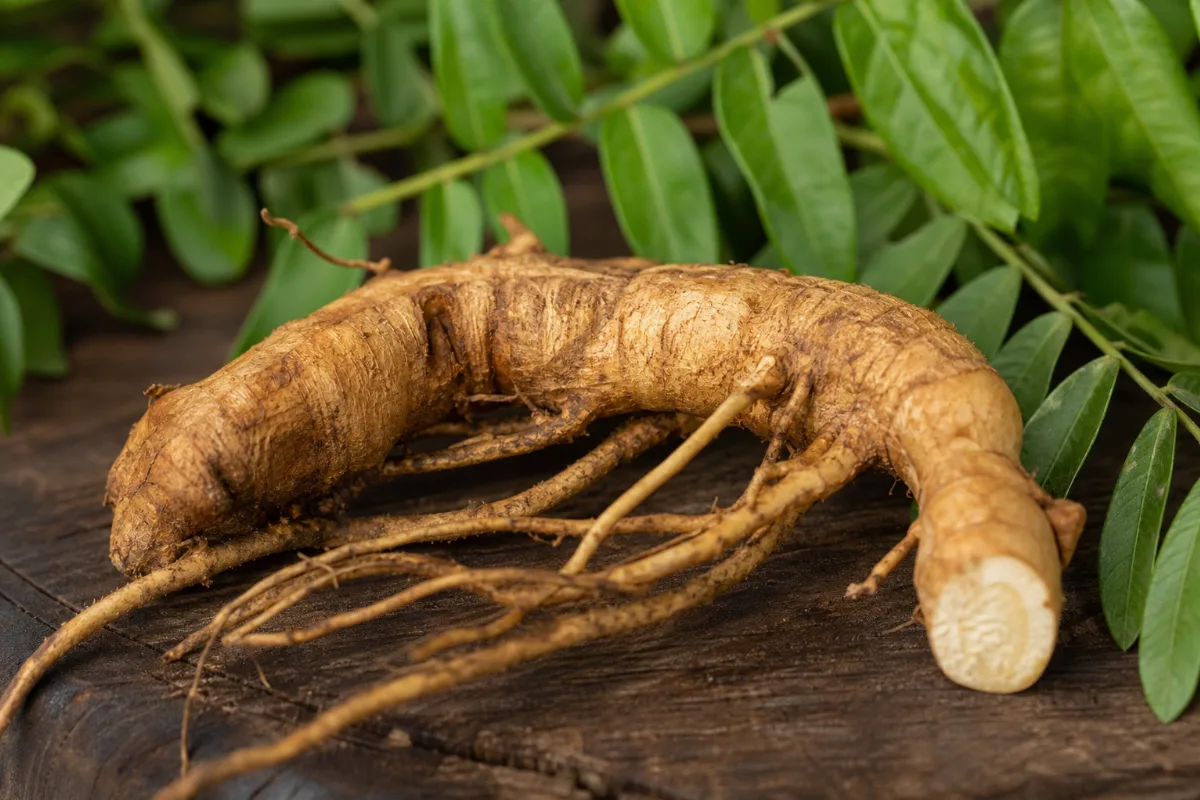
Adaptogens · Herbs & Botanicals · Southeast Asian root sold for testosterone and vitality, with low-certainty evidence and open safety questions
Tongkat Ali
Eurycoma longifolia Jack · also called Tongkat ali, Malaysian ginseng, pasak bumi (Indonesian)
Tongkat ali is the root of a tree from Southeast Asia, made into extracts and sold mostly to men for testosterone, energy and sexual health. Small trials, many linked to makers of branded extracts, suggest higher testosterone and some symptom gains, with low certainty. In 2021 the EU food-safety agency could not establish that a root extract is safe, and products have been found with mercury, wrong plants and hidden prescription drugs.
General information, not medical advice. Last substantive update · Not medically reviewed. A named clinician has not signed off on this page. How this page is made
About Tongkat Ali
Tongkat ali (Eurycoma longifolia) is a Southeast Asian root extract sold for testosterone, energy and sexual health. Small trials, many linked to branded-extract makers, suggest higher testosterone and some symptom gains, all with low certainty. The EU food-safety agency could not establish the safety of a root extract in 2021, case reports describe liver injury and a heart rhythm problem, and products have been found with mercury, wrong plants and hidden drugs. Ask a doctor or pharmacist about amounts and about your medicines.
What it is
Tongkat ali is Eurycoma longifolia Jack, a tree in the quassia family (Simaroubaceae). GBIF lists it as an accepted species. The root is the part used in nearly all trials, usually as a water extract.
Its main marker chemical is eurycomanone, a bitter quassinoid. Extracts studied by EFSA contained glycosaponins and eurycomanone; the same compound was the most toxic root compound found in one animal study.
Traditional and current uses
A review lists traditional root uses for sexual dysfunction, ageing, fever, malaria, anxiety, diabetes and high blood pressure, among many. Few have been tested in trials.
Today it is mostly sold to men as a testosterone and vitality supplement. No European herbal monograph or NCCIH page was found.
Testosterone, estradiol and sexual health
A 2022 pooled analysis of five randomised trials found higher total testosterone with tongkat ali, and a 2024 review called it possibly effective for men with low testosterone. In 105 older men a branded extract raised total testosterone but free testosterone did not beat placebo. In 32 healthy young men estradiol rose as well as testosterone.
For erections, a pooled analysis of two trials found no clear overall gain. Lab work suggests eurycomanone blocks aromatase, the enzyme that makes oestrogen from testosterone.
Stress, mood and fatigue
A 4-week trial of 63 stressed adults found lower tension, anger and confusion scores and lower cortisol than placebo. A 24-week trial of a branded extract with multivitamins found no clear difference between groups. In older men with low testosterone, a branded extract lowered fatigue and symptom scores.
One 2025 trial in menopausal women found a borderline gain in quality of life. The makers of Physta sponsored or were linked to several of these trials.
Muscle, sperm and fertility
A 6-month trial in men with low testosterone found strength gains with training plus tongkat ali, a pilot without placebo saw higher handgrip, and a one-week trial in rugby players found nothing.
Sperm quality improvements were reported by an uncontrolled study and a branded-extract trial. No good placebo-controlled fertility trial exists.
At a glance
Traditional uses history, not proof
- Southeast Asian folk medicine: root used as an aphrodisiac and for fever and malaria, aches, ageing and energy, according to a review.
- Taproot used for high blood pressure and root bark for diarrhoea in traditional use. These uses have not been tested in trials.
Studied for research
- Testosterone levels in men, low certainty
- Stress and mood, fatigue and ageing-male symptoms, low certainty
- Erectile function and exercise strength, low certainty (mixed)
- Sperm quality, menopause quality of life, very low certainty
- Sleep, anxiety and cancer: no human evidence
Main compounds
- Eurycomanone and other quassinoids (bitter diterpene compounds)
- Canthin-6-one alkaloids
- Glycosaponins (reported in a water extract by EFSA)
Common forms
- Standardised water extracts (for example Physta)
- Alcohol extracts and root powders
- Coffees and teas with root added
Research links: Meta-analysis on testosterone (Medicina, 2022) · EFSA safety opinion on the root extract (2021) · Propranolol interaction trial (2010) · Product adulteration study (2018) · Research Library · Genes & Biomarkers Library
The plant and its history
- Accepted scientific name
- Eurycoma longifolia Jack
- Naming authority
- Jack (GBIF backbone: accepted species, usageKey 3709190)
- Common names
- Tongkat Ali (Malay); Pasak Bumi (Indonesian); Malaysian ginseng (English (used in the trial literature; not from GBIF)); 东革阿里 (Chinese); ปลาไหลเผือก (Thai); អន្ទង់ក្រហម (Khmer)
- Botanical family
- Simaroubaceae (quassia family, order Sapindales). A review notes the family is known for bitter diterpenoid compounds called quassinoids.
- Classification
- Plantae > Tracheophyta > Magnoliopsida > Sapindales > Simaroubaceae > Eurycoma > Eurycoma longifolia
- Native range
- A review says it is native to Indonesia, Malaysia, Vietnam and also Cambodia, Myanmar, Laos and Thailand.
- Habitat
- Not verified in a source read.
- What the plant looks like
- Roots: The taproot is the part used in most products and trials (water and alcohol extracts).; Stems: Not verified in a source read.; Leaves: Traditionally boiled for washing itches, per a review; a lab study of a leaf extract was not read.; Flowers: Not verified in a source read.; Fruit: Traditionally used for dysentery, per a review; safety not studied.
- Cultivation
- Not verified in a source read.
- Harvest and processing
- Not verified. What is documented: EFSA describes the extract it assessed as a standardised water extract of dried ground root chips; trial products are mostly water extracts (for example Physta).
- Look-alikes and adulterants
- Name: Eurycoma harmandiana Pierre; Note: A related species (in the same genus) that is studied alongside E. longifolia in at least one lab paper; whether it is sold under the same common name was not verified.; Name: Other plants sold as 'tongkat ali'; Note: A DNA-barcoding study found 27% of tested products adulterated; the abstract does not name the substitute species.
- Sustainability and conservation
- A review ends by urging conservation of this valuable species. No IUCN assessment was retrieved.
Traditional use and history history, not clinical proof
| Tradition or era | Documented use | Source |
|---|---|---|
| Southeast Asian folk medicine | A review lists root uses for sexual dysfunction, ageing, malaria and fever, cancer, diabetes, anxiety, aches, constipation, exercise recovery, increased energy and strength, osteoporosis, stress and others; taproot for high blood pressure; root bark for diarrhoea and fever; bark as a vermifuge; leaf decoction for itches; fruit for dysentery. None of these uses is confirmed by trials unless listed in the benefit files. | p26978330 |
| Modern supplement market | Water extracts have been sold as food supplements in international markets since 2009 according to EFSA, mainly for men's vitality. | p34987621 |
| EU regulatory | EFSA could not establish safety of a root water extract as a novel food (2021). No EMA/HMPC monograph was found. | p34987621 |
Traditional use shows how a plant was used. It does not show that a supplement works or is safe today.
What is inside, and how it may work
What the plant contains and how those compounds act in cells and animals. Laboratory and animal mechanisms are not proven effects in people.
Main compounds
| Compound | Family | Where it is concentrated | Activity studied | Level of evidence |
|---|---|---|---|---|
| Eurycomanone PubChem 13936691 | quassinoid (C20 type) | Root 0.8-1.5% in the water extract assessed by EFSA | Main marker compound. Raised testosterone made by rat Leydig cells and appeared to block aromatase in cell and docking work; also the most toxic fraction component in a mouse/brine-shrimp study. 18 5 9 | Laboratory research |
| Eurycomanol PubChem 14396865 | quassinoid | Root | Reported 33 times less toxic than eurycomanone on brine shrimp. 5 | Laboratory research |
| 13,21-Dihydroeurycomanone | quassinoid | Root | Reported 2.8 times less toxic than eurycomanone on brine shrimp. A PubChem CID was not looked up. 5 | Laboratory research |
| Eurycomalactone PubChem 441793 | quassinoid | Root | Named in a review among root quassinoids; its activity in people was not studied here. 21 | Laboratory research |
| Canthin-6-one alkaloids (for example canthin-6-one and 9-methoxycanthin-6-one) PubChem 97176 | beta-carboline-type alkaloids | Root Present in EFSA's extract (amount not given in the abstract) | Listed as constituents by a review and EFSA; effects in people not studied. 21 9 | Laboratory research |
| Glycosaponins | glycosylated saponin-type compounds | Root 40-65% of the water extract assessed by EFSA | Named by EFSA as a characteristic component of the extract; their activity is not described in the abstract. 9 | Authoritative guidance |
Mechanisms, receptors and pathways
| Target or pathway | Gene or receptor | What was found | Level |
|---|---|---|---|
| Testosterone production in Leydig cells | Aromatase (CYP19A1) and phosphodiesterase; testosterone and oestrogen output | Eurycomanone raised testosterone made by rat testis cells in a dose-dependent way and, in computer docking, bound aromatase like the drug formestane, lowering oestrogen production in the cells. 18 | Laboratory research |
| Pituitary-testis axis in humans | LH, FSH | In 32 healthy young men, testosterone and estradiol rose but LH and FSH did not, so the authors suggest the adrenal axis rather than the pituitary signal. 6 | Human data |
| Androgen receptor in prostate cancer cells | Androgen receptor, PSA (KLK3), cell-cycle proteins | A standardised quassinoid extract blocked androgen receptor entry into the nucleus and lowered PSA secretion in LNCaP cells; injected extract shrank mouse tumours. 26 | Laboratory research |
| Genotoxicity | DNA damage (chromosomes, comet assay) | The water extract was positive in a chromosome aberration test in vitro and in an animal comet assay at the highest dose in stomach and duodenum. 9 | Animal research |
| Drug absorption | Intestinal absorption of propranolol | In 14 healthy men the extract lowered propranolol absorption by about 29% (AUC). 22 | Human data |
Absorption, metabolism and elimination
- Absorption
- No human blood-level data for eurycomanone or other root compounds were read. The only human pharmacokinetic study found measured propranolol, not the herb's own compounds.
- Distribution
- Not found.
- Metabolism
- Not found for the herb's compounds in people.
- Elimination
- Not found.
- Bioavailability
- Not established in people. Rat work on eurycomanone absorption exists (title seen: Chung 2021) but its abstract was not read.
Isolated compounds versus whole extracts
Eurycomanone is the marker compound and is active in lab tests, but it is also the most toxic root compound found in one animal study. Human trials use whole water extracts, so effects cannot be pinned on a single compound. Water extracts and alcohol extracts differ in toxicity in mice.
Nutritional composition
A nutrient table is not meaningful for the medicinal use of tongkat ali root extract. A paper reports the protein and mineral content of the root, but it was not read here.
5 low certainty2 very low certainty2 not enough evidence
What is Tongkat Ali good for?
The main proposed uses and how strong the human evidence is for each. "Low" means small or limited trials point one way, "very low" means a single small or uncontrolled study, and "insufficient" means there is not enough human evidence to judge. Nothing here is rated moderate or high.
Benefits, one by one
Each card is a research question, not a promise. Tap a goal to filter. Open a card to see the studies, doses and limits.
Stress and mood in moderately stressed adults
Low certaintyIn a 4-week trial of 63 stressed adults, a hot-water tongkat ali root extract was linked to lower tension, anger and confusion scores and lower salivary cortisol than placebo. A longer 24-week trial of a similar branded extract plus multivitamins found no real difference from placebo. The evidence is small and partly industry-linked.
3 studiesBoth trials used water extracts of the root (Physta in the second). A…
Studies, doses and limits
What the trials found
Talbott 2013: 63 moderately stressed adults (32 men, 31 women) took a standardised hot-water root extract or placebo for 4 weeks. Tension fell 11%, anger 12% and confusion 15%, and salivary cortisol fell 16%. George 2018: 93 adults, 24 weeks, the branded extract Physta combined with multivitamins; no significant difference from placebo between groups on quality of life, mood or stress scores, though both groups improved over time.
Results
Mixed: a positive 4-week trial and a null longer trial that used a combination product.
Effect sizes as reported
Tension -11%, anger -12%, confusion -15%, salivary cortisol -16% (Talbott 2013, no confidence intervals in the abstract); no significant between-group differences (George 2018).
Why this rating
Two small trials point different ways. The positive one is short, the abstract gives no funding or registration details, and the extract may be industry-linked. The longer trial used multivitamins as well, so it does not test tongkat ali alone.
Form and dose studied
Both trials used water extracts of the root (Physta in the second). Amounts are not compared here; ask a doctor or pharmacist.
Who was studied
Adults with moderate stress, ages about 25-65, Malaysia and USA.
Limits
Mood scores are questionnaires. No trial tested anxiety disorder or depression. Sleep and anxiety were not primary outcomes in any trial found. Only abstracts were read.
Why researchers looked
Tongkat ali is sold as an adaptogen, a plant said to help the body cope with stress. Researchers tested whether it changes stress hormones and mood.
Traditional use
Tongkat ali root is a traditional Southeast Asian remedy. A review lists use for stress, anxiety, aches, fatigue and increased energy and strength, among many others. None of these traditional uses has been tested in trials unless listed below.
Proposed mechanism Pharmacological theory
Proposed: quassinoids such as eurycomanone may act on the hormone axes that handle stress and sex hormones. In people this is only suggested by hormone changes in the trials. No brain mechanism has been shown in humans.
A proposed mechanism does not show that the effect happens in people.
No serious adverse effects were reported in the 24-week trial (13 events: 6 on placebo, 7 on the active product). See the safety file for the EU safety concern.
Fatigue and ageing-male symptoms in older men
Low certaintyIn 105 men aged 50-70 with low testosterone, a branded root extract lowered scores on the Ageing Male Symptoms scale and the Fatigue Severity Scale over 12 weeks. A Brazilian trial of 45 men with androgen deficiency also reported fewer symptoms, mainly when the supplement was combined with training. These scales are self-rated and the largest trial was funded by the makers.
4 studiesPhysta 100 mg and 200 mg a day (Chinnappan); 200 mg supplement with t…
Studies, doses and limits
What the trials found
Chinnappan 2021: 105 men aged 50-70 with testosterone under 300 ng/dL took Physta or placebo for 12 weeks; the abstract reports significant reductions in AMS and Fatigue Severity Scale totals in both extract groups at every time point. Leitao 2021: 45 men with androgen deficiency, 6 months, symptoms fell 27.3% with training and 36.1% with training plus tongkat ali; the abstract does not show tongkat ali alone beating placebo on symptoms. Ismail 2012: 109 men aged 30-55, 300 mg for 12 weeks, physical functioning on the SF-36 improved more than on placebo (p = 0.028).
Results
Self-rated fatigue and symptom scores improved in the main industry trial and a smaller independent one, mostly when combined with exercise.
Effect sizes as reported
AMS and FSS total scores significantly reduced (p < 0.001) in both Physta groups; ADAM symptoms -27.3% (training) and -36.1% (training plus tongkat ali); SF-36 physical functioning p = 0.028 vs placebo.
Why this rating
Moderate-sized trials but self-rated scales, industry funding for the largest, and in the independent trial the tongkat ali effect cannot be separated from exercise.
Form and dose studied
Physta 100 mg and 200 mg a day (Chinnappan); 200 mg supplement with training (Leitao). Ask a doctor or pharmacist about amounts.
Who was studied
Men aged 30-70, some with low testosterone, in India, Brazil and Malaysia.
Limits
No trial tested tiredness from a medical cause such as sleep apnoea, anaemia or thyroid disease. Fatigue measured by questionnaire only. Only abstracts were read.
Why researchers looked
Tiredness, low drive and mood changes are common complaints in men with low testosterone, so trials measured symptom scores alongside hormones.
Traditional use
Tongkat ali root is a traditional Southeast Asian remedy. A review lists use for stress, anxiety, aches, fatigue and increased energy and strength, among many others. None of these traditional uses has been tested in trials unless listed below.
Proposed mechanism Pharmacological theory
Proposed: symptom relief may follow from higher testosterone, which tongkat ali raised in several trials. Whether the symptom change is a direct effect, a placebo effect, or follows the hormone change has not been tested.
A proposed mechanism does not show that the effect happens in people.
Fatigue has many medical causes. Do not use a supplement to cover up long-lasting tiredness without having it checked.
Quality of life and mood in menopausal women
Very low certaintyA 2025 trial of 138 women aged 40-55 found that a branded root extract improved menopause quality-of-life scores at one dose, with a borderline result (p = 0.049). Mood scores improved but not significantly more than placebo. It is a single industry-sponsored trial.
1 studiesPhysta 50 mg and 100 mg a day for 12 weeks. Ask a doctor or pharmacis…
Studies, doses and limits
What the trials found
Muniandy 2025: 138 women aged 40-55, 12 weeks, Physta 50 mg, 100 mg or placebo. At 100 mg the total MENQOL score fell 33.9% from baseline (p = 0.049); physical and sexual domains improved. Total mood disturbance fell 38.6% vs 30.1% on placebo, not significant. No significant changes in female reproductive hormones, vital signs or blood tests.
Results
One borderline quality-of-life result; no clear mood benefit over placebo.
Effect sizes as reported
MENQOL total -33.9% from baseline at 100 mg (p = 0.049); mood difference not significant.
Why this rating
One trial, a borderline p-value, one of two doses, industry-sponsored. The abstract does not make clear that the 33.9% figure is against placebo.
Form and dose studied
Physta 50 mg and 100 mg a day for 12 weeks. Ask a doctor or pharmacist about amounts.
Who was studied
Women aged 40-55 with menopausal symptoms, Malaysia.
Limits
No long-term data. Hot flushes were not reported as a separate outcome in the abstract. No data in women with a history of breast or other hormone-sensitive cancer.
Why researchers looked
Tongkat ali is mostly marketed to men, but one sponsor tested it in menopausal women.
Traditional use
No traditional use for menopause was verified in the sources read.
Proposed mechanism Pharmacological theory
Not established. The trial authors suggest anti-inflammatory and adaptogenic actions, but the abstract tests none of this.
A proposed mechanism does not show that the effect happens in people.
Women with hormone-sensitive conditions should ask their doctor first. See the safety file.
Sleep, anxiety, memory and focus
Not enough evidenceNo human trial of sleep, anxiety disorders, memory or concentration was found. A few mouse studies of sleep exist but they are animal results only and are not used to rate benefit.
1 studiesNot applicable
Studies, doses and limits
What the trials found
Searches of PubMed found no randomised trial with sleep, anxiety, memory or concentration as a main outcome. Mood and stress scores in the trials above are the nearest human data.
Results
Not studied in people.
Effect sizes as reported
None
Why this rating
No human trials.
Form and dose studied
Not applicable
Who was studied
Not applicable
Limits
The rating is about the lack of human trials, not evidence of no effect.
Why researchers looked
People often ask whether an adaptogen helps sleep or thinking.
Traditional use
Tongkat ali root is a traditional Southeast Asian remedy. A review lists use for stress, anxiety, aches, fatigue and increased energy and strength, among many others. None of these traditional uses has been tested in trials unless listed below.
Proposed mechanism Pharmacological theory
Not established in people.
A proposed mechanism does not show that the effect happens in people.
No safety data specific to these uses.
Testosterone levels in men
Low certaintyA 2022 pooled analysis of five randomised trials found higher total testosterone with tongkat ali than placebo, and a 2024 review rated it 'possibly effective' for men with late-onset low testosterone and for healthy men. The trials are small, short and several come from the makers of branded extracts. Free testosterone did not beat placebo in the largest trial, and estradiol (an oestrogen) also rose in one trial.
8 studiesWater extracts of root (Physta and similar), 100-600 mg a day in tria…
Studies, doses and limits
What the trials found
Leisegang 2022: meta-analysis, 5 randomised trials pooled, standardised mean difference 1.352 (95% CI 0.565 to 2.138). Morgado 2024: of 27 proposed testosterone boosters, tongkat ali (3 studies) was judged possibly effective in late-onset hypogonadism and in healthy men; most other boosters failed. Chinnappan 2021 (105 men aged 50-70, testosterone under 300 ng/dL, Physta 100 or 200 mg, 12 weeks): total testosterone higher than placebo; free testosterone not different between groups. Chan 2021 (32 healthy young men, 600 mg for 2 weeks): testosterone and free testosterone rose, and so did estradiol. Henkel 2014 (25 seniors, no placebo): testosterone rose. Tambi 2012 (76 men, uncontrolled): testosterone normal in 90.8% afterwards. Zakaria 2023 (18 rugby players, 7 days): no hormone change.
Results
Higher total testosterone in most trials, with null results in a one-week athlete trial; the effect on free testosterone and on symptoms is less clear.
Effect sizes as reported
SMD 1.352 (95% CI 0.565 to 2.138) pooled; Chinnappan 2021 total testosterone p < 0.05 (100 mg) and p < 0.001 (200 mg) at week 12; Chan 2021 testosterone p = .005, estradiol p = .008.
Why this rating
Five small randomised trials, high likely heterogeneity, short durations (days to 12 weeks), several industry-funded or linked, and a standardised mean difference this large is unusual. Uncontrolled studies add little. No trial measured long-term health outcomes.
Form and dose studied
Water extracts of root (Physta and similar), 100-600 mg a day in trials, 1-12 weeks. Ask a doctor or pharmacist about amounts.
Who was studied
Healthy young men, older men with low testosterone, physically active seniors.
Limits
A higher blood number is not a clinical benefit by itself. Men with true low testosterone need a medical work-up. Hormone effects also raise safety questions; see the safety file.
Why researchers looked
Tongkat ali is best known as a 'testosterone booster'. Trials measured blood testosterone in older men with low levels and in healthy men.
Traditional use
Tongkat ali root is a traditional Southeast Asian remedy. A review lists use for stress, anxiety, aches, fatigue and increased energy and strength, among many others. None of these traditional uses has been tested in trials unless listed below. Roots are widely used in Southeast Asia as an aphrodisiac, according to a review.
Proposed mechanism Laboratory research
Lab and animal work suggest eurycomanone raises testosterone made by testis cells and blocks aromatase, the enzyme that turns testosterone into oestrogen. In one human trial in young men, LH and FSH (the pituitary signals) did not change, so the authors suggest an adrenal route instead. The human mechanism is not settled.
A proposed mechanism does not show that the effect happens in people.
Raised estradiol (Chan 2021), raised hematocrit in men in a pilot (Henkel 2014), and possible effects on hormone-sensitive conditions. See the safety file.
Erectile function, libido and sexual well-being
Low certaintyA pooled analysis of two trials (139 men) found no overall improvement in erectile function scores over placebo, though men starting with worse scores gained about 2 points. A branded extract trial reported higher libido and erectile scores, and a Brazilian trial reported better erectile function with tongkat ali plus training. The evidence is mixed and low certainty.
4 studiesWater extracts of root, 200-300 mg a day in these trials, 12 weeks to…
Studies, doses and limits
What the trials found
Kotirum 2015: 2 randomised trials, 139 men, IIEF-5 difference 0.91 (95% CI -1.50 to 3.33, I2 89.5%, not significant); in the lower-baseline subgroup 2.15 (1.03 to 3.27). Ismail 2012: 109 men aged 30-55, 300 mg Physta for 12 weeks, higher erectile function domain score (p < 0.001) and libido up 14% by week 12. Leitao 2021: 45 men with ADAM, 6 months, erectile function improved most with training plus tongkat ali (200 mg).
Results
Mixed: no clear overall benefit in the pooled analysis, positive individual trials, mostly small or industry-linked.
Effect sizes as reported
Pooled IIEF-5 difference 0.91 (95% CI -1.50 to 3.33); subgroup 2.15 (1.03 to 3.27).
Why this rating
Only two trials were pooled and heterogeneity was very high. A subgroup result is exploratory. One co-author of the review also led one of the trials.
Form and dose studied
Water extracts of root, 200-300 mg a day in these trials, 12 weeks to 6 months.
Who was studied
Men with mild erectile complaints or androgen deficiency of ageing.
Limits
Erectile problems can signal heart or blood vessel disease, so they should be checked by a doctor. Products sold for this use have been found with hidden prescription drugs; see the safety file.
Why researchers looked
Tongkat ali is used as an aphrodisiac across Southeast Asia, so trials tested sexual function in men.
Traditional use
Tongkat ali root is a traditional Southeast Asian remedy. A review lists use for stress, anxiety, aches, fatigue and increased energy and strength, among many others. None of these traditional uses has been tested in trials unless listed below.
Proposed mechanism Pharmacological theory
Proposed: higher testosterone or direct effects on blood flow. A lab study of a different compound from the plant (9-hydroxycanthin-6-one) in rats suggested effects on erection, but this was not read here and is not used as evidence. No human mechanism is established.
A proposed mechanism does not show that the effect happens in people.
Tongkat ali products marketed for sexual enhancement have been found to contain undeclared tadalafil, which is dangerous with nitrate heart medicines.
Sperm quality and male fertility
Very low certaintyEvidence in people is weak. An uncontrolled study of 350 men with unexplained infertility (only 75 analysed) reported better semen results and 11 pregnancies, and a branded-extract trial reported higher sperm motility and semen volume. There is no good placebo-controlled fertility trial.
3 studiesProprietary water-soluble root extract, 200-300 mg a day, 3 months or…
Studies, doses and limits
What the trials found
Tambi 2010: 350 men with idiopathic infertility started 200 mg a day; 75 completed 3 months and showed improvement in all semen parameters, with 11 (14.7%) spontaneous pregnancies; no control group. Ismail 2012 (randomised, 109 men): sperm motility +44.4% and semen volume +18.2% at the end of treatment, per the abstract; it is not clear whether this is against placebo.
Results
Semen measures improved in two industry-linked studies without a clear placebo comparison.
Effect sizes as reported
Motility +44.4%, semen volume +18.2% (Ismail 2012); 11 of 75 pregnancies (Tambi 2010, uncontrolled).
Why this rating
No clear control group in the fertility study; most men dropped out of the analysis; the other result is secondary and unclear against placebo.
Form and dose studied
Proprietary water-soluble root extract, 200-300 mg a day, 3 months or less.
Who was studied
Men with unexplained infertility or general adult men.
Limits
Men trying to conceive should be assessed by a fertility doctor. Hormone effects could in theory change sperm production; this has not been tested in men.
Why researchers looked
Rat studies found better sperm counts, and men with infertility use tongkat ali, so researchers tested semen quality.
Traditional use
Tongkat ali root is a traditional Southeast Asian remedy. A review lists use for stress, anxiety, aches, fatigue and increased energy and strength, among many others. None of these traditional uses has been tested in trials unless listed below.
Proposed mechanism Laboratory research
In rats and cells, quassinoids raised testosterone production and affected hormone signals. Animal evidence only; not established in men.
A proposed mechanism does not show that the effect happens in people.
Estradiol rose in a trial of young men (Chan 2021); the effect on a couple trying to conceive is unknown.
Exercise performance, strength and muscle recovery
Low certaintyResults are mixed and low certainty. A 6-month Brazilian trial found bigger gains in leg strength when tongkat ali was combined with training than with training alone for knee flexion, a 5-week pilot without placebo reported higher handgrip strength, but a one-week trial in rugby players found no effect on performance or muscle damage.
4 studiesRoot extracts, 100-400 mg a day in these studies, 1 week to 6 months.
Studies, doses and limits
What the trials found
Leitao 2021: 45 men with androgen deficiency, 6 months; knee-extension torque rose 14% with training and 17% with training plus tongkat ali; knee flexion rose only in the combined group. Henkel 2014: 25 seniors, 5 weeks, no placebo; handgrip rose. Zakaria 2023: 18 rugby players, 7 days before a hard exercise session; no difference from placebo on hormones, jumps, soreness or creatine kinase. Chen 2014: 13 recreational athletes, 6 weeks of Physta 400 mg a day; urinary testosterone:epitestosterone ratio unchanged.
Results
Mixed; gains seen only with longer use, in older or deficient men, or in uncontrolled work.
Effect sizes as reported
Knee extension +17% with training plus tongkat ali vs +14% with training alone (not compared directly in the abstract); rugby trial no significant differences.
Why this rating
Small groups, differing populations, and one null placebo-controlled trial. Gains were mostly in men with low testosterone.
Form and dose studied
Root extracts, 100-400 mg a day in these studies, 1 week to 6 months.
Who was studied
Older men with androgen deficiency, physically active seniors, athletes.
Limits
Athletes subject to drug testing should check with their sport's anti-doping body. One trial found no change in the urinary testosterone to epitestosterone ratio, but it was only 13 people.
Why researchers looked
Tongkat ali is marketed to athletes as a strength and recovery aid.
Traditional use
Tongkat ali root is a traditional Southeast Asian remedy. A review lists use for stress, anxiety, aches, fatigue and increased energy and strength, among many others. None of these traditional uses has been tested in trials unless listed below.
Proposed mechanism Pharmacological theory
Proposed: more testosterone and less cortisol. In the trials this link is not shown; the rugby players' hormones did not change.
A proposed mechanism does not show that the effect happens in people.
Contaminated products may contain banned or prescription drugs; see the safety file.
Prostate and hormone-related cancers (laboratory only)
Not enough evidenceOnly lab and mouse studies exist. In one, a concentrated extract slowed prostate cancer cell growth. This is not evidence that tongkat ali treats or prevents any cancer, and no human trial exists.
1 studiesNot applicable
Studies, doses and limits
What the trials found
Tong 2015: LNCaP cells and mouse tumours; IC50 5.97 ug/mL in cancer cells versus 59.26 ug/mL in normal prostate cells. No human trial of prostate health, PSA or cancer was found.
Results
Cell and mouse studies only.
Effect sizes as reported
IC50 5.97 vs 59.26 ug/mL (cells).
Why this rating
Laboratory and injected-mouse work only.
Form and dose studied
Not applicable
Who was studied
Not applicable
Limits
The authors' own concentrate was used, injected, in mice.
Why researchers looked
Because tongkat ali affects hormones, researchers checked its effect on hormone-driven cancer cells.
Traditional use
Tongkat ali root is a traditional Southeast Asian remedy. A review lists use for stress, anxiety, aches, fatigue and increased energy and strength, among many others. None of these traditional uses has been tested in trials unless listed below.
Proposed mechanism Laboratory research
In LNCaP prostate cancer cells a standardised quassinoid extract blocked androgen receptor movement into the nucleus and reduced PSA; in mice, injected extract reduced tumour growth.
A proposed mechanism does not show that the effect happens in people.
Do not use as cancer treatment. Men with prostate or hormone-sensitive cancer should ask their doctor before using any product that changes hormones.
Connections to the rest of health
How Tongkat Ali connects to the rest of our health knowledge graph. Every link says what kind of connection it is. A safety link (for example to the liver) is a warning, not a benefit. A study that merely mentions a topic never creates a benefit link.
Explore every connection: goals, body systems, organs, symptoms, genes
A. Wellness goals
| Connected to | Kind of connection | Evidence status | Context | Studies |
|---|---|---|---|---|
| Stress Reduction | Potential benefit | Low certainty | Stress and mood in moderately stressed adults: In a 4-week trial of 63 stressed adults, a hot-water tongkat ali root extract was linked to lower tension, anger and confusion scores and lower salivary cortisol than placebo. A longer 24-week trial of a similar branded extract plus multivitamins found no real difference from placebo. The evidence is small and partly industry-linked. | 23 10 21 |
| Mood Balance | Potential benefit | Low certainty | Stress and mood in moderately stressed adults: In a 4-week trial of 63 stressed adults, a hot-water tongkat ali root extract was linked to lower tension, anger and confusion scores and lower salivary cortisol than placebo. A longer 24-week trial of a similar branded extract plus multivitamins found no real difference from placebo. The evidence is small and partly industry-linked. Quality of life and mood in menopausal women: A 2025 trial of 138 women aged 40-55 found that a branded root extract improved menopause quality-of-life scores at one dose, with a borderline result (p = 0.049). Mood scores improved but not significantly more than placebo. It is a single industry-sponsored trial. | 23 10 21 20 |
| Resilience Support | Potential benefit | Low certainty | Stress and mood in moderately stressed adults: In a 4-week trial of 63 stressed adults, a hot-water tongkat ali root extract was linked to lower tension, anger and confusion scores and lower salivary cortisol than placebo. A longer 24-week trial of a similar branded extract plus multivitamins found no real difference from placebo. The evidence is small and partly industry-linked. | 23 10 21 |
| Reduce Fatigue | Potential benefit | Low certainty | Fatigue and ageing-male symptoms in older men: In 105 men aged 50-70 with low testosterone, a branded root extract lowered scores on the Ageing Male Symptoms scale and the Fatigue Severity Scale over 12 weeks. A Brazilian trial of 45 men with androgen deficiency also reported fewer symptoms, mainly when the supplement was combined with training. These scales are self-rated and the largest trial was funded by the makers. | 8 16 17 12 |
| Energy Boost | Potential benefit | Low certainty | Fatigue and ageing-male symptoms in older men: In 105 men aged 50-70 with low testosterone, a branded root extract lowered scores on the Ageing Male Symptoms scale and the Fatigue Severity Scale over 12 weeks. A Brazilian trial of 45 men with androgen deficiency also reported fewer symptoms, mainly when the supplement was combined with training. These scales are self-rated and the largest trial was funded by the makers. | 8 16 17 12 |
| Mens Vitality | Potential benefit | Low certainty | Fatigue and ageing-male symptoms in older men: In 105 men aged 50-70 with low testosterone, a branded root extract lowered scores on the Ageing Male Symptoms scale and the Fatigue Severity Scale over 12 weeks. A Brazilian trial of 45 men with androgen deficiency also reported fewer symptoms, mainly when the supplement was combined with training. These scales are self-rated and the largest trial was funded by the makers. Erectile function, libido and sexual well-being: A pooled analysis of two trials (139 men) found no overall improvement in erectile function scores over placebo, though men starting with worse scores gained about 2 points. A branded extract trial reported higher libido and erectile scores, and a Brazilian trial reported better erectile function with tongkat ali plus training. The evidence is mixed and low certainty. | 8 16 17 12 14 19 24 18 |
| Healthy Aging | Potential benefit | Low certainty | Fatigue and ageing-male symptoms in older men: In 105 men aged 50-70 with low testosterone, a branded root extract lowered scores on the Ageing Male Symptoms scale and the Fatigue Severity Scale over 12 weeks. A Brazilian trial of 45 men with androgen deficiency also reported fewer symptoms, mainly when the supplement was combined with training. These scales are self-rated and the largest trial was funded by the makers. | 8 16 17 12 |
| Menopause Support | Potential benefit | Very low certainty | Quality of life and mood in menopausal women: A 2025 trial of 138 women aged 40-55 found that a branded root extract improved menopause quality-of-life scores at one dose, with a borderline result (p = 0.049). Mood scores improved but not significantly more than placebo. It is a single industry-sponsored trial. | 20 |
| Womens Wellness | Potential benefit | Very low certainty | Quality of life and mood in menopausal women: A 2025 trial of 138 women aged 40-55 found that a branded root extract improved menopause quality-of-life scores at one dose, with a borderline result (p = 0.049). Mood scores improved but not significantly more than placebo. It is a single industry-sponsored trial. | 20 |
| Better Sleep | Traditional use | Not enough evidence | Sleep, anxiety, memory and focus: No human trial of sleep, anxiety disorders, memory or concentration was found. A few mouse studies of sleep exist but they are animal results only and are not used to rate benefit. | 21 |
| Anxiety Support | Traditional use | Not enough evidence | Sleep, anxiety, memory and focus: No human trial of sleep, anxiety disorders, memory or concentration was found. A few mouse studies of sleep exist but they are animal results only and are not used to rate benefit. | 21 |
| Cognitive Performance | Traditional use | Not enough evidence | Sleep, anxiety, memory and focus: No human trial of sleep, anxiety disorders, memory or concentration was found. A few mouse studies of sleep exist but they are animal results only and are not used to rate benefit. | 21 |
| Mens Vitality | Demonstrated clinical effect | Low certainty | Testosterone levels in men: A 2022 pooled analysis of five randomised trials found higher total testosterone with tongkat ali than placebo, and a 2024 review rated it 'possibly effective' for men with late-onset low testosterone and for healthy men. The trials are small, short and several come from the makers of branded extracts. Free testosterone did not beat placebo in the largest trial, and estradiol (an oestrogen) also rose in one trial. | 15 19 8 6 11 25 27 18 |
| Hormone Balance | Demonstrated clinical effect | Low certainty | Testosterone levels in men: A 2022 pooled analysis of five randomised trials found higher total testosterone with tongkat ali than placebo, and a 2024 review rated it 'possibly effective' for men with late-onset low testosterone and for healthy men. The trials are small, short and several come from the makers of branded extracts. Free testosterone did not beat placebo in the largest trial, and estradiol (an oestrogen) also rose in one trial. | 15 19 8 6 11 25 27 18 |
| Healthy Aging | Demonstrated clinical effect | Low certainty | Testosterone levels in men: A 2022 pooled analysis of five randomised trials found higher total testosterone with tongkat ali than placebo, and a 2024 review rated it 'possibly effective' for men with late-onset low testosterone and for healthy men. The trials are small, short and several come from the makers of branded extracts. Free testosterone did not beat placebo in the largest trial, and estradiol (an oestrogen) also rose in one trial. | 15 19 8 6 11 25 27 18 |
| Libido Support | Potential benefit | Low certainty | Erectile function, libido and sexual well-being: A pooled analysis of two trials (139 men) found no overall improvement in erectile function scores over placebo, though men starting with worse scores gained about 2 points. A branded extract trial reported higher libido and erectile scores, and a Brazilian trial reported better erectile function with tongkat ali plus training. The evidence is mixed and low certainty. | 14 12 16 19 |
| Fertility Support | Potential benefit | Very low certainty | Sperm quality and male fertility: Evidence in people is weak. An uncontrolled study of 350 men with unexplained infertility (only 75 analysed) reported better semen results and 11 pregnancies, and a branded-extract trial reported higher sperm motility and semen volume. There is no good placebo-controlled fertility trial. | 24 12 18 |
| Physical Stamina | Potential benefit | Low certainty | Exercise performance, strength and muscle recovery: Results are mixed and low certainty. A 6-month Brazilian trial found bigger gains in leg strength when tongkat ali was combined with training than with training alone for knee flexion, a 5-week pilot without placebo reported higher handgrip strength, but a one-week trial in rugby players found no effect on performance or muscle damage. | 17 11 27 7 |
| Muscle Recovery | Potential benefit | Low certainty | Exercise performance, strength and muscle recovery: Results are mixed and low certainty. A 6-month Brazilian trial found bigger gains in leg strength when tongkat ali was combined with training than with training alone for knee flexion, a 5-week pilot without placebo reported higher handgrip strength, but a one-week trial in rugby players found no effect on performance or muscle damage. | 17 11 27 7 |
| Peak Performance | Potential benefit | Low certainty | Exercise performance, strength and muscle recovery: Results are mixed and low certainty. A 6-month Brazilian trial found bigger gains in leg strength when tongkat ali was combined with training than with training alone for knee flexion, a 5-week pilot without placebo reported higher handgrip strength, but a one-week trial in rugby players found no effect on performance or muscle damage. | 17 11 27 7 |
| Healthy Aging | Preliminary mechanism | Not enough evidence | Prostate and hormone-related cancers (laboratory only): Only lab and mouse studies exist. In one, a concentrated extract slowed prostate cancer cell growth. This is not evidence that tongkat ali treats or prevents any cancer, and no human trial exists. | 26 |
B. Body systems
| Connected to | Kind of connection | Evidence status | Context | Studies |
|---|---|---|---|---|
| Endocrine system | Contraindication | Low certainty | Raises testosterone and, in one trial, estradiol; hormone-sensitive conditions untested. Preparation or compound: E. longifolia root extracts |
6 18 |
| Cardiovascular system | Drug or supplement interaction | Low certainty | Lowered propranolol blood levels by 29% in one small trial. Lowered propranolol blood levels by 29% in 14 healthy men. Preparation or compound: Water extract of root |
22 |
| Stress Mood | Biological association | Low certainty | Studied for: Stress and mood in moderately stressed adults Studied for: Fatigue and ageing-male symptoms in older men | 23 10 21 8 16 17 12 20 |
| Endocrine System | Biological association | Low certainty | Studied for: Stress and mood in moderately stressed adults Studied for: Fatigue and ageing-male symptoms in older men | 23 10 21 8 16 17 12 20 15 19 6 11 25 27 18 |
| Nervous System | Biological association | Not enough evidence | Studied for: Sleep, anxiety, memory and focus | 21 |
| Sleep Recovery | Biological association | Not enough evidence | Studied for: Sleep, anxiety, memory and focus | 21 |
| Reproductive System | Biological association | Low certainty | Studied for: Testosterone levels in men Studied for: Erectile function, libido and sexual well-being | 15 19 8 6 11 25 27 18 14 12 16 24 26 |
| Musculoskeletal System | Biological association | Low certainty | Studied for: Exercise performance, strength and muscle recovery | 17 11 27 7 |
C. Body parts and organs
| Connected to | Kind of connection | Evidence status | Context | Studies |
|---|---|---|---|---|
| Liver | Adverse effect or risk | Very low certainty | One case report of liver injury; trials with liver tests showed no clinically relevant change. Preparation or compound: Tongkat ali supplement |
13 8 7 |
| Heart | Adverse effect or risk | Very low certainty | One case report of atrial flutter. Preparation or compound: Tongkat ali supplement |
3 |
I. Biomarkers
| Connected to | Kind of connection | Evidence status | Context | Studies |
|---|---|---|---|---|
| Testosterone | Potential benefit | Low certainty | Higher total testosterone in a pooled analysis of five trials; free testosterone mixed. Preparation or compound: E. longifolia root water extracts |
15 8 |
| Cortisol | Potential benefit | Low certainty | Salivary cortisol 16% lower in a 4-week trial of stressed adults. Preparation or compound: Hot-water root extract |
23 |
| Estrogen | Adverse effect or risk | Low certainty | Estradiol rose with testosterone in healthy young men; effect on health unknown. Preparation or compound: E. longifolia, 600 mg a day for 2 weeks |
6 |
| Cortisol (saliva or blood) | Biological association | Low certainty | Measured in trials: mixed. A lab change is not the same as a health benefit. | 23 8 |
| Mood scores (POMS tension, anger, confusion) | Biological association | Low certainty | Measured in trials: mixed. A lab change is not the same as a health benefit. | 23 10 |
| Fatigue Severity Scale and Ageing Male Symptoms score | Biological association | Low certainty | Measured in trials: lowered. A lab change is not the same as a health benefit. | 8 17 |
| Menopause Quality of Life score (MENQOL) | Biological association | Very low certainty | Measured in trials: lowered. A lab change is not the same as a health benefit. | 20 |
| Total testosterone (blood) | Biological association | Low certainty | Measured in trials: raised. A lab change is not the same as a health benefit. | 15 8 6 27 |
| Free testosterone and estradiol | Biological association | Low certainty | Measured in trials: mixed. A lab change is not the same as a health benefit. | 8 6 11 |
| Erectile function score (IIEF) | Biological association | Low certainty | Measured in trials: mixed. A lab change is not the same as a health benefit. | 14 12 |
| Semen analysis (volume, concentration, motility) | Biological association | Very low certainty | Measured in trials: raised. A lab change is not the same as a health benefit. | 24 12 |
| Muscle strength (torque, handgrip) | Biological association | Low certainty | Measured in trials: mixed. A lab change is not the same as a health benefit. | 17 11 27 |
| Hematocrit and red blood cell count | Biological association | Not enough evidence | Measured in trials: raised. A lab change is not the same as a health benefit. | 11 |
J. Genes, receptors and enzymes
| Connected to | Kind of connection | Evidence status | Context | Studies |
|---|---|---|---|---|
| CYP19A1 (aromatase) | Preliminary mechanism | In vitro | Eurycomanone appeared to inhibit aromatase in rat cells and docking. | 18 |
| AR (androgen receptor) | Preliminary mechanism | In vitro | Quassinoid extract reduced androgen receptor movement into the nucleus in prostate cancer cells. | 26 |
| KLK3 (PSA) | Preliminary mechanism | In vitro | PSA secretion fell in LNCaP cells. | 26 |
K. Biological pathways
| Connected to | Kind of connection | Evidence status | Context | Studies |
|---|---|---|---|---|
| Hypothalamic-pituitary-adrenal and gonadal axes | Preliminary mechanism | Human | LH and FSH unchanged but testosterone and estradiol up in healthy young men. | 6 |
L. Active compounds
| Connected to | Kind of connection | Evidence status | Context | Studies |
|---|---|---|---|---|
| Eurycomanone | Biological association | In vitro | Main marker compound. Raised testosterone made by rat Leydig cells and appeared to block aromatase in cell and docking work; also the most toxic fraction component in a mouse/brine-shrimp study. Preparation or compound: Root |
18 5 9 |
| Eurycomanol | Biological association | In vitro | Reported 33 times less toxic than eurycomanone on brine shrimp. Preparation or compound: Root |
5 |
| 13,21-Dihydroeurycomanone | Biological association | In vitro | Reported 2.8 times less toxic than eurycomanone on brine shrimp. A PubChem CID was not looked up. Preparation or compound: Root |
5 |
| Eurycomalactone | Biological association | In vitro | Named in a review among root quassinoids; its activity in people was not studied here. Preparation or compound: Root |
21 |
| Canthin-6-one alkaloids (for example canthin-6-one and 9-methoxycanthin-6-one) | Biological association | In vitro | Listed as constituents by a review and EFSA; effects in people not studied. Preparation or compound: Root |
21 9 |
| Glycosaponins | Biological association | Authoritative guidance | Named by EFSA as a characteristic component of the extract; their activity is not described in the abstract. Preparation or compound: Root |
9 |
Each connection is stored with the ingredient, the connected record, the kind of connection, the evidence status, the supporting studies, the preparation or compound involved, and a review date (last reviewed October 25, 2026).
The evidence
The research centre for Tongkat Ali. Every record here was checked against PubMed or the publisher's page; we never list a study we have not verified.
Evidence by outcome
Bars show how many studies we found for each outcome, not how well it works. People are added up across trials only (reviews are not added, to avoid double counting).
How we rate evidence
High certainty
Several well-run trials or reviews agree; further research is unlikely to change the picture much.
Moderate certainty
Good trials point the same way, but some doubt remains.
Low certainty
Small, short or inconsistent trials. The finding could change with better research.
Very low certainty
Very little or very weak human data. Treat as a possibility only.
Mixed findings
Trials or reviews disagree with each other.
Not enough evidence
Not enough human research to say either way.
Evidence against
Good research found no benefit, or found harm.
We take the reviewers' own risk-of-bias and GRADE statements where they exist, and otherwise judge from study size, design, consistency, directness and whether a product matches what is sold. Many publications do not make evidence high. Method note: We searched PubMed for tongkat ali and Eurycoma longifolia, read the abstracts of the systematic reviews, randomised trials, safety case reports and product-quality studies, checked the plant name against GBIF, read the Singapore HSA notice, and looked for EMA, NCCIH, LiverTox and LactMed entries (none found). Numbers come only from abstracts; full texts were not read.
Study library: every study we checked 35
| Study | Design | People | Product, dose, length | Result |
|---|---|---|---|---|
| Abubakar 2018 Assessing product adulteration of Eurycoma longifolia (Tongkat Ali) herbal medicinal product using DNA barcoding and HPLC analysis. Pharm Biol · PMID 30058427 · DOI |
Product survey n/a |
Commercial E. longifolia herbal products (number not stated in the abstract) | Commercial products tested by DNA barcoding and HPLC not stated Not applicable Not applicable · vs GenBank and reference sequences; eurycomanone by HPLC |
By DNA barcoding 37% of products were authentic and 27% were adulterated. One product identified as authentic by DNA did not contain the expected marker compound. 37% authentic; 27% adulterated (Not applicable) Methods, limits and fundingOutcomes: DNA barcoding and eurycomanone Limitations: Number of products not given in the abstract; the rest (36%) are not described in it. Only the abstract was read. Funding and conflicts: Not stated in the abstract. Read: abstract |
| Ahmad 2020 Eurycoma longifolia-Infused Coffee-An Oral Toxicity Study. Nutrients · PMID 33066137 · DOI |
Animal research animal |
Sprague Dawley rats (acute, repeated and chronic dosing) | Commercial tongkat ali coffee product not stated Acute 0.005-2 g/kg; repeated 0.14-1 g/kg Single, repeated and chronic · vs Not stated |
No clinical signs of toxicity. Platelets fell in all chronic-study male groups; kidney values rose in both sexes at 0.29 g/kg; liver and lipid values rose in some females. The authors found no dose-dependent pattern and set a no-observed-adverse-effect level of 1 g/kg. NOAEL 1 g/kg (commercial coffee product) (Not applicable) Methods, limits and fundingOutcomes: Food intake, blood tests, organ tissue Limitations: Rat study of a coffee product, not a pure extract. Changes noted in blood tests were not clearly dose-related. Funding and conflicts: No conflict of interest declared. Read: abstract |
| Ali 2025 Tongkat Ali-Induced Atrial Flutter: A Probable Case. Cureus · PMID 41080360 · DOI |
Case report |
1 One 71-year-old man |
Tongkat Ali (Eurycoma longifolia) supplement (product not specified) not stated not stated Started shortly before 4 days of palpitations and dizziness · vs None |
New atrial flutter (fast heart rhythm) after starting the supplement; other causes were looked for and not found, so the author calls it a probable case. Single case (Not applicable) Methods, limits and fundingOutcomes: Heart rhythm Limitations: One case; 'probable', not proven. Only the abstract was read. Funding and conflicts: No financial relationships declared. Read: abstract |
| Ang 2006 Contamination of mercury in tongkat Ali hitam herbal preparations. Food Chem Toxicol · PMID 16567029 · DOI |
Product survey n/a |
100 100 herbal products sold in Malaysia labelled tongkat Ali hitam (single or combined) |
Commercial products, various forms not stated Not applicable Not applicable · vs Malaysian limit 0.5 ppm mercury |
26% of the products had 0.53-2.35 ppm mercury, above Malaysia's limit of 0.5 ppm. Of those 26, four were registered with the national drug authority. 26 of 100 products over the limit (Not applicable) Methods, limits and fundingOutcomes: Mercury content Limitations: The abstract does not name the botanical species, only the label name 'tongkat Ali hitam'. Products date from before 2006. Only the abstract was read. Funding and conflicts: Not stated in the abstract. Read: abstract |
| Chan 2002 The toxicity of some quassinoids from Eurycoma longifolia. Planta Med · PMID 12143009 · DOI |
Animal research animal |
Mice and brine shrimp | Fractions of a 50% ethanol extract of E. longifolia roots; isolated quassinoids root Not applicable Acute · vs Not stated |
The n-butanol fraction was most toxic; eurycomanone was the most toxic compound found. Related quassinoids were from 2.8 to over 100 times less toxic on brine shrimp. Eurycomanone most toxic of the compounds tested (Not applicable) Methods, limits and fundingOutcomes: Acute toxicity of fractions and compounds Limitations: Lab and animal study; the abstract gives no human-relevant numbers. This was a letter. Funding and conflicts: Not stated in the abstract. Read: abstract |
| Chan 2021 The effect of Eurycoma Longifolia on the regulation of reproductive hormones in young males. Andrologia · PMID 33559971 · DOI |
Controlled trial |
32 Healthy young men, about 24 years; Malaysia/UK |
Eurycoma longifolia (product not named in the abstract) not stated in the abstract 600 mg a day 2 weeks · vs Placebo (matched-pairs, double-blind) |
Testosterone, free testosterone and estradiol (an oestrogen) all rose more with E. longifolia than placebo. LH, FSH and SHBG did not change, which the authors take to mean the testosterone rise was not driven by the pituitary signal. Testosterone F(1,30) = 9.04, p = .005; free testosterone p = .012; estradiol p = .008 (Not given in the abstract) Methods, limits and fundingOutcomes: Testosterone, free testosterone, estradiol, LH, FSH, SHBG Limitations: Two weeks, 32 healthy young men, so it says little about older or deficient men. Estradiol rose along with testosterone. Only the abstract was read. Funding and conflicts: Not stated in the abstract. Read: abstract |
| Chen 2014 Supplementation of Eurycoma longifolia Jack Extract for 6 Weeks Does Not Affect Urinary Testosterone: Epitestosterone Ratio, Liver and Renal Functions in Male Recreational Athletes. Int J Prev Med · PMID 25013692 |
Controlled trial |
13 Healthy male recreational athletes; Malaysia |
Physta, standardised water extract of E. longifolia (branded) root (water extract) 400 mg a day 6 weeks, crossover with 3-week washout · vs Placebo |
No change in the T:E ratio and no significant change in liver or kidney tests. No significant change (Not given in the abstract) Methods, limits and fundingOutcomes: Urinary testosterone:epitestosterone ratio; liver and kidney blood tests Limitations: 13 people. Short. Co-author George A is linked to the maker, Biotropics Malaysia. Only the abstract was read. Funding and conflicts: Authors state none declared, but one author's affiliation is Biotropics Malaysia (maker of Physta). Read: abstract |
| Chinnappan 2021 Effect of Eurycoma longifolia standardised aqueous root extract-Physta on testosterone levels and quality of life in ageing male subjects: a randomised, double-blind, placebo-controlled multicentre study. Food Nutr Res · PMID 34262417 · DOI |
Controlled trial |
105 Men aged 50-70 with testosterone under 300 ng/dL; India |
Physta, a standardised water extract of E. longifolia root (branded) root 100 mg or 200 mg a day 12 weeks · vs Placebo |
Total testosterone was higher than placebo at week 12 with 100 mg and at weeks 4, 8 and 12 with 200 mg. Free testosterone did not differ between groups (it rose within groups). Ageing Male Symptoms and fatigue scores fell significantly in both extract groups. Cortisol fell in the 200 mg group and muscle strength rose in both extract groups (within-group comparisons). No clinically relevant safety changes. Total testosterone significantly higher than placebo at week 12 (100 mg p < 0.05; 200 mg p < 0.001); AMS and FSS total scores reduced (p < 0.001) (Not given in the abstract) Methods, limits and fundingOutcomes: Total and free testosterone (primary); SHBG, DHEA, HbA1c, IGF-1, thyroid tests, cortisol, Ageing Male Symptoms score, Fatigue Severity Scale, muscle strength; safety blood tests including liver and kidney tests Limitations: Industry trial. Several findings (cortisol, strength, DHEA) are within-group only. Free testosterone did not beat placebo. Only the abstract was read. Funding and conflicts: Funded by Biotropics Malaysia Berhad, the maker of Physta; two authors are its employees. Registered CTRI/2019/03/017959. Registration: CTRI/2019/03/017959 Read: abstract |
| EFSA Panel on Nutrition 2021 Safety of Eurycoma longifolia (Tongkat Ali) root extract as a novel food pursuant to Regulation (EU) 2015/2283. EFSA Journal · PMID 34987621 · DOI |
Authoritative guidance |
Adults (applicant's target), excluding pregnant and breastfeeding women | Standardised water extract of dried ground E. longifolia root chips (glycosaponins 40-65%, eurycomanone 0.8-1.5%) root Applicant proposed up to 200 mg a day (as stated in the opinion) Not applicable · vs Not applicable |
EFSA found positive results in a lab chromosome-damage test and in an animal comet assay (at the highest dose, in stomach and duodenum). It concluded the extract can potentially damage DNA and that its safety was not established under any condition of use. Not applicable (Not applicable) Methods, limits and fundingOutcomes: Safety assessment as a novel food Limitations: Only the abstract of the opinion was read, not the full report. It concerns one applicant's water extract, not every tongkat ali product. The abstract does not say whether the European Commission later took a decision. Funding and conflicts: Regulatory opinion. Read: abstract |
| George 2018 Efficacy and safety of Eurycoma longifolia (Physta) water extract plus multivitamins on quality of life, mood and stress: a randomized placebo-controlled and parallel study. Food Nutr Res · PMID 30574050 · DOI |
Controlled trial |
93 Adults aged 25-65 with moderate stress; Malaysia |
Physta water extract of E. longifolia plus multivitamins (a combination product) root (water extract) not stated in the abstract 24 weeks · vs Placebo |
No significant differences between the groups on the main measures. Both groups improved over time, with some within-group gains in the active group. Subgroup differences by age appeared. 13 adverse events (6 placebo, 7 active). Lymphocytes rose in the active group. No significant between-group differences overall (Not given in the abstract) Methods, limits and fundingOutcomes: Quality of life (SF-12), mood (POMS), stress (MMSQ); safety blood tests Limitations: Combination with multivitamins, so effects cannot be pinned on tongkat ali. The headline result is null between groups; the abstract's conclusion is more positive than the data. Only the abstract was read. Funding and conflicts: Funded by a Malaysian government grant scheme; George A is an employee of Biotropics Malaysia Berhad (maker of Physta). Registered NCT02865863. Registration: NCT02865863 Read: abstract |
| Henkel 2014 Tongkat Ali as a potential herbal supplement for physically active male and female seniors--a pilot study. Phytother Res · PMID 23754792 · DOI |
Uncontrolled trial |
25 13 men and 12 women aged 57-72, physically active |
Tongkat ali extract (product not named in the abstract) not stated in the abstract 400 mg a day 5 weeks · vs No control group |
Total and free testosterone and handgrip strength rose in both men and women. In men, hematocrit and red cell count rose slightly. In women, free testosterone rose along with a fall in SHBG. Not given as numbers in the abstract (Not given in the abstract) Methods, limits and fundingOutcomes: Blood counts, hormones, kidney and muscle markers, handgrip strength Limitations: Pilot with no placebo group, small, 5 weeks. Tambi MI, an author, also wrote the two uncontrolled extract papers used here. Only the abstract was read. Funding and conflicts: Not stated in the abstract; several authors are linked to the extract's developers in other papers. Read: abstract |
| Ismail 2012 Randomized Clinical Trial on the Use of PHYSTA Freeze-Dried Water Extract of Eurycoma longifolia for the Improvement of Quality of Life and Sexual Well-Being in Men. Evid Based Complement Alternat Med · PMID 23243445 · DOI |
Controlled trial |
109 Men aged 30-55; Malaysia |
Physta freeze-dried water extract of E. longifolia (branded) root (water extract) 300 mg a day 12 weeks · vs Placebo |
Physical functioning on the SF-36 improved more than placebo. Erectile function scores rose (p < 0.001), libido rose 14% by week 12, sperm motility rose 44.4% and semen volume 18.2% at the end of treatment. Men with BMI 25 or more lost more fat mass. Safety measures were similar to placebo. Physical functioning between-group p = 0.028; IIEF erectile function p < 0.001; motility +44.4%, volume +18.2% (Not given in the abstract) Methods, limits and fundingOutcomes: Quality of life (SF-36), erectile function (IIEF), sexual health questionnaire, semen analysis, fat mass, safety Limitations: The abstract does not say whether the semen and libido changes were compared against placebo, or within the extract group only. Industry-linked. Only the abstract was read. Funding and conflicts: Co-author George A is linked to Biotropics Malaysia in other papers; the abstract carries no funding statement. Read: abstract |
| Kaliounji 2024 A Rare Case of Tongkat Ali-Induced Liver Injury: A Case Report. Cureus · PMID 38646387 · DOI |
Case report |
1 One 47-year-old man, USA |
Tongkat Ali supplement (product not specified in the abstract) not stated not stated Shortly after starting · vs None |
Jaundice and raised liver enzymes appeared soon after starting; he was hospitalised and improved after stopping. Other causes were excluded as described. The authors call it the first reported case of its kind. Single case (Not applicable) Methods, limits and fundingOutcomes: Liver enzymes, jaundice Limitations: One case. The abstract mentions people who use several supplements; whether other agents were in play is not clear from the abstract. A case report shows an association, not proof. Funding and conflicts: No competing interests declared. Read: abstract |
| Kotirum 2015 Efficacy of Tongkat Ali (Eurycoma longifolia) on erectile function improvement: systematic review and meta-analysis of randomized controlled trials. Complement Ther Med · PMID 26365449 · DOI |
Meta-analysis |
139 Men with erectile complaints; 2 randomised trials |
Tongkat ali herbal extract versus placebo root extract not given in the abstract 12 weeks (week-12 outcome) · vs placebo |
Pooled difference was not significant (0.91 points). In men with a lower starting score, the gain was 2.15 points; not in men with a higher starting score. Heterogeneity was high. WMD 0.91 IIEF-5 points; subgroup (lower baseline) 2.15 (Overall -1.50 to 3.33 (I2 89.5%); subgroup 1.03 to 3.27) Methods, limits and fundingOutcomes: Change in IIEF-5 erectile function score Limitations: Only two trials, 139 men, very high heterogeneity. Subgroup finding is exploratory. A co-author (Ismail SB) also led one of the trials in the review. Only the abstract was read. Funding and conflicts: Not stated in the abstract. Read: abstract |
| Leisegang 2022 Eurycoma longifolia (Jack) Improves Serum Total Testosterone in Men: A Systematic Review and Meta-Analysis of Clinical Trials. Medicina (Kaunas) · PMID 36013514 · DOI |
Meta-analysis |
Men, healthy volunteers and hypogonadal men; 9 studies in the review, 5 randomised trials pooled | E. longifolia root extracts (products not itemised in the abstract) root (as stated in the individual trials; not itemised in the abstract) not given in the abstract not given in the abstract · vs placebo |
Total testosterone rose more with E. longifolia than with placebo, and the result held in the hypogonadism subgroup. The authors call for more research before clinical use. Standardised mean difference 1.352 (95% CI 0.565 to 2.138 (p = 0.001)) Methods, limits and fundingOutcomes: Serum total testosterone Limitations: Only five trials pooled; products, doses and populations differed. Only the abstract was read, so the heterogeneity statistics and risk-of-bias ratings were not seen. A standardised mean difference of this size is large and should be read with caution given small trials. Funding and conflicts: Authors declare no conflict of interest. Read: abstract |
| Leitao 2021 A 6-month, double-blind, placebo-controlled, randomized trial to evaluate the effect of Eurycoma longifolia (Tongkat Ali) and concurrent training on erectile function and testosterone levels in androgen deficiency of aging males (ADAM). Maturitas · PMID 33541567 · DOI |
Controlled trial |
45 Men about 47 years old with androgen deficiency of the ageing male (ADAM); Brazil |
Eurycoma longifolia supplement (product not named in the abstract), alone or with concurrent training not stated in the abstract 200 mg supplement 6 months · vs Placebo; four arms: control+placebo, control+E. longifolia, training+placebo, training+E. longifolia |
Erectile function improved in both interventions, most in the training plus E. longifolia group. The abstract says total testosterone increased with the combination but gives no numbers. Numbers not given in the abstract (not given in the abstract) Methods, limits and fundingOutcomes: Erectile function (IIEF-5), Aging Male Scale, total testosterone Limitations: Four arms of about 11 people each; no arm tested E. longifolia alone against training alone in a clean 2x2 comparison, as the authors state. Only the abstract was read. Funding and conflicts: Not stated in the abstract. Read: abstract |
| Leitao 2021 Exercise associated or not to the intake of Eurycoma longifolia improves strength and cardiorespiratory fitness in men with androgen deficiency. Complement Ther Clin Pract · PMID 33445146 · DOI |
Controlled trial |
45 Men about 47.6 years old with androgen deficiency of the ageing male; Brazil |
Eurycoma longifolia (product not named in the abstract) with or without concurrent training not stated in the abstract not stated in the abstract (same 6-month trial as the erectile-function paper) 6 months · vs Placebo; control, E. longifolia alone, training alone, training plus E. longifolia |
Knee-extension torque rose 14% with training and 17% with training plus E. longifolia; E. longifolia alone is not reported as raising it. Knee flexion torque rose only in the training plus E. longifolia group. ADAM symptoms fell 27.3% (training) and 36.1% (training plus E. longifolia). Training +14%, training plus E. longifolia +17% (knee extension); symptoms -27.3% and -36.1% (p = 0.040 and p = 0.006 for torque; p = 0.005 for symptoms) Methods, limits and fundingOutcomes: Isokinetic knee muscle torque, cardiorespiratory fitness, ADAM symptom score Limitations: Groups of 11-12. The abstract does not show a direct statistical comparison of training alone versus training plus E. longifolia. Only the abstract was read. Funding and conflicts: Not stated in the abstract. Read: abstract |
| Low 2013 Eurycomanone, the major quassinoid in Eurycoma longifolia root extract increases spermatogenesis by inhibiting the activity of phosphodiesterase and aromatase in steroidogenesis. J Ethnopharmacol · PMID 23810842 · DOI |
Laboratory research in-vitro |
Rat testicular Leydig-rich cells (lab) | Eurycomanone (isolated compound) root compound 0.1, 1.0 and 10 micromolar 2 hours · vs Standard enzyme inhibitors |
Eurycomanone raised testosterone production in rat cells and behaved like an aromatase blocker (aromatase turns testosterone into oestrogen). Docking suggested it binds aromatase like the drug formestane. Dose-dependent rise in testosterone (p < 0.05) (Not applicable) Methods, limits and fundingOutcomes: Testosterone and oestrogen made by cells; computer docking Limitations: Rat cells and computer models, not people. Funding and conflicts: Not stated in the abstract. Read: abstract |
| Morgado 2024 Do "testosterone boosters" really increase serum total testosterone? A systematic review. Int J Impot Res · PMID 37697053 · DOI |
Systematic review |
Male athletes, men with late-onset hypogonadism, infertile men and healthy men; 52 studies on 27 proposed boosters (3 on E. longifolia) | Over-the-counter and herbal testosterone boosters, including E. longifolia varied varied varied · vs placebo |
Most boosters failed to raise total testosterone. E. longifolia was judged possibly effective for men with late-onset hypogonadism and for healthy men, based on 3 studies. Rated 'possibly effective' (the authors' term) (Not applicable) Methods, limits and fundingOutcomes: Total testosterone versus placebo Limitations: Based on only three E. longifolia studies. 'Possibly effective' is a modest rating. Only the abstract was read. Funding and conflicts: Not stated in the abstract. Read: abstract |
| Muniandy 2025 Effect of Eurycoma longifolia water extract (Physta) on menopausal quality of life and mood states. World J Clin Cases · PMID 41283187 · DOI |
Controlled trial |
138 Women aged 40-55 with menopausal symptoms; Malaysia |
Physta water extract of E. longifolia (branded) root (water extract) 50 mg or 100 mg a day 12 weeks · vs Placebo |
The 100 mg group had a 33.9% fall in total MENQOL score (p = 0.049), with improvements in physical (-36.4%) and sexual (-36.3%) domains. Mood disturbance fell 38.6% vs 30.1% on placebo, which was not significant. No significant change in vital signs, blood tests or female reproductive hormones. MENQOL total -33.9% from baseline, p = 0.049 (Not given in the abstract) Methods, limits and fundingOutcomes: Menopause quality of life (MENQOL), mood (POMS), safety tests, female hormone profile Limitations: Borderline p-value, 50 mg group not reported as significant, industry-sponsored. Whether the MENQOL result is a between-group or within-group figure is not clear from the abstract. Funding and conflicts: Sponsored by Biotropics Malaysia; two authors are its employees. Authors declare no competing interests. Read: abstract |
| Rehman 2016 Review on a Traditional Herbal Medicine, Eurycoma longifolia Jack (Tongkat Ali): Its Traditional Uses, Chemistry, Evidence-Based Pharmacology and Toxicology. Molecules · PMID 26978330 · DOI |
Narrative review animal |
Narrative review | E. longifolia, all parts root, leaf, fruit, bark Not applicable Not applicable · vs Not applicable |
Describes traditional uses, the main compound groups (quassinoids, canthin-6-one and beta-carboline alkaloids and others) and animal toxicity: oral LD50 in mice 1500-2000 mg/kg for the alcoholic extract and over 3000 mg/kg for the aqueous extract. States liver and kidney tests showed no adverse change at normal daily use and calls for more evidence. LD50 (mice): alcoholic extract 1500-2000 mg/kg; aqueous over 3000 mg/kg (Not applicable) Methods, limits and fundingOutcomes: Traditional uses, chemistry, pharmacology, toxicology Limitations: Narrative (non-systematic) review; its claim about liver and kidney tests at normal use is a summary and was not checked against each source. Funding and conflicts: No conflict of interest declared. Read: abstract |
| Salman 2010 Modification of propranolol's bioavailability by Eurycoma longifolia water-based extract. J Clin Pharm Ther · PMID 21054461 · DOI |
Controlled trial |
14 Healthy young non-smoking men; Malaysia |
Water-based extract of E. longifolia (0.0272% eurycomanone) given with propranolol 80 mg root (water extract) 200 mg of extract with a single 80 mg dose of propranolol Single dose, crossover · vs Placebo (lactose) with propranolol |
With the extract, propranolol exposure (AUC) fell 29%, peak level fell 42% and the time to peak was about 86% longer. The authors say absorption was reduced rather than metabolism increased. Heart effects were not changed in these healthy men. AUC -29%; Cmax -42%; Tmax +86% (Not given in the abstract) Methods, limits and fundingOutcomes: Propranolol blood levels Limitations: Single-blinded, single dose, 14 healthy men. Does not show what happens in patients taking propranolol every day. Funding and conflicts: Not stated in the abstract. Read: abstract |
| Talbott 2013 Effect of Tongkat Ali on stress hormones and psychological mood state in moderately stressed subjects. J Int Soc Sports Nutr · PMID 23705671 · DOI |
Controlled trial |
63 32 men and 31 women with moderate stress; USA-based authors |
Standardised hot-water extract of E. longifolia root (brand not named in the abstract) root not stated in the abstract 4 weeks · vs Placebo |
Tension fell 11%, anger 12% and confusion 15% with tongkat ali. Salivary cortisol fell 16% and testosterone rose 37%. Tension -11%, anger -12%, confusion -15%; cortisol -16%; testosterone +37% (Not given in the abstract) Methods, limits and fundingOutcomes: Salivary cortisol and testosterone; mood state (POMS) Limitations: Small, 4 weeks, not described as registered in the abstract. Percentages are as reported, with no confidence intervals. Only the abstract was read. Funding and conflicts: The abstract gives no funding statement. A co-author (George A) is listed as an employee of Biotropics Malaysia in other trials here, so industry links are possible; not confirmed for this paper. Read: abstract |
| Tambi 2010 Eurycoma longifolia Jack in managing idiopathic male infertility. Asian J Androl · PMID 20348942 · DOI |
Uncontrolled trial |
350 Male partners in sub-fertile couples with unexplained infertility; 350 started, 75 completed 3 months |
Proprietary standardised water-soluble extract of E. longifolia root root (water extract) 200 mg a day 3 months for the main analysis (follow-up planned to 9 months) · vs No control group |
In the 75 men who completed 3 months, all semen measures improved significantly, and 11 (14.7%) spontaneous pregnancies occurred. Improvement in all semen parameters; 11 of 75 pregnancies (Not given in the abstract) Methods, limits and fundingOutcomes: Semen volume, sperm concentration, normal shape, motility; pregnancies Limitations: No placebo group. Only 75 of 350 (21%) were analysed. Men with unexplained infertility can also improve without treatment. Authors are linked to the extract's developers. Funding and conflicts: Not stated in the abstract. Read: abstract |
| Tambi 2012 Standardised water-soluble extract of Eurycoma longifolia, Tongkat ali, as testosterone booster for managing men with late-onset hypogonadism? Andrologia · PMID 21671978 · DOI |
Uncontrolled trial |
76 76 of 320 men with late-onset hypogonadism |
Proprietary standardised water-soluble extract of E. longifolia root (water extract) 200 mg a day 1 month · vs No control group |
Symptom scores and testosterone improved significantly. Men with normal testosterone rose from 35.5% to 90.8% and men with no complaints from 10.5% to 71.7%. Normal testosterone 35.5% to 90.8% (p < 0.0001 for the score and level changes) (Not given in the abstract) Methods, limits and fundingOutcomes: Ageing Males' Symptoms score, serum testosterone Limitations: Uncontrolled. Only 76 of 320 are analysed, so the others are unaccounted for in the abstract. Not a trial with a comparison group. Funding and conflicts: Not stated in the abstract; authors are linked to the extract's developers. Read: abstract |
| Tong 2015 The in vitro and in vivo anti-cancer activities of a standardized quassinoids composition from Eurycoma longifolia on LNCaP human prostate cancer cells. PLoS One · PMID 25826409 · DOI |
Laboratory research in-vitro |
LNCaP human prostate cancer cells; mouse xenografts | SQ40, a standardised extract containing 40% total quassinoids root quassinoids IC50 5.97 ug/mL in cancer cells; 5 and 10 mg/kg injected in mice Lab · vs Normal prostate cells; untreated tumours |
The extract slowed prostate cancer cell growth, blocked androgen receptor movement into the nucleus, lowered PSA production and shrank tumours in mice. Normal prostate cells needed about ten times more. IC50 5.97 ug/mL (cancer) vs 59.26 ug/mL (normal cells) (Not applicable) Methods, limits and fundingOutcomes: Cell growth, androgen receptor, PSA, tumour size Limitations: Cell and mouse work with injections; says nothing about what an oral supplement does to a person's prostate. It was an authors' own concentrate, not a typical product. Funding and conflicts: No competing interests declared. Read: abstract |
| Zakaria 2023 Effects of Eurycoma longifolia Jack supplementation on eccentric leg press exercise-induced muscle damage in rugby players. Biol Sport · PMID 37398958 · DOI |
Controlled trial |
18 Young trained rugby 7s players |
Eurycoma longifolia Jack capsules (product not named in the abstract) not stated in the abstract 400 mg a day (four 100-mg capsules) 7 days before one hard exercise session · vs Placebo |
No significant difference between E. longifolia and placebo for hormones, performance or muscle-damage markers. No significant difference (Not given in the abstract) Methods, limits and fundingOutcomes: Jump performance, muscle soreness, creatine kinase, salivary hormones for 96 hours after exercise Limitations: Only 9 per group, one week. Null result. Only the abstract was read. Funding and conflicts: Authors declare no competing interests. Read: abstract |
| s-ema-hmpc-eurycoma-notfound EMA/HMPC herbal monograph for Eurycoma longifolia (not found) · Source |
Authoritative guidance n/a |
Methods, limits and fundingRead: summary-only | ||
| s-gbif-eurycoma-longifolia GBIF Backbone: Eurycoma longifolia Jack (usageKey 3709190) · Source |
Reference database n/a |
Methods, limits and fundingRead: full-text | ||
| s-hsa-xp-tongkat-ali-2009 HSA warns against consuming XP Tongkat Ali Supreme capsules found to contain undeclared potent substance · Source |
Authoritative guidance n/a |
Methods, limits and fundingRead: full-text | ||
| s-livertox-lactmed-search NCBI Bookshelf search for LiverTox and LactMed entries on tongkat ali / Eurycoma · Source |
Reference database n/a |
Methods, limits and fundingRead: summary-only | ||
| s-naturalmedicines-snippet Natural Medicines database entry for tongkat ali (seen only as a web-search snippet) · Source |
Secondary n/a |
Methods, limits and fundingRead: summary-only | ||
| s-nccih-tongkat-ali-notfound NCCIH page for tongkat ali (not found) · Source |
Authoritative guidance n/a |
Methods, limits and fundingRead: summary-only | ||
| s-nutritionaloutlook-green-lumber-2019 Nutritional Outlook: HP Ingredients CEO urges authentication and traceability after recall of adulterated tongkat ali · Source |
News n/a |
Methods, limits and fundingRead: full-text | ||
| s-pubchem-eurycoma-compounds PubChem compound records: eurycomanone, eurycomanol, canthin-6-one, 9-methoxycanthin-6-one, eurycomalactone · Source |
Reference database n/a |
Methods, limits and fundingRead: full-text |
What we do not know yet
- What the evidence supports: higher testosterone in small trials and some symptom gains, both at low certainty.
- What is uncertain: whether the testosterone rise changes how men feel or function, and whether it lasts.
- No large, independent, long placebo-controlled trial of testosterone, fertility or symptoms was found.
- Several trials come from or are linked to the maker of a branded extract.
- No sleep, anxiety, depression, memory or concentration trial; no placebo-controlled fertility trial.
- Safety: EFSA found DNA-damage signals and could not establish safety; no study longer than 6 months; no data on pregnancy, breastfeeding or children.
- No human study in people with hormone-sensitive cancers or prostate enlargement; interactions studied only for propranolol.
- EMA, NCCIH, LiverTox, LactMed and WHO entries were not found; FDA page was not read.
- Abstracts only were read; full texts were not.
How new research is added
New studies are found by a saved PubMed search and are placed in a review queue. A person reads each one before it changes any evidence rating or safety wording.
Lab markers
What changed in blood or saliva tests during trials. A changed number is not the same as feeling or being healthier, and we give no "normal ranges".
Hormonal 3
Cortisol (saliva or blood)
Mixed results in trials
A hormone from the adrenal glands that rises during physical and mental stress.
Low certaintyResults and what it means
Why it was measured
Used as a body marker of stress load.
Statistical vs. clinical meaning
A fall in cortisol is not the same as feeling less stressed or being healthier. One result is within-group only.
Safety implication
Cortisol that is too low is also a problem; a lower number is not automatically better.
| Study | Result | People | Product |
|---|---|---|---|
| 23 | Salivary cortisol fell 16% with tongkat ali root extract versus placebo over 4 weeks. | 63 moderately stressed adults | Standardised hot-water root extract |
| 8 | Cortisol fell significantly in the 200 mg Physta group (p < 0.01), within-group comparison only. | 105 men aged 50-70 with low testosterone | Physta 100 or 200 mg, 12 weeks |
Total testosterone (blood)
Raised in trials
The main male sex hormone, measured in blood; levels vary by age, time of day and health.
Low certaintyResults and what it means
Why it was measured
Main outcome in most tongkat ali trials.
Statistical vs. clinical meaning
A statistically higher level is not a clinical benefit; the trials did not measure fractures, muscle mass, mood or other results that low testosterone causes.
Safety implication
Higher testosterone in men with prostate or hormone-sensitive cancer, or with raised red cells, may matter; see the safety file.
| Study | Result | People | Product |
|---|---|---|---|
| 15 | Pooled SMD 1.352 (95% CI 0.565 to 2.138) across 5 randomised trials. | Healthy and hypogonadal men | E. longifolia extracts |
| 8 | Higher than placebo at week 12 with 100 mg and at weeks 4, 8, 12 with 200 mg. | 105 men aged 50-70, testosterone under 300 ng/dL | Physta, 12 weeks |
| 6 | Testosterone rose more than placebo (p = .005) with 600 mg a day for 2 weeks. | 32 healthy young men | E. longifolia |
| 27 | No change in hormones after 7 days. | 18 rugby players | E. longifolia capsules |
Free testosterone and estradiol
Mixed results in trials
Free testosterone is the unbound, active fraction; estradiol is a main oestrogen.
Low certaintyResults and what it means
Why it was measured
Checks whether the rise is in the active fraction and what happens to oestrogen.
Statistical vs. clinical meaning
Mixed findings; a rise in estradiol together with testosterone may matter to people with oestrogen-sensitive conditions.
Safety implication
Oestrogen-sensitive conditions: see the safety file.
| Study | Result | People | Product |
|---|---|---|---|
| 8 | No significant between-group difference in free testosterone, although it rose within groups. | 105 men aged 50-70 | Physta, 12 weeks |
| 6 | Free testosterone p = .012 and estradiol p = .008, both higher than placebo. | 32 healthy young men | 600 mg/day, 2 weeks |
| 11 | Free testosterone rose in men and in women (women also had lower SHBG). | 13 men and 12 women, 57-72 years | 400 mg/day, 5 weeks, no placebo |
Other 7
Mood scores (POMS tension, anger, confusion)
Mixed results in trials
Questionnaire scores of mood states such as tension, anger and confusion.
Low certaintyResults and what it means
Why it was measured
Self-rated mood is the main outcome in the stress trials.
Statistical vs. clinical meaning
Questionnaire changes can be placebo responses. Subgroup findings are exploratory.
Safety implication
None specific.
| Study | Result | People | Product |
|---|---|---|---|
| 23 | Tension -11%, anger -12%, confusion -15% versus placebo over 4 weeks. | 63 moderately stressed adults | Hot-water root extract |
| 10 | No significant between-group difference; some age subgroup effects (social functioning in 25-45s; vigour in 46-65s). | 93 adults, 24 weeks | Physta plus multivitamins |
Fatigue Severity Scale and Ageing Male Symptoms score
Lowered in trials
Self-rated questionnaires of tiredness and of symptoms of ageing in men.
Low certaintyResults and what it means
Why it was measured
Main symptom outcomes in the trials in older men.
Statistical vs. clinical meaning
Scores fall in both treatment arms and placebo arms of many trials; only the industry trial reports a clear between-group result.
Safety implication
None specific.
| Study | Result | People | Product |
|---|---|---|---|
| 8 | AMS and FSS total scores fell significantly at all time points in both Physta groups (p < 0.001), both within and between groups, according to the abstract. | 105 men aged 50-70, testosterone under 300 ng/dL | Physta 100 or 200 mg, 12 weeks |
| 17 | ADAM symptom score fell 27.3% with training and 36.1% with training plus tongkat ali. | 45 men with androgen deficiency | 200 mg supplement-type product, 6 months |
Menopause Quality of Life score (MENQOL)
Lowered in trials
A questionnaire on how menopausal symptoms affect daily life.
Very low certaintyResults and what it means
Why it was measured
Primary outcome of the menopause trial.
Statistical vs. clinical meaning
Borderline significance in one trial.
Safety implication
Female reproductive hormones were unchanged in this trial.
| Study | Result | People | Product |
|---|---|---|---|
| 20 | Total MENQOL score fell 33.9% from baseline at 100 mg (p = 0.049); physical -36.4%, sexual -36.3%. | 138 women aged 40-55 | Physta 100 mg, 12 weeks |
Erectile function score (IIEF)
Mixed results in trials
A questionnaire on erection quality and sexual function.
Low certaintyResults and what it means
Why it was measured
Main outcome of the erectile trials.
Statistical vs. clinical meaning
Pooled result is not significant and varies greatly between trials.
Safety implication
None specific.
Semen analysis (volume, concentration, motility)
Raised in trials
Lab measures of sperm count, movement and shape.
Very low certaintyResults and what it means
Why it was measured
Main fertility outcomes.
Statistical vs. clinical meaning
Semen results vary between samples and no clear placebo comparison is available.
Safety implication
Hormone effects on sperm production are untested in men.
Muscle strength (torque, handgrip)
Mixed results in trials
Force produced by a muscle group, measured with a machine or hand dynamometer.
Low certaintyResults and what it means
Why it was measured
Main outcome of exercise trials.
Statistical vs. clinical meaning
Strength gains are inconsistent and mostly not placebo-controlled.
Safety implication
None specific.
| Study | Result | People | Product |
|---|---|---|---|
| 17 | Knee-extension torque +14% (training) and +17% (training plus tongkat ali). | 45 men with androgen deficiency | 6 months |
| 11 | Handgrip force rose in men and women, no placebo group. | 25 seniors | 400 mg/day, 5 weeks |
| 27 | No difference in jump power or height after hard exercise. | 18 rugby players | 7 days |
Hematocrit and red blood cell count
Raised in trials
The share of blood made of red cells.
Not enough evidenceResults and what it means
Why it was measured
Raised in men who take testosterone-raising treatments, so it is a safety marker.
Statistical vs. clinical meaning
Single small uncontrolled pilot.
Safety implication
High hematocrit can thicken blood; men with blood or heart conditions should ask a doctor.
| Study | Result | People | Product |
|---|---|---|---|
| 11 | Hematocrit and red cell count rose slightly in male seniors. | 13 men, 57-72 years | 400 mg/day, 5 weeks, no placebo |
Safety
What studies and official sources say about side effects, medicines and who should check first. Each point shows what kind of evidence it comes from.
Main points to know 6
- EU food-safety experts could not establish that a tongkat ali root extract is safe. In 2021 the European Food Safety Authority (EFSA) assessed a standardised water extract of tongkat ali root as a novel food. Lab tests showed it can damage chromosomes, and an animal test showed signs of DNA damage in the stomach and gut lining at the highest dose. EFSA concluded the safety of the extract was not established under any condition of use. This concerns one applicant's water extract, but it is the main regulatory finding on the plant. Authoritative guidance 9
- It changes hormones, so people with hormone-sensitive conditions should ask a doctor first. Trials show higher testosterone, and one trial in young men also found higher estradiol (an oestrogen). Lab work suggests it blocks the enzyme that makes oestrogen. No human study looked at men or women with prostate, breast or other hormone-sensitive cancers, or at benign prostate enlargement. Treat these as open questions, not as proven harms. Controlled trial 6 18 26 15
- Products sold for sexual enhancement have been found to contain hidden drugs. Singapore's health authority found tadalafil (the drug in Cialis) in the capsule shells of a tongkat ali product in 2009, and a trade report describes a 2019 worldwide recall of a tongkat ali supplement containing undeclared tadalafil. Tadalafil can cause dangerous low blood pressure with nitrate heart medicines. Authoritative guidance 30 34
- It lowered the blood level of propranolol in one small study. In 14 healthy men a tongkat ali extract cut propranolol exposure by 29%. People on blood-pressure or heart medicines should talk to a doctor or pharmacist before using it. Controlled trial 22
- Rare reports of liver injury and a heart rhythm problem exist. Single case reports describe liver injury (2024) and atrial flutter (2025) after starting tongkat ali. Case reports cannot prove cause, and no frequency is known. Case report 13 3
- Not studied in pregnancy, breastfeeding or children. The EFSA assessment excluded pregnant and breastfeeding women from the target group. No pregnancy, breastfeeding or child safety study was found. Authoritative guidance 9
Side effects 5
| Effect | How often | Severity and recovery | Evidence |
|---|---|---|---|
| Liver injury (jaundice, raised liver enzymes) One 47-year-old man was hospitalised. The abstract describes ruling out other causes; whether other supplements were involved is not clear from the abstract. Trials that checked liver tests found no clinically relevant change. | Not established | serious in the single case Improved after stopping in the one case reported. | Case report 13 |
| Atrial flutter (fast abnormal heart rhythm) A 71-year-old man; the author calls the link 'probable'. No trial reported heart rhythm problems in the abstracts read. | Not established | potentially serious Not stated in the abstract. | Case report 3 |
| Higher estradiol and hematocrit (blood-test changes) These are lab changes, not symptoms. Their effect on health was not studied. | Estradiol rose significantly in 32 young men on 600 mg for 2 weeks; hematocrit rose slightly in 13 men in a no-placebo pilot. | unknown Unknown. | Controlled trial 6 11 |
| Mild events in trials (13 events in 93 people over 24 weeks, 6 on placebo, 7 on the active combination) The product also contained multivitamins. Other trial abstracts report no clinically relevant safety changes; detailed adverse-event lists were not read. | 13 events: 6 placebo, 7 active (count, not a rate for tongkat ali alone) | mild Not stated in the abstract. | Controlled trial 10 |
| Platelet fall, kidney and liver blood values changes (rats, commercial tongkat ali coffee) Not dose-related and in rats. The authors set a no-observed-adverse-effect level of 1 g/kg of the coffee product. | Not established | unknown Unknown. | Animal research 2 |
Liver
One published case report (2024) describes liver injury with jaundice in a 47-year-old man soon after starting tongkat ali, who got better after stopping. In human trials that tested liver function (Physta 400 mg a day for 6 weeks in 13 athletes; 12 weeks in 105 men), no clinically relevant changes were reported. In rats, a tongkat ali coffee product raised liver values in some females in a long study without a clear dose pattern. 13 8 7 2 31
How often. No frequency of liver injury was found. One reported case among widespread use does not give a rate.
Monitoring. No agency monitoring advice was found. Stop and seek care for yellow skin or eyes, dark urine, severe tiredness or pain in the upper right abdomen. A LiverTox entry for tongkat ali was not found.
- . 47-year-old man, jaundice and raised liver enzymes after starting a tongkat ali supplement; improved after stopping; other causes excluded as described by the authors. 13
This is a safety connection. It is not evidence that Tongkat Ali supports liver health.
Medicines and supplements 7
| With | Why it matters | Importance | Evidence | What to do |
|---|---|---|---|---|
| Propranolol (a beta-blocker for blood pressure and heart rhythm) prescription | Reduced absorption of propranolol. | In 14 healthy men a single 200 mg extract dose given with propranolol 80 mg cut propranolol exposure (AUC) by 29%, peak level by 42%, and delayed the peak by about 86%. Heart effects were not changed in healthy volunteers. The effect in patients taking propranolol daily is not known. | Controlled trial Low certainty 22 | Ask a doctor or pharmacist before combining. Do not stop prescribed heart or blood pressure medicines on your own. |
| Other blood pressure medicines prescription | No human study. The propranolol finding suggests absorption of other drugs might be affected, but this is theory. | Unknown. Traditional use for high blood pressure is mentioned in a review; no human trial of blood pressure was found. | Pharmacological theory Not enough evidence 22 21 | Check with a doctor or pharmacist; monitor blood pressure if you use both. |
| Diabetes medicines (insulin, metformin, others) prescription | No human study. Reviews mention traditional and animal antidiabetic use; this is theory. | Unknown. No human trial of blood sugar or diabetes drug interaction was found. | Pharmacological theory Not enough evidence 1 21 | Ask a doctor or pharmacist; check blood sugar more often if you try it. |
| Nitrate heart medicines and prescription erectile drugs (via hidden tadalafil in some products) prescription | Tadalafil found in some tongkat ali products can drop blood pressure sharply with nitrates. | Regulatory warnings (Singapore 2009) cite heart attack, stroke and severe low blood pressure in people with heart conditions or taking nitrates. This arises from adulteration, not from tongkat ali itself. | Authoritative guidance Moderate certainty 30 34 | Avoid products sold for sexual enhancement that are not from a trusted, tested source, and tell your doctor if you take nitrates. |
| Testosterone, hormone therapy, oestrogen-blocking or anti-androgen medicines (for example prostate or breast cancer treatment) prescription | Tongkat ali raised testosterone and, in one trial, oestrogen; lab work shows aromatase and androgen receptor effects. No interaction study exists. | Unknown. Theory only. | Pharmacological theory Not enough evidence 6 18 26 | Do not combine without your specialist's agreement. |
| Blood thinners and medicines handled by liver enzymes prescription | Not studied. No human or lab interaction study with blood thinners or liver-enzyme systems was found. | Unknown. | Pharmacological theory Not enough evidence 31 | Ask a pharmacist, especially for medicines with a narrow safety margin. |
| Other supplements that affect hormones or the liver supplement | Stacking boosters may add hormone or liver effects; the liver case report abstract mentions people who use several supplements. | Unknown. | Case report Very low certainty 13 | Tell your doctor about every supplement you take. |
Who should check first 7
| Situation | Advice | Evidence |
|---|---|---|
| Allergy to tongkat ali or a past reaction to it | Do not use. No allergy report was found in the sources read; this is standard caution. | Pharmacological theory 9 |
| Pregnancy and breastfeeding | Avoid. No safety study exists, and the EFSA assessment excluded these groups. A subscription database summary seen only as a search snippet also advises avoiding it, but that is not verified. | Authoritative guidance 9 32 |
| Prostate, breast or other hormone-sensitive cancer, or high-risk prostate disease | Ask your specialist first; use is not supported by human evidence. Lab data are mixed in kind (growth slowed in prostate cells; aromatase effects). | Pharmacological theory 26 18 6 |
| Men with high hematocrit, blood clotting disorders or heart disease | Ask a doctor first; hematocrit rose slightly in one pilot and a heart rhythm case was reported. | Case report 11 3 |
| Liver disease or past supplement-related liver injury | Ask a doctor first; a liver injury case report exists. | Case report 13 |
| Taking nitrates, blood pressure or heart rhythm medicine (especially propranolol) | Ask a doctor or pharmacist before use. | Controlled trial 22 30 |
| Children and adolescents | Not studied; do not use. | Authoritative guidance 9 |
Overdose, product quality and regulators
Summary. Whole-animal tests in mice show low acute toxicity for the water extract and more for the alcohol extract. The most toxic chemical found in the root in one animal study was eurycomanone. EFSA found signs of DNA damage in lab and animal tests for a water extract.
Animal. A review reports an oral LD50 in mice of 1500-2000 mg/kg for the alcoholic extract and over 3000 mg/kg for the aqueous extract. A 2002 mouse and brine-shrimp study found the n-butanol fraction most toxic and eurycomanone its most toxic component. A tongkat ali coffee in rats gave a no-observed-adverse-effect level of 1 g/kg.
Human doses studied. Trials ran up to 24 weeks (a combination product) and 6 months (200 mg), with no clinically relevant safety changes reported in the abstracts.
High dose or long term signals. No long-term human safety study beyond 6 months was found. EFSA's positive DNA-damage test in the animal gut tissue was at the highest dose (2,000 mg/kg body weight).
Overdose response. No human overdose report was found.
Genotoxicity. EFSA: positive in vitro chromosome aberration test and a positive in vivo comet assay at the highest dose in stomach and duodenum; the Panel judged the water extract able to damage DNA and said safety was not established.
Toxic plant parts. The root is the usual part used. Leaf, fruit and bark are used traditionally according to a review, but their safety in people was not assessed in the sources read.
Quality is a real problem for tongkat ali products: substitution, heavy metal contamination and hidden drugs have all been reported.
Mercury. In Malaysia, 26 of 100 products labelled 'tongkat Ali hitam' had 0.53-2.35 ppm mercury, above the national limit of 0.5 ppm. Four of those 26 were registered with the national drug authority. The abstract does not name the species. The study dates from 2006. 4
Adulteration / wrong plant. By DNA barcoding, 37% of the tested products were authentic and 27% were adulterated. One product that matched on DNA lacked the expected marker compound, so DNA and chemistry results do not always agree. 1
Hidden prescription drugs. Tadalafil was found in capsule shells of a product named XP Tongkat Ali Supreme (Singapore, 2009). A trade report describes a 2019 recall of Green Lumber, a tongkat ali male-enhancement supplement with undeclared tadalafil. 30 34
Lead. A subscription database summary seen as a search snippet reported mercury in 36% and lead in 17% of Malaysian preparations. NOT verified; the source was not opened. 32
| Body | Action | Date |
|---|---|---|
| European Food Safety Authority (NDA Panel) (European Union) | Scientific opinion on a standardised water extract of tongkat ali root as a novel food: safety not established under any condition of use because of DNA-damage findings. source | 2021-12-22 |
| Singapore Health Sciences Authority (Singapore) | Warning against XP Tongkat Ali Supreme capsules containing undeclared tadalafil. source | 2009-05-08 |
When to get medical help
- Yellow skin or eyes, dark urine or severe tiredness (possible liver injury): stop and get care.
- Fast or irregular heartbeat, chest pain, fainting or severe dizziness: get urgent care.
- Chest pain after taking a product sold for sexual enhancement while on nitrate medicine: call emergency services.
- Swelling of the face or lips, hives or trouble breathing: stop and get emergency care.
Stop the supplement and contact a clinician or emergency service. In the US, Poison Control is 1-800-222-1222.
General information only, not medical advice. Ask a clinician or pharmacist before use, especially with medicines, in pregnancy or with a health condition. See the Natural Remedy Safety guide.
Frequently asked questions
What is tongkat ali?
Does tongkat ali raise testosterone?
In most small randomised trials, yes, a little, and a 2022 pooled analysis agrees. But certainty is low: the trials are small, short and several are linked to the makers of branded extracts. Free testosterone did not beat placebo in the largest trial, and a higher number is not the same as feeling or functioning better.
Does it help erectile problems or libido?
Does tongkat ali reduce stress?
Does it help muscle or athletic performance?
Is tongkat ali safe?
Short trials report no clinically relevant safety changes, but the EU food-safety agency (EFSA) concluded in 2021 that the safety of a root water extract was not established because of signs of DNA damage in lab and animal tests. There are single case reports of liver injury and atrial flutter, and no long-term human data.
Can tongkat ali harm the liver?
Does it interact with medicines?
In 14 healthy men it lowered propranolol levels by 29%. Interactions with diabetes medicines, blood thinners and hormone treatments have not been studied. Ask a doctor or pharmacist before combining it with any medicine.
What about hormone-sensitive conditions such as prostate or breast cancer?
Are tongkat ali products contaminated?
Is it safe in pregnancy or breastfeeding?
It has not been studied, and the EU safety assessment excluded these groups. Avoid it.
How do I know what amount and product are right for me?
This page does not give amounts. Ask a doctor or pharmacist, especially if you have a health condition or take medicines.
Explore by health goal
Mens VitalityHealthy AgingMood BalanceStress ReductionResilience SupportReduce FatigueEnergy BoostMenopause SupportWomens WellnessBetter SleepAnxiety SupportCognitive PerformanceHormone BalanceLibido SupportFertility SupportPhysical StaminaMuscle RecoveryPeak Performance
Editorial transparency
- Written by
- AlternativeMed editorial team. Research compiled with AI assistance, then checked against PubMed records.
- Medical review
- None. This page has not been reviewed by a physician or pharmacist.
- First published
- 2026-10-25
- Last substantive update
- 2026-10-25
- How we research
- We searched PubMed for tongkat ali and Eurycoma longifolia, read the abstracts of the systematic reviews, randomised trials, safety case reports and product-quality studies, checked the plant name against GBIF, read the Singapore HSA notice, and looked for EMA, NCCIH, LiverTox and LactMed entries (none found). Numbers come only from abstracts; full texts were not read.
- How we rate evidence
- See "How we rate evidence" in the Evidence tab.
- Independence
- No product is promoted on this page. No affiliate links are shown. If one is added later it will be labelled and kept apart from the evidence.
Sources 35
Each source was opened and checked. Where we read only the abstract, it says so. The small numbers in the text point here.
- Abubakar BM, Salleh FM, Shamsir Omar MS, et al.. Assessing product adulteration of Eurycoma longifolia (Tongkat Ali) herbal medicinal product using DNA barcoding and HPLC analysis.. Pharm Biol. 2018. PMID 30058427. DOI 10.1080/13880209.2018.1479869. (abstract)
- Ahmad N, Teh BP, Halim SZ, et al.. Eurycoma longifolia-Infused Coffee-An Oral Toxicity Study.. Nutrients. 2020. PMID 33066137. DOI 10.3390/nu12103125. (abstract)
- Ali M. Tongkat Ali-Induced Atrial Flutter: A Probable Case.. Cureus. 2025. PMID 41080360. DOI 10.7759/cureus.92024. (abstract)
- Ang HH, Lee KL. Contamination of mercury in tongkat Ali hitam herbal preparations.. Food Chem Toxicol. 2006. PMID 16567029. DOI 10.1016/j.fct.2006.01.014. (abstract)
- Chan KL, Choo CY. The toxicity of some quassinoids from Eurycoma longifolia.. Planta Med. 2002. PMID 12143009. DOI 10.1055/s-2002-32907. (abstract)
- Chan KQ, Stewart C, Chester N, et al.. The effect of Eurycoma Longifolia on the regulation of reproductive hormones in young males.. Andrologia. 2021. PMID 33559971. DOI 10.1111/and.14001. (abstract)
- Chen CK, Mohamad WM, Ooi FK, et al.. Supplementation of Eurycoma longifolia Jack Extract for 6 Weeks Does Not Affect Urinary Testosterone: Epitestosterone Ratio, Liver and Renal Functions in Male Recreational Athletes.. Int J Prev Med. 2014. PMID 25013692. (abstract)
- Chinnappan SM, George A, Pandey P, et al.. Effect of Eurycoma longifolia standardised aqueous root extract-Physta on testosterone levels and quality of life in ageing male subjects: a randomised, double-blind, placebo-controlled multicentre study.. Food Nutr Res. 2021. PMID 34262417. DOI 10.29219/fnr.v65.5647. (abstract)
- EFSA Panel on Nutrition, Novel Foods and Food Allergens (NDA), Turck D, Bohn T, et al.. Safety of Eurycoma longifolia (Tongkat Ali) root extract as a novel food pursuant to Regulation (EU) 2015/2283.. EFSA Journal. 2021. PMID 34987621. DOI 10.2903/j.efsa.2021.6937. (abstract)
- George A, Udani J, Abidin NZ, et al.. Efficacy and safety of Eurycoma longifolia (Physta) water extract plus multivitamins on quality of life, mood and stress: a randomized placebo-controlled and parallel study.. Food Nutr Res. 2018. PMID 30574050. DOI 10.29219/fnr.v62.1374. (abstract)
- Henkel RR, Wang R, Bassett SH, et al.. Tongkat Ali as a potential herbal supplement for physically active male and female seniors--a pilot study.. Phytother Res. 2014. PMID 23754792. DOI 10.1002/ptr.5017. (abstract)
- Ismail SB, Wan Mohammad WM, George A, et al.. Randomized Clinical Trial on the Use of PHYSTA Freeze-Dried Water Extract of Eurycoma longifolia for the Improvement of Quality of Life and Sexual Well-Being in Men.. Evid Based Complement Alternat Med. 2012. PMID 23243445. DOI 10.1155/2012/429268. (abstract)
- Kaliounji A, Shadid G, Saba H, et al.. A Rare Case of Tongkat Ali-Induced Liver Injury: A Case Report.. Cureus. 2024. PMID 38646387. DOI 10.7759/cureus.56639. (abstract)
- Kotirum S, Ismail SB, Chaiyakunapruk N. Efficacy of Tongkat Ali (Eurycoma longifolia) on erectile function improvement: systematic review and meta-analysis of randomized controlled trials.. Complement Ther Med. 2015. PMID 26365449. DOI 10.1016/j.ctim.2015.07.009. (abstract)
- Leisegang K, Finelli R, Sikka SC, et al.. Eurycoma longifolia (Jack) Improves Serum Total Testosterone in Men: A Systematic Review and Meta-Analysis of Clinical Trials.. Medicina (Kaunas). 2022. PMID 36013514. DOI 10.3390/medicina58081047. (abstract)
- Leitao AE, Vieira MCS, Pelegrini A, et al.. A 6-month, double-blind, placebo-controlled, randomized trial to evaluate the effect of Eurycoma longifolia (Tongkat Ali) and concurrent training on erectile function and testosterone levels in androgen deficiency of aging males (ADAM).. Maturitas. 2021. PMID 33541567. DOI 10.1016/j.maturitas.2020.12.002. (abstract)
- Leitao AE, Vieira MCS, Gomes DA, et al.. Exercise associated or not to the intake of Eurycoma longifolia improves strength and cardiorespiratory fitness in men with androgen deficiency.. Complement Ther Clin Pract. 2021. PMID 33445146. DOI 10.1016/j.ctcp.2020.101301. (abstract)
- Low BS, Choi SB, Abdul Wahab H, et al.. Eurycomanone, the major quassinoid in Eurycoma longifolia root extract increases spermatogenesis by inhibiting the activity of phosphodiesterase and aromatase in steroidogenesis.. J Ethnopharmacol. 2013. PMID 23810842. DOI 10.1016/j.jep.2013.06.023. (abstract)
- Morgado A, Tsampoukas G, Sokolakis I, et al.. Do "testosterone boosters" really increase serum total testosterone? A systematic review.. Int J Impot Res. 2024. PMID 37697053. DOI 10.1038/s41443-023-00763-9. (abstract)
- Muniandy S, Yahya HM, Shahar S, et al.. Effect of Eurycoma longifolia water extract (Physta) on menopausal quality of life and mood states.. World J Clin Cases. 2025. PMID 41283187. DOI 10.12998/wjcc.v13.i31.109113. (abstract)
- Rehman SU, Choe K, Yoo HH. Review on a Traditional Herbal Medicine, Eurycoma longifolia Jack (Tongkat Ali): Its Traditional Uses, Chemistry, Evidence-Based Pharmacology and Toxicology.. Molecules. 2016. PMID 26978330. DOI 10.3390/molecules21030331. (abstract)
- Salman SA, Amrah S, Wahab MS, et al.. Modification of propranolol's bioavailability by Eurycoma longifolia water-based extract.. J Clin Pharm Ther. 2010. PMID 21054461. DOI 10.1111/j.1365-2710.2009.01147.x. (abstract)
- Talbott SM, Talbott JA, George A, et al.. Effect of Tongkat Ali on stress hormones and psychological mood state in moderately stressed subjects.. J Int Soc Sports Nutr. 2013. PMID 23705671. DOI 10.1186/1550-2783-10-28. (abstract)
- Tambi MI, Imran MK. Eurycoma longifolia Jack in managing idiopathic male infertility.. Asian J Androl. 2010. PMID 20348942. DOI 10.1038/aja.2010.7. (abstract)
- Tambi MI, Imran MK, Henkel RR. Standardised water-soluble extract of Eurycoma longifolia, Tongkat ali, as testosterone booster for managing men with late-onset hypogonadism?. Andrologia. 2012. PMID 21671978. DOI 10.1111/j.1439-0272.2011.01168.x. (abstract)
- Tong KL, Chan KL, AbuBakar S, et al.. The in vitro and in vivo anti-cancer activities of a standardized quassinoids composition from Eurycoma longifolia on LNCaP human prostate cancer cells.. PLoS One. 2015. PMID 25826409. DOI 10.1371/journal.pone.0121752. (abstract)
- Zakaria AZ, Washif JA, Lim BH, et al.. Effects of Eurycoma longifolia Jack supplementation on eccentric leg press exercise-induced muscle damage in rugby players.. Biol Sport. 2023. PMID 37398958. DOI 10.5114/biolsport.2023.119290. (abstract)
- . EMA/HMPC herbal monograph for Eurycoma longifolia (not found). . . (summary-only)
- . GBIF Backbone: Eurycoma longifolia Jack (usageKey 3709190). . . (full-text)
- . HSA warns against consuming XP Tongkat Ali Supreme capsules found to contain undeclared potent substance. . . (full-text)
- . NCBI Bookshelf search for LiverTox and LactMed entries on tongkat ali / Eurycoma. . . (summary-only)
- . Natural Medicines database entry for tongkat ali (seen only as a web-search snippet). . . (summary-only)
- . NCCIH page for tongkat ali (not found). . . (summary-only)
- . Nutritional Outlook: HP Ingredients CEO urges authentication and traceability after recall of adulterated tongkat ali. . . (full-text)
- . PubChem compound records: eurycomanone, eurycomanol, canthin-6-one, 9-methoxycanthin-6-one, eurycomalactone. . . (full-text)