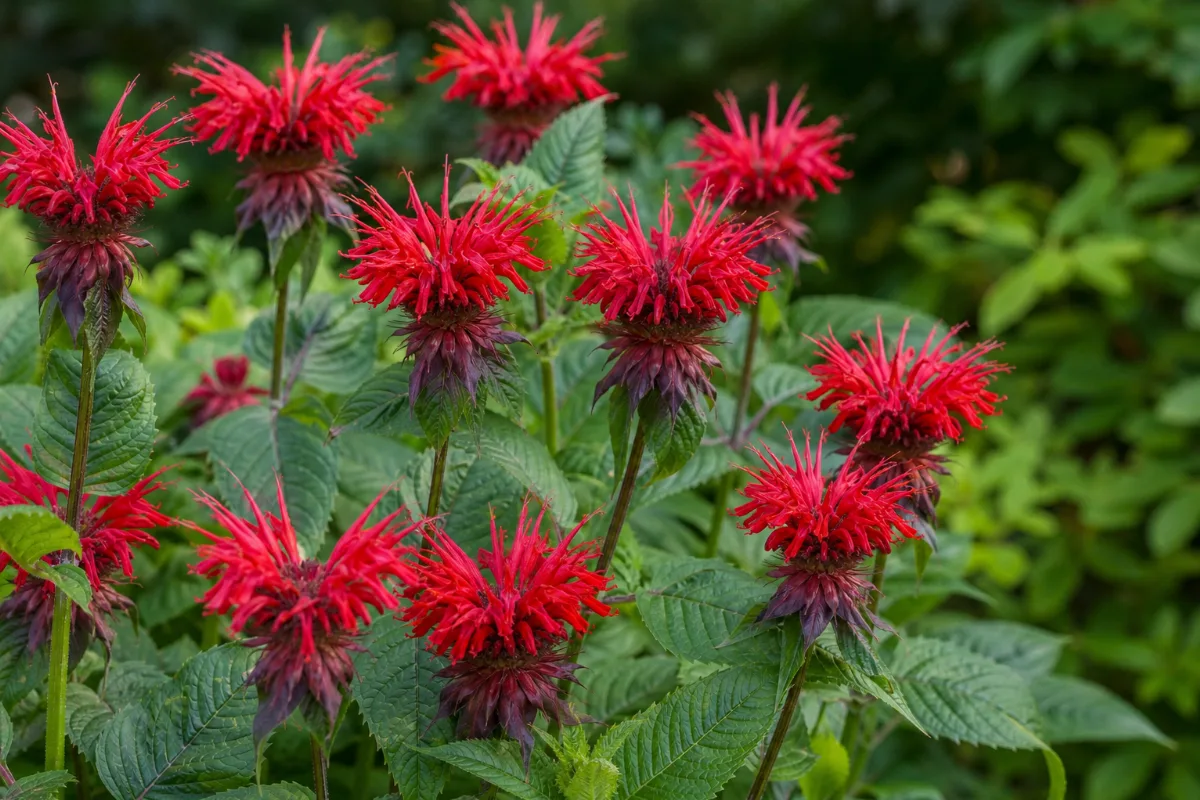
Herbs & Botanicals · Traditional North American tea herb
Bee Balm
Monarda didyma · also called Oswego tea, scarlet bee balm, wild bergamot (Monarda fistulosa), horsemint (Monarda punctata)
Bee balm is a North American mint-family plant. Its leaves and flowers were made into tea by Native American peoples and early settlers for colds, coughs and skin. Research is sparse: one small, maker-linked trial of an extract, and lab work. Strong essential oil can irritate, and pregnant women are advised to avoid medicinal amounts.
General information, not medical advice. Last substantive update · Not medically reviewed. A named clinician has not signed off on this page. How this page is made
About Bee Balm
Bee balm (Monarda) is a North American mint-family plant. Several species are used, mainly Monarda didyma (Oswego tea), M. fistulosa (wild bergamot) and M. punctata (horsemint). The evidence for health benefits is very thin.
Safety first
The essential oil is rich in thymol and carvacrol, the same strong phenols as in thyme and oregano oil. Do not use it undiluted on skin and do not swallow it. A consumer reference says medicinal amounts are likely unsafe in pregnancy and that breastfeeding safety is unknown, and no agency has assessed bee balm. Ask a doctor or pharmacist about amounts and about your medicines.
What it is
Bee balm belongs to the mint family (Lamiaceae). It is not lemon balm (Melissa officinalis) and it is not the bergamot orange (Citrus bergamia) that flavours Earl Grey tea, although 'bergamot' is also a common name for wild bergamot (Monarda fistulosa). Leaves and flowers are used.
Traditional use
Native American peoples used Monarda species for colds, fevers, coughs, wounds and skin infections. M. didyma is also known as Oswego tea. The chemistry of the oil fits these uses on paper, but traditional use is not proof.
What research exists
There is one randomised trial. In 81 adults, a Monarda didyma extract capsule was linked to better ageing markers over 12 weeks. The extract maker formulated and helped fund it. Other work is on cells, dishes and mice.
Thyroid question
We checked whether bee balm affects the thyroid, as some mint-family plants do. No Monarda study was found. A different mint-family plant, Lycopus, changed thyroid measures in a small open study. People with thyroid disease should ask their doctor before using medicinal amounts.
At a glance
Traditional uses history, not proof
- Tea for colds, fevers and coughs (Native American peoples)
- Wound and skin use (Native American peoples)
Studied for research
- Biological ageing markers: one 12-week trial of an extract capsule; very low certainty
- Quality of life and sleep scores: same trial; very low certainty
- Memory in ageing mice: animal only
- Germs and inflammation: lab dishes only
Main compounds
- Thymol and carvacrol, the strong-smelling oil phenols that vary by species
- p-Cymene and linalool (oil parts)
- Rosmarinic acid (an antioxidant phenol in the herb)
Common forms
- Tea from leaf and flower (traditional)
- Dried leaf and flower
- Extract capsule (the only form tested in people)
- Essential oil (strong; see safety)
Research links: Campisi 2025 trial of a Monarda didyma extract · Alabama Monarda oil chemistry and traditional use · Research Library · Genes & Biomarkers Library
The plant and its history
- Accepted scientific name
- Monarda didyma L.
- Naming authority
- L.
- Common names
- Bee balm (English); Oswego tea (English); Scarlet bee balm (English); Wild bergamot (M. fistulosa) (English); Horsemint (M. punctata) (English)
- Botanical family
- Lamiaceae (mint family)
- Classification
- Plantae > Lamiales > Lamiaceae > Monarda > Monarda didyma
- Native range
- Not confirmed from a page read. The Alabama paper confirms M. citriodora, M. fistulosa and M. punctata grow wild in south Alabama.
- Habitat
- Not described in the sources read.
- What the plant looks like
- Roots: Not described.; Stems: Not described.; Leaves: Aromatic leaves are used.; Flowers: Flowers are used with the leaves.; Fruit: Not described.
- Cultivation
- Not verified.
- Harvest and processing
- Not verified.
- Look-alikes and adulterants
- Name: Lemon balm (Melissa officinalis); Note: A different mint-family plant sometimes confused by name. It has its own page.; Name: Bergamot orange (Citrus bergamia); Note: A citrus tree; its peel oil flavours Earl Grey tea. Not a Monarda. It has its own page.; Name: Other Monarda species (M. fistulosa, M. punctata, M. citriodora); Note: Related species with oils of different type; results for one do not carry over to another.
- Sustainability and conservation
- Not assessed.
Traditional use and history history, not clinical proof
| Tradition or era | Documented use | Source |
|---|---|---|
| Native American peoples (mainly Monarda fistulosa) | Colds, fevers, coughs, wounds and skin infections. | p33806521 |
| Oswego tea (M. didyma) in North America | Known as Oswego tea. Use as a tea for colds, digestion and skin comes from our earlier summary and was not verified in any source read. | s-vitally-oswego-tea |
Traditional use shows how a plant was used. It does not show that a supplement works or is safe today.
What is inside, and how it may work
What the plant contains and how those compounds act in cells and animals. Laboratory and animal mechanisms are not proven effects in people.
Main compounds
| Compound | Family | Where it is concentrated | Activity studied | Level of evidence |
|---|---|---|---|---|
| Thymol PubChem 6989 | phenolic monoterpene | essential oil of leaf and flower (type-dependent) Not stated here; varies by species and type. | Antimicrobial and anti-inflammatory in lab work; activates the TRPV3 skin and nerve channel. 12 10 15 | Lab |
| Carvacrol PubChem 10364 | phenolic monoterpene | essential oil (main in the carvacrol type of M. didyma) Not stated here. | Isomer of thymol with similar lab activity. 12 6 | Lab |
| p-Cymene PubChem 7463 | aromatic monoterpene | essential oil Not stated here. | Aromatic oil component found with thymol and carvacrol. 12 10 | Lab |
| Linalool PubChem 6549 | monoterpene alcohol | essential oil of some types Not verified in the abstracts read. | Named in the brief as a possible oil component; not confirmed in the sources read. 12 | Lab |
| Rosmarinic acid PubChem 5281792 | phenolic acid | herb extract Main phenolic in an M. fistulosa dry extract (amount in the full paper, not read). | Antioxidant in test-tube assays. 12 14 | Lab |
Mechanisms, receptors and pathways
| Target or pathway | Gene or receptor | What was found | Level |
|---|---|---|---|
| Bacterial membranes and metabolism | Oil damaged membranes, slowed biofilm and reduced key energy enzymes in drug-resistant Klebsiella (lab). 5 | Lab | |
| Inflammation signalling (IL-6, TLR4 pathway, miR-146a) | IL-6 | Oil and flower extract lowered IL-6 in stimulated immune cells. 6 8 | Lab |
| Telomere shortening and DNA damage | In cells the extract slowed telomere shortening and lowered a DNA damage signal; in people a blood telomere length difference was reported. 3 | Lab and human (one trial) | |
| Antioxidant and MAPK/Nrf2 pathways | Nrf2 | Oil and thymol changed antioxidant enzymes and the MAPK/Nrf2 markers in ageing mouse brain. 9 | Animal research |
| Skin and nerve TRPV3 channel | TRPV3 | Thymol and carvacrol activate TRPV3 in engineered cells. 15 | Lab |
Absorption, metabolism and elimination
- Absorption
- Not studied for bee balm.
- Distribution
- Not studied.
- Metabolism
- Not studied for bee balm. A review of thymol covers its metabolism in animals and people, but we read only its abstract.
- Elimination
- Not studied.
- Bioavailability
- Not established.
Isolated compounds versus whole extracts
Human data cover one maker's M. didyma extract capsule only. Lab work uses essential oils, solvent extracts or pure thymol and carvacrol, which are much more concentrated than a tea. Nothing connects results across these forms.
Nutritional composition
Leaves and flowers are used as a tea. No nutrient content was read in the sources.
2 very low certainty6 not enough evidence
What is Bee Balm good for?
What bee balm has been studied for and how strong the evidence is. Only the first two rows come from a human trial; everything below them is traditional use or lab and animal work.
Benefits, one by one
Each card is a research question, not a promise. Tap a goal to filter. Open a card to see the studies, doses and limits.
Biological ageing markers (Monarda didyma extract capsule)
Very low certaintyOne 12-week trial in 81 adults tested a Monarda didyma extract capsule. The extract group had longer blood-cell telomeres and a steadier DNA methylation 'age' than the placebo group. These are lab markers, not proof of healthier or longer life.
1 studiesThe trial used one maker's extract capsule. Ask a doctor or pharmacis…
Studies, doses and limits
What the trials found
One randomised, double-blind, placebo-controlled trial: 81 adults, 40 on the extract and 41 on maltodextrin placebo, for 12 weeks, registered as NCT05399966.
Results
The abstract reports significantly longer leukocyte telomere length and a stable DNA methylation age with the extract, while the placebo group aged faster on the same test.
Effect sizes as reported
Not given in the abstract.
Why this rating
One small, short trial; the maker formulated the extract, two authors work for the maker, and the maker helped fund it; the markers are not illness or lifespan; no independent repeat.
Form and dose studied
The trial used one maker's extract capsule. Ask a doctor or pharmacist about amounts.
Who was studied
Adults, average age about 55 to 56. Not tested in children, pregnancy or breastfeeding.
Limits
Small and short. Industry-linked. Marker changes only. Not shown for tea or oil.
Why researchers looked
The leaf and flower are rich in antioxidant phenols, and cell experiments suggested they protect DNA, so the makers tested ageing markers in people.
Traditional use
Not a traditional use. The traditional uses of bee balm are for colds, digestion and skin.
Proposed mechanism Laboratory research
In cell experiments the extract showed antioxidant activity and slower telomere shortening. How this might work in people is not shown.
A proposed mechanism does not show that the effect happens in people.
No significant side effects were reported by participants in this trial. See the safety tab.
Quality of life, movement and sleep (same trial)
Very low certaintyIn the same trial, people on the extract reported better physical quality of life, and movement and sleep scores on a wrist wearable looked better. These were extras measured alongside the main markers.
1 studiesOne maker's extract capsule. Ask a doctor or pharmacist about amounts.
Studies, doses and limits
What the trials found
Same 81-person, 12-week trial. Questionnaires and a wearable device.
Results
The abstract says the extract group reported better quality of life, mainly in the physical domain, and improved movement and sleep indices.
Effect sizes as reported
Not given in the abstract.
Why this rating
Secondary outcomes of one small industry-linked trial; many outcomes were measured; self-reported scores can be swayed by expectation.
Form and dose studied
One maker's extract capsule. Ask a doctor or pharmacist about amounts.
Who was studied
Healthy adults, average age about 55 to 56.
Limits
Secondary outcomes. Industry-linked. No independent repeat.
Why researchers looked
Part of the same trial's secondary outcomes.
Traditional use
Not a traditional use.
Proposed mechanism Pharmacological theory
No mechanism is established.
A proposed mechanism does not show that the effect happens in people.
See the safety tab.
Memory in ageing mice (lab animals only)
Not enough evidenceIn mice made to age quickly, bee balm essential oil and its main compound thymol improved learning and memory tests. Nobody has tested this in people.
1 studiesNot applicable to people.
Studies, doses and limits
What the trials found
None.
Results
Better test scores than untreated model mice, in a dose-dependent way.
Effect sizes as reported
Not extracted.
Why this rating
Mouse model only.
Form and dose studied
Not applicable to people.
Who was studied
Mice.
Limits
No human data. Essential oil is concentrated and irritating; this result must not be read as a reason to swallow it.
Why researchers looked
Researchers wanted to know whether antioxidant oils protect the ageing brain.
Traditional use
Not a traditional use.
Proposed mechanism Animal research
Changes in antioxidant enzymes and the MAPK and Nrf2 pathways in mouse brain tissue.
A proposed mechanism does not show that the effect happens in people.
Essential oils can irritate and are not for swallowing undiluted. See the safety tab.
Colds, coughs, fever and wounds (traditional use)
Not enough evidenceNative American peoples used bee balm and wild bergamot as a tea or poultice for colds, fevers, coughs and wounds, and settlers took up the Oswego tea. No clinical trial has tested these uses.
1 studiesNo human trial; nothing to state.
Studies, doses and limits
What the trials found
None.
Results
Traditional use only.
Effect sizes as reported
Not applicable.
Why this rating
Only historical records and chemistry; no human or animal test of these uses was read.
Form and dose studied
No human trial; nothing to state.
Who was studied
No human data.
Limits
Traditional use is not proof of benefit. The traditional use for digestion was not confirmed in any source read.
Why researchers looked
Long history of use in North America.
Traditional use
Recorded for Monarda species, mainly M. fistulosa, by Native American peoples; the Alabama study links these uses to the thymol and carvacrol in the oil.
Proposed mechanism Traditional use
The authors say the known activity of thymol, carvacrol and p-cymene is consistent with the traditional uses. This is a chemistry argument, not a test.
A proposed mechanism does not show that the effect happens in people.
See the safety tab for oil strength, pregnancy and allergy cautions.
Killing germs in the dish (essential oil, lab only)
Not enough evidenceBee balm essential oil stopped the growth of bacteria, including a drug-resistant Klebsiella strain, in laboratory dishes. Lab activity does not mean it treats infections in people.
2 studiesNo human trial; nothing to state.
Studies, doses and limits
What the trials found
None.
Results
Oil at 1.25 mg/ml was needed to stop and kill the Klebsiella strain in the dish.
Effect sizes as reported
Not applicable.
Why this rating
Test-tube work only.
Form and dose studied
No human trial; nothing to state.
Who was studied
No human data.
Limits
Dish results cannot be turned into treatment advice. Concentrated oils irritate skin and the mouth.
Why researchers looked
Thymol and carvacrol are known germ-fighting compounds, so the oils were screened.
Traditional use
Not a traditional use as such.
Proposed mechanism Laboratory research
Damage to bacterial membranes, slower biofilm formation and slower energy metabolism in the bacteria.
A proposed mechanism does not show that the effect happens in people.
Do not use undiluted essential oil on skin or swallow it.
Inflammation (cell and animal work only)
Not enough evidenceExtracts and oil from bee balm lowered a swelling signal (interleukin-6) in cultured immune cells, and a leftover-herb extract reduced swelling and pain behaviour in mice. No human test.
3 studiesNo human trial; nothing to state.
Studies, doses and limits
What the trials found
None.
Results
Cell and mouse results only.
Effect sizes as reported
Not applicable.
Why this rating
No human data.
Form and dose studied
No human trial; nothing to state.
Who was studied
No human data.
Limits
Small cell and animal studies from different species (M. fistulosa and M. didyma) and different extracts.
Why researchers looked
Traditional use for swelling and sore skin.
Traditional use
Recorded for wild bergamot.
Proposed mechanism Laboratory research
Lower IL-6 in stimulated cells; phenols such as rosmarinic acid may play a part.
A proposed mechanism does not show that the effect happens in people.
No safety conclusion can be drawn.
Skin and oily-skin problems (lab only)
Not enough evidenceA 2009 abstract proposes wild bergamot essential oil for seborrhoea after lab tests showed it slows microbes and calms inflammation. No people were tested in the work we saw.
2 studiesNo human trial; nothing to state.
Studies, doses and limits
What the trials found
None.
Results
Abstract only; no numbers.
Effect sizes as reported
Not applicable.
Why this rating
One very short abstract; no human test.
Form and dose studied
No human trial; nothing to state.
Who was studied
No human data.
Limits
Strong oils can irritate skin, so this is also a safety question.
Why researchers looked
Traditional use on wounds and skin.
Traditional use
Native American use on wounds and skin infections is recorded.
Proposed mechanism Laboratory research
Germ-slowing and anti-inflammatory activity of the oil in lab tests.
A proposed mechanism does not show that the effect happens in people.
Never put undiluted essential oil on skin.
Antioxidant activity (test tube)
Not enough evidenceBee balm oil and extracts mop up free radicals in test-tube assays. This is a chemistry result and not a health benefit by itself.
2 studiesNo human trial; nothing to state.
Studies, doses and limits
What the trials found
None.
Results
Strong DPPH scavenging for the extract (IC50 0.285 mg/ml) and the oil.
Effect sizes as reported
Not applicable.
Why this rating
Test tube only; antioxidant tests rarely predict benefit in people.
Form and dose studied
No human trial; nothing to state.
Who was studied
No human data.
Limits
Not clinical.
Why researchers looked
Phenols (rosmarinic acid, thymol, carvacrol) are antioxidants in the dish.
Traditional use
Not a traditional use.
Proposed mechanism Laboratory research
Radical scavenging in the DPPH test.
A proposed mechanism does not show that the effect happens in people.
None.
Connections to the rest of health
How Bee Balm connects to the rest of our health knowledge graph. Every link says what kind of connection it is. A safety link (for example to the liver) is a warning, not a benefit. A study that merely mentions a topic never creates a benefit link.
Explore every connection: goals, body systems, organs, symptoms, genes
A. Wellness goals
| Connected to | Kind of connection | Evidence status | Context | Studies |
|---|---|---|---|---|
| Healthy Aging | Potential benefit | Very low certainty | Biological ageing markers (Monarda didyma extract capsule): One 12-week trial in 81 adults tested a Monarda didyma extract capsule. The extract group had longer blood-cell telomeres and a steadier DNA methylation 'age' than the placebo group. These are lab markers, not proof of healthier or longer life. | 3 |
| Longevity | Potential benefit | Very low certainty | Biological ageing markers (Monarda didyma extract capsule): One 12-week trial in 81 adults tested a Monarda didyma extract capsule. The extract group had longer blood-cell telomeres and a steadier DNA methylation 'age' than the placebo group. These are lab markers, not proof of healthier or longer life. | 3 |
| Sleep Quality | Potential benefit | Very low certainty | Quality of life, movement and sleep (same trial): In the same trial, people on the extract reported better physical quality of life, and movement and sleep scores on a wrist wearable looked better. These were extras measured alongside the main markers. | 3 |
| Reduce Fatigue | Potential benefit | Very low certainty | Quality of life, movement and sleep (same trial): In the same trial, people on the extract reported better physical quality of life, and movement and sleep scores on a wrist wearable looked better. These were extras measured alongside the main markers. | 3 |
| Memory Support | Preliminary mechanism | Not enough evidence | Memory in ageing mice (lab animals only): In mice made to age quickly, bee balm essential oil and its main compound thymol improved learning and memory tests. Nobody has tested this in people. | 9 |
| Brain Health | Preliminary mechanism | Not enough evidence | Memory in ageing mice (lab animals only): In mice made to age quickly, bee balm essential oil and its main compound thymol improved learning and memory tests. Nobody has tested this in people. | 9 |
| Immune Support | Traditional use | Not enough evidence | Colds, coughs, fever and wounds (traditional use): Native American peoples used bee balm and wild bergamot as a tea or poultice for colds, fevers, coughs and wounds, and settlers took up the Oswego tea. No clinical trial has tested these uses. | 10 |
| Seasonal Wellness | Traditional use | Not enough evidence | Colds, coughs, fever and wounds (traditional use): Native American peoples used bee balm and wild bergamot as a tea or poultice for colds, fevers, coughs and wounds, and settlers took up the Oswego tea. No clinical trial has tested these uses. | 10 |
| Immune Support | Preliminary mechanism | Not enough evidence | Killing germs in the dish (essential oil, lab only): Bee balm essential oil stopped the growth of bacteria, including a drug-resistant Klebsiella strain, in laboratory dishes. Lab activity does not mean it treats infections in people. | 5 16 |
| Inflammation Balance | Preliminary mechanism | Not enough evidence | Inflammation (cell and animal work only): Extracts and oil from bee balm lowered a swelling signal (interleukin-6) in cultured immune cells, and a leftover-herb extract reduced swelling and pain behaviour in mice. No human test. | 8 6 14 |
| Healthy Skin | Preliminary mechanism | Not enough evidence | Skin and oily-skin problems (lab only): A 2009 abstract proposes wild bergamot essential oil for seborrhoea after lab tests showed it slows microbes and calms inflammation. No people were tested in the work we saw. | 16 10 |
| Healthy Aging | Preliminary mechanism | Not enough evidence | Antioxidant activity (test tube): Bee balm oil and extracts mop up free radicals in test-tube assays. This is a chemistry result and not a health benefit by itself. | 6 14 |
B. Body systems
| Connected to | Kind of connection | Evidence status | Context | Studies |
|---|---|---|---|---|
| Immune System | Biological association | Very low certainty | Studied for: Biological ageing markers (Monarda didyma extract capsule) Studied for: Colds, coughs, fever and wounds (traditional use) | 3 10 5 16 8 6 14 |
| Nervous System | Biological association | Very low certainty | Studied for: Quality of life, movement and sleep (same trial) Studied for: Memory in ageing mice (lab animals only) | 3 9 |
| Respiratory System | Biological association | Not enough evidence | Studied for: Colds, coughs, fever and wounds (traditional use) | 10 |
| Integumentary System | Biological association | Not enough evidence | Studied for: Skin and oily-skin problems (lab only) | 16 10 |
I. Biomarkers
| Connected to | Kind of connection | Evidence status | Context | Studies |
|---|---|---|---|---|
| Leukocyte telomere length | Biological association | Very low certainty | Measured in trials: raised. A lab change is not the same as a health benefit. | 3 |
| DNA methylation age (epigenetic age) | Biological association | Very low certainty | Measured in trials: no-change. A lab change is not the same as a health benefit. | 3 |
| Interleukin-6 (IL-6) in cultured cells | Biological association | Not enough evidence | Measured in trials: lowered. A lab change is not the same as a health benefit. | 8 6 |
J. Genes, receptors and enzymes
| Connected to | Kind of connection | Evidence status | Context | Studies |
|---|---|---|---|---|
| ELOVL2 and FHL2 (methylation sites) | Preliminary mechanism | Human | Age-linked genes whose DNA methylation drifted in the placebo group of the trial. | 3 |
K. Biological pathways
| Connected to | Kind of connection | Evidence status | Context | Studies |
|---|---|---|---|---|
| TRPV3 | Preliminary mechanism | Lab | Skin and nerve channel activated by thymol and carvacrol in cells. | 15 |
L. Active compounds
| Connected to | Kind of connection | Evidence status | Context | Studies |
|---|---|---|---|---|
| Thymol | Mechanism | Main phenol in some Monarda oils; the likely source of stinging and skin irritation when concentrated. Main phenol in some oils; likely source of stinging when concentrated. Preparation or compound: essential oil of many Monarda types |
10 15 | |
| Carvacrol | Mechanism | Thymol's isomer; the main compound in the carvacrol-type oil studied. Preparation or compound: essential oil of carvacrol-type M. didyma |
6 15 | |
| Thymol | Biological association | Lab | Antimicrobial and anti-inflammatory in lab work; activates the TRPV3 skin and nerve channel. Preparation or compound: essential oil of leaf and flower (type-dependent) |
12 10 15 |
| Carvacrol | Biological association | Lab | Isomer of thymol with similar lab activity. Preparation or compound: essential oil (main in the carvacrol type of M. didyma) |
12 6 |
| p-Cymene | Biological association | Lab | Aromatic oil component found with thymol and carvacrol. Preparation or compound: essential oil |
12 10 |
| Linalool | Biological association | Lab | Named in the brief as a possible oil component; not confirmed in the sources read. Preparation or compound: essential oil of some types |
12 |
| Rosmarinic acid | Biological association | Lab | Antioxidant in test-tube assays. Preparation or compound: herb extract |
12 14 |
Each connection is stored with the ingredient, the connected record, the kind of connection, the evidence status, the supporting studies, the preparation or compound involved, and a review date (last reviewed October 25, 2026).
Evidence at a glance: what changed in 3 lab markers
Tap a number to show only those markers. Counts are markers, not people.
The evidence
The research centre for Bee Balm. Every record here was checked against PubMed or the publisher's page; we never list a study we have not verified.
Evidence by outcome
Bars show how many studies we found for each outcome, not how well it works. People are added up across trials only (reviews are not added, to avoid double counting).
How we rate evidence
High certainty
Several well-run trials or reviews agree; further research is unlikely to change the picture much.
Moderate certainty
Good trials point the same way, but some doubt remains.
Low certainty
Small, short or inconsistent trials. The finding could change with better research.
Very low certainty
Very little or very weak human data. Treat as a possibility only.
Mixed findings
Trials or reviews disagree with each other.
Not enough evidence
Not enough human research to say either way.
Evidence against
Good research found no benefit, or found harm.
We take the reviewers' own risk-of-bias and GRADE statements where they exist, and otherwise judge from study size, design, consistency, directness and whether a product matches what is sold. Many publications do not make evidence high. Method note: We built on our existing summary, re-read PubMed abstracts, and checked GBIF and PubChem. The consumer pregnancy reference was not re-opened.
Study library: every study we checked 17
| Study | Design | People | Product, dose, length | Result |
|---|---|---|---|---|
| AlternativeMed research check 2026 Search for an agency monograph on bee balm (NCCIH, EMA/HMPC, WHO, LiverTox, LactMed) check · Source |
Search record plant |
not applicable | regulator search whole plant not given here not given here · vs none |
NCCIH has no bee balm page (https://www.nccih.nih.gov/health/bee-balm returned 404 on 2026-10-25). No EMA/HMPC, WHO, LiverTox or LactMed entry for Monarda was found in our earlier summary or in this build. not applicable Methods, limits and fundingOutcomes: see results Limitations: Absence of a found page is not proof that none exists. Funding and conflicts: not applicable Read: summary-only |
| Beer 2008 Lycopus europaeus (Gypsywort): effects on the thyroidal parameters and symptoms associated with thyroid function Phytomedicine · PMID 18083505 · DOI |
Open study |
People with low TSH (under 1.0 mU/l) and symptoms linked to an overactive thyroid | Lycopus europaeus herb preparation (a different mint-family plant, NOT Monarda) herb not given here 3 months follow-up · vs no placebo (two-arm open study) |
Urine thyroxine (T4) loss rose significantly (p=0.032) and some thyroid-linked symptoms eased. The authors suggest a kidney-related mechanism. The preparation was well tolerated. p=0.032 for urinary T4 Methods, limits and fundingOutcomes: Urinary T3/T4, thyroid hormones, symptoms. Limitations: Open study, no placebo. A different genus. Included only to show that some mint-family herbs can affect thyroid measures; nothing like it has been tested for Monarda. Funding and conflicts: Not stated. Read: abstract |
| Campisi 2025 Unveiling the geroprotective potential of Monarda didyma L.: insights from in vitro studies and a randomized clinical trial on slowing biological aging and improving quality of life GeroScience · PMID 40064804 · DOI |
Controlled trial |
81 81 healthy adults (average age about 55-56), Padua, Italy: 40 extract, 41 placebo |
Monarda didyma L. extract capsule made by Mibelle Group Biochemistry (once daily) aerial parts (extract; part not named in the abstract) not given here 12 weeks (84 days) · vs maltodextrin capsule |
The abstract says the extract group had significantly longer leukocyte telomere length and a stable DNA methylation age, while the placebo group had faster epigenetic ageing. The extract group also reported better quality of life (physical domain) and better movement and sleep indices. Full-text methods: no significant adverse effects were reported by participants. The abstract gives no effect sizes, so none are quoted here. Not given in the abstract Methods, limits and fundingOutcomes: Primary: leukocyte telomere length (LTL) and DNA methylation age (DNAmAge). Secondary: quality of life, sleep and movement by questionnaire and wrist wearable, blood tests. Limitations: Small, short (12 weeks), one centre. Blood-cell markers of biological ageing are not illness or lifespan. Many outcomes were measured. The in vitro half of the paper is cell work only. Authors were not asked to be independent of the maker. Funding and conflicts: Industry-linked: the extract was formulated and made by Mibelle Group Biochemistry; two authors work for Mibelle; the study was supported by Mibelle funding plus Italian public research funds. Registered NCT05399966. Read: abstract |
| Castañeda Sortibrán 2011 Chronic toxicity, genotoxic assay, and phytochemical analysis of four traditional medicinal plants J Med Food · PMID 21554118 · DOI |
Animal research animal |
Fruit-fly larvae fed plant extracts | Extract of Monarda austromontana (a Mexican relative, not bee balm) and three other plants not stated in the abstract not given here chronic larval feeding · vs solvent control |
The Monarda austromontana extract was not toxic to fruit-fly larvae and showed no increase in DNA damage. This is a different Monarda species and a fly, so it only hints that the genus is not obviously harmful in that test. not applicable Methods, limits and fundingOutcomes: Toxicity and DNA damage (wing-spot test). Limitations: Different species, insect model; says little about people. Funding and conflicts: Not stated. Read: abstract |
| Chen 2023 In-vitro antibacterial activity and mechanism of Monarda didyma essential oils against Carbapenem-resistant Klebsiella pneumoniae BMC Microbiol · PMID 37730531 · DOI |
Laboratory research in-vitro |
Carbapenem-resistant Klebsiella pneumoniae strains grown in the lab | Monarda didyma essential oil not stated in the abstract not given here not applicable · vs untreated bacteria |
The oil stopped growth and killed the bacteria at 1.25 mg/ml (MIC and MBC) in the lab, damaged their membranes and slowed biofilm formation. not applicable Methods, limits and fundingOutcomes: Growth, kill rate and cell damage of bacteria. Limitations: Lab dish only. Says nothing about swallowing or applying the oil on people. Funding and conflicts: No competing interests declared. Read: abstract |
| Fraternale 2022 Chemical composition, antioxidant and anti-inflammatory properties of Monarda didyma L. essential oil PeerJ · PMID 36438580 · DOI |
Laboratory research in-vitro |
Cell culture (LPS-stimulated U937 cells); oil from plants grown in central Italy | Monarda didyma essential oil (carvacrol type) flowering aerial parts not given here not applicable · vs untreated cells |
Carvacrol, p-cymene and thymol were most abundant. The oil showed antioxidant activity in a test tube and lowered IL-6 expression in stimulated immune cells. not applicable Methods, limits and fundingOutcomes: Oil chemistry, antioxidant test (DPPH), IL-6 and miR-146a in cells. Limitations: Dish experiment only. Oil type (carvacrol-rich) may not match other plants or products. Funding and conflicts: No competing interests declared apart from an editor role. Read: abstract |
| GBIF 2026 GBIF species match: Monarda didyma L. (key 5341407), M. fistulosa L. (5341411), M. punctata L. (5341413) GBIF · Source |
Registry or database plant |
not applicable | Monarda species whole plant not given here not given here · vs none |
GBIF API on 2026-10-25: all three names are ACCEPTED (exact match), family Lamiaceae, order Lamiales. not applicable Methods, limits and fundingOutcomes: see results Limitations: Taxonomy record. NCBI Taxonomy not checked. Funding and conflicts: not applicable Read: full-text |
| Gerold 2025 Monarda Fistulosa Flower Extract Decreases Interleukin-6 Production by Lipopolysaccharide-Stimulated RAW 264.7 Murine Macrophages J Med Food · PMID 40711949 · DOI |
Laboratory research in-vitro |
Mouse macrophage cell line | Monarda fistulosa methanol extract flower not given here not applicable · vs untreated cells |
The flower extract lowered IL-6 production by stimulated mouse immune cells. 183 compounds were tentatively identified. not applicable Methods, limits and fundingOutcomes: IL-6 release; compounds identified by mass spectrometry. Limitations: Cells in a dish only. Methanol extract, not a tea. Funding and conflicts: No competing interests stated in the abstract. Read: abstract |
| Guo 2022 Protective effect of Monarda didyma L. essential oil and its main component thymol on learning and memory impairment in aging mice Front Pharmacol · PMID 36105199 · DOI |
Animal research animal |
Mice made to age quickly with D-galactose injections | Monarda didyma essential oil and thymol essential oil not given here not given here · vs untreated model mice and donepezil |
Mice fed the oil or thymol did better on learning and memory tests than untreated model mice, in a dose-dependent way, with changes in antioxidant and MAPK/Nrf2 markers. not applicable Methods, limits and fundingOutcomes: Behaviour tests and brain-tissue markers. Limitations: Mouse model only. Not a test in people. Funding and conflicts: No competing interests declared. Read: abstract |
| Lawson 2021 The Volatile Phytochemistry of Monarda Species Growing in South Alabama Plants (Basel) · PMID 33806521 · DOI |
Laboratory analysis plant |
Essential oils of Monarda citriodora, M. fistulosa and M. punctata collected in south Alabama | Monarda essential oil (hydrodistilled) leaf, flower (aerial parts) not given here not applicable · vs not applicable |
Thymol, carvacrol, p-cymene and their relatives were the main parts of the oils. The authors say the known activities of these compounds are consistent with the traditional use of Monarda species for wounds, skin infections, colds and fevers. This is chemistry, not a test of benefit in people. not applicable Methods, limits and fundingOutcomes: Chemical make-up of the oils by gas chromatography. Limitations: Chemistry paper; traditional use is quoted from earlier sources; no human or animal test. Funding and conflicts: No competing interests declared. Read: abstract |
| Munoz-Perez 2025 Thymol and Carvacrol as Potential Tocolytic and Anti-inflammatory Agents in Pregnant Rat Uterus Curr Mol Pharmacol · PMID 39806980 · DOI |
Laboratory research in-vitro |
Uterine tissue strips from pregnant rats | Thymol and carvacrol (pure compounds, 10 to 230 micromolar) isolated compounds not given here lab test · vs nifedipine |
At the highest concentrations both compounds reduced contractions of pregnant rat uterus tissue in the dish (less strongly than nifedipine). So this lab work points to relaxing, not stimulating, the uterus. It does not tell us what a tea or oil does in a pregnant woman. not applicable Methods, limits and fundingOutcomes: Uterine contractions, cAMP, IL-1 beta. Limitations: Isolated rat tissue; pure compounds, not bee balm; high concentrations. Funding and conflicts: Not stated. Read: abstract |
| PubChem 2026 PubChem compound records: thymol (CID 6989), carvacrol (10364), linalool (6549), p-cymene (7463), rosmarinic acid (5281792) PubChem · Source |
Registry or database plant |
not applicable | main compounds whole plant not given here not given here · vs none |
PubChem API on 2026-10-25 returned: thymol C10H14O CID 6989; carvacrol C10H14O CID 10364; linalool C10H18O CID 6549; p-cymene C10H14 CID 7463; rosmarinic acid C18H16O8 CID 5281792. not applicable Methods, limits and fundingOutcomes: see results Limitations: Identity records only. Funding and conflicts: not applicable Read: full-text |
| Salehi 2018 Thymol, thyme, and other plant sources: Health and potential uses Phytother Res · PMID 29785774 · DOI |
Narrative review review |
Review of thymol, the main phenol of thyme oil (also a main part of many Monarda oils) | Thymol essential oil constituent not given here not applicable · vs not applicable |
A narrative review. Thymol (10 to 64% of thyme oil) shows antimicrobial, antioxidant, anti-inflammatory and antispasmodic activity, mostly in lab and animal work. The abstract says toxicity and metabolism are discussed but gives no figures, and we did not read the full text. not applicable Methods, limits and fundingOutcomes: Uses, toxicity, absorption, metabolism and distribution of thymol. Limitations: Narrative review, not a systematic one. Abstract only. About thymol, not about bee balm. Funding and conflicts: Not stated. Read: abstract |
| Shanaida 2021 Polyphenols and Pharmacological Screening of a Monarda fistulosa L. dry Extract Based on a Hydrodistilled Residue By-Product Front Pharmacol · PMID 33995001 · DOI |
Animal research animal |
Rats (acute toxicity), mice (swelling and pain tests) | Monarda fistulosa dry extract of the leftover herb after steam distillation herb (aerial parts) not given here single doses · vs control animals |
Rosmarinic acid and luteolin-7-glucoside were the main phenolics. Rats given 500 to 5,000 mg/kg by mouth showed no side effects or deaths in this single-dose test. The extract reduced paw swelling and writhing in mice. not applicable Methods, limits and fundingOutcomes: Phenolic content, acute toxicity, paw swelling, writhing. Limitations: Animal work on an extract of the herb left after oil removal, so it has little essential oil. Single-dose test, not long-term. Funding and conflicts: No competing interests declared. Read: abstract |
| Vogt-Eisele 2007 Monoterpenoid agonists of TRPV3 Br J Pharmacol · PMID 17420775 · DOI |
Laboratory research in-vitro |
Cells engineered to carry the TRPV3 skin and nerve channel | Thymol and carvacrol (pure compounds) isolated compounds not given here lab test · vs camphor |
Carvacrol and thymol switched on TRPV3 more strongly than camphor. The channel sits in skin and nerves and is thought to be involved in skin sensitisation, which is one plausible reason why strong thymol and carvacrol oils sting or irritate. not applicable Methods, limits and fundingOutcomes: Activation of the warmth-sensing TRPV3 channel. Limitations: Cell experiment; the link to real-life irritation is a plausible explanation, not shown here. Funding and conflicts: Not stated. Read: abstract |
| Zhilyakova 2009 Study of Monarda fistulosa essential oil as a prospective antiseborrheic agent Bull Exp Biol Med · PMID 20396753 · DOI |
Laboratory in-vitro |
Lab tests (microbes) and animal inflammation model; details not in the abstract | Monarda fistulosa essential oil essential oil not given here not given here · vs hydrocortisone with vitamin B6 |
The abstract says the oil slowed microbe growth and was stronger than hydrocortisone with vitamin B6 on inflammation. No human data and no numbers in the abstract. not applicable Methods, limits and fundingOutcomes: Antibacterial, antifungal and anti-inflammatory activity. Limitations: Very short abstract; methods and numbers not seen; no human test. Funding and conflicts: Not stated. Read: abstract |
| vital.ly 2026 Oswego tea (consumer drug reference monograph) vital.ly · Source |
Consumer reference plant |
not applicable | Monarda didyma (Oswego tea) whole plant not given here not given here · vs none |
Per our earlier summary of this page: reliable oral safety information is lacking; medicinal amounts are described as likely unsafe in pregnancy because they may bring on menstruation and so might cause miscarriage; breastfeeding safety unknown; interaction with medicines unknown. not applicable Methods, limits and fundingOutcomes: see results Limitations: Consumer reference, not an agency. We did not re-open it in this build (summary-only). Related pages (WebMD and others) could not be read. Funding and conflicts: not applicable Read: summary-only |
What we do not know yet
- No independent human trial of any bee balm product.
- No human study of tea, leaf, flower or oil for colds, digestion or skin.
- No agency safety assessment, and no pregnancy, thyroid, allergy or interaction data for Monarda.
How new research is added
New studies are found by a saved PubMed search and placed in a review queue. A person reads each one before it changes any rating or safety wording.
Lab markers
What changed in blood or saliva tests during trials. A changed number is not the same as feeling or being healthier, and we give no "normal ranges".
Inflammatory 1
Interleukin-6 (IL-6) in cultured cells
Lowered in trials
A signalling protein that rises in inflammation.
Not enough evidenceResults and what it means
Why it was measured
Used in dish experiments as a quick inflammation read-out.
Statistical vs. clinical meaning
Lab signal only. Not measured in people.
Safety implication
None.
| Study | Result | People | Product |
|---|---|---|---|
| 8 | M. fistulosa flower extract lowered IL-6 production by stimulated mouse macrophages (no numbers in the abstract). | RAW 264.7 mouse cells | methanol flower extract |
| 6 | M. didyma oil lowered IL-6 expression in stimulated U937 cells. | human cell line (U937), not people | carvacrol-type essential oil |
Other 2
Leukocyte telomere length
Raised in trials
The length of the protective caps on the ends of chromosomes in white blood cells. They shorten with age.
Very low certaintyResults and what it means
Why it was measured
Primary outcome of the trial; used as a marker of cellular ageing.
Statistical vs. clinical meaning
Statistical result from one small trial. Telomere length is a research marker; it is not a proven predictor of health in a 12-week change.
Safety implication
None known.
| Study | Result | People | Product |
|---|---|---|---|
| 3 | Reported as significantly improved with the extract versus placebo; no values in the abstract. | 81 adults, 12 weeks | Monarda didyma extract capsule vs placebo |
DNA methylation age (epigenetic age)
No clear change in trials
An estimate of biological age from chemical tags on DNA in blood cells.
Very low certaintyResults and what it means
Why it was measured
Primary outcome of the trial.
Statistical vs. clinical meaning
The extract group stayed about the same while the placebo group drifted older; a short, small, industry-linked comparison.
Safety implication
None known.
| Study | Result | People | Product |
|---|---|---|---|
| 3 | Described as stabilised with the extract while the placebo group showed faster epigenetic ageing; no values in the abstract. | 81 adults, 12 weeks | Monarda didyma extract capsule vs placebo |
Safety
What studies and official sources say about side effects, medicines and who should check first. Each point shows what kind of evidence it comes from.
Main points to know 3
- Evidence for safety is thin.. There is no safety review by an agency. The only human trial (12 weeks, one maker's extract capsule) reported no significant side effects, but it was small and industry-linked. Controlled trial 3 1
- Strong essential oil is the main hazard.. Many bee balm oils are rich in thymol and carvacrol. These phenols switch on a skin and nerve heat channel in the lab and are a plausible reason why strong thyme-type oils sting and irritate. Do not use undiluted oil on skin and do not swallow it. This page gives no dose advice. Pharmacological theory 10 15 13
- Pregnancy and breastfeeding: avoid medicinal amounts.. A consumer reference says medicinal amounts are likely unsafe in pregnancy and that breastfeeding safety is unknown. No agency source was found. Lab work on rat uterus tissue suggests thymol and carvacrol relax the uterus rather than stimulate it, so the reference's reason is unconfirmed, but the caution stands because human data are missing. Authoritative guidance 17 11
Side effects 2
| Effect | How often | Severity and recovery | Evidence |
|---|---|---|---|
| Skin or mouth irritation from concentrated oil Inferred from the thymol and carvacrol content and lab data. Not a documented bee balm case. | Unknown. No human report was found for bee balm oil. | mild to moderate (expected) Not stated | Pharmacological theory 15 13 |
| No significant side effects reported with the extract capsule Small, short and maker-linked, so it cannot rule out rarer effects. | The full text says no significant adverse effects were reported by participants (81 people, 12 weeks). | not applicable not applicable | Controlled trial 3 |
Liver
No LiverTox entry for bee balm or Monarda was found, and no liver injury case was found in the sources read. In rats, a single large dose of a leftover-herb extract of Monarda fistulosa caused no deaths or side effects, but this is not a liver study. 1 14
How often. Unknown.
Monitoring. No official advice found. Yellow skin or eyes, dark urine or severe tiredness need prompt medical attention.
This is a safety connection. It is not evidence that Bee Balm supports liver health.
Medicines and supplements 3
| With | Why it matters | Importance | Evidence | What to do |
|---|---|---|---|---|
| Any prescription medicine prescription | None found. | Unknown. The consumer reference says it is not known whether bee balm interacts with medicines. No interaction study was found. | None found Not enough evidence 17 | Tell your doctor or pharmacist you use it, especially for medicines with a narrow safe range. |
| Thyroid medicines or an overactive or underactive thyroid prescription | No thyroid study of Monarda was found. A different mint-family plant, Lycopus europaeus, raised urinary thyroxine loss in a small open study. | Unknown for bee balm. Included only because other mint-family herbs can affect thyroid tests. | None found Not enough evidence 2 | If you have thyroid disease, ask your doctor before using medicinal amounts. |
| Other herbs and supplements rich in thymol or carvacrol (thyme, oregano oil) herb-supplement | Same main compounds, so effects could add up in theory. | Theoretical; no study. | Pharmacological theory Not enough evidence 13 10 | Avoid stacking several strong oils. |
Who should check first 4
| Situation | Advice | Evidence |
|---|---|---|
| Pregnancy | Avoid medicinal amounts. Food-flavouring amounts were not assessed. | Authoritative guidance 17 11 |
| Breastfeeding | Safety unknown; avoid medicinal amounts. | Authoritative guidance 17 |
| Babies and young children (essential oil) | Do not use strong essential oils on or near young children. No bee balm data exist. | Pharmacological theory 13 |
| Known allergy to mint-family plants (lavender, mint, thyme, oregano, sage) | Avoid. Cross-reaction within the family is possible in principle; no bee balm case was found. | Pharmacological theory 7 |
Overdose, product quality and regulators
Summary. No human toxicity study of bee balm was found. Animal and insect data are reassuring in a limited way but not enough.
Animal. Rats given 500 to 5,000 mg/kg of an M. fistulosa leftover-herb extract by mouth in a single-dose test showed no side effects or deaths. A Mexican relative, Monarda austromontana, was not toxic to fruit-fly larvae and did not raise DNA damage.
Human doses studied. Not given here.
High dose or long term signals. Not studied beyond 12 weeks in people.
Overdose response. Unknown.
Genotoxicity. No increase in the fruit-fly wing-spot test for M. austromontana (a different species).
Toxic plant parts. Not established. Essential oil is the concentrated part and the one to treat with most respect.
No adulteration or contamination report was found for bee balm products.
Name confusion. Bee balm (Monarda) is not lemon balm (Melissa officinalis, a different plant) and not bergamot orange (Citrus bergamia, the fruit whose oil flavours Earl Grey tea). 'Wild bergamot' is a common name for Monarda fistulosa. Product labels with only 'bergamot' or 'balm' can mean three different plants. 7
Species and oil type vary. Monarda oils range from thymol-rich to carvacrol-rich types, so two products called bee balm oil can differ in strength. 10 6
| Body | Action | Date |
|---|---|---|
| NCCIH (US) (United States) | No bee balm page (the address returned 404). source | 2026 |
When to get medical help
- Swollen lips, face or tongue, wheezing or a spreading rash after use: get emergency help.
- Burning, blistering or severe pain after oil touches skin or eyes: rinse with plenty of water and seek advice.
- Strong oil swallowed by a child or an adult: contact a poison centre or emergency service.
- Bleeding or cramping in pregnancy: contact a doctor.
Stop the supplement and contact a clinician or emergency service. In the US, Poison Control is 1-800-222-1222.
General information only, not medical advice. Ask a clinician or pharmacist before use, especially with medicines, in pregnancy or with a health condition. See the Natural Remedy Safety guide.
Frequently asked questions
What is bee balm?
Bee balm (Monarda) is a North American mint-family plant. Its leaves and flowers are used as a tea and a flavouring.
What is Oswego tea?
Oswego tea is a common name for bee balm, Monarda didyma, which was drunk as a tea. We did not verify the origin of the name.
Is bee balm the same as bergamot?
Not the same plant as the bergamot orange (Citrus bergamia), whose peel oil flavours Earl Grey tea. Wild bergamot (Monarda fistulosa) is a bee balm species.
Is bee balm the same as lemon balm?
No. Lemon balm (Melissa officinalis) is a different mint-family herb with its own page.
Does bee balm help with colds?
Does it slow ageing?
One small trial of a maker's extract found better blood-cell ageing markers, but the maker was involved and the markers are not proof of healthier ageing. It needs independent repeating.
What is in the essential oil?
Can the essential oil hurt?
Is it safe in pregnancy or breastfeeding?
Does it affect the thyroid?
No Monarda study was found. A different mint-family plant, Lycopus, changed thyroid measures in a small study, so people with thyroid disease should ask their doctor.
Does it interact with medicines?
Nobody knows. No interaction study was found. Tell your doctor or pharmacist if you use it.
How much should I take?
There is no established amount, and this page does not give one. Ask a doctor or pharmacist.
Explore by health goal
Healthy AgingImmune SupportLongevitySleep QualityReduce FatigueMemory SupportBrain HealthSeasonal WellnessInflammation BalanceHealthy Skin
Editorial transparency
- Written by
- AlternativeMed editorial team. Research compiled with AI assistance, then checked against PubMed records.
- Medical review
- None. This page has not been reviewed by a physician or pharmacist.
- First published
- 2026-10-25
- Last substantive update
- 2026-10-25
- How we research
- We built on our existing summary, re-read PubMed abstracts, and checked GBIF and PubChem. The consumer pregnancy reference was not re-opened.
- How we rate evidence
- See "How we rate evidence" in the Evidence tab.
- Independence
- No product is promoted on this page. No affiliate links are shown. The only human trial was made with the extract maker.
Sources 17
Each source was opened and checked. Where we read only the abstract, it says so. The small numbers in the text point here.
- AlternativeMed research check. Search for an agency monograph on bee balm (NCCIH, EMA/HMPC, WHO, LiverTox, LactMed). check. 2026. (summary-only)
- Beer AM, Wiebelitz KR, Schmidt-Gayk H. Lycopus europaeus (Gypsywort): effects on the thyroidal parameters and symptoms associated with thyroid function. Phytomedicine. 2008. PMID 18083505. DOI 10.1016/j.phymed.2007.11.001. (abstract)
- Campisi M, Cannella L, Paccagnella O, et al.. Unveiling the geroprotective potential of Monarda didyma L.: insights from in vitro studies and a randomized clinical trial on slowing biological aging and improving quality of life. GeroScience. 2025. PMID 40064804. DOI 10.1007/s11357-025-01580-2. (abstract)
- Castañeda Sortibrán A, Téllez MG, Ocotero VM, et al.. Chronic toxicity, genotoxic assay, and phytochemical analysis of four traditional medicinal plants. J Med Food. 2011. PMID 21554118. DOI 10.1089/jmf.2010.0178. (abstract)
- Chen Y, Zhao J, Liu C, et al.. In-vitro antibacterial activity and mechanism of Monarda didyma essential oils against Carbapenem-resistant Klebsiella pneumoniae. BMC Microbiol. 2023. PMID 37730531. DOI 10.1186/s12866-023-03015-4. (abstract)
- Fraternale D, Dufat H, Albertini MC, et al.. Chemical composition, antioxidant and anti-inflammatory properties of Monarda didyma L. essential oil. PeerJ. 2022. PMID 36438580. DOI 10.7717/peerj.14433. (abstract)
- GBIF. GBIF species match: Monarda didyma L. (key 5341407), M. fistulosa L. (5341411), M. punctata L. (5341413). GBIF. 2026. (full-text)
- Gerold MD, Paske SM, Nell KM, et al.. Monarda Fistulosa Flower Extract Decreases Interleukin-6 Production by Lipopolysaccharide-Stimulated RAW 264.7 Murine Macrophages. J Med Food. 2025. PMID 40711949. DOI 10.1177/1096620X251362016. (abstract)
- Guo Y, Qu Y, Li W, et al.. Protective effect of Monarda didyma L. essential oil and its main component thymol on learning and memory impairment in aging mice. Front Pharmacol. 2022. PMID 36105199. DOI 10.3389/fphar.2022.992269. (abstract)
- Lawson SK, Satyal P, Setzer WN. The Volatile Phytochemistry of Monarda Species Growing in South Alabama. Plants (Basel). 2021. PMID 33806521. DOI 10.3390/plants10030482. (abstract)
- Munoz-Perez VM, Perez-Sanchez A, Salas-Casas AA, et al.. Thymol and Carvacrol as Potential Tocolytic and Anti-inflammatory Agents in Pregnant Rat Uterus. Curr Mol Pharmacol. 2025. PMID 39806980. DOI 10.2174/0118761429342128241231163610. (abstract)
- PubChem. PubChem compound records: thymol (CID 6989), carvacrol (10364), linalool (6549), p-cymene (7463), rosmarinic acid (5281792). PubChem. 2026. (full-text)
- Salehi B, Mishra AP, Shukla I, et al.. Thymol, thyme, and other plant sources: Health and potential uses. Phytother Res. 2018. PMID 29785774. DOI 10.1002/ptr.6109. (abstract)
- Shanaida M, Hudz N, Jasicka-Misiak I, et al.. Polyphenols and Pharmacological Screening of a Monarda fistulosa L. dry Extract Based on a Hydrodistilled Residue By-Product. Front Pharmacol. 2021. PMID 33995001. DOI 10.3389/fphar.2021.563436. (abstract)
- Vogt-Eisele AK, Weber K, Sherkheli MA, et al.. Monoterpenoid agonists of TRPV3. Br J Pharmacol. 2007. PMID 17420775. DOI 10.1038/sj.bjp.0707245. (abstract)
- Zhilyakova ET, Novikov OO, Naumenko EN, et al.. Study of Monarda fistulosa essential oil as a prospective antiseborrheic agent. Bull Exp Biol Med. 2009. PMID 20396753. DOI 10.1007/s10517-010-0777-7. (abstract)
- vital.ly. Oswego tea (consumer drug reference monograph). vital.ly. 2026. (summary-only)