Fennel Bulb: Nutrients, What Research Shows and Safety
Fennel bulb (Foeniculum vulgare) as a vegetable: USDA nutrients, what research does and does not show, vitamin K, potassium, and celery-mugwort allergy.
Content last updated . This page has not been medically reviewed.
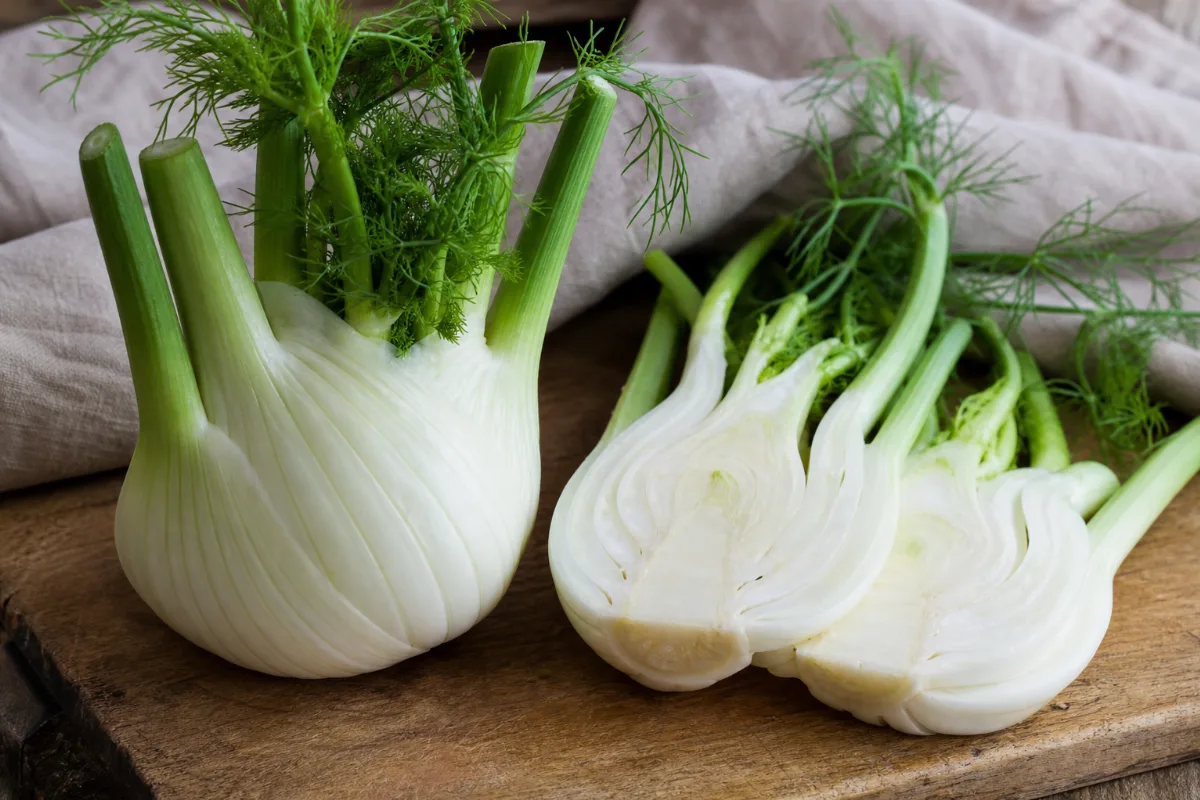
Fennel bulb is the swollen, pale-green base of the fennel plant, Foeniculum vulgare, in the carrot family (Apiaceae). People slice it raw in salads or cook it, and enjoy its mild, sweet, aniseed-like flavor. This page is about the bulb as a vegetable. It keeps the food apart from fennel seed, fennel tea and fennel oil, which are different products, and from hype.
Read this first
- Allergy: fennel belongs to the carrot family, and people who react to celery or to mugwort pollen sometimes react to other plants in this group. For trouble breathing or swelling of the face or throat, call 911. See food allergy basics and emergency signs. [5][6]
- Warfarin: the bulb contains vitamin K, which can change how warfarin works. MedlinePlus advises keeping vitamin K foods about the same from day to day. [1][2]
- Kidney disease and some blood pressure medicines: MedlinePlus says people with kidney problems may need to limit potassium-rich foods, and ACE inhibitors, ARBs and potassium-sparing diuretics can raise blood potassium. The bulb has a moderate amount of potassium. Ask your care team. [1][3]
- Evidence in one line: fennel bulb is a low-calorie source of vitamin K, vitamin C, fiber and potassium; we found no trial showing the bulb prevents or treats any disease.
What is in it (USDA values)
| Nutrient | Per 100 g | Per 1 cup, sliced (87 g) | % Daily Value per serving |
|---|---|---|---|
| Energy | 31 kcal | 27 kcal | n/a |
| Fiber | 3.1 g | 2.7 g | 10% |
| Total sugars | 3.9 g | 3.4 g | n/a |
| Vitamin K | 62.8 µg | 54.6 µg | 46% |
| Vitamin C | 12 mg | 10.4 mg | 12% |
| Potassium | 414 mg | 360 mg | 8% |
| Folate (DFE) | 27 µg | 23.5 µg | 6% |
| Manganese | 0.19 mg | 0.17 mg | 7% |
| Copper | 0.07 mg | 0.06 mg | 7% |
| Vitamin A (RAE) | 48 µg | 41.8 µg | 5% |
| Calcium | 49 mg | 42.6 mg | 3% |
| Sodium | 52 mg | 45 mg | 2% |
| Lutein + zeaxanthin | 607 µg | 528 µg | no Daily Value set |
Source: USDA FoodData Central, "Fennel, bulb, raw", item 169385, SR Legacy (April 2018 release). [1] USDA household portions: 1 cup, sliced, 87 g; 1 bulb, 234 g. Per-serving figures are our own arithmetic from the per-100 g values. % Daily Value uses the FDA 2016 Daily Values; values vary with variety, ripeness and storage.
USDA also lists beta-carotene (578 µg per 100 g) and lutein plus zeaxanthin, which are carotenoids (yellow-orange plant pigments). [1] A 2022 laboratory study measured phenolic acids and flavonoid compounds in fennel bulb, stem and leaf, but the abstract gives no bulb values, so we give none. [11] Those are lab findings, not results in people.
What research says
| Health goal | What the sources found | Strength of evidence | What was studied |
|---|---|---|---|
| Vitamin C and scurvy | The NHS says too little vitamin C can cause scurvy and lists many fruits and vegetables as sources. [4] USDA lists 12 mg of vitamin C per 100 g of raw fennel bulb. [1] | Established (the nutrient's role; the bulb is a modest source) | Nutrient content and deficiency |
| Fiber and bowel regularity | The NHS says foods with fiber help digestion and prevent constipation, and links plenty of fiber to lower chances of heart disease, stroke, type 2 diabetes and bowel cancer. [7] USDA lists 3.1 g of fiber per 100 g of bulb. [1] | Promising but limited for the bulb itself (general fiber advice; no trial of fennel bulb found) | Fiber from the whole diet |
| Heart disease, cancer and early death | A 2017 meta-analysis of prospective studies linked each extra 200 g a day of fruits and vegetables combined to lower risks of cardiovascular disease (RR 0.92), total cancer (RR 0.97) and all-cause death (RR 0.90). [8] | Promising but limited (observational, vegetables as a group, not fennel) | 95 studies of fruit and vegetable intake |
| Fennel bulb on its own | Proper evidence not found in the sources we read: our Europe PMC searches turned up no human trial or meta-analysis of the bulb as food. | Insufficient evidence | Not applicable |
| Antioxidant and other plant-compound effects | We found only lab chemistry on fennel parts. [11] | Lab or animal only | Plant extracts and chemical analysis |
An association in observational studies is not proof, because people who eat more vegetables often differ in other ways. [8]
Eaten as food vs taken as a supplement or extract. The numbers above are for the vegetable. Fennel seed (the dried fruit), fennel tea and fennel oil are separate products with their own questions about safety and use, covered at fennel (seed and herb). We make no claim here that the bulb has the effects studied for the seed or its preparations.
How much is a normal serving
- The WHO healthy-diet fact sheet (26 January 2026) says people older than 10 should eat at least 400 g of fruits and vegetables a day. [9]
- The NHS "5 A DAY" guide (last reviewed 9 June 2026) counts 80 g of fresh, canned or frozen fruit or vegetables as one portion. [10]
- The USDA household portion for the bulb is 1 cup sliced (87 g), or one whole bulb (234 g). [1]
- These are official figures for information, not a prescription for you.
- We found no source on how cooking changes the vitamins or carotenoids of fennel bulb, so we make no claim.
Safety, allergy and medicines
- Celery, mugwort and spice allergy. A 2025 review of celeriac allergy says people sensitized to the celeriac allergen Api g 7 are often also sensitized to the major mugwort pollen allergen Art v 1, because the two proteins are structurally similar. [5] A 2023 review proposes the name "defensin-related food allergies" for food reactions linked to mugwort pollen. [6] Fennel is a relative of celery, and our herb page notes that the EU herbal monograph lists cross-reactivity between fennel fruit and mugwort pollen. [12] Proper evidence not found in the sources we read on how often fennel bulb itself causes reactions. If you have reacted to celery, mugwort pollen or spices, ask an allergy clinician. See herbal allergy and cross-reactivity. For trouble breathing or swelling of the face or throat, call 911.
- Vitamin K and warfarin. MedlinePlus (reviewed 21 January 2025) says vitamin K, or foods that contain it, can change how warfarin works, and advises eating about the same amount of vitamin K foods each day. [2] It does not name fennel. USDA lists 54.6 µg in one cup (87 g) of raw sliced bulb, 46% of the Daily Value. [1] The point is steadiness: do not suddenly add or drop a food high in vitamin K without telling the person who manages your warfarin. See foods and medicine interactions.
- Potassium, kidney disease and some heart medicines. MedlinePlus (reviewed 30 April 2026) says people with kidney problems, especially on dialysis, should not eat too many potassium-rich foods, and lists ACE inhibitors, ARBs and the potassium-sparing diuretics spironolactone, triamterene and amiloride among causes of high blood potassium. [3] USDA lists 360 mg per cup of bulb, 8% of the Daily Value. [1] Follow your own team's food list. See foods, kidney disease, potassium and oxalates.
- Estragole. Estragole is a natural compound in fennel that the EU herbal monograph for fennel fruit treats with caution for children and in pregnancy. [12] EFSA's 2023 opinion on fennel essential oils reports estragole up to 6.1% in bitter fennel oil, which is a concentrated oil. [13] We found no estragole measurement for the bulb as a vegetable in the sources we read, so we make no claim about it, and we do not apply the seed and oil limits to the bulb.
- Fennel seed, tea and oil. These have separate safety notes (age limits, pregnancy, treatment length) on the fennel page. Do not assume the bulb behaves the same way.
- Fiber and the gut. The NHS lists benefits of fiber but we did not find a source on fennel-bulb tolerance, so we make no claim about gas or bloating. [7] FODMAP (gut-fermentable carbohydrate) figures for fennel bulb: not found in the sources we read.
- Pregnancy. We did not find a source that singles out the bulb as a vegetable. Ask your prenatal care provider about your whole diet. See foods in pregnancy.
- Pesticide residues. We did not read a fennel-specific source, so we say nothing about residue levels.
Choosing, storing and food safety
- Washing. The FDA says to rinse fresh produce under running water, not with soap, detergent or produce washes, and to dry it with a clean cloth or paper towel. Washing lowers germs but does not remove them all. [14]
- Storing. The FDA says to keep perishable produce in a refrigerator at 40°F or below and to refrigerate cut or packaged produce. [14]
- Cutting boards. Keep raw produce apart from raw meat, poultry and seafood, and wash boards and knives with soap and hot water between tasks. [14]
Related pages
Health connections for Fennel Bulb
What research links to eating or drinking this food, and how strong the evidence is. Many studies are observational or use juice, powder, oil or extracts rather than the food as eaten; each card says which.
Vitamin C intake and scurvy prevention
Deficiency linkFennel bulb supplies some vitamin C (12 mg per 100 g). Too little vitamin C over time causes scurvy.
Supplements: Food supplies the nutrient; no trial shows the bulb treats or prevents anything beyond meeting normal needs.
Fiber and bowel regularity
Preliminary or mixedThe bulb has 3.1 g of fiber per 100 g. The NHS says fiber-rich foods help digestion and prevent constipation.
Supplements: Not a supplement question; evidence is for fiber in the whole diet, not fennel bulb itself.
Vegetables as part of a daily eating pattern
Preliminary or mixedLarge observational studies link more fruit and vegetables in total to lower risk of heart disease, cancer and early death. This does not prove fennel bulb does the same.
Supplements: Observational association for vegetables as a group; not proof of cause.
Potassium content
Established roleFennel bulb has 414 mg of potassium per 100 g, about 8% of the Daily Value in a cup of slices. We make no blood pressure claim.
Supplements: Food source only; no bulb-specific trial found.
Estragole: not shown for the bulb
Not enough evidenceEstragole is a natural compound in fennel fruit and oil that regulators treat with caution. We found no estragole measurement for the bulb as a vegetable.
Supplements: Seed, tea and oil are different products; see the fennel herb page.
Fennel seed, tea and oil are separate products
Not enough evidenceResults and limits for fennel seed, tea and oil do not carry over to the vegetable bulb.
Supplements: No bulb-based supplement was studied in the sources we read.
Carotenoids and plant compounds in the bulb
Lab or animal research onlyUSDA lists beta-carotene and lutein plus zeaxanthin in raw bulb; a lab study measured phenolic compounds. No human outcome evidence was found.
Supplements: Lab findings only; no supplement or extract trial found.
Connected topics
Open a group to see how each topic connects and how strong the evidence is.
Health goals (1)
- Digestive SupportPreliminary or mixed
Fiber supports digestion in general (NHS). Fennel seed and tea are separate products and are not covered.
Body systems (3)
- Digestive SystemPreliminary or mixed
The bulb supplies fiber (3.1 g per 100 g), and the NHS says fiber-rich foods help digestion and prevent constipation. No trial of the bulb itself was found.
- Gut HealthPreliminary or mixed
Fiber from vegetables supports regular bowel habits per the NHS; this is general fiber advice, not a fennel bulb result.
- Wellness & PreventionPreliminary or mixed
Observational studies link higher fruit and vegetable intake as a group to lower risk of heart disease, cancer and early death; this does not prove it for fennel bulb.
Body parts (2)
Root causes (2)
- Medication Side EffectsDocumented risk
Vitamin K in the bulb can change how warfarin works, and potassium matters with ACE inhibitors, ARBs and potassium-sparing diuretics.
- Nutrient DeficiencyDeficiency link
Vitamin C in vegetables helps meet needs; too little causes scurvy (NHS). The bulb is a modest source (12 mg per 100 g).
Habits (1)
- Balanced NutritionPreliminary or mixed
WHO and the NHS advise a daily intake of fruits and vegetables; the bulb counts as a vegetable portion.
Conditions & symptoms (4)
- Food AllergyDocumented risk
Cross-reaction between celery family foods and mugwort pollen is described; no bulb-specific data read.
- ConstipationPreliminary or mixed
The NHS says fiber-rich foods help prevent constipation; no trial of fennel bulb was found.
- HyperkalemiaDocumented risk
High blood potassium is linked to kidney disease and certain medicines (MedlinePlus); the bulb contains potassium, so follow your care team's food list.
- ScurvyDeficiency link
Scurvy comes from too little vitamin C (NHS); fennel bulb contains some vitamin C but is not a treatment.
Documented risks and interactions (3)
- Vitamin K content and warfarin. Raw bulb has 62.8 µg of vitamin K per 100 g. Vitamin K can change how warfarin works, so steady intake matters.
- Potassium, kidney disease and some heart medicines. People with kidney problems may need to limit potassium-rich foods; ACE inhibitors, ARBs and potassium-sparing diuretics can raise blood potassium.
- Celery, mugwort and spice cross-reactive allergy. People allergic to celeriac or mugwort pollen can react to related plant foods. Fennel is a celery relative. No source we read measured reactions to the bulb.
Frequently asked questions
Is fennel bulb the same as fennel seed?
No. The bulb is eaten as a vegetable; the seed is the dried fruit used as a spice, tea or oil. The seed and its preparations have their own safety notes and studies, which we cover on the fennel page. Results for one do not carry over to the other. [12]
Does fennel bulb affect warfarin?
It can matter, because the bulb contains vitamin K (USDA: 62.8 µg per 100 g) and vitamin K changes how warfarin works. [1][2] MedlinePlus advises keeping vitamin K intake about the same each day. [2] Ask whoever manages your warfarin.
Can I eat fennel bulb if I am allergic to celery or mugwort?
We could not find evidence on fennel bulb itself. Reviews show that celeriac allergens and mugwort pollen allergens can cross-react, and fennel is a celery relative, so ask an allergy clinician. [5][6]
Is fennel bulb high in potassium?
USDA lists 414 mg per 100 g, about 8% of the Daily Value in a cup of slices. [1] People with kidney disease or on certain heart and blood pressure medicines should follow their own team's advice. [3]
Does fennel bulb help digestion?
It supplies fiber (3.1 g per 100 g), and the NHS says fiber-rich foods help digestion and prevent constipation. [1][7] We found no trial of the bulb for digestive complaints.
References
- U.S. Department of Agriculture. FoodData Central: Fennel, bulb, raw (SR Legacy, item 169385). April 2018 release. Read 2026-10-23.
- MedlinePlus (U.S. National Library of Medicine). Vitamin K in diet. Reviewed 21 January 2025. Read 2026-10-23.
- MedlinePlus (U.S. National Library of Medicine). Potassium in diet. Reviewed 30 April 2026. Read 2026-10-23.
- NHS. Vitamin C. Last reviewed 3 August 2020. Read 2026-10-23.
- Kosztulska B, Bartuzi Z, Ukleja-Sokołowska N. Current state of celery allergy: is discovering Api g 7 a milestone in diagnosing celeriac-allergic patients?. Int J Mol Sci 2025. PMID 40565300. Abstract read 2026-10-23.
- Cosi V, Gadermaier G. The role of defensins as pollen and food allergens. Curr Allergy Asthma Rep 2023. PMID 37178263. Abstract read 2026-10-23.
- NHS. How to get more fiber into your diet. Last reviewed 2 March 2026. Read 2026-10-23.
- Aune D et al. Fruit and vegetable intake and the risk of cardiovascular disease, total cancer and all-cause mortality: a systematic review and dose-response meta-analysis of prospective studies. Int J Epidemiol 2017. PMID 28338764. Abstract read 2026-10-23.
- World Health Organization. Healthy diet fact sheet. 26 January 2026. Read 2026-10-23.
- NHS. 5 A DAY: what counts. Last reviewed 9 June 2026. Read 2026-10-23.
- Crescenzi MA et al. UPLC-QTRAP-MS/MS quantification of bioactives in fennel waste. Metabolites 2022. PMID 36005573. Abstract read 2026-10-23.
- European Medicines Agency, HMPC. European Union herbal monograph on Foeniculum vulgare subsp. vulgare var. dulce, fructus (EMEA/HMPC/372839/2016), revision adopted 31 January 2024. As summarized on this site's fennel page; the monograph itself was not re-read for this page.
- EFSA FEEDAP Panel, Bampidis V et al. Safety and efficacy of feed additives consisting of essential oils from the fruit and stems of Foeniculum vulgare (bitter fennel oil and sweet fennel oil). EFSA Journal 2023. PMID 37908453. Abstract read 2026-10-23.
- U.S. Food and Drug Administration. Selecting and Serving Produce Safely. Current as of 5 March 2024. Read 2026-10-23.