Parsnips: Nutrients, What Research Shows and Safety
Parsnips (Pastinaca sativa): USDA nutrition, what research says about fiber, folate and potassium, the wild parsnip sap skin reaction, and safety notes.
Content last updated . This page has not been medically reviewed.
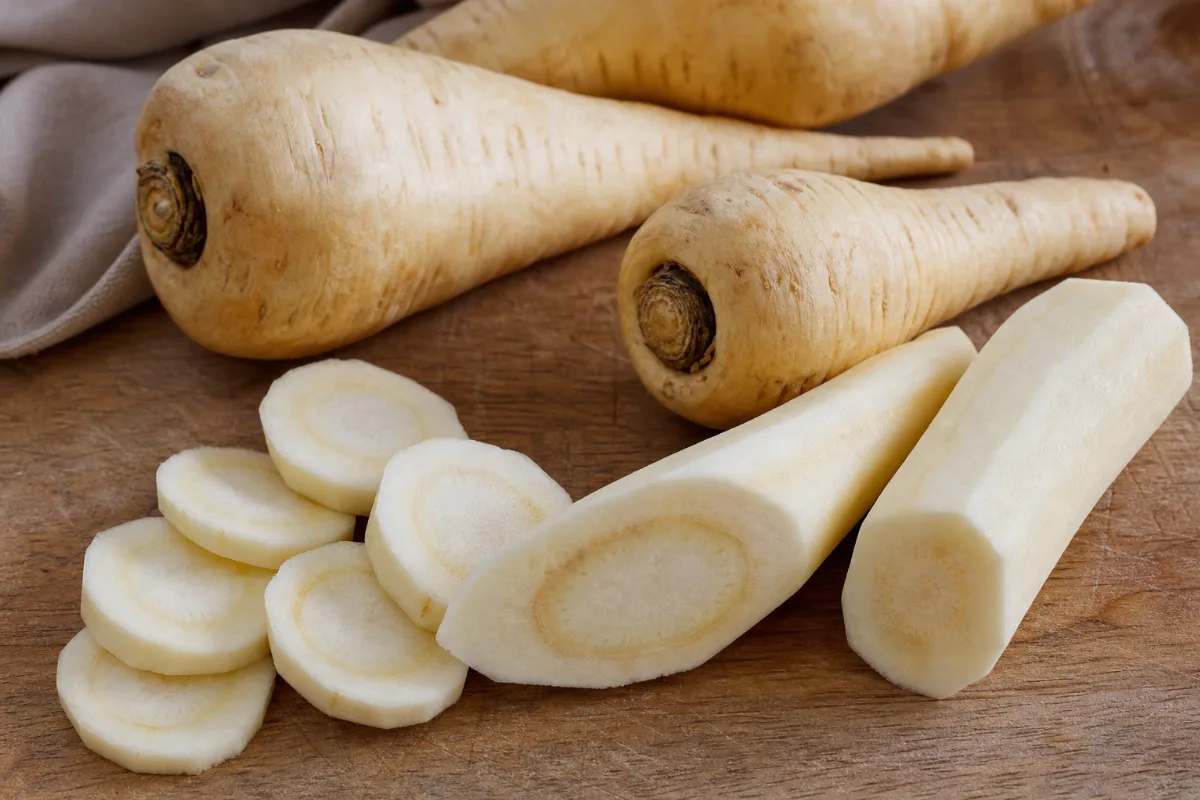
The parsnip (Pastinaca sativa) is a root vegetable in the carrot and celery family (Apiaceae). The pale, sweet root is the part eaten. People eat parsnips for fiber, folate, potassium and vitamin C. This page keeps the whole food apart from supplements and extracts, and it does not use hype. It is information, not a plan for what to eat. Research on parsnips themselves is thin, and we say so below.
Read this first
- Allergy: any food can cause an allergic reaction. For trouble breathing or swelling of the face or throat, call 911. See food allergy basics and emergency signs.
- Wild parsnip is not the same as the vegetable on your plate. Sap from the stems and leaves of the wild plant can cause blistering skin reactions when skin is then exposed to sunlight. The sources we read describe skin contact, not eating the cultivated root. [8][9]
- Potassium: one cup of sliced parsnip has about 499 mg of potassium (our arithmetic from USDA). MedlinePlus says people with chronic kidney disease may need a diet that limits potassium, so ask your kidney team. [1][5]
- Evidence in one line: NHS counts parsnips as a vegetable portion, and vegetables in general are linked to better health in observational studies. We found no human trial testing parsnips themselves for a disease. [2][10]
What is in it (USDA values)
| Nutrient | Per 100 g | Per 1 cup, slices (133 g) | % Daily Value per serving |
|---|---|---|---|
| Energy | 75 kcal | 100 kcal | n/a |
| Fiber | 4.9 g | 6.5 g | 23% |
| Total sugars | 4.8 g | 6.4 g | n/a |
| Vitamin C | 17 mg | 22.6 mg | 25% |
| Vitamin K | 22.5 mcg | 29.9 mcg | 25% |
| Folate (DFE) | 67 mcg | 89 mcg | 22% |
| Manganese | 0.56 mg | 0.74 mg | 32% |
| Copper | 0.12 mg | 0.16 mg | 18% |
| Vitamin E | 1.49 mg | 1.98 mg | 13% |
| Potassium | 375 mg | 499 mg | 11% |
| Magnesium | 29 mg | 38.6 mg | 9% |
| Vitamin A (RAE) | 0 mcg | 0 mcg | 0% |
Source: USDA FoodData Central, parsnips, raw (SR Legacy, item 170417). [1] % Daily Value uses the FDA 2016 Daily Values; values vary with variety, ripeness and storage. Per-serving figures are our arithmetic from the USDA per-100 g values.
Parsnips are not orange: USDA lists no carotenes or vitamin A for the raw root. A 2026 review describes the root as rich in starch, fiber, vitamin C and minerals, and lists furanocoumarins among its plant compounds. [6] Another review of 46 articles lists furanocoumarins, flavonoids, polyacetylenes and essential oils, and says there are few clinical studies of parsnip. [7] The effects reported in those reviews (antioxidant, anti-diabetic and others) come mainly from lab and animal work, not from people. [6][7]
What research says
| Health goal | What the sources found | Strength of evidence | What was studied |
|---|---|---|---|
| Digestion and regularity | NHS says higher fiber intake aids digestion and helps prevent constipation, and lists vegetables among fiber sources. A cup of parsnip has about 6.5 g of fiber, 23% of the Daily Value (USDA). [3][1] | Promising but limited (fiber in general; no parsnip trial found) | Fiber from mixed foods |
| Heart disease, cancer and early death | A meta-analysis of 95 prospective studies linked higher fruit and vegetable intake with lower risk. It did not single out parsnips. [10] | Promising but limited (observational, cannot prove cause) | Cohort studies of fruit and vegetables combined |
| Folate intake and pregnancy | MedlinePlus says enough folate before and during pregnancy can help prevent major birth defects of the brain or spine. A cup of parsnip gives about 22% of the Daily Value (USDA). [4][1] | Established (for the vitamin; parsnips are one source) | Folate in general, not a parsnip trial |
| Blood pressure | MedlinePlus says a potassium-rich diet helps offset some harmful effects of sodium on blood pressure. [5] | Insufficient evidence for parsnips specifically | Potassium in general |
| Antioxidant, anti-diabetic, liver and other claimed benefits | Reviews list these activities for parsnip and say clinical validation is still needed. [6][7] | Lab or animal only | Extracts, cells and animals |
| Treating any disease with parsnips | Proper evidence not found in the sources we read (searched Europe PMC for parsnip studies). | Insufficient evidence | N/A |
Eaten as food vs taken as a supplement or extract. The human findings above are about fiber, folate and vegetables eaten as food. The results that point to special health effects of parsnip come from extracts, isolated compounds, cells and animals. A result in a mouse for an extract does not tell us what a plate of roasted parsnips does. We do not cover parsnip supplements.
How much is a normal serving
- NHS: 80 g of fresh, canned or frozen vegetables is one portion of the 5 A DAY, and the page says sweet potatoes, parsnips, swedes and turnips do count (ordinary potatoes do not). Page last reviewed 9 June 2026. [2] Eighty grams is a little over half a cup of sliced parsnip (the USDA household portion is 1 cup, slices, 133 g). [1]
- WHO: at least 400 g of fruits and vegetables a day for people older than 10 (fact sheet date 26 January 2026). [12]
- NHS gives a target of 30 g of fiber a day for adults (page last reviewed 2 March 2026). [3]
- These are official figures, information only, not a prescription.
- Cooking: we did not find a source on how roasting or boiling changes parsnip nutrients. Proper evidence not found.
Safety, allergy and medicines
- Allergy: we did not find a source describing a parsnip allergy rate. Any food can cause an allergic reaction. For trouble breathing or swelling of the face or throat, call 911.
- Wild parsnip sap and the skin: a 2018 case report describes a woman who developed blistering, later dark patches, after contact with wild parsnip on a prairie; the stems and leaves contain furocoumarins that react when activated by ultraviolet light (sunlight). [9] A 2024 review names Pastinaca sativa among phototoxic plants, explains that furanocoumarins plus UV light cause redness, blisters and dark skin patches (phytophotodermatitis), and recommends protective clothing such as long sleeves and gloves. [8] A 2021 review calls phototoxicity the main side effect of parsnip, usually from direct skin contact. [7] If sap gets on your skin, seek advice from a clinician or pharmacist. We could not read a source on giant hogweed, so we make no claim about it.
- Eating the root: we did not find a source measuring furanocoumarins in the cultivated root or linking eating parsnips to a skin reaction. Proper evidence not found.
- Kidney disease and potassium: parsnip has 375 mg potassium per 100 g (8% Daily Value). [1] MedlinePlus says healthy kidneys keep potassium at the right level, that with chronic kidney disease the kidneys may not remove extra potassium, and that some medicines can raise potassium; it does not name the medicines. [5] See foods, kidney disease, potassium and oxalates.
- Medicines and vitamin K: a cup has about 25% of the vitamin K Daily Value (USDA). [1] We did not read a source on parsnips and warfarin, so we make no claim. People on warfarin should ask their prescriber. See foods and medicine interactions.
- Sugar and diabetes: USDA lists 4.8 g of sugars and about 18 g of carbohydrate per 100 g. [1] We did not read a source linking eaten parsnips to blood sugar, so we make no claim.
- Pregnancy, bloating and pesticide residues: Proper evidence not found in the sources we read.
Choosing, storing and food safety
- Choose produce that is not bruised or damaged; cut away damaged areas. [11]
- Rinse all produce under running water and scrub firm items with a clean brush, even if you will peel it. Do not use soap or produce wash. [11]
- Keep perishable produce refrigerated at 40°F or below and keep raw produce away from raw meat. [11]
- Only eat parsnips you bought or grew yourself. Do not pick wild plants for food unless an expert has identified them. See fresh, frozen and canned produce.
Related pages
Health connections for Parsnips
What research links to eating or drinking this food, and how strong the evidence is. Many studies are observational or use juice, powder, oil or extracts rather than the food as eaten; each card says which.
Fiber and digestion
Preliminary or mixedA cup of raw sliced parsnip has about 6.5 g of fiber (23% of the Daily Value). NHS says higher fiber intake aids digestion and helps prevent constipation.
Supplements: Not a supplement topic; no parsnip-specific trial found.
Counts toward 5 A DAY
Established roleNHS says parsnips count as a vegetable portion (80 g), unlike ordinary potatoes.
Supplements: Not applicable.
Vegetable intake and long-term health
Preliminary or mixedMeta-analysis of prospective studies links higher fruit and vegetable intake with lower risk of heart disease, cancer and early death; parsnips were not singled out.
Supplements: Observational only; does not show parsnips prevent disease.
Folate and pregnancy
Deficiency linkA cup provides about 22% of the folate Daily Value. MedlinePlus says enough folate before and during pregnancy helps prevent major birth defects of the brain or spine.
Supplements: Role of the vitamin, not a parsnip trial.
Potassium and blood pressure
Preliminary or mixedParsnip has 375 mg potassium per 100 g. MedlinePlus says a potassium-rich diet helps offset some effects of sodium on blood pressure.
Supplements: Not applicable; no parsnip-specific evidence.
Parsnip-specific research is thin
Lab or animal research onlyReviews list antioxidant, anti-diabetic and other activities, mostly from lab and animal work, and say few clinical studies exist.
Supplements: No parsnip supplement evidence in people found.
Furanocoumarins in the eaten root
Not enough evidenceReviews list furanocoumarins among parsnip compounds, but we found no source measuring them in the cultivated root or linking eating parsnips to a skin reaction or medicine interaction.
Supplements: Unknown.
Connected topics
Open a group to see how each topic connects and how strong the evidence is.
Health goals (3)
- Digestive SupportPreliminary or mixed
Fiber from parsnip supports digestion in general; no parsnip trial found.
- Gut HealthPreliminary or mixed
Fiber contributes to digestive health in general (NHS).
- Preventive WellnessPreliminary or mixed
Counts toward 5 A DAY; vegetable intake is linked to better health in observational studies.
Body systems (5)
- Digestive SystemPreliminary or mixed
Parsnip provides fiber (about 6.5 g per cup); NHS links higher fiber intake with digestion and preventing constipation. No parsnip-specific trial was found.
- Gut HealthPreliminary or mixed
Fiber supports digestion in general (NHS); this is not a parsnip-specific finding.
- Kidney & UrinaryDocumented risk
Parsnip is a source of potassium, which people with chronic kidney disease may need to limit (MedlinePlus).
- Urinary SystemDocumented risk
Potassium in parsnip matters for people whose kidneys cannot remove extra potassium (MedlinePlus).
- Integumentary SystemDocumented risk
Sap of the wild plant can cause a sunlight-triggered skin reaction; sources describe skin contact, not eating the root.
Body parts (3)
Functional actions (1)
- Digestive SupportPreliminary or mixed
Provides fiber; NHS links fiber with digestion and preventing constipation.
Root causes (1)
- Poor DietPreliminary or mixed
Eating vegetables is part of a balanced diet; parsnip adds fiber, folate and potassium.
Habits (1)
- Balanced NutritionPreliminary or mixed
NHS counts parsnips toward 5 A DAY; the benefit of the overall pattern is observational.
Conditions & symptoms (4)
- ConstipationPreliminary or mixed
NHS says higher fiber intake helps prevent constipation; parsnip is a fiber source but no parsnip trial was found.
- HyperkalemiaDocumented risk
People with kidney disease may need to limit potassium; parsnip has about 499 mg per cup.
- Neural Tube DefectsDeficiency link
MedlinePlus ties enough folate to preventing these birth defects; parsnip provides about 22% of the folate Daily Value per cup, but no parsnip trial exists.
- Photosensitivity of SkinDocumented risk
Contact with wild parsnip sap followed by sunlight can cause blistering (phytophotodermatitis); sources describe skin contact, not eating.
Documented risks and interactions (2)
- Wild parsnip sap and skin reactions. Sap from the stems and leaves of wild parsnip can cause blistering and dark patches when skin is exposed to sunlight (phytophotodermatitis). Reviews advise protective clothing.
- Potassium and kidney disease. MedlinePlus says people with chronic kidney disease may need to limit potassium and that some medicines can raise potassium. A cup of parsnip has about 499 mg.
Frequently asked questions
Are parsnips good for you?
They provide fiber, folate, vitamin C and potassium, and NHS counts them toward 5 A DAY. [1][2] Studies linking vegetables to better health are observational and do not single out parsnips. [10]
Do parsnips count as one of my 5 A DAY?
Yes. NHS says parsnips count, unlike ordinary potatoes, and that 80 g of fresh, canned or frozen vegetables is one portion. [2]
Are parsnips high in potassium?
A cup of sliced raw parsnip has about 499 mg, 11% of the Daily Value (our arithmetic from USDA). [1] People with kidney disease may need to limit potassium and should ask their kidney team. [5]
Can wild parsnip burn your skin?
Yes, it can. Sap from the stems and leaves of the wild plant can cause a blistering reaction when the skin is exposed to sunlight, and reviews advise protective clothing. [8][9] The sources we read describe skin contact, not eating the cultivated root.
Do parsnips have vitamin A like carrots?
No. USDA lists no vitamin A or carotenes for raw parsnips. [1] They are a better source of fiber, folate and potassium.
References
- U.S. Department of Agriculture. Parsnips, raw, FoodData Central item 170417 (SR Legacy). April 2018 release. Read 2026-10-23.
- NHS. 5 A DAY: what counts. Last reviewed 9 June 2026. Read 2026-10-23.
- NHS. How to get more fiber into your diet. Last reviewed 2 March 2026. Read 2026-10-23.
- MedlinePlus. Folic acid. Updated 13 July 2023. Read 2026-10-23.
- MedlinePlus. Potassium. Updated 8 September 2025. Read 2026-10-23.
- Khatua S et al. Pastinaca sativa L.: nutritional composition, phytochemistry, and pharmacological properties supporting its potential as a functional food and therapeutic agent. Food Sci Nutr 2026. PMID 42110206. Abstract read 2026-10-23.
- Kenari HM et al. Review of pharmacological properties and chemical constituents of Pastinaca sativa. J Pharmacopuncture 2021. PMID 33833896. Abstract read 2026-10-23.
- Grosu Dumitrescu C et al. New insights concerning phytophotodermatitis induced by phototoxic plants. Life (Basel) 2024. PMID 39202761. Abstract read 2026-10-23.
- Walling AL, Walling HW. Phytophotodermatitis induced by wild parsnip. Dermatol Online J 2018. PMID 29630166. Abstract read 2026-10-23.
- Aune D et al. Fruit and vegetable intake and the risk of cardiovascular disease, total cancer and all-cause mortality. Int J Epidemiol 2017. PMID 28338764. Abstract read 2026-10-23.
- U.S. Food and Drug Administration. Selecting and Serving Produce Safely. Content current as of 3 May 2024. Read 2026-10-23.
- World Health Organization. Healthy diet fact sheet. 26 January 2026. Read 2026-10-23.