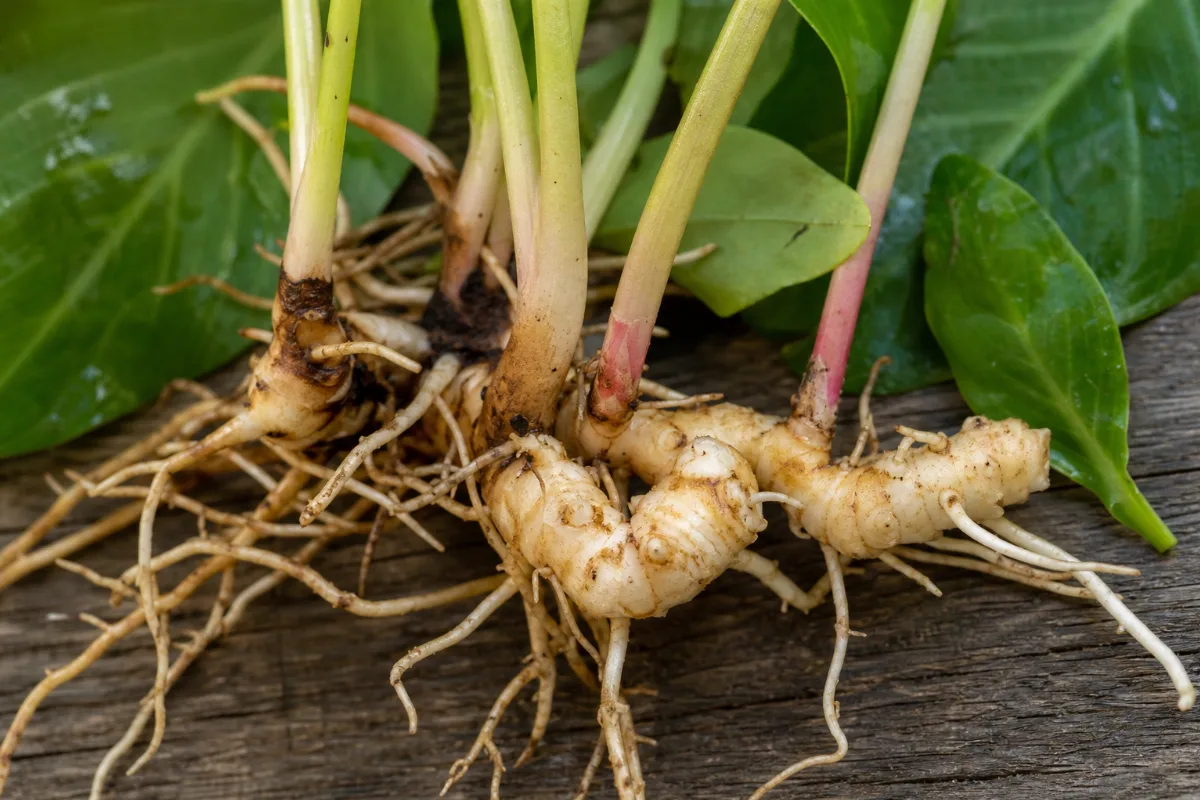
Herbs & Botanicals · Southwestern wetland root herb
Yerba Mansa
Anemopsis californica · also called Yerba mansa, lizard's tail, swamp root
Yerba mansa is a root of wet places in the American Southwest, traditionally used as a mouth rinse and for wounds, infections and inflammation. No trial in people has tested it, so we cannot say it helps. The evidence is test-tube work with oils and extracts. The key caution: the root oil of some plants is rich in methyleugenol, which causes liver tumours in rats, and there is no safety data for pregnancy.
General information, not medical advice. Last substantive update · Not medically reviewed. A named clinician has not signed off on this page. How this page is made
About Yerba Mansa
Yerba mansa (Anemopsis californica) is a wetland plant of the Southwest whose root has been used for gums, wounds and infection. Research is limited to the lab, and the main safety question is methyleugenol in the root oil.
What it is
Yerba mansa is a perennial herb of the lizard's-tail family that grows in wet ground in the southwestern United States and northern Mexico. The root and rhizome are the parts used. It is not the same plant as yerba santa, which has a similar name.
Other names include lizard's tail and swamp root.
What makes it distinctive
Wild plants differ in their oil. A study of 17 New Mexico populations found three types: one high in elemicin, one high in methyleugenol, and one high in piperitone and thymol. The roots also hold two lignans, sesamin and asarinin, at about 1 to 3 grams per kilogram in extracts.
So two bottles of yerba mansa can contain quite different chemistry.
What people use it for
Native American groups of the Southwest used topical preparations for inflammation and infection. Herbalists use the root tea as a mouth rinse for gums and mouth sores, and washes or poultices for wounds. It is also used traditionally for colds and cough. Long use is not proof that it works.
What the research shows
We found no trial in people. A PubMed search of the plant name found only lab, chemistry and plant-science papers.
In test tubes, leaf oil slowed three of 11 microbes, and two root lignans slowed mycobacteria. An extract was less effective against Staphylococcus aureus than sage or eucalyptus. Extracts slowed some cancer cell lines in dishes, with mixed results between studies. In skin cells an extract lowered inflammatory signals. These findings use oils, solvent extracts or isolated compounds, not tea.
At a glance
Traditional uses history, not proof
- Mouth and gum rinse (root tea)
- Wounds and skin infections (wash or poultice)
- Inflammation and infections (topical, Native American use)
- Colds and cough
Studied for research
- Infections: slowed some bacteria in the lab only
- Inflammation and skin protection: cell studies only
- Cancer cells: slowed some cell lines in dishes only
- Antioxidant and mutation tests: lab only
- Gums, mouth sores, wounds, colds: tradition, no trials
Main compounds
- Methyleugenol (varies by plant; a rodent carcinogen)
- Elemicin, piperitone and thymol (oil types)
- Sesamin and asarinin (root lignans)
- Tannins (claimed, not measured in our sources)
Common forms
- Root tea
- Tincture
- Capsule or powder
- Mouth rinse or gargle
- Wash, poultice or salve
- Essential oil (not for swallowing)
Research links: Antimycobacterial lignans from the roots (2014) · Chemotypic variation of the essential oils (2008) · Leaf oil composition and antimicrobial activity (2005) · Anti-Staphylococcus aureus comparison of herbs (2014) · Methyleugenol margin-of-exposure review (2010) · Anti-cancer cell study, breast and colon lines (2010) · Research Library · Genes & Biomarkers Library
The plant and its history
- Accepted scientific name
- Anemopsis californica (Nutt.) Hook. & Arn.
- Naming authority
- (Nutt.) Hook. & Arn.
- Common names
- Yerba mansa (English/Spanish); Lizard's tail (English); Swamp root (English)
- Botanical family
- Saururaceae (lizard's-tail family)
- Classification
- Plantae > Piperales > Saururaceae > Anemopsis > Anemopsis californica
- Native range
- Southwestern North America (deserts of the southwestern US and northern Mexico), per the papers' descriptions; a full range was not checked.
- Habitat
- Wet ground such as marshes and wetlands (it is used in constructed wetlands and found in Amargosa marsh diets); needs wet soil, per United Plant Savers (summary-only).
- What the plant looks like
- Roots: Roots and rhizomes are the medicinal part; oil and lignans are higher in roots than leaves.; Stems: Not described.; Leaves: Leaf volatiles studied; elemicin main component.; Flowers: Not described.; Fruit: Not described.
- Cultivation
- Greenhouse cultivation has been done (one-year greenhouse roots had different root fungi).
- Harvest and processing
- Wild harvest from wetlands is the common source; United Plant Savers recommends cultivated plants (summary-only).
- Look-alikes and adulterants
- Name: Yerba santa (Eriodictyon); Note: Similar-sounding name, a different plant, per our existing summary.
- Sustainability and conservation
- Listed as At-Risk by United Plant Savers because wetland habitat has shrunk (summary-only; not independently checked).
Traditional use and history history, not clinical proof
| Tradition or era | Documented use | Source |
|---|---|---|
| Southwestern US and northern Mexico, Native American | Topical preparations for inflammation and infections. | p24687738 |
| Southwestern herbal practice | Root tea as a mouth and gum rinse; washes and poultices for wounds; colds and cough (NOT verified: herbalist and consumer sources carried over from summary, not re-opened). | s-hobbs |
Traditional use shows how a plant was used. It does not show that a supplement works or is safe today.
What is inside, and how it may work
What the plant contains and how those compounds act in cells and animals. Laboratory and animal mechanisms are not proven effects in people.
Main compounds
| Compound | Family | Where it is concentrated | Activity studied | Level of evidence |
|---|---|---|---|---|
| Methyleugenol PubChem 7127 | phenylpropanoid | root and rhizome oil (one chemotype); leaf volatiles High in one of three oil types; amount in products unknown. | Rodent liver carcinogen as a pure compound; on the US NTP carcinogen list. 12 11 16 | Animal research |
| Elemicin PubChem 10248 | phenylpropanoid | root and rhizome oil (one chemotype); main leaf volatile Main component of leaf volatiles; high in one oil type. | Toxicity data missing (cancer, genotoxicity, reproductive). 11 12 8 | Insufficient |
| Piperitone PubChem 6987 | monoterpene ketone | root and rhizome oil (one chemotype) High in the piperitone and thymol oil type. | Not studied for activity here. 12 | Insufficient |
| Thymol PubChem 6989 | monoterpenoid phenol | root and rhizome oil (one chemotype) High in the piperitone and thymol oil type. | Not studied for activity here. 12 | Insufficient |
| Sesamin PubChem 72307 | furofuran lignan | root 1.7 to 3.1 g/kg in root extracts; 0.13 g/kg in leaves. | Slowed environmental mycobacteria in the lab (MIC 23 to 395 micromolar for the pair with asarinin). 1 | Laboratory research |
| Asarinin PubChem 101612 | furofuran lignan | root 1.1 to 1.7 g/kg in root extracts; 0.13 g/kg in leaves. | Slowed environmental mycobacteria in the lab. 1 | Laboratory research |
| Alpha-pinene | monoterpene | leaf oil Not given. | Accounted for part of the leaf oil's germ-slowing in the lab. 11 | Laboratory research |
| Tannins | polyphenols | root Not measured in sources read; tannin claim comes from the herbalist summary only (NOT verified). | Thought to cause the gum-tightening (astringent) traditional action; untested. 3 | Insufficient |
Mechanisms, receptors and pathways
| Target or pathway | Gene or receptor | What was found | Level |
|---|---|---|---|
| ERK1/2 signalling in breast cancer cells | ERK1/2 (MAPK1/3) | Extracts lowered ERK1/2 activity in breast cancer cell lines. 4 19 | Laboratory research |
| MAPK, NRF2 and NFATc1 in skin cells | NRF2, NFATc1 | Extract activated the antioxidant NRF2 system and reduced MAPK phosphorylation and NFATc1 movement in cells. 14 | Laboratory research |
| Bacterial growth | not established | Isolated lignans and leaf oil slowed some bacteria; the mechanism is unknown. 1 11 | Laboratory research |
Absorption, metabolism and elimination
- Absorption
- Not studied in people.
- Distribution
- Not studied.
- Metabolism
- Not studied for yerba mansa. For pure methyleugenol, the suspected cancer-causing metabolite is a 1'-sulphate ester (review of rodent data).
- Elimination
- Not studied.
- Bioavailability
- Not established.
Isolated compounds versus whole extracts
Almost all lab results come from oils, solvent extracts or isolated compounds (sesamin, asarinin). Tea and capsules were not tested, so lab results do not show what the traditional forms do.
Nutritional composition
Yerba mansa is a medicinal herb, not a nutrient.
4 very low certainty3 not enough evidence
What is Yerba Mansa good for?
What yerba mansa has been studied for and how strong the evidence is. Nothing here is proven in people.
Benefits, one by one
Each card is a research question, not a promise. Tap a goal to filter. Open a card to see the studies, doses and limits.
Gum and mouth rinse (traditional)
Not enough evidenceHerbalists describe yerba mansa root tea as a rinse or gargle for sore gums and mouth sores. No study in people was found, so we cannot say it helps.
1 studiesTraditional use is a root tea rinse; no tested product.
Studies, doses and limits
What the trials found
No human trial of yerba mansa was found.
Results
No human results exist.
Effect sizes as reported
None available.
Why this rating
Tradition only; no trial, not even a small one.
Form and dose studied
Traditional use is a root tea rinse; no tested product.
Who was studied
Not studied.
Limits
Tannin content of the root was not measured in the sources we read. Plant chemistry varies between wild populations.
Why researchers looked
The root contains tannins, which tighten tissue, and the plant is used as a mouth rinse in Southwestern herbal tradition.
Traditional use
Root tea used as a mouthwash or gargle in herbal practice. The source is an herbalist database that says no human studies exist and that parts were AI-drafted (summary-only).
Proposed mechanism Pharmacological theory
Tannins are thought to tighten gum tissue, but this was not tested for yerba mansa.
A proposed mechanism does not show that the effect happens in people.
Do not swallow rinses made from plants whose oil content is unknown; see the safety tab on methyleugenol.
Germ-slowing activity in the lab (infections)
Very low certaintyYerba mansa oils and root compounds slowed some bacteria in test tubes. This is not a test of tea or capsules in people, and the effect on a common skin germ was modest compared with other herbs.
3 studiesLab used steam-distilled leaf oil, root extracts and isolated compoun…
Studies, doses and limits
What the trials found
No human trial of yerba mansa against any infection was found.
Results
Leaf oil slowed 3 of 11 microbes (S. aureus, S. pneumoniae, Geotrichum candidum). Sesamin and asarinin had MIC values of 23 to 395 micromolar against five nontuberculous mycobacteria species. A yerba mansa extract gave an MIC of 360 micrograms/mL against S. aureus and cut growth 10,000-fold, less than sage, eucalyptus or creosote bush (about a million-fold).
Effect sizes as reported
MIC 23 to 395 micromolar (isolated lignans); MIC 360 micrograms/mL (extract vs S. aureus).
Why this rating
Test-tube work only, with oils, solvent extracts and isolated compounds.
Form and dose studied
Lab used steam-distilled leaf oil, root extracts and isolated compounds; tea and capsules were not tested.
Who was studied
Not applicable.
Limits
Results with isolated compounds or oils do not show that tea works in the body. Some herbs allowed bacteria to recover at lower doses.
Why researchers looked
Southwestern Native American groups used topical preparations for inflammation and infections, which led researchers to test the plant against microbes.
Traditional use
Topical use for inflammation and infection by tribes of the southwestern US and northern Mexico (stated in the 2014 paper).
Proposed mechanism Laboratory research
Two root lignans, sesamin and asarinin, accounted for most of the root extract activity against nontuberculous mycobacteria in the lab. Alpha-pinene explained part of the leaf oil effect.
A proposed mechanism does not show that the effect happens in people.
Essential oils can be harmful if swallowed or put on skin undiluted; the leaf oil also contained methyl eugenol (see safety).
Wounds and skin (traditional, topical)
Not enough evidenceWashes and poultices of yerba mansa have been used on wounds and skin infections. No wound-healing trial exists, and the lab work does not show that it heals skin.
3 studiesTraditional washes and poultices; no tested product.
Studies, doses and limits
What the trials found
No human or animal wound-healing study was found.
Results
In UVB-damaged dermal fibroblasts, the extract restored procollagen production; in stimulated macrophages it lowered inflammatory mediators (cytokines, iNOS, COX-2).
Effect sizes as reported
Not given in the abstract.
Why this rating
Tradition plus cell-culture work; no wound study.
Form and dose studied
Traditional washes and poultices; no tested product.
Who was studied
Not studied.
Limits
Cells in dishes cannot show healing of a real wound. The plant part used was not stated in the abstract.
Why researchers looked
It is described as a wound herb in Southwestern tradition and its extracts slowed some microbes in the lab.
Traditional use
Topical washes, poultices and salves by Native American tribes and herbalists.
Proposed mechanism Laboratory research
In cells, an extract lowered inflammatory gene activity and restored collagen production after UV damage, linked to NRF2, MAPK and NFATc1 pathways.
A proposed mechanism does not show that the effect happens in people.
Do not put unknown plant preparations on open wounds or infected skin without medical advice; infections can spread.
Colds, cough and sore throat (traditional)
Not enough evidenceA consumer drug reference lists traditional use for colds, mucus, cough and throat problems but rates the evidence insufficient. No study in people was found.
1 studiesNo tested product.
Studies, doses and limits
What the trials found
No human trial of yerba mansa was found.
Results
No human results exist.
Effect sizes as reported
None available.
Why this rating
Tradition only; the consumer reference itself rates evidence as insufficient.
Form and dose studied
No tested product.
Who was studied
Not studied.
Limits
Single consumer-reference source that we did not re-open.
Why researchers looked
Listed as a traditional remedy for colds and chest complaints.
Traditional use
Traditional use for colds, phlegm, cough and throat problems (consumer reference, summary-only).
Proposed mechanism Pharmacological theory
Not established.
A proposed mechanism does not show that the effect happens in people.
None specific beyond the general cautions.
Inflammation (traditional; cell studies)
Very low certaintyTraditionally used for inflammation. In cells, an extract lowered inflammatory signals, but nobody has tested this in animals with inflammation or in people.
2 studiesNo tested product.
Studies, doses and limits
What the trials found
No human study was found.
Results
Lower inflammatory gene signals in a macrophage cell model.
Effect sizes as reported
Not given in the abstract.
Why this rating
Cell culture only.
Form and dose studied
No tested product.
Who was studied
Not studied.
Limits
Cells only; plant part not stated in the abstract.
Why researchers looked
Southwestern tradition uses topical preparations for inflammation.
Traditional use
Native American topical use for inflammation (2014 paper).
Proposed mechanism Laboratory research
The extract lowered mRNA of cytokines, iNOS and COX-2 in stimulated macrophages and reduced MAPK phosphorylation in cells.
A proposed mechanism does not show that the effect happens in people.
None specific.
Cancer cell lines in the lab
Very low certaintySome root and other extracts slowed the growth or movement of certain human cancer cell lines in dishes. This often does not carry over to people, and no human cancer study exists.
4 studiesLab used solvent extracts and steam-distilled oil, not tea or capsule…
Studies, doses and limits
What the trials found
No human cancer study was found.
Results
Ethyl acetate root extract slowed growth of HCT-8, Hs 578T and MCF-7/AZ cells. Aqueous and ethanol extracts slowed MCF-7/AZ growth but not HCT8/E11 colon cells in another study. Root oil slowed AN3CA and HeLa cells (IC50 about 0.05% v/v) but not lung, breast, prostate or colon lines.
Effect sizes as reported
IC50 about 0.056% and 0.052% v/v for root oil (AN3CA, HeLa).
Why this rating
Cell lines only; results differ between studies and cell types (one study found aqueous extract did not slow growth but cut invasion).
Form and dose studied
Lab used solvent extracts and steam-distilled oil, not tea or capsules.
Who was studied
Not applicable.
Limits
Cell results are a first step and most do not work in people. Extracts that slow cells in dishes may harm normal cells too.
Why researchers looked
Native American groups use the plant for many conditions, and researchers screened it against cancer cells.
Traditional use
Used traditionally for many illnesses (as stated by the papers' authors).
Proposed mechanism Laboratory research
Lower ERK1/2 activity in breast cancer cells; ethyl acetate root extract slowed three lines; root oil slowed AN3CA and HeLa cells.
A proposed mechanism does not show that the effect happens in people.
Do not use yerba mansa as a cancer treatment. The root oil can contain methyleugenol, which causes liver tumours in rats (see safety).
Antioxidant and anti-mutation lab tests
Very low certaintyLeaf and stem extracts from Mexico showed antioxidant activity in chemical tests and caused no mutations in one bacterial test. This is lab chemistry, not a health benefit shown in people.
1 studiesMethanol extracts of leaf and stem; the root and tea were not tested.
Studies, doses and limits
What the trials found
No human study was found.
Results
No mutation in the Ames test for either extract; fewer mutations caused by 2AA; protection against two other mutagens only at low exposure (under 10 micrograms per dish).
Effect sizes as reported
Not given in the abstract.
Why this rating
Bacterial and chemical assays on leaf and stem methanol extracts from one region.
Form and dose studied
Methanol extracts of leaf and stem; the root and tea were not tested.
Who was studied
Not applicable.
Limits
The Ames test is one screen and a negative result does not clear a plant from cancer risk.
Why researchers looked
To see whether the plant protects against DNA damage and oxidation.
Traditional use
Not stated.
Proposed mechanism Laboratory research
Phenol-rich extracts neutralised a test radical (DPPH); the stem extract was strongest.
A proposed mechanism does not show that the effect happens in people.
The methyleugenol in some root oils is a separate concern (see safety).
Connections to the rest of health
How Yerba Mansa connects to the rest of our health knowledge graph. Every link says what kind of connection it is. A safety link (for example to the liver) is a warning, not a benefit. A study that merely mentions a topic never creates a benefit link.
Explore every connection: goals, body systems, organs, symptoms, genes
A. Wellness goals
| Connected to | Kind of connection | Evidence status | Context | Studies |
|---|---|---|---|---|
| Oral Health | Traditional use | Not enough evidence | Gum and mouth rinse (traditional): Herbalists describe yerba mansa root tea as a rinse or gargle for sore gums and mouth sores. No study in people was found, so we cannot say it helps. | 3 |
| Immune Support | Preliminary mechanism | Very low certainty | Germ-slowing activity in the lab (infections): Yerba mansa oils and root compounds slowed some bacteria in test tubes. This is not a test of tea or capsules in people, and the effect on a common skin germ was modest compared with other herbs. | 11 1 17 |
| Healthy Skin | Traditional use | Not enough evidence | Wounds and skin (traditional, topical): Washes and poultices of yerba mansa have been used on wounds and skin infections. No wound-healing trial exists, and the lab work does not show that it heals skin. | 14 3 1 |
| Immune Support | Traditional use | Not enough evidence | Colds, cough and sore throat (traditional): A consumer drug reference lists traditional use for colds, mucus, cough and throat problems but rates the evidence insufficient. No study in people was found. | 15 |
| Respiratory Health | Traditional use | Not enough evidence | Colds, cough and sore throat (traditional): A consumer drug reference lists traditional use for colds, mucus, cough and throat problems but rates the evidence insufficient. No study in people was found. | 15 |
| Inflammation Balance | Preliminary mechanism | Very low certainty | Inflammation (traditional; cell studies): Traditionally used for inflammation. In cells, an extract lowered inflammatory signals, but nobody has tested this in animals with inflammation or in people. | 14 1 |
| Cellular Protection | Preliminary mechanism | Very low certainty | Cancer cell lines in the lab: Some root and other extracts slowed the growth or movement of certain human cancer cell lines in dishes. This often does not carry over to people, and no human cancer study exists. Antioxidant and anti-mutation lab tests: Leaf and stem extracts from Mexico showed antioxidant activity in chemical tests and caused no mutations in one bacterial test. This is lab chemistry, not a health benefit shown in people. | 9 4 19 12 6 |
B. Body systems
| Connected to | Kind of connection | Evidence status | Context | Studies |
|---|---|---|---|---|
| Immune Support | Biological association | Not enough evidence | Studied for: Gum and mouth rinse (traditional) | 3 |
| Immune System | Biological association | Very low certainty | Studied for: Germ-slowing activity in the lab (infections) | 11 1 17 |
| Skin Hair Beauty | Biological association | Not enough evidence | Studied for: Wounds and skin (traditional, topical) | 14 3 1 |
| Respiratory Health | Biological association | Not enough evidence | Studied for: Colds, cough and sore throat (traditional) | 15 |
| Pain Inflammation | Biological association | Very low certainty | Studied for: Inflammation (traditional; cell studies) | 14 1 |
| Cellular Health | Biological association | Very low certainty | Studied for: Cancer cell lines in the lab Studied for: Antioxidant and anti-mutation lab tests | 9 4 19 12 6 |
I. Biomarkers
| Connected to | Kind of connection | Evidence status | Context | Studies |
|---|---|---|---|---|
| Bacterial growth in culture (MIC) | Biological association | Very low certainty | Measured in trials: lowered. A lab change is not the same as a health benefit. | 17 1 11 |
| Cancer cell line growth in culture | Biological association | Very low certainty | Measured in trials: lowered. A lab change is not the same as a health benefit. | 9 4 12 |
| Inflammatory gene activity in cells | Biological association | Very low certainty | Measured in trials: lowered. A lab change is not the same as a health benefit. | 14 |
K. Biological pathways
L. Active compounds
| Connected to | Kind of connection | Evidence status | Context | Studies |
|---|---|---|---|---|
| Methyleugenol | Very low certainty | Present at high levels in one oil type; causes liver tumours in rats as a pure compound. High in one oil type of the root; causes liver tumours in rats as a pure compound. Preparation or compound: root and rhizome oil (some chemotypes) |
12 16 | |
| Methyleugenol | Biological association | Animal | Rodent liver carcinogen as a pure compound; on the US NTP carcinogen list. Preparation or compound: root and rhizome oil (one chemotype); leaf volatiles |
12 11 16 |
| Elemicin | Biological association | Not enough evidence | Toxicity data missing (cancer, genotoxicity, reproductive). Preparation or compound: root and rhizome oil (one chemotype); main leaf volatile |
11 12 8 |
| Piperitone | Biological association | Not enough evidence | Not studied for activity here. Preparation or compound: root and rhizome oil (one chemotype) |
12 |
| Thymol | Biological association | Not enough evidence | Not studied for activity here. Preparation or compound: root and rhizome oil (one chemotype) |
12 |
| Sesamin | Biological association | In vitro | Slowed environmental mycobacteria in the lab (MIC 23 to 395 micromolar for the pair with asarinin). Preparation or compound: root |
1 |
| Asarinin | Biological association | In vitro | Slowed environmental mycobacteria in the lab. Preparation or compound: root |
1 |
| Alpha-pinene | Biological association | In vitro | Accounted for part of the leaf oil's germ-slowing in the lab. Preparation or compound: leaf oil |
11 |
| Tannins | Biological association | Not enough evidence | Thought to cause the gum-tightening (astringent) traditional action; untested. Preparation or compound: root |
3 |
Each connection is stored with the ingredient, the connected record, the kind of connection, the evidence status, the supporting studies, the preparation or compound involved, and a review date (last reviewed October 25, 2026).
Evidence at a glance: what changed in 3 lab markers
Tap a number to show only those markers. Counts are markers, not people.
The evidence
The research centre for Yerba Mansa. Every record here was checked against PubMed or the publisher's page; we never list a study we have not verified.
Evidence by outcome
Bars show how many studies we found for each outcome, not how well it works. People are added up across trials only (reviews are not added, to avoid double counting).
How we rate evidence
High certainty
Several well-run trials or reviews agree; further research is unlikely to change the picture much.
Moderate certainty
Good trials point the same way, but some doubt remains.
Low certainty
Small, short or inconsistent trials. The finding could change with better research.
Very low certainty
Very little or very weak human data. Treat as a possibility only.
Mixed findings
Trials or reviews disagree with each other.
Not enough evidence
Not enough human research to say either way.
Evidence against
Good research found no benefit, or found harm.
We take the reviewers' own risk-of-bias and GRADE statements where they exist, and otherwise judge from study size, design, consistency, directness and whether a product matches what is sold. Many publications do not make evidence high. Method note: We built on our existing summary, read PubMed abstracts, and checked GBIF and PubChem. Herbalist, consumer-reference and conservation-group content was carried over from that summary and not re-opened. Most studies were read as abstracts only.
Study library: every study we checked 19
| Study | Design | People | Product, dose, length | Result |
|---|---|---|---|---|
| Bussey RO 3rd 2014 Antimycobacterial furofuran lignans from the roots of Anemopsis californica Planta Med · PMID 24687738 · DOI |
Laboratory research plant/microbes |
Root extract; five species of environmental nontuberculous mycobacteria | Yerba mansa root extract and two isolated lignans (sesamin, asarinin) root not given here not given here · vs none |
Sesamin and asarinin had MIC values of 23 to 395 micromolar against five mycobacteria species. Roots held 1.7 to 3.1 g/kg sesamin and 1.1 to 1.7 g/kg asarinin, far more than leaves (0.13 g/kg). The authors suggest most of the crude root extract activity against these bacteria comes from these two compounds. Isolated lignans slowed mycobacteria in the lab Methods, limits and fundingOutcomes: Minimum inhibitory concentration (MIC); lignan levels in root and leaf by LC-MS Limitations: Test-tube study of isolated compounds against environmental bacteria; not a skin or wound test; not tea. Funding and conflicts: No conflict of interest reported Read: abstract |
| Bussey RO 3rd 2015 Comparison of the chemistry and diversity of endophytes isolated from wild-harvested and greenhouse-cultivated yerba mansa Phytochem Lett · PMID 25642298 · DOI |
Other observational plant/fungi |
Roots from a wild population and from greenhouse-grown plants | Yerba mansa root-associated fungi root not given here not given here · vs none |
Wild-harvested roots yielded 13 fungal strains, some slowing S. aureus and Pseudomonas; roots cultivated one year in a greenhouse yielded only two genotypes with no significant antimicrobial activity. Wild and cultivated roots differed in their microbe partners Methods, limits and fundingOutcomes: Fungal strains isolated and their antimicrobial activity Limitations: Fungi from roots, not the plant extract itself; shows growing conditions change root-associated chemistry, not human effect. Funding and conflicts: Not stated in abstract Read: abstract |
| Christopher Hobbs 2026 Yerba Mansa (herbalist database entry) Herbal Therapeutics Database (partly AI-drafted) · Source |
Other observational plant |
not applicable | Yerba mansa (Anemopsis californica) root not given here not given here · vs none |
Carried over from our existing summary, not re-opened. Describes traditional use of the tea as a mouth and gum rinse and for wounds, links it to tannins, and says no human studies exist. The page says parts were AI-drafted. not applicable Methods, limits and fundingOutcomes: see results Limitations: Herbalist source, partly AI-drafted; used only for traditional-use descriptions. Funding and conflicts: not applicable Read: summary-only |
| Daniels 2006 Effects of extracts from two Native American plants on proliferation of human breast and colon cancer cell lines in vitro Oncol Rep · PMID 16596206 |
Laboratory research cell lines |
Human MCF-7/AZ breast and HCT8/E11 colon cancer cells | Yerba mansa aqueous and ethanol extracts (osha tested alongside) not stated in abstract not given here not given here · vs none |
Both yerba mansa extracts strongly slowed breast cancer cell growth in a concentration-dependent way; colon cells were unchanged. ERK1/2 activity fell. Osha extracts had no effect. Slowed one breast cancer cell line in dishes Methods, limits and fundingOutcomes: Cell growth; ERK1/2 activity Limitations: Two cell lines only; no human data. Funding and conflicts: Not stated in abstract Read: abstract |
| Del-Toro-Sanchez 2013 Modulation of antioxidant defense system after long term arsenic exposure in Zantedeschia aethiopica and Anemopsis californica Ecotoxicol Environ Saf · PMID 23688730 · DOI |
Other observational plant |
Plants in a constructed wetland fed arsenic-contaminated groundwater for 6 months | Living yerba mansa plants (leaves and stems) leaf, stem not given here not given here · vs none |
The authors describe yerba mansa as a species able to accumulate arsenic, proposed for cleaning drinking water. Plants coped with about 34 micrograms/L arsenic through enzyme responses. Plant can take up arsenic from water Methods, limits and fundingOutcomes: Antioxidant enzymes and lipid peroxidation Limitations: Studied as a clean-up plant, not as a supplement; arsenic levels in medicinal root were not measured. Funding and conflicts: Not stated in abstract Read: abstract |
| Del-Toro-Sanchez 2014 Antimutagenicity of Methanolic Extracts from Anemopsis californica in Relation to Their Antioxidant Activity Evid Based Complement Alternat Med · PMID 25152760 · DOI |
Laboratory research plant/bacteria |
Salmonella Ames test strains; leaf and stem extracts from Queretaro, Mexico | Yerba mansa leaf and stem methanol extracts leaf, stem not given here not given here · vs none |
Neither extract was mutagenic in the Ames test. The stem extract had the highest antioxidant capacity and phenol content. Mutations caused by 2AA were reduced; for two other agents, only at low exposure (under 10 micrograms per dish). No mutagenicity in one bacterial test; antioxidant activity in the lab Methods, limits and fundingOutcomes: Antioxidant (DPPH), phenols, mutagenicity and antimutagenicity Limitations: Bacteria and chemical assays; leaf and stem, not the root; the Ames test does not rule out cancer risk. Funding and conflicts: Not stated in abstract Read: abstract |
| GBIF 2026 GBIF species match: Anemopsis californica (key 3086504) GBIF · Source |
Registry or database plant |
not applicable | Yerba mansa (Anemopsis californica) whole plant not given here not given here · vs none |
GBIF API on 2026-10-25: Anemopsis californica (Nutt.) Hook. & Arn. is ACCEPTED (exact match), family Saururaceae, order Piperales. not applicable Methods, limits and fundingOutcomes: see results Limitations: Taxonomy database record. Funding and conflicts: not applicable Read: full-text |
| Gotz 2022 Myristicin and Elemicin: Potentially Toxic Alkenylbenzenes in Food Foods · PMID 35804802 · DOI |
Review not applicable |
Review of occurrence and toxicity data for myristicin and elemicin | Elemicin (related to methyleugenol) not applicable not given here not given here · vs none |
Safrole and methyleugenol are classified as genotoxic carcinogens. Reliable data on genotoxicity, cancer and reproductive toxicity are missing for elemicin and myristicin, so health risks cannot be evaluated. Elemicin safety data are missing Methods, limits and fundingOutcomes: Toxicity and occurrence data Limitations: Does not mention yerba mansa in the abstract. Funding and conflicts: No conflict of interest reported Read: abstract |
| Kaminski 2010 In vitro anticancer activity of Anemopsis californica Oncol Lett · PMID 21941602 · DOI |
Laboratory research cell lines |
Human colon (HCT-8) and breast (Hs 578T, MCF-7/AZ) cancer cell lines | Yerba mansa aqueous, ethanol and ethyl acetate extracts of bracts, leaves, roots and stems bracts, leaves, roots, stems not given here not given here · vs none |
Ethyl acetate extracts were mostly more toxic than aqueous or ethanol ones. The ethyl acetate root extract clearly slowed growth of all three lines; the aqueous root extract changed how the cells migrated. Slowed cancer cell growth in dishes Methods, limits and fundingOutcomes: Cell growth and migration Limitations: Cell lines only; solvent extracts that people do not drink; no normal-cell comparison reported in abstract. Funding and conflicts: Not stated in abstract Read: abstract |
| Karpiscak 2001 Nutrient and heavy metal uptake and storage in constructed wetland systems in Arizona Water Sci Technol · PMID 11804134 |
Other observational plant |
Plants in natural and constructed wetlands, Arizona | Yerba mansa and other wetland plants (tissue analysis) root, leaf not given here not given here · vs none |
Across the herbaceous plants studied, which included yerba mansa, root tissues generally held the highest concentrations of the nutrients and heavy metals measured (Na, P, K, Cu, Pb, Zn). Roots of wetland herbs can store metals Methods, limits and fundingOutcomes: Nutrient and heavy-metal content of plant tissue Limitations: Group result across species; not specific to yerba mansa root products. Funding and conflicts: Not stated in abstract Read: abstract |
| Medina 2005 Composition and Antimicrobial Activity of Anemopsis californica leaf oil J Agric Food Chem · PMID 16248573 · DOI |
Laboratory research plant/microbes |
Leaf volatiles from wild New Mexico plants; 11 microbial species | Yerba mansa steam-distilled leaf oil leaf not given here not given here · vs none |
38 compounds found; elemicin was the main one, and methyl eugenol was usually present. Oil slowed 3 of 11 microbes (Staphylococcus aureus, Streptococcus pneumoniae, Geotrichum candidum). Some of the effect could be explained by alpha-pinene. Lab germ-slowing by leaf oil Methods, limits and fundingOutcomes: Oil composition by gas chromatography; growth of 11 microbes Limitations: Leaf oil, not root, tea or capsules; lab only. Funding and conflicts: Not stated in abstract Read: abstract |
| Medina-Holguin 2008 Chemotypic variation of essential oils in the medicinal plant, Anemopsis californica Phytochemistry · PMID 18177907 · DOI |
Other observational plant/cell lines |
Roots and rhizomes from 17 wild New Mexico populations (3 plants each) | Yerba mansa root and rhizome essential oil root and rhizome not given here not given here · vs none |
Three chemotypes: high elemicin, high methyleugenol, or high piperitone and thymol. Root oil slowed growth of AN3CA and HeLa cells (IC50 about 0.05% v/v) but not lung, breast, prostate or colon lines. Plants differ chemically by site; oil slowed two cell lines Methods, limits and fundingOutcomes: Essential oil components; cancer cell growth Limitations: Wild New Mexico plants only; amounts in tea or capsules not measured. Funding and conflicts: Not stated in abstract Read: abstract |
| National Toxicology Program 2021 15th Report on Carcinogens Rep Carcinog · PMID 39456132 · DOI |
Registry or database not applicable |
Substances listed as known or reasonably anticipated human carcinogens | Methyleugenol (listed substance) not applicable not given here not given here · vs none |
The abstract lists methyleugenol among the 256 substances in the 15th Report on Carcinogens (known or reasonably anticipated to cause cancer in humans). The exact category was not shown in the abstract. Methyleugenol is on the US NTP carcinogen list Methods, limits and fundingOutcomes: Listing of carcinogens Limitations: Only the abstract was read; the category (known vs reasonably anticipated) is not stated there. Funding and conflicts: Government (US NTP) Read: abstract |
| Nguyen 2021 Anemopsis californica Attenuates Photoaging by Regulating MAPK, NRF2, and NFATc1 Signaling Pathways Antioxidants (Basel) · PMID 34942986 · DOI |
Laboratory research cell lines |
Mouse-derived macrophages stimulated with LPS; UVB-irradiated skin fibroblasts | Yerba mansa extract (plant part not stated in abstract) not stated in abstract not given here not given here · vs none |
The extract lowered mRNA of inflammatory mediators (cytokines, iNOS, COX-2) in stimulated macrophages and restored procollagen production in UVB-damaged fibroblasts, linked to NRF2 activation and lower MAPK and NFATc1 signalling. Cell-culture anti-inflammatory and skin-protective signals Methods, limits and fundingOutcomes: Inflammatory gene activity, collagen production and oxidative stress in cells Limitations: Cells in dishes only; no animal or human skin test. Funding and conflicts: No conflict of interest reported Read: abstract |
| RxList 2026 Yerba Mansa (consumer drug reference) RxList · Source |
Other observational plant |
not applicable | Yerba mansa (Anemopsis californica) root not given here not given here · vs none |
Carried over from our existing summary, not re-opened. Rates the evidence insufficient for every use; advises avoiding it in pregnancy and breastfeeding and with urinary disorders; warns of drowsiness with sedatives and advises stopping 2 weeks before surgery. not applicable Methods, limits and fundingOutcomes: see results Limitations: Consumer reference; the cautions are not backed by a case report we read. Funding and conflicts: not applicable Read: summary-only |
| Smith 2010 Application of the margin of exposure (MoE) approach to substances in food that are genotoxic and carcinogenic: example: methyleugenol Food Chem Toxicol · PMID 20113858 · DOI |
Review rodent |
Rat liver tumour data for methyleugenol | Methyleugenol (pure compound, not the plant) not applicable not given here not given here · vs none |
Weight of evidence points to weak genotoxic activity; the suspected cancer-causing form is a sulphate metabolite. For male rat liver adenoma or carcinoma the modelled BMDL10 was 7.9 mg/kg body weight per day, and margins of exposure from food ranged from 100 to 800. Methyleugenol causes liver tumours in rats at high doses Methods, limits and fundingOutcomes: Liver tumour dose-response modelling Limitations: Pure compound in rodents; not yerba mansa; authors are from industry-linked bodies (Firmenich, ILSI Europe) so read with care; says nothing about this plant. Funding and conflicts: Industry-linked (flavour company and ILSI Europe affiliations) Read: abstract |
| Snowden 2014 A comparison of the anti-Staphylococcus aureus activity of extracts from commonly used medicinal plants J Altern Complement Med · PMID 24635487 · DOI |
Laboratory research plant/microbes |
Staphylococcus aureus cultures; many plant extracts | Yerba mansa extract among many herbs not stated in abstract not given here not given here · vs none |
Yerba mansa gave an MIC of 360 micrograms/mL and a 10,000-fold (10^4) reduction in bacterial replication. Sage, eucalyptus and creosote bush did better, with about a million-fold (10^6) reduction. For yerba mansa and some others, bacteria began to recover at lower doses after an initial slowdown. Modest lab activity against S. aureus compared with other herbs Methods, limits and fundingOutcomes: MIC and 24-hour growth of S. aureus Limitations: Culture dishes only; extract type and plant part not given in the abstract. Funding and conflicts: Not stated in abstract Read: abstract |
| United Plant Savers 2026 Yerba Mansa - Anemopsis californica (At-Risk plant listing) United Plant Savers · Source |
Other observational plant |
not applicable | Yerba mansa (Anemopsis californica) root not given here not given here · vs none |
Carried over from our existing summary, not re-opened. Lists yerba mansa as At-Risk because its wetland habitat has shrunk, and recommends cultivated sources; says it is sometimes used as a stand-in for goldenseal. not applicable Methods, limits and fundingOutcomes: see results Limitations: Conservation group listing; not a health study. Funding and conflicts: not applicable Read: summary-only |
| Van Slambrouck 2007 Effects of crude aqueous medicinal plant extracts on growth and invasion of breast cancer cells Oncol Rep · PMID 17487409 |
Laboratory research cell lines |
Human MCF-7/AZ breast cancer cells | Crude aqueous extracts of several plants including yerba mansa not stated in abstract not given here not given here · vs none |
Yerba mansa did not clearly slow growth here (creosote bush and juniper berry did) but reduced invasion into the collagen layer and lowered ERK1/2 phosphorylation. Reduced cell invasion in a dish Methods, limits and fundingOutcomes: Cell growth, invasion into collagen gel, ERK1/2 phosphorylation Limitations: Cell culture only. Funding and conflicts: Not stated in abstract Read: abstract |
What we do not know yet
- No trial in people for any use.
- No safety data for pregnancy, breastfeeding or children.
- Methyleugenol and elemicin content of finished products is unknown.
- No interaction testing.
- No EMA, LiverTox, LactMed, NCCIH or WHO record could be read.
How new research is added
New studies are found by a saved PubMed search and are placed in a review queue. A person reads each one before it changes any evidence rating or safety wording.
Lab markers
What changed in blood or saliva tests during trials. A changed number is not the same as feeling or being healthier, and we give no "normal ranges".
Other 3
Bacterial growth in culture (MIC)
Lowered in trials
The lowest concentration of a substance that stops visible bacterial growth in a dish.
Very low certaintyResults and what it means
Why it was measured
A first lab screen for germ-slowing activity.
Statistical vs. clinical meaning
Lab screen only; not a result in people.
Safety implication
None for people from this test.
| Study | Result | People | Product |
|---|---|---|---|
| 17 | Yerba mansa extract MIC 360 micrograms/mL against S. aureus with a 10,000-fold drop in replication; less effective than several other herbs. | S. aureus cultures | Yerba mansa extract |
| 1 | Sesamin and asarinin MIC 23 to 395 micromolar against five nontuberculous mycobacteria species. | Mycobacteria cultures | Isolated root lignans |
| 11 | Leaf oil slowed 3 of 11 microbial species tested. | 11 microbial species | Steam-distilled leaf oil |
Cancer cell line growth in culture
Lowered in trials
How fast human cancer cells grow in a dish when exposed to an extract.
Very low certaintyResults and what it means
Why it was measured
A first lab screen for anti-cancer activity.
Statistical vs. clinical meaning
Lab screen only; not a result in people.
Safety implication
None for people from this test.
| Study | Result | People | Product |
|---|---|---|---|
| 9 | Ethyl acetate root extract slowed growth of colon (HCT-8) and breast (Hs 578T, MCF-7/AZ) cells. | Three human cancer cell lines | Root, leaf, bract, stem extracts |
| 4 | Aqueous and ethanol extracts slowed MCF-7/AZ breast cells; HCT8/E11 colon cells were unchanged. | Two cancer cell lines | Aqueous and ethanol extracts |
| 12 | Root oil slowed AN3CA and HeLa cells, not lung, breast, prostate or colon lines. | Five cancer cell types | Steam-distilled root oil |
Inflammatory gene activity in cells
Lowered in trials
How active genes for inflammation signals (cytokines, iNOS, COX-2) are in stimulated cells.
Very low certaintyResults and what it means
Why it was measured
To test for anti-inflammatory activity in a dish.
Statistical vs. clinical meaning
Cell model only.
Safety implication
None for people from this test.
| Study | Result | People | Product |
|---|---|---|---|
| 14 | Extract lowered mRNA of inflammatory mediators in LPS-stimulated macrophages. | Macrophage cell model | Yerba mansa extract |
Safety
What studies and official sources say about side effects, medicines and who should check first. Each point shows what kind of evidence it comes from.
Main points to know 4
- Some plants are rich in methyleugenol, a compound that causes liver tumours in rats. A study of wild New Mexico plants found three oil types: one high in elemicin, one high in methyleugenol, and one high in piperitone and thymol. Methyleugenol causes liver tumours in rodents at high doses and is on the US NTP carcinogen list. Whether tea, tincture or capsules of yerba mansa deliver meaningful amounts is not known, because nobody has measured it in finished products. Since the type varies by plant and site, a buyer cannot tell which type is in a product. Elemicin, the other main compound, has missing toxicity data. Other observational 12 16 13 8
- No safety data for pregnancy or breastfeeding. No study of yerba mansa in pregnancy or breastfeeding was found. A consumer drug reference advises avoiding it in both (summary-only). Other observational 15
- Possible stomach, urinary and drowsiness effects (consumer-reference cautions). The same consumer reference says it may irritate the urinary tract, may add to drowsiness from sedatives, and should be stopped 2 weeks before surgery. We found no case report to confirm these, so treat them as cautions, not proven effects. Other observational 15
- Wild plants are at risk and may carry metals. United Plant Savers lists the plant as At-Risk because its wet habitat has shrunk (summary-only). Yerba mansa can take up arsenic and the roots of wetland herbs held the most heavy metals in one study, so where a wild root grew may matter. Other observational 18 5 10
Side effects 4
| Effect | How often | Severity and recovery | Evidence |
|---|---|---|---|
| Stomach or bowel upset No stomach or bowel effect is described in any human report we found. Tannin-rich herbs can upset the stomach in some people, but this was not shown for yerba mansa. | Not established | unknown Unknown | Other observational |
| Urinary tract irritation Stated by a consumer drug reference; no case report was read. | Not established | unknown Unknown | Other observational 15 |
| Drowsiness Stated by a consumer drug reference as a theoretical effect; no case report was read. | Not established | unknown Unknown | Other observational 15 |
| No human adverse event reports found No clinical trial or case series of yerba mansa exists in PubMed (24 records for Anemopsis, none human clinical). Absence of reports is not proof of safety. | Not established | unknown Unknown | Insufficient |
Liver
No case of liver injury from yerba mansa was found, and we could not confirm a LiverTox entry (the NCBI Bookshelf search showed a bot check). Rat studies show that pure methyleugenol causes liver tumours, but that does not show harm from the plant. Lack of reports is not proof of safety. 16
How often. Unknown.
Monitoring. No official advice found. Yellow skin or eyes, dark urine or pale stools should be checked by a doctor promptly.
This is a safety connection. It is not evidence that Yerba Mansa supports liver health.
Medicines and supplements 2
| With | Why it matters | Importance | Evidence | What to do |
|---|---|---|---|---|
| Sedative and sleep medicines, alcohol prescription | A consumer reference says yerba mansa may cause drowsiness and add to sedatives. No mechanism or test was found. | Unknown; theoretical. | Other observational Very low certainty 15 | If you take sedatives, tell your doctor or pharmacist before using it. |
| Medicines before surgery (anaesthesia) prescription | Consumer reference advises stopping 2 weeks before surgery; no reason or study given. | Unknown. | Other observational Very low certainty 15 | Tell your surgical team about any herb. |
Who should check first 3
| Situation | Advice | Evidence |
|---|---|---|
| Pregnancy and breastfeeding | Avoid it. No safety data exist and a consumer reference advises against it. | Other observational 15 |
| Urinary tract disorders | Avoid it unless a doctor agrees; a consumer reference warns of irritation. | Other observational 15 |
| Children | No safety data in children were found. Do not give it without medical advice. | Insufficient |
Overdose, product quality and regulators
Summary. The main question is methyleugenol. In rats, pure methyleugenol caused liver adenoma and carcinoma, and it is on the US NTP carcinogen list. The suspected cancer-causing form is a sulphate metabolite, and genotoxic activity is described as weak. What this means for yerba mansa tea or capsules has not been studied.
Animal. Pure methyleugenol: rat liver tumours (modelled BMDL10 7.9 mg/kg body weight per day). Nothing was found for yerba mansa itself.
Human doses studied. Not applicable; no human study.
High dose or long term signals. No human data for long-term use.
Overdose response. Not described.
Genotoxicity. Methyleugenol is classed as a genotoxic carcinogen by German BfR reviewers. Elemicin and myristicin lack reliable genotoxicity, cancer and reproductive data. Leaf and stem methanol extracts were not mutagenic in one Ames test.
Toxic plant parts. Methyleugenol was measured in roots and rhizomes (some chemotypes) and in leaf volatiles (methyl eugenol usually present). The essential oil concentrates these compounds, so the oil is the form of greatest concern.
Oil chemistry varies by site, the plant can take up arsenic and metals, and wild versus grown plants differ.
Chemotypes (elemicin, methyleugenol, piperitone and thymol). Three oil types were found among 17 New Mexico populations, so a product's methyleugenol content cannot be assumed. 12
Arsenic and heavy metals. Yerba mansa can accumulate arsenic from contaminated water (34 micrograms/L over 6 months in a wetland). In Arizona wetlands, roots of herbaceous plants including yerba mansa held the highest metal levels. No test of retail products was found. 5 10
Wild versus cultivated roots. Greenhouse roots had fewer root-associated fungi with antimicrobial activity than wild roots, showing growing conditions change the root's chemistry. 2
Wild-harvest sustainability. United Plant Savers lists it At-Risk because wetland habitat has shrunk and recommends cultivated sources (summary-only). 18
| Body | Action | Date |
|---|---|---|
| US National Toxicology Program (USA) | 15th Report on Carcinogens lists methyleugenol (abstract read; exact category not shown in the abstract). source | 2021 |
When to get medical help
- Yellow skin or eyes, dark urine or pale stools
- Severe or persistent stomach pain, vomiting or blood in vomit or stool
- Pain or blood when passing urine
- Spreading redness, pus or fever from a wound treated with plant preparations
- Heavy drowsiness or confusion, especially with sedatives or alcohol
Stop the supplement and contact a clinician or emergency service. In the US, Poison Control is 1-800-222-1222.
General information only, not medical advice. Ask a clinician or pharmacist before use, especially with medicines, in pregnancy or with a health condition. See the Natural Remedy Safety guide.
Frequently asked questions
What is yerba mansa?
Does yerba mansa work for gum problems or mouth sores?
It is a traditional mouth rinse, but we found no study in people. So we cannot say it works.
Does it fight infections?
Does it treat cancer?
What is methyleugenol and why does it matter?
Is it safe in pregnancy or breastfeeding?
We found no safety data, and a consumer reference advises avoiding it. Best avoided.
Does it cause stomach upset?
We found no report of stomach effects in any human source. A consumer reference mentions urinary irritation and drowsiness instead. Nobody has studied it properly.
Can it interact with medicines?
No interaction test exists. A consumer reference says it may add to the drowsiness of sedatives and advises stopping 2 weeks before surgery. Ask a pharmacist.
Is wild yerba mansa sustainable?
Is it the same as yerba santa or goldenseal?
No. Yerba santa is a different plant with a similar name. Goldenseal is another root herb that yerba mansa is sometimes used in place of.
Has it been checked for liver safety?
We found no liver injury report and could not confirm a LiverTox entry. Pure methyleugenol causes liver tumours in rats, which is why content matters.
How much should I take?
We cannot give amounts because no tested amount exists. Ask a doctor or pharmacist before using it.
Explore by health goal
Immune SupportCellular ProtectionOral HealthHealthy SkinRespiratory HealthInflammation Balance
Editorial transparency
- Written by
- AlternativeMed editorial team. Research compiled with AI assistance, then checked against PubMed records.
- Medical review
- None. This page has not been reviewed by a physician or pharmacist.
- First published
- 2026-10-25
- Last substantive update
- 2026-10-25
- How we research
- We built on our existing summary, read PubMed abstracts, and checked GBIF and PubChem. Herbalist, consumer-reference and conservation-group content was carried over from that summary and not re-opened. Most studies were read as abstracts only.
- How we rate evidence
- See "How we rate evidence" in the Evidence tab.
- Independence
- No product is promoted on this page. No affiliate links are shown. If one is added later it will be labelled and kept apart from the evidence.
Sources 19
Each source was opened and checked. Where we read only the abstract, it says so. The small numbers in the text point here.
- Bussey RO 3rd, Sy-Cordero AA, Figueroa M, et al.. Antimycobacterial furofuran lignans from the roots of Anemopsis californica. Planta Med. 2014. PMID 24687738. DOI 10.1055/s-0034-1368352. (abstract)
- Bussey RO 3rd, Kaur A, Todd DA, et al.. Comparison of the chemistry and diversity of endophytes isolated from wild-harvested and greenhouse-cultivated yerba mansa. Phytochem Lett. 2015. PMID 25642298. DOI 10.1016/j.phytol.2014.12.013. (abstract)
- Christopher Hobbs. Yerba Mansa (herbalist database entry). Herbal Therapeutics Database (partly AI-drafted). 2026. (summary-only)
- Daniels AL, Van Slambrouck S, Lee RK, et al.. Effects of extracts from two Native American plants on proliferation of human breast and colon cancer cell lines in vitro. Oncol Rep. 2006. PMID 16596206. (abstract)
- Del-Toro-Sanchez CL, Zurita F, Gutierrez-Lomeli M, et al.. Modulation of antioxidant defense system after long term arsenic exposure in Zantedeschia aethiopica and Anemopsis californica. Ecotoxicol Environ Saf. 2013. PMID 23688730. DOI 10.1016/j.ecoenv.2013.04.024. (abstract)
- Del-Toro-Sanchez CL, Bautista-Bautista N, Blasco-Cabal JL, et al.. Antimutagenicity of Methanolic Extracts from Anemopsis californica in Relation to Their Antioxidant Activity. Evid Based Complement Alternat Med. 2014. PMID 25152760. DOI 10.1155/2014/273878. (abstract)
- GBIF. GBIF species match: Anemopsis californica (key 3086504). GBIF. 2026. (full-text)
- Gotz ME, Sachse B, Schafer B, et al.. Myristicin and Elemicin: Potentially Toxic Alkenylbenzenes in Food. Foods. 2022. PMID 35804802. DOI 10.3390/foods11131988. (abstract)
- Kaminski CN, Ferrey SL, Lowrey T, et al.. In vitro anticancer activity of Anemopsis californica. Oncol Lett. 2010. PMID 21941602. DOI 10.3892/ol_00000124. (abstract)
- Karpiscak MM, Whiteake LR, Artiola JF, Foster KE.. Nutrient and heavy metal uptake and storage in constructed wetland systems in Arizona. Water Sci Technol. 2001. PMID 11804134. (abstract)
- Medina AL, Lucero ME, Holguin FO, et al.. Composition and Antimicrobial Activity of Anemopsis californica leaf oil. J Agric Food Chem. 2005. PMID 16248573. DOI 10.1021/jf0511244. (abstract)
- Medina-Holguin AL, Holguin FO, Micheletto S, et al.. Chemotypic variation of essential oils in the medicinal plant, Anemopsis californica. Phytochemistry. 2008. PMID 18177907. DOI 10.1016/j.phytochem.2007.11.006. (abstract)
- National Toxicology Program. 15th Report on Carcinogens. Rep Carcinog. 2021. PMID 39456132. DOI 10.22427/NTP-OTHER-1003. (abstract)
- Nguyen QTN, Fang M, Do NQ, et al.. Anemopsis californica Attenuates Photoaging by Regulating MAPK, NRF2, and NFATc1 Signaling Pathways. Antioxidants (Basel). 2021. PMID 34942986. DOI 10.3390/antiox10121882. (abstract)
- RxList. Yerba Mansa (consumer drug reference). RxList. 2026. (summary-only)
- Smith B, Cadby P, Leblanc JC, Setzer RW.. Application of the margin of exposure (MoE) approach to substances in food that are genotoxic and carcinogenic: example: methyleugenol. Food Chem Toxicol. 2010. PMID 20113858. DOI 10.1016/j.fct.2009.10.036. (abstract)
- Snowden R, Harrington H, Morrill K, et al.. A comparison of the anti-Staphylococcus aureus activity of extracts from commonly used medicinal plants. J Altern Complement Med. 2014. PMID 24635487. DOI 10.1089/acm.2013.0036. (abstract)
- United Plant Savers. Yerba Mansa - Anemopsis californica (At-Risk plant listing). United Plant Savers. 2026. (summary-only)
- Van Slambrouck S, Daniels AL, Hooten CJ, et al.. Effects of crude aqueous medicinal plant extracts on growth and invasion of breast cancer cells. Oncol Rep. 2007. PMID 17487409. (abstract)