Herbs & Botanicals · Traditional mountain cough herb
Osha
Ligusticum porteri · also called Bear root, Colorado cough root, oshá, chuchupate
Osha is a mountain plant whose root has long been used in the US Southwest and northern Mexico for colds, coughs and sore throats. No human trial of it was found, so its benefits are unproven. The biggest caution is that wild-dug root can be confused with deadly hemlock plants. It is also traditionally avoided in pregnancy, and wild plants are being over-harvested.
General information, not medical advice. Last substantive update · Not medically reviewed. A named clinician has not signed off on this page. How this page is made
About Osha
Osha is a high-altitude carrot-family plant. People have dug its root for colds and coughs for generations. Science has not tested it in people. The main safety points are hemlock look-alikes, pregnancy and over-harvesting.
What it is
Osha is Ligusticum porteri, a perennial of the Rocky Mountains and northern New Mexico in the carrot family. It grows near tree line, about 1,000 to 3,500 metres up. GBIF lists it as an accepted species, and NCBI Taxonomy lists it as ID 54719.
It is not the same plant as chuanxiong (Ligusticum chuanxiong) or Ligusticum wallichii, which are Asian relatives. EBSCO says most science done on 'osha' was actually done on the Chinese species, so those results do not apply to osha.
What is in the root
The root contains phthalides such as Z-ligustilide and diligustilide, along with ferulic acid. Amounts vary a lot between products: Z-ligustilide ranged from 0.15% to 2.5% in one analysis. In mice, rats and cell tests, some of these compounds eased pain-like behaviour, protected the stomach or raised antioxidant signals. None of this has been confirmed in people.
What the research shows
No human trial was found. EBSCO says research is limited to ethnobotanical, animal and lab studies. Cell studies saw some immune signals rise but found no benefit against cancer cells, and osha made leukemia cells survive better.
The uses it is known for (colds, cough, sore throat) rest on tradition. We could not find any source that says osha helps with altitude.
Over-harvesting and where to buy
Osha is hard to grow, so most root is wild-dug. United Plant Savers gives it an at-risk score of 48 and says informal reports describe small stands disappearing from overharvest. IUCN rated it Least Concern in 2020 (via Wikipedia, not verified).
A University of Kansas harvest experiment in southern Colorado found stands recovered at a 33% harvest over 3 to 5 years, and suggests no more than half of mature plants every 10 years, with monitoring. We read only the university summary, and the herbal trade helped fund the work. Ask suppliers where and how the root was harvested.
At a glance
Traditional uses history, not proof
- Taken at the first sign of a cold, for cough and sore throat
- Used as a bitter for indigestion and appetite
- Used for body aches; wash for sore throat (Zuni, per Wikipedia)
Studied for research
- Colds, cough and sore throat: insufficient (traditional use only)
- Pain: lab only (mice)
- Stomach protection: lab only (rats)
- Immune and antioxidant signals: lab only (cells)
- Cancer cells: no benefit seen
Main compounds
- Z-ligustilide (PubChem CID 5319022)
- Diligustilide (levistolide A, CID 70698035)
- Z-3-butylidenephthalide (CID 642376)
- Ferulic acid (CID 445858)
Common forms
- Dried root
- Tincture
- Capsule or powder
- Tea or decoction
- Lozenge or syrup (often blended with other herbs)
Research links: Nguyen 2016: osha extract in human white blood cells (PubMed) · Juarez-Reyes 2014: pain in mice (PubMed) · Rivero 2012: ligustilide content of osha products (PubMed) · United Plant Savers: Osha · EBSCO: Osha's therapeutic uses · Research Library · Genes & Biomarkers Library
The plant and its history
- Accepted scientific name
- Ligusticum porteri J.M.Coult. & Rose
- Naming authority
- J.M.Coult. & Rose
- Common names
- Osha (English); Oshá (Spanish); Bear root (English); Colorado cough root (English); Chuchupate (Spanish (Mexico)); Porter's lovage (English)
- Botanical family
- Apiaceae (carrot or parsley family)
- Classification
- Plantae > Tracheophyta > Magnoliopsida > Apiales > Apiaceae > Ligusticum > Ligusticum porteri
- Native range
- Rocky Mountains and northern New Mexico, with Mexican folk-medicine use in the Sierra Madre region (Wikipedia; study introductions).
- Habitat
- Subalpine zone just below tree line, deep moist soil, partial shade; about 1,000 to 3,500 m (5,000 to 11,500 ft) (United Plant Savers). Wikipedia says it depends on mycorrhizal fungi and that attempts to grow it outside its habitat have failed.
- What the plant looks like
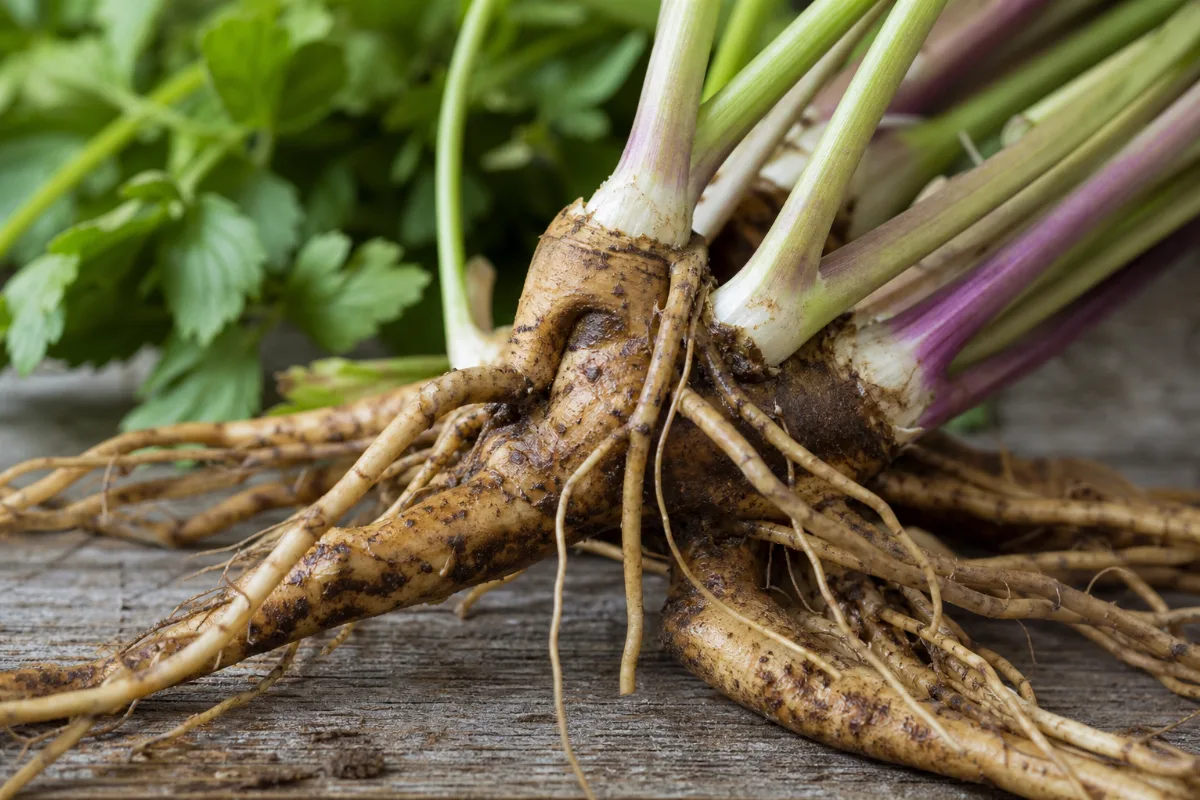
- Roots: Hairy, dark-brown surface, yellow inside, with a butterscotch and celery smell (Wikipedia).; Stems: Plant 50 to 130 cm tall (Wikipedia).; Leaves: Parsley-like; plant smells of celery, especially after frost (Wikipedia).; Flowers: White flowers in double umbels (Wikipedia).; Fruit: Not described in sources read.
- Cultivation
- Difficult; most commercial root is wild-harvested (United Plant Savers). A 2004 propagation study is cited there, with no details.
- Harvest and processing
- Fresh root is very astringent; dried root is not (Wikipedia). Low-level hand-tool harvest may maintain stands (United Plant Savers).
- Look-alikes and adulterants
- Name: Poison hemlock (Conium maculatum); Note: Deadly. Smooth hollow green stem, often with purple spots (HealthLink BC). Distinguished from osha by smell, root crown fibres, root skin and leaf size (Wikipedia).; Name: Water hemlock (Cicuta species); Note: Deadly; cicutoxin causes seizures. Named as a look-alike on Wikipedia.; Name: Hemlock parsley; Note: Named by EBSCO and Wikipedia as a deadly look-alike.; Name: Mountain parsley (Pseudocymopterus montanus), other Ligusticum species (such as L. dissectum), and young biscuitroots (Lomatium); Note: Listed by United Plant Savers.; Name: Ligusticum chuanxiong and Ligusticum wallichii; Note: Asian species with their own long medical history; not the same plant as osha. Most science is on them.
- Sustainability and conservation
- United Plant Savers at-risk score 48; informal reports of small stands lost to overharvest. IUCN Least Concern (2020), NatureServe globally Vulnerable G3 (1999) and a three-year US Forest Service harvest moratorium from 1999, all via Wikipedia (not verified). Reported US harvest fell from 5,200 kg in 1999 to 510 kg in 2017 (Wikipedia). A harvest experiment found populations recovered after 3 and 5 years at a 33% harvest, and the authors suggest at most 50% of mature plants once every 10 years, with monitoring (University of Kansas summary; paper not read, funded partly by the herbal trade association).
Traditional use and history history, not clinical proof
| Tradition or era | Documented use | Source |
|---|---|---|
| Indigenous peoples of the Southwest US | Root infusion for body aches and a wash for sore throat (Zuni); used for respiratory infections, taken at the first sign of illness. | s-wikipedia-osha |
| Rarámuri (northern Mexico) | Rhizome used for diabetes, tuberculosis, stomachaches, diarrhea and healing ceremonies; spread across Mexico as an antiulcer remedy. | p26320689 |
| Spanish New Mexican communities | Reportedly as a way to bring on menstruation; researchers found nobody who reported success (Wikipedia only, not verified). | s-wikipedia-osha |
| Modern herbal use | Cold and cough remedy, 'Colorado cough root'; also a bitter for indigestion (EBSCO). A story that bears dig and use the root is anecdotal and NOT verified. | s-ebsco-osha |
| Altitude use | Not found in any source read. | s-upsavers-osha |
Traditional use shows how a plant was used. It does not show that a supplement works or is safe today.
What is inside, and how it may work
What the plant contains and how those compounds act in cells and animals. Laboratory and animal mechanisms are not proven effects in people.
Main compounds
| Compound | Family | Where it is concentrated | Activity studied | Level of evidence |
|---|---|---|---|---|
| Z-ligustilide PubChem 5319022 | Phthalide | Root 0.15% to 2.5% of crude root and products in one analysis | Active in mouse pain tests; used as a marker for quality. 11 19 18 | Animal research |
| Diligustilide (levistolide A) PubChem 70698035 | Dimeric phthalide | Root 0.002% to 1.0% in one analysis | Protected the rat stomach from ethanol damage; raised stomach H2S; reduced writhing in mice. 22 23 11 19 18 | Animal research |
| Z-3-butylidenephthalide PubChem 642376 | Phthalide | Root Not stated | Dose-dependent antinociceptive action in mice. 11 13 18 | Animal research |
| Ferulic acid PubChem 445858 | Phenolic acid | Rhizome Not stated | Identified in the rhizome extract; no osha-specific activity was tested for it in the sources read. 13 18 | Lab |
| Other phthalides (tokinolide B, riligustilide, senkyunolides F and I) | Phthalides | Rhizome Not stated | Several dimeric phthalides were sedative and spasmolytic in models. 13 14 | Animal research |
Mechanisms, receptors and pathways
| Target or pathway | Gene or receptor | What was found | Level |
|---|---|---|---|
| Prostaglandins and sulfhydryl groups (stomach) | Not specified | Blocking either weakened diligustilide's stomach protection in rats. 22 | Animal research |
| Hydrogen sulfide and S-nitrosothiols (stomach) | Not specified | Diligustilide raised stomach H2S from 7.8 to 13.1 ppm in rats. 23 | Animal research |
| Antioxidant enzymes and immune messengers (white blood cells) | SOD, catalase, glutathione, IFN-gamma, IL-2 | Rose in stressed human white blood cells at 400 micrograms/mL. 16 | Lab |
| Sedative and gut-muscle relaxing effects | Not specified | Seen with dimeric phthalides in animal and test-tube models. 13 | Animal research |
Absorption, metabolism and elimination
- Absorption
- No data for osha in people were found.
- Distribution
- Not found.
- Metabolism
- Not found.
- Elimination
- Not found.
- Bioavailability
- Not found.
Isolated compounds versus whole extracts
Most animal findings come from isolated compounds or organic extracts (hexane, dichloromethane), not teas or tinctures. Compound content varies a lot between products, so what a person gets is uncertain.
Nutritional composition
Osha is a medicinal herb, not a food source of nutrients.
7 not enough evidence
What is Osha good for?
The studied uses and how strong the human evidence is. For osha that is very weak: no human trials, only tradition and lab or animal work.
Benefits, one by one
Each card is a research question, not a promise. Tap a goal to filter. Open a card to see the studies, doses and limits.
Colds, cough and sore throat (traditional use only)
Not enough evidenceOsha root is known as 'Colorado cough root' and is taken at the first sign of a cold or for a cough or sore throat. No human trial was found. This use rests on tradition.
3 studiesDried root, tincture, tea, lozenges and capsules are sold; strength v…
Studies, doses and limits
What the trials found
EBSCO says no double-blind, placebo-controlled studies are cited. Its research is limited to ethnobotanical, animal and lab studies. No trial in people with colds, cough or sore throat was found in PubMed.
Results
No human trial of osha was found.
Effect sizes as reported
No effect size exists.
Why this rating
Traditional use only. No human trial.
Form and dose studied
Dried root, tincture, tea, lozenges and capsules are sold; strength varies between products. No amounts are given here.
Who was studied
Traditional users in the Southwest US and northern Mexico.
Limits
Tradition is not proof that it works. Many lozenges and syrups are blends, so effects cannot be given to osha alone.
Why researchers looked
Long use in the mountain Southwest of the US and in northern Mexico.
Traditional use
EBSCO describes it as an Indigenous American remedy for respiratory infections, taken at the first sign of illness, and as a cough suppressant and expectorant. Wikipedia says the Zuni used a root infusion for body aches and a wash for sore throat (Wikipedia only, not verified).
Proposed mechanism Traditional use
Not established. EBSCO says that Chinese work on a different species, Ligusticum wallichii, shows muscle relaxation and some germ-killing activity, but it is unknown whether this applies to osha.
A proposed mechanism does not show that the effect happens in people.
See the safety tab, especially the deadly look-alike plants and pregnancy.
Altitude and 'mountain' breathing (claim not found in sources)
Not enough evidenceOsha grows high in the mountains and is sometimes said to help with altitude. None of the sources we read say this, and no study was found.
3 studiesNot applicable.
Studies, doses and limits
What the trials found
No human or animal study on altitude sickness was found.
Results
Nothing to report.
Effect sizes as reported
None.
Why this rating
No source states the claim and no study tests it.
Form and dose studied
Not applicable.
Who was studied
Not applicable.
Limits
Where a plant grows does not show what it does for people. Do not rely on osha for altitude sickness; ask a doctor about proper prevention.
Why researchers looked
The plant lives at about 1,000 to 3,500 metres (5,000 to 11,500 feet), so the link is often made in marketing.
Traditional use
United Plant Savers and Wikipedia describe where it grows, not a use for altitude. We did not find a traditional-use source for altitude.
Proposed mechanism Pharmacological theory
None.
A proposed mechanism does not show that the effect happens in people.
Altitude sickness can be serious; see the safety tab for urgent signs.
Immune and antioxidant signals in human cells (lab only)
Not enough evidenceIn white blood cells in a dish, a root extract raised some antioxidant enzymes and immune messengers when the cells were stressed. This is a lab result, not a result in people.
2 studiesRoot extract in a dish (200 to 400 micrograms/mL). No oral dose can b…
Studies, doses and limits
What the trials found
No human trial. One cell study in white blood cells (lymphocytes) from donors; a second in a leukemia cell line.
Results
At 400 micrograms/mL in stressed white blood cells: lipid peroxidation fell 94%, reduced glutathione rose 26.4%, superoxide dismutase rose 17.5%, catalase rose 55.2%, and interferon-gamma and interleukin-2 rose. Interleukin-10 did not change significantly. The same extract made leukemia cells survive about twice as well, so the authors said it does not support use against that cancer.
Effect sizes as reported
Percent changes as listed; no confidence intervals in the abstract.
Why this rating
Cells in a dish only; rises in some immune signals do not show people get fewer colds.
Form and dose studied
Root extract in a dish (200 to 400 micrograms/mL). No oral dose can be drawn from this.
Who was studied
Donor white blood cells; HL-60 leukemia cell line.
Limits
Cells only. Concentrations are not linked to any amount a person could take. Higher survival of leukemia cells is a caution, not a benefit.
Why researchers looked
To see whether the traditional immune use has any biological basis.
Traditional use
Traditional immune and cold use.
Proposed mechanism Laboratory research
The authors suggest the extract may protect against oxidative damage and may modulate immune signals.
A proposed mechanism does not show that the effect happens in people.
Not applicable.
Calming (sedative) and gut-muscle relaxing effects (animal and test tube only)
Not enough evidenceSome compounds found in osha root calmed animals and relaxed gut muscle in test models. Whether the root does this in people is unknown.
1 studiesIsolated compounds and derivatives; not the whole root.
Studies, doses and limits
What the trials found
No human trial.
Results
Several dimeric phthalides showed sedative and spasmolytic activity in animal and test-tube models (no numbers in the abstract).
Effect sizes as reported
Not given in the abstract.
Why this rating
Models only; abstract gives no numbers.
Form and dose studied
Isolated compounds and derivatives; not the whole root.
Who was studied
Lab models.
Limits
Model results do not show a calming effect in people.
Why researchers looked
To see whether compounds from the root explain some popular uses.
Traditional use
Popular uses of osha include aches and stomach complaints.
Proposed mechanism Animal research
Dimeric phthalides (such as diligustilide and tokinolide B) showed sedative and spasmolytic activity in models.
A proposed mechanism does not show that the effect happens in people.
If it truly is sedating, it could add to other sedating medicines. This is theory only.
Pain relief (mice only)
Not enough evidenceIn mice, osha extracts, the root oil and three compounds reduced pain-like behaviour. This has not been tested in people.
2 studiesMouse doses of 10 to 316 mg/kg cannot be converted to a human amount.
Studies, doses and limits
What the trials found
No human trial of osha was found.
Results
All preparations tested reduced pain-like behaviour in two mouse tests. A second mouse study also found the L. porteri extract reduced stretching in the writhing test.
Effect sizes as reported
No numbers in the abstracts.
Why this rating
Mouse studies only.
Form and dose studied
Mouse doses of 10 to 316 mg/kg cannot be converted to a human amount.
Who was studied
Mice.
Limits
Mice are not people, and short pain tests do not show effects on long-term pain.
Why researchers looked
Osha is used in Mexican folk medicine for painful complaints.
Traditional use
Folk use for body aches (Zuni use per Wikipedia, not verified).
Proposed mechanism Animal research
Z-ligustilide, Z-3-butylidenephthalide and diligustilide were active in mouse pain tests; the mechanism was not worked out.
A proposed mechanism does not show that the effect happens in people.
Not applicable.
Stomach protection and 'stomachache' use (rats only)
Not enough evidenceOsha is used for stomach aches and as an ulcer remedy in Mexico. In rats, a compound from the root protected the stomach lining from alcohol damage.
3 studiesRat doses only.
Studies, doses and limits
What the trials found
No human trial of osha was found.
Results
Extracts at 30 mg/kg and the compound diligustilide at 10 mg/kg reduced ethanol-induced stomach damage in rats.
Effect sizes as reported
No effect sizes in the abstract.
Why this rating
Rat studies of an isolated compound; no human data.
Form and dose studied
Rat doses only.
Who was studied
Rats.
Limits
Isolated compound may not behave like the whole root. Not tested in people.
Why researchers looked
Traditional use for stomach complaints, diarrhea and as an antiulcer remedy.
Traditional use
The Rarámuri use the rhizome for diabetes, tuberculosis, stomachaches and diarrhea (study introduction). EBSCO adds indigestion and appetite.
Proposed mechanism Animal research
In rats the effect depended on prostaglandins and sulfhydryl groups; the compound also raised stomach hydrogen sulfide (H2S) from 7.8 to 13.1 ppm.
A proposed mechanism does not show that the effect happens in people.
None found.
Cancer cells (no benefit seen)
Not enough evidenceDo not use osha as a cancer treatment. In two cell studies it did not slow cancer cells, and in leukemia cells it made them survive better.
2 studiesCell-dish concentrations only.
Studies, doses and limits
What the trials found
No human study.
Results
Osha extracts had no activity on breast or colon cancer cell lines. Leukemia (HL-60) cells survived about twice as well after 7 days; the authors said the data do not support its use for this leukemia.
Effect sizes as reported
About 2-fold higher survival in leukemia cells (abstract).
Why this rating
Cell lines only. The results point against a benefit.
Form and dose studied
Cell-dish concentrations only.
Who was studied
Cell lines.
Limits
Cell results do not predict what happens in a person.
Why researchers looked
Some Native American plants are said to affect cancer cells.
Traditional use
None for cancer.
Proposed mechanism Laboratory research
No effect on growth was seen.
A proposed mechanism does not show that the effect happens in people.
Anyone with cancer should discuss osha with their cancer team before using it.
Connections to the rest of health
How Osha connects to the rest of our health knowledge graph. Every link says what kind of connection it is. A safety link (for example to the liver) is a warning, not a benefit. A study that merely mentions a topic never creates a benefit link.
Explore every connection: goals, body systems, organs, symptoms, genes
A. Wellness goals
| Connected to | Kind of connection | Evidence status | Context | Studies |
|---|---|---|---|---|
| Immune Support | Traditional use | Not enough evidence | Colds, cough and sore throat (traditional use only): Osha root is known as 'Colorado cough root' and is taken at the first sign of a cold or for a cough or sore throat. No human trial was found. This use rests on tradition. | 7 24 20 |
| Calm Relaxation | Traditional use | Not enough evidence | Colds, cough and sore throat (traditional use only): Osha root is known as 'Colorado cough root' and is taken at the first sign of a cold or for a cough or sore throat. No human trial was found. This use rests on tradition. | 7 24 20 |
| Immune Support | Biological association | Not enough evidence | Altitude and 'mountain' breathing (claim not found in sources): Osha grows high in the mountains and is sometimes said to help with altitude. None of the sources we read say this, and no study was found. Cancer cells (no benefit seen): Do not use osha as a cancer treatment. In two cell studies it did not slow cancer cells, and in leukemia cells it made them survive better. | 20 24 7 4 17 |
| Immune Support | Preliminary mechanism | Not enough evidence | Immune and antioxidant signals in human cells (lab only): In white blood cells in a dish, a root extract raised some antioxidant enzymes and immune messengers when the cells were stressed. This is a lab result, not a result in people. | 16 17 |
| Calm Relaxation | Preliminary mechanism | Not enough evidence | Calming (sedative) and gut-muscle relaxing effects (animal and test tube only): Some compounds found in osha root calmed animals and relaxed gut muscle in test models. Whether the root does this in people is unknown. | 13 |
| Joint Support | Preliminary mechanism | Not enough evidence | Pain relief (mice only): In mice, osha extracts, the root oil and three compounds reduced pain-like behaviour. This has not been tested in people. | 11 5 |
| Digestive Support | Preliminary mechanism | Not enough evidence | Stomach protection and 'stomachache' use (rats only): Osha is used for stomach aches and as an ulcer remedy in Mexico. In rats, a compound from the root protected the stomach lining from alcohol damage. | 22 23 7 |
B. Body systems
| Connected to | Kind of connection | Evidence status | Context | Studies |
|---|---|---|---|---|
| Respiratory System | Biological association | Not enough evidence | Studied for: Colds, cough and sore throat (traditional use only) Studied for: Altitude and 'mountain' breathing (claim not found in sources) | 7 24 20 |
| Immune System | Biological association | Not enough evidence | Studied for: Colds, cough and sore throat (traditional use only) Studied for: Immune and antioxidant signals in human cells (lab only) | 7 24 20 16 17 4 |
| Nervous System | Biological association | Not enough evidence | Studied for: Calming (sedative) and gut-muscle relaxing effects (animal and test tube only) Studied for: Pain relief (mice only) | 13 11 5 |
| Musculoskeletal System | Biological association | Not enough evidence | Studied for: Pain relief (mice only) | 11 5 |
| Digestive System | Biological association | Not enough evidence | Studied for: Stomach protection and 'stomachache' use (rats only) | 22 23 7 |
E. Health conditions
| Connected to | Kind of connection | Evidence status | Context | Studies |
|---|---|---|---|---|
| Hemlock poisoning from mistaken identity | Adverse effect or risk | Low certainty | Not caused by osha; a real risk of wild harvest. Preparation or compound: Wild-dug root mixed with or replaced by look-alike plants |
10 12 2 20 |
| Pregnancy | Contraindication | Low certainty | Traditionally used to bring on menstruation. Preparation or compound: Osha root |
7 24 |
| Common cold | Traditional use | Not enough evidence | Traditional use at first sign of a cold; no human trial. Preparation or compound: Osha root |
7 |
I. Biomarkers
| Connected to | Kind of connection | Evidence status | Context | Studies |
|---|---|---|---|---|
| Lipid peroxidation (fat damage from oxidative stress) | Biological association | Not enough evidence | Measured in trials: lowered. A lab change is not the same as a health benefit. | 16 |
| Reduced glutathione and the enzymes superoxide dismutase and catalase | Biological association | Not enough evidence | Measured in trials: raised. A lab change is not the same as a health benefit. | 16 |
| Interferon-gamma and interleukin-2 (immune messengers) | Biological association | Not enough evidence | Measured in trials: raised. A lab change is not the same as a health benefit. | 16 |
| Stomach hydrogen sulfide (H2S), rats | Biological association | Not enough evidence | Measured in trials: raised. A lab change is not the same as a health benefit. | 23 |
| Cancer cell survival (HL-60 leukemia cells) | Biological association | Not enough evidence | Measured in trials: raised. A lab change is not the same as a health benefit. | 17 |
J. Genes, receptors and enzymes
| Connected to | Kind of connection | Evidence status | Context | Studies |
|---|---|---|---|---|
| IFN-gamma and IL-2 (immune messengers) | Preliminary mechanism | Lab | Raised in stressed white blood cells in a dish. | 16 |
K. Biological pathways
| Connected to | Kind of connection | Evidence status | Context | Studies |
|---|---|---|---|---|
| Prostaglandin signalling | Preliminary mechanism | Animal | Needed for diligustilide's stomach protection in rats. | 22 |
L. Active compounds
| Connected to | Kind of connection | Evidence status | Context | Studies |
|---|---|---|---|---|
| Z-ligustilide | Biological association | Animal | Active in mouse pain tests; used as a marker for quality. Preparation or compound: Root |
11 19 18 |
| Diligustilide (levistolide A) | Biological association | Animal | Protected the rat stomach from ethanol damage; raised stomach H2S; reduced writhing in mice. Preparation or compound: Root |
22 23 11 19 18 |
| Z-3-butylidenephthalide | Biological association | Animal | Dose-dependent antinociceptive action in mice. Preparation or compound: Root |
11 13 18 |
| Ferulic acid | Biological association | Lab | Identified in the rhizome extract; no osha-specific activity was tested for it in the sources read. Preparation or compound: Rhizome |
13 18 |
| Other phthalides (tokinolide B, riligustilide, senkyunolides F and I) | Biological association | Animal | Several dimeric phthalides were sedative and spasmolytic in models. Preparation or compound: Rhizome |
13 14 |
Each connection is stored with the ingredient, the connected record, the kind of connection, the evidence status, the supporting studies, the preparation or compound involved, and a review date (last reviewed October 25, 2026).
Evidence at a glance: what changed in 5 lab markers
Tap a number to show only those markers. Counts are markers, not people.
The evidence
The research centre for Osha. Every record here was checked against PubMed or the publisher's page; we never list a study we have not verified.
Evidence by outcome
Bars show how many studies we found for each outcome, not how well it works. People are added up across trials only (reviews are not added, to avoid double counting).
How we rate evidence
High certainty
Several well-run trials or reviews agree; further research is unlikely to change the picture much.
Moderate certainty
Good trials point the same way, but some doubt remains.
Low certainty
Small, short or inconsistent trials. The finding could change with better research.
Very low certainty
Very little or very weak human data. Treat as a possibility only.
Mixed findings
Trials or reviews disagree with each other.
Not enough evidence
Not enough human research to say either way.
Evidence against
Good research found no benefit, or found harm.
We take the reviewers' own risk-of-bias and GRADE statements where they exist, and otherwise judge from study size, design, consistency, directness and whether a product matches what is sold. Many publications do not make evidence high. Method note: We started from our existing osha summary, read the abstract of every PubMed study cited, read the EBSCO, United Plant Savers, Wikipedia and HealthLink BC pages, and checked the plant name in GBIF and NCBI Taxonomy and compounds in PubChem. EMA, NCCIH, LiverTox and LactMed were searched and nothing was found.
Study library: every study we checked 24
| Study | Design | People | Product, dose, length | Result |
|---|---|---|---|---|
| American Herbal Pharmacopoeia (R. Upton 2018 Oshá Root (Ligusticum porteri) J.M. Coulter & Rose and related species, American Herbal Pharmacopoeia monograph American Herbal Pharmacopoeia (R. Upton, ed.; K. Kindscher, assoc. ed.) · Source |
Monograph citation review |
Ligusticum porteri (osha) root Not applicable Not applicable · vs Not applicable |
A 83-page monograph from 2018 exists. Only its citation was seen; its content was NOT read. Methods, limits and fundingLimitations: Not read. Listed so readers know a fuller reference exists. Read: summary-only | |
| Arsenova 2022 Beware of Neurotoxins in Common Plants: Water Hemlock Poisoning Presenting as Convulsive Status Epilepticus. Pediatric Neurology · PMID 34954473 · DOI |
Case report |
1 One 9-year-old boy |
Water hemlock (Cicuta), NOT osha root Not applicable Not applicable · vs Not applicable |
A 9-year-old boy had vomiting and prolonged seizures (status epilepticus) about one hour after biting a root in a park. Cicutoxin and cicudiol were found in his blood. He recovered and was seizure free afterwards. One child, serious but recovered Methods, limits and fundingOutcomes: Clinical course after a child bit a water-plant root Limitations: Single case. Read: abstract |
| Castañeda Sortibrán 2011 Chronic toxicity, genotoxic assay, and phytochemical analysis of four traditional medicinal plants. Journal of Medicinal Food · PMID 21554118 · DOI |
Animal research animal |
Drosophila melanogaster larvae | Solvent extract of L. porteri (one of four plants) fed to fruit-fly larvae plant material (part not given in abstract) not given in abstract chronic feeding · vs Water and solvent controls |
The L. porteri extract was toxic to larvae; the other three plants were not. In the wing-spot test none of the four plants showed a statistically significant genotoxic increase. L. porteri showed traces of alkaloids. Toxic to fruit-fly larvae; no genotoxic signal Methods, limits and fundingOutcomes: Larval toxicity; wing-spot genotoxicity test Limitations: Fruit flies, not mammals. Not a human safety result. Read: abstract |
| Daniels 2006 Effects of extracts from two Native American plants on proliferation of human breast and colon cancer cell lines in vitro. Oncology Reports · PMID 16596206 |
Laboratory research in-vitro |
Human cancer cell lines | Water and ethanol extracts of L. porteri (osha) compared with Anemopsis californica root (not stated in abstract) not given in abstract not given in abstract · vs Untreated cells |
L. porteri extracts showed no activity on either cell line. The other plant (yerba mansa) did slow breast cancer cell growth. No effect on cancer cell growth Methods, limits and fundingOutcomes: Growth of breast (MCF-7) and colon (HCT8) cancer cell lines Limitations: Cell lines only. Read: abstract |
| Deciga-Campos 2005 Antinociceptive effect of selected Mexican traditional medicinal species. Proceedings of the Western Pharmacology Society · PMID 16416665 |
Animal research animal |
Male mice | Methanol-chloroform extract of L. porteri (one of six plants tested) root (not stated in abstract) not given in abstract single oral dose · vs Control (details not in abstract) |
Of six plants, three reduced stretching significantly, including L. porteri. Three plants did not. Significant reduction in stretches in mice Methods, limits and fundingOutcomes: Number of stretches in the acetic acid writhing test in mice Limitations: Mice only; short abstract; no numbers given. Read: abstract |
| Déciga-Campos 2007 Acute toxicity and mutagenic activity of Mexican plants used in traditional medicine. Journal of Ethnopharmacology · PMID 17101253 · DOI |
Animal research animal |
Mice | Extracts of 15 Mexican plants including L. porteri plant material (part not given in abstract) Lorke acute method single dose · vs Not given in abstract |
Four plants, including L. porteri, were the most toxic in mice, with LD50 values somewhere between 2 and 1085 mg/kg across the four. The abstract does not give osha's own value. The mutation test flagged two other plants, not osha. Osha was among the more toxic of 15 plants in mice Methods, limits and fundingOutcomes: Acute toxicity in mice (LD50), Ames mutation test, brine shrimp test Limitations: The abstract gives no figure for osha alone, so no number is quoted. Mice only. Read: abstract |
| EBSCO Research Starters 2026 Osha's therapeutic uses EBSCO Research Starters · Source |
Reference overview review |
Ligusticum porteri (osha) root Not applicable Not applicable · vs Not applicable |
Traditional respiratory and digestive remedy; no double-blind placebo-controlled studies cited; research limited to ethnobotanical, animal and lab work; most science used Ligusticum wallichii (Chinese). Pregnancy traditionally not recommended (may induce menstruation and miscarriage); safety not established in breastfeeding, young children, severe liver or kidney disease; hemlock parsley contamination risk. Does not mention interactions, photosensitivity or conservation. Methods, limits and fundingLimitations: Encyclopedia-style overview, not a regulator. Page re-read 2026-10-25. Read: full-text | |
| EMA 2026 Regulators checked: no osha document found EMA, NCCIH, NCBI LiverTox and LactMed · Source |
Not found database |
Ligusticum porteri (osha) root Not applicable Not applicable · vs Not applicable |
NCCIH: no osha page (the expected address returned 404). EMA/HMPC: no monograph found by web search. LiverTox and LactMed: no osha entry found in an NCBI Bookshelf search. Commission E and WHO: not searched. Methods, limits and fundingLimitations: Absence from a quick search is not proof that nothing exists. Read: summary-only | |
| GBIF 2026 GBIF Backbone: Ligusticum porteri J.M.Coult. & Rose GBIF · Source |
Database record database |
Ligusticum porteri (osha) root Not applicable Not applicable · vs Not applicable |
ACCEPTED, exact match, confidence 99, usage key 3034795, family Apiaceae. Methods, limits and fundingLimitations: Database lookup. Read: full-text | |
| HealthLink 2025 Poison hemlock (Conium maculatum) HealthLink BC · Source |
Authoritative guidance review |
Ligusticum porteri (osha) root Not applicable Not applicable · vs Not applicable |
Whole plant poisonous; less than a tenth of a gram can be fatal to an adult; symptoms begin 30 minutes to 3 hours after eating (unsteadiness, weakness, sweating, vomiting, drooling, confusion, tremors, seizures); no specific antidote; call poison control or go to emergency care. Often mistaken for wild carrot, parsnip and parsley. Methods, limits and fundingLimitations: Public-health fact sheet for British Columbia; not about osha. Read: full-text | |
| Juárez-Reyes 2014 Antinociceptive activity of Ligusticum porteri preparations and compounds. Pharmaceutical Biology · PMID 24093628 · DOI |
Animal research animal |
ICR mice | L. porteri water extract, organic extract, essential oil, and the compounds Z-ligustilide, Z-3-butylidenephthalide and diligustilide root and rhizome 10 to 316 mg/kg single doses in pain tests · vs Control (details not in abstract) |
All preparations tested reduced pain-like behaviour in both mouse tests. Z-ligustilide worked at 10 and 31.6 mg/kg depending on the test; diligustilide reduced writhing but not hot-plate response. Significant antinociceptive effect in mice (numbers not given in the abstract) Methods, limits and fundingOutcomes: Pain-like behaviour in mice (acetic acid writhing test, hot plate test) Limitations: Mice only. Doses are per kilogram of mouse and cannot be turned into a human amount. Full text not read. Read: abstract |
| Karakasi 2019 Conium maculatum intoxication: Literature review and case report on hemlock poisoning. Forensic Science Review · PMID 30594904 |
Systematic review |
Hemlock poisoning cases | Poison hemlock (Conium maculatum), NOT osha whole plant Not applicable Not applicable · vs Not applicable |
Reviews the literature and three incidents (one fatal). The course includes tremor, vomiting, muscle paralysis, respiratory failure, muscle breakdown and kidney failure. Treatment is supportive, especially breathing support. Survival is high if treatment is prompt, and recovery generally takes only a few days. Acute poisoning is severe and life-threatening Methods, limits and fundingOutcomes: Symptoms, management and survival in hemlock poisoning Limitations: Review of case material; says hemlock poisoning is relatively rare. Read: abstract |
| León 2011 Phthalides and other constituents from Ligusticum porteri; sedative and spasmolytic activities of some natural products and derivatives. Natural Product Research · PMID 21797735 · DOI |
Animal research animal |
Lab models | Compounds isolated from L. porteri rhizome (dimeric phthalides and derivatives) rhizome (root) not given in abstract not given in abstract · vs Not given in abstract |
The authors isolated Z-ligustilide, Z-butylidenephthalide, diligustilide, tokinolide B, riligustilide, senkyunolides F and I, and ferulic acid. Several dimeric phthalides showed sedative and spasmolytic activity in animal and test-tube models. Sedative and spasmolytic signals in models Methods, limits and fundingOutcomes: Sedative and gut-muscle-relaxing (spasmolytic) activity in animal and test-tube models; chemical identification Limitations: Models only. No numbers in abstract. Read: abstract |
| León 2017 Phthalides: Distribution in Nature, Chemical Reactivity, Synthesis, and Biological Activity. Progress in the Chemistry of Organic Natural Products · PMID 28160212 · DOI |
Narrative review review |
Literature | Phthalides (compounds found in celery-family plants, including L. porteri) various Not applicable Not applicable · vs Not applicable |
Names L. porteri (Hispanic name oshá) among the main plant sources of phthalides. Says phthalides show antibacterial, antifungal, insecticidal, cytotoxic and anti-inflammatory effects in lab work, and that in the celery family the bioactivities match the traditional uses. Narrative chemistry review Methods, limits and fundingOutcomes: Where phthalides occur, chemistry and biological activity Limitations: Chemistry review; not a clinical review. Only the abstract was read. Read: abstract |
| NCBI 2026 NCBI Taxonomy ID 54719: Ligusticum porteri NCBI · Source |
Database record database |
Ligusticum porteri (osha) root Not applicable Not applicable · vs Not applicable |
Species, active. Methods, limits and fundingLimitations: Database lookup. Read: full-text | |
| Nguyen 2016 Investigation of the cytotoxicity, antioxidative and immune-modulatory effects of Ligusticum porteri (Osha) root extract on human peripheral blood lymphocytes. Journal of Integrative Medicine · PMID 27854198 · DOI |
Laboratory research in-vitro |
Human white blood cells from donors (number not in abstract) | L. porteri root extract added to human white blood cells (lymphocytes) in a dish root 0 to 400 micrograms per mL in the dish up to 2 days · vs Untreated cells |
At 200 and 400 micrograms/mL the extract raised cell survival. At 400 micrograms/mL, in cells stressed with hydrogen peroxide: fat damage (lipid peroxidation) fell 94%; reduced glutathione rose 26.4%; superoxide dismutase rose 17.5% and catalase 55.2%; interferon-gamma and interleukin-2 rose; interleukin-10 did not change significantly. Positive changes in a dish; authors suggest 'potential' immune-modulating effect Methods, limits and fundingOutcomes: Cell survival, signs of oxidative damage, antioxidant enzymes, immune signals (interferon-gamma, interleukin-2, interleukin-10) Limitations: Cells in a dish, not people. Concentrations in a dish cannot be matched to anything taken by mouth. No human trial follows from this. Read: abstract |
| Nguyen 2017 Effects of Ligusticum porteri (Osha) Root Extract on Human Promyelocytic Leukemia Cells. Pharmacognosy Research · PMID 28539739 · DOI |
Laboratory research in-vitro |
HL-60 cell line | L. porteri root extract added to HL-60 leukemia cells in a dish root 100 to 400 micrograms per mL in the dish 3 to 7 days · vs Untreated cells |
After 7 days at 200 or 400 micrograms/mL the leukemia cells survived about twice as well as untreated cells. The authors concluded the data do not support using the extract against this leukemia. Cancer cells survived better, not worse Methods, limits and fundingOutcomes: Leukemia cell survival, antioxidant markers, immune signals Limitations: Cell line only. Authors declared no conflict of interest. Read: abstract |
| PubChem 2026 PubChem records: ligustilide, butylidenephthalide, levistolide A (diligustilide), ferulic acid PubChem · Source |
Database record database |
Ligusticum porteri (osha) root Not applicable Not applicable · vs Not applicable |
CIDs 5319022 (ligustilide), 642376 ((Z)-butylidenephthalide), 70698035 (levistolide A, the name PubChem gives for diligustilide), 445858 (ferulic acid). Methods, limits and fundingLimitations: Database lookup; identifies the compounds only. Read: full-text | |
| Rivero 2012 Quantitative HPLC method for determining two of the major active phthalides from Ligusticum porteri roots. Journal of AOAC International · PMID 22468345 · DOI |
Quality analysis review |
Market and crude drug samples | Crude root samples and herbal preparations from Mexico and the United States root Not applicable Not applicable · vs Not applicable |
Z-ligustilide ranged from 0.15% to 2.5% and diligustilide from 0.002% to 1.0% between samples. The content varied significantly. The essential oil was 44.61% phthalides. Large sample-to-sample variation Methods, limits and fundingOutcomes: Amount of Z-ligustilide and diligustilide in samples Limitations: Number of samples not in abstract. Read: abstract |
| United Plant Savers 2021 Osha (Ligusticum porteri) United Plant Savers · Source |
Conservation assessment review |
Ligusticum porteri (osha) root Not applicable Not applicable · vs Not applicable |
At-risk score 48. No agency formally tracks populations; informal reports of small stands disappearing from overharvest. Hard to cultivate so most supply is wild. About 1,765 pounds of root per year reported across about 26 companies (page calls it a low estimate). Low-level hand-tool harvest may maintain stands but long-term effects unknown. Lists look-alikes: mountain parsley, poison hemlock (toxic), other Ligusticum, biscuitroots. Altitude about 1,000 to 3,500 m (5,000 to 11,500 ft). Methods, limits and fundingLimitations: Advocacy organisation assessment; gives no explicit sourcing recommendations. Read: full-text | |
| University of Kansas 2019 Oshá Harvest Sustainability (Kindscher and colleagues) University of Kansas, Kansas Biological Survey · Source |
Research summary review |
Ligusticum porteri (osha) root Not applicable Not applicable · vs Not applicable |
Experimental harvest at two roughly 10,000-foot sites in southern Colorado at 0, 33, 66 and 100 percent of mature plants. At 33 percent, populations recovered over 3 and 5 years. Authors suggest a plan of up to 50 percent of mature plants once every 10 years, rotating across populations, with monitoring. Funded by the US Forest Service and the American Herbal Products Association. Says oshá can be harvested sustainably with proper permits and responsible practice. Methods, limits and fundingLimitations: University summary page; the peer-reviewed paper (Economic Botany 2019, doi 10.1007/s12231-019-09456-1) was NOT opened. Funder includes the herbal trade association. Root yield was not measured at 3 and 5 years. Read: summary-only | |
| Velázquez-Moyado 2015 Gastroprotective effect of diligustilide isolated from roots of Ligusticum porteri coulter & rose (Apiaceae) on ethanol-induced lesions in rats. Journal of Ethnopharmacology · PMID 26320689 · DOI |
Animal research animal |
Rats | L. porteri organic extracts and diligustilide (DLG), the main compound in the hexane extract rhizome (root) extracts 30 mg/kg; DLG 10 mg/kg single dose before ethanol · vs Control rats |
The extracts at 30 mg/kg and DLG at 10 mg/kg significantly reduced ethanol-induced stomach damage. Blocking prostaglandins or sulfhydryl groups weakened the effect, which hints at how it works. Protective effect in rats (numbers not in abstract) Methods, limits and fundingOutcomes: Stomach lesion index after ethanol in rats Limitations: Rats only. Full text not read. Read: abstract |
| Velázquez-Moyado 2018 Diligustilide releases H(2)S and stabilizes S-nitrosothiols in ethanol-induced lesions on rat gastric mucosa. Inflammopharmacology · PMID 28879572 · DOI |
Animal research animal |
Anaesthetised rats | Diligustilide (DLG), a compound isolated from L. porteri root 10 mg/kg single dose · vs Control rats |
DLG at 10 mg/kg raised stomach H2S from 7.8 +/- 0.81 ppm to 13.1 +/- 3.01 ppm and prevented the extra damage caused by ethanol. H2S roughly 7.8 to 13.1 ppm in rats Methods, limits and fundingOutcomes: Stomach hydrogen sulfide (H2S) and lesions in rats Limitations: Rats only; isolated compound, not the whole root. Read: abstract |
| Wikipedia 2026 Ligusticum porteri Wikipedia · Source |
Encyclopedia review |
Ligusticum porteri (osha) root Not applicable Not applicable · vs Not applicable |
Describes appearance (50 to 130 cm, celery smell, white double umbels; hairy dark-brown root, yellow inside), range (Rocky Mountains, northern New Mexico), look-alikes (poison hemlock, water hemlock, hemlock parsley, others) and how to tell them apart. Fresh root blisters the mouth; dried does not. AHPA 1997 recommended a not-for-pregnancy label. IUCN Least Concern 2020; NatureServe G3 (1999); US Forest Service harvest moratorium for three years from 1999. Methods, limits and fundingLimitations: Wikipedia only: claims NOT verified against the original sources. Some claims on the page are tagged as needing citations. Read: full-text |
What we do not know yet
- No human trial for any use.
- No interaction, liver or pregnancy safety data.
- Photosensitivity and furanocoumarin content not found in sources read.
- EMA, Commission E, WHO and the 2018 American Herbal Pharmacopoeia contents not read.
- IUCN and NatureServe statuses come from Wikipedia only.
- The peer-reviewed harvest paper was not read.
How new research is added
New studies are found by a saved PubMed search and placed in a review queue. A person reads each one before it changes any rating or safety wording.
Lab markers
What changed in blood or saliva tests during trials. A changed number is not the same as feeling or being healthier, and we give no "normal ranges".
Other 5
Lipid peroxidation (fat damage from oxidative stress)
Lowered in trials
A lab measure of damage to fats in cells caused by oxidation.
Not enough evidenceResults and what it means
Why it was measured
Used in the cell study to see whether the extract protects against oxidative damage.
Statistical vs. clinical meaning
A lab change in cells; not a measure in people.
Safety implication
None.
| Study | Result | People | Product |
|---|---|---|---|
| 16 | Fell 94% in stressed human white blood cells at 400 micrograms/mL (P<0.05) | Donor white blood cells in a dish | L. porteri root extract, up to 2 days |
Reduced glutathione and the enzymes superoxide dismutase and catalase
Raised in trials
The cell's own antioxidant defences.
Not enough evidenceResults and what it means
Why it was measured
Show whether the extract boosts antioxidant defences in stressed cells.
Statistical vs. clinical meaning
Cell-dish results; no human measurement exists.
Safety implication
None.
| Study | Result | People | Product |
|---|---|---|---|
| 16 | Glutathione +26.4%, superoxide dismutase +17.5%, catalase +55.2% at 400 micrograms/mL in stressed cells | Donor white blood cells in a dish | L. porteri root extract, 2 days |
Interferon-gamma and interleukin-2 (immune messengers)
Raised in trials
Signals made by immune cells.
Not enough evidenceResults and what it means
Why it was measured
Show whether the extract changes immune signalling in cells.
Statistical vs. clinical meaning
Higher immune messengers in a dish do not mean better protection from colds.
Safety implication
None.
| Study | Result | People | Product |
|---|---|---|---|
| 16 | Both rose at 400 micrograms/mL in cells stressed with hydrogen peroxide (P<0.05); interleukin-10 unchanged | Donor white blood cells in a dish | L. porteri root extract |
Stomach hydrogen sulfide (H2S), rats
Raised in trials
A gas the stomach lining makes that may help protect it.
Not enough evidenceResults and what it means
Why it was measured
Used to explore how diligustilide protects the stomach in rats.
Statistical vs. clinical meaning
Animal mechanism marker only.
Safety implication
None.
| Study | Result | People | Product |
|---|---|---|---|
| 23 | Rose from 7.8 +/- 0.81 ppm to 13.1 +/- 3.01 ppm with diligustilide 10 mg/kg | Anaesthetised rats | Diligustilide isolated from osha root |
Cancer cell survival (HL-60 leukemia cells)
Raised in trials
How many cells stay alive in a dish.
Not enough evidenceResults and what it means
Why it was measured
Used to see if the extract slows cancer cells.
Statistical vs. clinical meaning
A higher survival of cancer cells is the opposite of a treatment effect.
Safety implication
This is a caution against cancer use.
| Study | Result | People | Product |
|---|---|---|---|
| 17 | Viability about two-fold higher than untreated cells after 7 days at 200 or 400 micrograms/mL | HL-60 cell line | L. porteri root extract |
Safety
What studies and official sources say about side effects, medicines and who should check first. Each point shows what kind of evidence it comes from.
Main points to know 6
- Deadly look-alike plants (poison hemlock, water hemlock, hemlock parsley). Osha is mostly dug from the wild, and it is easily confused with poison hemlock, water hemlock and other toxic carrot-family plants. Poison hemlock is poisonous in every part. HealthLink BC says less than a tenth of a gram can be fatal to an adult and there is no specific antidote. EBSCO names hemlock parsley contamination as a risk. Never dig or pick root yourself unless an expert identifies it. Authoritative guidance 20 24 7 10 12 2
- Pregnancy: traditionally avoided. Osha was traditionally used to bring on a period, and EBSCO says it may induce menstruation and cause miscarriage. The American Herbal Products Association recommended a not-for-pregnancy label in 1997 (Wikipedia only, not verified). Researchers reportedly found nobody who said it worked for this. Do not use it in pregnancy. Traditional use 7 24
- Almost no human safety research. No human safety trial and no liver injury report were found. EBSCO says osha is considered likely safe but that the safety record is far from complete, and that safety has not been established in breastfeeding, young children, or severe liver or kidney disease. Authoritative guidance 7 8
- Fresh root can blister the mouth. Fresh root is very astringent and can blister the mouth and mucous membranes. Dried root does not (Wikipedia only, not verified). Authoritative guidance 24
- Warning signals in lab studies. An osha extract was toxic to fruit-fly larvae in chronic feeding, and in mice osha was among the more toxic of 15 plants tested. These are not human results, and the abstract gives no figure for osha alone. Animal research 3 6
- Photosensitivity and furanocoumarins: not found. None of the sources we read say that osha causes sun sensitivity or contains furanocoumarins. This is not proof of safety: osha belongs to the carrot family, which includes sun-sensitising plants, and the plant's full chemistry has not been checked for them. We could not read the 2018 American Herbal Pharmacopoeia monograph, which may cover this. Authoritative guidance 7 1
Side effects 3
| Effect | How often | Severity and recovery | Evidence |
|---|---|---|---|
| Mouth and throat blistering from fresh root Wikipedia only. Dried root is said not to do this. | Not established | Not stated Not stated | Authoritative guidance 24 |
| Poisoning if a look-alike plant is eaten by mistake Not an effect of osha itself. Poison hemlock: tremor, vomiting, paralysis, breathing failure, muscle breakdown, kidney failure. Water hemlock: seizures within about an hour in a child who bit a root. | Not established | Can be fatal Recovery is usually within days with prompt care, per one review of poison hemlock cases | Case report 12 2 10 |
| No other human side effects documented EBSCO says the safety record is far from complete. No frequency can be given. | Not established | Not applicable Not applicable | Authoritative guidance 7 |
Liver
No liver injury report for osha was found, and no LiverTox entry was found. EBSCO says safety in people with severe liver disease has not been established. 7 8
How often. No frequency is available.
Monitoring. No monitoring advice was found. Stop and seek care for yellow skin or eyes, dark urine or severe tiredness.
This is a safety connection. It is not evidence that Osha supports liver health.
Medicines and supplements 4
| With | Why it matters | Importance | Evidence | What to do |
|---|---|---|---|---|
| Prescription and over-the-counter medicines in general prescription | No interaction study in people or in test tubes was found. | Unknown | Authoritative guidance Not enough evidence 7 | EBSCO does not mention any. Absence of data is not proof of safety; ask a pharmacist before combining it with medicines. |
| Sedating medicines, sleep aids and alcohol prescription | Theory only: some compounds from the root had sedative activity in animal and test-tube models. | Unknown | Pharmacological theory Not enough evidence 13 | Be cautious until more is known. |
| Cough and cold blends with other herbs supplement | Lozenges and syrups are often mixed products, so you cannot tell which ingredient causes an effect. | Unknown | Pharmacological theory Not enough evidence 7 | Check the full ingredient list. |
| Blood thinners or surgery (bleeding) prescription | One retailer page advises caution, with no citation (not verified; commercial source). | Not established | Pharmacological theory Not enough evidence 8 | Ask a doctor before surgery or if you take blood thinners. |
Who should check first 5
| Situation | Advice | Evidence |
|---|---|---|
| Pregnancy | Avoid; traditionally used to bring on menstruation. | Traditional use 7 24 |
| Breastfeeding | Avoid; safety not established and no LactMed entry was found. | Authoritative guidance 7 8 |
| Young children | Avoid; safety not established. | Authoritative guidance 7 |
| Severe liver or kidney disease | Avoid unless a doctor agrees; safety not established. | Authoritative guidance 7 |
| Anyone who cannot be sure the root is real osha | Do not use it. Wrong plants can kill. | Authoritative guidance 20 10 |
Overdose, product quality and regulators
Summary. There is no human toxicity study. Warning signals come from lab animals and from look-alike plants.
Animal. Toxic to fruit-fly larvae in chronic feeding. In mice osha was among the four most toxic of 15 plants (the range for the four was 2 to 1085 mg/kg; osha's own value is not in the abstract).
Human doses studied. None.
High dose or long term signals. None studied.
Overdose response. Not found.
Genotoxicity. No significant genotoxic increase in the fruit-fly wing-spot test. The Ames test flagged two other plants, not osha.
Toxic plant parts. Fresh root irritates the mouth (Wikipedia). Other parts not described in the sources read.
The biggest risk is the wrong plant in the bag. Most supply is wild-dug, and strength also varies a lot.
Look-alike plants. United Plant Savers lists mountain parsley, poison hemlock (toxic), other Ligusticum species and young biscuitroot as look-alikes. Wikipedia adds water hemlock, hemlock parsley and cow parsnip, and says osha differs by smell (celery and butterscotch), root crown fibres, root skin and leaf size. It advises throwing away any plant you cannot positively identify. Wikipedia and HealthLink BC disagree on skin contact with poison hemlock, so the safe advice both support is to handle with care, wear gloves and wash hands. 20 24 10
Strength varies. In one analysis of crude roots and products, Z-ligustilide ranged from 0.15% to 2.5% and diligustilide from 0.002% to 1.0%. 19
Other species. Ligusticum chuanxiong and L. wallichii are different plants; most published science used the Chinese species, not osha. 7
Wild harvest. Most supply is wild-harvested because the plant is hard to grow, so substitution and mixing in the field are real risks. 20
| Body | Action | Date |
|---|---|---|
| NCCIH (United States) | No osha page found (expected address returned 404). source | 2026-10-25 |
When to get medical help
- After eating any wild-dug plant: weakness, unsteadiness, heavy sweating, vomiting, drooling, confusion, tremor, seizures or trouble breathing. Call poison control or emergency services at once (signs can start within 30 minutes to 3 hours). Bring a sample of the plant.
- Blistering or severe pain in the mouth or throat.
- Vaginal bleeding or cramping in pregnancy.
- Yellow skin or eyes, dark urine.
- A cough with fever, chest pain, breathlessness or blood: see a doctor; do not rely on herbs.
Stop the supplement and contact a clinician or emergency service. In the US, Poison Control is 1-800-222-1222.
General information only, not medical advice. Ask a clinician or pharmacist before use, especially with medicines, in pregnancy or with a health condition. See the Natural Remedy Safety guide.
Frequently asked questions
Does osha work for colds and coughs?
Not proven. It is a traditional remedy, but no human trial was found, and EBSCO says no placebo-controlled studies exist.
Does osha help with altitude sickness?
What is the difference between osha and chuanxiong?
How do I tell osha from poison hemlock?
Wikipedia says osha smells like celery and butterscotch and has a hairy dark-brown root with fibres at the crown. HealthLink BC describes hemlock as having smooth, hollow, green stems often spotted purple. If you cannot be sure, discard the plant. Do not rely on this page to identify wild plants.
How dangerous is poison hemlock?
Can a look-alike cause seizures?
Water hemlock can. A 9-year-old had seizures about an hour after biting a root, and cicutoxin was found in his blood. He recovered.
Is osha safe in pregnancy or breastfeeding?
Does osha make skin sensitive to sun?
Does osha interact with medicines?
Is osha endangered?
Has any health agency approved osha?
No approval was found. We found no EMA monograph, no NCCIH page, and no LiverTox or LactMed entry; this was a quick search, not proof that none exists.
Is the root safe to chew fresh?
Fresh root can blister the mouth, according to Wikipedia; dried root does not. This is not verified.
Explore by health goal
Editorial transparency
- Written by
- AlternativeMed editorial team. Research compiled with AI assistance, then checked against PubMed records.
- Medical review
- None. This page has not been reviewed by a physician or pharmacist.
- First published
- 2026-10-25
- Last substantive update
- 2026-10-25
- How we research
- We started from our existing osha summary, read the abstract of every PubMed study cited, read the EBSCO, United Plant Savers, Wikipedia and HealthLink BC pages, and checked the plant name in GBIF and NCBI Taxonomy and compounds in PubChem. EMA, NCCIH, LiverTox and LactMed were searched and nothing was found.
- How we rate evidence
- See "How we rate evidence" in the Evidence tab.
- Independence
- No product is promoted on this page.
Sources 24
Each source was opened and checked. Where we read only the abstract, it says so. The small numbers in the text point here.
- American Herbal Pharmacopoeia (R. Upton, ed.; K. Kindscher, assoc. ed.). Oshá Root (Ligusticum porteri) J.M. Coulter & Rose and related species, American Herbal Pharmacopoeia monograph. American Herbal Pharmacopoeia (R. Upton, ed.; K. Kindscher, assoc. ed.). 2018. (summary-only)
- Arsenova R, Prager C, Becker LL, et al.. Beware of Neurotoxins in Common Plants: Water Hemlock Poisoning Presenting as Convulsive Status Epilepticus.. Pediatric Neurology. 2022. PMID 34954473. DOI 10.1016/j.pediatrneurol.2021.11.011. (abstract)
- Castañeda Sortibrán A, Téllez MG, Ocotero VM, et al.. Chronic toxicity, genotoxic assay, and phytochemical analysis of four traditional medicinal plants.. Journal of Medicinal Food. 2011. PMID 21554118. DOI 10.1089/jmf.2010.0178. (abstract)
- Daniels AL, Van Slambrouck S, Lee RK, et al.. Effects of extracts from two Native American plants on proliferation of human breast and colon cancer cell lines in vitro.. Oncology Reports. 2006. PMID 16596206. (abstract)
- Deciga-Campos M, González-Trujano E, Navarrete A, et al.. Antinociceptive effect of selected Mexican traditional medicinal species.. Proceedings of the Western Pharmacology Society. 2005. PMID 16416665. (abstract)
- Déciga-Campos M, Rivero-Cruz I, Arriaga-Alba M, et al.. Acute toxicity and mutagenic activity of Mexican plants used in traditional medicine.. Journal of Ethnopharmacology. 2007. PMID 17101253. DOI 10.1016/j.jep.2006.10.001. (abstract)
- EBSCO Research Starters. Osha's therapeutic uses. EBSCO Research Starters. 2026. (full-text)
- EMA, NCCIH, NCBI LiverTox and LactMed. Regulators checked: no osha document found. EMA, NCCIH, NCBI LiverTox and LactMed. 2026. (summary-only)
- GBIF. GBIF Backbone: Ligusticum porteri J.M.Coult. & Rose. GBIF. 2026. (full-text)
- HealthLink BC. Poison hemlock (Conium maculatum). HealthLink BC. 2025. (full-text)
- Juárez-Reyes K, Angeles-López GE, Rivero-Cruz I, et al.. Antinociceptive activity of Ligusticum porteri preparations and compounds.. Pharmaceutical Biology. 2014. PMID 24093628. DOI 10.3109/13880209.2013.805235. (abstract)
- Karakasi MV, Tologkos S, Papadatou V, et al.. Conium maculatum intoxication: Literature review and case report on hemlock poisoning.. Forensic Science Review. 2019. PMID 30594904. (abstract)
- León A, Toscano RA, Tortoriello J, et al.. Phthalides and other constituents from Ligusticum porteri; sedative and spasmolytic activities of some natural products and derivatives.. Natural Product Research. 2011. PMID 21797735. DOI 10.1080/14786419.2010.534735. (abstract)
- León A, Del-Ángel M, Ávila JL, et al.. Phthalides: Distribution in Nature, Chemical Reactivity, Synthesis, and Biological Activity.. Progress in the Chemistry of Organic Natural Products. 2017. PMID 28160212. DOI 10.1007/978-3-319-45618-8_2. (abstract)
- NCBI. NCBI Taxonomy ID 54719: Ligusticum porteri. NCBI. 2026. (full-text)
- Nguyen K, Sparks J, Omoruyi FO.. Investigation of the cytotoxicity, antioxidative and immune-modulatory effects of Ligusticum porteri (Osha) root extract on human peripheral blood lymphocytes.. Journal of Integrative Medicine. 2016. PMID 27854198. DOI 10.1016/S2095-4964(16)60280-7. (abstract)
- Nguyen K, Sparks J, Omoruyi F.. Effects of Ligusticum porteri (Osha) Root Extract on Human Promyelocytic Leukemia Cells.. Pharmacognosy Research. 2017. PMID 28539739. DOI 10.4103/0974-8490.204641. (abstract)
- PubChem. PubChem records: ligustilide, butylidenephthalide, levistolide A (diligustilide), ferulic acid. PubChem. 2026. (full-text)
- Rivero I, Juárez K, Zuluaga M, et al.. Quantitative HPLC method for determining two of the major active phthalides from Ligusticum porteri roots.. Journal of AOAC International. 2012. PMID 22468345. DOI 10.5740/jaoacint.11-151. (abstract)
- United Plant Savers. Osha (Ligusticum porteri). United Plant Savers. 2021. (full-text)
- University of Kansas, Kansas Biological Survey. Oshá Harvest Sustainability (Kindscher and colleagues). University of Kansas, Kansas Biological Survey. 2019. (summary-only)
- Velázquez-Moyado JA, Martínez-González A, Linares E, et al.. Gastroprotective effect of diligustilide isolated from roots of Ligusticum porteri coulter & rose (Apiaceae) on ethanol-induced lesions in rats.. Journal of Ethnopharmacology. 2015. PMID 26320689. DOI 10.1016/j.jep.2015.08.030. (abstract)
- Velázquez-Moyado JA, Balderas-López JL, Pineda-Peña EA, et al.. Diligustilide releases H(2)S and stabilizes S-nitrosothiols in ethanol-induced lesions on rat gastric mucosa.. Inflammopharmacology. 2018. PMID 28879572. DOI 10.1007/s10787-017-0392-6. (abstract)
- Wikipedia. Ligusticum porteri. Wikipedia. 2026. (full-text)