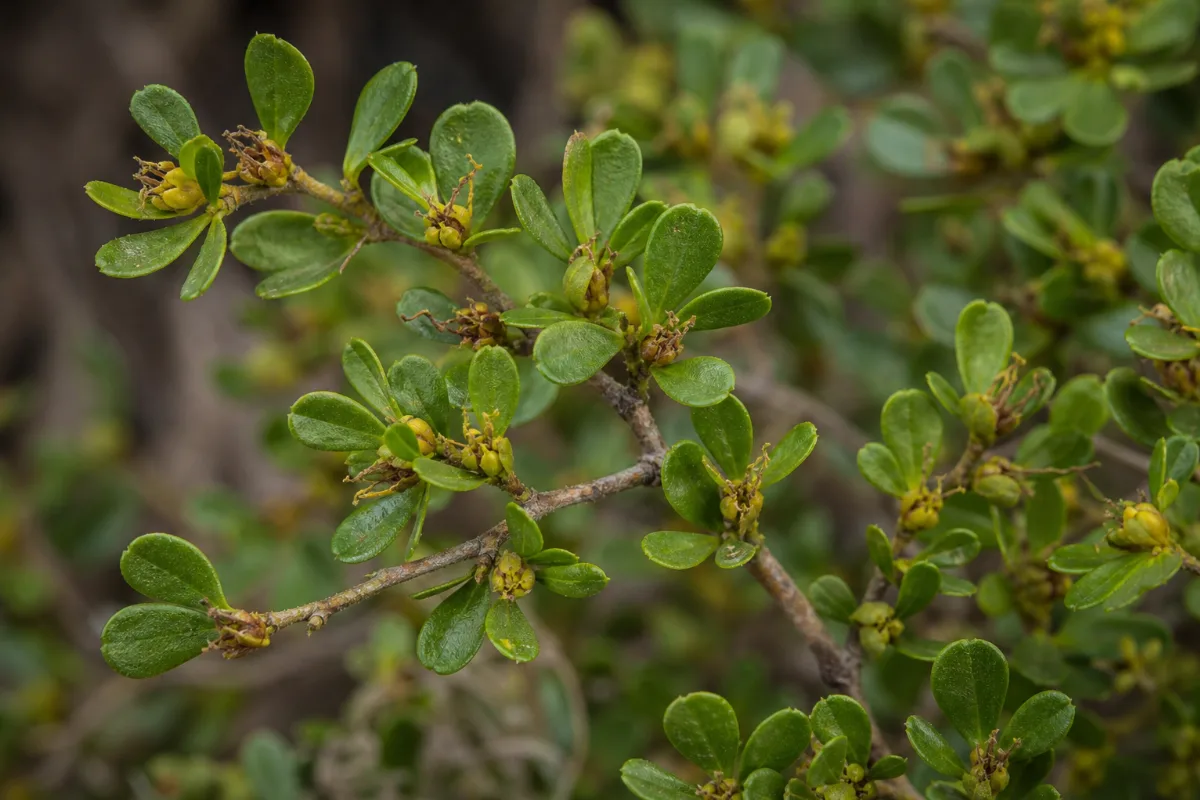
Herbs & Botanicals · Desert shrub with serious liver warnings
Chaparral
Larrea tridentata · also called Creosote bush, greasewood, gobernadora, hediondilla
Chaparral is a desert shrub whose leaves are sold as tea, capsules and tinctures. It has been used traditionally for colds, arthritis and skin problems, but no trial shows it works. Reports link it to serious liver injury, including liver failure that needed a transplant, and to kidney problems. Do not use it if you have liver or kidney disease or are pregnant or breastfeeding, and get urgent help for yellow skin or eyes or dark urine.
General information, not medical advice. Last substantive update · Not medically reviewed. A named clinician has not signed off on this page. How this page is made
About Chaparral
Chaparral is the leaf of Larrea tridentata, the creosote bush, a desert shrub of Mexico and the southwestern United States. It is sold as a tea, capsule, tablet and tincture and promoted for colds, arthritis, skin problems, cancer and liver cleansing. We found no controlled trial showing benefit. Instead, case reports and an FDA-report review link chaparral products to hepatitis, cirrhosis and liver failure needing transplant, and the NIH LiverTox entry gives the same warning. One case report describes kidney cysts and a kidney cancer in a long-term tea drinker. No safety data exist for pregnancy, breastfeeding or children, so it should be avoided. Talk to a doctor or pharmacist before using it, and about any amounts.
What it is
Chaparral is the leaf and twig of Larrea tridentata, a shrub of the caltrop family that grows in deserts of Mexico and the southwestern United States. It is also called creosote bush or greasewood.
The leaf holds a compound called NDGA (nordihydroguaiaretic acid), a lignan with strong antioxidant action in the lab.
Traditional and current uses
Native American and Mexican traditional medicine used chaparral for skin sores, colds, rheumatism and many other ailments, and the tea was used for kidney and gallbladder stones.
Today it is sold as a supplement, often as an antioxidant or liver cleanser. Black salve, promoted as an alternative cancer treatment, lists chaparral among its ingredients, according to Memorial Sloan Kettering.
What the research shows
We found no controlled trial of chaparral tea or capsules for any use. A 1970 report on the tea in cancer is described by Memorial Sloan Kettering as showing no benefit (we read only its title). A small 2012 trial of purified NDGA in 12 men with prostate cancer stopped early because PSA did not fall significantly, and serious side effects included raised liver tests in one man.
Everything else, including antioxidant, anti-inflammatory and antiviral findings, comes from cell and animal studies of NDGA or lab-made versions of it. Those are not human results.
At a glance
Traditional uses history, not proof
- Northern Mexico and the southwestern US: colds, arthritis, skin sores, pain and rheumatism
- Tea for kidney and gallbladder stones
- Folk use for cancer; sold today as a liver cleanser
Studied for research
- Cancer: no benefit shown (a 1970 report and a small trial of purified NDGA)
- Liver cleansing: no evidence; liver harm is documented
- Antioxidant and anti-inflammatory: lab and animal work only
- Colds, arthritis, skin, stones: traditional use, no trials
Main compounds
- NDGA (nordihydroguaiaretic acid), a lignan
- Other plant compounds in the leaf (not fully verified)
Common forms
- Leaf tea
- Capsules and tablets
- Tincture
- Powdered leaf
- Black salve (an ingredient)
Research links: FDA-report review of liver cases (1997) · Liver transplant case report (1995) · NIH LiverTox summary (2022) · Kidney case report (1994) · NDGA review (2020) · Research Library · Genes & Biomarkers Library
The plant and its history
- Accepted scientific name
- Larrea tridentata (DC.) Coult.
- Naming authority
- (DC.) Coult.
- Synonyms
- Larrea divaricata Cav. (the name used in several older abstracts; whether it is a synonym or a related species was not checked)
- Common names
- Chaparral (English); Creosote bush (English); Greasewood (English); Gobernadora (Spanish); Hediondilla (Spanish); Guamis (Spanish)
- Botanical family
- Zygophyllaceae (caltrop family; GBIF).
- Classification
- Plantae > Tracheophyta > Magnoliopsida > Zygophyllales > Zygophyllaceae > Larrea > Larrea tridentata
- Native range
- Desert regions of Mexico and the southwestern United States (Memorial Sloan Kettering; 2022 review).
- Habitat
- A desert shrub (reviews). Other habitat details not verified.
- What the plant looks like
- Roots: Not verified.; Stems: Woody shrub (LiverTox).; Leaves: The leaf is the part used; NDGA is present at high concentration in the leaves (rat-study abstract).; Flowers: Not verified.; Fruit: Not verified.
- Cultivation
- Not verified.
- Harvest and processing
- Not verified.
- Look-alikes and adulterants
- Name: Other Larrea species; Note: Older abstracts name Larrea divaricata as the source of NDGA; whether products mix species was not checked.
- Sustainability and conservation
- Not assessed.
Traditional use and history history, not clinical proof
| Tradition or era | Documented use | Source |
|---|---|---|
| Native American and Mexican traditional medicine | Skin sores, diabetes, cancer, venereal disease, tuberculosis, colds and rheumatism; chaparral tea for kidney and gallbladder stones. | s-msk-chaparral |
| Northern Mexico and southern US folk medicine | Infertility, rheumatism, arthritis, colds, diarrhoea, skin problems, pain, inflammation and excess weight. | p36080156 |
| Modern supplement era (1990s) | Sold as an antioxidant and cleansing herb; cases of liver injury were reported from 1990 onward. | p9129552 |
Traditional use shows how a plant was used. It does not show that a supplement works or is safe today.
What is inside, and how it may work
What the plant contains and how those compounds act in cells and animals. Laboratory and animal mechanisms are not proven effects in people.
Main compounds
| Compound | Family | Where it is concentrated | Activity studied | Level of evidence |
|---|---|---|---|---|
| Nordihydroguaiaretic acid (NDGA) PubChem 4534 | lignan (phenolic, two catechol rings) | leaf Not reported in sources read | Strong antioxidant in the lab; blocks lipoxygenases; activates NRF2; oxidation to quinones may alter proteins and DNA. 16 10 21 | In vitro and animal |
| Terameprocol (tetra-O-methyl NDGA) | lignan derivative (lab-made) | not a plant constituent Not applicable | Studied as a cancer and antiviral drug candidate; cell data shown against poxviruses. 4 15 | Laboratory research |
Mechanisms, receptors and pathways
| Target or pathway | Gene or receptor | What was found | Level |
|---|---|---|---|
| Lipoxygenase enzymes | LOX family | NDGA blocks lipoxygenases in lab studies. 10 11 | Laboratory research |
| NRF2 antioxidant response | NFE2L2 | NDGA activates the NRF2 pathway in cells. 10 | Laboratory research |
| Catechol oxidation to quinones | not established | Quinones may alter proteins and DNA; reviewers raise this as a safety concern. It has not been shown to explain the liver injury in people. 10 | Pharmacological theory |
| Cell respiration | not established | NDGA blocked cellular respiration in vitro (per Memorial Sloan Kettering). 11 | Laboratory research |
Absorption, metabolism and elimination
- Absorption
- Not established for chaparral products in people.
- Distribution
- No data.
- Metabolism
- Not studied for the herb; reviews discuss oxidation of NDGA to reactive quinones.
- Elimination
- No data.
- Bioavailability
- NDGA dissolves poorly in water (per the National Academies, as recorded in our summary); not established in people.
Isolated compounds versus whole extracts
Trials and most mechanism work use purified NDGA or its derivative terameprocol, not the whole herb. Liver injury has been reported with whole-herb products (leaf, tablets, capsules), and a purified NDGA trial also saw raised liver tests in one man. Findings for one cannot be assumed for the other.
Nutritional composition
Chaparral is not a food or a source of any nutrient. No nutritional role is claimed.
3 not enough evidence3 evidence against
What is Chaparral good for?
What chaparral is claimed to do and what the research actually shows. "Against" means the evidence points away from benefit or toward harm. "Insufficient" means too little human research to judge. Nothing here is proven to work.
Benefits, one by one
Each card is a research question, not a promise. Tap a goal to filter. Open a card to see the studies, doses and limits.
Cancer treatment claims (chaparral tea and purified NDGA)
Evidence againstChaparral tea has been promoted as a cancer remedy. The only human reports we found found no benefit. A 1970 trial is reported (second-hand) to have found it ineffective, and a trial of purified NDGA in prostate cancer was stopped early because it did not lower PSA.
4 studiesTea made from the leaf; purified NDGA in the trial (not the herb). No…
Studies, doses and limits
What the trials found
Memorial Sloan Kettering cites a 1970 trial of chaparral tea in cancer as showing no benefit (we read only the title). In a phase II study of purified NDGA in 12 men with a rising PSA after prostate cancer treatment, enrolment stopped early because the first 12 men showed no significant PSA declines. Seven had short, small PSA falls (1.9% to 15.8%); PSA doubling time lengthened by a median of 1.4 months. A few men had rare serious side effects, including raised liver tests in one. The cancer-drug derivative terameprocol has been tested separately and is a different compound.
Results
No benefit shown. The herb is not an accepted cancer treatment.
Effect sizes as reported
NDGA trial: median PSA doubling time +1.4 months; no significant PSA declines (n=12; no confidence interval in the abstract).
Why this rating
The only human reports found show no meaningful benefit, and the herb has documented liver harm. This is not the same as proving it never works, but there is no reason to rely on it.
Form and dose studied
Tea made from the leaf; purified NDGA in the trial (not the herb). No amount or product is suggested here.
Who was studied
Adults with advanced or rising-PSA prostate cancer (NDGA trial); the 1970 trial population is not known to us.
Limits
The NDGA trial was small, uncontrolled and stopped early, and used the isolated compound. The 1970 result is second-hand from MSK.
Why researchers looked
Native American and folk use for tumours and sores, and lab work showing NDGA slows some cancer cells.
Traditional use
Used traditionally in northern Mexico and the southwestern US for many ailments, including cancer, according to Memorial Sloan Kettering.
Proposed mechanism Laboratory research
In cell studies NDGA blocks the IGF-1 receptor and other growth signals in several cancer cell types. These are lab results and have not led to a working treatment.
A proposed mechanism does not show that the effect happens in people.
Do not stop or delay cancer treatment for chaparral. Liver injury has been reported, including liver failure.
Liver cleansing and detox claims
Evidence againstChaparral is sold as a liver cleanser, but the sources we read describe liver injury, not liver benefit. No trial shows it supports the liver.
4 studiesCapsules, tablets, tincture, powdered leaf and tea are sold. Most rep…
Studies, doses and limits
What the trials found
We found no trial of chaparral for liver health. The human reports are all about harm: 18 reports sent to the US FDA (13 with liver toxicity, 4 cirrhosis, 2 liver transplants), plus individual case reports. The NIH LiverTox summary says chaparral extracts have been linked to clinically apparent liver injury, some leading to liver failure and transplant.
Results
No benefit. Documented harm.
Effect sizes as reported
Not applicable: no benefit study exists.
Why this rating
Reference sources and case series describe harm and no source describes benefit.
Form and dose studied
Capsules, tablets, tincture, powdered leaf and tea are sold. Most reported liver cases involved capsules or tablets.
Who was studied
Adults using chaparral as a supplement.
Limits
Harm evidence is case reports and spontaneous reports, which cannot give how often it happens.
Why researchers looked
Marketing around the plant's antioxidant chemistry.
Traditional use
Sold as a cleansing herb in the supplement market.
Proposed mechanism Pharmacological theory
None established for benefit. Reviews raise the opposite concern: when NDGA's catechol rings are oxidised to quinones they may alter proteins and DNA.
A proposed mechanism does not show that the effect happens in people.
See the safety tab. Stop and get medical help for yellow skin or eyes, dark urine or severe tiredness.
Antioxidant and anti-inflammatory activity (lab only)
Not enough evidenceIn the lab NDGA is a strong antioxidant and blocks inflammation-related enzymes. This has not been shown to help people, and the same chemistry may be part of why the herb can injure the liver.
3 studiesMostly isolated NDGA in lab work, not herbal products.
Studies, doses and limits
What the trials found
No human trial of chaparral for antioxidant or anti-inflammatory outcomes was found. In rats, NDGA reduced kidney damage caused by potassium dichromate, but this does not show the herb protects human kidneys.
Results
Lab and animal findings only.
Effect sizes as reported
Not applicable.
Why this rating
Only lab and animal data; reviewers themselves flag safety concerns.
Form and dose studied
Mostly isolated NDGA in lab work, not herbal products.
Who was studied
Cells and rats.
Limits
Isolated compound at lab concentrations; no human data.
Why researchers looked
NDGA's two catechol rings scavenge free radicals; it was once used as a food preservative.
Traditional use
Traditional use for arthritis and pain (see the other uses section).
Proposed mechanism Laboratory research
NDGA blocks lipoxygenases and activates the NRF2 pathway in cells. Oxidation of its catechol rings to quinones may alter proteins and DNA, which raises safety concerns, according to a 2020 review.
A proposed mechanism does not show that the effect happens in people.
Antioxidant in the lab does not mean safe in the body.
Traditional uses: colds, arthritis, skin problems and pain
Not enough evidenceChaparral has long been used in northern Mexico and the southwestern US for colds, arthritis, skin problems and pain. This is tradition only. We found no human trial for any of these.
2 studiesTea (leaf infusion), tinctures, capsules and topical products have be…
Studies, doses and limits
What the trials found
No controlled human study of these uses was found.
Results
Traditional use only.
Effect sizes as reported
Not applicable.
Why this rating
No human trials; liver injury reports outweigh any traditional reputation.
Form and dose studied
Tea (leaf infusion), tinctures, capsules and topical products have been used. No amount or product is suggested here.
Who was studied
Not studied.
Limits
Tradition is not evidence of safety or benefit.
Why researchers looked
Long folk use in desert communities.
Traditional use
A 2022 review lists traditional use for infertility, rheumatism, arthritis, colds, diarrhoea, skin problems, pain, inflammation and excess weight. Memorial Sloan Kettering lists purported uses including arthritis, bronchitis, cancer, colds, inflammation, menstrual cramps, promoting urination and spasms.
Proposed mechanism Laboratory research
No human mechanism shown. NDGA blocks lipoxygenase enzymes in lab studies.
A proposed mechanism does not show that the effect happens in people.
Serious liver injury has been reported; see the safety tab.
Kidney and gallbladder stones (traditional tea)
Evidence againstChaparral tea has been used traditionally for kidney and gallbladder stones. There is no trial, and kidney problems have been reported in long-term tea drinkers.
2 studiesLeaf tea.
Studies, doses and limits
What the trials found
No human study of stones was found. A 1994 case report links protracted chaparral tea use with cystic kidney disease and a cystic kidney cancer in one person; NDGA is used experimentally to cause kidney cysts in rats.
Results
No benefit shown; a kidney warning signal exists.
Effect sizes as reported
Not applicable.
Why this rating
No evidence of benefit and a case report plus animal data of kidney harm. One case does not prove cause.
Form and dose studied
Leaf tea.
Who was studied
One reported tea drinker.
Limits
Single case report; cause not established.
Why researchers looked
Traditional use as a water extract.
Traditional use
Memorial Sloan Kettering says the water extract known as chaparral tea has been used for kidney and gallbladder stones.
Proposed mechanism Pharmacological theory
Not established.
A proposed mechanism does not show that the effect happens in people.
People with kidney disease should avoid it unless a doctor agrees.
Antimicrobial, antiviral and other lab findings
Not enough evidenceNDGA and its lab-made derivative terameprocol have shown antiviral and other activity in cell studies. This is lab and animal work only.
3 studiesIsolated compound or derivative.
Studies, doses and limits
What the trials found
No human study of chaparral for infections was found.
Results
Cell studies only.
Effect sizes as reported
Not applicable.
Why this rating
Cell and animal work only.
Form and dose studied
Isolated compound or derivative.
Who was studied
Cell lines.
Limits
A methylated derivative behaves differently from the whole herb.
Why researchers looked
NDGA is a reactive compound with many targets in cells.
Traditional use
Colds and infections in folk use.
Proposed mechanism Laboratory research
In cultured cells terameprocol reduced cowpox and vaccinia virus spread. This is a derivative, not the herb.
A proposed mechanism does not show that the effect happens in people.
None of this supports using the herb.
Connections to the rest of health
How Chaparral connects to the rest of our health knowledge graph. Every link says what kind of connection it is. A safety link (for example to the liver) is a warning, not a benefit. A study that merely mentions a topic never creates a benefit link.
Explore every connection: goals, body systems, organs, symptoms, genes
B. Body systems
| Connected to | Kind of connection | Evidence status | Context | Studies |
|---|---|---|---|---|
| Hepatic System | Biological association | Evidence against | Studied for: Liver cleansing and detox claims | 17 14 10 11 |
| Liver Detox | Biological association | Evidence against | Studied for: Liver cleansing and detox claims | 17 14 10 11 |
| Urinary System | Biological association | Evidence against | Studied for: Kidney and gallbladder stones (traditional tea) | 11 20 |
| Kidney Urinary | Biological association | Evidence against | Studied for: Kidney and gallbladder stones (traditional tea) | 11 20 |
| Immune System | Biological association | Not enough evidence | Studied for: Antimicrobial, antiviral and other lab findings | 15 4 12 |
E. Health conditions
| Connected to | Kind of connection | Evidence status | Context | Studies |
|---|---|---|---|---|
| Drug-induced liver injury | Adverse effect or risk | Case series | Hepatitis, jaundice, cirrhosis and liver failure have been reported. Preparation or compound: Chaparral tablets, capsules, leaf, extracts |
17 7 14 |
| Cirrhosis | Adverse effect or risk | Case series | 4 of 18 FDA reports progressed to cirrhosis. Preparation or compound: Chaparral products |
17 |
| Kidney cysts | Adverse effect or risk | Case report | One case report; cause not established. Preparation or compound: Chaparral tea |
20 |
| Pregnancy and breastfeeding | Contraindication | Pharmacological theory | No safety data; avoid. Preparation or compound: Chaparral products |
14 |
I. Biomarkers
| Connected to | Kind of connection | Evidence status | Context | Studies |
|---|---|---|---|---|
| PSA doubling time (prostate cancer marker) | Biological association | Very low certainty | Measured in trials: mixed. A lab change is not the same as a health benefit. | 5 11 |
| Liver enzymes and bilirubin (ALT, AST, bilirubin) | Biological association | Low certainty | Measured in trials: raised. A lab change is not the same as a health benefit. | 1 17 5 |
J. Genes, receptors and enzymes
| Connected to | Kind of connection | Evidence status | Context | Studies |
|---|---|---|---|---|
| Preliminary mechanism | 10 |
K. Biological pathways
| Connected to | Kind of connection | Evidence status | Context | Studies |
|---|---|---|---|---|
| Preliminary mechanism | 10 |
L. Active compounds
| Connected to | Kind of connection | Evidence status | Context | Studies |
|---|---|---|---|---|
| Nordihydroguaiaretic acid (NDGA) | Biological association | In vitro and animal | Strong antioxidant in the lab; blocks lipoxygenases; activates NRF2; oxidation to quinones may alter proteins and DNA. Preparation or compound: leaf |
16 10 21 |
| Terameprocol (tetra-O-methyl NDGA) | Biological association | In vitro | Studied as a cancer and antiviral drug candidate; cell data shown against poxviruses. Preparation or compound: not a plant constituent |
4 15 |
Each connection is stored with the ingredient, the connected record, the kind of connection, the evidence status, the supporting studies, the preparation or compound involved, and a review date (last reviewed October 25, 2026).
Evidence at a glance: what changed in 2 lab markers
Tap a number to show only those markers. Counts are markers, not people.
The evidence
The research centre for Chaparral. Every record here was checked against PubMed or the publisher's page; we never list a study we have not verified.
Evidence by outcome
Bars show how many studies we found for each outcome, not how well it works. People are added up across trials only (reviews are not added, to avoid double counting).
How we rate evidence
High certainty
Several well-run trials or reviews agree; further research is unlikely to change the picture much.
Moderate certainty
Good trials point the same way, but some doubt remains.
Low certainty
Small, short or inconsistent trials. The finding could change with better research.
Very low certainty
Very little or very weak human data. Treat as a possibility only.
Mixed findings
Trials or reviews disagree with each other.
Not enough evidence
Not enough human research to say either way.
Evidence against
Good research found no benefit, or found harm.
We take the reviewers' own risk-of-bias and GRADE statements where they exist, and otherwise judge from study size, design, consistency, directness and whether a product matches what is sold. Many publications do not make evidence high. Method note: We started from our existing summary of this herb, then checked each cited paper in PubMed and the accepted name in GBIF. Regulator and reference documents we could not open are marked as second-hand. No study is cited that we could not verify.
Study library: every study we checked 21
| Study | Design | People | Product, dose, length | Result |
|---|---|---|---|---|
| Alderman 1994 Cholestatic hepatitis after ingestion of chaparral leaf: confirmation by endoscopic retrograde cholangiopancreatography and liver biopsy Journal of Clinical Gastroenterology · PMID 7806838 · DOI |
Case report |
1 One patient |
Chaparral tablets leaf not given here About 2 months |
Painless jaundice, tiredness and itching. ALT and AST rose to about 25 times normal, bilirubin about 30 times and GGT about 35 times; biopsy showed severe cholestatic hepatitis (abstract truncated at 250 words). ALT/AST ~25x, bilirubin ~30x normal Methods, limits and fundingOutcomes: Jaundice, liver tests, liver biopsy Limitations: Single case report; abstract is truncated. Funding and conflicts: not read Read: abstract |
| Batchelor 1995 Chaparral-induced hepatic injury American Journal of Gastroenterology · PMID 7733101 |
Case series |
2 A 71-year-old man and a 42-year-old woman |
Chaparral leaf, daily leaf not given here 2 to 3 months before hepatitis |
Both had biopsy-proven hepatitis. The man recovered on stopping and the hepatitis came back when he restarted. The woman recovered fully after stopping. Recurrence on rechallenge in one of two Methods, limits and fundingOutcomes: Hepatitis, response to stopping and rechallenge Limitations: Two cases only. Funding and conflicts: not read Read: abstract |
| CDC MMWR 1992 Toxic hepatitis associated with chaparral (two 1992 cases) MMWR · Source |
Authoritative report |
leaf not given here |
Two 1992 chaparral-associated toxic hepatitis cases, as recorded in our earlier summary. Case report Methods, limits and fundingOutcomes: Two cases of toxic hepatitis Limitations: Summary-only: the CDC page was blocked (403) when we tried to re-open it. Funding and conflicts: not read Read: summary-only | |
| Chen 2009 Nordihydroguaiaretic acid analogues: their chemical synthesis and biological activities Current Topics in Medicinal Chemistry · PMID 19903157 · DOI |
Narrative review in-vitro |
leaf not given here |
Notes that terameprocol, a tetra-O-methyl derivative of NDGA, was then in Phase I/II trials as an anticancer agent. NDGA and analogues show anticancer, antioxidant, antimicrobial, anti-inflammatory and immunosuppressive activity in the lab. Context for the isolated drug derivative Methods, limits and fundingOutcomes: NDGA analogues Limitations: Abstract only; the derivative is a different compound from the herb. Funding and conflicts: not read Read: abstract | |
| Friedlander 2012 A phase II study of insulin-like growth factor receptor inhibition with nordihydroguaiaretic acid in men with non-metastatic hormone-sensitive prostate cancer Oncology Reports · PMID 21971890 · DOI |
Single arm trial (phase II) |
12 Men with non-metastatic hormone-sensitive prostate cancer and a rising PSA |
Purified NDGA by mouth (not whole chaparral) isolated compound not given here 28-day cycles; median 9 cycles (range 2-19) among 11 who stopped |
Enrolment stopped early after a planned interim look found no significant PSA declines in the first 12 men. 7 men had short-lived PSA falls of 1.9% to 15.8%. PSA doubling time lengthened by a median of 1.4 months. Rare grade 3 events included nausea/vomiting, fainting from dehydration, raised liver tests in 1 man, and confusion in another. The authors conclude NDGA lengthens doubling time but does not cause significant PSA declines. Median PSA doubling time +1.4 months; no significant PSA declines Methods, limits and fundingOutcomes: PSA decline, PSA doubling time, safety Limitations: Small, no control group, stopped early; purified compound, not a herbal product. Funding and conflicts: Academic centre; funding not read Read: abstract |
| GBIF 2026 GBIF species match: Larrea tridentata GBIF · Source |
Database record not applicable |
leaf not given here |
API checked 2026-10-25: Larrea tridentata (DC.) Coult., ACCEPTED, species key 7568403, family Zygophyllaceae, order Zygophyllales. See results Methods, limits and fundingOutcomes: Accepted name, family Limitations: Taxonomic record, not a trial. Funding and conflicts: not read Read: full-text | |
| Gordon 1995 Chaparral ingestion. The broadening spectrum of liver injury caused by herbal medications JAMA · PMID 7837368 · DOI |
Case report |
1 60-year-old woman |
Chaparral (product not described in the abstract) unspecified not given here 10 months |
Severe hepatitis with no other cause found. She got worse despite intensive care and needed a liver transplant; she was well more than 1 year later. Liver transplant Methods, limits and fundingOutcomes: Liver injury Limitations: Single case report (a short letter). Funding and conflicts: not read Read: abstract |
| Heron 2001 The safety of low-dose Larrea tridentata (DC) Coville (creosote bush or chaparral): a retrospective clinical study Journal of Alternative and Complementary Medicine · PMID 11327523 · DOI |
Retrospective case review |
13 13 people given Larrea tincture by mouth (inside a mixed herbal formula, under 10% Larrea) plus 23 given a topical oil extract, in one naturopathic practice in Arizona; no history of liver disease |
Larrea tincture in a formula (oral) or Larrea in castor oil (topical) unspecified not given here 22-month review period |
The 4 people with before-and-after blood tests showed no sign of liver damage, including one taking a medicine that can harm the liver. No sign of organ damage was found in anyone in follow-up. The authors advise caution in liver disease and say capsules may be best avoided because of reported overdosing. No harm seen in a very small group Methods, limits and fundingOutcomes: Liver, kidney and other blood tests (available for only 4 people), clinical history Limitations: Tiny, uncontrolled, retrospective, authors are herbal practitioners; only 4 people had blood tests; says nothing about long-term use or about other products. Funding and conflicts: Naturopathic practice authors; no outside funding stated in the abstract Read: abstract |
| Kauma 2004 Toxic acute hepatitis and hepatic fibrosis after consumption of chaparral tablets Scandinavian Journal of Gastroenterology · PMID 15545179 · DOI |
Case report |
1 Young, previously healthy woman |
Chaparral tablets unspecified not given here |
Severe toxic hepatitis on liver biopsy. Stopping and restarting the product, plus ruling out other causes, strongly supported chaparral as the cause. Permanent liver scarring (fibrosis) was still seen 6 months after liver tests had returned to normal. Permanent fibrosis after normal liver tests Methods, limits and fundingOutcomes: Liver injury, effect of stopping and restarting Limitations: Single case report. Funding and conflicts: not read Read: abstract |
| Manda 2020 Nordihydroguaiaretic Acid: From Herbal Medicine to Clinical Development for Cancer and Chronic Diseases Frontiers in Pharmacology · PMID 32184727 · DOI |
Narrative review in-vitro |
leaf not given here |
NDGA is a phenolic lignan from Larrea tridentata. Its two catechol rings give strong antioxidant action; it also blocks lipoxygenases and activates the NRF2 pathway. Oxidation of the catechols to quinones may alter proteins and DNA, which raises safety concerns. Mechanism summary Methods, limits and fundingOutcomes: NDGA targets, effects, side effects, analogues Limitations: Narrative review; abstract only. Funding and conflicts: not read Read: abstract | |
| Memorial Sloan Kettering Cancer Center 2021 Chaparral (About Herbs, Botanicals and Other Products) MSK Integrative Medicine · Source |
Authoritative reference not applicable |
leaf not given here |
States that products containing chaparral have been associated with severe liver damage, some needing transplant; adverse reactions listed are fatigue, jaundice, cirrhosis and hepatotoxicity. Reports a phase II trial found chaparral ineffective against cancer, a small retrospective study of low tincture intake without harm, and a pilot NDGA prostate study with liver enzyme rises in some men. Says the FDA removed NDGA from its GRAS list, a topical NDGA cream (masoprocol) was withdrawn from the US market in June 1996, and chaparral is an ingredient in black salve promoted as an alternative cancer treatment. Reference warning on liver injury Methods, limits and fundingOutcomes: Clinical summary, warnings, adverse reactions Limitations: Reference list not independently checked; kidney statements in our earlier summary were NOT found in the part re-read. Funding and conflicts: Non-profit cancer centre Read: full-text | |
| Morales-Ubaldo 2022 Phytochemical Compounds and Pharmacological Properties of Larrea tridentata Molecules · PMID 36080156 · DOI |
Narrative review in-vitro |
leaf not given here |
Describes traditional use in northern Mexico and the southern US for infertility, rheumatism, arthritis, colds, diarrhoea, skin problems, pain, inflammation and excess weight. Pharmacology cited is laboratory and animal work. Traditional-use and lab summary Methods, limits and fundingOutcomes: Traditional uses and laboratory pharmacology Limitations: Abstract and first part read only; a veterinary-led review of lab and animal work. Funding and conflicts: not read Read: abstract | |
| National Academies (Institute of Medicine) 2005 Dietary Supplements: A Framework for Evaluating Safety, Appendix J (chaparral) National Academies Press · Source |
Authoritative reference not applicable |
leaf not given here |
As recorded in our earlier summary (not re-opened): 1 of 15 liver cases involved tea, NDGA dissolves poorly in water, the authors treat that as a reason for concern about other forms and not proof that tea is safe; most concern for people with liver disease, people taking liver-affecting medicines and people drinking heavily; the FDA issued a public advisory after two severe-jaundice reports in 1992; NDGA lost GRAS status in 1968; Canada does not allow chaparral as a non-medicinal ingredient. Authoritative caution Methods, limits and fundingOutcomes: Safety review of chaparral Limitations: Summary-only: reached through our earlier summary, first 100,000 of about 208,000 characters read at that time; not re-opened. Funding and conflicts: not read Read: summary-only | |
| National Institute of Diabetes and Digestive and Kidney Diseases 2022 Chaparral (LiverTox: Clinical and Research Information on Drug-Induced Liver Injury) LiverTox (NCBI Bookshelf) · PMID 31643676 |
Regulator/reference entry |
leaf not given here |
Chaparral extracts have been linked to several cases of clinically apparent liver injury, some leading to acute liver failure and emergency liver transplantation. Reference-level liver warning Methods, limits and fundingOutcomes: Liver injury reference summary Limitations: Only the abstract was read; the full entry (including its likelihood score) is behind a browser check and was not read. Funding and conflicts: not read Read: abstract | |
| Pollara 2010 Inhibition of poxvirus growth by Terameprocol, a methylated derivative of nordihydroguaiaretic acid Antiviral Research · PMID 20888364 · DOI |
Laboratory research in-vitro |
Terameprocol (methylated NDGA derivative) isolated compound not given here |
Terameprocol strongly reduced cowpox and vaccinia virus growth in cultured cells by limiting spread from cell to cell. The authors state it has been found safe in phase I trials as a topical and an injected drug. Lab effect only Methods, limits and fundingOutcomes: Poxvirus growth in cell lines Limitations: Cell culture; a derivative, not the herb. Funding and conflicts: not read Read: abstract | |
| PubChem (NCBI) 2026 PubChem compound: nordihydroguaiaretic acid (CID 4534) PubChem · Source |
Database record not applicable |
leaf not given here |
API checked 2026-10-25: CID 4534, C18H22O4, molecular weight 302.4, 4-[4-(3,4-dihydroxyphenyl)-2,3-dimethylbutyl]benzene-1,2-diol. See results Methods, limits and fundingOutcomes: Formula, weight Limitations: Chemical record, not a trial. Funding and conflicts: not read Read: full-text | |
| Sheikh 1997 Chaparral-associated hepatotoxicity Archives of Internal Medicine · PMID 9129552 |
Case series |
18 18 case reports of illness after chaparral sent to the US FDA, 1992-1994 |
Chaparral products (various) unspecified not given here Jaundice appeared 3 to 52 weeks after starting |
13 of 18 reports showed liver toxicity. Mostly cholestatic (bile-flow) hepatitis with jaundice and sharply raised liver tests. It cleared 1 to 17 weeks after most people stopped. 4 people went on to cirrhosis and 2 had sudden liver failure needing a transplant. 13 of 18 reports with liver toxicity; 4 cirrhosis; 2 transplants Methods, limits and fundingOutcomes: Liver injury pattern, course after stopping Limitations: Spontaneous reports sent to the FDA: product contents, amounts and other causes are not controlled; the number of users is unknown, so no rate can be given. Funding and conflicts: Authors from the US FDA Read: abstract |
| Smart 1970 Clinical experience with nordihydroguaiaretic acid - 'chaparrel tea' in the treatment of cancer Rocky Mountain Medical Journal · PMID 5480535 |
Clinical report |
leaf not given here |
PubMed holds the title only. Memorial Sloan Kettering cites this paper for a phase II trial that found chaparral ineffective against cancer; we did not read the paper. Reported by MSK as no benefit Methods, limits and fundingOutcomes: Cancer response Limitations: Title-only record; result is second-hand from Memorial Sloan Kettering. Funding and conflicts: not read Read: title-only | |
| Smith 1993 Acute hepatitis induced by ingestion of the herbal medication chaparral Australian and New Zealand Journal of Medicine · PMID 8297290 · DOI |
Case report |
leaf not given here |
PubMed holds the title only (a short letter with no abstract). No case details are stated here. not given Methods, limits and fundingOutcomes: Acute hepatitis Limitations: Title-only record; details not read. Funding and conflicts: not read Read: title-only | |
| Smith 1994 Cystic renal cell carcinoma and acquired renal cystic disease associated with consumption of chaparral tea: a case report Journal of Urology · PMID 7966683 · DOI |
Case report |
1 One patient with long-term chaparral tea use |
Chaparral tea leaf not given here Protracted (not specified in abstract) |
Cystic kidney disease and a cystic kidney cancer in a person with a history of long-term chaparral tea use. The authors note that NDGA is used experimentally to cause kidney cysts in rats. Association in one case Methods, limits and fundingOutcomes: Kidney disease Limitations: Single case; cause not shown. Funding and conflicts: not read Read: abstract |
| Yam-Canul 2008 Nordihydroguaiaretic acid attenuates potassium dichromate-induced oxidative stress and nephrotoxicity Food and Chemical Toxicology · PMID 18155343 · DOI |
Animal research animal |
Rats given potassium dichromate | NDGA by mini-pump (isolated compound) isolated compound not given here |
In rats poisoned with potassium dichromate, NDGA reduced kidney damage and oxidative stress. The abstract states NDGA is present at high concentration in the leaves. Protective in this rat model Methods, limits and fundingOutcomes: Kidney damage markers Limitations: Rat model of a different poison; does not show the herb is safe or protective for human kidneys. Funding and conflicts: not read Read: abstract |
What we do not know yet
- No controlled human trial of chaparral tea or capsules for any use.
- How often liver or kidney harm happens is unknown.
- No safety data for pregnancy, breastfeeding or children.
- No drug-interaction studies.
- The FDA advisory, Health Canada listing and full LiverTox entry were not read directly.
How new research is added
New studies are found by a saved PubMed search and are placed in a review queue. A person reads each one before it changes any evidence rating or safety wording.
Lab markers
What changed in blood or saliva tests during trials. A changed number is not the same as feeling or being healthier, and we give no "normal ranges".
Organ function 1
Liver enzymes and bilirubin (ALT, AST, bilirubin)
Raised in trials
ALT and AST are enzymes that leak into the blood when liver cells are injured. Bilirubin is a yellow pigment that builds up when bile cannot flow, causing jaundice.
Low certaintyResults and what it means
Why it was measured
Standard blood tests to detect liver injury.
Statistical vs. clinical meaning
These are signs of harm, not benefit. They come from case reports and spontaneous reports, so how often this happens is unknown.
Safety implication
Rises in these tests after starting chaparral are a reason to stop it and see a doctor.
| Study | Result | People | Product |
|---|---|---|---|
| 1 | ALT and AST about 25 times normal, bilirubin about 30 times and GGT about 35 times normal; biopsy showed severe cholestatic hepatitis. | One patient | Chaparral tablets for about 2 months |
| 17 | Jaundice with marked rises in liver tests 3 to 52 weeks after starting; 13 of 18 reports showed hepatotoxicity. | 18 FDA reports | Chaparral products |
| 5 | Raised liver function tests (grade 3) in 1 man. | 12 men in an NDGA trial | Purified NDGA |
Other 1
PSA doubling time (prostate cancer marker)
Mixed results in trials
PSA is a blood protein tracked in prostate cancer. Doubling time is how long it takes the level to double; a longer time can mean slower growth.
Very low certaintyResults and what it means
Why it was measured
Used to judge whether a prostate cancer treatment is slowing the disease.
Statistical vs. clinical meaning
A small lab marker change in a tiny, uncontrolled trial that was stopped early. It does not show a clinical benefit.
Safety implication
Raised liver tests were seen in one man and other serious side effects occurred.
| Study | Result | People | Product |
|---|---|---|---|
| 5 | PSA doubling time lengthened by a median of 1.4 months (range -6.1 to +19.8) but there were no significant PSA declines; 7 men had non-sustained falls of 1.9% to 15.8%. | 12 men with non-metastatic hormone-sensitive prostate cancer | Purified NDGA by mouth in 28-day cycles |
Safety
What studies and official sources say about side effects, medicines and who should check first. Each point shows what kind of evidence it comes from.
Main points to know 5
- Serious liver injury has been reported. Case reports and case reviews link chaparral products to hepatitis, jaundice, cirrhosis and liver failure that needed a liver transplant. In 18 reports sent to the US FDA, 13 showed liver toxicity, 4 progressed to cirrhosis and 2 needed transplants. Jaundice appeared from 3 to 52 weeks after starting. The NIH LiverTox summary and Memorial Sloan Kettering give the same warning. Case series 17 7 14 11
- Kidney problems have been reported, but not proven. One 1994 case report describes cystic kidney disease and a cystic kidney cancer in a long-term chaparral tea drinker, and NDGA is used to cause kidney cysts in rats. The cause in people is not established. People with kidney disease should not use it without medical advice. Case report 20
- Pregnancy, breastfeeding and children: avoid. We found no study of chaparral in pregnancy, breastfeeding or children, and no regulator statement for these groups in the sources we could open. Because of the liver and kidney reports, it should be avoided. This is a precaution based on missing data, not a measured risk. Pharmacological theory 14 17
- Tea is not proven safer. In a National Academies review as recorded in our summary, only 1 of 15 liver cases involved tea, and NDGA dissolves poorly in water. The authors treated this as a reason for concern about other forms, not proof that tea is safe. A kidney case involved tea. Authoritative guidance 13 20
- Stop and get help for signs of liver trouble. Yellow skin or eyes, dark urine, pale stools, itching, severe tiredness, nausea or belly pain after starting chaparral need urgent medical care. In most reports in the FDA review, liver tests cleared within 1 to 17 weeks of stopping, but some people had permanent damage or liver failure. Case series 17 9
Side effects 6
| Effect | How often | Severity and recovery | Evidence |
|---|---|---|---|
| Hepatitis with jaundice (cholestatic or mixed) Onset 3 to 52 weeks after starting in the FDA review. Reports include recurrence when the product was restarted (a 71-year-old man in one report; the rechallenge in another report strongly supported cause). | Not established | serious Usually improves after stopping; not always | Case series 17 1 2 |
| Liver failure needing transplant A 60-year-old woman after 10 months of use; 2 of 18 FDA reports also ended in transplant. | Not established | life-threatening Not reversible | Case report 7 17 |
| Cirrhosis and permanent scarring (fibrosis) 4 of 18 FDA reports; fibrosis was still present 6 months after normal liver tests in one case. | Not established | serious Not reversible | Case series 17 9 |
| Kidney cysts and cystic kidney cancer One reported long-term tea drinker; cause not established. | Not established | serious unknown | Case report 20 |
| Skin reactions (contact dermatitis) Attributed to the plant in a 2022 review; we did not read the primary reports. | Not established | mild to moderate unknown | Authoritative guidance 12 |
| Nausea, tiredness, raised liver tests with purified NDGA Seen in the small prostate-cancer trial of the purified compound, not the herb. | Not established | moderate unknown | Controlled trial 5 |
Liver
Chaparral is a documented cause of liver injury. Across 18 reports to the US FDA (1992-1994), 13 had liver toxicity, mostly cholestatic hepatitis. Single case reports describe liver transplant after 10 months of use, severe cholestatic hepatitis with markedly raised enzymes, recurrence on restarting, and fibrosis that lasted after liver tests normalised. NIH LiverTox says chaparral extracts have been linked to several cases of clinically apparent liver injury, some leading to acute liver failure and transplant. A small retrospective review of 13 people given a low-strength tincture inside a mixed formula found no harm in the 4 who had blood tests, but it is far too small and uncontrolled to show safety, and its authors still advise caution in liver disease. The mechanism is unknown. 17 7 2 9 1 19 3 14 8
How often. Unknown. No study counted users, so no rate can be given. Cases are spontaneous reports.
Monitoring. No agency monitoring advice was found. If you have used chaparral and get yellow skin or eyes, dark urine or severe tiredness, stop and see a doctor the same day.
- .
- .
- .
- .
- .
- .
- .
This is a safety connection. It is not evidence that Chaparral supports liver health.
Medicines and supplements 3
| With | Why it matters | Importance | Evidence | What to do |
|---|---|---|---|---|
| Liver-affecting medicines and alcohol prescription | Chaparral can injure the liver by itself, so taking it with other liver-stressing substances may add risk. | Not measured in an interaction study. The National Academies (as recorded in our summary) advise most concern for people with liver disease, people on liver-affecting medicines and people drinking heavily. | Authoritative guidance Not enough evidence 13 8 | Do not combine without asking a doctor or pharmacist. Check with them about any medicine that can affect the liver. |
| Other herbs and supplements known to harm the liver herb | Adding more than one possible liver toxin makes the cause of any injury hard to find and may add risk. | Unknown; theoretical. | Pharmacological theory Not enough evidence 17 | Tell your doctor about every herb and supplement you take. |
| Specific prescription drugs (enzyme or transporter interactions) prescription | Memorial Sloan Kettering describes no specific drug interactions, and we found no interaction study. Reactive NDGA metabolites are discussed in reviews but not tested against particular medicines. | Unknown. | Pharmacological theory Not enough evidence 11 10 | Ask a pharmacist before combining with any prescription medicine, especially ones with a narrow safety margin. |
Who should check first 4
| Situation | Advice | Evidence |
|---|---|---|
| Any liver disease, past liver injury from a supplement, or heavy alcohol use | Avoid. Liver injury is the main documented harm. | Authoritative guidance 13 8 17 |
| Kidney disease or kidney cysts | Avoid unless a doctor agrees. Kidney harm is reported in one case and in animals. | Case report 20 |
| Pregnancy, breastfeeding, babies and children | Avoid. No safety data exist and the liver and kidney reports are serious. | Pharmacological theory 14 |
| Using it in place of cancer treatment | Do not. The only human reports found no benefit. | Authoritative guidance 11 5 |
Overdose, product quality and regulators
Summary. The leaf and twigs are the parts used. Liver toxicity is the main concern in people; kidney cysts were produced in rats by high-dose NDGA.
Animal. NDGA is used experimentally to cause kidney cysts in rats (stated in the 1994 case report abstract).
Human doses studied. Not given here. No safe amount has been established.
High dose or long term signals. Liver injury began from 3 to 52 weeks after starting in the FDA review; a kidney case followed long-term tea use. A herbal-practice review says capsules have been associated with dangerous overdosing.
Overdose response. Not described in the sources read. For jaundice, dark urine or severe illness after use, seek urgent medical care.
Genotoxicity. Not studied directly; a 2020 review says oxidation of NDGA to quinones may alter proteins and DNA.
Toxic plant parts. Leaves and twigs are used. The abstract of a rat study states NDGA is present at high concentration in the leaves.
The sources read do not discuss pesticides, heavy metals or look-alike plants. They do show that product contents in reported liver cases were often poorly described.
Poorly described products. Reported cases involved tablets, capsules and leaf, and the strength and contents of the products were often not described. 17 9
Black salve. Memorial Sloan Kettering says chaparral is an ingredient in black salve, which is promoted as an alternative cancer treatment. We did not read data on what black salves contain or how they act. 11
| Body | Action | Date |
|---|---|---|
| US FDA (via Memorial Sloan Kettering) (United States) | NDGA was removed from the Generally Recognized as Safe (GRAS) food-additive list; a topical NDGA cream (masoprocol) was withdrawn from the US market in June 1996. source | 1996 |
| NIH LiverTox (United States) | Entry on chaparral: extracts linked to clinically apparent liver injury, some leading to acute liver failure and transplant. source | 2022-05-25 |
When to get medical help
- Yellow skin or eyes, dark urine, pale stools, intense itching
- Severe tiredness, nausea or vomiting, pain in the upper right belly
- Confusion or drowsiness with liver symptoms (possible liver failure)
- Much less urine, swelling, blood in the urine or one-sided back pain
Stop the supplement and contact a clinician or emergency service. In the US, Poison Control is 1-800-222-1222.
General information only, not medical advice. Ask a clinician or pharmacist before use, especially with medicines, in pregnancy or with a health condition. See the Natural Remedy Safety guide.
Frequently asked questions
Is chaparral safe?
Can chaparral damage the liver?
What are the signs of liver trouble?
Yellow skin or eyes, dark urine, pale stools, itching, severe tiredness, nausea or pain in the upper right belly. In the FDA review, jaundice appeared 3 to 52 weeks after starting. Stop the product and seek urgent medical care.
Is chaparral tea safer than capsules?
Can chaparral harm the kidneys?
One 1994 case report describes cystic kidney disease and a cystic kidney cancer in a long-term tea drinker, and NDGA is used to cause kidney cysts in rats. The cause in people is not established.
Does chaparral treat cancer?
Is chaparral a liver cleanser?
What is NDGA?
Is chaparral safe in pregnancy or breastfeeding?
No safety data exist, and the liver and kidney reports are serious, so it should be avoided. This is a precaution based on missing data.
Does chaparral interact with medicines?
What is black salve?
Memorial Sloan Kettering says chaparral is an ingredient in black salve, which is promoted as an alternative cancer treatment. We did not read data on what black salves contain or how they act.
Has the FDA acted on chaparral?
Explore by health goal
Editorial transparency
- Written by
- AlternativeMed editorial team. Research compiled with AI assistance, then checked against PubMed records.
- Medical review
- None. This page has not been reviewed by a physician or pharmacist.
- First published
- 2026-10-25
- Last substantive update
- 2026-10-25
- How we research
- We started from our existing summary of this herb, then checked each cited paper in PubMed and the accepted name in GBIF. Regulator and reference documents we could not open are marked as second-hand. No study is cited that we could not verify.
- How we rate evidence
- See "How we rate evidence" in the Evidence tab.
- Independence
- No product is promoted on this page. No affiliate links are shown. If one is added later it will be labelled and kept apart from the evidence.
Sources 21
Each source was opened and checked. Where we read only the abstract, it says so. The small numbers in the text point here.
- Alderman S, Kailas S, Goldfarb S, et al.. Cholestatic hepatitis after ingestion of chaparral leaf: confirmation by endoscopic retrograde cholangiopancreatography and liver biopsy. Journal of Clinical Gastroenterology. 1994. PMID 7806838. DOI 10.1097/00004836-199410000-00016. (abstract)
- Batchelor WB, Heathcote J, Wanless IR. Chaparral-induced hepatic injury. American Journal of Gastroenterology. 1995. PMID 7733101. (abstract)
- CDC MMWR. Toxic hepatitis associated with chaparral (two 1992 cases). MMWR. 1992. (summary-only)
- Chen Q. Nordihydroguaiaretic acid analogues: their chemical synthesis and biological activities. Current Topics in Medicinal Chemistry. 2009. PMID 19903157. DOI 10.2174/156802609789941915. (abstract)
- Friedlander TW, Weinberg VK, Huang Y, et al.. A phase II study of insulin-like growth factor receptor inhibition with nordihydroguaiaretic acid in men with non-metastatic hormone-sensitive prostate cancer. Oncology Reports. 2012. PMID 21971890. DOI 10.3892/or.2011.1487. (abstract)
- GBIF. GBIF species match: Larrea tridentata. GBIF. 2026. (full-text)
- Gordon DW, Rosenthal G, Hart J, et al.. Chaparral ingestion. The broadening spectrum of liver injury caused by herbal medications. JAMA. 1995. PMID 7837368. DOI 10.1001/jama.273.6.489. (abstract)
- Heron S, Yarnell E. The safety of low-dose Larrea tridentata (DC) Coville (creosote bush or chaparral): a retrospective clinical study. Journal of Alternative and Complementary Medicine. 2001. PMID 11327523. DOI 10.1089/107555301750164262. (abstract)
- Kauma H, Koskela R, Makisalo H, et al.. Toxic acute hepatitis and hepatic fibrosis after consumption of chaparral tablets. Scandinavian Journal of Gastroenterology. 2004. PMID 15545179. DOI 10.1080/00365520410007926. (abstract)
- Manda G, Rojo AI, Martinez-Klimova E, et al.. Nordihydroguaiaretic Acid: From Herbal Medicine to Clinical Development for Cancer and Chronic Diseases. Frontiers in Pharmacology. 2020. PMID 32184727. DOI 10.3389/fphar.2020.00151. (abstract)
- Memorial Sloan Kettering Cancer Center. Chaparral (About Herbs, Botanicals and Other Products). MSK Integrative Medicine. 2021. (full-text)
- Morales-Ubaldo AL, Rivero-Perez N, Valladares-Carranza B, et al.. Phytochemical Compounds and Pharmacological Properties of Larrea tridentata. Molecules. 2022. PMID 36080156. DOI 10.3390/molecules27175393. (abstract)
- National Academies (Institute of Medicine). Dietary Supplements: A Framework for Evaluating Safety, Appendix J (chaparral). National Academies Press. 2005. (summary-only)
- National Institute of Diabetes and Digestive and Kidney Diseases. Chaparral (LiverTox: Clinical and Research Information on Drug-Induced Liver Injury). LiverTox (NCBI Bookshelf). 2022. PMID 31643676. (abstract)
- Pollara JJ, Laster SM, Petty IT. Inhibition of poxvirus growth by Terameprocol, a methylated derivative of nordihydroguaiaretic acid. Antiviral Research. 2010. PMID 20888364. DOI 10.1016/j.antiviral.2010.09.017. (abstract)
- PubChem (NCBI). PubChem compound: nordihydroguaiaretic acid (CID 4534). PubChem. 2026. (full-text)
- Sheikh NM, Philen RM, Love LA. Chaparral-associated hepatotoxicity. Archives of Internal Medicine. 1997. PMID 9129552. (abstract)
- Smart CR, Hogle HH, Vogel H, et al.. Clinical experience with nordihydroguaiaretic acid - 'chaparrel tea' in the treatment of cancer. Rocky Mountain Medical Journal. 1970. PMID 5480535. (title-only)
- Smith BC, Desmond PV. Acute hepatitis induced by ingestion of the herbal medication chaparral. Australian and New Zealand Journal of Medicine. 1993. PMID 8297290. DOI 10.1111/j.1445-5994.1993.tb01846.x. (title-only)
- Smith AY, Feddersen RM, Gardner KD Jr, et al.. Cystic renal cell carcinoma and acquired renal cystic disease associated with consumption of chaparral tea: a case report. Journal of Urology. 1994. PMID 7966683. DOI 10.1016/s0022-5347(17)32317-0. (abstract)
- Yam-Canul P, Chirino YI, Sanchez-Gonzalez DJ, et al.. Nordihydroguaiaretic acid attenuates potassium dichromate-induced oxidative stress and nephrotoxicity. Food and Chemical Toxicology. 2008. PMID 18155343. DOI 10.1016/j.fct.2007.11.003. (abstract)