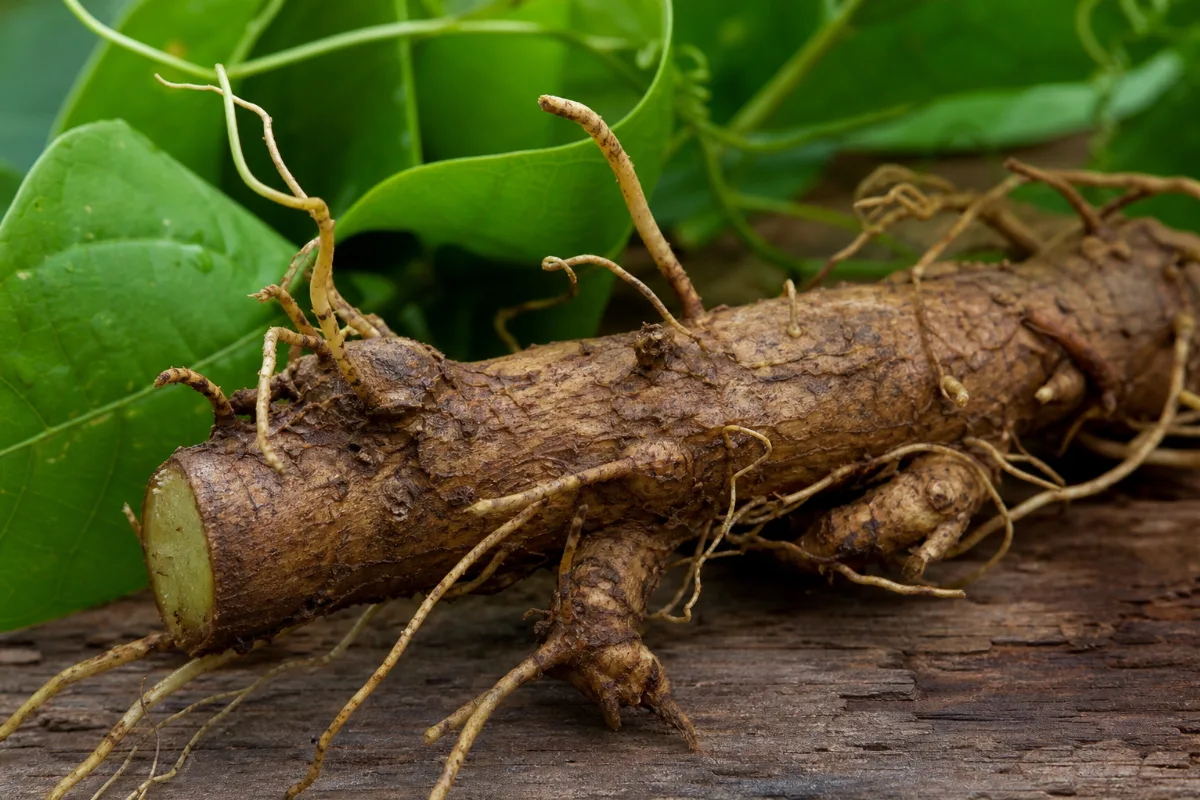
Herbs & Botanicals · Ayurvedic fever herb
Patha
Cissampelos pareira · also called Velvetleaf, laghupatha; sold under the name patha alongside a different plant
Patha is a climbing plant whose root and leaf are used in Ayurveda for fever, diarrhoea and menstrual problems. It is not the same plant as fang ji (Stephania). The research is almost all test-tube or animal work, and we found no human trial results we could read. The key caution: it is in the moonseed family that also gives curare, and nobody has checked what it does to muscles or anaesthesia in people. Avoid it in pregnancy.
General information, not medical advice. Last substantive update · Not medically reviewed. A named clinician has not signed off on this page. How this page is made
About Patha
Patha has a long history in Ayurveda, but science has barely tested it in people. The main concerns are unknowns: effects on muscles and anaesthesia, pregnancy, and blood pressure.
What it is
Patha is the Ayurvedic name for Cissampelos pareira, a climbing plant of the moonseed family. The root and leaf are used. The main compounds are alkaloids of the bisbenzylisoquinoline type, such as hayatinine.
The name patha is also used for a second plant, Cyclea peltata (Rajpatha), so traditional claims may not all refer to the same species.
Fang ji, Abuta and curare: what is the same and what is not
Patha is a different plant from Stephania (fang ji). Both are in the moonseed family and both make this type of alkaloid. The worry with fang ji is that its name is shared with a kidney-damaging Aristolochia root; that has not been shown for patha. See our Stephania page.
Curare, the South American arrow poison, comes from other moonseed-family plants such as Chondrodendron, Abuta and Curarea. A review says the Cissampelos genus was also used in some curare mixtures. Muscle-relaxing alkaloids have been reported in the genus. We found no report that patha itself causes muscle weakness in people, and also no study that rules it out. The names abuta and midnight used in Latin America were not verified.
What the research shows
Almost all work is in cells, animals or computer models. Root extracts blocked malaria parasites and a dengue extract worked in cells and mice. A 2024 review mentions clinical trials in dengue, but its abstract gives no results. Mouse tests of mood and pain are hard to interpret.
We found no human trial that we could read.
At a glance
Traditional uses history, not proof
- Root for fever and diarrhoea in Ayurveda
- Used for menstrual and hormone problems in Indian folk medicine
- Named as a snakebite remedy in Tanzania
- Used for diabetes by the Dai people of Yunnan
Studied for research
- Dengue fever and platelets (insufficient evidence)
- Malaria, test tube only (very low)
- Fever and pain, animal tests (very low)
- Mood and anxiety, mouse tests (very low)
- Menstrual and hormone effects, mouse and cell tests (very low)
- Liver protection, rat tests (very low)
Main compounds
- Hayatinine (PubChem CID 628520)
- Magnoflorine (CID 73337)
- Magnocurarine (CID 53266)
- Salutaridine (CID 5408233)
Common forms
- Dried root (traditional)
- Leaf (traditional)
- Water or alcohol extracts (lab studies only)
Research links: Kumari 2021: patha review (PubMed) · Semwal 2014: Cissampelos, from arrow poison to medicine (PubMed) · Sood 2015: dengue virus lab study (PubMed) · Bowman 2006: neuromuscular block (PubMed) · Research Library · Genes & Biomarkers Library
The plant and its history
- Accepted scientific name
- Cissampelos pareira
- Naming authority
- L.
- Common names
- Patha (Hindi / Sanskrit); Velvetleaf (English); Laghupatha (Sanskrit (classical name for C. pareira)); Abuta (Latin America) (Spanish - NOT verified in sources read)
- Botanical family
- Menispermaceae (moonseed family)
- Classification
- Plantae > Menispermaceae > Cissampelos > Cissampelos pareira
- Native range
- Not verified in the sources read.
- Habitat
- Described as a medicinal climbing plant; further habitat details not verified.
- What the plant looks like
- Roots: Not verified in sources read; Stems: Not verified in sources read; Leaves: Not verified in sources read; Flowers: Not verified in sources read; Fruit: Not verified in sources read; Seeds: Not verified in sources read; Cultivation: Not verified in sources read
- Harvest and processing
- Roots and leaves are used; processing details were not verified.
- Look-alikes and adulterants
- Name: Cyclea peltata (Rajpatha); Note: A different plant also sold as patha in southern India (Singh 2016).; Name: Stephania tetrandra (fang ji); Note: Same family; a different Chinese medicine root. Fang ji name is also used for an Aristolochia root with aristolochic acid. See the Stephania page.; Name: Chondrodendron tomentosum; Note: Separate accepted species in the same family (GBIF); a curare source plant. Historical sources name Abuta, Chondrodendron and Curarea as curare plants, not C. pareira.
- Sustainability and conservation
- Wild resources in Yunnan are described as scarce.
Traditional use and history history, not clinical proof
| Tradition or era | Documented use | Source |
|---|---|---|
| Ayurveda | Patha for fever, diarrhoea, inflammation, wounds, ulcers, rheumatism and as a blood purifier; classical texts describe Laghupatha (C. pareira) and Rajpatha (C. peltata). | Kumari 2021; Singh 2016 |
| Folk use in India | Female hormone problems and fever; antifertility folk use. | Haider 2021; Ganguly 2007 |
| Tanzania | Snakebite remedy, among the most-named plants. | Mogha 2022 |
| Yunnan (Dai people) | Diabetes. | Yu 2025 |
| South America | Genus Cissampelos historically part of some curare arrow-poison mixtures; curare plants named as Abuta, Chondrodendron and Curarea. | Semwal 2014; Bisset 1992 |
Traditional use shows how a plant was used. It does not show that a supplement works or is safe today.
What is inside, and how it may work
What the plant contains and how those compounds act in cells and animals. Laboratory and animal mechanisms are not proven effects in people.
Main compounds
| Compound | Family | Where it is concentrated | Activity studied | Level of evidence |
|---|---|---|---|---|
| Hayatinine PubChem 628520 | Bisbenzylisoquinoline alkaloid | Root | Most potent isolated compound against malaria parasites in culture (IC50 about 0.41 to 0.51 uM). 3 13 | Laboratory research |
| Cissampareine PubChem 254905 | Bisbenzylisoquinoline alkaloid | Not verified | Not checked in the sources read; occurrence NOT verified. 13 | Not verified |
| Curine PubChem 253793 | Bisbenzylisoquinoline alkaloid | Not verified | Not checked in the sources read; occurrence NOT verified. 13 | Not verified |
| Tetrandrine (related alkaloid for comparison) PubChem 73078 | Bisbenzylisoquinoline alkaloid | Stephania root | Main alkaloid of Stephania tetrandra. Its presence in patha is NOT shown in the sources read. 13 | Not verified |
| Warifteine PubChem 170075 | Bisbenzylisoquinoline alkaloid | Other Cissampelos species | Reported muscle-relaxant and vasodilatory activity in the genus; neuromuscular blocking action reported for the alkaloid from C. ovalifolia in a 1972 paper (title only read). 15 13 | Animal research |
| Magnoflorine PubChem 73337 | Aporphine alkaloid | Root | Isolated from root fractions; modest antiplasmodial role. 3 13 | Laboratory research |
| Magnocurarine PubChem 53266 | Quaternary isoquinoline alkaloid | Root | Active against malaria parasites in culture (IC50 12.5 uM). 3 13 | Laboratory research |
| Salutaridine PubChem 5408233 | Morphinandienone alkaloid | Root | Isolated from patha root for the first time in that study. 3 13 | Laboratory research |
Mechanisms, receptors and pathways
| Target or pathway | Gene or receptor | What was found | Level |
|---|---|---|---|
| Dengue virus replication / TNF-alpha | Viral NS1; TNF-alpha | Extract blocked dengue replication and lowered TNF-alpha in cells and mice. 17 | In vitro and animal |
| Oestrogen receptor signalling | ESR1 (ER alpha), RPL7 | Extract lowered oestrogen-response gene signatures; docking suggests 38 constituents bind ER alpha; antiviral effect appears to involve ESR1. 8 | Laboratory research |
| Malaria parasite growth | Not defined | Hayatinine and root extracts inhibited parasites in culture. 3 | Laboratory research |
| GABA-A receptor | GABRA/GABRB subunits | Computer docking predicts interaction of root alkaloids; not tested experimentally. 10 | In silico |
| Nerve-muscle junction (class background) | Nicotinic acetylcholine receptor | Curare alkaloids such as tubocurarine block it; this is the pharmacology of the drug class and is NOT shown for C. pareira. 5 | Pharmacological theory |
| Alpha-glucosidase | Enzyme | Inhibited by fermentation products of fungi from the plant. 21 | Laboratory research |
Absorption, metabolism and elimination
- Absorption
- No data found.
- Distribution
- No data found.
- Metabolism
- No data found. Computer modelling of Cissampelos alkaloids addressed liver metabolism but is not human data.
- Elimination
- No data found.
- Bioavailability
- No data found.
Isolated compounds versus whole extracts
The only comparison found is in the lab: the hydro-ethanolic root extract inhibited malaria parasites at about 1.2 to 1.4 ug/mL, and isolated hayatinine was more potent at roughly 0.4 to 0.5 uM, but units differ and no whole-body comparison exists. Leaf and stem extracts have different profiles (more phenols and flavonoids) than roots.
Nutritional composition
Patha is a medicinal climber, not a food. No nutrient content data were read.
7 very low certainty4 not enough evidence
What is Patha good for?
The studied uses and how strong the human evidence is. For patha, none of it comes from human trials we could read.
Benefits, one by one
Each card is a research question, not a promise. Tap a goal to filter. Open a card to see the studies, doses and limits.
Dengue fever and platelet counts
Not enough evidenceA 2024 review names patha among plants with platelet-raising activity in preclinical work and says clinical trials exist. The review abstract gives no numbers, so we cannot judge them.
3 studiesAlcoholic extract in lab studies; no human product or amount is descr…
Studies, doses and limits
What the trials found
The 2024 review (Rehman) lists Cissampelos pareira with papaya leaf as plants showing efficacy and safety in clinical trials, but its abstract names no trial, size or result. We did not read the trials themselves.
Results
Lab and mouse results (Sood 2015) were positive; the human trial data could not be read.
Effect sizes as reported
No effect sizes available for people. In cells the extract cut viral titres about ten-fold.
Why this rating
Human trial details are unread; the best primary data are lab and mouse work, partly from a company (Ranbaxy) that was developing it.
Form and dose studied
Alcoholic extract in lab studies; no human product or amount is described in the sources read.
Who was studied
Dengue patients (trial details unread).
Limits
Review abstract only; no dosing, population or results available; industry-linked authors on the key lab paper.
Why researchers looked
Dengue has no specific antiviral drug, so plants used for fever in Ayurveda were screened.
Traditional use
Used in Ayurveda and other systems for fever.
Proposed mechanism Laboratory research
In cells and mice an alcoholic extract blocked all four dengue virus types and lowered TNF-alpha, a signalling protein linked to severe dengue.
A proposed mechanism does not show that the effect happens in people.
Dengue can turn severe quickly. Anyone with dengue symptoms needs a doctor, not a herb.
Antiviral activity (test tube and mouse)
Very low certaintyIn the lab a patha extract slowed dengue virus in cells and protected mice. This is early research, not a treatment.
3 studiesAlcoholic extract of C. pareira.
Studies, doses and limits
What the trials found
No human trial of patha for this use was found in the sources read.
Results
Extract blocked all four dengue types in cells and gave statistically significant protection in a mouse model.
Effect sizes as reported
About an order of magnitude lower viral titre in cell tests (as reported).
Why this rating
Cell and mouse data only, by a company-linked team; no human evidence.
Form and dose studied
Alcoholic extract of C. pareira.
Who was studied
Cell lines, mice.
Limits
Cell lines are not bodies; mouse model of dengue is imperfect.
Why researchers looked
Screening of Ayurvedic plants for broad antiviral effects.
Traditional use
Fever remedy; some traditions also use it for rabies and cholera (as listed in a review).
Proposed mechanism Laboratory research
Gene-expression work suggests the extract acts partly through the oestrogen receptor gene ESR1; computer docking suggested 38 constituents could bind the receptor.
A proposed mechanism does not show that the effect happens in people.
The same pathway (oestrogen receptor) raises a theoretical question for hormone-sensitive people; untested.
Malaria (test-tube activity)
Very low certaintyRoot extracts and an alkaloid called hayatinine killed malaria parasites in culture. No person has been treated in a trial we could find.
2 studiesRoot hydro-ethanolic extract; isolated alkaloids.
Studies, doses and limits
What the trials found
No human trial of patha for this use was found in the sources read.
Results
Root extract IC50 was 1.42 and 1.15 ug/mL against two parasite strains; hayatinine about 0.41 to 0.51 uM.
Effect sizes as reported
IC50 values only (lab potency, not a clinical effect).
Why this rating
Culture dishes only; no animal infection model or human data.
Form and dose studied
Root hydro-ethanolic extract; isolated alkaloids.
Who was studied
Parasite cultures (Pf3D7, PfINDO).
Limits
Potency in a dish is far from a working, safe medicine.
Why researchers looked
Patha is a traditional Indian remedy for malaria and fever.
Traditional use
Traditional antimalarial and antifever use is listed by reviews.
Proposed mechanism Laboratory research
Bisbenzylisoquinoline alkaloids such as hayatinine inhibited parasite growth in culture.
A proposed mechanism does not show that the effect happens in people.
Malaria is dangerous; do not substitute a herb for tested treatment.
Fever and pain (animal tests)
Very low certaintyPowder and extracts lowered yeast-induced fever and eased pain in rats and mice. Whether this holds in people is unknown.
2 studiesPowder and ethanolic extract in rats and mice.
Studies, doses and limits
What the trials found
No human trial of patha for this use was found in the sources read.
Results
C. pareira powder had moderate fever-lowering activity in rats; pain tests showed an effect in animals, stronger with the other patha plant.
Effect sizes as reported
No human effect size.
Why this rating
Animal tests of a plant that is sold under the same name as another plant.
Form and dose studied
Powder and ethanolic extract in rats and mice.
Who was studied
Rats, mice.
Limits
Animals; two plants share the name patha.
Why researchers looked
Fever is the most common traditional reason to use patha.
Traditional use
Ayurvedic texts describe two kinds of patha: Laghupatha (Cissampelos pareira) and Rajpatha (Cyclea peltata).
Proposed mechanism Animal research
Not clear; may involve anti-inflammatory alkaloids.
A proposed mechanism does not show that the effect happens in people.
Persistent or high fever needs a doctor.
Snakebite (traditional use only)
Not enough evidenceIn Tanzania patha is one of the most often named snakebite plants. A record of use is not proof it works, and snakebite is an emergency.
2 studiesRoots are the most-used part of snakebite plants overall in that revi…
Studies, doses and limits
What the trials found
No human trial of patha for this use was found in the sources read.
Results
A systematic review of 19 articles counted how often the plant was cited. It did not test effectiveness.
Effect sizes as reported
None.
Why this rating
Counts of use, not tests of antivenom action.
Form and dose studied
Roots are the most-used part of snakebite plants overall in that review.
Who was studied
Rural Tanzania.
Limits
No clinical or lab test of antivenom activity was read.
Why researchers looked
Snakebite is a neglected health problem where people rely on plants.
Traditional use
Cited among the six most-named snakebite plants out of 109 in a review of Tanzanian records; reviews of India also list antivenom use.
Proposed mechanism Pharmacological theory
Not established.
A proposed mechanism does not show that the effect happens in people.
Go to hospital after a snakebite; plants can delay proper antivenom.
Mood, anxiety and calming (mouse tests)
Very low certaintyA leaf extract made mice move less and behave in ways that look like less anxiety and low mood. The same study saw muscle-relaxant-type effects, so the results may partly be sedation.
2 studiesHydro-alcoholic leaf extract in mice.
Studies, doses and limits
What the trials found
No human trial of patha for this use was found in the sources read.
Results
At 400 mg/kg, mice swam and hung less passively and explored open spaces more. At 200 and 400 mg/kg they moved less and were less coordinated.
Effect sizes as reported
None.
Why this rating
Single animal study; behaviour tests can be fooled by sedation.
Form and dose studied
Hydro-alcoholic leaf extract in mice.
Who was studied
Mice.
Limits
No humans; sedation confounds the tests.
Why researchers looked
Ethnic groups in India use the leaves for mind-related complaints.
Traditional use
Leaves used for psychological complaints in India (as stated by the study).
Proposed mechanism Preliminary mechanism
Unknown. A computer docking study suggests root alkaloids might bind the GABA-A receptor.
A proposed mechanism does not show that the effect happens in people.
Possible drowsiness or poor coordination (animal signal); extra care with alcohol or sedatives.
Menstrual problems, female hormones and fertility
Very low certaintyPatha is used traditionally for female hormone problems, and a leaf extract disrupted the cycle and cut litters in mice. This is a safety signal as much as a possible use.
3 studiesMethanolic leaf extract in mice; extract in cell lines.
Studies, doses and limits
What the trials found
No human trial of patha for this use was found in the sources read.
Results
Mouse oestrous cycle was lengthened and litters reduced; cell work showed oestrogen-response signatures lowered.
Effect sizes as reported
Oral LD50 7.3 g/kg in mice (acute toxicity figure).
Why this rating
Animal and cell studies; no human data on menstrual symptoms.
Form and dose studied
Methanolic leaf extract in mice; extract in cell lines.
Who was studied
Female mice; MCF7 cells.
Limits
No human study; effect direction in people unknown.
Why researchers looked
Traditional use for menstrual complaints and as a folk contraceptive.
Traditional use
Used in India for female hormone disorders and fever; folk use as an antifertility agent in parts of India.
Proposed mechanism Animal research
Extract changed LH, FSH, prolactin and oestradiol in mice; in cells it lowered oestrogen-response genes, possibly via oestrogen receptor alpha.
A proposed mechanism does not show that the effect happens in people.
Avoid when pregnant or trying to conceive; discuss with a doctor if you have a hormone-sensitive condition.
Diarrhoea and digestive complaints (traditional use)
Not enough evidenceDiarrhoea and dysentery are listed among traditional uses. We found no study testing this in people.
2 studiesNot described.
Studies, doses and limits
What the trials found
No human trial of patha for this use was found in the sources read.
Results
Reviews list antidiarrhoeal and antiulcer activity from lab and animal work; the abstracts read give no data.
Effect sizes as reported
None.
Why this rating
Traditional reports only in the sources we read.
Form and dose studied
Not described.
Who was studied
None.
Limits
No human data; animal results not read in detail.
Why researchers looked
Traditional remedy for diarrhoea, cholera and ulcer.
Traditional use
Listed in reviews of traditional use.
Proposed mechanism Pharmacological theory
Not established.
A proposed mechanism does not show that the effect happens in people.
Severe or bloody diarrhoea needs medical care; dehydration is the main danger.
Liver protection (rat tests)
Very low certaintyIn rats poisoned with a liver toxin, a root extract brought liver blood tests back toward normal. This says nothing yet about people.
2 studiesHydro-alcoholic root extract in rats.
Studies, doses and limits
What the trials found
No human trial of patha for this use was found in the sources read.
Results
AST, ALT, ALP and bilirubin fell toward normal in the toxin-injured rats; HepG2 cell viability rose.
Effect sizes as reported
None for humans.
Why this rating
Rat/cell work; protection against a toxin is not the same as being safe for the liver.
Form and dose studied
Hydro-alcoholic root extract in rats.
Who was studied
Rats; HepG2 cells.
Limits
No human data.
Why researchers looked
Traditionally used for jaundice-type complaints in some regions (listed in reviews of the genus).
Traditional use
Reviews of the genus list hepatoprotective use.
Proposed mechanism Animal research
Increased antioxidant enzymes (SOD, catalase, GSH) in the rat study.
A proposed mechanism does not show that the effect happens in people.
Liver safety in people is unstudied.
Blood sugar (enzyme test only)
Not enough evidenceFungi living inside the plant blocked a sugar-digesting enzyme in test tubes. People in Yunnan use the plant for diabetes, but no one has tested it.
1 studiesNone applicable.
Studies, doses and limits
What the trials found
No human trial of patha for this use was found in the sources read.
Results
11 of 69 fungal strains inhibited the enzyme by over 80 percent. These were fungal products, not the plant extract.
Effect sizes as reported
None.
Why this rating
Enzyme test on fungi, not the plant or people.
Form and dose studied
None applicable.
Who was studied
Test tube.
Limits
Not about the plant extract itself.
Why researchers looked
Dai people use it traditionally for diabetes.
Traditional use
Dai traditional use in southern Yunnan, China.
Proposed mechanism Laboratory research
Inhibition of alpha-glucosidase by fungal fermentation products.
A proposed mechanism does not show that the effect happens in people.
Anyone on diabetes drugs should not add this without medical advice.
Cancer cell lines and antioxidant tests
Very low certaintyStem and leaf extracts slowed breast cancer cells in dishes, but also slowed normal skin cells. This is not evidence of a cancer treatment.
2 studiesAqueous, ethanol and hexane extracts of leaf and stem.
Studies, doses and limits
What the trials found
No human trial of patha for this use was found in the sources read.
Results
Leaf ethanol extract scavenged radicals strongly (IC50 55 and 26 ug/mL); stem hexane extract slowed MCF-7 and MDA-MB-231 breast cancer cells; leaf extract slowed normal skin fibroblasts too.
Effect sizes as reported
IC50 values only.
Why this rating
Cell lines only; extracts were not selective.
Form and dose studied
Aqueous, ethanol and hexane extracts of leaf and stem.
Who was studied
Cell lines.
Limits
Not specific to cancer cells.
Why researchers looked
Exploring anticancer and antioxidant potential of the plant.
Traditional use
Not a traditional cancer remedy in the sources read.
Proposed mechanism Laboratory research
Free-radical scavenging and growth inhibition in cell lines.
A proposed mechanism does not show that the effect happens in people.
Cell toxicity to normal cells is a caution.
Connections to the rest of health
How Patha connects to the rest of our health knowledge graph. Every link says what kind of connection it is. A safety link (for example to the liver) is a warning, not a benefit. A study that merely mentions a topic never creates a benefit link.
Explore every connection: goals, body systems, organs, symptoms, genes
A. Wellness goals
| Connected to | Kind of connection | Evidence status | Context | Studies |
|---|---|---|---|---|
| Immune Support | Preliminary mechanism | Not enough evidence | Dengue fever and platelet counts: A 2024 review names patha among plants with platelet-raising activity in preclinical work and says clinical trials exist. The review abstract gives no numbers, so we cannot judge them. Antiviral activity (test tube and mouse): In the lab a patha extract slowed dengue virus in cells and protected mice. This is early research, not a treatment. | 14 17 8 9 3 |
| Inflammation Balance | Traditional use | Very low certainty | Fever and pain (animal tests): Powder and extracts lowered yeast-induced fever and eased pain in rats and mice. Whether this holds in people is unknown. | 16 9 |
| Immune Support | Traditional use | Not enough evidence | Snakebite (traditional use only): In Tanzania patha is one of the most often named snakebite plants. A record of use is not proof it works, and snakebite is an emergency. | 12 9 |
| Anxiety Support | Preliminary mechanism | Very low certainty | Mood, anxiety and calming (mouse tests): A leaf extract made mice move less and behave in ways that look like less anxiety and low mood. The same study saw muscle-relaxant-type effects, so the results may partly be sedation. | 2 10 |
| Calm Relaxation | Preliminary mechanism | Very low certainty | Mood, anxiety and calming (mouse tests): A leaf extract made mice move less and behave in ways that look like less anxiety and low mood. The same study saw muscle-relaxant-type effects, so the results may partly be sedation. | 2 10 |
| Mood Balance | Preliminary mechanism | Very low certainty | Mood, anxiety and calming (mouse tests): A leaf extract made mice move less and behave in ways that look like less anxiety and low mood. The same study saw muscle-relaxant-type effects, so the results may partly be sedation. | 2 10 |
| Womens Wellness | Preliminary mechanism | Very low certainty | Menstrual problems, female hormones and fertility: Patha is used traditionally for female hormone problems, and a leaf extract disrupted the cycle and cut litters in mice. This is a safety signal as much as a possible use. | 7 8 9 |
| Hormone Balance | Preliminary mechanism | Very low certainty | Menstrual problems, female hormones and fertility: Patha is used traditionally for female hormone problems, and a leaf extract disrupted the cycle and cut litters in mice. This is a safety signal as much as a possible use. | 7 8 9 |
| Digestive Support | Traditional use | Not enough evidence | Diarrhoea and digestive complaints (traditional use): Diarrhoea and dysentery are listed among traditional uses. We found no study testing this in people. | 9 15 |
| Liver Support | Preliminary mechanism | Very low certainty | Liver protection (rat tests): In rats poisoned with a liver toxin, a root extract brought liver blood tests back toward normal. This says nothing yet about people. | 18 9 |
| Blood Sugar Balance | Preliminary mechanism | Not enough evidence | Blood sugar (enzyme test only): Fungi living inside the plant blocked a sugar-digesting enzyme in test tubes. People in Yunnan use the plant for diabetes, but no one has tested it. | 21 |
| Cellular Protection | Preliminary mechanism | Very low certainty | Cancer cell lines and antioxidant tests: Stem and leaf extracts slowed breast cancer cells in dishes, but also slowed normal skin cells. This is not evidence of a cancer treatment. | 19 9 |
B. Body systems
| Connected to | Kind of connection | Evidence status | Context | Studies |
|---|---|---|---|---|
| Immune System | Biological association | Not enough evidence | Studied for: Dengue fever and platelet counts Studied for: Antiviral activity (test tube and mouse) | 14 17 8 9 3 12 |
| Nervous System | Biological association | Very low certainty | Studied for: Fever and pain (animal tests) Studied for: Mood, anxiety and calming (mouse tests) | 16 9 2 10 |
| Reproductive System | Biological association | Very low certainty | Studied for: Menstrual problems, female hormones and fertility | 7 8 9 |
| Endocrine System | Biological association | Very low certainty | Studied for: Menstrual problems, female hormones and fertility | 7 8 9 |
| Digestive System | Biological association | Not enough evidence | Studied for: Diarrhoea and digestive complaints (traditional use) | 9 15 |
| Hepatic System | Biological association | Very low certainty | Studied for: Liver protection (rat tests) | 18 9 |
| Metabolism Weight | Biological association | Not enough evidence | Studied for: Blood sugar (enzyme test only) | 21 |
| Integumentary System | Biological association | Very low certainty | Studied for: Cancer cell lines and antioxidant tests | 19 9 |
E. Health conditions
I. Biomarkers
| Connected to | Kind of connection | Evidence status | Context | Studies |
|---|---|---|---|---|
| Platelet count | Biological association | Not enough evidence | Measured in trials: no-change. A lab change is not the same as a health benefit. | 17 14 |
| TNF-alpha | Biological association | Very low certainty | Measured in trials: lowered. A lab change is not the same as a health benefit. | 17 |
| Body temperature (rats) | Biological association | Very low certainty | Measured in trials: lowered. A lab change is not the same as a health benefit. | 16 |
| Malaria parasite growth (IC50) | Biological association | Very low certainty | Measured in trials: lowered. A lab change is not the same as a health benefit. | 3 |
| Oestrous cycle and sex hormones (mice) | Biological association | Very low certainty | Measured in trials: mixed. A lab change is not the same as a health benefit. | 7 |
| Liver enzymes AST and ALT (rats) | Biological association | Very low certainty | Measured in trials: lowered. A lab change is not the same as a health benefit. | 18 |
| Sugar-digesting enzyme (alpha-glucosidase) activity | Biological association | Not enough evidence | Measured in trials: lowered. A lab change is not the same as a health benefit. | 21 |
J. Genes, receptors and enzymes
K. Biological pathways
| Connected to | Kind of connection | Evidence status | Context | Studies |
|---|---|---|---|---|
| TNF-alpha | Preliminary mechanism | In vitro and animal | Lowered by the extract in lab and animal tests. | 17 |
L. Active compounds
| Connected to | Kind of connection | Evidence status | Context | Studies |
|---|---|---|---|---|
| Tubocurarine | Not shown for patha | A muscle relaxant used historically in surgery; its source plants are other moonseed-family species (Chondrodendron, Abuta, Curarea). A muscle-relaxant drug class; effect of patha unknown. Preparation or compound: Curare alkaloid from other Menispermaceae |
5 4 | |
| Hayatinine | Biological association | In vitro | Most potent isolated compound against malaria parasites in culture (IC50 about 0.41 to 0.51 uM). Preparation or compound: Root |
3 13 |
| Cissampareine | Biological association | Not verified | Not checked in the sources read; occurrence NOT verified. Preparation or compound: Not verified |
13 |
| Curine | Biological association | Not verified | Not checked in the sources read; occurrence NOT verified. Preparation or compound: Not verified |
13 |
| Tetrandrine (related alkaloid for comparison) | Biological association | Not verified | Main alkaloid of Stephania tetrandra. Its presence in patha is NOT shown in the sources read. Preparation or compound: Stephania root |
13 |
| Warifteine | Biological association | Animal | Reported muscle-relaxant and vasodilatory activity in the genus; neuromuscular blocking action reported for the alkaloid from C. ovalifolia in a 1972 paper (title only read). Preparation or compound: Other Cissampelos species |
15 13 |
| Magnoflorine | Biological association | In vitro | Isolated from root fractions; modest antiplasmodial role. Preparation or compound: Root |
3 13 |
| Magnocurarine | Biological association | In vitro | Active against malaria parasites in culture (IC50 12.5 uM). Preparation or compound: Root |
3 13 |
| Salutaridine | Biological association | In vitro | Isolated from patha root for the first time in that study. Preparation or compound: Root |
3 13 |
Each connection is stored with the ingredient, the connected record, the kind of connection, the evidence status, the supporting studies, the preparation or compound involved, and a review date (last reviewed October 25, 2026).
Evidence at a glance: what changed in 7 lab markers
Tap a number to show only those markers. Counts are markers, not people.
The evidence
The research centre for Patha. Every record here was checked against PubMed or the publisher's page; we never list a study we have not verified.
Evidence by outcome
Bars show how many studies we found for each outcome, not how well it works. People are added up across trials only (reviews are not added, to avoid double counting).
How we rate evidence
High certainty
Several well-run trials or reviews agree; further research is unlikely to change the picture much.
Moderate certainty
Good trials point the same way, but some doubt remains.
Low certainty
Small, short or inconsistent trials. The finding could change with better research.
Very low certainty
Very little or very weak human data. Treat as a possibility only.
Mixed findings
Trials or reviews disagree with each other.
Not enough evidence
Not enough human research to say either way.
Evidence against
Good research found no benefit, or found harm.
We take the reviewers' own risk-of-bias and GRADE statements where they exist, and otherwise judge from study size, design, consistency, directness and whether a product matches what is sold. Many publications do not make evidence high. Method note: We started from our existing patha summary and added about 18 PubMed lookups. Plant names were checked in GBIF and compound IDs in PubChem. LiverTox was blocked by a bot check, Memorial Sloan Kettering returned a not-found error, and EMA, WHO, NCCIH, LactMed and Commission E pages were not read.
Study library: every study we checked 21
| Study | Design | People | Product, dose, length | Result |
|---|---|---|---|---|
| Alves 2017 In silico and In vivo Toxicological Evaluation of Cissampelos Sympodialis Secondary Metabolites in Rattus Norvegicus. Curr Drug Metab · PMID 28260515 · DOI |
Animal research animal |
Rats | Leaf infusion of Cissampelos sympodialis (a different species), single dose 2000 mg/kg leaf |
Some blood tests suggested kidney strain (higher urea) but tissue slides showed no kidney or liver damage; authors concluded low toxicity. Computer modelling flagged some Cissampelos alkaloids as potentially toxic. Methods, limits and fundingOutcomes: Acute toxicity and blood chemistry Limitations: Different species (C. sympodialis), single acute dose, rats. Funding and conflicts: Not stated in abstract Read: abstract |
| Asif 2021 Anti-depressant, Anxiolytic, and the Muscle Relaxant Activity of Hydroalcoholic Extract of Cissampelos pareira Linn. Leaves. Cent Nerv Syst Agents Med Chem · PMID 33964866 · DOI |
Animal research animal |
Mice (and rats in the hole-board test) | Hydro-alcoholic leaf extract (CPHE) leaf |
No deaths or moribund animals up to 2000 mg/kg. At 200 and 400 mg/kg animals moved less and were less coordinated; the 400 mg/kg dose cut immobility in despair tests, increased open-arm exploration, and shortened time on rotarod, wire and inclined plane (a muscle-relaxant-type effect). Methods, limits and fundingOutcomes: Mood, anxiety and muscle-relaxant behaviour tests; acute toxicity (OECD 423) Limitations: Animal behaviour tests; reduced movement can mean sedation, so mood findings are hard to read; no human data. Funding and conflicts: Not stated in abstract Read: abstract |
| Bhatt 2020 Chemical profiling and quantification of potential active constituents responsible for the antiplasmodial activity of Cissampelos pareira. J Ethnopharmacol · PMID 32726676 · DOI |
Laboratory research in-vitro |
Malaria parasite cultures (Pf3D7 and PfINDO) | Hydro-ethanolic extracts of leaf, stem and root, fractions and isolated alkaloids root |
Root extract was the most active (IC50 1.42 and 1.15 ug/mL against two parasite strains). Isolated compounds included hayatinine, a bisbenzylisoquinoline alkaloid, with IC50 about 0.41 to 0.51 uM, plus magnoflorine, magnocurarine, salutaridine, cissamine and a new alkaloid, pareirarine. Methods, limits and fundingOutcomes: Parasite growth inhibition (IC50), compound isolation, UPLC Limitations: Test-tube work; no animals or people; activity in a dish does not show a medicine works in the body. Funding and conflicts: Not stated in abstract Read: abstract |
| Bisset 1992 War and hunting poisons of the New World. Part 1. Notes on the early history of curare. J Ethnopharmacol · PMID 1501489 · DOI |
Systematic review historical review |
Historical review | Curare arrow poisons unspecified |
Plants that yield the active alkaloids of curare belong to Loganiaceae (Strychnos) and Menispermaceae (Abuta, Chondrodendron and Curarea species). The abstract part read does not name Cissampelos. Methods, limits and fundingOutcomes: Botanical identity of curare plants Limitations: Only the first part of the abstract was read; historical, not clinical. Funding and conflicts: Not stated Read: abstract (partly read) |
| Bowman 2006 Neuromuscular block. Br J Pharmacol · PMID 16402115 · DOI |
Systematic review review (pharmacology background) |
Pharmacology history and review of neuromuscular blocking drugs | Curare alkaloids (tubocurarine) and modern muscle relaxants unspecified |
Tubocurarine, the most important curare alkaloid, blocks neuromuscular transmission. Non-depolarising blockers act as reversible acetylcholine-receptor antagonists and are used for muscle relaxation during surgical anaesthesia. The abstract does not mention Cissampelos. Methods, limits and fundingOutcomes: How curare-type drugs block nerve-to-muscle signals and are used in anaesthesia Limitations: Background on curare drugs only; it does not show that patha has this effect. Funding and conflicts: Not stated in abstract Read: abstract |
| GBIF Secretariat 2026 GBIF Backbone Taxonomy match: Cissampelos pareira L. (key 3033937); Chondrodendron tomentosum Ruiz & Pav. (key 3033958) GBIF API (api.gbif.org), checked 2026-10-25 · Source |
Database record plant taxonomy |
unspecified |
Cissampelos pareira L. is an accepted name in Menispermaceae. Chondrodendron tomentosum Ruiz & Pav. is a separate accepted species in the same family. Cissampelos glaberrima A.St.-Hil. is also accepted. Methods, limits and fundingOutcomes: Accepted names and families Read: API record | |
| Ganguly 2007 Antifertility activity of the methanolic leaf extract of Cissampelos pareira in female albino mice. J Ethnopharmacol · PMID 17324540 · DOI |
Animal research animal |
Female albino mice | Methanolic leaf extract of C. pareira, oral leaf |
Extract lengthened the oestrous cycle, increased the diestrus stage, reduced litter numbers and altered LH, FSH, prolactin and oestradiol. Oral LD50 reported as 7.3 g/kg in mice. Fewer litters; oral LD50 7.3 g/kg (mice) Methods, limits and fundingOutcomes: Oestrous cycle, litter numbers, LH, FSH, prolactin, oestradiol, LD50 Limitations: Mice only; leaf extract only; the abstract gives no group sizes or full doses. Funding and conflicts: Not stated in abstract Read: abstract |
| Haider 2021 Transcriptome analysis and connectivity mapping of Cissampelos pareira L. provides molecular links of ESR1 modulation to viral inhibition. Sci Rep · PMID 34635729 · DOI |
Laboratory research in-vitro |
MCF7 breast cancer cell line and dengue-infected cells | C. pareira extract (Cipa), described as used traditionally for female hormone disorders and fever unspecified |
Extract lowered oestrogen-response gene signatures, probably via oestrogen receptor alpha. Docking suggested 38 constituents could bind the receptor at the oestrogen site. Antiviral action in dengue-infected cells appeared to involve the ESR1 gene. Methods, limits and fundingOutcomes: Gene-expression signatures, docking, antiviral effect Limitations: Cell lines and computer modelling only; no animal or human data in this paper. Funding and conflicts: Not stated in abstract Read: abstract |
| Kumari 2021 Cissampelos pareira L.: A review of its traditional uses, phytochemistry, and pharmacology. J Ethnopharmacol · PMID 33485976 · DOI |
Systematic review review of animal and lab work |
Narrative review of traditional, chemical and lab/animal literature | Cissampelos pareira (various extracts) unspecified |
About 54 compounds isolated, mainly isoquinoline alkaloids. Crude extracts show many activities in lab and animal work. Toxicology only moderately investigated and screening incomplete; authors call for pre-clinical and clinical trials. No human effect size Methods, limits and fundingOutcomes: Traditional uses, chemistry, pharmacology and toxicology of C. pareira Limitations: Narrative review, not a systematic search with risk-of-bias ratings; no human trial data summarised in the abstract. Funding and conflicts: Not stated in abstract Read: abstract |
| Kumari 2024 A cularine-type isoquinoline alkaloid from the root part of Cissampelos pareira. Nat Prod Res · PMID 36148597 · DOI |
Laboratory research in-vitro |
Chemistry and computer docking | Alkaloids isolated from C. pareira roots root |
One cularine-type alkaloid and two known compounds were isolated from the roots. Docking predicted interactions with the GABA-A receptor, suggested by the authors as relevant to neurodevelopment and anaesthesia. Methods, limits and fundingOutcomes: Structure and predicted GABA-A receptor binding Limitations: Computer docking only; no test of real activity. Funding and conflicts: Not stated in abstract Read: abstract |
| Lampiao 2018 A preliminary investigation of the effects of labour inducing plant, Cissampelos mucronata, on the outcomes of pregnancy using rat models. Malawi Med J · PMID 30627349 · DOI |
Animal research animal |
30 Pregnant rats (10 per group) |
Aqueous extract of Cissampelos mucronata (a different species) unspecified |
Given at mid-pregnancy, the extract was linked to fewer pups (4.1 vs 6.4), lower pup weight and a shorter pregnancy (18.2 vs 20.4 days). Authors conclude it induces early labour. No uterine rupture seen. Methods, limits and fundingOutcomes: Pup number and weight, length of pregnancy Limitations: Different species; rats; small groups; shows a signal, not proof for patha. Funding and conflicts: Not stated in abstract Read: abstract |
| Mogha 2022 Ethnomedicinal plants used for treatment of snakebites in Tanzania - a systematic review. Pharm Biol · PMID 36205572 · DOI |
Systematic review ethnobotanical survey |
19 published articles on Tanzanian plant use | 109 plant species including C. pareira unspecified |
C. pareira was among the six most-cited snakebite plants out of 109 species. Roots were the most-used part overall (54 percent). This records use, not whether it works. Methods, limits and fundingOutcomes: Which plants are used for snakebite Limitations: Counts how often plants are named; no test of antivenom effect. Funding and conflicts: No competing interests declared Read: abstract |
| NCBI PubChem 2026 PubChem compound records: hayatinine CID 628520; cissampareine CID 254905; curine CID 253793; tetrandrine CID 73078; tubocurarine CID 6000; warifteine CID 170075; magnoflorine CID 73337; magnocurarine CID 53266; salutaridine CID 5408233 PubChem PUG REST, checked 2026-10-25 · Source |
Database record chemistry |
unspecified |
All listed names resolved to the CIDs shown. Methods, limits and fundingOutcomes: Compound identifiers and formulas Limitations: A name matching a record shows the compound exists, not that it is present in patha. Read: API record | |
| Rehman 2024 Exploring plant-based dengue therapeutics: from laboratory to clinic. Trop Dis Travel Med Vaccines · PMID 39543749 · DOI |
Systematic review review (human trials not read) |
Narrative review of plant therapies for dengue | Cissampelos pareira among several plants unspecified |
Lists C. pareira among plants with platelet-enhancing activity in preclinical work and names it, with papaya leaf, among plants with efficacy and safety in clinical trials. The abstract gives no trial sizes, doses or results. Methods, limits and fundingOutcomes: Lab-to-clinic path of dengue plant therapies Limitations: Abstract gives no trial details; the clinical trials behind the statement were not read. Funding and conflicts: No competing interests declared Read: abstract |
| Semwal 2014 From arrow poison to herbal medicine--the ethnobotanical, phytochemical and pharmacological significance of Cissampelos (Menispermaceae). J Ethnopharmacol · PMID 24997389 · DOI |
Systematic review review of animal and lab work |
Review of the whole genus Cissampelos | Cissampelos species (mainly C. pareira and C. sympodialis) unspecified |
Genus used both as medicine and, historically, in preparations of curare arrow poison. Alkaloids such as warifteine, berberine, hayatin and hayatidin showed vasodilatory and muscle-relaxant activity in vitro or in vivo. Many species not screened. Methods, limits and fundingOutcomes: Ethnobotany, chemistry and pharmacology of the genus Limitations: Narrative review; findings are from the genus, not C. pareira alone; mostly lab and animal. Funding and conflicts: Not stated in abstract Read: abstract |
| Singh 2016 Comparative antipyretic and analgesic activities of Cissampelos pareira Linn. and Cyclea peltata (Lam.) Hook. F. & Thomas. Ayu · PMID 28827957 · DOI |
Animal research animal |
Rats and mice | Powder and ethanolic extract of C. pareira, compared with Cyclea peltata unspecified |
C. pareira powder showed moderate fever-lowering activity compared with C. peltata. Both plants showed pain-relieving effects in animals, more marked for C. peltata. The abstract notes the two plants are both sold as patha (Laghupatha and Rajpatha). Methods, limits and fundingOutcomes: Yeast-induced fever in rats; pain tests Limitations: Animal models only; doses given per kilogram of animal weight are not transferable. Funding and conflicts: No conflicts of interest declared Read: abstract |
| Sood 2015 Cissampelos pareira Linn: Natural Source of Potent Antiviral Activity against All Four Dengue Virus Serotypes. PLoS Negl Trop Dis · PMID 26709822 · DOI |
Laboratory research animal |
Cell cultures, AG129 mice and Wistar rats | Alcoholic extract of C. pareira (Cipa extract) unspecified |
Extract inhibited all four dengue virus types in cells, reduced viral titres about ten-fold, protected AG129 mice with statistical significance, lowered TNF-alpha production and showed fever-lowering activity in rats. No adverse effect on platelet counts or red cell viability in the preliminary tests. No toxicity in Wistar rats at up to 2 g/kg for one week. About 10-fold lower viral titre in cells (as stated: an order of magnitude) Methods, limits and fundingOutcomes: Dengue virus replication, NS1, viral titres, mouse protection, fever and TNF-alpha in rats, platelets, toxicity Limitations: Cell and animal work only; plant part not stated in abstract; one-week rat toxicity check is not a human safety study. Authors cite traditional use as evidence of human safety, which is not proof. Funding and conflicts: Several authors were employed by Ranbaxy Research Laboratories at the time (industry-linked). Read: abstract |
| Surendran 2011 In vitro and in vivo hepatoprotective activity of Cissampelos pareira against carbon-tetrachloride induced hepatic damage. Indian J Exp Biol · PMID 22403868 |
Animal research animal |
Rats and isolated liver cells | Hydro-alcoholic root extract (CPRE) root |
In rats given a liver toxin, the root extract brought raised AST, ALT, ALP and bilirubin back towards normal, and increased antioxidant enzymes. It also lowered cholesterol and raised triglycerides. Methods, limits and fundingOutcomes: Liver enzymes after carbon tetrachloride injury Limitations: Rat and cell work; says nothing about human liver safety. Funding and conflicts: Not stated in abstract Read: abstract |
| Thim-Uam 2025 Phytochemical Screening and In Vitro Antioxidant and Anticancer Evaluation of Stem and Leaf Extracts of Cissampelos pareira L. Mediators Inflamm · PMID 40689394 · DOI |
Laboratory research in-vitro |
Cell lines (MCF-7, MDA-MB-231, HEK293T) and normal skin fibroblasts | Aqueous, ethanol and hexane extracts of leaf and stem leaf+stem |
Leaf ethanol extract had strong free-radical scavenging (IC50 55 and 26 ug/mL, DPPH and ABTS). Stem hexane extract slowed breast cancer cell growth most. The leaf extract also slowed growth of normal skin fibroblasts. Methods, limits and fundingOutcomes: Antioxidant capacity and cell growth Limitations: Cell studies only; extracts also affected normal cells. Funding and conflicts: No conflicts declared Read: abstract |
| Wu 2007 Complexities of the herbal nomenclature system in traditional Chinese medicine (TCM): lessons learned from the misuse of Aristolochia-related species and the importance of the pharmaceutical name during botanical drug product development. Phytomedicine · PMID 16863692 · DOI |
Systematic review nomenclature review |
Herb nomenclature review with analytical data | Fangji (Aristolochia fangchi, Stephania tetrandra, Cocculus trilobus) root |
The herb name fangji can mean the root of Aristolochia fangchi or of two Menispermaceae plants; only the Aristolochia species contained aristolochic acid in the data shown. Patha (Cissampelos) is not discussed in the abstract. Methods, limits and fundingOutcomes: Which fangji species contain aristolochic acid Limitations: Concerns Chinese fangji naming; used here only to explain the name-confusion risk for look-alike roots. Funding and conflicts: Not stated in abstract Read: abstract |
| Yu 2025 Community Structure Diversity of Endophytic Fungi in Cissampelos pareira from Different Habitats and Their alpha-Glucosidase Inhibitory Activity. J Fungi (Basel) · PMID 41003161 · DOI |
Laboratory research in-vitro |
Fungi cultured from potted and non-potted plants | Fermentation products of 69 endophytic fungi from C. pareira root+stem+leaf+flower |
11 fungal strains inhibited the enzyme by more than 80 percent. The study tests fungi living in the plant, not the plant itself. It notes the Dai people of Yunnan use the plant for diabetes and wild resources are scarce. Methods, limits and fundingOutcomes: Sugar-digesting enzyme (alpha-glucosidase) inhibition in a test tube Limitations: Enzyme assay on fungal products; not the plant extract and not people. Funding and conflicts: No conflicts declared Read: abstract |
What we do not know yet
- No human trial of patha for any use that we could read.
- Dengue trial details from a 2024 review not read.
- No human data on neuromuscular effects, blood pressure or anaesthesia.
- No pregnancy or breastfeeding data.
- No product-quality or pharmacokinetic data.
How new research is added
New studies are found by a saved PubMed search and placed in a review queue. A person reads each one before it changes any rating or safety wording.
Lab markers
What changed in blood or saliva tests during trials. A changed number is not the same as feeling or being healthier, and we give no "normal ranges".
Hormonal 1
Oestrous cycle and sex hormones (mice)
Mixed results in trials
LH, FSH, prolactin and oestradiol control the female reproductive cycle.
Very low certaintyResults and what it means
Why it was measured
Checks if the extract disrupts fertility signals.
Statistical vs. clinical meaning
Animal data; direction in women unknown.
Safety implication
Possible fertility-reducing effect.
| Study | Result | People | Product |
|---|---|---|---|
| 7 | Extract altered LH, FSH, prolactin and oestradiol; cycle lengthened; fewer litters (no numbers in the abstract) | Female albino mice | Methanolic leaf extract, oral |
Metabolic 1
Sugar-digesting enzyme (alpha-glucosidase) activity
Lowered in trials
An enzyme that breaks starches into glucose.
Not enough evidenceResults and what it means
Why it was measured
Enzyme blockers can slow sugar uptake.
Statistical vs. clinical meaning
Not a blood glucose measurement.
Safety implication
If real, could add to diabetes drugs; untested.
| Study | Result | People | Product |
|---|---|---|---|
| 21 | 11 fungal strains from the plant inhibited the enzyme by more than 80 percent | Test tube | Fungal fermentation products |
Inflammatory 1
TNF-alpha
Lowered in trials
An inflammatory signalling protein; high levels are linked to severe dengue.
Very low certaintyResults and what it means
Why it was measured
Used to see if an extract calms inflammation.
Statistical vs. clinical meaning
Lab signal only.
Safety implication
Lowered immune signals could in theory matter in other infections; untested.
| Study | Result | People | Product |
|---|---|---|---|
| 17 | Extract down-regulated TNF-alpha production (no numbers in the abstract) | Cells/animals | C. pareira alcoholic extract |
Organ function 1
Liver enzymes AST and ALT (rats)
Lowered in trials
Blood enzymes that rise when liver cells are damaged.
Very low certaintyResults and what it means
Why it was measured
Used to test liver protection against a toxin.
Statistical vs. clinical meaning
Toxin-recovery model; not human liver safety.
Safety implication
None established.
| Study | Result | People | Product |
|---|---|---|---|
| 18 | Raised AST, ALT, ALP and bilirubin fell toward normal after root extract in toxin-injured rats | Rats | Hydro-alcoholic root extract 100-400 mg/kg |
Other 3
Platelet count
No clear change in trials
Number of platelets, the blood cells that help clotting.
Not enough evidenceResults and what it means
Why it was measured
Dengue can lower platelets; the review describes platelet-enhancing activity in preclinical work.
Statistical vs. clinical meaning
A preliminary no-harm check, not a gain in dengue patients.
Safety implication
None known.
| Study | Result | People | Product |
|---|---|---|---|
| 17 | Extract had no adverse effect on platelet counts in a preliminary test (no numbers in the abstract) | Lab animals/cells | C. pareira alcoholic extract |
Body temperature (rats)
Lowered in trials
Temperature after yeast was used to cause fever.
Very low certaintyResults and what it means
Malaria parasite growth (IC50)
Lowered in trials
The concentration needed to halve parasite growth in a dish.
Very low certaintyResults and what it means
Why it was measured
Measures lab potency.
Statistical vs. clinical meaning
Lab potency is not a clinical outcome.
Safety implication
None known.
| Study | Result | People | Product |
|---|---|---|---|
| 3 | Root extract IC50 1.42 and 1.15 ug/mL; hayatinine IC50 0.41 and 0.509 uM (two parasite strains) | Parasite cultures | Root hydro-ethanolic extract and isolated alkaloids |
Safety
What studies and official sources say about side effects, medicines and who should check first. Each point shows what kind of evidence it comes from.
Main points to know 6
- No human safety studies. We found no clinical trial, case report or case series on patha safety. A 2021 review says its toxicology has been only moderately investigated and screening is incomplete. Absence of reports is not proof of safety. Authoritative guidance 9
- Curare-type relatives: unknown for this species. Patha belongs to the moonseed family (Menispermaceae), which also includes plants that yield curare, the arrow poison that paralyses muscles. A review notes that the Cissampelos genus was historically included in some curare preparations. Muscle-relaxing alkaloids (warifteine, hayatin, hayatidin) have been reported in the genus in lab and animal work, and a leaf extract of C. pareira reduced grip and rod performance in mice. We found no report of muscle paralysis or surgical problems in people using C. pareira, and no study showing it contains tubocurarine. Treat this as an unanswered question, not a proven danger or a proven absence. Animal research 15 2 5 4
- Pregnancy and fertility. A leaf extract lengthened the cycle and cut litter numbers in mice. A related species, Cissampelos mucronata, shortened pregnancy and reduced pup numbers in rats. Avoid during pregnancy and when trying to conceive. Animal research 7 11
- Blood pressure. Vasodilating (vessel-widening) alkaloids are reported in the genus, and the genus is used traditionally for blood pressure complaints. A drop in blood pressure is therefore possible but unstudied in people. Pharmacological theory 15
- Sedation and coordination. In mice a leaf extract reduced movement and coordination at 200 and 400 mg/kg. Extra care with alcohol, sleeping pills or driving is sensible until more is known. Animal research 2
- Same name, different plants. The name patha is used for more than one plant: Laghupatha (Cissampelos pareira) and Rajpatha (Cyclea peltata). Patha is not the same plant as fang ji (Stephania, Chinese medicine). The fang ji name is shared with an Aristolochia root that damages kidneys, but that warning has not been shown for patha. Authoritative guidance 16 20
Side effects 4
| Effect | How often | Severity and recovery | Evidence |
|---|---|---|---|
| Reduced movement and coordination Mice, leaf extract. | Not established | unknown in people unknown | Animal research 2 |
| Altered menstrual or oestrous cycle, reduced fertility Mice, leaf extract. | Not established | unknown in people unknown | Animal research 7 |
| Muscle weakness or low blood pressure Inferred from related alkaloids in the genus and curare drugs. No human report found. | Not established | theoretical unknown | Pharmacological theory 15 5 |
| Human adverse event reports None were found in the sources read. | Not established | unknown unknown | Authoritative guidance 9 |
Liver
No human liver injury cases were found for patha, and LiverTox could not be read (bot check). In rats poisoned with a liver toxin, a root extract improved liver blood tests, but that does not show safety in people. In a different species (C. sympodialis), one 2000 mg/kg leaf-infusion dose in rats raised urea in the blood with no kidney or liver damage on slides. 18 1 9
How often. Not known.
Monitoring. No monitoring guidance exists. People with liver or kidney disease should ask a doctor first.
- .
- .
This is a safety connection. It is not evidence that Patha supports liver health.
Medicines and supplements 5
| With | Why it matters | Importance | Evidence | What to do |
|---|---|---|---|---|
| Anaesthesia and muscle relaxants (surgery) drug | Related curare alkaloids block nerve-to-muscle signals; whether patha acts this way is not known. | Unknown; potentially important in surgery | Pharmacological theory Not enough evidence 5 15 | Tell your surgical and anaesthesia team about any patha use. Do not rely on this as a safety guarantee either way. |
| Blood-pressure medicines drug | Vasodilating alkaloids reported in the genus could add to the effect. | Unknown | Pharmacological theory Not enough evidence 15 | Ask a doctor or pharmacist. |
| Sedatives, alcohol and sleep or anxiety medicines drug | Reduced movement and coordination in mice; computer docking suggests GABA-A receptor binding of root alkaloids. | Unknown | Animal research Very low certainty 2 10 | Be careful with driving and sedatives. |
| Diabetes medicines drug | Enzyme-blocking activity from plant fungi in a test tube, and traditional diabetes use. | Unknown | Laboratory research Not enough evidence 21 | Ask a doctor or pharmacist. |
| Hormonal medicines, contraception and hormone-sensitive conditions drug | Extract changed hormone levels in mice and lowered oestrogen-response genes in cells. | Unknown | Animal research Very low certainty 7 8 | Ask a doctor or pharmacist. |
Who should check first 6
| Situation | Advice | Evidence |
|---|---|---|
| Pregnancy | Avoid. Animal signals of reduced fertility and early labour (related species). | Animal research 7 11 |
| Breastfeeding | Avoid. No data; LactMed was not read. | Authoritative guidance 9 |
| Planned surgery or anaesthesia | Tell the care team; many clinicians advise stopping unproven herbs ahead of surgery. | Pharmacological theory 5 |
| Low blood pressure or fainting | Ask a doctor first. | Pharmacological theory 15 |
| Muscle-weakness conditions such as myasthenia gravis | Ask a doctor first (theoretical concern from related muscle-blocking alkaloids). | Pharmacological theory 5 15 |
| Children | No safety data; avoid. | Authoritative guidance 9 |
Overdose, product quality and regulators
Summary. Animal acute toxicity looked low in a few studies, but there is no human data and only partial toxicology.
Animal. Hydro-alcoholic leaf extract: no deaths up to 2000 mg/kg in mice. Alcoholic extract: no toxicity in Wistar rats at up to 2 g/kg for one week. Methanolic leaf extract: oral LD50 7.3 g/kg in mice.
Human doses studied. No human dose data were read.
High dose or long term signals. Long-term and repeated-dose toxicity were not found. Computer modelling of Cissampelos alkaloids flagged some as potentially toxic.
Overdose response. Unknown.
Genotoxicity. Not found.
Toxic plant parts. Not established for root versus leaf. Both are used and studied.
We found no analysis of commercial patha products for heavy metals, pesticides or substitution.
Mixed-up plants. Patha is sold from at least two plants (Cissampelos pareira and Cyclea peltata), so a product labelled patha may not contain C. pareira. 16
Look-alike names. Fang ji is a name shared by three roots, including an Aristolochia species that contains aristolochic acid; patha has not been shown to be involved. 20
Wild supply. Wild resources in Yunnan are described as scarce, which can raise the risk of substitution. 21
| Body | Action | Date |
|---|
When to get medical help
- Muscle weakness, drooping eyelids, trouble swallowing or breathing
- Fainting or a very low-feeling blood pressure
- Vaginal bleeding, cramps or contractions in pregnancy
- Yellow skin or eyes, dark urine
- Rash, swelling of lips or face, wheezing
- Fever that lasts more than a couple of days, or any snakebite (go to hospital)
Stop the supplement and contact a clinician or emergency service. In the US, Poison Control is 1-800-222-1222.
General information only, not medical advice. Ask a clinician or pharmacist before use, especially with medicines, in pregnancy or with a health condition. See the Natural Remedy Safety guide.
Frequently asked questions
What is patha?
Is patha the same as fang ji or Stephania?
Is it related to curare?
Does patha help dengue?
Does it treat malaria?
Only in test tubes. No human result was read, and malaria needs proper treatment.
Does it work for snakebite?
There are records of use in Tanzania, but no evidence it works. Go to hospital after a snakebite.
Is it safe in pregnancy?
Can it affect blood pressure or anaesthesia?
Is it safe for the liver and kidneys?
Does it interact with medicines?
How can I tell what is in a product?
You cannot tell by eye. Patha is sold from two plants. Look for the full Latin name, plant part and independent tests. Ask a doctor or pharmacist about amounts or use.
Explore by health goal
Immune SupportInflammation BalanceAnxiety SupportCalm RelaxationMood BalanceWomens WellnessHormone BalanceDigestive SupportLiver SupportBlood Sugar BalanceCellular Protection
Editorial transparency
- Written by
- AlternativeMed editorial team. Research compiled with AI assistance, then checked against PubMed records.
- Medical review
- None. This page has not been reviewed by a physician or pharmacist.
- First published
- 2026-10-25
- Last substantive update
- 2026-10-25
- How we research
- We started from our existing patha summary and added about 18 PubMed lookups. Plant names were checked in GBIF and compound IDs in PubChem. LiverTox was blocked by a bot check, Memorial Sloan Kettering returned a not-found error, and EMA, WHO, NCCIH, LactMed and Commission E pages were not read.
- How we rate evidence
- See "How we rate evidence" in the Evidence tab.
- Independence
- No product is promoted on this page. No affiliate links are shown. Industry links are flagged where an abstract shows them.
Sources 21
Each source was opened and checked. Where we read only the abstract, it says so. The small numbers in the text point here.
- Alves MF, Scotti MT, Felix MB, et al.. In silico and In vivo Toxicological Evaluation of Cissampelos Sympodialis Secondary Metabolites in Rattus Norvegicus.. Curr Drug Metab. 2017. PMID 28260515. DOI 10.2174/1389200218666170301110806. (abstract)
- Asif M, Dwivedi J, Yadav S. Anti-depressant, Anxiolytic, and the Muscle Relaxant Activity of Hydroalcoholic Extract of Cissampelos pareira Linn. Leaves.. Cent Nerv Syst Agents Med Chem. 2021. PMID 33964866. DOI 10.2174/1871524921666210505101704. (abstract)
- Bhatt V, Kumari S, Upadhyay P, et al.. Chemical profiling and quantification of potential active constituents responsible for the antiplasmodial activity of Cissampelos pareira.. J Ethnopharmacol. 2020. PMID 32726676. DOI 10.1016/j.jep.2020.113185. (abstract)
- Bisset NG. War and hunting poisons of the New World. Part 1. Notes on the early history of curare.. J Ethnopharmacol. 1992. PMID 1501489. DOI 10.1016/0378-8741(92)90056-w. (abstract (partly read))
- Bowman WC. Neuromuscular block.. Br J Pharmacol. 2006. PMID 16402115. DOI 10.1038/sj.bjp.0706404. (abstract)
- GBIF Secretariat. GBIF Backbone Taxonomy match: Cissampelos pareira L. (key 3033937); Chondrodendron tomentosum Ruiz & Pav. (key 3033958). GBIF API (api.gbif.org), checked 2026-10-25. 2026. (API record)
- Ganguly M, Kr Borthakur M, Devi N, et al.. Antifertility activity of the methanolic leaf extract of Cissampelos pareira in female albino mice.. J Ethnopharmacol. 2007. PMID 17324540. DOI 10.1016/j.jep.2007.01.023. (abstract)
- Haider M, Dholakia D, Panwar A, et al.. Transcriptome analysis and connectivity mapping of Cissampelos pareira L. provides molecular links of ESR1 modulation to viral inhibition.. Sci Rep. 2021. PMID 34635729. DOI 10.1038/s41598-021-99444-0. (abstract)
- Kumari S, Anmol, Bhatt V, et al.. Cissampelos pareira L.: A review of its traditional uses, phytochemistry, and pharmacology.. J Ethnopharmacol. 2021. PMID 33485976. DOI 10.1016/j.jep.2021.113850. (abstract)
- Kumari S, Anmol, Sharma U. A cularine-type isoquinoline alkaloid from the root part of Cissampelos pareira.. Nat Prod Res. 2024. PMID 36148597. DOI 10.1080/14786419.2022.2126469. (abstract)
- Lampiao F, Maliwichi-Nyirenda C, Mponda J, et al.. A preliminary investigation of the effects of labour inducing plant, Cissampelos mucronata, on the outcomes of pregnancy using rat models.. Malawi Med J. 2018. PMID 30627349. DOI 10.4314/mmj.v30i3.5. (abstract)
- Mogha NG, Kalokora OJ, Amir HM, et al.. Ethnomedicinal plants used for treatment of snakebites in Tanzania - a systematic review.. Pharm Biol. 2022. PMID 36205572. DOI 10.1080/13880209.2022.2123942. (abstract)
- NCBI PubChem. PubChem compound records: hayatinine CID 628520; cissampareine CID 254905; curine CID 253793; tetrandrine CID 73078; tubocurarine CID 6000; warifteine CID 170075; magnoflorine CID 73337; magnocurarine CID 53266; salutaridine CID 5408233. PubChem PUG REST, checked 2026-10-25. 2026. (API record)
- Rehman B, Ahmed A, Khan S, et al.. Exploring plant-based dengue therapeutics: from laboratory to clinic.. Trop Dis Travel Med Vaccines. 2024. PMID 39543749. DOI 10.1186/s40794-024-00232-1. (abstract)
- Semwal DK, Semwal RB, Vermaak I, et al.. From arrow poison to herbal medicine--the ethnobotanical, phytochemical and pharmacological significance of Cissampelos (Menispermaceae).. J Ethnopharmacol. 2014. PMID 24997389. DOI 10.1016/j.jep.2014.06.054. (abstract)
- Singh SG, Nishteswar K, Patel BR, et al.. Comparative antipyretic and analgesic activities of Cissampelos pareira Linn. and Cyclea peltata (Lam.) Hook. F. & Thomas.. Ayu. 2016. PMID 28827957. DOI 10.4103/ayu.AYU_208_14. (abstract)
- Sood R, Raut R, Tyagi P, et al.. Cissampelos pareira Linn: Natural Source of Potent Antiviral Activity against All Four Dengue Virus Serotypes.. PLoS Negl Trop Dis. 2015. PMID 26709822. DOI 10.1371/journal.pntd.0004255. (abstract)
- Surendran S, Eswaran MB, Vijayakumar M, et al.. In vitro and in vivo hepatoprotective activity of Cissampelos pareira against carbon-tetrachloride induced hepatic damage.. Indian J Exp Biol. 2011. PMID 22403868. (abstract)
- Thim-Uam A, Thepmalee C, Chaiwangyen W, et al.. Phytochemical Screening and In Vitro Antioxidant and Anticancer Evaluation of Stem and Leaf Extracts of Cissampelos pareira L.. Mediators Inflamm. 2025. PMID 40689394. DOI 10.1155/mi/7555073. (abstract)
- Wu KM, Farrelly JG, Upton R, et al.. Complexities of the herbal nomenclature system in traditional Chinese medicine (TCM): lessons learned from the misuse of Aristolochia-related species and the importance of the pharmaceutical name during botanical drug product development.. Phytomedicine. 2007. PMID 16863692. DOI 10.1016/j.phymed.2006.05.009. (abstract)
- Yu J, Yin C, Deng Z, et al.. Community Structure Diversity of Endophytic Fungi in Cissampelos pareira from Different Habitats and Their alpha-Glucosidase Inhibitory Activity.. J Fungi (Basel). 2025. PMID 41003161. DOI 10.3390/jof11090615. (abstract)