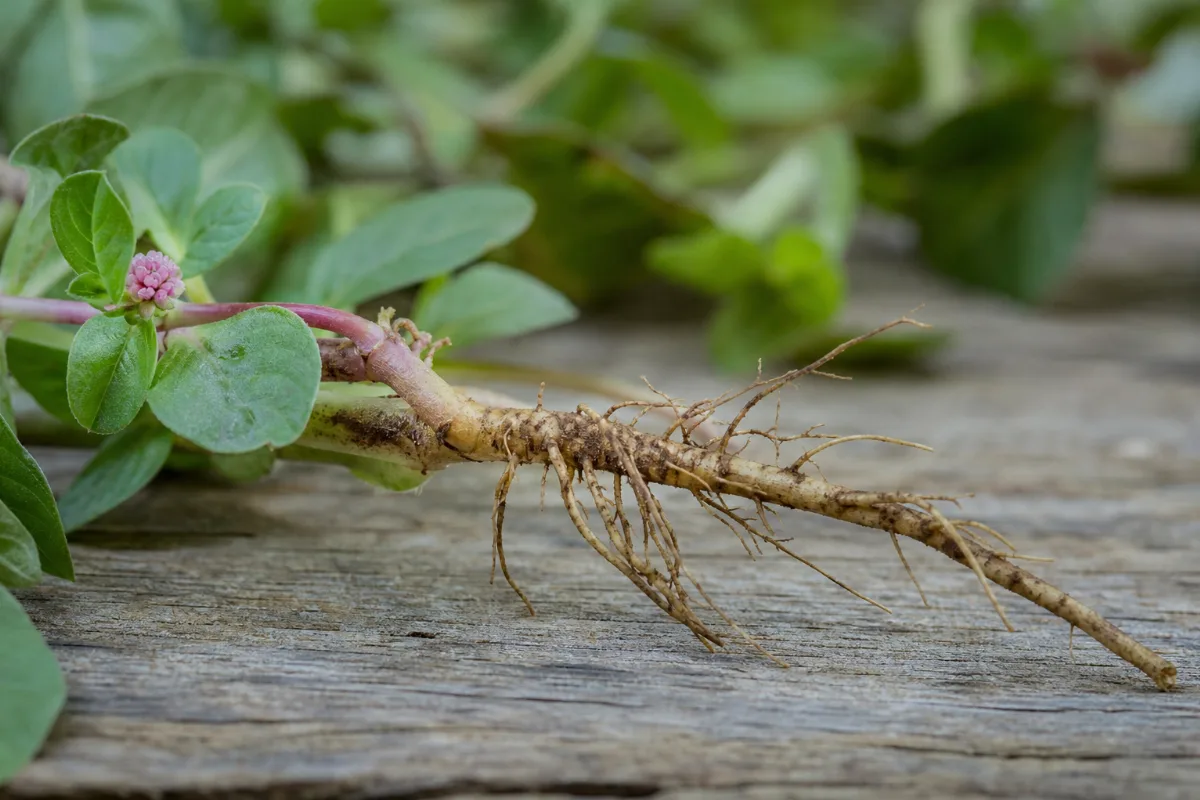
Herbs & Botanicals · Traditional Ayurvedic diuretic herb
Punarnava
Boerhavia diffusa · also called Spreading hogweed; Boerhaavia diffusa (spelling variant). Not the same as the Punarnava Mandura formula.
Punarnava is an Ayurvedic herb used for swelling, water retention and kidney and liver complaints. Most research is in rats, and the few human reports are small and hard to judge. No trial shows it works as a water pill. Key caution: avoid it in pregnancy and ask a doctor first if you have kidney disease or take water pills, blood pressure or diabetes medicines.
General information, not medical advice. Last substantive update · Not medically reviewed. A named clinician has not signed off on this page. How this page is made
About Punarnava
Punarnava (Boerhavia diffusa) is an Ayurvedic root herb used for swelling, kidney and liver complaints. Research is mostly in rats. Human reports are few, small and poorly described, and the diuretic use has not been tested. Avoid in pregnancy, and ask a doctor first with kidney disease or water pill, blood pressure or diabetes medicines.
What it is
Punarnava is a low-growing plant in the four-o'clock family. The root is the part most used, and the leaves are eaten as a vegetable in parts of India.
It is sold as root powder, extracts and as one ingredient in Ayurvedic formulas. Its compounds include rotenoids called boeravinones and an alkaloid called punarnavine.
Not the same as a formula or a look-alike plant
Punarnava Mandura is a multi-ingredient Ayurvedic formula, so its results cannot be credited to punarnava alone.
Another plant, Trianthema portulacastrum, has long been confused with punarnava. It belongs to a different plant family.
What people use it for
In Ayurveda it is used for swelling of the legs, ascites, kidney and urinary problems, jaundice and anaemia, and as a rejuvenating tonic.
Long use is not proof that it works.
What the research shows
Rat studies show kidney protection against drugs that damage the kidneys. A small dog trial reported similar results to enalapril. In people, two small kidney reports are mixed.
No study we read measured a diuretic effect. Reviews describe the plant as promising but call for better, validated work.
At a glance
Traditional uses history, not proof
- Ayurveda: swelling of the legs, dropsy, ascites, kidney and urinary complaints, jaundice, anaemia and as a 'rasayana' tonic (per 2014 and 2023 reviews)
Studied for research
- Swelling and water retention (diuretic use): tradition only, insufficient evidence
- Kidney protection from drug damage: rat studies, insufficient evidence
- Diabetic kidney disease: two small human reports, insufficient evidence
- Blood sugar and blood pressure: rat and dog studies only
- Liver protection: lab and animal work only
- Anaemia (Punarnava Mandura formula): one uncontrolled study, very low certainty
Main compounds
- Boeravinone B and other boeravinones (rotenoids)
- Punarnavine (alkaloid)
Common forms
- Dried root powder
- Water decoction
- Capsule, tablet or extract
- Ayurvedic multi-herb formulas (such as Punarnava Mandura)
Research links: PubMed: 2023 review of Boerhaavia diffusa (Front Chem) · PubMed: gentamicin kidney injury in rats (J Ayurveda Integr Med, 2015) · PubMed: Gokshura-Punarnava enema, diabetes (Ayu, 2012) · PubMed: lead, mercury and arsenic in Ayurvedic medicines (JAMA, 2008) · Research Library · Genes & Biomarkers Library
The plant and its history
- Accepted scientific name
- Boerhavia diffusa L.
- Naming authority
- L. (Linnaeus). GBIF backbone: accepted species, usageKey 3086282; NCBI Taxonomy taxid 930814 (rank species).
- Synonyms
- Boerhaavia diffusa (a common spelling variant, also used in papers)
- Common names
- Punarnava (Sanskrit/Hindi (Ayurveda)); Spreading hogweed (English)
- Botanical family
- Nyctaginaceae (the four-o'clock family), order Caryophyllales.
- Classification
- Plantae > Tracheophyta > Magnoliopsida > Caryophyllales > Nyctaginaceae > Boerhavia > Boerhavia diffusa
- Native range
- A 2026 review says it is native to tropical and subtropical regions of Asia and surrounding continents, and it is used in Asia, Africa and Latin America. Exact native range not verified.
- Habitat
- Not verified in a source read.
- What the plant looks like
- Roots: Tuberous roots are the main medicinal part in most studies (one rat study names 'tuberous roots').; Stems: Not verified.; Leaves: Leaves are eaten as a vegetable in parts of India (Odisha) and are the part used in some rat studies.; Flowers: Not verified.; Fruit: Not verified.
- Cultivation
- A 2026 review recommends community-based cultivation because wild populations have declined from over-harvesting.
- Harvest and processing
- Not verified in a source read.
- Look-alikes and adulterants
- Name: Trianthema portulacastrum L.; Note: A different species in a different family (Aizoaceae; GBIF usageKey 3084848) that has been studied alongside Punarnava since at least 1948. Which plant a given product contains is a quality question. Whether the 'white' and 'red' types sold in India map to these two plants was not verified.; Name: Other Boerhavia species; Note: The genus has other species. Not examined here.
- Sustainability and conservation
- Not formally verified. A 2026 review reports wild populations are declining.
Traditional use and history history, not clinical proof
| Tradition or era | Documented use | Source |
|---|---|---|
| Ayurveda (India) | Used as a 'rasayana' (rejuvenating tonic) and for kidney and urinary complaints, swelling of the legs, ascites, jaundice and liver problems, anaemia and respiratory complaints, according to the 2014 and 2023 reviews. Said to act as a diuretic. | p38033469 |
| Traditional medicine in India, China and Japan | Used for liver and kidney disorders, cardiovascular conditions and urinary infections (2026 review). | p41355611 |
| Africa and Latin America | Used in formulas as a rejuvenator (2023 review). Leaves are also used in Nigeria in a traditional pregnancy-detecting practice (survey), which is not a treatment use. | p28163967 |
| Regulatory monographs | No EMA/HMPC, NCCIH, LiverTox or LactMed document on this herb was found. Not found, not proof none exists. | s-ema-nf |
Traditional use shows how a plant was used. It does not show that a supplement works or is safe today.
What is inside, and how it may work
What the plant contains and how those compounds act in cells and animals. Laboratory and animal mechanisms are not proven effects in people.
Main compounds
| Compound | Family | Where it is concentrated | Activity studied | Level of evidence |
|---|---|---|---|---|
| Boeravinone B (rotenoid) PubChem 14018348 | rotenoid | Root 0.15% w/w in one microwave-extracted sample (method paper; not a typical product value) | A marker compound used for quality control. A review lists the boeravinones (A to J) among the main compound groups; cell and docking work exists but was not re-read. 3 27 5 | Laboratory research |
| Punarnavine (alkaloid) | alkaloid | Root | No genotoxic effect in mouse and cell tests; reduced DNA damage from cyclophosphamide in those tests. PubChem has no record under this name (checked 2026-10-25). 2 | Animal research |
| Ferulic acid PubChem 445858 | phenolic acid | Root decoction | Found as a main component of the traditional root decoction. 27 | Laboratory research |
| 20-Hydroxyecdysone (beta-ecdysone) PubChem 5459840 | steroid (ecdysteroid) | Not stated | Listed among the plant's steroids in the 2023 review as 'beta-ecdysone'; the equivalence of the two names was matched by us in PubChem. 5 8 | Laboratory research |
| Quercetin (flavonoid) PubChem 5280343 | flavonoid | Not stated | Listed among flavonoids reported in the plant (2023 review). 5 | Laboratory research |
| Liriodendrin (lignan) PubChem 21603207 | lignan glycoside | Not stated | Listed among lignans reported in the plant (2023 review). 5 | Laboratory research |
Mechanisms, receptors and pathways
| Target or pathway | Gene or receptor | What was found | Level |
|---|---|---|---|
| Oxidative stress and inflammation in kidney tissue | Glutathione, TNF-alpha, IL-1 alpha, JNK1 | Root extracts raised kidney glutathione and lowered TNF-alpha, IL-1 alpha and JNK1 in drug-injured rat kidneys. 23 6 10 | Animal research |
| Cell death in kidney | Caspase-3 | 200 mg/kg root extract reduced active caspase-3 in cisplatin-injured rat kidneys. 10 | Animal research |
| Salt balance and kidney sodium-potassium pump | Na+/K+-ATPase | An ethanolic extract kept body salt balance and renal Na+/K+-ATPase activity near normal in diabetic rats. 26 | Animal research |
| Diuretic action | Not established | No mechanism or measurement of diuretic action was found in the sources read. 5 | Pharmacological theory |
Absorption, metabolism and elimination
- Absorption
- No human pharmacokinetic study was found.
- Distribution
- Not established in people.
- Metabolism
- Not established.
- Elimination
- Not established.
- Bioavailability
- A 2025 review states that the plant's bioactive compounds have low bioavailability; no values in the abstract.
Isolated compounds versus whole extracts
Mechanism work has been done on isolated compounds (punarnavine) and on crude extracts, but people in Ayurveda take the root powder, decoction or formulas. A traditional decoction and an alcohol-water extract of the root differ in chemistry (ferulic acid and vanillin vs boeravinone B and eupalitin), so animal results with one extract do not carry over to another preparation.
Nutritional composition
Punarnava leaves are eaten as a leafy vegetable in parts of India (2023 review, which describes them as rich in protein, vitamin C, B vitamins and calcium). Nutrition values were not checked. Food use is not the same as supplement use.
1 very low certainty8 not enough evidence
What is Punarnava good for?
The main proposed uses and how strong the human evidence is for each. 'Insufficient' means there is not enough good evidence to say; 'very low' is the best rating anything here reaches.
Benefits, one by one
Each card is a research question, not a promise. Tap a goal to filter. Open a card to see the studies, doses and limits.
Water retention and swelling (traditional diuretic use)
Not enough evidencePunarnava is best known in Ayurveda as a herb that 'flushes' the kidneys and reduces swelling and water retention. We found no human trial and no animal test of this in the sources we read. It rests on tradition.
3 studiesTraditional forms include dried root powder, water decoction and Ayur…
Studies, doses and limits
What the trials found
None found. No trial of punarnava for swelling, water retention, heart-related fluid build-up or urine volume was found in the reviews we read, and a PubMed search for diuretic action turned up no trial.
Results
No result to report. The claim is traditional only.
Effect sizes as reported
None
Why this rating
Tradition only; no trial and no measured diuretic effect in the sources read.
Form and dose studied
Traditional forms include dried root powder, water decoction and Ayurvedic formulas. No tested amount exists for this use.
Who was studied
Not studied.
Limits
Claim comes from reference books and reviews that repeat each other; none of the studies we read measured urine output.
Why researchers looked
Traditional Ayurvedic texts describe it as a diuretic, used for swelling of the legs, dropsy and ascites. Reviews repeat this claim, but the rat and dog studies we read measured kidney damage, not how much urine was made.
Traditional use
A 2023 review lists diuretic, laxative and other properties from Indian reference books and describes use for dropsy, ascites and swelling of the legs. A 2026 review says it is traditionally used for kidney disorders and urinary infections.
Proposed mechanism Pharmacological theory
No mechanism for a diuretic effect was found in the sources we read. Any claim that it acts like a water pill is pharmacological theory, not a demonstrated action.
A proposed mechanism does not show that the effect happens in people.
A herb that really acts as a diuretic could change body salts and fluid. See the safety tab for kidney, medicine and pregnancy cautions.
Protecting the kidneys from drug damage (rats)
Not enough evidenceIn rats given kidney-damaging drugs, punarnava root extract kept kidney blood tests nearer normal. This is animal work only. It does not show that punarnava protects human kidneys.
4 studiesWater or ethanol root extracts at rat doses (50 to 400 mg/kg a day fo…
Studies, doses and limits
What the trials found
None. No human trial tests punarnava against drug-induced kidney injury.
Results
Three rat studies of root extract (gentamicin, cisplatin, methotrexate) reported lower creatinine and blood urea nitrogen and less tissue damage than the untreated injured groups. One test of kidney clearance did not improve.
Effect sizes as reported
Gentamicin study: p<0.05 against the gentamicin-only group at both doses. Cisplatin study: p<0.001 at 200 mg/kg. Methotrexate study: best effect at the highest dose. Exact values were not in the abstracts.
Why this rating
Animal studies only, each using a drug-injury model; none done in people.
Form and dose studied
Water or ethanol root extracts at rat doses (50 to 400 mg/kg a day for 7 to 10 days). Rat doses cannot be turned into human amounts.
Who was studied
Rats.
Limits
Rats; induced injury rather than kidney disease; group sizes small or not stated; different extracts; no check against human use.
Why researchers looked
Ayurveda links the herb to the kidneys and urinary system, so researchers tested root extracts against kidney injury caused by gentamicin (an antibiotic), cisplatin and methotrexate (cancer drugs).
Traditional use
Used in Ayurveda for kidney and urinary complaints.
Proposed mechanism Animal research
The authors credit antioxidant and anti-inflammatory action: less lipid damage, more glutathione, and lower TNF-alpha, IL-1 alpha and JNK1 in kidney tissue. These are findings in rats, not proof in people.
A proposed mechanism does not show that the effect happens in people.
If you are having chemotherapy or take kidney-toxic drugs, do not add punarnava on the strength of rat studies. Ask your cancer or kidney team first.
Kidney failure in dogs (small veterinary trial)
Not enough evidenceIn 20 dogs with chronic kidney failure, a root extract lowered blood pressure and kidney blood tests about as much as the drug enalapril. It is a small trial in dogs, not people.
2 studiesRoot extract once daily for 90 days (dog dose).
Studies, doses and limits
What the trials found
None. This was a veterinary study.
Results
Both treatments lowered blood pressure by day 30 and creatinine, urea nitrogen, phosphorus and urine protein by day 60. Potassium was normalised only with the extract. Neither treatment improved the kidney ultrasound picture after 90 days.
Effect sizes as reported
p<0.05 for the reductions; exact values not in the abstract.
Why this rating
One small study (10 dogs per group) in animals, with different extra treatments in each group.
Form and dose studied
Root extract once daily for 90 days (dog dose).
Who was studied
20 mixed-breed dogs with kidney failure.
Limits
Dogs; small; blinding and randomisation not stated; the 2023 review lists this study under rats by mistake.
Why researchers looked
To compare the root extract with a standard drug in an animal with naturally occurring kidney failure.
Traditional use
Kidney use in Ayurveda.
Proposed mechanism Animal research
Not established. The authors do not offer a proven mechanism in the abstract.
A proposed mechanism does not show that the effect happens in people.
Potassium shifts are a reason for people with kidney disease to ask a doctor before trying the herb.
Early and established kidney disease in diabetes (small human reports)
Not enough evidenceTwo small human reports exist. In one, an enema of punarnava and gokshura beat the drug enalapril on a combined score. In the other, punarnava did not significantly lower urine protein, while ramipril did. Neither is strong evidence.
4 studiesA decoction enema with gokshura and other ingredients (2012); prepara…
Studies, doses and limits
What the trials found
A 2012 trial of an enema of punarnava and gokshura (Tribulus) in diabetic people with early urine protein reported 79.59% overall improvement against 33.33% for enalapril. The abstract gives no patient numbers or blinding, and the treatment was a two-herb enema, not punarnava alone. A 2010 trial (14 and 11 patients, 6 months, known only from a 2023 review) found that ramipril significantly lowered 24-hour urine protein while punarnava did not reach significance.
Results
Mixed: a favourable score for the enema; a non-significant result for punarnava against ramipril.
Effect sizes as reported
Composite improvement 79.59% vs 33.33% (enema vs enalapril); no confidence intervals reported. 2010 trial: not significant for punarnava.
Why this rating
Two small, poorly described trials pointing in different directions, one of them a combination enema and one known only from a review.
Form and dose studied
A decoction enema with gokshura and other ingredients (2012); preparation not stated (2010).
Who was studied
Adults with diabetes and kidney disease; numbers unclear.
Limits
Missing numbers, blinding and statistics; combination treatment; the 2010 trial was not read.
Why researchers looked
Diabetes can damage the kidney filters and leak protein into the urine. Ayurvedic doctors have tried punarnava for this.
Traditional use
Punarnava is used in Ayurveda for kidney complaints and in diabetes-related formulas.
Proposed mechanism Animal research
Not established. Rat studies suggest antioxidant and salt-balance effects in diabetic kidneys.
A proposed mechanism does not show that the effect happens in people.
Do not replace prescribed kidney or diabetes treatment. Herbs and enemas can change fluid and salt balance.
Blood sugar and blood fats (diabetic rats)
Not enough evidenceIn rats made diabetic with a drug, root and leaf extracts lowered blood sugar and blood fats. No human trial tests punarnava alone for blood sugar.
3 studiesEthanolic extract; aqueous leaf extract (rat doses).
Studies, doses and limits
What the trials found
None for punarnava alone. The small diabetic kidney reports are on the other tab and used kidney and combined outcomes.
Results
An ethanolic extract (500 mg/kg, 30 days) lowered high blood sugar in alloxan-diabetic rats, comparable to metformin. An aqueous leaf extract (200 mg/kg, 4 weeks) lowered blood and tissue fats and was reported as more effective than glibenclamide for those fats.
Effect sizes as reported
No numbers in the abstracts.
Why this rating
Rat studies only.
Form and dose studied
Ethanolic extract; aqueous leaf extract (rat doses).
Who was studied
Alloxan-diabetic rats.
Limits
Rats; chemical diabetes model; group sizes not in abstracts; not shown in people.
Why researchers looked
Reviews list antidiabetic activity among the plant's reported effects.
Traditional use
Used in Ayurveda in diabetes-related formulas and for kidney problems in diabetes.
Proposed mechanism Animal research
Authors suggest better glucose uptake and antioxidant effects; a rat study also reported that salt balance and kidney sodium-potassium pump activity stayed near normal. All animal findings.
A proposed mechanism does not show that the effect happens in people.
If it truly lowers sugar it could add to diabetes medicines. This is theory only. See the safety tab.
Liver protection (lab and animal)
Not enough evidenceExtracts protected rat livers and liver cells from chemical damage in the lab. We found no human evidence of liver benefit, and there are case reports of liver injury with formulas that contained punarnava.
3 studiesVarious extracts and, in some work, multi-herb formulas.
Studies, doses and limits
What the trials found
None showing benefit. Two reviews list protection in rodents and cells; the human reports are of harm (see safety tab).
Results
Reviews report protection against chemical liver injury in rats and liver cells. We did not re-read those individual papers.
Effect sizes as reported
None read.
Why this rating
Lab and animal work only, summarised in reviews.
Form and dose studied
Various extracts and, in some work, multi-herb formulas.
Who was studied
Rodents and cultured cells.
Limits
Not re-read; many studies tested multi-herb products; liver is also a safety question for this herb.
Why researchers looked
Traditional use for jaundice and liver complaints is described in reviews.
Traditional use
Traditional use for liver ailments (2026 review).
Proposed mechanism Laboratory research
Antioxidant action in liver cells and tissue is the usual explanation. Lab and animal findings only.
A proposed mechanism does not show that the effect happens in people.
A liver-injury case report exists for a formula containing punarnava.
Anaemia (a traditional formula, Punarnava Mandura)
Very low certaintyA single-group study of 50 older adults reported better symptoms and quality of life with Punarnava Mandura, a multi-ingredient formula. With no control group, and punarnava not tested alone, it shows little.
3 studiesTablet formula taken with buttermilk for 90 days (as reported).
Studies, doses and limits
What the trials found
One uncontrolled study of 50 older adults (40 finished, 90 days) reported improved complaints and quality of life. The abstract gives no blood values.
Results
Symptom and quality-of-life scores improved; moderate improvement in 30% and mild in 70% of patients.
Effect sizes as reported
No effect sizes or confidence intervals in the abstract.
Why this rating
Uncontrolled, formula not single herb, outcomes subjective.
Form and dose studied
Tablet formula taken with buttermilk for 90 days (as reported).
Who was studied
Older adults with anaemia.
Limits
No control group; 10 dropouts; formula; no blood tests in the abstract.
Why researchers looked
Punarnava Mandura is a traditional Ayurvedic anaemia formula.
Traditional use
Used in Ayurveda for anaemia (Pandu Roga).
Proposed mechanism Traditional use
Not described in the abstract.
A proposed mechanism does not show that the effect happens in people.
A skin-reaction case and a liver-injury case involve products with this formula name.
Add-on to tuberculosis treatment (one reported study)
Not enough evidenceOne older study, known to us only from a review, reported faster symptom relief when an extract was added to tuberculosis medicines in 50 people. We could not read the original.
2 studiesNot stated.
Studies, doses and limits
What the trials found
As described in the 2023 review: 50 newly diagnosed people; cough relief in 80% vs 52% at 4 weeks and no fever in 88% vs 60% at 6 weeks, plus faster sputum conversion, compared with standard treatment alone.
Results
Favourable as reported; statistics and design not seen.
Effect sizes as reported
As reported in the review only.
Why this rating
Original not read; design, blinding and preparation unknown.
Form and dose studied
Not stated.
Who was studied
Adults with newly diagnosed lung tuberculosis.
Limits
Summary-only; 2001 study.
Why researchers looked
Reviews mention punarnava for cough and chest complaints.
Traditional use
Used traditionally for respiratory complaints (reviews).
Proposed mechanism Preliminary mechanism
Not established.
A proposed mechanism does not show that the effect happens in people.
Never replace tuberculosis medicines.
Blood pressure (dogs and heart-cell lab work)
Not enough evidenceBlood pressure fell in the dog kidney study, and extracts protected heart cells in the lab. No human blood pressure trial of punarnava was found.
3 studiesRoot extract once daily for 90 days in dogs.
Studies, doses and limits
What the trials found
None found.
Results
In dogs with kidney failure, systolic and diastolic blood pressure fell by day 30, as with enalapril.
Effect sizes as reported
p<0.05, no values in abstract.
Why this rating
One small dog study; no human data.
Form and dose studied
Root extract once daily for 90 days in dogs.
Who was studied
Dogs with kidney failure.
Limits
Blood pressure fell in animals that had high blood pressure from kidney failure; the effect in healthy or treated people is unknown.
Why researchers looked
A traditional use 'against blood pressure' is mentioned in a toxicity paper; reviews list heart-protective effects.
Traditional use
Reported traditional use for blood pressure.
Proposed mechanism Laboratory research
Lab work on heart muscle cells suggests antioxidant effects. We did not re-read those papers.
A proposed mechanism does not show that the effect happens in people.
If it lowers blood pressure, it could add to blood-pressure medicines. This is a theory only.
Connections to the rest of health
How Punarnava connects to the rest of our health knowledge graph. Every link says what kind of connection it is. A safety link (for example to the liver) is a warning, not a benefit. A study that merely mentions a topic never creates a benefit link.
Explore every connection: goals, body systems, organs, symptoms, genes
A. Wellness goals
| Connected to | Kind of connection | Evidence status | Context | Studies |
|---|---|---|---|---|
| Blood Sugar Balance | Traditional use | Not enough evidence | Early and established kidney disease in diabetes (small human reports): Two small human reports exist. In one, an enema of punarnava and gokshura beat the drug enalapril on a combined score. In the other, punarnava did not significantly lower urine protein, while ramipril did. Neither is strong evidence. | 20 25 5 26 |
| Blood Sugar Balance | Preliminary mechanism | Not enough evidence | Blood sugar and blood fats (diabetic rats): In rats made diabetic with a drug, root and leaf extracts lowered blood sugar and blood fats. No human trial tests punarnava alone for blood sugar. | 26 17 5 |
| Liver Support | Preliminary mechanism | Not enough evidence | Liver protection (lab and animal): Extracts protected rat livers and liver cells from chemical damage in the lab. We found no human evidence of liver benefit, and there are case reports of liver injury with formulas that contained punarnava. | 5 11 4 |
| Immune Support | Traditional use | Not enough evidence | Add-on to tuberculosis treatment (one reported study): One older study, known to us only from a review, reported faster symptom relief when an extract was added to tuberculosis medicines in 50 people. We could not read the original. | 9 5 |
| Blood Pressure Support | Preliminary mechanism | Not enough evidence | Blood pressure (dogs and heart-cell lab work): Blood pressure fell in the dog kidney study, and extracts protected heart cells in the lab. No human blood pressure trial of punarnava was found. | 15 2 5 |
B. Body systems
| Connected to | Kind of connection | Evidence status | Context | Studies |
|---|---|---|---|---|
| Reproductive system | Contraindication | Not enough evidence | Oestrous-cycle disruption in rats reported in a review; pregnancy safety not established. Preparation or compound: Leaf extract (rats) |
1 24 |
| Urinary System | Biological association | Not enough evidence | Studied for: Water retention and swelling (traditional diuretic use) Studied for: Protecting the kidneys from drug damage (rats) | 5 11 12 23 10 6 15 20 25 26 |
| Endocrine System | Biological association | Not enough evidence | Studied for: Blood sugar and blood fats (diabetic rats) | 26 17 5 |
| Hepatic System | Biological association | Not enough evidence | Studied for: Liver protection (lab and animal) | 5 11 4 |
| Cardiovascular System | Biological association | Very low certainty | Studied for: Anaemia (a traditional formula, Punarnava Mandura) Studied for: Blood pressure (dogs and heart-cell lab work) | 16 21 4 15 2 5 |
| Respiratory System | Biological association | Not enough evidence | Studied for: Add-on to tuberculosis treatment (one reported study) | 9 5 |
C. Body parts and organs
| Connected to | Kind of connection | Evidence status | Context | Studies |
|---|---|---|---|---|
| Kidneys | Drug or supplement interaction | Not enough evidence | Protective in drug-injury models in rats; kidney effects in people are unknown, so caution in kidney disease. Preparation or compound: Root extract |
23 10 15 |
| Liver | Adverse effect or risk | Not enough evidence | One case of liver injury with a three-product combination. Preparation or compound: Ayurvedic formulas containing punarnava |
4 |
| Kidneys | Preliminary mechanism | Not enough evidence | Rat and dog studies; two small human reports. Preparation or compound: Root extract |
23 15 |
D. Symptoms
| Connected to | Kind of connection | Evidence status | Context | Studies |
|---|---|---|---|---|
| Swelling and water retention | Traditional use | Not enough evidence | Traditional use only; no diuretic effect measured. Preparation or compound: Root |
5 |
I. Biomarkers
| Connected to | Kind of connection | Evidence status | Context | Studies |
|---|---|---|---|---|
| Creatinine (kidney filtering marker) | Biological association | Not enough evidence | Measured in trials: lowered. A lab change is not the same as a health benefit. | 10 23 15 |
| Urine protein (albumin) | Biological association | Not enough evidence | Measured in trials: mixed. A lab change is not the same as a health benefit. | 20 25 15 |
| Blood potassium | Biological association | Not enough evidence | Measured in trials: lowered. A lab change is not the same as a health benefit. | 15 |
| Blood glucose | Biological association | Not enough evidence | Measured in trials: lowered. A lab change is not the same as a health benefit. | 26 |
| Blood pressure | Biological association | Not enough evidence | Measured in trials: lowered. A lab change is not the same as a health benefit. | 15 |
J. Genes, receptors and enzymes
| Connected to | Kind of connection | Evidence status | Context | Studies |
|---|---|---|---|---|
| TNF-alpha, IL-1 alpha, JNK1 | Preliminary mechanism | Animal | Lowered in drug-injured rat kidneys by root extract. | 6 |
| Caspase-3 | Preliminary mechanism | Animal | Lowered in cisplatin-injured rat kidneys. | 10 |
| Na+/K+-ATPase | Preliminary mechanism | Animal | Kept near normal in diabetic rat kidneys. | 26 |
L. Active compounds
| Connected to | Kind of connection | Evidence status | Context | Studies |
|---|---|---|---|---|
| Boeravinone B (rotenoid) | Biological association | In vitro | A marker compound used for quality control. A review lists the boeravinones (A to J) among the main compound groups; cell and docking work exists but was not re-read. Preparation or compound: Root |
3 27 5 |
| Punarnavine (alkaloid) | Biological association | Animal | No genotoxic effect in mouse and cell tests; reduced DNA damage from cyclophosphamide in those tests. PubChem has no record under this name (checked 2026-10-25). Preparation or compound: Root |
2 |
| Ferulic acid | Biological association | In vitro | Found as a main component of the traditional root decoction. Preparation or compound: Root decoction |
27 |
| 20-Hydroxyecdysone (beta-ecdysone) | Biological association | In vitro | Listed among the plant's steroids in the 2023 review as 'beta-ecdysone'; the equivalence of the two names was matched by us in PubChem. Preparation or compound: Not stated |
5 8 |
| Quercetin (flavonoid) | Biological association | In vitro | Listed among flavonoids reported in the plant (2023 review). Preparation or compound: Not stated |
5 |
| Liriodendrin (lignan) | Biological association | In vitro | Listed among lignans reported in the plant (2023 review). Preparation or compound: Not stated |
5 |
Each connection is stored with the ingredient, the connected record, the kind of connection, the evidence status, the supporting studies, the preparation or compound involved, and a review date (last reviewed October 25, 2026).
Evidence at a glance: what changed in 5 lab markers
Tap a number to show only those markers. Counts are markers, not people.
The evidence
The research centre for Punarnava. Every record here was checked against PubMed or the publisher's page; we never list a study we have not verified.
Evidence by outcome
Bars show how many studies we found for each outcome, not how well it works. People are added up across trials only (reviews are not added, to avoid double counting).
How we rate evidence
High certainty
Several well-run trials or reviews agree; further research is unlikely to change the picture much.
Moderate certainty
Good trials point the same way, but some doubt remains.
Low certainty
Small, short or inconsistent trials. The finding could change with better research.
Very low certainty
Very little or very weak human data. Treat as a possibility only.
Mixed findings
Trials or reviews disagree with each other.
Not enough evidence
Not enough human research to say either way.
Evidence against
Good research found no benefit, or found harm.
We take the reviewers' own risk-of-bias and GRADE statements where they exist, and otherwise judge from study size, design, consistency, directness and whether a product matches what is sold. Many publications do not make evidence high. Method note: We started from our existing punarnava summary, read the key abstracts in PubMed, and looked for EU, NCCIH, LiverTox and LactMed entries, which were not found. Study design, people, product and result are recorded as reported, mostly from abstracts; three human or reproductive reports are known only from a review and are labelled. Certainty ratings are the compiler's reading. No study is cited that we could not verify.
Study library: every study we checked 27
| Study | Design | People | Product, dose, length | Result |
|---|---|---|---|---|
| Adebajo 2018 Studies on some effect of the aqueous extract of the leaves of Boerhavia diffusa on the ovaries (as described in the 2023 Frontiers review) J Horm Dis Endocr Res · Source |
Animal research animal |
Female rats | Aqueous leaf extract of Boerhavia diffusa leaf 100 mg/kg (as described in the review) Not stated · vs Control |
The review says the extract caused a dose-dependent drop in ovarian weight and, at 100 mg/kg, an abnormal oestrous cycle with no litter, and concludes it had an antifertility effect. As described in the review Methods, limits and fundingOutcomes: Ovary weight, oestrous cycle, litters Limitations: Known only from the review table; original not read; leaf extract in rats; dose, duration and numbers unknown. Marked summary-only. Funding and conflicts: Unknown Read: summary-only |
| Aher 2013 Evaluation of the genotoxic and antigenotoxic potential of the alkaloid punarnavine from Boerhaavia diffusa Planta Med · PMID 23824548 · DOI |
Animal research animal |
Mice (comet and micronucleus tests) and cells (chromosome test) | Punarnavine (isolated alkaloid from the root) root alkaloid three doses (not stated in the abstract) Not stated · vs Cyclophosphamide used to cause DNA damage |
Punarnavine caused no DNA or chromosome damage at any dose tested, and reduced DNA damage caused by cyclophosphamide. No genotoxicity in these tests Methods, limits and fundingOutcomes: DNA damage and chromosome damage Limitations: Isolated compound, not the whole root; mice and cells; short-term tests only. Funding and conflicts: Not stated in the abstract. Read: abstract |
| Bhope 2011 Rapid microwave-assisted extraction and HPTLC-photodensitometric method for the quality assessment of Boerhaavia diffusa L. J AOAC Int · PMID 21797007 |
Laboratory research in-vitro |
Lab method on plant material | Boerhaavia diffusa (rotenoids boeravinone B and E) not stated n/a n/a · vs n/a |
A fast method measured boeravinone B and E; yields were 0.15% and 0.32% (weight for weight) in the sample studied. n/a Methods, limits and fundingOutcomes: Method to measure two marker compounds Limitations: Method paper on one sample; not a statement of typical content in products. Funding and conflicts: Not stated in the abstract. Read: abstract |
| Dalal 2017 Ayurvedic drug induced liver injury World J Hepatol · PMID 29152040 · DOI |
Case report |
1 A 44-year-old woman with jaundice and a gallstone |
Punarnava Mandur and Kanchnar guggulu (Ayurvedic formulas) plus one unlabelled product, taken together formula not stated Not stated · vs None |
Authors diagnosed drug-induced liver injury from the herbal products (ALT 1185 U/L, bilirubin 9.0 mg/dL on admission). Tests for viral hepatitis were negative; the products tested negative against a toxin database; jaundice and labs began improving after a week; the biopsy later suggested a hypersensitivity-type reaction. Single case; cause not proven for any one product Methods, limits and fundingOutcomes: Liver enzymes, bilirubin, imaging, liver biopsy Limitations: One person taking three products at once; a gallstone was also present; punarnava cannot be singled out; case reports show possible, not proven, cause. Abstract plus case section of the full text were read. Funding and conflicts: Authors declare no financial disclosures. Read: abstract + full-text passages |
| Das 2023 Ethnomedicinal values of Boerhaavia diffusa L. as a panacea against multiple human ailments: a state of art review Front Chem · PMID 38033469 · DOI |
Narrative review |
Published research on Boerhaavia diffusa roots, leaves and stems (mostly lab and animal work) | Boerhaavia diffusa extracts and compounds (many preparations) root, leaf, stem, mixed various n/a · vs n/a |
A broad narrative review. Its tables list rat, cell and a few human reports for kidney, liver, blood sugar, reproductive and other effects. Three small human reports (diabetic kidney disease, tuberculosis add-on, worm infection) are described only in a sentence or two each. n/a Methods, limits and fundingOutcomes: Review of reported pharmacological actions Limitations: Narrative review with no systematic search or quality grading; tables mix species, plant parts and extracts; one table row labelled as rat work is in fact a dog trial; human trials described only briefly. Abstract plus the human-trial, reproductive and kidney table passages were read in full text. Funding and conflicts: Authors declare no commercial or financial conflict. Read: abstract + full-text passages |
| Dinesh Kumar 2026 Protective role of Boerhavia diffusa root extract in methotrexate-induced renal injury: evidence from oxidative stress, molecular, and immunohistochemical markers BMC Complement Med Ther · PMID 42046059 · DOI |
Animal research animal |
Rats given a single dose of the cancer and immune drug methotrexate | Boerhavia diffusa root extract (type of extract not stated in the abstract) root 100, 200 and 400 mg/kg a day by mouth (rat doses) 7 days · vs Untreated methotrexate group |
The extract improved kidney markers and lowered KIM-1, NGAL, TNF-alpha, IL-1 alpha and JNK1, with the largest effect at the highest dose. Dose-dependent protection in rats Methods, limits and fundingOutcomes: Urea, creatinine, kidney injury markers (KIM-1, NGAL), inflammation markers Limitations: Rats; group sizes not in abstract; extract type not given; a model of drug injury, not of kidney disease. Funding and conflicts: Competing interests: none declared. Read: abstract |
| European Medicines Agency 2026 EMA / HMPC herbal monograph search for Boerhavia diffusa (2026-10-25) Regulator website check · Source |
Database lookup n/a |
n/a | n/a n/a n/a n/a · vs n/a |
A guessed monograph page returned 404 and no monograph for Boerhavia diffusa was located in the checks made. This is 'not found', not proof that none exists. n/a Methods, limits and fundingOutcomes: Is there an EU herbal monograph? Limitations: Only a few URL checks were made; the EMA search tool was not used. Funding and conflicts: n/a Read: summary-only |
| GBIF 2026 GBIF species match, NCBI Taxonomy and PubChem name lookups (2026-10-25) Database lookups · Source |
Database lookup n/a |
n/a | n/a n/a n/a n/a · vs n/a |
GBIF: Boerhavia diffusa L., accepted species, usageKey 3086282, family Nyctaginaceae, order Caryophyllales (exact match, confidence 97). NCBI Taxonomy: Boerhavia diffusa, species, taxid 930814. GBIF: Trianthema portulacastrum L., accepted species, usageKey 3084848, family Aizoaceae. PubChem: boeravinone B CID 14018348 (C17H12O6); ferulic acid CID 445858; quercetin CID 5280343; 20-hydroxyecdysone CID 5459840; liriodendrin CID 21603207. No PubChem record was found for 'punarnavine' by name. n/a Methods, limits and fundingOutcomes: Accepted name and identifiers Limitations: Name lookups only. Funding and conflicts: n/a Read: full-text |
| Kant et al. 2001 Boerhavia diffusa extract as an add-on to tuberculosis treatment (as described in the 2023 Frontiers review; cited there as Kant et al., 2001) Not stated in the review passage read · Source |
Clinical trial |
50 50 people newly diagnosed with pulmonary tuberculosis |
Boerhavia diffusa extract plus standard treatment not stated not stated Up to 8 weeks · vs Standard treatment alone |
The review reports cough relief in 80% of the punarnava group vs 52% of the control at 4 weeks, and no fever in 88% vs 60% at 6 weeks, with faster sputum conversion. As reported in the review; no statistics given Methods, limits and fundingOutcomes: Cough relief, fever, weight gain, sputum conversion Limitations: Known only from the review. Original not read; design, blinding, preparation, dose and statistics unknown. Marked summary-only. Funding and conflicts: Unknown Read: summary-only |
| Karwasra 2016 Safety assessment and attenuation of cisplatin induced nephrotoxicity by tuberous roots of Boerhaavia diffusa Regul Toxicol Pharmacol · PMID 27667768 · DOI |
Animal research animal |
36 Wistar rats (6 per group) given the cancer drug cisplatin; plus separate acute and sub-acute toxicity tests |
Boerhaavia diffusa root extract (tuberous roots) root 50, 100 and 200 mg/kg a day by mouth (rat doses); toxicity tests up to 1000 mg/kg 10 days · vs Untreated cisplatin group |
200 mg/kg lowered the cisplatin-driven rise in creatinine, blood urea nitrogen, oxidative stress and inflammation and reduced a cell-death marker (p<0.001). The no-observed-adverse-effect level of the root extract was 1000 mg/kg in the rat toxicity tests. Significant protection at 200 mg/kg; NOAEL 1000 mg/kg in rats Methods, limits and fundingOutcomes: Creatinine, blood urea nitrogen, antioxidants, TNF-alpha, caspase-3; toxicity tests Limitations: Rats; an erratum was published in 2017 (its content was not read); a rat safety limit does not give a safe human amount. Funding and conflicts: Not stated in the abstract. Read: abstract |
| Kumar 2026 Boerhavia diffusa L.: Integrative Traditional Uses, Phytochemistry, Pharmacological Properties, and Quality Control/Quality Assurance Chem Biodivers · PMID 41355611 · DOI |
Narrative review in-vitro |
Published research 1979-2025 on Boerhavia diffusa | Boerhavia diffusa (plant, extracts, compounds) whole plant n/a n/a · vs n/a |
Says the plant is traditionally used for liver, kidney and heart conditions and urinary infections, lists 132 compounds, names HPTLC/HPLC/GC-MS as quality-control methods and notes that wild populations are declining from over-harvesting. n/a Methods, limits and fundingOutcomes: Traditional uses, 132 reported compounds, activities, quality-control methods Limitations: Abstract only was read; review does not grade evidence; its conclusion that the work 'validates' traditional use rests mostly on lab and animal studies. Funding and conflicts: Not stated in the abstract. Read: abstract |
| Mishra 2014 Phytochemical, therapeutic, and ethnopharmacological overview for a traditionally important herb: Boerhavia diffusa Linn. Biomed Res Int · PMID 24949473 · DOI |
Narrative review in-vitro |
Published research on Boerhavia diffusa | Boerhavia diffusa (crude extracts and isolated compounds) whole plant n/a n/a · vs n/a |
Describes rotenoids, flavonoids, xanthones, lignans and steroids, and traditional uses for reproductive, digestive, respiratory, urinary, liver and heart problems and cancer. The authors say some studies 'require sophistication and validated results'. n/a Methods, limits and fundingOutcomes: Chemistry and reported therapeutic activities Limitations: Abstract only was read; narrative review without grading. Funding and conflicts: Not stated in the abstract. Read: abstract |
| NCBI Bookshelf 2026 NCBI Bookshelf search for LiverTox and LactMed entries on Boerhavia / punarnava (2026-10-25) Database check · Source |
Database lookup n/a |
n/a | n/a n/a n/a n/a · vs n/a |
Searching Bookshelf for 'Boerhavia' and 'punarnava' returned no LiverTox or LactMed chapter on this herb (the three hits for 'Boerhavia' were unrelated chapters). Not found is not proof none exists. n/a Methods, limits and fundingOutcomes: Is there a LiverTox or LactMed entry? Limitations: A Bookshelf keyword search only; the LiverTox site itself was not browsed. Funding and conflicts: n/a Read: summary-only |
| National Center for Complementary and Integrative Health 2026 NCCIH search for punarnava / Boerhavia diffusa (2026-10-25) Regulator website check |
Database lookup n/a |
n/a | n/a n/a n/a n/a · vs n/a |
Two guessed NCCIH herb pages (punarnava, boerhavia-diffusa) returned 404. No NCCIH page was found. Not found is not proof none exists. n/a Methods, limits and fundingOutcomes: Is there an NCCIH herb page? Limitations: Only guessed URLs were checked. Funding and conflicts: n/a Read: summary-only |
| Oburai 2015 Comparative clinical evaluation of Boerhavia diffusa root extract with standard Enalapril treatment in Canine chronic renal failure J Ayurveda Integr Med · PMID 26604549 · DOI |
Animal research animal |
20 20 pet dogs with kidney failure of 1 to 2 months' duration (10 per group) |
Boerhavia diffusa root extract root 500 mg per dog a day by mouth 90 days · vs Enalapril 0.5 mg/kg a day (plus a week of antibiotics) in the comparison group; both groups had supportive fluids |
Both treatments lowered blood pressure by day 30 and creatinine, urea nitrogen, phosphorus and urine protein by day 60 (p<0.05). Potassium was normalised only with the root extract, by day 30. Neither improved the ultrasound picture after 90 days. The authors call the extract's efficacy comparable to enalapril. Comparable to enalapril on the lab and blood-pressure measures reported; no ultrasound improvement Methods, limits and fundingOutcomes: Blood pressure, creatinine, blood urea nitrogen, potassium, phosphorus, urine protein, kidney ultrasound Limitations: Dogs, not people; only 10 per group; blinding and randomisation not stated; the two groups were given different extra treatments; kidney failure in dogs differs from people. Funding and conflicts: Conflict of interest: none declared. Read: abstract |
| Pandya 2014 A clinical study of Punarnava Mandura in the management of Pandu Roga in old age (geriatric anemia) Ayu · PMID 26664234 · DOI |
Single arm trial |
50 50 older adults diagnosed with anaemia (Pandu Roga); 40 finished |
Punarnava Mandura (a traditional multi-ingredient formula; ingredients not listed in the abstract) not stated not stated 90 days · vs None (single group) |
Reported 'highly significant' improvement in complaints and quality of life; moderate improvement in 30% and mild in 70% of patients. Symptom and quality-of-life scores improved; no control group Methods, limits and fundingOutcomes: Symptom scores, quality of life Limitations: No control group; 10 of 50 dropped out; formula, so punarnava cannot be separated; abstract reports no blood values. Funding and conflicts: Conflict of interest: none declared. Read: abstract |
| Pari 2004 Antidiabetic effect of Boerhavia diffusa: effect on serum and tissue lipids in experimental diabetes J Med Food · PMID 15671692 · DOI |
Animal research animal |
Rats made diabetic with alloxan | Aqueous leaf extract of Boerhavia diffusa leaf 200 mg/kg a day by mouth (rat dose) 4 weeks · vs Glibenclamide |
The leaf extract lowered blood and tissue fats in diabetic rats and was more effective than glibenclamide for these fats, as the authors report. Fats lowered vs untreated diabetic rats Methods, limits and fundingOutcomes: Serum and tissue cholesterol, free fatty acids, phospholipids, triglycerides Limitations: Rats; leaf not root; group size not in abstract. Funding and conflicts: Not stated in the abstract. Read: abstract |
| Patel 2025 A comprehensive review of the phytochemistry, pharmacology, pharmacokinetics, and green nanotechnological significance of Boerhavia diffusa Linn. Fitoterapia · PMID 40334820 · DOI |
Narrative review in-vitro |
Published research on Boerhavia diffusa | Boerhavia diffusa compounds whole plant n/a n/a · vs n/a |
States that the plant's active compounds have low bioavailability and that nano-carriers are being developed to improve it. n/a Methods, limits and fundingOutcomes: Phytochemistry, pharmacology, pharmacokinetics Limitations: Abstract only was read; the review covers lab-stage work; no human pharmacokinetic data are described in the abstract. Funding and conflicts: Authors declare no competing interests. Read: abstract |
| Prasad 1948 Pharmacognostical studies of Punarnava; stem and leaf characteristics of Boerhaavia diffusa Linn. and Trianthema Portulacastrum Linn. J Am Pharm Assoc Am Pharm Assoc · PMID 18905809 |
Botanical study in-vitro |
Two plants compared under the name Punarnava | Boerhaavia diffusa and Trianthema portulacastrum (stem and leaf structure) stem, leaf n/a n/a · vs n/a |
No abstract is available in PubMed. The title shows that both plants were studied together as 'Punarnava', which is why the two are known to be confused. n/a Methods, limits and fundingOutcomes: Stem and leaf characteristics Limitations: Title-only citation; the paper's findings were not read, so how often one is sold as the other is not known. Funding and conflicts: Unknown Read: title-only |
| Ramteke 2012 Clinical efficacy of Gokshura-Punarnava Basti in the management of microalbuminuria in diabetes mellitus Ayu · PMID 23723672 · DOI |
Controlled trial |
People with diabetes and urine albumin of 30-300 mg per 24 hours (early kidney damage) | Gokshura-Punarnava Basti: decoction enema (Asthapana basti) of gokshura (Tribulus) and punarnava with paste, oil, honey and rock salt for 6 days, plus an oil enema on days 1 and 8 not stated not stated 6 days of enemas (outcomes timing not stated in abstract) · vs Enalapril 5 mg tablet twice daily for 30 days |
Overall improvement was 79.59% in the enema group and 33.33% with enalapril, as reported. Composite improvement score favoured the enema group Methods, limits and fundingOutcomes: Composite improvement in diabetes complaints, urine microalbumin, blood sugar and blood pressure Limitations: Patient numbers, blinding, individual outcome values and statistics are not in the abstract. The treatment was an enema of two herbs and other ingredients, so punarnava cannot be separated. The composite mixes complaints, lab and blood-pressure measures. Original full text not read. Funding and conflicts: Not stated in the abstract. Read: abstract |
| Roseleena 2025 Suspected Cutaneous Allergic Reactions with Ayurveda Medicine Punaranava Mandura: A Case Report Curr Drug Saf · PMID 38716496 · DOI |
Case report |
1 A 60-year-old woman taking medicines for osteoarthritis |
Punarnava Mandura (Ayurvedic anaemia formula) with other medicines formula not stated Not stated · vs None |
A skin rash on the neck appeared after taking Punarnava Mandura and other drugs; it cleared after all were stopped, and did not return when the others were restarted without Punarnava Mandura. Single case; authors judged the formula the probable cause Methods, limits and fundingOutcomes: Skin rash Limitations: One person; a multi-ingredient formula, so punarnava itself is not identified as the cause. Funding and conflicts: Not stated in the abstract. Read: abstract |
| Saper 2008 Lead, mercury, and arsenic in US- and Indian-manufactured Ayurvedic medicines sold via the Internet JAMA · PMID 18728265 · DOI |
Cross sectional |
193 193 Ayurvedic products bought online in 2005 and analysed |
Ayurvedic herbs and formulas in general (not punarnava specifically) various n/a n/a · vs n/a |
About one in five products (20.7%) had detectable lead, mercury or arsenic, in both US-made (21.7%) and Indian-made (19.5%) products. Products made with metals on purpose (rasa shastra) more often contained them (40.6% vs 17.1%). 20.7% of products (95% CI 15.2-27.1%) Methods, limits and fundingOutcomes: Detectable lead, mercury or arsenic Limitations: Products bought in 2005; not specific to punarnava; the survey does not say which punarnava products, if any, were included. Funding and conflicts: Not stated in the abstract. Read: abstract |
| Sawardekar 2015 Evaluation of the effect of Boerhavia diffusa on gentamicin-induced nephrotoxicity in rats J Ayurveda Integr Med · PMID 26166999 · DOI |
Animal research animal |
Rats given the antibiotic gentamicin to damage the kidneys (two experiments of 40 rats each, five groups each) | Aqueous (water) root extract of Boerhavia diffusa root 200 and 400 mg/kg a day by mouth (rat doses) 10 days · vs Alpha-lipoic acid (positive control); untreated gentamicin group |
The extract prevented the rise in blood urea nitrogen, creatinine and malondialdehyde, the fall in glutathione and the tissue damage, similar to alpha-lipoic acid (all p<0.05). It did not significantly improve para-aminohippurate clearance. Both doses significantly better than the gentamicin-only group Methods, limits and fundingOutcomes: Blood urea nitrogen, creatinine, kidney antioxidant markers, kidney tissue damage, kidney clearance Limitations: Rats, not people; injury was induced by a drug; one clearance measure did not improve; doses not translatable to people. Funding and conflicts: Conflict of interest: none declared. Read: abstract |
| Singh 1991 An experimental evaluation of possible teratogenic potential in Boerhaavia diffusa in Albino rats Planta Med · PMID 1775569 · DOI |
Animal research animal |
Pregnant albino rats | Ethanolic extract of Boerhaavia diffusa (plant part not stated in the abstract) not stated 250 mg/kg a day by mouth (rat dose) Whole pregnancy · vs Normal control |
No teratogenic effect: litter size and fetal survival matched controls and no fetal abnormality was found. No harm seen at this one rat dose Methods, limits and fundingOutcomes: Litter size, fetal survival, fetal malformations Limitations: One dose, one extract, rats only; number of animals not in abstract; says nothing about people, other extracts or fertility before pregnancy. Funding and conflicts: Not stated in the abstract. Read: abstract |
| Singh 2010 Evaluation of antiproteinuric and renoprotective effect of Punarnava (Boerhavia diffusa Linn.) in diabetic nephropathy (as described in the 2023 Frontiers review) J Res Educ Ind Med · Source |
Clinical trial |
25 People with type 1 or type 2 diabetic nephropathy, over 500 mg of protein in the urine daily |
Punarnava (Boerhavia diffusa), preparation not stated in the review not stated not stated 6 months · vs Ramipril |
The review reports that ramipril lowered 24-hour urine protein significantly, while six months of punarnava lowered it only to a statistically insignificant level. Punarnava: not significant; ramipril: significant Methods, limits and fundingOutcomes: Urine protein over 24 hours and blood and urine tests Limitations: Known only from one sentence in the 2023 review (group sizes 14 and 11). Original not read; design, preparation, dose and blinding unknown. Marked summary-only. Funding and conflicts: Unknown Read: summary-only |
| Singh 2011 Antihyperglycaemic and renoprotective effect of Boerhaavia diffusa L. in experimental diabetic rats J Complement Integr Med · PMID 22754925 · DOI |
Animal research animal |
Rats made diabetic with alloxan | Ethanolic extract of Boerhaavia diffusa not stated in the abstract 500 mg/kg a day by mouth (rat dose) 30 days · vs Metformin |
The extract lowered diabetic high blood sugar, kept body salt balance and kidney sodium-potassium pump activity near normal and kept kidney antioxidants near normal, comparable to metformin. Comparable to metformin in these rats Methods, limits and fundingOutcomes: Blood sugar, kidney markers, kidney sodium-potassium pump activity, antioxidants Limitations: Rats; group size and plant part not in abstract; not shown in people. Funding and conflicts: Not stated in the abstract. Read: abstract |
| Tacchini 2015 Phytochemical profile and bioactivity of traditional ayurvedic decoctions and hydro-alcoholic macerations of Boerhaavia diffusa L. and Curculigo orchioides Gaertn. Nat Prod Res · PMID 25612143 · DOI |
Laboratory research in-vitro |
Lab tests of root preparations | Boerhaavia diffusa root, traditional decoction vs hydro-alcoholic extract root n/a n/a · vs n/a |
The decoction was rich in ferulic acid and vanillin; the alcohol-water extract also contained boeravinone B and eupalitin and was the stronger antioxidant. Both preparations showed modest protection of bacterial DNA in a lab test. Preparations differ chemically Methods, limits and fundingOutcomes: Chemical profile, antioxidant and DNA-protection tests Limitations: Lab chemistry only; not a human or animal study. Funding and conflicts: Not stated in the abstract. Read: abstract |
What we do not know yet
- What the evidence supports: tradition, rat and dog studies and two small human kidney reports, at insufficient certainty.
- No trial or measurement of a diuretic effect.
- No human study of interactions with water pills, blood pressure or diabetes medicines, or of kidney function and potassium.
- Pregnancy, breastfeeding and child safety are unstudied; the leaf-extract reproductive finding was read only in a review.
- No EMA, NCCIH, LiverTox or LactMed entry was found.
How new research is added
New studies are found by a saved PubMed search and placed in a review queue. A person reads each one before it changes any evidence rating or safety wording. New publications never change ratings automatically.
Lab markers
What changed in blood or saliva tests during trials. A changed number is not the same as feeling or being healthier, and we give no "normal ranges".
Metabolic 1
Blood glucose
Lowered in trials
Sugar in the blood.
Not enough evidenceResults and what it means
Why it was measured
Used to follow diabetes.
Statistical vs. clinical meaning
Rat finding only.
Safety implication
Possible added effect with diabetes medicines (theory only).
| Study | Result | People | Product |
|---|---|---|---|
| 26 | Ethanolic extract significantly minimised diabetic high blood sugar, comparable to metformin | Alloxan-diabetic rats | Ethanolic extract 500 mg/kg for 30 days |
Organ function 1
Creatinine (kidney filtering marker)
Lowered in trials
A waste product in the blood. Higher levels can mean the kidneys are filtering less well.
Not enough evidenceResults and what it means
Why it was measured
It is the standard blood test to follow kidney function and was the main marker in the animal studies.
Statistical vs. clinical meaning
Lower values in injured animals; no human creatinine result was found.
Safety implication
People with kidney disease should not rely on this. A herb that changes kidney function can also hide or confuse blood-test follow-up.
| Study | Result | People | Product |
|---|---|---|---|
| 10 | Lowered the cisplatin-driven rise in serum creatinine at 200 mg/kg (p<0.001) | Rats with cisplatin kidney injury | Root extract |
| 23 | Prevented the gentamicin-driven rise in creatinine at 200 and 400 mg/kg (p<0.05) | Rats with gentamicin kidney injury | Aqueous root extract |
| 15 | Creatinine fell significantly by day 60, as did the enalapril group | 20 dogs with chronic kidney failure | Root extract for 90 days |
Other 3
Urine protein (albumin)
Mixed results in trials
Protein leaking into the urine, a sign of kidney filter damage.
Not enough evidenceResults and what it means
Why it was measured
A standard marker of diabetic kidney disease.
Statistical vs. clinical meaning
Results point in different directions in people and cannot be separated from combination treatment.
Safety implication
Do not stop prescribed kidney protective drugs.
| Study | Result | People | Product |
|---|---|---|---|
| 20 | Reported as part of a combined improvement score (79.59% vs 33.33% for enalapril); urine microalbumin alone was not given in the abstract | Adults with diabetes and early urine protein | Punarnava and gokshura enema |
| 25 | Reduction was not statistically significant, while ramipril's was (as described in a review) | 25 people with diabetic nephropathy | Punarnava, preparation not stated |
| 15 | Urine protein fell significantly by day 60 in dogs | Dogs with kidney failure | Root extract |
Blood potassium
Lowered in trials
A mineral salt that keeps the heart and muscles working. Too much or too little can be dangerous.
Not enough evidenceResults and what it means
Why it was measured
Kidney disease and water pills can both push potassium out of range.
Statistical vs. clinical meaning
One small dog study. No human potassium data were found.
Safety implication
Anyone with kidney disease, or taking water pills, ACE inhibitors or ARBs, should ask a doctor before using the herb, because potassium effects in people are unknown.
| Study | Result | People | Product |
|---|---|---|---|
| 15 | Potassium, raised by kidney failure, was normalised by the extract by day 30 (not by enalapril) | Dogs with chronic kidney failure | Root extract |
Blood pressure
Lowered in trials
The force of blood in the arteries.
Not enough evidenceResults and what it means
Why it was measured
A major risk factor for heart and kidney disease.
Statistical vs. clinical meaning
Animal study; no human value.
Safety implication
Possible added effect with blood-pressure medicines (theory only).
| Study | Result | People | Product |
|---|---|---|---|
| 15 | Systolic and diastolic pressure fell significantly by day 30 | 20 dogs with kidney failure | Root extract 500 mg per dog daily |
Safety
What studies and official sources say about side effects, medicines and who should check first. Each point shows what kind of evidence it comes from.
Main points to know 5
- Possible diuretic and body-salt effects; no human data. Punarnava is traditionally a diuretic, but no source we read measured urine output, sodium or potassium in people. If it does act as a water pill, it could change fluid and salt levels, especially with other water pills, heart or blood pressure medicines, or kidney disease. In a small dog study, raised potassium was normalised by the extract. This is a precaution, not a documented interaction. Pharmacological theory 5 15
- Kidney disease: no good human evidence, so do not use it in place of care. Rat studies show protection against drug-induced kidney injury, but only two small human reports exist: a two-herb enema trial and a 2010 trial in which punarnava did not significantly lower urine protein while ramipril did. People with kidney disease, on dialysis or with a transplant should ask their kidney doctor before using it, because effects on potassium and fluid in people are unknown. Controlled trial 20 25 23 15
- Pregnancy and breastfeeding: avoid; animal findings point both ways. A rat study of an ethanolic extract (250 mg/kg through pregnancy) found no birth defects, but a leaf extract in female rats was reported (in a review) to disturb the oestrous cycle and prevent litters. Human pregnancy and breastfeeding safety is not established. A traditional abortifacient warning was not found in any source we read; the herb is also described traditionally for preventing uterine bleeding after childbirth. Animal research 24 1 5
- Blood pressure and diabetes medicines: possible added effect (theory). Blood pressure fell in dogs with kidney failure, and extracts lowered blood sugar in diabetic rats. No human interaction study was found, so any added effect with blood pressure or diabetes medicines is a theory. Ask a doctor or pharmacist before combining. Pharmacological theory 15 26
- Quality: look-alike plants and metal contamination. Punarnava is sometimes confused with Trianthema portulacastrum, a plant from a different family. About one in five online Ayurvedic products in one survey contained lead, mercury or arsenic. Choose products that name Boerhavia diffusa and the plant part, and ask for independent test results. Cross sectional 19 22 8
Side effects 4
| Effect | How often | Severity and recovery | Evidence |
|---|---|---|---|
| Skin rash (allergic-type) after a punarnava formula One case with Punarnava Mandura plus other medicines; the authors judged the formula the probable cause. Not specific to punarnava alone. | Not established | mild to moderate Cleared after the medicines were stopped | Case report 21 |
| Liver injury (hepatitis with jaundice) after a combination of Ayurvedic and other products that included Punarnava Mandur One 44-year-old woman took three products (Punarnava Mandur, Kanchnar guggulu and an unlabelled product). Cause was not proven for any one of them. | Not established | serious Labs began to improve within a week after stopping | Case report 4 |
| No adverse effects were reported in the rat toxicity tests up to 1000 mg/kg Rat root-extract toxicity tests found a no-observed-adverse-effect level of 1000 mg/kg. This is not a human safe amount. | Not established | not applicable Not applicable | Animal research 10 |
| No frequency of side effects in people is known The small human reports we read give no usable side-effect counts. | Not established | not applicable Not applicable | Authoritative guidance 5 |
Liver
Reviews describe liver protection in rats and cells, but we found no human trial showing liver benefit. One published case describes severe liver injury in a woman taking three Ayurvedic or herbal products, including Punarnava Mandur; the cause was not proven and she had a gallstone. Different products and metal contamination remain a possible explanation for liver harm. 4 5
How often. No frequency of liver injury is known. A rate cannot be given.
Monitoring. No agency advice found. Anyone with liver disease, or who develops yellow skin or eyes, dark urine or pale stools, should stop the product and see a doctor.
- . 4
This is a safety connection. It is not evidence that Punarnava supports liver health.
Medicines and supplements 6
| With | Why it matters | Importance | Evidence | What to do |
|---|---|---|---|---|
| Water pills (diuretics) such as furosemide or hydrochlorothiazide prescription | Punarnava has a traditional diuretic reputation. Adding two water-removing agents could in theory cause too much loss of fluid and salts. | Theory only. No diuretic action was measured in the sources read and no human interaction study exists. | Pharmacological theory Very low certainty 5 | Ask a doctor or pharmacist before combining. Do not combine without advice if you have heart, kidney or liver disease. |
| Blood pressure medicines (including ACE inhibitors, ARBs, calcium-channel blockers) prescription | Blood pressure fell in dogs with kidney failure given the root extract. A real blood-pressure effect in people could add to the medicine. ACE inhibitors and ARBs also raise potassium, and potassium shifts were seen in the dog study. | Animal finding plus theory; no human data. | Animal research Very low certainty 15 | Ask a doctor or pharmacist before combining; check blood pressure and potassium if you do. |
| Diabetes medicines (metformin, sulfonylureas, insulin) prescription | Extracts lowered blood sugar in diabetic rats, comparable to metformin or glibenclamide. In people this is unproven, but an added effect is conceivable. | Rat findings only. | Animal research Very low certainty 26 17 | Ask a doctor or pharmacist before combining; check glucose more often if you do. |
| Cancer drugs that harm the kidneys (cisplatin, methotrexate) and other kidney-toxic drugs prescription | Rat studies showed protection against kidney injury from these drugs. Whether it helps, hinders or changes the drug's effect in people is unknown. | Unknown. Do not treat the rat results as a reason to add the herb to chemotherapy. | Animal research Not enough evidence 10 6 23 | Tell your cancer team before using any herb during treatment. |
| Other herbs or foods with diuretic, blood-pressure or blood-sugar action herb-supplement | Effects could add up if punarnava really has these actions. | Theory only. | Pharmacological theory Very low certainty 5 | Avoid stacking several diuretic or blood-pressure herbs without advice. |
| Lab tests (creatinine, potassium, blood sugar, liver enzymes) lab-test | An extract that changes these values could confuse follow-up testing, as seen in animal studies. | No human testing-interference data. | Animal research Not enough evidence 15 10 | Tell your doctor you take it before blood tests. |
Who should check first 7
| Situation | Advice | Evidence |
|---|---|---|
| Pregnancy | Avoid. Human safety is not established, a leaf extract disturbed the oestrous cycle in rats (as reported in a review), and no source we read supports use in pregnancy. | Animal research 1 24 |
| Breastfeeding | Avoid unless a doctor advises otherwise. No LactMed entry or human data were found. | Authoritative guidance 13 |
| Kidney disease, dialysis or kidney transplant | Ask your kidney doctor first. Effects on fluid, potassium and kidney function in people are unknown; do not replace prescribed treatment. | Pharmacological theory 15 25 |
| Heart failure, ascites or other fluid-balance conditions treated with water pills | Do not use it to treat swelling yourself; swelling can be a sign of serious illness. | Pharmacological theory 5 |
| Liver disease or previous herbal liver injury | Avoid unless your doctor agrees; a case of liver injury with a punarnava formula exists. | Case report 4 |
| Children | No safety data in children were found in the sources read; avoid unless a clinician advises. | Authoritative guidance 5 |
| Before planned surgery | Tell the surgical team; possible effects on blood pressure, sugar and fluid are unstudied. | Pharmacological theory 15 26 |
Overdose, product quality and regulators
Summary. Rat toxicity tests of a root extract found no adverse effects up to 1000 mg/kg, and an isolated alkaloid was not genotoxic in mouse and cell tests. Human toxicity is not studied beyond two case reports with formulas.
Animal. Acute and sub-acute rat tests of the tuberous-root extract found a no-observed-adverse-effect level of 1000 mg/kg. A teratogenicity study in pregnant rats found no malformations with an ethanolic extract at 250 mg/kg.
Human doses studied. Human reports used an enema (6 days), a formula for 90 days and an unspecified preparation for 6 months; no amount can be advised.
High dose or long term signals. None identified in people; long-term safety is unstudied.
Overdose response. No case of overdose was found.
Genotoxicity. Punarnavine (isolated alkaloid) showed no genotoxic or clastogenic effect and reduced cyclophosphamide DNA damage in mice and cells.
Toxic plant parts. No toxic plant part was identified in the sources read. Reproductive effects were reported for a leaf extract in rats.
The main quality risks are look-alike plants and heavy metals in Ayurvedic products.
Boerhavia diffusa versus Trianthema portulacastrum. A 1948 paper compared the stems and leaves of both plants under the single name Punarnava, showing the confusion is long-standing. Only the title was read; how often one is sold as the other today is not known. GBIF lists them as different species in different families (Nyctaginaceae and Aizoaceae). 19 8
Heavy metals in Ayurvedic medicines. In a 2008 survey of 193 products bought online, 20.7% contained detectable lead, mercury or arsenic; products made with metals on purpose (rasa shastra) did so more often (40.6% vs 17.1%). The survey is not specific to punarnava. 22
Quality-control markers. Methods exist to measure boeravinone B and E in the plant, and decoctions and alcohol extracts differ in their chemistry. Products are not standardised to one marker. 3 27
Over-harvesting. A 2026 review says over-harvesting has reduced wild populations and recommends cultivation. 11
| Body | Action | Date |
|---|
When to get medical help
- Yellow skin or eyes, dark urine or pale stools: stop the product and get medical care.
- Much less urine, new swelling, or sudden weight gain or loss.
- Severe dizziness, fainting, muscle weakness or an uneven heartbeat (possible salt or potassium imbalance).
- Rash, hives, swelling of the lips or face, or trouble breathing.
- Pregnancy: bleeding or cramps after taking it; seek care.
Stop the supplement and contact a clinician or emergency service. In the US, Poison Control is 1-800-222-1222.
General information only, not medical advice. Ask a clinician or pharmacist before use, especially with medicines, in pregnancy or with a health condition. See the Natural Remedy Safety guide.
Frequently asked questions
What is punarnava?
What is punarnava traditionally used for?
Is punarnava a proven diuretic?
Does punarnava help the kidneys?
Is it safe if I have kidney disease?
Does punarnava lower blood sugar or blood pressure?
Can I take it with water pills, blood pressure or diabetes medicines?
Is it safe in pregnancy or while breastfeeding?
What are the side effects?
Is it good for the liver?
How do I avoid a poor-quality product?
Choose products that name Boerhavia diffusa and the plant part, avoid unlabelled multi-herb formulas, and ask for heavy-metal test results. In one survey about one in five Ayurvedic products contained lead, mercury or arsenic, and punarnava can be confused with Trianthema portulacastrum. Ask a doctor or pharmacist about amounts.
Explore by health goal
Blood Sugar BalanceLiver SupportImmune SupportBlood Pressure Support
Editorial transparency
- Written by
- AlternativeMed editorial team. Research compiled with AI assistance, then checked against PubMed records.
- Medical review
- None. This page has not been reviewed by a physician or pharmacist.
- First published
- 2026-10-25
- Last substantive update
- 2026-10-25
- How we research
- We started from our existing punarnava summary, read the key abstracts in PubMed, and looked for EU, NCCIH, LiverTox and LactMed entries, which were not found. Study design, people, product and result are recorded as reported, mostly from abstracts; three human or reproductive reports are known only from a review and are labelled. Certainty ratings are the compiler's reading. No study is cited that we could not verify.
- How we rate evidence
- See "How we rate evidence" in the Evidence tab.
- Independence
- No product is promoted on this page. No affiliate links are shown. If one is added later it will be labelled and kept apart from the evidence.
Sources 27
Each source was opened and checked. Where we read only the abstract, it says so. The small numbers in the text point here.
- Adebajo AO, Isah KP, Ajayi AJ. Studies on some effect of the aqueous extract of the leaves of Boerhavia diffusa on the ovaries (as described in the 2023 Frontiers review). J Horm Dis Endocr Res. 2018. (summary-only)
- Aher V, Chattopadhyay P, Goyary D et al.. Evaluation of the genotoxic and antigenotoxic potential of the alkaloid punarnavine from Boerhaavia diffusa. Planta Med. 2013. PMID 23824548. DOI 10.1055/s-0032-1328717. (abstract)
- Bhope SG, Ghosh VK, Kuber VV et al.. Rapid microwave-assisted extraction and HPTLC-photodensitometric method for the quality assessment of Boerhaavia diffusa L.. J AOAC Int. 2011. PMID 21797007. (abstract)
- Dalal KK, Holdbrook T, Peikin SR. Ayurvedic drug induced liver injury. World J Hepatol. 2017. PMID 29152040. DOI 10.4254/wjh.v9.i31.1205. (abstract + full-text passages)
- Das S, Singh PK, Ameeruddin S et al.. Ethnomedicinal values of Boerhaavia diffusa L. as a panacea against multiple human ailments: a state of art review. Front Chem. 2023. PMID 38033469. DOI 10.3389/fchem.2023.1297300. (abstract + full-text passages)
- Dinesh Kumar R, Lakshmanan G, Kalpana R et al.. Protective role of Boerhavia diffusa root extract in methotrexate-induced renal injury: evidence from oxidative stress, molecular, and immunohistochemical markers. BMC Complement Med Ther. 2026. PMID 42046059. DOI 10.1186/s12906-026-05389-0. (abstract)
- European Medicines Agency. EMA / HMPC herbal monograph search for Boerhavia diffusa (2026-10-25). Regulator website check. 2026. (summary-only)
- GBIF, NCBI, PubChem. GBIF species match, NCBI Taxonomy and PubChem name lookups (2026-10-25). Database lookups. 2026. (full-text)
- Kant et al.. Boerhavia diffusa extract as an add-on to tuberculosis treatment (as described in the 2023 Frontiers review; cited there as Kant et al., 2001). Not stated in the review passage read. 2001. (summary-only)
- Karwasra R, Kalra P, Nag TC et al.. Safety assessment and attenuation of cisplatin induced nephrotoxicity by tuberous roots of Boerhaavia diffusa. Regul Toxicol Pharmacol. 2016. PMID 27667768. DOI 10.1016/j.yrtph.2016.09.020. (abstract)
- Kumar S, Singh B. Boerhavia diffusa L.: Integrative Traditional Uses, Phytochemistry, Pharmacological Properties, and Quality Control/Quality Assurance. Chem Biodivers. 2026. PMID 41355611. DOI 10.1002/cbdv.202501724. (abstract)
- Mishra S, Aeri V, Gaur PK et al.. Phytochemical, therapeutic, and ethnopharmacological overview for a traditionally important herb: Boerhavia diffusa Linn.. Biomed Res Int. 2014. PMID 24949473. DOI 10.1155/2014/808302. (abstract)
- NCBI Bookshelf. NCBI Bookshelf search for LiverTox and LactMed entries on Boerhavia / punarnava (2026-10-25). Database check. 2026. (summary-only)
- National Center for Complementary and Integrative Health. NCCIH search for punarnava / Boerhavia diffusa (2026-10-25). Regulator website check. 2026. (summary-only)
- Oburai NL, Rao VV, Bonath RB. Comparative clinical evaluation of Boerhavia diffusa root extract with standard Enalapril treatment in Canine chronic renal failure. J Ayurveda Integr Med. 2015. PMID 26604549. DOI 10.4103/0975-9476.166390. (abstract)
- Pandya MG, Dave AR. A clinical study of Punarnava Mandura in the management of Pandu Roga in old age (geriatric anemia). Ayu. 2014. PMID 26664234. DOI 10.4103/0974-8520.153735. (abstract)
- Pari L, Amarnath Satheesh M. Antidiabetic effect of Boerhavia diffusa: effect on serum and tissue lipids in experimental diabetes. J Med Food. 2004. PMID 15671692. DOI 10.1089/jmf.2004.7.472. (abstract)
- Patel N, Mishra R, Rajput D et al.. A comprehensive review of the phytochemistry, pharmacology, pharmacokinetics, and green nanotechnological significance of Boerhavia diffusa Linn.. Fitoterapia. 2025. PMID 40334820. DOI 10.1016/j.fitote.2025.106599. (abstract)
- Prasad S. Pharmacognostical studies of Punarnava; stem and leaf characteristics of Boerhaavia diffusa Linn. and Trianthema Portulacastrum Linn.. J Am Pharm Assoc Am Pharm Assoc. 1948. PMID 18905809. (title-only)
- Ramteke RS, Thakar AB, Trivedi AH et al.. Clinical efficacy of Gokshura-Punarnava Basti in the management of microalbuminuria in diabetes mellitus. Ayu. 2012. PMID 23723672. DOI 10.4103/0974-8520.110535. (abstract)
- Roseleena S, Kholiya P, Chandan N et al.. Suspected Cutaneous Allergic Reactions with Ayurveda Medicine Punaranava Mandura: A Case Report. Curr Drug Saf. 2025. PMID 38716496. DOI 10.2174/0115748863295706240409053145. (abstract)
- Saper RB, Phillips RS, Sehgal A et al.. Lead, mercury, and arsenic in US- and Indian-manufactured Ayurvedic medicines sold via the Internet. JAMA. 2008. PMID 18728265. DOI 10.1001/jama.300.8.915. (abstract)
- Sawardekar SB, Patel TC. Evaluation of the effect of Boerhavia diffusa on gentamicin-induced nephrotoxicity in rats. J Ayurveda Integr Med. 2015. PMID 26166999. DOI 10.4103/0975-9476.146545. (abstract)
- Singh A, Singh RG, Singh RH et al.. An experimental evaluation of possible teratogenic potential in Boerhaavia diffusa in Albino rats. Planta Med. 1991. PMID 1775569. DOI 10.1055/s-2006-960105. (abstract)
- Singh RG, Kumar G, Singh SK et al.. Evaluation of antiproteinuric and renoprotective effect of Punarnava (Boerhavia diffusa Linn.) in diabetic nephropathy (as described in the 2023 Frontiers review). J Res Educ Ind Med. 2010. (summary-only)
- Singh PK, Baxi D, Doshi A et al.. Antihyperglycaemic and renoprotective effect of Boerhaavia diffusa L. in experimental diabetic rats. J Complement Integr Med. 2011. PMID 22754925. DOI 10.2202/1553-3840.1533. (abstract)
- Tacchini M, Spagnoletti A, Marieschi M et al.. Phytochemical profile and bioactivity of traditional ayurvedic decoctions and hydro-alcoholic macerations of Boerhaavia diffusa L. and Curculigo orchioides Gaertn.. Nat Prod Res. 2015. PMID 25612143. DOI 10.1080/14786419.2014.1003299. (abstract)