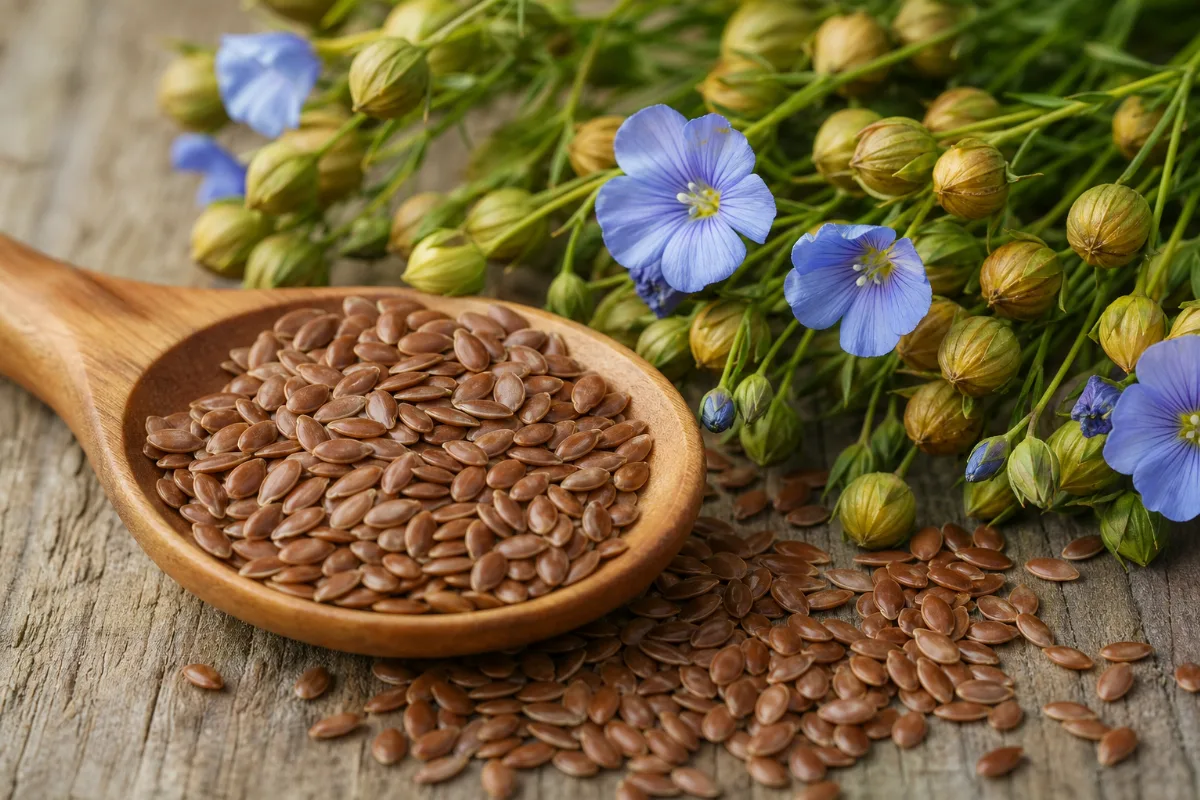
Herbs & Botanicals · Herbs · Seed with small, low-certainty heart and gut effects
Flaxseed
Linum usitatissimum L.; seed · also called Flax, linseed, Lini semen; Leinsamen (German)
Flaxseed is the seed of the flax plant. Pooled trials show small average improvements in cholesterol, blood pressure and blood sugar, and the EU accepts it for constipation. It must be taken with plenty of fluid and has cautions for hormone-sensitive conditions and pregnancy.
General information, not medical advice. Last substantive update · Not medically reviewed. A named clinician has not signed off on this page. How this page is made
About Flaxseed
Flaxseed is a fibre-rich seed that pooled trials link to small improvements in cholesterol, blood pressure and blood sugar, and which the EU accepts for constipation. It needs plenty of fluid and has cautions for hormone-sensitive conditions.
What it is
Flaxseed, also called linseed, is the seed of Linum usitatissimum L., in the flax family (Linaceae). GBIF lists this as the accepted name.
This page covers ground or whole seed. Flaxseed oil and purified lignan extracts are different products and are described separately.
Seed, oil and lignan extract are not the same
The seed has fibre that forms a gel in water, oil rich in a plant omega-3 fat (alpha-linolenic acid), and lignans, mainly one called SDG. The oil has the fat but not the fibre or lignans. Extracts contain mostly lignan.
Most trials of cholesterol, blood pressure, blood sugar and constipation used ground or baked seed. Oil and extract results should not be read as seed results.
What the research shows
Pooled trials show small average improvements in cholesterol, blood pressure and blood sugar, and the EU accepts linseed for constipation. Certainty is low because trials differ a lot and effects are small.
For hot flashes, the best trial found no benefit. For cancer, the data are mostly observational or tissue markers, not outcomes.
At a glance
Traditional uses history, not proof
- Ancient Greece: used as a laxative (NCCIH)
- EU traditional use for mild stomach and gut discomfort (EMA)
Studied for research
- Cholesterol, low certainty
- Blood pressure, low certainty
- Blood sugar in diabetes, low certainty
- Constipation, low (EU accepted use)
- Hot flashes, low (trials found no clear benefit)
- Cancer markers and observational data, very low
Main compounds
- Lignans, mainly secoisolariciresinol diglucoside (SDG)
- Alpha-linolenic acid (plant omega-3 fat)
- Mucilage (gel-forming fibre)
- Cyanogenic glycosides (linamarin, linustatin) in raw seed
Common forms
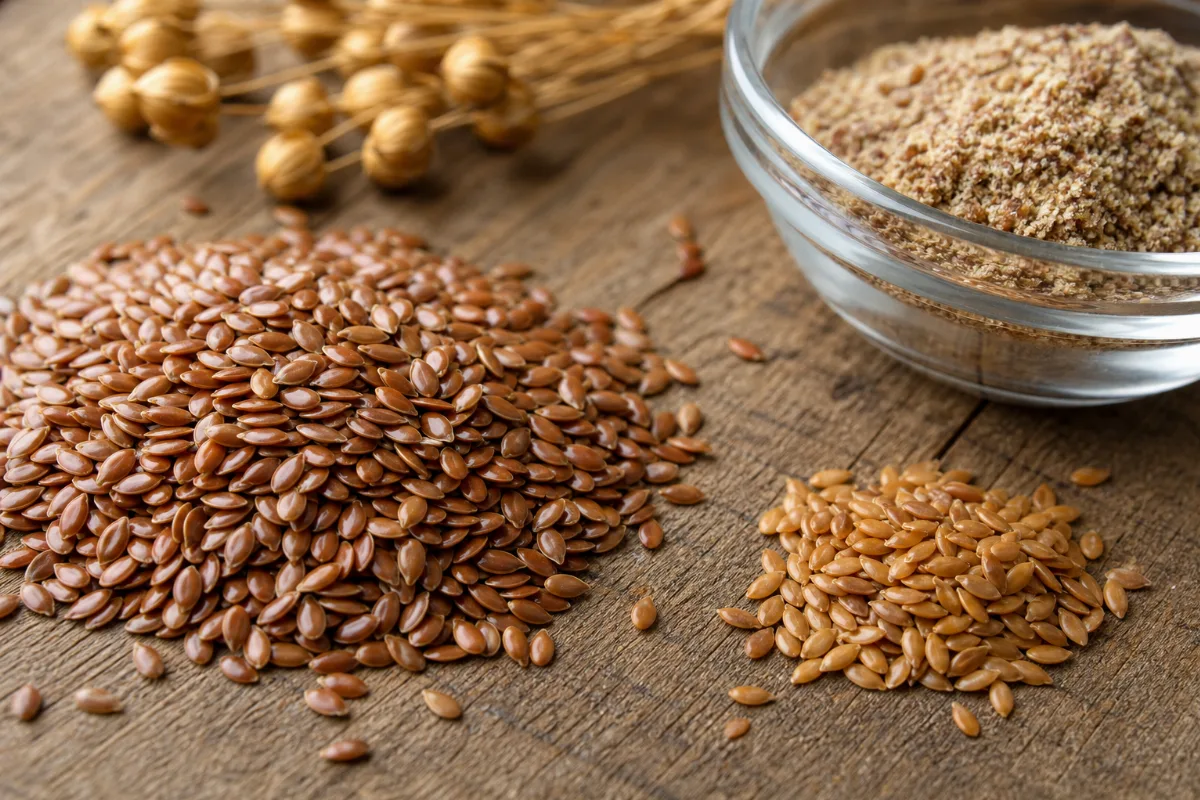
- Ground or milled seed
- Whole seed
- Flaxseed oil (separate product)
- Lignan extracts (separate product)
Research links: EMA linseed monograph · NCCIH flaxseed fact sheet · Flaxseed and lipids meta-analysis (2020) · Flaxseed and blood pressure meta-analysis (2023) · Research Library · Genes & Biomarkers Library
The plant and its history
- Accepted scientific name
- Linum usitatissimum L.
- Naming authority
- L. (GBIF accepted name, usageKey 2873861, exact match, confidence 99)
- Common names
- Flaxseed (English); Flax (English); Linseed (English); Lini semen (Latin (pharmacopoeial)); Leinsamen (German)
- Botanical family
- Linaceae (flax family), order Malpighiales.
- Classification
- Plantae > Not retrieved > Not retrieved > Malpighiales > Linaceae > Linum > Linum usitatissimum
- Native range
- Not verified from a primary source.
- Habitat
- Not verified.
- What the plant looks like
- Roots: Not verified.; Stems: Not verified.; Leaves: Not verified.; Flowers: Not verified.; Fruit: Not verified.
- Cultivation
- EMA: the dried ripe seeds for medicinal use are obtained from cultivated plants.
- Harvest and processing
- EMA: dried ripe seeds. NCCIH says unripe seed should not be eaten.
- Look-alikes and adulterants
- Name: Other Linum species; Note: Not covered by the sources we read; use the species Linum usitatissimum.
- Sustainability and conservation
- Not verified.
The plant and the parts used
Traditional use and history history, not clinical proof
| Tradition or era | Documented use | Source |
|---|---|---|
| Ancient Greece | NCCIH notes flaxseed was used as a laxative in ancient Greece. | s-nccih-flaxseed |
| European herbal medicine | EMA/HMPC accepts linseed for habitual constipation and, on at least 30 years of use, for mild gut discomfort. | s-ema-monograph |
| Food use | Eaten as whole, ground or baked seed; used as flour and oil. | s-msk-flaxseed |
Traditional use shows how a plant was used. It does not show that a supplement works or is safe today.
What is inside, and how it may work
What the plant contains and how those compounds act in cells and animals. Laboratory and animal mechanisms are not proven effects in people.
Main compounds
| Compound | Family | Where it is concentrated | Activity studied | Level of evidence |
|---|---|---|---|---|
| Secoisolariciresinol diglucoside (SDG) PubChem 9917980 | lignan glycoside | Seed Not stated in sources read | The main flaxseed lignan; gut bacteria convert it to enterolignans. Stable through baking and storage in one bread study. 23 28 5 | Human data |
| Secoisolariciresinol PubChem 65373 | lignan (aglycone) | Seed (released from SDG) Not stated | Rose in blood after lignan extract in one trial. 28 | Human data |
| Enterodiol PubChem 115089 | enterolignan | Made by gut bacteria Not stated | Blood levels rose after lignan extract; cholesterol drops correlated with them in one trial. 28 | Human data |
| Enterolactone PubChem 114739 | enterolignan | Made by gut bacteria Not stated | Blood levels rose after lignan extract; blood levels were not linked to breast cancer risk in an observational pooling (OR 0.82, 0.59-1.14). 28 26 | Human data |
| Alpha-linolenic acid (ALA) PubChem 5280934 | omega-3 fatty acid | Seed (and oil) Not stated | A plant omega-3 fat, the main fat of flaxseed oil; named by trial authors as a possible active part. 10 16 | Human data |
| Mucilage (gel-forming soluble fibre) | polysaccharide fibre | Seed coat Not stated | Swells with water into a gel that softens stool (EMA). No single PubChem record applies. 4 | Human data |
| Linamarin and linustatin PubChem 11128 | cyanogenic glycosides | Seed Not stated | Main cyanogenic glycosides in flaxseed meal in one study; linustatin CID 119301 (C16H27NO11). They can release cyanide. 23 19 | Laboratory research |
Mechanisms, receptors and pathways
| Target or pathway | Gene or receptor | What was found | Level |
|---|---|---|---|
| Bulk and gel formation | Gut lumen water binding | EMA says the seed swells into mucilage, softening stool and stretching the gut to speed passage. 4 3 | Human data |
| Oestrogen-like activity | Oestrogen receptors | EMA says studies in healthy women suggest an oestrogen-like effect; lignans are described as phytoestrogens by trial authors. In 180 women a lignan extract changed ER-alpha gene expression in a minority of paired samples (22 of 77), mostly decreases on SDG. 3 5 | Human data |
| Tissue cell growth | Ki-67 (cell division marker) | Lower in prostate tumours of men on flaxseed; not different from placebo in breast tissue with SDG. 1 5 | Human data |
| Cyanide detoxification | Not named | A review says cyanide from the glycosides is converted in the body to less toxic forms. 19 | Human data |
Absorption, metabolism and elimination
- Absorption
- After lignan extract, blood levels of secoisolariciresinol, enterodiol and enterolactone rose in one trial.
- Distribution
- Not found.
- Metabolism
- Gut bacteria convert SDG to enterolignans (named by the trial authors); full detail not read.
- Elimination
- Not found.
- Bioavailability
- Not established from the sources read.
Isolated compounds versus whole extracts
Whole or ground seed gives fibre, oil and lignans together. Lignan extracts give mostly SDG; flaxseed oil gives mostly ALA and no fibre. Trials show different results for each, so findings should not be swapped between them.
Nutritional composition
Our nutrient graph lists flaxseed as a herb-food with fibre, omega-3 (ALA) and lignans. Amounts in the seed were not retrieved from a source and are not stated here.
5 low certainty4 very low certainty1 not enough evidence
What is Flaxseed good for?
The main studied uses and how strong the human evidence is for each. 'Low' means small effects or uneven trials; 'very low' means one small trial or observational data.
Benefits, one by one
Each card is a research question, not a promise. Tap a goal to filter. Open a card to see the studies, doses and limits.
Blood cholesterol and triglycerides (ground or whole seed)
Low certaintyAcross 62 trials, people taking flaxseed had slightly lower total cholesterol, LDL ('bad') cholesterol and triglycerides. HDL ('good') cholesterol did not change. The drops are small.
3 studiesThe meta-analysis pooled forms; the cookie trial used baked flaxseed.…
Studies, doses and limits
What the trials found
Hadi 2020 (Pharmacol Res) pooled 62 randomised trials with 3,772 people. Total cholesterol fell 5.4 mg/dL, LDL 4.2 mg/dL and triglycerides 9.4 mg/dL on average; HDL was unchanged. A smaller 77-person trial in constipated adults with type 2 diabetes (baked flaxseed in cookies, 12 weeks) also found lower LDL than placebo. Memorial Sloan Kettering calls the cholesterol data 'mixed'.
Results
Small average drops in total cholesterol, LDL and triglycerides; no change in HDL.
Effect sizes as reported
Total cholesterol -5.389 mg/dL (95% CI -9.483 to -1.295); LDL -4.206 mg/dL (-7.260 to -1.151); triglycerides -9.422 mg/dL (-15.514 to -3.330); HDL +0.047 mg/dL (-0.777 to 0.872).
Why this rating
Many trials, but the pooled forms (whole, ground, oil, extract) differ, the drops are small, and the abstract gives no GRADE rating or heterogeneity. A mixed verdict from Memorial Sloan Kettering lowers confidence.
Form and dose studied
The meta-analysis pooled forms; the cookie trial used baked flaxseed. Amounts are not discussed here.
Who was studied
Healthy adults and adults with various conditions, including type 2 diabetes.
Limits
Forms pooled; trial quality not summarised in the abstract; a cholesterol change is not the same as fewer heart attacks, which these trials did not measure.
Why researchers looked
Flaxseed contains soluble fibre, alpha-linolenic acid and lignans, which could each plausibly lower blood fats.
Traditional use
Linseed has been used for centuries as a food and as a bulk laxative. This is documented by the European herbal committee as long-standing use.
Proposed mechanism Pharmacological theory
Soluble fibre may bind bile acids in the gut; lignans and alpha-linolenic acid may also act. These are suggested explanations and were not tested here.
A proposed mechanism does not show that the effect happens in people.
Ground or whole seed must be taken with plenty of fluid. See the safety tab. Do not use it in place of treatment for high blood pressure, high cholesterol or diabetes.
Blood pressure (ground or whole seed)
Low certaintyPooled trials show small average drops in blood pressure, about 3 mmHg on the top number. The results vary a lot between trials, and larger drops show up mainly in longer trials and in people with high blood pressure.
4 studiesPooled products; larger effects with 30 g/day or more and more than 2…
Studies, doses and limits
What the trials found
Li 2023 (Food Funct) pooled 33 trials, 2,427 people. Khalesi 2015 (J Nutr) pooled 14 trials from 11 studies and found smaller drops, with a clearer diastolic effect for whole seed and for 12 weeks or longer. Fazeli Moghadam 2024 pooled only 5 trials in people with hypertension and found larger drops. Memorial Sloan Kettering says several studies found lower blood pressure.
Results
Small average drops, bigger in people with hypertension and in longer trials, but with very uneven results.
Effect sizes as reported
Li 2023: systolic -3.19 mmHg (95% CI -4.15 to -2.24), diastolic -2.61 (-3.27 to -1.94), heterogeneity I2 92.5% and 94.1%. Khalesi 2015: systolic -1.77 (-3.45 to -0.09), diastolic -1.58 (-2.64 to -0.52). Hypertension subgroup, 5 trials: systolic -8.64 (-15.41 to -1.87), diastolic -4.87 (-8.37 to -1.37).
Why this rating
Three meta-analyses agree on the direction, but they pool different products and show very high heterogeneity. The hypertension result rests on only 5 trials.
Form and dose studied
Pooled products; larger effects with 30 g/day or more and more than 20 weeks in one analysis. Amounts are for a doctor or pharmacist to discuss.
Who was studied
Adults, including people with overweight, hypertension and type 2 diabetes.
Limits
Very high heterogeneity; no study tested heart attacks or strokes; a few mmHg is a small change for one person.
Why researchers looked
Fibre, alpha-linolenic acid and lignans have each been proposed to lower blood pressure.
Traditional use
Linseed has been used for centuries as a food and as a bulk laxative. This is documented by the European herbal committee as long-standing use.
Proposed mechanism Pharmacological theory
Proposed: omega-3 fats and lignans may relax blood vessels, and fibre may help weight. Suggested only.
A proposed mechanism does not show that the effect happens in people.
If you take blood pressure medicines, tell the prescriber before adding large amounts of flaxseed, since both could lower pressure. This is a theory and was not tested as an interaction.
Blood sugar and insulin resistance (ground seed, prediabetes or type 2 diabetes)
Low certaintySeven trials of milled or ground flaxseed in people with prediabetes or type 2 diabetes found lower fasting blood sugar, insulin, HbA1c and insulin resistance on average.
3 studiesMilled or ground seed in the trials; whole seed and oil were not stud…
Studies, doses and limits
What the trials found
Villarreal-Renteria 2022 (Complement Ther Med) pooled 7 randomised trials of milled or ground flaxseed using a fixed-effect model. The authors say more trials are needed. Memorial Sloan Kettering says glucose data are conflicting. The 77-person cookie trial in constipated people with type 2 diabetes also reported better fasting glucose than placebo.
Results
Lower fasting glucose, insulin, HbA1c and HOMA-IR on average.
Effect sizes as reported
Standardised mean differences: fasting glucose -0.392 (95% CI -0.596 to -0.187; I2 65%); insulin -0.287 (-0.534 to -0.041); HbA1c -0.442 (-0.770 to -0.114); HOMA-IR -0.284 (-0.530 to -0.038).
Why this rating
Only 7 trials, with moderate heterogeneity for glucose, and an outside reviewer (MSK) calling the data conflicting.
Form and dose studied
Milled or ground seed in the trials; whole seed and oil were not studied for this question.
Who was studied
Adults with prediabetes or type 2 diabetes.
Limits
Small number of trials; biomarkers rather than complications; a standardised difference does not translate directly to a clinic reading.
Why researchers looked
Soluble fibre slows digestion of sugars, and flaxseed also contains lignans.
Traditional use
Linseed has been used for centuries as a food and as a bulk laxative. This is documented by the European herbal committee as long-standing use.
Proposed mechanism Pharmacological theory
Gel-forming fibre may slow sugar absorption. This is a proposed explanation.
A proposed mechanism does not show that the effect happens in people.
If you take insulin or diabetes pills, tell your doctor before adding flaxseed, since blood sugar could drop further. This is a theory.
Cholesterol and glucose (purified lignan extract, SDG)
Very low certaintyOne 8-week trial of 55 adults with high cholesterol found large drops with a purified flaxseed lignan extract, but it is a single small study of a different product from the seed.
1 studiesPurified SDG extract. This is not the same as the seed and should not…
Studies, doses and limits
What the trials found
Zhang 2008 (Br J Nutr) randomised 55 adults with high cholesterol to placebo, 300 mg or 600 mg SDG a day from a flaxseed extract for 8 weeks. At 600 mg total and LDL cholesterol fell about 22 to 24 percent versus placebo. The 300 mg group differed only from its own starting values. A separate 12-month trial of 50 mg SDG in 180 women at higher breast cancer risk is covered under breast health and was not designed to test cholesterol.
Results
Large drops in the 600 mg SDG group; fasting glucose also fell.
Effect sizes as reported
Total cholesterol and LDL down about 22 to 24% at weeks 6 and 8 on 600 mg (P<0.005 vs placebo); fasting glucose down about 25% in people with baseline glucose of 5.83 mmol/L or more (P=0.012 to 0.015).
Why this rating
A single small trial; the result is much larger than the whole-seed meta-analysis, which is a reason for caution; no replication was found; industry links not shown in the abstract.
Form and dose studied
Purified SDG extract. This is not the same as the seed and should not be assumed to be equal.
Who was studied
Adults with high cholesterol, 8 weeks.
Limits
One trial; short; extract-specific; company funding not stated in the abstract.
Why researchers looked
The lignan SDG is thought to be a main active part of the seed, so an extract was tested on its own.
Traditional use
Linseed has been used for centuries as a food and as a bulk laxative. This is documented by the European herbal committee as long-standing use.
Proposed mechanism Preliminary mechanism
Gut bacteria turn SDG into enterodiol and enterolactone, which may have antioxidant and hormone-like activity. Their blood levels rose in this trial, and the cholesterol drop tracked with them in a modest way.
A proposed mechanism does not show that the effect happens in people.
Lignan extracts are more concentrated in hormone-like compounds than the seed. See the hormone cautions on the safety tab.
Blood pressure (flaxseed oil)
Very low certaintyFive trials of flaxseed oil in people with metabolic syndrome found a small drop in the top number but no clear change in the bottom number. The oil has no fibre or lignans.
1 studiesFlaxseed oil only, kept separate from seed.
Studies, doses and limits
What the trials found
Mahmudiono 2022 (Phytother Res) pooled 5 trials (6 arms) in people with metabolic syndrome and related disorders. Systolic fell 3.86 mmHg (95% CI -7.59 to -0.13); diastolic fell 1.71 mmHg (-3.67 to 0.26, not significant).
Results
Small systolic drop; diastolic not significantly changed.
Effect sizes as reported
SBP -3.86 mmHg (95% CI -7.59 to -0.13, p=0.04); DBP -1.71 mmHg (-3.67 to 0.26, p=0.09).
Why this rating
Only 5 trials; the systolic interval almost touches zero; one population; authors ask for further research.
Form and dose studied
Flaxseed oil only, kept separate from seed.
Who was studied
People with metabolic syndrome and related conditions.
Limits
Small pooled sample; no fibre or lignans, so the seed results do not apply to the oil and the oil results do not apply to the seed.
Why researchers looked
Flaxseed oil is rich in alpha-linolenic acid, a plant omega-3 fat.
Traditional use
Linseed has been used for centuries as a food and as a bulk laxative. This is documented by the European herbal committee as long-standing use.
Proposed mechanism Pharmacological theory
Alpha-linolenic acid is a plant omega-3 fat that the body partly converts; effects on vessel function are proposed, not shown here.
A proposed mechanism does not show that the effect happens in people.
Oil has a separate bleeding theory; see the safety tab.
Constipation (ground or whole seed)
Low certaintyThe EU herbal committee accepts linseed for habitual constipation. Two small trials found better bowel habits, but one had no placebo and the other was single-blind.
4 studiesGround flour or baked seed in trials. The EU monograph describes whol…
Studies, doses and limits
What the trials found
EMA/HMPC classes constipation as 'well-established use' based on clinical studies it reviewed. Sun 2020 (Asia Pac J Clin Nutr) randomised 90 adults with functional constipation to flaxseed flour or lactulose for 4 weeks: both improved and flaxseed improved stool frequency somewhat more. Soltanian 2019 randomised 77 constipated adults with type 2 diabetes to flaxseed, psyllium or placebo cookies for 12 weeks: constipation scores and stool form improved versus placebo; no adverse effects were seen.
Results
Better bowel scores and more bowel movements in small trials.
Effect sizes as reported
Sun 2020: median Wexner score 14 to 6.5 (flaxseed) vs 15 to 9 (lactulose); bowel movements per week 2 to 7 vs 2 to 6. Soltanian 2019: constipation symptoms P=0.002, stool consistency P<0.001 vs placebo.
Why this rating
A regulator accepts the use, but the two trials we read were small: one had no placebo and compared with a laxative, one was single-blind. EMA rating rests on a body of studies we did not read in detail.
Form and dose studied
Ground flour or baked seed in trials. The EU monograph describes whole or broken seed swelling in water.
Who was studied
Adults with functional constipation, and adults with type 2 diabetes and constipation.
Limits
Short; unblinded or single-blind; comparator was lactulose in one; both from single countries.
Why researchers looked
The seed swells with water into a soft gel that bulks and softens stool.
Traditional use
Linseed has been used for centuries as a food and as a bulk laxative. This is documented by the European herbal committee as long-standing use.
Proposed mechanism Authoritative guidance
Linseed swells with water to form mucilage that softens stool and widens the gut, which speeds passage (EMA summary).
A proposed mechanism does not show that the effect happens in people.
Must be taken with plenty of fluid. Swallowing problems or any gut narrowing are reasons not to use it.
Mild stomach and gut discomfort (traditional)
Not enough evidenceThe EU lists linseed as a traditional remedy for mild stomach and gut discomfort. This rests on long use, not on trial results.
2 studiesSeed soaked in water in the EU monograph (no amounts given here).
Studies, doses and limits
What the trials found
EMA/HMPC says there is insufficient trial evidence, one early study was too limited to use, and the use is plausible based on at least 30 years of use (15 in the EU).
Results
No usable trial results.
Effect sizes as reported
None.
Why this rating
Based on tradition; the EMA itself says trial evidence is insufficient.
Form and dose studied
Seed soaked in water in the EU monograph (no amounts given here).
Who was studied
Adults and adolescents over 12 per EMA.
Limits
No trial results to appraise.
Why researchers looked
Linseed mucilage is thought to coat the lining of the digestive tract.
Traditional use
Linseed has been used for centuries as a food and as a bulk laxative. This is documented by the European herbal committee as long-standing use.
Proposed mechanism Authoritative guidance
Linseed mucilage is thought to coat and protect the lining of the gut (EMA summary: 'likely').
A proposed mechanism does not show that the effect happens in people.
If pain or irregular bowel habits occur, stop and seek medical advice (EMA).
Hot flashes and menopause symptoms (seed, bars, muffins)
Low certaintyThe largest, best-designed trial found flaxseed bars no better than placebo bars for hot flashes. A smaller muffin trial also found no clear benefit.
3 studiesFlaxseed bar (410 mg lignans) and ground seed muffins.
Studies, doses and limits
What the trials found
Pruthi 2012 (Menopause): 188 postmenopausal women, a flaxseed bar with 410 mg lignans or a placebo bar for 6 weeks; hot flash scores fell 4.9 vs 3.5 (P=0.29) and about a third in each group had a 50% drop. Lewis 2006 (Menopause): 99 women, 25 g ground flaxseed muffins daily for 16 weeks showed no significant effect on quality of life or hot flashes (flaxseed hot flashes were less severe, but the group-by-time effect was not significant). Ghazanfarpour 2016's review of 9 trials (flaxseed and St John's wort) described a non-significant benefit.
Results
No statistically significant improvement.
Effect sizes as reported
Pruthi 2012: hot flash score reduction 4.9 vs 3.5, P=0.29. Lewis 2006: no significant group x time difference.
Why this rating
Two randomised trials of reasonable size are both null; certainty that it does not help is low because only a few products and doses were tested.
Form and dose studied
Flaxseed bar (410 mg lignans) and ground seed muffins.
Who was studied
Postmenopausal women, some with a breast cancer history.
Limits
Short; bars and muffins add fibre; this says nothing about other forms.
Why researchers looked
Flaxseed lignans are plant compounds with weak oestrogen-like activity, so hot flashes were an obvious target.
Traditional use
Linseed has been used for centuries as a food and as a bulk laxative. This is documented by the European herbal committee as long-standing use.
Proposed mechanism Preliminary mechanism
Lignans are converted by gut bacteria into enterolignans that can bind oestrogen receptors weakly. Suggested, not shown to relieve hot flashes.
A proposed mechanism does not show that the effect happens in people.
Do not use flaxseed in place of treatment for menopause symptoms if you have had hormone-sensitive cancer without asking your doctor; see the safety tab.
Breast cancer (observational data and tissue markers)
Very low certaintyStudies of people who eat more lignans suggest a small lower risk in postmenopausal women. This is observational. A trial of a lignan extract did not change the main breast tissue marker versus placebo.
4 studiesDietary lignans from many foods (Velentzis), flax foods and 25 g grou…
Studies, doses and limits
What the trials found
OBSERVATIONAL: Velentzis 2009 (Br J Cancer) pooled 23 observational studies. Overall plant lignan intake was little linked with breast cancer (OR 0.93; 95% CI 0.83-1.03); in postmenopausal women highest intake was linked to lower risk (OR 0.85; 0.78-0.93). These foods include many sources, not only flaxseed. Flower 2014 (Integr Cancer Ther), a systematic review of 10 studies, found observational links between flax and lower breast cancer risk (adjusted OR 0.82; 0.69-0.97) and lower mortality in patients (HR 0.69; 0.50-0.95), and tumour-marker changes in small trials, concluding flax may be associated with lower risk. TRIAL: Fabian 2020 (Cancer Prev Res) randomised 180 premenopausal women at higher risk to 50 mg SDG a day or placebo for 12 months; the main marker (Ki-67) fell in both arms with no significant difference between them, and no harm was seen.
Results
Observational: small lower risk in some groups. Trial: no difference on the main marker.
Effect sizes as reported
Velentzis 2009: postmenopausal OR 0.85 (0.78-0.93). Flower 2014: breast cancer OR 0.82 (0.69-0.97); mortality HR 0.69 (0.50-0.95). Fabian 2020: Ki-67 median change -1.8% vs -1.2%, no significant difference.
Why this rating
Mostly observational data, where people who eat more flaxseed or lignans may differ in other ways; trials measured markers, not cancer. Mixed results.
Form and dose studied
Dietary lignans from many foods (Velentzis), flax foods and 25 g ground flax in small studies (Flower), and 50 mg SDG extract (Fabian).
Who was studied
Women at risk of or with breast cancer; men not covered.
Limits
Observational; markers rather than outcomes; flaxseed has oestrogen-like effects that regulators advise caution about in hormone-sensitive disease.
Why researchers looked
Lignans are plant compounds that might affect oestrogen signalling and cell growth.
Traditional use
Linseed has been used for centuries as a food and as a bulk laxative. This is documented by the European herbal committee as long-standing use.
Proposed mechanism Preliminary mechanism
Lab and animal work suggests lignan metabolites may affect cell growth and oestrogen receptors. Not shown to prevent or treat cancer in people.
A proposed mechanism does not show that the effect happens in people.
Women with ER-positive breast cancer should consult their doctors first (MSK). The EMA does not recommend it for hormone-dependent tumours.
Prostate cancer tissue growth marker (ground seed)
Very low certaintyIn a one-month trial before prostate surgery, men on a flaxseed-supplemented diet had a lower tumour cell-growth marker than men on usual diet. This is a marker, not survival.
1 studies30 g/day of flaxseed in the diet in this trial; not a recommendation.
Studies, doses and limits
What the trials found
Demark-Wahnefried 2008 (Cancer Epidemiol Biomarkers Prev) randomised 161 men with prostate cancer waiting for surgery to usual diet, flaxseed, low-fat, or both; flaxseed arms had lower Ki-67 (P<0.002); side effects, apoptosis and most blood markers did not differ.
Results
Lower tumour growth marker (Ki-67) in about 30 days.
Effect sizes as reported
Median Ki-67 ratio 1.66 and 1.50 (flaxseed arms) vs 3.23 (control).
Why this rating
A single trial of a tissue marker over about a month; no survival or recurrence data.
Form and dose studied
30 g/day of flaxseed in the diet in this trial; not a recommendation.
Who was studied
Men with prostate cancer waiting for surgery.
Limits
One short trial; marker only.
Why researchers looked
Flaxseed lignans have been explored as a diet strategy in prostate cancer.
Traditional use
Linseed has been used for centuries as a food and as a bulk laxative. This is documented by the European herbal committee as long-standing use.
Proposed mechanism Preliminary mechanism
Proposed: lignans may reduce cell growth signals. Not proven in people.
A proposed mechanism does not show that the effect happens in people.
Not a reason to change cancer care; talk to your cancer team.
Connections to the rest of health
How Flaxseed connects to the rest of our health knowledge graph. Every link says what kind of connection it is. A safety link (for example to the liver) is a warning, not a benefit. A study that merely mentions a topic never creates a benefit link.
Explore every connection: goals, body systems, organs, symptoms, genes
A. Wellness goals
| Connected to | Kind of connection | Evidence status | Context | Studies |
|---|---|---|---|---|
| Cholesterol Balance | Potential benefit | Low certainty | Blood cholesterol and triglycerides (ground or whole seed): Across 62 trials, people taking flaxseed had slightly lower total cholesterol, LDL ('bad') cholesterol and triglycerides. HDL ('good') cholesterol did not change. The drops are small. Cholesterol and glucose (purified lignan extract, SDG): One 8-week trial of 55 adults with high cholesterol found large drops with a purified flaxseed lignan extract, but it is a single small study of a different product from the seed. | 10 24 17 28 |
| Heart Health | Potential benefit | Low certainty | Blood cholesterol and triglycerides (ground or whole seed): Across 62 trials, people taking flaxseed had slightly lower total cholesterol, LDL ('bad') cholesterol and triglycerides. HDL ('good') cholesterol did not change. The drops are small. Blood pressure (ground or whole seed): Pooled trials show small average drops in blood pressure, about 3 mmHg on the top number. The results vary a lot between trials, and larger drops show up mainly in longer trials and in people with high blood pressure. | 10 24 17 15 12 6 |
| Blood Pressure Support | Potential benefit | Low certainty | Blood pressure (ground or whole seed): Pooled trials show small average drops in blood pressure, about 3 mmHg on the top number. The results vary a lot between trials, and larger drops show up mainly in longer trials and in people with high blood pressure. Blood pressure (flaxseed oil): Five trials of flaxseed oil in people with metabolic syndrome found a small drop in the top number but no clear change in the bottom number. The oil has no fibre or lignans. | 15 12 6 17 16 |
| Blood Sugar Balance | Potential benefit | Low certainty | Blood sugar and insulin resistance (ground seed, prediabetes or type 2 diabetes): Seven trials of milled or ground flaxseed in people with prediabetes or type 2 diabetes found lower fasting blood sugar, insulin, HbA1c and insulin resistance on average. | 27 17 24 |
| Metabolic Health | Potential benefit | Low certainty | Blood sugar and insulin resistance (ground seed, prediabetes or type 2 diabetes): Seven trials of milled or ground flaxseed in people with prediabetes or type 2 diabetes found lower fasting blood sugar, insulin, HbA1c and insulin resistance on average. | 27 17 24 |
| Digestive Support | Demonstrated clinical effect | Low certainty | Constipation (ground or whole seed): The EU herbal committee accepts linseed for habitual constipation. Two small trials found better bowel habits, but one had no placebo and the other was single-blind. | 3 4 25 24 |
| Gut Health | Demonstrated clinical effect | Low certainty | Constipation (ground or whole seed): The EU herbal committee accepts linseed for habitual constipation. Two small trials found better bowel habits, but one had no placebo and the other was single-blind. | 3 4 25 24 |
| Digestive Support | Traditional use | Not enough evidence | Mild stomach and gut discomfort (traditional): The EU lists linseed as a traditional remedy for mild stomach and gut discomfort. This rests on long use, not on trial results. | 3 4 |
| Menopause Support | Demonstrated clinical effect | Low certainty | Hot flashes and menopause symptoms (seed, bars, muffins): The largest, best-designed trial found flaxseed bars no better than placebo bars for hot flashes. A smaller muffin trial also found no clear benefit. | 22 14 9 |
| Womens Wellness | Demonstrated clinical effect | Low certainty | Hot flashes and menopause symptoms (seed, bars, muffins): The largest, best-designed trial found flaxseed bars no better than placebo bars for hot flashes. A smaller muffin trial also found no clear benefit. | 22 14 9 |
| Healthy Aging | Biological association | Very low certainty | Breast cancer (observational data and tissue markers): Studies of people who eat more lignans suggest a small lower risk in postmenopausal women. This is observational. A trial of a lignan extract did not change the main breast tissue marker versus placebo. Prostate cancer tissue growth marker (ground seed): In a one-month trial before prostate surgery, men on a flaxseed-supplemented diet had a lower tumour cell-growth marker than men on usual diet. This is a marker, not survival. | 26 7 5 17 1 |
| Womens Wellness | Biological association | Very low certainty | Breast cancer (observational data and tissue markers): Studies of people who eat more lignans suggest a small lower risk in postmenopausal women. This is observational. A trial of a lignan extract did not change the main breast tissue marker versus placebo. | 26 7 5 17 |
| Mens Vitality | Biological association | Very low certainty | Prostate cancer tissue growth marker (ground seed): In a one-month trial before prostate surgery, men on a flaxseed-supplemented diet had a lower tumour cell-growth marker than men on usual diet. This is a marker, not survival. | 1 |
B. Body systems
| Connected to | Kind of connection | Evidence status | Context | Studies |
|---|---|---|---|---|
| Reproductive system | Contraindication | Not enough evidence | Oestrogen-like effects: caution in hormone-dependent tumours, pregnancy and breastfeeding. Preparation or compound: Seed and lignan extracts |
3 17 20 |
| Cardiovascular System | Biological association | Low certainty | Studied for: Blood cholesterol and triglycerides (ground or whole seed) Studied for: Blood pressure (ground or whole seed) | 10 24 17 15 12 6 28 16 |
| Endocrine System | Biological association | Low certainty | Studied for: Blood sugar and insulin resistance (ground seed, prediabetes or type 2 diabetes) Studied for: Hot flashes and menopause symptoms (seed, bars, muffins) | 27 17 24 22 14 9 |
| Metabolism Weight | Biological association | Low certainty | Studied for: Blood sugar and insulin resistance (ground seed, prediabetes or type 2 diabetes) | 27 17 24 |
| Digestive System | Biological association | Low certainty | Studied for: Constipation (ground or whole seed) Studied for: Mild stomach and gut discomfort (traditional) | 3 4 25 24 |
| Reproductive System | Biological association | Low certainty | Studied for: Hot flashes and menopause symptoms (seed, bars, muffins) Studied for: Breast cancer (observational data and tissue markers) | 22 14 9 26 7 5 17 1 |
C. Body parts and organs
| Connected to | Kind of connection | Evidence status | Context | Studies |
|---|---|---|---|---|
| Gut | Contraindication | Low certainty | Blockage risk without enough fluid; contraindicated in gut narrowing or blockage. Blockage risk without enough fluid. A safety relationship, not a benefit. Preparation or compound: Ground or whole flaxseed |
3 4 |
| Blood vessels | Drug or supplement interaction | Not enough evidence | Theoretical interaction with blood thinners. Preparation or compound: Seed and oil |
20 |
D. Symptoms
I. Biomarkers
| Connected to | Kind of connection | Evidence status | Context | Studies |
|---|---|---|---|---|
| LDL cholesterol | Biological association | Low certainty | Measured in trials: lowered. A lab change is not the same as a health benefit. | 10 28 24 |
| Total cholesterol | Biological association | Low certainty | Measured in trials: lowered. A lab change is not the same as a health benefit. | 10 |
| Triglycerides | Biological association | Low certainty | Measured in trials: lowered. A lab change is not the same as a health benefit. | 10 |
| HDL cholesterol | Biological association | Low certainty | Measured in trials: no-change. A lab change is not the same as a health benefit. | 10 |
| Blood pressure (systolic and diastolic) | Biological association | Low certainty | Measured in trials: lowered. A lab change is not the same as a health benefit. | 15 12 6 16 |
| Fasting blood glucose | Biological association | Low certainty | Measured in trials: lowered. A lab change is not the same as a health benefit. | 27 28 |
| HbA1c | Biological association | Low certainty | Measured in trials: lowered. A lab change is not the same as a health benefit. | 27 |
| Insulin and insulin resistance (HOMA-IR) | Biological association | Low certainty | Measured in trials: lowered. A lab change is not the same as a health benefit. | 27 |
| Constipation symptom score (Wexner) and bowel movements per week | Biological association | Low certainty | Measured in trials: lowered. A lab change is not the same as a health benefit. | 25 24 |
| Hot flash score | Biological association | Low certainty | Measured in trials: no-change. A lab change is not the same as a health benefit. | 22 14 |
| Ki-67 (tissue cell-growth marker) | Biological association | Very low certainty | Measured in trials: mixed. A lab change is not the same as a health benefit. | 1 5 |
J. Genes, receptors and enzymes
| Connected to | Kind of connection | Evidence status | Context | Studies |
|---|---|---|---|---|
| Oestrogen receptor alpha (ESR1) | Preliminary mechanism | Human | Expression changed in a minority of breast tissue samples with SDG; direction mostly down. | 5 |
L. Active compounds
| Connected to | Kind of connection | Evidence status | Context | Studies |
|---|---|---|---|---|
| Secoisolariciresinol diglucoside (SDG) | Biological association | Human | The main flaxseed lignan; gut bacteria convert it to enterolignans. Stable through baking and storage in one bread study. Preparation or compound: Seed |
23 28 5 |
| Secoisolariciresinol | Biological association | Human | Rose in blood after lignan extract in one trial. Preparation or compound: Seed (released from SDG) |
28 |
| Enterodiol | Biological association | Human | Blood levels rose after lignan extract; cholesterol drops correlated with them in one trial. Preparation or compound: Made by gut bacteria |
28 |
| Enterolactone | Biological association | Human | Blood levels rose after lignan extract; blood levels were not linked to breast cancer risk in an observational pooling (OR 0.82, 0.59-1.14). Preparation or compound: Made by gut bacteria |
28 26 |
| Alpha-linolenic acid (ALA) | Biological association | Human | A plant omega-3 fat, the main fat of flaxseed oil; named by trial authors as a possible active part. Preparation or compound: Seed (and oil) |
10 16 |
| Mucilage (gel-forming soluble fibre) | Biological association | Human | Swells with water into a gel that softens stool (EMA). No single PubChem record applies. Preparation or compound: Seed coat |
4 |
| Linamarin and linustatin | Biological association | In vitro | Main cyanogenic glycosides in flaxseed meal in one study; linustatin CID 119301 (C16H27NO11). They can release cyanide. Preparation or compound: Seed |
23 19 |
Each connection is stored with the ingredient, the connected record, the kind of connection, the evidence status, the supporting studies, the preparation or compound involved, and a review date (last reviewed October 25, 2026).
The evidence
The research centre for Flaxseed. Every record here was checked against PubMed or the publisher's page; we never list a study we have not verified.
Evidence by outcome
Bars show how many studies we found for each outcome, not how well it works. People are added up across trials only (reviews are not added, to avoid double counting).
How we rate evidence
High certainty
Several well-run trials or reviews agree; further research is unlikely to change the picture much.
Moderate certainty
Good trials point the same way, but some doubt remains.
Low certainty
Small, short or inconsistent trials. The finding could change with better research.
Very low certainty
Very little or very weak human data. Treat as a possibility only.
Mixed findings
Trials or reviews disagree with each other.
Not enough evidence
Not enough human research to say either way.
Evidence against
Good research found no benefit, or found harm.
We take the reviewers' own risk-of-bias and GRADE statements where they exist, and otherwise judge from study size, design, consistency, directness and whether a product matches what is sold. Many publications do not make evidence high. Method note: We started from our earlier flaxseed summary, then searched PubMed, read the abstracts of every cited paper, and read the EMA, NCCIH and Memorial Sloan Kettering pages. Items we could not read are labelled.
Study library: every study we checked 28
| Study | Design | People | Product, dose, length | Result |
|---|---|---|---|---|
| Demark-Wahnefried 2008 Flaxseed supplementation (not dietary fat restriction) reduces prostate cancer proliferation rates in men presurgery. Cancer Epidemiology, Biomarkers & Prevention · PMID 19064574 · DOI |
Controlled trial |
161 Men with prostate cancer waiting for surgery |
Flaxseed-supplemented diet seed 30 g/day About 30 days before surgery · vs Usual diet; low-fat diet arms |
Lower Ki-67 in the flaxseed arms; no difference in side effects, apoptosis or most blood markers. Median Ki-67 ratio 1.66 and 1.50 (flaxseed arms) vs 3.23 (control) (Not given in abstract) Methods, limits and fundingOutcomes: Ki-67 (tumour cell growth marker), apoptosis, blood markers Limitations: Biomarker in tissue, not survival or recurrence; about one month only; not blinded as far as the abstract states. Funding and conflicts: Not stated in abstract. Read: abstract |
| Duarte 2025 Flaxseed in Diet: A Comprehensive Look at Pros and Cons. Molecules · PMID 40142110 · DOI |
Other |
Narrative review | Flaxseed seed n/a n/a · vs n/a |
Notes concerns about excessive consumption and possible contamination, particularly cyanogenic glycosides, and that levels must be controlled. n/a (n/a) Methods, limits and fundingOutcomes: Benefits and risks Limitations: Narrative review; abstract gives no numbers. Funding and conflicts: Authors declared no conflict. Read: abstract |
| European Medicines Agency (HMPC) 2015 European Union herbal monograph on Linum usitatissimum L., semen (EMA/HMPC/377675/2014) European Medicines Agency (HMPC) · Source |
Authoritative guidance |
n/a | Flaxseed (linseed) seed n/a n/a · vs n/a |
Compiled 10 March 2015. Well-established use: habitual constipation or when soft stool is wanted. Traditional use: demulcent for mild stomach and gut discomfort. Contraindications, fluid and choking warning, oestrogen-like effect warning, delay of other medicines, pregnancy and lactation not recommended, under-12s not recommended. Read in full. n/a Methods, limits and fundingOutcomes: Regulatory or reference statements Limitations: Reference document, not a trial. Read: full-text |
| European Medicines Agency 2016 Herbal medicine: summary for the public. Linseed (EMA/492394/2015 Corr. 1) European Medicines Agency · Source |
Authoritative guidance |
n/a | Flaxseed (linseed) seed n/a n/a · vs n/a |
1 February 2016. Linseed can be used for habitual constipation (well-established use) and mild gut discomfort (traditional use); only for adults and adolescents over 12; common bloating; very rarely allergic reactions sometimes severe; not for people with swallowing or throat problems or with narrowing or blockage of the gut. Read in full. n/a Methods, limits and fundingOutcomes: Regulatory or reference statements Limitations: Reference document, not a trial. Read: full-text |
| Fabian 2020 Randomized Phase IIB Trial of the Lignan Secoisolariciresinol Diglucoside in Premenopausal Women at Increased Risk for Development of Breast Cancer. Cancer Prevention Research · PMID 32312713 · DOI |
Controlled trial |
180 Premenopausal women at increased breast cancer risk with benign breast changes |
Lignan extract (SDG, Brevail) seed 50 mg SDG per day 12 months · vs Placebo (2:1 randomisation) |
No difference between SDG and placebo on the main marker; no sign of harm at this dose. Median Ki-67 change -1.8% (SDG) vs -1.2% (placebo), no significant difference between arms (Not given in abstract) Methods, limits and fundingOutcomes: Change in breast tissue Ki-67 (cell growth marker) Limitations: Biomarker, not cancer outcomes; 152 of 180 evaluable; secondary analyses are exploratory. Funding and conflicts: No conflicts disclosed. Read: abstract |
| Fazeli Moghadam 2024 Flaxseed Lowers Blood Pressure in Hypertensive Subjects: A Meta-Analysis of Randomized Controlled Trials. Clinical Nutrition Research · PMID 39526211 · DOI |
Meta-analysis |
People with hypertension, 5 randomised studies | Flaxseed supplementation seed Not summarised in abstract Not summarised in abstract · vs Control groups |
Larger drops than the all-adult analyses, from only 5 studies. SBP -8.64 mmHg; DBP -4.87 mmHg (SBP -15.41 to -1.87; DBP -8.37 to -1.37) Methods, limits and fundingOutcomes: Systolic and diastolic blood pressure Limitations: Only 5 studies; wide intervals; searched three databases only. Funding and conflicts: Authors declared no competing interests. Read: abstract |
| Flower 2014 Flax and Breast Cancer: A Systematic Review. Integrative Cancer Therapies · PMID 24013641 · DOI |
Systematic review |
Women at risk of or living with breast cancer; 10 studies (2 RCTs, 2 uncontrolled, 1 biomarker, 5 observational) | Flax (ground seed, SDG lignan, flaxseed products) seed 25 g/day ground flax or 50 mg SDG/day in some studies Varied · vs Placebo or none |
Hot flash change not significant. Newly diagnosed patients on 25 g/day flax had more tumour cell death (apoptosis) and less HER2 versus placebo. Observational studies linked flax with lower breast cancer risk and lower mortality. Observational: adjusted OR 0.82 for primary breast cancer; hazard ratio 0.69 for mortality (OR 0.69 to 0.97 (risk); HR 0.50 to 0.95 (mortality)) Methods, limits and fundingOutcomes: Hot flashes; tumour markers; breast cancer incidence and mortality Limitations: Only 2 RCTs; the risk and mortality numbers come from observational studies that cannot prove cause; tumour markers are not outcomes people feel. Funding and conflicts: Not stated in abstract. Read: abstract |
| GBIF 2026 Linum usitatissimum L. (GBIF Backbone Taxonomy) GBIF · Source |
Other |
n/a | Flaxseed (linseed) seed n/a n/a · vs n/a |
Exact match, confidence 99, status ACCEPTED, usageKey 2873861, family Linaceae, order Malpighiales, rank species. Retrieved 2026-10-25. n/a Methods, limits and fundingOutcomes: Regulatory or reference statements Limitations: Reference document, not a trial. Read: full-text |
| Ghazanfarpour 2016 Effects of flaxseed and Hypericum perforatum on hot flash, vaginal atrophy and estrogen-dependent cancers in menopausal women: a systematic review and meta-analysis. Avicenna Journal of Phytomedicine · PMID 27462550 |
Systematic review |
Menopausal women, 9 randomised trials (flaxseed and St John's wort) | Flaxseed (forms not detailed in abstract) seed Not summarised in abstract Not summarised in abstract · vs Controls |
Flaxseed lowered hot flash frequency and intensity but not by a statistically significant amount; two trials showed estrogen-like effects but no conclusion on cancer risk was possible. Not pooled for flaxseed in abstract (Not given) Methods, limits and fundingOutcomes: Hot flashes, vaginal atrophy, estrogen-dependent cancers Limitations: Small number of flaxseed trials; the review's own conclusion and its data points differ in tone. Funding and conflicts: Not stated in abstract. Read: abstract |
| Hadi 2020 Effect of flaxseed supplementation on lipid profile: An updated systematic review and dose-response meta-analysis of sixty-two randomized controlled trials. Pharmacological Research · PMID 31899314 · DOI |
Meta-analysis |
3772 Adults in 62 randomised trials (healthy and with disease) |
Flaxseed supplementation (forms pooled) seed Not summarised in abstract Not summarised in abstract · vs Control groups |
Total cholesterol, triglycerides and LDL fell; HDL did not change. TC -5.389 mg/dL; TG -9.422 mg/dL; LDL -4.206 mg/dL; HDL +0.047 mg/dL (not significant) (TC -9.483 to -1.295; TG -15.514 to -3.330; LDL -7.260 to -1.151; HDL -0.777 to 0.872) Methods, limits and fundingOutcomes: Total cholesterol, LDL, HDL, triglycerides Limitations: Forms (whole, ground, oil, lignan) pooled in one analysis; abstract does not give heterogeneity or GRADE; authors call for larger, better-designed trials. Funding and conflicts: Authors declared no conflicts. Read: abstract |
| Hardt 1986 [Severe obstructive ileus caused by a linseed bezoar. Case report with critical comment on the use of dietary fiber]. Medizinische Klinik (Munich) · PMID 3023805 |
Case report |
1 One patient (German-language report) |
Linseed seed Not available Not available · vs n/a |
Title reports severe bowel obstruction caused by a linseed bezoar (a clump of seed). No abstract is available, so we read the title only. n/a (n/a) Methods, limits and fundingOutcomes: Bowel obstruction Limitations: Title only read; details not verified. Funding and conflicts: Not stated. Read: summary-only |
| Khalesi 2015 Flaxseed consumption may reduce blood pressure: a systematic review and meta-analysis of controlled trials. Journal of Nutrition · PMID 25740909 · DOI |
Meta-analysis |
Adults in 11 studies (14 trials) | Flaxseed or extracts (oil, lignans, fibre) for 2 weeks or more seed Not summarised in abstract 2 weeks or more · vs Control |
Small average drops. Diastolic drop was clearer for whole seed and for 12 weeks or longer. SBP -1.77 mmHg; DBP -1.58 mmHg (SBP -3.45 to -0.09; DBP -2.64 to -0.52) Methods, limits and fundingOutcomes: Systolic and diastolic blood pressure Limitations: Small number of trials; mixed products; an erratum was published (J Nutr 2015;145:2633). Funding and conflicts: Not stated in abstract. Read: abstract |
| Khan 2007 Maternal flaxseed diet during pregnancy or lactation increases female rat offspring's susceptibility to carcinogen-induced mammary tumorigenesis. Reproductive Toxicology · PMID 17398067 · DOI |
Animal research animal |
Pregnant or nursing rats and their female offspring | Flaxseed in rat diet (5% or 10%) seed 5% or 10% of diet Pregnancy or lactation (days 5 to 25 postpartum) · vs Control diet |
Offspring exposed to flaxseed developed tumours sooner and (at 10%) more of them. Cadmium intake from the flaxseed diet in immature rats was six-fold the WHO allowance for humans, with build-up in liver and kidney. n/a (n/a) Methods, limits and fundingOutcomes: Mammary tumour latency and number after a carcinogen; cadmium in seed Limitations: Rats given a carcinogen; the authors say it is unknown whether cadmium or something else caused the effect; not shown in people. Funding and conflicts: Not stated in abstract. Read: abstract |
| Lewis 2006 A randomized controlled trial of the effect of dietary soy and flaxseed muffins on quality of life and hot flashes during menopause. Menopause · PMID 16837885 · DOI |
Controlled trial |
99 Postmenopausal women (1 to 8 years after menopause) |
Ground flaxseed muffins seed 25 g flaxseed (about 50 mg lignans) per day 16 weeks · vs Wheat muffins; soy muffins as a third arm |
No significant effect on quality of life or hot flash symptoms. Hot flash severity lower with flaxseed (P=0.001) but the group-by-time effect was not significant (Not given in abstract) Methods, limits and fundingOutcomes: Menopause quality of life, hot flash frequency and severity Limitations: 87 of 99 finished; small groups (about 28 each). Funding and conflicts: Not stated in abstract. Read: abstract |
| Li 2023 Effect of flaxseed supplementation on blood pressure: a systematic review, and dose-response meta-analysis of randomized clinical trials. Food & Function · PMID 36622248 · DOI |
Meta-analysis |
2427 Adults in 33 trials (43 arms) |
Flaxseed products (various) seed Larger effects with 30 g/day or more Larger effects with more than 20 weeks · vs Control groups |
Both fell on average; effects larger in longer trials, higher amounts, people with overweight and people with hypertension. SBP -3.19 mmHg; DBP -2.61 mmHg (SBP -4.15 to -2.24; DBP -3.27 to -1.94) Methods, limits and fundingOutcomes: Systolic and diastolic blood pressure Limitations: Very high heterogeneity (I2 92.5% and 94.1%); various flaxseed products pooled; abstract gives no GRADE. Funding and conflicts: Not stated in abstract. Read: abstract |
| Mahmudiono 2022 The effect of flaxseed oil consumtion on blood pressure among patients with metabolic syndrome and related disorders: A systematic review and meta-analysis of randomized clinical trials. Phytotherapy Research · PMID 35859037 · DOI |
Meta-analysis |
People with metabolic syndrome and related conditions, 5 trials (6 arms) | Flaxseed oil oil Not summarised in abstract Not summarised in abstract · vs Control |
Systolic fell slightly; diastolic did not change significantly. SBP -3.86 mmHg; DBP -1.71 mmHg (not significant) (SBP -7.59 to -0.13; DBP -3.67 to 0.26) Methods, limits and fundingOutcomes: Systolic and diastolic blood pressure Limitations: Five trials; lower edge of the systolic interval is almost zero; the oil has no fibre or lignans, so it is not the same as seed. Funding and conflicts: Not stated in abstract. Read: abstract |
| Memorial Sloan Kettering Cancer Center 2026 Flaxseed (About Herbs, Botanicals and Other Products) Memorial Sloan Kettering Cancer Center · Source |
Authoritative guidance |
n/a | Flaxseed (linseed) seed n/a n/a · vs n/a |
Page dated 27 July 2026. Describes flaxseed as a source of omega-3, fibre and phytoestrogens; cholesterol data mixed; several studies report lower blood pressure; glucose data conflicting; one study more effective than lactulose for constipation; ineffective for hot flashes in one placebo-controlled trial; breast cancer findings preclinical; patients with ER-positive breast cancer should consult their doctor first; case reports of anaphylaxis, false polyposis on barium enema, longer luteal phase, gynecomastia in a man taking flaxseed oil; may affect barium enema results. Read in full. n/a Methods, limits and fundingOutcomes: Regulatory or reference statements Limitations: Reference document, not a trial. Read: full-text |
| Mota 2024 Flaxseed anaphylaxis: an emerging allergen. Porto Biomedical Journal · PMID 39464209 · DOI |
Other |
Short clinical review | Flaxseed seed n/a n/a · vs n/a |
States that flaxseed is an emerging allergen, identified allergens are linked to severe reactions, and no clinical cross-reactivity to other foods has been reported. n/a (n/a) Methods, limits and fundingOutcomes: Allergy Limitations: Very short article; abstract only. Funding and conflicts: Not stated. Read: abstract |
| Mueed 2023 A comprehensive review of flaxseed (Linum usitatissimum L.): health-affecting compounds, mechanism of toxicity, detoxification, anticancer and potential risk. Critical Reviews in Food Science and Nutrition · PMID 35833457 · DOI |
Other |
Narrative review | Flaxseed seed n/a n/a · vs n/a |
Says flaxseed contains cyanogenic glycosides and phytic acid, that long-term consumption may pose risks and could be life threatening at high doses, and that the body detoxifies cyanide to less toxic forms. n/a (n/a) Methods, limits and fundingOutcomes: Toxic and anti-nutritive compounds Limitations: Narrative review; abstract gives no numbers or thresholds. Funding and conflicts: Not stated. Read: abstract |
| NCCIH (NIH) 2025 Flaxseed and Flaxseed Oil NCCIH (NIH) · Source |
Authoritative guidance |
n/a | Flaxseed (linseed) seed n/a n/a · vs n/a |
Last updated February 2025. Do not eat raw or unripe seeds; limited amounts may be safe short term (up to 6 months); higher amounts may cause bloating, fullness and diarrhoea; theoretical interaction with anticoagulant or antiplatelet drugs; pregnancy: flaxseed possibly unsafe but evidence not conclusive, little known for the oil; breastfeeding: little known. Does not discuss cholesterol, blood pressure, menopause, cancer or allergy findings. Read in full. n/a Methods, limits and fundingOutcomes: Regulatory or reference statements Limitations: Reference document, not a trial. Read: full-text |
| National Library of Medicine (NIH) Flaxseed (Drugs and Lactation Database, LactMed) National Library of Medicine (NIH) · Source |
Authoritative guidance |
n/a | Flaxseed (linseed) seed n/a n/a · vs n/a |
A LactMed record titled 'Flaxseed' exists (found through the NCBI Bookshelf search index). The page itself could not be read because NCBI blocked automated access, so its contents are NOT verified and no lactation claim is taken from it. n/a Methods, limits and fundingOutcomes: Regulatory or reference statements Limitations: Reference document, not a trial. Read: summary-only |
| Pruthi 2012 A phase III, randomized, placebo-controlled, double-blind trial of flaxseed for the treatment of hot flashes: North Central Cancer Treatment Group N08C7. Menopause · PMID 21900849 · DOI |
Controlled trial |
188 Postmenopausal women with or without breast cancer |
Flaxseed bar (410 mg lignans) seed One bar per day 6 weeks · vs Placebo bar |
No clear benefit; about a third of women in both groups had a 50% drop. Both groups reported gas, bloating and diarrhoea. Mean hot flash score fell 4.9 (flax) vs 3.5 (placebo), P=0.29 (Not given in abstract) Methods, limits and fundingOutcomes: Hot flash score diary Limitations: Single product and dose; 6 weeks; bars add fibre, so GI effects cannot be separated from the lignans. Funding and conflicts: No conflicts of interest declared. Read: abstract |
| Shim 2016 Secoisolariciresinol Diglucoside and Cyanogenic Glycosides in Gluten-free Bread Fortified with Flaxseed Meal. Journal of Agricultural and Food Chemistry · PMID 27998066 · DOI |
Other in-vitro |
Laboratory food analysis | Flaxseed meal in gluten-free bread (20% w/w) seed n/a Storage up to 4 weeks · vs n/a |
Flaxseed meal contains SDG and cyanogenic glycosides; linamarin and/or linustatin were the main ones; they decreased in dough and baked bread; SDG stayed stable. n/a (n/a) Methods, limits and fundingOutcomes: SDG and cyanogenic glycosides Limitations: Food chemistry, not a human study. Funding and conflicts: Not stated. Read: abstract |
| Soltanian 2019 Effect of flaxseed or psyllium vs. placebo on management of constipation, weight, glycemia, and lipids: A randomized trial in constipated patients with type 2 diabetes. Clinical Nutrition ESPEN · PMID 30661699 · DOI |
Controlled trial |
77 Constipated adults with type 2 diabetes, Iran |
Baked flaxseed in cookies seed 10 g twice daily 12 weeks · vs Psyllium cookies or placebo cookies |
Flaxseed and psyllium both beat placebo; authors say flaxseed looked better than psyllium. No side effects observed. Constipation symptoms P=0.002; stool consistency P<0.001; LDL P=0.031 vs placebo (Not given in abstract) Methods, limits and fundingOutcomes: Constipation score (Rome III), stool form, weight, glucose, HbA1c, lipids Limitations: Single-blind; small; baked into cookies, so effects of other cookie ingredients are shared by all arms. Funding and conflicts: Not stated in abstract. Registration: IRCT20110416006202N2 Read: abstract |
| Sun 2020 Effects of flaxseed supplementation on functional constipation and quality of life in a Chinese population: A randomized trial. Asia Pacific Journal of Clinical Nutrition · PMID 32229443 · DOI |
Controlled trial |
90 Adults with functional constipation (Rome IV), China |
Flaxseed flour with meals seed 50 g/day 4 weeks · vs Lactulose solution 15 mL/day (no placebo) |
Both groups improved; flaxseed flour was somewhat better for stool frequency. Median Wexner score 14 to 6.5 (flax) vs 15 to 9 (lactulose); bowel movements per week 2 to 7 vs 2 to 6 (Not given in abstract) Methods, limits and fundingOutcomes: Wexner constipation score, stool form, bowel movements per week Limitations: No placebo and no blinding stated; compared with a laxative, not with nothing; 4 weeks; groups unequal (60 vs 30). Funding and conflicts: Not stated in abstract. Read: abstract |
| Velentzis 2009 Lignans and breast cancer risk in pre- and post-menopausal women: meta-analyses of observational studies. British Journal of Cancer · PMID 19337250 · DOI |
Meta-analysis |
23 observational studies of dietary lignans and breast cancer | Dietary plant lignans (all foods, not flaxseed alone) unspecified n/a (dietary intake) n/a · vs Lowest intake group |
Little overall link; a small lower risk in postmenopausal women with the highest intake. All women OR 0.93; postmenopausal OR 0.85 (All women 0.83 to 1.03; postmenopausal 0.78 to 0.93) Methods, limits and fundingOutcomes: Breast cancer risk Limitations: Observational: diet differs in many ways; lignans come from many foods, not only flaxseed; searched to 2008. Funding and conflicts: Not stated in abstract. Read: abstract |
| Villarreal-Renteria 2022 Effect of flaxseed (Linum usitatissimum) supplementation on glycemic control and insulin resistance in prediabetes and type 2 diabetes: A systematic review and meta-analysis of randomized controlled trials. Complementary Therapies in Medicine · PMID 35843472 · DOI |
Meta-analysis |
People with prediabetes or type 2 diabetes, 7 trials | Milled or ground flaxseed seed Not summarised in abstract Not summarised in abstract · vs Control groups |
Lower on all four measures. Standardised mean differences: glucose -0.392; insulin -0.287; HbA1c -0.442; HOMA-IR -0.284 (Glucose -0.596 to -0.187; insulin -0.534 to -0.041; HbA1c -0.770 to -0.114; HOMA-IR -0.530 to -0.038) Methods, limits and fundingOutcomes: Fasting glucose, insulin, HbA1c, HOMA-IR Limitations: Only 7 trials; fixed-effect model (glucose I2 65%); authors say more trials are needed on doses and method. Funding and conflicts: Not stated in abstract. Read: abstract |
| Zhang 2008 Dietary flaxseed lignan extract lowers plasma cholesterol and glucose concentrations in hypercholesterolaemic subjects. British Journal of Nutrition · PMID 18053310 · DOI |
Controlled trial |
55 Adults with high cholesterol |
Flaxseed lignan extract (SDG) seed 300 or 600 mg SDG per day 8 weeks · vs Placebo |
Larger cholesterol and glucose falls on 600 mg SDG than placebo; the 300 mg group differed only from its own baseline. TC and LDL fell about 22 to 24% at weeks 6 and 8 on 600 mg (P<0.005 vs placebo) (Not given in abstract) Methods, limits and fundingOutcomes: Total cholesterol, LDL, fasting glucose Limitations: Small, short, one extract; falls of this size are unusually large and have not been matched in the meta-analysis of whole seed; company links and funding are not shown in the abstract. Funding and conflicts: Possible industry link: not verified from abstract. Read: abstract |
What we do not know yet
- What the evidence supports: small average changes in cholesterol, blood pressure and blood sugar; the EU accepts it for constipation. Nothing is above low certainty.
- What is uncertain: whether it prevents heart attacks or cancer, whether whole and ground seed differ, and the safety of long-term use with hormone-sensitive conditions.
- What we could not read: the LactMed record, any LiverTox record, FDA pages, the EMA assessment report and the 1986 bezoar case abstract.
How new research is added
New studies are found by a saved PubMed search and placed in a review queue. A person reads each one before it changes any evidence rating.
Lab markers
What changed in blood or saliva tests during trials. A changed number is not the same as feeling or being healthier, and we give no "normal ranges".
Metabolic 7
LDL cholesterol
Lowered in trials
The 'bad' cholesterol carried in the blood. High levels are linked to heart disease risk.
Low certaintyResults and what it means
Why it was measured
Main target of the cholesterol trials.
Statistical vs. clinical meaning
A drop of about 4 mg/dL is small; statistically real, clinically modest.
Safety implication
None specific.
| Study | Result | People | Product |
|---|---|---|---|
| 10 | LDL -4.206 mg/dL (95% CI -7.260 to -1.151) | Adults in 62 trials | Flaxseed forms pooled |
| 28 | LDL down about 22 to 24% at 600 mg SDG vs placebo | 55 adults with high cholesterol | Lignan extract 300 or 600 mg SDG, 8 weeks |
| 24 | LDL lower than placebo, P=0.031 | 77 constipated adults with type 2 diabetes | Baked flaxseed 10 g twice daily, 12 weeks |
Total cholesterol
Lowered in trials
All cholesterol carried in the blood.
Low certaintyTriglycerides
Lowered in trials
A type of fat in the blood.
Low certaintyHDL cholesterol
No clear change in trials
The 'good' cholesterol that helps clear fats from the blood.
Low certaintyFasting blood glucose
Lowered in trials
Blood sugar after not eating overnight.
Low certaintyResults and what it means
Why it was measured
Core measure in diabetes control trials.
Statistical vs. clinical meaning
Standardised units are hard to translate to a clinic reading.
Safety implication
Could add to diabetes medicines; check with your doctor.
| Study | Result | People | Product |
|---|---|---|---|
| 27 | Standardised mean difference -0.392 (95% CI -0.596 to -0.187) | People with prediabetes or type 2 diabetes, 7 trials | Milled or ground flaxseed |
| 28 | Fasting glucose fell on 600 mg SDG vs placebo (P=0.012 to 0.015 in higher-glucose subgroup) | 55 adults with high cholesterol | Lignan extract |
HbA1c
Lowered in trials
Average blood sugar over about three months.
Low certaintyResults and what it means
Why it was measured
Standard long-term diabetes marker.
Statistical vs. clinical meaning
Real in the pooled data but from few trials.
Safety implication
As above.
| Study | Result | People | Product |
|---|---|---|---|
| 27 | Standardised mean difference -0.442 (95% CI -0.770 to -0.114) | People with prediabetes or type 2 diabetes, 7 trials | Milled or ground flaxseed |
Insulin and insulin resistance (HOMA-IR)
Lowered in trials
How much insulin the body needs and how well it responds.
Low certaintyResults and what it means
Why it was measured
Part of the glycaemic analysis.
Statistical vs. clinical meaning
Small standardised changes.
Safety implication
As above.
| Study | Result | People | Product |
|---|---|---|---|
| 27 | Insulin -0.287 (-0.534 to -0.041); HOMA-IR -0.284 (-0.530 to -0.038) | People with prediabetes or type 2 diabetes | Milled or ground flaxseed |
Other 4
Blood pressure (systolic and diastolic)
Lowered in trials
The force of blood on artery walls: top number when the heart beats, bottom number between beats.
Low certaintyResults and what it means
Why it was measured
Main outcome of the blood pressure trials.
Statistical vs. clinical meaning
A few mmHg on average; very uneven between trials. Blood pressure is a risk marker, not a heart attack or stroke outcome.
Safety implication
Could add to blood pressure medicines; check with the prescriber.
| Study | Result | People | Product |
|---|---|---|---|
| 15 | Systolic -3.19 mmHg; diastolic -2.61 mmHg | 2,427 adults in 33 trials | Flaxseed products, various |
| 12 | Systolic -1.77 mmHg; diastolic -1.58 mmHg | Adults in 14 trials | Flaxseed or extracts, 2 weeks or more |
| 6 | Systolic -8.64 mmHg; diastolic -4.87 mmHg | People with hypertension, 5 trials | Flaxseed |
| 16 | Systolic -3.86 mmHg; diastolic -1.71 mmHg (not significant) | Metabolic syndrome, 5 trials | Flaxseed oil |
Constipation symptom score (Wexner) and bowel movements per week
Lowered in trials
Wexner is a questionnaire score for constipation symptoms; bowel movements per week is a simple count.
Low certaintyResults and what it means
Why it was measured
Main outcomes of the constipation trial.
Statistical vs. clinical meaning
Symptom scores are what people feel, so these are patient-centred, but trials were small.
Safety implication
Needs plenty of fluid.
Hot flash score
No clear change in trials
A diary score combining how often and how severe hot flashes are.
Low certaintyResults and what it means
Ki-67 (tissue cell-growth marker)
Mixed results in trials
A protein found in dividing cells, used as a marker of how fast tissue is growing.
Very low certaintyResults and what it means
Why it was measured
Main marker in breast and prostate tissue trials.
Statistical vs. clinical meaning
A marker, not cancer outcome. Prostate trial positive; breast trial null.
Safety implication
None specific.
| Study | Result | People | Product |
|---|---|---|---|
| 1 | Median 1.66 and 1.50 (flaxseed arms) vs 3.23 (control) | 161 men with prostate cancer pre-surgery | Flaxseed 30 g/day, about 30 days |
| 5 | Median -1.8% (SDG) vs -1.2% (placebo), no significant difference between arms | 152 evaluable premenopausal women at higher breast cancer risk | SDG 50 mg/day for 12 months |
Safety
What studies and official sources say about side effects, medicines and who should check first. Each point shows what kind of evidence it comes from.
Main points to know 7
- Take ground or whole seed with plenty of fluid. The EU monograph warns that seed taken without enough fluid can swell and block the throat or gullet and cause choking, and that the gut can become blocked if fluid intake is not kept up. Chest pain, vomiting or trouble swallowing or breathing after taking it needs urgent medical help. Authoritative guidance 3 4
- Not for people with swallowing problems or a narrowed or blocked gut. The EMA lists as reasons not to use linseed: difficulty swallowing or throat problems, abnormal narrowing of the gut, gullet disease, blockage or paralysis of the intestine, or a very widened large bowel (megacolon). It also says not to use it with a sudden change in bowel habit lasting more than 2 weeks or unexplained bleeding from the back passage. Authoritative guidance 3 4
- Raw or unripe seed. NCCIH says not to eat raw or unripe flaxseed because it may contain potentially toxic compounds. Reviews note that flaxseed contains cyanogenic glycosides, which release cyanide, and say high intakes could be harmful. The abstracts we read give no safe or unsafe amount, and we make no claim about one. Authoritative guidance 20 19 2 23
- Hormone-sensitive conditions. The EMA says studies in healthy women suggest long-term linseed may have an oestrogen-like effect, so it is not recommended in women with hormone-dependent tumours. Memorial Sloan Kettering advises people with ER-positive breast cancer to talk to their doctor first. Authoritative guidance 3 17
- Pregnancy and breastfeeding. The EMA does not recommend linseed in pregnancy or breastfeeding because safety has not been established. NCCIH says some studies suggest flaxseed may be unsafe in pregnancy, but the evidence is not conclusive, and little is known about breastfeeding. Authoritative guidance 3 20 21
- Other medicines can be absorbed more slowly. The EMA says bulk-forming laxatives such as linseed may delay absorption of other medicines taken at the same time, and that linseed should be separated from them by at least half an hour to an hour. With medicines that slow the gut (for example opioids and loperamide) it should be used only under medical supervision. Authoritative guidance 3
- Allergy. Allergic reactions are very rare but can be severe, including anaphylaxis, according to the EMA. A 2024 review calls flaxseed an emerging allergen. Authoritative guidance 3 4 18
Side effects 5
| Effect | How often | Severity and recovery | Evidence |
|---|---|---|---|
| Bloating and wind NCCIH says higher amounts may cause bloating, fullness and diarrhoea. | EMA summary: common side effects (1 to 10 in 100 people) include bulging of the belly; the monograph calls flatulence common. | mild Not stated in sources | Authoritative guidance 4 3 |
| Gas, bloating, diarrhoea and nausea in trial participants The authors link them to the fibre content. | In the hot flash trial both bar groups reported them; counts are not given in the abstract. | mild Not stated | Controlled trial 22 |
| Allergic reactions, including anaphylaxis MSK lists anaphylaxis and an allergic rash in a toddler among case reports. | EMA: very rarely reported. | severe Not applicable | Authoritative guidance 4 3 18 17 |
| Choking or gut blockage if taken without enough fluid A 1986 German case report is titled as severe bowel obstruction from a linseed clump (bezoar); only the title was read. | Not given by the sources. | severe Not stated | Authoritative guidance 3 11 |
| Other case-report effects (longer luteal phase, false polyps on barium enema, gynecomastia with flaxseed oil in one man, drug rash) Listed from MSK's summary; the original reports were not read. | Single case reports listed by MSK; no frequency. | mild Not stated | Case report 17 |
Liver
We found no human case report of liver injury from flaxseed in the searches we ran, and we could not confirm whether a LiverTox record exists because NCBI blocked automated access to Bookshelf. No liver claim is made.
How often. No frequency can be given.
Monitoring. No agency monitoring advice was found.
This is a safety connection. It is not evidence that Flaxseed supports liver health.
Medicines and supplements 7
| With | Why it matters | Importance | Evidence | What to do |
|---|---|---|---|---|
| Other oral medicines (any) prescription | Bulk and gel in the gut may delay absorption. | EMA advises taking linseed at least half an hour to an hour apart from other medicines. No named drug study was found. | Authoritative guidance Low certainty 3 | Leave a gap between flaxseed and your medicines, and ask the pharmacist about timing for any drug where exact timing matters. |
| Opioids and loperamide (medicines that slow the gut) prescription | Slowed gut movement plus swelling fibre raises the risk of blockage. | EMA says to use linseed with these only under medical supervision. | Authoritative guidance Low certainty 3 | Ask the prescriber before using flaxseed. |
| Blood thinners and antiplatelet drugs (for example warfarin, clopidogrel, aspirin) prescription | Theory: omega-3 fat in the seed and oil might affect clotting. | NCCIH calls this a theoretical concern. We found no case report or trial of bleeding with flaxseed. | Pharmacological theory Not enough evidence 20 | Tell your doctor or pharmacist before use, especially before surgery. |
| Blood pressure medicines prescription | Trials show small average drops in blood pressure, so effects could add. | No interaction study; this is an inference from the trial results. | Meta-analysis Low certainty 15 6 | Report dizziness or very low home readings. |
| Diabetes medicines prescription | Trials show lower blood sugar, so effects could add. | No interaction study; inference from the meta-analysis. | Meta-analysis Low certainty 27 | Check blood sugar as your doctor advises. |
| Hormone medicines and hormone-blocking cancer drugs (for example tamoxifen, aromatase inhibitors, hormone therapy) prescription | Flaxseed lignans have weak oestrogen-like activity. | No interaction study found. The EMA and MSK advise caution in hormone-dependent tumours. | Authoritative guidance Not enough evidence 3 17 | Ask the cancer team or prescriber first. |
| Barium enema test procedure | Not explained in the source. | MSK says flaxseed may affect results. | Authoritative guidance Not enough evidence 17 | Tell the clinic before the test. |
Who should check first 7
| Situation | Advice | Evidence |
|---|---|---|
| Difficulty swallowing, throat problems, gullet disease | Do not use (EMA). | Authoritative guidance 3 4 |
| Narrowing, blockage or paralysis of the gut, or megacolon | Do not use (EMA). | Authoritative guidance 3 4 |
| Sudden change in bowel habit over 2 weeks, or unexplained bleeding from the back passage | See a doctor first (EMA). | Authoritative guidance 3 4 |
| Hormone-dependent tumours (for example ER-positive breast cancer) | Not recommended by the EMA; talk to your doctor first (MSK). | Authoritative guidance 3 17 |
| Known allergy to flaxseed | Avoid. | Authoritative guidance 3 18 |
| Children under 12 | The EMA says use is not recommended or not established due to lack of data. | Authoritative guidance 3 4 |
| Pregnancy and breastfeeding | Not recommended by the EMA; NCCIH says possibly unsafe in pregnancy. | Authoritative guidance 3 20 |
Overdose, product quality and regulators
Summary. Raw seed contains cyanogenic glycosides, which release cyanide, and phytic acid. Reviews say the body detoxifies cyanide to less toxic forms and that harm is a concern at high intakes. We found no set safe amount in the abstracts read.
Animal. A rat study found the flaxseed diet carried cadmium at six times the WHO human allowance in immature rats, with build-up in liver and kidney; mothers fed 5 to 10 percent flaxseed produced offspring with earlier and (at 10 percent) more mammary tumours after a carcinogen. The cause was not identified and this is not shown in people.
Human doses studied. Trials used ground or baked seed, bars, muffins or lignan extracts for 4 weeks to 12 months without serious harm reported in the abstracts. Amounts are not discussed here.
High dose or long term signals. EMA: no overdose case has been reported and an overdose may cause abdominal pain or obstruction if fluid is short. Long-term use may be oestrogen-like. NCCIH: limited amounts may be safe up to 6 months.
Overdose response. Seek medical advice if severe abdominal pain, vomiting or trouble swallowing or breathing occurs.
Genotoxicity. Not found in the sources read.
Toxic plant parts. Raw or unripe seed (NCCIH). Cyanogenic glycosides are found in the seed meal; baking and storage reduced them in one bread study. This profile covers the seed; flaxseed oil is a separate product with no seed protein or fibre in it.
The sources point to two quality questions, cyanogenic glycosides in the seed and cadmium, but only one study measured cadmium and it used rats.
Cyanogenic glycosides. Flaxseed meal contains them; linamarin and/or linustatin were the main ones in one study, and levels fell during dough storage and baking. Reviews say levels must be controlled. 23 2
Cadmium. A rat study reported cadmium intake from the flaxseed diet at about six times the WHO human allowance. This was one batch of seed in one lab study. 13
| Body | Action | Date |
|---|---|---|
| European Medicines Agency (HMPC) (European Union) | EU herbal monograph (compiled 10 March 2015): well-established use for habitual constipation; traditional use as a demulcent for mild gut discomfort. Oral seed only; not for under 12s; not recommended in pregnancy or lactation. source | 2015-03-10 |
| European Medicines Agency (European Union) | Public summary on linseed, 1 February 2016 (EMA/492394/2015 Corr. 1). source | 2016-02-01 |
| NCCIH (NIH) (United States) | Fact sheet 'Flaxseed and Flaxseed Oil' (updated February 2025): do not eat raw or unripe seed; theoretical interaction with blood thinners; pregnancy possibly unsafe. source | 2025-02 |
| Memorial Sloan Kettering (United States) | Patient herb page, dated 27 July 2026, advises ER-positive breast cancer patients to consult their doctors. source | 2026-07-27 |
When to get medical help
- Chest pain, vomiting, or trouble swallowing or breathing after taking flaxseed.
- Severe or worsening belly pain, a swollen belly, or no stool or wind.
- Hives, swelling of lips or face, wheezing, or fainting after eating flaxseed.
- Blood in stool or a change in bowel habit lasting more than 2 weeks.
- Symptoms of low blood sugar or very low blood pressure if you take medicines for these.
Stop the supplement and contact a clinician or emergency service. In the US, Poison Control is 1-800-222-1222.
General information only, not medical advice. Ask a clinician or pharmacist before use, especially with medicines, in pregnancy or with a health condition. See the Natural Remedy Safety guide.
Frequently asked questions
What is flaxseed?
Does flaxseed lower cholesterol?
Slightly, on average. A meta-analysis of 62 trials found small drops in total cholesterol, LDL and triglycerides but no change in HDL. Certainty is low.
Does flaxseed lower blood pressure?
Does flaxseed help blood sugar?
Does flaxseed help constipation?
Does flaxseed relieve hot flashes?
Does flaxseed prevent or treat cancer?
Can flaxseed be dangerous?
Is flaxseed safe for people with hormone-sensitive cancer?
Can I use flaxseed in pregnancy or while breastfeeding?
Does flaxseed affect my medicines?
Explore by health goal
Cholesterol BalanceHeart HealthBlood Pressure SupportDigestive SupportWomens WellnessHealthy AgingBlood Sugar BalanceMetabolic HealthGut HealthMenopause SupportMens Vitality
Editorial transparency
- Written by
- AlternativeMed editorial team. Research compiled with AI assistance, then checked against PubMed records.
- Medical review
- None. This page has not been reviewed by a physician or pharmacist.
- First published
- 2026-10-25
- Last substantive update
- 2026-10-25
- How we research
- We started from our earlier flaxseed summary, then searched PubMed, read the abstracts of every cited paper, and read the EMA, NCCIH and Memorial Sloan Kettering pages. Items we could not read are labelled.
- How we rate evidence
- See "How we rate evidence" in the Evidence tab.
- Independence
- No product is promoted on this page. No affiliate links are shown. If one is added later it will be labelled and kept apart from the evidence.
Sources 28
Each source was opened and checked. Where we read only the abstract, it says so. The small numbers in the text point here.
- Demark-Wahnefried W, Polascik TJ, George SL, et al.. Flaxseed supplementation (not dietary fat restriction) reduces prostate cancer proliferation rates in men presurgery.. Cancer Epidemiology, Biomarkers & Prevention. 2008. PMID 19064574. DOI 10.1158/1055-9965.EPI-08-0008. (abstract)
- Duarte S, Shah MA, Sanches Silva A. Flaxseed in Diet: A Comprehensive Look at Pros and Cons.. Molecules. 2025. PMID 40142110. DOI 10.3390/molecules30061335. (abstract)
- European Medicines Agency (HMPC). European Union herbal monograph on Linum usitatissimum L., semen (EMA/HMPC/377675/2014). European Medicines Agency (HMPC). 2015. (full-text)
- European Medicines Agency. Herbal medicine: summary for the public. Linseed (EMA/492394/2015 Corr. 1). European Medicines Agency. 2016. (full-text)
- Fabian CJ, Khan SA, Garber JE, et al.. Randomized Phase IIB Trial of the Lignan Secoisolariciresinol Diglucoside in Premenopausal Women at Increased Risk for Development of Breast Cancer.. Cancer Prevention Research. 2020. PMID 32312713. DOI 10.1158/1940-6207.CAPR-20-0050. (abstract)
- Fazeli Moghadam E, Khaghani L, Shekarchizadeh-Esfahani P. Flaxseed Lowers Blood Pressure in Hypertensive Subjects: A Meta-Analysis of Randomized Controlled Trials.. Clinical Nutrition Research. 2024. PMID 39526211. DOI 10.7762/cnr.2024.13.4.295. (abstract)
- Flower G, Fritz H, Balneaves LG, et al.. Flax and Breast Cancer: A Systematic Review.. Integrative Cancer Therapies. 2014. PMID 24013641. DOI 10.1177/1534735413502076. (abstract)
- GBIF. Linum usitatissimum L. (GBIF Backbone Taxonomy). GBIF. 2026. (full-text)
- Ghazanfarpour M, Sadeghi R, Latifnejad Roudsari R, et al.. Effects of flaxseed and Hypericum perforatum on hot flash, vaginal atrophy and estrogen-dependent cancers in menopausal women: a systematic review and meta-analysis.. Avicenna Journal of Phytomedicine. 2016. PMID 27462550. (abstract)
- Hadi A, Askarpour M, Salamat S, et al.. Effect of flaxseed supplementation on lipid profile: An updated systematic review and dose-response meta-analysis of sixty-two randomized controlled trials.. Pharmacological Research. 2020. PMID 31899314. DOI 10.1016/j.phrs.2019.104622. (abstract)
- Hardt M, Geisthovel W. [Severe obstructive ileus caused by a linseed bezoar. Case report with critical comment on the use of dietary fiber].. Medizinische Klinik (Munich). 1986. PMID 3023805. (summary-only)
- Khalesi S, Irwin C, Schubert M. Flaxseed consumption may reduce blood pressure: a systematic review and meta-analysis of controlled trials.. Journal of Nutrition. 2015. PMID 25740909. DOI 10.3945/jn.114.205302. (abstract)
- Khan G, Penttinen P, Cabanes A, et al.. Maternal flaxseed diet during pregnancy or lactation increases female rat offspring's susceptibility to carcinogen-induced mammary tumorigenesis.. Reproductive Toxicology. 2007. PMID 17398067. DOI 10.1016/j.reprotox.2007.02.002. (abstract)
- Lewis JE, Nickell LA, Thompson LU, et al.. A randomized controlled trial of the effect of dietary soy and flaxseed muffins on quality of life and hot flashes during menopause.. Menopause. 2006. PMID 16837885. DOI 10.1097/01.gme.0000191882.59799.67. (abstract)
- Li L, Li H, Gao Y, et al.. Effect of flaxseed supplementation on blood pressure: a systematic review, and dose-response meta-analysis of randomized clinical trials.. Food & Function. 2023. PMID 36622248. DOI 10.1039/d2fo02566c. (abstract)
- Mahmudiono T, Jasim SA, Karim YS, et al.. The effect of flaxseed oil consumtion on blood pressure among patients with metabolic syndrome and related disorders: A systematic review and meta-analysis of randomized clinical trials.. Phytotherapy Research. 2022. PMID 35859037. DOI 10.1002/ptr.7566. (abstract)
- Memorial Sloan Kettering Cancer Center. Flaxseed (About Herbs, Botanicals and Other Products). Memorial Sloan Kettering Cancer Center. 2026. (full-text)
- Mota D, Vasconcelos MJ, Bartolome-Zavala B, et al.. Flaxseed anaphylaxis: an emerging allergen.. Porto Biomedical Journal. 2024. PMID 39464209. DOI 10.1097/j.pbj.0000000000000265. (abstract)
- Mueed A, Shibli S, Jahangir M, et al.. A comprehensive review of flaxseed (Linum usitatissimum L.): health-affecting compounds, mechanism of toxicity, detoxification, anticancer and potential risk.. Critical Reviews in Food Science and Nutrition. 2023. PMID 35833457. DOI 10.1080/10408398.2022.2092718. (abstract)
- NCCIH (NIH). Flaxseed and Flaxseed Oil. NCCIH (NIH). 2025. (full-text)
- National Library of Medicine (NIH). Flaxseed (Drugs and Lactation Database, LactMed). National Library of Medicine (NIH). . (summary-only)
- Pruthi S, Qin R, Terstreip SA, et al.. A phase III, randomized, placebo-controlled, double-blind trial of flaxseed for the treatment of hot flashes: North Central Cancer Treatment Group N08C7.. Menopause. 2012. PMID 21900849. DOI 10.1097/gme.0b013e318223b021. (abstract)
- Shim YY, Olivia CM, Liu J, et al.. Secoisolariciresinol Diglucoside and Cyanogenic Glycosides in Gluten-free Bread Fortified with Flaxseed Meal.. Journal of Agricultural and Food Chemistry. 2016. PMID 27998066. DOI 10.1021/acs.jafc.6b03962. (abstract)
- Soltanian N, Janghorbani M. Effect of flaxseed or psyllium vs. placebo on management of constipation, weight, glycemia, and lipids: A randomized trial in constipated patients with type 2 diabetes.. Clinical Nutrition ESPEN. 2019. PMID 30661699. DOI 10.1016/j.clnesp.2018.11.002. (abstract)
- Sun J, Bai H, Ma J, et al.. Effects of flaxseed supplementation on functional constipation and quality of life in a Chinese population: A randomized trial.. Asia Pacific Journal of Clinical Nutrition. 2020. PMID 32229443. DOI 10.6133/apjcn.202003_29(1).0009. (abstract)
- Velentzis LS, Cantwell MM, Cardwell C, et al.. Lignans and breast cancer risk in pre- and post-menopausal women: meta-analyses of observational studies.. British Journal of Cancer. 2009. PMID 19337250. DOI 10.1038/sj.bjc.6605003. (abstract)
- Villarreal-Renteria AI, Herrera-Echauri DD, Rodriguez-Rocha NP, et al.. Effect of flaxseed (Linum usitatissimum) supplementation on glycemic control and insulin resistance in prediabetes and type 2 diabetes: A systematic review and meta-analysis of randomized controlled trials.. Complementary Therapies in Medicine. 2022. PMID 35843472. DOI 10.1016/j.ctim.2022.102852. (abstract)
- Zhang W, Wang X, Liu Y, et al.. Dietary flaxseed lignan extract lowers plasma cholesterol and glucose concentrations in hypercholesterolaemic subjects.. British Journal of Nutrition. 2008. PMID 18053310. DOI 10.1017/S0007114507871649. (abstract)