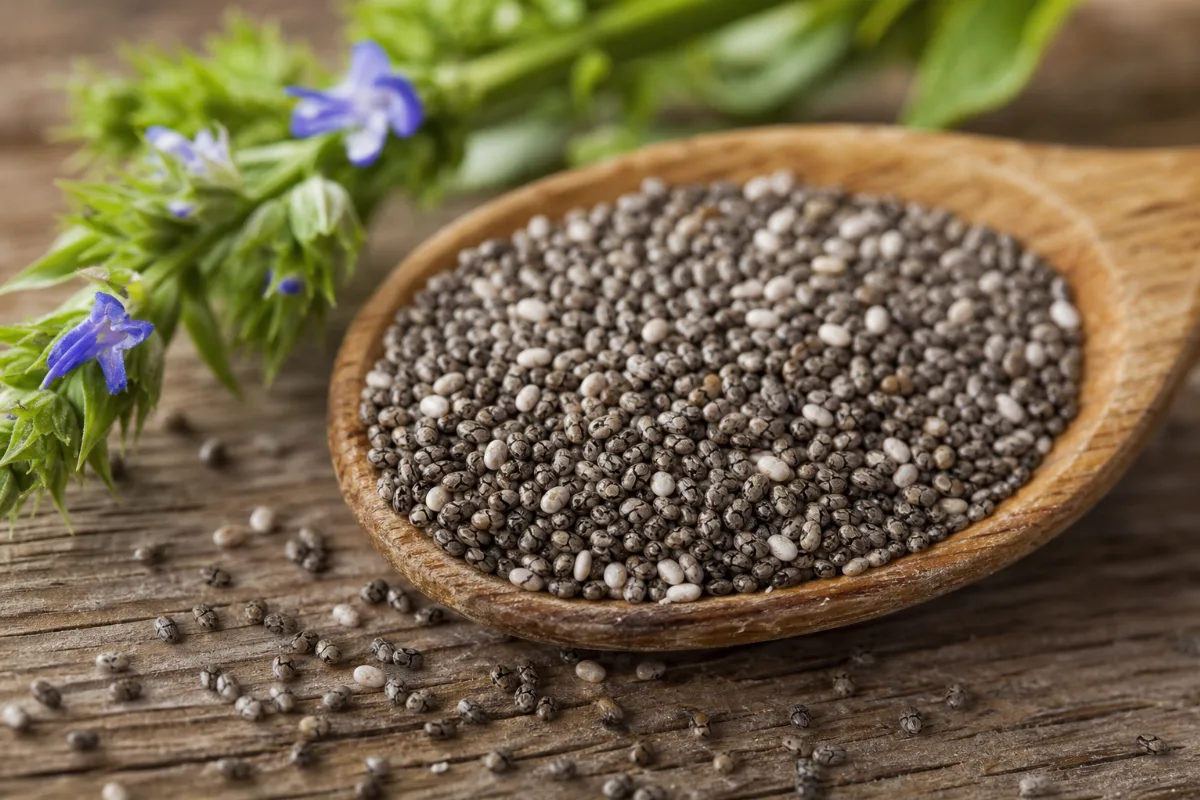
Herbs & Botanicals · Herbs · A food seed that is also sold as a supplement, with modest, low-certainty evidence
Chia
Salvia hispanica L. · also called Chia, chia seed, Salba (a white-seed brand), chía (Spanish)
Chia is the small seed of Salvia hispanica, a plant in the mint family from Mexico and Central America. It is high in fibre and in ALA, a plant omega-3 fat. The seeds soak up water and turn into a gel. Whole or ground seed, chia oil and chia gel are different products, and most studies used the seed or flour.
General information, not medical advice. Last substantive update · Not medically reviewed. A named clinician has not signed off on this page. How this page is made
About Chia
Chia is a seed from Mexico and Central America that has become a popular food. Reviews of small trials suggest it may lower blood pressure a little and raise blood ALA, but it did not help weight, fasting blood sugar or exercise. Seed, ground seed, oil and gel are different products. The key safety point is that dry seed swells and can block the throat or food pipe.
What it is
Chia is the seed of Salvia hispanica, an annual plant of the mint family (Lamiaceae). GBIF accepts the name Salvia hispanica L. The seed is the part used.
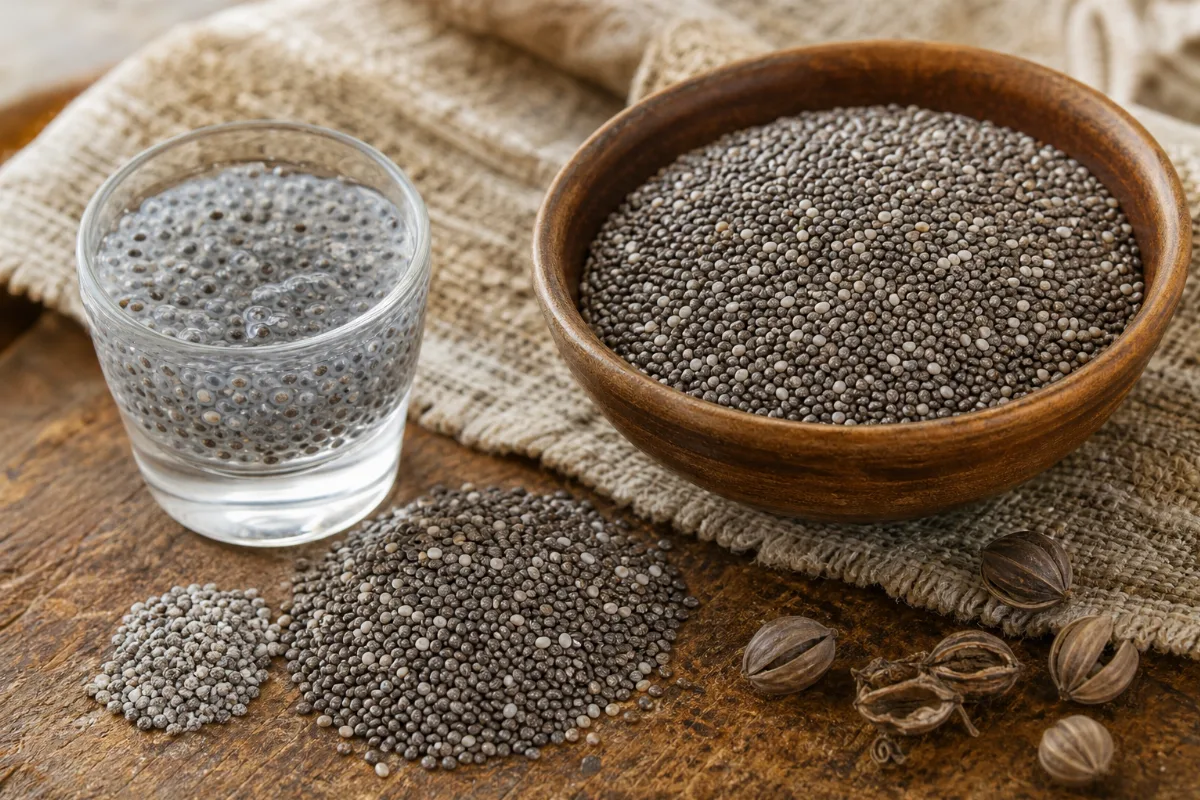
The seed swells and forms a gel when wet. It is rich in fibre and in alpha-linolenic acid (ALA), a plant omega-3 fat. MSK describes it as marketed for heart health and weight loss.
Whole seed, ground seed or flour, chia oil and soaked gel are different forms. They are kept separate on this page where the research allows it.
Traditional and current uses
MSK says chia seeds have been eaten as food since ancient times. Today they are added to drinks, puddings, cereals and baking, and sold as seed, flour, oil and powders.
In the European Union, chia seed was first approved as a novel food in 2009 and its allowed uses have grown since. EFSA found no safety concern for the assessed food uses apart from allergenicity.
What is in it and how it works
The main interest is ALA, fibre and plant phenolic compounds. In people, eating chia raises blood ALA; a little is converted to EPA in some studies, but not to DHA.
The fibre forms a gel that slows digestion. This is the proposed reason for the after-meal blood sugar effect, though it did not translate into lower HbA1c in pooled data.
The same swelling is why dry seed is dangerous: it can expand in the throat or food pipe.
What the research shows
The strongest evidence is for blood pressure: five pooled analyses (2018 to 2025) of small trials found drops, though the size varies and the trials share many of the same studies. Cholesterol results are mixed. Fasting blood sugar and HbA1c did not change. Weight did not change; waist size fell slightly.
Several positive trials came from one Toronto group using Salba, a white-seed chia brand. Funding was not stated in the abstracts, so a possible industry link is flagged, not confirmed.
No trial measured heart attacks, strokes or death. Teoh 2018 rated its overall evidence low or very low.
At a glance
Traditional uses history, not proof
- Eaten as food since ancient times in Central America, according to Memorial Sloan Kettering Cancer Center (MSK). We did not verify specific traditional medical uses.
Studied for research
- Blood pressure, low
- Cholesterol and blood fats, mixed
- Long-term blood sugar (no clear effect), low
- Blood sugar after a meal, low
- Inflammation marker CRP, low
- Weight and waist size, low
- Feeling full after eating, very low
- Plant omega-3 (ALA) in the blood, moderate for the blood level only
- Running and exercise, against
- Fatty liver, very low
Main compounds
- ALA (alpha-linolenic acid), a plant omega-3 fat
- Mucilage, a soluble fibre that forms a gel in water
- Flavonols and other plant phenolic compounds (named by MSK; individual compounds not checked)
- Seed proteins that can cause allergy
Common forms
- Whole dry seed (must be soaked or mixed with plenty of liquid)
- Soaked seed or gel
- Ground seed or chia flour
- Chia oil (a separate product, studied far less)
- Sprouted chia powder (a separate product, linked to a Salmonella outbreak)
Research links: Chia (Memorial Sloan Kettering Cancer Center) · EFSA opinion on chia seeds as a novel food (2019) · Research Library · Genes & Biomarkers Library
The plant and its history
- Accepted scientific name
- Salvia hispanica L.
- Naming authority
- L.; published in Species Plantarum p. 25 (1753) per GBIF
- Synonyms
- Kiosmina hispanica (L.) Raf.; Salvia chia Colla; Salvia chia Sessé & Moc.; Salvia hispanica var. chionocalyx Fernald; Salvia hispanica var. intonsa Fernald; Salvia neohispanica Briq.; Salvia prysmatica Cav.; Salvia schiedeana Stapf; Salvia tetragona Moench
- Common names
- Chia (English); Chia seed (English); Salba, Salba-chia (English (trade names for a white-seed chia; MSK lists them as common names)); Chía (Spanish); Sauge d'Espagne, Chia (French); Mexikanische Chia (German)
- Botanical family
- Lamiaceae (the mint family), the same family as sage and rosemary.
- Classification
- Plantae > Tracheophyta > Magnoliopsida > Lamiales > Lamiaceae > Salvia > Salvia hispanica
- Native range
- Originally from southern Mexico and northern Guatemala, now grown widely (Silva 2021 abstract); MSK says native to Central and South America. Not checked in a botanical source.
- Habitat
- Not verified from a primary source.
- What the plant looks like
- Roots: Not verified.; Stems: Annual herbaceous plant (Silva 2021 abstract).; Leaves: Not verified.; Flowers: Not verified.; Fruit: The small seeds are the part used. They swell and form a gel in water (MSK).
- Cultivation
- Not verified.
- Harvest and processing
- Seeds are eaten whole, ground into flour or pressed for oil; partially defatted powder is sold as a separate novel food in the EU. Sprouted chia powder has been linked to a Salmonella outbreak.
- Look-alikes and adulterants
- Name: Garden sage (Salvia officinalis); Note: Same genus, different plant with different uses and a different safety profile (thujone). Do not assume results carry across.; Name: Other Salvia species sold as 'chia' (for example golden or desert chia); Note: Not verified; whether any other species is sold as chia was not checked.; Name: Salba (white-seed chia); Note: A commercial white-seed form of Salvia hispanica used in the Toronto trials; results may not apply to all chia.
- Sustainability and conservation
- Not verified. Chia is a widely cultivated crop.
The plant and the parts used
Traditional use and history history, not clinical proof
| Tradition or era | Documented use | Source |
|---|---|---|
| Central America (ancient times) | MSK says chia seeds have been eaten as food since ancient times. Claims about use by Aztecs or others were not verified and are not repeated here. | s-msk-chia |
| European Union, 2009 onward | Authorised as a novel food in the EU by Commission Decision 2009/827/EC (first for use in bread), then widened step by step; since 2020 the maximum-level and daily-intake labelling were removed for assessed uses after an EFSA opinion. | s-eu-reg-2020-24 |
| 2000s-2020s (Western market) | Marketed as a functional food or supplement for heart health and weight loss (MSK), driving the trials in this profile. | s-msk-chia |
Traditional use shows how a plant was used. It does not show that a supplement works or is safe today.
What is inside, and how it may work
What the plant contains and how those compounds act in cells and animals. Laboratory and animal mechanisms are not proven effects in people.
Main compounds
| Compound | Family | Where it is concentrated | Activity studied | Level of evidence |
|---|---|---|---|---|
| alpha-Linolenic acid (ALA) PubChem 5280934 | omega-3 polyunsaturated fatty acid | Seed and especially seed oil Chia oil is up to 60% ALA (Valenzuela 2015 abstract); seed content not read | The plant omega-3 fat. Raises ALA in blood in people; small conversion to EPA and DHA. 15 21 33 20 | Human data |
| Linoleic acid PubChem 5280450 | omega-6 polyunsaturated fatty acid | Seed oil not read | Blood linoleic acid rose in pooled trials (Silva 2021); in the pregnancy oil trial dietary linoleic acid fell. 27 33 20 | Human data |
| Eicosapentaenoic acid (EPA) PubChem 5282847 | omega-3 (made in the body from ALA) | Not in the seed; made from ALA not applicable | Rose 30% in postmenopausal women taking milled chia but not in another trial. 15 21 20 | Human data |
| Docosahexaenoic acid (DHA) PubChem 445580 | omega-3 (made in the body from ALA) | Not in the seed; made from ALA not applicable | Did not rise with chia seed; milk DHA rose briefly with chia oil in pregnancy. 15 21 33 20 | Human data |
| Mucilage (soluble fibre gel) | polysaccharide fibre | Seed coat not read | Makes the seed swell and form a gel in water (MSK). The same swelling is what can block the food pipe if the seed is eaten dry. 19 28 | Human data |
| Flavonols and other phenolic compounds | plant polyphenols | Seed not read | MSK names flavonols and phenolic compounds as active, with antioxidant, anti-inflammatory and antithrombotic activity in lab tests. Individual compounds (and their CIDs) were not verified from a source read. 19 | Laboratory research |
| Seed storage proteins (2S albumin, 7S, 11S globulins, oleosins; a lectin; elongation factor) | proteins / allergens | Seed not read | Candidate allergens in case reports and lab work; homology with sesame proteins (MSK; Porr 2026). 19 25 | Laboratory research |
Mechanisms, receptors and pathways
| Target or pathway | Gene or receptor | What was found | Level |
|---|---|---|---|
| Conversion of ALA to EPA and DHA | fatty-acid desaturase and elongase enzymes (not named in the sources read) | In people, blood ALA rises with chia; EPA rises in some trials; DHA does not. Conversion is limited. 15 21 27 | Human data |
| Gel-forming fibre and after-meal glucose | none (physical effect) | More chia in bread lowered after-meal glucose in a dose-related way, whether whole or ground. The gel slowing digestion is the proposed explanation (MSK). 13 19 | Human data |
| Swelling in liquid | none (physical effect) | Seeds absorb up to 27 times their weight in water; dry seed can swell in the throat or esophagus. 19 28 | Human data |
| Allergen recognition by IgE | IgE | Chia proteins from several families are recognised by IgE from allergic people; cross-recognition with sesame is seen in lab tests, but is not proof of clinical cross-allergy. 25 19 | Laboratory research |
| Effects in animals (lipid and insulin handling) | not specified | MSK reports that in animal studies chia prevented dyslipidemia and reversed insulin resistance, and did not reduce weight gain or abdominal fat. Original animal papers were not read. 19 | Animal research |
Absorption, metabolism and elimination
- Absorption
- After chia seed in people, blood ALA rises within days to weeks; after chia oil the rise is quick (plasma ALA up 337% in runners). Not studied in detail.
- Distribution
- Not studied in the sources read.
- Metabolism
- Some ALA is converted to EPA and DHA; EPA rose in some trials, DHA did not.
- Elimination
- Not studied.
- Bioavailability
- Not studied directly. Whole and ground seed lowered after-meal glucose equally (Ho 2013); whether ALA absorption differs between whole and ground seed was not shown in the abstracts read.
Isolated compounds versus whole extracts
Seed, flour, oil and gel are different products. Seed and flour supply fibre, protein and ALA; oil supplies ALA without the fibre. Chia oil raised blood ALA strongly but did not improve running (Nieman 2015). Whole and ground seed lowered after-meal glucose equally (Ho 2013). Most blood-pressure and blood-sugar trials used seed or flour, so findings should not be assumed to apply to oil.
Nutritional composition
Chia seed is a food rich in fibre, protein and ALA; MSK calls it high in dietary fibre, polyunsaturated fats and ALA. Exact nutrient amounts per spoonful were not taken from a source in this profile, so none are given.
1 moderate certainty1 mixed findings5 low certainty3 very low certainty1 evidence against
What is Chia good for?
The main proposed uses and how strong the human evidence is for each. Blood markers are not the same as health outcomes, and none of these studies measured heart attacks or strokes.
Benefits, one by one
Each card is a research question, not a promise. Tap a goal to filter. Open a card to see the studies, doses and limits.
Blood pressure
Low certaintySeveral pooled analyses of small trials found that eating chia seed or flour for about 12 weeks lowered blood pressure by a few points. The trials are small and differ a lot, so this is a hint, not proof.
12 studiesSeed or flour, about 25-50 g per day in the trials, for 8-12 weeks. E…
Studies, doses and limits
What the trials found
Five pooled analyses (2018-2025) of randomized trials mostly found lower blood pressure, though sizes differ. Individual trials: 20 adults with type 2 diabetes (Salba chia, 12 weeks, crossover vs wheat bran); 42 adults with type 2 diabetes (40 g/day vs no supplement, 12 weeks); 26 adults with high blood pressure (35 g/day chia flour vs placebo, 12 weeks). One 90-person trial in overweight adults (50 g/day, 12 weeks) found no change in blood pressure.
Results
Mostly lower systolic pressure with chia seed or flour. Diastolic results were less consistent across reviews.
Effect sizes as reported
Systolic: -7.19 mmHg (95% CI -10.63 to -3.73, 8 trials, Taghipour 2025); -7.87 mmHg (-12.92 to -2.82, 10 trials, Kiani 2024); -5.61 mmHg (-8.77 to -2.44, 8 trials, Saadh 2025); -3.27 mmHg (p=0.03, Karimi 2024, overweight adults only); -2.78 mmHg at higher doses only (Fateh 2024). Diastolic: -6.04, -6.33 and -7.49 mmHg in three reviews, but -2.69 mmHg (p=0.09, not significant) in overweight adults. Teoh 2018 found a diastolic fall of 7.14 mmHg in higher-dose subgroups only. Single trials: Vuksan 2007 systolic -6.3 mmHg; Alwosais 2021 systolic reduced (p=0.007); Toscano 2014 untreated group 146.8 to 137.3 mmHg.
Why this rating
Every review rates its trials as small, varied or mostly low quality (Teoh 2018 GRADE low or very low; Kiani 2024 'mostly low'; Al-Younis 2025 umbrella review GRADE moderate to low). The reviews share many of the same trials. One large well-run trial (Nieman 2009, 90 people) found nothing.
Form and dose studied
Seed or flour, about 25-50 g per day in the trials, for 8-12 weeks. Exact amounts are in the individual studies; ask a doctor or pharmacist before using chia as a treatment.
Who was studied
Adults with type 2 diabetes, high blood pressure, or overweight. Not tested in children.
Limits
Small trials, short follow-up, no studies of heart attacks or strokes. Several trials were in people already on medicines. Two trials used one brand of white chia (Salba) from the same research group.
Why researchers looked
Chia is rich in fibre and in the plant omega-3 fat ALA, and blood pressure is a common reason people try it.
Traditional use
Chia seed has been eaten as a food since ancient times in Central America (MSK). Traditional medicinal claims were not checked in a primary source.
Proposed mechanism Pharmacological theory
Theory only: omega-3 fats, fibre and plant compounds may relax blood vessels or improve nitric oxide signals. Toscano 2014 measured nitric oxide markers in people with high blood pressure, but this does not show how chia lowers pressure.
A proposed mechanism does not show that the effect happens in people.
Possible extra effect with blood pressure medicines (MSK). Do not stop prescribed treatment.
Cholesterol and blood fats
Mixed findingsPooled results disagree. Some reviews found slightly lower triglycerides and LDL; others found no change. Two found a small fall in 'good' HDL cholesterol.
7 studiesAbout 25-50 g of seed or flour daily in the trials; amounts differ.
Studies, doses and limits
What the trials found
Eight pooled analyses cover lipids. Fateh 2024 (14 trials, 835 people) found lower triglycerides and, at higher doses, lower LDL. Karimi 2024 (10 trials, overweight adults) found no significant change in any lipid. Silva 2021 (10 trials) found changes with confidence intervals that included no effect. Kiani 2024 and Teoh 2018 found slightly lower HDL.
Results
Mixed. Triglyceride and LDL falls are small (a few mg/dL) in one review and absent in others. HDL fell slightly in two reviews.
Effect sizes as reported
Fateh 2024: triglycerides -8.69 mg/dL (higher dose) and -13.11 mg/dL (lower dose); LDL -4.77 mg/dL (higher dose only). Karimi 2024: TG -5.80 mg/dL (p=0.47), total cholesterol -0.29 (p=0.95), HDL +1.53 (p=0.33), LDL +0.63 (p=0.88). Silva 2021: TG -14.09 mg/dL (95% CI -33.46 to 5.28). Kiani 2024: HDL -4.09 mg/dL (-6.76 to -1.43); Teoh 2018: HDL -0.10 mmol/L (-0.20 to -0.01). Umbrella review: TC g -0.300, LDL g -0.300, TG g -0.200, HDL g -0.093.
Why this rating
Reviews with similar trials reach different answers, effects are tiny, and the 'good' HDL cholesterol moved the wrong way in two reviews.
Form and dose studied
About 25-50 g of seed or flour daily in the trials; amounts differ.
Who was studied
Adults, mostly overweight or with type 2 diabetes.
Limits
Surrogate markers only; no heart-event outcomes. The Silva 2021 abstract calls the effect 'protective' although its confidence intervals include zero.
Why researchers looked
Chia fibre and ALA were expected to improve cholesterol and triglycerides.
Traditional use
Chia seed has been eaten as a food since ancient times in Central America (MSK). Traditional medicinal claims were not checked in a primary source.
Proposed mechanism Pharmacological theory
Theory: the gel-forming fibre can bind bile acids and slow fat absorption; ALA may affect liver fat handling. Not shown in the trials reviewed here.
A proposed mechanism does not show that the effect happens in people.
Chia seed must be soaked or mixed with plenty of liquid; eating it dry has caused a food-pipe blockage in case reports. See the safety section.
Long-term blood sugar (fasting glucose, HbA1c)
Low certaintyOver weeks to months, chia did not change fasting blood sugar or HbA1c in pooled analyses.
6 studiesSeed 25-40 g/day in the trials.
Studies, doses and limits
What the trials found
Pam 2024 (8 trials, 362 people), Taghipour 2025 and Karimi 2024 all found no significant change in fasting glucose or HbA1c. In the 2007 Salba trial HbA1c fell relative to the person's own baseline but not versus the control. The 42-person trial by Alwosais found no difference in glucose measures.
Results
No significant effect on fasting glucose, HbA1c or insulin.
Effect sizes as reported
Pam 2024: FBG 0.79% (95% CI -0.97 to 2.55), HbA1c -0.12% (-0.27 to 0.02, p=0.09), insulin 1.23% (-1.77 to 4.22). Karimi 2024: HbA1c -0.13% (p=0.13), FBG -0.03 mg/dL (p=0.98).
Why this rating
Several reviews agree on no effect, but they contain few and small trials with real differences between them.
Form and dose studied
Seed 25-40 g/day in the trials.
Who was studied
Adults with and without type 2 diabetes.
Limits
Small studies; some on people whose diabetes was already well controlled, leaving little room to improve.
Why researchers looked
Chia fibre may slow how fast carbohydrates enter the blood, so people with type 2 diabetes try it.
Traditional use
Chia seed has been eaten as a food since ancient times in Central America (MSK). Traditional medicinal claims were not checked in a primary source.
Proposed mechanism Pharmacological theory
Theory: the gel from the seed slows stomach emptying and sugar absorption (see the after-meal entry). This did not translate into lower fasting glucose or HbA1c in pooled data.
A proposed mechanism does not show that the effect happens in people.
MSK says chia may lower blood sugar and could interact with diabetes medicines. Watch for low blood sugar if you take them.
Blood sugar after a meal
Low certaintyIn small single-meal tests, adding more chia seed to bread lowered the blood-sugar rise afterwards. Whole and ground seed worked about the same.
3 studiesSeed baked into bread, 7-24 g per meal in Ho 2013. Whole and ground s…
Studies, doses and limits
What the trials found
Ho 2013 gave 13 healthy adults bread with 7, 15 or 24 g of whole or ground Salba chia: more chia lowered the after-meal glucose response (dose effect p=0.04), and whole and ground were equal (form effect p=0.74). Teoh 2018 pooled this kind of data: lower after-meal glucose at medium and high doses.
Results
Lower after-meal glucose at higher amounts in pooled data.
Effect sizes as reported
Ho 2013: dose effect P=0.04, form effect P=0.74. Teoh 2018: incremental area under the curve -33.95 (medium dose; 95% CI -61.85 to -6.05) and -51.60 (high dose; -79.64 to -23.56), units mmol/L x 2 h.
Why this rating
Based on a few small acute (single meal) tests, mostly healthy people, and mostly from the same Toronto group using one brand. Teoh 2018 rated its evidence low or very low.
Form and dose studied
Seed baked into bread, 7-24 g per meal in Ho 2013. Whole and ground seed are separate forms; this trial found them equal.
Who was studied
13 healthy adults (Ho 2013).
Limits
A lower after-meal rise does not prove better long-term control, and the long-term trials above show no change in HbA1c.
Why researchers looked
The seed forms a gel in liquid, so it might slow the rise in sugar after eating.
Traditional use
Chia seed has been eaten as a food since ancient times in Central America (MSK). Traditional medicinal claims were not checked in a primary source.
Proposed mechanism Pharmacological theory
Theory: gel-forming (viscous) fibre slows digestion and sugar absorption. MSK suggests the after-meal effect may also explain some blood pressure and inflammation findings, but this is not tested.
A proposed mechanism does not show that the effect happens in people.
See the long-term blood sugar entry and the safety section on diabetes medicines.
Inflammation marker (CRP)
Low certaintyCRP, a blood marker of inflammation, fell in pooled analyses. Two other markers (IL-6, TNF-alpha) did not change.
5 studiesSeed 25-50 g/day over 12 weeks to 6 months.
Studies, doses and limits
What the trials found
Pam 2024 (4 trials, 210 people) and Karimi 2024 (10 trials) found lower CRP. The 2007 Salba trial (20 people) found hs-CRP down 40%; the 2017 6-month trial (77 people) found CRP down 39% vs 7% on oat bran. The 90-person Nieman 2009 trial found no change in CRP, IL-6 or TNF-alpha.
Results
Lower CRP in pooled analyses; no change in IL-6 or TNF-alpha.
Effect sizes as reported
Pam 2024: CRP -0.64 mg/dL (95% CI -1.24 to -0.04; p=0.03); IL-6 and TNF-alpha not significant. Karimi 2024: CRP -1.18 mg/L (p<0.0001). Vuksan 2017: CRP -1.1 mg/L (39%) vs -0.2 mg/L (7%) (P=0.045).
Why this rating
Few trials; both Salba trials came from one research group; the largest single trial was null. A fall in CRP is a lab number, not a health outcome.
Form and dose studied
Seed 25-50 g/day over 12 weeks to 6 months.
Who was studied
Overweight adults and adults with type 2 diabetes.
Limits
Surrogate marker; small trials; two of the positive trials used one commercial brand.
Why researchers looked
ALA and fibre are linked to lower inflammation in other research.
Traditional use
Chia seed has been eaten as a food since ancient times in Central America (MSK). Traditional medicinal claims were not checked in a primary source.
Proposed mechanism Pharmacological theory
Theory: omega-3 fats and fibre may calm inflammatory signals. Mechanisms in people not shown.
A proposed mechanism does not show that the effect happens in people.
None specific.
Body weight and waist size
Low certaintyChia did not change body weight in pooled data. Waist size fell by a small amount (about 1-3 cm) in three reviews.
6 studiesSeed 25-50 g/day, within a diet plan in the positive trial.
Studies, doses and limits
What the trials found
Taghipour 2025 and Saadh 2025 found no change in weight or BMI. Waist fell in Karimi 2024, Saadh 2025 and (in the umbrella review) overall. Nieman 2009 (90 overweight adults, 50 g/day, 12 weeks) found no effect on weight or body fat. Vuksan 2017 (77 adults with type 2 diabetes on a calorie-restricted diet, 6 months) found 1.9 kg lost with chia vs 0.3 kg with oat bran.
Results
No effect on weight overall; small waist reduction; one 6-month diet trial showed 1.6 kg more loss than the control.
Effect sizes as reported
Waist: -2.82 cm (Karimi 2024, p<0.001); -1.46 cm (95% CI -2.68 to -0.25, Saadh 2025). Weight +0.09 kg (-0.76 to 0.93, Saadh 2025). Vuksan 2017: weight -1.9 +/- 0.5 vs -0.3 +/- 0.4 kg (P=0.020); waist -3.5 vs -1.1 cm (P=0.027).
Why this rating
Pooled data say no weight effect; the positive diet trial was from one research group with one brand and a difference of under 2 kg. MSK concludes chia did not affect weight loss.
Form and dose studied
Seed 25-50 g/day, within a diet plan in the positive trial.
Who was studied
Overweight adults and adults with type 2 diabetes.
Limits
Short trials; waist is a small measured change.
Why researchers looked
Chia absorbs water and is high in fibre, so it is marketed for weight loss.
Traditional use
Chia seed has been eaten as a food since ancient times in Central America (MSK). Traditional medicinal claims were not checked in a primary source.
Proposed mechanism Pharmacological theory
Theory: fibre and gel increase fullness. See the fullness entry.
A proposed mechanism does not show that the effect happens in people.
Chia seed must be soaked or mixed with plenty of liquid; eating it dry has caused a food-pipe blockage in case reports. See the safety section.
Fullness and appetite
Very low certaintyIn one small test, adding chia to a yogurt snack made people feel fuller and eat less at the next meal. It has not been shown to cause weight loss.
2 studiesWhole seed stirred into yogurt, 7 g or 14 g.
Studies, doses and limits
What the trials found
Ayaz 2017 tested 24 healthy adults: yogurt with 7 g or 14 g chia versus plain yogurt as a mid-morning snack. Hunger scores were lower and fullness higher; calories eaten at lunch were lower. MSK mentions other small studies of short-term fullness that were not read here.
Results
Lower hunger and less food at the next meal after a single snack.
Effect sizes as reported
Hunger P=0.033; fullness P=0.031; lunch intake P=0.037 (Ayaz 2017); the abstract gives no calorie numbers.
Why this rating
One small crossover test of a single snack in 24 healthy adults; no long-term follow-up.
Form and dose studied
Whole seed stirred into yogurt, 7 g or 14 g.
Who was studied
24 healthy adults.
Limits
Self-reported hunger scores; a single meal; no data on later weight.
Why researchers looked
Chia swells in liquid and might make you feel full.
Traditional use
Chia seed has been eaten as a food since ancient times in Central America (MSK). Traditional medicinal claims were not checked in a primary source.
Proposed mechanism Pharmacological theory
Theory: the gel slows stomach emptying and adds bulk.
A proposed mechanism does not show that the effect happens in people.
Chia seed must be soaked or mixed with plenty of liquid; eating it dry has caused a food-pipe blockage in case reports. See the safety section.
Plant omega-3 (ALA) in the blood and conversion to EPA and DHA
Moderate certaintyEating chia reliably raises ALA, the plant omega-3 fat, in the blood. Some EPA rises too, but DHA does not, so chia is not a substitute for fish oil.
7 studiesSeed (whole, milled or ground), 25-50 g/day in trials; chia oil is a …
Studies, doses and limits
What the trials found
Jin 2012 (10 postmenopausal women, 25 g/day milled seed, 7 weeks): ALA up 138%, EPA up 30%, DHA slightly down. Nieman 2009 (76 overweight adults, 50 g/day, 12 weeks): ALA up 24.4%, EPA and DHA unchanged. Vuksan 2007: plasma ALA and EPA up twofold. Medina-Urrutia 2020: ALA up 75%. Silva 2021 pooled: ALA, EPA and linoleic acid rose, DHA fell. Nieman 2015: chia oil raised plasma ALA 337% around the run.
Results
ALA rises in every trial; EPA rises in some trials; DHA is unchanged or slightly lower.
Effect sizes as reported
ALA +138% (Jin 2012); +24.4% vs -2.8% (P=0.012, Nieman 2009); +75% (Medina-Urrutia 2020); EPA +30% (P=0.019, Jin 2012); DHA decreased (P=0.030, Jin 2012).
Why this rating
Several independent trials agree that blood ALA rises. The EPA result is inconsistent, and a higher blood ALA level is a marker, not a health benefit.
Form and dose studied
Seed (whole, milled or ground), 25-50 g/day in trials; chia oil is a separate product with much more ALA per spoon.
Who was studied
Healthy adults, postmenopausal women, overweight adults, people with fatty liver.
Limits
Blood levels are not clinical outcomes; DHA, the form the brain uses, did not rise. Two trials had no control group.
Why researchers looked
Chia seed and chia oil are among the richest plant sources of ALA (the oil up to 60% ALA, Valenzuela 2015), and the body can convert a little ALA to EPA and DHA.
Traditional use
Chia seed has been eaten as a food since ancient times in Central America (MSK). Traditional medicinal claims were not checked in a primary source.
Proposed mechanism Pharmacological theory
Human data: the body converts a small amount of ALA to EPA and DHA. In people given chia, blood ALA rose and EPA rose in some trials, but DHA did not rise.
A proposed mechanism does not show that the effect happens in people.
High omega-3 intake could affect bleeding and clotting times (MSK, theory). See the safety section.
Exercise and endurance
Evidence againstTwo small trials found chia gave no running or endurance benefit.
3 studiesA chia product blend (Illian) and chia seed oil (Nieman); not whole s…
Studies, doses and limits
What the trials found
Illian 2011: six highly trained men ran a 10 km time trial after a loading drink made half from a chia product versus sports drink alone: same times (37:49 vs 37:43, p=0.83). Nieman 2015: 24 runners drank chia seed oil (7 kcal/kg) or water before running to exhaustion: same run time (1.86 vs 1.91 h) although plasma ALA rose 337%.
Results
No improvement in running performance.
Effect sizes as reported
Illian 2011 p=0.83; Nieman 2015 p=0.577.
Why this rating
Two small null trials; no study of other sports or of seed taken over weeks.
Form and dose studied
A chia product blend (Illian) and chia seed oil (Nieman); not whole seed alone.
Who was studied
Trained male runners (6); runners (24).
Limits
Very small; single sessions; Illian's product contained other ingredients.
Why researchers looked
Chia has been promoted as an energy food for runners.
Traditional use
Chia seed has been eaten as a food since ancient times in Central America (MSK). Traditional medicinal claims were not checked in a primary source.
Proposed mechanism Pharmacological theory
Theory: ALA, fibre and slow-release carbohydrate might support endurance. The trials did not bear this out.
A proposed mechanism does not show that the effect happens in people.
None noted in the abstracts.
Fatty liver (NAFLD) and insulin sensitivity
Very low certaintyTwo small trials in people with fatty liver found some improvements, but one had no control group and in the other the chia group also ate less.
2 studiesMilled seed 25 g/day; seed 40 g/day with a calorie-restricted diet.
Studies, doses and limits
What the trials found
Medina-Urrutia 2020 (25 adults with fatty liver, no control group, 25 g/day milled chia for 8 weeks): fatty liver regressed in 52%, with falls in visceral fat, weight and cholesterol. Arefhosseini 2025 (44 obese adults with fatty liver, 40 g/day plus a calorie-restricted diet vs the diet alone, 8 weeks, single-blind): lower insulin, better HOMA insulin sensitivity and a better NAFLD fibrosis score; liver enzymes improved only marginally; the chia group also ate fewer calories.
Results
Improved scans (52% regressed) in an uncontrolled trial; better insulin sensitivity and fibrosis score in a small controlled trial.
Effect sizes as reported
Medina-Urrutia 2020: 52% regression; visceral fat -9%; weight -1.4%. Arefhosseini 2025: insulin p=0.016; HOMA p<0.001; fibrosis score p=0.020.
Why this rating
One trial without a control group and one small 44-person trial; neither shows lasting benefit.
Form and dose studied
Milled seed 25 g/day; seed 40 g/day with a calorie-restricted diet.
Who was studied
Adults with fatty liver disease.
Limits
Tiny and short (8 weeks); the second trial's result may partly reflect eating less.
Why researchers looked
Omega-3 fats are studied in fatty liver, and chia adds ALA and fibre.
Traditional use
Chia seed has been eaten as a food since ancient times in Central America (MSK). Traditional medicinal claims were not checked in a primary source.
Proposed mechanism Pharmacological theory
Theory: ALA may reduce liver fat and fibre may improve the body's response to insulin.
A proposed mechanism does not show that the effect happens in people.
No liver harm was reported in these abstracts. See the liver note in the safety section.
Chia oil in pregnancy and breast-milk DHA
Very low certaintyChia oil taken by mothers briefly raised the DHA in breast milk, but this is only a fatty-acid result. No effect on babies was reported.
1 studiesChia oil, 16 mL/day, in the trial; separate from seed.
Studies, doses and limits
What the trials found
Valenzuela 2015: 40 healthy pregnant Chilean women; 19 took 16 mL chia oil a day from the third trimester through six months of nursing; 21 had a normal diet. Milk ALA rose; milk DHA rose only in the first three months of nursing; red-cell DHA did not change.
Results
Brief rise in milk DHA; no baby or mother health outcomes in the abstract.
Effect sizes as reported
Milk DHA higher only in months 1-3 (Valenzuela 2015).
Why this rating
One small trial of chia OIL (not seed); the abstract reports no safety or infant outcomes.
Form and dose studied
Chia oil, 16 mL/day, in the trial; separate from seed.
Who was studied
Healthy pregnant and nursing women in Chile.
Limits
Fatty-acid levels only; no infant outcomes; does not show that chia is safe in pregnancy or better than usual advice.
Why researchers looked
ALA from chia oil was tested as a way to improve mothers' and babies' omega-3 supply.
Traditional use
Chia seed has been eaten as a food since ancient times in Central America (MSK). Traditional medicinal claims were not checked in a primary source.
Proposed mechanism Pharmacological theory
Human data: the mother's body converts some ALA from the oil to DHA that enters milk.
A proposed mechanism does not show that the effect happens in people.
The abstract does not report adverse effects. Pregnancy safety is covered in the safety section.
Connections to the rest of health
How Chia connects to the rest of our health knowledge graph. Every link says what kind of connection it is. A safety link (for example to the liver) is a warning, not a benefit. A study that merely mentions a topic never creates a benefit link.
Explore every connection: goals, body systems, organs, symptoms, genes
A. Wellness goals
| Connected to | Kind of connection | Evidence status | Context | Studies |
|---|---|---|---|---|
| Blood sugar (medicine interaction) | Drug or supplement interaction | Very low certainty | May lower blood sugar; could interact with diabetes drugs (MSK). Preparation or compound: Chia seed |
19 |
| Blood Pressure Support | Potential benefit | Low certainty | Blood pressure: Several pooled analyses of small trials found that eating chia seed or flour for about 12 weeks lowered blood pressure by a few points. The trials are small and differ a lot, so this is a hint, not proof. | 29 17 26 16 10 30 1 34 2 31 21 19 |
| Heart Health | Potential benefit | Low certainty | Blood pressure: Several pooled analyses of small trials found that eating chia seed or flour for about 12 weeks lowered blood pressure by a few points. The trials are small and differ a lot, so this is a hint, not proof. Cholesterol and blood fats: Pooled results disagree. Some reviews found slightly lower triglycerides and LDL; others found no change. Two found a small fall in 'good' HDL cholesterol. | 29 17 26 16 10 30 1 34 2 31 21 19 27 15 18 22 33 |
| Cholesterol Balance | Potential benefit | Mixed findings | Cholesterol and blood fats: Pooled results disagree. Some reviews found slightly lower triglycerides and LDL; others found no change. Two found a small fall in 'good' HDL cholesterol. | 10 16 27 17 30 1 21 |
| Blood Sugar Balance | Potential benefit | Low certainty | Long-term blood sugar (fasting glucose, HbA1c): Over weeks to months, chia did not change fasting blood sugar or HbA1c in pooled analyses. Blood sugar after a meal: In small single-meal tests, adding more chia seed to bread lowered the blood-sugar rise afterwards. Whole and ground seed worked about the same. | 23 29 16 34 2 19 13 30 |
| Metabolic Health | Potential benefit | Low certainty | Long-term blood sugar (fasting glucose, HbA1c): Over weeks to months, chia did not change fasting blood sugar or HbA1c in pooled analyses. Body weight and waist size: Chia did not change body weight in pooled data. Waist size fell by a small amount (about 1-3 cm) in three reviews. | 23 29 16 34 2 19 26 21 35 18 3 |
| Inflammation Balance | Potential benefit | Low certainty | Inflammation marker (CRP): CRP, a blood marker of inflammation, fell in pooled analyses. Two other markers (IL-6, TNF-alpha) did not change. | 24 16 34 35 21 |
| Weight Management | Potential benefit | Low certainty | Body weight and waist size: Chia did not change body weight in pooled data. Waist size fell by a small amount (about 1-3 cm) in three reviews. Fullness and appetite: In one small test, adding chia to a yogurt snack made people feel fuller and eat less at the next meal. It has not been shown to cause weight loss. | 29 26 16 21 35 19 4 |
| Brain Health | Potential benefit | Moderate certainty | Plant omega-3 (ALA) in the blood and conversion to EPA and DHA: Eating chia reliably raises ALA, the plant omega-3 fat, in the blood. Some EPA rises too, but DHA does not, so chia is not a substitute for fish oil. | 15 21 34 18 27 22 33 |
| Endurance Support | Potential benefit | Evidence against | Exercise and endurance: Two small trials found chia gave no running or endurance benefit. | 14 22 32 |
| Physical Stamina | Potential benefit | Evidence against | Exercise and endurance: Two small trials found chia gave no running or endurance benefit. | 14 22 32 |
| Peak Performance | Potential benefit | Evidence against | Exercise and endurance: Two small trials found chia gave no running or endurance benefit. | 14 22 32 |
| Liver Support | Potential benefit | Very low certainty | Fatty liver (NAFLD) and insulin sensitivity: Two small trials in people with fatty liver found some improvements, but one had no control group and in the other the chia group also ate less. | 18 3 |
| Womens Wellness | Potential benefit | Very low certainty | Chia oil in pregnancy and breast-milk DHA: Chia oil taken by mothers briefly raised the DHA in breast milk, but this is only a fatty-acid result. No effect on babies was reported. | 33 |
B. Body systems
| Connected to | Kind of connection | Evidence status | Context | Studies |
|---|---|---|---|---|
| Immune system (allergy) | Adverse effect or risk | Very low certainty | Case reports of anaphylaxis and eczema; emerging allergen. Preparation or compound: Chia seed |
19 25 |
| Cardiovascular system (medicine interaction) | Drug or supplement interaction | Very low certainty | May add to blood pressure medicines (MSK). Preparation or compound: Chia seed or flour |
19 31 |
| Cardiovascular system | Potential benefit | Low certainty | Small drops in blood pressure in pooled analyses of small trials. Preparation or compound: Chia seed or flour |
29 17 26 |
| Cardiovascular System | Biological association | Low certainty | Studied for: Blood pressure Studied for: Cholesterol and blood fats | 29 17 26 16 10 30 1 34 2 31 21 19 27 24 35 15 18 22 33 |
| Metabolism Weight | Biological association | Low certainty | Studied for: Long-term blood sugar (fasting glucose, HbA1c) Studied for: Blood sugar after a meal | 23 29 16 34 2 19 13 30 26 21 35 4 18 3 |
| Endocrine System | Biological association | Low certainty | Studied for: Long-term blood sugar (fasting glucose, HbA1c) | 23 29 16 34 2 19 |
| Immune System | Biological association | Low certainty | Studied for: Inflammation marker (CRP) | 24 16 34 35 21 |
| Digestive System | Biological association | Very low certainty | Studied for: Fullness and appetite | 4 19 |
| Musculoskeletal System | Biological association | Evidence against | Studied for: Exercise and endurance | 14 22 32 |
| Hepatic System | Biological association | Very low certainty | Studied for: Fatty liver (NAFLD) and insulin sensitivity | 18 3 |
| Reproductive System | Biological association | Very low certainty | Studied for: Chia oil in pregnancy and breast-milk DHA | 33 |
C. Body parts and organs
| Connected to | Kind of connection | Evidence status | Context | Studies |
|---|---|---|---|---|
| Esophagus (food pipe) | Adverse effect or risk | Very low certainty | Swelling seeds can block the food pipe; reported in case reports. Preparation or compound: Dry chia seed |
19 28 |
| Esophagus | Adverse effect or risk | Very low certainty | Dry seeds swell and have blocked the food pipe in case reports. Preparation or compound: Dry chia seed |
19 28 |
I. Biomarkers
| Connected to | Kind of connection | Evidence status | Context | Studies |
|---|---|---|---|---|
| Systolic blood pressure | Biological association | Low certainty | Measured in trials: lowered. A lab change is not the same as a health benefit. | 29 17 26 16 34 31 21 |
| Diastolic blood pressure | Biological association | Low certainty | Measured in trials: mixed. A lab change is not the same as a health benefit. | 29 26 16 31 |
| LDL cholesterol | Biological association | Mixed findings | Measured in trials: mixed. A lab change is not the same as a health benefit. | 10 16 27 |
| Triglycerides | Biological association | Mixed findings | Measured in trials: mixed. A lab change is not the same as a health benefit. | 10 16 27 |
| HDL cholesterol | Biological association | Low certainty | Measured in trials: lowered. A lab change is not the same as a health benefit. | 17 30 16 |
| Fasting blood glucose | Biological association | Low certainty | Measured in trials: no-change. A lab change is not the same as a health benefit. | 23 16 29 |
| HbA1c | Biological association | Low certainty | Measured in trials: no-change. A lab change is not the same as a health benefit. | 23 16 |
| After-meal blood glucose | Biological association | Low certainty | Measured in trials: lowered. A lab change is not the same as a health benefit. | 13 30 |
| C-reactive protein (CRP) | Biological association | Low certainty | Measured in trials: lowered. A lab change is not the same as a health benefit. | 24 16 21 |
| Waist circumference | Biological association | Low certainty | Measured in trials: lowered. A lab change is not the same as a health benefit. | 16 26 35 |
| Body weight | Biological association | Low certainty | Measured in trials: no-change. A lab change is not the same as a health benefit. | 26 21 35 |
| Plasma alpha-linolenic acid (ALA) | Biological association | Moderate certainty | Measured in trials: raised. A lab change is not the same as a health benefit. | 15 21 18 22 |
| Plasma eicosapentaenoic acid (EPA) | Biological association | Low certainty | Measured in trials: mixed. A lab change is not the same as a health benefit. | 15 21 34 |
| Plasma docosahexaenoic acid (DHA) | Biological association | Low certainty | Measured in trials: no-change. A lab change is not the same as a health benefit. | 15 21 27 |
| Run time to exhaustion / 10 km time | Biological association | Low certainty | Measured in trials: no-change. A lab change is not the same as a health benefit. | 22 14 |
| Fatty liver status (CT liver:spleen index) | Biological association | Very low certainty | Measured in trials: lowered. A lab change is not the same as a health benefit. | 18 |
| Insulin and insulin sensitivity (HOMA) | Biological association | Very low certainty | Measured in trials: mixed. A lab change is not the same as a health benefit. | 3 16 23 |
| Breast-milk DHA | Biological association | Very low certainty | Measured in trials: raised. A lab change is not the same as a health benefit. | 33 |
K. Biological pathways
| Connected to | Kind of connection | Evidence status | Context | Studies |
|---|---|---|---|---|
| Omega-3 fatty acid pathway (ALA to EPA to DHA) | Preliminary mechanism | Human | Human blood levels show partial conversion from chia. | 15 21 |
| Immune allergy (IgE) pathway | Preliminary mechanism | In vitro | Chia proteins can trigger IgE reactions in allergic people. | 25 |
L. Active compounds
| Connected to | Kind of connection | Evidence status | Context | Studies |
|---|---|---|---|---|
| alpha-Linolenic acid (ALA) | Biological association | Human | The plant omega-3 fat. Raises ALA in blood in people; small conversion to EPA and DHA. Preparation or compound: Seed and especially seed oil |
15 21 33 20 |
| Linoleic acid | Biological association | Human | Blood linoleic acid rose in pooled trials (Silva 2021); in the pregnancy oil trial dietary linoleic acid fell. Preparation or compound: Seed oil |
27 33 20 |
| Eicosapentaenoic acid (EPA) | Biological association | Human | Rose 30% in postmenopausal women taking milled chia but not in another trial. Preparation or compound: Not in the seed; made from ALA |
15 21 20 |
| Docosahexaenoic acid (DHA) | Biological association | Human | Did not rise with chia seed; milk DHA rose briefly with chia oil in pregnancy. Preparation or compound: Not in the seed; made from ALA |
15 21 33 20 |
| Mucilage (soluble fibre gel) | Biological association | Human | Makes the seed swell and form a gel in water (MSK). The same swelling is what can block the food pipe if the seed is eaten dry. Preparation or compound: Seed coat |
19 28 |
| Flavonols and other phenolic compounds | Biological association | In vitro | MSK names flavonols and phenolic compounds as active, with antioxidant, anti-inflammatory and antithrombotic activity in lab tests. Individual compounds (and their CIDs) were not verified from a source read. Preparation or compound: Seed |
19 |
| Seed storage proteins (2S albumin, 7S, 11S globulins, oleosins; a lectin; elongation factor) | Biological association | In vitro | Candidate allergens in case reports and lab work; homology with sesame proteins (MSK; Porr 2026). Preparation or compound: Seed |
19 25 |
Each connection is stored with the ingredient, the connected record, the kind of connection, the evidence status, the supporting studies, the preparation or compound involved, and a review date (last reviewed October 25, 2026).
Evidence at a glance: what changed in 18 lab markers
Tap a number to show only those markers. Counts are markers, not people.
The evidence
The research centre for Chia. Every record here was checked against PubMed or the publisher's page; we never list a study we have not verified.
Evidence by outcome
Bars show how many studies we found for each outcome, not how well it works. People are added up across trials only (reviews are not added, to avoid double counting).
How we rate evidence
High certainty
Several well-run trials or reviews agree; further research is unlikely to change the picture much.
Moderate certainty
Good trials point the same way, but some doubt remains.
Low certainty
Small, short or inconsistent trials. The finding could change with better research.
Very low certainty
Very little or very weak human data. Treat as a possibility only.
Mixed findings
Trials or reviews disagree with each other.
Not enough evidence
Not enough human research to say either way.
Evidence against
Good research found no benefit, or found harm.
We take the reviewers' own risk-of-bias and GRADE statements where they exist, and otherwise judge from study size, design, consistency, directness and whether a product matches what is sold. Many publications do not make evidence high. Method note: We searched PubMed, read the abstracts of pooled analyses and trials, the Memorial Sloan Kettering information page on chia, a case report abstract, three EFSA abstracts and the 2020 EU regulation text (through a mirror site), and checked the plant name in GBIF and NCBI and fatty acids in PubChem. Only abstracts were read for almost all studies. Not found: NCCIH page, EU herbal monograph, LiverTox or LactMed entry. Not read: later EU amendments (2021/668, 2020/500, 2023/2214), the full EFSA opinions and the conclusion of the 2023 EFSA abstract. Certainty ratings are the compiler's reading, not formal grades. No study is cited that we could not verify.
Study library: every study we checked 35
| Study | Design | People | Product, dose, length | Result |
|---|---|---|---|---|
| Al-Younis 2025 A Critical Review of the Health Benefits Associated with Chia Seeds (Salvia Hispanica L.) Plant Foods Hum Nutr · PMID 41076614 · DOI |
Systematic review |
2500 Umbrella review of 8 meta-analyses |
Chia seed (whole or ground) seed varied varied · vs Control |
Small but statistically significant improvements in blood pressure, cholesterol, triglycerides, waist and CRP; a small fall in HDL. GRADE certainty moderate to low for most outcomes. DBP g -0.550 (95% CI -0.718 to -0.382); SBP g -0.119 (-0.228 to -0.010); TC g -0.300; LDL g -0.300; TG g -0.200; waist g -0.289; CRP g -0.165; HDL g -0.093 Methods, limits and fundingOutcomes: Blood pressure, lipids, inflammation, waist Limitations: An overview of overlapping meta-analyses, so the same small trials are counted several times; effect sizes are standardised (not mmHg). About 2,500 participants as the abstract says. Funding and conflicts: No competing interests declared Read: abstract |
| Alwosais 2021 Chia seed (Salvia hispanica L.) supplementation to the diet of adults with type 2 diabetes improved systolic blood pressure: A randomized controlled trial Nutr Health · PMID 33530854 · DOI |
Controlled trial |
42 Adults with type 2 diabetes |
Chia seed seed 40 g/day 12 weeks · vs No supplement (control) |
Systolic pressure fell significantly versus control. No difference in any other measure tested. SBP group difference p=0.007 Methods, limits and fundingOutcomes: Fasting glucose, insulin, HbA1c, blood pressure, lipids, weight, hs-CRP Limitations: Small; open comparison with no placebo; people kept usual medicines and diet. Funding and conflicts: Not stated in abstract Read: abstract |
| Arefhosseini 2025 The effects of salvia hispanica (chia seeds) on insulin sensitivity, hematological inflammatory indices and liver function in obese patients with non-alcoholic fatty liver disease (NAFLD) Nutr Metab (Lond) · PMID 41126329 · DOI |
Controlled trial |
44 Newly diagnosed obese adults with NAFLD |
Chia seed plus calorie-restricted diet seed 40 g/day 8 weeks · vs Calorie-restricted diet alone |
Chia plus diet lowered insulin (p=0.016) and improved the HOMA sensitivity index (p<0.001) and the NAFLD fibrosis score (p=0.020); liver enzymes improved only marginally. The chia group also ate less energy. Insulin p=0.016; fibrosis score p=0.020 Methods, limits and fundingOutcomes: Insulin sensitivity, fibrosis score, liver enzymes, blood-cell inflammation ratios Limitations: Single-blinded; 44 people; chia group ate fewer calories, so the effect may partly be eating less. Funding and conflicts: No competing interests declared Registration: IRCT20100209003320N23 Read: abstract |
| Ayaz 2017 Chia seed (Salvia Hispanica L.) added yogurt reduces short-term food intake and increases satiety: randomised controlled trial Nutr Res Pract · PMID 28989578 · DOI |
Controlled trial |
24 Healthy adults |
Chia seed stirred into yogurt seed 7 g or 14 g in a mid-morning snack Single snack, then lunch (crossover) · vs Plain yogurt |
Lower hunger and higher fullness scores with 7 g and 14 g; less food eaten at the next lunch. Hunger P=0.033; satiety P=0.031; lunch intake P=0.037 Methods, limits and fundingOutcomes: Hunger and fullness scores; calories eaten at lunch Limitations: 24 people, one snack; short-term only. Funding and conflicts: No conflict declared Read: abstract |
| EFSA Panel on Nutrition 2019 Safety of chia seeds (Salvia hispanica L.) as a novel food for extended uses pursuant to Regulation (EU) 2015/2283 EFSA J · PMID 32626283 · DOI |
Authoritative guidance |
General population (food uses) | Whole and ground chia seed seed |
Apart from allergenicity, the panel found no hazard causing safety concern; set no maximum intake; concluded chia seeds are safe under the assessed conditions of use (foods without heat treatment at or above 120 C). Not applicable Methods, limits and fundingOutcomes: Safety as a novel food Limitations: Covers the assessed food uses, not high-dose supplement use. Read: abstract |
| EFSA Panel on Nutrition 2020 Safety of chia seeds (Salvia hispanica L.) subject to thermal processing in relation to the formation of process contaminants as a novel food for extended uses EFSA J · PMID 32994830 · DOI |
Authoritative guidance |
Heated foods containing chia | Chia seeds in heat-treated foods seed |
One study suggested substantial acrylamide in biscuits with 10-20% chia flour at low moisture. The panel could not conclude whether chia raises acrylamide in foods heated above 120 C. Furfural and hydroxymethylfurfural levels were not a concern. Not applicable Methods, limits and fundingOutcomes: Acrylamide and other process contaminants Limitations: Evidence limited; open question. Read: abstract |
| EFSA Panel on Nutrition 2023 Safety of the extension of use of partially defatted chia seed (Salvia hispanica L.) powder with a high fibre content as a novel food pursuant to Regulation (EU) 2015/2283 EFSA J · PMID 37089183 · DOI |
Authoritative guidance |
General population (food uses) | Partially defatted chia seed powder seed (defatted powder) |
Opinion on extension of use of an already authorised defatted chia powder as a food ingredient. Only the start of the abstract was read; the conclusion was not read. Not stated in the part read Methods, limits and fundingOutcomes: Safety of extended uses Limitations: Abstract was cut off before the conclusion; do not rely on it for a verdict. Read: abstract (partial) |
| European Commission 2020 Commission Implementing Regulation (EU) 2020/24 authorising an extension of use of chia seeds (Salvia hispanica) as a novel food Official Journal of the EU (text read through a mirror site, not EUR-Lex) · Source |
Authoritative guidance |
General population (food uses) | Chia seeds (Salvia hispanica) seed |
Chia seed was first authorised as a novel food in 2009 (Decision 2009/827/EC, bread products) and extended in later decisions. Following EFSA's 2019 opinion, the 2020 regulation removed the maximum levels and the labelling about maximum daily intake for the assessed uses. Recital 26: only two allergy case reports were known to EFSA, so no allergen labelling was required for now. Uses involving heating at or above 120 C were deferred. Methods, limits and fundingOutcomes: Novel-food status and conditions Limitations: Read on the lexaris.de mirror, not the official EUR-Lex page; later amendments (2021/668, 2020/500, 2023/2214) were not read in full. Read: full-text |
| European Commission 2021 Commission Implementing Regulation (EU) 2021/668 on the conditions of use of chia seeds Official Journal of the EU · Source |
Authoritative guidance |
General population (food uses) | Chia seeds seed |
Only seen in a web-search summary: it amends conditions of use and notes chia seeds may also be sold without pre-packaging. NOT read. Methods, limits and fundingOutcomes: Novel-food conditions Limitations: Not read; do not rely on its content. Read: summary-only |
| Fateh 2024 The impact of chia seeds on diabetes, blood pressure, lipid profile, and obesity indicators: Systematic review and meta-regression analysis of 14 randomized controlled trials Prostaglandins Other Lipid Mediat · PMID 39299649 · DOI |
Meta-analysis |
835 Adults in 14 randomized trials |
Chia seed (whole or ground) seed higher and lower dose groups compared varied · vs Control |
Triglycerides fell at both higher and lower doses. LDL fell only in the higher-dose group. Systolic pressure fell only at the higher dose. TG WMD -8.69 mg/dL (higher dose) and -13.11 mg/dL (lower dose); LDL WMD -4.77 mg/dL (higher dose only); SBP -2.78 mmHg (higher dose only) Methods, limits and fundingOutcomes: Triglycerides, LDL, systolic pressure, glucose, obesity indicators Limitations: Abstract gives no confidence intervals or quality rating. Funding and conflicts: No conflict declared Read: abstract |
| GBIF Secretariat 2026 GBIF Backbone Taxonomy: Salvia hispanica L. (usage key 2926992) api.gbif.org · Source |
Database |
Not applicable | Salvia hispanica seed |
Accepted species, family Lamiaceae, published in Species Plantarum p. 25 (1753); nine synonyms listed. Methods, limits and fundingOutcomes: Accepted name, family, synonyms, vernacular names Limitations: Taxonomy database only. Read: api |
| Harvey 2017 International outbreak of multiple Salmonella serotype infections linked to sprouted chia seed powder - USA and Canada, 2013-2014 Epidemiol Infect · PMID 28318456 · DOI |
Outbreak investigation |
94 People infected with the outbreak strains in 16 US states and 4 Canadian provinces |
Sprouted chia seed powder seed (sprouted, powdered) |
94 people were infected; 21% were hospitalised; none died. 96% of those who had eaten chia powder named 13 brands that traced to one Canadian firm. Outbreak strains were found in leftover product, which was recalled. 94 cases Methods, limits and fundingOutcomes: Outbreak size, severity, source Limitations: About sprouted-seed powder, not ordinary dry seed. Funding and conflicts: Government public-health agencies Read: abstract |
| Ho 2013 Effect of whole and ground Salba seeds (Salvia Hispanica L.) on postprandial glycemia in healthy volunteers: a randomized controlled, dose-response trial Eur J Clin Nutr · PMID 23778782 · DOI |
Controlled trial |
13 Healthy adults |
Salba chia seed, whole or ground, baked into white bread seed (whole and ground) 7, 15 or 24 g Single meal, 2 hours of blood sampling · vs Matched control breads |
More chia lowered the after-meal blood sugar rise (effect of dose P=0.04). Whole and ground seed worked equally. No adverse events. Dose effect P=0.04; form effect P=0.74 Methods, limits and fundingOutcomes: After-meal blood glucose Limitations: 13 people; single meal; healthy people only; same research group as other Salba trials. Funding and conflicts: Funding not stated in the abstract. Same Toronto group as other Salba-brand trials; possible industry link not confirmed Read: abstract |
| Illian 2011 Omega 3 Chia seed loading as a means of carbohydrate loading J Strength Cond Res · PMID 21183832 · DOI |
Controlled trial |
6 Highly trained male runners |
Chia seeds in a drink (a commercial chia and greens product, 50% of calories) mixed with sports drink seed (product blend) Isocaloric loading drink (half chia product, half sports drink) Crossover, 2 trials; 1-hour run then 10 km time trial · vs 100% sports drink |
10 km time was the same: 37 min 49 s with chia versus 37 min 43 s (p=0.83). No performance advantage. p=0.83 Methods, limits and fundingOutcomes: 10 km time Limitations: Six people; product contained other ingredients (greens blend). Funding and conflicts: Not stated in abstract Read: abstract |
| Jin 2012 Supplementation of milled chia seeds increases plasma ALA and EPA in postmenopausal women Plant Foods Hum Nutr · PMID 22538527 · DOI |
Trial uncontrolled |
10 Postmenopausal women |
Milled chia seed seed (milled) 25 g/day 7 weeks · vs Own baseline |
Plasma ALA was 138% above baseline by week 7; EPA rose 30%; DPA did not change; DHA fell slightly. ALA +138%; EPA +30% (P=0.019); DHA decreased (P=0.030) Methods, limits and fundingOutcomes: Plasma ALA, EPA, DPA, DHA Limitations: 10 women, no control group. Funding and conflicts: Not stated in abstract Read: abstract |
| Karimi 2024 Effects of chia seed (Salvia hispanica L.) supplementation on cardiometabolic health in overweight subjects: a systematic review and meta-analysis of RCTs Nutr Metab (Lond) · PMID 39285289 · DOI |
Meta-analysis |
Overweight adults in 10 randomized trials | Chia seed (whole or ground) seed varied varied · vs Control |
No significant change in triglycerides, total, HDL or LDL cholesterol, fasting glucose, HbA1c or insulin. CRP fell by 1.18 mg/L and waist by 2.82 cm; systolic pressure fell by 3.27 mmHg; diastolic and IL-6 and TNF-alpha did not change significantly. CRP MD -1.18 mg/L (p<0.0001); waist MD -2.82 cm (p<0.001); SBP MD -3.27 mmHg (p=0.03); DBP -2.69 mmHg (p=0.09); TG -5.80 mg/dL (p=0.47); LDL +0.63 mg/dL (p=0.88) Methods, limits and fundingOutcomes: Blood fats, glucose, HbA1c, insulin, CRP, IL-6, TNF-alpha, BMI, waist, blood pressure Limitations: Small trials; heterogeneity low to moderate (I2 under 50%). Funding and conflicts: No financial conflicts declared Read: abstract |
| Kiani 2024 Effects of chia (Salvia hispanica. L) on anthropometric measures and other cardiometabolic risk factors: A systematic review and dose-response meta-analysis Complement Ther Med · PMID 39299654 · DOI |
Meta-analysis |
Adults in 10 publications | Chia seed (whole or ground) seed dose-response per 10 g/day varied · vs Control |
Systolic pressure fell 7.87 mmHg and diastolic 6.33 mmHg. HDL cholesterol fell by 4.09 mg/dL (a slightly unfavourable change). Other risk factors did not change significantly. Each extra 10 g/day was linked to 2.20 mmHg lower systolic pressure and 1.10 mg/dL lower HDL. SBP MD -7.87 mmHg (95% CI -12.92 to -2.82; I2 71.3%); DBP -6.33 (-7.33 to -5.34); HDL -4.09 mg/dL (-6.76 to -1.43) (SBP -12.92 to -2.82) Methods, limits and fundingOutcomes: Blood pressure, HDL, other cardiometabolic markers Limitations: Authors say the quality of included studies was mostly low; high heterogeneity for systolic pressure. Funding and conflicts: No conflict declared Read: abstract |
| Medina-Urrutia 2020 Chia (Salvia hispanica)-supplemented diet ameliorates non-alcoholic fatty liver disease and its metabolic abnormalities in humans Lipids Health Dis · PMID 32430018 · DOI |
Trial uncontrolled |
25 Adults with non-alcoholic fatty liver disease |
Milled chia seed seed (milled) 25 g/day 8 weeks · vs Own baseline (single-arm) |
Plasma ALA rose 75%. Visceral fat fell 9%, body weight 1.4%, total cholesterol 2.5% and free fatty acids 8%. Fatty liver regressed in 52% of patients. 52% regression; VAF -9%; ALA +75% Methods, limits and fundingOutcomes: Liver fat by CT, visceral fat, lipids, plasma ALA Limitations: Single arm with no control group; retrospectively registered (NCT03942822). Funding and conflicts: No competing interests declared Registration: NCT03942822 Read: abstract |
| Memorial Sloan Kettering Cancer Center Integrative Medicine Service 2022 Chia (About Herbs, Botanicals and Other Products) mskcc.org · Source |
Authoritative guidance |
Patients and healthcare professionals | Chia seed (dry seed, soaked seed, flour) seed |
Says evidence on clinical benefits is limited. Warns never to eat dry chia seeds on their own (they can absorb up to 27 times their weight in water and lodge in the throat or esophagus); caution with swallowing problems and allergy; may add to blood pressure medicines; may lower blood sugar; high omega-3 intake could alter bleeding and clotting times. Describes three case reports (blocked esophagus, anaphylaxis, allergic dermatitis). Does not address pregnancy or breastfeeding. Methods, limits and fundingOutcomes: Evidence summary, warnings, case reports, interactions Limitations: Cancer-centre information page; interaction statements rest on a few small studies and theory; publication year of the page not checked. Read: full-text |
| NCBI PubChem 2026 PubChem compound records (alpha-linolenic acid CID 5280934; linoleic acid 5280450; EPA 5282847; DHA 445580) pubchem.ncbi.nlm.nih.gov · Source |
Database |
Not applicable | Fatty acids seed |
CIDs and formulas confirmed by name lookup through the PubChem PUG REST service on 2026-10-25. Methods, limits and fundingOutcomes: Compound identifiers Limitations: Identifier check only. Read: api |
| Nieman 2009 Chia seed does not promote weight loss or alter disease risk factors in overweight adults Nutr Res · PMID 19628108 · DOI |
Controlled trial |
90 Overweight or obese adults aged 20-70 (76 completed) |
Whole chia seed seed 25 g twice a day (50 g/day) mixed in water 12 weeks · vs Placebo |
Plasma ALA rose 24.4% (placebo -2.8%). EPA and DHA did not change. No difference in body weight, fat, inflammation, oxidative stress, blood pressure or blood fats. ALA +24.4% vs -2.8% (P=0.012) Methods, limits and fundingOutcomes: Body mass and fat, CRP, IL-6, TNF-alpha, blood pressure, lipids, plasma ALA/EPA/DHA Limitations: Single-blinded; one high dose. Funding and conflicts: Not stated in abstract Read: abstract |
| Nieman 2015 No positive influence of ingesting chia seed oil on human running performance Nutrients · PMID 25988762 · DOI |
Controlled trial |
24 Runners |
Chia seed oil oil (seed-derived) 7 kcal/kg in 0.5 L water, once before the run Single run to exhaustion (crossover) · vs Water alone |
Plasma ALA rose 337% but time to exhaustion was the same (1.86 vs 1.91 h). No difference in breathing measures, cortisol or inflammation markers. Run time 1.86 vs 1.91 h (p=0.577) Methods, limits and fundingOutcomes: Run time, oxygen use, blood lactate, plasma ALA, cortisol and cytokines Limitations: 24 runners; one dose; oil not seed. Funding and conflicts: Not stated in abstract Read: abstract |
| Pam 2024 The effectiveness of chia seed in improving glycemic status: A systematic review and meta-analysis Diabetes Metab Syndr · PMID 38917708 · DOI |
Meta-analysis |
362 Adults in 8 randomized trials (10 arms) |
Chia seed (whole or ground) seed varied varied · vs Control |
No significant effect on fasting glucose, HbA1c or insulin. FBG WMD 0.79% (95% CI -0.97 to 2.55); HbA1c -0.12% (-0.27 to 0.02, p=0.09); insulin 1.23% (-1.77 to 4.22) (HbA1c -0.27 to 0.02) Methods, limits and fundingOutcomes: Fasting glucose, HbA1c, insulin Limitations: Few studies, considerable heterogeneity. Risk of bias rated with RoB 2. Funding and conflicts: No conflict declared Registration: PROSPERO CRD42023441766 Read: abstract |
| Pam 2024 Chia seed supplementation and inflammatory biomarkers: a systematic review and meta-analysis J Nutr Sci · PMID 39703891 · DOI |
Meta-analysis |
210 Adults in 4 randomized trials |
Chia seed (whole or ground) seed varied varied · vs Control |
CRP fell; IL-6 and TNF-alpha did not change significantly. CRP WMD -0.64 mg/dL (95% CI -1.24 to -0.04; p=0.03); IL-6 0.29 pg/dL (-0.40 to 0.98); TNF-alpha 0.05% (-0.21 to 0.30) (CRP -1.24 to -0.04) Methods, limits and fundingOutcomes: CRP, IL-6, TNF-alpha Limitations: Only 4 trials; authors ask for larger studies. Funding and conflicts: No conflict declared Read: abstract |
| Porr 2026 Chia Seed Allergy: Emerging Clinical Evidence, Molecular Allergens, and the Unresolved Question of Cross-Reactivity Nutrients · PMID 42797010 · DOI |
Narrative review |
Published case reports, conference reports and one case series | Chia seed (whole or ground) seed |
Clinical evidence is a small number of case reports, conference reports and one case series of immediate IgE reactions, skin reactions and anaphylaxis. Candidate allergens include 2S albumins, 7S and 11S globulins and oleosins. Lab tests show IgE recognition and possible cross-reactivity, especially with sesame, but that does not prove real-life cross-allergy. Prevalence, reaction thresholds and individual risk are unknown. Not applicable Methods, limits and fundingOutcomes: Clinical reactions, candidate allergens, sesame cross-reactivity Limitations: Structured narrative review, not a systematic review; no testing standards exist for chia allergy. Funding and conflicts: No conflicts declared Read: abstract |
| Saadh 2025 The Effects of Chia Seed (Salvia hispanica L.) Consumption on Blood Pressure and Body Composition in Adults: A Systematic Review and Meta-analysis of Randomized Controlled Trials Clin Ther · PMID 39672763 · DOI |
Meta-analysis |
372 Adults in 8 randomized trials |
Chia seed (whole or ground) seed varied varied · vs Control |
Diastolic pressure fell 7.49 mmHg and systolic 5.61 mmHg; waist fell 1.46 cm. No significant change in BMI or weight. DBP WMD -7.49 mmHg (95% CI -9.64 to -5.34); SBP -5.61 (-8.77 to -2.44); waist -1.46 cm (-2.68 to -0.25); weight +0.09 kg (-0.76 to 0.93) (DBP -9.64 to -5.34) Methods, limits and fundingOutcomes: Blood pressure, waist, weight, BMI Limitations: Authors call for larger studies; no quality rating in the abstract. Funding and conflicts: No competing interests declared Read: abstract |
| Silva 2021 Chia seed (Salvia hispanica L.) consumption and lipid profile: a systematic review and meta-analysis Food Funct · PMID 34378609 · DOI |
Meta-analysis |
Adults in 10 randomized trials | Chia seed (whole or ground) seed varied varied · vs Control |
Changes in total cholesterol, triglycerides, LDL and HDL were small and their confidence intervals included no effect. Blood ALA, EPA and linoleic acid rose; DHA fell; DPA did not change. TC MD -2.98 (95% CI -9.98 to 4.02); TG -14.09 mg/dL (-33.46 to 5.28); LDL 2.07 mg/dL (-5.05 to 9.19); HDL -2.92 mg/dL (-5.91 to 0.06) as printed in the abstract (see effect) Methods, limits and fundingOutcomes: Cholesterol, triglycerides, blood fatty acids Limitations: The abstract describes a 'protective effect' although the intervals include zero; the HDL wording in the abstract is internally confusing, so only the printed numbers are given. Read: abstract |
| Simmelink 2017 Watch it grow: Esophageal impaction with chia seeds Case Reports in Internal Medicine 4(2) · Source · DOI |
Case report |
One patient with likely eosinophilic esophagitis | Chia seed seed |
The authors report the first case of chia seed impaction in a patient with likely eosinophilic esophagitis. Chia seeds absorb large amounts of water and form a gel that can obstruct. Esophageal obstruction is a medical emergency (inability to control secretions, risk of perforation). Methods, limits and fundingOutcomes: Esophageal obstruction Limitations: Single case; only the journal abstract page was read, not the full paper. Read: abstract |
| TaghipourSheshdeh 2025 The Effect of Chia Seed on Blood Pressure, Body Composition, and Glycemic Control: A GRADE-Assessed Systematic Review and Dose-Response Meta-Analysis of Randomized Controlled Trials Nutr Rev · PMID 39225983 · DOI |
Meta-analysis |
Adults in 8 randomized trials | Chia seed (whole or ground) seed varied; effect on systolic pressure did not depend on dose varied · vs Control diets or placebo |
Systolic pressure fell by 7.19 mmHg and diastolic by 6.04 mmHg. No significant change in body weight, body fat, waist, BMI, fasting glucose or HbA1c. SBP WMD -7.19 mmHg (95% CI -10.63 to -3.73); DBP WMD -6.04 mmHg (95% CI -9.58 to -2.49) (SBP -10.63 to -3.73; DBP -9.58 to -2.49) Methods, limits and fundingOutcomes: Systolic and diastolic blood pressure, weight, body composition, fasting glucose, HbA1c Limitations: Only 8 studies; authors say the limited data should be kept in mind. Number of people not given in the abstract. Registration: PROSPERO CRD42023462575 Read: abstract |
| Teoh 2018 Clinical evidence on dietary supplementation with chia seed (Salvia hispanica L.): a systematic review and meta-analysis Nutr Rev · PMID 29452425 · DOI |
Meta-analysis |
Healthy people, athletes, people with diabetes or metabolic syndrome in 12 trials | Chia seed (whole or ground) seed low, medium and high doses compared in subgroups varied · vs Control |
No significant difference overall. In higher-dose subgroups: lower after-meal blood glucose, lower HDL and lower diastolic pressure. GRADE certainty low or very low for all. Postprandial glucose iAUC MD -33.95 (medium dose) and -51.60 (high dose) mmol/L x 2 h; HDL -0.10 mmol/L; DBP -7.14 mmHg (95% CI -11.08 to -3.19) Methods, limits and fundingOutcomes: Many risk-factor outcomes (all surrogate markers) Limitations: All trials used surrogate markers only; authors say evidence quality was low. Funding and conflicts: Two authors (Vuksan, Ho) are researchers who ran Salba-chia trials Registration: PROSPERO CRD42015029990 Read: abstract |
| Toscano 2014 Chia flour supplementation reduces blood pressure in hypertensive subjects Plant Foods Hum Nutr · PMID 25403867 · DOI |
Controlled trial |
26 Adults with high blood pressure, treated with drugs (10) or untreated (9), versus placebo (7) |
Chia flour (ground seed) seed (ground flour) 35 g/day 12 weeks · vs Placebo |
Mean clinic blood pressure fell in the chia groups and not in placebo; the untreated group had a lower systolic pressure (146.8 to 137.3 mmHg). 24-hour systolic pressure fell in all chia groups. Diastolic pressure did not change in the chia groups. Untreated group SBP 146.8 to 137.3 mmHg (p<0.05) Methods, limits and fundingOutcomes: Clinic and 24-hour blood pressure, inflammation, oxidative stress, nitric-oxide markers Limitations: Only 26 people (7 on placebo); 12 weeks. Funding and conflicts: Not stated in abstract Read: abstract |
| Ulbricht 2009 Chia (Salvia hispanica): a systematic review by the natural standard research collaboration Rev Recent Clin Trials · PMID 20028328 · DOI |
Systematic review |
Human and non-human studies | Chia seed (whole or ground) seed |
Found limited evidence for any use. Only two clinical studies had looked at heart-disease risk factors (one showed some effects, one did not); neither showed weight loss. The authors judged that historical use suggests chia is safe for people who are not allergic. Not applicable Methods, limits and fundingOutcomes: Efficacy, safety, pregnancy and lactation, interactions Limitations: Old (2009) and written before most trials; the abstract does not give its findings on pregnancy or interactions. Read: abstract |
| Valenzuela 2015 Modification of Docosahexaenoic Acid Composition of Milk from Nursing Women Who Received Alpha Linolenic Acid from Chia Oil during Gestation and Nursing Nutrients · PMID 26247968 · DOI |
Controlled trial |
40 Healthy pregnant Chilean women, followed through 6 months of nursing |
Chia oil (ALA up to 60%) oil 16 mL/day From the third trimester through 6 months of nursing · vs Normal diet |
Milk and red-cell ALA rose; milk DHA rose only during the first three months of nursing (transient); red-cell DHA did not change. The abstract does not report safety outcomes for mother or baby. Milk DHA higher in first 3 months only Methods, limits and fundingOutcomes: Fatty acids in red cells and breast milk Limitations: Chia oil, not seed; fatty-acid measures only; no infant outcomes in the abstract. Funding and conflicts: Not stated in abstract Read: abstract |
| Vuksan 2007 Supplementation of conventional therapy with the novel grain Salba (Salvia hispanica L.) improves major and emerging cardiovascular risk factors in type 2 diabetes: results of a randomized controlled trial Diabetes Care · PMID 17686832 · DOI |
Controlled trial |
20 Adults with well-controlled type 2 diabetes (mean age 64, HbA1c 6.8%) |
Salba chia seed (a named white-seed chia) seed 37 +/- 4 g/day 12 weeks (crossover) · vs Wheat bran |
Systolic pressure fell 6.3 mmHg versus wheat bran. hs-CRP fell 40% and von Willebrand factor 21%. Plasma ALA and EPA rose twofold. No change in liver, kidney or clotting safety measures or in body weight. SBP -6.3 +/- 4 mmHg (P<0.001); hs-CRP -40% (P=0.04); vWF -21% (P=0.03) Methods, limits and fundingOutcomes: Blood pressure, hs-CRP, von Willebrand factor, HbA1c, fibrinogen, lipids, weight, safety labs Limitations: Very small (20 people), single-blind, one brand of seed. Funding and conflicts: Funding not stated in the abstract. The Toronto authors have run several trials of the Salba brand, so a possible industry link should be considered (not confirmed) Read: abstract |
| Vuksan 2017 Salba-chia (Salvia hispanica L.) in the treatment of overweight and obese patients with type 2 diabetes: A double-blind randomized controlled trial Nutr Metab Cardiovasc Dis · PMID 28089080 · DOI |
Controlled trial |
77 Overweight or obese adults with type 2 diabetes (HbA1c 6.5-8.0%) |
Salba-chia seed (a named white-seed chia) seed 30 g per 1000 kcal/day 6 months with calorie-restricted diet · vs Oat bran |
Chia group lost 1.9 kg versus 0.3 kg; waist fell 3.5 cm versus 1.1 cm; CRP fell 39% versus 7%; adiponectin rose 6.5%. Good glycaemic control was maintained. Weight -1.9 +/- 0.5 vs -0.3 +/- 0.4 kg (P=0.020); waist -3.5 vs -1.1 cm (P=0.027); CRP P=0.045 Methods, limits and fundingOutcomes: Body weight (primary), waist, CRP, adiponectin, glycaemic control Limitations: One brand of chia; the control was oat bran, not an inert placebo; the weight difference (1.6 kg) is small. Funding and conflicts: Funding not stated in the abstract. Same Toronto group as other Salba-brand trials; possible industry link not confirmed Registration: NCT01403571 Read: abstract |
What we do not know yet
- What the evidence supports: a raised blood ALA level and, at low certainty, small drops in blood pressure and CRP.
- What is uncertain: cholesterol (mixed) and the long-term effect on weight and blood sugar (no clear effect). Positive trials are small and several use one brand.
- What is unstudied: heart attacks and strokes, chia seed in pregnancy and children, bowel effects, bleeding, and tests against standard medicines.
- Safety evidence is case reports and theory: dry-seed blockage, allergy and medicine interactions have no rates.
How new research is added
New studies are found by a saved PubMed search and placed in a review queue. A person reads each one before it changes any evidence rating or safety wording. New publications never change ratings automatically.
Lab markers
What changed in blood or saliva tests during trials. A changed number is not the same as feeling or being healthier, and we give no "normal ranges".
Metabolic 6
LDL cholesterol
Mixed results in trials
So-called 'bad' cholesterol, linked to artery disease.
Mixed findingsResults and what it means
Why it was measured
Lowering LDL is a standard heart-health goal.
Statistical vs. clinical meaning
One review found a small fall; two found nothing significant.
Safety implication
None identified.
Triglycerides
Mixed results in trials
A type of fat in the blood; high levels add to heart risk.
Mixed findingsResults and what it means
Why it was measured
A standard blood-fat measure.
Statistical vs. clinical meaning
Falls are small and not significant in two of three reviews.
Safety implication
None identified.
HDL cholesterol
Lowered in trials
So-called 'good' cholesterol; higher is generally better.
Low certaintyResults and what it means
Why it was measured
Checked as part of the lipid panel; a fall would be unwanted.
Statistical vs. clinical meaning
Two reviews found a small fall, one found none; the clinical meaning is unknown.
Safety implication
A small fall in HDL is the opposite of what people want; unexplained.
Fasting blood glucose
No clear change in trials
Blood sugar after a night without food.
Low certaintyResults and what it means
Why it was measured
The basic test for diabetes control.
Statistical vs. clinical meaning
Consistently null across three reviews.
Safety implication
None identified, but see diabetes medicines in the safety section.
HbA1c
No clear change in trials
Average blood sugar over the past 2-3 months.
Low certaintyResults and what it means
Why it was measured
The standard long-term diabetes measure.
Statistical vs. clinical meaning
Small average fall that is not statistically significant.
Safety implication
None identified.
Body weight
No clear change in trials
Total body weight.
Low certaintyResults and what it means
Why it was measured
Marketed for weight loss.
Statistical vs. clinical meaning
Pooled evidence says no change; one diet trial says 1.6 kg more loss.
Safety implication
None identified.
Inflammatory 1
C-reactive protein (CRP)
Lowered in trials
A blood marker that rises with inflammation.
Low certaintyResults and what it means
Why it was measured
A common inflammation measure.
Statistical vs. clinical meaning
Pooled falls, but the largest single trial found none.
Safety implication
None identified.
Other 11
Systolic blood pressure
Lowered in trials
The top number in a blood pressure reading, the pressure when the heart beats.
Low certaintyResults and what it means
Why it was measured
High blood pressure raises the risk of stroke and heart disease.
Statistical vs. clinical meaning
The size of drop varies 3-8 mmHg and trials are small. The 90-person Nieman 2009 trial saw no change.
Safety implication
Lower pressure may help, but those taking blood pressure medicines should not change them without advice.
| Study | Result | People | Product |
|---|---|---|---|
| 29 | -7.19 mmHg (95% CI -10.63 to -3.73) | Adults, 8 trials | Chia seed |
| 17 | -7.87 mmHg (-12.92 to -2.82) | Adults, 10 trials | Chia seed |
| 26 | -5.61 mmHg (-8.77 to -2.44) | Adults, 8 trials (372 people) | Chia seed |
| 16 | -3.27 mmHg (p=0.03) | Overweight adults, 10 trials | Chia seed |
| 34 | -6.3 +/- 4 mmHg vs wheat bran (P<0.001) | 20 adults with type 2 diabetes | Salba chia 37 g/day, 12 weeks |
| 31 | Untreated group 146.8 to 137.3 mmHg (p<0.05) | 9 untreated adults with high blood pressure | Chia flour 35 g/day, 12 weeks |
Diastolic blood pressure
Mixed results in trials
The bottom number in a blood pressure reading, the pressure between heartbeats.
Low certaintyResults and what it means
Why it was measured
Used with systolic pressure to judge blood pressure.
Statistical vs. clinical meaning
Reviews disagree on whether diastolic pressure falls.
Safety implication
See systolic pressure.
| Study | Result | People | Product |
|---|---|---|---|
| 29 | -6.04 mmHg (95% CI -9.58 to -2.49) | Adults, 8 trials | Chia seed |
| 26 | -7.49 mmHg (-9.64 to -5.34) | Adults, 8 trials | Chia seed |
| 16 | -2.69 mmHg (p=0.09, not significant) | Overweight adults, 10 trials | Chia seed |
| 31 | No change in diastolic component in chia groups | 26 adults with high blood pressure | Chia flour 35 g/day, 12 weeks |
After-meal blood glucose
Lowered in trials
How high blood sugar rises in the 2 hours after a meal.
Low certaintyResults and what it means
Why it was measured
After-meal spikes matter in diabetes.
Statistical vs. clinical meaning
Based on a few small single-meal tests.
Safety implication
None identified.
Waist circumference
Lowered in trials
Distance around the waist, a rough measure of belly fat.
Low certaintyResults and what it means
Why it was measured
Belly fat is linked to heart and diabetes risk.
Statistical vs. clinical meaning
Small average change and, in some trials, a calorie-restricted diet confounded it.
Safety implication
None identified.
Plasma alpha-linolenic acid (ALA)
Raised in trials
The level of the plant omega-3 ALA in blood.
Moderate certaintyResults and what it means
Why it was measured
Shows whether the ALA from the seed is absorbed.
Statistical vs. clinical meaning
Consistently raised across trials; it is a marker of absorption only.
Safety implication
None identified.
Plasma eicosapentaenoic acid (EPA)
Mixed results in trials
A marine-type omega-3 made in small amounts from ALA.
Low certaintyResults and what it means
Why it was measured
Shows whether ALA is converted.
Statistical vs. clinical meaning
Two trials up, one null.
Safety implication
None identified.
Plasma docosahexaenoic acid (DHA)
No clear change in trials
The omega-3 fat used by the brain and eyes.
Low certaintyResults and what it means
Why it was measured
Shows whether ALA reaches DHA.
Statistical vs. clinical meaning
Does not rise in people eating chia seed; milk DHA rose briefly with chia oil in pregnancy.
Safety implication
Chia seed is not a replacement for DHA from fish or algae.
Run time to exhaustion / 10 km time
No clear change in trials
Performance measures in runners.
Low certaintyResults and what it means
Why it was measured
Tests whether chia helps endurance.
Statistical vs. clinical meaning
Both null; both small.
Safety implication
None.
Fatty liver status (CT liver:spleen index)
Lowered in trials
A scan score of fat in the liver.
Very low certaintyResults and what it means
Insulin and insulin sensitivity (HOMA)
Mixed results in trials
Lower insulin with better HOMA means the body responds to insulin more efficiently.
Very low certaintyResults and what it means
Why it was measured
Insulin resistance is common with obesity and fatty liver.
Statistical vs. clinical meaning
One small positive trial against two null pooled analyses.
Safety implication
None identified.
| Study | Result | People | Product |
|---|---|---|---|
| 3 | Insulin down (p=0.016); HOMA up (p<0.001); fibrosis score better (p=0.020) | 44 obese adults with NAFLD | Chia 40 g/day plus calorie-restricted diet, 8 weeks |
| 16 | Insulin +0.45 uIU/mL (p=0.78) | Overweight adults, pooled | Chia seed |
| 23 | Insulin +1.23% (95% CI -1.77 to 4.22) | 362 adults, pooled | Chia seed |
Breast-milk DHA
Raised in trials
DHA in breast milk, which feeds a baby's brain and eyes.
Very low certaintyResults and what it means
Why it was measured
Shows whether maternal chia oil changes milk quality.
Statistical vs. clinical meaning
Transient; no infant outcomes.
Safety implication
Safety of this practice was not reported in the abstract.
| Study | Result | People | Product |
|---|---|---|---|
| 33 | Raised only in the first 3 months of nursing | 40 pregnant women (19 on chia oil) | Chia oil 16 mL/day from third trimester through 6 months of nursing |
Safety
What studies and official sources say about side effects, medicines and who should check first. Each point shows what kind of evidence it comes from.
Main points to know 7
- Never swallow dry chia seeds on their own. Dry chia seeds soak up to 27 times their weight in water and form a gel. MSK says never to eat them dry on their own. A case report describes a seed blockage in the food pipe (esophagus) in a patient with likely eosinophilic esophagitis, and MSK describes emergency removal of seeds from the esophagus of a 39-year-old man after about one tablespoon of dry seeds followed by a glass of water. Soak or mix the seeds in plenty of liquid first. Case report 19 28
- People with swallowing problems should be careful. MSK advises caution for anyone with a history of swallowing problems, because the seeds swell once wet. The only published case report involved a patient with likely eosinophilic esophagitis, a condition that narrows or inflames the food pipe. Authoritative guidance 19 28
- Allergy is possible and can be serious. Case reports describe a man who developed itching mouth, hives, facial swelling, breathlessness and dizziness after a few days of chia (anaphylaxis), and another who developed hand eczema linked to chia in yogurt. A 2026 review calls chia an emerging allergen; lab tests suggest possible cross-reaction with sesame, but this is not proven in real life, and how common chia allergy is is unknown. Case report 19 25
- Possible extra effect with blood pressure and diabetes medicines. MSK says chia may add to the effect of blood pressure medicines and may lower blood sugar. These statements rest on small trials in which blood pressure fell (including in people already treated) and on theory; no trial tested chia together with a named drug for a side effect. Authoritative guidance 19 31 29
- Bleeding: theory only. MSK says high amounts of omega-3 fats could alter bleeding and clotting times. No chia trial measured this directly. In a 20-person trial in type 2 diabetes, clotting (hemostatic) safety measures did not change. Pharmacological theory 19 34
- Sprouted chia powder has caused a Salmonella outbreak. In 2013-2014, 94 people in the USA and Canada were infected after eating sprouted chia seed powder; 21% were hospitalised. This relates to sprouted powder, not ordinary dry seed. Case series 12
- As a food, regulators found no safety concern apart from allergy. EFSA's 2019 opinion found no hazard of concern apart from allergenicity, set no maximum intake and judged chia seeds safe under the assessed food uses (foods not heated at or above 120 C). Authoritative guidance 5 8
Side effects 6
| Effect | How often | Severity and recovery | Evidence |
|---|---|---|---|
| Blocked food pipe (esophageal impaction) from dry seeds Esophageal obstruction is a medical emergency, with inability to control saliva and a risk of tearing (perforation). Only case reports; frequency unknown. | Not established | serious In the case report and MSK example, emergency treatment was needed to remove the seeds; outcome details beyond that were not read. | Case report 28 19 |
| Choking or throat blockage if swallowed dry Same mechanism as above; no frequency data. | Not established | serious MSK describes seeds that expanded in the throat in one patient requiring emergency treatment. | Case report 19 |
| Allergic reaction: itching mouth, hives, facial swelling, breathlessness, dizziness (anaphylaxis) Published evidence is a few case reports, conference reports and one case series. Prevalence unknown. | Not established | serious MSK says the man needed emergency treatment; outcome beyond that not stated. | Case report 19 25 |
| Allergic skin reaction (eczema, itchy lesions on the hands) One case: a man who added chia to morning yogurt. | Not established | mild to moderate Cleared when chia was stopped (MSK). | Case report 19 |
| Salmonella infection from contaminated sprouted chia powder A single international outbreak; the source was a sprouted powder from one Canadian firm. | 94 confirmed cases in one outbreak | serious (21% hospitalised) No deaths among 94 people. | Case series 12 |
| Stomach and bowel effects (bloating, gas, loose or hard stools) Chia is very high in fibre, so digestive effects are plausible, but none of the trial abstracts read reported rates of such effects. 'No adverse events' was reported in one 13-person single-meal trial (Ho 2013). Treat as an open question. | Not established | unknown Unknown | Pharmacological theory 13 |
Liver
We found no published case of liver injury from chia and no LiverTox entry for chia in a search. In trials in people with fatty liver, liver scans and enzymes improved or were unchanged. In the 20-person 2007 diabetes trial, liver and kidney safety tests did not change. 34 18 3
How often. No frequency data. Absence of case reports in a search is not proof of safety.
Monitoring. No agency monitoring advice for chia and the liver was found.
This is a safety connection. It is not evidence that Chia supports liver health.
Medicines and supplements 4
| With | Why it matters | Importance | Evidence | What to do |
|---|---|---|---|---|
| Blood pressure medicines (antihypertensives) prescription | Theory plus small trials: chia seed or flour lowered blood pressure by a few mmHg, including in people already on medicines (Toscano 2014: 10 treated patients), so the combined effect might be stronger. | MSK says chia may add to the effect of these drugs. The abstracts read do not report low blood pressure or dizziness as a harm, but they were not designed to look for it. | Controlled trial Low certainty 19 31 29 | If you take blood pressure medicine, tell your doctor or pharmacist before adding chia regularly, and keep taking your medicine. |
| Diabetes medicines (insulin, sulfonylureas and others) prescription | Theory: the gel slows sugar absorption and after-meal glucose fell in small trials; this could add to the effect of glucose-lowering drugs and raise the chance of low blood sugar. | MSK says chia may lower blood sugar and could interact with diabetes treatment. Long-term trials found no significant change in fasting glucose or HbA1c, so the effect may be small. No hypoglycemia case was found. | Pharmacological theory Very low certainty 19 23 13 | People with diabetes who take medicines should ask their clinician and keep checking their blood sugar. |
| Blood thinners and platelet drugs (for example warfarin, aspirin) prescription | Theory: omega-3 fats in high amounts may alter clotting. Chia is rich in the plant omega-3 ALA, but conversion to EPA and DHA is small. | MSK: could lead to altered bleeding and clotting times. No chia trial or case report of bleeding was found. In 20 people with diabetes, clotting safety measures did not change after 12 weeks of Salba chia. | Pharmacological theory Very low certainty 19 34 | If you take a blood thinner or have a bleeding disorder, tell your clinician before using chia regularly, especially chia oil or large amounts. Tell them before surgery. |
| Other medicines taken by mouth prescription | Unknown. No source read tested whether chia gel changes absorption of medicines. | Not studied in the sources read. | Pharmacological theory Not enough evidence 19 | Ask a pharmacist if you take medicines that must be taken at exact times or on an empty stomach. |
Who should check first 3
| Situation | Advice | Evidence |
|---|---|---|
| Known allergy to chia (or past reaction to chia) | Do not eat it. Anaphylaxis has been reported. | Case report 19 25 |
| Swallowing difficulty, narrowed or inflamed food pipe (including eosinophilic esophagitis), or a history of food stuck in the throat | MSK advises caution; ask your doctor first, and never eat the dry seed. Eat it only fully soaked or in prepared foods. | Authoritative guidance 19 28 |
| Sesame allergy | Possible cross-reaction in the lab but not proven clinically; ask an allergist before trying chia. | Laboratory research 25 |
Overdose, product quality and regulators
Summary. We found no toxic plant part. EFSA found no hazard other than allergenicity in the food uses it assessed. The main physical hazard is the seed swelling when it takes up water.
Animal. Not reviewed.
Human doses studied. Trials used 25-50 g of seed or flour a day for up to 6 months, and 16 mL a day of chia oil in pregnancy; adverse effects were generally not reported in the abstracts read.
High dose or long term signals. EFSA set no maximum intake for the assessed food uses. Studies longer than six months were not found.
Overdose response. No overdose reports found. In the physical sense, large amounts of dry seed with little liquid are the main risk.
Genotoxicity. Not reviewed in the sources read.
Toxic plant parts. None identified.
Contamination reports: Salmonella in sprouted chia powder (2013-2014 outbreak). EFSA could not say whether chia raises acrylamide when foods are baked or fried above 120 C.
Salmonella in sprouted chia seed powder. 94 people were infected in 16 US states and 4 Canadian provinces; 21% hospitalised; none died; 13 brands traced to one Canadian firm; the outbreak strains were found in unopened product. 12
Acrylamide when heated. One study suggested substantial acrylamide in biscuits with 10-20% chia flour at low moisture. EFSA (2020) said there was no basis to say whether chia raises acrylamide in foods heated above 120 C. Furfural and hydroxymethylfurfural levels were not a concern. 6 8
Adulteration, heavy metals, pesticides. Not found in the sources read.
| Body | Action | Date |
|---|---|---|
| Memorial Sloan Kettering Cancer Center (information page) (USA) | Warns never to eat dry chia seeds on their own; caution with swallowing problems or allergy; notes possible interactions with blood pressure medicines and blood sugar. source | n.d. |
| EFSA NDA Panel (European Union) | 2019 opinion: chia seeds safe under assessed food uses; no maximum intake set; allergenicity is the hazard identified. source | 2019-04 |
| EFSA NDA Panel (European Union) | 2020 opinion on chia in heat-treated foods: evidence on acrylamide inconclusive. source | 2020-09 |
| European Commission (novel food, Union list) (European Union) | Chia seed authorised as a novel food in 2009 (Decision 2009/827/EC, first for bread). Regulation (EU) 2020/24 removed the maximum levels and the labelling about maximum daily intake for assessed uses; no allergen labelling was required at that time. source | 2020-01-13 |
When to get medical help
- Food stuck in the throat or chest after eating chia, pain on swallowing, drooling or being unable to swallow saliva: this is an emergency. Seek care at once.
- Itching mouth, hives, swelling of the face or lips, wheezing, breathlessness, dizziness or fainting after eating chia: treat as a severe allergic reaction. Call emergency services.
- Fever, stomach cramps and diarrhoea after eating sprouted seed powder: see a doctor.
Stop the supplement and contact a clinician or emergency service. In the US, Poison Control is 1-800-222-1222.
General information only, not medical advice. Ask a clinician or pharmacist before use, especially with medicines, in pregnancy or with a health condition. See the Natural Remedy Safety guide.
Frequently asked questions
Does chia lower blood pressure?
Does chia help you lose weight?
Does chia lower cholesterol?
Does chia help with blood sugar or diabetes?
Is chia a good source of omega-3?
Why can chia seeds be dangerous if eaten dry?
Can you be allergic to chia?
Does chia interact with medicines?
Does chia help athletic performance?
Is chia safe in pregnancy or breastfeeding?
Is chia approved as a food in Europe?
Explore by health goal
Heart HealthMetabolic HealthBlood Sugar BalanceWeight ManagementBlood Pressure SupportCholesterol BalanceInflammation BalanceBrain HealthEndurance SupportPhysical StaminaPeak PerformanceLiver SupportWomens Wellness
Editorial transparency
- Written by
- AlternativeMed editorial team. Research compiled with AI assistance, then checked against PubMed records.
- Medical review
- None. This page has not been reviewed by a physician or pharmacist.
- First published
- 2026-10-25
- Last substantive update
- 2026-10-25
- How we research
- We searched PubMed, read the abstracts of pooled analyses and trials, the Memorial Sloan Kettering information page on chia, a case report abstract, three EFSA abstracts and the 2020 EU regulation text (through a mirror site), and checked the plant name in GBIF and NCBI and fatty acids in PubChem. Only abstracts were read for almost all studies. Not found: NCCIH page, EU herbal monograph, LiverTox or LactMed entry. Not read: later EU amendments (2021/668, 2020/500, 2023/2214), the full EFSA opinions and the conclusion of the 2023 EFSA abstract. Certainty ratings are the compiler's reading, not formal grades. No study is cited that we could not verify.
- How we rate evidence
- See "How we rate evidence" in the Evidence tab.
- Independence
- No product is promoted on this page. No affiliate links are shown. If one is added later it will be labelled and kept apart from the evidence.
Sources 35
Each source was opened and checked. Where we read only the abstract, it says so. The small numbers in the text point here.
- Al-Younis ZK, Al-Shawi SG, Kareem AK, et al.. A Critical Review of the Health Benefits Associated with Chia Seeds (Salvia Hispanica L.). Plant Foods Hum Nutr. 2025. PMID 41076614. DOI 10.1007/s11130-025-01401-z. (abstract)
- Alwosais EZM, Al-Ozairi E, Zafar TA, et al.. Chia seed (Salvia hispanica L.) supplementation to the diet of adults with type 2 diabetes improved systolic blood pressure: A randomized controlled trial. Nutr Health. 2021. PMID 33530854. DOI 10.1177/0260106020981819. (abstract)
- Arefhosseini S, Parimi M, Tutunchi H, et al.. The effects of salvia hispanica (chia seeds) on insulin sensitivity, hematological inflammatory indices and liver function in obese patients with non-alcoholic fatty liver disease (NAFLD). Nutr Metab (Lond). 2025. PMID 41126329. DOI 10.1186/s12986-025-01012-0. (abstract)
- Ayaz A, Akyol A, Inan-Eroglu E, et al.. Chia seed (Salvia Hispanica L.) added yogurt reduces short-term food intake and increases satiety: randomised controlled trial. Nutr Res Pract. 2017. PMID 28989578. DOI 10.4162/nrp.2017.11.5.412. (abstract)
- EFSA Panel on Nutrition, Novel Foods and Food Allergens (NDA). Safety of chia seeds (Salvia hispanica L.) as a novel food for extended uses pursuant to Regulation (EU) 2015/2283. EFSA J. 2019. PMID 32626283. DOI 10.2903/j.efsa.2019.5657. (abstract)
- EFSA Panel on Nutrition, Novel Foods and Food Allergens (NDA). Safety of chia seeds (Salvia hispanica L.) subject to thermal processing in relation to the formation of process contaminants as a novel food for extended uses. EFSA J. 2020. PMID 32994830. DOI 10.2903/j.efsa.2020.6243. (abstract)
- EFSA Panel on Nutrition, Novel Foods and Food Allergens (NDA). Safety of the extension of use of partially defatted chia seed (Salvia hispanica L.) powder with a high fibre content as a novel food pursuant to Regulation (EU) 2015/2283. EFSA J. 2023. PMID 37089183. DOI 10.2903/j.efsa.2023.7904. (abstract (partial))
- European Commission. Commission Implementing Regulation (EU) 2020/24 authorising an extension of use of chia seeds (Salvia hispanica) as a novel food. Official Journal of the EU (text read through a mirror site, not EUR-Lex). 2020. (full-text)
- European Commission. Commission Implementing Regulation (EU) 2021/668 on the conditions of use of chia seeds. Official Journal of the EU. 2021. (summary-only)
- Fateh HL, Ahmed DH, Najafabadi MS, et al.. The impact of chia seeds on diabetes, blood pressure, lipid profile, and obesity indicators: Systematic review and meta-regression analysis of 14 randomized controlled trials. Prostaglandins Other Lipid Mediat. 2024. PMID 39299649. DOI 10.1016/j.prostaglandins.2024.106907. (abstract)
- GBIF Secretariat. GBIF Backbone Taxonomy: Salvia hispanica L. (usage key 2926992). api.gbif.org. 2026. (api)
- Harvey RR, Heiman Marshall KE, Burnworth L, et al.. International outbreak of multiple Salmonella serotype infections linked to sprouted chia seed powder - USA and Canada, 2013-2014. Epidemiol Infect. 2017. PMID 28318456. DOI 10.1017/S0950268817000504. (abstract)
- Ho H, Lee AS, Jovanovski E, et al.. Effect of whole and ground Salba seeds (Salvia Hispanica L.) on postprandial glycemia in healthy volunteers: a randomized controlled, dose-response trial. Eur J Clin Nutr. 2013. PMID 23778782. DOI 10.1038/ejcn.2013.103. (abstract)
- Illian TG, Casey JC, Bishop PA. Omega 3 Chia seed loading as a means of carbohydrate loading. J Strength Cond Res. 2011. PMID 21183832. DOI 10.1519/JSC.0b013e3181fef85c. (abstract)
- Jin F, Nieman DC, Sha W, et al.. Supplementation of milled chia seeds increases plasma ALA and EPA in postmenopausal women. Plant Foods Hum Nutr. 2012. PMID 22538527. DOI 10.1007/s11130-012-0286-0. (abstract)
- Karimi M, Pirzad S, Shirsalimi N, et al.. Effects of chia seed (Salvia hispanica L.) supplementation on cardiometabolic health in overweight subjects: a systematic review and meta-analysis of RCTs. Nutr Metab (Lond). 2024. PMID 39285289. DOI 10.1186/s12986-024-00847-3. (abstract)
- Kiani S, Naghshi S, Saghafi-Asl M. Effects of chia (Salvia hispanica. L) on anthropometric measures and other cardiometabolic risk factors: A systematic review and dose-response meta-analysis. Complement Ther Med. 2024. PMID 39299654. DOI 10.1016/j.ctim.2024.103086. (abstract)
- Medina-Urrutia A, Lopez-Uribe AR, El Hafidi M, et al.. Chia (Salvia hispanica)-supplemented diet ameliorates non-alcoholic fatty liver disease and its metabolic abnormalities in humans. Lipids Health Dis. 2020. PMID 32430018. DOI 10.1186/s12944-020-01283-x. (abstract)
- Memorial Sloan Kettering Cancer Center Integrative Medicine Service. Chia (About Herbs, Botanicals and Other Products). mskcc.org. 2022. (full-text)
- NCBI PubChem. PubChem compound records (alpha-linolenic acid CID 5280934; linoleic acid 5280450; EPA 5282847; DHA 445580). pubchem.ncbi.nlm.nih.gov. 2026. (api)
- Nieman DC, Cayea EJ, Austin MD, et al.. Chia seed does not promote weight loss or alter disease risk factors in overweight adults. Nutr Res. 2009. PMID 19628108. DOI 10.1016/j.nutres.2009.05.011. (abstract)
- Nieman DC, Gillitt ND, Meaney MP, et al.. No positive influence of ingesting chia seed oil on human running performance. Nutrients. 2015. PMID 25988762. DOI 10.3390/nu7053666. (abstract)
- Pam P, El Sayed I, Asemani S, et al.. The effectiveness of chia seed in improving glycemic status: A systematic review and meta-analysis. Diabetes Metab Syndr. 2024. PMID 38917708. DOI 10.1016/j.dsx.2024.103065. (abstract)
- Pam P, Asemani S, Azizi MH, et al.. Chia seed supplementation and inflammatory biomarkers: a systematic review and meta-analysis. J Nutr Sci. 2024. PMID 39703891. DOI 10.1017/jns.2024.70. (abstract)
- Porr C, Vidrighin A, Catana AC, et al.. Chia Seed Allergy: Emerging Clinical Evidence, Molecular Allergens, and the Unresolved Question of Cross-Reactivity. Nutrients. 2026. PMID 42797010. DOI 10.3390/nu18183027. (abstract)
- Saadh MJ, Abosaoda MK, Baldaniya L, et al.. The Effects of Chia Seed (Salvia hispanica L.) Consumption on Blood Pressure and Body Composition in Adults: A Systematic Review and Meta-analysis of Randomized Controlled Trials. Clin Ther. 2025. PMID 39672763. DOI 10.1016/j.clinthera.2024.11.012. (abstract)
- Silva LA, Verneque BJF, Mota APL, et al.. Chia seed (Salvia hispanica L.) consumption and lipid profile: a systematic review and meta-analysis. Food Funct. 2021. PMID 34378609. DOI 10.1039/d1fo01287h. (abstract)
- Simmelink A, Rawl RE, Browne L, Scobey M. Watch it grow: Esophageal impaction with chia seeds. Case Reports in Internal Medicine 4(2). 2017. DOI 10.5430/crim.v4n2p49. (abstract)
- TaghipourSheshdeh F, Behzadi M, Bashiri S, et al.. The Effect of Chia Seed on Blood Pressure, Body Composition, and Glycemic Control: A GRADE-Assessed Systematic Review and Dose-Response Meta-Analysis of Randomized Controlled Trials. Nutr Rev. 2025. PMID 39225983. DOI 10.1093/nutrit/nuae113. (abstract)
- Teoh SL, Lai NM, Vanichkulpitak P, et al.. Clinical evidence on dietary supplementation with chia seed (Salvia hispanica L.): a systematic review and meta-analysis. Nutr Rev. 2018. PMID 29452425. DOI 10.1093/nutrit/nux071. (abstract)
- Toscano LT, da Silva CS, Toscano LT, et al.. Chia flour supplementation reduces blood pressure in hypertensive subjects. Plant Foods Hum Nutr. 2014. PMID 25403867. DOI 10.1007/s11130-014-0452-7. (abstract)
- Ulbricht C, Chao W, Nummy K, et al.. Chia (Salvia hispanica): a systematic review by the natural standard research collaboration. Rev Recent Clin Trials. 2009. PMID 20028328. DOI 10.2174/157488709789957709. (abstract)
- Valenzuela R, Bascuñán K, Chamorro R, et al.. Modification of Docosahexaenoic Acid Composition of Milk from Nursing Women Who Received Alpha Linolenic Acid from Chia Oil during Gestation and Nursing. Nutrients. 2015. PMID 26247968. DOI 10.3390/nu7085289. (abstract)
- Vuksan V, Whitham D, Sievenpiper JL, et al.. Supplementation of conventional therapy with the novel grain Salba (Salvia hispanica L.) improves major and emerging cardiovascular risk factors in type 2 diabetes: results of a randomized controlled trial. Diabetes Care. 2007. PMID 17686832. DOI 10.2337/dc07-1144. (abstract)
- Vuksan V, Jenkins AL, Brissette C, et al.. Salba-chia (Salvia hispanica L.) in the treatment of overweight and obese patients with type 2 diabetes: A double-blind randomized controlled trial. Nutr Metab Cardiovasc Dis. 2017. PMID 28089080. DOI 10.1016/j.numecd.2016.11.124. (abstract)