Black Cohosh
Black cohosh (Actaea racemosa) root extract for menopause symptoms: what NIH and EU regulators found, the rare liver injury reports, adulteration and who should be careful.
Content last updated . This page has not been medically reviewed.
Safety first. Supplements can cause side effects and interact with medicines. Read mushroom safety and interactions before you use any mushroom product.
What is Black cohosh good for?
What the body uses it for, and how strong the evidence is. A normal job in the body is not proof that extra supplements add benefit; each card says which.
Menopause symptoms (overall)
Clinically supportedSome trials of black cohosh extracts suggest relief of overall menopause symptoms, though results vary by product and study.
Supplements: Benefit is shown for specific dry extracts in adult women with menopause symptoms; it does not transfer automatically to other products.
Hot flushes and sweating
Clinically supportedThe EU herbal committee accepts certain dry extracts for hot flushes and excessive sweating in adult women.
Supplements: Regulatory and trial support is for particular extracts; the EU says not to use for longer than 6 months without a doctor.
Anxiety and low mood in menopause
Not enough evidenceThe 2023 review found no improvement in anxiety or depressive symptoms.
Supplements: No benefit for anxiety or depressive symptoms was shown in the review.
Hot flashes after breast cancer treatment
Preliminary or mixedWhether it helps hot flashes caused by breast cancer treatment is uncertain.
Supplements: Not established. People with or at risk of breast cancer should speak to their doctor first.
Traditional use
Not enough evidenceTraditionally used for kidney ailments, malaria, sore throat and menstrual cramps, and medicinally in Germany since the late 1800s.
Supplements: Evidence for uses other than menopause symptoms is not sufficient.
Effect on hormone levels
Lab or animal research onlyStudies show no effect on estradiol, LH, FSH or prolactin, and it is unclear whether black cohosh acts like a plant estrogen.
Supplements: Its mechanism is not established.
Connected topics
Open a group to see how each topic connects and how strong the evidence is.
Health goals (2)
- Menopause SupportClinically supported
Certain dry extracts are accepted in the EU for hot flushes and sweating, and a 2023 review found hot flashes improved, but evidence is mixed and varies by product.
- Women’s WellnessClinically supported
Its main studied use is easing menopause symptoms in adult women; this is the only well-supported women's health use.
Body systems (3)
- Hepatic / Liver SystemDocumented risk
Rare but sometimes serious liver injury has been reported with black cohosh products; the cause is uncertain.
- Reproductive HealthClinically supported
Studied for menopause symptoms in adult women (hot flushes, sweating) with mixed results.
- Reproductive SystemDocumented risk
It may not be safe in pregnancy or breastfeeding, and safety is uncertain with hormone-sensitive breast or uterine cancer.
Body parts (1)
- LiverDocumented risk
Rare cases of liver damage have been reported; stop and seek care for dark urine, yellow skin or eyes, or severe upper stomach pain.
Root causes (2)
- Hormone DeclineClinically supported
Studied for symptoms linked to the fall in hormones at menopause (not for restoring hormone levels), with mixed results.
- Medication Side EffectsDocumented risk
It may interfere with tamoxifen and add toxicity with some chemotherapy drugs; clinical meaning is unknown. Ask a prescriber or pharmacist.
Conditions & symptoms (4)
- Hot FlushesClinically supported
Hot flushes improved in the 2023 review and are an EU-accepted use of certain extracts; results vary by product.
- Menopausal SymptomClinically supported
Certain dry extracts are accepted in the EU for menopause complaints; a 2023 review found potential benefit, though evidence is mixed.
- Drug-Induced Liver DiseaseDocumented risk
Rare cases of liver injury have been reported with black cohosh products; it is uncertain whether the herb caused them.
- Menopausal SyndromePreliminary or mixed
Studied for overall menopause symptoms with conflicting results across reviews.
Documented risks and interactions (5)
- Liver injury (rare reports). Serious liver damage has been reported in some people taking black cohosh products. It is rare and it is unclear whether the herb was the cause.
- Pregnancy and breastfeeding. It may not be safe during pregnancy or breastfeeding.
- Hormone-sensitive cancers and cancer medicines. Safety is uncertain for women with breast or uterine cancer. It may interfere with tamoxifen or add toxicity with some chemotherapy.
- Product quality and adulteration. Some products contain the wrong herb or undisclosed mixtures.
- Do not confuse with blue cohosh. Blue cohosh is a different herb; it may raise blood pressure and blood sugar and cause chest pain, and use to induce labor has been linked to serious infant complications.
What it is
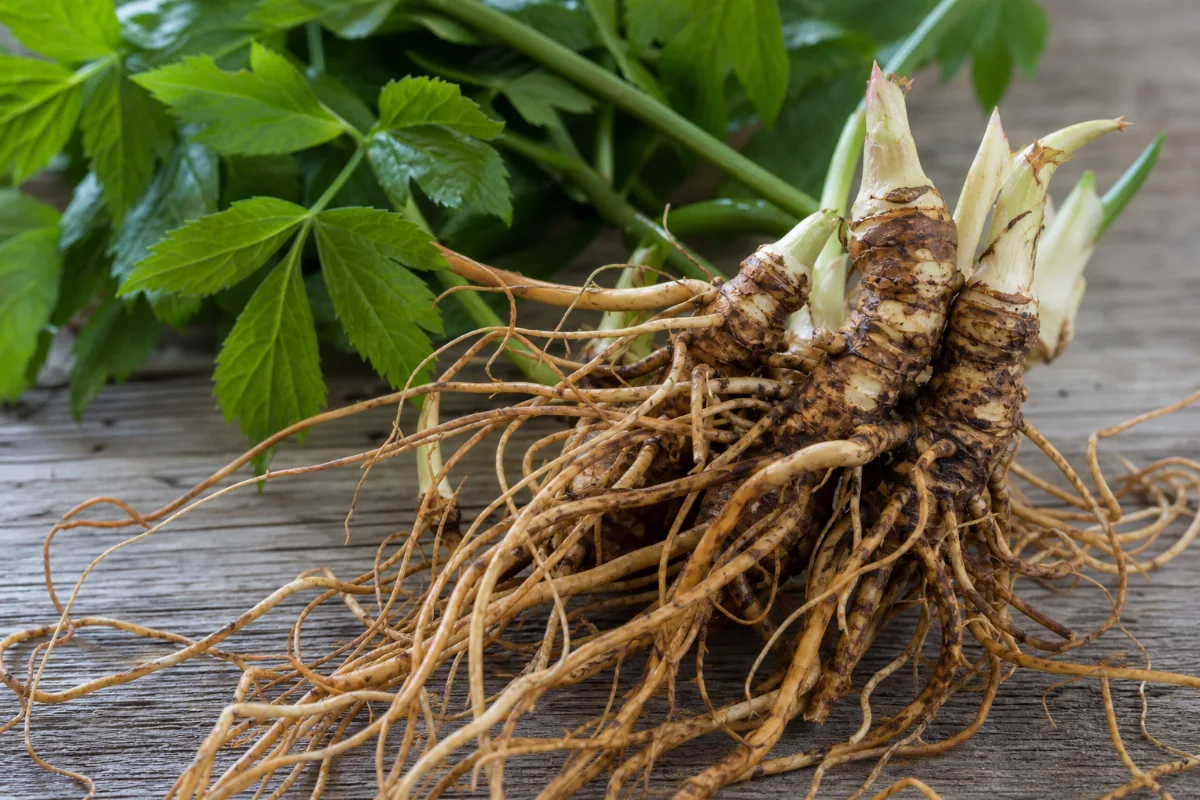
Black cohosh is a member of the buttercup family that grows in North America. The root or rhizome (underground stem) is used. [1] The accepted name is Actaea racemosa L., family Ranunculaceae. [4] NIH lists the older name Cimicifuga racemosa, which EU documents still use. [1][2]Do not confuse it with blue cohosh (Caulophyllum thalictroides), a different herb. NIH says blue cohosh may cause high blood pressure, high blood sugar and chest pain, and that using it to induce labor has been linked to life-threatening complications in the infant, including seizures. [1]
Traditional use
NIH says Native Americans used black cohosh for a variety of conditions, including kidney ailments, malaria, sore throat and menstrual cramps. It has been used medicinally in Germany since the late 19th century. [1] Proper evidence not found, in the sources we read, for which nations or practices these uses belong to. Traditional use is not proof of benefit.What research shows
| Use | What the source found | Strength of evidence | Population and form studied |
|---|---|---|---|
| Overall menopause symptoms | A 2023 review of 22 studies found black cohosh extracts, alone or with other herbs, potentially beneficial. [1] | Promising but limited | Women with menopause symptoms; extracts, some in combinations |
| Hot flashes | Improved in the 2023 review; anxiety and depressive symptoms did not improve. [1] | Promising but limited | Same review |
| EU regulator view | The EU committee considered about 20 studies involving over 6,000 patients and concluded the dry extract preparations can be used for hot flushes and excessive sweating. [2] | Regulatory "well-established use" | Specific dry extracts, adult women |
| Hot flashes from breast cancer treatment | Uncertain. [1] | Insufficient evidence | Breast cancer survivors |
| Menstrual cramps, PMS, inducing labor | Not enough reliable data. [1] | Insufficient evidence | Not applicable |
Memorial Sloan Kettering notes that results for menopause symptoms are conflicting. [3] It also says black cohosh does not appear to change estrogen-related hormone levels, and that it is not clear whether it acts as a phytoestrogen. [3] A result for one standardized extract does not transfer to another product. For the head-to-head view, see black cohosh vs red clover vs sage and herbs for menopause symptoms.
Forms
The EU conclusions cover only dry extracts made with a solvent such as ethanol, usually solid forms taken by mouth. [2] Tea is not mentioned in that summary. Amounts are decided with a clinician or pharmacist; the EU committee says adult women only and not for longer than 6 months without consulting a doctor. [2]Quality and adulteration
NIH says some commercial products contain the wrong herb or unlisted mixtures. It is possible but not proven that these might explain some liver cases. [1] A 2016 laboratory paper describes "economically motivated adulteration" as demand grew, with closely related Asian Actaea species as a concern. [5] Memorial Sloan Kettering reports that the United States Pharmacopeia's expert committee recommended a caution statement on products after reviewing 30 liver cases. [3] See quality testing.Frequently asked questions
Does black cohosh help hot flashes?
A 2023 review summarized by NIH found improvement in hot flashes. [1] Results vary by product and study, and Memorial Sloan Kettering calls the data conflicting. [3]
Can black cohosh damage the liver?
Cases have been reported and some were very serious, but they are rare and the cause is uncertain. [1] Stop and seek care for dark urine, yellow skin or eyes, or severe stomach pain. [2]
Is black cohosh the same as blue cohosh?
No. They are different herbs, and NIH links blue cohosh to serious problems when used to induce labor. [1]
Is black cohosh estrogen?
Memorial Sloan Kettering says it is not clear whether black cohosh acts as a phytoestrogen. [3]
Can I use it after breast cancer?
NIH says safety is uncertain after hormone-sensitive cancers, so ask your oncology team. [1]
More details: evidence, limits and cautions
The details behind this page: cautions, limits of the evidence and where sources disagree. Open any note to read it.
Safety first: liver injury
Safety details
- Medicines: Memorial Sloan Kettering lists possible interference with tamoxifen and added toxicity with some chemotherapy drugs, and says the clinical meaning is not known. [3] Ask the prescriber or pharmacist. See medicine interactions.
- Hormone-sensitive conditions: it is uncertain whether black cohosh is safe for women who have had breast or uterine cancer. [1] See herbs and hormone-sensitive conditions.
- Pregnancy and breastfeeding: NIH says it may not be safe; Memorial Sloan Kettering says to avoid it in pregnancy. [1][3]
- Common effects: stomach upset, rash, dizziness, nausea and vomiting, mostly with high amounts. [3] The EU list also includes allergic skin reactions and facial swelling. [2]
- Surgery: not described in the sources we read; tell the surgical team about every herb.
- Children and older adults, kidney disease: not described in the sources we read.
References
- NCCIH, NIH. Black Cohosh. Read 2026-10-23.
- European Medicines Agency, HMPC. Black cohosh (Cimicifugae rhizoma): summary for the public, EMA/265439/2018. Read 2026-10-23.
- Memorial Sloan Kettering Cancer Center. Black Cohosh: Purported Benefits, Side Effects and More. Read 2026-10-23.
- GBIF Backbone Taxonomy. Actaea racemosa L.. Read 2026-10-23.
- Bittner M, et al. Authentication of Actaea racemosa herbal raw material by RP-PDA-HPLC and chemometric analysis. Phytochem Anal. 2016;27:318-325. Read 2026-10-23.