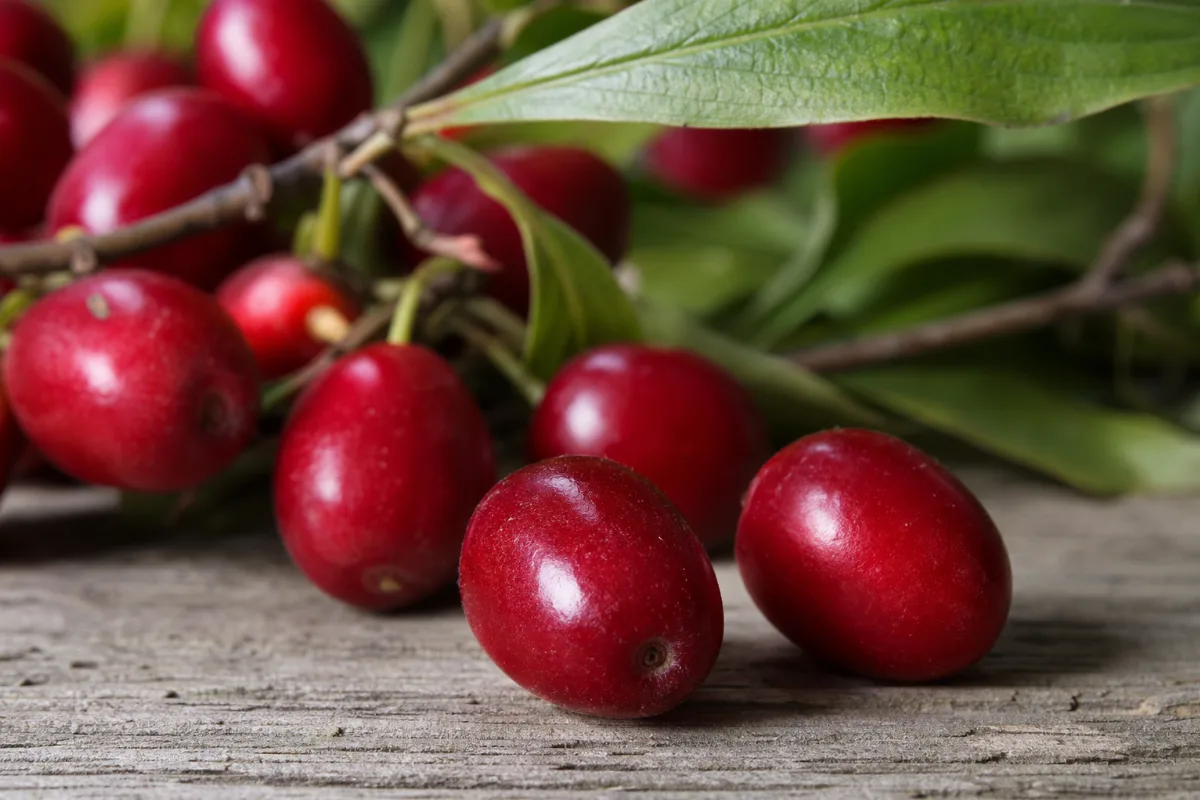
Herbs & Botanicals · Chinese astringent fruit herb
Cornelian cherry fruit (shan zhu yu)
Cornus officinalis · also called Shan zhu yu, Asiatic dogwood, Japanese cornel, Corni Fructus
Shan zhu yu is the dried fruit flesh of an East Asian tree, used in Chinese medicine as a kidney and fluid-holding tonic and as one of six herbs in Liu Wei Di Huang Wan. Human research is on that formula, not the fruit alone, and the evidence is low quality. It is not the European cornelian cherry food fruit, which is a different species. If you take diabetes medicine or have urinary problems, talk to a professional first.
General information, not medical advice. Last substantive update · Not medically reviewed. A named clinician has not signed off on this page. How this page is made
About Cornelian cherry fruit (shan zhu yu)
Shan zhu yu (Cornus officinalis fruit, also called Corni Fructus) is the dried flesh of the ripe fruit of an East Asian tree, used in Chinese medicine for more than 2,000 years. Its best-known compounds are loganin, morroniside and ursolic acid. It is one of six herbs in Liu Wei Di Huang Wan. Research is mostly in cells and animals; human trials tested the formula, not the fruit alone, and were of low quality. It is not the European cornelian cherry (Cornus mas). Cautions: possible added effect with diabetes medicine, a lab signal for liver-enzyme interaction, and traditional advice to avoid it with painful or difficult urination. Ask a doctor or pharmacist about amounts.
What it is
Shan zhu yu is the pulp of the ripe fruit of Cornus officinalis, a tree of the dogwood family native to East Asia (China, Korea, Japan). In traditional medicine the seed is removed and only the flesh is used.
Its Latin pharmacy name is Corni Fructus. English names include Asiatic dogwood and Japanese cornel.
Not the same as the European cornelian cherry
In Europe, 'cornelian cherry' normally means Cornus mas, a different species eaten as a food fruit. The two plants were used independently, and their chemistry overlaps but differs: morroniside and tannins are more notable in Cornus officinalis.
Human studies of the fruit exist for Cornus mas, not for Cornus officinalis, so their results should not be applied to shan zhu yu.
Historical and current uses
In Chinese medicine the fruit is described as sour, astringent and slightly warm. It is used for dizziness, ringing in the ears, weak back and knees, heavy sweating and excess urination. It is a main ingredient of Liu Wei Di Huang Wan, which also holds rehmannia, moutan, alisma, yam and poria.
What the research shows
Reviews say studies are mostly in cells and animals, with a lack of clinical trials. In mice, fruit compounds lowered blood sugar.
In people, trials tested the formula added to usual care. An 11-trial review found lower urine albumin in early diabetic kidney disease, but with very high variation and low quality. A 600-person placebo-controlled trial of the formula with ginkgo missed its main goal overall. A review of 12 trials found a small memory-test gain with weak methods.
At a glance
Traditional uses history, not proof
- Kidney and liver tonic for dizziness, ringing in the ears and weak lower back and knees
- Holding in fluids: heavy sweating and excess urination
- Ingredient of Liu Wei Di Huang Wan and Jin Gui Shen Qi Wan
Studied for research
- Blood sugar: lab and animal findings; formula trials only
- Diabetic kidney markers: formula trials, low quality
- Memory score: formula trials, weak methods
- Liver, kidney and bone protection: lab and animal only
- Antioxidant and anti-inflammatory activity: lab only
Main compounds
- Loganin (iridoid)
- Morroniside (iridoid)
- Ursolic acid (triterpene)
- Tannins and polyphenols
Common forms
- Dried fruit flesh (seed removed)
- Wine-processed fruit
- Decoction (usually with other herbs)
- Pills such as Liu Wei Di Huang Wan
Research links: Corni Fructus review (Chin Med 2018) · Cornus mas vs Cornus officinalis (Front Pharmacol 2018) · Formula and diabetic kidney disease (2026) · Updated review of Cornus officinalis (2025) · Research Library · Genes & Biomarkers Library
The plant and its history
- Accepted scientific name
- Cornus officinalis Siebold & Zucc.
- Naming authority
- Siebold & Zucc.
- Common names
- Shan zhu yu (shanzhuyu) (Chinese (pinyin)); Asiatic dogwood (English); Japanese cornel (English); Corni Fructus (Latin pharmacy name)
- Botanical family
- Cornaceae (dogwood family)
- Classification
- Plantae > Tracheophyta > Magnoliopsida > Cornales > Cornaceae > Cornus > Cornus officinalis
- Native range
- Eastern Asia, mainly China, also Korea and Japan (per the 2018 reviews; not checked against POWO).
- Habitat
- Not verified.
- What the plant looks like
- Roots: Not verified.; Stems: Deciduous tree (per review).; Leaves: Not verified.; Flowers: Not verified.; Fruit: The dried flesh of the ripe fruit (Corni Fructus) is the medicine; the seed is removed.
- Cultivation
- Not verified.
- Harvest and processing
- Seed removed; sometimes steamed or wine-processed. A 2011 lab paper compared crude and wine-processed material (not read).
- Look-alikes and adulterants
- Name: Cornus mas (European cornelian cherry); Note: A different species native to southern Europe and southwest Asia, eaten as a food fruit. Its uses arose independently and its chemistry differs: morroniside and tannins are more notable in C. officinalis. Human studies exist for C. mas, not for C. officinalis.
- Sustainability and conservation
- Not assessed.
Traditional use and history history, not clinical proof
| Tradition or era | Documented use | Source |
|---|---|---|
| Traditional Chinese medicine | Used for over 2,000 years; first recorded in the Shennong Ben Cao Jing. Described as sour, astringent and slightly warm; used for dizziness, tinnitus, lower-back and knee weakness, impotence, spermatorrhea and profuse sweating. A main ingredient of Liu Wei Di Huang Wan and Jin Gui Shen Qi Wan. | p40784528 |
| East Asian medicine (Korea, Japan) | Also used in traditional medicine across East Asia. | p39301568 |
Traditional use shows how a plant was used. It does not show that a supplement works or is safe today.
What is inside, and how it may work
What the plant contains and how those compounds act in cells and animals. Laboratory and animal mechanisms are not proven effects in people.
Main compounds
| Compound | Family | Where it is concentrated | Activity studied | Level of evidence |
|---|---|---|---|---|
| Loganin PubChem 87691 | iridoid glycoside | fruit flesh Not extracted. | Lowered fasting glucose in diabetic mice; altered tofacitinib handling in rats. 8 2 14 | Animal research |
| Morroniside PubChem 11228693 | iridoid glycoside | fruit flesh Not extracted. | Kidney, liver, bone and nerve protection in cell and animal models; no clinical trials of the compound. 16 8 14 | Animal / in vitro |
| Ursolic acid PubChem 64945 | pentacyclic triterpene | fruit (also reported in the seed) Not extracted. | Radical scavenging and alpha-glucosidase inhibition in the lab; synergy with loganin in mice. 8 14 | Animal / in vitro |
| Cornuside | iridoid glycoside | fruit Not extracted. | Inhibited CYP3A4, 2C19 and 2E1 in human liver microsomes. 17 | In vitro |
Mechanisms, receptors and pathways
| Target or pathway | Gene or receptor | What was found | Level |
|---|---|---|---|
| Alpha-glucosidase inhibition and glucose lowering | alpha-glucosidase | Ursolic acid blocked the enzyme in test tubes; loganin and morroniside lowered glucose in diabetic mice. 8 | Animal / in vitro |
| Liver drug-metabolising enzymes | CYP3A4, CYP2C19, CYP2E1 | Cornuside inhibited these enzymes in human liver microsomes. 17 | In vitro |
| Kidney, liver, bone and nerve protective signalling | various | Morroniside and fruit extracts reduced damage in animal and cell models; mechanisms are not settled. 16 5 | Animal / in vitro |
Absorption, metabolism and elimination
- Absorption
- No human data found. The 2025 review says pharmacokinetic studies are lacking.
- Distribution
- No data found.
- Metabolism
- Cornuside inhibits some CYP enzymes in vitro; whole-fruit effects unknown.
- Elimination
- No data found.
- Bioavailability
- Not established.
Isolated compounds versus whole extracts
Most lab work uses isolated compounds (loganin, morroniside, ursolic acid). Mouse work found loganin and ursolic acid acted together, suggesting whole-fruit effects may differ from single compounds. Human formula trials used a six-herb pill, so neither isolated nor whole-fruit effects are established.
Nutritional composition
No nutrient data were gathered for this profile. The European Cornus mas fruit is a food; the Chinese medicinal fruit is a processed dried herb.
1 low certainty2 very low certainty4 not enough evidence
What is Cornelian cherry fruit (shan zhu yu) good for?
What shan zhu yu has been studied for and how strong the human evidence is. Almost all of it is lab and animal work, or comes from a six-herb formula.
Benefits, one by one
Each card is a research question, not a promise. Tap a goal to filter. Open a card to see the studies, doses and limits.
Blood sugar (lab and animal findings; formula trials)
Very low certaintyIn mice and test tubes, extracts and compounds from the fruit lowered blood sugar. In people, only the six-herb formula Liu Wei Di Huang has been tested, not the fruit alone.
4 studiesNothing here compares products or gives amounts. Ask a doctor or phar…
Studies, doses and limits
What the trials found
No human trial of the fruit alone was found. Reviews say clinical trials are lacking. An 18-trial review of the formula added to diabetes medicine found small improvements in glucose measures, but the trials were of lower quality than expected.
Results
Formula plus Western medicine: fasting glucose MD 0.54 mmol/L (95% CI 0.15 to 0.93), 2-hour glucose MD 1.05 (0.29 to 1.81), HbA1c MD 0.23 (0.02 to 0.45), as reported by the authors. Mouse data: lower fasting glucose, no human figures.
Effect sizes as reported
Reported: see results; mouse figures not extracted.
Why this rating
Human data are from a six-herb formula in low-quality trials, with the fruit one of six ingredients. The fruit itself has only animal and lab support.
Form and dose studied
Nothing here compares products or gives amounts. Ask a doctor or pharmacist about amounts.
Who was studied
Formula trials: adults with type 2 diabetes already on usual medicine. Fruit: mice and test tubes.
Limits
Formula effects cannot be credited to the fruit. Mouse results often do not carry over to people.
Why researchers looked
Traditional formulas containing the fruit were used for diabetes-like wasting thirst, and labs found iridoids and ursolic acid that block starch-digesting enzymes.
Traditional use
In classical Chinese medicine the fruit is part of formulas for kidney weakness, thirst and frequent urination.
Proposed mechanism Animal research
Loganin and morroniside lowered fasting glucose in diabetic mice; ursolic acid blocked alpha-glucosidase in the test tube; loganin and ursolic acid worked together in mice.
A proposed mechanism does not show that the effect happens in people.
Cornelian cherry fruit has not been tested alone for blood sugar in people. If you take diabetes medicines, tell your doctor or pharmacist before using it.
Kidney markers in diabetic kidney disease (formula)
Low certaintyIn trials of people with early diabetic kidney disease, the six-herb formula added to usual care was linked to lower urine albumin and better kidney blood tests. The fruit was not tested alone.
4 studiesNothing here compares products or gives amounts. Ask a doctor or phar…
Studies, doses and limits
What the trials found
An 11-trial meta-analysis (1,007 people) and a 66-trial review of mixed decoctions (6,951 people; the fruit appeared in 35 trials) both found better results with the herbal treatment added to usual care. A 600-person placebo-controlled trial of the formula plus ginkgo did not meet its main goal overall; a benefit appeared only in people whose urine albumin was already raised.
Results
Early diabetic nephropathy: urinary albumin excretion MD -37.30 (95% CI -47.51 to -27.09; I2 93%), creatinine MD -5.96 (-9.27 to -2.65), urea nitrogen MD -0.91 (-1.46 to -0.36). Decoction review: efficacy OR 3.12 (2.70 to 3.60). Placebo trial: main outcome no difference overall.
Effect sizes as reported
See results.
Why this rating
Meta-analyses have very high variation, a subjective unblinded 'effective rate', and incomplete safety reporting; the only large double-blind trial missed its main goal and used a combination with ginkgo.
Form and dose studied
Nothing here compares products or gives amounts. Ask a doctor or pharmacist about amounts.
Who was studied
Adults with early diabetic kidney disease in China.
Limits
Formula or mixed decoctions, not the fruit alone. Do not use a herb instead of kidney care.
Why researchers looked
Diabetic kidney damage is a major complication, and Liu Wei Di Huang is widely used for it in China.
Traditional use
The formula is traditionally used for kidney 'yin' weakness.
Proposed mechanism Animal research
Lab and animal work suggests iridoid glycosides and morroniside may protect kidney cells in diabetic rats.
A proposed mechanism does not show that the effect happens in people.
Kidney disease and diabetes need medical follow-up. Ask a doctor before adding any herb.
Traditional 'liver and kidney' tonic use
Not enough evidenceIn Chinese medicine the fruit is used to 'replenish the liver and kidney' and to hold in fluids, for dizziness, ringing in the ears, weak lower back and knees, and heavy sweating.
3 studiesNothing here compares products or gives amounts. Ask a doctor or phar…
Studies, doses and limits
What the trials found
No trial of these traditional uses was found for the fruit alone.
Results
Traditional use only.
Effect sizes as reported
Not applicable.
Why this rating
Traditional framework only; reviews say clinical trials are lacking.
Form and dose studied
Nothing here compares products or gives amounts. Ask a doctor or pharmacist about amounts.
Who was studied
Not applicable.
Limits
Traditional concepts do not map neatly to modern diagnoses.
Why researchers looked
Over 2,000 years of use in Chinese medicine, first recorded in the Shennong Ben Cao Jing.
Traditional use
Described as sour, astringent and slightly warm; used for dizziness, tinnitus, lower-back and knee weakness, impotence, spermatorrhea, heavy periods and profuse sweating.
Proposed mechanism Pharmacological theory
Traditional theory, not a lab or trial result.
A proposed mechanism does not show that the effect happens in people.
Astringent herbs are traditionally avoided in painful or difficult urination.
Memory and thinking (formula)
Very low certaintyA review of 12 trials found a small gain on a memory test when Liu Wei Di Huang was added to usual care. The fruit was not tested alone.
2 studiesNothing here compares products or gives amounts. Ask a doctor or phar…
Studies, doses and limits
What the trials found
12 randomised trials, 1,137 people with cognitive disorders; MMSE rose by a mean 2.34 points (95% CI 0.88 to 3.79) with the formula added. The authors note substantial heterogeneity, unclear randomisation and blinding, and 'some concerns' on risk of bias.
Results
MMSE MD 2.34 (0.88 to 3.79)
Effect sizes as reported
MD 2.34, CI 0.88 to 3.79
Why this rating
Weak methods and high variation; formula, not the fruit; mechanism part is computer prediction.
Form and dose studied
Nothing here compares products or gives amounts. Ask a doctor or pharmacist about amounts.
Who was studied
People with cognitive disorders already on usual treatment.
Limits
Cannot be credited to the fruit; small score change of uncertain meaning.
Why researchers looked
The formula is widely used in China for cognitive decline.
Traditional use
Used for dizziness, forgetfulness and weakness traditionally.
Proposed mechanism Preliminary mechanism
Computer-predicted pathways only; morroniside protects nerve cells in animal and cell models.
A proposed mechanism does not show that the effect happens in people.
Ask a doctor before adding herbs to dementia treatment.
Liver, kidney and bone protection (lab and animal findings)
Not enough evidenceReviews describe protective effects of the fruit extract and of morroniside on liver, kidney and bone in cells and animals. No human trials of the fruit alone were found.
4 studiesNothing here compares products or gives amounts. Ask a doctor or phar…
Studies, doses and limits
What the trials found
None.
Results
Qualitative; reviews report protection against toxin-induced liver injury, diabetic kidney injury and bone loss in animal models.
Effect sizes as reported
Not applicable.
Why this rating
Cell and animal data only, and the reviews say clinical trials are lacking.
Form and dose studied
Nothing here compares products or gives amounts. Ask a doctor or pharmacist about amounts.
Who was studied
None (lab).
Limits
Animal findings often do not translate to people.
Why researchers looked
Traditional 'liver and kidney' tonic use led to lab tests in toxin-injured and diabetic animals and bone-loss models.
Traditional use
Traditional liver-kidney tonic.
Proposed mechanism Animal research
Antioxidant and anti-inflammatory signalling changes in cells and animals.
A proposed mechanism does not show that the effect happens in people.
Liver protection in rats is not evidence that the fruit is safe for the human liver.
Antioxidant and anti-inflammatory activity (lab findings)
Not enough evidenceExtracts and compounds from the fruit show antioxidant and anti-inflammatory effects in cells and animals. This does not show a benefit in people.
2 studiesNothing here compares products or gives amounts. Ask a doctor or phar…
Studies, doses and limits
What the trials found
None.
Results
Qualitative.
Effect sizes as reported
Not applicable.
Why this rating
Test-tube antioxidant strength does not predict human benefit.
Form and dose studied
Nothing here compares products or gives amounts. Ask a doctor or pharmacist about amounts.
Who was studied
None (lab).
Limits
Mostly test-tube and animal work.
Why researchers looked
Iridoids, tannins and polyphenols are active in antioxidant tests.
Traditional use
Not specifically traditional.
Proposed mechanism Laboratory research
Radical scavenging and inflammatory-signal changes in vitro.
A proposed mechanism does not show that the effect happens in people.
None specific.
Immune, nerve, heart and other lab claims
Not enough evidenceReviews list immune, nerve, heart, anticancer and other effects in cell and animal studies. Reviewers warn that cell-kill results in tumor cells should not be read as anticancer benefit.
2 studiesNothing here compares products or gives amounts. Ask a doctor or phar…
Studies, doses and limits
What the trials found
A 2026 retrospective study of a three-herb combination in elderly pneumonia was found but not used: its abstract is internally inconsistent about the results.
Results
Not applicable.
Effect sizes as reported
Not applicable.
Why this rating
Lab only.
Form and dose studied
Nothing here compares products or gives amounts. Ask a doctor or pharmacist about amounts.
Who was studied
None.
Limits
The review of both Cornus species says cell-line killing is not evidence of an antitumor effect.
Why researchers looked
Broad screening of a traditional herb.
Traditional use
Traditional use does not include cancer treatment.
Proposed mechanism Laboratory research
Lab studies of many pathways.
A proposed mechanism does not show that the effect happens in people.
None.
Connections to the rest of health
How Cornelian cherry fruit (shan zhu yu) connects to the rest of our health knowledge graph. Every link says what kind of connection it is. A safety link (for example to the liver) is a warning, not a benefit. A study that merely mentions a topic never creates a benefit link.
Explore every connection: goals, body systems, organs, symptoms, genes
A. Wellness goals
| Connected to | Kind of connection | Evidence status | Context | Studies |
|---|---|---|---|---|
| Blood Sugar Balance | Preliminary mechanism | Very low certainty | Blood sugar (lab and animal findings; formula trials): In mice and test tubes, extracts and compounds from the fruit lowered blood sugar. In people, only the six-herb formula Liu Wei Di Huang has been tested, not the fruit alone. | 8 13 5 3 |
| Metabolic Health | Preliminary mechanism | Very low certainty | Blood sugar (lab and animal findings; formula trials): In mice and test tubes, extracts and compounds from the fruit lowered blood sugar. In people, only the six-herb formula Liu Wei Di Huang has been tested, not the fruit alone. | 8 13 5 3 |
| Blood Sugar Balance | Demonstrated clinical effect | Low certainty | Kidney markers in diabetic kidney disease (formula): In trials of people with early diabetic kidney disease, the six-herb formula added to usual care was linked to lower urine albumin and better kidney blood tests. The fruit was not tested alone. | 6 18 15 16 |
| Metabolic Health | Demonstrated clinical effect | Low certainty | Kidney markers in diabetic kidney disease (formula): In trials of people with early diabetic kidney disease, the six-herb formula added to usual care was linked to lower urine albumin and better kidney blood tests. The fruit was not tested alone. | 6 18 15 16 |
| Healthy Aging | Traditional use | Not enough evidence | Traditional 'liver and kidney' tonic use: In Chinese medicine the fruit is used to 'replenish the liver and kidney' and to hold in fluids, for dizziness, ringing in the ears, weak lower back and knees, and heavy sweating. | 3 10 5 |
| Memory Support | Very low certainty | Memory and thinking (formula): A review of 12 trials found a small gain on a memory test when Liu Wei Di Huang was added to usual care. The fruit was not tested alone. | 11 16 | |
| Brain Health | Very low certainty | Memory and thinking (formula): A review of 12 trials found a small gain on a memory test when Liu Wei Di Huang was added to usual care. The fruit was not tested alone. | 11 16 | |
| Liver Support | Preliminary mechanism | Not enough evidence | Liver, kidney and bone protection (lab and animal findings): Reviews describe protective effects of the fruit extract and of morroniside on liver, kidney and bone in cells and animals. No human trials of the fruit alone were found. | 5 16 10 3 |
| Joint Support | Preliminary mechanism | Not enough evidence | Liver, kidney and bone protection (lab and animal findings): Reviews describe protective effects of the fruit extract and of morroniside on liver, kidney and bone in cells and animals. No human trials of the fruit alone were found. | 5 16 10 3 |
| Inflammation Balance | Preliminary mechanism | Not enough evidence | Antioxidant and anti-inflammatory activity (lab findings): Extracts and compounds from the fruit show antioxidant and anti-inflammatory effects in cells and animals. This does not show a benefit in people. | 5 16 |
| Immune Support | Preliminary mechanism | Not enough evidence | Immune, nerve, heart and other lab claims: Reviews list immune, nerve, heart, anticancer and other effects in cell and animal studies. Reviewers warn that cell-kill results in tumor cells should not be read as anticancer benefit. | 4 3 |
B. Body systems
| Connected to | Kind of connection | Evidence status | Context | Studies |
|---|---|---|---|---|
| Endocrine System | Biological association | Very low certainty | Studied for: Blood sugar (lab and animal findings; formula trials) Studied for: Kidney markers in diabetic kidney disease (formula) | 8 13 5 3 6 18 15 16 |
| Metabolism Weight | Biological association | Very low certainty | Studied for: Blood sugar (lab and animal findings; formula trials) | 8 13 5 3 |
| Urinary System | Biological association | Low certainty | Studied for: Kidney markers in diabetic kidney disease (formula) Studied for: Traditional 'liver and kidney' tonic use | 6 18 15 16 3 10 5 |
| Reproductive System | Biological association | Not enough evidence | Studied for: Traditional 'liver and kidney' tonic use | 3 10 5 |
| Nervous System | Biological association | Very low certainty | Studied for: Memory and thinking (formula) Studied for: Immune, nerve, heart and other lab claims | 11 16 4 3 |
| Hepatic System | Biological association | Not enough evidence | Studied for: Liver, kidney and bone protection (lab and animal findings) | 5 16 10 3 |
| Musculoskeletal System | Biological association | Not enough evidence | Studied for: Liver, kidney and bone protection (lab and animal findings) | 5 16 10 3 |
| Immune System | Biological association | Not enough evidence | Studied for: Antioxidant and anti-inflammatory activity (lab findings) Studied for: Immune, nerve, heart and other lab claims | 5 16 4 3 |
I. Biomarkers
| Connected to | Kind of connection | Evidence status | Context | Studies |
|---|---|---|---|---|
| HbA1c and blood glucose | Biological association | Very low certainty | Measured in trials: lowered. A lab change is not the same as a health benefit. | 13 |
| Urinary albumin excretion | Biological association | Low certainty | Measured in trials: lowered. A lab change is not the same as a health benefit. | 6 15 |
| Serum creatinine | Biological association | Low certainty | Measured in trials: lowered. A lab change is not the same as a health benefit. | 6 |
| Mini-Mental State Examination score | Biological association | Very low certainty | Measured in trials: raised. A lab change is not the same as a health benefit. | 11 |
K. Biological pathways
| Connected to | Kind of connection | Evidence status | Context | Studies |
|---|---|---|---|---|
| Preliminary mechanism | 17 |
L. Active compounds
| Connected to | Kind of connection | Evidence status | Context | Studies |
|---|---|---|---|---|
| Loganin | Biological association | Animal | Lowered fasting glucose in diabetic mice; altered tofacitinib handling in rats. Preparation or compound: fruit flesh |
8 2 14 |
| Morroniside | Biological association | Animal / in vitro | Kidney, liver, bone and nerve protection in cell and animal models; no clinical trials of the compound. Preparation or compound: fruit flesh |
16 8 14 |
| Ursolic acid | Biological association | Animal / in vitro | Radical scavenging and alpha-glucosidase inhibition in the lab; synergy with loganin in mice. Preparation or compound: fruit (also reported in the seed) |
8 14 |
| Cornuside | Biological association | In vitro | Inhibited CYP3A4, 2C19 and 2E1 in human liver microsomes. Preparation or compound: fruit |
17 |
Each connection is stored with the ingredient, the connected record, the kind of connection, the evidence status, the supporting studies, the preparation or compound involved, and a review date (last reviewed October 25, 2026).
Evidence at a glance: what changed in 4 lab markers
Tap a number to show only those markers. Counts are markers, not people.
The evidence
The research centre for Cornelian cherry fruit (shan zhu yu). Every record here was checked against PubMed or the publisher's page; we never list a study we have not verified.
Evidence by outcome
Bars show how many studies we found for each outcome, not how well it works. People are added up across trials only (reviews are not added, to avoid double counting).
How we rate evidence
High certainty
Several well-run trials or reviews agree; further research is unlikely to change the picture much.
Moderate certainty
Good trials point the same way, but some doubt remains.
Low certainty
Small, short or inconsistent trials. The finding could change with better research.
Very low certainty
Very little or very weak human data. Treat as a possibility only.
Mixed findings
Trials or reviews disagree with each other.
Not enough evidence
Not enough human research to say either way.
Evidence against
Good research found no benefit, or found harm.
We take the reviewers' own risk-of-bias and GRADE statements where they exist, and otherwise judge from study size, design, consistency, directness and whether a product matches what is sold. Many publications do not make evidence high. Method note: We built on our existing summary and checked PubMed, GBIF and PubChem. Most sources were abstracts only. Regulator records were not checked. No study is cited that we could not verify.
Study library: every study we checked 18
| Study | Design | People | Product, dose, length | Result |
|---|---|---|---|---|
| 5000yan 2026 Shanzhuyu (Cornus Fruit), 5000yan Chinese herbs en.5000yan.com · Source |
Secondary summary n/a |
see results fruit flesh not extracted not extracted · vs see results |
Seen only as a web-search summary: advises avoiding the herb with painful or difficult urination (dysuria) and damp-heat; the page says it is educational, not medical advice. Methods, limits and fundingOutcomes: Identity or traditional-use information Limitations: NOT verified at the page; commercial or educational website. Read: search summary only | |
| Choi 2024 Loganin ameliorates acute kidney injury and restores tofacitinib metabolism in rats: implications for renal protection and drug interaction Biomol Ther (Seoul) · PMID 39091013 · DOI |
Animal research animal |
Rats with cisplatin-induced kidney injury | Loganin plus tofacitinib isolated compound not extracted not extracted · vs see results |
Loganin protected rat kidneys and returned tofacitinib handling toward normal in injured rats. The authors say interactions between drugs and extracts containing loganin should be considered in people with kidney injury. Altered drug handling in rats Methods, limits and fundingOutcomes: Tofacitinib pharmacokinetics Limitations: Rat study; one compound; no human data. Read: abstract |
| Cui 2025 Cornus officinalis Sieb.: An updated review on the ethnopharmacology, phytochemistry, pharmacology, toxicology, and pharmacokinetics J Ethnopharmacol · PMID 40784528 · DOI |
Narrative review mostly animal and in-vitro |
Review | Cornus officinalis fruit flesh not extracted not extracted · vs see results |
353 compounds identified. The authors conclude that research is mainly in vitro and animal work, with a lack of pharmacokinetic studies, clinical trials and quality control. Narrative Methods, limits and fundingOutcomes: Uses, chemistry, pharmacology, toxicity Limitations: Narrative review; abstract only read, so any toxicity detail inside the full text was not seen. Funding and conflicts: none declared Read: abstract |
| Czerwinska 2018 Cornus mas and Cornus officinalis: analogies and differences of two medicinal plants traditionally used Front Pharmacol · PMID 30210335 · DOI |
Narrative review mostly animal and in-vitro |
Review comparing two species | Fruits of Cornus mas and Cornus officinalis fruit flesh not extracted not extracted · vs see results |
C. mas is native to southern Europe and southwest Asia; C. officinalis to eastern Asia (China, Korea, Japan). Their uses arose independently. Both contain iridoids, anthocyanins, phenolic acids and flavonoids, but morroniside and tannins are more notable in C. officinalis. Antidiabetic and liver-protective properties are reported for both; anticholesterol and anticoagulant activity seems unique to C. mas, bone and immune activity to C. officinalis. Abstract and the start of the full text read. Narrative Methods, limits and fundingOutcomes: Chemistry and traditional use of both species Limitations: Narrative review. Read: abstract + partial full text |
| Dong 2018 Corni Fructus: a review of chemical constituents and pharmacological activities Chin Med · PMID 29983732 · DOI |
Narrative review mostly animal and in-vitro |
Review of lab, animal and some formula work on Corni Fructus | Corni Fructus (dried fruit flesh of Cornus officinalis) fruit flesh not extracted not extracted · vs see results |
About 90 compounds isolated; reports hypoglycemic, antioxidant, anti-inflammatory, anticancer, neuroprotective, liver and kidney protective activity in vivo and in vitro. Only about 18% of constituents were tested. Abstract and the first part of the full text (PMC6020197) read. Narrative Methods, limits and fundingOutcomes: Chemistry, traditional use, pharmacology Limitations: Narrative review; mostly lab and animal evidence. Read: abstract + partial full text |
| Du 2026 Impact of liuwei dihuang pills (decoction) on early diabetic nephropathy: a systematic review and meta-analysis Front Med (Lausanne) · PMID 42051693 · DOI |
Meta-analysis |
1007 Adults with early diabetic nephropathy; 11 randomised trials |
Liu Wei Di Huang pills or decoction (six-herb formula) plus usual care formula (fruit is one of six ingredients) not extracted not extracted · vs see results |
Urinary albumin excretion fell more with the formula plus usual care than usual care alone (MD -37.30, 95% CI -47.51 to -27.09; I2 93%). Creatinine MD -5.96 (-9.27 to -2.65); urea nitrogen MD -0.91 (-1.46 to -0.36). Adverse events were reported in only 6 of 11 trials: 12/287 versus 12/277, no difference (OR 0.99, 0.43 to 2.30). Lower albuminuria and creatinine (-47.51 to -27.09) Methods, limits and fundingOutcomes: Urinary albumin excretion rate, creatinine, urea nitrogen, adverse events Limitations: Very high heterogeneity; the total effective rate is subjective and unblinded; incomplete safety reporting. Effect belongs to the whole formula, not the fruit alone. Read: abstract |
| GBIF 2026 GBIF species match: Cornus officinalis Siebold & Zucc. GBIF API · Source |
Database record n/a |
see results fruit flesh not extracted not extracted · vs see results |
ACCEPTED, key 7161076, family Cornaceae, order Cornales (queried 2026-10-25). Methods, limits and fundingOutcomes: Identity or traditional-use information Limitations: Database record. NCBI taxonomy not checked. Read: API response | |
| He 2016 The hypoglycemic and synergistic effect of loganin, morroniside, and ursolic acid isolated from the fruits of Cornus officinalis Phytother Res · PMID 26619955 · DOI |
Animal research animal |
Diabetic mice | Ethanol fruit extract and isolated loganin, morroniside, ursolic acid fruit flesh not extracted not extracted · vs see results |
In diabetic mice, loganin and morroniside lowered fasting blood glucose; ursolic acid had the strongest radical-scavenging and alpha-glucosidase inhibition; loganin and ursolic acid showed a synergistic effect. Lower glucose in mice Methods, limits and fundingOutcomes: Fasting blood glucose, radical scavenging, alpha-glucosidase inhibition Limitations: Mouse and test-tube work only. Read: abstract |
| Hong Kong Chinese Medicine Regulatory Office 2026 Corni Fructus, Hong Kong Chinese Materia Medica Standards, vol. 4 cmro.gov.hk · Source |
Regulatory or expert monograph n/a |
see results fruit flesh not extracted not extracted · vs see results |
Seen only as a web-search summary (PDF could not be read as text): processing steps include removing the core, then drying the seedless fruit. Methods, limits and fundingOutcomes: Identity or traditional-use information Limitations: NOT verified: the PDF text was not read. Read: search summary only | |
| Huang 2018 Ethnopharmacology, phytochemistry, and pharmacology of Cornus officinalis Sieb. et Zucc. J Ethnopharmacol · PMID 29155174 · DOI |
Narrative review mostly animal and in-vitro |
Review | Cornus officinalis fruit fruit flesh not extracted not extracted · vs see results |
About 300 compounds; morroniside and loganin most studied among the iridoids; reports liver and kidney protection and antidiabetic effects in the lab; the authors say further research is needed on quality control and toxicology. Narrative Methods, limits and fundingOutcomes: Uses, chemistry, pharmacology, quality control Limitations: Narrative review; abstract only. Read: abstract |
| Hwang 2026 Effectiveness and Safety of Liuwei Dihuang as an Adjunctive Therapy for Cognitive Impairment: A Systematic Review, Meta-Analysis, and Network Pharmacology Analysis Pharmaceuticals (Basel) · PMID 42198453 · DOI |
Meta-analysis |
1137 People with cognitive disorders; 12 randomised trials |
Liu Wei Di Huang formula plus usual care formula not extracted not extracted · vs see results |
MMSE improved by MD 2.34 (95% CI 0.88 to 3.79) with the formula added. Fewer adverse events were reported with the formula, though reporting quality was limited. Risk of bias judged "some concerns". MMSE +2.34 (0.88 to 3.79) Methods, limits and fundingOutcomes: Mini-Mental State Examination, daily living, quality of life, adverse events Limitations: Substantial heterogeneity, unclear randomisation and blinding; the network-pharmacology part is computer prediction only. Read: abstract |
| Kam Wah Chung / Oregon College of Oriental Medicine 2026 Shan Zhu Yu entry quoting Bensky materia medica (Kam Wah Chung collection) kwc.ocom.edu · Source |
Secondary summary n/a |
see results fruit flesh not extracted not extracted · vs see results |
Seen only as a web-search summary (page itself not opened): seeds are traditionally removed because they are thought to cause spermatorrhea; the herb is listed as contraindicated with painful or difficult urination and damp-heat. Methods, limits and fundingOutcomes: Identity or traditional-use information Limitations: NOT verified at the page; secondary source; traditional framework, not a trial. Read: search summary only | |
| Pu 2013 Liuwei dihuang pills enhance the effect of Western medicine in treating type 2 diabetes: a meta-analysis of randomized controlled trials Chin J Integr Med · PMID 24092243 · DOI |
Meta-analysis |
1609 Adults with type 2 diabetes; 18 trials |
Liu Wei Di Huang pills plus Western diabetes medicine formula not extracted not extracted · vs see results |
Adding the pills was linked to better fasting glucose (MD 0.54 mmol/L, 95% CI 0.15 to 0.93), 2-hour glucose (MD 1.05, 0.29 to 1.81) and HbA1c (MD 0.23, 0.02 to 0.45), as reported by the authors, who said the trials were less adequate in quality than expected. Better glucose measures (0.15 to 0.93) Methods, limits and fundingOutcomes: Fasting glucose, 2-hour glucose, HbA1c, response rates Limitations: Low methodological quality; formula, not the fruit alone; 2013 review. Read: abstract |
| PubChem 2026 PubChem records: loganin (CID 87691), morroniside (CID 11228693), ursolic acid (CID 64945) PubChem PUG REST · Source |
Database record n/a |
see results fruit flesh not extracted not extracted · vs see results |
Loganin C17H26O10 (CID 87691); morroniside C17H26O11 (CID 11228693); ursolic acid C30H48O3 (CID 64945). Names matched by PubChem name lookup 2026-10-25. Methods, limits and fundingOutcomes: Identity or traditional-use information Limitations: Database record; structure only. Read: API response | |
| Shi 2019 Efficacy of co-administration of Liuwei Dihuang pills and Ginkgo biloba tablets on albuminuria in type 2 diabetes: a 24-month, multicenter, double-blind, placebo-controlled, randomized clinical trial Front Endocrinol (Lausanne) · PMID 30873118 · DOI |
Controlled trial |
600 Adults with type 2 diabetes, without or with early diabetic kidney disease (431 analysed) |
Liu Wei Di Huang pills plus Ginkgo biloba tablets versus placebo combination of a six-herb formula and ginkgo not extracted not extracted · vs see results |
Overall, the change in urine albumin/creatinine ratio did not differ between groups. In people whose ratio was already 30 mg/g or higher, the herbal combination was linked to a larger fall (reported as significant, P<0.05). Primary outcome no difference; subgroup benefit Methods, limits and fundingOutcomes: Change in urinary albumin/creatinine ratio over 24 months Limitations: Combination with ginkgo; primary endpoint overall not met; benefit seen in a subgroup; fruit cannot be separated out. Registered ChiCTR-TRC-07000037. Read: abstract |
| Shi 2024 A review of the sources and pharmacological research of morroniside Front Pharmacol · PMID 39301568 · DOI |
Narrative review mostly animal and in-vitro |
Review of a single compound | Morroniside (iridoid from Corni Fructus) isolated compound not extracted not extracted · vs see results |
Morroniside protected kidney, liver and bone and showed nerve and heart protection in cell and animal models. The authors call for clinical data and toxicology work. Narrative Methods, limits and fundingOutcomes: Pharmacological effects of morroniside Limitations: Compound-only; mostly lab and animal evidence. Funding and conflicts: none declared Read: abstract + partial full text |
| Yang 2025 Inhibitory effects of cornuside on human liver cytochrome P450 enzymes Naunyn Schmiedebergs Arch Pharmacol · PMID 39939490 · DOI |
Laboratory research in-vitro |
Human liver microsomes (test tube) | Cornuside, an iridoid from C. officinalis fruit isolated compound not extracted not extracted · vs see results |
Cornuside inhibited CYP3A4, CYP2C19 and CYP2E1 (IC50 13.80, 19.44 and 24.55 micromolar); CYP3A4 inhibition was time-dependent. The authors say this suggests a possible interaction with drugs cleared by these enzymes. Enzyme inhibition in vitro Methods, limits and fundingOutcomes: CYP enzyme inhibition Limitations: Test tube only; one compound, not the whole fruit; concentrations in people unknown. Read: abstract |
| Zheng 2024 Efficacy and safety of traditional Chinese medicine decoction as an adjuvant treatment for diabetic nephropathy: a systematic review and meta-analysis of randomized controlled trials Front Pharmacol · PMID 38783937 · DOI |
Meta-analysis |
6951 People with diabetic nephropathy; 66 randomised trials |
Mixed TCM decoctions plus usual care multi-herb decoctions not extracted not extracted · vs see results |
Clinical efficacy was higher with decoction plus usual care (OR 3.12, 95% CI 2.70 to 3.60). Adverse events did not differ (OR 0.94, 0.60 to 1.48). Corni Fructus was among the five most-used herbs (35 trials). Higher clinical efficacy (2.70 to 3.60) Methods, limits and fundingOutcomes: Clinical efficacy, adverse events, kidney and glucose measures Limitations: Hundreds of different decoctions; effect cannot be assigned to any single herb. Read: abstract |
What we do not know yet
- No human trial of Cornus officinalis fruit alone was found.
- EMA/HMPC, NCCIH, LiverTox and LactMed were not checked.
- No pregnancy, breastfeeding or children data found.
- Traditional cautions on urination and seed removal come from secondary summaries.
How new research is added
New studies are found by a saved PubMed search and are placed in a review queue. A person reads each one before it changes any evidence rating or safety wording.
Lab markers
What changed in blood or saliva tests during trials. A changed number is not the same as feeling or being healthier, and we give no "normal ranges".
Metabolic 1
HbA1c and blood glucose
Lowered in trials
HbA1c reflects average blood sugar over about three months; fasting and after-meal glucose show short-term levels.
Very low certaintyResults and what it means
Why it was measured
Main outcomes in the formula trials in type 2 diabetes.
Statistical vs. clinical meaning
Statistically significant but small, in low-quality trials, and a formula rather than the fruit.
Safety implication
Could add to diabetes medicine effects; watch for low sugar if combined.
| Study | Result | People | Product |
|---|---|---|---|
| 13 | Formula added to Western medicine: fasting glucose MD 0.54 mmol/L (0.15 to 0.93); 2-hour glucose MD 1.05 (0.29 to 1.81); HbA1c MD 0.23 (0.02 to 0.45). | 1,609 adults with type 2 diabetes, 18 trials | Liu Wei Di Huang pills (six-herb formula) plus usual medicine |
Organ function 1
Serum creatinine
Lowered in trials
A blood waste product; higher levels can mean weaker kidney filtering.
Low certaintyResults and what it means
Why it was measured
Secondary outcome of the diabetic kidney trials.
Statistical vs. clinical meaning
Small changes; units as reported by the review were not extracted.
Safety implication
Anyone with kidney disease should check with a doctor before using herbs.
| Study | Result | People | Product |
|---|---|---|---|
| 6 | MD -5.96 (95% CI -9.27 to -2.65); urea nitrogen MD -0.91 (-1.46 to -0.36) | 1,007 adults, 11 trials | Liu Wei Di Huang plus usual care |
Other 2
Urinary albumin excretion
Lowered in trials
Albumin leaking into urine; an early sign of kidney damage in diabetes.
Low certaintyResults and what it means
Why it was measured
Main outcome of the diabetic kidney disease trials.
Statistical vs. clinical meaning
A lab marker, not proof of fewer kidney failures. Results conflict between meta-analysis and the best trial.
Safety implication
None specific.
| Study | Result | People | Product |
|---|---|---|---|
| 6 | MD -37.30 (95% CI -47.51 to -27.09); I2 93% | 1,007 adults with early diabetic nephropathy, 11 trials | Liu Wei Di Huang plus usual care |
| 15 | Overall change in urine albumin/creatinine ratio did not differ between groups; benefit reported only where the ratio was 30 mg/g or higher at the start. | 600 adults with type 2 diabetes (431 analysed) | Liu Wei Di Huang plus ginkgo versus placebo |
Mini-Mental State Examination score
Raised in trials
A 30-point memory and thinking screening test.
Very low certaintyResults and what it means
Why it was measured
Main cognition outcome in the formula trials.
Statistical vs. clinical meaning
Statistically significant; the clinical meaning is uncertain and the trials had high variation and weak methods.
Safety implication
None specific.
| Study | Result | People | Product |
|---|---|---|---|
| 11 | MD 2.34 (95% CI 0.88 to 3.79) | 1,137 people with cognitive disorders, 12 trials | Liu Wei Di Huang plus usual care |
Safety
What studies and official sources say about side effects, medicines and who should check first. Each point shows what kind of evidence it comes from.
Main points to know 3
- Human safety data for the fruit alone are very limited. The reviews we read say research is mostly lab and animal work, with a lack of clinical trials and pharmacokinetic studies. Absence of reports is not proof of safety. Authoritative guidance 3 5
- Formula trials reported no clear extra side effects, but reporting was incomplete. In 11 trials of the six-herb formula Liu Wei Di Huang, side effects were reported in only 6 and were similar between groups (12/287 vs 12/277); most were mild to moderate. A 66-trial review of mixed decoctions found no difference either. Meta-analysis 6 18
- Do not confuse with the European cornelian cherry (Cornus mas). Shan zhu yu is Cornus officinalis. The food fruit called cornelian cherry in Europe is Cornus mas, a different species. Safety and study results do not transfer between them. Authoritative guidance 4
Side effects 1
| Effect | How often | Severity and recovery | Evidence |
|---|---|---|---|
| No specific adverse effects of the fruit alone were documented in the sources read Formula trials reported mostly mild to moderate events without a difference from controls, but with incomplete reporting. | Not given. | unknown unknown | Authoritative guidance 3 |
Liver
No LiverTox record or liver-injury case report for Cornus officinalis fruit was found in this lean search (LiverTox was not opened). Animal studies report liver protection, which is not evidence about human liver safety. 5
How often. Unknown.
Monitoring. No agency monitoring advice was found.
This is a safety connection. It is not evidence that Cornelian cherry fruit (shan zhu yu) supports liver health.
Medicines and supplements 4
| With | Why it matters | Importance | Evidence | What to do |
|---|---|---|---|---|
| Diabetes medicines (insulin, metformin, sulfonylureas and others) prescription | Loganin, morroniside and ursolic acid lowered glucose in diabetic mice, and ursolic acid blocked alpha-glucosidase in the test tube. In formula trials the pills were added to diabetes medicine and glucose measures improved slightly. | Possible added blood-sugar lowering; no human interaction study of the fruit alone. | Animal research Very low certainty 8 13 | Do not stop or change diabetes medicine. Tell your doctor or pharmacist so blood sugar can be watched. Ask your doctor or pharmacist before combining. |
| Medicines cleared by CYP3A4, CYP2C19 or CYP2E1 enzymes prescription | Cornuside, an iridoid from the fruit, inhibited these liver enzymes in human liver microsomes (test tube), with time-dependent inhibition of CYP3A4. | Unknown in people: one compound, no human data, whole-fruit exposure not measured. | Laboratory research Not enough evidence 17 | Pharmacist check is sensible for narrow-margin medicines (for example some transplant, blood-thinning or heart drugs). Ask your doctor or pharmacist before combining. |
| Tofacitinib and other medicines in people with kidney injury prescription | In rats with kidney injury, loganin changed how tofacitinib was handled. The authors advise considering interactions with loganin-containing extracts. | Animal finding only. | Animal research Not enough evidence 2 | Mention any herb use if you have kidney disease and take prescription medicine. |
| Blood pressure, kidney and other medicines in people using Liu Wei Di Huang prescription | The formula was added to usual care in trials without clear extra harm, but the trials did not test interactions specifically. | Unknown. | Meta-analysis Not enough evidence 6 | Tell the prescriber about any herbal formula. |
Who should check first 5
| Situation | Advice | Evidence |
|---|---|---|
| Pregnancy | No pregnancy safety data for the fruit were found in the sources read (no regulator or LactMed record checked). Avoid medicinal use unless a doctor agrees. | Authoritative guidance 3 |
| Breastfeeding and children | No data found. Avoid medicinal use unless a doctor agrees. | Authoritative guidance 3 |
| Painful or difficult urination, or 'damp-heat' in Chinese medicine | The herb is astringent (it tightens and holds in fluids). Traditional texts, seen through secondary summaries only, advise avoiding it if urination is painful or difficult. See a doctor for urinary symptoms; do not self-treat. | Traditional use 12 1 |
| Diabetes treated with medicine | Possible added sugar lowering; tell your doctor or pharmacist. | Animal research 8 |
| Planned surgery | No data. Tell the surgical team about any herb (blood-sugar effects are possible). | Pharmacological theory 8 |
Overdose, product quality and regulators
Summary. Formal toxicity data were not found in the abstracts or review sections read. The 2018 reviewers say further toxicology research is needed, and the 2025 review notes a lack of pharmacokinetic and clinical data.
Animal. Not extracted.
Human doses studied. Not given here. No safe upper amount has been established.
High dose or long term signals. None found; not systematically studied.
Overdose response. If you feel seriously unwell after any herb, seek medical help or call poison control.
Genotoxicity. Not found.
Toxic plant parts. In traditional preparation the seed (stone or core) is removed and only the flesh is used, because the seeds are thought to cause spermatorrhea. This comes from secondary summaries and is NOT verified at the source. Do not use whole fruit with seeds as a medicine.
No contamination or adulteration testing of shan zhu yu products was found in this lean search.
Species mix-up. Cornus mas (European cornelian cherry) is a different species with different chemistry; products or papers may mix the names. 4
Quality control. A 2018 review said the quality-control tests for the herb's constituents were scarce and called for more work. 10
| Body | Action | Date |
|---|
When to get medical help
- Signs of very low blood sugar (shaking, sweating, confusion) if you take diabetes medicine
- Yellow skin or eyes, dark urine or severe stomach pain
- Inability to pass urine, or burning and painful urination
- Swelling of face or lips, hives or trouble breathing
Stop the supplement and contact a clinician or emergency service. In the US, Poison Control is 1-800-222-1222.
General information only, not medical advice. Ask a clinician or pharmacist before use, especially with medicines, in pregnancy or with a health condition. See the Natural Remedy Safety guide.
Frequently asked questions
What is shan zhu yu?
Is it the same as the European cornelian cherry?
No. The European cornelian cherry is Cornus mas, a different species eaten as a food. The chemistry overlaps but differs, and human studies exist only for Cornus mas.
What is Liu Wei Di Huang Wan?
A classical Chinese six-herb pill that contains shan zhu yu with rehmannia, moutan, alisma, Chinese yam and poria. Trial results belong to the whole formula.
Does it lower blood sugar?
Can it help diabetic kidney disease?
Is it safe with diabetes medicine?
Unknown. Fruit compounds lowered sugar in animals, so it could add to the effect of diabetes medicine. Tell your doctor or pharmacist.
Does it interact with other medicines?
One fruit compound inhibited liver enzymes CYP3A4, 2C19 and 2E1 in test tubes. No human interaction study exists. Ask your pharmacist.
Is it safe in pregnancy or breastfeeding?
No data were found for the fruit. Avoid medicinal use unless a doctor agrees.
Who should be careful with it?
Why are the seeds removed?
Does it protect the liver or bones?
Explore by health goal
Blood Sugar BalanceMetabolic HealthHealthy AgingMemory SupportBrain HealthLiver SupportJoint SupportInflammation BalanceImmune Support
Editorial transparency
- Written by
- AlternativeMed editorial team. Research compiled with AI assistance, then checked against PubMed records.
- Medical review
- None. This page has not been reviewed by a physician or pharmacist.
- First published
- 2026-10-25
- Last substantive update
- 2026-10-25
- How we research
- We built on our existing summary and checked PubMed, GBIF and PubChem. Most sources were abstracts only. Regulator records were not checked. No study is cited that we could not verify.
- How we rate evidence
- See "How we rate evidence" in the Evidence tab.
- Independence
- No product is promoted on this page. No affiliate links are shown. If one is added later it will be labelled and kept apart from the evidence.
Sources 18
Each source was opened and checked. Where we read only the abstract, it says so. The small numbers in the text point here.
- 5000yan. Shanzhuyu (Cornus Fruit), 5000yan Chinese herbs. en.5000yan.com. 2026. (search summary only)
- Choi HG, Park SY, Bae SH, et al.. Loganin ameliorates acute kidney injury and restores tofacitinib metabolism in rats: implications for renal protection and drug interaction. Biomol Ther (Seoul). 2024. PMID 39091013. DOI 10.4062/biomolther.2024.008. (abstract)
- Cui C, Liu W, Feng L, et al.. Cornus officinalis Sieb.: An updated review on the ethnopharmacology, phytochemistry, pharmacology, toxicology, and pharmacokinetics. J Ethnopharmacol. 2025. PMID 40784528. DOI 10.1016/j.jep.2025.120365. (abstract)
- Czerwinska ME, Melzig MF. Cornus mas and Cornus officinalis: analogies and differences of two medicinal plants traditionally used. Front Pharmacol. 2018. PMID 30210335. DOI 10.3389/fphar.2018.00894. (abstract + partial full text)
- Dong Y, Feng ZL, Chen HB, et al.. Corni Fructus: a review of chemical constituents and pharmacological activities. Chin Med. 2018. PMID 29983732. DOI 10.1186/s13020-018-0191-z. (abstract + partial full text)
- Du H, Ren H, Zhang N, et al.. Impact of liuwei dihuang pills (decoction) on early diabetic nephropathy: a systematic review and meta-analysis. Front Med (Lausanne). 2026. PMID 42051693. DOI 10.3389/fmed.2026.1802975. (abstract)
- GBIF. GBIF species match: Cornus officinalis Siebold & Zucc.. GBIF API. 2026. (API response)
- He K, Song S, Zou Z, et al.. The hypoglycemic and synergistic effect of loganin, morroniside, and ursolic acid isolated from the fruits of Cornus officinalis. Phytother Res. 2016. PMID 26619955. DOI 10.1002/ptr.5529. (abstract)
- Hong Kong Chinese Medicine Regulatory Office. Corni Fructus, Hong Kong Chinese Materia Medica Standards, vol. 4. cmro.gov.hk. 2026. (search summary only)
- Huang J, Zhang Y, Dong L, et al.. Ethnopharmacology, phytochemistry, and pharmacology of Cornus officinalis Sieb. et Zucc.. J Ethnopharmacol. 2018. PMID 29155174. DOI 10.1016/j.jep.2017.11.010. (abstract)
- Hwang J, Kim MH, Bak J, et al.. Effectiveness and Safety of Liuwei Dihuang as an Adjunctive Therapy for Cognitive Impairment: A Systematic Review, Meta-Analysis, and Network Pharmacology Analysis. Pharmaceuticals (Basel). 2026. PMID 42198453. DOI 10.3390/ph19050776. (abstract)
- Kam Wah Chung / Oregon College of Oriental Medicine. Shan Zhu Yu entry quoting Bensky materia medica (Kam Wah Chung collection). kwc.ocom.edu. 2026. (search summary only)
- Pu R, Geng XN, Yu F, et al.. Liuwei dihuang pills enhance the effect of Western medicine in treating type 2 diabetes: a meta-analysis of randomized controlled trials. Chin J Integr Med. 2013. PMID 24092243. DOI 10.1007/s11655-013-1591-7. (abstract)
- PubChem. PubChem records: loganin (CID 87691), morroniside (CID 11228693), ursolic acid (CID 64945). PubChem PUG REST. 2026. (API response)
- Shi R, Wang Y, An X, et al.. Efficacy of co-administration of Liuwei Dihuang pills and Ginkgo biloba tablets on albuminuria in type 2 diabetes: a 24-month, multicenter, double-blind, placebo-controlled, randomized clinical trial. Front Endocrinol (Lausanne). 2019. PMID 30873118. DOI 10.3389/fendo.2019.00100. (abstract)
- Shi P, Zheng B, Zhang S, Guo Q. A review of the sources and pharmacological research of morroniside. Front Pharmacol. 2024. PMID 39301568. DOI 10.3389/fphar.2024.1423062. (abstract + partial full text)
- Yang Y, Zhang K, Zhou M, et al.. Inhibitory effects of cornuside on human liver cytochrome P450 enzymes. Naunyn Schmiedebergs Arch Pharmacol. 2025. PMID 39939490. DOI 10.1007/s00210-025-03856-y. (abstract)
- Zheng S, Xu Y, Zhang Y, et al.. Efficacy and safety of traditional Chinese medicine decoction as an adjuvant treatment for diabetic nephropathy: a systematic review and meta-analysis of randomized controlled trials. Front Pharmacol. 2024. PMID 38783937. DOI 10.3389/fphar.2024.1327030. (abstract)