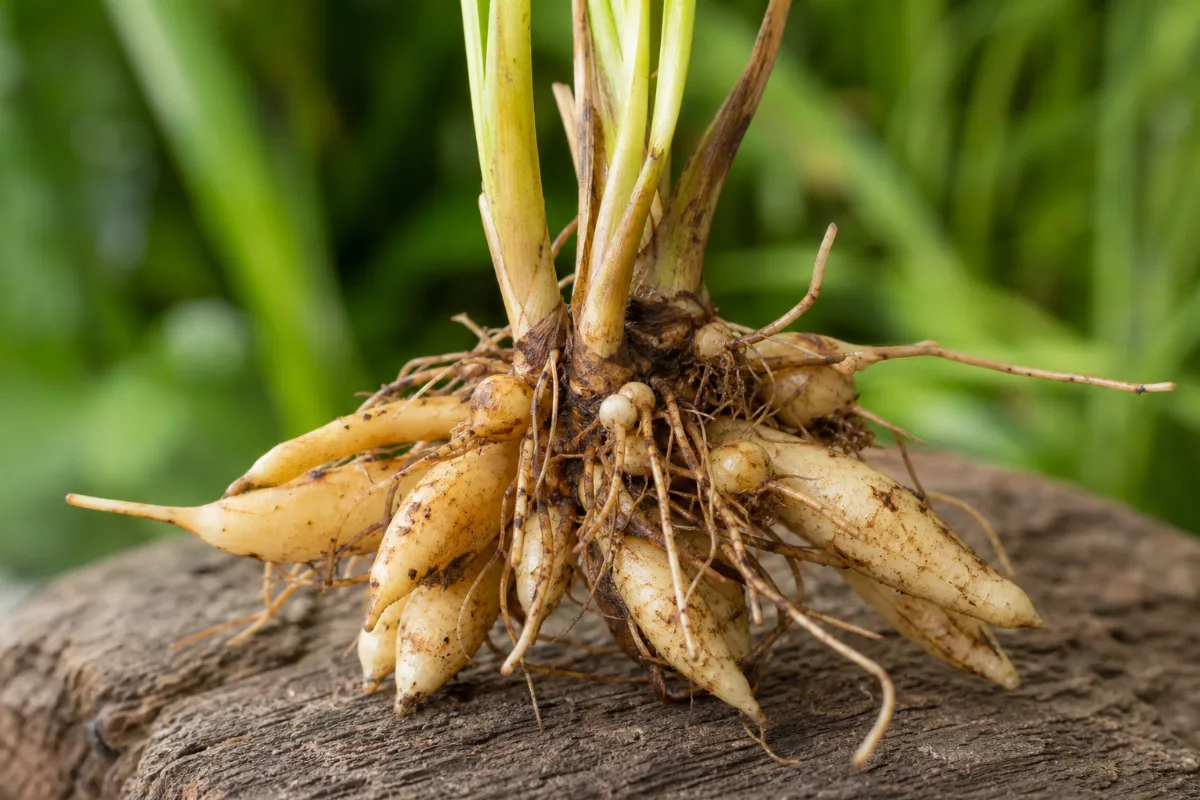
Herbs & Botanicals · Traditional diuretic herb
Alisma
Alisma orientale · also called Ze xie, zexie, Asian water plantain, Rhizoma Alismatis
Alisma, or ze xie, is the dried underground part of a water plant used in Chinese and Japanese medicine to help the body pass urine and clear extra fluid. Most human research tests multi-herb formulas that contain it, not the herb alone, and the cholesterol, blood sugar and fatty liver findings are from animals. Reviews disagree on safety: usual amounts are described as without obvious problems, but high or long-term use has been linked to kidney and liver injury in lab, animal and some case reports. Ask a doctor or pharmacist first if you have kidney or liver disease, take water pills or other medicines, or are pregnant.
General information, not medical advice. Last substantive update · Not medically reviewed. A named clinician has not signed off on this page. How this page is made
About Alisma
Alisma rhizome is a traditional water-clearing herb. Human research covers formulas of low certainty, and the animal findings on blood fats, blood sugar and fatty liver are not proven in people. Kidney, liver and fluid-balance safety matter more than any proven benefit.
Safety first
Kidneys: two reviews differ. A 2025 review says no obvious adverse reactions are generally held to occur within the prescribed range; a 2014 review says high-dose or long-term use can cause water-electrolyte imbalance, blood in urine, acidosis and even liver or kidney toxicity. Two Alisma compounds damaged human kidney cells in the lab, and very large amounts harmed rat kidneys (summary-only). No human case series was found. If you have kidney disease, ask your kidney doctor first.
Liver: Zexie appears in compilations of Chinese herbal liver injury, and Alisma orientale was named among suspected ingredients in hepatitis B patients taking mixtures. The case details were not read, so how common this is remains unknown. Absence of reports is not proof of safety.
Water pills and fluids: it is a diuretic herb. It can add to the effect of water pills and cause fluid and salt loss. Medicines such as digoxin and lithium depend on salt balance (theory only; no study found).
Pregnancy and breastfeeding: no human data, no LactMed or LiverTox entry found. Avoid medicinal amounts unless a doctor who knows your case agrees.
Drug interactions are by evidence type: a small trial of a formula with furosemide (human); CYP1A2/CYP3A4 effects in rats (animal); P-glycoprotein effects in cells (lab); blood pressure, diabetes and cholesterol medicines only in theory.
What it is
Alisma is the dried rhizome of Alisma orientale, now treated by GBIF as the subspecies Alisma plantago-aquatica subsp. orientale. It is called ze xie in Chinese. The main chemicals are triterpenoids called alisols. Reviews say only two of 12 Alisma species are used as the Chinese drug.
It is not the same as a multi-herb formula such as Wu Ling San (Wuling powder), Oryeongsan, Goreisan or Liu Wei Di Huang Wan; those contain several herbs. The European water plantain, Alisma plantago-aquatica, shares the Latin name, so labels overlap.
What the research shows
Formulas: low-certainty trials of formulas containing Alisma were done in heart failure, diabetic kidney disease and chronic subdural haematoma. They cannot show what Alisma itself does.
Animals: a 2025 analysis of 29 rodent studies found better blood fats and glucose measures, and preclinical work reports less liver fat. A 2004 rat study found fewer kidney stone deposits with isolated constituents.
For Alisma alone, no human trial was found for any use.
At a glance
Traditional uses history, not proof
- Promoting urination and clearing 'dampness' (fluid build-up)
- Swelling (oedema) and difficult urination
- High blood fats and diabetes (traditional Chinese uses)
- Ingredient in formulas such as Wu Ling San and Goreisan
Studied for research
- Heart failure fluid (formulas): low
- Diabetic kidney disease (formula): low
- Chronic subdural haematoma recurrence (Goreisan formula): low
- Blood fats and blood sugar (animals): insufficient
- Fatty liver (animals): insufficient
- Kidney stones (rats): insufficient
Main compounds
- Alisol A
- Alisol A 24-acetate
- Alisol B 23-acetate
- Other triterpenoids and terpenoids
Common forms
- Dried sliced rhizome (decoction)
- Salt-processed rhizome
- Granules or capsules
- Multi-herb formulas and patent medicines
Research links: Zhu 2025: Alisma extracts, glucose and lipids, 29 rodent studies (PubMed) · Pan 2025: Rhizoma alismatis review incl. toxicology (PubMed) · Jung 2024: Oryeongsan for heart failure, 59 trials (PubMed) · Teschke 2015: herbal Chinese medicine liver injury cases (PubMed) · Research Library · Genes & Biomarkers Library
The plant and its history
- Accepted scientific name
- Alisma plantago-aquatica subsp. orientale (Sam.) Sam.
- Naming authority
- GBIF species match API, read 2026-10-25: 'Alisma orientale (Sam.) Juz.' (key 2865103) is a SYNONYM of the ACCEPTED subspecies Alisma plantago-aquatica subsp. orientale (Sam.) Sam. (key 2865101), family Alismataceae. NCBI Taxonomy lists the subspecies as taxid 262913 (esummary read 2026-10-25).
- Synonyms
- Alisma orientale (Sam.) Juz. (GBIF synonym); Alisma orientalis (spelling variant used in papers)
- Common names
- Alisma, Asian water plantain (English); Ze xie (Zexie), Rhizoma Alismatis, Alismatis rhizoma (Chinese / Latin); Takusha (Japanese (Kampo name; not verified in a source read))
- Botanical family
- Alismataceae (water-plantain family; family named in a rat P450 paper and GBIF)
- Classification
- Plantae > Alismataceae > Alisma > Alisma plantago-aquatica
- Native range
- Not verified in the sources read.
- Habitat
- Not covered; a water or wetland plant (a pollutant-uptake paper calls it a wetland plant - title only, not opened).
- What the plant looks like
- Roots: The dried underground part (rhizome/tuber) is the drug; shape details not verified.; Stems: Not verified.; Leaves: Not verified.; Flowers: Not verified.; Fruit: Not verified.
- Cultivation
- Not covered; reviews say there is no full traceability system from planting to sale (summary-only).
- Harvest and processing
- Used raw (dried, sliced) or salt-processed (stir-fried with salt); reviewers suggest salt processing may lower some alisols but data conflict (summary-only).
- Look-alikes and adulterants
- Name: European water plantain (Alisma plantago-aquatica L.); Note: GBIF accepts it as a separate species (key 2865100). The 2025 reviews say it and the subspecies orientale are the two forms used as the Chinese medicine, so labels overlap; Western herbal uses of the European plant were not researched here.; Name: Other Alisma species; Note: A 2025 review counts 12 species of which only two are used in Chinese medicine.; Name: Plantain (Plantago species); Note: A different plant, not related; our plantain page covers it.; Name: Formulas containing Alisma; Note: Wu Ling San (Wuling powder), Oryeongsan, Goreisan and Liu Wei Di Huang Wan are multi-herb products; their trial results are not results for Alisma alone.
- Sustainability and conservation
- Not covered.
Traditional use and history history, not clinical proof
| Tradition or era | Documented use | Source |
|---|---|---|
| Traditional Chinese medicine | To promote water and dampness and vent heat; used for dysuria, oedema, kidney disease, high blood fats and diabetes | p25446590 |
| Traditional Chinese medicine (2025 review) | Described as an important part of many prescriptions used for water-metabolism-related diseases | p41424795 |
| Japanese Kampo | Ingredient of Goreisan, now used with surgery for chronic subdural haematoma | p37638721 |
| Europe (EMA/HMPC) | No monograph found | s-ema-alisma-notfound |
Traditional use shows how a plant was used. It does not show that a supplement works or is safe today.
What is inside, and how it may work
What the plant contains and how those compounds act in cells and animals. Laboratory and animal mechanisms are not proven effects in people.
Main compounds
| Compound | Family | Where it is concentrated | Activity studied | Level of evidence |
|---|---|---|---|---|
| Alisol A PubChem 15558616 | triterpenoid (alisols are described as tetracyclic triterpenoids) | Rhizome | Inhibited CYP3A in human liver microsomes without pre-incubation; reduced growth and caused cell death in kidney cells at tested concentrations. 14 15 6 | Laboratory research |
| Alisol A 24-acetate PubChem 76336194 | triterpenoid | Rhizome | Raised kidney-injury markers and caused apoptosis in kidney cells. 14 20 | Laboratory research |
| Alisol B 23-acetate PubChem 14036811 | triterpenoid | Rhizome | Raised kidney-injury markers and apoptosis in kidney cells; reversed P-glycoprotein drug resistance in cancer cells; reviews call its toxicity low. 14 20 19 22 | Laboratory research |
| Alisol B 23-monoacetate and alisol C (and other alisols) | triterpenoid | Rhizome | Alisol B 23-monoacetate caused cell death in kidney cells; alisol C and alisol B 23-acetate were the main therapeutic compounds in a computer model. 6 8 | In vitro / computer prediction |
| Sesquiterpenes and diterpenes | terpenoid | Rhizome | Named in a review as part of the main chemistry; roles not detailed. 18 | Narrative review |
Mechanisms, receptors and pathways
| Target or pathway | Gene or receptor | What was found | Level |
|---|---|---|---|
| Glucose and lipid metabolism | Insulin signalling, lipid metabolism, gluconeogenesis, autophagy | Rodent meta-analysis lists antioxidant, anti-inflammatory, lipid-metabolism, anti-gluconeogenesis, insulin signalling, autophagy and anti-fibrotic effects of Alisma extracts. 26 | Animal research |
| Liver fat and bile acid receptor | Farnesoid X receptor (FXR), adiponectin | Preclinical review proposes that Alisma and alisols act as an FXR agonist and activate adiponectin. 2 | Animal research |
| Kidney-cell injury | PI3K/Akt/mTOR, autophagy, Clusterin, Kim-1, TFF-3 | Alisol A 24-acetate and alisol B 23-acetate switched off PI3K/Akt/mTOR, triggered autophagy and apoptosis, and raised injury markers in kidney cells. 20 | Lab |
| Kidney stones | Bikunin gene expression | Isolated constituents lowered bikunin mRNA and calcium oxalate deposits in rats with induced stones. 1 | Animal research |
| Drug metabolism and transport | CYP1A2, CYP3A4, P-glycoprotein | Rat: CYP1A2 induced, CYP3A4 inhibited; lab: Goreisan and alisol B 23-acetate act on P-glycoprotein; alisol A inhibits CYP3A in microsomes. 5 15 19 | Lab / animal |
| Water balance in people | Diuresis, sodium excretion | Alisma-containing prescriptions raised urine output and sodium excretion in people (formula trials); the herb's own mechanism in people is unknown. 21 7 | Human (formula) |
Absorption, metabolism and elimination
- Absorption
- Not covered for people. Not researched in this build.
- Distribution
- Not covered.
- Metabolism
- Not covered in human data; lab papers on alisol metabolism were seen by title only.
- Elimination
- Not covered.
- Bioavailability
- Not covered.
Isolated compounds versus whole extracts
Safety signals for the kidney come largely from isolated alisols tested on cells and from very high doses in rats, while the benefit data are from whole-extract rodent studies and multi-herb formulas. None of these can be transferred to a tea, capsule or powder of the rhizome taken by people. Salt-processed and raw rhizome may differ (summary-only).
Nutritional composition
Alisma is a medicinal herb, not a food or nutrient source. Our nutrient-graph summary classes it as a herb with no essential-nutrient role.
3 low certainty6 not enough evidence
What is Alisma good for?
The studied uses and how strong the evidence is. Nearly all human data are for formulas that contain Alisma, not the herb alone; the rest is animal research.
Benefits, one by one
Each card is a research question, not a promise. Tap a goal to filter. Open a card to see the studies, doses and limits.
Passing urine and fluid build-up (traditional diuretic)
Not enough evidenceAlisma is used in Chinese medicine to promote urination and clear fluid, and extracts act as a diuretic in animals. We found no human trial of Alisma on its own. Human data come from multi-herb formulas.
2 studiesDried rhizome decoctions, granules and capsules, mostly as part of fo…
Studies, doses and limits
What the trials found
No trial of the herb alone was found. Formula trials are covered in the next three entries.
Results
Reviews describe diuretic activity in lab and animal work only.
Effect sizes as reported
Not applicable
Why this rating
Insufficient: the only 'evidence' for the herb itself is traditional use and lab or animal work; formula trials cannot be credited to the herb alone.
Form and dose studied
Dried rhizome decoctions, granules and capsules, mostly as part of formulas. Amounts are for a practitioner or doctor to decide.
Who was studied
Adults.
Limits
No human trial of Alisma alone; reviews are narrative.
Why researchers looked
It is a classic ingredient in fluid-balance formulas and was studied as a water-promoting herb.
Traditional use
In Chinese medicine it is said to promote water and dampness and vent heat.
Proposed mechanism Preliminary mechanism
Diuretic effects are reported for extracts and compounds in lab and animal work.
A proposed mechanism does not show that the effect happens in people.
Possible fluid and salt loss; see the safety file.
Heart failure fluid (Wu Ling San-type formulas)
Low certaintyIn 59 trials, Oryeongsan, a Wu Ling San-type formula, added to usual care improved heart pumping and urine output in people with heart failure. The gain was not significant when the comparison group also got a placebo. This is a formula, not Alisma alone.
2 studiesDecoctions or granules of the formulas, taken with heart medicines in…
Studies, doses and limits
What the trials found
A 2024 meta-analysis of 59 randomized trials (5,069 people) found that Oryeongsan and variants added to conventional care raised LVEF by 6.36 points (95% CI 5.11 to 7.61) and improved total effective rate, walking test, quality of life, BNP, NT-proBNP and 24-hour urine volume. Against conventional care plus placebo, LVEF and total effective rate improved without significance. Adverse events did not differ. A 2025 trial of 68 people with heart failure and water-pill resistance found a slightly higher sodium excretion fraction (0.18% vs 0.16%, P=0.037) with an 8-herb prescription containing Alisma plus a lower furosemide drip; no difference in events or readmissions at 24 weeks.
Results
Higher LVEF and urine volume with formula plus usual care versus usual care alone; no significant gain versus placebo-controlled comparison; end-point events not different in the one trial that followed them.
Effect sizes as reported
LVEF mean difference 6.36 (95% CI 5.11 to 7.61) vs conventional care alone.
Why this rating
Low: formula not herb, comparison against usual care alone is open to expectation effects, the placebo-controlled gains were not significant, quality results are not in the abstract, and the 68-person trial is small and short.
Form and dose studied
Decoctions or granules of the formulas, taken with heart medicines in hospital studies. Do not combine with water pills or other heart medicines without a doctor.
Who was studied
Adults with heart failure in China, Japan, Korea.
Limits
Alisma is one of several herbs; the abstracts do not say how much Alisma contributed; no placebo in most trials; short follow-up.
Why researchers looked
Fluid congestion is the commonest reason people with heart failure go to hospital, and water pills cause salt problems, so doctors have looked at add-on formulas.
Traditional use
Formulas that contain Alisma are used in Asia to manage fluid imbalance, including heart failure.
Proposed mechanism Preliminary mechanism
Not established; Alisma compounds are diuretic in animals.
A proposed mechanism does not show that the effect happens in people.
Alisma may add to water-pill effects. Do not use instead of heart medicines; electrolyte tests matter.
Diabetic kidney disease (Wuling powder)
Low certaintyIn 24 Chinese trials, Wuling powder (Wu Ling San), a multi-herb formula that includes Alisma, was better than control treatment on urine protein, creatinine and urine volume. This is a formula, and the authors say better trials are needed.
1 studiesMulti-herb powder or decoction added to standard diabetes and kidney …
Studies, doses and limits
What the trials found
A 2022 meta-analysis of 24 randomized trials of Wuling powder in diabetic nephropathy found larger 24-hour urine volume, lower 24-hour urine protein, creatinine, urea nitrogen and urine albumin, lower fasting glucose and blood fats, and a higher total effective rate. HbA1c did not change significantly.
Results
Better kidney and urine measures than control; HbA1c unchanged.
Effect sizes as reported
24-hour urine protein WMD -1.30 (95% CI -1.82 to -0.78); serum creatinine WMD -10.17 (-11.13 to -9.21); total effective rate RR 1.40 (1.32 to 1.48).
Why this rating
Low: formula not herb; trial quality is not given in the abstract; the authors say higher-quality studies are needed; the printed HDL result is internally inconsistent.
Form and dose studied
Multi-herb powder or decoction added to standard diabetes and kidney care. Amounts are not covered here.
Who was studied
Adults with diabetic kidney disease in China.
Limits
Formula not Alisma alone; blood and urine tests rather than kidney failure or death; heterogeneous trials; nothing on long-term kidney harm.
Why researchers looked
Diabetic kidney disease causes protein in the urine and fluid retention; Chinese hospitals add formulas to standard care.
Traditional use
Wu Ling San is a classical fluid-draining formula.
Proposed mechanism Preliminary mechanism
Not established for the formula; Alisma compounds are diuretic and fat-lowering in animals.
A proposed mechanism does not show that the effect happens in people.
People with kidney disease should not add a diuretic herb without their kidney doctor.
Chronic subdural haematoma recurrence (Goreisan, Japan)
Low certaintyGoreisan, a Kampo formula that includes Alisma, was linked to fewer recurrences of a chronic blood collection under the skull after surgery. This is a formula, not Alisma alone, and trials are small.
2 studiesKampo extract granules given for about 3 months after surgery in the …
Studies, doses and limits
What the trials found
A 2024 meta-analysis of 8 studies found fewer recurrences with Goreisan than with standard surgery care alone (OR 0.72; 95% CI 0.61 to 0.86), with no significant difference in complications (a very wide interval). A 2024 Japanese randomized trial (118 people, 114 analysed) found recurrence of 5.4% with Goreisan vs 25.6% with no medicine (P=.043) and no medicine-linked complications.
Results
Fewer recurrences after surgery with Goreisan.
Effect sizes as reported
OR 0.72 (95% CI 0.61 to 0.86) in the meta-analysis; 5.4% vs 25.6% in the trial.
Why this rating
Low: formula not herb; the meta-analysis mixes randomized trials with retrospective cohorts; the randomized trial is small and had no placebo; the version of Goreisan (which Atractylodes) mattered in the trial authors' view.
Form and dose studied
Kampo extract granules given for about 3 months after surgery in the trial. Prescription only in practice.
Who was studied
Adults after surgery for chronic subdural haematoma in Japan and China.
Limits
Alisma is one of several herbs; results may not carry over to other formulas or to the herb alone.
Why researchers looked
After surgery, chronic subdural haematoma comes back in a sizeable minority; Japanese neurosurgeons add Goreisan to cut recurrence.
Traditional use
Goreisan is a Kampo fluid-balance formula.
Proposed mechanism Preliminary mechanism
Not established; the authors of one trial suggest anti-inflammatory activity of its Atractylodes.
A proposed mechanism does not show that the effect happens in people.
Used only under a neurosurgeon; Alisma's own role is unknown.
Blood fats (cholesterol and triglycerides)
Not enough evidenceIn a 2025 analysis of 29 rodent studies, Alisma extracts lowered triglycerides, total cholesterol and LDL, and raised HDL. No good human trial of Alisma alone was found.
2 studiesExtracts in rodents; the amounts are not transferable to people.
Studies, doses and limits
What the trials found
No trial of Alisma alone in people was found. In the diabetic kidney disease formula trials (Wuling powder), total cholesterol, triglycerides and LDL were lower than control, but that is a multi-herb formula in a different population.
Results
A systematic review of 29 rodent studies found improved triglycerides, total cholesterol, LDL, HDL, body weight and liver fat with Alisma extracts.
Effect sizes as reported
Direction only in the abstract; sizes not given.
Why this rating
Insufficient for people: animal findings only; the formula result is not Alisma alone.
Form and dose studied
Extracts in rodents; the amounts are not transferable to people.
Who was studied
Rodents (animals); adults in formula trials.
Limits
Animal studies often do not carry over; extract preparations vary; no standardised amount.
Why researchers looked
The herb is used in Chinese medicine for high blood fats and 'phlegm and dampness'.
Traditional use
Chinese medicine uses it for hyperlipidaemia (high blood fats).
Proposed mechanism Animal research
Rodent studies point to antioxidant and anti-inflammatory effects, lipid-metabolism regulation and promotion of autophagy.
A proposed mechanism does not show that the effect happens in people.
Alisma may interact with cholesterol medicines in theory; see the safety file.
Blood sugar and insulin resistance
Not enough evidenceIn rodents, Alisma extracts improved fasting and after-meal glucose, glucose and insulin tolerance and insulin resistance. No human trial of Alisma alone was found.
2 studiesExtracts in animals; formula in people.
Studies, doses and limits
What the trials found
No trial of Alisma alone in people was found. In 24 Wuling powder trials in diabetic kidney disease, fasting glucose fell but HbA1c did not change significantly; it is a formula in a different question.
Results
Rodent meta-analysis: improved glucose and insulin measures. Formula meta-analysis: fasting glucose lower, HbA1c not significantly different.
Effect sizes as reported
Direction only for the rodent meta-analysis; Wuling powder: fasting glucose WMD -0.63 (95% CI -0.97 to -0.30), HbA1c WMD -0.11 (-0.30 to 0.08).
Why this rating
Insufficient for people: animal findings, plus an indirect formula result.
Form and dose studied
Extracts in animals; formula in people.
Who was studied
Rodents; adults with diabetic kidney disease in the formula trials.
Limits
No human trial of the herb alone; animal findings may not translate.
Why researchers looked
Chinese medicine lists diabetes among the uses of Alisma.
Traditional use
Used for diabetes in traditional Chinese medicine.
Proposed mechanism Animal research
Suggested mechanisms in rodents: less sugar made by the liver, better insulin signalling and anti-inflammatory effects.
A proposed mechanism does not show that the effect happens in people.
If you take diabetes medicines, ask a pharmacist; theoretical added blood-sugar lowering is not tested.
Fatty liver (NAFLD/MASLD)
Not enough evidenceAlisma extracts and alisols reduced liver fat and inflammation in mice and rats, possibly by switching on the FXR receptor. No human trial of Alisma was found.
2 studiesExtracts and isolated alisols in animals.
Studies, doses and limits
What the trials found
No human trial of Alisma was found in our searches. A 2025 rodent meta-analysis found lower liver triglycerides and cholesterol; a 2019 review of preclinical studies found less fat build-up, injury and scarring signals.
Results
Lower liver TG and TC in rodent studies; improvements in liver injury panels in preclinical work.
Effect sizes as reported
Direction only; no numbers in the abstracts.
Why this rating
Insufficient for people: lab and animal data only. Also note that liver injury has been reported with some Chinese herbal products including Zexie (see the safety file), so animal benefit does not mean safety.
Form and dose studied
Extracts and isolated alisols in animals.
Who was studied
Mice and rats.
Limits
No human data; the isolated compounds in the lab work are not the whole herb.
Why researchers looked
Fatty liver is linked to high blood fats and insulin resistance, which Alisma affects in animals.
Traditional use
Used for 'dampness' and phlegm, a concept linked traditionally to excess fat.
Proposed mechanism Animal research
Lab and animal work: less liver fat build-up, antioxidant and anti-inflammatory effects, FXR (farnesoid X receptor) activation.
A proposed mechanism does not show that the effect happens in people.
Reports of liver injury in people taking Chinese herbal products that include Alisma make this a use to avoid self-treating.
Kidney stones (calcium oxalate)
Not enough evidenceIn rats, constituents isolated from Alisma reduced calcium oxalate deposits in the kidney. No human study was found.
1 studiesIsolated constituents given by stomach tube to rats.
Studies, doses and limits
What the trials found
No human study of Alisma for kidney stones was found.
Results
Rats given the active constituents had less calcium oxalate in the kidney, lower creatinine and urea nitrogen, and lower urine calcium than untreated stone-forming rats.
Effect sizes as reported
Kidney calcium 4.70 vs 9.49 mg/g (P<0.01); 24-hour urine calcium 37 vs 62 micromol (P<0.01) in rats.
Why this rating
Insufficient for people: a single old rat study (2004) with isolated constituents.
Form and dose studied
Isolated constituents given by stomach tube to rats.
Who was studied
Rats.
Limits
30 rats, isolated constituents, not the whole herb, one paper, no human data.
Why researchers looked
Chinese medicine uses Alisma for difficult urination.
Traditional use
Used to promote urination.
Proposed mechanism Animal research
In a rat model, isolated constituents lowered kidney calcium and urine calcium and changed bikunin gene expression.
A proposed mechanism does not show that the effect happens in people.
Do not self-treat kidney stones or flank pain; see a doctor.
Blood pressure
Not enough evidenceA review says Alisma extracts and compounds lowered blood pressure in lab and animal work. A computer model also predicted action on pregnancy-related high blood pressure. No human trial of Alisma alone was found.
2 studiesExtracts and compounds in lab models.
Studies, doses and limits
What the trials found
No human trial of Alisma alone was found.
Results
A 2025 review lists blood-pressure lowering among activities of extracts and compounds; a 2022 computer-prediction paper suggests targets for pregnancy-induced high blood pressure.
Effect sizes as reported
Not applicable
Why this rating
Insufficient: lab, animal and computer-model findings only.
Form and dose studied
Extracts and compounds in lab models.
Who was studied
Lab models and computer prediction.
Limits
Computer predictions are not evidence that Alisma treats or is safe in pregnancy.
Why researchers looked
It is used with other herbs for dizziness and high blood pressure in Asia.
Traditional use
Traditional Chinese formulas with Alisma are used for 'dizziness'.
Proposed mechanism Pharmacological theory
Lab and animal work reports blood-pressure-lowering activity; a computer prediction paper lists targets (not tested in people).
A proposed mechanism does not show that the effect happens in people.
Do not use Alisma for pregnancy-related high blood pressure; see a doctor.
Connections to the rest of health
How Alisma connects to the rest of our health knowledge graph. Every link says what kind of connection it is. A safety link (for example to the liver) is a warning, not a benefit. A study that merely mentions a topic never creates a benefit link.
Explore every connection: goals, body systems, organs, symptoms, genes
A. Wellness goals
| Connected to | Kind of connection | Evidence status | Context | Studies |
|---|---|---|---|---|
| Fluid balance | Traditional use | Not enough evidence | Traditional diuretic; formula trials in heart failure show more urine output; risk of fluid and salt loss. Passing urine and fluid build-up (traditional diuretic): Alisma is used in Chinese medicine to promote urination and clear fluid, and extracts act as a diuretic in animals. We found no human trial of Alisma on its own. Human data come from multi-herb formulas. Preparation or compound: Rhizome; formulas such as Wu Ling San and Goreisan |
7 21 18 13 |
| Heart Health | Potential benefit | Low certainty | Heart failure fluid (Wu Ling San-type formulas): In 59 trials, Oryeongsan, a Wu Ling San-type formula, added to usual care improved heart pumping and urine output in people with heart failure. The gain was not significant when the comparison group also got a placebo. This is a formula, not Alisma alone. | 7 21 |
| Fluid Balance | Potential benefit | Low certainty | Heart failure fluid (Wu Ling San-type formulas): In 59 trials, Oryeongsan, a Wu Ling San-type formula, added to usual care improved heart pumping and urine output in people with heart failure. The gain was not significant when the comparison group also got a placebo. This is a formula, not Alisma alone. | 7 21 |
| Kidney Health | Potential benefit | Low certainty | Diabetic kidney disease (Wuling powder): In 24 Chinese trials, Wuling powder (Wu Ling San), a multi-herb formula that includes Alisma, was better than control treatment on urine protein, creatinine and urine volume. This is a formula, and the authors say better trials are needed. | 23 |
| Brain Health | Potential benefit | Low certainty | Chronic subdural haematoma recurrence (Goreisan, Japan): Goreisan, a Kampo formula that includes Alisma, was linked to fewer recurrences of a chronic blood collection under the skull after surgery. This is a formula, not Alisma alone, and trials are small. | 24 9 |
| Cholesterol Balance | Not enough evidence | Blood fats (cholesterol and triglycerides): In a 2025 analysis of 29 rodent studies, Alisma extracts lowered triglycerides, total cholesterol and LDL, and raised HDL. No good human trial of Alisma alone was found. | 26 23 | |
| Blood Sugar Balance | Not enough evidence | Blood sugar and insulin resistance: In rodents, Alisma extracts improved fasting and after-meal glucose, glucose and insulin tolerance and insulin resistance. No human trial of Alisma alone was found. | 26 23 | |
| Liver Support | Not enough evidence | Fatty liver (NAFLD/MASLD): Alisma extracts and alisols reduced liver fat and inflammation in mice and rats, possibly by switching on the FXR receptor. No human trial of Alisma was found. | 26 2 | |
| Urinary Support | Not enough evidence | Kidney stones (calcium oxalate): In rats, constituents isolated from Alisma reduced calcium oxalate deposits in the kidney. No human study was found. | 1 | |
| Heart Health | Not enough evidence | Blood pressure: A review says Alisma extracts and compounds lowered blood pressure in lab and animal work. A computer model also predicted action on pregnancy-related high blood pressure. No human trial of Alisma alone was found. | 13 8 |
B. Body systems
| Connected to | Kind of connection | Evidence status | Context | Studies |
|---|---|---|---|---|
| Kidney and urinary system | Adverse effect or risk | Mixed findings | Traditional diuretic; kidney injury in cells and rats at high exposure; reviews differ on risk at usual amounts. Preparation or compound: High or long-term rhizome; alisol A 24-acetate, alisol B 23-acetate |
13 18 20 |
| Liver | Adverse effect or risk | Not enough evidence | Listed in compilations of herbal liver injury; details not read; hepatitis B patients. Preparation or compound: Zexie in Chinese herbal products |
16 17 25 |
| Urinary System | Biological association | Not enough evidence | Studied for: Passing urine and fluid build-up (traditional diuretic) Studied for: Heart failure fluid (Wu Ling San-type formulas) | 13 18 7 21 23 1 |
| Kidney Urinary | Biological association | Not enough evidence | Studied for: Passing urine and fluid build-up (traditional diuretic) Studied for: Diabetic kidney disease (Wuling powder) | 13 18 23 1 |
| Cardiovascular System | Biological association | Low certainty | Studied for: Heart failure fluid (Wu Ling San-type formulas) Studied for: Blood fats (cholesterol and triglycerides) | 7 21 26 23 13 8 |
| Nervous System | Biological association | Low certainty | Studied for: Chronic subdural haematoma recurrence (Goreisan, Japan) | 24 9 |
| Metabolism Weight | Biological association | Not enough evidence | Studied for: Blood fats (cholesterol and triglycerides) Studied for: Blood sugar and insulin resistance | 26 23 |
| Endocrine System | Biological association | Not enough evidence | Studied for: Blood sugar and insulin resistance | 26 23 |
| Liver Detox | Biological association | Not enough evidence | Studied for: Fatty liver (NAFLD/MASLD) | 26 2 |
| Digestive System | Biological association | Not enough evidence | Studied for: Fatty liver (NAFLD/MASLD) | 26 2 |
G. Root causes and contributing factors
| Connected to | Kind of connection | Evidence status | Context | Studies |
|---|---|---|---|---|
| Herb-drug interaction | Not enough evidence | CYP and P-glycoprotein effects in rats and lab tests. Preparation or compound: Rhizome extract; alisol A |
5 15 |
I. Biomarkers
| Connected to | Kind of connection | Evidence status | Context | Studies |
|---|---|---|---|---|
| 24-hour urine volume | Biological association | Low certainty | Measured in trials: increased. A lab change is not the same as a health benefit. | 23 7 |
| Serum creatinine | Biological association | Low certainty | Measured in trials: lowered. A lab change is not the same as a health benefit. | 23 6 |
| Left ventricular ejection fraction (LVEF) | Biological association | Low certainty | Measured in trials: raised. A lab change is not the same as a health benefit. | 7 |
| Recurrence of chronic subdural haematoma | Biological association | Low certainty | Measured in trials: lowered. A lab change is not the same as a health benefit. | 24 9 |
| Triglycerides | Biological association | Not enough evidence | Measured in trials: lowered. A lab change is not the same as a health benefit. | 26 23 |
| LDL cholesterol | Biological association | Not enough evidence | Measured in trials: lowered. A lab change is not the same as a health benefit. | 26 23 |
| Fasting blood glucose | Biological association | Not enough evidence | Measured in trials: lowered. A lab change is not the same as a health benefit. | 26 23 |
| Liver triglycerides and cholesterol | Biological association | Not enough evidence | Measured in trials: lowered. A lab change is not the same as a health benefit. | 26 2 |
K. Biological pathways
| Connected to | Kind of connection | Evidence status | Context | Studies |
|---|---|---|---|---|
| CYP3A4, CYP1A2 | Preliminary mechanism | Animal / lab | Altered in rats by Alisma; CYP3A inhibited by alisol A in microsomes. | 5 15 |
| P-glycoprotein | Preliminary mechanism | Lab | Inhibited by Goreisan extract (Caco-2) and affected by alisol B 23-acetate in cancer cells. | 15 19 |
| PI3K/Akt/mTOR | Preliminary mechanism | Lab | Switched off by alisol A 24-acetate and alisol B 23-acetate in kidney cells. | 20 |
| Farnesoid X receptor (FXR) | Preliminary mechanism | Animal | Proposed target in fatty-liver animal work. | 2 |
L. Active compounds
| Connected to | Kind of connection | Evidence status | Context | Studies |
|---|---|---|---|---|
| Alisol A | Biological association | In vitro | Inhibited CYP3A in human liver microsomes without pre-incubation; reduced growth and caused cell death in kidney cells at tested concentrations. Preparation or compound: Rhizome |
14 15 6 |
| Alisol A 24-acetate | Biological association | In vitro | Raised kidney-injury markers and caused apoptosis in kidney cells. Preparation or compound: Rhizome |
14 20 |
| Alisol B 23-acetate | Biological association | In vitro | Raised kidney-injury markers and apoptosis in kidney cells; reversed P-glycoprotein drug resistance in cancer cells; reviews call its toxicity low. Preparation or compound: Rhizome |
14 20 19 22 |
| Alisol B 23-monoacetate and alisol C (and other alisols) | Biological association | In vitro / computer prediction | Alisol B 23-monoacetate caused cell death in kidney cells; alisol C and alisol B 23-acetate were the main therapeutic compounds in a computer model. Preparation or compound: Rhizome |
6 8 |
| Sesquiterpenes and diterpenes | Biological association | Narrative review | Named in a review as part of the main chemistry; roles not detailed. Preparation or compound: Rhizome |
18 |
Each connection is stored with the ingredient, the connected record, the kind of connection, the evidence status, the supporting studies, the preparation or compound involved, and a review date (last reviewed October 25, 2026).
Evidence at a glance: what changed in 7 lab markers
Tap a number to show only those markers. Counts are markers, not people.
The evidence
The research centre for Alisma. Every record here was checked against PubMed or the publisher's page; we never list a study we have not verified.
Evidence by outcome
Bars show how many studies we found for each outcome, not how well it works. People are added up across trials only (reviews are not added, to avoid double counting).
How we rate evidence
High certainty
Several well-run trials or reviews agree; further research is unlikely to change the picture much.
Moderate certainty
Good trials point the same way, but some doubt remains.
Low certainty
Small, short or inconsistent trials. The finding could change with better research.
Very low certainty
Very little or very weak human data. Treat as a possibility only.
Mixed findings
Trials or reviews disagree with each other.
Not enough evidence
Not enough human research to say either way.
Evidence against
Good research found no benefit, or found harm.
We take the reviewers' own risk-of-bias and GRADE statements where they exist, and otherwise judge from study size, design, consistency, directness and whether a product matches what is sold. Many publications do not make evidence high. Method note: We read our existing herb summary, searched PubMed, read the abstract of each PubMed record cited, and checked names in GBIF and NCBI Taxonomy and compounds in PubChem. Regulator pages that could not be opened are marked not found or not verified.
Study library: every study we checked 26
| Study | Design | People | Product, dose, length | Result |
|---|---|---|---|---|
| Cao 2004 [The effects of the active constituents of Alisma orientalis on renal stone formation and bikunin expression in rat urolithiasis model]. Zhonghua Yi Xue Za Zhi · PMID 15387965 |
Animal study animal |
30 Male Wistar rats with kidney stones induced by ethylene glycol and ammonium chloride (10 per group) |
Active constituents isolated from Alisma orientalis rhizome (isolated constituents) not stated in abstract 4 weeks · vs Stone-forming group without treatment; healthy controls |
Treated rats had less calcium oxalate in the kidney and lower creatinine, urea nitrogen, kidney calcium and 24-hour urine calcium than untreated stone-forming rats. For example, kidney calcium 4.70 vs 9.49 mg/g (P<0.01) and 24-hour urine calcium 37 vs 62 micromol (P<0.01). See results (None) Methods, limits and fundingOutcomes: Calcium oxalate deposits in kidney, creatinine, urea nitrogen, bikunin mRNA, kidney calcium, urinary calcium and oxalate. Limitations: Rats; isolated constituents, not the whole herb; 2004 paper in Chinese with English abstract; no human data. Funding and conflicts: Not stated in abstract. Read: abstract |
| Choi 2019 Pharmacological Activities of Alisma orientale against Nonalcoholic Fatty Liver Disease and Metabolic Syndrome: Literature Review. Evid Based Complement Alternat Med · PMID 31275407 · DOI |
Narrative review animal |
Review of preclinical (lab and animal) studies | Alisma orientale extract and alisols (alisol A 24-acetate, alisol B 23-acetate, alisol F, alismol) rhizome not applicable not applicable · vs not applicable |
In preclinical work the herb reduced liver triglyceride build-up, oxidative-stress and inflammation markers and scarring signals. Suggested mechanisms: adiponectin activation, or acting as a farnesoid X receptor (FXR) agonist. The authors say standardisation, safety testing and clinical trials are still required. Not applicable (None) Methods, limits and fundingOutcomes: Fatty liver, blood fats, insulin resistance, obesity, blood sugar, appetite. Limitations: Preclinical only; no human trial reviewed in the abstract. Funding and conflicts: Not stated in abstract. Read: abstract |
| EMA 2026 EMA/HMPC herbal monograph for Alismatis rhizoma European Medicines Agency · Source |
Not found |
unspecified |
No monograph found. A guessed monograph page returned page-not-found (HTTP 404) and the EMA site search returned HTTP 401 on 2026-10-25, so the EMA list was not searched. Methods, limits and fundingLimitations: Not found is not proof that none exists. Not verified. Read: not-found | |
| GBIF 2026 GBIF species records: Alisma orientale (synonym) and Alisma plantago-aquatica subsp. orientale (accepted) GBIF Backbone Taxonomy · Source |
Authoritative guidance |
unspecified |
Read 2026-10-25. 'Alisma orientale (Sam.) Juz.' (key 2865103) is a SYNONYM of the ACCEPTED name Alisma plantago-aquatica subsp. orientale (Sam.) Sam. (key 2865101), family Alismataceae. 'Alisma plantago-aquatica L.' (key 2865100) is a separate ACCEPTED species, exact match, confidence 99. Methods, limits and fundingLimitations: Taxonomy only. Read: full-text | |
| Huang 2014 Effects of Alismatis rhizome on rat cytochrome P450 enzymes. Pharm Biol · PMID 24824320 · DOI |
Animal study animal |
Rats given a cocktail of probe drugs after 14 days of Alisma | Alismatis rhizome (Zexie) in three dose levels rhizome 10, 20 and 40 g/kg twice a day (rats) 14 days · vs Untreated rats |
Alisma induced (sped up) CYP1A2 and inhibited CYP3A4 in rats; no effect on CYP2C9 or CYP2E1. The authors advise caution when it is taken with some CYP1A2 or CYP3A4 drugs. Not applicable (None) Methods, limits and fundingOutcomes: Blood levels of drugs processed by CYP1A2, CYP2C9, CYP2E1 and CYP3A4. Limitations: Rats at high doses; not shown in people. Funding and conflicts: Not stated in abstract. Read: abstract |
| Huang 2024 The safety evaluation of Shenze Shugan capsule and mechanism of apoptosis induced by five potentially nephrotoxic components. J Ethnopharmacol · PMID 38219879 · DOI |
Animal study animal |
Rats given herbs for two months, and HK-2 kidney cells | Shenze Shugan capsule (rhubarb, cassia seed and Alismatis Rhizoma) and its single herbs; plus alisol A and alisol B 23-monoacetate on cells rhizome (with two other herbs) High doses, 60 times the adult clinical dose 2 months (rats) · vs Single herbs vs mixed herbs |
At 60 times the clinical dose for two months, rhubarb, cassia seed or the mixed herbs raised creatinine and urea nitrogen and caused tubule changes in rats; the abstract does not list Alisma alone among them. The capsule itself showed no significant kidney difference. In cells, alisol A and alisol B 23-monoacetate (like the other three compounds) reduced growth and caused cell death. Not applicable (None) Methods, limits and fundingOutcomes: Kidney function (creatinine, urea nitrogen), kidney tissue, cell death. Limitations: Rats and cells, a three-herb capsule, very high doses; the abstract does not give Alisma-alone kidney results. Not human evidence. Funding and conflicts: Not stated in abstract. Read: abstract |
| Jung 2024 Traditional herbal medicine Oryeongsan for heart failure: A systematic review and meta-analysis. Heliyon · PMID 39315159 · DOI |
Meta-analysis |
5069 People with heart failure; 59 randomized trials |
Oryeongsan and variants (the Korean name of a Wu Ling San-type fluid-balance formula; the abstract does not list its herbs) added to conventional treatment rhizome (as one ingredient, per our herb summary; not stated in abstract) not stated in abstract not stated in abstract · vs Conventional treatment alone, or plus placebo |
LVEF was higher with the formula (mean difference 6.36 points; 95% CI 5.11 to 7.61). Other measures improved too, including 24-hour urine volume. Against conventional treatment plus placebo, LVEF and total effective rate improved without statistical significance. Adverse events did not differ. MD 6.36 for LVEF (5.11 to 7.61) Methods, limits and fundingOutcomes: Pumping function (LVEF), total effective rate, walking test, quality of life, BNP and NT-proBNP, 24-hour urine volume, adverse events. Limitations: Formula, not Alisma alone; the placebo-controlled comparison showed no significant gain; risk-of-bias results are not in the abstract; trials mostly in Asia. Funding and conflicts: Not stated in abstract. Read: abstract |
| Liao 2022 Exploring the mechanism of Alisma orientale for the treatment of pregnancy induced hypertension and potential hepato-nephrotoxicity by using network pharmacology, network toxicology, molecular docking and molecular dynamics simulation. Front Pharmacol · PMID 36457705 · DOI |
Other other |
Computer prediction from public databases (no animals or people) | Alisma orientale compounds (database entries) rhizome (computer model) not applicable not applicable · vs not applicable |
The computer model predicted 29 compounds acting on 78 targets for high blood pressure in pregnancy, and 10 compounds linked to liver and kidney toxicity targets (PPARG and TNF named). It named alisol B 23-acetate and alisol C as main therapeutic compounds and emodin as the main toxic compound. The authors say experimental verification is needed before clinical use. Not applicable (None) Methods, limits and fundingOutcomes: Predicted targets for pregnancy-induced high blood pressure and for liver and kidney toxicity. Limitations: Prediction only; not evidence that Alisma helps or harms pregnancy or the liver or kidney in people. Funding and conflicts: Not stated in abstract. Read: abstract |
| Matsumoto 2024 The Effect of Japanese Herbal Medicines (Kampo) Goreisan and Saireito on the Prevention of Recurrent Chronic Subdural Hematoma: A Prospective Randomized Study. Neurosurgery · PMID 37638721 · DOI |
Controlled trial |
118 Adults after burr-hole surgery for chronic subdural haematoma, Japan (114 analysed) |
Goreisan (formula including Alisma rhizome, per our herb summary; a version with Atractylodes rhizome) or Saireito, versus no medicine rhizome (as one ingredient) not stated in abstract 3 months · vs No medication |
Recurrence was 5.4% with Goreisan vs 25.6% with no medicine (P=.043) and 2.6% with Saireito. No complications linked to the Kampo medicines were seen. 5.4% vs 25.6% (None) Methods, limits and fundingOutcomes: Symptomatic recurrence within 3 months; complications. Limitations: Small single-trial result (about 37 per group), not blinded as far as the abstract says (no placebo), formula not herb alone; funding not in abstract. Funding and conflicts: Not stated in abstract. Read: abstract |
| NCBI 2026 NCBI Taxonomy: Alisma plantago-aquatica subsp. orientale NCBI Taxonomy · Source |
Authoritative guidance |
unspecified |
Read 2026-10-25: taxid 262913, rank subspecies, scientific name Alisma plantago-aquatica subsp. orientale, division monocots. Methods, limits and fundingLimitations: Taxonomy only. Read: full-text | |
| NCCIH 2026 NCCIH Herbs at a Glance: Alisma National Center for Complementary and Integrative Health · Source |
Not found |
unspecified |
No Alisma page found. A guessed page returned HTTP 404 on 2026-10-25. The NCCIH search page returns content only through scripts and was not read. Methods, limits and fundingLimitations: Not found is not proof none exists. Not verified. Read: not-found | |
| NIH / 2026 LiverTox and LactMed (NCBI Bookshelf) entries for Alisma / Zexie LiverTox; LactMed · Source |
Not found |
unspecified |
A Bookshelf search for 'alisma livertox', 'zexie livertox' and 'alisma lactmed' found no matching entry on 2026-10-25 (one query errored and was repeated, returning no entry). Methods, limits and fundingLimitations: Search did not open any entry pages. Not found, not verified. Read: not-found | |
| Pan 2025 Botany, traditional uses, phytochemistry, pharmacology, toxicology and processing of Rhizoma alismatis: a review. Front Pharmacol · PMID 41424795 · DOI |
Narrative review |
Narrative review of botany, traditional use, chemistry, pharmacology, toxicology and processing | Rhizoma alismatis (Alisma) extracts and isolated compounds rhizome not applicable not applicable · vs not applicable |
Of 12 Alisma species, only Alisma plantago-aquatica L. and A. plantago-aquatica subsp. orientale are used as the Chinese medicine. Extracts and compounds show diuretic, liver-protective, blood-pressure-lowering, blood-sugar-lowering, anti-cancer, anti-inflammatory and antioxidant effects in lab and animal work. The authors say toxicity has long been debated and that it is generally held that no obvious adverse reactions occur within the prescribed dose range. Per our existing herb summary (full text; details below marked summary-only): rats given very large amounts for months had kidney tubule injury linked to alisol B 23-acetate and alisol A 24-acetate; the review advises people with impaired kidneys to be careful with long-term high amounts; older records mention electrolyte imbalance, blood in urine, acidosis and stomach symptoms; a DNA study cited found most market samples labelled subsp. orientale were A. plantago-aquatica; salt-stir-frying may lower some alisols but data conflict. Not applicable (None) Methods, limits and fundingOutcomes: Botany, traditional uses, chemistry, pharmacology (diuretic, liver protection, blood pressure, blood sugar, anti-cancer, anti-inflammatory, antioxidant), toxicity and processing. Limitations: Narrative review, no systematic search or risk-of-bias rating. Toxicity details, the DNA market study and the salt-processing statement are from our own existing summary of the full text, not re-opened for this page (summary-only). Most evidence reviewed is lab and animal. Funding and conflicts: Not stated in abstract. Read: abstract + summary-only for details |
| PubChem 2026 PubChem compound records: alisol A, alisol A 24-acetate, alisol B 23-acetate PubChem · Source |
Authoritative guidance |
unspecified |
Read 2026-10-25 via the PubChem name API: alisol A CID 15558616 (C30H50O5); alisol A 24-acetate CID 76336194 (C32H52O6); alisol B 23-acetate CID 14036811 (C32H50O5). Methods, limits and fundingLimitations: Identity of compounds only. Read: full-text | |
| Takiyama 2022 In vitro assessment of the inhibitory effect of goreisan extract and its ingredients on the P-glycoprotein drug transporter and cytochrome P-450 metabolic enzymes. Xenobiotica · PMID 35855663 · DOI |
Laboratory research in-vitro |
Cell and human liver microsome tests | Goreisan extract; alisol A, tumulosic acid and cinnamic acid rhizome (alisol A is an Alisma compound) not stated in abstract not stated in abstract · vs Controls in the assay |
Goreisan extract inhibited P-glycoprotein in a concentration-dependent way. Alisol A inhibited only CYP3A, with no effect after pre-incubation. The authors judge these effects minor or negligible in vivo. Not applicable (None) Methods, limits and fundingOutcomes: P-glycoprotein (drug transporter) and seven CYP enzymes. Limitations: Lab tests only; no human interaction study. Authors are from the Kampo manufacturer's research setting (funding not in abstract). Funding and conflicts: Not stated in abstract. Read: abstract |
| Teschke 2014 Traditional Chinese Medicine Induced Liver Injury. J Clin Transl Hepatol · PMID 26357619 · DOI |
Narrative review |
Literature review of reported liver-injury cases from herbal Chinese medicine | Many Chinese herbal products; Zexie (Alisma) is on the list rhizome (as named product) not applicable not applicable · vs not applicable |
Zexie appears among the named products with reported liver injury. The author says causality was firmly established for some products by re-exposure or the CIOMS liver scale, but case quality was mixed because of adulteration with drugs, heavy-metal contamination and misidentified herbs. The abstract does not say which Zexie cases were firmly established, how many there were, or whether Zexie was the only ingredient. Not applicable (None) Methods, limits and fundingOutcomes: Which Chinese herbal products have reported liver injury, and how well the cases were documented. Limitations: Abstract only; case details for Zexie not read. Funding and conflicts: Not stated in abstract. Read: abstract |
| Teschke 2015 Traditional Chinese Medicine and herbal hepatotoxicity: a tabular compilation of reported cases. Ann Hepatol · PMID 25536637 |
Narrative review |
Review of 77 publications on 57 herbs or herbal mixtures | Chinese herbs and mixtures; Zexie is among those with causality established rhizome (as named product) not applicable not applicable · vs not applicable |
Causality was established for 28 of 57 herbs or mixtures, and Zexie is on that list. The abstract does not give the number of Zexie cases, whether they involved Zexie alone, or the outcomes. 28 of 57 herbs or mixtures (None) Methods, limits and fundingOutcomes: Causality by CIOMS scale or positive re-exposure. Limitations: Abstract only; the individual Zexie case reports were not read. Listing of a name does not tell us how common injury is. Funding and conflicts: Not stated in abstract. Read: abstract |
| Tian 2014 Traditional uses, phytochemistry, pharmacology, toxicology and quality control of Alisma orientale (Sam.) Juzep: a review. J Ethnopharmacol · PMID 25446590 · DOI |
Narrative review |
Narrative review | Rhizoma alismatis (Zexie) rhizome not applicable not applicable · vs not applicable |
Traditionally used for dysuria (painful or difficult urination), oedema, kidney disease, high blood fats, diabetes, inflammation and tumours. Main chemistry is terpenoids (sesquiterpene, diterpene, triterpene). Extracts and compounds showed diuretic, kidney-protective, anti-hyperlipidaemic, anti-atherosclerotic, anti-cancer, anti-inflammatory and antioxidant activity. The authors state that high-dose or long-term use can lead to water-electrolyte imbalance, bloody urine, acidosis and even liver or kidney toxicity, which they say several studies have shown. They call for a standardised fingerprint and more precise toxicity work. Not applicable (None) Methods, limits and fundingOutcomes: Traditional uses, chemistry, pharmacology, toxicology, quality control. Limitations: Narrative review; the abstract does not say how many of the toxicity reports are in humans, or give amounts. Funding and conflicts: Not stated in abstract. Read: abstract |
| Wang 2004 Reversal of P-glycoprotein-mediated multidrug resistance by Alisol B 23-acetate. Biochem Pharmacol · PMID 15294447 · DOI |
Laboratory research in-vitro |
Drug-resistant cancer cell lines | Alisol B 23-acetate isolated from Rhizoma Alismatis rhizome (compound) not stated in abstract not stated in abstract · vs Untreated cells |
The compound restored cancer-cell sensitivity to several drugs that P-glycoprotein pumps out, raised doxorubicin accumulation and acted as a partial non-competitive inhibitor of P-glycoprotein. Not applicable (None) Methods, limits and fundingOutcomes: Drug accumulation and efflux, P-glycoprotein activity. Limitations: Isolated compound on cell lines; not shown in people. Funding and conflicts: Not stated in abstract. Read: abstract |
| Wang 2017 Alisol A 24-Acetate and Alisol B 23-Acetate Induced Autophagy Mediates Apoptosis and Nephrotoxicity in Human Renal Proximal Tubular Cells. Front Pharmacol · PMID 28408883 · DOI |
Laboratory research in-vitro |
Human kidney proximal tubule (HK-2) cells, plus markers measured in vivo | Alisol A 24-acetate and alisol B 23-acetate (isolated compounds) rhizome (isolated compounds) not stated in abstract not stated in abstract · vs Untreated cells |
Both compounds raised kidney-injury markers in vitro and in vivo, triggered cell death and autophagy in kidney cells, and switched off PI3K/Akt/mTOR signalling. The authors say this helps explain possible kidney toxicity and could aid safer clinical use of the herb. Not applicable (None) Methods, limits and fundingOutcomes: Kidney-injury markers (Clusterin, Kim-1, TFF-3), cell death, autophagy, PI3K/Akt/mTOR signalling. Limitations: Isolated compounds on cells (and an animal readout not detailed in the abstract), not the whole herb at usual intake; concentrations not in abstract. Funding and conflicts: Not stated in abstract. Read: abstract |
| Wu 2025 [Effects and Efficacy of Wenyang Huayin Yangxin Prescription on the Traditional Chinese Medicine Syndromes of Patients With Chronic Heart Failure Combined With Diuretic Resistance]. Sichuan Da Xue Xue Bao Yi Xue Ban · PMID 40109465 · DOI |
Controlled trial |
68 People with chronic heart failure and resistance to water pills, China |
An 8-herb prescription that includes Alisma rhizome, plus a lower furosemide drip rhizome (as one of 8 herbs) Per the abstract the prescription had a set weight for each herb; not reproduced here 2 weeks (24 weeks follow-up) · vs Higher-dose furosemide drip alone, with standard care |
After 2 weeks the herb group had a slightly higher sodium excretion fraction (0.18% vs 0.16%; P=0.037), more urine and better symptom scores while using less furosemide. At 24 weeks there was no difference in end-point events or readmissions. FENa 0.18% vs 0.16% (None) Methods, limits and fundingOutcomes: Sodium excretion (FENa), 24-hour urine volume, symptoms, heart output, NT-proBNP, events and readmissions. Limitations: Eight-herb prescription, not Alisma alone; small; no blinding or placebo is described in the abstract; short; Chinese-language report. Funding and conflicts: Not stated in abstract. Read: abstract |
| Wu 2026 Alisol B 23-acetate as a promising natural bioactive tetracyclic triterpenoid: A review of its extraction methods, pharmacokinetics, metabolism, pharmacology, and toxicity. Chem Biol Interact · PMID 41565045 · DOI |
Narrative review in-vitro |
Narrative review of one compound | Alisol B 23-acetate (isolated compound) rhizome (compound) not applicable not applicable · vs not applicable |
Describes alisol B 23-acetate as a tetracyclic triterpenoid from Alisma orientale with anti-inflammatory, atherosclerosis, liver- and kidney-protective and anticancer activity in lab work, and calls its toxicity low. This conflicts in tone with the cell study of the same compound; both are lab data. Not applicable (None) Methods, limits and fundingOutcomes: Extraction, pharmacokinetics, metabolism, pharmacology, toxicity of one compound. Limitations: Review of a single isolated compound; abstract has no numbers. Funding and conflicts: Not stated in abstract. Read: abstract |
| Yang 2022 Efficacy and Safety of Wuling Powder in the Treatment of Patients with Diabetic Nephropathy: A Systematic Review and Meta-Analysis. Evid Based Complement Alternat Med · PMID 36212947 · DOI |
Meta-analysis |
People with diabetic kidney disease; 24 randomized trials (China) | Wuling powder (Wu Ling San), a multi-herb formula that contains Alisma; contents not listed in the abstract rhizome (as one ingredient) not stated in abstract not stated in abstract · vs Control treatment in each trial |
Better than control on 24-hour urine volume (WMD 357.95; 95% CI 322.83 to 393.06; unit not stated), 24-hour urine protein (-1.30; -1.82 to -0.78), serum creatinine (-10.17; -11.13 to -9.21), urea nitrogen, urine albumin, fasting glucose, total cholesterol, triglycerides and LDL, and total effective rate (RR 1.40; 1.32 to 1.48). HbA1c did not change significantly (-0.11; -0.30 to 0.08). The HDL result is printed as WMD -0.32 with an interval of 0.03 to 0.62, which does not match in sign, so we do not interpret it. See results (See results) Methods, limits and fundingOutcomes: 24-hour urine volume and protein, creatinine, urea nitrogen, urine albumin, blood sugar, HbA1c, blood fats, total effective rate. Limitations: Formula, not Alisma alone; trial quality is not given in the abstract; the authors say higher-quality studies are needed; very narrow intervals suggest results not fully reliable. Funding and conflicts: Not stated in abstract. Read: abstract |
| Yang 2024 Effectiveness of traditional herbal Kampo medicine Goreisan on chronic subdural hematoma recurrence: a meta-analysis. Front Pharmacol · PMID 39076594 · DOI |
Meta-analysis |
Adults with chronic subdural haematoma (blood collection under the skull covering) after standard neurosurgical treatment; 8 studies, randomized and non-randomized | Goreisan (Kampo formula that includes Alisma rhizome, per our herb summary; other ingredients not listed in the abstract) rhizome (as one ingredient) not stated in abstract not stated in abstract · vs Standard neurosurgical treatment alone |
Fewer recurrences with Goreisan (OR 0.72; 95% CI 0.61 to 0.86; P=0.00003). No significant difference in complications such as tiredness, allergic reaction, liver dysfunction and interstitial pneumonia (OR 7.21; 95% CI 0.37 to 141.29) - a very wide interval, so rare harms are not ruled out. OR 0.72 for recurrence (0.61 to 0.86) Methods, limits and fundingOutcomes: Recurrence of chronic subdural haematoma; complications. Limitations: Mix of randomized trials, prospective trials and retrospective cohorts; formula not herb alone; the authors say multicentre randomized trials are needed; funding not in abstract. Funding and conflicts: Not stated in abstract. Read: abstract |
| Yuen 2006 Traditional Chinese medicine causing hepatotoxicity in patients with chronic hepatitis B infection: a 1-year prospective study. Aliment Pharmacol Ther · PMID 17014576 · DOI |
Case series |
45 Hospitalised chronic hepatitis B patients with liver dysfunction, Hong Kong (7 of 45 attributed to Chinese medicine) |
Various Chinese medicines; Alisma orientale was one of eight components named as hepatotoxic rhizome (as a component of mixtures) not stated in abstract not stated in abstract · vs None |
In 7 of 45 patients (15.6%) the liver problem was attributed to Chinese medicine; 3 had bad outcomes (two deaths, one liver transplant). The named components included Alisma orientale (with Polygonum multiflorum, Cassia obtusifolia, Rheum palmatum, Glycyrrhiza uralensis and others). The authors determined each component's hepatotoxicity by searching the published literature, and one formula was adulterated with N-nitrosofenfluramine. 7 of 45 (15.6%) (None) Methods, limits and fundingOutcomes: Cause of liver dysfunction, outcome. Limitations: People already had serious liver disease; patients took mixtures; Alisma's share of the harm cannot be separated; per-patient details are not in the abstract. Funding and conflicts: Not stated in abstract. Read: abstract |
| Zhu 2025 Effects and potential mechanisms of Alismatis Rhizoma extracts on glucose and lipid metabolism: A systematic review and meta-analysis of rodent studies. J Ethnopharmacol · PMID 40825387 · DOI |
Meta-analysis animal |
29 Rodent models of glucose and lipid disorders (29 preclinical studies) |
Alismatis Rhizoma (Alisma) extracts rhizome (extracts) not stated in abstract not stated in abstract · vs Untreated or control animals |
Extracts improved all of these measures in rodents. Suggested mechanisms: antioxidant, anti-inflammatory, lipid-metabolism, less sugar made by the liver, better insulin signalling, autophagy and anti-scarring effects. Direction only; numbers not in abstract (None) Methods, limits and fundingOutcomes: Fasting and after-meal glucose, glucose and insulin tolerance, insulin resistance (HOMA-IR), triglycerides, total cholesterol, LDL, HDL, body weight, liver fat. Limitations: Animals only. The authors say current research is limited and well-designed studies are needed. Risk of bias was rated with the SYRCLE tool; the ratings are not in the abstract. Funding and conflicts: Not stated in abstract. Read: abstract |
What we do not know yet
- No human trial of Alisma alone for any use.
- Formula trials have unknown trial quality and cannot isolate Alisma.
- Kidney and liver harm: no human case details read; size of risk unknown.
- No human data on pregnancy, breastfeeding, children or drug interactions.
- No EMA, NCCIH, LiverTox or LactMed entry found.
How new research is added
New studies are found by a saved PubMed search and placed in a review queue. A person reads each one before it changes any rating or safety wording.
Lab markers
What changed in blood or saliva tests during trials. A changed number is not the same as feeling or being healthier, and we give no "normal ranges".
Metabolic 3
Triglycerides
Lowered in trials
A type of blood fat linked to heart and liver risk.
Not enough evidenceResults and what it means
Why it was measured
Used to judge blood-fat treatments.
Statistical vs. clinical meaning
Statistically significant in formula pooled data, but the formula is not Alisma alone and the rodent data are not human.
Safety implication
Not a safety issue by itself.
LDL cholesterol
Lowered in trials
The 'bad' cholesterol carried in the blood.
Not enough evidenceResults and what it means
Why it was measured
Used to judge heart risk.
Statistical vs. clinical meaning
As above.
Safety implication
Not a safety issue by itself.
Fasting blood glucose
Lowered in trials
Blood sugar after not eating overnight.
Not enough evidenceResults and what it means
Why it was measured
Used to judge diabetes control.
Statistical vs. clinical meaning
As above; HbA1c was not significantly changed in the formula trials.
Safety implication
Possible added effect with diabetes medicines (theory).
Organ function 1
Serum creatinine
Lowered in trials
A blood marker of kidney filtering; lower usually means better.
Low certaintyResults and what it means
Why it was measured
Used to follow kidney function in diabetic kidney disease.
Statistical vs. clinical meaning
Statistically significant in a pooled analysis; a blood marker, not kidney failure or survival; the formula is not Alisma alone.
Safety implication
Alisma compounds raised kidney-injury markers in cells and rats at very high amounts, so creatinine should be followed by a doctor if the herb is taken long-term.
| Study | Result | People | Product |
|---|---|---|---|
| 23 | Lower with Wuling powder; WMD -10.17 (95% CI -11.13 to -9.21), unit not stated | 24 trials, diabetic kidney disease | Wuling powder plus standard care |
Other 4
24-hour urine volume
Increased in trials
How much urine a person passes in a day.
Low certaintyResults and what it means
Why it was measured
Used to judge how well a treatment clears fluid.
Statistical vs. clinical meaning
Statistically significant in formula meta-analyses; not shown for Alisma alone.
Safety implication
Too much urine loss can cause dehydration or salt imbalance.
| Study | Result | People | Product |
|---|---|---|---|
| 23 | Higher with Wuling powder; WMD 357.95 (95% CI 322.83 to 393.06), unit not stated in abstract | 24 trials, people with diabetic kidney disease | Wuling powder (Alisma-containing formula) plus standard care |
| 7 | 24-hour urine volume improved with Oryeongsan and variants (number not in abstract) | 59 trials, 5,069 people with heart failure | Oryeongsan formula plus conventional care |
Left ventricular ejection fraction (LVEF)
Raised in trials
The share of blood the heart pumps out with each beat.
Low certaintyResults and what it means
Why it was measured
Main measure of pumping strength in heart failure.
Statistical vs. clinical meaning
Statistically significant versus usual care alone; the placebo-controlled gain was not significant; formula not herb.
Safety implication
Not a safety issue by itself.
| Study | Result | People | Product |
|---|---|---|---|
| 7 | Higher with Oryeongsan and variants; mean difference 6.36 (95% CI 5.11 to 7.61); not significant against a placebo-controlled comparison | 59 trials, 5,069 people with heart failure | Oryeongsan formula plus conventional care |
Recurrence of chronic subdural haematoma
Lowered in trials
Whether the blood collection under the skull comes back after surgery.
Low certaintyResults and what it means
Why it was measured
The main outcome in the Goreisan studies.
Statistical vs. clinical meaning
Statistically significant; a real clinical event, but the studies are small and mixed and the formula is not Alisma alone.
Safety implication
No Goreisan-linked complications in the trial; the meta-analysis could not rule out rare harms.
Liver triglycerides and cholesterol
Lowered in trials
Fat stored in liver tissue (measured in animals).
Not enough evidenceSafety
What studies and official sources say about side effects, medicines and who should check first. Each point shows what kind of evidence it comes from.
Main points to know 6
- Kidney: lab and animal warnings, no clear human case series, and reviews that differ in tone. Two reviews disagree in emphasis. A 2025 review says it is generally held that no obvious adverse reactions occur within the prescribed range, and (per our summary of its full text) advises people with impaired kidneys to be careful with long-term high amounts. A 2014 review says high-dose or long-term use can lead to water-electrolyte imbalance, bloody urine, acidosis and even liver or kidney toxicity. Two alisol compounds raised kidney-injury markers and caused cell death in human kidney cells, and in rats very large amounts over months caused kidney tubule injury (summary-only). We found no human case series of kidney injury from Alisma. Absence of reports is not proof of safety, and the lab and animal findings are at amounts far above usual use. Animal research 13 18 20 6
- Liver: Zexie appears in compilations of reported herbal liver injury; details not read. Two literature compilations of Chinese herbal liver injury (2014 and 2015) list Zexie, and the 2015 paper says causality was established for 28 of 57 herbs or mixtures, including Zexie. The abstracts do not say how many Zexie cases there were, whether Zexie was the only ingredient, or the outcomes, and the author warns that case quality was mixed because of adulteration, heavy metals and misidentified herbs. A Hong Kong study of hepatitis B patients named Alisma orientale among eight components of Chinese medicines blamed for liver dysfunction in 7 of 45 admissions, but patients took mixtures. Cell studies suggest high concentrations can harm liver cells (summary-only). So a liver question is real but its size is unknown. Case series 16 17 25 13
- Water pill effect: fluid and salt loss, and added effect with diuretic medicines. Alisma is a traditional diuretic. Reviews link large or long-term use to water-electrolyte imbalance and acidosis. In a small trial an 8-herb prescription containing Alisma allowed a lower furosemide dose with more sodium excreted, which shows it can add to water-pill effect. Dehydration, dizziness and salt or potassium imbalance are the practical concerns, especially with water pills, vomiting, diarrhoea or heart or kidney disease. Controlled trial 18 21 13
- Pregnancy and breastfeeding: no human safety data. We found no human study, no regulator statement and no LactMed or LiverTox entry for Alisma in pregnancy or breastfeeding. A computer-prediction paper looked at Alisma for pregnancy-induced high blood pressure and also predicted liver and kidney toxicity targets; it is not evidence in people. Avoid medicinal amounts in pregnancy and while breastfeeding unless a doctor who knows your case agrees. Pharmacological theory 8 12
- Possible drug interactions: lab and rat data only. In rats Alisma sped up CYP1A2 and slowed CYP3A4. In human liver microsomes alisol A blocked CYP3A only without pre-incubation and Goreisan extract blocked the drug transporter P-glycoprotein; the authors call these effects minor or negligible in vivo. We found no human interaction study. Treat any interaction as possible, not proven. Animal research 5 15 19
- Quality: species mix-ups and unknown strength. Several Alisma species exist and only two are used in Chinese medicine; a DNA study cited by a 2025 review found most market samples labelled as the subspecies orientale were A. plantago-aquatica (summary-only). Alisol content varies by region and season. Chinese formulas have been found adulterated with unlisted drugs in at least one case. We found no independent test of Alisma supplements. Authoritative guidance 13 4 25
Side effects 5
| Effect | How often | Severity and recovery | Evidence |
|---|---|---|---|
| Water-electrolyte imbalance, blood in urine and acidosis with high-dose or long-term use Reported in reviews of historical records; patient detail, amounts and counts were not in the abstracts. The 2025 review calls adverse reactions unusual within the prescribed range. | Not established | not stated Not stated | Narrative review 18 13 |
| Stomach symptoms with large or long-term amounts From our existing summary of the 2025 review's full text (summary-only); not re-checked. | Not established | not stated Not stated | Narrative review 13 |
| Kidney tubule injury and kidney-cell death at very high exposure Alisol A 24-acetate and alisol B 23-acetate raised kidney-injury markers and caused apoptosis in kidney cells; in a two-month rat study at 60 times the clinical dose of a three-herb capsule, the abstract names rhubarb, cassia seed or the mixed herbs, not Alisma alone, as raising creatinine. | Not established | not applicable (animals and cells) Not stated | Animal research 20 6 |
| Liver injury (reported cases listing Zexie) Case details not read; patients often took mixtures; one study was in hepatitis B patients, who are especially vulnerable. | Not established | not stated Not stated | Case series 16 17 25 |
| No medicine-linked complications in formula trials No complications linked to Goreisan in a 114-person randomized trial; no significant difference in adverse events in a 59-trial meta-analysis of Oryeongsan; wide interval in the Goreisan meta-analysis. Short trials of formulas, not Alisma alone, and not tracking long-term kidney or liver harm. | Not established | none reported not applicable | Controlled trial 9 7 24 |
Liver
Liver injury has been reported with Chinese herbal products that include Zexie, but we could not see the case details. Teschke's 2014 and 2015 reviews list Zexie among products with reported liver injury and, in 2015, among 28 of 57 products where causality was established by the CIOMS scale or re-exposure; the abstracts give no case counts, and mixtures, contamination and misidentification are discussed as problems for such cases. A prospective Hong Kong study of people with chronic hepatitis B found Chinese medicine behind 7 of 45 liver admissions and named Alisma orientale among eight suspected components (identified from the literature, in mixtures). Rodent studies and a 2019 review describe liver-protective effects, which are not evidence for people. LiverTox: no Alisma entry found. 16 17 25 2 12
How often. Unknown; cannot be estimated from the abstracts.
Monitoring. No agency monitoring advice found. People with liver disease, especially chronic hepatitis B, should not use Alisma-containing mixtures without a liver doctor. Stop and seek care for yellow skin or eyes, dark urine or severe tiredness.
This is a safety connection. It is not evidence that Alisma supports liver health.
Medicines and supplements 8
| With | Why it matters | Importance | Evidence | What to do |
|---|---|---|---|---|
| Water pills (furosemide, thiazides, other diuretics) drug | Alisma is a traditional diuretic; an 8-herb prescription containing Alisma allowed a lower furosemide dose in one trial. | Possible extra fluid and salt loss, low blood pressure, dizziness or low potassium. | Controlled trial Low certainty 21 18 | Do not combine without your prescriber; salt and potassium blood tests may be needed. |
| Digoxin and lithium (levels and toxicity depend on salt and fluid) drug | Theory only: a diuretic herb can change salt and fluid balance. | If fluid or salt falls, these drugs can build up. No study of Alisma with either was found. | Pharmacological theory Very low certainty 18 | Ask a pharmacist before any diuretic herb with these drugs. |
| Blood pressure medicines drug | A review reports blood-pressure-lowering activity of Alisma extracts and compounds in lab and animal work. | Possible added lowering and dizziness. Not tested in people. | Pharmacological theory Very low certainty 13 | Check with your prescriber; monitor blood pressure. |
| Diabetes medicines (insulin, sulfonylureas, others) drug | Rodent studies show lower glucose and better insulin sensitivity; in formula trials fasting glucose was lower. | Possible added blood-sugar lowering. Not tested in people with the herb alone. | Animal research Very low certainty 26 23 | Check blood sugar more often and tell your clinician. |
| Cholesterol medicines (for example statins) drug | Rodent studies show lower blood fats; Alisma slowed CYP3A4 in rats, an enzyme that processes some statins. | Possible added effect or higher drug levels. Not tested in people. | Animal research Very low certainty 26 5 | Ask a pharmacist. |
| Drugs processed by CYP1A2 or CYP3A4, or moved by P-glycoprotein drug | Rats: Alisma induced CYP1A2 and inhibited CYP3A4. Lab: Goreisan extract inhibited P-glycoprotein and alisol A inhibited CYP3A without pre-incubation; alisol B 23-acetate interacted with P-glycoprotein in cancer cells. | Authors say effects are minor or negligible in vivo for Goreisan; rat results suggest caution. No human data. | Animal research Very low certainty 5 15 19 | Tell your pharmacist you use Alisma if you take drugs with narrow safety margins. |
| Other drugs or herbs that can harm the kidneys or liver other | Theory: additive stress on organs already questioned for high-dose Alisma. | Not studied. | Pharmacological theory Very low certainty 18 16 | Avoid stacking without advice; use caution with NSAID painkillers and other herbal products. |
| Other diuretic herbs (for example dandelion, corn silk, horsetail) herb | Theory: added water-loss effect. | Not studied. | Pharmacological theory Very low certainty 18 | Do not combine several diuretic herbs without advice. |
Who should check first 7
| Situation | Advice | Evidence |
|---|---|---|
| Pregnancy and trying to conceive | Avoid medicinal amounts. No human safety data; a computer-prediction paper flagged possible liver and kidney toxicity targets, which is not proof. | Pharmacological theory 8 |
| Breastfeeding | No LactMed entry or human data found; avoid medicinal amounts unless a doctor agrees. | Insufficient 12 |
| Children | No child safety data found; do not give. | Insufficient 13 |
| Kidney disease (including people on dialysis or with a transplant) | Ask a kidney specialist first; the 2025 review (per our summary of its full text) says people with impaired kidney function should be careful with long-term high amounts. | Narrative review 13 18 |
| Liver disease, especially chronic hepatitis B | Do not use mixtures that include Alisma without a liver doctor's advice. | Case series 25 16 |
| Dehydration, low blood pressure, vomiting or diarrhoea, or known salt or potassium problems | Avoid diuretic herbs until reviewed by a clinician. | Pharmacological theory 18 |
| Painful urination, flank pain or kidney stones | Do not self-treat; see a doctor. The only stone data are from rats. | Insufficient 1 |
Overdose, product quality and regulators
Summary. Toxicity of the rhizome has long been debated. The 2025 review says it is generally held that no obvious adverse reactions occur within the prescribed range; the 2014 review says high-dose or long-term use can cause water-electrolyte imbalance, blood in urine, acidosis and even liver or kidney toxicity.
Animal. Per our summary of the 2025 review's full text: rats given very large amounts for months had kidney tubule injury and inflammation, linked to alisol B 23-acetate and alisol A 24-acetate (summary-only). In a separate two-month rat study at 60 times the clinical dose, the three-herb capsule did not significantly change kidney structure or function, while rhubarb, cassia seed or the mixed herbs did, and the abstract does not list Alisma alone as doing so.
Human doses studied. Not reported here. Formula trials ran from 2 weeks to about 3 months with no medicine-linked complications reported; no safe long-term amount of the herb alone is established.
High dose or long term signals. Reviews list electrolyte imbalance, blood in urine, acidosis and stomach symptoms from historical records; kidney and liver injury signals in cells and animals.
Overdose response. Not found. For heavy urine loss, faintness, muscle weakness, an irregular heartbeat, little or no urine, or yellow skin, seek urgent care or call a poison centre.
Genotoxicity. Not found in the sources read.
Toxic plant parts. None identified in the sources read. The part used is the dried rhizome; other plant parts were not covered. Our summary notes the salt-fried rhizome may have lower alisols, but reviewers say data conflict (summary-only).
Species identity and strength are the main quality issues. Of 12 Alisma species only Alisma plantago-aquatica and its subspecies orientale are used in Chinese medicine, and market samples may be mislabelled. Formulas in general have been found adulterated in some reports.
Species mix-ups. A DNA study cited by the 2025 review found most market samples labelled as subsp. orientale were Alisma plantago-aquatica (summary-only). GBIF treats Alisma orientale as a synonym of A. plantago-aquatica subsp. orientale, and A. plantago-aquatica L. is a separate accepted species also named as a source of the Chinese drug, so labels overlap. 13 4
Variable strength. Reviews say alisol content varies by region and season and that no full traceability from planting to sale exists (summary-only). 13
Adulterated Chinese formulas. In the Hong Kong study one Chinese formula was adulterated with N-nitrosofenfluramine, a highly hepatotoxic agent; this was not shown for an Alisma product. The 2014 Teschke review warns about adulteration with drugs, heavy metals and misidentified herbs in herbal case reports. 25 16
| Body | Action | Date |
|---|
When to get medical help
- Little or no urine, new swelling, blood in the urine or severe flank pain: get urgent care.
- Yellow skin or eyes, dark urine, pale stools, severe tiredness or belly pain: stop it and get urgent care.
- Faintness, muscle weakness or cramps, an irregular heartbeat or severe vomiting or diarrhoea while using it: get urgent care.
- Rash, swelling of the lips or face, or trouble breathing: emergency care.
Stop the supplement and contact a clinician or emergency service. In the US, Poison Control is 1-800-222-1222.
General information only, not medical advice. Ask a clinician or pharmacist before use, especially with medicines, in pregnancy or with a health condition. See the Natural Remedy Safety guide.
Frequently asked questions
What is alisma?
Is it the same as European water plantain?
Does alisma work as a water pill?
Does it lower cholesterol or blood sugar?
Can it help fatty liver?
Can it help kidney stones?
One 2004 rat study found fewer calcium oxalate deposits with isolated constituents. No human data. See a doctor for stones or flank pain.
Is it safe for the kidneys?
Is it safe for the liver?
Can I take it with water pills, blood pressure, diabetes or cholesterol medicines?
Is it safe in pregnancy or breastfeeding?
Do the Wu Ling San and Goreisan results apply to alisma?
Explore by health goal
Fluid BalanceHeart HealthKidney HealthBrain HealthCholesterol BalanceBlood Sugar BalanceLiver SupportUrinary Support
Editorial transparency
- Written by
- AlternativeMed editorial team. Research compiled with AI assistance, then checked against PubMed records.
- Medical review
- None. This page has not been reviewed by a physician or pharmacist.
- First published
- 2026-10-25
- Last substantive update
- 2026-10-25
- How we research
- We read our existing herb summary, searched PubMed, read the abstract of each PubMed record cited, and checked names in GBIF and NCBI Taxonomy and compounds in PubChem. Regulator pages that could not be opened are marked not found or not verified.
- How we rate evidence
- See "How we rate evidence" in the Evidence tab.
- Independence
- No product is promoted on this page. No affiliate links are shown.
Sources 26
Each source was opened and checked. Where we read only the abstract, it says so. The small numbers in the text point here.
- Cao ZG, Liu JH, Zhou SW. [The effects of the active constituents of Alisma orientalis on renal stone formation and bikunin expression in rat urolithiasis model].. Zhonghua Yi Xue Za Zhi. 2004. PMID 15387965. (abstract)
- Choi E, Jang E, Lee JH. Pharmacological Activities of Alisma orientale against Nonalcoholic Fatty Liver Disease and Metabolic Syndrome: Literature Review.. Evid Based Complement Alternat Med. 2019. PMID 31275407. DOI 10.1155/2019/2943162. (abstract)
- EMA. EMA/HMPC herbal monograph for Alismatis rhizoma. European Medicines Agency. 2026. (not-found)
- GBIF. GBIF species records: Alisma orientale (synonym) and Alisma plantago-aquatica subsp. orientale (accepted). GBIF Backbone Taxonomy. 2026. (full-text)
- Huang Y, Zheng SL, Xu ZS. Effects of Alismatis rhizome on rat cytochrome P450 enzymes.. Pharm Biol. 2014. PMID 24824320. DOI 10.3109/13880209.2013.864685. (abstract)
- Huang Q, Fan M, Ji F. The safety evaluation of Shenze Shugan capsule and mechanism of apoptosis induced by five potentially nephrotoxic components.. J Ethnopharmacol. 2024. PMID 38219879. DOI 10.1016/j.jep.2024.117777. (abstract)
- Jung DH, Lee HG, Kwon S. Traditional herbal medicine Oryeongsan for heart failure: A systematic review and meta-analysis.. Heliyon. 2024. PMID 39315159. DOI 10.1016/j.heliyon.2024.e37830. (abstract)
- Liao Y, Ding Y, Yu L. Exploring the mechanism of Alisma orientale for the treatment of pregnancy induced hypertension and potential hepato-nephrotoxicity by using network pharmacology, network toxicology, molecular docking and molecular dynamics simulation.. Front Pharmacol. 2022. PMID 36457705. DOI 10.3389/fphar.2022.1027112. (abstract)
- Matsumoto H, Matsumoto A, Miyata S. The Effect of Japanese Herbal Medicines (Kampo) Goreisan and Saireito on the Prevention of Recurrent Chronic Subdural Hematoma: A Prospective Randomized Study.. Neurosurgery. 2024. PMID 37638721. DOI 10.1227/neu.0000000000002649. (abstract)
- NCBI. NCBI Taxonomy: Alisma plantago-aquatica subsp. orientale. NCBI Taxonomy. 2026. (full-text)
- NCCIH. NCCIH Herbs at a Glance: Alisma. National Center for Complementary and Integrative Health. 2026. (not-found)
- NIH / NLM. LiverTox and LactMed (NCBI Bookshelf) entries for Alisma / Zexie. LiverTox; LactMed. 2026. (not-found)
- Pan T, Tang R, Wang J. Botany, traditional uses, phytochemistry, pharmacology, toxicology and processing of Rhizoma alismatis: a review.. Front Pharmacol. 2025. PMID 41424795. DOI 10.3389/fphar.2025.1722483. (abstract + summary-only for details)
- PubChem. PubChem compound records: alisol A, alisol A 24-acetate, alisol B 23-acetate. PubChem. 2026. (full-text)
- Takiyama M, Matsumoto T, Kaifuchi N. In vitro assessment of the inhibitory effect of goreisan extract and its ingredients on the P-glycoprotein drug transporter and cytochrome P-450 metabolic enzymes.. Xenobiotica. 2022. PMID 35855663. DOI 10.1080/00498254.2022.2078750. (abstract)
- Teschke R. Traditional Chinese Medicine Induced Liver Injury.. J Clin Transl Hepatol. 2014. PMID 26357619. DOI 10.14218/JCTH.2014.00003. (abstract)
- Teschke R, Zhang L, Long H. Traditional Chinese Medicine and herbal hepatotoxicity: a tabular compilation of reported cases.. Ann Hepatol. 2015. PMID 25536637. (abstract)
- Tian T, Chen H, Zhao YY. Traditional uses, phytochemistry, pharmacology, toxicology and quality control of Alisma orientale (Sam.) Juzep: a review.. J Ethnopharmacol. 2014. PMID 25446590. DOI 10.1016/j.jep.2014.10.061. (abstract)
- Wang C, Zhang JX, Shen XL. Reversal of P-glycoprotein-mediated multidrug resistance by Alisol B 23-acetate.. Biochem Pharmacol. 2004. PMID 15294447. DOI 10.1016/j.bcp.2004.05.021. (abstract)
- Wang C, Feng L, Ma L. Alisol A 24-Acetate and Alisol B 23-Acetate Induced Autophagy Mediates Apoptosis and Nephrotoxicity in Human Renal Proximal Tubular Cells.. Front Pharmacol. 2017. PMID 28408883. DOI 10.3389/fphar.2017.00172. (abstract)
- Wu J, Xiao D, Zhan T. [Effects and Efficacy of Wenyang Huayin Yangxin Prescription on the Traditional Chinese Medicine Syndromes of Patients With Chronic Heart Failure Combined With Diuretic Resistance].. Sichuan Da Xue Xue Bao Yi Xue Ban. 2025. PMID 40109465. DOI 10.12182/20250160109. (abstract)
- Wu Y, Du Y, Wang Z. Alisol B 23-acetate as a promising natural bioactive tetracyclic triterpenoid: A review of its extraction methods, pharmacokinetics, metabolism, pharmacology, and toxicity.. Chem Biol Interact. 2026. PMID 41565045. DOI 10.1016/j.cbi.2026.111928. (abstract)
- Yang Y, Sha W, Hou K. Efficacy and Safety of Wuling Powder in the Treatment of Patients with Diabetic Nephropathy: A Systematic Review and Meta-Analysis.. Evid Based Complement Alternat Med. 2022. PMID 36212947. DOI 10.1155/2022/1720749. (abstract)
- Yang Z, Zeng Y, Hu J. Effectiveness of traditional herbal Kampo medicine Goreisan on chronic subdural hematoma recurrence: a meta-analysis.. Front Pharmacol. 2024. PMID 39076594. DOI 10.3389/fphar.2024.1412190. (abstract)
- Yuen MF, Tam S, Fung J. Traditional Chinese medicine causing hepatotoxicity in patients with chronic hepatitis B infection: a 1-year prospective study.. Aliment Pharmacol Ther. 2006. PMID 17014576. DOI 10.1111/j.1365-2036.2006.03111.x. (abstract)
- Zhu D, Zhang B, Tan H. Effects and potential mechanisms of Alismatis Rhizoma extracts on glucose and lipid metabolism: A systematic review and meta-analysis of rodent studies.. J Ethnopharmacol. 2025. PMID 40825387. DOI 10.1016/j.jep.2025.120386. (abstract)