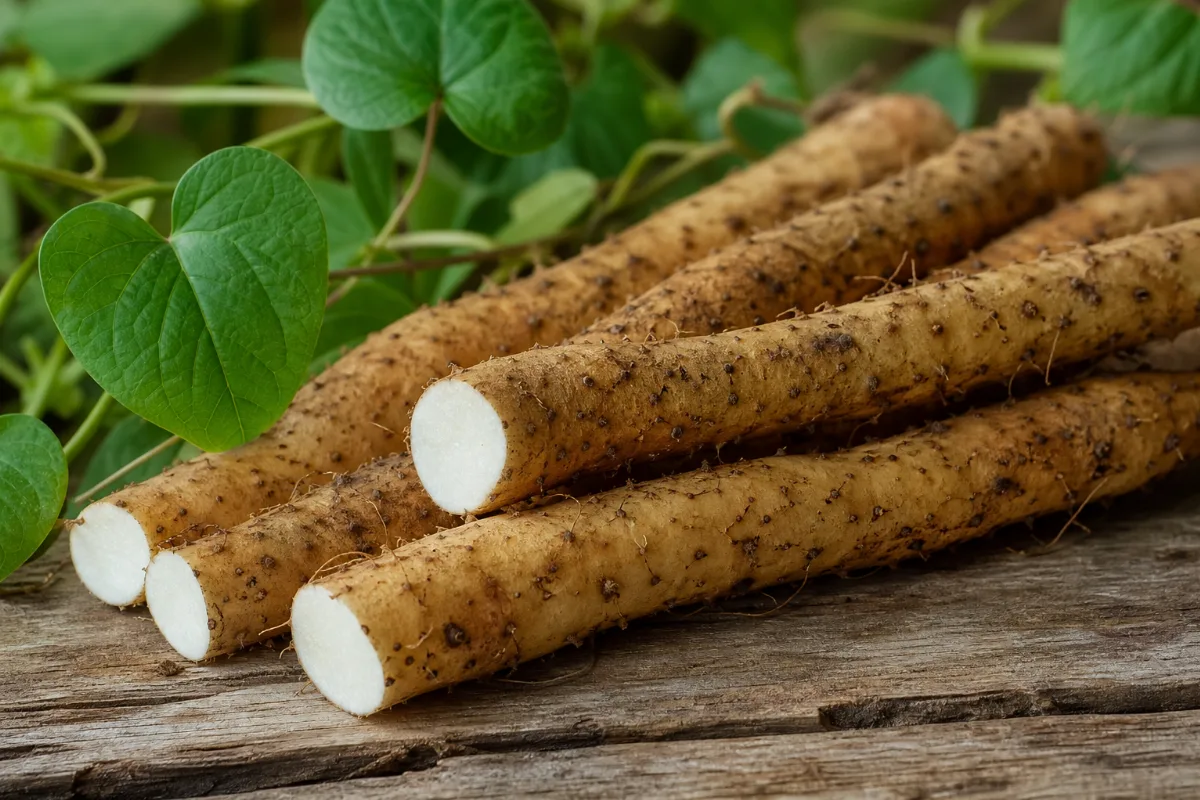
Herbs & Botanicals · Traditional tonic food-herb
Chinese Yam
Dioscorea polystachya · also called Shan yao, Chinese mountain yam, Dioscoreae Rhizoma
Chinese yam (shan yao) is a starchy tuber eaten in East Asia and used as a traditional tonic for the gut. The research is mostly lab and animal work, with only two small human trials found for the gut. It is not the same plant as wild yam. The main caution is allergy and itchy skin or mouth from raw tuber, plus a precaution if you take diabetes medicine.
General information, not medical advice. Last substantive update · Not medically reviewed. A named clinician has not signed off on this page. How this page is made
About Chinese Yam
Chinese yam (shan yao) is the tuber of a climbing yam vine, eaten as food and used in East Asian traditional medicine for the gut. The human evidence is very thin: two small trials in a 2025 review, plus animal and lab work. Allergy, skin reactions and a theoretical overlap with diabetes medicine are the main cautions.
What it is
Chinese yam is the tuber of a climbing vine in the yam family (Dioscoreaceae). In China it is called shan yao. The dried slices are known as Dioscoreae Rhizoma.
It is a starchy staple food in East Asia and also a traditional medicinal food. Its main groups of compounds include starch, polysaccharides, allantoin and steroid-like saponins such as dioscin and diosgenin.
It is not wild yam (Dioscorea villosa), which is a different plant sold for hormone claims. Other yam species are not interchangeable either.
What the research shows
The best review (2025) found 27 studies: two human trials and 25 animal experiments. The human trials reported better gut-microbe balance, blood sugar control and recovery after surgery, but the reviewers say high-quality human studies are lacking and the samples were small.
For blood sugar, all 10 rodent studies in a 2022 review found improvement. No human trial of the single herb was found. A 2026 trial of an 8-herb paste that included Chinese yam improved muscle measures in older adults, but yam's own part is unknown.
Immune and inflammation findings come from cells and animals. For menopause, one small uncontrolled study of a different yam (Dioscorea alata) found hormone changes, and a controlled trial of wild yam cream found no effect.
How to read this evidence
Traditional use is a record of use, not proof. Many studies use extracts or isolated compounds, which are not the same as eating the tuber.
Papers use several scientific names for the same food yam (Dioscorea opposita, D. batatas, D. polystachya). We read the name each study used and mark a different species when it is not Chinese yam.
At a glance
Traditional uses history, not proof
- East Asian medicinal food for the gut and digestion
- Traditional use for diarrhea and diabetes (a record of use, not proof)
Studied for research
- Gut function (two small human trials, animal studies)
- Blood sugar (animal studies)
- Immune-cell effects of polysaccharides (lab and animal)
Main compounds
- Starch
- Polysaccharides
- Allantoin (CID 204)
- Dioscin (CID 119245)
- Diosgenin (CID 99474)
- Dioscorin (tuber protein)
Common forms
- Fresh tuber (cooked as food)
- Dried slices
- Powder
- Extracts
Research links: Systematic review: Dioscoreae Rhizoma and gut function (2025) · Systematic review: yam and blood sugar in rodents (2022) · Case series: anaphylaxis after boiled yam (2018) · Review: yam polysaccharides and immunity (2026) · Research Library · Genes & Biomarkers Library
The plant and its history
- Accepted scientific name
- Dioscorea polystachya Turcz.
- Naming authority
- Turcz.
- Synonyms
- Dioscorea batatas Decne. (GBIF: synonym of D. polystachya); Dioscorea opposita Thunb. (GBIF: synonym of D. oppositifolia L., not of D. polystachya)
- Common names
- Chinese yam (English); Shan yao (Chinese (pinyin)); Chinese mountain yam (English); Dioscoreae Rhizoma (Pharmacopoeial Latin)
- Botanical family
- Dioscoreaceae (yam family)
- Classification
- Plantae > Tracheophyta > Not read > Dioscoreales > Dioscoreaceae > Dioscorea > Dioscorea polystachya
- Native range
- Not described in the sources read. (The papers call it an East Asian food-medicine.)
- Habitat
- Not described in sources read.
- What the plant looks like
- Roots: The tuber is the used part (a starchy, mucilage-rich tuber is common knowledge but was not described in sources read).; Stems: Not described in sources read; Leaves: Not described in sources read; Flowers: Not described in sources read; Fruit: Not described in sources read
- Cultivation
- Not covered in the sources read.
- Harvest and processing
- Used fresh as food, as dried slices (Dioscoreae Rhizoma), as powder, and as extracts or isolated polysaccharide fractions (our nutrient summary and Lee 2025).
- Look-alikes and adulterants
- Species: Wild yam (Dioscorea villosa); Difference: A North American wild plant sold for hormone claims; a different species with its own evidence. A placebo-controlled trial of wild yam cream found no menopause benefit.; Species: Purple or water yam (Dioscorea alata); Difference: A different food yam. The only menopause-marker study we found used this species, not Chinese yam.; Species: Other Dioscorea species; Difference: The genus has about 600 species (Wang 2023). Compounds and safety differ; results should not be swapped between species.
- Sustainability and conservation
- Not covered in the sources read.
Traditional use and history history, not clinical proof
| Tradition or era | Documented use | Source |
|---|---|---|
| East Asian medicinal food | Used for a long time in East Asia as a medicinal food for gut health (Lee 2025). Dioscorea tubers in general are traditionally used for diabetes, diarrhea and inflammatory diseases (Wang 2025). | p41010469 |
| Traditional Chinese medicine (Dioscoreae Rhizoma, shan yao) | Dried slices are called Dioscoreae Rhizoma in the 2025 gut review. Specific classical texts, dates and formula uses were not read, so none are stated. | p41010469 |
Traditional use shows how a plant was used. It does not show that a supplement works or is safe today.
What is inside, and how it may work
What the plant contains and how those compounds act in cells and animals. Laboratory and animal mechanisms are not proven effects in people.
Main compounds
| Compound | Family | Where it is concentrated | Activity studied | Level of evidence |
|---|---|---|---|---|
| Diosgenin PubChem 99474 | Steroidal sapogenin | Tuber (genus-level statement) | Studied in cells and animals for cancer, brain, bone and metabolic effects; also an industrial starting material for steroid drugs (Semwal 2022). Content in Chinese yam tuber was not read. 8 16 | Laboratory research |
| Dioscin PubChem 119245 | Steroidal saponin | Dioscorea tubers | Present in some yam extracts that improved blood sugar in rodents (Alharazi 2022). 1 16 | Animal research |
| Allantoin PubChem 204 | Urea derivative | Tuber 4.35 mg/g in the yam used in one mouse study | Present in the yam used in the antibiotic-diarrhea mouse study; its own role was not tested there. 13 16 | Animal research |
| Dioscorin | Storage protein | Tuber (the major storage protein) | Showed carbonic anhydrase and trypsin-inhibitor activity in test-tube assays (Hou 1999). One form (DB3S) is a heat-stable allergen in a 2018 case series. 3 12 | Laboratory research |
| Chinese yam polysaccharides (CYPs) | Polysaccharide mixture | Tuber 85.51 mg/g in the yam used in one mouse study | Recognised by TLR4 on macrophages in lab work; the main immune-active fraction in the 2026 review. 2 13 | Laboratory research |
| Starch | Carbohydrate | Tuber | Chinese yam starch had the lowest estimated glycemic index of six yam starches in a lab test. 14 | Laboratory research |
Mechanisms, receptors and pathways
| Target or pathway | Gene or receptor | What was found | Level |
|---|---|---|---|
| TLR4 - NF-kB / MAPK signalling in macrophages | TLR4 | Chinese yam polysaccharides are recognised by TLR4 on immune cells and switch on NF-kB and MAPK, changing cytokine release. 2 | Laboratory research |
| Gut microbes and short-chain fatty acids | Not applicable | In antibiotic-treated mice, yam raised Bifidobacteria and Lactobacilli, lowered Enterococcus and Clostridium perfringens, and raised short-chain fatty acids. 13 | Animal research |
| Blood sugar control | Unknown | Rodent studies show better blood sugar; the molecular mechanism remains largely unknown. Starch structure may give a low estimated glycemic index. 1 14 | Animal research |
| Carbonic anhydrase and trypsin inhibition by dioscorin | Carbonic anhydrase | Purified dioscorin showed both activities in test-tube assays. 3 | Laboratory research |
| Immune allergy (IgE) to dioscorin | IgE | Patients' serum recognised a 30-kDa protein identified as dioscorin (DB3S); basophils reacted to boiled yam extract. 12 | Human data |
Absorption, metabolism and elimination
- Absorption
- Not found for the tuber in people. The 2026 review lists low oral bioavailability of the polysaccharides.
- Distribution
- Not found.
- Metabolism
- Not found.
- Elimination
- Not found.
- Bioavailability
- Low for the polysaccharides (2026 review); no human figures found.
Isolated compounds versus whole extracts
Keep three things apart: the cooked tuber eaten as food, concentrated extracts or powders, and isolated compounds such as diosgenin, dioscin or polysaccharides. Most lab and animal results use extracts or isolated compounds. They cannot be assumed for the food. The few human data are either two small trials (not opened) or a different yam species.
Nutritional composition
Chinese yam is a starchy tuber eaten as food in East Asia and is rich in starch and fibre (Wang 2025). We did not read nutrient numbers for it, so none are given here. Eating it is not the same as taking an extract.
3 very low certainty4 not enough evidence1 evidence against
What is Chinese Yam good for?
The studied uses and how strong the human evidence is. 'Very-low' means one or two small or uncontrolled human studies. 'Insufficient' means no usable human trial. 'Against' means a controlled trial found no benefit. Safety comes first: see the Safety tab.
Benefits, one by one
Each card is a research question, not a promise. Tap a goal to filter. Open a card to see the studies, doses and limits.
Gut function and digestive comfort
Very low certaintyChinese yam is a long-used food and tonic in East Asia for the gut. A 2025 systematic review found only two small human trials plus 25 animal studies. The two human trials reported better gut-microbe balance and post-surgery recovery, but the authors say high-quality human studies are lacking. This is weak, early evidence.
2 studiesFresh tuber, dried slices (Dioscoreae Rhizoma), powder and extracts a…
Studies, doses and limits
What the trials found
Lee 2025 (27 studies: 2 human trials, 25 animal). The review excluded multi-herb formulas. The human trials reported better gut-microbiota balance, blood sugar control, and post-surgery recovery (wound healing, fewer infections). The two trials were not opened by us; only the review's summary is used.
Results
Better microbe balance and post-surgery recovery in two small human trials; many positive animal results.
Effect sizes as reported
No pooled numbers in the abstract.
Why this rating
Only two small human trials, not opened by us, plus animal work. The reviewers themselves point to the lack of high-quality human studies, small samples and large differences in plant part, extract and amount.
Form and dose studied
Fresh tuber, dried slices (Dioscoreae Rhizoma), powder and extracts all appear. Amounts differ widely between studies.
Who was studied
Adults in the two human trials (details not read); mice and rats in the animal studies.
Limits
Small human trials; mixed forms and plant parts; animal results do not prove the same in people.
Why researchers looked
Traditional use as a gut-friendly food, and mucilage-rich starchy tuber.
Traditional use
Eaten and used in East Asia as a 'medicinal food' for the gut and for tiredness-type weakness patterns. Traditional terms are not diagnoses and are not evidence.
Proposed mechanism Animal research
In animals the yam reduced gut inflammation, strengthened antioxidant defences, protected the gut lining and shifted gut microbes. These are animal findings and may not carry over to people.
A proposed mechanism does not show that the effect happens in people.
Eating cooked yam as food is common in East Asia, but allergy and skin reactions can happen; see the Safety tab.
Diarrhea after antibiotics (mouse study)
Not enough evidenceIn mice given an antibiotic that caused diarrhea, Chinese yam helped them recover faster and shifted gut microbes toward more Bifidobacteria and Lactobacilli. This is a mouse study. No human trial of this use was found.
2 studiesChinese yam tuber with measured allantoin (4.35 mg/g) and polysacchar…
Studies, doses and limits
What the trials found
No human trial found.
Results
Faster recovery from acute diarrhea, less weight loss; high amount: Bifidobacteria +47%, Lactobacilli +21%, Enterococcus -8%, Clostridium perfringens -27%.
Effect sizes as reported
Mouse percentages from Zhang 2019 (P < .05).
Why this rating
Mouse study only.
Form and dose studied
Chinese yam tuber with measured allantoin (4.35 mg/g) and polysaccharides (85.51 mg/g).
Who was studied
Balb/c mice.
Limits
Animal amounts cannot be converted into human amounts. One lab group.
Why researchers looked
Diarrhea is one of the traditional uses of yam tubers.
Traditional use
Traditional medicine for diarrhea (per a 2025 review).
Proposed mechanism Animal research
The yam material contained allantoin and polysaccharides. Gut microbes changed and short-chain fatty acids rose in the mice.
A proposed mechanism does not show that the effect happens in people.
Persistent diarrhea needs medical advice, not a herb.
Blood sugar (animal and lab studies)
Not enough evidenceIn a 2022 review of 10 rodent studies, yam or its extracts improved blood sugar in every one. No human trial was included. One of the two small human trials in the 2025 gut review also reported blood sugar changes, but we could not read its details. So the honest summary is: promising in animals, not shown in people, and not a replacement for diabetes care.
4 studiesWhole tuber, extracts, isolated compounds and starch (lab).
Studies, doses and limits
What the trials found
No human trial of Chinese yam for blood sugar was found by us. Lee 2025 mentions blood sugar control in one human trial (not read). One 2026 randomised trial of an 8-herb paste that included Chinese yam reported lower fasting glucose, but HbA1c and insulin resistance did not differ, and yam's own part is unknown.
Results
All 10 rodent studies: better fasting glucose and glucose tolerance.
Effect sizes as reported
Not applicable for animals; see the Shenqi paste entry for the formula.
Why this rating
No usable human trial of the single herb. Rodent data and a multi-herb trial only.
Form and dose studied
Whole tuber, extracts, isolated compounds and starch (lab).
Who was studied
Rodents; lab starch tests.
Limits
Several Dioscorea species mixed in the rodent review; starch test is not a trial; mechanism unknown.
Why researchers looked
Traditional use of yam tubers for diabetes.
Traditional use
Traditional medicine for diabetes (per a 2025 review). Traditional use is a record of use, not proof.
Proposed mechanism Animal research
Rodent studies used extracts containing dioscin, dioscorin, diosgenin or polysaccharides. A lab study found Chinese yam starch had the lowest estimated glycemic index of six yam starches. The mechanism in people is unknown.
A proposed mechanism does not show that the effect happens in people.
Animal blood sugar findings are the reason to ask a pharmacist before using it if you take diabetes medicine; see the Safety tab.
Menopause: hormones and cholesterol (a different yam eaten as food)
Very low certaintyOne small before-and-after study in Taiwan had 22 postmenopausal women eat about 390 g of yam in place of rice for two of their three daily meals for 30 days. The yam was Dioscorea alata, a different species from Chinese yam. Estrone, SHBG and cholesterol markers changed. There was no placebo group and no symptom outcome, so it does not show relief of menopause symptoms.
1 studiesAbout 390 g of boiled or cooked yam (D. alata) as staple food, 30 day…
Studies, doses and limits
What the trials found
Wu 2005: 24 recruited, 22 finished; one-arm study; a separate group of 19 women ate sweet potato for 41 days and showed no change in three hormone measures.
Results
Estrone up 26%, SHBG up 9.5%, estradiol up 27% (near significant); total cholesterol down 5.9%; urinary isoprostane down 42%; 16alpha-hydroxyestrone down 37%.
Effect sizes as reported
Percent changes from baseline in Wu 2005.
Why this rating
One small uncontrolled study of a different yam species with very large food amounts.
Form and dose studied
About 390 g of boiled or cooked yam (D. alata) as staple food, 30 days.
Who was studied
Healthy postmenopausal women in Taiwan.
Limits
Not Chinese yam; no placebo; no blinding; blood markers only.
Why researchers looked
Yam is used in folk medicine for menopausal symptoms.
Traditional use
Folk use for menopausal symptoms (per Wu 2005).
Proposed mechanism Preliminary mechanism
The mechanism is unclear (authors). Do not read this as proof that yam works like a hormone drug.
A proposed mechanism does not show that the effect happens in people.
Hormone-related changes mean people with hormone-sensitive conditions should ask a clinician; see the Safety tab.
Menopause symptoms: wild yam cream (look-alike, a different plant)
Evidence againstWild yam (Dioscorea villosa) is a different plant from Chinese yam and is sold for hormone claims. A placebo-controlled trial of wild yam cream in 23 women found no difference from placebo for hot flushes or hormone levels. This result belongs to wild yam, not Chinese yam, and is shown here only to prevent mixing the two up.
1 studiesWild yam extract cream (not eaten).
Studies, doses and limits
What the trials found
Komesaroff 2001: double-blind cross-over, 23 women, 3 months of cream versus 3 months of placebo cream.
Results
No difference from placebo in flushing or night sweats; no changes in estradiol, FSH, progesterone, cholesterol or glucose; no significant side effects.
Effect sizes as reported
No significant differences.
Why this rating
Small but well-controlled trial found no benefit for wild yam skin cream.
Form and dose studied
Wild yam extract cream (not eaten).
Who was studied
Healthy menopausal women.
Limits
Different species and a skin cream; may not apply to eaten Chinese yam either way.
Why researchers looked
Name confusion: both are called 'yam' and both contain diosgenin-type compounds.
Traditional use
None for Chinese yam.
Proposed mechanism Pharmacological theory
Diosgenin was claimed to influence hormone production; the trial found no hormone change.
A proposed mechanism does not show that the effect happens in people.
Do not use wild yam trial results to judge Chinese yam.
Immune-cell effects of yam polysaccharides (lab and animal)
Not enough evidenceA 2026 review describes how Chinese yam polysaccharides act on immune cells such as macrophages in lab and animal work. No human immune benefit has been shown. The reviewers themselves say clinical data are scarce.
1 studiesIsolated polysaccharide fractions, not the whole food.
Studies, doses and limits
What the trials found
None found.
Results
Lab and animal findings only.
Effect sizes as reported
Not applicable.
Why this rating
No human data.
Form and dose studied
Isolated polysaccharide fractions, not the whole food.
Who was studied
Cells and animals.
Limits
Isolated and chemically modified fractions; undefined pharmacokinetics; low oral bioavailability (authors).
Why researchers looked
Polysaccharides are the main fraction of Chinese yam studied.
Traditional use
Traditional use as a tonic food; not evidence.
Proposed mechanism Laboratory research
Polysaccharides are recognised by TLR4 on macrophages and switch on NF-kB and MAPK signalling, changing cytokine release.
A proposed mechanism does not show that the effect happens in people.
Immune-active fractions could in theory matter for people on immune-suppressing medicine; no case was found.
Inflammation and metabolic markers (lab and animal)
Not enough evidenceReviews describe anti-inflammatory and metabolic effects of compounds found in yams (polysaccharides, diosgenin, allantoin and others) in cells and animals, for example in gut inflammation, obesity, blood lipids and fatty liver models. These are lab and animal findings. They are about the genus Dioscorea as a whole, not Chinese yam on its own.
3 studiesIsolated compounds and extracts.
Studies, doses and limits
What the trials found
None found for Chinese yam.
Results
Lab and animal findings only.
Effect sizes as reported
Not applicable.
Why this rating
No human data.
Form and dose studied
Isolated compounds and extracts.
Who was studied
Cells and animals.
Limits
Whole genus of about 600 species; compounds tested alone are not the same as eating the tuber.
Why researchers looked
Yams are traditionally used for inflammatory conditions.
Traditional use
Traditional use for inflammatory diseases (per a 2025 review).
Proposed mechanism Laboratory research
Reported to act through several signalling pathways; details are from cells and animals.
A proposed mechanism does not show that the effect happens in people.
None specific.
Muscle strength in older adults with diabetes (8-herb paste containing Chinese yam)
Very low certaintyA 2026 placebo-controlled trial of 90 older adults tested an 8-ingredient paste that included Chinese yam. The paste improved muscle mass, grip strength and chair-stand time compared with placebo. Because yam is one of eight ingredients, this does not show what yam alone does.
1 studies8-ingredient paste (astragalus, codonopsis, polygonatum, Chinese yam,…
Studies, doses and limits
What the trials found
Hua 2026: randomised, double-blind, placebo-controlled; 12 weeks; no serious adverse events.
Results
Better muscle mass index, handgrip strength and chair-stand time than placebo; fasting glucose and CRP fell more; HbA1c, insulin and insulin resistance did not differ.
Effect sizes as reported
Group-by-time interaction P < 0.001 for the three muscle outcomes (abstract).
Why this rating
Multi-herb product; yam's own part unknown; one trial.
Form and dose studied
8-ingredient paste (astragalus, codonopsis, polygonatum, Chinese yam, poria, eucommia, barley, ophiopogon).
Who was studied
Adults aged 60+ with diabetic sarcopenia in China.
Limits
Combination product; funding not stated in the abstract.
Why researchers looked
Medicine-food mixes that include yam are used in China for weakness.
Traditional use
Used for 'spleen-kidney deficiency' patterns, a traditional term.
Proposed mechanism Not studied
Not studied for this combination.
A proposed mechanism does not show that the effect happens in people.
Do not read this as a result for Chinese yam alone.
Connections to the rest of health
How Chinese Yam connects to the rest of our health knowledge graph. Every link says what kind of connection it is. A safety link (for example to the liver) is a warning, not a benefit. A study that merely mentions a topic never creates a benefit link.
Explore every connection: goals, body systems, organs, symptoms, genes
A. Wellness goals
| Connected to | Kind of connection | Evidence status | Context | Studies |
|---|---|---|---|---|
| Digestive Support | Preliminary mechanism | Very low certainty | Gut function and digestive comfort: Chinese yam is a long-used food and tonic in East Asia for the gut. A 2025 systematic review found only two small human trials plus 25 animal studies. The two human trials reported better gut-microbe balance and post-surgery recovery, but the authors say high-quality human studies are lacking. This is weak, early evidence. Diarrhea after antibiotics (mouse study): In mice given an antibiotic that caused diarrhea, Chinese yam helped them recover faster and shifted gut microbes toward more Bifidobacteria and Lactobacilli. This is a mouse study. No human trial of this use was found. | 7 10 13 |
| Gut Health | Preliminary mechanism | Very low certainty | Gut function and digestive comfort: Chinese yam is a long-used food and tonic in East Asia for the gut. A 2025 systematic review found only two small human trials plus 25 animal studies. The two human trials reported better gut-microbe balance and post-surgery recovery, but the authors say high-quality human studies are lacking. This is weak, early evidence. Diarrhea after antibiotics (mouse study): In mice given an antibiotic that caused diarrhea, Chinese yam helped them recover faster and shifted gut microbes toward more Bifidobacteria and Lactobacilli. This is a mouse study. No human trial of this use was found. | 7 10 13 |
| Blood Sugar Balance | Preliminary mechanism | Not enough evidence | Blood sugar (animal and lab studies): In a 2022 review of 10 rodent studies, yam or its extracts improved blood sugar in every one. No human trial was included. One of the two small human trials in the 2025 gut review also reported blood sugar changes, but we could not read its details. So the honest summary is: promising in animals, not shown in people, and not a replacement for diabetes care. | 1 14 7 4 |
| Menopause Support | Preliminary mechanism | Very low certainty | Menopause: hormones and cholesterol (a different yam eaten as food): One small before-and-after study in Taiwan had 22 postmenopausal women eat about 390 g of yam in place of rice for two of their three daily meals for 30 days. The yam was Dioscorea alata, a different species from Chinese yam. Estrone, SHBG and cholesterol markers changed. There was no placebo group and no symptom outcome, so it does not show relief of menopause symptoms. | 11 |
| Hormone Balance | Preliminary mechanism | Very low certainty | Menopause: hormones and cholesterol (a different yam eaten as food): One small before-and-after study in Taiwan had 22 postmenopausal women eat about 390 g of yam in place of rice for two of their three daily meals for 30 days. The yam was Dioscorea alata, a different species from Chinese yam. Estrone, SHBG and cholesterol markers changed. There was no placebo group and no symptom outcome, so it does not show relief of menopause symptoms. | 11 |
| Menopause Support | Evidence against | Menopause symptoms: wild yam cream (look-alike, a different plant): Wild yam (Dioscorea villosa) is a different plant from Chinese yam and is sold for hormone claims. A placebo-controlled trial of wild yam cream in 23 women found no difference from placebo for hot flushes or hormone levels. This result belongs to wild yam, not Chinese yam, and is shown here only to prevent mixing the two up. | 5 | |
| Immune Support | Preliminary mechanism | Not enough evidence | Immune-cell effects of yam polysaccharides (lab and animal): A 2026 review describes how Chinese yam polysaccharides act on immune cells such as macrophages in lab and animal work. No human immune benefit has been shown. The reviewers themselves say clinical data are scarce. | 2 |
| Inflammation Balance | Preliminary mechanism | Not enough evidence | Inflammation and metabolic markers (lab and animal): Reviews describe anti-inflammatory and metabolic effects of compounds found in yams (polysaccharides, diosgenin, allantoin and others) in cells and animals, for example in gut inflammation, obesity, blood lipids and fatty liver models. These are lab and animal findings. They are about the genus Dioscorea as a whole, not Chinese yam on its own. | 9 10 8 |
| Metabolic Health | Preliminary mechanism | Not enough evidence | Inflammation and metabolic markers (lab and animal): Reviews describe anti-inflammatory and metabolic effects of compounds found in yams (polysaccharides, diosgenin, allantoin and others) in cells and animals, for example in gut inflammation, obesity, blood lipids and fatty liver models. These are lab and animal findings. They are about the genus Dioscorea as a whole, not Chinese yam on its own. | 9 10 8 |
| Muscle Recovery | Preliminary mechanism | Very low certainty | Muscle strength in older adults with diabetes (8-herb paste containing Chinese yam): A 2026 placebo-controlled trial of 90 older adults tested an 8-ingredient paste that included Chinese yam. The paste improved muscle mass, grip strength and chair-stand time compared with placebo. Because yam is one of eight ingredients, this does not show what yam alone does. | 4 |
B. Body systems
| Connected to | Kind of connection | Evidence status | Context | Studies |
|---|---|---|---|---|
| Digestive System | Biological association | Very low certainty | Studied for: Gut function and digestive comfort Studied for: Diarrhea after antibiotics (mouse study) | 7 10 13 |
| Gut Health | Biological association | Very low certainty | Studied for: Gut function and digestive comfort | 7 10 |
| Blood Sugar Support | Biological association | Not enough evidence | Studied for: Blood sugar (animal and lab studies) | 1 14 7 4 |
| Hormone Health | Biological association | Very low certainty | Studied for: Menopause: hormones and cholesterol (a different yam eaten as food) Studied for: Menopause symptoms: wild yam cream (look-alike, a different plant) | 11 5 |
| Immune System | Biological association | Not enough evidence | Studied for: Immune-cell effects of yam polysaccharides (lab and animal) | 2 |
| Pain Inflammation | Biological association | Not enough evidence | Studied for: Inflammation and metabolic markers (lab and animal) | 9 10 8 |
| Metabolism Weight | Biological association | Not enough evidence | Studied for: Inflammation and metabolic markers (lab and animal) | 9 10 8 |
| Bones Joints Muscles | Biological association | Very low certainty | Studied for: Muscle strength in older adults with diabetes (8-herb paste containing Chinese yam) | 4 |
E. Health conditions
| Connected to | Kind of connection | Evidence status | Context | Studies |
|---|---|---|---|---|
| Food allergy (yam) | Adverse effect or risk | Low certainty | Three anaphylaxis cases in one report (2018). Three anaphylaxis cases after boiled yam (2018). Preparation or compound: Cooked yam (dioscorin) |
12 |
| Allergic contact dermatitis | Adverse effect or risk | Low certainty | 1988 case report; title only read. Preparation or compound: Dioscorea batatas plant contact |
6 |
| Type 2 diabetes (diabetes medicines) | Drug or supplement interaction | Not enough evidence | Rodent blood sugar findings; theoretical overlap with medicines. Preparation or compound: Yam and extracts |
1 |
I. Biomarkers
| Connected to | Kind of connection | Evidence status | Context | Studies |
|---|---|---|---|---|
| Fasting blood glucose | Biological association | Not enough evidence | Measured in trials: lowered (animals). A lab change is not the same as a health benefit. | 1 |
| Gut microbe balance | Biological association | Not enough evidence | Measured in trials: shifted (mice). A lab change is not the same as a health benefit. | 13 7 |
| Estrone, estradiol and SHBG | Biological association | Very low certainty | Measured in trials: raised (one small study, different yam species). A lab change is not the same as a health benefit. | 11 5 |
| Total cholesterol | Biological association | Very low certainty | Measured in trials: lowered (one small study, different yam species). A lab change is not the same as a health benefit. | 11 |
| C-reactive protein (CRP) | Biological association | Very low certainty | Measured in trials: lowered (multi-herb paste). A lab change is not the same as a health benefit. | 4 |
J. Genes, receptors and enzymes
K. Biological pathways
L. Active compounds
| Connected to | Kind of connection | Evidence status | Context | Studies |
|---|---|---|---|---|
| Diosgenin | Biological association | In vitro | Studied in cells and animals for cancer, brain, bone and metabolic effects; also an industrial starting material for steroid drugs (Semwal 2022). Content in Chinese yam tuber was not read. Preparation or compound: Tuber (genus-level statement) |
8 16 |
| Dioscin | Biological association | Animal | Present in some yam extracts that improved blood sugar in rodents (Alharazi 2022). Preparation or compound: Dioscorea tubers |
1 16 |
| Allantoin | Biological association | Animal | Present in the yam used in the antibiotic-diarrhea mouse study; its own role was not tested there. Preparation or compound: Tuber |
13 16 |
| Dioscorin | Biological association | In vitro | Showed carbonic anhydrase and trypsin-inhibitor activity in test-tube assays (Hou 1999). One form (DB3S) is a heat-stable allergen in a 2018 case series. Preparation or compound: Tuber (the major storage protein) |
3 12 |
| Chinese yam polysaccharides (CYPs) | Biological association | In vitro | Recognised by TLR4 on macrophages in lab work; the main immune-active fraction in the 2026 review. Preparation or compound: Tuber |
2 13 |
| Starch | Biological association | In vitro | Chinese yam starch had the lowest estimated glycemic index of six yam starches in a lab test. Preparation or compound: Tuber |
14 |
Each connection is stored with the ingredient, the connected record, the kind of connection, the evidence status, the supporting studies, the preparation or compound involved, and a review date (last reviewed October 25, 2026).
The evidence
The research centre for Chinese Yam. Every record here was checked against PubMed or the publisher's page; we never list a study we have not verified.
Evidence by outcome
Bars show how many studies we found for each outcome, not how well it works. People are added up across trials only (reviews are not added, to avoid double counting).
How we rate evidence
High certainty
Several well-run trials or reviews agree; further research is unlikely to change the picture much.
Moderate certainty
Good trials point the same way, but some doubt remains.
Low certainty
Small, short or inconsistent trials. The finding could change with better research.
Very low certainty
Very little or very weak human data. Treat as a possibility only.
Mixed findings
Trials or reviews disagree with each other.
Not enough evidence
Not enough human research to say either way.
Evidence against
Good research found no benefit, or found harm.
We take the reviewers' own risk-of-bias and GRADE statements where they exist, and otherwise judge from study size, design, consistency, directness and whether a product matches what is sold. Many publications do not make evidence high. Method note: We searched PubMed, read the abstracts of every study cited, and checked names against GBIF, NCBI Taxonomy and PubChem. Pages that could not be found or opened are marked as not found. Where only a summary or a title was available, we say so.
Study library: every study we checked 16
| Study | Design | People | Product, dose, length | Result |
|---|---|---|---|---|
| Alharazi 2022 Could consumption of yam (Dioscorea) or its extract be beneficial in controlling glycaemia: a systematic review Br J Nutr · PMID 34521490 · DOI |
Systematic review animal |
10 10 rodent studies (diabetic or high-fat-diet animals); no human studies |
Yam (Dioscorea) or extracts containing dioscin, dioscorin, diosgenin, DA-9801/02 or Chinese yam polysaccharides Tuber or extract (several Dioscorea species) Not stated in the abstract Not stated in the abstract · vs Control animals |
All 10 rodent studies reported better blood sugar. Nine reported changes in body weight or fat; four reported better blood lipids; one reported lower inflammation markers. Better glycaemia in all 10 rodent studies (Not applicable) Methods, limits and fundingOutcomes: Fasting blood glucose, glucose tolerance, insulin, body weight, lipids Limitations: Rodents only. Several Dioscorea species and compounds mixed together. Mechanism largely unknown. Authors call for human trials. Funding and conflicts: Not stated in the abstract Read: abstract |
| Ding 2026 From structural code to immunomodulation: the structure-activity relationship, molecular mechanisms, and translational medicine challenges of yam (Dioscorea opposita Thunb) polysaccharides Front Immunol · PMID 42220517 · DOI |
Narrative review lab+animal |
Review of lab and animal work on Chinese yam polysaccharides | Chinese yam polysaccharides (CYPs) Tuber polysaccharide fraction Not stated in the abstract Not stated in the abstract · vs Not applicable |
Polysaccharides are recognised by TLR4 on immune cells such as macrophages and switch on NF-kB and MAPK signalling, changing cytokine release. The authors list hurdles: undefined pharmacokinetics, low oral bioavailability, quality control, and a paucity of systematic clinical safety and efficacy data. Immune-modulating effects in lab models; no human evidence (Not applicable) Methods, limits and fundingOutcomes: Immune-cell signalling, structure-activity, translation hurdles Limitations: Read as an abstract via Europe PMC. Lab and animal work only. Funding and conflicts: Not stated in the abstract Read: abstract |
| Hou 1999 Dioscorin, the major tuber storage protein of yam (Dioscorea batatas decne) with carbonic anhydrase and trypsin inhibitor activities J Agric Food Chem · PMID 10552514 · DOI |
Laboratory analysis lab |
Protein purified from yam tuber | Dioscorin (tuber storage protein) Tuber protein Not stated in the abstract Not stated in the abstract · vs Not applicable |
Dioscorin showed carbonic anhydrase activity and trypsin inhibitor activity in test-tube assays. Enzyme activities shown in vitro (Not applicable) Methods, limits and fundingOutcomes: Enzyme activities of the protein Limitations: Test-tube work on one purified protein; no animal or human outcome. Funding and conflicts: Not stated in the abstract Read: abstract |
| Hua 2026 Efficacy and safety of medicine-food homology Shenqi paste in older adults with diabetic sarcopenia: A randomized, double-blind, placebo-controlled trial J Ethnopharmacol · PMID 41763617 · DOI |
Controlled trial |
90 90 randomised adults aged 60 or older with diabetic sarcopenia and 'spleen-kidney deficiency' (74 had the secondary outcomes) |
Shenqi paste, an 8-ingredient mix that includes Dioscorea opposita (Chinese yam) with astragalus, codonopsis, polygonatum, poria, eucommia, barley and ophiopogon Multi-herb paste Not stated in the abstract 12 weeks · vs Placebo paste |
The paste group improved more than placebo on muscle mass, handgrip strength and chair-stand time. Fasting glucose and CRP fell more; fasting insulin, HbA1c and insulin resistance did not differ between groups. No serious adverse events. Liver and kidney tests were part of the safety checks. Better muscle measures than placebo with the 8-herb mix (Not applicable) Methods, limits and fundingOutcomes: Muscle mass index, handgrip strength, chair-stand time; fasting glucose, CRP, safety labs Limitations: Chinese yam is one of eight ingredients, so its own part is unknown. One trial, one setting. Funding and conflicts not stated in the abstract. Funding and conflicts: Not stated in the abstract Read: abstract |
| Komesaroff 2001 Effects of wild yam extract on menopausal symptoms, lipids and sex hormones in healthy menopausal women Climacteric · PMID 11428178 |
Controlled trial |
23 23 healthy menopausal women with troublesome symptoms (cross-over) |
Wild yam (Dioscorea villosa, a different species) cream applied to the skin Extract in a cream Not stated in the abstract 3 months active and 3 months placebo, random order · vs Matching placebo cream |
No significant side effects. No changes in weight, blood pressure, cholesterol, triglycerides, HDL, FSH, glucose, estradiol or progesterone. Both placebo and active cream gave a small improvement in flushing, with no difference between them. No difference from placebo (Not applicable) Methods, limits and fundingOutcomes: Menopausal symptom diaries, lipids, sex hormones Limitations: Wild yam, not Chinese yam; skin cream, not eaten. Small cross-over trial. Funding and conflicts: Not stated in the abstract Read: abstract |
| Kubo 1988 Allergic contact dermatitis from Dioscorea batatas Decaisne Contact Dermatitis · PMID 3365956 · DOI |
Case report |
Case report (details not available) | Dioscorea batatas (a name now treated as Chinese yam) Not available Not available Not available · vs None |
Only the title and publication type (case report) were read: the paper reports allergic contact dermatitis from D. batatas. No abstract is listed in PubMed, so nothing more is claimed. Skin allergy after contact is reported (Not applicable) Methods, limits and fundingOutcomes: Allergic contact dermatitis Limitations: Title only; no details read. Funding and conflicts: Not stated Read: title-only |
| Lee 2025 The Effect of Dioscoreae Rhizoma on Gastrointestinal Function: A Systematic Review Nutrients · PMID 41010469 · DOI |
Systematic review human+animal |
27 2 human trials and 25 animal experiments (eight databases searched to April 2025; multi-herb formulas excluded) |
Dioscoreae Rhizoma (yam) alone, various forms Tuber (plant parts, extracts and doses varied) Not stated in the abstract Not stated in the abstract · vs Not stated |
Human trials reported better gut-microbe balance, blood sugar control and post-surgery recovery (wound healing, fewer infections). Animal studies reported less inflammation, stronger antioxidant defences, a better gut barrier and changes in gut microbes. Authors say the evidence 'supports' gut benefits but also state a lack of high-quality human studies (Not applicable) Methods, limits and fundingOutcomes: Gut function, gut microbiota, blood sugar, post-surgery recovery, inflammation, antioxidant defences, gut barrier Limitations: Only two human trials, small samples, different plant parts, extracts and doses, so results cannot be pooled. Details of the two trials were not in the abstract. Funding and conflicts: Not stated in the abstract Read: abstract |
| Semwal 2022 Diosgenin: An Updated Pharmacological Review and Therapeutic Perspectives Oxid Med Cell Longev · PMID 35677108 · DOI |
Narrative review review |
Review of lab, animal and clinical work on diosgenin (a steroid-like plant compound found in several plants) | Isolated diosgenin Purified compound Not stated in the abstract Not stated in the abstract · vs Not applicable |
Preclinical work points to effects on cancer, brain protection, atherosclerosis, asthma and bone. The authors say clinical investigations showed diosgenin to be non-toxic with promising effects on cognition and menopause, and that better clinical trials and safety knowledge are needed. Promising in the lab; clinical evidence limited (authors' wording) (Not applicable) Methods, limits and fundingOutcomes: Pharmacology and safety of diosgenin Limitations: About purified diosgenin, not Chinese yam tuber. Diosgenin comes from several plants. Funding and conflicts: Not stated in the abstract Read: abstract |
| Wang 2023 Dioscorea spp.: Bioactive Compounds and Potential for the Treatment of Inflammatory and Metabolic Diseases Molecules · PMID 36985850 · DOI |
Narrative review lab+animal |
Review of lab and animal work on the Dioscorea genus (about 600 species) | Dioscorea compounds: steroidal saponins, polyphenols, allantoin, polysaccharides, diosgenin Tubers and extracts Not stated in the abstract Not stated in the abstract · vs Not applicable |
Describes anti-inflammatory effects in models of enteritis, arthritis, dermatitis, pancreatitis and neuroinflammation, and metabolic effects (obesity, lipids, diabetes, fatty liver), with signalling pathways. Promising source of bioactive compounds (authors' wording); no human effect shown (Not applicable) Methods, limits and fundingOutcomes: Anti-inflammatory and metabolic effects and mechanisms Limitations: Narrative review of the whole genus, not Chinese yam alone; mostly cells and animals. Funding and conflicts: Not stated in the abstract Read: abstract |
| Wang 2025 Bioactive Metabolites of Dioscorea Species and Their Potential Applications in Functional Food Development Foods · PMID 40724357 · DOI |
Narrative review review |
Review of Dioscorea species as food and traditional medicine | 60 representative metabolites (terpenoids, phenylpropanoids, carbohydrates, fatty acids, alkaloids, amino acids) Tubers Not stated in the abstract Not stated in the abstract · vs Not applicable |
Says the tubers are a staple food rich in starch and fibre and are used in traditional medicine for diabetes, diarrhea and inflammatory diseases. Calls for rigorous clinical trials. Traditional use described; no clinical proof (Not applicable) Methods, limits and fundingOutcomes: Traditional uses, compounds, functional-food potential Limitations: Whole genus; narrative review; traditional use is a record of use, not evidence of benefit. Funding and conflicts: Not stated in the abstract Read: abstract |
| Wu 2005 Estrogenic effect of yam ingestion in healthy postmenopausal women J Am Coll Nutr · PMID 16093400 · DOI |
Non randomized trial |
24 24 healthy postmenopausal women recruited, 22 finished; Taiwan |
Yam of a different species: Dioscorea alata (not Chinese yam), eaten as food Tuber 390 g yam replacing rice in 2 of 3 meals per day 30 days · vs None for the yam group (one-arm before-and-after). A separate group of 19 women ate sweet potato for 41 days as a comparison |
After yam: estrone up 26%, sex hormone binding globulin (SHBG) up 9.5%, estradiol up 27% (near significant). Total cholesterol down 5.9%, LDL oxidation lag time up 5.8%, urinary isoprostane down 42%, and the urinary estrogen metabolite 16alpha-hydroxyestrone down 37%. Sweet potato did not change the three hormone measures. Hormone, lipid and oxidant-stress markers shifted in a one-arm study (Not applicable) Methods, limits and fundingOutcomes: Blood lipids, sex hormones, urinary estrogen metabolites, oxidative stress markers Limitations: Different yam species (D. alata). No randomisation, no placebo, no blinding, small sample. Very large food amounts. Only blood markers, no symptom outcomes. Funding and conflicts: Not stated in the abstract Read: abstract |
| Xu 2018 Identification of a thermal stable allergen in yam (Dioscorea opposita) to cause anaphylaxis Asia Pac Allergy · PMID 29423371 · DOI |
Case series |
3 3 people with anaphylaxis after eating boiled yam, 1 of them also with oral allergy syndrome |
Boiled yam (Dioscorea opposita) Tuber Not stated in the abstract Not applicable · vs None |
Patient blood tests and a basophil activation test reacted to boiled yam extract. A 30-kDa protein was the target, identified as dioscorin (DB3S), which survives cooking. The authors advise people with this allergy to avoid both raw and well-cooked yam. They call allergic reaction to yam rare. Serious allergy to cooked yam is possible but rare (Not applicable) Methods, limits and fundingOutcomes: Allergic reaction and allergen identification Limitations: Three cases; frequency cannot be estimated. Funding and conflicts: Not stated in the abstract Read: abstract |
| Zhang 2019 Chinese yam (Dioscorea opposita Thunb.) alleviates antibiotic-associated diarrhea, modifies intestinal microbiota, and increases the level of short-chain fatty acids in mice Food Res Int · PMID 31229072 · DOI |
Animal study animal |
Balb/c mice given ampicillin for 5 days to cause diarrhea | Chinese yam (contained allantoin 4.35 mg/g and polysaccharides 85.51 mg/g) Tuber Low, medium and high amounts (mouse) 10 days after 5 days of antibiotic · vs Untreated antibiotic mice |
Yam sped recovery from acute diarrhea and reversed weight loss and caecum enlargement. At the high amount, Bifidobacteria rose 47% and Lactobacilli 21%, while Enterococcus fell 8% and Clostridium perfringens 27% (P < .05). Short-chain fatty acids increased. Faster recovery and shifts in gut microbes in mice (Not applicable) Methods, limits and fundingOutcomes: Diarrhea recovery, body weight, caecum size, gut microbes, short-chain fatty acids Limitations: Mice only; mouse amounts do not translate into human amounts. Funding and conflicts: Not stated in the abstract Read: abstract |
| Zou 2023 The structure-glycemic index relationship of Chinese yam (Dioscorea opposita Thunb.) starch Food Chem · PMID 37105123 · DOI |
Laboratory analysis lab |
Six yam starches from different regions, analysed in the lab | Chinese yam starch Starch isolated from tuber Not stated in the abstract Not stated in the abstract · vs Five other yam starches |
Chinese yam starch showed the lowest glycemic index of the six, linked to its crystal structure and resistant-starch level. The authors suggest it as a candidate for the diet of people with diabetes. Lowest estimated glycemic index among six yam starches (laboratory measure) (Not applicable) Methods, limits and fundingOutcomes: Starch structure and estimated glycemic index Limitations: Lab measure of isolated starch, not a trial in people eating the tuber. Starch is only one part of the food. Funding and conflicts: Not stated in the abstract Read: abstract |
| s-gbif-chinese-yam 2026 GBIF species match: Dioscorea polystachya Turcz. (usageKey 2754732); D. oppositifolia L. (2754965); D. batatas Decne. (2754745); D. opposita Thunb. (2754969) · Source |
Database record |
D. polystachya Turcz.: exact match, ACCEPTED (confidence 99), family Dioscoreaceae, order Dioscoreales. D. oppositifolia L.: exact match, ACCEPTED (99). D. batatas Decne.: SYNONYM of D. polystachya (accepted key 2754732). D. opposita Thunb.: SYNONYM of D. oppositifolia (accepted key 2754965). Not applicable Methods, limits and fundingOutcomes: Record read Limitations: Names and family only. GBIF lists D. polystachya and D. oppositifolia as two separate accepted species, while papers often use D. opposita for the food-medicine yam. Funding and conflicts: Public body Read: full-text | ||
| s-pubchem-yam 2026 PubChem compound records: diosgenin (CID 99474, C27H42O3), allantoin (CID 204, C4H6N4O3), dioscin (CID 119245, C45H72O16) · Source |
Database record |
All three names matched a single PubChem compound with the CID and formula shown. Not applicable Methods, limits and fundingOutcomes: Record read Limitations: Identity of the compounds only; says nothing about content in Chinese yam. Funding and conflicts: Public body Read: full-text |
What we do not know yet
- No large human trial of Chinese yam alone for any use.
- The two human trials in the 2025 review were not read in full.
- No human safety, pregnancy, breastfeeding, liver or interaction data for supplements.
- No regulator monograph (EMA/HMPC, NCCIH) was found.
- Raw tuber irritation was not confirmed from a source.
How new research is added
New studies are found by a saved PubMed search and placed in a review queue. A person reads each one before it changes any rating or safety wording.
Lab markers
What changed in blood or saliva tests during trials. A changed number is not the same as feeling or being healthier, and we give no "normal ranges".
Metabolic 2
Fasting blood glucose
Lowered (animals) in trials
The sugar level in blood after fasting; the main day-to-day measure of blood sugar control.
Not enough evidenceResults and what it means
Why it was measured
It is the main measure used in diabetes and in the yam animal studies.
Statistical vs. clinical meaning
No human trial of the single herb; rodent results only.
Safety implication
A medicine that lowers blood sugar plus an herb that may also lower it could in theory cause low blood sugar. This is a theory, not a documented case.
| Study | Result | People | Product |
|---|---|---|---|
| 1 | All 10 rodent studies reported improved glycaemia (fasting glucose and glucose tolerance) | 10 rodent studies | Yam or extracts containing dioscin, dioscorin, diosgenin or polysaccharides |
Total cholesterol
Lowered (one small study, different yam species) in trials
Total amount of cholesterol in blood.
Very low certaintyResults and what it means
Why it was measured
Measured in the yam food study.
Statistical vs. clinical meaning
Small change, no control group for this outcome.
Safety implication
No safety concern from this marker alone.
| Study | Result | People | Product |
|---|---|---|---|
| 11 | Total cholesterol -5.9%; LDL oxidation lag time +5.8% | 22 postmenopausal women | About 390 g Dioscorea alata per day for 30 days |
Inflammatory 1
C-reactive protein (CRP)
Lowered (multi-herb paste) in trials
A blood marker of inflammation.
Very low certaintyResults and what it means
Why it was measured
Measured in the 8-herb paste trial.
Statistical vs. clinical meaning
Combination product; yam's own part unknown.
Safety implication
No safety concern from this marker alone.
| Study | Result | People | Product |
|---|---|---|---|
| 4 | CRP fell more with the paste than with placebo (P < 0.001 interaction) | Older adults with diabetic sarcopenia | 8-ingredient paste including Chinese yam, 12 weeks |
Other 2
Gut microbe balance
Shifted (mice) in trials
Which bacteria live in the gut and how many. Researchers also measure short-chain fatty acids that gut bacteria make.
Not enough evidenceResults and what it means
Why it was measured
Used to show how yam may change the gut.
Statistical vs. clinical meaning
Mouse result; a small human trial in Lee 2025 reported microbe balance changes but was not opened by us.
Safety implication
No safety concern from this marker alone.
| Study | Result | People | Product |
|---|---|---|---|
| 13 | High yam amount: Bifidobacteria +47%, Lactobacilli +21%; Enterococcus -8%, Clostridium perfringens -27%; short-chain fatty acids increased | Mice with antibiotic-caused diarrhea | Chinese yam tuber |
Estrone, estradiol and SHBG
Raised (one small study, different yam species) in trials
Estrone and estradiol are forms of estrogen; SHBG is a protein that carries sex hormones in blood.
Very low certaintyResults and what it means
Why it was measured
Measured because yam is folk-used for menopause.
Statistical vs. clinical meaning
One uncontrolled study of a different yam raised hormone levels; a controlled wild yam trial did not.
Safety implication
Hormone-sensitive conditions: ask a clinician before regular large amounts.
| Study | Result | People | Product |
|---|---|---|---|
| 11 | Estrone +26%, SHBG +9.5%, estradiol +27% (near significant); sweet potato group unchanged | 22 postmenopausal women | About 390 g Dioscorea alata per day for 30 days |
| 5 | No change in estradiol, FSH or progesterone with wild yam cream versus placebo | 23 menopausal women | Wild yam cream (different species) |
Safety
What studies and official sources say about side effects, medicines and who should check first. Each point shows what kind of evidence it comes from.
Main points to know 6
- Allergy: serious reactions to cooked yam have been reported. A 2018 report describes 3 people with anaphylaxis after eating boiled Chinese yam (Dioscorea opposita), one also with oral allergy syndrome. The target was dioscorin, a protein that survives cooking. The authors advise people with this allergy to avoid raw and well-cooked yam. They call yam allergy rare. We found no estimate of how often it happens. Case series 12
- Skin contact: allergic contact dermatitis has been reported. A 1988 case report in Contact Dermatitis describes allergic contact dermatitis from Dioscorea batatas (a name now treated as Chinese yam). Only the title was available to us, so no detail is claimed. Case report 6
- Raw tuber irritation (itchy skin or mouth): not verified in the sources we read. Raw yam tubers are often described as irritating, and calcium oxalate crystals (raphides) are the usual explanation for plant irritation. We did not find a source about raphides in Chinese yam, so we cannot confirm this or say how common it is. The case report above shows skin reactions to the plant do occur. If your hands or mouth itch or swell after handling or tasting raw tuber, stop and rinse. Cooking and standard preparation are how the tuber is normally eaten as food. Traditional use 6
- Blood sugar medicines: a theoretical overlap. Yam and its extracts lowered blood sugar in all 10 rodent studies in a 2022 review, and the 2025 gut review mentions blood sugar changes in one small human trial. No interaction with diabetes medicine has been documented. Because the animal findings point the same way as the medicines, ask a pharmacist before using concentrated yam products if you take insulin or tablets for diabetes. Animal research 1 7
- Hormone-related claims: do not overstate. One small before-and-after study of a different yam (Dioscorea alata, about 390 g a day for 30 days) found higher estrone and SHBG in postmenopausal women. A controlled trial of wild yam cream found no hormone change and no benefit over placebo. Neither study tested Chinese yam. Nothing we read shows that eating Chinese yam acts like a hormone medicine. If you have a hormone-sensitive condition, ask your doctor before using it regularly in large or concentrated amounts. Human data 11 5
- Little human safety data for supplements. The 2025 gut review and the 2026 polysaccharide review both stress how little human clinical safety data exist. Do not read the long use of yam as a food as proof that concentrated extracts are safe for everyone. Systematic review 7 2
Side effects 5
| Effect | How often | Severity and recovery | Evidence |
|---|---|---|---|
| Anaphylaxis or oral allergy symptoms after eating boiled yam 3 cases; the authors call yam allergy rare. | Not established | Can be serious (anaphylaxis) Not stated | Case series 12 |
| Allergic contact dermatitis (skin rash after contact with the plant) Title and publication type only were read. | Not established | Not available Not available | Case report 6 |
| No serious adverse events in a 12-week trial of an 8-herb paste that included Chinese yam Multi-herb product in 90 older adults; safety checks included liver and kidney tests. This does not show safety of yam alone. | Not established | None serious Not applicable | Controlled trial 4 |
| No significant side effects with wild yam cream in a 3-month cross-over trial Different plant (Dioscorea villosa) and a skin cream; shown for completeness, not as evidence for Chinese yam. | Not established | None Not applicable | Controlled trial 5 |
| Digestive upset (bloating, loose stools) from the tuber No report of stomach or bowel side effects was found in the abstracts read. This is absence of data, not proof of absence. A lab study found the main tuber protein, dioscorin, has trypsin-inhibitor activity, but no digestive effect in people has been shown. | Not established | Not available Not available | None found |
Liver
No LiverTox entry for Chinese yam or Dioscorea was found (searched NCBI Bookshelf). No case of liver injury linked to Chinese yam was found in the abstracts read. The only liver and kidney tests we saw were safety checks in the 8-herb paste trial, which reported no serious adverse events. 4
How often. No frequency of liver injury is available.
Monitoring. No monitoring advice was found. If you get yellow skin or eyes, dark urine or severe tiredness, stop the product and see a doctor.
This is a safety connection. It is not evidence that Chinese Yam supports liver health.
Medicines and supplements 4
| With | Why it matters | Importance | Evidence | What to do |
|---|---|---|---|---|
| Diabetes medicines (insulin, sulfonylureas, metformin and others) prescription | Yam and its extracts lowered blood sugar in rodent studies; whether this happens in people eating the tuber is not shown. | Theoretical. No documented interaction. A stacked blood-sugar-lowering effect could in theory cause low blood sugar. | Animal research Not enough evidence 1 7 | Tell your doctor or pharmacist if you use concentrated yam products. Do not stop or change diabetes medicine on your own. |
| Hormone medicines (estrogen therapy, hormone blockers, birth control) prescription | A small uncontrolled study of a different yam (Dioscorea alata) found higher estrone and SHBG in postmenopausal women. A controlled wild yam cream trial found no hormone change. | Unclear and unproven for Chinese yam. Listed as a precaution only. | Human data Not enough evidence 11 5 | If you take hormone medicine or have a hormone-sensitive condition, ask your doctor before using concentrated yam products. |
| Other herbs and supplements that lower blood sugar supplement | Overlapping effects are possible in theory. | Theoretical. Not tested. | Pharmacological theory Not enough evidence 1 | Tell your pharmacist about everything you take. |
| Drug-metabolising enzymes (CYP) or transporters prescription | No data found for Chinese yam. | None documented. | None found Not enough evidence | No specific advice; absence of data is not proof of safety. |
Who should check first 4
| Situation | Advice | Evidence |
|---|---|---|
| Known allergy to yam (or earlier reaction after eating yam) | Avoid raw and well-cooked yam and products made from it (per the 2018 case series). | Case series 12 |
| Taking diabetes medicine | Ask a pharmacist before using concentrated yam products; eating yam as a normal food is different from extracts. | Animal research 1 |
| Pregnancy and breastfeeding | No human safety data on Chinese yam supplements or extracts were found, and no LactMed entry was found. As a cooked food it is eaten widely in East Asia, but there is no study of larger or concentrated amounts. Ask your doctor or midwife before using supplements. | None found |
| Children | No safety study of Chinese yam supplements in children was found. Ask a paediatrician before use. | None found |
Overdose, product quality and regulators
Summary. No poisoning from Chinese yam was found in the abstracts read. The reviews we read describe it as a staple food and traditional medicine. Other Dioscorea species are not interchangeable with it, and we did not read safety sources for them.
Animal. No animal toxicity study of Chinese yam was read. Diosgenin, a compound found in several plants, was described as non-toxic in clinical investigations in a 2022 review, which also says better safety knowledge is needed (isolated compound, not the tuber).
Human doses studied. Trials used very different forms and amounts, or multi-herb products. Ask a doctor or pharmacist about amounts.
High dose or long term signals. None found. Long-term safety of concentrated extracts has not been studied.
Overdose response. Not found.
Genotoxicity. Not found.
Toxic plant parts. The tuber is the food and medicine part. Other plant parts were not covered in the sources read. Some other Dioscorea species are wild or bitter yams that need special handling; we did not verify this, so do not swap one yam for another.
The main concern is knowing which yam is in a product. Names are confusing: papers use Dioscorea opposita, D. batatas, D. polystachya and D. oppositifolia for the food-medicine yam, and GBIF lists D. polystachya and D. oppositifolia as two separate accepted species.
Naming. GBIF treats D. batatas as a synonym of D. polystachya, and D. opposita as a synonym of D. oppositifolia. 15
Look-alike products. Wild yam (Dioscorea villosa) is a different plant sold for hormone claims; results for one yam species should not be applied to another. 15 5
Variable products. The reviewers note differences between studies in plant part, extraction process and amount, which makes products hard to compare. 7
| Body | Action | Date |
|---|---|---|
| Traditional listing: Dioscoreae Rhizoma (East Asia) | The 2025 gut review uses the name Dioscoreae Rhizoma for yam used as a medicinal food in East Asia. We did not read a pharmacopoeia entry. source |
When to get medical help
- Trouble breathing, swelling of the lips, tongue or throat, hives or fainting after eating yam: this may be anaphylaxis. Call emergency services.
- A spreading, blistering or very itchy rash after handling the plant: stop contact and see a doctor.
- Shaky, sweaty, confused or faint feelings if you take diabetes medicine and have added a yam product: check your blood sugar and get medical help.
Stop the supplement and contact a clinician or emergency service. In the US, Poison Control is 1-800-222-1222.
General information only, not medical advice. Ask a clinician or pharmacist before use, especially with medicines, in pregnancy or with a health condition. See the Natural Remedy Safety guide.
Frequently asked questions
What is Chinese yam?
Does Chinese yam help digestion?
It has a long record of use for the gut. The only human evidence is two small trials summarised in a 2025 review, plus animal studies. The reviewers say high-quality human studies are lacking, so this is early evidence only.
Can Chinese yam lower blood sugar?
In rodents, yes: all 10 studies in a 2022 review reported better blood sugar. We found no human trial of the single herb. If you take diabetes medicine, ask a pharmacist before using concentrated yam products and never stop your medicine on your own.
Is Chinese yam a hormone herb, like wild yam?
Is Chinese yam the same as wild yam?
Can raw Chinese yam irritate skin or mouth?
Raw yam tubers are often said to be itchy, but we did not find a source that confirms the cause in Chinese yam. A 1988 case report describes allergic contact dermatitis from the plant. If your hands or mouth itch after handling or tasting raw tuber, stop and rinse.
Can you be allergic to yam?
Yes, though it appears rare. A 2018 report describes 3 people with anaphylaxis after boiled Chinese yam. The allergen, dioscorin, survives cooking. People with this allergy are advised to avoid raw and well-cooked yam.
Is it safe in pregnancy or while breastfeeding?
We found no safety data on Chinese yam supplements in pregnancy or breastfeeding, and no regulator or LactMed entry. Ask your doctor or midwife before using supplements.
Does it interact with medicines?
Is there proof it supports the immune system?
No. The research is lab and animal work on yam polysaccharides, and the 2026 review itself notes very little clinical data.
What do health agencies say?
We did not find a Chinese yam monograph from the EMA/HMPC, a page from NCCIH or Memorial Sloan Kettering, or entries in LiverTox or LactMed. The EMA site could not be searched from our tools, so that one is unconfirmed.
How much should I take?
This page does not give amounts, because the studies used very different forms and no standard human amount exists. Ask a doctor or pharmacist about what is right for you.
Explore by health goal
Digestive SupportGut HealthMenopause SupportBlood Sugar BalanceHormone BalanceImmune SupportInflammation BalanceMetabolic HealthMuscle Recovery
Editorial transparency
- Written by
- AlternativeMed editorial team. Research compiled with AI assistance, then checked against PubMed records.
- Medical review
- None. This page has not been reviewed by a physician or pharmacist.
- First published
- 2026-10-25
- Last substantive update
- 2026-10-25
- How we research
- We searched PubMed, read the abstracts of every study cited, and checked names against GBIF, NCBI Taxonomy and PubChem. Pages that could not be found or opened are marked as not found. Where only a summary or a title was available, we say so.
- How we rate evidence
- See "How we rate evidence" in the Evidence tab.
- Independence
- No product is promoted on this page. No affiliate links are shown.
Sources 16
Each source was opened and checked. Where we read only the abstract, it says so. The small numbers in the text point here.
- Alharazi WZ, McGowen A, Rose P. Could consumption of yam (Dioscorea) or its extract be beneficial in controlling glycaemia: a systematic review. Br J Nutr. 2022. PMID 34521490. DOI 10.1017/S0007114521003706. (abstract)
- Ding X, Wang B, Ma X, et al.. From structural code to immunomodulation: the structure-activity relationship, molecular mechanisms, and translational medicine challenges of yam (Dioscorea opposita Thunb) polysaccharides. Front Immunol. 2026. PMID 42220517. DOI 10.3389/fimmu.2026.1821913. (abstract)
- Hou WC, Liu JS, Chen HJ, et al.. Dioscorin, the major tuber storage protein of yam (Dioscorea batatas decne) with carbonic anhydrase and trypsin inhibitor activities. J Agric Food Chem. 1999. PMID 10552514. DOI 10.1021/jf980738o. (abstract)
- Hua L, Wang Y, Yuan X, et al.. Efficacy and safety of medicine-food homology Shenqi paste in older adults with diabetic sarcopenia: A randomized, double-blind, placebo-controlled trial. J Ethnopharmacol. 2026. PMID 41763617. DOI 10.1016/j.jep.2026.121444. (abstract)
- Komesaroff PA, Black CV, Cable V, et al.. Effects of wild yam extract on menopausal symptoms, lipids and sex hormones in healthy menopausal women. Climacteric. 2001. PMID 11428178. (abstract)
- Kubo Y, Nonaka S, Yoshida H. Allergic contact dermatitis from Dioscorea batatas Decaisne. Contact Dermatitis. 1988. PMID 3365956. DOI 10.1111/j.1600-0536.1988.tb02757.x. (title-only)
- Lee JH, Park SY, Jo MS, et al.. The Effect of Dioscoreae Rhizoma on Gastrointestinal Function: A Systematic Review. Nutrients. 2025. PMID 41010469. DOI 10.3390/nu17182943. (abstract)
- Semwal P, Painuli S, Abu-Izneid T, et al.. Diosgenin: An Updated Pharmacological Review and Therapeutic Perspectives. Oxid Med Cell Longev. 2022. PMID 35677108. DOI 10.1155/2022/1035441. (abstract)
- Wang Z, Zhao S, Tao S, et al.. Dioscorea spp.: Bioactive Compounds and Potential for the Treatment of Inflammatory and Metabolic Diseases. Molecules. 2023. PMID 36985850. DOI 10.3390/molecules28062878. (abstract)
- Wang P, Wang Y, Liu S, et al.. Bioactive Metabolites of Dioscorea Species and Their Potential Applications in Functional Food Development. Foods. 2025. PMID 40724357. DOI 10.3390/foods14142537. (abstract)
- Wu WH, Liu LY, Chung CJ, et al.. Estrogenic effect of yam ingestion in healthy postmenopausal women. J Am Coll Nutr. 2005. PMID 16093400. DOI 10.1080/07315724.2005.10719470. (abstract)
- Xu YY, Yin J. Identification of a thermal stable allergen in yam (Dioscorea opposita) to cause anaphylaxis. Asia Pac Allergy. 2018. PMID 29423371. DOI 10.5415/apallergy.2018.8.e4. (abstract)
- Zhang N, Liang T, Jin Q, et al.. Chinese yam (Dioscorea opposita Thunb.) alleviates antibiotic-associated diarrhea, modifies intestinal microbiota, and increases the level of short-chain fatty acids in mice. Food Res Int. 2019. PMID 31229072. DOI 10.1016/j.foodres.2019.04.016. (abstract)
- Zou J, Feng Y, Xu M, et al.. The structure-glycemic index relationship of Chinese yam (Dioscorea opposita Thunb.) starch. Food Chem. 2023. PMID 37105123. DOI 10.1016/j.foodchem.2023.136228. (abstract)
- . GBIF species match: Dioscorea polystachya Turcz. (usageKey 2754732); D. oppositifolia L. (2754965); D. batatas Decne. (2754745); D. opposita Thunb. (2754969). . 2026. (full-text)
- . PubChem compound records: diosgenin (CID 99474, C27H42O3), allantoin (CID 204, C4H6N4O3), dioscin (CID 119245, C45H72O16). . 2026. (full-text)