Herbs & Botanicals · Chinese root-bark herb for the blood
Moutan
Paeonia x suffruticosa · also called Mu dan pi, tree peony bark, moutan bark, Moutan Cortex
Moutan is the dried root bark of the tree peony, called mu dan pi in Chinese medicine. It is used there to cool the blood and for period and inflammatory complaints, mostly inside multi-herb formulas. In people, only formulas and isolated compounds have been tested, not the plain bark. Avoid it in pregnancy and ask a doctor first if you bleed heavily, take blood thinners or face surgery.
General information, not medical advice. Last substantive update · Not medically reviewed. A named clinician has not signed off on this page. How this page is made
About Moutan
Moutan is the dried root bark of the tree peony, used in Chinese medicine to cool the blood and for period and inflammatory problems. Human research covers only a formula that contains it and an isolated compound, not the plain bark. Pregnancy and very heavy periods are listed as cautions.
What it is
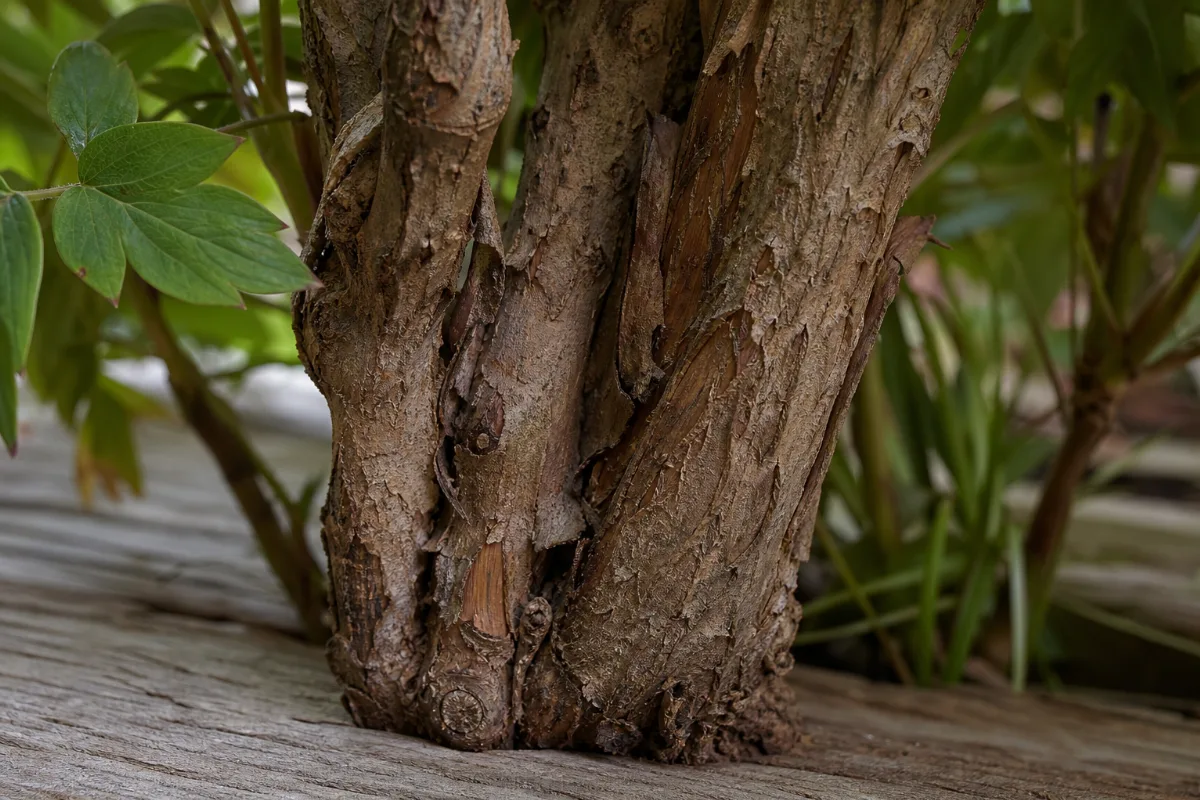
Moutan is the dried root bark of the tree peony (Paeonia x suffruticosa), a woody shrub. In Chinese medicine it is called mu dan pi. The bark is collected in autumn and sold stripped or scraped, and is sometimes stir-fried.
It is a standard herb in the Chinese Pharmacopoeia. Its marker compound is paeonol. The bark also contains paeoniflorin and many other plant chemicals.
Moutan versus white peony root
Moutan is not the same as white peony (bai shao). White peony is the root of a different species, Paeonia lactiflora, a soft-stemmed garden peony. Moutan is the bark of the root of the woody tree peony.
In Chinese medicine they are separate herbs with different jobs, and research on one does not carry over to the other. They sit together in the Guizhi Fuling formula. For white peony root, see the peony page.
What the research shows
We found no human trial of the plain bark. The human trials we found tested a five-herb formula (Guizhi Fuling) or an isolated pill of paeonol plus apocynin.
A 2026 pooled analysis of 14 short trials in China found more women reported pain relief with the formula for painful periods, but the pooled pain-scale result was inconclusive. In 28 trials, adding the formula to a prescription drug did better than the drug alone for fibroids, though the authors called the trials poor quality. The knee pain trial of isolated paeonol plus apocynin found no benefit over placebo on its main result.
Reports of effects on blood vessels, inflammation, the liver and blood sugar come from cells and animals.
At a glance
Traditional uses history, not proof
- Clearing heat from the blood and moving blood (Chinese medicine)
- Painful or blocked periods and lumps in the lower abdomen, within formulas such as Guizhi Fuling
- Fevers with rash and bruising, in Chinese medicine
Studied for research
- Painful periods: a five-herb formula that includes moutan, low certainty
- Uterine fibroids: the same formula plus a drug, very low certainty
- Knee osteoarthritis: isolated paeonol plus apocynin did not beat placebo
- Blood vessels, inflammation, liver, blood sugar: lab and animal only
Main compounds
- Paeonol (marker compound of the bark)
- Paeoniflorin
- Monoterpene glycosides and other phenols
Common forms
- Dried root bark (raw or stir-fried)
- Decoction inside multi-herb formulas
- Patent formulas such as Guizhi Fuling capsules
Research links: Systematic review: Cortex Moutan origins, chemistry, pharmacology and safety (2017) · Meta-analysis: Guizhi Fuling capsules for painful periods (2026) · Trial: paeonol plus apocynin for knee osteoarthritis (2024) · GBIF: Paeonia x suffruticosa · Research Library · Genes & Biomarkers Library
The plant and its history
- Accepted scientific name
- Paeonia x suffruticosa Andrews
- Naming authority
- Accepted in the GBIF backbone (usageKey 7155259); the name Paeonia suffruticosa matches it exactly. NCBI Taxonomy was not queried.
- Synonyms
- Paeonia suffruticosa (as used in most research papers)
- Common names
- Moutan (English); Tree peony bark (English); Mu dan pi (Chinese (pinyin)); Cortex Moutan / Moutan Cortex (Latin pharmacy name)
- Botanical family
- Paeoniaceae (peony family). One university database lists Ranunculaceae, an older placement.
- Classification
- Plantae > Saxifragales > Paeoniaceae > Paeonia > Paeonia x suffruticosa
- Native range
- Not verified from a source read here.
- Habitat
- A shrubby ornamental and medicinal peony ('tree peony'); details not verified.
- What the plant looks like
- Roots: The medicinal part is the root bark, collected in autumn and sold stripped-and-dried or scraped-and-cored (summary-only).; Stems: Woody shrub, per the common name 'tree peony'; details not verified.; Leaves: Not verified.; Flowers: Large showy flowers; petals and pollen are studied separately in the lab (abstract of the 2026 review).; Fruit: Follicles are mentioned in the 2026 review abstract.; Seed: Seeds are mentioned in the 2026 review abstract.
- Cultivation
- Not verified.
- Harvest and processing
- Per our earlier summary: bark collected in autumn; sold as stripped-and-dried (Liandanpi) or scraped-and-cored (Guadanpi); sometimes stir-fried, which changes the chemistry.
- Look-alikes and adulterants
- Name: White peony root (bai shao), Paeonia lactiflora; Note: A different, non-woody peony species whose ROOT (not root bark) is used as white peony. It is a separate medicine. See the peony page for that herb.; Name: Substitute peony barks; Note: The 2017 review (summary-only) says other peony barks are used in place of moutan.
- Sustainability and conservation
- Not verified.
Traditional use and history history, not clinical proof
| Tradition or era | Documented use | Source |
|---|---|---|
| Traditional Chinese medicine | Moutan bark clears heat from the blood and moves blood; it is a standard part of formulas for gynecological problems such as Guizhi Fuling, whose roots go back to the Eastern Han dynasty (25-220 CE) according to a 2024 review. | p37802375 |
| Pharmacopoeias | Recorded in the pharmacopoeias of several countries (2017 review abstract) and in the Chinese Pharmacopoeia (2026 review abstract). | p28590441 |
| Modern research | Pharmacology has focused on paeonol and related compounds for inflammation, blood vessels and other uses, mostly in the lab. | p42123880 |
Traditional use shows how a plant was used. It does not show that a supplement works or is safe today.
What is inside, and how it may work
What the plant contains and how those compounds act in cells and animals. Laboratory and animal mechanisms are not proven effects in people.
Main compounds
| Compound | Family | Where it is concentrated | Activity studied | Level of evidence |
|---|---|---|---|---|
| Paeonol PubChem 11092 | phenolic ketone | Root bark Not given | The marker compound of the bark; anti-inflammatory, vascular and platelet effects in cells and animals. 9 12 5 | Animal research |
| Paeoniflorin PubChem 442534 | monoterpene glycoside | Root bark and other parts Not given | Named with paeonol among the main active compounds of P. suffruticosa; also found in white peony root, so it does not tell the two apart. 9 6 | Animal research |
| Gallotannins (for example penta-O-galloyl-glucose) PubChem 65238 | hydrolysable tannin | Not verified Not given | Gallotannins are plant tannins that are often mentioned for peony barks; NOT verified for moutan bark from any source read here. The CID is for one example compound. 9 | Laboratory research |
| Monoterpene glycosides and other phenols | mixed | Root bark Not given | The 2017 review abstract says the bark contains many monoterpene glycosides and phenols. 13 | Review |
Mechanisms, receptors and pathways
| Target or pathway | Gene or receptor | What was found | Level |
|---|---|---|---|
| Platelet activation and blood-vessel lining | Not specified in the abstracts | Paeonol repressed platelet activation and improved endothelium injury in lab and animal studies. 12 6 | Animal research |
| Inflammation and oxidative stress | Not specified in the abstracts | Reduced inflammation and oxidative stress in cell and animal work. 12 13 | Animal research |
| Glucose uptake | TNF-alpha-induced insulin resistance model, 3T3-L1 fat cells | Paeonol and its metabolites showed glucose-uptake activity in this cell model. 5 | Laboratory research |
Absorption, metabolism and elimination
- Absorption
- In rats, paeonol was rapidly absorbed after oral dosing. Not studied in people.
- Distribution
- Widely distributed in rat tissues; main tissues were kidney, liver and heart; it crossed the blood-brain barrier but fell within 10 minutes.
- Metabolism
- Extensively metabolised in rats.
- Elimination
- About 35% of four metabolites was excreted in 24 hours in rats, mainly in urine. The authors note rapid clearance.
- Bioavailability
- Unknown in people.
Isolated compounds versus whole extracts
Human trials tested either a five-herb formula that includes moutan bark (Guizhi Fuling) or an isolated paeonol plus apocynin pill. Neither is the same as the whole bark, and no trial of plain bark was found. Results do not transfer between them.
Nutritional composition
Moutan bark is a medicine, not a food or nutrient source.
2 low certainty1 very low certainty5 not enough evidence
What is Moutan good for?
The main proposed uses and how strong the human evidence is for each. 'Insufficient' means there is not enough research to say. For moutan, no use is supported by a trial of the plain bark.
Benefits, one by one
Each card is a research question, not a promise. Tap a goal to filter. Open a card to see the studies, doses and limits.
Painful periods (as part of a five-herb formula)
Low certaintyMoutan bark is one of five herbs in Guizhi Fuling capsules. A 2026 pooled analysis of 14 short trials in China found more women reported pain relief with the formula, but the pain-scale result was inconclusive. The effect cannot be credited to moutan alone.
2 studiesTested as a five-herb capsule formula; the share of moutan in each pr…
Studies, doses and limits
What the trials found
One meta-analysis of 14 randomised trials (1,280 women, all in China, usually three menstrual cycles) compared the formula capsules, alone or added to usual care, with placebo or conventional medicines.
Results
Pain-relief rate was higher with the formula (11 trials, 1,014 women). Total effective rate was higher too. The pain-scale (VAS) result from 3 trials was inconclusive. Four trials reported adverse events and they were generally mild.
Effect sizes as reported
Pain relief: RR 1.62 (95% CI 1.23-2.14; I2 62%). Total effective rate: RR 1.42 (1.17-1.73; I2 89%). Pain scale: MD -1.26 (-4.21 to 1.70; I2 98%). Adverse events: OR 0.42 (0.23-0.76).
Why this rating
Short trials from one country, large differences between trials (I2 up to 98%), incomplete reporting, and a formula rather than moutan alone. Rating is the compiler's reading; the abstract does not list the authors' GRADE grades.
Form and dose studied
Tested as a five-herb capsule formula; the share of moutan in each product is not given.
Who was studied
Women with primary (no known cause) period pain.
Limits
Cannot say what moutan itself contributes. Not tested against standard pain relievers in the abstract. All trials in China.
Why researchers looked
Moutan is classed in Chinese medicine as a herb that moves and cools the blood, and it is a standard part of formulas for period pain.
Traditional use
Guizhi Fuling is a classic Chinese formula of Cinnamomi Ramulus, Poria, Paeoniae Radix (peony root), Moutan Cortex and Persicae Semen, used for blood stasis and gynecological problems.
Proposed mechanism Animal research
No mechanism for period pain is shown in the sources read. Lab work on anti-inflammatory and antiplatelet effects of paeonol is general, not specific to periods.
A proposed mechanism does not show that the effect happens in people.
Adverse events were reported as mild in the abstract. This does not cover moutan taken alone, or taken in pregnancy or with heavy periods (see the safety tab).
Uterine fibroids (formula plus a prescription drug)
Very low certaintyA 2023 pooled analysis of 28 trials found that adding Guizhi Fuling capsules to low-dose mifepristone did better than mifepristone alone on fibroid size and bleeding, but the trials were of poor quality. It is a formula, not moutan alone, and was added to a prescription drug.
1 studiesFormula capsule plus mifepristone.
Studies, doses and limits
What the trials found
One meta-analysis of 28 randomised trials (2,813 women) in China compared the formula capsule plus low-dose mifepristone with mifepristone alone.
Results
The combination was associated with smaller fibroids and uterus, lower menstrual flow, lower levels of several hormones, and a higher clinical efficiency rate (all p<0.001). Adverse drug reactions were not significantly higher (p=0.16). The authors rated evidence from very low to moderate and said the trials were of poor quality.
Effect sizes as reported
Significant (p<0.001) for fibroid volume, uterine volume and menstrual flow; exact effect sizes not in the abstract.
Why this rating
The authors themselves point to the poor quality of the included trials; a drug was in both groups; formula not moutan.
Form and dose studied
Formula capsule plus mifepristone.
Who was studied
Women with uterine fibroids in China.
Limits
Trial quality, one country, formula not moutan, and a prescription drug that affects hormones was part of both arms. Not advice to self-treat fibroids.
Why researchers looked
The formula is traditionally used for lumps and masses in the lower abdomen.
Traditional use
The five-herb formula 'reduces blood stasis and eliminates abdominal lumps' in the traditional description.
Proposed mechanism Pharmacological theory
Not established.
A proposed mechanism does not show that the effect happens in people.
Mifepristone is a prescription drug with its own risks; do not combine herbs and drugs without a doctor's guidance.
Traditional 'clearing heat from the blood' use
Not enough evidenceChinese medicine uses moutan bark to 'clear heat and cool the blood' and to move blood, for example in fevers with rashes, bruising and period problems. We found no human trial of the plain bark to test these traditional uses.
2 studiesDried bark, stir-fried bark, decoctions inside formulas.
Studies, doses and limits
What the trials found
The 2017 systematic review describes pharmacology from cell and animal studies. Our earlier summary of its full text found no human trial of plain moutan bark.
Results
No human result for plain bark.
Effect sizes as reported
None to report.
Why this rating
Traditional use only; the only human trials we found are of formulas or isolated compounds.
Form and dose studied
Dried bark, stir-fried bark, decoctions inside formulas.
Who was studied
Not applicable.
Limits
Tradition is not evidence. 'Heat' and 'blood stasis' are Chinese-medicine ideas, not diagnoses used in modern medicine.
Why researchers looked
Traditional description from Chinese medicine, not a tested claim.
Traditional use
Recorded in pharmacopoeias of several countries; the bark is stripped or scraped and dried, and sometimes stir-fried, which traditional texts say changes its properties.
Proposed mechanism Animal research
Lab and animal work reports anti-inflammatory and antioxidant effects, but this does not show benefit in people.
A proposed mechanism does not show that the effect happens in people.
Pregnancy and very heavy periods are listed as contraindications in a university herbal database.
Knee osteoarthritis pain (isolated paeonol plus apocynin)
Low certaintyA 2024 trial of 152 people tested a pill of two isolated compounds, paeonol (the marker compound in moutan) and apocynin, for 28 days. It did not beat placebo on knee pain. It tested the compounds, not moutan bark.
1 studiesFixed-dose pill of two compounds; not the bark.
Studies, doses and limits
What the trials found
One phase IIa, double-blind, placebo-controlled trial in adults with painful knee osteoarthritis.
Results
No significant difference on the main pain score, function or total score. A pre-planned subgroup with nerve-type (nociplastic/neuropathic) pain showed a significant effect, but the trial was not powered for that and it needs a new trial. Adverse events were mostly digestive and mild to moderate.
Effect sizes as reported
WOMAC pain: mean difference -0.89 (95% CI -5.62 to 3.84; p=0.71).
Why this rating
A single 28-day trial with a clear null main result, run by people tied to the company; isolated compounds.
Form and dose studied
Fixed-dose pill of two compounds; not the bark.
Who was studied
Adults with knee osteoarthritis and pain of 40 or more out of 100.
Limits
Subgroup result is hypothesis-generating only. Do not replace prescribed arthritis care.
Why researchers looked
Paeonol has anti-inflammatory activity in the lab.
Traditional use
Not a traditional use of the bark as such.
Proposed mechanism Laboratory research
Lab anti-inflammatory activity of both compounds.
A proposed mechanism does not show that the effect happens in people.
Mild to moderate, mainly digestive side effects.
Blood vessels, platelets and clotting (lab and animal)
Not enough evidenceReviews describe paeonol and other peony-bark compounds as protecting blood-vessel lining and reducing platelet activation in cells and animals. We found no human trial. It matters mainly for safety: it is a reason to be careful with blood thinners and before surgery.
2 studiesIsolated paeonol, paeoniflorin and extracts in the lab.
Studies, doses and limits
What the trials found
No human trial in the sources read; the two reviews summarise cell and animal studies and use language such as 'hypothetically'.
Results
No human result.
Effect sizes as reported
None to report.
Why this rating
Lab and animal work only; one review covers several plant parts, not only the bark.
Form and dose studied
Isolated paeonol, paeoniflorin and extracts in the lab.
Who was studied
Cells and animals.
Limits
Whether these effects occur at the strength found in a bark product is not shown.
Why researchers looked
Moutan is traditionally a blood-moving herb, and lab teams have looked for matching vascular effects.
Traditional use
Traditional use of the bark in Chinese medicine for cardiovascular complaints is described in the 2021 review.
Proposed mechanism Animal research
Reported: improved endothelium injury, less inflammation and oxidative stress, less smooth-muscle cell growth, repressed platelet activation, and antiplatelet and antithrombotic effects.
A proposed mechanism does not show that the effect happens in people.
See the safety tab: possible added effect with blood thinners, antiplatelet drugs and before surgery; unproven in people.
Inflammation and oxidative stress (lab and animal)
Not enough evidenceCell and animal studies of moutan and paeonol report anti-inflammatory and antioxidant effects. These are lab results only and do not show a benefit in people.
1 studiesExtracts and isolated compounds.
Studies, doses and limits
What the trials found
No human trial of the plain bark.
Results
No human result.
Effect sizes as reported
None to report.
Why this rating
Cell and animal studies only.
Form and dose studied
Extracts and isolated compounds.
Who was studied
Cells and animals.
Limits
Preclinical findings often do not carry over to people.
Why researchers looked
Moutan is traditionally used for hot, inflamed conditions.
Traditional use
See the heat and blood use in the first part of this page.
Proposed mechanism Animal research
Reported anti-inflammatory and antioxidant activity of the bark and its compounds in the lab.
A proposed mechanism does not show that the effect happens in people.
Not applicable.
Liver and nerve protection (lab and animal)
Not enough evidenceThe 2017 review lists liver-protective and nerve-protective effects of moutan from animal and cell work. No human trial was found, and no human liver or nerve benefit has been shown.
1 studiesExtracts and isolated compounds.
Studies, doses and limits
What the trials found
None in people.
Results
No human result.
Effect sizes as reported
None to report.
Why this rating
Cell and animal studies only.
Form and dose studied
Extracts and isolated compounds.
Who was studied
Cells and animals.
Limits
Liver 'protection' in rodents does not mean it is safe for people with liver disease.
Why researchers looked
Part of the broad lab profile of the bark.
Traditional use
Not a traditional description of the bark.
Proposed mechanism Animal research
Reported hepatoprotective and neuroprotective activity in the lab.
A proposed mechanism does not show that the effect happens in people.
Absence of liver-injury reports is not proof of safety (see safety tab).
Blood sugar (lab only)
Not enough evidenceThe 2017 review lists anti-diabetic activity, and a 2020 rat and fat-cell study found paeonol and its metabolites improved glucose uptake in a lab model. No human trial was found.
2 studiesIsolated paeonol and metabolites.
Studies, doses and limits
What the trials found
None in people.
Results
No human result.
Effect sizes as reported
None to report.
Why this rating
Cell dish and rats only.
Form and dose studied
Isolated paeonol and metabolites.
Who was studied
Cells and rats.
Limits
Effect size in people is unknown.
Why researchers looked
Part of the broad lab profile of paeonol.
Traditional use
Not a traditional use of the bark.
Proposed mechanism Laboratory research
Paeonol and its metabolites increased glucose uptake in mouse fat cells made insulin-resistant.
A proposed mechanism does not show that the effect happens in people.
If you take diabetes medicine, an added effect is possible in theory; ask a pharmacist.
Connections to the rest of health
How Moutan connects to the rest of our health knowledge graph. Every link says what kind of connection it is. A safety link (for example to the liver) is a warning, not a benefit. A study that merely mentions a topic never creates a benefit link.
Explore every connection: goals, body systems, organs, symptoms, genes
A. Wellness goals
| Connected to | Kind of connection | Evidence status | Context | Studies |
|---|---|---|---|---|
| Womens Wellness | Potential benefit | Low certainty | Painful periods (as part of a five-herb formula): Moutan bark is one of five herbs in Guizhi Fuling capsules. A 2026 pooled analysis of 14 short trials in China found more women reported pain relief with the formula, but the pain-scale result was inconclusive. The effect cannot be credited to moutan alone. Uterine fibroids (formula plus a prescription drug): A 2023 pooled analysis of 28 trials found that adding Guizhi Fuling capsules to low-dose mifepristone did better than mifepristone alone on fibroid size and bleeding, but the trials were of poor quality. It is a formula, not moutan alone, and was added to a prescription drug. | 11 8 7 |
| Womens Wellness | Traditional use | Not enough evidence | Traditional 'clearing heat from the blood' use: Chinese medicine uses moutan bark to 'clear heat and cool the blood' and to move blood, for example in fevers with rashes, bruising and period problems. We found no human trial of the plain bark to test these traditional uses. | 13 4 |
| Inflammation Balance | Traditional use | Not enough evidence | Traditional 'clearing heat from the blood' use: Chinese medicine uses moutan bark to 'clear heat and cool the blood' and to move blood, for example in fevers with rashes, bruising and period problems. We found no human trial of the plain bark to test these traditional uses. | 13 4 |
| Joint Support | Preliminary mechanism | Low certainty | Knee osteoarthritis pain (isolated paeonol plus apocynin): A 2024 trial of 152 people tested a pill of two isolated compounds, paeonol (the marker compound in moutan) and apocynin, for 28 days. It did not beat placebo on knee pain. It tested the compounds, not moutan bark. | 1 |
| Inflammation Balance | Preliminary mechanism | Low certainty | Knee osteoarthritis pain (isolated paeonol plus apocynin): A 2024 trial of 152 people tested a pill of two isolated compounds, paeonol (the marker compound in moutan) and apocynin, for 28 days. It did not beat placebo on knee pain. It tested the compounds, not moutan bark. Inflammation and oxidative stress (lab and animal): Cell and animal studies of moutan and paeonol report anti-inflammatory and antioxidant effects. These are lab results only and do not show a benefit in people. | 1 13 |
| Heart Health | Preliminary mechanism | Not enough evidence | Blood vessels, platelets and clotting (lab and animal): Reviews describe paeonol and other peony-bark compounds as protecting blood-vessel lining and reducing platelet activation in cells and animals. We found no human trial. It matters mainly for safety: it is a reason to be careful with blood thinners and before surgery. | 12 6 |
| Healthy Circulation | Preliminary mechanism | Not enough evidence | Blood vessels, platelets and clotting (lab and animal): Reviews describe paeonol and other peony-bark compounds as protecting blood-vessel lining and reducing platelet activation in cells and animals. We found no human trial. It matters mainly for safety: it is a reason to be careful with blood thinners and before surgery. | 12 6 |
| Liver Support | Preliminary mechanism | Not enough evidence | Liver and nerve protection (lab and animal): The 2017 review lists liver-protective and nerve-protective effects of moutan from animal and cell work. No human trial was found, and no human liver or nerve benefit has been shown. | 13 |
| Brain Health | Preliminary mechanism | Not enough evidence | Liver and nerve protection (lab and animal): The 2017 review lists liver-protective and nerve-protective effects of moutan from animal and cell work. No human trial was found, and no human liver or nerve benefit has been shown. | 13 |
| Blood Sugar Balance | Preliminary mechanism | Not enough evidence | Blood sugar (lab only): The 2017 review lists anti-diabetic activity, and a 2020 rat and fat-cell study found paeonol and its metabolites improved glucose uptake in a lab model. No human trial was found. | 5 13 |
B. Body systems
| Connected to | Kind of connection | Evidence status | Context | Studies |
|---|---|---|---|---|
| Reproductive system | Contraindication | Not enough evidence | Pregnancy and very heavy periods listed as contraindications by a university database; no study explains why. Pregnancy and very heavy periods listed as cautions by a university database; formula trials for period pain and fibroids are limited. Preparation or compound: Root bark |
4 11 |
| Cardiovascular system | Drug or supplement interaction | Not enough evidence | Reduced platelet activation in lab and animal work; possible added effect with blood thinners, unproven in people. Preparation or compound: Paeonol |
12 6 |
| Reproductive System | Biological association | Low certainty | Studied for: Painful periods (as part of a five-herb formula) Studied for: Uterine fibroids (formula plus a prescription drug) | 11 8 7 13 4 |
| Immune System | Biological association | Not enough evidence | Studied for: Traditional 'clearing heat from the blood' use Studied for: Inflammation and oxidative stress (lab and animal) | 13 4 |
| Musculoskeletal System | Biological association | Low certainty | Studied for: Knee osteoarthritis pain (isolated paeonol plus apocynin) | 1 |
| Cardiovascular System | Biological association | Not enough evidence | Studied for: Blood vessels, platelets and clotting (lab and animal) | 12 6 |
| Hepatic System | Biological association | Not enough evidence | Studied for: Liver and nerve protection (lab and animal) | 13 |
| Nervous System | Biological association | Not enough evidence | Studied for: Liver and nerve protection (lab and animal) | 13 |
| Endocrine System | Biological association | Not enough evidence | Studied for: Blood sugar (lab only) | 5 13 |
I. Biomarkers
| Connected to | Kind of connection | Evidence status | Context | Studies |
|---|---|---|---|---|
| Trial-defined pain relief (responders) | Biological association | Low certainty | Measured in trials: raised. A lab change is not the same as a health benefit. | 11 |
| Pain scale (VAS) in period pain | Biological association | Very low certainty | Measured in trials: mixed. A lab change is not the same as a health benefit. | 11 |
| IL-6, IL-10 and TNF-alpha in period pain | Biological association | Very low certainty | Measured in trials: mixed. A lab change is not the same as a health benefit. | 11 |
| Fibroid volume, uterine volume and menstrual flow | Biological association | Very low certainty | Measured in trials: lowered. A lab change is not the same as a health benefit. | 7 |
| FSH, estradiol, progesterone and LH | Biological association | Very low certainty | Measured in trials: lowered. A lab change is not the same as a health benefit. | 7 |
| WOMAC knee pain score | Biological association | Low certainty | Measured in trials: no-change. A lab change is not the same as a health benefit. | 1 |
| Platelet activation | Biological association | Not enough evidence | Measured in trials: lowered. A lab change is not the same as a health benefit. | 12 6 |
L. Active compounds
| Connected to | Kind of connection | Evidence status | Context | Studies |
|---|---|---|---|---|
| Paeonol | Biological association | Animal | The marker compound of the bark; anti-inflammatory, vascular and platelet effects in cells and animals. Preparation or compound: Root bark |
9 12 5 |
| Paeoniflorin | Biological association | Animal | Named with paeonol among the main active compounds of P. suffruticosa; also found in white peony root, so it does not tell the two apart. Preparation or compound: Root bark and other parts |
9 6 |
| Gallotannins (for example penta-O-galloyl-glucose) | Biological association | In vitro | Gallotannins are plant tannins that are often mentioned for peony barks; NOT verified for moutan bark from any source read here. The CID is for one example compound. Preparation or compound: Not verified |
9 |
| Monoterpene glycosides and other phenols | Biological association | Review | The 2017 review abstract says the bark contains many monoterpene glycosides and phenols. Preparation or compound: Root bark |
13 |
Each connection is stored with the ingredient, the connected record, the kind of connection, the evidence status, the supporting studies, the preparation or compound involved, and a review date (last reviewed October 25, 2026).
Evidence at a glance: what changed in 7 lab markers
Tap a number to show only those markers. Counts are markers, not people.
The evidence
The research centre for Moutan. Every record here was checked against PubMed or the publisher's page; we never list a study we have not verified.
Evidence by outcome
Bars show how many studies we found for each outcome, not how well it works. People are added up across trials only (reviews are not added, to avoid double counting).
How we rate evidence
High certainty
Several well-run trials or reviews agree; further research is unlikely to change the picture much.
Moderate certainty
Good trials point the same way, but some doubt remains.
Low certainty
Small, short or inconsistent trials. The finding could change with better research.
Very low certainty
Very little or very weak human data. Treat as a possibility only.
Mixed findings
Trials or reviews disagree with each other.
Not enough evidence
Not enough human research to say either way.
Evidence against
Good research found no benefit, or found harm.
We take the reviewers' own risk-of-bias and GRADE statements where they exist, and otherwise judge from study size, design, consistency, directness and whether a product matches what is sold. Many publications do not make evidence high. Method note: We started from our existing moutan summary, then read the abstract of every PubMed study cited, checked plant names in GBIF and compounds in PubChem, and searched NCBI Bookshelf for LiverTox and LactMed (no LiverTox entry; a LactMed 'Peony' chapter exists but was not read). The pregnancy and heavy-period cautions and details of the 2017 review's full text come from our earlier summary and were not re-opened. Not verified: EMA, NCCIH, FDA, WHO and Commission E. Certainty ratings are the compiler's reading.
Study library: every study we checked 13
| Study | Design | People | Product, dose, length | Result |
|---|---|---|---|---|
| Bihlet 2024 The efficacy and safety of a fixed-dose combination of apocynin and paeonol, APPA, in symptomatic knee OA: A double-blind, randomized, placebo-controlled, clinical trial Osteoarthritis Cartilage · PMID 38697511 · DOI |
Controlled trial |
152 Adults with painful knee osteoarthritis (Kellgren-Lawrence grades 2-3), 28 days |
Fixed-dose pill of two isolated compounds, apocynin and paeonol (APPA) not applicable (isolated compounds) Not reproduced here 28 days · vs Placebo |
No significant difference in WOMAC pain (mean difference -0.89, 95% CI -5.62 to 3.84, p=0.71), function or total. Pre-planned subgroup of people with nociplastic/neuropathic pain features showed a significant effect, but the trial was not powered for it. Adverse events (mainly gastrointestinal) were mild to moderate. Null on the main result (MD -0.89 (-5.62 to 3.84)) Methods, limits and fundingOutcomes: WOMAC pain (primary), function, total; adverse events Limitations: Phase IIa, 28 days. Isolated compounds, not moutan bark. Subgroup finding not powered. Funding and conflicts: Industry-linked: authors include employees and shareholders of AKL Therapeutics and NBCD A/S. Read: abstract |
| GBIF Secretariat 2026 GBIF Backbone: Paeonia x suffruticosa Andrews (usageKey 7155259) GBIF species match API, checked 2026-10-25 · Source |
Reference database n/a |
n/a | n/a n/a Not reproduced here |
Name searched as "Paeonia suffruticosa" and as "Paeonia x suffruticosa": exact match, status ACCEPTED, rank species, family Paeoniaceae, order Saxifragales, genus Paeonia. Identity or reference record Methods, limits and fundingLimitations: Synonym list not pulled. NCBI Taxonomy not queried. One source in our summary (a university herbal database) gives the family as Ranunculaceae, an older placement; GBIF is used here. Funding and conflicts: Public record Read: full-text |
| GBIF Secretariat 2026 GBIF Backbone: Paeonia lactiflora Pall. (usageKey 3083486) GBIF species match API, checked 2026-10-25 · Source |
Reference database n/a |
n/a | n/a n/a Not reproduced here |
Exact match, ACCEPTED species, family Paeoniaceae. This is the herbaceous (non-tree) peony whose root is used as white peony (bai shao). Identity or reference record Methods, limits and fundingLimitations: That the root is called bai shao and that this is the species behind it comes from our existing peony page and earlier summary, not from GBIF. Funding and conflicts: Public record Read: full-text |
| Hong Kong Polytechnic University 2015 Tree Peony Bark (Moutan Cortex), Chinese Herbal Medicine Database herbaltcm.sn.polyu.edu.hk, copyright 2015 · Source |
Authoritative guidance n/a |
n/a | n/a n/a Not reproduced here |
Per our earlier summary: lists pregnancy and excessive menstruation as contraindications for moutan; cites a lab (in vitro) study with a pro-oxidative effect on red blood cells from people with G6PD deficiency. The family is given there as Ranunculaceae. Identity or reference record Methods, limits and fundingLimitations: Summary-only: the page was not re-opened for this profile. A university database, not a regulator; it does not explain why pregnancy is a contraindication. Funding and conflicts: University herbal database Read: summary-only |
| Hu 2020 Pharmacokinetics, Tissue Distribution and Excretion of Paeonol and Its Major Metabolites in Rats Provide a Further Insight Into Paeonol Effectiveness Front Pharmacol · PMID 32180731 · DOI |
Animal research animal |
Rats; plus a cell-dish glucose uptake assay | Paeonol and its metabolites isolated compound Not reproduced here 24 hours excretion |
Paeonol was rapidly absorbed, extensively metabolised and widely distributed without long-term accumulation; main tissues were kidney, liver and heart; it crossed the blood-brain barrier but fell within 10 minutes; about 35% of four metabolites was excreted in 24 h, mainly in urine. Paeonol and its metabolites showed glucose-uptake activity in mouse fat cells. Animal data; rapid clearance noted by the authors Methods, limits and fundingOutcomes: Absorption, distribution, metabolism, excretion; glucose uptake in fat cells Limitations: Rats and cell dish only; not human. Funding and conflicts: Not stated in abstract Read: abstract |
| Huang 2026 Pharmacological Effects and Development Prospects of the Main Active Compounds of Paeonia x suffruticosa Andrews in the Treatment of Panvascular Diseases Molecules · PMID 42123880 · DOI |
Review animal |
Not applicable (review of lab and animal findings) | Compounds from P. suffruticosa (paeonol, paeoniflorin, alpha-linolenic acid) from root bark, leaves, petals, pollen, seeds and follicles root bark and other parts Not reproduced here |
Abstract: the compounds show vascular endothelial protection, lipid regulation, antiplatelet aggregation, anti-inflammatory, antioxidant and antithrombotic effects, and the authors present this as theory-level value for blood-vessel disease. No human trial result is given in the abstract. Descriptive review; no human effect size Methods, limits and fundingOutcomes: Vascular protection, lipid regulation, antiplatelet, antithrombotic, anti-inflammatory and antioxidant effects Limitations: Abstract only. Mostly cell and animal findings; the review covers several plant parts, not only the bark. Funding and conflicts: No competing interests declared Read: abstract |
| Lei 2023 The efficacy and safety of Chinese herbal medicine Guizhi Fuling capsule combined with low dose mifepristone in the treatment of uterine fibroids: a systematic review and meta-analysis of 28 randomized controlled trials BMC Complement Med Ther · PMID 36803997 · DOI |
Meta-analysis |
2813 Women with uterine fibroids; 28 trials |
Guizhi Fuling capsule (formula that includes moutan bark) plus low-dose mifepristone mixed (includes moutan root bark) Not reproduced here Not stated in abstract · vs Low-dose mifepristone alone |
Compared with mifepristone alone, the combination was associated with lower FSH, estradiol, progesterone, LH, fibroid volume, uterine volume and menstrual flow (all p<0.001) and higher clinical efficiency rate; adverse drug reactions not significantly higher (p=0.16). Evidence quality ranged from very low to moderate. Better than mifepristone alone in poor-quality trials Methods, limits and fundingOutcomes: Fibroid volume, uterine volume, menstrual flow, hormones (FSH, estradiol, progesterone, LH), clinical efficiency, adverse reactions Limitations: The authors cite the poor quality of the included trials and call for a rigorous, large trial. A prescription drug was in both arms. Funding and conflicts: No competing interests declared Read: abstract |
| Liu 2024 Guizhi Fuling Formulation: A review on chemical constituents, quality control, pharmacokinetic studies, pharmacological properties, adverse reactions and clinical applications J Ethnopharmacol · PMID 37802375 · DOI |
Review |
Not applicable (review of a five-herb formula) | Guizhi Fuling formula: Cinnamomi Ramulus, Poria, Paeoniae Radix, Moutan Cortex, Persicae Semen mixed (includes moutan root bark) Not reproduced here |
Abstract: the formula has five herbs including moutan bark and is used for gynecological problems and tumours; the authors say quality control is imperfect, pharmacokinetic work is not comprehensive, mechanisms are insufficiently explained and clinical safety has not been fully verified. Descriptive review; no pooled result in the abstract Methods, limits and fundingOutcomes: Chemistry, quality control, pharmacokinetics, adverse reactions and clinical use of the formula Limitations: Only the abstract was read. About a formula, not moutan alone. Funding and conflicts: No competing interests declared Read: abstract |
| NCBI PubChem 2026 PubChem compound records: paeonol (CID 11092), paeoniflorin (CID 442534), 1,2,3,4,6-penta-O-galloyl-beta-D-glucopyranose (CID 65238) PubChem PUG REST, checked 2026-10-25 · Source |
Reference database n/a |
n/a | n/a n/a Not reproduced here |
Paeonol CID 11092, C9H10O3 (1-(2-hydroxy-4-methoxyphenyl)ethanone). Paeoniflorin CID 442534, C23H28O11. Penta-galloyl-glucose (a gallotannin) CID 65238, C41H32O26. Identity or reference record Methods, limits and fundingLimitations: PubChem confirms the compounds exist, not that moutan bark contains them or in what amount. Paeonol and paeoniflorin are named in the abstracts read; that gallotannins occur in the bark is NOT verified from a source we read. Funding and conflicts: Public record Read: full-text |
| NICHD / 2026 LactMed (Drugs and Lactation Database): Peony, record NBK501902 Bookshelf, record found 2026-10-25 · Source |
Authoritative guidance n/a |
n/a | n/a n/a Not reproduced here |
A LactMed chapter titled "Peony" exists (NBK501902). Its page is rendered by script and its text could not be read here, so we do not know if it covers moutan bark. Identity or reference record Methods, limits and fundingLimitations: NOT verified: content not read; no separate LactMed record for moutan was found by search. Funding and conflicts: Public record Read: summary-only |
| Qiu 2026 Anti-Dysmenorrhea Effects and Safety of Guizhi Fuling Capsules for Primary Dysmenorrhea: A Systematic Review and Meta-Analysis of Randomized Controlled Trials J Pain Res · PMID 42746361 · DOI |
Meta-analysis |
1280 Women with primary dysmenorrhea (painful periods); 14 trials, all in China, mostly three menstrual cycles |
Guizhi Fuling capsules (five-herb formula that includes moutan bark), alone or as add-on mixed (includes moutan root bark) Not reproduced here About three menstrual cycles · vs Placebo or conventional medicines |
Higher trial-defined pain-relief rate (11 trials, 1014 women: RR 1.62, 95% CI 1.23-2.14; I2 62%) and total effective rate (RR 1.42, 95% CI 1.17-1.73; I2 89%). Pain scale (3 trials, 295 women) inconclusive: MD -1.26, 95% CI -4.21 to 1.70; I2 98%. Four trials (512 women) gave safety data; adverse events generally mild (OR 0.42, 95% CI 0.23-0.76; I2 17%). IL-6 inconclusive. Higher pain-relief and total effective rates; pooled pain-scale result inconclusive (RR 1.62 (1.23-2.14) pain relief; VAS MD -1.26 (-4.21 to 1.70)) Methods, limits and fundingOutcomes: Pain-relief rate, total effective rate, pain scale (VAS), adverse events, IL-6, IL-10, TNF-alpha Limitations: High heterogeneity, incomplete reporting, short follow-up, trials only in China. Certainty ratings by the authors are not given in the abstract. Formula, not moutan alone. Funding and conflicts: No competing interests declared. PROSPERO CRD420251271957. Read: abstract |
| Vellasamy 2021 Biological Activities of Paeonol in Cardiovascular Diseases: A Review Molecules · PMID 34443563 · DOI |
Review animal |
Not applicable (review of lab and animal findings) | Paeonol (from Paeonia suffruticosa root bark) root bark compound Not reproduced here |
Abstract: paeonol treatment improved endothelium injury, reduced inflammation and oxidative stress, suppressed vascular smooth muscle cell growth and repressed platelet activation, and the authors call it a hypothetical complementary option for atherosclerosis. Descriptive review; no human effect size Methods, limits and fundingOutcomes: Endothelium, inflammation, oxidative stress, vascular smooth muscle, platelet activation Limitations: Abstract only. Language such as "hypothetically" shows these are not human results. Funding and conflicts: No competing interests declared Read: abstract |
| Wang 2017 Origins, Phytochemistry, Pharmacology, Analytical Methods and Safety of Cortex Moutan (Paeonia suffruticosa Andrew): A Systematic Review Molecules · PMID 28590441 · DOI |
Systematic review animal |
Not applicable (review of chemistry, lab and animal work) | Cortex Moutan (root bark of Paeonia suffruticosa) root bark Not reproduced here |
Abstract: the bark contains monoterpene glycosides and phenols; reported activities (anti-inflammatory, antioxidant, anti-tumour, anti-diabetic, cardiovascular, nerve and liver protective) come from pharmacology research; authors call for more work on mechanisms and for harmonised quality criteria. Our earlier summary adds that no human trial of the plain bark was described, and lists heavy metals, pesticide residues, sulfur fumigation and substitute barks as quality concerns. Descriptive review; no pooled human result Methods, limits and fundingOutcomes: Origins, chemistry, pharmacology, analysis and safety control of the bark Limitations: Only the abstract was re-opened for this page. The points on human trials, contamination and the 2015 Chinese Pharmacopoeia come from our earlier summary of the full text and are marked summary-only. Funding and conflicts: No competing interests declared Read: abstract |
What we do not know yet
- No human trial of plain moutan bark for any use.
- No trial separates moutan from the other herbs in Guizhi Fuling.
- No pregnancy, breastfeeding, bleeding, blood-thinner or blood pressure drug safety data.
- EMA, NCCIH, WHO, FDA and Commission E were not searched again; LactMed text not read.
- Gallotannin content of the bark not verified.
How new research is added
New studies are found by a saved PubMed search and reviewed before the page is updated.
Lab markers
What changed in blood or saliva tests during trials. A changed number is not the same as feeling or being healthier, and we give no "normal ranges".
Other 7
Trial-defined pain relief (responders)
Raised in trials
The share of women each trial counted as having pain relief. Each trial set its own cut-off.
Low certaintyResults and what it means
Why it was measured
Main result of the period-pain pooled analysis.
Statistical vs. clinical meaning
Statistically significant but trial-defined, with large differences between trials.
Safety implication
None specific.
| Study | Result | People | Product |
|---|---|---|---|
| 11 | Higher with formula: RR 1.62 (95% CI 1.23-2.14); total effective rate RR 1.42 (1.17-1.73) | 1,014 women in 11 trials | Guizhi Fuling capsules, alone or add-on |
Pain scale (VAS) in period pain
Mixed results in trials
A line on which women mark their pain level.
Very low certaintyResults and what it means
Why it was measured
The standard pain measure, so a better test than a 'responder' label.
Statistical vs. clinical meaning
Wide interval crossing zero and very high I2: no firm conclusion.
Safety implication
None specific.
| Study | Result | People | Product |
|---|---|---|---|
| 11 | Inconclusive: MD -1.26 (95% CI -4.21 to 1.70; I2 98%) | 295 women in 3 trials | Guizhi Fuling capsules |
IL-6, IL-10 and TNF-alpha in period pain
Mixed results in trials
Blood signals of inflammation.
Very low certaintyResults and what it means
Why it was measured
Reported in a few trials.
Statistical vs. clinical meaning
Biomarker change is not clinical benefit; very few trials.
Safety implication
None specific.
| Study | Result | People | Product |
|---|---|---|---|
| 11 | IL-6 inconclusive; lower IL-10 and TNF-alpha estimates described as mechanistically uncertain | Few trials | Guizhi Fuling capsules |
Fibroid volume, uterine volume and menstrual flow
Lowered in trials
Size of the fibroids and uterus on scan, and bleeding.
Very low certaintyResults and what it means
Why it was measured
Main outcomes of the fibroid pooled analysis.
Statistical vs. clinical meaning
Statistical significance in poor-quality trials, with a drug in both groups.
Safety implication
Mifepristone is a prescription drug.
| Study | Result | People | Product |
|---|---|---|---|
| 7 | Lower with the combination than mifepristone alone (p<0.001); exact values not in the abstract | 2,813 women in 28 trials | Guizhi Fuling capsule plus low-dose mifepristone |
FSH, estradiol, progesterone and LH
Lowered in trials
Reproductive hormones.
Very low certaintyResults and what it means
Why it was measured
Reported as secondary outcomes.
Statistical vs. clinical meaning
Lower hormones may reflect the mifepristone-based treatment context and are not a benefit by themselves; no study shows a hormone effect of moutan alone.
Safety implication
A change in hormones in people with fibroids is not necessarily good or bad on its own.
| Study | Result | People | Product |
|---|---|---|---|
| 7 | All lower with the combination than mifepristone alone (p<0.001) | 2,813 women in 28 trials | Guizhi Fuling capsule plus low-dose mifepristone |
WOMAC knee pain score
No clear change in trials
A questionnaire score for knee osteoarthritis pain (higher is worse).
Low certaintyResults and what it means
Why it was measured
Primary outcome of the paeonol plus apocynin trial.
Statistical vs. clinical meaning
No difference; subgroup signal not powered.
Safety implication
Mostly mild digestive side effects.
| Study | Result | People | Product |
|---|---|---|---|
| 1 | Mean difference between groups -0.89 (95% CI -5.62 to 3.84; p=0.71); not significant | 148 of 152 completed | Paeonol plus apocynin vs placebo, 28 days |
Platelet activation
Lowered in trials
How readily blood platelets stick together and form clots.
Not enough evidenceResults and what it means
Why it was measured
The reviews report paeonol repressing platelet activation in lab studies.
Statistical vs. clinical meaning
Not measured in people; relevant to bleeding risk, not shown as a benefit.
Safety implication
Possible added effect with blood thinners or before surgery; unproven in people.
| Study | Result | People | Product |
|---|---|---|---|
| 12 | Paeonol repressed platelet activation in lab and animal studies (no numbers in the abstract) | Cells and animals | Isolated paeonol |
Safety
What studies and official sources say about side effects, medicines and who should check first. Each point shows what kind of evidence it comes from.
Main points to know 3
- Pregnancy: traditionally avoided. A university herbal database lists pregnancy as a contraindication for moutan bark. It does not explain why, and no human safety study was found. Moutan is classed in Chinese medicine as a blood-moving herb, which is the traditional reason such herbs are avoided in pregnancy. Avoid unless a doctor or midwife who knows the herb agrees. Authoritative guidance 4
- Heavy periods, blood thinners and surgery: untested, take care. The same database lists excessive menstruation as a contraindication. Reviews report that paeonol, the marker compound, reduces platelet activation in cells and animals. No human study of bleeding or of blood-thinner interactions was found. Because of this theory, tell your doctor, pharmacist and surgeon you use it, especially if you take warfarin or other blood thinners, aspirin-type drugs, or have heavy bleeding or a planned operation. Pharmacological theory 4 12 6
- Blood pressure and diabetes medicines: no data. No human study of moutan with blood pressure or diabetes drugs was found. Reviews describe vascular effects and glucose-uptake effects of paeonol in the lab, so an added effect is possible in theory. Ask a pharmacist and keep up your usual readings. Pharmacological theory 12 5
Side effects 3
| Effect | How often | Severity and recovery | Evidence |
|---|---|---|---|
| Mild side effects in formula trials A five-herb formula, short trials in China. Does not describe moutan alone. | Four period-pain trials (512 women) reported adverse events; they were generally mild and not more frequent than with comparison treatments (OR 0.42, 95% CI 0.23-0.76). | mild Not stated | Meta-analysis 11 |
| Digestive side effects with isolated paeonol plus apocynin 28-day trial of two isolated compounds, not the bark. | Mainly digestive, mild to moderate; no numbers in the abstract | mild to moderate Not stated | Controlled trial 1 |
| Formula safety not fully verified The Guizhi Fuling review says clinical safety of the formula has not been fully verified in large studies. | No data | unknown Unknown | Review 8 |
Liver
No case of liver injury from moutan bark was found. A PubMed search combining moutan or paeonol with liver toxicity returned only lab studies in which paeonol protected the liver in rodents. A search of NCBI Bookshelf found no LiverTox entry for moutan or peony. Not finding reports is not proof of safety, and the PubMed search was not exhaustive. 13
How often. No data.
Monitoring. No agency monitoring advice found. People with liver disease should ask their doctor first.
This is a safety connection. It is not evidence that Moutan supports liver health.
Medicines and supplements 5
| With | Why it matters | Importance | Evidence | What to do |
|---|---|---|---|---|
| Warfarin and other blood thinners, aspirin and other antiplatelet drugs drug | Paeonol and related compounds repressed platelet activation in cells and animals. | Unknown in people; no interaction report found | Pharmacological theory Not enough evidence 12 6 | Tell your prescriber and pharmacist before using moutan, and report unusual bruising or bleeding. |
| Surgery or dental procedures with bleeding procedure | Theoretical added effect on platelet function. | Unknown in people | Pharmacological theory Not enough evidence 12 | Tell your surgeon and anaesthetist; ask whether to stop it beforehand. No agency timing advice was found. |
| Blood pressure medicines drug | Reviews describe vascular and cardiovascular effects of paeonol in the lab; whether it changes blood pressure in people is not shown. | Unknown | Pharmacological theory Not enough evidence 12 6 | Ask a pharmacist; keep checking your blood pressure as your doctor advises. |
| Diabetes medicines drug | Paeonol and its metabolites raised glucose uptake in a fat-cell model. | Unknown in people | Laboratory research Not enough evidence 5 | Ask a pharmacist; watch for low blood sugar if you use insulin or tablets. |
| Mifepristone (in formula trials) drug | Not studied; the fibroid trials gave the formula with the drug. | Adverse drug reactions were not significantly higher with the formula added (p=0.16) | Meta-analysis Very low certainty 7 | Only under a doctor's care. Trial quality was poor. |
Who should check first 4
| Situation | Advice | Evidence |
|---|---|---|
| Pregnancy | Avoid unless a doctor or midwife who knows the herb agrees. | Authoritative guidance 4 |
| Excessive menstruation (very heavy periods) | Avoid unless your doctor agrees; the source gives no reason. | Authoritative guidance 4 |
| G6PD deficiency | A lab study cited by the database found a pro-oxidative effect on red blood cells from people with this condition. Clinical relevance is not stated; ask your doctor. | Laboratory research 4 |
| Bleeding disorders, blood thinners, or planned surgery | Ask your doctor first (theory-based caution; unproven in people). | Pharmacological theory 12 6 |
Overdose, product quality and regulators
Summary. No human toxicity study of the bark was found. The 2017 review says the bark is generally regarded as safe in its literature, which is the authors' impression and not a safety trial (summary-only).
Animal. Rat work with paeonol found it rapidly cleared and not accumulating over time. This is not a toxicity test.
Human doses studied. Not reproduced here. Human trials were of formulas or isolated compounds.
High dose or long term signals. None found; long-term safety is unknown.
Overdose response. No report found.
Genotoxicity. Not found in the sources read.
Toxic plant parts. No toxic plant part is described in the sources read. The medicine is the root bark; leaves, petals, pollen and seeds of the plant are studied separately in the lab.
Quality is a real concern. The 2017 review (summary-only) lists heavy metals, pesticide residues and sulfur from fumigation, notes the 2015 Chinese Pharmacopoeia set no heavy-metal limits, and says substitute peony barks are used. Different processing (raw or stir-fried) also changes the chemistry.
Substitute barks and different processing. Other peony barks are sold in place of moutan, and stir-frying changes the profile, so results for one product may not apply to another. 13
Moutan versus white peony root. Moutan is the root bark of the tree peony (Paeonia x suffruticosa). White peony root (bai shao) is from a different species, Paeonia lactiflora. They are separate medicines and evidence for one does not transfer to the other. 2 3
| Body | Action | Date |
|---|---|---|
| Chinese Pharmacopoeia (China) | Moutan Cortex is a standard medicinal herb in the pharmacopoeia (stated in a 2026 review abstract). source |
When to get medical help
- Unusual or heavy bleeding, nosebleeds that will not stop, black stools or large bruises, especially with blood thinners.
- Yellow eyes or skin, dark urine or severe tiredness (possible liver problem).
- Rash, swelling of the face or lips, or trouble breathing (possible allergy).
- Pain, bleeding or cramps in pregnancy: stop and call your doctor or midwife.
Stop the supplement and contact a clinician or emergency service. In the US, Poison Control is 1-800-222-1222.
General information only, not medical advice. Ask a clinician or pharmacist before use, especially with medicines, in pregnancy or with a health condition. See the Natural Remedy Safety guide.
Frequently asked questions
What is moutan?
What is moutan used for?
Is moutan the same as white peony (bai shao)?
Does moutan help with period pain?
A five-herb formula that includes moutan gave higher pain-relief rates in short trials in China, but the pooled pain-scale result was inconclusive. We found no trial of moutan alone.
Does it help with fibroids?
Only a formula given with a prescription drug has been studied, in poor-quality trials. See a doctor for fibroids.
Is moutan safe in pregnancy?
It is listed as a caution in pregnancy by a university herbal database, and no safety study was found. Avoid it unless a doctor or midwife who knows the herb agrees.
Is it safe if I have heavy periods?
Excessive menstruation is listed as a caution. Ask your doctor before using it.
Can I take it with warfarin or other blood thinners?
Should I stop it before surgery?
Does it interact with blood pressure medicine?
Can it harm the liver?
No human case of liver injury and no LiverTox entry were found. In rodents paeonol protected the liver. Not finding reports is not proof of safety, so ask a doctor if you have liver disease.
Does the knee pain trial mean moutan works for arthritis?
No. It tested a pill of two isolated compounds, paeonol and apocynin, and found no benefit over placebo on its main result. It did not test the bark.
Explore by health goal
Womens WellnessInflammation BalanceJoint SupportHeart HealthHealthy CirculationLiver SupportBrain HealthBlood Sugar Balance
Editorial transparency
- Written by
- AlternativeMed editorial team. Research compiled with AI assistance, then checked against PubMed records.
- Medical review
- None. This page has not been reviewed by a physician or pharmacist.
- First published
- 2026-10-25
- Last substantive update
- 2026-10-25
- How we research
- We started from our existing moutan summary, then read the abstract of every PubMed study cited, checked plant names in GBIF and compounds in PubChem, and searched NCBI Bookshelf for LiverTox and LactMed (no LiverTox entry; a LactMed 'Peony' chapter exists but was not read). The pregnancy and heavy-period cautions and details of the 2017 review's full text come from our earlier summary and were not re-opened. Not verified: EMA, NCCIH, FDA, WHO and Commission E. Certainty ratings are the compiler's reading.
- How we rate evidence
- See "How we rate evidence" in the Evidence tab.
- Independence
- No product is promoted on this page. No affiliate links are shown.
Sources 13
Each source was opened and checked. Where we read only the abstract, it says so. The small numbers in the text point here.
- Bihlet AR, Byrjalsen I, Andersen JR, et al.. The efficacy and safety of a fixed-dose combination of apocynin and paeonol, APPA, in symptomatic knee OA: A double-blind, randomized, placebo-controlled, clinical trial. Osteoarthritis Cartilage. 2024. PMID 38697511. DOI 10.1016/j.joca.2024.02.948. (abstract)
- GBIF Secretariat. GBIF Backbone: Paeonia x suffruticosa Andrews (usageKey 7155259). GBIF species match API, checked 2026-10-25. 2026. (full-text)
- GBIF Secretariat. GBIF Backbone: Paeonia lactiflora Pall. (usageKey 3083486). GBIF species match API, checked 2026-10-25. 2026. (full-text)
- Hong Kong Polytechnic University. Tree Peony Bark (Moutan Cortex), Chinese Herbal Medicine Database. herbaltcm.sn.polyu.edu.hk, copyright 2015. 2015. (summary-only)
- Hu X, Ding L, Cao S, et al.. Pharmacokinetics, Tissue Distribution and Excretion of Paeonol and Its Major Metabolites in Rats Provide a Further Insight Into Paeonol Effectiveness. Front Pharmacol. 2020. PMID 32180731. DOI 10.3389/fphar.2020.00190. (abstract)
- Huang XW, Li ZY, Xie FY, et al.. Pharmacological Effects and Development Prospects of the Main Active Compounds of Paeonia x suffruticosa Andrews in the Treatment of Panvascular Diseases. Molecules. 2026. PMID 42123880. DOI 10.3390/molecules31091514. (abstract)
- Lei Y, Yang L, Yang H, et al.. The efficacy and safety of Chinese herbal medicine Guizhi Fuling capsule combined with low dose mifepristone in the treatment of uterine fibroids: a systematic review and meta-analysis of 28 randomized controlled trials. BMC Complement Med Ther. 2023. PMID 36803997. DOI 10.1186/s12906-023-03842-y. (abstract)
- Liu X, Chen L, Sun P, et al.. Guizhi Fuling Formulation: A review on chemical constituents, quality control, pharmacokinetic studies, pharmacological properties, adverse reactions and clinical applications. J Ethnopharmacol. 2024. PMID 37802375. DOI 10.1016/j.jep.2023.117277. (abstract)
- NCBI PubChem. PubChem compound records: paeonol (CID 11092), paeoniflorin (CID 442534), 1,2,3,4,6-penta-O-galloyl-beta-D-glucopyranose (CID 65238). PubChem PUG REST, checked 2026-10-25. 2026. (full-text)
- NICHD / NLM. LactMed (Drugs and Lactation Database): Peony, record NBK501902. Bookshelf, record found 2026-10-25. 2026. (summary-only)
- Qiu T, Wang T, Huang W. Anti-Dysmenorrhea Effects and Safety of Guizhi Fuling Capsules for Primary Dysmenorrhea: A Systematic Review and Meta-Analysis of Randomized Controlled Trials. J Pain Res. 2026. PMID 42746361. DOI 10.2147/JPR.S631424. (abstract)
- Vellasamy S, Murugan D, Abas R, et al.. Biological Activities of Paeonol in Cardiovascular Diseases: A Review. Molecules. 2021. PMID 34443563. DOI 10.3390/molecules26164976. (abstract)
- Wang Z, He C, Peng Y, et al.. Origins, Phytochemistry, Pharmacology, Analytical Methods and Safety of Cortex Moutan (Paeonia suffruticosa Andrew): A Systematic Review. Molecules. 2017. PMID 28590441. DOI 10.3390/molecules22060946. (abstract)