Herbs & Botanicals · Astringent root, no human trials
Bistort
Bistorta officinalis (also Persicaria bistorta, Polygonum bistorta) · also called Bistort, snakeroot, meadow bistort, snakeweed, quan shen (Chinese)
Bistort is a damp-meadow plant whose thick, twisted root is very rich in tannins, natural compounds that tighten tissue. It has been used in Europe and Asia for diarrhoea, sore mouths and bleeding, and the root and leaves have also been eaten as food. The research is extremely thin: we found no human trial at all, only lab, cell and animal studies. The main caution is that tannins can upset the stomach, cause constipation and block iron, the root also holds oxalate, and diarrhoea in children or any real bleeding needs a doctor, not a herb.
General information, not medical advice. Last substantive update · Not medically reviewed. A named clinician has not signed off on this page. How this page is made
About Bistort
Bistort is a damp-meadow plant whose thick, twisted root is very rich in tannins, natural compounds that tighten tissue. It has been used in Europe and Asia for diarrhoea, sore mouths and bleeding, and the root and leaves have also been eaten as food. The research is extremely thin: we found no human trial at all, only lab, cell and animal studies. The main caution is that tannins can upset the stomach, cause constipation and block iron, the root also holds oxalate, and diarrhoea in children or any real bleeding needs a doctor, not a herb. Cooking the root or leaves as food is a different matter from using it as a medicine; this profile is about bistort as a health product. For amounts, ask a doctor or pharmacist.
What it is
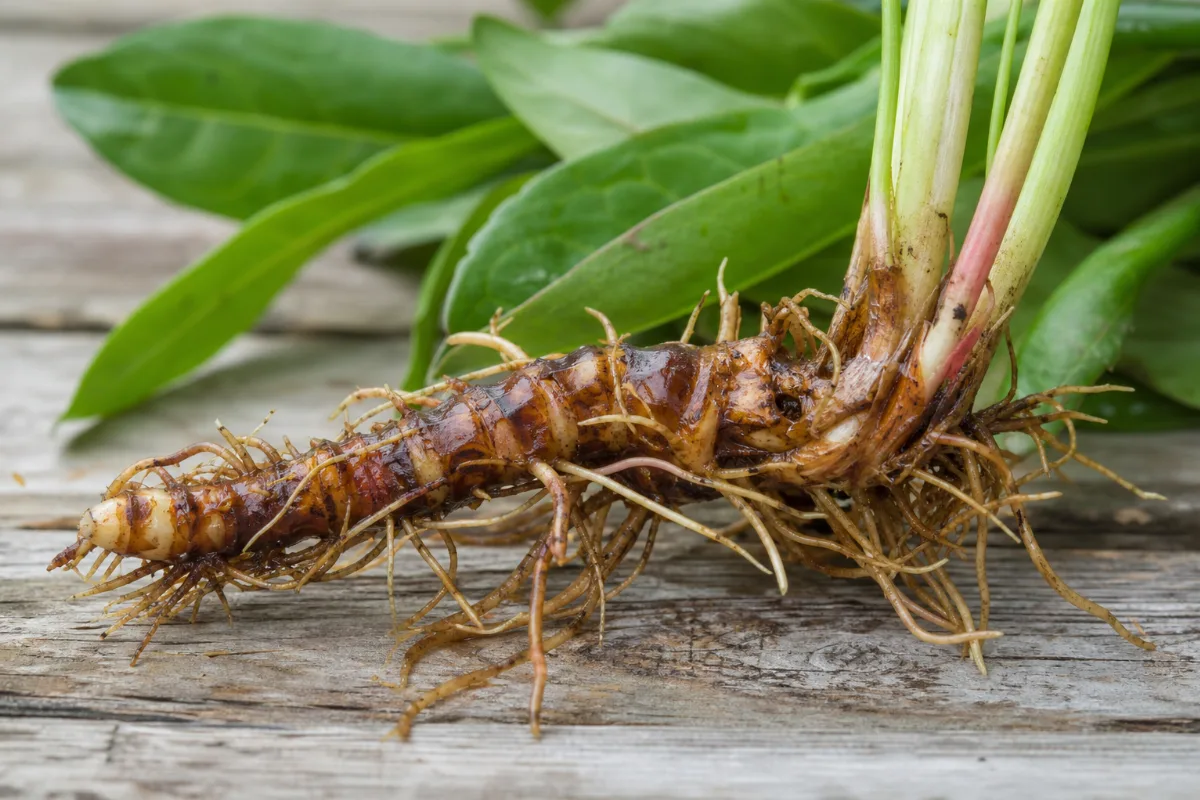
Bistort (Bistorta officinalis, also called Persicaria bistorta or Polygonum bistorta) is a perennial of the knotweed family (Polygonaceae), the family of rhubarb and sorrel. It grows in damp meadows across northern and central Europe and parts of Asia and has pink flower spikes. The medicinal part is the thick, twisted rhizome (root-like underground stem). The older Latin name is still used in many papers, and the Chinese rhizome called quan shen is the same plant. Look-alike roots are sold as it, so the Latin name on a label matters.
Traditional and current uses
Bistort has been used in Europe and Asia for diarrhoea, and on the skin. A plant database calls it one of the most strongly astringent herbs and a styptic, meaning a herb used to stop bleeding. Herbalists use a gargle for sore gums and throat, and traditional Persian medicine names it for bleeding. These are traditional uses only.
As food, the leaves are eaten raw or cooked, and the root, after it is steeped in water and roasted to reduce its tannin, has been eaten or ground into flour. Cooking and food use are not the same as taking it as a medicine.
What is in it and how it works
The root is dominated by tannins (condensed and hydrolysable), with catechins, gallic acid and chlorogenic acid. A plant database lists about 15 to 36% tannin, 30% starch and 1% calcium oxalate in the root. Tannins tighten tissue in theory. In pig gut cells the extract raised proteins that seal the cell layer; the authors say this, not killing germs, is the main gut effect. In rats it lowered inflammation signals along the NF-kB pathway. All of this is lab or animal work.
What the research shows
We found no human trial of bistort. A PubMed search for the plant names returned 59 records, none a human trial for diarrhoea, mouth problems or bleeding. What exists is: a mouse infection study, a rat colitis study, a rat lung study, a pig gut-cell study, a skin-cell study and a blood sugar study that did not hold up in fruit flies or chicken embryos. The authors of each call for further work. Farm-animal reviews mention it as an anti-inflammatory feed. None of this shows it works in people.
At a glance
Traditional uses history, not proof
- European and Asian folk medicine: the root has been used for diarrhoea and as a skin application. Traditional use is not proof it works.
- Bleeding and wounds: described as strongly astringent and styptic, used internally and as a powder or wash. Not tested.
- Mouth and throat: a gargle for sore gums and throat, per one herbalist page that is low reliability.
- Food: leaves eaten raw or cooked, and the root steeped in water and roasted to cut the tannin before eating (a plant database; its references were not checked).
- Chinese medicine: the rhizome (quan shen) is listed in the Chinese Pharmacopoeia, per a 2023 abstract.
Studied for research
- Diarrhoea, insufficient (lab and mouse only)
- Gut inflammation, insufficient (one rat study)
- Gut-lining strength, insufficient (pig cells)
- Mouth and throat, insufficient (traditional only)
- Bleeding and wounds, insufficient (traditional only)
- Skin inflammation, lung inflammation, blood sugar and germ behaviour, insufficient (lab or animal only)
Main compounds
- Condensed tannins (procyanidins) and catechins, the main astringent compounds
- Hydrolysable tannins (galloyl glucose derivatives) and gallic acid
- Chlorogenic acid
- Calcium oxalate and starch in the root
Common forms
- Dried rhizome, as a tea or simmered decoction (traditional)
- Tincture, used diluted as a gargle (traditional)
- Powder, put on wounds (traditional)
- Research extracts used in the lab and animal work, not the same as home preparations
- Roasted root and cooked leaves as food
Research links: PubMed record of the 2026 gut-cell study · PubMed record of the 2024 rat colitis study · PubMed record of the 2020 lab study of the infusion · Plants For A Future entry (food and traditional use) · Research Library · Genes & Biomarkers Library
The plant and its history
- Accepted scientific name
- Bistorta officinalis Raf.
- Naming authority
- Raf. (GBIF key 7925535, status ACCEPTED, Polygonaceae)
- Synonyms
- Persicaria bistorta (L.) Samp. (GBIF lists it as a synonym); Polygonum bistorta L. (older name, still used in many papers and the Chinese Pharmacopoeia)
- Common names
- Bistort (English); Snakeroot (English); Meadow bistort (English); Snakeweed (English); Quan shen (rhizome name in Chinese medicine) (Chinese)
- Botanical family
- Polygonaceae (knotweed or buckwheat family, which also holds rhubarb, sorrel and dock).
- Classification
- Plantae > Caryophyllales > Polygonaceae > Bistorta > Bistorta officinalis
- Native range
- Northern and central Europe including Britain, mountains of southern Europe, western and central Asia (plant database, not a botanical flora).
- Habitat
- Damp meadows and by water, especially on acid soils (plant database).
- What the plant looks like
- Roots: A thick, twisted rhizome (the medicinal part); rich in tannin and starch.; Stems: Perennial, about 0.5 m tall (plant database).; Leaves: Edible leaves, eaten raw or cooked.; Flowers: Pink flower spikes in late spring to early summer.; Fruit: Small seeds; not relevant to medicinal use.
- Cultivation
- Not verified from a primary source.
- Harvest and processing
- A plant database says the root is gathered in early spring and dried; for food it is steeped in water and then roasted to reduce tannin.
- Look-alikes and adulterants
- Name: Alpine bistort (Bistorta vivipara / Persicaria vivipara); Note: A different species; listed in search titles only. Not interchangeable.; Name: Amphibious bistort (Persicaria amphibia); Note: A different species; a 2026 genome paper title was seen in the search only.; Name: Substitute rhizomes sold as Quanshen; Note: The 2023 authentication study names three adulterants (local names Eryeliao, Taipingyangliao, Daogenliao) separated by microscope features such as calcium oxalate clusters.
- Sustainability and conservation
- Not verified.
Traditional use and history history, not clinical proof
| Tradition or era | Documented use | Source |
|---|---|---|
| European and Asian folk medicine | Rhizome used for diarrhoea and as a topical agent for skin conditions (2020 paper); described as strongly astringent and styptic, used for bleeding and diarrhoea (plant database). | p32531411 |
| Traditional Persian medicine | The 2024 abstract says it is repeatedly mentioned for bleeding and tissue damage in different organs, including the intestines. Original texts not read. | p39044067 |
| Chinese medicine | Bistortae Rhizoma (Quanshen) is listed in the Chinese Pharmacopoeia, per a 2023 abstract. Entry itself not read. | p36578188 |
| Food use | Leaves eaten raw or cooked (English Lenten 'Easter ledger' pudding). Root steeped and roasted, boiled in stews or ground into flour (plant database; its references not checked). | s-pfaf-bistort |
| Respiratory use | The rat study authors say roots and rhizomes are traditionally used for cough, bronchitis and respiratory infections. | p40007534 |
Traditional use shows how a plant was used. It does not show that a supplement works or is safe today.
What is inside, and how it may work
What the plant contains and how those compounds act in cells and animals. Laboratory and animal mechanisms are not proven effects in people.
Main compounds
| Compound | Family | Where it is concentrated | Activity studied | Level of evidence |
|---|---|---|---|---|
| Condensed tannins (procyanidins) and catechin dimers | tannin (flavan-3-ol) | Rhizome Dominant in the extract; amounts not given in abstracts. Plant database lists tannin at 15 to 36% (not peer reviewed). | Barrier-strengthening in gut cells (galloylated catechin dimer raised claudin-4). 16 12 | Laboratory research |
| Hydrolysable tannins (galloyl glucose derivatives) | tannin | Rhizome Main group in the water infusion. | Changed inflammation signals in white cells in the lab. 12 16 | Laboratory research |
| Gallic acid PubChem 370 | phenolic acid | Root 4.973 mg/g in a freeze-dried root extract. | Part of the tannin-rich profile; no separate effect shown here. 3 9 | Animal research |
| Catechin PubChem 9064 | flavan-3-ol | Rhizome Present (catechins reported in the 2023 root extract analysis). | Building block of the condensed tannins. 1 9 | Laboratory research |
| Chlorogenic acid PubChem 1794427 | phenolic acid | Rhizome Present in the infusion. | Part of the infusion's profile. 12 9 | Laboratory research |
| Calcium oxalate (from oxalic acid) PubChem 971 | mineral salt | Rhizome and leaves About 1% in the root (plant database); crystal clusters seen under the microscope. | Can add to kidney-stone risk in prone people; reduced by cooking leaves (plant database). 17 14 9 | Other |
| Starch | carbohydrate | Rhizome About 30% (plant database). | Reason the root can be made into food after tannin is reduced. 14 | Other |
Mechanisms, receptors and pathways
| Target or pathway | Gene or receptor | What was found | Level |
|---|---|---|---|
| Tight-junction proteins (occludin, claudin-4) | OCLN, CLDN4 | Extract raised occludin and a galloylated catechin dimer raised claudin-4 in pig gut cells; the authors say this, not germ-killing, is the main gut effect. 16 | Laboratory research |
| NF-kB inflammation pathway | NFKB1 (p65), TNF, IL1B, IL6, TLR4 | Lowered in rat colitis and rat lung injury; and cytokine release changed in human white cells. 3 11 12 | Animal research |
| Nitric oxide and opioid pathways | Rat colitis benefit disappeared when these were blocked. 3 | Animal research | |
| Sugar-digesting enzymes and SGLT1 | AMY, MGAM, SLC5A1, DPP4 | Blocked in the lab but no blood-sugar fall in fruit flies or chicken embryos. 1 | Laboratory research |
| Pseudomonas quorum sensing (LasR) | Interfered with the LasR receptor and cut biofilm in the lab. 7 | Laboratory research | |
| Acetylcholinesterase | ACHE | Crude root extract blocked the enzyme in the lab (81.77%) and docking predicted binding for some compounds. 11 | Laboratory research |
Absorption, metabolism and elimination
- Absorption
- No human data. In a pig gut-cell model, small phenolics crossed the cell layer, but large procyanidins did not.
- Distribution
- Unknown.
- Metabolism
- Unknown for bistort.
- Elimination
- Unknown.
- Bioavailability
- Unknown; large tannins appear poorly absorbed in the cell model.
Isolated compounds versus whole extracts
The activity seen in the lab belongs to the whole tannin-rich mix as well as to single compounds: both the extract and a galloylated catechin dimer raised barrier proteins. A spray-dried phenol extract, a freeze-dried water extract and a home decoction are different products.
Nutritional composition
As a food the leaves are described as a source of vitamins A and C and the root as starchy (about 30%), after steeping and roasting to reduce tannin. This comes from a plant database, not a nutrient analysis we read. Tannins and oxalate in the plant can lower mineral absorption.
9 not enough evidence
What is Bistort good for?
The proposed uses of bistort and how strong the human evidence is for each. "Insufficient" means there is not enough evidence to judge; here it means no human trial exists and only lab or animal work was found. Eating the cooked leaves or the roasted root as a food is a different thing from taking it as a medicine, and these studies cannot be moved to food use.
Benefits, one by one
Each card is a research question, not a promise. Tap a goal to filter. Open a card to see the studies, doses and limits.
Diarrhoea (traditional use)
Not enough evidenceBistort root has been used for centuries in Europe and Asia for diarrhoea, because it is very rich in tannins, which tighten tissue. We found no trial in people. The only modern work is in mice, rats and lab cells.
4 studiesDried rhizome tea or decoction is the traditional form. The mouse stu…
Studies, doses and limits
What the trials found
No human trial of bistort was found. The PubMed search found 59 records for the plant, none of them a human trial for diarrhoea.
Results
No human result. In mice challenged with E. coli, a phenol-rich root extract given in microcapsules lowered E. coli numbers in the ileum and improved weight gain. In lab gut cells the extract showed only modest germ-killing activity.
Effect sizes as reported
Mouse: E. coli in the ileum lower (p < 0.05). Cell study: low toxicity to cells (IC50 410 micrograms/mL). No human numbers.
Why this rating
Traditional use plus mouse and cell work. No people studied, so benefit for diarrhoea is unknown.
Form and dose studied
Dried rhizome tea or decoction is the traditional form. The mouse study used a special spray-dried phenol extract, which is not the same thing.
Who was studied
None in people. Mice and pig gut cells.
Limits
Different preparations (home tea versus lab extract) cannot be compared. Diarrhoea in the animal study was caused by a specific E. coli infection.
Why researchers looked
Strong astringent (tissue-tightening) taste and a high tannin content led herbalists to use it for loose stools.
Traditional use
A 2020 lab paper calls the rhizome a traditionally used plant in Europe and Asia for diarrhoea. A plant database calls it one of the most strongly astringent herbs, used for bleeding and diarrhoea. This is traditional use only.
Proposed mechanism In vitro theory
Tannins bind to proteins and can tighten the gut lining in theory. The 2026 cell study found the extract mainly raised tight-junction proteins (occludin, claudin-4) in pig gut cells rather than killing germs. This has not been shown in people.
A proposed mechanism does not show that the effect happens in people.
Safety is covered in the safety section. Bistort is high in tannins and oxalate; ask a doctor or pharmacist before using it as a medicine. Diarrhoea in babies, young children, older people, or that lasts more than a day or two, or has blood or fever, needs a doctor, not a herb.
Gut inflammation and bleeding (colitis model)
Not enough evidenceIn rats with chemically caused colitis, a freeze-dried bistort root extract reduced gut damage and inflammation markers. This is animal work only. It does not show that bistort helps people with bowel disease.
1 studiesFreeze-dried water extract of the root (contains gallic acid, 4.973 m…
Studies, doses and limits
What the trials found
No human trial of bistort was found.
Results
Rat study (acetic-acid colitis): at the highest level tested, the gross damage score fell from 4.66 in untreated rats to 1.33 (p < 0.001), with lower inflammation markers. The authors recommend further mechanistic and clinical studies.
Effect sizes as reported
Damage score 4.66 to 1.33 (rats).
Why this rating
One rat study. No human data.
Form and dose studied
Freeze-dried water extract of the root (contains gallic acid, 4.973 mg/g of extract).
Who was studied
Wistar rats
Limits
Acetic-acid colitis in rats is a poor model of human bowel disease, and rat results often do not carry over.
Why researchers looked
Persian medicine texts name the plant for bleeding and tissue damage, including in the intestines, so researchers tried it in a colitis model.
Traditional use
The authors say the plant is repeatedly mentioned in traditional Persian medicine for bleeding and tissue damage in several organs, including the intestines.
Proposed mechanism Animal research
In rats, the extract lowered TNF-alpha, TLR-4, NF-kB, IL-1 beta and IL-6. The benefit was not significant when nitric oxide and opioid pathways were blocked, which suggests it works through them. Animal data.
A proposed mechanism does not show that the effect happens in people.
Safety is covered in the safety section. Bistort is high in tannins and oxalate; ask a doctor or pharmacist before using it as a medicine. Blood in the stool or ongoing bowel symptoms need a doctor.
Gut-lining strength (cell study)
Not enough evidenceA 2026 lab study found bistort rhizome extract strengthened the barrier between pig gut cells. This helps explain the old gut use but was never tested in people.
1 studiesBistort rhizome extract and 17 isolated tannins.
Studies, doses and limits
What the trials found
No human trial of bistort was found.
Results
Lab cells only. The extract raised electrical resistance of the cell layer (a barrier measure) and tended to raise claudin-4.
Effect sizes as reported
No human numbers; cell toxicity IC50 410 micrograms/mL.
Why this rating
Pig cell model only.
Form and dose studied
Bistort rhizome extract and 17 isolated tannins.
Who was studied
Pig gut cell line (IPEC-J2)
Limits
A single cell line. Cannot be moved to people.
Why researchers looked
Researchers wanted to know how the rhizome might work in the gut if killing germs is not the main way.
Traditional use
Traditional gut use.
Proposed mechanism Laboratory research
The extract and a galloylated catechin dimer raised tight-junction proteins; large procyanidins did not cross the cell layer, small phenolics did.
A proposed mechanism does not show that the effect happens in people.
Safety is covered in the safety section. Bistort is high in tannins and oxalate; ask a doctor or pharmacist before using it as a medicine.
Mouth, gum and throat use (traditional)
Not enough evidenceHerbalist references describe a gargle or mouthwash of bistort for sore gums and throat. We found no study of this use in people or animals.
2 studiesGargle or mouthwash from a rhizome decoction or diluted tincture (tra…
Studies, doses and limits
What the trials found
No study found.
Results
No result.
Effect sizes as reported
None.
Why this rating
Traditional claim from one low-reliability reference.
Form and dose studied
Gargle or mouthwash from a rhizome decoction or diluted tincture (traditional).
Who was studied
Not studied.
Limits
No evidence either way.
Why researchers looked
The tightening effect of tannins on the lining of the mouth is the reason given.
Traditional use
A herbalist reference (whose page says its first draft was created by ChatGPT) describes it as a gargle for gum and throat complaints. Not independently checked.
Proposed mechanism Pharmacological theory
Tannins bind proteins on the surface of the mouth lining (theory only).
A proposed mechanism does not show that the effect happens in people.
Do not swallow large amounts of a strong tincture; a mouth sore that lasts over two weeks needs a doctor or dentist.
Bleeding and wounds (traditional styptic)
Not enough evidenceBistort is called a strong styptic, meaning it was used to stop bleeding, and was powdered onto wounds. No study tested whether it works. Bleeding that does not stop needs medical care.
2 studiesPowder or decoction (traditional).
Studies, doses and limits
What the trials found
No study found.
Results
No result.
Effect sizes as reported
None.
Why this rating
Traditional only.
Form and dose studied
Powder or decoction (traditional).
Who was studied
Not studied.
Limits
Bleeding can mean serious illness. Traditional claims are not evidence it is safe or effective for stopping real bleeding.
Why researchers looked
Strong astringency made it a classic herb for bleeding and wounds.
Traditional use
A plant database lists it as strongly styptic and used for internal and external bleeding; a Persian-medicine source in a 2024 abstract names it for bleeding. Traditional use only.
Proposed mechanism Pharmacological theory
Tannins can tighten tissue in theory. Not tested in bleeding in people.
A proposed mechanism does not show that the effect happens in people.
Heavy, continuing or unexplained bleeding, including blood in stool, vomit or urine, needs urgent medical care.
Skin and topical inflammation (lab)
Not enough evidenceIn the lab, a water infusion of bistort rhizome changed inflammation signals in white blood cells and slowed some skin bacteria. It is not tested on human skin.
1 studiesWater infusion of rhizome.
Studies, doses and limits
What the trials found
No human trial of bistort was found.
Results
Lab only. The infusion and compounds also affected viability and cell death in healthy cells, which is a reason for caution.
Effect sizes as reported
No numbers in the abstract.
Why this rating
Lab study only.
Form and dose studied
Water infusion of rhizome.
Who was studied
Human white cells and bacteria in the lab
Limits
Effects on healthy cells show it is not simply gentle. No skin trial.
Why researchers looked
The traditional use of bistort on the skin.
Traditional use
The 2020 paper says reports supporting the traditional topical use are scarce.
Proposed mechanism Laboratory research
The infusion is rich in galloyl glucose derivatives and procyanidins (tannins); these changed IL-1 beta, TNF-alpha and IL-8 release from cells and slowed skin bacteria in lab tests.
A proposed mechanism does not show that the effect happens in people.
Safety is covered in the safety section. Bistort is high in tannins and oxalate; ask a doctor or pharmacist before using it as a medicine.
Lung inflammation (rat study)
Not enough evidenceIn rats with lung injury, a root extract reduced swelling, white cells and inflammation markers. Animal study only.
1 studiesCrude root extract.
Studies, doses and limits
What the trials found
No human trial of bistort was found.
Results
Rats: improved oxygen level, less lung swelling and tissue damage, fewer white cells; acute oral LD50 above 7 g/kg in the test.
Effect sizes as reported
No effect sizes in the abstract.
Why this rating
One rat study.
Form and dose studied
Crude root extract.
Who was studied
Rats
Limits
Injury model; acute toxicity test only.
Why researchers looked
Traditional medicine uses the root for cough, bronchitis and respiratory infections, per the study authors.
Traditional use
The authors cite traditional use for cough and bronchitis.
Proposed mechanism Animal research
Lowered NF-kB pathway activity and oxidative stress in rat lungs.
A proposed mechanism does not show that the effect happens in people.
Safety is covered in the safety section. Bistort is high in tannins and oxalate; ask a doctor or pharmacist before using it as a medicine.
Blood sugar (lab result not confirmed)
Not enough evidenceA root extract blocked sugar-digesting enzymes in the lab, but it did not lower blood sugar in fruit flies or chicken embryos. The authors judged it probably not suitable for a diabetes drug.
1 studiesWater extract of root.
Studies, doses and limits
What the trials found
No human trial of bistort was found.
Results
Negative in living models (fruit fly, chicken embryo).
Effect sizes as reported
Lab IC50 alpha-amylase 81.5, alpha-glucosidase 8.4 micrograms/mL.
Why this rating
Lab positive, living-model negative, no human trial. Rating is insufficient, with the authors' own view leaning against use.
Form and dose studied
Water extract of root.
Who was studied
Enzymes, gut cells, fruit flies, chicken embryos
Limits
No mammal or human data.
Why researchers looked
Tannin-rich plants often block sugar-digesting enzymes in test tubes.
Traditional use
No traditional diabetes use was identified in the sources read.
Proposed mechanism Laboratory research
Blocked alpha-amylase and alpha-glucosidase and SGLT1 in the lab; this did not carry through to living models.
A proposed mechanism does not show that the effect happens in people.
Safety is covered in the safety section. Bistort is high in tannins and oxalate; ask a doctor or pharmacist before using it as a medicine. People with diabetes should not use it in place of their medicine.
Germ behaviour in the lab (Pseudomonas)
Not enough evidenceAn ethanol extract reduced biofilm and toxin production by a germ called Pseudomonas aeruginosa in the lab, without being toxic to zebrafish at those levels. Lab study only.
1 studiesEthanol extract.
Studies, doses and limits
What the trials found
No human trial of bistort was found.
Results
Lab and zebrafish only.
Effect sizes as reported
Pyocyanin 59% lower; biofilm about 50% lower (lab).
Why this rating
Early lab study.
Form and dose studied
Ethanol extract.
Who was studied
Bacteria and zebrafish
Limits
Not tested in people or mammals.
Why researchers looked
Researchers screened traditional plants for ways to weaken germs without killing them.
Traditional use
Not a traditional use.
Proposed mechanism Laboratory research
Reduced biofilm, pyocyanin and swarming; interfered with the LasR signal receptor in the lab.
A proposed mechanism does not show that the effect happens in people.
Safety is covered in the safety section. Bistort is high in tannins and oxalate; ask a doctor or pharmacist before using it as a medicine.
Connections to the rest of health
How Bistort connects to the rest of our health knowledge graph. Every link says what kind of connection it is. A safety link (for example to the liver) is a warning, not a benefit. A study that merely mentions a topic never creates a benefit link.
Explore every connection: goals, body systems, organs, symptoms, genes
A. Wellness goals
| Connected to | Kind of connection | Evidence status | Context | Studies |
|---|---|---|---|---|
| Digestive Support | Potential benefit | Not enough evidence | Diarrhoea (traditional use): Bistort root has been used for centuries in Europe and Asia for diarrhoea, because it is very rich in tannins, which tighten tissue. We found no trial in people. The only modern work is in mice, rats and lab cells. | 8 16 14 10 |
| Gut Health | Potential benefit | Not enough evidence | Diarrhoea (traditional use): Bistort root has been used for centuries in Europe and Asia for diarrhoea, because it is very rich in tannins, which tighten tissue. We found no trial in people. The only modern work is in mice, rats and lab cells. Gut inflammation and bleeding (colitis model): In rats with chemically caused colitis, a freeze-dried bistort root extract reduced gut damage and inflammation markers. This is animal work only. It does not show that bistort helps people with bowel disease. | 8 16 14 10 3 |
| Inflammation Balance | Potential benefit | Not enough evidence | Gut inflammation and bleeding (colitis model): In rats with chemically caused colitis, a freeze-dried bistort root extract reduced gut damage and inflammation markers. This is animal work only. It does not show that bistort helps people with bowel disease. Skin and topical inflammation (lab): In the lab, a water infusion of bistort rhizome changed inflammation signals in white blood cells and slowed some skin bacteria. It is not tested on human skin. | 3 12 11 |
| Gut Health | Not enough evidence | Gut-lining strength (cell study): A 2026 lab study found bistort rhizome extract strengthened the barrier between pig gut cells. This helps explain the old gut use but was never tested in people. | 16 | |
| Healthy Skin | Not enough evidence | Mouth, gum and throat use (traditional): Herbalist references describe a gargle or mouthwash of bistort for sore gums and throat. We found no study of this use in people or animals. Bleeding and wounds (traditional styptic): Bistort is called a strong styptic, meaning it was used to stop bleeding, and was powdered onto wounds. No study tested whether it works. Bleeding that does not stop needs medical care. | 2 10 14 3 | |
| Immune Support | Not enough evidence | Mouth, gum and throat use (traditional): Herbalist references describe a gargle or mouthwash of bistort for sore gums and throat. We found no study of this use in people or animals. | 2 10 | |
| Healthy Skin | Potential benefit | Not enough evidence | Skin and topical inflammation (lab): In the lab, a water infusion of bistort rhizome changed inflammation signals in white blood cells and slowed some skin bacteria. It is not tested on human skin. | 12 |
| Lung Support | Potential benefit | Not enough evidence | Lung inflammation (rat study): In rats with lung injury, a root extract reduced swelling, white cells and inflammation markers. Animal study only. | 11 |
| Blood Sugar Balance | Potential benefit | Not enough evidence | Blood sugar (lab result not confirmed): A root extract blocked sugar-digesting enzymes in the lab, but it did not lower blood sugar in fruit flies or chicken embryos. The authors judged it probably not suitable for a diabetes drug. | 1 |
| Metabolic Health | Potential benefit | Not enough evidence | Blood sugar (lab result not confirmed): A root extract blocked sugar-digesting enzymes in the lab, but it did not lower blood sugar in fruit flies or chicken embryos. The authors judged it probably not suitable for a diabetes drug. | 1 |
| Immune Support | Potential benefit | Not enough evidence | Germ behaviour in the lab (Pseudomonas): An ethanol extract reduced biofilm and toxin production by a germ called Pseudomonas aeruginosa in the lab, without being toxic to zebrafish at those levels. Lab study only. | 7 |
B. Body systems
| Connected to | Kind of connection | Evidence status | Context | Studies |
|---|---|---|---|---|
| Digestive System | Biological association | Not enough evidence | Studied for: Diarrhoea (traditional use) Studied for: Gut inflammation and bleeding (colitis model) | 8 16 14 10 3 2 |
| Integumentary System | Biological association | Not enough evidence | Studied for: Bleeding and wounds (traditional styptic) Studied for: Skin and topical inflammation (lab) | 14 3 12 |
| Respiratory System | Biological association | Not enough evidence | Studied for: Lung inflammation (rat study) | 11 |
| Endocrine System | Biological association | Not enough evidence | Studied for: Blood sugar (lab result not confirmed) | 1 |
| Immune System | Biological association | Not enough evidence | Studied for: Germ behaviour in the lab (Pseudomonas) | 7 |
C. Body parts and organs
| Connected to | Kind of connection | Evidence status | Context | Studies |
|---|---|---|---|---|
| Stomach | Adverse effect or risk | Not enough evidence | Stomach upset expected from tannins; not measured in bistort studies. Preparation or compound: Tannin-rich rhizome |
2 13 |
| Kidneys | Adverse effect or risk | Not enough evidence | Oxalate warning for kidney stone-prone people from a plant database. Preparation or compound: Calcium oxalate in rhizome and leaves |
17 14 |
I. Biomarkers
| Connected to | Kind of connection | Evidence status | Context | Studies |
|---|---|---|---|---|
| E. coli numbers in the ileum (mouse) | Biological association | Not enough evidence | Measured in trials: lowered. A lab change is not the same as a health benefit. | 8 |
| Colon damage score and inflammation markers (rat) | Biological association | Not enough evidence | Measured in trials: lowered. A lab change is not the same as a health benefit. | 3 |
| Gut cell barrier (electrical resistance, occludin, claudin-4) | Biological association | Not enough evidence | Measured in trials: raised. A lab change is not the same as a health benefit. | 16 |
| Inflammation signals (IL-1 beta, TNF-alpha, IL-8) from white cells | Biological association | Not enough evidence | Measured in trials: changed. A lab change is not the same as a health benefit. | 12 |
| Lung fluid antioxidant and oxidative-stress markers (rat) | Biological association | Not enough evidence | Measured in trials: improved. A lab change is not the same as a health benefit. | 11 |
| Alpha-glucosidase and alpha-amylase blocking (lab) | Biological association | Not enough evidence | Measured in trials: blocked. A lab change is not the same as a health benefit. | 1 |
| Blood glucose in chicken embryos | Biological association | Not enough evidence | Measured in trials: no change. A lab change is not the same as a health benefit. | 1 |
J. Genes, receptors and enzymes
| Connected to | Kind of connection | Evidence status | Context | Studies |
|---|---|---|---|---|
| OCLN (occludin) | Preliminary mechanism | In vitro | Raised by the extract in gut cells. | 16 |
| CLDN4 (claudin-4) | Preliminary mechanism | In vitro | Raised by a galloylated catechin dimer. | 16 |
| ACHE (acetylcholinesterase) | Preliminary mechanism | In vitro | Blocked in the lab by crude root extract. | 11 |
K. Biological pathways
L. Active compounds
| Connected to | Kind of connection | Evidence status | Context | Studies |
|---|---|---|---|---|
| Condensed tannins (procyanidins) and catechin dimers | Biological association | In vitro | Barrier-strengthening in gut cells (galloylated catechin dimer raised claudin-4). Preparation or compound: Rhizome |
16 12 |
| Hydrolysable tannins (galloyl glucose derivatives) | Biological association | In vitro | Changed inflammation signals in white cells in the lab. Preparation or compound: Rhizome |
12 16 |
| Gallic acid | Biological association | Animal | Part of the tannin-rich profile; no separate effect shown here. Preparation or compound: Root |
3 9 |
| Catechin | Biological association | In vitro | Building block of the condensed tannins. Preparation or compound: Rhizome |
1 9 |
| Chlorogenic acid | Biological association | In vitro | Part of the infusion's profile. Preparation or compound: Rhizome |
12 9 |
| Calcium oxalate (from oxalic acid) | Biological association | Other | Can add to kidney-stone risk in prone people; reduced by cooking leaves (plant database). Preparation or compound: Rhizome and leaves |
17 14 9 |
| Starch | Biological association | Other | Reason the root can be made into food after tannin is reduced. Preparation or compound: Rhizome |
14 |
Each connection is stored with the ingredient, the connected record, the kind of connection, the evidence status, the supporting studies, the preparation or compound involved, and a review date (last reviewed October 25, 2026).
Evidence at a glance: what changed in 3 lab markers
Tap a number to show only those markers. Counts are markers, not people.
The evidence
The research centre for Bistort. Every record here was checked against PubMed or the publisher's page; we never list a study we have not verified.
Evidence by outcome
Bars show how many studies we found for each outcome, not how well it works. People are added up across trials only (reviews are not added, to avoid double counting).
How we rate evidence
High certainty
Several well-run trials or reviews agree; further research is unlikely to change the picture much.
Moderate certainty
Good trials point the same way, but some doubt remains.
Low certainty
Small, short or inconsistent trials. The finding could change with better research.
Very low certainty
Very little or very weak human data. Treat as a possibility only.
Mixed findings
Trials or reviews disagree with each other.
Not enough evidence
Not enough human research to say either way.
Evidence against
Good research found no benefit, or found harm.
We take the reviewers' own risk-of-bias and GRADE statements where they exist, and otherwise judge from study size, design, consistency, directness and whether a product matches what is sold. Many publications do not make evidence high. Method note: We searched PubMed for the plant names, read the abstracts of the studies cited, and checked plant names in GBIF and compounds in PubChem. A plant database page was read for food and traditional use. Not verified: no EU herbal monograph, NCCIH, LiverTox, LactMed or Commission E entry was found (the EMA search blocked automated access); the herbalist reference was carried over from an earlier summary and states its first draft was created by ChatGPT; the Chinese Pharmacopoeia entry and the plant database's own references were not read. Only abstracts were read for the papers. Certainty ratings are our own reading. No study is cited that we could not verify.
Study library: every study we checked 17
| Study | Design | People | Product, dose, length | Result |
|---|---|---|---|---|
| Bauer 2023 In-vitro antidiabetic activity of a Bistorta officinalis Delarbre root extract can not be confirmed in the in-vivo models hen's egg test and Drosophila melanogaster. J Physiol Pharmacol · PMID 37245231 · DOI |
In vitro and animal in-vitro and non-mammal |
Enzymes and gut cells in the lab, fruit flies, and chicken embryos | Water extract of bistort root (BODE) root not extracted for this file not extracted for this file · vs untreated |
In the lab the extract blocked alpha-amylase (IC50 81.5 micrograms/mL) and alpha-glucosidase (IC50 8.4 micrograms/mL), moderately reduced DPP4 and blocked SGLT1 glucose transport. In fruit flies it did not confirm an antidiabetic effect, and it did not lower blood sugar in chicken embryos. The authors say it is probably not suitable for developing a diabetes drug. Alpha-glucosidase IC50 8.4 micrograms/mL (lab); no blood-sugar fall in vivo Methods, limits and fundingOutcomes: Sugar-digesting enzymes, DPP4, SGLT1 glucose transport, fruit-fly and chicken-embryo blood sugar Limitations: Negative result in living models; no mammal or human data. Funding and conflicts: No conflict statement in the abstract. Read: abstract |
| Christopher Hobbs 2026 Bistort (Herbal Therapeutics Database, Christopher Hobbs) christopherhobbs.com · Source |
Reference database traditional use |
Herbalist summary of traditional uses and cautions | Rhizome rhizome |
Summary-only (carried over from our earlier summary, page not re-opened for this file). It describes bistort as a gargle or mouthwash for gum and throat complaints and a wound powder, and warns that large or long use of this high-tannin root may irritate the stomach and affect iron absorption, and advises avoiding it in pregnancy and breastfeeding. The page itself says its first draft was created by ChatGPT. Methods, limits and fundingOutcomes: Traditional uses and cautions Limitations: Low reliability: the page states an AI-created first draft and gives no study citations for these cautions. Funding and conflicts: Not stated Read: summary-only |
| Esmaealzadeh 2024 Protective effect of freeze-dried extract of Persicaria bistorta Samp. on acetic acid-induced colitis model in rats: Involvement of nitric oxide and opioid system. Inflammopharmacology · PMID 39044067 · DOI |
Animal study rat |
Wistar rats with acetic-acid colitis; dexamethasone as comparison | Freeze-dried water extract of bistort root (gallic acid 4.973 mg/g of extract) root three levels tested (study data, not advice) not extracted for this file · vs untreated and dexamethasone groups |
At the highest level tested the damage score fell from 4.66 (untreated) to 1.33 (p < 0.001), with lower TNF-alpha, TLR-4, NF-kB, IL-1 beta and IL-6. When nitric oxide and opioid pathways were blocked the benefit was not significant. 29 compounds were found in the extract. The authors recommend further mechanistic and clinical studies. Colon damage score 4.66 to 1.33, p < 0.001 (rats, highest level) Methods, limits and fundingOutcomes: Gross colon damage score, TNF-alpha, TLR-4, NF-kB, IL-1 beta, IL-6, myeloperoxidase, COX-2 Limitations: Rat colitis model, not diarrhoea in people. The abstract notes the plant is traditionally used in Persian medicine for bleeding and tissue damage. Funding and conflicts: No conflict statement in the abstract. Read: abstract |
| European Medicines Agency 2026 European Medicines Agency herbal medicines search for bistort EMA website · Source |
Authoritative guidance regulatory |
Looking for an EU herbal monograph on bistort | Not applicable rhizome |
Our automated request to the EMA search page was refused (HTTP 401), so we could not confirm whether any EU monograph for bistort rhizome exists. We did not find one by other means. Marked NOT verified. Methods, limits and fundingOutcomes: Existence of an HMPC monograph Limitations: Not verified. Absence is not confirmed. Read: not-found |
| GBIF Secretariat 2026 GBIF Backbone: Bistorta officinalis Raf. (key 7925535) GBIF species API · Source |
Database record plant |
Plant name check | Not applicable whole plant |
API call on 2026-10-25: Bistorta officinalis Raf. is an ACCEPTED species in Polygonaceae (order Caryophyllales). A second record, Bistorta officinalis subsp. officinalis (key 7291159), is also listed as accepted. Methods, limits and fundingOutcomes: Accepted name and family Limitations: Name data only. Whether the two accepted records should be merged was not checked. Read: full-text |
| GBIF Secretariat 2026 GBIF Backbone: Persicaria bistorta (L.) Samp. (key 6391589) GBIF species API · Source |
Database record plant |
Plant name check | Not applicable whole plant |
API call on 2026-10-25: Persicaria bistorta (L.) Samp. is listed as a SYNONYM of an accepted Bistorta officinalis record (key 7291159). Polygonum bistorta is the older name. Methods, limits and fundingOutcomes: Synonym status Limitations: Name data only. Read: full-text |
| Jovanovic 2020 Anti-Virulence Potential and In Vivo Toxicity of Persicaria maculosa and Bistorta officinalis Extracts. Molecules · PMID 32326481 · DOI |
In vitro and animal in-vitro and zebrafish |
Pseudomonas aeruginosa bacteria in the lab; zebrafish for toxicity | Ethanol extract of Bistorta officinalis (and of Persicaria maculosa) not stated in the abstract 50 micrograms/mL in the lab not applicable · vs untreated bacteria |
At a concentration that does not stop bacterial growth, the extracts cut biofilm formation by about 50%, pyocyanin by 59% (bistort) and stopped swarming. The active concentrations were not toxic in zebrafish. The authors call it an initial step only. Pyocyanin reduced 59% (lab) Methods, limits and fundingOutcomes: Biofilm, pyocyanin, swarming, quorum sensing; zebrafish toxicity Limitations: Lab and fish study of one bacterium; no human data. Tested an ethanol extract, not a home tea. Funding and conflicts: Authors declare no conflict of interest. Read: abstract |
| Mezerji 2023 Encapsulation of Polygonum bistorta root phenolic compounds as a novel phytobiotic and its protective effects in the mouse model of enteropathogenic Escherichia coli infection. BMC Complement Med Ther · PMID 36793082 · DOI |
Animal study mouse |
30 30 mice split into five groups, challenged with disease-causing E. coli |
Phenol-rich extract of bistort root, spray-dried into microcapsules with starch, maltodextrin and whey protein root not extracted for this file not extracted for this file · vs untreated and control groups |
The microcapsule feed improved weight gain, liver enzymes, gene expression and the shape of the ileum, and significantly lowered E. coli numbers in the ileum (p < 0.05). No effect sizes in the abstract. E. coli in ileum lower, p < 0.05 Methods, limits and fundingOutcomes: Weight gain, liver enzymes, gut-wall shape, gene activity, E. coli numbers in the ileum (lower small intestine) Limitations: Mouse study with a specially encapsulated extract, which is not the same as a home tea. Small groups. Lead authors include a staff member of a company (Arka Industrial Cluster), though the authors declare no competing interests. Funding and conflicts: Authors declare no competing interests. Read: abstract |
| NCBI PubChem 2026 PubChem compound records: gallic acid (CID 370), catechin (CID 9064), oxalic acid (CID 971), chlorogenic acid (CID 1794427), tannic acid (CID 16129778) PubChem PUG REST · Source |
Database record chemistry |
Compound identity check | Not applicable not applicable |
API calls on 2026-10-25 confirmed the compound names and formulas for the five CIDs listed. Methods, limits and fundingOutcomes: CIDs and formulas Limitations: Identity only; says nothing about content in bistort. Read: full-text |
| NCBI PubMed 2026 PubMed search record: bistort (Bistorta officinalis, Persicaria bistorta, Polygonum bistorta) on 2026-10-25 PubMed E-utilities · Source |
Search record human (none found) |
Search for human trials of bistort | Not applicable not applicable |
A title/abstract search for the three plant names returned 59 records. A second search adding clinical-trial, randomised, patients, toxicity or oxalate terms returned 8; none we opened was a human trial of bistort alone (they were a Chinese herbal mixture in cancer models, an authentication paper, an antiviral screen and similar). We found no human trial of bistort for diarrhoea, mouth problems or bleeding. Methods, limits and fundingOutcomes: Number and type of hits Limitations: A single database search by title and abstract words; trials not indexed in PubMed, or in other languages, could be missed. We opened only the most relevant titles. Read: abstract |
| Parveen 2024 Exploration of the anti-inflammatory potential of Polygonum bistorta L.: protection against LPS-induced acute lung injury in rats via NF-kB pathway inhibition. Front Pharmacol · PMID 40007534 · DOI |
Animal study rat |
Rats with lung injury caused by an inflammatory toxin (LPS) | Crude root extract of Polygonum bistorta root not extracted for this file not extracted for this file · vs untreated injured rats |
The extract improved low blood oxygen, lung swelling, tissue changes and white-cell build-up, restored antioxidant markers and lowered inflammation gene activity. Acute oral toxicity: LD50 above 7 g/kg in the test animals. The extract also blocked the enzyme acetylcholinesterase in the lab (81.77%). LD50 above 7 g/kg (acute, rat) Methods, limits and fundingOutcomes: Blood oxygen, lung fluid, lung tissue damage, white cells, oxidative-stress markers, inflammation genes; acute oral toxicity Limitations: Rat study of an injury model; no human data. A single acute toxicity test does not show safety with repeated use. Funding and conflicts: Authors declare no commercial or financial relationships. Read: abstract |
| Pawlowska 2020 Antibacterial and anti-inflammatory activity of bistort (Bistorta officinalis) aqueous extract and its major components. Justification of the usage of the medicinal plant material as a traditional topical agent. J Ethnopharmacol · PMID 32531411 · DOI |
Laboratory research in-vitro |
Human neutrophils (white blood cells) and skin bacteria in the lab; no people treated | Water infusion of bistort rhizome and compounds isolated from it rhizome (subterranean parts) not applicable (lab concentrations) not applicable · vs untreated cells |
The infusion was mostly galloyl glucose derivatives, procyanidins and chlorogenic acid. The infusion and its compounds changed the release of IL-1 beta, TNF-alpha and IL-8, and also affected the survival and programmed death of healthy cells. The infusion and isolated compounds slowed the growth of skin bacteria. Numbers are not given in the abstract. Methods, limits and fundingOutcomes: Chemical make-up of the infusion; cell survival; release of inflammation signals (IL-1 beta, TNF-alpha, IL-8) after LPS; bacterial growth (MIC, MBC) Limitations: Lab study with no human treatment. Effects on healthy cells mean the findings cannot be read as proof of benefit. The abstract gives no numbers. Funding and conflicts: No conflict statement in the abstract. Read: abstract |
| Perera 2023 Factors affecting iron absorption and the role of fortification in enhancing iron levels. Nutr Bull · PMID 37965925 · DOI |
Narrative review human (general review) |
Review of what helps or blocks iron absorption from food (not about bistort) | General dietary polyphenols (tannin-type compounds are one group) not applicable not applicable not applicable · vs not applicable |
The review states that phytate, calcium and polyphenols reduce iron absorption, while meat proteins and organic acids raise it. It does not mention bistort. Methods, limits and fundingOutcomes: Factors that raise or lower iron absorption Limitations: General nutrition review used only to explain the tannin and iron point. No bistort data. Funding and conflicts: No conflict statement in the abstract. Read: abstract |
| Plants For A Future 2026 Persicaria bistorta (Plants For A Future database entry) pfaf.org · Source |
Reference database traditional use |
General description of the plant, food use and traditional medicinal use | Root, leaves rhizome and leaves |
Read on 2026-10-25. Leaves are eaten raw or cooked (a spinach substitute; an English Lenten pudding). The root is rich in starch and tannin, is steeped in water and then roasted to cut the tannin, and has been boiled in stews or ground into flour. It is listed as containing about 30% starch, 1% calcium oxalate and 15 to 36% tannin. It is called one of the most strongly astringent herbs, used traditionally for bleeding and diarrhoea. It cautions that people with rheumatism, arthritis, gout, kidney stones or hyperacidity should take care with the plant. Methods, limits and fundingOutcomes: Edible uses, traditional medicinal uses, hazards Limitations: A hobbyist plant database with its own disclaimers, not peer reviewed, and it does not give full references here. Used for traditional and food use only. Funding and conflicts: Not applicable Read: full-text |
| Turk 2025 Multiple benefits of herbs: Polygonaceae species in veterinary pharmacology and livestock nutrition. Vet Anim Sci · PMID 39720831 · DOI |
Systematic review animal farm animals and lab |
Review of 49 knotweed-family species in livestock and lab studies (174 publications) | Many species; Polygonum bistorta is one various not applicable not applicable · vs not applicable |
The authors say Polygonum bistorta looked promising as an anti-inflammatory drug or feed, improving performance in broiler chickens and lowering methane in ruminants. Methods, limits and fundingOutcomes: Anti-inflammatory and performance effects in farm animals Limitations: Animal and lab work only; the bistort part is one sentence in the abstract. Funding and conflicts: Authors declare no conflict of interest. Read: abstract |
| Vlasova 2026 Bistort rhizome extract enhances intestinal barrier integrity in a porcine intestinal epithelial cell model. Fitoterapia · PMID 42140396 · DOI |
Laboratory research in-vitro |
Pig gut-lining cells (IPEC-J2) and E. coli / Salmonella in the lab | Bistort rhizome extract and 17 isolated hydrolysable and condensed tannins rhizome not applicable (lab concentrations) not applicable · vs untreated cells |
The extract was mostly tannins. It showed modest germ-killing activity, low toxicity to the cells (IC50 410 micrograms/mL) and no anti-adhesive activity against E. coli. Small phenolic molecules crossed the cell layer; large procyanidins did not. The extract and isolated compounds improved the cell-layer barrier; the extract raised occludin and tended to raise claudin-4. The authors conclude the gut effect is through tight-junction proteins rather than killing germs. Cell toxicity IC50 410 micrograms/mL Methods, limits and fundingOutcomes: Germ growth, cell toxicity, passage of compounds through the cell layer, electrical resistance of the layer, tight-junction proteins Limitations: Pig cell model, not people. Large tannins did not cross the layer, so what reaches the blood in people is unknown. Funding and conflicts: Authors declare no competing interests. Read: abstract |
| Wang 2023 Authentication of Bistortae Rhizoma and its three adulterants based on their macroscopic morphology and microscopic characteristics. Microsc Res Tech · PMID 36578188 · DOI |
Quality study plant material |
Dried rhizome samples of bistort (Quanshen) and three look-alike substitutes | Dried rhizome of Polygonum bistorta L. and substitutes rhizome not applicable not applicable · vs adulterant herbs |
The abstract says Bistortae Rhizoma is the dried rhizome of Polygonum bistorta L. listed in the Chinese Pharmacopoeia, and that several substitutes are sold as it. Calcium oxalate clusters, cork-cell and vascular-bundle features help tell them apart. Methods, limits and fundingOutcomes: Microscopic features that tell the genuine rhizome from substitutes Limitations: Identification study, not a safety or effect study. Pharmacopoeia entry itself not read. Funding and conflicts: No conflict statement in the abstract. Read: abstract |
What we do not know yet
- What the evidence supports: nothing. No human trial of bistort exists in the sources we found, so every use is insufficient. Traditional use for diarrhoea, mouth problems and bleeding is not tested.
- What is uncertain: lab and animal studies used special extracts (spray-dried, freeze-dried, ethanol), not a home tea. The blood sugar lab result did not carry over to living models. Safety in people, pregnancy, children and interactions is unstudied, and tannin and oxalate content in products is not measured.
- What is missing: a human trial, a measured tannin and oxalate profile of common preparations, and an official monograph (we could not confirm whether the EU has one).
How new research is added
New studies are found by a saved PubMed search and are placed in a review queue. A person reads each one before it changes any evidence rating or safety wording. New publications never change ratings automatically.
Lab markers
What changed in blood or saliva tests during trials. A changed number is not the same as feeling or being healthier, and we give no "normal ranges".
Other 7
E. coli numbers in the ileum (mouse)
Lowered in trials
A count of disease-causing E. coli in the lower small intestine of infected mice.
Not enough evidenceResults and what it means
Why it was measured
Shows whether a feed lowers gut infection in the animal model.
Statistical vs. clinical meaning
Mouse finding only. Says nothing about diarrhoea in people.
Safety implication
None identified from this measure.
| Study | Result | People | Product |
|---|---|---|---|
| 8 | Significantly lower E. coli in the ileum (p < 0.05); weight gain and ileum shape also improved. | 30 mice challenged with E. coli | Phenol-rich bistort root extract in microcapsules |
Colon damage score and inflammation markers (rat)
Lowered in trials
A score of visible damage to the colon plus blood and tissue markers of inflammation (TNF-alpha, IL-1 beta, IL-6, NF-kB).
Not enough evidenceResults and what it means
Why it was measured
Shows whether a treatment calms colitis in the animal model.
Statistical vs. clinical meaning
Strong statistical result in rats; not applicable to people.
Safety implication
None identified from this measure.
| Study | Result | People | Product |
|---|---|---|---|
| 3 | Damage score fell from 4.66 (untreated) to 1.33 at the highest level tested (p < 0.001); inflammation markers fell. | Rats with acetic-acid colitis | Freeze-dried bistort root extract |
Gut cell barrier (electrical resistance, occludin, claudin-4)
Raised in trials
A lab measure of how tightly gut cells seal against each other.
Not enough evidenceResults and what it means
Why it was measured
A tight seal is thought to keep germs and unwanted substances out of the body.
Statistical vs. clinical meaning
Cell result only.
Safety implication
None identified from this measure.
| Study | Result | People | Product |
|---|---|---|---|
| 16 | Extract and isolated tannins raised barrier resistance; extract raised occludin and tended to raise claudin-4. | Pig gut cell line | Bistort rhizome extract and isolated tannins |
Inflammation signals (IL-1 beta, TNF-alpha, IL-8) from white cells
Changed in trials
Small proteins that immune cells release when inflamed.
Not enough evidenceResults and what it means
Why it was measured
Shows if an extract calms inflammation in cells.
Statistical vs. clinical meaning
Lab only.
Safety implication
Effects on healthy cells mean the findings cannot be read as purely beneficial.
| Study | Result | People | Product |
|---|---|---|---|
| 12 | Infusion and compounds influenced release of IL-1 beta, TNF-alpha and IL-8 and also affected viability and apoptosis of healthy cells. No numbers in the abstract. | Human neutrophils in the lab | Water infusion of bistort rhizome |
Lung fluid antioxidant and oxidative-stress markers (rat)
Improved in trials
Markers such as superoxide dismutase and malondialdehyde in lung wash fluid.
Not enough evidenceResults and what it means
Why it was measured
Shows whether oxidative damage in the lung is lower.
Statistical vs. clinical meaning
Rat result only.
Safety implication
None identified from this measure.
| Study | Result | People | Product |
|---|---|---|---|
| 11 | Extract restored superoxide dismutase, total antioxidant capacity, lowered malondialdehyde and oxidative stress, and lowered inflammation gene activity. No numbers in the abstract. | Rats with LPS lung injury | Crude root extract |
Alpha-glucosidase and alpha-amylase blocking (lab)
Blocked in trials
How strongly an extract blocks enzymes that break starch into sugar. Lower IC50 means stronger.
Not enough evidenceResults and what it means
Why it was measured
A test-tube hint that a plant might slow sugar absorption.
Statistical vs. clinical meaning
Lab positive, living model negative.
Safety implication
None identified from this measure.
| Study | Result | People | Product |
|---|---|---|---|
| 1 | IC50 8.4 micrograms/mL for alpha-glucosidase and 81.5 for alpha-amylase, but the effect was not confirmed in fruit flies or chicken embryos. | Lab enzymes, then fruit flies and chicken embryos | Water extract of root |
Blood glucose in chicken embryos
No change in trials
Blood sugar level in an egg-based animal test.
Not enough evidenceResults and what it means
Why it was measured
A simple living test of whether a lab sugar effect is real.
Statistical vs. clinical meaning
Negative result in a living model.
Safety implication
None identified from this measure.
| Study | Result | People | Product |
|---|---|---|---|
| 1 | The extract did not reduce blood glucose in chicken embryos. | Chicken embryos (hen's egg test) | Water extract of root |
Safety
What studies and official sources say about side effects, medicines and who should check first. Each point shows what kind of evidence it comes from.
Main points to know 5
- Bistort is a very tannin-rich root; human safety has never been formally studied. A plant database lists the root as about 15 to 36% tannin, 30% starch and 1% calcium oxalate. No human safety trial or official assessment of bistort was found. In rats a single large dose of root extract was not lethal (LD50 above 7 g/kg), and in zebrafish and cell tests it had low toxicity, but this does not show it is safe for repeated use in people. Traditional use 14 11 7 16 10
- Tannins can upset the stomach, cause constipation and reduce iron absorption. Polyphenols such as tannins reduce iron absorption from food according to a general nutrition review. A herbalist page warns that large amounts or long use may irritate the stomach and affect iron absorption. These are expected effects of tannins, not measured in bistort trials. Pharmacological theory 13 2
- Raw bistort contains calcium oxalate; people prone to kidney stones or gout should take care. Calcium oxalate crystals are a recognised feature of the rhizome under the microscope, and a plant database warns that people with kidney stones, gout, rheumatism or hyperacidity should be careful. Cooking and soaking are described for food use, but no study measured oxalate removal for this plant. Traditional use 17 14
- Diarrhoea or bleeding is not something to self-treat with a herb. Diarrhoea in babies, children, pregnant or older people, or with blood, fever, severe pain or dehydration, and any heavy or unexplained bleeding, needs medical care. Bistort has not been shown to help in these conditions. Authoritative guidance 10
- Pregnancy and breastfeeding: no safety data. No study or official assessment was found. A herbalist reference (flagged as low reliability) advises avoiding it. Treat it as not recommended. Traditional use 2
Side effects 4
| Effect | How often | Severity and recovery | Evidence |
|---|---|---|---|
| Constipation or stomach upset from tannins Not reported in any bistort study; it is expected from the tannin content and is the warning in a herbalist reference. | Not established | mild to moderate expected to stop when stopped (theory) | Pharmacological theory 2 13 |
| Lower absorption of iron and other minerals A general nutrition review says polyphenols lower iron absorption. Not measured with bistort. | Not established | mild reversible (theory) | Pharmacological theory 13 |
| Effects on healthy cells in the lab The 2020 lab paper says the infusion and its compounds affected viability and cell death of healthy cells. Lab finding only; its meaning for people is unknown. | Not established | unknown unknown | Laboratory research 12 |
| No adverse effects reported in the animal studies read Mouse study improved liver enzymes; rat acute toxicity LD50 above 7 g/kg; zebrafish showed no toxicity at active concentrations. Animal data do not show human safety. | Not established | none reported not applicable | Animal research 8 11 7 |
Liver
We found no human case of liver injury linked to bistort. In mice given a phenol-rich root extract, liver enzymes improved. No LiverTox entry was confirmed for the plant. Not finding reports is not proof of safety. 8 11
How often. No frequency of human liver injury found; there are no human studies.
Monitoring. No agency monitoring advice was found. Anyone with liver disease should ask a doctor first.
This is a safety connection. It is not evidence that Bistort supports liver health.
Medicines and supplements 5
| With | Why it matters | Importance | Evidence | What to do |
|---|---|---|---|---|
| Iron supplements and iron in food supplement | Tannins bind iron in the gut, which can lower absorption. | Possible, size unknown for bistort. | Pharmacological theory Very low certainty 13 2 | If you take iron or are anaemic, do not take bistort at the same time, and ask a doctor or pharmacist. |
| Oral medicines in general prescription | Tannins can bind some drugs in the gut, so less may be absorbed. Not studied for bistort. | Unknown. | Pharmacological theory Very low certainty 2 | Ask a pharmacist before combining with any regular medicine. |
| Diabetes medicines prescription | Lab enzyme blocking by the extract, not confirmed in living models. | No evidence it lowers blood sugar in living models. | Laboratory research Not enough evidence 1 | No documented interaction; people with diabetes should not rely on bistort. |
| Blood-thinning or bleeding-related medicines prescription | None established. Bistort is described as styptic (traditionally to stop bleeding) but this has not been tested. | Unknown. | Traditional use Not enough evidence 14 | Ask a doctor before using any herb for bleeding when you take blood thinners. |
| Laxatives and anti-diarrhoea medicines prescription | Opposite or additive effects on bowel movement are conceivable. | Unknown. | Pharmacological theory Not enough evidence 14 | Do not combine without medical advice. |
Who should check first 6
| Situation | Advice | Evidence |
|---|---|---|
| Pregnancy and breastfeeding | Not recommended; no safety data found. | Traditional use 2 |
| Children with diarrhoea | Needs a doctor, especially babies and young children, because of dehydration risk. Do not give bistort in place of care. | Authoritative guidance 10 |
| Kidney stones, gout or other oxalate-related problems | Take care or avoid; the rhizome contains calcium oxalate. | Traditional use 17 14 |
| Iron deficiency or anaemia | Tannins may worsen iron absorption; ask a doctor. | Pharmacological theory 13 |
| Blood in stool, black stool, heavy bleeding or ongoing bowel symptoms | See a doctor first; do not self-treat. | Authoritative guidance 3 |
| Kidney or liver disease | Ask a professional first; no safety data. | Traditional use 2 |
Overdose, product quality and regulators
Summary. No formal human toxicity data. Animal tests show low acute toxicity of root extract; the practical concerns are tannins (stomach upset, constipation, iron binding) and calcium oxalate.
Animal. Rats: acute oral LD50 of a root extract above 7 g/kg. Zebrafish: no toxicity at active concentrations of an ethanol extract. Mice: a phenol-rich extract improved liver enzymes.
Human doses studied. None. No human trial was found.
High dose or long term signals. No long-term study. A herbalist page warns heavy or long use may irritate the stomach and affect iron absorption.
Overdose response. Not described in any source read. Seek medical help for severe vomiting, pain or other symptoms after taking a lot.
Genotoxicity. No data found.
Toxic plant parts. Rhizome and root: very tannin-rich, contains calcium oxalate. Leaves: oxalic acid (plant database); cooking reduces it.
Substitution is a documented quality problem: other plants are sold as bistort rhizome.
Look-alike substitutes. A 2023 study says several substitutes are sold in place of bistort rhizome (Quanshen) in China, and calcium oxalate cluster shape, cork cells and vascular bundles help tell them apart under a microscope. 17
Name confusion. Common names such as bistort and snakeweed may be shared with related knotweed-family plants, and the Latin name has changed over time (Polygonum, Persicaria, Bistorta); check the label. 5 14
| Body | Action | Date |
|---|
When to get medical help
- Blood in stool, black tarry stool, vomiting blood or any heavy bleeding: get urgent medical care. Do not wait on a herb.
- Diarrhoea in a baby or young child, or diarrhoea with fever, severe belly pain, dehydration (dry mouth, very little urine, dizziness) or lasting more than a few days: see a doctor now.
- Severe stomach pain, repeated vomiting or severe constipation after taking a tannin-rich herb: stop it and get medical advice.
- Severe pain in the side or back or blood in urine (possible kidney stone): see a doctor.
Stop the supplement and contact a clinician or emergency service. In the US, Poison Control is 1-800-222-1222.
General information only, not medical advice. Ask a clinician or pharmacist before use, especially with medicines, in pregnancy or with a health condition. See the Natural Remedy Safety guide.
Frequently asked questions
What is bistort used for?
Does bistort stop diarrhoea?
Nobody knows. There is no human trial. A special root extract lowered E. coli in the gut of infected mice, and in pig gut cells the extract strengthened the cell barrier, but this does not show it helps people. Diarrhoea in babies, children and older people, or with blood or fever, needs a doctor.
Is bistort safe?
Can bistort affect iron?
Probably, in theory. Tannins and other polyphenols reduce iron absorption from food, according to a general nutrition review. This was not measured with bistort. If you are anaemic or take iron, ask a doctor or pharmacist.
Is bistort a problem for kidney stones?
Is bistort safe in pregnancy or breastfeeding?
There are no safety data, and a herbalist reference advises avoiding it. Treat it as not recommended.
Can children take bistort for diarrhoea?
Diarrhoea in children can cause dehydration quickly and needs medical care. Bistort has not been tested in children.
Can bistort stop bleeding?
Does bistort help blood sugar?
Not shown. The extract blocked sugar-digesting enzymes in the lab but did not lower blood sugar in fruit flies or chicken embryos, and the authors judged it probably unsuitable as a diabetes drug.
Can you eat bistort?
The leaves have been eaten raw or cooked and the root eaten after steeping and roasting to reduce tannin, according to a plant database. Food use is traditional and is not the same as medicinal use. People prone to kidney stones should be careful.
Is bistort the same as tormentil or cranesbill?
No. They are different plants that share the tannin-rich, astringent reputation. Evidence for each is separate.
Explore by health goal
Gut HealthInflammation BalanceHealthy SkinImmune SupportDigestive SupportLung SupportBlood Sugar BalanceMetabolic Health
Editorial transparency
- Written by
- AlternativeMed editorial team. Research compiled with AI assistance, then checked against PubMed records.
- Medical review
- None. This page has not been reviewed by a physician or pharmacist.
- First published
- 2026-10-25
- Last substantive update
- 2026-10-25
- How we research
- We searched PubMed for the plant names, read the abstracts of the studies cited, and checked plant names in GBIF and compounds in PubChem. A plant database page was read for food and traditional use. Not verified: no EU herbal monograph, NCCIH, LiverTox, LactMed or Commission E entry was found (the EMA search blocked automated access); the herbalist reference was carried over from an earlier summary and states its first draft was created by ChatGPT; the Chinese Pharmacopoeia entry and the plant database's own references were not read. Only abstracts were read for the papers. Certainty ratings are our own reading. No study is cited that we could not verify.
- How we rate evidence
- See "How we rate evidence" in the Evidence tab.
- Independence
- No product is promoted on this page. No affiliate links are shown. If one is added later it will be labelled and kept apart from the evidence.
Sources 17
Each source was opened and checked. Where we read only the abstract, it says so. The small numbers in the text point here.
- Bauer I, Rimbach G, Nevermann S, et al.. In-vitro antidiabetic activity of a Bistorta officinalis Delarbre root extract can not be confirmed in the in-vivo models hen's egg test and Drosophila melanogaster.. J Physiol Pharmacol. 2023. PMID 37245231. DOI 10.26402/jpp.2023.1.04. (abstract)
- Christopher Hobbs. Bistort (Herbal Therapeutics Database, Christopher Hobbs). christopherhobbs.com. 2026. (summary-only)
- Esmaealzadeh N, Abdolghaffari A, Baeeri M, et al.. Protective effect of freeze-dried extract of Persicaria bistorta Samp. on acetic acid-induced colitis model in rats: Involvement of nitric oxide and opioid system.. Inflammopharmacology. 2024. PMID 39044067. DOI 10.1007/s10787-024-01518-8. (abstract)
- European Medicines Agency. European Medicines Agency herbal medicines search for bistort. EMA website. 2026. (not-found)
- GBIF Secretariat. GBIF Backbone: Bistorta officinalis Raf. (key 7925535). GBIF species API. 2026. (full-text)
- GBIF Secretariat. GBIF Backbone: Persicaria bistorta (L.) Samp. (key 6391589). GBIF species API. 2026. (full-text)
- Jovanovic M, Moric I, Nikolic B, et al.. Anti-Virulence Potential and In Vivo Toxicity of Persicaria maculosa and Bistorta officinalis Extracts.. Molecules. 2020. PMID 32326481. DOI 10.3390/molecules25081811. (abstract)
- Mezerji ZK, Boshrouyeh R, Razavi SH, et al.. Encapsulation of Polygonum bistorta root phenolic compounds as a novel phytobiotic and its protective effects in the mouse model of enteropathogenic Escherichia coli infection.. BMC Complement Med Ther. 2023. PMID 36793082. DOI 10.1186/s12906-023-03868-2. (abstract)
- NCBI PubChem. PubChem compound records: gallic acid (CID 370), catechin (CID 9064), oxalic acid (CID 971), chlorogenic acid (CID 1794427), tannic acid (CID 16129778). PubChem PUG REST. 2026. (full-text)
- NCBI PubMed. PubMed search record: bistort (Bistorta officinalis, Persicaria bistorta, Polygonum bistorta) on 2026-10-25. PubMed E-utilities. 2026. (abstract)
- Parveen S, Khan KUR, Iqbal SM, et al.. Exploration of the anti-inflammatory potential of Polygonum bistorta L.: protection against LPS-induced acute lung injury in rats via NF-kB pathway inhibition.. Front Pharmacol. 2024. PMID 40007534. DOI 10.3389/fphar.2024.1500085. (abstract)
- Pawlowska KA, Halasa R, Dudek MK, et al.. Antibacterial and anti-inflammatory activity of bistort (Bistorta officinalis) aqueous extract and its major components. Justification of the usage of the medicinal plant material as a traditional topical agent.. J Ethnopharmacol. 2020. PMID 32531411. DOI 10.1016/j.jep.2020.113077. (abstract)
- Perera DN, Palliyaguruge CL, Eapasinghe DD, et al.. Factors affecting iron absorption and the role of fortification in enhancing iron levels.. Nutr Bull. 2023. PMID 37965925. DOI 10.1111/nbu.12643. (abstract)
- Plants For A Future. Persicaria bistorta (Plants For A Future database entry). pfaf.org. 2026. (full-text)
- Turk Z, Leiber F, Schlittenlacher T, et al.. Multiple benefits of herbs: Polygonaceae species in veterinary pharmacology and livestock nutrition.. Vet Anim Sci. 2025. PMID 39720831. DOI 10.1016/j.vas.2024.100416. (abstract)
- Vlasova I, Kostenko Y, Kruk A, et al.. Bistort rhizome extract enhances intestinal barrier integrity in a porcine intestinal epithelial cell model.. Fitoterapia. 2026. PMID 42140396. DOI 10.1016/j.fitote.2026.107274. (abstract)
- Wang H, Zou H, Cheng C, et al.. Authentication of Bistortae Rhizoma and its three adulterants based on their macroscopic morphology and microscopic characteristics.. Microsc Res Tech. 2023. PMID 36578188. DOI 10.1002/jemt.24277. (abstract)