Herbs & Botanicals · Herbs · A tannin-rich European herb with EU traditional use, but almost no human trials
Agrimony
Agrimonia eupatoria L. · also called Common agrimony, Agrimoniae herba, agrimony herb, aigremoine (French), Odermennigkraut (German), agrimonia (Spanish). Not hemp agrimony.
Agrimony is the flowering top of Agrimonia eupatoria, a plant in the rose family. In the EU it is registered as a traditional herbal medicine for mild diarrhoea, as a gargle for minor mouth and throat inflammation, and for minor skin inflammation and small wounds, based on long use and not on trials. Only two human studies of the plant were found: a small 8-week trial in people with raised liver enzymes and a small tea study in healthy adults. Most other research is in cells or animals. Avoid it in pregnancy and breastfeeding, and do not confuse it with hemp agrimony, a different and toxic plant.
General information, not medical advice. Last substantive update · Not medically reviewed. A named clinician has not signed off on this page. How this page is made
About Agrimony
Agrimony is a European herb with three traditional EU uses: mild diarrhoea, a mouth and throat gargle, and minor skin problems. These rest on long use, not on trials. Only two small human studies of common agrimony exist (liver enzymes, and blood markers in healthy adults). Safety data are thin: avoid in pregnancy and breastfeeding, and never swap it for hemp agrimony.
What it is
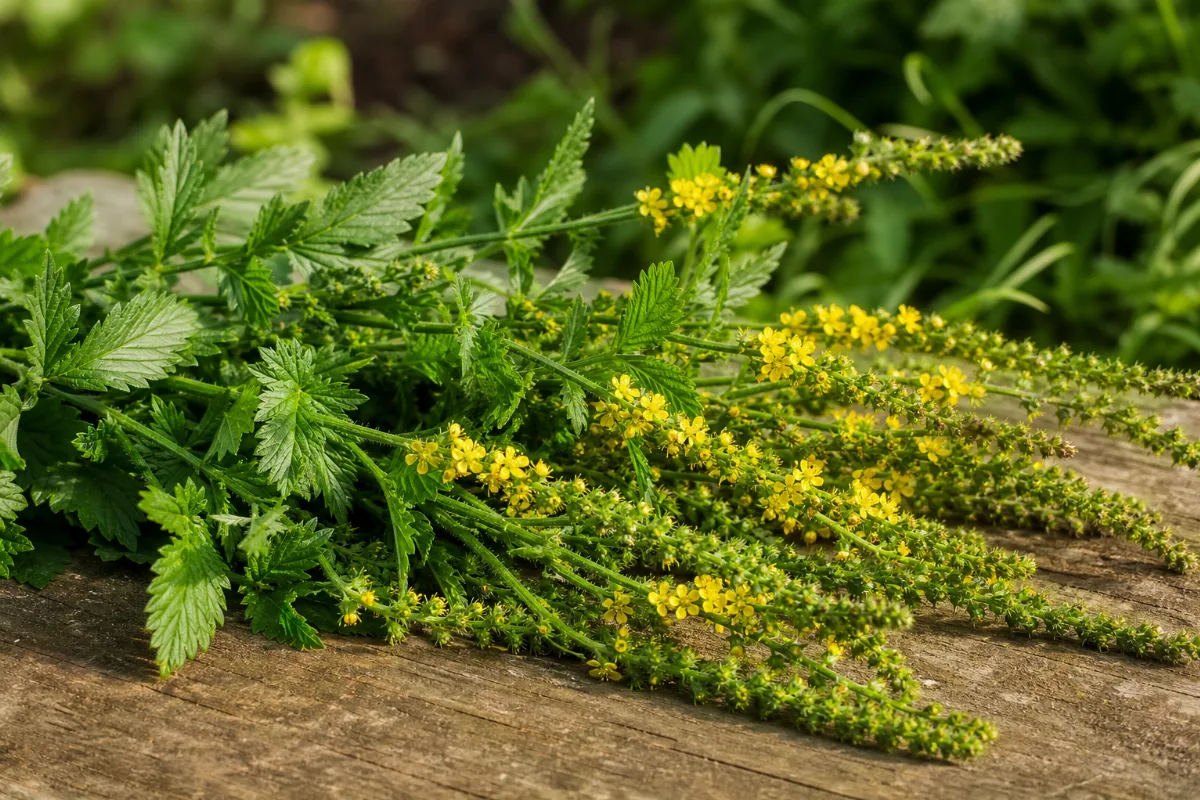
Agrimony is the common name for the flowering tops of Agrimonia eupatoria, a plant in the rose family. Plant databases list it as an accepted species. It is a European herb used as a tea, gargle, tincture or liquid extract, and as a dressing or bath for the skin.
It is rich in tannins and flavonoids, including agrimoniin, isoquercitrin and rutin.
Not hemp agrimony
Hemp agrimony (Eupatorium cannabinum) is an unrelated plant in the daisy family. It carries pyrrolizidine alkaloids, which a Swiss study calls toxic. Agrimonia pilosa is another plant, used in Asian medicine with its own research. The results here are for Agrimonia eupatoria only.
What the research shows
The EU herbal committee accepted agrimony for mild diarrhoea, minor mouth and throat inflammation, and minor skin inflammation and small wounds. It did so on traditional use, noting the lack of clinical studies.
One 8-week placebo-controlled trial lowered ALT and triglycerides in adults with mildly raised ALT. A small tea study in healthy adults reported better antioxidant, inflammation and HDL markers, but its abstract gives no numbers. Everything else is from cells, rats, mice or lab tissue, including wound healing, blood sugar and blood vessels.
At a glance
Traditional uses history, not proof
- EU traditional herbal medicine: mild diarrhoea (herb tea, tincture or liquid extract)
- EU traditional gargle for minor mouth and throat inflammation
- EU traditional use on minor skin inflammation and small superficial wounds (dressing or bath)
Studied for research
- Liver enzymes (ALT) in people with mildly raised levels: low certainty, one small trial
- Antioxidant, inflammation and lipid markers in healthy adults after a month of tea: very low certainty
- Mild diarrhoea, mouth and throat, minor wounds: traditional use only, insufficient human evidence
- Blood sugar, blood vessels, pain and inflammation: lab or animal research only
Main compounds
- Tannins such as agrimoniin
- Flavonoids such as isoquercitrin, rutin, hyperoside and astragalin
- Catechin and other phenolic compounds
Common forms
- Dried herb as tea (infusion)
- Decoction used as a gargle, dressing or bath additive
- Tincture or liquid extract (EU-listed forms; contain alcohol)
- Capsules of aqueous extract (used in the liver trial)
Research links: EMA/HMPC: EU herbal monograph on Agrimonia eupatoria herba (2015) · EMA public summary: Agrimoniae herba · PubMed: agrimony extract and liver enzymes, randomised trial (J Med Food, 2018) · PubMed: Agrimonia eupatoria review (J Ethnopharmacol, 2022) · Research Library · Genes & Biomarkers Library
The plant and its history
- Accepted scientific name
- Agrimonia eupatoria L.
- Naming authority
- L.; GBIF backbone shows this as the accepted name (usageKey 3001956), exact match, confidence 98.
- Synonyms
- Not listed here; GBIF holds the synonym list.
- Common names
- Agrimony (English); Common agrimony (English); Agrimoniae herba (Latin (pharmacopoeial)); Odermennigkraut (German); Aigremoine (French); Agrimonia (Spanish)
- Botanical family
- Rosaceae (the rose family), order Rosales.
- Classification
- Plantae > Tracheophyta > Magnoliopsida > Rosales > Rosaceae > Agrimonia > Agrimonia eupatoria
- Native range
- Widespread in temperate regions, particularly the northern hemisphere (2022 review abstract). Further detail not verified.
- Habitat
- Not verified in a source read.
- What the plant looks like
- Roots: Not the medicinal part.; Stems: Not verified in a source read.; Leaves: Aerial parts are used; the EMA summary describes agrimony as the flowering tops of the plant.; Flowers: Flowering tops are the medicinal material. Colour and shape not verified in a source read.; Fruit: Not the medicinal part.
- Cultivation
- The EMA summary says the plant is cultivated or gathered to obtain the plant parts for medicinal use.
- Harvest and processing
- The EU monograph covers the comminuted (cut) dried herb, tincture (ethanol 45%) and liquid extract (ethanol 25%).
- Look-alikes and adulterants
- Name: Hemp agrimony (Eupatorium cannabinum L.); Note: Not related: it is in the daisy family (Asteraceae; GBIF usageKey 5402943). It contains pyrrolizidine alkaloids described as toxic; see Safety. Never substitute it.; Name: Agrimonia pilosa Ledeb. (hairy agrimony); Note: A separately accepted species (GBIF usageKey 3002003) used in Chinese, Korean and Japanese medicine, with its own research. Results for it must not be credited to common agrimony.; Name: Other Agrimonia species (for example Agrimonia procera); Note: A separate species; a piglet feeding study exists. Not covered by the EU monograph for A. eupatoria.
- Sustainability and conservation
- Not verified. No IUCN assessment was retrieved.
Traditional use and history history, not clinical proof
| Tradition or era | Documented use | Source |
|---|---|---|
| European folk medicine | Used as a tea or decoction for digestive complaints and diarrhoea, as a gargle for mouth and throat, and on wounds and skin. A review lists astringent, anti-inflammatory, analgesic and hypotensive uses, and gastrointestinal disorders. | p35752261 |
| European folk medicine | Water extracts (infusions and decoctions) are used in the treatment of airway and urinary system diseases, digestive tract diseases and chronic wounds. | p33646008 |
| European Union regulation (2015) | The HMPC accepted traditional use for mild diarrhoea, gargle for minor mouth and throat inflammation, and minor skin inflammation and small wounds, on the basis of at least 30 years of use, 15 of them in the EU, without clinical trials. | s-ema-agrimoniae-herba-summary |
Traditional use shows how a plant was used. It does not show that a supplement works or is safe today.
What is inside, and how it may work
What the plant contains and how those compounds act in cells and animals. Laboratory and animal mechanisms are not proven effects in people.
Main compounds
| Compound | Family | Where it is concentrated | Activity studied | Level of evidence |
|---|---|---|---|---|
| Agrimoniin PubChem 16129621 | tannin (ellagitannin) | Aerial parts | Listed among the most commonly reported compounds in the herb. No specific activity read in the sources. 7 19 | Laboratory research |
| Isoquercitrin PubChem 5484006 | flavonoid glycoside | Aerial parts | In human artery tissue in the lab, isoquercitrin behaved like the relaxing fraction of the extract and is proposed as a main contributor to the vasorelaxant effect. 8 7 | Laboratory research |
| Rutin PubChem 5280805 | flavonoid glycoside | Aerial parts | Listed among the commonly reported compounds. No specific activity read. 7 19 | Laboratory research |
| Hyperoside PubChem 5281643 | flavonoid glycoside | Aerial parts | Listed among the commonly reported compounds. No specific activity read. 7 19 | Laboratory research |
| Catechin PubChem 9064 | flavan-3-ol (tannin building block) | Aerial parts | Listed among the commonly reported compounds. No specific activity read. 7 19 | Laboratory research |
| Astragalin PubChem 5282102 | flavonoid glycoside | Aerial parts | Listed among the commonly reported compounds. No specific activity read. 7 19 | Laboratory research |
Mechanisms, receptors and pathways
| Target or pathway | Gene or receptor | What was found | Level |
|---|---|---|---|
| Blood vessel tone (nitric oxide and cyclooxygenase pathways) | NOS, COX | In human artery tissue in a dish, vasorelaxation by the infusion fell when nitric oxide synthase and cyclooxygenase were blocked; for an ethyl-acetate fraction only the cyclooxygenase pathway seemed involved. The whole infusion also mildly raised resting tone. 8 | Laboratory research |
| Alcohol-induced liver inflammation and oxidative stress | TLR4, MyD88, NF-kB, iNOS, COX-2, CYP2E1 | In alcohol-fed rats, a water extract reduced liver enzyme rises, CYP2E1 activity, lipid peroxidation, and TLR4/NF-kB signalling. 14 | Animal research |
| Wound repair | Fibroblast-to-myofibroblast conversion, extracellular matrix | A water extract promoted a myofibroblast-like phenotype and matrix deposition in cells and rat wounds. 12 | Animal research |
| Cholera toxin binding | Ganglioside GM1, cAMP | A hot-water extract reduced cholera toxin B-subunit binding to cells and to GM1 in the lab. 4 | Laboratory research |
| Free radicals and inflammation | NO production in macrophages | An infusion and its polyphenol fraction scavenged radicals, lowered NO in cells and reduced swelling and pain responses in mice. 10 | Animal research |
| Sugar digestion | alpha-glucosidase | A water infusion reduced alpha-glucosidase activity in vitro and showed anti-diabetic activity in rats. 6 | Animal research |
Absorption, metabolism and elimination
- Absorption
- No human data for any agrimony compound were found. The EU monograph states pharmacokinetic data are not required for traditional-use registration.
- Distribution
- Not established.
- Metabolism
- Not established.
- Elimination
- Not established.
- Bioavailability
- Unknown.
Isolated compounds versus whole extracts
Whole infusion and isolated fractions can act differently: in human artery tissue the whole infusion mildly raised vessel tone, while an ethyl-acetate fraction and isoquercitrin relaxed it. So results for one compound or fraction cannot be assumed for tea.
Nutritional composition
Agrimony is used as a herbal tea or extract, not as a food source of nutrients, so a nutrient table is not meaningful. It is described as rich in phenolic acids, flavonoids and tannins.
1 low certainty1 very low certainty7 not enough evidence
What is Agrimony good for?
The main proposed uses and how strong the human evidence is for each. 'Low' is the best rating any use reached. The three EU uses rest on traditional use alone. Lab, animal and different-species results are labelled as such. 'Very low' and 'insufficient' mean few, small or no human studies. Ratings are this profile's own reading, not formal grades.
Benefits, one by one
Each card is a research question, not a promise. Tap a goal to filter. Open a card to see the studies, doses and limits.
Mild diarrhoea (traditional use in the EU)
Not enough evidenceIn the EU, agrimony herb tea, tincture or liquid extract is registered as a traditional medicine for mild diarrhoea. That rests on long use, not on trials. No human trial of agrimony for diarrhoea was found.
3 studiesDried herb as tea, tincture or liquid extract are the EU-listed forms…
Studies, doses and limits
What the trials found
We found no randomised trial or other human study of agrimony for diarrhoea. The EU summary says plainly that clinical evidence is insufficient but that effectiveness is plausible from long use.
Results
No human results. The regulator relies on traditional use.
Effect sizes as reported
None (no human data).
Why this rating
No human trials. Traditional-use status is a regulatory category, not proof that it works.
Form and dose studied
Dried herb as tea, tincture or liquid extract are the EU-listed forms. Amounts are not advice. Ask a doctor or pharmacist about amounts.
Who was studied
Adolescents and adults. Use under 12 is not recommended.
Limits
Nothing shows the herb shortens diarrhoea. Diarrhoea with blood, that comes back, or lasts more than 3 days needs a doctor.
Why researchers looked
Agrimony has been used for digestive complaints for generations; a 2022 review describes folk use as astringent and for gastrointestinal disorders.
Traditional use
The EU committee (HMPC) accepted use for mild diarrhoea on the basis of at least 30 years of use, 15 of them in the EU, and noted the lack of clinical studies.
Proposed mechanism Laboratory research
A lab study found that a hot-water extract reduced the binding of cholera toxin to cells in a dish. That is a test-tube finding about one toxin, not proof for everyday diarrhoea.
A proposed mechanism does not show that the effect happens in people.
No side effects known per EMA; tests for gene damage, cancer and reproductive harm were not done.
Mouth and throat gargle (traditional use in the EU)
Not enough evidenceThe EU recognises an agrimony infusion or decoction (and tincture or liquid extract) as a traditional gargle for minor mouth and throat inflammation. No human trial was found.
3 studiesGargle made from the comminuted herb, or tincture or liquid extract, …
Studies, doses and limits
What the trials found
No trial of agrimony as a gargle was found. A 2022 narrative review on flavonoids and tannins in oral infections mentions agrimony as a traditional plant and discusses mostly laboratory research.
Results
No human results.
Effect sizes as reported
None (no human data).
Why this rating
No human trial; the support is traditional use and a narrative review of lab work.
Form and dose studied
Gargle made from the comminuted herb, or tincture or liquid extract, per the EU monograph. Amounts are not advice. Ask a doctor or pharmacist about amounts.
Who was studied
Adolescents and adults; not recommended under 12.
Limits
Lab antimicrobial findings do not show that a gargle treats a sore throat or gum disease. A sore throat with fever, trouble swallowing or breathing needs a doctor.
Why researchers looked
Agrimony is among the plants rich in tannins and flavonoids that reviewers discuss for mouth infections.
Traditional use
Accepted by the EU committee as traditional use only. A doctor should be seen if symptoms last more than a week or get worse.
Proposed mechanism Laboratory research
A 2022 review lists agrimony among traditional plants rich in these compounds with antimicrobial potential for oral infections, based mostly on lab work.
A proposed mechanism does not show that the effect happens in people.
Ask a pharmacist about alcohol-containing tinctures (the EU monograph requires an ethanol label).
Minor skin inflammation and small wounds (traditional use in the EU)
Not enough evidenceThe EU recognises agrimony dressings or baths as a traditional herbal medicine for minor skin inflammation and small superficial wounds. Wound-healing results exist only in cells and rats.
5 studiesDressings soaked in a decoction, or a bath additive, per the EU monog…
Studies, doses and limits
What the trials found
No human trial on skin or wounds was found. The 2022 wound study used human skin cells in a dish and rats, and its authors say testing in animals closer to humans is needed.
Results
In rats: stronger sutured wounds and faster shrinkage of open wounds (numbers not in the abstract).
Effect sizes as reported
Not given in the abstract.
Why this rating
Only cell and rodent work plus traditional use.
Form and dose studied
Dressings soaked in a decoction, or a bath additive, per the EU monograph. Amounts are not advice. Ask a doctor or pharmacist about amounts.
Who was studied
Adolescents and adults; not recommended under 12.
Limits
Rat wounds are not the same as human wounds. A deep, dirty, infected or spreading wound needs medical care.
Why researchers looked
Agrimony has long been used on wounds and skin in folk medicine; a 2020 review mentions chronic wounds.
Traditional use
Accepted by the EU committee as traditional use only. A doctor should be seen if symptoms last more than a week or worsen.
Proposed mechanism Animal research
In cells and rats, a water extract encouraged cells that close wounds and increased the strength and shrinkage of healing wounds. An infusion also showed antioxidant, anti-inflammatory and pain-relieving activity in cells and mice.
A proposed mechanism does not show that the effect happens in people.
No skin reaction was reported in the sources read, but no human skin safety study was found. Allergy to the plant is a listed contraindication.
Liver enzymes (ALT) in people with mildly raised levels
Low certaintyOne 8-week placebo-controlled trial in Korea found a larger fall in the liver enzyme ALT, and in triglycerides, with an agrimony water extract than with placebo. It is a small single trial, so certainty is low.
3 studiesAqueous extract in capsules (product details not in the abstract). Am…
Studies, doses and limits
What the trials found
80 adults with ALT 45 to 135 IU/L took agrimony aqueous extract capsules or placebo for 8 weeks. At 8 weeks ALT (P = .044) and triglycerides (P = .020) were lower with the extract than with placebo. ALP, bilirubin and GGT did not differ. 69 were analysed; 11 were left out. No severe adverse events.
Results
ALT and triglycerides lower than placebo; other liver tests unchanged.
Effect sizes as reported
ALT P = .044; triglycerides P = .020; group-by-time interaction ALT P = .038, AST P = .040, TG P = .010 (no mean differences in the abstract).
Why this rating
One small randomised, double-blind trial with a borderline P value, no replication, and company-affiliated authors.
Form and dose studied
Aqueous extract in capsules (product details not in the abstract). Amounts are not advice. Ask a doctor or pharmacist about amounts.
Who was studied
Adults 20 or older with mildly to moderately raised ALT (45 to 135 IU/L), Korea.
Limits
Single centre; 8 weeks; 11 of 80 excluded; liver health outcomes beyond lab values not measured; authors from BIOKOREA and GuMediherb. A fall in ALT is not proof of a healthier liver. A raised ALT needs a doctor to find the cause.
Why researchers looked
Rat studies suggested the herb protects the liver, so researchers tested people with raised ALT.
Traditional use
Liver is not one of the EU-listed traditional uses; it is an emerging research use.
Proposed mechanism Animal research
In rats given alcohol, a water extract reduced liver enzyme rises and inflammation and oxidative-stress markers. This is animal evidence.
A proposed mechanism does not show that the effect happens in people.
No severe adverse events in the trial. Liver safety in other people is not established.
Antioxidant, inflammation and lipid markers in healthy adults (tea)
Very low certaintyOne small study in healthy Bulgarian volunteers found changes in blood markers after a month of agrimony tea: more antioxidant capacity, less interleukin 6 and more HDL cholesterol. The abstract gives no numbers or study size.
2 studiesTea (infusion); amounts not stated in the abstract. Amounts are not a…
Studies, doses and limits
What the trials found
Healthy volunteers drank agrimony tea for one month. Blood antioxidant capacity rose, interleukin 6 fell and HDL cholesterol rose, with HDL correlating with adiponectin. The authors call it the first human study of agrimony tea.
Results
Total antioxidant capacity up; interleukin 6 down; HDL up (sizes not in the abstract).
Effect sizes as reported
Reported as significant; numbers not in the abstract.
Why this rating
The abstract does not give the number of people, the amount of tea or whether there was a control group. Healthy people only. Marker changes are not clinical benefits.
Form and dose studied
Tea (infusion); amounts not stated in the abstract. Amounts are not advice. Ask a doctor or pharmacist about amounts.
Who was studied
Healthy volunteers in Bulgaria.
Limits
Could not read the full text. No placebo group described in the abstract. Marker changes may not matter for health.
Why researchers looked
Lab work reports antioxidant and anti-inflammatory polyphenols in agrimony.
Traditional use
Folk medicine describes anti-inflammatory use. This is not an EU-listed use.
Proposed mechanism Animal research
Lab and mouse studies of an infusion showed free-radical scavenging and anti-inflammatory effects.
A proposed mechanism does not show that the effect happens in people.
No adverse effects described in the abstract.
Blood sugar and diabetes complications (lab and rat only)
Not enough evidenceWater infusions of agrimony showed anti-diabetic activity in diabetic rats and blocked a sugar-digesting enzyme in the lab. No human blood-sugar study of agrimony was found.
2 studiesWater infusion (lab). Amounts are not advice. Ask a doctor or pharmac…
Studies, doses and limits
What the trials found
No human study of blood sugar was found. A 2022 review says antidiabetic effects are shown with extracts in the lab.
Results
Rat and enzyme findings only.
Effect sizes as reported
None in people.
Why this rating
Rats and test tubes only.
Form and dose studied
Water infusion (lab). Amounts are not advice. Ask a doctor or pharmacist about amounts.
Who was studied
Streptozotocin-induced diabetic rats.
Limits
Animal and test-tube results often do not carry over to people. If you take diabetes medicine, ask a pharmacist before using agrimony regularly.
Why researchers looked
Folk use and lab work on polyphenols led researchers to test blood sugar.
Traditional use
Not an EU-listed use.
Proposed mechanism Laboratory research
Test-tube blocking of alpha-glucosidase (a sugar-digesting enzyme) and antioxidant activity in rat work.
A proposed mechanism does not show that the effect happens in people.
No interaction reports found; see Safety.
Blood pressure and blood vessels (lab only, mixed results)
Not enough evidenceAgrimony is traditionally called hypotensive (blood-pressure-lowering), but in human artery tissue in a dish the whole infusion mildly raised vessel tone while a purified fraction relaxed vessels. Nothing shows what tea does to blood pressure in people.
2 studiesInfusion and a purified fraction in the lab; not tea in people. Amoun…
Studies, doses and limits
What the trials found
No human blood pressure trial of agrimony was found. In the dish the infusion had mixed effects: mild constriction and potentiated adrenaline-driven contraction (by 49.18% at 0.02 mg/mL), but also strong relaxation; the ethyl-acetate fraction inhibited adrenaline-driven contraction by 80.65% at 2 mg/mL.
Results
Lab: infusion potentiation 49.18%; fraction inhibition 80.65%; maximal relaxation above 76% (infusion) and 47% (fraction).
Effect sizes as reported
Not in the abstract.
Why this rating
Isolated artery tissue; mixed direction; no people.
Form and dose studied
Infusion and a purified fraction in the lab; not tea in people. Amounts are not advice. Ask a doctor or pharmacist about amounts.
Who was studied
Human artery samples tested in a lab.
Limits
Does not tell us if agrimony lowers or raises blood pressure in a person.
Why researchers looked
Folk medicine describes hypotensive use.
Traditional use
Not an EU-listed use.
Proposed mechanism Laboratory research
Relaxation involved nitric oxide and cyclooxygenase pathways; isoquercitrin seems to be a main compound (human artery tissue in the lab).
A proposed mechanism does not show that the effect happens in people.
If you take blood pressure medicine, ask a pharmacist; no interaction reports were found.
Inflammation and pain (cell and mouse work)
Not enough evidenceAn agrimony infusion calmed inflammation and pain responses in cells and mice. No human trial of agrimony for pain was found.
2 studiesInfusion and a polyphenol fraction (lab). Amounts are not advice. Ask…
Studies, doses and limits
What the trials found
No human pain or inflammation trial. The small tea study measured one inflammation marker (interleukin 6) in healthy people; see main uses.
Results
Cell and mouse results only.
Effect sizes as reported
Not given in the abstract.
Why this rating
Animal and cell work only.
Form and dose studied
Infusion and a polyphenol fraction (lab). Amounts are not advice. Ask a doctor or pharmacist about amounts.
Who was studied
Macrophage cells and mice.
Limits
Unknown relevance for people.
Why researchers looked
Traditional descriptions as anti-inflammatory and pain-relieving.
Traditional use
Related traditional uses are minor mouth, throat and skin inflammation (see main uses).
Proposed mechanism Animal research
Free-radical scavenging and lower NO in macrophage cells; less paw swelling and fewer pain responses in mice.
A proposed mechanism does not show that the effect happens in people.
Cell and mouse tests found no toxicity at the concentrations tested.
Immune-cell ageing (a different species, Agrimonia pilosa)
Not enough evidenceA Japanese trial of an Agrimonia pilosa extract (not common agrimony) found no significant change in its main or secondary measures; a men-only subgroup improved. It does not tell us about common agrimony.
1 studiesA. pilosa extract with agrimols (a research extract). Amounts are not…
Studies, doses and limits
What the trials found
110 adults aged 40-59 took 50 mg of A. pilosa extract or placebo for 8 weeks; the primary endpoint did not change significantly. In men the share of senescent-looking CD8+ T cells was lower (p = 0.044), a subgroup finding.
Results
No significant change in the primary or secondary endpoints; subgroup finding in men.
Effect sizes as reported
Male subgroup p = 0.044.
Why this rating
Different species; the main result was null; subgroup claim; company-funded and patent-linked.
Form and dose studied
A. pilosa extract with agrimols (a research extract). Amounts are not advice. Ask a doctor or pharmacist about amounts.
Who was studied
Japanese adults aged 40-59 with immune ageing.
Limits
Do not apply this to common agrimony. Industry-linked trial (FANCL).
Why researchers looked
The researchers proposed that agrimols in the extract might clear ageing-looking immune cells.
Traditional use
None. The EU monograph covers Agrimonia eupatoria, not this species.
Proposed mechanism Preliminary mechanism
Proposed senolytic (ageing-cell-clearing) action of agrimols.
A proposed mechanism does not show that the effect happens in people.
Safety results are not in the abstract.
Connections to the rest of health
How Agrimony connects to the rest of our health knowledge graph. Every link says what kind of connection it is. A safety link (for example to the liver) is a warning, not a benefit. A study that merely mentions a topic never creates a benefit link.
Explore every connection: goals, body systems, organs, symptoms, genes
A. Wellness goals
| Connected to | Kind of connection | Evidence status | Context | Studies |
|---|---|---|---|---|
| Digestive Support | Traditional use | Not enough evidence | Mild diarrhoea (traditional use in the EU): In the EU, agrimony herb tea, tincture or liquid extract is registered as a traditional medicine for mild diarrhoea. That rests on long use, not on trials. No human trial of agrimony for diarrhoea was found. | 17 16 4 |
| Gut Health | Traditional use | Not enough evidence | Mild diarrhoea (traditional use in the EU): In the EU, agrimony herb tea, tincture or liquid extract is registered as a traditional medicine for mild diarrhoea. That rests on long use, not on trials. No human trial of agrimony for diarrhoea was found. | 17 16 4 |
| Immune Support | Traditional use | Not enough evidence | Mouth and throat gargle (traditional use in the EU): The EU recognises an agrimony infusion or decoction (and tincture or liquid extract) as a traditional gargle for minor mouth and throat inflammation. No human trial was found. | 17 16 5 |
| Inflammation Balance | Traditional use | Not enough evidence | Mouth and throat gargle (traditional use in the EU): The EU recognises an agrimony infusion or decoction (and tincture or liquid extract) as a traditional gargle for minor mouth and throat inflammation. No human trial was found. Minor skin inflammation and small wounds (traditional use in the EU): The EU recognises agrimony dressings or baths as a traditional herbal medicine for minor skin inflammation and small superficial wounds. Wound-healing results exist only in cells and rats. | 17 16 5 12 10 9 |
| Healthy Skin | Traditional use | Not enough evidence | Minor skin inflammation and small wounds (traditional use in the EU): The EU recognises agrimony dressings or baths as a traditional herbal medicine for minor skin inflammation and small superficial wounds. Wound-healing results exist only in cells and rats. | 17 16 12 10 9 |
| Liver Support | Potential benefit | Low certainty | Liver enzymes (ALT) in people with mildly raised levels: One 8-week placebo-controlled trial in Korea found a larger fall in the liver enzyme ALT, and in triglycerides, with an agrimony water extract than with placebo. It is a small single trial, so certainty is low. | 1 14 7 |
| Inflammation Balance | Preliminary mechanism | Very low certainty | Antioxidant, inflammation and lipid markers in healthy adults (tea): One small study in healthy Bulgarian volunteers found changes in blood markers after a month of agrimony tea: more antioxidant capacity, less interleukin 6 and more HDL cholesterol. The abstract gives no numbers or study size. Inflammation and pain (cell and mouse work): An agrimony infusion calmed inflammation and pain responses in cells and mice. No human trial of agrimony for pain was found. | 2 10 7 |
| Heart Health | Preliminary mechanism | Very low certainty | Antioxidant, inflammation and lipid markers in healthy adults (tea): One small study in healthy Bulgarian volunteers found changes in blood markers after a month of agrimony tea: more antioxidant capacity, less interleukin 6 and more HDL cholesterol. The abstract gives no numbers or study size. Blood pressure and blood vessels (lab only, mixed results): Agrimony is traditionally called hypotensive (blood-pressure-lowering), but in human artery tissue in a dish the whole infusion mildly raised vessel tone while a purified fraction relaxed vessels. Nothing shows what tea does to blood pressure in people. | 2 10 8 7 |
| Cholesterol Balance | Preliminary mechanism | Very low certainty | Antioxidant, inflammation and lipid markers in healthy adults (tea): One small study in healthy Bulgarian volunteers found changes in blood markers after a month of agrimony tea: more antioxidant capacity, less interleukin 6 and more HDL cholesterol. The abstract gives no numbers or study size. | 2 10 |
| Blood Sugar Balance | Preliminary mechanism | Not enough evidence | Blood sugar and diabetes complications (lab and rat only): Water infusions of agrimony showed anti-diabetic activity in diabetic rats and blocked a sugar-digesting enzyme in the lab. No human blood-sugar study of agrimony was found. | 6 7 |
| Metabolic Health | Preliminary mechanism | Not enough evidence | Blood sugar and diabetes complications (lab and rat only): Water infusions of agrimony showed anti-diabetic activity in diabetic rats and blocked a sugar-digesting enzyme in the lab. No human blood-sugar study of agrimony was found. | 6 7 |
| Blood Pressure Support | Preliminary mechanism | Not enough evidence | Blood pressure and blood vessels (lab only, mixed results): Agrimony is traditionally called hypotensive (blood-pressure-lowering), but in human artery tissue in a dish the whole infusion mildly raised vessel tone while a purified fraction relaxed vessels. Nothing shows what tea does to blood pressure in people. | 8 7 |
| Healthy Aging | Preliminary mechanism | Not enough evidence | Immune-cell ageing (a different species, Agrimonia pilosa): A Japanese trial of an Agrimonia pilosa extract (not common agrimony) found no significant change in its main or secondary measures; a men-only subgroup improved. It does not tell us about common agrimony. | 11 |
| Immune Support | Preliminary mechanism | Not enough evidence | Immune-cell ageing (a different species, Agrimonia pilosa): A Japanese trial of an Agrimonia pilosa extract (not common agrimony) found no significant change in its main or secondary measures; a men-only subgroup improved. It does not tell us about common agrimony. | 11 |
B. Body systems
| Connected to | Kind of connection | Evidence status | Context | Studies |
|---|---|---|---|---|
| Digestive System | Biological association | Not enough evidence | Studied for: Mild diarrhoea (traditional use in the EU) Studied for: Mouth and throat gargle (traditional use in the EU) | 17 16 4 5 |
| Immune System | Biological association | Not enough evidence | Studied for: Mouth and throat gargle (traditional use in the EU) Studied for: Antioxidant, inflammation and lipid markers in healthy adults (tea) | 17 16 5 2 10 7 11 |
| Integumentary System | Biological association | Not enough evidence | Studied for: Minor skin inflammation and small wounds (traditional use in the EU) | 17 16 12 10 9 |
| Hepatic System | Biological association | Low certainty | Studied for: Liver enzymes (ALT) in people with mildly raised levels | 1 14 7 |
| Cardiovascular System | Biological association | Very low certainty | Studied for: Antioxidant, inflammation and lipid markers in healthy adults (tea) Studied for: Blood pressure and blood vessels (lab only, mixed results) | 2 10 8 7 |
| Endocrine System | Biological association | Not enough evidence | Studied for: Blood sugar and diabetes complications (lab and rat only) | 6 7 |
| Metabolism Weight | Biological association | Not enough evidence | Studied for: Blood sugar and diabetes complications (lab and rat only) | 6 7 |
| Nervous System | Biological association | Not enough evidence | Studied for: Inflammation and pain (cell and mouse work) | 10 7 |
C. Body parts and organs
| Connected to | Kind of connection | Evidence status | Context | Studies |
|---|---|---|---|---|
| Gut | Traditional use | Not enough evidence | EU traditional use for mild diarrhoea; no human trial. Preparation or compound: Dried herb tea, tincture, liquid extract |
17 16 |
| Skin | Traditional use | Not enough evidence | EU traditional use for minor skin inflammation and small wounds; rat and cell work only. Preparation or compound: Decoction as dressing or bath additive |
17 12 |
| Liver | Potential benefit | Low certainty | ALT lower than placebo in one 8-week trial; safety relationship, not a treatment claim. Preparation or compound: Aqueous extract capsules |
1 |
D. Symptoms
| Connected to | Kind of connection | Evidence status | Context | Studies |
|---|---|---|---|---|
| Mild diarrhoea | Traditional use | Not enough evidence | EU traditional use only; no human trial. Preparation or compound: Dried herb tea, tincture or liquid extract |
17 |
| Minor mouth and throat inflammation | Traditional use | Not enough evidence | EU traditional gargle use only; no human trial. Preparation or compound: Infusion, decoction, tincture or liquid extract as a gargle |
17 |
I. Biomarkers
| Connected to | Kind of connection | Evidence status | Context | Studies |
|---|---|---|---|---|
| ALT | Potential benefit | Low certainty | Lower than placebo at 8 weeks in adults with raised ALT. Preparation or compound: Aqueous extract capsules |
1 |
| ALT (alanine transaminase) | Biological association | Low certainty | Measured in trials: lowered. A lab change is not the same as a health benefit. | 1 |
| AST (aspartate transaminase) | Biological association | Low certainty | Measured in trials: lowered. A lab change is not the same as a health benefit. | 1 |
| Triglycerides | Biological association | Low certainty | Measured in trials: lowered. A lab change is not the same as a health benefit. | 1 |
| HDL cholesterol | Biological association | Very low certainty | Measured in trials: raised. A lab change is not the same as a health benefit. | 2 |
| Interleukin 6 (IL-6) | Biological association | Very low certainty | Measured in trials: lowered. A lab change is not the same as a health benefit. | 2 |
| Plasma total antioxidant capacity | Biological association | Very low certainty | Measured in trials: raised. A lab change is not the same as a health benefit. | 2 |
| Blood glucose (animal) | Biological association | Not enough evidence | Measured in trials: mixed. A lab change is not the same as a health benefit. | 6 |
| CD8+ T cells with high SA-betaGal (A. pilosa trial) | Biological association | Not enough evidence | Measured in trials: no-change. A lab change is not the same as a health benefit. | 11 |
J. Genes, receptors and enzymes
| Connected to | Kind of connection | Evidence status | Context | Studies |
|---|---|---|---|---|
| TLR4 / NF-kB | Preliminary mechanism | Animal | Reduced in alcohol-fed rats given a water extract. | 14 |
| NOS and COX (vessel relaxation) | Preliminary mechanism | In vitro | Involved in the relaxation of human artery tissue by the infusion. | 8 |
| alpha-glucosidase | Preliminary mechanism | In vitro | Inhibited by a water infusion in a lab test. | 6 |
L. Active compounds
| Connected to | Kind of connection | Evidence status | Context | Studies |
|---|---|---|---|---|
| Agrimoniin | Biological association | In vitro | Listed among the most commonly reported compounds in the herb. No specific activity read in the sources. Preparation or compound: Aerial parts |
7 19 |
| Isoquercitrin | Biological association | In vitro | In human artery tissue in the lab, isoquercitrin behaved like the relaxing fraction of the extract and is proposed as a main contributor to the vasorelaxant effect. Preparation or compound: Aerial parts |
8 7 |
| Rutin | Biological association | In vitro | Listed among the commonly reported compounds. No specific activity read. Preparation or compound: Aerial parts |
7 19 |
| Hyperoside | Biological association | In vitro | Listed among the commonly reported compounds. No specific activity read. Preparation or compound: Aerial parts |
7 19 |
| Catechin | Biological association | In vitro | Listed among the commonly reported compounds. No specific activity read. Preparation or compound: Aerial parts |
7 19 |
| Astragalin | Biological association | In vitro | Listed among the commonly reported compounds. No specific activity read. Preparation or compound: Aerial parts |
7 19 |
Each connection is stored with the ingredient, the connected record, the kind of connection, the evidence status, the supporting studies, the preparation or compound involved, and a review date (last reviewed October 25, 2026).
Evidence at a glance: what changed in 8 lab markers
Tap a number to show only those markers. Counts are markers, not people.
The evidence
The research centre for Agrimony. Every record here was checked against PubMed or the publisher's page; we never list a study we have not verified.
Evidence by outcome
Bars show how many studies we found for each outcome, not how well it works. People are added up across trials only (reviews are not added, to avoid double counting).
How we rate evidence
High certainty
Several well-run trials or reviews agree; further research is unlikely to change the picture much.
Moderate certainty
Good trials point the same way, but some doubt remains.
Low certainty
Small, short or inconsistent trials. The finding could change with better research.
Very low certainty
Very little or very weak human data. Treat as a possibility only.
Mixed findings
Trials or reviews disagree with each other.
Not enough evidence
Not enough human research to say either way.
Evidence against
Good research found no benefit, or found harm.
We take the reviewers' own risk-of-bias and GRADE statements where they exist, and otherwise judge from study size, design, consistency, directness and whether a product matches what is sold. Many publications do not make evidence high. Method note: We started from our existing agrimony summary, then read the EU herbal monograph in full and looked up gaps in PubMed, NCCIH, LiverTox and plant and chemical databases. Each study design, people, product and result are recorded as reported, mostly from abstracts. NCCIH and LiverTox pages were not found and are marked unverified. Certainty ratings are the compiler's reading. No study is cited that we could not verify.
Study library: every study we checked 22
| Study | Design | People | Product, dose, length | Result |
|---|---|---|---|---|
| Cho 2018 Agrimonia eupatoria L. (Agrimony) Extract Alters Liver Health in Subjects with Elevated Alanine Transaminase Levels: A Controlled, Randomized, and Double-Blind Trial. J Med Food · PMID 29486131 · DOI |
Controlled trial |
80 Adults aged 20 or older in Korea with mildly to moderately raised ALT (45 to 135 IU/L); 69 analysed (placebo 35, extract 34) |
Agrimonia eupatoria L. aqueous extract (AEE) in capsules aerial parts (herb); part not stated in the abstract Two capsules twice a day (amount per capsule not stated in the abstract) 8 weeks · vs Placebo |
ALT and triglycerides fell more with the extract than with placebo at 8 weeks. ALP, bilirubin and GGT did not differ. No severe adverse events were reported. ALT between-group P = .044; triglycerides P = .020; group-by-time interaction ALT P = .038, AST P = .040, TG P = .010 (Not reported in the abstract (P values only)) Methods, limits and fundingOutcomes: ALT, AST, triglycerides, other liver tests, adverse events Limitations: Small; 11 of 80 excluded from the analysis; ALT result is only just under P = .05; single trial from one centre; the abstract gives no mean differences. Mild-to-moderate ALT elevation only. Funding and conflicts: Not stated in the abstract. Authors are affiliated with two companies (BIOKOREA Co., GuMediherb Co.); treat as industry-linked. Read: abstract |
| Ivanova 2013 Agrimonia eupatoria tea consumption in relation to markers of inflammation, oxidative status and lipid metabolism in healthy subjects. Arch Physiol Biochem · PMID 23078582 · DOI |
Intervention study |
Healthy volunteers in Bulgaria (number not stated in the abstract) | Agrimonia eupatoria tea (infusion) herb (tea); part not stated in the abstract Not stated in the abstract One month · vs Before-and-after in the same people (no placebo group described in the abstract) |
Total antioxidant capacity rose, interleukin 6 fell and HDL cholesterol rose after a month of tea. HDL correlated with adiponectin. The authors call it the first human intervention study with agrimony tea. Directions reported as significant; sizes not given in the abstract (Not given in the abstract) Methods, limits and fundingOutcomes: Plasma total antioxidant capacity, interleukin 6, HDL cholesterol, adiponectin Limitations: Number of people, doses, design details and any control group are not in the abstract, so this cannot be rated above very low. Healthy people only; changes in blood markers are not proven health benefits. Funding and conflicts: Not stated in the abstract Read: abstract |
| Kast 2018 Chemical fingerprinting identifies Echium vulgare, Eupatorium cannabinum and Senecio spp. as plant species mainly responsible for pyrrolizidine alkaloids in bee-collected pollen. Food Addit Contam Part A Chem Anal Control Expo Risk Assess · PMID 28956733 · DOI |
Analytical study analytical |
32 32 commercial bee-pollen supplements and daily pollen samples in Switzerland |
Hemp agrimony (Eupatorium cannabinum) and Echium and Senecio plants as sources of pyrrolizidine alkaloids - NOT Agrimonia flower heads / pollen n/a 2 to 3 seasons · vs n/a |
31% of the commercial pollen samples contained pyrrolizidine alkaloids (mean 319 ng/g). Comparing alkaloid patterns identified Echium vulgare and Eupatorium cannabinum as the main plants responsible, and Senecio to a lesser extent. 31% of samples contained alkaloids; mean 319 ng/g (Not in the abstract) Methods, limits and fundingOutcomes: Pyrrolizidine alkaloid content of pollen Limitations: Shows the hemp agrimony plant carries pyrrolizidine alkaloids, which the authors call toxic and a potential health risk. Not a study of common agrimony. Funding and conflicts: Not stated in the abstract Read: abstract |
| Komiazyk 2019 Neutralization of cholera toxin by Rosaceae family plant extracts. BMC Complement Altern Med · PMID 31221152 · DOI |
Laboratory research in-vitro |
Cell cultures and lab tests with cholera toxin | Hot-water extract of Agrimonia eupatoria (with extracts of bramble and wild strawberry) herb (hot-water extract) Not stated in the abstract Not stated in the abstract · vs Not applicable |
Antibacterial effects were modest. The agrimony extract reduced binding of the cholera toxin B subunit to cells and to a ganglioside in the dish. The authors say the traditional diarrhoea use "appears relevant" to cholera. Not given in the abstract (Not in the abstract) Methods, limits and fundingOutcomes: Bacterial growth, cholera toxin binding and cAMP levels Limitations: Cell and test-tube study of a toxin; it does not show benefit for ordinary mild diarrhoea in people. Funding and conflicts: No competing interests. Read: abstract |
| Kováč 2022 Therapeutic Potential of Flavonoids and Tannins in Management of Oral Infectious Diseases-A Review. Molecules · PMID 36615352 · DOI |
Review review |
Narrative review of flavonoids, tannins and tannin-rich plants for oral infections | Flavonoids, tannins and plants including Agrimonia eupatoria aerial parts (among many plants) n/a n/a · vs n/a |
Lists Agrimonia eupatoria among traditional medicinal plants rich in these compounds with potential in oral infectious disease; some compounds are already used in toothpastes and mouthwashes. Others are described as promising for further research. Narrative review (n/a) Methods, limits and fundingOutcomes: Antimicrobial potential in mouth infections Limitations: Mostly lab work; narrative review; agrimony is one plant among many. Funding and conflicts: No conflict of interest. Read: abstract |
| Kuczmannová 2016 Agrimonia eupatoria L. and Cynara cardunculus L. Water Infusions: Comparison of Anti-Diabetic Activities. Molecules · PMID 27136516 · DOI |
Animal research animal |
Streptozotocin-induced diabetic rats, plus a lab enzyme test | Agrimonia eupatoria water infusion (compared with Cynara cardunculus) herb (water infusion) Not stated in the abstract 5 weeks (rats) · vs Untreated diabetic rats |
Both infusions showed similar anti-diabetic activities in rats and in the enzyme test; agrimony had better antioxidant activity. Not given in the abstract (Not in the abstract) Methods, limits and fundingOutcomes: Blood glucose, body weight, aorta reactivity, butyrylcholinesterase, alpha-glucosidase (in vitro) Limitations: Rat and test-tube work only; no human glucose data. Funding and conflicts: No conflicts declared. Read: abstract |
| Malheiros 2022 Agrimonia eupatoria L.: An integrative perspective on ethnomedicinal use, phenolic composition and pharmacological activity. J Ethnopharmacol · PMID 35752261 · DOI |
Review review |
Review of the Agrimonia eupatoria literature since 1993 (PubMed, ScienceDirect, Google Scholar) | Agrimonia eupatoria preparations (mostly infusions and extracts) aerial parts n/a n/a · vs n/a |
The plant is rich in phenolic acids, flavonoids and tannins. Extracts show antioxidant, antimicrobial, antidiabetic, antinociceptive and anti-inflammatory effects in the lab. The authors say only two clinical studies with the infusion exist and that evidence backing the traditional uses is still limited. Narrative review (n/a) Methods, limits and fundingOutcomes: Ethnomedicinal use, phenolic composition and pharmacology Limitations: Narrative (non-systematic) review; no formal quality grading. Funding and conflicts: No conflicts stated in the part we read (abstract only). Read: abstract |
| Malheiros 2022 Vascular Effects of Polyphenols from Agrimonia eupatoria L. and Role of Isoquercitrin in Its Vasorelaxant Potential in Human Arteries. Pharmaceuticals (Basel) · PMID 35631463 · DOI |
Laboratory research in-vitro |
Human arteries in the lab (tissue baths) | Agrimonia eupatoria infusion, an ethyl-acetate fraction, and isoquercitrin herb (infusion and fraction) Lab concentrations (0.02 to 2 mg/mL) Acute lab test · vs Not applicable |
The infusion mildly raised resting vessel tone and strengthened adrenaline-driven contraction (by 49.18% at 0.02 mg/mL). The ethyl-acetate fraction reduced adrenaline-driven contraction by 80.65% at 2 mg/mL. Both caused strong relaxation in the dish. Isoquercitrin behaved like the fraction. Infusion potentiation 49.18%; fraction inhibition 80.65%; maximal relaxation above 76% (infusion) and 47% (fraction) (Not in the abstract) Methods, limits and fundingOutcomes: Resting vessel tone, adrenaline-driven contraction, relaxation Limitations: Isolated artery tissue in a dish: it does not show what tea does to blood pressure in a person. The whole infusion had mixed (constricting and relaxing) effects. Funding and conflicts: No conflict of interest; funders had no role. Read: abstract |
| Paluch 2020 The therapeutic effects of Agrimonia eupatoria L. Physiol Res · PMID 33646008 · DOI |
Review review |
Narrative review of in vitro and in vivo work on Agrimonia eupatoria | Water extracts (infusions, decoctions) of Agrimonia eupatoria aerial parts n/a n/a · vs n/a |
Water extracts are used in folk medicine for airway and urinary diseases, digestive disease and chronic wounds. The review covers laboratory and animal findings (antioxidant, immune and antimicrobial). Narrative review (n/a) Methods, limits and fundingOutcomes: Pharmacology of the herb at the molecular level Limitations: Reviews lab and animal work; does not show benefit in people. Funding and conflicts: No conflict of interest (stated in the record). Read: abstract |
| Santos 2017 Antioxidant, Anti-Inflammatory, and Analgesic Activities of Agrimonia eupatoria L. Infusion. Evid Based Complement Alternat Med · PMID 28491113 · DOI |
Animal research animal |
Macrophage cells and mice | Agrimonia eupatoria infusion (AeI) and a polyphenolic fraction (AePF) herb (infusion) Not stated in the abstract Acute tests · vs Untreated or control mice |
Both preparations mopped up free radicals, lowered NO in cells, and showed anti-inflammatory and pain-relieving activity in mice at concentrations "devoid of toxicity". Not given in the abstract (Not in the abstract) Methods, limits and fundingOutcomes: Antioxidant activity, NO production, paw swelling, pain tests, cell and tissue toxicity Limitations: Mouse and cell work; the toxicity tests were limited (MTT and histology). Funding and conflicts: Not stated in the abstract Read: abstract |
| Shimizu 2025 Preliminary Data on the Senolytic Effects of Agrimonia pilosa Ledeb. Extract Containing Agrimols for Immunosenescence in Middle-Aged Humans: A Randomized, Double-Blind, Placebo-Controlled, Parallel-Group Comparison Study. Nutrients · PMID 40004995 · DOI |
Controlled trial |
110 Japanese adults aged 40-59 with immune ageing (many CD8+ T cells with high SA-betaGal); 108 completed |
Agrimonia pilosa Ledeb. extract (APE) with agrimols - A DIFFERENT SPECIES from common agrimony not stated in the abstract 50 mg extract (0.2 mg agrimols) once a day (as described in the abstract) 8 weeks · vs Placebo |
No significant change in the main or secondary outcomes. In men only, the share of senescent-looking CD8+ T cells was lower (a subgroup result). Primary endpoint: no significant change; male subgroup p = 0.044 (Not reported in the abstract) Methods, limits and fundingOutcomes: Share of CD8+ T cells with high SA-betaGal (primary), other T-cell subsets Limitations: Different species; subgroup finding; surrogate immune-cell outcome; registered UMIN000051574. Funding and conflicts: Industry-funded and linked: employees of FANCL, which funded the study and applied for a patent on the extract. Read: abstract |
| Vasilenko 2022 Agrimonia eupatoria L. Aqueous Extract Improves Skin Wound Healing: An In Vitro Study in Fibroblasts and Keratinocytes and In Vivo Study in Rats. In Vivo · PMID 35478102 · DOI |
Animal research animal |
Human fibroblast and keratinocyte cells, and rats with skin wounds | Agrimonia eupatoria aqueous extract (AE) herb (aqueous extract) Not stated in the abstract Not stated in the abstract · vs Untreated controls |
The extract promoted a myofibroblast-like cell type and matrix deposition, and increased the strength of sutured wounds and the contraction of open wounds in rats. Described as significant; numbers not in the abstract (Not in the abstract) Methods, limits and fundingOutcomes: Myofibroblast conversion, extracellular matrix, wound tensile strength, wound contraction Limitations: Cell and rat work; the authors say testing in animals closer to humans is needed. Funding and conflicts: No conflicts declared. Read: abstract |
| Wen 2022 Agrimonia pilosa Ledeb.: A review of its traditional uses, botany, phytochemistry, pharmacology, and toxicology. Heliyon · PMID 36046524 · DOI |
Review review |
Review of Agrimonia pilosa Ledeb. (a different species) | Agrimonia pilosa Ledeb. (not common agrimony) above-ground part n/a n/a · vs n/a |
Says the herb is used for enteritis, gastric ulcers and gastrointestinal bleeding, that most prescriptions are empirical, and that toxicology, standardised clinical studies and pharmacokinetics need to be deepened. Narrative review (n/a) Methods, limits and fundingOutcomes: Traditional use, chemistry, pharmacology, toxicology Limitations: About another species; used here only to show how thin the safety data are for the genus. Funding and conflicts: No conflict of interest. Read: abstract |
| Yoon 2012 Agrimonia eupatoria protects against chronic ethanol-induced liver injury in rats. Food Chem Toxicol · PMID 22525864 · DOI |
Animal research animal |
Rats fed alcohol for 8 weeks | Agrimonia eupatoria water extract (AE) herb (water extract) 10 to 300 mg/kg/day in rats 8 weeks · vs Alcohol-fed rats without extract |
The extract reduced the alcohol-induced rise in liver enzymes and in inflammation and oxidative-stress markers. Not given in the abstract (Not in the abstract) Methods, limits and fundingOutcomes: Liver enzymes (aminotransferases), cytokines, CYP2E1, oxidative stress, TLR4/NF-kB signalling Limitations: Rat study; does not show that agrimony protects human livers from alcohol. Funding and conflicts: Not stated in the abstract Read: abstract |
| Zijp 2000 Effect of tea and other dietary factors on iron absorption. Crit Rev Food Sci Nutr · PMID 11029010 · DOI |
Review review |
Review of dietary factors affecting iron absorption | Tea and other polyphenol-rich foods (not agrimony) n/a n/a n/a · vs n/a |
Plant components in vegetables, tea and coffee (polyphenols, phytates) and calcium inhibit iron absorption. With enough enhancers (vitamin C, meat, fish, poultry) the inhibition from even large amounts of tea is overcome. People with low iron intake or iron deficiency are at risk; the authors advise tea between meals rather than with meals. Calculation model; no pooled effect (n/a) Methods, limits and fundingOutcomes: Iron absorption Limitations: About tea, not agrimony; agrimony tannin effects on iron have not been measured. Funding and conflicts: Not stated in the abstract Read: abstract |
| s-ema-agrimoniae-herba-summary EMA public summary: Agrimoniae herba - herbal medicinal product · Source |
Regulatory summary n/a |
Methods, limits and fundingRead: full-text | ||
| s-ema-agrimony-monograph EMA/HMPC European Union herbal monograph on Agrimonia eupatoria L., herba (final, 28 January 2015; EMA/HMPC/680597/2013) · Source |
Regulatory monograph n/a |
Methods, limits and fundingRead: full-text | ||
| s-gbif-agrimonia-eupatoria GBIF Backbone: Agrimonia eupatoria L. (usageKey 3001956) · Source |
Reference database n/a |
Methods, limits and fundingRead: full-text | ||
| s-pubchem-agrimony-compounds PubChem records: agrimoniin (CID 16129621), isoquercitrin (5484006), rutin (5280805), hyperoside (5281643), catechin (9064), astragalin (5282102) · Source |
Reference database n/a |
Methods, limits and fundingRead: full-text | ||
| s-pubmed-case-search-agrimony PubMed searches for agrimony safety, adverse events, interactions and case reports · Source |
Search record n/a |
Methods, limits and fundingRead: full-text | ||
| s-regulators-not-found-agrimony Regulator checks for agrimony: NCCIH, LiverTox, LactMed, FDA, WHO, Commission E · Source |
Regulatory search n/a |
Methods, limits and fundingRead: full-text | ||
| Čurlík 2016 Dandelion (Taraxacum officinale) and Agrimony (Agrimonia eupatoria) as Indicators of Geogenic Contamination of Flysch Soils in Eastern Slovakia. Arch Environ Contam Toxicol · PMID 26254898 · DOI |
Analytical study analytical |
Plants collected on nickel-rich soils in Eastern Slovakia | Agrimonia eupatoria (and dandelion) shoots and roots shoots and roots n/a n/a · vs n/a |
Nickel in agrimony ranged from 1.6 to 22.6 mg per kg and exceeded the world average for plants on these soils. The authors warn of possible high uptake of potentially toxic elements by herbal plants growing on similar soils. Ni 1.6-22.6 mg/kg in agrimony (Not applicable) Methods, limits and fundingOutcomes: Metal content of plants Limitations: One region, naturally metal-rich soils; not a test of commercial products. Funding and conflicts: Not stated in the abstract Read: abstract |
What we do not know yet
- What the evidence supports: EU traditional use for three minor complaints, and one small trial showing lower ALT, at low certainty.
- No human trial of agrimony for diarrhoea, sore throat or wounds.
- The liver trial and the tea study need repeating with clear methods and numbers.
- Interactions with medicines and iron, photosensitivity, and long-term, pregnancy and child safety are unstudied.
- No NCCIH, LiverTox or LactMed entry was found.
How new research is added
New studies are found by a saved PubMed search and placed in a review queue. A person reads each one before it changes any evidence rating or safety wording. New publications never change ratings automatically.
Lab markers
What changed in blood or saliva tests during trials. A changed number is not the same as feeling or being healthier, and we give no "normal ranges".
Metabolic 3
Triglycerides
Lowered in trials
Fats carried in the blood; high levels are linked to heart disease risk.
Low certaintyResults and what it means
Why it was measured
Measured in the liver trial.
Statistical vs. clinical meaning
Statistically significant in one small trial; no values in the abstract.
Safety implication
None specific.
| Study | Result | People | Product |
|---|---|---|---|
| 1 | Lower triglycerides with extract than placebo at 8 weeks (P = .020). | 69 analysed Korean adults with raised ALT | Agrimonia eupatoria aqueous extract capsules for 8 weeks |
HDL cholesterol
Raised in trials
The "good" cholesterol carried in the blood.
Very low certaintyResults and what it means
Why it was measured
Measured in the healthy-volunteer tea study.
Statistical vs. clinical meaning
Direction only; no sizes, and no control group described.
Safety implication
None specific.
| Study | Result | People | Product |
|---|---|---|---|
| 2 | HDL cholesterol rose after one month of agrimony tea and correlated with adiponectin (numbers not in the abstract). | Healthy volunteers, Bulgaria | Agrimony tea for one month |
Blood glucose (animal)
Mixed results in trials
Sugar in the blood.
Not enough evidenceResults and what it means
Why it was measured
Measured in diabetic rats.
Statistical vs. clinical meaning
Animal data; no human glucose result.
Safety implication
If you use diabetes medicine, ask a pharmacist.
| Study | Result | People | Product |
|---|---|---|---|
| 6 | Water infusions of agrimony and of cardoon (Cynara cardunculus) showed similar anti-diabetic activity in rats (numbers not in the abstract); both also blocked alpha-glucosidase in vitro. | Streptozotocin-diabetic rats | Agrimonia eupatoria water infusion for 5 weeks |
Inflammatory 1
Interleukin 6 (IL-6)
Lowered in trials
A signalling protein of inflammation.
Very low certaintyResults and what it means
Why it was measured
Measured in the healthy-volunteer tea study.
Statistical vs. clinical meaning
Direction only; no sizes, and no control group described.
Safety implication
None specific.
| Study | Result | People | Product |
|---|---|---|---|
| 2 | Interleukin 6 was significantly lower at the end of one month of agrimony tea (numbers not in the abstract). | Healthy volunteers, Bulgaria | Agrimony tea for one month |
Organ function 2
ALT (alanine transaminase)
Lowered in trials
A liver enzyme that rises in the blood when liver cells are stressed or damaged.
Low certaintyResults and what it means
Why it was measured
Main outcome in the liver trial of an agrimony aqueous extract.
Statistical vs. clinical meaning
Statistically significant but borderline; a fall in a lab value is not proof of better liver health.
Safety implication
Other liver values were also tested; ALP, bilirubin and GGT did not differ.
| Study | Result | People | Product |
|---|---|---|---|
| 1 | Lower ALT with extract than placebo at 8 weeks (P = .044); group-by-time interaction P = .038. No mean values in the abstract. | 69 analysed Korean adults with ALT 45 to 135 IU/L | Agrimonia eupatoria aqueous extract capsules for 8 weeks |
AST (aspartate transaminase)
Lowered in trials
A liver and muscle enzyme that rises when those tissues are stressed.
Low certaintyResults and what it means
Why it was measured
Secondary liver outcome in the same trial.
Statistical vs. clinical meaning
Interaction result only; size not reported in the abstract.
Safety implication
None specific.
| Study | Result | People | Product |
|---|---|---|---|
| 1 | Group-by-time interaction for AST significant (P = .040); the abstract does not give a between-group difference. | 69 analysed Korean adults with raised ALT | Agrimonia eupatoria aqueous extract capsules for 8 weeks |
Other 2
Plasma total antioxidant capacity
Raised in trials
A blood test of how well plasma can neutralise free radicals.
Very low certaintyResults and what it means
Why it was measured
Measured in the healthy-volunteer tea study.
Statistical vs. clinical meaning
A lab marker whose link to health is uncertain.
Safety implication
None specific.
| Study | Result | People | Product |
|---|---|---|---|
| 2 | Plasma total antioxidant capacity was significantly higher after one month of tea (numbers not in the abstract). | Healthy volunteers, Bulgaria | Agrimony tea for one month |
CD8+ T cells with high SA-betaGal (A. pilosa trial)
No clear change in trials
A lab marker of ageing-looking immune cells.
Not enough evidenceResults and what it means
Why it was measured
Primary outcome of the Agrimonia pilosa trial.
Statistical vs. clinical meaning
Null primary result, subgroup finding, different species.
Safety implication
None specific.
| Study | Result | People | Product |
|---|---|---|---|
| 11 | No significant change for the whole group; lower in men only (p = 0.044). | 108 Japanese adults aged 40-59 who finished | Agrimonia pilosa extract with agrimols for 8 weeks |
Safety
What studies and official sources say about side effects, medicines and who should check first. Each point shows what kind of evidence it comes from.
Main points to know 4
- The EU lists no known side effects, but that rests on traditional use, not safety trials. The EU herbal committee (HMPC) lists undesirable effects as "none known", interactions as "none reported" and no case of overdose. It also says that tests for gene damage, cancer risk and reproductive harm have not been done. "None reported" is not the same as "proven safe". Authoritative guidance 17 16
- Avoid in pregnancy and breastfeeding; not recommended under 12. The EU monograph says safety in pregnancy and breastfeeding has not been established and use is not recommended. No fertility data exist. Use in children under 12 has not been established for lack of data. Authoritative guidance 17 16
- Do not confuse agrimony with hemp agrimony. Hemp agrimony (Eupatorium cannabinum) is a different plant in the daisy family. It contains pyrrolizidine alkaloids, which a Swiss pollen study describes as toxic. Common agrimony (Agrimonia eupatoria) is in the rose family and is not that plant. Check the Latin name on any product. Authoritative guidance 3
- Limited human safety data. The only trial of an agrimony extract measured safety for 8 weeks in 80 adults and reported no severe adverse events. No long-term data, no case reports and no interaction studies were found. Controlled trial 1 20
Side effects 4
| Effect | How often | Severity and recovery | Evidence |
|---|---|---|---|
| No undesirable effects known EMA/HMPC (2015) and the EMA public summary: no side effects had been reported at the time of assessment. This reflects traditional use without systematic safety study. | Not established | not applicable Not applicable | Authoritative guidance 17 16 |
| No severe adverse events in an 8-week trial of an aqueous extract 80 adults with mildly to moderately raised ALT took an Agrimonia eupatoria aqueous extract or placebo. The abstract does not list milder events in detail. | Not established | not applicable Not applicable | Controlled trial 1 |
| Allergic reaction Hypersensitivity to the plant is the only contraindication in the EU monograph. No case report was found. | Not established | unknown Not stated | Authoritative guidance 17 |
| Sun sensitivity (photosensitivity) Not found. The EU monograph does not mention photosensitivity and our PubMed searches found no report. Not the same as confirmed absent. | Not established | unknown Not stated | Authoritative guidance 20 17 |
Liver
In the one human trial, an Agrimonia eupatoria aqueous extract was given to adults whose ALT was already mildly to moderately raised (45 to 135 IU/L). ALT and AST fell relative to placebo, and ALP, bilirubin and GGT did not differ; no severe adverse events were reported. In rats, a water extract reduced alcohol-induced liver enzyme rises. We found no human case of liver injury attributed to common agrimony in our PubMed searches, and no LiverTox entry could be opened. This does not prove it is liver-safe, and the hepatotoxic pyrrolizidine plant hemp agrimony is a different species. 1 14 20 21
How often. No frequency of human liver injury from common agrimony was found. Not established.
Monitoring. No agency monitoring advice was found. Anyone with liver disease or raised liver tests should ask a doctor before using it. Stop and seek care for yellow skin or eyes, dark urine, pale stools or severe tiredness.
This is a safety connection. It is not evidence that Agrimony supports liver health.
Medicines and supplements 5
| With | Why it matters | Importance | Evidence | What to do |
|---|---|---|---|---|
| Prescription medicines in general prescription | No mechanism or case is known. | The EU monograph lists interactions as "none reported". That reflects a lack of reports and studies. | Authoritative guidance Not enough evidence 17 20 | Tell your pharmacist you use agrimony, especially if you take several medicines. |
| Iron supplements and iron-poor diets (tannins) nutrient | Agrimony is rich in tannins and other polyphenols. A review of tea and iron absorption says plant polyphenols in tea and coffee inhibit iron absorption, and that taking tea between meals instead of with meals reduces the issue for people at risk. | Not measured for agrimony. Matters mostly for people with iron deficiency or low iron intake. | Pharmacological theory Very low certainty 7 15 | If you are low in iron or take iron, ask a pharmacist about timing, and consider drinking herbal teas between meals rather than with them. |
| Diabetes medicines (insulin, tablets) prescription | In diabetic rats and in an enzyme test, agrimony infusion showed anti-diabetic activity. No human data. | Unknown. A possible additive effect on blood sugar has not been tested in people. | Animal research Not enough evidence 6 | If you use diabetes medicine, ask a pharmacist before taking agrimony regularly and watch your readings. |
| Blood pressure medicines prescription | Folk medicine calls agrimony hypotensive. In human artery tissue in the lab the whole infusion mildly raised vessel tone while a fraction relaxed vessels. | Unknown; the lab results go in both directions and no human blood pressure study exists. | Laboratory research Not enough evidence 8 7 | If you take blood pressure medicine, ask a pharmacist before using agrimony regularly. |
| Alcohol-containing tinctures and liquid extracts other | The EU-listed tincture and liquid extract contain ethanol; the monograph requires ethanol labelling. | Relevant for people who avoid alcohol or take medicines that interact with alcohol. | Authoritative guidance Not enough evidence 17 | Check the label for alcohol if that matters to you. |
Who should check first 4
| Situation | Advice | Evidence |
|---|---|---|
| Allergy to agrimony (hypersensitivity) | Do not use. | Authoritative guidance 17 |
| Pregnancy and breastfeeding | Not recommended. Safety has not been established and there are no fertility data. | Authoritative guidance 17 16 |
| Children under 12 | Not recommended. Not established for lack of adequate data. | Authoritative guidance 17 16 |
| Diarrhoea with blood, recurring diarrhoea, or lasting more than 3 days | See a doctor instead of self-treating. Mouth, throat or skin problems lasting more than a week, or getting worse, also need a doctor. | Authoritative guidance 17 16 |
Overdose, product quality and regulators
Summary. No toxic effect of common agrimony is documented in the sources read. The EU monograph says no overdose has been reported, and that genotoxicity, carcinogenicity and reproductive toxicity tests have not been performed.
Animal. A mouse and cell study of an infusion reported no toxicity at the concentrations tested (cell viability and tissue histology). Not a full toxicology study.
Human doses studied. Aqueous extract capsules for 8 weeks in adults with raised ALT (no severe adverse events); tea for one month in healthy volunteers (no adverse effects described in the abstract). No long-term human data.
High dose or long term signals. None identified. None studied.
Overdose response. No case of overdose has been reported (EMA).
Genotoxicity. Not tested, per the EU monograph.
Toxic plant parts. No toxic part of common agrimony was identified in the sources read. The hemp agrimony plant (Eupatorium cannabinum) is a different species with pyrrolizidine alkaloids.
Two quality issues matter: mix-ups with other plants and metals taken up from soil. No adulteration case for agrimony was found in the sources read.
Mix-up with hemp agrimony or other Agrimonia species. Hemp agrimony (Eupatorium cannabinum, daisy family) is not related to Agrimonia. A Swiss study found Eupatorium-type pyrrolizidine alkaloids, which it calls toxic, in bee pollen supplements. Agrimonia pilosa, Agrimonia procera and other species are separate plants with their own research. 3 18 13
Metals taken up from soil. On nickel-rich soils in Eastern Slovakia, agrimony shoots and roots contained nickel above world averages for plants (1.6 to 22.6 mg per kg); the authors warn of possible high uptake of potentially toxic elements by herbal plants on similar soils. This is a one-region field study, not a test of products. 22
| Body | Action | Date |
|---|---|---|
| European Medicines Agency, HMPC (herbal monograph) (European Union) | Final EU herbal monograph on Agrimonia eupatoria L., herba (traditional use only): mild diarrhoea, gargle for minor mouth and throat inflammation, minor skin inflammation and small superficial wounds. Contraindication: hypersensitivity. Not recommended in pregnancy, breastfeeding and under 12. source | 2015-01-28 |
| European Medicines Agency (public summary) (European Union) | Public summary of the HMPC conclusions: traditional use for at least 30 years (15 in the EU); no clinical trials; adults and children over 12. source | 2015 |
When to get medical help
- Diarrhoea with blood, black stools, or fever, or diarrhoea lasting more than 3 days
- Signs of dehydration: very dark or little urine, dizziness, dry mouth, or a very young or elderly person with diarrhoea
- Swelling of lips or face, hives, wheeze or trouble breathing after using it (allergy)
- Sore throat with trouble swallowing or breathing, or mouth or throat symptoms lasting more than a week
- A wound that is deep, spreading red, hot, pus-filled or comes with fever
- Yellow skin or eyes, dark urine or pale stools (possible liver trouble)
Stop the supplement and contact a clinician or emergency service. In the US, Poison Control is 1-800-222-1222.
General information only, not medical advice. Ask a clinician or pharmacist before use, especially with medicines, in pregnancy or with a health condition. See the Natural Remedy Safety guide.
Frequently asked questions
What is agrimony used for?
Does agrimony work for diarrhoea?
Can agrimony help a sore throat or mouth?
Does agrimony heal wounds or skin problems?
Does agrimony help the liver?
One 8-week trial in Korea found lower ALT and triglycerides than placebo in 80 adults with mildly raised ALT. It is small, unreplicated and company-linked, so certainty is low. A raised ALT needs a doctor to find the cause.
Does agrimony lower blood sugar or blood pressure?
Is agrimony safe?
Can I use agrimony in pregnancy or while breastfeeding?
Does agrimony interact with medicines?
Is agrimony the same as hemp agrimony?
Does agrimony make you sensitive to the sun?
How much agrimony should I take?
We do not give amounts here. Ask a doctor or pharmacist about amounts and about the best form for you.
Explore by health goal
Inflammation BalanceImmune SupportHeart HealthDigestive SupportGut HealthHealthy SkinLiver SupportCholesterol BalanceBlood Sugar BalanceMetabolic HealthBlood Pressure SupportHealthy Aging
Editorial transparency
- Written by
- AlternativeMed editorial team. Research compiled with AI assistance, then checked against PubMed records and the EU monograph.
- Medical review
- None. This page has not been reviewed by a physician or pharmacist.
- First published
- 2026-10-25
- Last substantive update
- 2026-10-25
- How we research
- We started from our existing agrimony summary, then read the EU herbal monograph in full and looked up gaps in PubMed, NCCIH, LiverTox and plant and chemical databases. Each study design, people, product and result are recorded as reported, mostly from abstracts. NCCIH and LiverTox pages were not found and are marked unverified. Certainty ratings are the compiler's reading. No study is cited that we could not verify.
- How we rate evidence
- See "How we rate evidence" in the Evidence tab.
- Independence
- No product is promoted on this page. No affiliate links are shown. If one is added later it will be labelled and kept apart from the evidence.
Sources 22
Each source was opened and checked. Where we read only the abstract, it says so. The small numbers in the text point here.
- Cho YM, Kwon JE, Lee M, et al.. Agrimonia eupatoria L. (Agrimony) Extract Alters Liver Health in Subjects with Elevated Alanine Transaminase Levels: A Controlled, Randomized, and Double-Blind Trial.. J Med Food. 2018. PMID 29486131. DOI 10.1089/jmf.2017.4054. (abstract)
- Ivanova D, Vankova D, Nashar M. Agrimonia eupatoria tea consumption in relation to markers of inflammation, oxidative status and lipid metabolism in healthy subjects.. Arch Physiol Biochem. 2013. PMID 23078582. DOI 10.3109/13813455.2012.729844. (abstract)
- Kast C, Kilchenmann V, Reinhard H, et al.. Chemical fingerprinting identifies Echium vulgare, Eupatorium cannabinum and Senecio spp. as plant species mainly responsible for pyrrolizidine alkaloids in bee-collected pollen.. Food Addit Contam Part A Chem Anal Control Expo Risk Assess. 2018. PMID 28956733. DOI 10.1080/19440049.2017.1378443. (abstract)
- Komiazyk M, Palczewska M, Sitkiewicz I, et al.. Neutralization of cholera toxin by Rosaceae family plant extracts.. BMC Complement Altern Med. 2019. PMID 31221152. DOI 10.1186/s12906-019-2540-6. (abstract)
- Kováč J, Slobodníková L, Trajčíková E, et al.. Therapeutic Potential of Flavonoids and Tannins in Management of Oral Infectious Diseases-A Review.. Molecules. 2022. PMID 36615352. DOI 10.3390/molecules28010158. (abstract)
- Kuczmannová A, Balažová A, Račanská E, et al.. Agrimonia eupatoria L. and Cynara cardunculus L. Water Infusions: Comparison of Anti-Diabetic Activities.. Molecules. 2016. PMID 27136516. DOI 10.3390/molecules21050564. (abstract)
- Malheiros J, Simões DM, Figueirinha A, et al.. Agrimonia eupatoria L.: An integrative perspective on ethnomedicinal use, phenolic composition and pharmacological activity.. J Ethnopharmacol. 2022. PMID 35752261. DOI 10.1016/j.jep.2022.115498. (abstract)
- Malheiros J, Simões DM, Antunes PE, et al.. Vascular Effects of Polyphenols from Agrimonia eupatoria L. and Role of Isoquercitrin in Its Vasorelaxant Potential in Human Arteries.. Pharmaceuticals (Basel). 2022. PMID 35631463. DOI 10.3390/ph15050638. (abstract)
- Paluch Z, Biriczová L, Pallag G, et al.. The therapeutic effects of Agrimonia eupatoria L.. Physiol Res. 2020. PMID 33646008. DOI 10.33549/physiolres.934641. (abstract)
- Santos TN, Costa G, Ferreira JP, et al.. Antioxidant, Anti-Inflammatory, and Analgesic Activities of Agrimonia eupatoria L. Infusion.. Evid Based Complement Alternat Med. 2017. PMID 28491113. DOI 10.1155/2017/8309894. (abstract)
- Shimizu Y, Shimodan S, Hayashida M, et al.. Preliminary Data on the Senolytic Effects of Agrimonia pilosa Ledeb. Extract Containing Agrimols for Immunosenescence in Middle-Aged Humans: A Randomized, Double-Blind, Placebo-Controlled, Parallel-Group Comparison Study.. Nutrients. 2025. PMID 40004995. DOI 10.3390/nu17040667. (abstract)
- Vasilenko T, Kováč I, Slezák M, et al.. Agrimonia eupatoria L. Aqueous Extract Improves Skin Wound Healing: An In Vitro Study in Fibroblasts and Keratinocytes and In Vivo Study in Rats.. In Vivo. 2022. PMID 35478102. DOI 10.21873/invivo.12822. (abstract)
- Wen S, Zhang X, Wu Y, et al.. Agrimonia pilosa Ledeb.: A review of its traditional uses, botany, phytochemistry, pharmacology, and toxicology.. Heliyon. 2022. PMID 36046524. DOI 10.1016/j.heliyon.2022.e09972. (abstract)
- Yoon SJ, Koh EJ, Kim CS, et al.. Agrimonia eupatoria protects against chronic ethanol-induced liver injury in rats.. Food Chem Toxicol. 2012. PMID 22525864. DOI 10.1016/j.fct.2012.04.005. (abstract)
- Zijp IM, Korver O, Tijburg LB. Effect of tea and other dietary factors on iron absorption.. Crit Rev Food Sci Nutr. 2000. PMID 11029010. DOI 10.1080/10408690091189194. (abstract)
- . EMA public summary: Agrimoniae herba - herbal medicinal product. . . (full-text)
- . EMA/HMPC European Union herbal monograph on Agrimonia eupatoria L., herba (final, 28 January 2015; EMA/HMPC/680597/2013). . . (full-text)
- . GBIF Backbone: Agrimonia eupatoria L. (usageKey 3001956). . . (full-text)
- . PubChem records: agrimoniin (CID 16129621), isoquercitrin (5484006), rutin (5280805), hyperoside (5281643), catechin (9064), astragalin (5282102). . . (full-text)
- . PubMed searches for agrimony safety, adverse events, interactions and case reports. . . (full-text)
- . Regulator checks for agrimony: NCCIH, LiverTox, LactMed, FDA, WHO, Commission E. . . (full-text)
- Čurlík J, Kolesár M, Ďurža O, et al.. Dandelion (Taraxacum officinale) and Agrimony (Agrimonia eupatoria) as Indicators of Geogenic Contamination of Flysch Soils in Eastern Slovakia.. Arch Environ Contam Toxicol. 2016. PMID 26254898. DOI 10.1007/s00244-015-0206-z. (abstract)