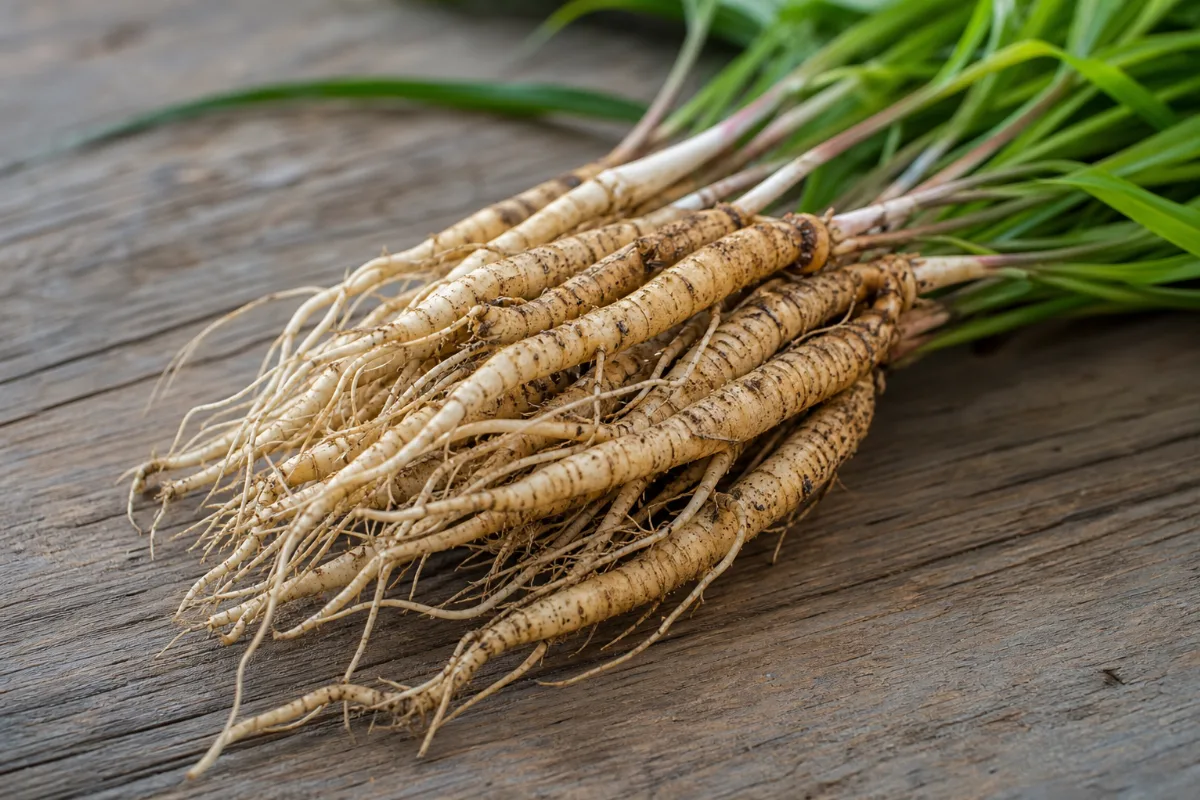
Herbs & Botanicals · Cooling Chinese rhizome herb
Anemarrhena
Anemarrhena asphodeloides · also called Zhi mu, Zhimu
Anemarrhena, or zhi mu, is the dried underground stem of an East Asian plant. Chinese medicine uses it to cool heat and ease dry cough and thirst. Evidence is mostly from mice and lab tests, with no trial in people for its main uses. Anyone taking diabetes medicine, tamoxifen or blood thinners should ask a doctor or pharmacist first.
General information, not medical advice. Last substantive update · Not medically reviewed. A named clinician has not signed off on this page. How this page is made
About Anemarrhena
Anemarrhena asphodeloides is an East Asian plant whose rhizome, zhi mu, is a cooling herb in Chinese medicine. Research is mainly in mice and cells. No human trial of the herb alone was found.
What it is
Zhi mu is the dried rhizome of Anemarrhena asphodeloides. It has been used in China, Japan and Korea for a very long time, per a 2014 review.
It contains steroidal saponins such as timosaponin AIII and BII, and xanthones such as mangiferin. A 2023 review counts 269 compounds.
How it is used in tradition
Reviews list fever, night sweats, dry cough, dry mouth and tongue, coughing blood and joint pain.
It is often one herb in a formula. It is commonly said to be paired with phellodendron and rehmannia in classic formulas. We have not checked this against a primary text.
What research shows
Diabetic mice had lower blood sugar after a water extract, and salt-baked rhizome did better than raw in a 2021 study. Rats given saponins had better insulin signals. A meta-analysis of 19 animal studies found the same for pure mangiferin.
In people: a 21-woman skin study with a purified compound and a review of 13 trials of a mixed arthritis formula. Neither tests the herb alone.
Lab studies of cancer, memory and clotting use purified compounds and say nothing yet about people.
At a glance
Traditional uses history, not proof
- Fever, night sweats and dry cough.
- Dry mouth and thirst, including diabetes-type thirst.
- Joint pain, as part of formulas.
- A pair with phellodendron in classic formulas (textbook knowledge, not checked).
Studied for research
- Blood sugar: diabetic mice and rats only (insufficient).
- Memory: drug-impaired mice, one compound (insufficient).
- Wrinkles: one 21-woman skin study with one compound (very-low).
- Arthritis: a mixed formula, 13 trials (very-low).
- Cancer cells and clotting: lab only.
Main compounds
- Steroidal saponins: timosaponin AIII and BII, sarsasapogenin.
- Xanthones: mangiferin and neomangiferin.
Common forms
- Dried rhizome in decoctions and formulas (traditional).
- Salt-baked rhizome (traditional processing).
- Extracts and purified compounds (research use).
Research links: 2023 review of the plant (PubMed) · 2001 mouse study on blood sugar (PubMed) · 2020 timosaponin AIII review (PubMed) · Research Library · Genes & Biomarkers Library
The plant and its history
- Accepted scientific name
- Anemarrhena asphodeloides Bunge
- Naming authority
- Bunge
- Synonyms
- Terauchia anemarrhenifolia Nakai
- Common names
- Anemarrhena (English); Zhi mu (Chinese (pinyin)); Zhimu (Chinese (pinyin)); Anemarrhenae rhizoma (Latin (drug name))
- Botanical family
- Asparagaceae (asparagus family) in GBIF. Older papers, including the 2023 review abstract, call it Liliaceae.
- Classification
- Plantae > Asparagales > Asparagaceae > Anemarrhena > Anemarrhena asphodeloides
- Native range
- East Asia; the reviews describe use in China, Japan and Korea. Native range not checked beyond this.
- Habitat
- Not verified from a source read.
- What the plant looks like
- Roots: The rhizome (underground stem) is the part used.; Stems: Not verified from a source read.; Leaves: Not verified from a source read.; Flowers: Not verified from a source read.; Fruit: Not verified from a source read.
- Cultivation
- Not verified from a source read.
- Harvest and processing
- Rhizome is used raw or stir-baked with salt water; salt-baking raised several saponins and mangiferin in a 2021 study.
- Look-alikes and adulterants
- Name: Phellodendron (Huang bai); Note: A different Chinese herb often paired with zhi mu in the Zhimu-Huangbai pair. Not interchangeable.; Name: Rehmannia (Di huang); Note: A different yin-nourishing herb often used with zhi mu in the same formulas.; Name: Other Anemarrhena products; Note: Research on pure timosaponin AIII or mangiferin should not be read as research on the dried rhizome.
- Sustainability and conservation
- Not found in the sources read.
Traditional use and history history, not clinical proof
| Tradition or era | Documented use | Source |
|---|---|---|
| Traditional Chinese, Japanese and Korean medicine | Tidal fever, night sweats, cough, dry mouth and tongue, coughing blood, joint pain and blood in stool; also called a tonic. Described as recorded for thousands of years. | p36330891 |
| Traditional Chinese formulas | Used in formulas for heat, dryness and diabetes-type thirst, including Baihu decoction and Zhi Bai Di Huang Wan. | p24556224 |
Traditional use shows how a plant was used. It does not show that a supplement works or is safe today.
What is inside, and how it may work
What the plant contains and how those compounds act in cells and animals. Laboratory and animal mechanisms are not proven effects in people.
Main compounds
| Compound | Family | Where it is concentrated | Activity studied | Level of evidence |
|---|---|---|---|---|
| Timosaponin AIII PubChem 15953793 | steroidal saponin | Rhizome Not given in the abstracts; higher after salt-baking. | Anti-cancer, nerve-protective, anti-inflammatory and anti-clotting effects in lab models; main liver-safety concern. 9 17 | In vitro and animal |
| Timosaponin BII PubChem 44191234 | steroidal saponin | Rhizome Not given. | Blocked platelet clumping and lengthened clotting time in animals. 11 | Animal research |
| Mangiferin PubChem 5281647 | xanthone glucoside | Rhizome Not given. | Named as an active blood-sugar part in a mouse study; animal meta-analysis of pure mangiferin showed lower glucose. 12 16 | Animal research |
| Sarsasapogenin PubChem 92095 | steroidal sapogenin | Rhizome Not given. | Not a P-gp blocker in one cell test. 1 | In vitro |
| Neomangiferin PubChem 6918448 | xanthone glucoside | Rhizome Not given. | Blocked P-gp function in cells. 1 | In vitro |
Mechanisms, receptors and pathways
| Target or pathway | Gene or receptor | What was found | Level |
|---|---|---|---|
| Insulin signalling (IRS-1/PI3K/AKT) and liver sugar-making genes | IRS-1, PI3K, AKT, G6Pase, PEPCK, GSK3B | Anemarrhena saponins raised insulin-signalling proteins and lowered sugar-making gene activity in rats. 3 | Animal research |
| Acetylcholine breakdown | Acetylcholinesterase, NF-kB, TNF-alpha, IL-1beta | Timosaponin AIII blocked the enzyme (IC50 35.4 micromolar) and reduced inflammation signals in mice and cells. 7 | Animal and in vitro |
| Platelets and clotting | ADP platelet pathway | Timosaponin B-II blocked platelet clumping and lengthened aPTT in animals. 11 | Animal and in vitro |
| Drug transport and metabolism | P-gp (MDR1), CAR, CYP2B6, CYP3A4 | Several compounds were P-gp substrates or blockers in cells; timosaponin AIII activated CAR and raised CYP/MDR1 expression in mice and liver cells. 1 5 | Animal and in vitro |
Absorption, metabolism and elimination
- Absorption
- Timosaponin AIII is poorly absorbed by mouth according to the existing summary of the 2020 review (not re-read here). In mice, a 50 mg/kg dose peaked in blood 4 to 6 hours later.
- Distribution
- Not found.
- Metabolism
- Partly via CYP enzymes and P-gp in lab tests (see mechanisms).
- Elimination
- Slow liver elimination reported in the existing summary; not re-checked.
- Bioavailability
- Low for timosaponin AIII (summary of the 2020 review). No human data.
Isolated compounds versus whole extracts
Most research uses purified timosaponin AIII or mangiferin, or saponin fractions. Ethanol extract beat the water decoction, and salt-baked beat raw, in diabetic mice. Results from pure compounds cannot be applied to a whole-herb product.
Nutritional composition
Zhi mu is a medicinal herb, not a food or a nutrient source.
2 very low certainty5 not enough evidence
What is Anemarrhena good for?
Anemarrhena has no proven health use in people. The rows below show what has been tried, claimed or seen in the lab, and every one is rated low or insufficient.
Benefits, one by one
Each card is a research question, not a promise. Tap a goal to filter. Open a card to see the studies, doses and limits.
Blood sugar and diabetes
Not enough evidenceZhi mu is a classic Chinese herb for diabetes-type thirst. Diabetic mice and rats did better on its extracts. No trial in people was found, so we do not know if it helps a person.
4 studiesNot given here and not advised.
Studies, doses and limits
What the trials found
None found. We found no randomised trial or other human study of zhi mu by mouth for blood sugar.
Results
Mice: one dose of the water extract lowered blood glucose from 570 to 401 mg/dl at 7 hours. A 2021 study in db/db mice found salt-baked rhizome beat raw rhizome and ethanol extract beat the water decoction. A meta-analysis of 19 animal studies of pure mangiferin (one compound in zhi mu) found lower glucose in diabetic animals.
Effect sizes as reported
Mouse study: 570 +/- 29 to 401 +/- 59 mg/dl (p<0.05). Mangiferin animal meta-analysis: glucose SMD -1.27 (95% CI -1.71 to -0.82). No human numbers.
Why this rating
Animal and lab work only. Pure compounds and extracts differ from a store product. No human evidence.
Form and dose studied
Not given here and not advised.
Who was studied
Diabetic mice and rats. Nothing in people, children or pregnancy.
Limits
The 2021 abstract gives no numbers. Mangiferin is also in other plants, so the mangiferin meta-analysis does not prove anything about zhi mu.
Why researchers looked
In Chinese medicine zhi mu is used for dry mouth, thirst and heat, which overlap with what is now called diabetes. Researchers tested it in diabetic animals.
Traditional use
Named in classical formulas for thirst and heat patterns (textbook knowledge, not checked against a primary text here). A 2023 review lists dry mouth and tongue among its traditional uses.
Proposed mechanism Animal and in vitro
Mangiferin and its glucoside were named as active parts in a 2001 mouse study, which suggested less insulin resistance. A rat study with purified saponins found more activity in the insulin-signalling proteins IRS-1, PI3K and AKT and less sugar-making activity in the liver.
A proposed mechanism does not show that the effect happens in people.
Anyone using diabetes medicine should not change it without their doctor. A herb that lowers sugar could add to the medicine's effect and cause low blood sugar. This is a theory, not a documented interaction.
Memory and thinking
Not enough evidenceOne purified zhi mu compound improved memory in mice whose memory was blocked by a drug. This has not been tested in people.
1 studiesNot given here and not advised.
Studies, doses and limits
What the trials found
None found.
Results
Timosaponin AIII reversed the memory deficits caused by scopolamine in two mouse tests.
Effect sizes as reported
No human numbers. Enzyme block IC50 35.4 micromolar (cell test).
Why this rating
One purified compound in drug-impaired mice.
Form and dose studied
Not given here and not advised.
Who was studied
Mice.
Limits
A chemical memory-loss model is not the same as dementia. Absorption by mouth is poor according to the existing summary of a 2020 review.
Why researchers looked
Timosaponin AIII blocks an enzyme (acetylcholinesterase) that is also the target of some Alzheimer's medicines.
Traditional use
Not a classic zhi mu use in the sources read.
Proposed mechanism Animal and in vitro
Timosaponin AIII raised acetylcholine in the mouse hippocampus, blocked acetylcholinesterase (IC50 35.4 micromolar) and lowered inflammation signals.
A proposed mechanism does not show that the effect happens in people.
Anyone taking dementia medicines should ask a doctor or pharmacist before adding any herb.
Fever, dry cough and thirst (traditional use)
Not enough evidenceIn Chinese medicine zhi mu cools heat and moistens dryness. This is a tradition. No trial of these uses was found.
2 studiesNot given here and not advised.
Studies, doses and limits
What the trials found
None found for these uses.
Results
Reviews describe the tradition and lab findings only.
Effect sizes as reported
None.
Why this rating
Tradition only; no human study read.
Form and dose studied
Not given here and not advised.
Who was studied
Not studied.
Limits
Fever and cough can be serious. A traditional use is not a trial result.
Why researchers looked
Traditional use for tidal fever, night sweats, dry cough, dry mouth and tongue and coughing blood is listed in two reviews.
Traditional use
Used for thousands of years in China, Japan and Korea per the 2014 review. Often one herb in a formula such as Baihu decoction or Zhi Bai Di Huang Wan (formula details not checked against a primary text).
Proposed mechanism Pharmacological theory
Not established. Lab studies show anti-inflammatory and other activity of single compounds.
A proposed mechanism does not show that the effect happens in people.
A fever that lasts, breathing trouble or coughing blood needs a doctor, not a herb.
Rheumatoid arthritis (as part of a formula)
Very low certaintyA formula that always contains zhi mu, cassia twig and peony looked helpful in a review of 13 trials, but zhi mu's own part cannot be told apart.
1 studiesNot given here and not advised.
Studies, doses and limits
What the trials found
A 2017 meta-analysis pooled 13 randomised trials of the formula (with or without standard drugs) against standard drugs or placebo.
Results
The authors say it was three to six times more effective than standard drugs for some symptoms and that only two studies reported side effects in the formula group. They call for larger, longer trials.
Effect sizes as reported
Not given in the abstract beyond the authors' summary.
Why this rating
Mixed formula, varied recipes, small trials of uncertain quality, and a first author employed by a supplement maker. The authors did not give a formal GRADE in the abstract.
Form and dose studied
Not given here and not advised.
Who was studied
Adults with rheumatoid arthritis.
Limits
Cannot say whether zhi mu did anything. Rheumatoid arthritis needs medical care.
Why researchers looked
Joint pain (arthralgia) is a traditional use of zhi mu, and the Gui Zhi-Shao Yao-Zhi Mu decoction is used for rheumatoid arthritis.
Traditional use
Joint pain is on the traditional use list in the 2023 review.
Proposed mechanism Pharmacological theory
Not established for zhi mu alone.
A proposed mechanism does not show that the effect happens in people.
Do not replace arthritis medicine with a herb.
Skin wrinkles (cream with one compound)
Very low certaintyA small 12-week study of 21 women found fewer wrinkle signs with a cream containing 0.25% timosaponin A-III. It is one purified compound on the skin, not the herb by mouth.
1 studiesNot given here and not advised.
Studies, doses and limits
What the trials found
One small human study, 21 women aged 43 to 55.
Results
Wrinkle measures fell significantly after 12 weeks (P<0.05); no skin toxicity was seen.
Effect sizes as reported
P<0.05; no numbers in the abstract.
Why this rating
Very small study, unclear control, company-linked authors.
Form and dose studied
Not given here and not advised.
Who was studied
Women aged 43 to 55.
Limits
Only 21 women. A purified compound in a skin product is not the same as eating the herb.
Why researchers looked
In skin cells exposed to UVB light, the compound lowered an enzyme (MMP-1) that breaks down skin structure.
Traditional use
A review lists anti-skin-ageing among zhi mu's lab activities.
Proposed mechanism In vitro
Lowered MMP-1 and inflammation signals in UVB-exposed skin cells.
A proposed mechanism does not show that the effect happens in people.
No skin toxicity was reported in this study. Stop any skin product that causes a rash.
Platelets and clotting (lab)
Not enough evidenceA zhi mu compound slowed platelet clumping and clotting in animals. This is a lab finding, not a proven effect in people, but it matters for blood thinners.
2 studiesNot given here and not advised.
Studies, doses and limits
What the trials found
None found.
Results
aPTT rose by 9.29, 16.86 and 25.50% at three animal doses; clot weight fell by 13.6, 19.8 and 24.7%. No effect in a rabbit shunt model.
Effect sizes as reported
As above (animals, injected).
Why this rating
Animal and test-tube work with an injected purified compound.
Form and dose studied
Not given here and not advised.
Who was studied
Rats, rabbits, platelets in vitro.
Limits
Says nothing about eating the herb.
Why researchers looked
Reviews list antiplatelet activity of zhi mu compounds.
Traditional use
Not a classic use in the sources read.
Proposed mechanism Animal and in vitro
Timosaponin B-II blocked ADP-triggered platelet clumping and lengthened aPTT in animals; prothrombin time was unchanged.
A proposed mechanism does not show that the effect happens in people.
Theoretical extra bleeding risk with blood thinners or before surgery. Not a documented human interaction.
Cancer cell and tumour models (lab)
Not enough evidenceTimosaponin AIII kills many cancer cell lines in dishes and slows tumours in animals. There is no human evidence, and it is not a cancer treatment.
2 studiesNot given here and not advised.
Studies, doses and limits
What the trials found
None found.
Results
Two reviews (2020, 2024) describe lab and animal findings only.
Effect sizes as reported
None.
Why this rating
Cells and animals only; purified compound.
Form and dose studied
Not given here and not advised.
Who was studied
Cell lines and animals.
Limits
Dish results rarely carry over to people. Poor absorption by mouth is reported for the compound.
Why researchers looked
The compound is the most researched part of zhi mu in cancer labs.
Traditional use
Not a traditional zhi mu use.
Proposed mechanism In vitro and animal
Reviews describe effects on cell death, spread and autophagy in many cancer cell lines.
A proposed mechanism does not show that the effect happens in people.
Anyone in cancer treatment should ask the oncology team first; a mouse study found an interaction with tamoxifen (see Safety).
Connections to the rest of health
How Anemarrhena connects to the rest of our health knowledge graph. Every link says what kind of connection it is. A safety link (for example to the liver) is a warning, not a benefit. A study that merely mentions a topic never creates a benefit link.
Explore every connection: goals, body systems, organs, symptoms, genes
A. Wellness goals
| Connected to | Kind of connection | Evidence status | Context | Studies |
|---|---|---|---|---|
| Blood Sugar Balance | Traditional use | Not enough evidence | Blood sugar and diabetes: Zhi mu is a classic Chinese herb for diabetes-type thirst. Diabetic mice and rats did better on its extracts. No trial in people was found, so we do not know if it helps a person. | 12 17 3 16 |
| Metabolic Health | Traditional use | Not enough evidence | Blood sugar and diabetes: Zhi mu is a classic Chinese herb for diabetes-type thirst. Diabetic mice and rats did better on its extracts. No trial in people was found, so we do not know if it helps a person. | 12 17 3 16 |
| Memory Support | Preliminary mechanism | Not enough evidence | Memory and thinking: One purified zhi mu compound improved memory in mice whose memory was blocked by a drug. This has not been tested in people. | 7 |
| Brain Health | Preliminary mechanism | Not enough evidence | Memory and thinking: One purified zhi mu compound improved memory in mice whose memory was blocked by a drug. This has not been tested in people. | 7 |
| Immune Support | Traditional use | Not enough evidence | Fever, dry cough and thirst (traditional use): In Chinese medicine zhi mu cools heat and moistens dryness. This is a tradition. No trial of these uses was found. | 10 15 |
| Joint Support | Traditional use | Very low certainty | Rheumatoid arthritis (as part of a formula): A formula that always contains zhi mu, cassia twig and peony looked helpful in a review of 13 trials, but zhi mu's own part cannot be told apart. | 2 |
| Inflammation Balance | Traditional use | Very low certainty | Rheumatoid arthritis (as part of a formula): A formula that always contains zhi mu, cassia twig and peony looked helpful in a review of 13 trials, but zhi mu's own part cannot be told apart. | 2 |
| Healthy Skin | Potential benefit | Very low certainty | Skin wrinkles (cream with one compound): A small 12-week study of 21 women found fewer wrinkle signs with a cream containing 0.25% timosaponin A-III. It is one purified compound on the skin, not the herb by mouth. | 6 |
| Heart Health | Preliminary mechanism | Not enough evidence | Platelets and clotting (lab): A zhi mu compound slowed platelet clumping and clotting in animals. This is a lab finding, not a proven effect in people, but it matters for blood thinners. | 11 9 |
B. Body systems
| Connected to | Kind of connection | Evidence status | Context | Studies |
|---|---|---|---|---|
| Endocrine System | Biological association | Not enough evidence | Studied for: Blood sugar and diabetes | 12 17 3 16 |
| Metabolism Weight | Biological association | Not enough evidence | Studied for: Blood sugar and diabetes | 12 17 3 16 |
| Nervous System | Biological association | Not enough evidence | Studied for: Memory and thinking | 7 |
| Respiratory System | Biological association | Not enough evidence | Studied for: Fever, dry cough and thirst (traditional use) | 10 15 |
| Musculoskeletal System | Biological association | Very low certainty | Studied for: Rheumatoid arthritis (as part of a formula) | 2 |
| Integumentary System | Biological association | Very low certainty | Studied for: Skin wrinkles (cream with one compound) | 6 |
| Cardiovascular System | Biological association | Not enough evidence | Studied for: Platelets and clotting (lab) | 11 9 |
C. Body parts and organs
D. Symptoms
I. Biomarkers
| Connected to | Kind of connection | Evidence status | Context | Studies |
|---|---|---|---|---|
| Blood glucose | Drug or supplement interaction | Not enough evidence | Lowered glucose in diabetic animals; possible low blood sugar with diabetes medicine. Preparation or compound: Rhizome extracts, mangiferin |
12 16 |
| Blood glucose | Biological association | Not enough evidence | Measured in trials: lowered (in diabetic mice only). A lab change is not the same as a health benefit. | 12 17 |
| Insulin and insulin resistance | Biological association | Not enough evidence | Measured in trials: tended to lower serum insulin; better insulin tolerance (mice). A lab change is not the same as a health benefit. | 12 3 |
| Wrinkle measures | Biological association | Very low certainty | Measured in trials: lowered (reduced wrinkles). A lab change is not the same as a health benefit. | 6 |
| Clotting time (aPTT) | Biological association | Not enough evidence | Measured in trials: raised (animals). A lab change is not the same as a health benefit. | 11 |
J. Genes, receptors and enzymes
| Connected to | Kind of connection | Evidence status | Context | Studies |
|---|---|---|---|---|
| Preliminary mechanism | Raised in human liver cells by timosaponin AIII. | 5 |
L. Active compounds
| Connected to | Kind of connection | Evidence status | Context | Studies |
|---|---|---|---|---|
| Timosaponin AIII | Biological association | In vitro and animal | Anti-cancer, nerve-protective, anti-inflammatory and anti-clotting effects in lab models; main liver-safety concern. Preparation or compound: Rhizome |
9 17 |
| Timosaponin BII | Biological association | Animal | Blocked platelet clumping and lengthened clotting time in animals. Preparation or compound: Rhizome |
11 |
| Mangiferin | Biological association | Animal | Named as an active blood-sugar part in a mouse study; animal meta-analysis of pure mangiferin showed lower glucose. Preparation or compound: Rhizome |
12 16 |
| Sarsasapogenin | Biological association | In vitro | Not a P-gp blocker in one cell test. Preparation or compound: Rhizome |
1 |
| Neomangiferin | Biological association | In vitro | Blocked P-gp function in cells. Preparation or compound: Rhizome |
1 |
Each connection is stored with the ingredient, the connected record, the kind of connection, the evidence status, the supporting studies, the preparation or compound involved, and a review date (last reviewed October 25, 2026).
The evidence
The research centre for Anemarrhena. Every record here was checked against PubMed or the publisher's page; we never list a study we have not verified.
Evidence by outcome
Bars show how many studies we found for each outcome, not how well it works. People are added up across trials only (reviews are not added, to avoid double counting).
How we rate evidence
High certainty
Several well-run trials or reviews agree; further research is unlikely to change the picture much.
Moderate certainty
Good trials point the same way, but some doubt remains.
Low certainty
Small, short or inconsistent trials. The finding could change with better research.
Very low certainty
Very little or very weak human data. Treat as a possibility only.
Mixed findings
Trials or reviews disagree with each other.
Not enough evidence
Not enough human research to say either way.
Evidence against
Good research found no benefit, or found harm.
We take the reviewers' own risk-of-bias and GRADE statements where they exist, and otherwise judge from study size, design, consistency, directness and whether a product matches what is sold. Many publications do not make evidence high. Method note: We searched PubMed, GBIF and PubChem and read abstracts. Not verified: EMA/HMPC, NCCIH (no page found), LiverTox, LactMed, Chinese Pharmacopoeia, and the traditional loose-stool caution. Ratings are the compiler's own reading, not formal grades.
Study library: every study we checked 17
| Study | Design | People | Product, dose, length | Result |
|---|---|---|---|---|
| Dai 2022 In Vitro Evaluation of the Interaction of Seven Biologically Active Components in Anemarrhenae rhizoma with P-gp Molecules · PMID 36500651 · DOI |
Cell study (MDCK MDR1 cells) in-vitro |
Lab cells that make P-glycoprotein | Seven purified compounds and a rhizome extract rhizome Cell concentrations Not applicable · vs Verapamil (P-gp blocker) control |
Mangiferin, timosaponin AIII, timosaponin BII and baohuoside I were P-gp substrates (efflux ratio over 2). Timosaponin AIII, BII, mangiferin, isomangiferin, neomangiferin and baohuoside I also blocked P-gp function; sarsasapogenin did not. Possible P-gp interactions in cells Methods, limits and fundingOutcomes: Transport across cells and P-gp function Limitations: Cells only; no human drug-interaction study. Funding and conflicts: No conflict of interest declared. Read: abstract |
| Daily 2017 Efficacy and Safety of GuiZhi-ShaoYao-ZhiMu Decoction for Treating Rheumatoid Arthritis: A Systematic Review and Meta-Analysis of Randomized Clinical Trials Journal of Alternative and Complementary Medicine · PMID 28609129 · DOI |
Systematic review and meta analysis of RCTs (a combination formula) |
13 People with rheumatoid arthritis (13 trials) |
Gui Zhi-Shao Yao-Zhi Mu decoction, a multi-herb formula that always contains zhi mu, cassia twig and peony mixed herbs Varied; formulas differed between trials Varied · vs Standard Western drugs or placebo |
The authors say the formula was three to six times more effective than standard drugs for some symptoms and that only two studies reported side effects in the formula group. They conclude it may be as good or better and call for larger, longer trials. Possible benefit of the formula in rheumatoid arthritis Methods, limits and fundingOutcomes: Rheumatoid arthritis symptoms, adverse events Limitations: A mixed formula, so zhi mu's own part cannot be told apart. Formulas varied; many trials in Chinese and often low quality; the first author works at a supplement manufacturer (Daily Manufacturing, Inc.). Funding and conflicts: First author affiliated with Daily Manufacturing, Inc. Read: abstract |
| Feng 2021 Anemarrhena saponins attenuate insulin resistance in rats with high-fat diet-induced obesity via the IRS-1/PI3K/AKT pathway Journal of Ethnopharmacology · PMID 34052350 · DOI |
Animal and cell study (rats, HepG2 cells) animal |
Rats made insulin-resistant with a high-fat diet; liver cells | Anemarrhena saponins (purified fraction) rhizome Not stated in the abstract. Not stated in the abstract. · vs Untreated rats |
Saponins improved blood fats, reduced obesity and inflammation and eased liver injury in the rats. They lowered the activity of sugar-making genes in the liver and raised insulin-signalling proteins (IRS-1, PI3K, AKT). Improved insulin resistance markers in rats Methods, limits and fundingOutcomes: Blood sugar and fats, liver tissue, gene activity, insulin-signalling proteins Limitations: Rats and cells only; purified saponins, not the whole herb; no numbers in the abstract. Funding and conflicts: Not stated in the abstract. Read: abstract |
| GBIF Secretariat 2026 GBIF species match: Anemarrhena asphodeloides Bunge Global Biodiversity Information Facility (API) · Source |
Taxonomic database record plant |
Not applicable | Not applicable Not applicable Not stated in the abstract. Not stated in the abstract. · vs None stated. |
Strict exact match, status ACCEPTED, key 2771077, family Asparagaceae, order Asparagales. One synonym listed: Terauchia anemarrhenifolia Nakai. Not applicable Methods, limits and fundingOutcomes: Accepted name, family, synonyms Limitations: Taxonomy only. Read: full-text |
| Hafiz 2024 Timosaponin AIII induces drug-metabolizing enzymes by activating constitutive androstane receptor (CAR) via dephosphorylation of the EGFR signaling pathway Journal of Biomedical Research · PMID 38817007 · DOI |
Animal and cell study (mice, HepG2 cells) animal |
Mice and human liver cancer cells | Timosaponin AIII (purified compound) rhizome compound Not stated in the abstract. 3 and 24 days in mice · vs Untreated |
Timosaponin AIII raised activity of CYP2B10, CYP3A11 and MDR1 in mouse liver and CYP2B6, CYP3A4 and MDR1 in human liver cells, through the CAR switch. Possible enzyme induction (could speed the breakdown of some medicines) Methods, limits and fundingOutcomes: Liver enzyme and transporter gene activity Limitations: Mice and cells only; purified compound. Funding and conflicts: No conflict of interest declared. Read: abstract |
| Im 2020 Clinical evaluation of the safety and efficacy of a timosaponin A-III-based antiwrinkle agent against skin aging Journal of Cosmetic Dermatology · PMID 31215156 · DOI |
Small human skin study plus cell experiments |
21 21 women aged 43 to 55 with early or established wrinkles |
Skin product with 0.25% timosaponin A-III (purified compound) rhizome compound Applied daily to skin 12 weeks · vs Not clearly described in the abstract |
Wrinkle measures were significantly reduced after 12 weeks (P<0.05). No skin toxicity was found. In UVB-exposed skin cells the compound lowered MMP-1 and inflammation signals. Fewer wrinkle signs at 12 weeks Methods, limits and fundingOutcomes: Wrinkle measures, skin safety Limitations: Only 21 women; the control arrangement is unclear; purified compound on skin, not the herb by mouth; authors include company staff (industry links likely). Funding and conflicts: Authors from a research institute and companies (H&A Pharmachem, HansolBio). Read: abstract |
| Lee 2009 Timosaponin AIII, a saponin isolated from Anemarrhena asphodeloides, ameliorates learning and memory deficits in mice Pharmacology Biochemistry and Behavior · PMID 19426756 · DOI |
Animal and cell study (mice) animal |
Mice given scopolamine to impair memory; brain cell lines | Timosaponin AIII (purified compound) rhizome compound 50 mg/kg by mouth in one blood-level test (animal dose, not advice) Not stated in the abstract. · vs Scopolamine-only mice |
Timosaponin AIII reversed the memory deficits in two mouse tests, raised hippocampal acetylcholine and blocked the enzyme acetylcholinesterase (IC50 35.4 micromolar). Peak blood level came 4 to 6 hours after the dose. Better memory scores in a drug-induced memory-loss mouse model Methods, limits and fundingOutcomes: Memory tests, acetylcholine, enzyme activity, inflammation signals Limitations: Mice only; a chemical-impairment model; purified compound. Funding and conflicts: Not stated in the abstract. Read: abstract |
| Li 2019 Baihe Zhimu formula attenuates the efficacy of tamoxifen against breast cancer in mice through modulation of CYP450 enzymes BMC Complementary and Alternative Medicine · PMID 31484532 · DOI |
Animal and lab study (mice, rat liver microsomes) animal |
Mice with human breast tumour grafts; rat liver preparations | Baihe Zhimu formula (lily bulb + zhi mu) and its parts mangiferin and timosaponin BII mixed herbs Not stated in the part read Not stated in the part read · vs Tamoxifen alone |
The formula weakened tamoxifen's anti-tumour effect and lowered blood levels of endoxifen and 4-OH-tamoxifen. The formula and mangiferin significantly inhibited CYP450 enzyme activity in rat liver preparations. Possible interaction with tamoxifen in mice Methods, limits and fundingOutcomes: Tumour control, tamoxifen and its active metabolites in blood, CYP450 activity Limitations: Mice and rat liver preparations only; a two-herb formula. Not shown in people. Funding and conflicts: No competing interests declared. Read: abstract |
| Lin 2020 Pharmacological Activity, Pharmacokinetics, and Toxicity of Timosaponin AIII, a Natural Product Isolated From Anemarrhena asphodeloides Bunge: A Review Frontiers in Pharmacology · PMID 32581782 · DOI |
Narrative review (cell and animal work) in-vitro |
Reviews lab and animal work on timosaponin AIII | Not applicable Not applicable Not stated in the abstract. Not stated in the abstract. · vs None stated. |
Timosaponin AIII showed anti-cancer, nerve-protective, anti-inflammatory and anti-clotting effects in lab models. The authors say liver toxicity was the main safety concern and that its pharmacokinetics and toxicity need more study. Not applicable (review) Methods, limits and fundingOutcomes: Activities, pharmacokinetics and toxicity Limitations: Lab and animal evidence; the abstract reports no human trial. Detailed liver and absorption statements come from the existing summary of the full text, not re-opened here. Funding and conflicts: Not stated in the abstract. Read: abstract |
| Liu 2023 A review of the botany, ethnopharmacology, phytochemistry, pharmacology, toxicology and quality of Anemarrhena asphodeloides Bunge Journal of Ethnopharmacology · PMID 36330891 · DOI |
Narrative review in-vitro |
Plant, traditional use, chemistry and lab pharmacology | Not applicable Not applicable Not stated in the abstract. Not stated in the abstract. · vs None stated. |
Names traditional uses such as joint pain, tidal fever, night sweats, cough, dry mouth and tongue and coughing blood. Lists 269 compounds (steroidal saponins, flavonoids and others) and many lab activities. The authors say quality and toxicity must be evaluated to confirm safe use in people and that more animal and human studies are needed. Not applicable (review) Methods, limits and fundingOutcomes: Botany, traditional use, 269 compounds, pharmacology, toxicology Limitations: Lab-heavy review; no controlled human data in the abstract. Funding and conflicts: No competing interests declared. Read: abstract |
| Lu 2011 Antiplatelet and antithrombotic activities of timosaponin B-II, an extract of Anemarrhena asphodeloides Clinical and Experimental Pharmacology and Physiology · PMID 21517935 · DOI |
Animal and test tube study animal |
Platelets in vitro; rats and rabbits | Timosaponin B-II (purified compound) rhizome compound 1, 3 and 6 mg/kg by injection in animals (not advice) Single doses · vs Untreated animals |
Timosaponin B-II dose-dependently blocked ADP-triggered platelet clumping in vitro. In animals it lengthened aPTT by 9.29, 16.86 and 25.50% and reduced clot size (wet weight by 13.6, 19.8 and 24.7%). Prothrombin time was unchanged. In a rabbit shunt model it had no effect on clot formation. Antiplatelet and anticoagulant effects in animals Methods, limits and fundingOutcomes: Platelet clumping, clotting time, thrombus size Limitations: Injected purified compound in animals; says nothing about eating the herb. Funding and conflicts: Not stated in the abstract. Read: abstract |
| Miura 2001 Antidiabetic activity of the rhizoma of Anemarrhena asphodeloides and active components, mangiferin and its glucoside Biological and Pharmaceutical Bulletin · PMID 11558559 · DOI |
Animal study (mice) animal |
KK-Ay mice, a genetic type 2 diabetes model | Water extract of the rhizome (AA) rhizome 90 mg/kg by mouth (animal dose, not advice) Single dose, measured at 7 hours · vs Untreated mice |
Blood glucose fell from 570 +/- 29 to 401 +/- 59 mg/dl 7 hours after the dose (p<0.05). Serum insulin tended to fall. Blood glucose was lower in an insulin tolerance test. The authors named mangiferin and its glucoside as the active parts. Lower blood glucose in diabetic mice after one dose Methods, limits and fundingOutcomes: Blood glucose, serum insulin, insulin tolerance test Limitations: Mice only; one short experiment; the authors only suggest less insulin resistance as the cause. Funding and conflicts: Not stated in the abstract. Read: abstract |
| NCBI PubChem 2026 PubChem compound records: timosaponin A III, timosaponin B II, mangiferin, sarsasapogenin, neomangiferin PubChem (API) · Source |
Chemical database record chemical |
Not applicable | Not applicable Not applicable Not stated in the abstract. Not stated in the abstract. · vs None stated. |
CIDs verified by name search: timosaponin AIII 15953793 (C39H64O13); timosaponin BII 44191234 (C45H76O19); mangiferin 5281647 (C19H18O11); sarsasapogenin 92095 (C27H44O3); neomangiferin 6918448 (C25H28O16). Not applicable Methods, limits and fundingOutcomes: Compound identifiers and formulas Limitations: Identity only. Read: full-text |
| Tu 2024 Anti-tumor effect and mechanisms of Timosaponin AIII across diverse cancer progression Biochemical Pharmacology · PMID 38402911 · DOI |
Narrative review (cell and animal work) in-vitro |
Cancer cell lines and animal models | Not applicable Not applicable Not stated in the abstract. Not stated in the abstract. · vs None stated. |
Reviews lab findings on cell death, spread and autophagy in many cancer types. The abstract describes no human trial. Not applicable (lab review) Methods, limits and fundingOutcomes: Anti-cancer effects and pathways of timosaponin AIII Limitations: Lab and animal evidence only; purified compound. Funding and conflicts: No competing interests declared. Read: abstract |
| Wang 2014 The genus Anemarrhena Bunge: A review on ethnopharmacology, phytochemistry and pharmacology Journal of Ethnopharmacology · PMID 24556224 · DOI |
Narrative review in-vitro |
Plant, traditional use, chemistry and lab pharmacology | Not applicable Not applicable Not stated in the abstract. Not stated in the abstract. · vs None stated. |
Records use in China, Japan and Korea for thousands of years. Crude extracts and pure compounds acted on the nervous and blood systems and showed many lab activities. The authors say clinical studies and toxicity and adverse-effect studies are still needed. Not applicable (review) Methods, limits and fundingOutcomes: Traditional use and pharmacology Limitations: Authors list not fully read; lab-heavy review. Funding and conflicts: Not stated in the abstract. Read: abstract |
| Wu 2021 Oral administration of mangiferin ameliorates diabetes in animal models: a meta-analysis and systematic review Nutrition Research · PMID 33601215 · DOI |
Meta analysis of animal studies animal |
19 Diabetic animals (19 studies) |
Purified mangiferin by mouth (one compound found in zhi mu; not the whole herb) not applicable Varied Varied · vs Controls |
Pooled effect on blood glucose SMD -1.27 (95% CI -1.71 to -0.82). Total cholesterol SMD -1.02 (-1.43 to -0.61). Triglycerides SMD -1.24 (-1.70 to -0.79). Lower blood glucose and fats in diabetic animals (Blood glucose SMD -1.27 (95% CI -1.71 to -0.82)) Methods, limits and fundingOutcomes: Blood glucose, body weight, cholesterol, triglycerides Limitations: Animals only. Pure mangiferin, not zhi mu. No human data. Funding and conflicts: Not stated in the abstract. Read: abstract |
| Yu 2021 Study on the Effects of Chinese Materia Medica Processing on the Hypoglycemic Activity and Chemical Composition of Anemarrhenae Rhizoma Evidence-Based Complementary and Alternative Medicine · PMID 34712345 · DOI |
Animal study (db/db mice) plus chemical analysis animal |
db/db mice (type 2 diabetes model) | Raw rhizome and salt-water stir-baked rhizome; water decoction vs ethanol extract rhizome Not stated in the abstract. Not stated in the abstract. · vs Untreated and raw-herb groups |
Salt-baked rhizome worked better than raw rhizome, and the ethanol extract worked better than the water decoction. Timosaponin AIII, BII, BIII, anemarrhenasaponin I and Ia and mangiferin were higher after salt-baking. Stronger blood-glucose effect in mice with salt-baked and ethanol extracts Methods, limits and fundingOutcomes: Fasting glucose, glucose tolerance test, HbA1c, resistin, fasting insulin, oxidative markers; contents of 8 compounds Limitations: Mice only. The abstract gives no numbers for the glucose results. Funding and conflicts: The authors declare no conflict of interest. Read: abstract |
What we do not know yet
- No human trial of zhi mu alone for any use.
- No human safety, pregnancy or interaction data.
- Traditional formula uses not checked against primary texts.
- Lab results use purified compounds, not the dried herb.
How new research is added
New studies are found by a saved PubMed search and placed in a review queue. A person reads each one before it is added.
Lab markers
What changed in blood or saliva tests during trials. A changed number is not the same as feeling or being healthier, and we give no "normal ranges".
Metabolic 2
Blood glucose
Lowered (in diabetic mice only) in trials
The amount of sugar in the blood.
Not enough evidenceResults and what it means
Why it was measured
The usual first check of whether something changes blood sugar.
Statistical vs. clinical meaning
Mouse results only. They say nothing yet about people.
Safety implication
People on diabetes medicine could in theory reach low blood sugar. Do not change treatment without a doctor.
Insulin and insulin resistance
Tended to lower serum insulin; better insulin tolerance (mice) in trials
Insulin moves sugar out of the blood. Insulin resistance means the body responds less to it.
Not enough evidenceResults and what it means
Why it was measured
To see whether a lower glucose came from better insulin response.
Statistical vs. clinical meaning
Suggests less insulin resistance in animals. Not shown in people.
Safety implication
Same blood-sugar medicine caution.
Other 2
Wrinkle measures
Lowered (reduced wrinkles) in trials
Instrument-based measures of wrinkle depth and extent on the face.
Very low certaintyResults and what it means
Why it was measured
To judge a skin product's effect over time.
Statistical vs. clinical meaning
Statistically significant in a tiny study; clinical size unknown.
Safety implication
No skin toxicity reported.
| Study | Result | People | Product |
|---|---|---|---|
| 6 | Significantly reduced (P<0.05); no numbers in the abstract. | 21 women aged 43 to 55 |
Clotting time (aPTT)
Raised (animals) in trials
A blood test of how long clotting takes.
Not enough evidenceResults and what it means
Why it was measured
To check for a blood-thinning effect.
Statistical vs. clinical meaning
Animal data only.
Safety implication
A theoretical bleeding concern with blood thinners.
| Study | Result | People | Product |
|---|---|---|---|
| 11 | Prolonged by 9.29, 16.86 and 25.50% at 1, 3 and 6 mg/kg; prothrombin time unchanged. | Animals (injected) |
Safety
What studies and official sources say about side effects, medicines and who should check first. Each point shows what kind of evidence it comes from.
Main points to know 3
- Almost no human safety data. We found no clinical trial or case report of oral zhi mu safety. The 2023 review says quality and toxicity must be evaluated to confirm safe use in people. Absence of reports is not proof of safety. Authoritative guidance 10 15
- Liver: a question for the purified compound. A 2020 review names liver toxicity as the main concern for isolated timosaponin AIII in lab and animal work. Human liver safety of the whole herb is unknown. Animal research 9
- Possible medicine interactions (lab and animal only). Blood-sugar medicines (theory), tamoxifen (mouse study), medicines moved by P-glycoprotein (cell study), medicines broken down by CYP enzymes (mouse and cell studies) and blood thinners (animal study). None has been shown in people. Animal research 8 1 5 11
Side effects 3
| Effect | How often | Severity and recovery | Evidence |
|---|---|---|---|
| No adverse effects from zhi mu by mouth are documented in the sources we read No trial of oral use was found, so no frequency can be given. | Not established | unknown Not stated | Insufficient 10 |
| Loose stool or diarrhoea, and stomach upset Traditional Chinese medicine teaching cautions zhi mu in people with a cold, weak digestion and loose stools ('spleen cold'). NOT verified: we did not read a source that states this, and we found no human report of gut side effects. | Not established | unknown Not stated | Traditional use |
| Skin: no toxicity from a 0.25% timosaponin A-III skin product in 21 women over 12 weeks Purified compound on skin only; small study. | Not established | none reported Not applicable | Controlled trial 6 |
Liver
No human liver-injury case of zhi mu was found. A 2020 review calls liver toxicity of purified timosaponin AIII the main safety concern in cell and animal work. An NIH LiverTox page for zhi mu was not found, so no official liver rating can be given. 9
How often. Unknown.
Monitoring. No official advice. Anyone with liver disease, or taking medicines that affect the liver, should ask a doctor before using it.
This is a safety connection. It is not evidence that Anemarrhena supports liver health.
Medicines and supplements 5
| With | Why it matters | Importance | Evidence | What to do |
|---|---|---|---|---|
| Diabetes medicines (insulin, metformin, sulfonylureas and others) drug | Extracts and mangiferin lowered blood glucose in diabetic animals. | Unknown. If an effect existed in people it could add to the medicine and cause low blood sugar (hypoglycaemia). | Theoretical Not enough evidence 12 16 | Do not change diabetes treatment. Ask a doctor or pharmacist, and check blood sugar as advised. |
| Tamoxifen drug | A zhi mu plus lily formula lowered blood levels of tamoxifen's active metabolites and weakened its anti-tumour effect in mice; the formula and mangiferin blocked CYP450 enzymes in rat liver preparations. | Unknown in people. | Animal research Not enough evidence 8 | People on tamoxifen should tell their cancer team before using any zhi mu product. |
| Medicines moved by P-glycoprotein (for example some heart and cancer medicines) drug | In lab cells, timosaponin AIII, BII, mangiferin and baohuoside I were P-gp substrates and several compounds blocked P-gp. | Unknown in people. | Laboratory research Not enough evidence 1 | Ask a pharmacist about any medicine with a narrow safety margin. |
| Medicines broken down by CYP enzymes (CYP3A4, CYP2B6) drug | Timosaponin AIII raised CYP2B10, CYP3A11 and MDR1 in mice and CYP2B6, CYP3A4 and MDR1 in human liver cells through the CAR switch. Other work above found CYP450 inhibition by the formula and mangiferin. | Unknown. The lab results point both ways (more breakdown from the saponin, less from mangiferin), so the net effect in people cannot be predicted. | Animal research Not enough evidence 5 8 | Ask a pharmacist before combining with any prescribed medicine. |
| Blood thinners and antiplatelet medicines (warfarin, aspirin, clopidogrel and others), and surgery drug | Timosaponin B-II blocked platelet clumping and lengthened aPTT in animals. | Unknown. A theoretical extra bleeding risk. | Animal research Not enough evidence 11 9 | Tell the surgical team and prescriber. Not a documented human interaction. |
Who should check first 4
| Situation | Advice | Evidence |
|---|---|---|
| Pregnancy and breastfeeding | Avoid. No safety data were found, and an NIH LactMed entry was not found or read. | Authoritative guidance 10 |
| Loose stools or weak digestion (traditional 'spleen cold') | Traditional teaching says to be careful. NOT verified: no source read states it. | Traditional use |
| Liver disease | Ask a doctor first, because of the liver concern for the purified saponin. | Animal research 9 |
| Children | No data. Do not give. | Insufficient 10 |
Overdose, product quality and regulators
Summary. No toxicity study of the whole herb in people was found. The existing lab summary of timosaponin AIII points to the liver; details were not re-checked here.
Animal. The 2020 review names liver toxicity of timosaponin AIII as the main concern and says toxicity needs more study in diverse animal models.
Human doses studied. None for oral use.
High dose or long term signals. Unknown.
Overdose response. Unknown. Seek medical help for severe vomiting, diarrhoea, yellow skin or eyes, or bleeding.
Genotoxicity. Not studied in the sources read.
Toxic plant parts. The rhizome is the part used. No poisonous plant part was identified in the sources read.
No product testing was found.
Plant identity and quality. The 2023 review says quality evaluation is essential and discusses quality control. Salt-baking and extraction change the compound content (2021 mouse study), so products can differ a lot. 10 17
Heavy metals, pesticides, adulteration. Not found in the sources read.
| Body | Action | Date |
|---|
When to get medical help
- Yellow skin or eyes, dark urine or severe stomach pain
- Black stools, vomiting blood, or bleeding that will not stop
- Shakes, sweating, confusion or fainting (low blood sugar) if you take diabetes medicine
- Severe or lasting diarrhoea
- Rash, swelling of the face or trouble breathing
Stop the supplement and contact a clinician or emergency service. In the US, Poison Control is 1-800-222-1222.
General information only, not medical advice. Ask a clinician or pharmacist before use, especially with medicines, in pregnancy or with a health condition. See the Natural Remedy Safety guide.
Frequently asked questions
What is zhi mu (anemarrhena)?
Does anemarrhena lower blood sugar?
Is it safe with diabetes medicine?
Does it help with cough or fever?
What is in it?
Is there human evidence for any use?
Is it good for the liver or bad for it?
Unknown. A review names liver toxicity as the main concern for purified timosaponin AIII in lab and animal work. No human liver case was found.
Can it interact with medicines?
Is it safe in pregnancy or breastfeeding?
No safety data were found. Avoid it unless a doctor says otherwise.
Can it upset the stomach?
Traditional teaching cautions people with loose stools or weak digestion. We could not confirm this in a source, and no human report of stomach side effects was found.
Does salt-baking make a difference?
In diabetic mice, salt-baked rhizome worked better than raw, and ethanol extract better than a water decoction. It is not known whether this applies to people.
Where can I ask about amounts?
We do not give amounts. Ask a doctor, pharmacist or trained practitioner of Chinese medicine, especially if you take medicines.
Explore by health goal
Blood Sugar BalanceMetabolic HealthMemory SupportBrain HealthImmune SupportJoint SupportInflammation BalanceHealthy SkinHeart Health
Editorial transparency
- Written by
- AlternativeMed editorial team. Research compiled with AI assistance, then checked against the sources cited.
- Medical review
- None. This page has not been reviewed by a physician or pharmacist.
- First published
- 2026-10-25
- Last substantive update
- 2026-10-25
- How we research
- We searched PubMed, GBIF and PubChem and read abstracts. Not verified: EMA/HMPC, NCCIH (no page found), LiverTox, LactMed, Chinese Pharmacopoeia, and the traditional loose-stool caution. Ratings are the compiler's own reading, not formal grades.
- How we rate evidence
- See "How we rate evidence" in the Evidence tab.
- Independence
- No product is promoted on this page. No affiliate links are shown. This is an information page, not advice to use anemarrhena.
Sources 17
Each source was opened and checked. Where we read only the abstract, it says so. The small numbers in the text point here.
- Dai J, He Y, Fang J, et al.. In Vitro Evaluation of the Interaction of Seven Biologically Active Components in Anemarrhenae rhizoma with P-gp. Molecules. 2022. PMID 36500651. DOI 10.3390/molecules27238556. (abstract)
- Daily JW, Zhang T, Cao S, Park S. Efficacy and Safety of GuiZhi-ShaoYao-ZhiMu Decoction for Treating Rheumatoid Arthritis: A Systematic Review and Meta-Analysis of Randomized Clinical Trials. Journal of Alternative and Complementary Medicine. 2017. PMID 28609129. DOI 10.1089/acm.2017.0098. (abstract)
- Feng M, Liu F, Xing J, et al.. Anemarrhena saponins attenuate insulin resistance in rats with high-fat diet-induced obesity via the IRS-1/PI3K/AKT pathway. Journal of Ethnopharmacology. 2021. PMID 34052350. DOI 10.1016/j.jep.2021.114251. (abstract)
- GBIF Secretariat. GBIF species match: Anemarrhena asphodeloides Bunge. Global Biodiversity Information Facility (API). 2026. (full-text)
- Hafiz MZ, Pan J, Gao Z, et al.. Timosaponin AIII induces drug-metabolizing enzymes by activating constitutive androstane receptor (CAR) via dephosphorylation of the EGFR signaling pathway. Journal of Biomedical Research. 2024. PMID 38817007. DOI 10.7555/JBR.38.20240055. (abstract)
- Im AR, Seo YK, Cho SH, et al.. Clinical evaluation of the safety and efficacy of a timosaponin A-III-based antiwrinkle agent against skin aging. Journal of Cosmetic Dermatology. 2020. PMID 31215156. DOI 10.1111/jocd.13035. (abstract)
- Lee B, Jung K, Kim DH. Timosaponin AIII, a saponin isolated from Anemarrhena asphodeloides, ameliorates learning and memory deficits in mice. Pharmacology Biochemistry and Behavior. 2009. PMID 19426756. DOI 10.1016/j.pbb.2009.04.021. (abstract)
- Li H, Wu C, Liu Y, et al.. Baihe Zhimu formula attenuates the efficacy of tamoxifen against breast cancer in mice through modulation of CYP450 enzymes. BMC Complementary and Alternative Medicine. 2019. PMID 31484532. DOI 10.1186/s12906-019-2651-0. (abstract)
- Lin Y, Zhao WR, Shi WT, et al.. Pharmacological Activity, Pharmacokinetics, and Toxicity of Timosaponin AIII, a Natural Product Isolated From Anemarrhena asphodeloides Bunge: A Review. Frontiers in Pharmacology. 2020. PMID 32581782. DOI 10.3389/fphar.2020.00764. (abstract)
- Liu C, Cong Z, Wang S, et al.. A review of the botany, ethnopharmacology, phytochemistry, pharmacology, toxicology and quality of Anemarrhena asphodeloides Bunge. Journal of Ethnopharmacology. 2023. PMID 36330891. DOI 10.1016/j.jep.2022.115857. (abstract)
- Lu WQ, Qiu Y, Li TJ, et al.. Antiplatelet and antithrombotic activities of timosaponin B-II, an extract of Anemarrhena asphodeloides. Clinical and Experimental Pharmacology and Physiology. 2011. PMID 21517935. DOI 10.1111/j.1440-1681.2011.05530.x. (abstract)
- Miura T, Ichiki H, Iwamoto N, et al.. Antidiabetic activity of the rhizoma of Anemarrhena asphodeloides and active components, mangiferin and its glucoside. Biological and Pharmaceutical Bulletin. 2001. PMID 11558559. DOI 10.1248/bpb.24.1009. (abstract)
- NCBI PubChem. PubChem compound records: timosaponin A III, timosaponin B II, mangiferin, sarsasapogenin, neomangiferin. PubChem (API). 2026. (full-text)
- Tu H, Zhou X, Zhou H, et al.. Anti-tumor effect and mechanisms of Timosaponin AIII across diverse cancer progression. Biochemical Pharmacology. 2024. PMID 38402911. DOI 10.1016/j.bcp.2024.116080. (abstract)
- Wang Y, Dan Y, Yang D, et al.. The genus Anemarrhena Bunge: A review on ethnopharmacology, phytochemistry and pharmacology. Journal of Ethnopharmacology. 2014. PMID 24556224. DOI 10.1016/j.jep.2014.02.013. (abstract)
- Wu Y, Liu W, Yang T, et al.. Oral administration of mangiferin ameliorates diabetes in animal models: a meta-analysis and systematic review. Nutrition Research. 2021. PMID 33601215. DOI 10.1016/j.nutres.2020.12.017. (abstract)
- Yu YQ, Yan L, Wang XT, et al.. Study on the Effects of Chinese Materia Medica Processing on the Hypoglycemic Activity and Chemical Composition of Anemarrhenae Rhizoma. Evidence-Based Complementary and Alternative Medicine. 2021. PMID 34712345. DOI 10.1155/2021/6211609. (abstract)