Herbs & Botanicals · Herbs · Amazon palm fruit eaten as pulp, juice and powder, with low-certainty evidence for any health use
Acai
Euterpe oleracea Mart. · also called Acai, açaí, assai
Acai is the small dark-purple fruit of an Amazon palm tree. It is eaten as a thick pulp, juice or freeze-dried powder and is rich in dark plant pigments called anthocyanins. This profile covers the fruit. The best human studies are small trials of antioxidant blood markers, blood fats and sugar, and exercise. NCCIH says there is not enough reliable evidence for any health use.
General information, not medical advice. Last substantive update · Not medically reviewed. A named clinician has not signed off on this page. How this page is made
About Acai
Acai (Euterpe oleracea) is an Amazon palm fruit now sold worldwide as pulp, juice and powder. Human research is limited to small trials of lab markers, and NCCIH says there is not enough reliable information on any health use. The real safety issues are infection from raw juice, effects on gut MRI, unknown safety in pregnancy and with blood thinners, and drug-spiked weight-loss pills.
What it is
Acai is the fruit of the palm Euterpe oleracea, an accepted species in the palm family (Arecaceae). A related species, Euterpe precatoria, is also sold as acai, and juçara (Euterpe edulis) is a similar fruit. Some trials used those, so results do not always apply to E. oleracea.
Traditional and current uses
Acai is a staple food in the Amazon. A review describes folk use of the juice for fever, pain and flu. Today it is marketed for antioxidants, weight loss, cholesterol and athletic performance, and NCCIH says there is not enough reliable evidence for any of these.
What the research shows
A 2025 meta-analysis of 8 studies (411 people) found no clear effect of acai on LDL, HDL, total cholesterol or triglycerides. In placebo-controlled trials in overweight or metabolic syndrome, a stress marker (8-isoprostane) was lower, but glucose and cholesterol did not change. A small uncontrolled pilot saw lower glucose and insulin. One meal study saw better vessel widening. Exercise studies are tiny. No human memory trial was found.
At a glance
Traditional uses history, not proof
- A review describes folk use of acai juice for fever, pain and flu (Ferreira 2025).
- Acai is a staple food in the Amazon region.
- Modern marketing as a superfood and weight-loss aid is not traditional.
Studied for research
- Antioxidant markers, low
- Inflammation markers, very low
- Cholesterol, low (mostly no effect)
- Blood sugar, low (mixed)
- Blood vessel function, low
- Exercise performance, very low
- Joint pain, very low (branded juice, no placebo)
- Memory, insufficient (animal only)
- Weight loss, insufficient
Main compounds
- Cyanidin-3-glucoside and cyanidin-3-rutinoside, the main anthocyanins
- Orientin and isoorientin, plant flavones
- Vanillic acid, a phenolic acid
- Iron, manganese and copper, which change MRI pictures
Common forms
- Frozen pulp
- Pasteurised juice or beverages
- Freeze-dried powder
- Supplements and weight-loss products (quality varies)
Research links: Acai and cholesterol meta-analysis (abstract) · NCCIH page on acai · Acai juice Chagas outbreak report (abstract) · FDA notice on a hidden-drug acai weight-loss product · Acai in metabolic syndrome, placebo-controlled trial (abstract) · Research Library · Genes & Biomarkers Library
The plant and its history
- Accepted scientific name
- Euterpe oleracea Mart. (acai palm, also spelled assai or açaí)
- Naming authority
- Mart. (GBIF accepted name)
- Common names
- Acai (English); Açaí (Portuguese); Assai (English)
- Botanical family
- Arecaceae (palm family), which also includes the coconut and date palms.
- Classification
- Plantae > Tracheophyta > Liliopsida > Arecales > Arecaceae > Euterpe > Euterpe oleracea
- Native range
- Described as native to the Amazon and tropical Central and South America in reviews (Benatrehina 2018 abstract; Ferreira 2025). Not verified from a primary botanical source.
- Habitat
- Not verified.
- What the plant looks like
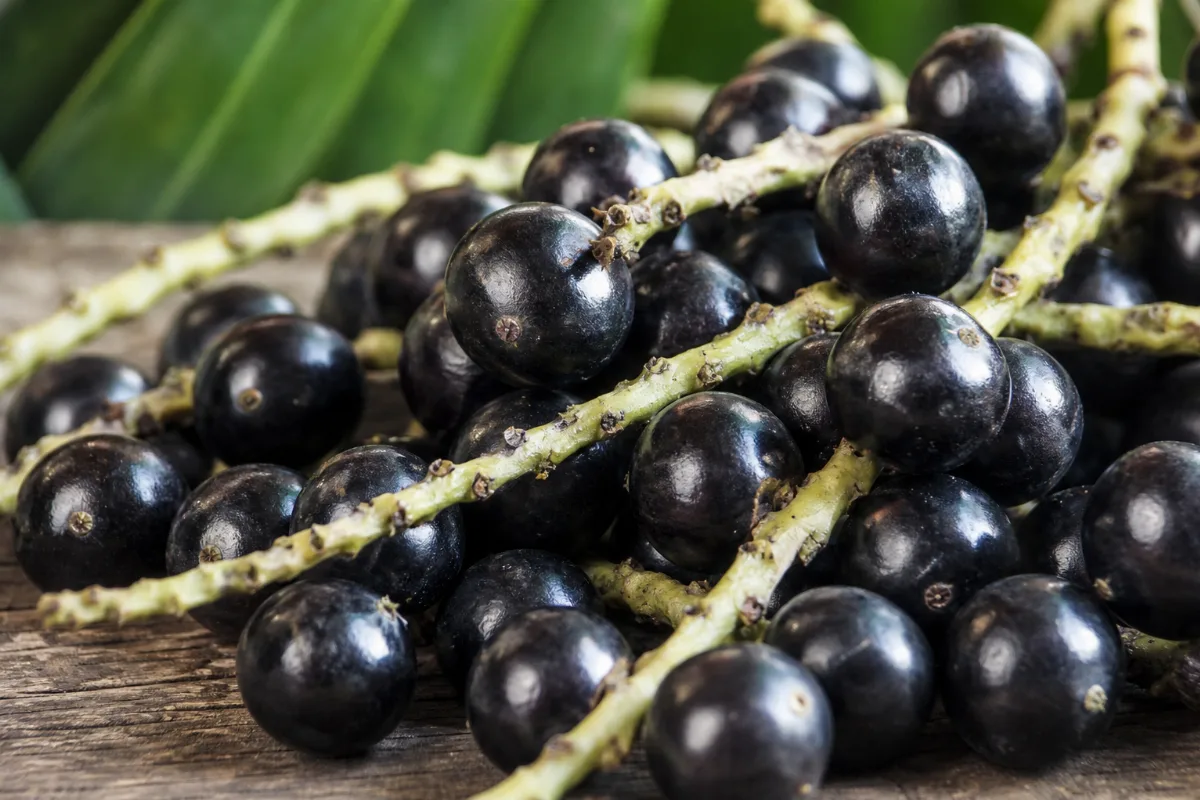
- Roots: Not verified.; Stems: Palm tree (Arecaceae); details not verified.; Leaves: Leaves have been studied in the lab but this profile covers the fruit; not verified.; Flowers: Not verified.; Fruit: A small black-purple fruit eaten as pulp; the seed is large. Pulp and seed have both been studied (Ferreira 2025; Udani 2011).
- Cultivation
- Not verified.
- Harvest and processing
- Not verified. Brazilian reports say harvest season coincides with outbreaks of raw-juice Chagas disease (de Sousa 2023).
- Look-alikes and adulterants
- Name: Euterpe precatoria Mart.; Note: A related species also sold as acai; Yamaguchi 2015 says two Euterpe species produce acai and differ. One exercise trial here used E. precatoria.; Name: Euterpe edulis Mart. (juçara); Note: A different palm whose fruit is similar. Several trials combine or use juçara; the vessel-stiffness trial used E. edulis.
- Sustainability and conservation
- Not verified.
Traditional use and history history, not clinical proof
| Tradition or era | Documented use | Source |
|---|---|---|
| Amazon peoples, Brazil | Reviews describe acai as a traditional Amazon food with folk use for fever, pain and flu (Ferreira 2025 abstract). | p40648018 |
| Modern global market | Acai became popular outside Brazil as a food and 'superfood', and was promoted for weight loss and other uses; NCCIH says there is not enough reliable information on any health use. | s-nccih-acai |
| Regulators | No EMA herbal monograph for acai was found in one search. | s-ema-none |
Traditional use shows how a plant was used. It does not show that a supplement works or is safe today.
What is inside, and how it may work
What the plant contains and how those compounds act in cells and animals. Laboratory and animal mechanisms are not proven effects in people.
Main compounds
| Compound | Family | Where it is concentrated | Activity studied | Level of evidence |
|---|---|---|---|---|
| Cyanidin-3-O-glucoside PubChem 441667 | anthocyanin | Fruit pulp Not stated in the sources read | A main anthocyanin of acai (Yamaguchi 2015). In people it was measured in blood after acai pulp and juice (Mertens-Talcott 2008). 29 19 | Human data |
| Cyanidin-3-O-rutinoside PubChem 441674 | anthocyanin | Fruit pulp Not stated in the sources read | Named with the glucoside as a main anthocyanin (Yamaguchi 2015). 29 | Laboratory research |
| Orientin PubChem 5281675 | flavone C-glycoside | Fruit pulp Not stated | Listed among the polyphenols present in the greatest amount (Yamaguchi 2015). 29 | Laboratory research |
| Isoorientin (homoorientin) PubChem 114776 | flavone C-glycoside | Fruit pulp Not stated | Listed among the polyphenols present in the greatest amount (Yamaguchi 2015). 29 | Laboratory research |
| Vanillic acid PubChem 8468 | phenolic acid | Fruit pulp Not stated | Listed among the main phenolics (Yamaguchi 2015). 29 | Laboratory research |
| Iron, manganese and copper ions | minerals | Fruit pulp Present by atomic absorption (Córdova-Fraga 2004) | Paramagnetic metals that change MRI signal; the likely reason acai darkens or brightens gut MRI images. 9 | Laboratory research |
Mechanisms, receptors and pathways
| Target or pathway | Gene or receptor | What was found | Level |
|---|---|---|---|
| Antioxidant activity | Not specified | Reviews report acai phenols have antioxidant and anti-inflammatory activity in lab tests and animals. In people, blood antioxidant capacity rose after pulp (Mertens-Talcott 2008). 6 29 19 | Laboratory research |
| Drug-metabolising enzyme inhibition | CYP2C9 | Three commercial acai extracts inhibited CYP2C9 in a lab enzyme test (IC50 3.23, 42.24, 68.86 microgram/mL). 23 | Laboratory research |
| Drug blood levels | Not specified | In rats, 10 days of acai changed blood levels of atorvastatin, alogliptin and empagliflozin. 21 | Animal research |
| MRI signal | Paramagnetic ions | Acai pulp brightened T1 and darkened T2 MRI images because of metal ions. 9 24 | Laboratory research |
| Brain-protective pathways | Not specified in the abstract | Animal and lab studies describe antioxidant, anti-inflammatory and anti-cell-death effects on brain cells. 13 | Animal research |
Absorption, metabolism and elimination
- Absorption
- In 12 healthy volunteers, total anthocyanins peaked at about 2 hours: Cmax 2321 ng/L after pulp and 1138 ng/L after clarified juice (AUC 8568 and 3314 ng h/L). Bioavailability fell as the dose volume rose (Mertens-Talcott 2008).
- Distribution
- No data found.
- Metabolism
- Not covered in the abstract read.
- Elimination
- Urine was sampled for 24 hours; urine antioxidant capacity did not change.
- Bioavailability
- Relative oral bioavailability of anthocyanins was low and depended on dose volume; no absolute figure read.
Isolated compounds versus whole extracts
No single compound has been shown to carry acai's effects. Trials used whole pulp, juice, beverages or blends, so findings cannot be moved from one form to another. Jucara and E. precatoria products are different plants.
Nutritional composition
Acai pulp is a fruit rich in plant pigments; an uncontrolled study fed 100 g of pulp twice a day. Nutrient figures per serving were not read from a source, so none are given.
4 low certainty4 very low certainty3 not enough evidence
What is Acai good for?
The main proposed uses and how strong the human evidence is for each. Low means small or inconsistent studies, very low means a single small or uncontrolled study, and insufficient means no human evidence. Nothing about acai is rated higher than low. Whole pulp, juice, branded blends and weight-loss pills are different things, and two trials used related fruits (Euterpe precatoria, Euterpe edulis).
Benefits, one by one
Each card is a research question, not a promise. Tap a goal to filter. Open a card to see the studies, doses and limits.
Antioxidant and oxidative stress markers
Low certaintySeveral small trials found that eating or drinking acai raised blood antioxidant measures or lowered a marker of oxidative stress. These are lab-test changes, not proof of better health.
5 studiesPulp 200 g/day, juice 200 mL/day or a polyphenol beverage; products d…
Studies, doses and limits
What the trials found
A review of 23 trials of acai and juçara (Baptista 2021) says they suggest better antioxidant defence and less metabolic stress. In overweight, high-blood-fat adults on a diet, 200 g of acai pulp daily for 60 days lowered plasma 8-isoprostane more than placebo (Aranha 2020). In 37 adults with metabolic syndrome, urinary 8-isoprostane was lower than with placebo after 12 weeks (Kim 2018). A 4-week juice study in 30 healthy adults raised antioxidant capacity and enzymes, but only against baseline (de Liz 2020). One dose raised blood antioxidant capacity (Mertens-Talcott 2008).
Results
Lower 8-isoprostane in two placebo-controlled trials; higher antioxidant capacity after pulp in healthy adults. Urine capacity, uric acid and DNA damage did not change in the studies that measured them.
Effect sizes as reported
8-isoprostane lower vs placebo in Aranha 2020 (p = 0.037) and Kim 2018 (p = 0.0099).
Why this rating
Consistent direction across small trials, but they are small, short, use different products and mostly measure lab markers. No reviewer GRADE for this outcome was read.
Form and dose studied
Pulp 200 g/day, juice 200 mL/day or a polyphenol beverage; products differ between trials and no recommended amount is given here.
Who was studied
Overweight adults, metabolic syndrome, healthy adults.
Limits
Markers are not health outcomes; products differ; some studies had no placebo.
Why researchers looked
Acai is rich in dark pigments (anthocyanins) and other plant phenols that are antioxidants in the test tube.
Traditional use
Acai is a staple food of Amazon communities. A review describes folk use of the juice for fever, pain and flu. Most health claims in shops are modern and come from lab studies of its dark-purple pigments.
Proposed mechanism Preliminary mechanism
Acai phenols such as anthocyanins neutralise reactive molecules in lab tests. Whether this happens usefully inside the body is not established.
A proposed mechanism does not show that the effect happens in people.
Food-level use is long established in Brazil; see the safety section for raw-juice infection risk and fake supplements.
Inflammation markers (IL-6, IFN-gamma)
Very low certaintyBlood markers of inflammation fell in some trials, but not always more than with placebo.
3 studiesPulp or beverage; no recommended amount given.
Studies, doses and limits
What the trials found
In metabolic syndrome, plasma IFN-gamma was lower than with placebo after 12 weeks (Kim 2018, n = 37). In the 60-day diet trial, IL-6 fell within the acai group, while IFN-gamma fell in both acai and placebo groups with no difference between them (Aranha 2020). A review calls the overall evidence suggestive but variable (Baptista 2021).
Results
IFN-gamma lower than placebo in one pilot (p = 0.0141); no between-group difference in another.
Effect sizes as reported
IFN-gamma p = 0.0141 (Kim 2018); IL-6 within-group p = 0.042 (Aranha 2020).
Why this rating
Two small trials point different ways on the same marker, and only a few of many markers changed.
Form and dose studied
Pulp or beverage; no recommended amount given.
Who was studied
Overweight adults and metabolic syndrome.
Limits
Small, short, marker-only.
Why researchers looked
Acai phenols reduce inflammatory signals in cells and animals.
Traditional use
Acai is a staple food of Amazon communities. A review describes folk use of the juice for fever, pain and flu. Most health claims in shops are modern and come from lab studies of its dark-purple pigments.
Proposed mechanism Preliminary mechanism
Lab and animal work suggests acai phenols dampen inflammatory signalling.
A proposed mechanism does not show that the effect happens in people.
None specific.
Endurance exercise and effort
Very low certaintyTiny studies in athletes found less lactate or a little longer time to exhaustion after acai. They are too small to rely on.
2 studiesPulp 400 g/day for 15 days; a beverage with 27.6 mg anthocyanins per …
Studies, doses and limits
What the trials found
Ten male cyclists took 400 g of pasteurised pulp daily for 15 days in a single-blind crossover trial: blood lactate during effort fell by 29% and anaerobic threshold rose (Terrazas 2020). Fourteen elite athletes drinking an acai beverage lasted 69 seconds longer to exhaustion (Carvalho-Peixoto 2015), but the confidence interval printed in the abstract does not match the p-value, so the size of the gain is uncertain. The beverage was developed as an aid for athletes.
Results
Lactate -29% (p = 0.025) and time to exhaustion +69 s (p = 0.045) in two tiny crossover trials.
Effect sizes as reported
Terrazas 2020 p = 0.025; Carvalho-Peixoto 2015 p = 0.045.
Why this rating
Ten and fourteen participants, short interventions, one single-blind, one with a developer-made beverage and an inconsistent interval. No review rated this.
Form and dose studied
Pulp 400 g/day for 15 days; a beverage with 27.6 mg anthocyanins per dose before a test.
Who was studied
Trained male cyclists; elite athletes.
Limits
Tiny samples, short, performance gains in the lab only.
Why researchers looked
Athletes use antioxidant foods hoping for less exercise stress and quicker recovery.
Traditional use
Not a traditional use.
Proposed mechanism Preliminary mechanism
Possible less oxidative stress during hard exercise; not shown to be the reason for any gain.
A proposed mechanism does not show that the effect happens in people.
None specific.
Muscle recovery after hard exercise
Very low certaintyOne small trial found faster recovery of knee-flexor strength after a jumping workout with dried acai from a related species.
1 studies40 g/day dried acai for 7 days.
Studies, doses and limits
What the trials found
Twelve men took 40 g a day of dehydrated Euterpe precatoria (a related species) for 7 days. Antioxidant capacity rose 11% at 24 hours, and knee-flexor peak torque recovered better at 24 and 72 hours (108 vs 92 and 113 vs 98 N-m). The fatigue index did not differ (Dos Reis 2024).
Results
Better torque recovery for knee flexors only; antioxidant capacity higher.
Effect sizes as reported
Interaction p = 0.01 (antioxidant capacity) and p = 0.02 (knee-flexor torque).
Why this rating
One 12-person trial, and it used a different species (E. precatoria), so it may not apply to E. oleracea.
Form and dose studied
40 g/day dried acai for 7 days.
Who was studied
Healthy men.
Limits
Single tiny trial; different species; CK and LDH results not given in the abstract.
Why researchers looked
Hard exercise damages muscle and raises oxidative stress, so antioxidant foods are tested.
Traditional use
Not a traditional use.
Proposed mechanism Preliminary mechanism
Possible antioxidant protection of muscle; unproven.
A proposed mechanism does not show that the effect happens in people.
None specific.
Memory and thinking
Not enough evidenceAcai has been tested for memory only in animals and cells. No human trial of memory or thinking was found.
1 studiesNot applicable.
Studies, doses and limits
What the trials found
A 2025 review of acai and cognition uses lab and animal studies only (Ferreira 2025). Our PubMed search for acai trials on memory or cognition found no human trial.
Results
No human result exists.
Effect sizes as reported
None in people.
Why this rating
Only animal and lab data were found.
Form and dose studied
Not applicable.
Who was studied
None tested.
Limits
No human data at all.
Why researchers looked
Lab and animal studies suggest acai phenols protect brain cells and memory.
Traditional use
Acai is a staple food of Amazon communities. A review describes folk use of the juice for fever, pain and flu. Most health claims in shops are modern and come from lab studies of its dark-purple pigments.
Proposed mechanism Animal research
In animals and cells, acai extracts reduced oxidative and inflammatory stress and affected brain-cell survival pathways.
A proposed mechanism does not show that the effect happens in people.
None specific.
Blood sugar and insulin
Low certaintyResults are mixed. An uncontrolled pilot saw lower fasting glucose and insulin, but placebo-controlled trials saw no change in glucose, and one meal study saw higher insulin.
6 studiesPulp 100 g twice daily (pilot), 200 g/day, or 325 mL beverage twice d…
Studies, doses and limits
What the trials found
Ten overweight adults eating 100 g of pulp twice daily for a month had lower fasting glucose and insulin than at the start, but there was no control group (Udani 2011). In controlled trials, fasting glucose did not change in metabolic syndrome over 12 weeks (Kim 2018) or in overweight, dyslipidemic adults over 60 days (Aranha 2020). After one acai smoothie with a high-fat meal, glucose did not change but insulin was higher than with the control smoothie (Alqurashi 2016). NCCIH says early research found acai may raise or lower fasting glucose and could interfere with blood-sugar control in people on diabetes medicines. A 2018 review found no controlled trials of acai on metabolic syndrome measures up to April 2017 (van den Driessche 2018).
Results
Lower glucose only in the uncontrolled pilot; no change in two placebo-controlled trials.
Effect sizes as reported
No effect sizes beyond p-values; pilot p < 0.02 for fasting glucose and insulin vs baseline.
Why this rating
Controlled trials are null for glucose; the positive result is from 10 people with no control group.
Form and dose studied
Pulp 100 g twice daily (pilot), 200 g/day, or 325 mL beverage twice daily; no recommended amount given.
Who was studied
Overweight adults; metabolic syndrome; healthy overweight men.
Limits
Small trials; mixed results; different products.
Why researchers looked
Acai is promoted for blood sugar and weight, and pigments like anthocyanins are studied for insulin handling.
Traditional use
Acai is a staple food of Amazon communities. A review describes folk use of the juice for fever, pain and flu. Most health claims in shops are modern and come from lab studies of its dark-purple pigments.
Proposed mechanism Preliminary mechanism
How acai might affect glucose is not established in people.
A proposed mechanism does not show that the effect happens in people.
People who use diabetes medicines should check with their doctor or pharmacist: NCCIH warns acai might change glucose control.
Cholesterol and blood fats
Low certaintyA 2025 review of 8 studies found no clear effect of acai on LDL, HDL, total cholesterol or triglycerides, though total lipids fell.
5 studiesPulp, juice or beverage; trials differ.
Studies, doses and limits
What the trials found
The 2025 systematic review and meta-analysis of 8 trials (411 people) found no significant effect on LDL (mean difference +6.06 mg/dL, 95% CI -0.03 to 12.48), HDL (+0.30), total cholesterol (+2.94) or triglycerides. Total lipids fell by 9.80 g. Reviewers rated certainty low to very low (Candeloro 2025). A 4-week juice study found HDL-c 7.7% higher than baseline in healthy adults but no difference between juices (de Liz 2020). In overweight dyslipidemic adults and in metabolic syndrome, lipids did not change (Aranha 2020; Kim 2018). The uncontrolled pilot saw lower total cholesterol (Udani 2011).
Results
No consistent lipid benefit; HDL change was against baseline only.
Effect sizes as reported
LDL +6.06 mg/dL (CI -0.03 to 12.48); total lipids -9.80 g (CI -13.94 to -5.66).
Why this rating
Reviewers' own GRADE was low to very low; direction is null for the main cholesterol measures.
Form and dose studied
Pulp, juice or beverage; trials differ.
Who was studied
Healthy adults, overweight, metabolic syndrome.
Limits
Small, mixed designs; total lipids not defined in the abstract.
Why researchers looked
Acai pulp contains fats and plant phenols, and animal studies suggested better blood fats.
Traditional use
Acai is a staple food of Amazon communities. A review describes folk use of the juice for fever, pain and flu. Most health claims in shops are modern and come from lab studies of its dark-purple pigments.
Proposed mechanism Animal research
Animal studies on acai and cholesterol exist but were not read for this profile; nothing is shown in people here.
A proposed mechanism does not show that the effect happens in people.
None specific.
Blood vessel function and arterial stiffness
Low certaintyOne meal study found better blood vessel widening; a 12-week study found less arterial stiffness. Both are small and the second used a related fruit.
3 studiesOne smoothie with 694 mg phenols; 200 g/day acai-juçara.
Studies, doses and limits
What the trials found
In 23 healthy overweight men, an acai smoothie with a high-fat meal raised flow-mediated dilation by 1.4% at 2 hours vs 0.4% with a control smoothie (p = 0.001); blood pressure did not change (Alqurashi 2016). In 55 adults with excess weight on a calorie-reduced diet, 200 g a day of acai-juçara (Euterpe edulis, a different species) for 12 weeks lowered pulse wave velocity vs the control diet (p = 0.036) with no change in flow-mediated dilation (Arisi 2023). The uncontrolled pilot saw no change in blood pressure (Udani 2011).
Results
Better vessel widening after a single meal; lower arterial stiffness over 12 weeks with a related fruit.
Effect sizes as reported
FMD +1.4% vs +0.4% at 2 h (p = 0.001); PWV vs control p = 0.036.
Why this rating
Two small, short trials in different populations, one using a different species. No review GRADE.
Form and dose studied
One smoothie with 694 mg phenols; 200 g/day acai-juçara.
Who was studied
Overweight men; adults with excess weight.
Limits
Surrogate measures, small samples, different species in one trial.
Why researchers looked
Anthocyanin-rich foods are studied for blood vessel health.
Traditional use
Acai is a staple food of Amazon communities. A review describes folk use of the juice for fever, pain and flu. Most health claims in shops are modern and come from lab studies of its dark-purple pigments.
Proposed mechanism Preliminary mechanism
How acai might affect vessels is not established.
A proposed mechanism does not show that the effect happens in people.
None specific.
Joint pain and osteoarthritis
Very low certaintyOne small open-label study of a branded juice blend that contains acai reported less pain. There was no placebo, so it cannot show the juice worked.
1 studies120 mL/day of a branded blend for 12 weeks.
Studies, doses and limits
What the trials found
Fourteen adults with pain and limited movement (including, but not limited to, age-related osteoarthritis) drank 120 mL a day of a commercial juice blend (mostly acai pulp plus other fruit) for 12 weeks. Pain, range of motion and daily activities improved and blood antioxidant status rose; CRP fell but not significantly (Jensen 2011). This was open label with no control group, and it tested a branded product, so it is flagged as possibly industry-linked.
Results
Improved pain and movement scores in an uncontrolled study.
Effect sizes as reported
Pain, range of motion and daily activities improved; exact numbers not given in the abstract.
Why this rating
One open-label study of 14 people with a mixed condition and a blend of fruits; no placebo.
Form and dose studied
120 mL/day of a branded blend for 12 weeks.
Who was studied
Adults with joint pain and limited movement.
Limits
No control; brand-specific; funding link not confirmed in text read.
Why researchers looked
Antioxidant and anti-inflammatory claims lead to tests in joint pain.
Traditional use
Acai is a staple food of Amazon communities. A review describes folk use of the juice for fever, pain and flu. Most health claims in shops are modern and come from lab studies of its dark-purple pigments.
Proposed mechanism Preliminary mechanism
Possible anti-inflammatory action of polyphenols; unproven for joints.
A proposed mechanism does not show that the effect happens in people.
None specific.
Weight loss claims
Not enough evidenceAcai is widely sold for weight loss, but NCCIH found no good human studies to support it. Some acai-labelled weight-loss pills have been found to contain hidden drugs.
4 studiesNot applicable.
Studies, doses and limits
What the trials found
NCCIH states that no peer-reviewed human studies from the past 5 years support weight-loss claims. Two trials of acai pulp were done on calorie-reduced diets in both groups, so any weight change cannot be credited to the fruit; their abstracts do not report a weight result (Aranha 2020; Arisi 2023). The FDA has found hidden drugs in an acai-branded weight-loss product.
Results
No weight-loss benefit shown.
Effect sizes as reported
None.
Why this rating
No controlled trial of acai alone for weight loss was found.
Form and dose studied
Not applicable.
Who was studied
Not established.
Limits
Weight-loss products labelled acai may not contain what the label says.
Why researchers looked
Acai was heavily marketed as a diet aid.
Traditional use
Not a traditional use.
Proposed mechanism Preliminary mechanism
No weight-loss mechanism has been shown in people.
A proposed mechanism does not show that the effect happens in people.
Acai-branded weight-loss products have been found with hidden drugs (FDA 2016) and a mislabeled one with no acai was linked to a case of muscle breakdown. See safety.
Cancer prevention or treatment
Not enough evidenceOnly animal studies exist. There is no proof acai prevents or treats cancer in people.
1 studiesNot applicable.
Studies, doses and limits
What the trials found
A 2018 systematic review of 9 rodent studies (747 animals) found less tumour growth in all six cancer models and no genotoxicity (Alessandra-Perini 2018). These results are from animals. No human cancer benefit has been shown. Do not use acai instead of cancer treatment.
Results
Animal results only.
Effect sizes as reported
None in people.
Why this rating
Animal evidence only.
Form and dose studied
Not applicable.
Who was studied
None.
Limits
Animal data cannot be applied to people.
Why researchers looked
Lab and animal studies reported tumour-slowing effects of acai extracts.
Traditional use
Acai is a staple food of Amazon communities. A review describes folk use of the juice for fever, pain and flu. Most health claims in shops are modern and come from lab studies of its dark-purple pigments.
Proposed mechanism Animal research
Cell and animal studies suggest acai phenols may slow cancer cell growth.
A proposed mechanism does not show that the effect happens in people.
Tell your cancer team before using acai: lab work suggests it may affect drug-handling enzymes (see safety).
Connections to the rest of health
How Acai connects to the rest of our health knowledge graph. Every link says what kind of connection it is. A safety link (for example to the liver) is a warning, not a benefit. A study that merely mentions a topic never creates a benefit link.
Explore every connection: goals, body systems, organs, symptoms, genes
A. Wellness goals
| Connected to | Kind of connection | Evidence status | Context | Studies |
|---|---|---|---|---|
| Healthy Aging | Potential benefit | Low certainty | Antioxidant and oxidative stress markers: Several small trials found that eating or drinking acai raised blood antioxidant measures or lowered a marker of oxidative stress. These are lab-test changes, not proof of better health. | 5 3 17 31 19 |
| Inflammation Balance | Potential benefit | Very low certainty | Inflammation markers (IL-6, IFN-gamma): Blood markers of inflammation fell in some trials, but not always more than with placebo. | 17 3 5 |
| Endurance Support | Potential benefit | Very low certainty | Endurance exercise and effort: Tiny studies in athletes found less lactate or a little longer time to exhaustion after acai. They are too small to rely on. | 26 8 |
| Physical Stamina | Potential benefit | Very low certainty | Endurance exercise and effort: Tiny studies in athletes found less lactate or a little longer time to exhaustion after acai. They are too small to rely on. | 26 8 |
| Peak Performance | Potential benefit | Very low certainty | Endurance exercise and effort: Tiny studies in athletes found less lactate or a little longer time to exhaustion after acai. They are too small to rely on. | 26 8 |
| Muscle Recovery | Potential benefit | Very low certainty | Muscle recovery after hard exercise: One small trial found faster recovery of knee-flexor strength after a jumping workout with dried acai from a related species. | 10 |
| Memory Support | Preliminary mechanism | Not enough evidence | Memory and thinking: Acai has been tested for memory only in animals and cells. No human trial of memory or thinking was found. | 13 |
| Brain Health | Preliminary mechanism | Not enough evidence | Memory and thinking: Acai has been tested for memory only in animals and cells. No human trial of memory or thinking was found. | 13 |
| Cognitive Performance | Preliminary mechanism | Not enough evidence | Memory and thinking: Acai has been tested for memory only in animals and cells. No human trial of memory or thinking was found. | 13 |
| Blood Sugar Balance | Potential benefit | Low certainty | Blood sugar and insulin: Results are mixed. An uncontrolled pilot saw lower fasting glucose and insulin, but placebo-controlled trials saw no change in glucose, and one meal study saw higher insulin. | 28 17 3 2 33 22 |
| Metabolic Health | Potential benefit | Low certainty | Blood sugar and insulin: Results are mixed. An uncontrolled pilot saw lower fasting glucose and insulin, but placebo-controlled trials saw no change in glucose, and one meal study saw higher insulin. | 28 17 3 2 33 22 |
| Cholesterol Balance | Biological association | Low certainty | Cholesterol and blood fats: A 2025 review of 8 studies found no clear effect of acai on LDL, HDL, total cholesterol or triglycerides, though total lipids fell. | 7 31 3 17 28 |
| Heart Health | Biological association | Low certainty | Cholesterol and blood fats: A 2025 review of 8 studies found no clear effect of acai on LDL, HDL, total cholesterol or triglycerides, though total lipids fell. | 7 31 3 17 28 |
| Heart Health | Potential benefit | Low certainty | Blood vessel function and arterial stiffness: One meal study found better blood vessel widening; a 12-week study found less arterial stiffness. Both are small and the second used a related fruit. | 2 4 28 |
| Blood Pressure Support | Potential benefit | Low certainty | Blood vessel function and arterial stiffness: One meal study found better blood vessel widening; a 12-week study found less arterial stiffness. Both are small and the second used a related fruit. | 2 4 28 |
| Joint Support | Potential benefit | Very low certainty | Joint pain and osteoarthritis: One small open-label study of a branded juice blend that contains acai reported less pain. There was no placebo, so it cannot show the juice worked. | 16 |
| Weight Management | Potential benefit | Not enough evidence | Weight loss claims: Acai is widely sold for weight loss, but NCCIH found no good human studies to support it. Some acai-labelled weight-loss pills have been found to contain hidden drugs. | 22 3 4 27 |
| Healthy Aging | Preliminary mechanism | Not enough evidence | Cancer prevention or treatment: Only animal studies exist. There is no proof acai prevents or treats cancer in people. | 1 |
B. Body systems
| Connected to | Kind of connection | Evidence status | Context | Studies |
|---|---|---|---|---|
| Muscle | Adverse effect or risk | Very low certainty | One case of rhabdomyolysis; product had no acai. Preparation or compound: Mislabeled acai weight-loss supplement |
11 |
| Cardiovascular System | Biological association | Low certainty | Studied for: Antioxidant and oxidative stress markers Studied for: Cholesterol and blood fats | 5 3 17 31 19 7 28 2 4 |
| Immune System | Biological association | Very low certainty | Studied for: Inflammation markers (IL-6, IFN-gamma) Studied for: Cancer prevention or treatment | 17 3 5 1 |
| Musculoskeletal System | Biological association | Very low certainty | Studied for: Endurance exercise and effort Studied for: Muscle recovery after hard exercise | 26 8 10 16 |
| Nervous System | Biological association | Not enough evidence | Studied for: Memory and thinking | 13 |
| Endocrine System | Biological association | Low certainty | Studied for: Blood sugar and insulin | 28 17 3 2 33 22 |
| Metabolism Weight | Biological association | Low certainty | Studied for: Blood sugar and insulin Studied for: Weight loss claims | 28 17 3 2 33 22 4 27 |
E. Health conditions
| Connected to | Kind of connection | Evidence status | Context | Studies |
|---|---|---|---|---|
| Chagas disease | Adverse effect or risk | Low certainty | Outbreaks linked to contaminated juice; infection is from the parasite, not acai itself. Outbreaks linked to contaminated juice. Preparation or compound: Raw acai juice or pulp |
25 32 14 |
| Pregnancy and breastfeeding | Contraindication | Not enough evidence | Safety unknown (NCCIH). Preparation or compound: Acai supplements |
22 |
| Pregnancy | Contraindication | Not enough evidence | Safety unknown. Preparation or compound: Acai supplements |
22 |
I. Biomarkers
| Connected to | Kind of connection | Evidence status | Context | Studies |
|---|---|---|---|---|
| Blood glucose | Drug or supplement interaction | Very low certainty | NCCIH: may increase or decrease fasting glucose; interaction with diabetes medicine possible. Mixed; NCCIH warns about diabetes medicine. Preparation or compound: Acai products |
22 21 28 17 |
| LDL cholesterol | Biological association | Low certainty | No significant effect in a meta-analysis. Measured in trials: no-change. A lab change is not the same as a health benefit. Preparation or compound: Acai in any form |
7 |
| 8-isoprostane (oxidative stress marker) | Biological association | Low certainty | Measured in trials: lowered. A lab change is not the same as a health benefit. | 17 3 |
| Interleukin-6 (IL-6) | Biological association | Very low certainty | Measured in trials: mixed. A lab change is not the same as a health benefit. | 3 |
| Interferon-gamma (IFN-gamma) | Biological association | Very low certainty | Measured in trials: mixed. A lab change is not the same as a health benefit. | 17 3 |
| Blood antioxidant capacity | Biological association | Low certainty | Measured in trials: raised. A lab change is not the same as a health benefit. | 19 26 31 |
| Blood lactate during effort | Biological association | Very low certainty | Measured in trials: lowered. A lab change is not the same as a health benefit. | 26 |
| Time to exhaustion (running) | Biological association | Very low certainty | Measured in trials: raised. A lab change is not the same as a health benefit. | 8 |
| Fasting blood glucose | Biological association | Low certainty | Measured in trials: mixed. A lab change is not the same as a health benefit. | 28 17 3 |
| Insulin | Biological association | Very low certainty | Measured in trials: mixed. A lab change is not the same as a health benefit. | 28 2 |
| HDL cholesterol | Biological association | Low certainty | Measured in trials: no-change. A lab change is not the same as a health benefit. | 7 31 |
| Total cholesterol and triglycerides | Biological association | Low certainty | Measured in trials: no-change. A lab change is not the same as a health benefit. | 7 |
| Flow-mediated dilation (FMD) | Biological association | Low certainty | Measured in trials: raised. A lab change is not the same as a health benefit. | 2 4 |
| Pulse wave velocity (PWV) | Biological association | Low certainty | Measured in trials: lowered. A lab change is not the same as a health benefit. | 4 |
| Joint pain (visual scale) | Biological association | Very low certainty | Measured in trials: lowered. A lab change is not the same as a health benefit. | 16 |
J. Genes, receptors and enzymes
| Connected to | Kind of connection | Evidence status | Context | Studies |
|---|---|---|---|---|
| CYP2C9 | Preliminary mechanism | In vitro | Inhibited by acai extracts in a lab enzyme assay. | 23 |
L. Active compounds
| Connected to | Kind of connection | Evidence status | Context | Studies |
|---|---|---|---|---|
| Cyanidin-3-O-glucoside | Biological association | Human | A main anthocyanin of acai (Yamaguchi 2015). In people it was measured in blood after acai pulp and juice (Mertens-Talcott 2008). Preparation or compound: Fruit pulp |
29 19 |
| Cyanidin-3-O-rutinoside | Biological association | In vitro | Named with the glucoside as a main anthocyanin (Yamaguchi 2015). Preparation or compound: Fruit pulp |
29 |
| Orientin | Biological association | In vitro | Listed among the polyphenols present in the greatest amount (Yamaguchi 2015). Preparation or compound: Fruit pulp |
29 |
| Isoorientin (homoorientin) | Biological association | In vitro | Listed among the polyphenols present in the greatest amount (Yamaguchi 2015). Preparation or compound: Fruit pulp |
29 |
| Vanillic acid | Biological association | In vitro | Listed among the main phenolics (Yamaguchi 2015). Preparation or compound: Fruit pulp |
29 |
| Iron, manganese and copper ions | Biological association | In vitro | Paramagnetic metals that change MRI signal; the likely reason acai darkens or brightens gut MRI images. Preparation or compound: Fruit pulp |
9 |
Each connection is stored with the ingredient, the connected record, the kind of connection, the evidence status, the supporting studies, the preparation or compound involved, and a review date (last reviewed October 25, 2026).
Evidence at a glance: what changed in 14 lab markers
Tap a number to show only those markers. Counts are markers, not people.
The evidence
The research centre for Acai. Every record here was checked against PubMed or the publisher's page; we never list a study we have not verified.
Evidence by outcome
Bars show how many studies we found for each outcome, not how well it works. People are added up across trials only (reviews are not added, to avoid double counting).
How we rate evidence
High certainty
Several well-run trials or reviews agree; further research is unlikely to change the picture much.
Moderate certainty
Good trials point the same way, but some doubt remains.
Low certainty
Small, short or inconsistent trials. The finding could change with better research.
Very low certainty
Very little or very weak human data. Treat as a possibility only.
Mixed findings
Trials or reviews disagree with each other.
Not enough evidence
Not enough human research to say either way.
Evidence against
Good research found no benefit, or found harm.
We take the reviewers' own risk-of-bias and GRADE statements where they exist, and otherwise judge from study size, design, consistency, directness and whether a product matches what is sold. Many publications do not make evidence high. Method note: We searched PubMed and read the abstracts of about 30 sources, checked the plant name in GBIF and NCBI Taxonomy and compounds in PubChem, and read summaries of the NCCIH acai page and an FDA notice. No EMA, LiverTox or LactMed entry was found by search. Not verified: Natural Standard review details, Commission E, WHO, older FDA 2009 and overseas weight-loss notices, and any funding links for most trials. Only abstracts were read for studies.
Study library: every study we checked 33
| Study | Design | People | Product, dose, length | Result |
|---|---|---|---|---|
| Alessandra-Perini 2018 Anticancer potential, molecular mechanisms and toxicity of Euterpe oleracea extract (açaí): A systematic review. PLoS One · PMID 29966007 · DOI |
Systematic review animal |
9 rodent studies (747 animals) | Acai extract/pulp pulp mainly 30 to 40,000 mg/kg by gavage; 2.5 to 5% of diet Various · vs Controls |
All six cancer models showed less tumour growth, and no genotoxic effect was seen. The authors conclude acai looks safe in these animal studies. Methods, limits and fundingOutcomes: Tumour outcomes; toxicity Limitations: Animal studies only; the authors' strong conclusion about safety and cancer therapy does not apply to people. Read: abstract |
| Alqurashi 2016 Consumption of a flavonoid-rich açai meal is associated with acute improvements in vascular function and a reduction in total oxidative status in healthy overweight men. Am J Clin Nutr · PMID 27680990 · DOI |
Crossover trial |
23 Healthy overweight men aged 30 to 65 (BMI 25 to 30) |
Acai-based smoothie (694 mg total phenolics) with a high-fat meal fruit Single serving Single meal (acute) · vs Macronutrient-matched control smoothie |
FMD rose by 1.4% at 2 hours with acai vs 0.4% with control (p = 0.001) and by 0.8% vs -0.3% at 6 hours (p < 0.001). Total peroxide oxidative status was lower. Blood pressure, heart rate and glucose did not change; insulin was higher after the acai smoothie. FMD +1.4% vs +0.4% at 2 h (Not given in abstract) Methods, limits and fundingOutcomes: Flow-mediated dilation (FMD), oxidative status, insulin, glucose Limitations: One meal only, men only. Registered NCT02292329. Funding not stated in the abstract. Read: abstract |
| Aranha 2020 Effects of a hypoenergetic diet associated with açaí (Euterpe oleracea Mart.) pulp consumption on antioxidant status, oxidative stress and inflammatory biomarkers in overweight, dyslipidemic individuals. Clin Nutr · PMID 31307842 · DOI |
Controlled trial |
69 Overweight adults with high blood fats (dyslipidemia) on a calorie-reduced diet |
Acai pulp added to a hypoenergetic diet fruit pulp 200 g daily 60 days (after a 30-day diet run-in) · vs Placebo added to the same diet |
Plasma 8-isoprostane fell more with acai than placebo (p = 0.037). IL-6 fell within the acai group (p = 0.042). IFN-gamma fell in both groups with no difference between them. Lipids and blood glucose did not change. 8-isoprostane lower vs placebo, p = 0.037 (Not given in abstract) Methods, limits and fundingOutcomes: 8-isoprostane, antioxidant status, IL-6, IFN-gamma, lipids, glucose Limitations: 69 finished (30 acai, 39 placebo). Funding not stated in the abstract. Read: abstract |
| Arisi 2023 Dietary intake of anthocyanins improves arterial stiffness, but not endothelial function, in volunteers with excess weight: A randomized clinical trial. Phytother Res · PMID 36206152 · DOI |
Controlled trial |
55 Adults with excess body weight (BMI 25 or more) |
Acai-juçara (E. edulis) fruit within a 20% energy-reduced diet (293.6 mg anthocyanins a day) fruit 200 g daily 12 weeks · vs Same diet without anthocyanin food |
FMD did not change. PWV (arterial stiffness) fell from baseline (p = 0.002) and compared with the control diet (p = 0.036). Peripheral vascular resistance fell in both groups equally. PWV lower than control, p = 0.036 (Not given in abstract) Methods, limits and fundingOutcomes: Flow-mediated dilation (FMD), pulse wave velocity (PWV), peripheral vascular resistance Limitations: Different species: the fruit was acai-juçara (Euterpe edulis), not Euterpe oleracea. Only the abstract was read. Read: abstract |
| Baptista 2021 Biological activities of açaí (Euterpe oleracea Mart.) and juçara (Euterpe edulis Mart.) intake in humans: an integrative review of clinical trials. Nutr Rev · PMID 33555024 · DOI |
Systematic review |
Humans in 23 clinical trials of acai (17), jucára (5) or both (1) | Acai (E. oleracea) and jucara (E. edulis) fruit pulp/juice Various Various · vs Various |
Reviewers say trials suggest better antioxidant defence and less metabolic stress and inflammation, but found much variation between trials and few that measured the food's own compounds. Methods, limits and fundingOutcomes: Antioxidant, metabolic and inflammation outcomes Limitations: Integrative (not meta-analytic) review, searched to April 2020. Only the abstract was read. Includes jucára trials. Read: abstract |
| Benatrehina 2018 Usage, biological activity, and safety of selected botanical dietary supplements consumed in the United States. J Tradit Complement Med · PMID 29736381 · DOI |
Narrative review |
Five fruit supplements | Acai and four other fruits fruit n/a n/a · vs n/a |
The authors judge these fruits generally safe on the studies and case reports they describe, but note adulteration found in a commercial acai product. Methods, limits and fundingOutcomes: Safety review Limitations: Narrative review; abstract only. Read: abstract |
| Candeloro 2025 Investigating the Impact of Açai (Euterpe oleracea) on Lipid Profile: A Comprehensive Systematic Review and Meta-Analysis. Nutr Bull · PMID 39960343 · DOI |
Meta-analysis |
411 Adults in 8 trials (randomised and non-randomised) given acai in any form |
Acai in any form (pulp, juice, beverage) fruit pulp/juice Various Various · vs Control or no acai |
No clear effect on LDL, HDL, total cholesterol or triglycerides; total lipids fell. Reviewers rated the evidence low to very low certainty. LDL mean difference +6.06 mg/dL; HDL +0.30; total cholesterol +2.94; triglycerides +2.05; total lipids -9.80 g (LDL -0.03 to 12.48; HDL -1.54 to 2.13; total cholesterol -6.44 to 12.31; total lipids -13.94 to -5.66) Methods, limits and fundingOutcomes: LDL, HDL, total cholesterol, triglycerides, total lipids Limitations: Only the abstract was read. Trials were few, mixed in design and different in what acai product was given. The triglyceride interval printed in the abstract (1.79 to 2.28) looks narrower than the other results and was not checked. Read: abstract |
| Carvalho-Peixoto 2015 Consumption of açai (Euterpe oleracea Mart.) functional beverage reduces muscle stress and improves effort tolerance in elite athletes: a randomized controlled intervention study. Appl Physiol Nutr Metab · PMID 26140415 · DOI |
Crossover trial |
14 Elite athletes |
Acai functional beverage (27.6 mg anthocyanins per dose) fruit (beverage) One dose before test Single exercise test · vs No beverage |
Time to exhaustion at 90% of maximum effort rose by 69 seconds (p = 0.045), perceived exertion fell and some muscle stress markers were lower. Time to exhaustion +69 s, p = 0.045 (Abstract prints -296 s to 159 s, which does not match the p-value) Methods, limits and fundingOutcomes: Time to exhaustion, muscle and oxidative stress markers, perceived exertion Limitations: Only 14 athletes. The beverage was developed as an aid for athletes. The confidence interval printed in the abstract is inconsistent with the p-value, so treat the size of the gain with caution. Funding not stated in the abstract. Read: abstract |
| Córdova-Fraga 2004 Euterpe Olerácea (Açaí) as an alternative oral contrast agent in MRI of the gastrointestinal system: preliminary results. Magn Reson Imaging · PMID 15062934 · DOI |
Laboratory research in-vitro |
Lab and first in-vivo imaging tests | Acai pulp as an oral MRI contrast fruit pulp n/a n/a · vs n/a |
Acai pulp raised T1-weighted MRI signal (comparable to a gadolinium agent in the lab) and darkened T2-weighted images, because it contains iron, manganese and copper ions. Methods, limits and fundingOutcomes: MRI signal Limitations: Preliminary; abstract only. Read: abstract |
| Dos Reis 2024 Effects of acai supplementation (Euterpe precatoria Mart) on muscle recovery markers after jump protocol. Res Sports Med · PMID 36924018 · DOI |
Crossover trial |
12 Men doing a jump-damage protocol |
Dehydrated acai (Euterpe precatoria) fruit (dried) 40 g daily 7 days · vs Placebo |
TEAC rose 11% at 24 h (p = 0.01) and knee-flexor peak torque recovered better at 24 and 72 hours (108 vs 92 and 113 vs 98 N-m). The fatigue index did not differ. TEAC +11% at 24 h (Not given in abstract) Methods, limits and fundingOutcomes: Antioxidant capacity (TEAC), knee muscle strength, soreness, CK, LDH Limitations: Different species: Euterpe precatoria, not E. oleracea. Only 12 men. The abstract does not report the CK and LDH results. Read: abstract |
| Elsayed 2011 Rhabdomyolysis associated with the use of a mislabeled "acai berry" dietary supplement. Am J Med Sci · PMID 21825959 · DOI |
Case report |
1 22-year-old man |
Product labelled as acai berry weight-loss supplement unspecified Unknown About 2 weeks before illness · vs n/a |
Muscle breakdown (creatine kinase 84,000 IU/L, urine myoglobin positive) about 2 weeks after starting a weight-loss supplement. He recovered and left hospital on day 5. The product was labelled acai but analysis found no acai berry. Causality rated only possible (Naranjo score 3). CK 84,000 IU/L (n/a) Methods, limits and fundingOutcomes: Rhabdomyolysis Limitations: One case; the cause may be an unlisted ingredient, not acai. Read: abstract |
| European Medicines Agency 2026 EMA herbal medicines: no acai monograph found EMA website search · Source |
Authoritative guidance n/a |
n/a | Euterpe oleracea n/a n/a n/a · vs n/a |
One web search on 2026-10-25 found no HMPC monograph or assessment report for Euterpe oleracea. This does not prove none exists. Methods, limits and fundingLimitations: Absence check only. Read: search |
| Ferreira 2025 Antioxidant, Anti-Inflammatory, and Antiapoptotic Effects of Euterpe oleracea Mart. (Açaí) in Improving Cognition Deficits: Potential Therapeutic Implications for Alzheimer's Disease. Plants (Basel) · PMID 40648018 · DOI |
Narrative review animal |
Preclinical studies of cognition | Acai pulp and seed fruit/seed n/a n/a · vs n/a |
The review uses lab and animal studies only. Human cognition trials are not described in the abstract. Methods, limits and fundingOutcomes: Learning and memory Limitations: Abstract only. Read: abstract |
| Franco-Paredes 2020 A deadly feast: Elucidating the burden of orally acquired acute Chagas disease in Latin America - Public health and travel medicine importance. Travel Med Infect Dis · PMID 32004732 · DOI |
Narrative review |
Oral Chagas outbreaks in Latin America | Contaminated beverages and foods incl. acai pulp fruit pulp/juice n/a n/a · vs n/a |
Oral Chagas outbreaks occurred in Brazil, Venezuela and Colombia; infections are acute and potentially fatal. The authors advise travellers to avoid risky beverages, including acai pulp. Methods, limits and fundingOutcomes: Burden, risk and travel advice Limitations: Narrative review; abstract only. Read: abstract |
| GBIF Secretariat 2026 GBIF Backbone: Euterpe oleracea Mart. (usageKey 5293398) gbif.org · Source |
Reference database n/a |
n/a | Euterpe oleracea n/a n/a n/a · vs n/a |
Accepted species, family Arecaceae, order Arecales, kingdom Plantae. Retrieved by API 2026-10-25. Methods, limits and fundingLimitations: Names only. Read: full-text |
| Jensen 2011 Pain reduction and improvement in range of motion after daily consumption of an açai (Euterpe oleracea Mart.) pulp-fortified polyphenolic-rich fruit and berry juice blend. J Med Food · PMID 21470042 · DOI |
Single arm trial |
14 Adults with pain and limited movement (included but not limited to age-related osteoarthritis) |
MonaVie Active fruit juice blend, mostly acai pulp plus other fruit concentrates fruit juice blend 120 mL daily 12 weeks · vs None (open label) |
Pain fell, range of motion improved and daily activities improved. Blood antioxidant status rose within 2 weeks (p < .01). CRP fell but not significantly. Before/after improvements; no control (Not given in abstract) Methods, limits and fundingOutcomes: Pain (visual scale), range of motion, daily activities, blood antioxidant status, CRP Limitations: Open label, 14 people, no placebo, and a branded blend that also contains other fruits, so acai cannot be singled out. The paper tested a commercial juice; the authors' ties to its maker and the funding were not found in the text read. Read: abstract |
| Kim 2018 Açaí (Euterpe oleracea Mart.) beverage consumption improves biomarkers for inflammation but not glucose- or lipid-metabolism in individuals with metabolic syndrome in a randomized, double-blinded, placebo-controlled clinical trial. Food Funct · PMID 29850709 · DOI |
Controlled trial |
37 Adults with metabolic syndrome (BMI about 33.5) |
Acai beverage (1139 mg/L gallic acid equivalents of polyphenols) fruit (beverage) 325 mL twice daily 12 weeks · vs Placebo beverage |
IFN-gamma and urinary 8-isoprostane were lower than with placebo (p = 0.0141 and 0.0099). Lipid and glucose markers did not change. The authors call it weak evidence from a small pilot. IFN-gamma and 8-isoprostane lower vs placebo (Not given in abstract) Methods, limits and fundingOutcomes: IFN-gamma, urinary 8-isoprostane, lipid and glucose markers Limitations: Small pilot; two of many markers changed. Funding not stated in the abstract. Read: abstract |
| Labello Barbosa 2019 Virulence of Trypanosoma cruzi from vector and reservoir in in natura açaí pulp resulting in food-borne acute Chagas disease at Pará State, Brazil. Exp Parasitol · PMID 30439347 · DOI |
Animal research animal |
Immunodeficient mice | T. cruzi mixed into in natura (raw) acai pulp fruit pulp n/a n/a · vs n/a |
T. cruzi from insect vectors and an opossum in raw acai pulp caused acute Chagas disease and death between 17 and 52 days in these mice. Methods, limits and fundingOutcomes: Infection and survival Limitations: Mouse study in immunodeficient animals. Read: abstract |
| Mertens-Talcott 2008 Pharmacokinetics of anthocyanins and antioxidant effects after the consumption of anthocyanin-rich acai juice and pulp (Euterpe oleracea Mart.) in human healthy volunteers. J Agric Food Chem · PMID 18693743 · DOI |
Crossover trial |
12 Healthy volunteers |
Acai pulp and clarified acai juice fruit pulp and juice 7 mL per kg body weight Single dose · vs Applesauce and a non-antioxidant drink |
Peak blood anthocyanins were higher after pulp (2321 ng/L) than juice (1138 ng/L) at about 2 hours. Plasma antioxidant capacity rose after pulp and applesauce. Urine capacity, reactive oxygen species and uric acid did not change. Cmax 2321 vs 1138 ng/L (Not given in abstract) Methods, limits and fundingOutcomes: Blood anthocyanin levels, antioxidant capacity Limitations: Single dose in 12 people. Funding not stated in the abstract. Read: abstract |
| NCBI Bookshelf 2026 LactMed and LiverTox: no acai entry found ncbi.nlm.nih.gov/books · Source |
Authoritative guidance n/a |
n/a | Euterpe oleracea n/a n/a n/a · vs n/a |
A Bookshelf search for acai within LactMed or LiverTox returned only the general LactMed dietary-supplements appendix, not an acai entry. A web search also found none. The databases were not browsed by hand. Methods, limits and fundingLimitations: Absence check only; not conclusive. Read: search |
| Nanjappan 2022 Investigation of the effect of Acai berry on the pharmacokinetics of Atorvastatin, Alogliptin and Empagliflozin: a herb-drug interaction study. J Pharm Pharmacol · PMID 35512448 · DOI |
Animal research animal |
36 Rats |
Acai berry with atorvastatin, alogliptin or empagliflozin fruit 250 mg/kg by mouth 10 days before the drug · vs Vehicle |
Acai lowered atorvastatin levels (AUC 227.66 to 136.31) and raised alogliptin (AUC 117.6 to 207.1) and empagliflozin (AUC 400.37 to 518.35). Clinical importance is unknown. Changed drug levels in rats Methods, limits and fundingOutcomes: Drug blood levels Limitations: Rat study; not shown in people. Read: abstract |
| National Center for Complementary and Integrative Health 2024 Acai (NCCIH page, updated November 2024) nccih.nih.gov · Source |
Authoritative guidance n/a |
n/a | Euterpe oleracea n/a n/a n/a · vs n/a |
NCCIH says very little human research exists and there is not enough reliable information on any health use. Safe for up to 3 months in clinical research. Acai might affect gut MRI results; may raise or lower fasting blood glucose; raw acai fruit and juice can carry parasites and have been linked to rare Chagas outbreaks; little is known about pregnancy or breastfeeding. It states no peer-reviewed human studies in the past 5 years support weight-loss claims. Methods, limits and fundingLimitations: Read through an automated page summary on 2026-10-25, not line by line. It does not mention warfarin, allergy or lab tests. Read: summary-only |
| Raichura 2026 Integrated assessment of cytochrome P450 inhibition by açaí and mass spectrometry-based identification of P450 inhibitory constituents using biochemometric approaches. Drug Metab Dispos · PMID 42815441 · DOI |
Laboratory research in-vitro |
Lab enzyme assay | Commercial acai extracts fruit extract n/a n/a · vs n/a |
Three acai extracts inhibited the CYP2C9 enzyme (IC50 3.23, 42.24 and 68.86 microgram/mL). The authors say this could mean interactions with drugs cleared by CYP2C9 and call for clinical studies. Methods, limits and fundingOutcomes: CYP2C9 and other P450 inhibition Limitations: Lab only. Abstract only. No conflicts declared. Read: abstract |
| Sanchez 2009 Clinical feasibility of Açai (Euterpe olerácea) pulp as an oral contrast agent for magnetic resonance cholangiopancreatography. J Comput Assist Tomogr · PMID 19820489 · DOI |
Clinical trial |
40 5 symptom-free people and 35 patients having abdominal MRI; 8 MRCP scans graded |
Acai pulp as an oral negative contrast for MRCP fruit pulp n/a Single imaging session · vs None |
Acai darkened the gut on T2 images and improved the view of the bile and pancreatic ducts (p < 0.01). No side effect was recorded. Methods, limits and fundingOutcomes: Image quality, side effects Limitations: Small feasibility study. Shows acai changes MRI pictures of the gut. Read: abstract |
| Santana 2019 Oral Transmission of Trypanosoma cruzi, Brazilian Amazon. Emerg Infect Dis · PMID 30561299 · DOI |
Case series |
10 Patients in an outbreak of acute Chagas disease, Brazilian Amazon |
Acai juice (suspected source) fruit juice n/a n/a · vs n/a |
Acai juice was the suspected source of an outbreak in 10 patients. Trypanosoma cruzi TcIV was found in patient blood and in juice samples, indicating oral transmission. Methods, limits and fundingOutcomes: Source of infection Limitations: Short research letter; abstract only. Read: abstract |
| Terrazas SIBM 2020 Açai pulp supplementation as a nutritional strategy to prevent oxidative damage, improve oxidative status, and modulate blood lactate of male cyclists. Eur J Nutr · PMID 31724083 · DOI |
Crossover trial |
10 Male cyclists, average age 33 |
Pasteurised acai pulp fruit pulp 400 g daily 15 days per arm, 30-day washout · vs Placebo (single-blind) |
Serum antioxidant capacity rose (p = 0.006) and lipid peroxidation fell (p = 0.01). Blood lactate during effort fell by 29% (p = 0.025) and anaerobic threshold intensity rose (p = 0.006). DNA damage did not change. Lactate -29%, p = 0.025 (Not given in abstract) Methods, limits and fundingOutcomes: Antioxidant capacity, lipid peroxidation, DNA damage, IL-6, TNF-alpha, blood lactate, anaerobic threshold Limitations: Only 10 men, single-blind. Funding not stated in the abstract. Read: abstract |
| US Food and Drug Administration 2016 FDA public notification: Dream Body Advanced + Acai Weight Loss & Cleanse contains hidden drug ingredients fda.gov · Source |
Authoritative guidance n/a |
n/a | Acai-branded weight-loss product n/a n/a n/a · vs n/a |
FDA lab analysis (notice dated 11 July 2016) found undeclared sibutramine, fluoxetine and sildenafil. FDA says sibutramine can raise blood pressure or pulse, fluoxetine has been linked to suicidal thinking, abnormal bleeding and seizures, and sildenafil can drop blood pressure, and hidden drugs may interact. Advice: do not buy or use it. Methods, limits and fundingLimitations: Read via page summary on 2026-10-25. One product, one notice. An older FDA 2009 list and Australian and Malaysian notices were seen only as search-result snippets and are not used as verified facts. Read: summary-only |
| Udani 2011 Effects of Açai (Euterpe oleracea Mart.) berry preparation on metabolic parameters in a healthy overweight population: a pilot study. Nutr J · PMID 21569436 · DOI |
Single arm trial |
10 Overweight adults (BMI 25 to 30) |
Acai fruit pulp fruit pulp 100 g twice daily 1 month · vs None (open label, before/after) |
Compared with their own start values, fasting glucose and insulin fell (both p < 0.02) and total cholesterol fell (p = 0.03). LDL and the cholesterol ratio fell with borderline significance (p = 0.051). Post-meal glucose area fell (p = 0.047). No effect on blood pressure or hs-CRP. Before/after changes only (Not given in abstract) Methods, limits and fundingOutcomes: Fasting glucose, insulin, cholesterol, triglycerides, hs-CRP, post-meal glucose Limitations: Only 10 people, no control group, open label. The authors call it uncontrolled. Competing interests: none declared in the paper; funding source not found in the text read. Read: abstract |
| Yamaguchi 2015 Amazon acai: chemistry and biological activities: a review. Food Chem · PMID 25722148 · DOI |
Narrative review |
Chemistry review | Acai (two Euterpe species) fruit n/a n/a · vs n/a |
Among the main phenolic compounds are orientin, isoorientin, vanillic acid and the anthocyanins cyanidin-3-glucoside and cyanidin-3-rutinoside. Two Euterpe species produce acai and differ. Methods, limits and fundingOutcomes: Chemistry Limitations: Abstract only. Read: abstract |
| Zapparoli 2022 Commercially acquired açaí pulps contamination by Trypanosoma cruzi. Int J Food Microbiol · PMID 34971879 · DOI |
Observational |
35 Acai ice cream samples from 11 cities in São Paulo State, Brazil |
Commercial acai pulp/ice cream fruit pulp n/a n/a · vs n/a |
1 of 35 (2.86%) was positive by sieving but the parasite was not moving and was PCR-negative; 2 other samples (5.71%) were PCR-positive only. The paper says Brazil had no law requiring pulp to be pasteurised and calls for quality control. 3 of 35 samples with some sign of T. cruzi Methods, limits and fundingOutcomes: Presence of T. cruzi Limitations: Small sample; PCR positives do not show a living, infective parasite. Read: abstract |
| de Liz 2020 Açaí (Euterpe oleracea Mart.) and juçara (Euterpe edulis Mart.) juices improved HDL-c levels and antioxidant defense of healthy adults in a 4-week randomized cross-over study. Clin Nutr · PMID 32349893 · DOI |
Crossover trial |
30 Healthy adults |
Acai juice (and jucára juice) fruit juice 200 mL daily 4 weeks per juice, 4-week washout · vs Compared with own baseline; no between-juice differences |
HDL-c rose 7.7% with acai juice compared with baseline (p < 0.05); antioxidant capacity and enzyme activity rose and an oxidative stress index fell. No significant differences were found between the juices for any outcome. HDL-c +7.7% vs baseline (Not given in abstract) Methods, limits and fundingOutcomes: HDL-c, glucose, other lipids, antioxidant enzymes Limitations: Changes were against baseline, not against a placebo. A published letter has questioned its methods. Authors declare no conflict of interest. Read: abstract |
| de Sousa 2023 Acute Chagas disease associated with ingestion of contaminated food in Brazilian western Amazon. Trop Med Int Health · PMID 37278113 · DOI |
Case series |
147 Acute Chagas disease cases, Amazonas state, Brazil, 2004 to 2022 (10 outbreaks) |
Probably contaminated palm fruit juice (acai and/or papatuá) fruit juice n/a n/a · vs n/a |
147 cases in 10 outbreaks, linked to probable contaminated palm fruit juice. Fever in 91.8%; heart changes in 33 of 100 assessed; 2 had severe brain involvement; no deaths recorded. Cases peaked with the fruit harvest. 147 cases; 0 deaths Methods, limits and fundingOutcomes: Symptoms, heart involvement, outcomes Limitations: Records review; follow-up after treatment was poor. Read: abstract |
| van den Driessche 2018 Effects of superfoods on risk factors of metabolic syndrome: a systematic review of human intervention trials. Food Funct · PMID 29557436 · DOI |
Systematic review |
Controlled human trials of 17 "superfoods" | Superfoods incl. acai various n/a To April 2017 · vs n/a |
Acai berries had 0 controlled intervention trials in the review (to April 2017). Overall the evidence for the superfoods was limited or inconsistent. Methods, limits and fundingOutcomes: Metabolic syndrome risk factors Limitations: Abstract only. Now out of date for acai. Read: abstract |
What we do not know yet
- What the evidence supports: nothing about acai is above low certainty. Antioxidant markers and blood vessel function are low; cholesterol is low (no clear effect); inflammation, exercise and joint pain are very low; memory, weight loss and cancer are insufficient.
- No large independent trial of acai pulp or juice lasting more than about 12 weeks.
- No human memory or cognition trial.
- No controlled trial of acai alone for osteoarthritis or weight loss.
- No human study of acai with warfarin or other blood thinners.
- No allergy or gut side-effect data were found; no pregnancy, breastfeeding or children data.
- No EMA monograph, LiverTox or LactMed entry was found; Commission E and WHO were not checked.
- Whether freeze-dried or pasteurised products carry Chagas risk was not found.
How new research is added
New studies are found by a saved PubMed search and are placed in a review queue. A person reads each one before it changes any evidence rating or safety wording. New publications never change ratings automatically.
Lab markers
What changed in blood or saliva tests during trials. A changed number is not the same as feeling or being healthier, and we give no "normal ranges".
Metabolic 5
Fasting blood glucose
Mixed results in trials
Blood sugar after an overnight fast.
Low certaintyResults and what it means
Why it was measured
Standard measure of blood sugar control.
Statistical vs. clinical meaning
Only the uncontrolled pilot shows a fall.
Safety implication
People on diabetes medicine should ask about glucose effects (NCCIH).
Insulin
Mixed results in trials
The hormone that moves sugar from blood into cells.
Very low certaintyResults and what it means
Why it was measured
Insulin level shows insulin resistance.
Statistical vs. clinical meaning
The two studies point opposite ways.
Safety implication
None.
LDL cholesterol
No clear change in trials
Often called bad cholesterol.
Low certaintyHDL cholesterol
No clear change in trials
Often called good cholesterol.
Low certaintyResults and what it means
Why it was measured
Blood fat marker.
Statistical vs. clinical meaning
Pooled result null; one trial rose vs baseline only.
Safety implication
None.
Total cholesterol and triglycerides
No clear change in trials
All cholesterol in blood, and the blood fat triglycerides.
Low certaintyInflammatory 1
Interleukin-6 (IL-6)
Mixed results in trials
A blood signal made during inflammation.
Very low certaintyResults and what it means
Why it was measured
A common marker of inflammation.
Statistical vs. clinical meaning
Within-group change only.
Safety implication
None.
| Study | Result | People | Product |
|---|---|---|---|
| 3 | IL-6 fell within the acai group (p = 0.042); the abstract reports no between-group result for it | Overweight, dyslipidemic adults | Acai pulp 200 g/day for 60 days |
Other 8
8-isoprostane (oxidative stress marker)
Lowered in trials
A fat-breakdown product made when cells are under oxidative stress; measured in urine or blood.
Low certaintyResults and what it means
Why it was measured
Used as a lab sign of oxidative stress.
Statistical vs. clinical meaning
Statistically significant in two trials; a lab marker, not a symptom.
Safety implication
None.
Interferon-gamma (IFN-gamma)
Mixed results in trials
An immune signal that rises in inflammation.
Very low certaintyResults and what it means
Why it was measured
Inflammation marker.
Statistical vs. clinical meaning
One trial found a placebo difference; the other did not.
Safety implication
None.
Blood antioxidant capacity
Raised in trials
How well blood can neutralise reactive molecules in a lab test.
Low certaintyResults and what it means
Why it was measured
Used to show a food's antioxidants reach the blood.
Statistical vs. clinical meaning
Lab-test increase; does not show better health.
Safety implication
None.
| Study | Result | People | Product |
|---|---|---|---|
| 19 | Plasma antioxidant capacity rose after acai pulp; urine capacity did not change | 12 healthy volunteers | Single dose of pulp or juice |
| 26 | Serum antioxidant capacity rose (p = 0.006) | 10 male cyclists | Pulp 400 g/day for 15 days |
| 31 | Total antioxidant capacity up 66.7% vs baseline | 30 healthy adults | Acai juice 200 mL/day for 4 weeks |
Blood lactate during effort
Lowered in trials
A by-product of hard muscle work; lower lactate at the same effort suggests better endurance fitness.
Very low certaintyTime to exhaustion (running)
Raised in trials
How long a person can keep going at high effort.
Very low certaintyResults and what it means
Why it was measured
A direct measure of effort tolerance.
Statistical vs. clinical meaning
Small crossover; developer-made beverage.
Safety implication
None.
| Study | Result | People | Product |
|---|---|---|---|
| 8 | Plus 69 seconds at 90% of maximum oxygen uptake (p = 0.045); interval printed in abstract does not match | 14 elite athletes | Acai functional beverage |
Flow-mediated dilation (FMD)
Raised in trials
How much an arm artery widens after a short blood-flow block; a test of vessel lining health.
Low certaintyResults and what it means
Why it was measured
A vessel function measure.
Statistical vs. clinical meaning
Acute rise after a meal; no change over 12 weeks.
Safety implication
None.
Pulse wave velocity (PWV)
Lowered in trials
How fast the pulse travels along arteries; higher means stiffer arteries.
Low certaintyResults and what it means
Why it was measured
Arterial stiffness measure.
Statistical vs. clinical meaning
One trial; different species.
Safety implication
None.
| Study | Result | People | Product |
|---|---|---|---|
| 4 | Fell from baseline (p = 0.002) and vs control diet (p = 0.036) | 55 adults with excess weight | Acai-juçara (E. edulis) 200 g/day in a calorie-reduced diet, 12 weeks |
Joint pain (visual scale)
Lowered in trials
Self-rated pain on a scale.
Very low certaintySafety
What studies and official sources say about side effects, medicines and who should check first. Each point shows what kind of evidence it comes from.
Main points to know 6
- Raw or unpasteurised acai juice and pulp can carry the parasite that causes Chagas disease. Outbreaks of acute Chagas disease in the Brazilian Amazon have been linked to acai juice. In one outbreak of 10 patients the parasite Trypanosoma cruzi was found in both patients and juice. In Amazonas state, 147 cases in 10 outbreaks from 2004 to 2022 were linked to probable contaminated palm fruit juice (acai and/or papatuá); no deaths were recorded. NCCIH says raw acai fruit and juice can be contaminated and have rarely been linked to outbreaks. Freeze-dried powder and pasteurised commercial pulp were not tested in these reports. Case series 25 32 22 14
- Some acai weight-loss pills have been fake or contained hidden drugs. The FDA found undeclared sibutramine, fluoxetine and sildenafil in an acai-branded weight-loss product (2016 notice). A published case report describes muscle breakdown (rhabdomyolysis) in a young man after a weight-loss supplement labelled as acai that contained no acai on analysis; the link to the pill was only possible. A review also notes adulteration found in a commercial acai product. Acai fruit itself is not the source of these drugs. Authoritative guidance 27 11 6
- Acai can change MRI pictures of the gut. NCCIH says acai might affect results of gut MRI scans, and to tell your provider if you use acai before an MRI. This fits lab and clinical work where acai pulp was used on purpose as an oral MRI contrast because it darkens the gut on T2 images. No source read says it affects other lab tests, apart from NCCIH's note on blood glucose. Authoritative guidance 22 9 24
- People on diabetes medicine should be careful. NCCIH says early research found acai may raise or lower fasting blood glucose and could interfere with blood sugar control in people taking diabetes medicines. In rats, acai raised blood levels of two diabetes drugs (alogliptin, empagliflozin). Human interaction studies were not found. Authoritative guidance 22 21
- Pregnancy and breastfeeding: not enough information. NCCIH says little is known about whether acai is safe in pregnancy or breastfeeding. No LactMed entry for acai was found. Food amounts are not shown to be harmful, but no study tested safety in pregnancy or breastfeeding. Authoritative guidance 22 20
- Short-term food-level use looks well tolerated, but long-term safety is unknown. NCCIH says acai pulp has been used safely for up to 3 months in clinical research. The trials read here do not report side effects in their abstracts. Animal toxicity reviews found no genotoxicity. This does not cover concentrated extracts or high doses. Authoritative guidance 22 1 3
Side effects 6
| Effect | How often | Severity and recovery | Evidence |
|---|---|---|---|
| Gut upset (stomach discomfort, loose stools) No source read lists gut side effects of acai. In one MRI study of 40 people given acai pulp as a contrast, no side effect was registered (single use). The abstracts of the nutrition trials do not report side effects. | Not established | unknown Not reported | Insufficient 24 |
| Allergy or hives No published acai allergy report was found in our searches. Stop and get help if you get hives, lip or throat swelling or breathing trouble. | Not established | unknown Unknown | Insufficient |
| Blood sugar change NCCIH says fasting glucose may go up or down; trials in metabolic syndrome saw no change. | Not established | moderate for people on diabetes drugs Unknown | Authoritative guidance 22 |
| Chagas disease (acute infection) from raw juice or pulp Infection is from contamination of the juice with insect feces carrying the parasite, not from acai itself. | 147 cases in 10 outbreaks in Amazonas, 2004 to 2022; a count, not a rate | serious; fever in 91.8%, heart changes in 33 of 100 assessed Treatable if found early; follow-up after treatment was poor | Case series 32 25 |
| Rhabdomyolysis in a user of a mislabeled acai weight-loss product The product contained no acai on analysis; Naranjo score 3 (possible). | One case report | severe (creatine kinase 84,000 IU/L) Recovered; discharged on day 5 | Case report 11 |
| Raised insulin after a single smoothie Insulin peak and area were higher than with a control smoothie; clinical meaning unknown. | Seen in one crossover study of 23 men | unknown Short term | Controlled trial 2 |
Liver
No published human case of liver injury from acai fruit was found, and no LiverTox entry was found. This is not proof of safety. 20
How often. No frequency found.
Monitoring. No agency monitoring advice found.
This is a safety connection. It is not evidence that Acai supports liver health.
Medicines and supplements 6
| With | Why it matters | Importance | Evidence | What to do |
|---|---|---|---|---|
| Warfarin and other blood thinners prescription | No study found. In theory, CYP2C9 (an enzyme that helps clear warfarin) was inhibited by acai extracts in a lab test; this has not been tested with warfarin in people. Separately, the FDA notice on a hidden-drug acai weight-loss pill says fluoxetine is linked to abnormal bleeding. | No human warfarin or blood-thinner interaction report was found. The risk is unknown. | Pharmacological theory Very low certainty 23 27 | If you take warfarin or another blood thinner, ask your doctor or pharmacist before using acai supplements, and avoid acai weight-loss pills from unknown sources. |
| Diabetes medicines (including alogliptin and empagliflozin) prescription | NCCIH: acai may raise or lower fasting glucose. In rats, acai raised blood levels of alogliptin and empagliflozin and lowered atorvastatin. | Human significance unknown; the authors call for confirmation. | Animal research Very low certainty 22 21 | If you use diabetes medicine, tell your doctor and check your blood sugar if you start acai supplements. |
| Drugs cleared by CYP2C9 (including some cancer-supportive drugs) prescription | Three acai extracts inhibited CYP2C9 in a lab enzyme test. The authors suggest possible interactions with chemotherapy or supportive drugs cleared this way. | Lab only; no clinical study. | Laboratory research Very low certainty 23 | Tell your cancer team before using acai extracts. |
| Atorvastatin (statin) prescription | In rats, acai lowered atorvastatin blood levels. | Not tested in people. | Animal research Very low certainty 21 | Ask your pharmacist if you take a statin and use acai supplements. |
| MRI scans of the gut (and MRCP) procedure | Acai contains iron, manganese and copper ions, and darkens gut images on T2-weighted MRI; it was used as an oral contrast. | NCCIH advises telling your provider about acai before an MRI. | Authoritative guidance Moderate certainty 22 9 24 | Tell the imaging team if you took acai pulp or supplements before an abdominal MRI. |
| Laboratory tests (other than blood glucose) test | No source read describes acai interfering with routine lab tests other than its possible effect on blood glucose. | Not found. | Insufficient Not enough evidence 22 | Tell your doctor about supplements before blood tests. |
Who should check first 6
| Situation | Advice | Evidence |
|---|---|---|
| Raw (unpasteurised) acai juice or pulp in the Amazon or other Chagas-risk areas | Avoid unless it has been properly heat-treated. A travel-medicine review lists acai pulp among risky beverages. | Case series 14 22 |
| Acai-labelled weight-loss pills from unknown sellers | Do not use. Hidden drugs have been found in such products. | Authoritative guidance 27 |
| Pregnancy and breastfeeding (supplements or concentrated products) | Not enough information. Ask your clinician. No LactMed entry was found. | Authoritative guidance 22 20 |
| Taking warfarin or other blood thinners | No interaction study exists, so ask your doctor or pharmacist before using acai supplements. | Insufficient 23 |
| A planned abdominal MRI | Tell the imaging team about acai use. | Authoritative guidance 22 |
| Diabetes treated with medicine | Monitor blood sugar and tell your doctor. | Authoritative guidance 22 |
Overdose, product quality and regulators
Summary. Acai pulp as a food has a long history, and NCCIH reports up to 3 months of safe use in clinical research. Animal reviews found no genotoxicity. The real hazards are contamination of raw juice and fake supplements, not the fruit.
Animal. A systematic review of 9 rodent studies (747 animals) included 3 toxicity assays and found no genotoxic effects; doses by gavage ranged from 30 mg/kg to 40,000 mg/kg (Alessandra-Perini 2018).
Human doses studied. Pulp 100 g twice daily for 1 month; 200 g daily for 60 days; 200 mL juice daily for 4 weeks; 325 mL beverage twice daily for 12 weeks. No doses are recommended here.
High dose or long term signals. No long-term (beyond about 12 weeks) controlled safety data were found.
Overdose response. No overdose reports were found in the sources read.
Genotoxicity. No genotoxic effects were seen in the animal studies reviewed (Alessandra-Perini 2018). DNA damage did not change in cyclists (Terrazas 2020).
Toxic plant parts. No toxic part of the fruit pulp was identified in the sources read. Seed and oil safety was not reviewed.
Two kinds of problem are documented: parasite contamination of raw juice, and fake or drug-spiked acai supplements.
Trypanosoma cruzi (Chagas) in acai pulp and juice. Outbreaks in Brazil have been tied to acai juice. In 35 commercial acai ice cream samples from São Paulo State, one was positive by sieving (not moving, PCR-negative) and two were PCR-positive only. The authors note there was no law requiring pasteurisation. In mice, T. cruzi in raw pulp caused fatal acute infection. 25 30 18 32
Hidden drugs in acai weight-loss products. FDA's 2016 notice for Dream Body Advanced + Acai found undeclared sibutramine, fluoxetine and sildenafil. Older FDA 2009 and overseas notices were only seen as search snippets and are not verified here. 27
Mislabelled supplement with no acai. A product sold as acai weight-loss supplement contained no acai berry on analysis and was linked, possibly, to rhabdomyolysis. 11
Adulterated commercial acai. A 2018 review reports adulteration found in a commercialised acai product. 6
| Body | Action | Date |
|---|---|---|
| NCCIH (US National Institutes of Health) (United States) | Acai page (updated November 2024): not enough reliable information on any health use; may affect gut MRI; may change blood glucose; raw juice and Chagas; pregnancy and breastfeeding unknown. source | 2024-11 |
| US FDA (United States) | 2016 public notification: Dream Body Advanced + Acai Weight Loss & Cleanse contains hidden drugs. Acai products sold as supplements are not FDA-approved before sale (per NCCIH). source | 2016-07-11 |
When to get medical help
- Fever, swelling of the face, long-lasting tiredness, fast heartbeat or chest pain within weeks of drinking raw acai juice or pulp in the Amazon region: see a doctor and say what you drank (possible Chagas disease).
- Dark or cola-coloured urine with severe muscle pain or weakness after a weight-loss supplement: get urgent care.
- Swelling of the lips, face or throat, hives or trouble breathing: get emergency help.
- Very high blood pressure, fast pulse, chest pain, feeling suicidal or unusual bleeding after an acai weight-loss pill: stop and get urgent care (these are known risks of the hidden drugs found in some such products).
- Blood sugar swings if you take diabetes medicine and start an acai supplement: check your levels and call your doctor.
Stop the supplement and contact a clinician or emergency service. In the US, Poison Control is 1-800-222-1222.
General information only, not medical advice. Ask a clinician or pharmacist before use, especially with medicines, in pregnancy or with a health condition. See the Natural Remedy Safety guide.
Frequently asked questions
What is acai?
Is acai a proven superfood?
Does acai help you lose weight?
Does acai lower cholesterol or blood sugar?
Does acai help osteoarthritis or joint pain?
Unproven. One small open-label study of a commercial juice blend reported less pain, but it had no placebo group and mixed in other fruits.
Can acai help athletes?
Can acai juice cause Chagas disease?
Can acai affect an MRI scan?
Is acai safe with warfarin or other blood thinners?
Are acai weight-loss pills safe?
Is acai safe in pregnancy or breastfeeding?
Explore by health goal
Healthy AgingHeart HealthInflammation BalanceEndurance SupportPhysical StaminaPeak PerformanceMuscle RecoveryMemory SupportBrain HealthCognitive PerformanceBlood Sugar BalanceMetabolic HealthCholesterol BalanceBlood Pressure SupportJoint SupportWeight Management
Editorial transparency
- Written by
- AlternativeMed editorial team. Research compiled with AI assistance, then checked against PubMed records.
- Medical review
- None. This page has not been reviewed by a physician or pharmacist.
- First published
- 2026-10-25
- Last substantive update
- 2026-10-25
- How we research
- We searched PubMed and read the abstracts of about 30 sources, checked the plant name in GBIF and NCBI Taxonomy and compounds in PubChem, and read summaries of the NCCIH acai page and an FDA notice. No EMA, LiverTox or LactMed entry was found by search. Not verified: Natural Standard review details, Commission E, WHO, older FDA 2009 and overseas weight-loss notices, and any funding links for most trials. Only abstracts were read for studies.
- How we rate evidence
- See "How we rate evidence" in the Evidence tab.
- Independence
- No product is promoted on this page. No affiliate links are shown. If one is added later it will be labelled and kept apart from the evidence.
Sources 33
Each source was opened and checked. Where we read only the abstract, it says so. The small numbers in the text point here.
- Alessandra-Perini J, Rodrigues-Baptista KC, Machado DE, et al.. Anticancer potential, molecular mechanisms and toxicity of Euterpe oleracea extract (açaí): A systematic review.. PLoS One. 2018. PMID 29966007. DOI 10.1371/journal.pone.0200101. (abstract)
- Alqurashi RM, Galante LA, Rowland IR, et al.. Consumption of a flavonoid-rich açai meal is associated with acute improvements in vascular function and a reduction in total oxidative status in healthy overweight men.. Am J Clin Nutr. 2016. PMID 27680990. DOI 10.3945/ajcn.115.128728. (abstract)
- Aranha LN, Silva MG, Uehara SK, et al.. Effects of a hypoenergetic diet associated with açaí (Euterpe oleracea Mart.) pulp consumption on antioxidant status, oxidative stress and inflammatory biomarkers in overweight, dyslipidemic individuals.. Clin Nutr. 2020. PMID 31307842. DOI 10.1016/j.clnu.2019.06.008. (abstract)
- Arisi TOP, Gorski F, Eibel B, et al.. Dietary intake of anthocyanins improves arterial stiffness, but not endothelial function, in volunteers with excess weight: A randomized clinical trial.. Phytother Res. 2023. PMID 36206152. DOI 10.1002/ptr.7659. (abstract)
- Baptista SL, Copetti CLK, Cardoso AL, et al.. Biological activities of açaí (Euterpe oleracea Mart.) and juçara (Euterpe edulis Mart.) intake in humans: an integrative review of clinical trials.. Nutr Rev. 2021. PMID 33555024. DOI 10.1093/nutrit/nuab002. (abstract)
- Benatrehina PA, Pan L, Naman CB, et al.. Usage, biological activity, and safety of selected botanical dietary supplements consumed in the United States.. J Tradit Complement Med. 2018. PMID 29736381. DOI 10.1016/j.jtcme.2018.01.006. (abstract)
- Candeloro BM, Bitencourt THB, Elias SFR, et al.. Investigating the Impact of Açai (Euterpe oleracea) on Lipid Profile: A Comprehensive Systematic Review and Meta-Analysis.. Nutr Bull. 2025. PMID 39960343. DOI 10.1111/nbu.12735. (abstract)
- Carvalho-Peixoto J, Moura MR, Cunha FA, et al.. Consumption of açai (Euterpe oleracea Mart.) functional beverage reduces muscle stress and improves effort tolerance in elite athletes: a randomized controlled intervention study.. Appl Physiol Nutr Metab. 2015. PMID 26140415. DOI 10.1139/apnm-2014-0518. (abstract)
- Córdova-Fraga T, de Araujo DB, Sanchez TA, et al.. Euterpe Olerácea (Açaí) as an alternative oral contrast agent in MRI of the gastrointestinal system: preliminary results.. Magn Reson Imaging. 2004. PMID 15062934. DOI 10.1016/j.mri.2004.01.018. (abstract)
- Dos Reis TMP, Aguiar GG, de Azevedo LP, et al.. Effects of acai supplementation (Euterpe precatoria Mart) on muscle recovery markers after jump protocol.. Res Sports Med. 2024. PMID 36924018. DOI 10.1080/15438627.2023.2189114. (abstract)
- Elsayed RK, Glisson JK, Minor DS. Rhabdomyolysis associated with the use of a mislabeled "acai berry" dietary supplement.. Am J Med Sci. 2011. PMID 21825959. DOI 10.1097/MAJ.0b013e31822c0933. (abstract)
- European Medicines Agency. EMA herbal medicines: no acai monograph found. EMA website search. 2026. (search)
- Ferreira FDS, de Mattos JLA, da Silva PHF, et al.. Antioxidant, Anti-Inflammatory, and Antiapoptotic Effects of Euterpe oleracea Mart. (Açaí) in Improving Cognition Deficits: Potential Therapeutic Implications for Alzheimer's Disease.. Plants (Basel). 2025. PMID 40648018. DOI 10.3390/plants14132010. (abstract)
- Franco-Paredes C, Villamil-Gómez WE, Schultz J, et al.. A deadly feast: Elucidating the burden of orally acquired acute Chagas disease in Latin America - Public health and travel medicine importance.. Travel Med Infect Dis. 2020. PMID 32004732. DOI 10.1016/j.tmaid.2020.101565. (abstract)
- GBIF Secretariat. GBIF Backbone: Euterpe oleracea Mart. (usageKey 5293398). gbif.org. 2026. (full-text)
- Jensen GS, Ager DM, Redman KA, et al.. Pain reduction and improvement in range of motion after daily consumption of an açai (Euterpe oleracea Mart.) pulp-fortified polyphenolic-rich fruit and berry juice blend.. J Med Food. 2011. PMID 21470042. DOI 10.1089/jmf.2010.0150. (abstract)
- Kim H , Simbo SY , Fang C , et al.. Açaí (Euterpe oleracea Mart.) beverage consumption improves biomarkers for inflammation but not glucose- or lipid-metabolism in individuals with metabolic syndrome in a randomized, double-blinded, placebo-controlled clinical trial.. Food Funct. 2018. PMID 29850709. DOI 10.1039/c8fo00595h. (abstract)
- Labello Barbosa R, Dias VL, Lorosa ES, et al.. Virulence of Trypanosoma cruzi from vector and reservoir in in natura açaí pulp resulting in food-borne acute Chagas disease at Pará State, Brazil.. Exp Parasitol. 2019. PMID 30439347. DOI 10.1016/j.exppara.2018.10.012. (abstract)
- Mertens-Talcott SU, Rios J, Jilma-Stohlawetz P, et al.. Pharmacokinetics of anthocyanins and antioxidant effects after the consumption of anthocyanin-rich acai juice and pulp (Euterpe oleracea Mart.) in human healthy volunteers.. J Agric Food Chem. 2008. PMID 18693743. DOI 10.1021/jf8007037. (abstract)
- NCBI Bookshelf. LactMed and LiverTox: no acai entry found. ncbi.nlm.nih.gov/books. 2026. (search)
- Nanjappan SK, Somabattini RA, Ravichandiran V. Investigation of the effect of Acai berry on the pharmacokinetics of Atorvastatin, Alogliptin and Empagliflozin: a herb-drug interaction study.. J Pharm Pharmacol. 2022. PMID 35512448. DOI 10.1093/jpp/rgac022. (abstract)
- National Center for Complementary and Integrative Health. Acai (NCCIH page, updated November 2024). nccih.nih.gov. 2024. (summary-only)
- Raichura Z, Zirpoli M, Paul-Hamby R, et al.. Integrated assessment of cytochrome P450 inhibition by açaí and mass spectrometry-based identification of P450 inhibitory constituents using biochemometric approaches.. Drug Metab Dispos. 2026. PMID 42815441. DOI 10.1016/j.dmd.2026.100388. (abstract)
- Sanchez TA, Elias J Jr, Colnago LA, et al.. Clinical feasibility of Açai (Euterpe olerácea) pulp as an oral contrast agent for magnetic resonance cholangiopancreatography.. J Comput Assist Tomogr. 2009. PMID 19820489. DOI 10.1097/RCT.0b013e31819012a0. (abstract)
- Santana RAG, Guerra MGVB, Sousa DR, et al.. Oral Transmission of Trypanosoma cruzi, Brazilian Amazon.. Emerg Infect Dis. 2019. PMID 30561299. DOI 10.3201/eid2501.180646. (abstract)
- Terrazas SIBM, Galan BSM, De Carvalho FG, et al.. Açai pulp supplementation as a nutritional strategy to prevent oxidative damage, improve oxidative status, and modulate blood lactate of male cyclists.. Eur J Nutr. 2020. PMID 31724083. DOI 10.1007/s00394-019-02138-7. (abstract)
- US Food and Drug Administration. FDA public notification: Dream Body Advanced + Acai Weight Loss & Cleanse contains hidden drug ingredients. fda.gov. 2016. (summary-only)
- Udani JK, Singh BB, Singh VJ, et al.. Effects of Açai (Euterpe oleracea Mart.) berry preparation on metabolic parameters in a healthy overweight population: a pilot study.. Nutr J. 2011. PMID 21569436. DOI 10.1186/1475-2891-10-45. (abstract)
- Yamaguchi KK, Pereira LF, Lamarão CV, et al.. Amazon acai: chemistry and biological activities: a review.. Food Chem. 2015. PMID 25722148. DOI 10.1016/j.foodchem.2015.01.055. (abstract)
- Zapparoli D, Bertozzo TV, Alexandrino M, et al.. Commercially acquired açaí pulps contamination by Trypanosoma cruzi.. Int J Food Microbiol. 2022. PMID 34971879. DOI 10.1016/j.ijfoodmicro.2021.109508. (abstract)
- de Liz S, Cardoso AL, Copetti CLK, et al.. Açaí (Euterpe oleracea Mart.) and juçara (Euterpe edulis Mart.) juices improved HDL-c levels and antioxidant defense of healthy adults in a 4-week randomized cross-over study.. Clin Nutr. 2020. PMID 32349893. DOI 10.1016/j.clnu.2020.04.007. (abstract)
- de Sousa DRT, de Oliveira Guerra JA, Ortiz JV, et al.. Acute Chagas disease associated with ingestion of contaminated food in Brazilian western Amazon.. Trop Med Int Health. 2023. PMID 37278113. DOI 10.1111/tmi.13899. (abstract)
- van den Driessche JJ, Plat J, Mensink RP. Effects of superfoods on risk factors of metabolic syndrome: a systematic review of human intervention trials.. Food Funct. 2018. PMID 29557436. DOI 10.1039/C7FO01792H. (abstract)