Cranberry
Cranberry (Vaccinium macrocarpon) and urinary tract infections: what Cochrane and NIH found for prevention, why it is not a treatment, and warfarin and kidney stone cautions.
Content last updated . This page has not been medically reviewed.
Safety first. Natural products can cause side effects and interact with medicines. Read herb safety and interactions before you use anything on this page.
What is Cranberry good for?
What the body uses it for, and how strong the evidence is. A normal job in the body is not proof that extra supplements add benefit; each card says which.
Preventing recurrent urinary tract infections
Clinically supportedCranberry products probably lower the chance of symptomatic, lab-confirmed urinary tract infections (UTIs), mainly in women who get them repeatedly and in children.
Supplements: A 2023 Cochrane review found moderate-certainty benefit overall (50 trials, 8,857 people); NCCIH says findings are inconsistent, so effectiveness is still uncertain.
Not a treatment for an existing UTI
Not enough evidenceCranberry is not recommended to treat a UTI that has already started; a health care provider should diagnose and treat it.
Supplements: No good evidence of benefit as a treatment.
Older people in care, pregnancy and poor bladder emptying
Not enough evidenceIn these groups the Cochrane review found little or no benefit, with low-certainty evidence.
Supplements: Little or no benefit shown.
Compared with antibiotics or probiotics
Preliminary or mixedCranberry may make little or no difference to UTI risk compared with antibiotics, and may reduce infections compared with probiotics (low to moderate certainty).
Supplements: Evidence is limited; the decision belongs with a clinician.
Juice versus tablets and capsules
Preliminary or mixedIt is unclear whether juice or tablets work better. Processing into tablets or capsules can lower PAC content.
Supplements: Evidence on juice versus tablets is very low certainty.
Other uses (stomach, blood, liver, diabetes, wounds, scurvy)
Not enough evidenceNative Americans and settlers used the fruit and leaves for these. This is tradition, not proof.
Supplements: NCCIH says there is little research on conditions other than UTIs.
Studies in other groups found no benefit
Preliminary or mixedNCCIH notes studies in women having gynecological surgery and in people with multiple sclerosis found no benefit.
Supplements: No benefit shown in these groups.
Kidney stones: unknown
Not enough evidenceThe sources we read do not say whether cranberry products raise or lower kidney stone risk, so people with past stones should ask a clinician.
Supplements: Unknown.
Connected topics
Open a group to see how each topic connects and how strong the evidence is.
Body systems (2)
- Kidney & UrinaryPreliminary or mixed
Cranberry products are used mainly to reduce the risk of recurrent urinary tract infections; a 2023 Cochrane review found moderate-certainty benefit in some groups, but NCCIH calls the findings inconsistent.
- Urinary SystemPreliminary or mixed
Studied mainly for lowering the risk of repeat urinary tract infections in women and children; not a treatment for an existing infection.
Body parts (1)
- BladderPreliminary or mixed
Its PACs are thought to stop bacteria sticking to the bladder wall; this is the proposed mechanism behind the UTI trials.
Root causes (1)
- Medication Side EffectsDocumented risk
Evidence is conflicting about whether cranberry affects warfarin, so people on blood thinners should check with a prescriber.
Conditions & symptoms (2)
- Recurrent Urinary Tract InfectionClinically supported
Cochrane (2023) found cranberry products probably reduce symptomatic, lab-confirmed UTIs in women with recurrent UTIs; NCCIH says findings are inconsistent.
- Urinary Tract InfectionPreliminary or mixed
Studied for prevention only; not recommended as a treatment for an existing infection. Little or no benefit in older people in care, pregnancy and poor bladder emptying.
Documented risks and interactions (3)
- Possible interaction with warfarin. Evidence is conflicting on whether cranberry affects warfarin. Anyone on warfarin should ask the prescriber or pharmacist first.
- Stomach upset from large amounts. Very large amounts can cause stomach upset and diarrhea, especially in young children. Cochrane found stomach side effects probably did not differ from placebo.
- Pregnancy and breastfeeding. Amounts found in food appear safe in some studies; evidence for larger amounts is not conclusive, so ask a provider.
What it is
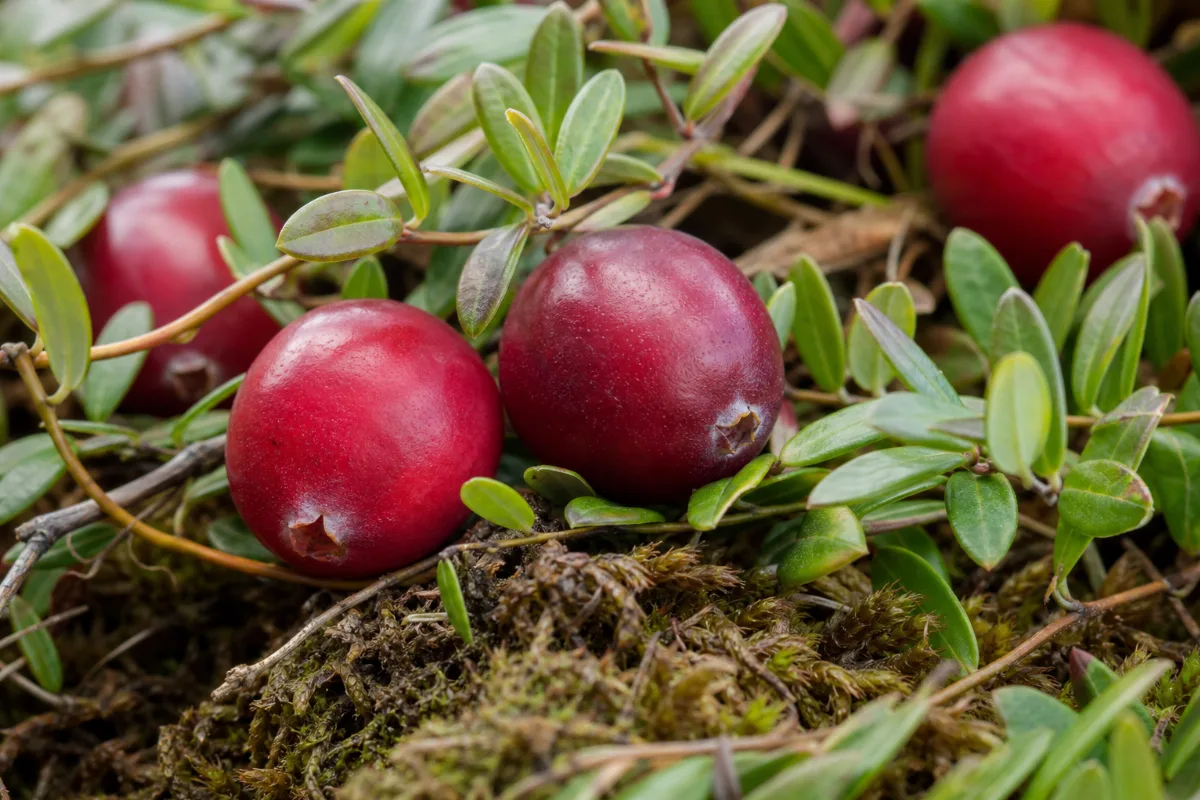
Cranberry is an evergreen shrub of wet habitats in the northeastern and north central parts of North America. [1] The accepted scientific name is Vaccinium macrocarpon Aiton, in the heath family (Ericaceae); the fruit (berry) is eaten and used as juice and supplements. [2][1] NCCIH also lists Vaccinium oxycoccos under the cranberry heading, and lists "bearberry" as a common name, which is also the name of a different plant, covered at Uva Ursi. [1] Check the scientific name on a label.Traditional use
Cranberry has a history of use in dyes, food and medicine among Native Americans and later European settlers. Fruits and leaves were thought to help disorders of the bladder, stomach, blood and liver, and conditions such as wounds, diabetes and scurvy. [1] This is tradition, not proof.What research shows
The research is mostly about preventing UTIs, not treating them. A 2023 Cochrane review (50 trials, 8,857 people) found that, overall, cranberry products reduced the risk of symptomatic, culture-verified UTIs, with moderate-certainty evidence. [3]| Group or question | What the source found | Strength of evidence |
|---|---|---|
| Women with recurrent UTIs | Cranberry probably reduces risk of symptomatic, culture-verified UTIs. [3] NCCIH describes about a 25 percent lower risk, but says effectiveness is still in question because findings are inconsistent. [1] | Moderate certainty, with inconsistent findings |
| Children | A reduction in risk in five trials (504 children). [3] | Moderate certainty |
| Older people in long-term care, pregnant women, people with poor bladder emptying | Little or no benefit in low-certainty evidence. [3] | Insufficient or no good evidence of benefit |
| Cranberry vs antibiotics | May make little or no difference to risk of symptomatic, culture-verified UTIs. [3] | Limited |
| Juice vs tablets | Unclear whether efficacy differs. [3] | Insufficient evidence |
| Treating an existing UTI | Not recommended as treatment. [1] | No good evidence of benefit |
| Other conditions | Little research. [1] | Insufficient evidence |
In 2020 the US FDA began allowing labels to say there is "limited" evidence that specified daily amounts of cranberry supplements may reduce the risk of recurrent UTIs in healthy women; for juice drinks the wording must be "limited and inconsistent". [1]
Forms and why they matter
Studies used juice, concentrate, tablets and capsules. NCCIH says cranberry's proanthocyanidins (PACs) are thought to stop bacteria sticking to the bladder wall, and that processing into tablets or capsules can lower the PAC concentration and may reduce effectiveness. [1] A result for one product does not carry over to another. A clinician or pharmacist decides whether any product is right for a person.Related pages
Cranberries and Urinary Tract Infections: What Cochrane Found covers the food side. Urinary Tract Infections and Urinary Symptoms covers symptoms and when to see a clinician.Frequently asked questions
Can cranberry cure a UTI?
No source we read supports that. NCCIH says cranberry is not recommended as a treatment for existing UTIs, and people who think they have a UTI should see a health care provider. [1]
Does cranberry prevent UTIs?
The 2023 Cochrane review found a reduced risk overall, with moderate-certainty evidence, including in women with recurrent UTIs and children, and little or no benefit in older people in care homes, pregnancy and poor bladder emptying. [3]
Is cranberry juice better than capsules?
It is unclear whether efficacy differs between juice and tablets. [3] NCCIH notes that processing into tablets or capsules can lower PAC concentration. [1]
Does cranberry interact with warfarin?
Evidence is conflicting. If you take warfarin or any other medicine, talk with your provider before using cranberry. [1]
Is cranberry safe in pregnancy?
Some studies suggest amounts commonly found in food are safe, but evidence for larger amounts is not conclusive. [1] Ask your health care provider.
More details: evidence, limits and cautions
The details behind this page: cautions, limits of the evidence and where sources disagree. Open any note to read it.
Quick safety points
- Cranberry is not a treatment for a urinary tract infection (UTI). NCCIH says it is not recommended as a treatment for existing UTIs in any population, and advises seeing a health care provider for diagnosis and treatment. [1]
- If you take warfarin (a blood thinner), ask the prescriber or pharmacist before using cranberry products: the evidence on an interaction is conflicting. [1]
- If you have had kidney stones, ask your clinician before using cranberry supplements (see the stone section below).
Safety
- Usual effects: generally thought safe by mouth; very large amounts can cause stomach upset and diarrhea, particularly in young children. [1] The Cochrane review found stomach side effects probably did not differ from placebo or no treatment. [3]
- Warfarin and other medicines: evidence is conflicting about cranberry and warfarin. [1] See Herbs and Blood Thinners and How Interactions Work.
- Pregnancy and breastfeeding: some studies suggest amounts found in food are safe, but evidence is not conclusive for larger amounts; consult a health care provider. [1]
- Kidney stones (oxalate): Proper evidence not found in the sources we read that tells readers whether cranberry products raise or lower stone risk. A 2026 survey of stone patients concluded that cranberry extract has unknown risks or benefits for stones. [4] Our searches of NIH, NIDDK and NHS pages found no statement. See Foods, Kidney Disease, Potassium and Oxalates.
- Liver, surgery, allergy: not described in the sources we read. Tell the surgical team about supplements you use.
References
- NCCIH, NIH. Cranberry. Last updated November 2024. Read 2026-10-23.
- GBIF Backbone Taxonomy. Vaccinium macrocarpon Aiton, accepted name, family Ericaceae. Read 2026-10-23.
- Williams G, et al. Cranberries for preventing urinary tract infections. Cochrane Database of Systematic Reviews. 2023 (abstract read via Europe PMC 2026-10-23).
- Patient Perceptions of Dietary Supplement Use and Kidney Stone Disease. Nutrients. 2026 (abstract read via Europe PMC 2026-10-23).