Noni (Morinda citrifolia): Uses, Evidence and Safety
Noni (Morinda citrifolia) juice and fruit: traditional use, why human evidence is thin, liver injury reports, potassium cautions for kidney disease and medicine interactions.
Content last updated . This page has not been medically reviewed.
Safety first. Supplements can cause side effects and interact with medicines. Read mushroom safety and interactions before you use any mushroom product.
What is Noni good for?
What the body uses it for, and how strong the evidence is. A normal job in the body is not proof that extra supplements add benefit; each card says which.
Traditional use for colds, fevers and digestion
Not enough evidenceRoots, bark, leaves, flowers and fruit have traditionally been used for colds, infections, fevers and stomach and bowel problems. Traditional use is not proof that it works.
Supplements: Noni has not been shown to benefit any health condition in studies of people.
Immune health (marketing claim)
Lab or animal research onlyNoni is sold for immune support. In the laboratory it showed immune-modulating effects, but no human studies show it helps immunity.
Supplements: Noni has not been shown to benefit any health condition in studies of people.
Antioxidant activity
Lab or animal research onlyLaboratory studies found antioxidant properties. This has not been shown to translate into health benefit in people, and antioxidant effects might reduce the action of some chemotherapy.
Supplements: Noni has not been shown to benefit any health condition in studies of people.
Possible help with nausea after surgery
Preliminary or mixedSmall clinical studies suggest noni might help nausea after surgery, but the studies are small and need confirmation.
Supplements: Preliminary; confirmation needed.
Cancer (lab and animal findings only)
Lab or animal research onlyNoni juice has been used in Polynesian cultures as an anticancer remedy. Lab and animal studies reported tumour-fighting effects, but there is no clinical proof.
Supplements: Noni has not been shown to benefit any health condition in studies of people.
Blood sugar
Not enough evidenceNoni has been promoted for diabetes, but noni juice has high sugar content, and no reliable human evidence supports use.
Supplements: Noni has not been shown to benefit any health condition in studies of people.
Connected topics
Open a group to see how each topic connects and how strong the evidence is.
Body systems (4)
- Hepatic / Liver SystemDocumented risk
Liver injury has been reported after drinking noni juice or tea for several weeks; it is unclear whether noni was the cause.
- Liver & DetoxDocumented risk
Liver injury has been reported after drinking noni juice or tea for several weeks; it is unclear whether noni was the cause.
- Kidney & UrinaryDocumented risk
Noni is high in potassium, so people with kidney disease or on a low-potassium diet should check with a clinician first.
- Urinary SystemDocumented risk
Noni is high in potassium, so people with kidney disease or on a low-potassium diet should check with a clinician first.
Body parts (2)
Root causes (1)
- Medication Side EffectsDocumented risk
Noni may be unsafe with medicines that raise potassium, lower blood pressure or harm the liver, and case reports describe weaker effects of warfarin and phenytoin.
Conditions & symptoms (3)
- HyperkalemiaDocumented risk
Noni juice is high in potassium, and a case of high blood potassium followed noni juice.
- Kidney FailureDocumented risk
People with kidney disease should consult a clinician before noni because of its potassium content.
- Liver FailureDocumented risk
Acute liver failure needing transplant has been reported after noni juice; a causal link is not proven.
Documented risks and interactions (4)
- Liver injury reports. Cases of liver damage have been reported in people who drank noni juice or tea for several weeks. Whether noni caused them is unclear, and at least one case needed a liver transplant.
- High potassium content. Noni contains a lot of potassium. People with kidney disease or on a potassium-restricted diet should talk to a health care provider before using it; a high-potassium case followed noni juice.
- Possible medicine interactions. Noni may be unsafe with medicines that raise potassium, lower blood pressure or harm the liver. Case reports describe weaker effects of warfarin and phenytoin.
- Pregnancy and breastfeeding. Little is known about whether noni is safe in pregnancy or while breastfeeding.
Noni juice has been linked to liver injury. NCCIH says several cases of liver toxicity were reported in people who had consumed noni juice or tea for several weeks, though it is unclear whether noni caused them. [1] One case needed a liver transplant. [2] If you suspect liver trouble, see a clinician promptly. See liver safety.
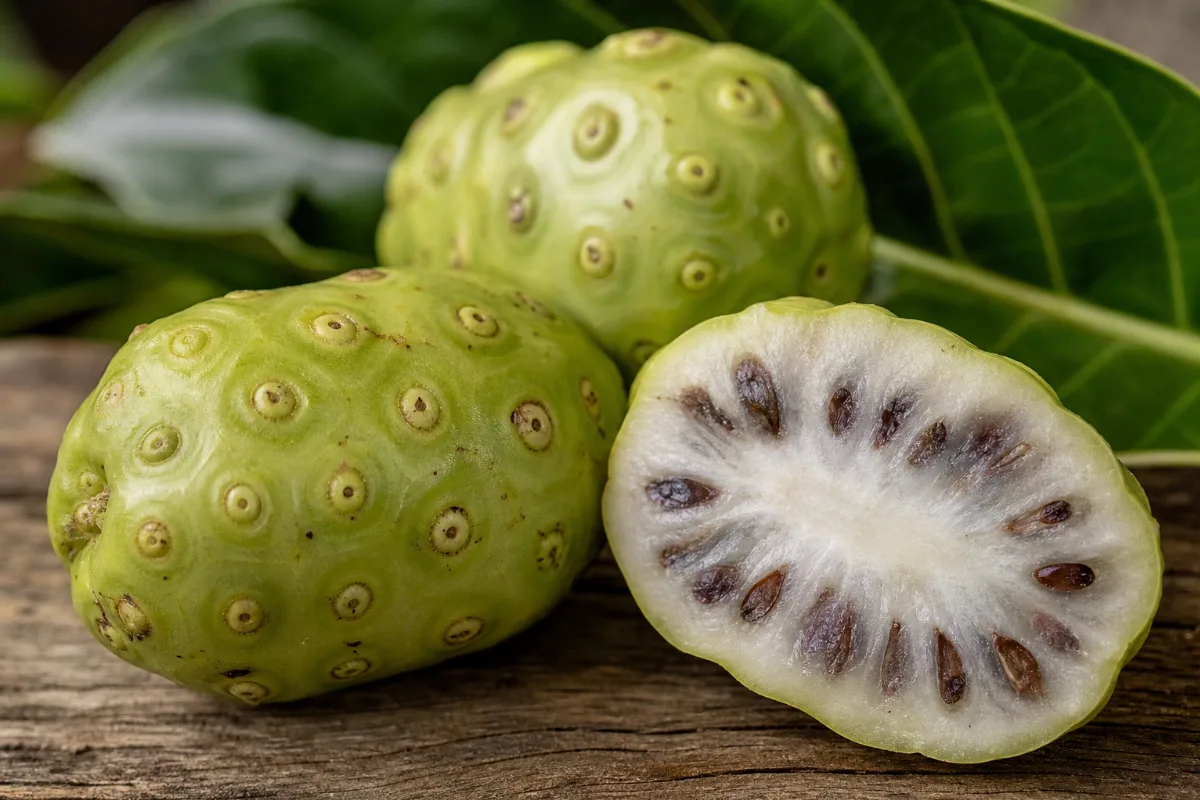
What noni is
Noni is Morinda citrifolia, a small evergreen tree found in the Pacific Islands, Southeast Asia, Australia and India. [1] GBIF lists it as an accepted species in the Rubiaceae family. [3] The roots, stem, bark, leaves, flowers and fruit have all been used medicinally; [1] fresh or fermented juices are sold as drinks and capsules, pills and powders as supplements. [4] Do not confuse it with Morinda officinalis, used in Chinese medicine. [4]Traditional use (not proof)
Traditionally, noni has been used for the common cold, bacterial infections, fevers and gastrointestinal problems. [1] The juice has been used in Polynesian cultures, including as an anticancer agent, a use for which clinical proof is lacking. [4] Today it is promoted for immune health, digestion, energy and aging skin, which are marketing claims. [1]What research shows
NCCIH says only a very small number of studies have looked at noni in people. In laboratory research it showed antioxidant, immune-modulating, antimicrobial, antifungal and tumor-fighting properties. However, noni has not been shown to have beneficial effects on any health condition in studies of people. [1]| Use | What the source found | Strength of evidence |
|---|---|---|
| Any health condition (NCCIH) | Not shown to benefit any condition in people. [1] | No good evidence of benefit |
| Cancer | Lab and animal findings only; clinical proof lacking. [4] | Preclinical |
| Nausea after surgery | Small clinical studies suggest it may help; confirmation is needed. [4] | Insufficient evidence |
| Diabetes | Noni juice has high sugar content; use caution. [4] | Insufficient evidence |
Proper evidence not found: we did not find high-quality human trials showing noni treats any disease. We searched NCCIH, the MSK herb database and PubMed.
Safety
- Liver: A 29-year-old man developed sub-acute hepatic failure after consuming 1.5 L of noni juice over 3 weeks and needed a liver transplant; a 62-year-old woman recovered after stopping. The authors suspected anthraquinones, which is a suspicion, not proof. [2] A case in a 14-year-old boy has also been reported. [5] A 56-year-old woman needed a transplant after noni and other products; the combination was suggested as the cause. [4]
- Kidney disease and potassium: Noni contains a substantial amount of potassium. People with kidney disease or on a potassium-restricted diet should consult a health care provider first. [1] A hyperkalemia (high potassium) case followed noni juice. [4] See herbs and kidney disease and potassium.
- Medicines: It may be unsafe with medicines that increase potassium, decrease blood pressure or harm the liver. [1] Reports include reduced warfarin effect in a 41-year-old woman and subtherapeutic phenytoin levels; noni may add to ACE inhibitors and some diuretics. [4] Antioxidant effects might reduce some chemotherapy, with unknown relevance. [4] See how interactions work.
- Pregnancy and breastfeeding: Little is known. [1] See pregnancy and breastfeeding.
- Extracts and skin: NCCIH says there is not enough reliable information to know whether noni fruit extract is safe. [1]
- Children, older adults, surgery: a 14-year-old boy had liver injury after noni juice [5]; ask a clinician before any use and tell surgical teams. See supplements before surgery.
Official statements
NCCIH (US, 2025) says noni juice might be safe for up to 3 months, but lists the liver and potassium cautions above. [1] It notes that unlike drugs, dietary supplements are not approved by the FDA before sale. [1] We could not read EFSA or EU texts, so we make no EU statement.Related pages
Herb safety essentials, herb quality and goji.Frequently asked questions
Is noni juice safe for the liver?
Liver injury has been reported with noni juice; whether noni caused it is unclear. [1]
Does noni help any condition?
It has not been shown to benefit any health condition in people. [1]
Can people with kidney disease drink noni?
Noni is high in potassium; talk to a clinician first. [1]
Does noni interact with medicines?
Possibly with potassium-raising, blood pressure and liver-affecting medicines. Ask a pharmacist. [1]
Is noni safe in pregnancy?
Little is known. [1]
References
- NCCIH (US), Noni: Usefulness and Safety, last updated February 2025. Read 2026-10-23.
- Stadlbauer V, et al. Hepatotoxicity of NONI juice: report of two cases. World Journal of Gastroenterology, 2005. Read 2026-10-23.
- GBIF Backbone Taxonomy, Morinda citrifolia. Read 2026-10-23.
- Memorial Sloan Kettering Cancer Center (US), Noni, About Herbs database, last updated April 2023. Read 2026-10-23.
- Acute hepatotoxicity after ingestion of Morinda citrifolia (noni berry) juice in a 14-year-old boy. Journal of Pediatric Gastroenterology and Nutrition, 2011. Read 2026-10-23.