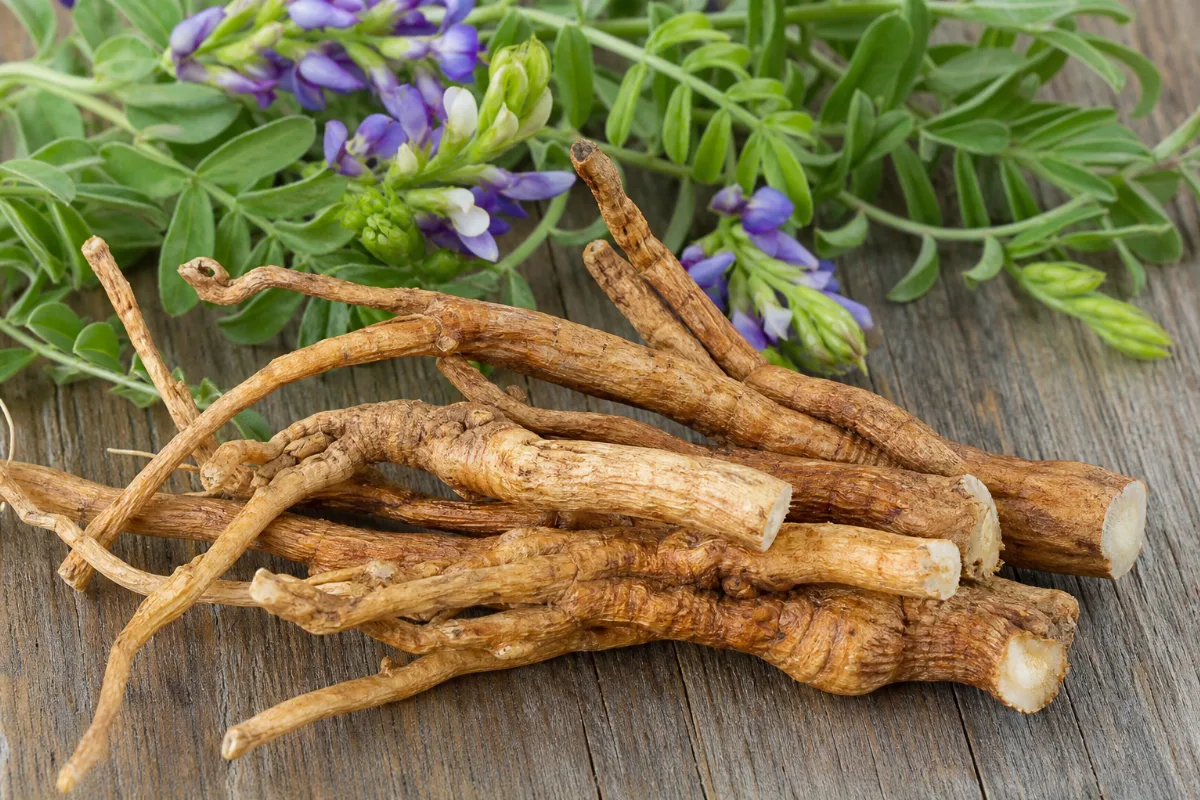
Adaptogens · Herbs & Botanicals · Herbs · Chinese tonic root with low-certainty evidence and clear immune-system cautions
Astragalus
Astragalus mongholicus Bunge (also sold as Astragalus membranaceus (Fisch.) Bunge and A. membranaceus var. mongholicus) · also called Huangqi (Chinese), huang qi, Mongolian milkvetch, membranous milk-vetch, milk vetch, hwanggi (Korean)
Astragalus is the dried root of a plant in the legume family, used for more than 2000 years in Chinese medicine as a tonic. Today it is studied as an add-on for kidney disease, heart failure and cancer treatment side effects, mostly in China and often as an injection. The evidence is low certainty, and it may stimulate the immune system, so it needs care with autoimmune disease and some medicines.
General information, not medical advice. Last substantive update · Not medically reviewed. A named clinician has not signed off on this page. How this page is made
About Astragalus
Astragalus root (huangqi) is a Chinese tonic that is mostly studied as an add-on to standard care for kidney disease, heart failure and the side effects of cancer treatment. Reviews of mainly Chinese trials found better lab markers, but the evidence is low certainty, and many trials use an injection or mixed formulas. It may stimulate the immune system and may interact with immunosuppressants and other medicines.
What it is
Astragalus is the dried root of Astragalus mongholicus (also sold as Astragalus membranaceus), a plant in the legume family. In Chinese medicine the root is called huangqi. GBIF treats A. membranaceus as another name for A. mongholicus, while NCBI lists them as two species, so labels can use either name.
The word astragalus also names a huge genus. Some other species, called locoweeds, poison livestock because they hold swainsonine. They are not the medicinal root.
Traditional and current uses
The root has been used as a tonic in China for more than 2000 years, and decoctions are used for infections, inflammation and cancer care. Traditional use is not proof that it works.
Today most of the clinical research is from China and tests astragalus or a polysaccharide extract as an add-on beside standard treatment, often by hospital injection. The main areas are kidney disease, heart failure and myocarditis, and cancer treatment side effects, plus immune markers, diabetes and fatigue.
What is in it and how it works
The root holds triterpene saponins (such as astragaloside IV), isoflavones (such as calycosin and formononetin) and polysaccharides. More than 400 compounds have been isolated.
In the lab, astragalus stimulates immune cells and acts on inflammation, fibrosis and platelet pathways. Astragaloside IV and the polysaccharides differ: the polysaccharides are poorly absorbed, and astragaloside IV has only lab and animal data. These lab findings do not prove an effect in people.
What the research shows
No use of astragalus is rated above low certainty here. In kidney disease, small Chinese trials found less urine protein and lower creatinine. In heart failure, reviews found higher ejection fraction and longer walking distance. Alongside chemotherapy, reviews found better response and fewer low blood counts. All of these are add-on results from low-quality trials, often of an injection or mixed formula.
Evidence for colds, hay fever, exercise and fatigue is thin and mostly from single small trials or mixed formulas. NCCIH says there is not enough reliable evidence to know whether astragalus helps any health condition.
At a glance
Traditional uses history, not proof
- Tonic in Chinese medicine for more than 2000 years, used to 'invigorate the spleen and replenish qi'
- Decoctions used for infections, inflammation and cancer care in traditional Chinese practice
- Add-on in Chinese hospitals (often by injection) for kidney disease, heart failure, myocarditis, COPD and cancer treatment
Studied for research
- Kidney disease (diabetic, membranous and high-blood-pressure types), low certainty: less urine protein and lower creatinine in small, low-quality trials
- Heart failure, low certainty: higher ejection fraction and longer walk in reviews of Chinese trials
- Cancer-treatment side effects and response, low certainty (not a cure): fewer low blood counts in reviews, mostly mixed products
- Immune markers, type 2 diabetes and fatigue, low to very low certainty
Main compounds
- Triterpene saponins such as astragaloside IV
- Isoflavones such as calycosin and formononetin
- Astragalus polysaccharides (large sugar chains, poorly absorbed)
- Cycloastragenol (the basis of the different product TA-65)
Common forms
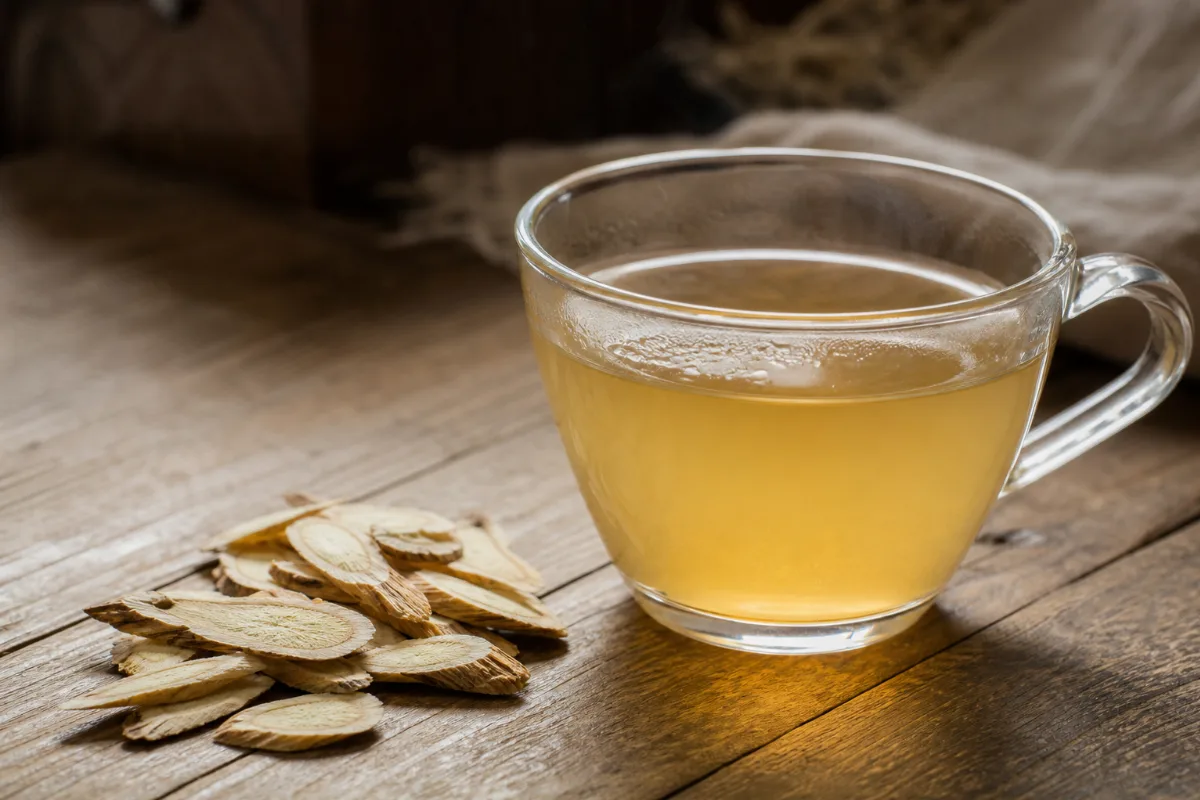
- Dried root, decoction and tea (traditional)
- Extracts and granules (used in some trials)
- Astragalus polysaccharide extracts, including the branded PG2
- Astragalus injection (a hospital product in China, not a supplement)
- Mixed formulas such as Yupingfeng; their results cannot be credited to astragalus alone
Research links: NIH NCCIH: Astragalus, Usefulness and Safety · Memorial Sloan Kettering: Astragalus · Astragalus for diabetic kidney disease: updated review (abstract) · Astragalus for heart failure with reduced ejection fraction: meta-analysis (abstract) · Herbal medicines for viral myocarditis: Cochrane review (abstract) · Astragalus and the immune response: meta-analysis (abstract) · Research Library · Genes & Biomarkers Library
The plant and its history
- Accepted scientific name
- Astragalus mongholicus Bunge (Mongolian milkvetch). The medicinal root huangqi is also sold under the name Astragalus membranaceus (Fisch.) Bunge, and as A. membranaceus var. mongholicus (Bunge) P.K.Hsiao.
- Naming authority
- Bunge, published in Mem. Acad. Imp. Sci. Saint Petersbourg, Ser. 7, 11(16): 25 (1868) (GBIF, accepted, usageKey 5345341).
- Synonyms
- Astragalus membranaceus Fisch. ex Bunge (GBIF synonym, key 5345205); Astragalus membranaceus var. mongholicus (Bunge) P.K.Hsiao (GBIF synonym, key 5345204); Astragalus propinquus Schischk.; Astragalus penduliflorus subsp. mongholicus (Bunge) X.Y.Zhu; Phaca membranacea Fisch. (GBIF synonym list)
- Common names
- Astragalus (English); Mongolian milkvetch (English); Membranous milk-vetch (English); Milk vetch (English); Huang Qi (黄芪) (Chinese); Meng Gu Huang Qi (蒙古黄芪) (Chinese); Hwanggi (황기) (Korean); Kibana-ogi (キバナオウギ) (Japanese); Beg kei (English (as written by NCCIH))
- Botanical family
- Fabaceae (the legume or pea family), subfamily Papilionoideae, the same family as peas, beans, licorice and fenugreek.
- Classification
- Plantae > Tracheophyta > Magnoliopsida > Fabales > Fabaceae > Astragalus > Astragalus mongholicus
- Native range
- Not verified from a primary source. A review says the root is mainly produced in China (p38493280).
- Habitat
- Not verified in a source read for this file.
- What the plant looks like
- Roots: The dried root is the medicinal part, called Astragali Radix or huangqi (p39215362, p38493280). Further description was not read.; Stems: Not verified.; Leaves: Not verified.; Flowers: Not verified.; Fruit: Not verified. Seeds of the medicinal plant are reported to be commonly adulterated (p36523615).
- Cultivation
- Not verified from a source read. A plant-science paper says cultivation involves mixed germplasm resources and widespread adulteration of commercial seeds (p36523615).
- Harvest and processing
- Not verified. Trials use root extracts, granules, polysaccharide products and injections; the product forms are described in the benefit and safety files.
- Look-alikes and adulterants
- Name: Astragalus mongholicus vs A. membranaceus; Note: Two names for the plant used as huangqi. Chinese reviews define Astragali Radix as the dried root of A. membranaceus var. mongholicus or A. membranaceus (p39215362, p38493280). Papers and labels use the names differently, so a label may not tell you which one is meant.; Name: Hedysari Radix (Hedysarum root); Note: Used interchangeably with astragalus root in some clinics according to a rat study (p35763552). A product sold as astragalus could therefore contain the other root.; Name: Locoweeds (other Astragalus species and Oxytropis); Note: Poisonous to livestock because of swainsonine (p10091127, p7604496). They are different species, not the medicinal plant. Examples named in veterinary papers are Astragalus mollissimus, A. punae and A. garbancillo.; Name: Look-alike seeds; Note: Seeds of the medicinal plant are widely adulterated according to a plant-science paper that tests a method to tell them apart (p36523615).
- Sustainability and conservation
- Not verified. No conservation assessment was retrieved.
The plant and the parts used
Traditional use and history history, not clinical proof
| Tradition or era | Documented use | Source |
|---|---|---|
| Traditional Chinese medicine | The root has been consumed as a tonic in China for more than 2000 years, used to 'invigorate the spleen and replenish qi' according to a 2024 review. Traditional use does not prove it works. | p38493280 |
| Traditional Chinese medicine, decoctions | Decoctions of the root (huangqi) are used for viral and bacterial infections, inflammation and cancer according to a pharmacology review. | p32089240 |
| China, modern hospital use | Astragalus injection and astragalus polysaccharide injection are used in China as add-ons for conditions including kidney disease, heart failure, myocarditis, COPD and cancer treatment. This is from the trials reviewed, not from a regulator. | p31034954 |
| United States, NCCIH | NCCIH says there is not enough reliable evidence to know whether astragalus helps any health condition; oral use may be safe. | s-nccih-astragalus |
| Modern supplement ideas | TA-65, a branded compound derived from astragalus, is sold as a 'telomerase activator'. A 2025 meta-analysis found longer telomeres but no better frailty or inflammation outcomes. | p41286474 |
Traditional use shows how a plant was used. It does not show that a supplement works or is safe today.
What is inside, and how it may work
What the plant contains and how those compounds act in cells and animals. Laboratory and animal mechanisms are not proven effects in people.
Main compounds
| Compound | Family | Where it is concentrated | Activity studied | Level of evidence |
|---|---|---|---|---|
| Astragaloside IV PubChem 13943297 | cycloartane-type triterpene glycoside (saponin) | Root Not quantified in a source read. | A major compound of the root's aqueous extract. In cell and animal models it protects heart, lung, kidney and brain through antioxidant, anti-inflammatory and anti-apoptotic actions, acting on several signalling pathways (review p32089240). In rats it inhibited CYP2D6 and raised metoprolol exposure (p35088663), and it lowered triptolide absorption through P-glycoprotein (p32233814). 59 41 8 32 | Animal research |
| Cycloastragenol PubChem 13943286 | triterpene aglycone | Root (a bioactive triterpene from the extract, per the paper) Not quantified. | Developed as a dietary ingredient. In rats it showed no adverse findings at up to 150 mg/kg/day for at least 91 days (p24316212). TA-65 is a branded telomerase-activating compound derived from astragalus; it is commonly described as cycloastragenol-based, but the abstract read does not name the molecule (p41286474). 46 44 32 | Animal research |
| Calycosin PubChem 5280448 | isoflavone (flavonoid) | Root Not quantified. | Reduced platelet aggregation and delayed clot formation in mice without affecting haemostasis (p41633254). 20 32 | Laboratory research |
| Formononetin PubChem 5280378 | isoflavone (flavonoid) | Root Not quantified. | Did not inhibit CYP2B6 in a test of a three-herb extract mixture (p32685423); no other activity was read for this file. 17 32 | Laboratory research |
| Astragalus polysaccharides (APS) | polysaccharides (a group of large sugar chains) | Root Not quantified. | Used as an injected extract (for example PG2) as add-on cancer therapy in China. APS are large, poorly soluble, negatively charged molecules with low bioavailability (review p35086031). They are not one molecule, so there is no single PubChem CID. 5 19 39 | Laboratory research |
| Astragalosides and other saponins | triterpene saponins | Root More than 400 compounds have been isolated from the root, mainly saponins, flavonoids, phenylpropanoids and alkaloids (p38493280). | Saponins, flavonoids and polysaccharides are described as the key component groups of the root (p39215362). Individual group content was not read. 26 63 | Laboratory research |
Mechanisms, receptors and pathways
| Target or pathway | Gene or receptor | What was found | Level |
|---|---|---|---|
| Immune cells and immune signalling | Toll-like receptors, NF-kB/MAPK signalling; IL-1b, IL-6, TNF-alpha, IL-12, IFN-gamma | A scoping review lists astragalus among 15 herbs with the strongest evidence of immune stimulation, with mechanisms including toll-like receptor activation, NF-kB/MAPK signalling and higher inflammatory cytokines (p41475897). The 2006 lung-cancer review notes lab studies of macrophage and natural killer cell stimulation and effects on T-helper type 2 cytokines (p16421421). Human blood markers moved in a 2023 review (p37952511). Lab and animal evidence for the mechanism; human markers do not prove clinical effect. 52 30 62 | Laboratory research |
| Diabetic kidney damage and fibrosis | TGF-beta1, CTGF, collagen IV, Wnt4, beta-catenin, BMP-7; inflammation and oxidative stress | In a review of 40 animal studies astragalus lowered fibrosis markers (TGF-beta1, CTGF, collagen IV, Wnt4, beta-catenin) and raised the anti-fibrosis marker BMP-7, with lower inflammation and oxidative stress (p38733903). Network pharmacology and docking work on an astragalus and Salvia combination points to PTGS2 and PI3K/Akt, MAPK and NF-kB pathways, and iron-metabolism markers GPX4, FTH1 and FTL1 in a lab experiment (p40015687). Animal and computer evidence. 25 21 | Animal research |
| Heart protection and signalling pathways | Raf-MEK-ERK, EGFR-Nrf2, Akt/PDE3B, AMPK, NF-kB, PI3K/Akt/mTOR and others | A review of astragaloside IV lists a long set of signalling pathways in cell and animal models, linked to antioxidant, anti-inflammatory and anti-apoptotic effects (p32089240). For viral myocarditis, animal studies suggest anti-virus, anti-inflammatory, antioxidant, anti-apoptotic, anti-fibrosis and calcium-load effects (p33204391). Animal and cell evidence only. 59 64 | Animal research |
| Platelets | Glycoprotein VI signalling (PLC-gamma2, PKC), Akt, MAPK, GPIIb/IIIa | Calycosin reduced collagen-induced platelet aggregation and granule release and delayed clot formation in mouse vessels without affecting haemostasis (p41633254). Lab and mouse evidence for a single compound. 20 | Laboratory research |
| Drug-metabolising enzymes and pumps | CYP2C9, CYP3A4, CYP2D6, CYP2B6, UGT1A6, P-glycoprotein | A review lists effects of the root and its components on CYP2C9, CYP3A4, UGT1A6 and P-glycoprotein, with disagreement on CYP3A4 (p39692050). Astragaloside IV inhibited CYP2D6 in human liver microsomes and raised metoprolol levels in rats (p35088663). A three-herb extract inhibited only CYP2B6 in a test tube (p32685423). Lab and animal evidence. 51 41 17 | Laboratory research |
| Telomerase activation | Telomerase (TERT) | The TA-65 meta-analysis describes TA-65 as a telomerase-activating compound derived from astragalus; in humans it raised blood-cell telomere length but did not change frailty or inflammation (p41286474). The mechanism itself was not read in detail. 44 | Laboratory research |
Absorption, metabolism and elimination
- Absorption
- No human blood-level data for astragalus compounds were found. Astragalus polysaccharides are large, poorly soluble and negatively charged, so they have low bioavailability (p35086031).
- Distribution
- No human tissue-distribution data found.
- Metabolism
- Reviews describe effects of astragalus on CYP2C9, CYP3A4, UGT1A6 and P-glycoprotein (p39692050). Astragaloside IV inhibited CYP2D6 in human liver microsomes (IC50 32.28 uM) (p35088663). These are lab and rat results.
- Elimination
- Not found for astragalus constituents in humans. A review of astragaloside IV says it covers pharmacokinetics, but the abstract gives no figures (p32089240).
- Bioavailability
- Not established in humans. Reported low for polysaccharides (p35086031). Nanocrystal and chemically modified forms are described as boosting it in the lab, not shown in people.
Isolated compounds versus whole extracts
Astragalus research uses very different products: the whole root as decoction or extract, polysaccharide extracts (injected as PG2 or APS), single saponins such as astragaloside IV, and cycloastragenol (TA-65). Their evidence does not transfer from one to another. APS are poorly absorbed from the gut (p35086031), astragaloside IV has only lab and animal data (p32089240), and TA-65 changed telomere length but not health measures (p41286474). Most clinical benefits in this file come from injection or mixed formulas, so results for plain root powder or tea are largely unknown.
Nutritional composition
A nutrient table is not meaningful for the medicinal use of astragalus root: the products in the research are extracts, granules and injections, not food. The root is also used in traditional Chinese soups and tonics, but no food-composition data (vitamins, minerals, fibre) were read, so none is stated. The compounds that matter here are saponins, flavonoids and polysaccharides (p39215362).
9 low certainty8 very low certainty1 not enough evidence
What is Astragalus good for?
The main uses studied and how strong the human evidence is for each. "Low" is the best rating any astragalus use reached here. "Very low" and "insufficient" mean the evidence is too weak to rely on. Most of the trials are from China and use an injection or a mixed formula, which is said for each row.
Benefits, one by one
Each card is a research question, not a promise. Tap a goal to filter. Open a card to see the studies, doses and limits.
Diabetic kidney disease: protein in the urine and kidney markers
Low certaintyIn people with diabetic kidney disease, adding astragalus to usual care was linked to less protein in the urine and lower creatinine in many small Chinese trials. Trial quality was low and results varied a lot.
6 studiesMostly astragalus injection (a hospital product in China). Four oral …
Studies, doses and limits
What the trials found
A 2019 review of 66 randomised trials in 4785 people with diabetic kidney disease (p31034954) found that adding astragalus injection to usual care lowered albuminuria (32 trials, 2253 people), proteinuria (26 trials, 1812) and serum creatinine (32 trials, 2880). Four oral trials (236 people) also lowered albuminuria. Adverse events were similar between groups. The authors rated trial quality as low and found very high heterogeneity and publication bias. A 2024 review of 32 papers (2462 people) with stage III diabetic nephropathy found astragalus plus a RAAS blocker (ACE inhibitor or angiotensin receptor blocker) beat the blocker alone for urinary protein, creatinine, BUN and HbA1c (p38836372). A 2025 review of 15 studies (1443 people) of an astragalus and Salvia miltiorrhiza combination found better clinical outcomes and kidney function (p40015687), and another review of astragalus plus Chinese yam found lower 24-hour urine protein (p37856796). The animal review (40 studies, 1543 animals) found lower creatinine and BUN in diabetic animals (p38733903).
Results
Short-term drops in urine protein and creatinine, mostly with injection. No pooled data on kidney failure, dialysis or deaths were reported in the abstracts read.
Effect sizes as reported
Injection added to usual care: serum creatinine -14.78 umol/L (95% CI -19.22 to -10.33); albuminuria SMD -2.05 (CI -2.49 to -1.61); proteinuria SMD -1.85 (CI -2.34 to -1.37); I2 94 to 97%. Oral: albuminuria SMD -1.27 (CI -1.82 to -0.73; 4 trials). Stage III with RAAS blockers: total effective rate MD 3.63 (CI 2.59 to 5.09).
Why this rating
The reviewers rate trial quality low, with large unexplained differences between trials and publication bias. The results are short-term and mostly use a hospital injection. Two reviews pool combinations with other herbs.
Form and dose studied
Mostly astragalus injection (a hospital product in China). Four oral trials. Combination reviews: astragalus with Salvia miltiorrhiza or with Chinese yam. Doses and durations are not covered here.
Who was studied
Adults with diabetic kidney disease or diabetic nephropathy, mostly stage III and in China.
Limits
Low-quality trials, very high heterogeneity, publication bias, short follow-up. Surrogate lab markers, not kidney failure or survival. The combination reviews cannot credit the benefit to astragalus alone.
Why researchers looked
Diabetes is a leading cause of kidney damage, and astragalus is one of the most common add-on herbs for it in China.
Traditional use
Astragalus root (huangqi in Chinese) has been used as a tonic in Chinese medicine for more than 2000 years (review p38493280). Traditional use does not show that it works for the conditions below.
Proposed mechanism Animal research
In diabetic rats and mice, astragalus lowered kidney damage and inflammation and raised antioxidant markers (pooled in an animal review, p38733903). Network-pharmacology work on an astragalus and Salvia combination points to PI3K/Akt, MAPK and NF-kB pathways (p40015687). These are lab and computer findings.
A proposed mechanism does not show that the effect happens in people.
Do not stop or replace prescribed diabetes, kidney or blood-pressure treatment. Tell your kidney doctor if you take astragalus, especially if you take immunosuppressants.
Membranous nephropathy (a kidney disease with heavy protein loss)
Low certaintyIn a large review of mostly Chinese trials, adding astragalus to usual care or to immune-suppressing drugs was linked to less urine protein and more remissions. The trials were low quality, and many used mixed formulas.
3 studiesAstragalus membranaceus preparations or formulas, used with supportiv…
Studies, doses and limits
What the trials found
A 2023 meta-analysis of 50 randomised trials with 3423 people with moderate-to-high-risk idiopathic membranous nephropathy compared astragalus formulas plus supportive care or immunosuppressive therapy with that care alone (p36862887). Adding astragalus lowered 24-hour urinary protein, raised serum albumin, lowered creatinine and raised complete and partial remission rates. NCCIH reports that the reviewers cited low study quality, small size and limited geographic scope (s-nccih-astragalus).
Results
More complete and partial remissions and less urine protein in many small trials. Whether this protects kidney function over the long term is not shown.
Effect sizes as reported
24-hour urine protein MD -1.05 (CI -1.21 to -0.89); serum albumin MD 3.75 (CI 3.01 to 4.49); creatinine MD -6.24 (CI -9.85 to -2.63); complete remission RR 1.63 (CI 1.46 to 1.81); partial remission RR 1.13 (CI 1.05 to 1.20).
Why this rating
Fifty trials, but the authors and NCCIH describe limits in study design, and the formulas varied. We have no independent quality grading for this review.
Form and dose studied
Astragalus membranaceus preparations or formulas, used with supportive care or immunosuppressive drugs. Exact products and doses are not covered here.
Who was studied
Adults with moderate-to-high-risk idiopathic membranous nephropathy, mostly in China.
Limits
Mixed formulas, unblinded designs likely, short follow-up, surrogate outcomes. Immune-stimulating herbs may interact with immunosuppressive drugs (see the safety file).
Why researchers looked
Idiopathic membranous nephropathy is an autoimmune kidney disease, and doctors in China often add astragalus-based formulas to treatment.
Traditional use
Astragalus root (huangqi in Chinese) has been used as a tonic in Chinese medicine for more than 2000 years (review p38493280). Traditional use does not show that it works for the conditions below.
Proposed mechanism Pharmacological theory
Not established. In the lab, astragalus affects immune signalling, but the abstract of the review gives no mechanism for kidney protection in this disease.
A proposed mechanism does not show that the effect happens in people.
This is an autoimmune disease treated with strong drugs. Never add astragalus without your kidney specialist knowing; it may lower the blood level of some immunosuppressants (case report p32930420).
Hypertensive nephropathy (kidney damage from high blood pressure): injection
Very low certaintyIn 15 small trials, astragalus injection added to blood-pressure drugs was linked to lower urine protein, creatinine and blood pressure than the drugs alone. The trials were small and low quality.
2 studiesAstragalus (Huangqi) injection given in addition to blood-pressure me…
Studies, doses and limits
What the trials found
A 2022 meta-analysis of 15 studies with 1483 people with hypertensive nephropathy found that astragalus (Huangqi) injection plus blood-pressure drugs beat the drugs alone for 24-hour urine protein, microalbumin, creatinine, systolic and diastolic blood pressure, cystatin-C and BUN (p35547210). The authors suggest a moderate injection volume (no more than 30 mL) may work better, but warn the trials are small and of low methodological quality.
Results
Lower urine protein, creatinine and blood pressure in small trials of an injection given in hospital.
Effect sizes as reported
Systolic BP WMD -9.50 mmHg (CI -14.64 to -4.37); diastolic BP WMD -4.588 (CI -6.036 to -3.140); creatinine WMD -40.39 (CI -70.39 to -10.39); 24 h urinary protein WMD -0.29 (CI -0.40 to -0.18).
Why this rating
The authors call the methods low quality and the samples small. It is an injection, so it cannot be applied to supplements.
Form and dose studied
Astragalus (Huangqi) injection given in addition to blood-pressure medicines.
Who was studied
Adults with hypertensive nephropathy, studied in China.
Limits
Low quality, small, unclear blinding, injection only, no long-term kidney outcomes.
Why researchers looked
High blood pressure can damage the kidneys, and astragalus injection is used as an add-on in China.
Traditional use
Astragalus root (huangqi in Chinese) has been used as a tonic in Chinese medicine for more than 2000 years (review p38493280). Traditional use does not show that it works for the conditions below.
Proposed mechanism Pharmacological theory
No mechanism is given in the abstract.
A proposed mechanism does not show that the effect happens in people.
Not a substitute for blood-pressure medicine. Astragalus may lower blood pressure, so the effect can add to blood-pressure drugs (MSK, s-msk-astragalus).
Heart failure: heart function, walking distance and heart-stress markers
Low certaintyIn small Chinese trials, adding astragalus to standard heart-failure care was linked to better heart pumping and longer walking distance. The trials were of limited quality and many used an injection.
6 studiesReviews pool astragalus membranaceus preparations (the HFrEF review d…
Studies, doses and limits
What the trials found
A 2024 meta-analysis of 19 randomised trials with 1565 people with heart failure with reduced ejection fraction found that astragalus plus conventional treatment beat conventional treatment alone (p38283626). The heart pumped a little better, BNP fell and 6-minute walking distance was longer; the inflammation markers TNF-alpha, IL-6 and hs-CRP also fell, and adverse reactions did not increase. A second 2024 meta-analysis of 10 trials with 995 people with mildly reduced ejection fraction found similar gains with astragalus injection (p39165261). A network meta-analysis of 18 trials (1584 people) of oral Chinese medicines containing astragalus found that adding them to Western medicine improved clinical efficacy, but the products varied and the authors say study number and quality were limited (p42216323). A 90-person comparison of three strengths of astragalus granule plus perindopril for 30 days (p21390582) found improvements in all groups, with more gain at higher strengths, but it had no placebo group.
Results
Better ejection fraction, lower BNP and longer walk in small trials. No data on deaths or hospital stays in the abstracts read.
Effect sizes as reported
HFrEF: LVEF MD +5.82 points (CI 4.61 to 7.03); BNP MD -113.57 (CI -146.91 to -81.22); 6-minute walk MD +67.62 m (CI 41.63 to 93.60); adverse reactions RR 0.86 (CI 0.25 to 2.96). HFmrEF injection: LVEF MD +4.56 (CI 3.68 to 5.44); NT-proBNP MD -27.94 (CI -43.3 to -12.36).
Why this rating
The authors of the reviews say included studies had limited quality and ask for high-quality trials. Most trials were unblinded or poorly described. We have no independent quality grading.
Form and dose studied
Reviews pool astragalus membranaceus preparations (the HFrEF review does not state the forms), astragalus injection (HFmrEF review) and several oral Chinese patent medicines. The one dose-comparison trial used granule at three strengths twice a day for 30 days.
Who was studied
Adults with chronic heart failure, in China.
Limits
Mixed forms, no placebo in some trials, short follow-up, surrogate outcomes, several reviews share the same Chinese trials so they are not independent confirmations.
Why researchers looked
Astragalus is commonly added to heart-failure care in China.
Traditional use
Astragalus root (huangqi in Chinese) has been used as a tonic in Chinese medicine for more than 2000 years (review p38493280). Traditional use does not show that it works for the conditions below.
Proposed mechanism Animal research
In lab and animal work, astragaloside IV and other compounds act on inflammation, oxidative stress and cell death pathways in the heart (review p32089240). This does not prove an effect in people.
A proposed mechanism does not show that the effect happens in people.
Heart failure can get worse quickly. Do not use astragalus instead of prescribed heart medicines. Tell your cardiologist about it, because it may lower blood pressure and add to diuretic effects (s-msk-astragalus).
Viral myocarditis (inflammation of the heart muscle after a virus)
Very low certaintyA Cochrane review and several newer reviews of astragalus injection in viral myocarditis found better ECG results and lower heart-enzyme levels. The trials had high risk of bias, and none reported deaths.
4 studiesAstragalus injection (a hospital product in China) added to supportiv…
Studies, doses and limits
What the trials found
The Cochrane review (2012 update) included 20 randomised trials with 2177 people in China, all at high risk of bias (p23152220). Astragalus injection plus supportive care was linked to fewer abnormal ECGs, fewer ST-T changes and lower CPK and LDH. No trial reported deaths, and no serious adverse effects were seen in the six trials that reported them. A 2020 review of 28 trials (2522 people) and 16 animal studies found lower heart enzymes and troponin I and no difference in adverse reactions (p33204391). A 2025 meta-analysis of 26 studies (2793 people) found an effectiveness rate of 92.79% with astragalus injection against 77.71% with standard treatment alone, with lower CK-MB, LDH, AST and troponin I (p39754214). A 2022 meta-analysis of 19 studies found lower inflammatory markers with very high heterogeneity (p36115170).
Results
Fewer abnormal ECGs and lower heart-enzyme levels with the injection. Survival and long-term heart function were not measured in the Cochrane trials.
Effect sizes as reported
Cochrane: abnormal ECG RR 0.28 (CI 0.13 to 0.61); ST-T changes RR 0.72 (CI 0.54 to 0.95); CPK MD -21.54 (CI -33.80 to -9.28); LDH MD -30.33 (CI -46.78 to -13.88). 2025 review: effectiveness 92.79% vs 77.71%; CK-MB WMD -7.64 (CI -9.30 to -5.99); troponin I WMD -0.18 (CI -0.27 to -0.10).
Why this rating
The Cochrane review rates the trials at high risk of bias and warns to interpret with care. The later reviews pool largely the same kind of Chinese trials. Heart-enzyme changes are not proof of better recovery.
Form and dose studied
Astragalus injection (a hospital product in China) added to supportive care.
Who was studied
Adults and children with viral myocarditis, all trials in China.
Limits
Many of the trials use astragalus injection, an injection used in hospitals in China. It is not the same as a capsule, powder or tea bought in a shop, so the results do not carry over to those. High risk of bias, small trials, outcome definitions differ.
Why researchers looked
Astragalus injection is widely used in China for viral myocarditis, and has been tested in many small trials.
Traditional use
Astragalus root (huangqi in Chinese) has been used as a tonic in Chinese medicine for more than 2000 years (review p38493280). Traditional use does not show that it works for the conditions below.
Proposed mechanism Animal research
Animal studies suggest astragalus may act against the virus, inflammation, oxidative stress and heart-cell death (clinical and preclinical review p33204391). This is animal evidence.
A proposed mechanism does not show that the effect happens in people.
Viral myocarditis can be serious. It needs proper medical care. Do not self-treat chest pain, fast heartbeat or breathlessness.
Cancer treatment: tumour response and chemotherapy side effects (lung, stomach, bowel)
Low certaintyIn many small Chinese trials, adding astragalus-based medicines to chemotherapy was linked to better tumour response and fewer chemotherapy side effects such as low white cells. The evidence is low quality, and it does not show astragalus treats or cures cancer.
6 studiesAstragalus-based mixtures or astragalus injection, given with platinu…
Studies, doses and limits
What the trials found
A 2006 Journal of Clinical Oncology meta-analysis of 34 randomised studies with 2815 people with advanced non-small-cell lung cancer on platinum chemotherapy found astragalus-based Chinese herbal combinations were linked to lower 12-month risk of death and better tumour response; the authors asked for confirmation (p16421421). A 2019 meta-analysis of 19 trials (1635 people) of astragalus injection plus platinum chemotherapy found better response, performance status and 1-year survival, and less leukopenia, platelet toxicity and vomiting, with GRADE rated low (p30882655). A 2021 meta-analysis in advanced gastric cancer rated certainty low to moderate (p34422628), and a 2019 meta-analysis of 22 studies (1409 people) with colorectal cancer found better response and fewer low neutrophils, anaemia, low platelets, vomiting, diarrhoea and nerve toxicity (p31456940).
Results
Better tumour response and fewer blood and gut side effects across several cancers. These are add-on results, not a cancer cure.
Effect sizes as reported
Lung (2006): 12-month death RR 0.67 (CI 0.52 to 0.87; 12 studies); tumour response RR 1.34 (CI 1.24 to 1.46; 30 studies). Lung injection (2019): 1-year survival RR 1.40 (CI 1.16 to 1.70); leukopenia RR 0.52 (CI 0.44 to 0.61). Gastric: response RR 1.24 (CI 1.15 to 1.34); 2-year survival RR 3.13 (CI 1.80 to 5.46). Colorectal: response RR 1.52 (CI 1.24 to 1.87); neutropenia RR 0.52 (CI 0.44 to 0.62).
Why this rating
The injection review in lung cancer was graded low by its own authors, and the gastric review was graded low to moderate. The effects are large for medicines of this kind, which can be a sign that weak trial methods and publication bias play a part. The products were mostly mixed Chinese medicines.
Form and dose studied
Astragalus-based mixtures or astragalus injection, given with platinum chemotherapy. Doses are not covered here.
Who was studied
Adults with advanced lung, stomach or colorectal cancer, in China.
Limits
Mixed herbal combinations, mostly unblinded Chinese trials, publication bias possible. One rat study found no protection from cyclophosphamide myelosuppression. No evidence astragalus cures cancer.
Why researchers looked
Chemotherapy often damages blood counts and the gut, so astragalus-based medicines are widely added in China to reduce this.
Traditional use
Astragalus root (huangqi in Chinese) has been used as a tonic in Chinese medicine for more than 2000 years (review p38493280). Traditional use does not show that it works for the conditions below.
Proposed mechanism Animal research
In lab studies astragalus polysaccharides stimulate immune cells such as macrophages and natural killer cells (background in p16421421). In one older rat study, an astragalus and Ligustrum extract did not prevent cyclophosphamide-induced drops in white cells and platelets (p8919152).
A proposed mechanism does not show that the effect happens in people.
Tell your cancer team before taking astragalus. Some labs suggest it may change how the body handles certain cancer drugs (s-msk-astragalus); this has not been shown in people.
Astragalus polysaccharide (APS) with chemotherapy and radiotherapy: immune cells and quality of life
Low certaintyReviews of astragalus polysaccharide products found higher helper T-cell counts and better response in people having cancer treatment. Two placebo-controlled trials of the branded product PG2 were small and gave mixed results.
5 studiesAstragalus polysaccharide extracts, in particular the branded PG2 (50…
Studies, doses and limits
What the trials found
A 2025 meta-analysis of 31 randomised trials with 2648 people with various tumours found treatment effectiveness RR 1.30 and higher CD3+ and CD4+ T-cell counts and CD4/CD8 ratio with APS (p40208321). A 2025 meta-analysis of 9 randomised trials with 776 women with cervical cancer found APS injection added to chemoradiotherapy improved response rate, disease control, performance score and several immune counts, and lowered some tumour markers (p41306775). In a 66-woman phase 2 trial in early breast cancer on anthracycline chemotherapy, PG2 500 mg missed its main goal: overall fatigue scores did not differ from placebo, though premenopausal women had less fatigue and better global health (p39465324). A phase 2 trial of PG2 injection in throat or voice-box cancer enrolled 17 people and stopped early; severe adverse events were less frequent with PG2 but tumour response and survival did not differ (p31728618).
Results
Higher immune-cell counts in reviews; the two small placebo-controlled trials were mixed or too small to judge.
Effect sizes as reported
31 trials: effectiveness RR 1.30 (CI 1.21 to 1.39); CD4+ MD +7.94 (CI 5.27 to 10.61); CD4/CD8 MD +0.40 (CI 0.28 to 0.52). Cervical (9 trials): response RR 1.43 (CI 1.24 to 1.64); disease control RR 1.16 (CI 1.08 to 1.24). Breast: no significant difference in overall fatigue score.
Why this rating
Review results are from many mixed cancer types; the placebo-controlled trials were small, one stopped early and one missed its main goal. Immune cell counts are not the same as better outcomes.
Form and dose studied
Astragalus polysaccharide extracts, in particular the branded PG2 (500 mg in the breast trial; injection three times a week in the throat trial). Many Chinese trials used injections.
Who was studied
Adults having chemotherapy or chemoradiotherapy for various cancers.
Limits
Mixed cancers, small trials, the manufacturer of PG2 was not named in the abstracts read, so industry links are unchecked.
Why researchers looked
APS is the part of astragalus most used as a purified injection in cancer care in China.
Traditional use
Astragalus root (huangqi in Chinese) has been used as a tonic in Chinese medicine for more than 2000 years (review p38493280). Traditional use does not show that it works for the conditions below.
Proposed mechanism Laboratory research
In cells and animals, APS stimulates immune cells; but APS molecules are large and poorly absorbed from the gut (review p35086031).
A proposed mechanism does not show that the effect happens in people.
Immune-stimulating products may not suit everyone. Ask your oncologist first.
Cancer-related fatigue
Low certaintyA 2025 review of eight small trials found less fatigue and better quality of life with astragalus in people with cancer, but the authors say the evidence is not strong enough to support routine use.
2 studiesAstragalus membranaceus alone as an add-on, forms and doses not cover…
Studies, doses and limits
What the trials found
A 2025 systematic review and meta-analysis of eight randomised studies of astragalus membranaceus alone as an add-on in people with cancer found lower cancer-related fatigue and better quality of life (p40302232). The authors say the studies were small and low quality and varied in cancer type and treatment, so the evidence is not strong enough to support clinical use. In the 66-woman breast cancer trial of PG2, overall fatigue scores did not differ from placebo (p39465324).
Results
Large fatigue score drops in small studies; one placebo-controlled trial of a related extract did not show an overall difference.
Effect sizes as reported
Fatigue SMD -1.63 (CI -1.90 to -1.36); quality of life SMD 0.86 (CI 0.17 to 1.55).
Why this rating
The review authors themselves say the studies were small and low quality. The size of the effect is bigger than usually seen for fatigue treatments, which can be a sign of bias.
Form and dose studied
Astragalus membranaceus alone as an add-on, forms and doses not covered here.
Who was studied
Adults with cancer, mixed types and treatments.
Limits
Small, low quality, mixed designs; the single placebo-controlled PG2 trial missed its main goal.
Why researchers looked
Fatigue is the most common problem during cancer care, and astragalus is a traditional energy tonic.
Traditional use
Astragalus root (huangqi in Chinese) has been used as a tonic in Chinese medicine for more than 2000 years (review p38493280). Traditional use does not show that it works for the conditions below.
Proposed mechanism Pharmacological theory
No established mechanism.
A proposed mechanism does not show that the effect happens in people.
Tell your oncology team. Persistent fatigue should be checked by a doctor, because it can have treatable causes such as anaemia.
Radiation-induced lung injury
Very low certaintyA 2022 review of 25 trials found that formulas containing astragalus were linked to less radiation lung injury and easier breathing. The formulas were mixed, so the benefit cannot be credited to astragalus alone.
1 studiesPrescriptions containing astragalus together with other herbs. Not as…
Studies, doses and limits
What the trials found
A 2022 meta-analysis of 25 randomised trials with 1762 people found that prescriptions containing astragalus lowered the total incidence of radiation-induced lung injury and improved the effective rate, cure rate, quality of life and breathing difficulty, with lower inflammatory factors (all P < .01) (p36086738). The review reports no adverse reactions linked to the Chinese medicine treatment.
Results
Lower rate of radiation lung injury in trials of mixed astragalus formulas.
Effect sizes as reported
The abstract gives P values (< .01) but no effect sizes.
Why this rating
Mixed formulas with other herbs; no effect sizes or quality grading in the abstract; 'no adverse reactions' probably reflects limited reporting.
Form and dose studied
Prescriptions containing astragalus together with other herbs. Not astragalus alone.
Who was studied
Adults having radiotherapy, mostly lung and chest cancers, in China.
Limits
Mixed formulas, unblinded designs likely, abstract-only reading.
Why researchers looked
Radiotherapy to the chest can inflame the lungs, and Chinese formulas with astragalus are used to prevent or treat it.
Traditional use
Astragalus root (huangqi in Chinese) has been used as a tonic in Chinese medicine for more than 2000 years (review p38493280). Traditional use does not show that it works for the conditions below.
Proposed mechanism Pharmacological theory
No established mechanism.
A proposed mechanism does not show that the effect happens in people.
Chest pain, new cough or shortness of breath during radiotherapy needs medical review, not herbs.
Immune markers (T cells and cytokines)
Low certaintyA 2023 review of 19 human studies found astragalus changed some blood immune markers, but the pooling was unusual and the studies varied a lot. It does not show fewer infections.
5 studiesAstragalus in various forms. Forms and doses are not covered here.
Studies, doses and limits
What the trials found
A 2023 meta-analysis of 19 human studies with 1094 people reported that astragalus lowered a group of cytokines (IL-2, IL-4, IL-6, IL-10, TNF-alpha, IFN-gamma) and raised CD3 and the CD4/CD8 ratio, with substantial heterogeneity (p37952511). The cytokines were pooled into a single number, which is an unusual way to analyse them. NCCIH says the studies were small and varied in design (s-nccih-astragalus). A scoping review lists astragalus among 15 herbs with the strongest evidence of immune-stimulating effects (p41475897).
Results
Some immune markers move in the studies; whether that means fewer or milder infections is not shown here.
Effect sizes as reported
Cytokines pooled SMD -2.8765 (CI -3.2385 to -2.5145); CD3 and CD4/CD8 pooled SMD 2.4629 (CI 1.9598 to 2.9661).
Why this rating
The review shows consistent movement in lab markers but with high heterogeneity, an unusual pooling method and unclear patient groups. A change in a marker is not a clinical benefit.
Form and dose studied
Astragalus in various forms. Forms and doses are not covered here.
Who was studied
Mixed adult and patient groups; details are not in the abstract.
Limits
Marker changes only, high heterogeneity, patient groups unclear, few details in the abstract.
Why researchers looked
Astragalus is best known as an 'immune tonic', so many studies measure immune cells and signals.
Traditional use
Astragalus root (huangqi in Chinese) has been used as a tonic in Chinese medicine for more than 2000 years (review p38493280). Traditional use does not show that it works for the conditions below.
Proposed mechanism Laboratory research
In cells and animals astragalus polysaccharides and saponins act on macrophages, T cells and signalling routes such as NF-kB and toll-like receptors (reviews p35086031, p32089240; scoping review p41475897). This is lab evidence.
A proposed mechanism does not show that the effect happens in people.
Immune stimulation can be unwanted in autoimmune disease, or with immunosuppressant drugs (see the safety file).
Respiratory infections in children (prevention)
Low certaintyTwo small trials in children with nephrotic syndrome and several trials of a mixed formula called Yupingfeng found fewer chest and nose infections. There is no good trial of astragalus alone for colds in healthy people.
3 studiesAstragalus granules (the nephrotic syndrome trials) and Yupingfeng gr…
Studies, doses and limits
What the trials found
A review of two high-validity studies in children with nephrotic syndrome found upper respiratory infections in 23.9% of those given astragalus granules plus prednisone against 42.9% with prednisone alone (RR 0.56, CI 0.33 to 0.93); GRADE evidence quality was low (p23662131). Yupingfeng is a formula that contains astragalus together with other herbs. A 2022 meta-analysis of 17 randomised trials in children with recurrent respiratory infections found a higher clinical response rate with Yupingfeng granules (RR 1.18, CI 1.12 to 1.24) and higher immunoglobulins (p36619520). A 2016 meta-analysis of 12 trials (1236 children) found about 3.8 fewer infections per period (WMD -3.80, CI -4.86 to -2.74) (p27145435). No controlled trial of astragalus alone against colds in healthy adults was found.
Results
Fewer infections in two small trials in children with a kidney disease, and in trials of a mixed formula. No data on healthy people.
Effect sizes as reported
Nephrotic syndrome children: infection 23.9% vs 42.9%, RR 0.56 (CI 0.33 to 0.93). Yupingfeng: response RR 1.18 (CI 1.12 to 1.24); frequency WMD -3.80 (CI -4.86 to -2.74).
Why this rating
Two small trials with low-quality evidence in a special group of children, and a combination formula for the rest. Because of the unusual population we rate certainty low at best for children with nephrotic syndrome and very low for general use.
Form and dose studied
Astragalus granules (the nephrotic syndrome trials) and Yupingfeng granules or powder (a formula of astragalus with other herbs). Doses are not covered here.
Who was studied
Children with nephrotic syndrome, and children with recurrent respiratory infections, in China.
Limits
Combination formula, very high heterogeneity for some outcomes (I2 91 to 95%), no placebo detail in the abstracts, not tested in healthy adults.
Why researchers looked
Astragalus is traditionally used to 'strengthen the defensive energy', which in practice means preventing colds.
Traditional use
Astragalus root (huangqi in Chinese) has been used as a tonic in Chinese medicine for more than 2000 years (review p38493280). Traditional use does not show that it works for the conditions below.
Proposed mechanism Preliminary mechanism
No established mechanism in people; immune effects are shown in the lab.
A proposed mechanism does not show that the effect happens in people.
Children should not be given herbs without a doctor's advice. Frequent infections in a child deserve a medical check.
Seasonal allergic rhinitis (hay fever)
Very low certaintyOne small placebo-controlled trial of a herb-and-mineral product containing astragalus found less runny nose, but most main measures did not beat placebo.
1 studiesA branded herbal and mineral complex containing astragalus (Lectranal…
Studies, doses and limits
What the trials found
In a 6-week, double-blind, placebo-controlled trial of 48 adults with moderate to severe seasonal allergic rhinitis, a herbal and mineral product containing Astragalus membranaceus (the food supplement Lectranal) reduced runny nose more than placebo, but the other main measures did not differ (p19504468). Changes within the active group looked good, and doctors and patients judged it more effective.
Results
Only runny nose clearly beat placebo in the first analysis. This is a very small trial of a mixed product.
Effect sizes as reported
Reduced rhinorrhoea versus placebo; other primary measures not different. No numbers given in the abstract.
Why this rating
One small trial of a mixed product in which most main outcomes were not better than placebo.
Form and dose studied
A branded herbal and mineral complex containing astragalus (Lectranal). The result cannot be credited to astragalus alone.
Who was studied
Adults with moderate to severe seasonal allergic rhinitis, in Croatia.
Limits
48 people, mixed product, most primary outcomes not met.
Why researchers looked
Astragalus is thought to rebalance the immune response, and animal studies on allergic rhinitis exist (not read here).
Traditional use
Astragalus root (huangqi in Chinese) has been used as a tonic in Chinese medicine for more than 2000 years (review p38493280). Traditional use does not show that it works for the conditions below.
Proposed mechanism Pharmacological theory
Not established in people. Animal studies exist in rodents with induced nasal allergy, but they were not read for this file.
A proposed mechanism does not show that the effect happens in people.
Allergies can be serious; seek urgent help for breathing difficulty or swelling.
Type 2 diabetes: blood sugar control
Low certaintyA 2023 review of 20 trials found that adding astragalus to usual diabetes treatment lowered blood sugar and HbA1c a little more, but certainty was low.
4 studiesAstragalus added to usual diabetes treatment, forms and doses not cov…
Studies, doses and limits
What the trials found
A 2024 meta-analysis of 20 randomised trials with 953 adults with type 2 diabetes found that astragalus added to usual treatment lowered fasting glucose, 2-hour post-meal glucose and HbA1c, and raised an insulin sensitivity index, with a higher overall effective rate (p37433206). The authors say the certainty of the evidence and risk of bias fell short of optimal. NCCIH adds that in the studies astragalus was added to metformin and that most studies were low quality and biased (s-nccih-astragalus).
Results
Small average drops in glucose and HbA1c in low-certainty trials.
Effect sizes as reported
Fasting glucose WMD -0.67 (CI -1.13 to -0.20); HbA1c WMD -0.93 (CI -1.22 to -0.64); insulin sensitivity index WMD +0.42 (CI 0.13 to 0.72); effective rate RR 1.33 (CI 1.26 to 1.40). The abstract's HOMA-IR confidence interval looks mis-printed, so it is not used.
Why this rating
The review's own authors say certainty and risk of bias were not optimal, and NCCIH says most studies were low quality.
Form and dose studied
Astragalus added to usual diabetes treatment, forms and doses not covered here.
Who was studied
Adults with type 2 diabetes, mostly in China.
Limits
Low quality, mixed products, short follow-up, no data on long-term complications.
Why researchers looked
Astragalus is used in China as an add-on for diabetes and its kidney complications.
Traditional use
Astragalus root (huangqi in Chinese) has been used as a tonic in Chinese medicine for more than 2000 years (review p38493280). Traditional use does not show that it works for the conditions below.
Proposed mechanism Animal research
Animal and cell studies suggest astragaloside IV and polysaccharides affect insulin signalling and glucose handling (reviews p32089240, p35086031).
A proposed mechanism does not show that the effect happens in people.
Astragalus may add to the effect of diabetes drugs, so low blood sugar is possible in theory; no trial abstract read reports it. Do not change diabetes medicine without your doctor.
Fatigue after stroke
Very low certaintyA review of 16 small Chinese trials found less fatigue after stroke when huangqi herbal medicines were added to routine care, but the evidence was poor in quality.
1 studiesHuangqi preparations (often mixed) added to routine stroke care.
Studies, doses and limits
What the trials found
A systematic review of 16 randomised trials with 1222 people (search to 2016) found that adding Chinese herbal medicines with huangqi to routine care lowered fatigue scores and improved quality of life and daily living scores, with mild adverse effects (p31440984). The authors describe the evidence as poor in quality with unclear or high risk of bias.
Results
Lower fatigue scores in poor-quality trials.
Effect sizes as reported
The abstract gives no pooled numbers.
Why this rating
The authors call the evidence poor. The search ended in 2016.
Form and dose studied
Huangqi preparations (often mixed) added to routine stroke care.
Who was studied
People with fatigue after stroke, in China.
Limits
Poor quality, mixed products, old search.
Why researchers looked
Huangqi is a frequently used herb for fatigue in China.
Traditional use
Astragalus root (huangqi in Chinese) has been used as a tonic in Chinese medicine for more than 2000 years (review p38493280). Traditional use does not show that it works for the conditions below.
Proposed mechanism Pharmacological theory
No established mechanism.
A proposed mechanism does not show that the effect happens in people.
Sudden weakness, speech problems or face droop are emergencies; call emergency services.
Fatigue after COVID-19
Very low certaintyOne small triple-blind trial in Iranian nurses found less chronic fatigue with astragalus root extract than placebo. It is one small trial, so it cannot settle the question.
1 studiesAstragalus root extract, 500 mg twice a day in the trial.
Studies, doses and limits
What the trials found
In a triple-blind, randomised trial of 64 nurses with post-COVID-19 chronic fatigue syndrome, astragalus root extract 500 mg twice a day was compared with placebo (p38834234). Chronic fatigue prevalence fell significantly in the astragalus group at the end and at one month; the control group also changed over time. The authors conclude astragalus reduced chronic fatigue in nurses.
Results
A fall in chronic-fatigue frequency in the astragalus group; the abstract does not give a clear comparison with placebo.
Effect sizes as reported
No pooled effect size in the abstract.
Why this rating
A single small trial in one occupational group, with an unclear presentation of how the placebo group changed.
Form and dose studied
Astragalus root extract, 500 mg twice a day in the trial.
Who was studied
64 nurses with post-COVID-19 chronic fatigue, in Iran.
Limits
One small trial, short follow-up, only one group of workers, details limited to the abstract.
Why researchers looked
Long-lasting tiredness after COVID-19 has few treatments.
Traditional use
Astragalus root (huangqi in Chinese) has been used as a tonic in Chinese medicine for more than 2000 years (review p38493280). Traditional use does not show that it works for the conditions below.
Proposed mechanism Pharmacological theory
No established mechanism.
A proposed mechanism does not show that the effect happens in people.
Long-lasting fatigue deserves a medical check for other causes.
Chronic obstructive pulmonary disease (COPD): injection plus ambroxol
Very low certaintyIn 14 Chinese trials, astragalus injection plus the mucus-thinning drug ambroxol was linked to better breathing tests and blood gases than usual treatment alone.
1 studiesAstragalus injection plus ambroxol hydrochloride.
Studies, doses and limits
What the trials found
A 2023 meta-analysis of 14 randomised trials with 1070 people with COPD found that astragalus injection plus ambroxol hydrochloride improved the clinical effective rate, blood oxygen and carbon dioxide levels and lung function (FEV1 and FVC) compared with conventional treatment (p38087032). The authors say further validation is needed.
Results
Better lung-function numbers in short trials of an injection plus a second medicine.
Effect sizes as reported
Clinical effective rate OR 5.44 (CI 3.51 to 8.43); FEV1 MD +0.30 (CI 0.18 to 0.42); FVC MD +0.33 (CI 0.21 to 0.45); PaO2 MD +1.12 (CI 0.87 to 1.36).
Why this rating
Injection plus ambroxol is a two-medicine combination, so the effect cannot be credited to astragalus alone. The abstract gives no quality grading. This is an injection used in hospitals in China, not the same as a capsule, powder or tea bought in a shop.
Form and dose studied
Astragalus injection plus ambroxol hydrochloride.
Who was studied
People with COPD, in China.
Limits
Combination, injection only, FEV1 percentage heterogeneity I2 82%, no long-term outcomes.
Why researchers looked
Astragalus injection is used in China as an add-on in COPD.
Traditional use
Astragalus root (huangqi in Chinese) has been used as a tonic in Chinese medicine for more than 2000 years (review p38493280). Traditional use does not show that it works for the conditions below.
Proposed mechanism Pharmacological theory
No mechanism in the abstract.
A proposed mechanism does not show that the effect happens in people.
Worsening breathlessness is an emergency in COPD.
Exercise recovery and muscle function
Not enough evidenceTwo very small placebo-controlled trials found astragalus changed some blood markers but did not improve muscle strength or recovery.
2 studiesAstragalus root extract (500 mg a day in the rowing trial).
Studies, doses and limits
What the trials found
In 18 Polish national-team rowers, astragalus root extract 500 mg a day for 6 weeks kept natural killer and regulatory T cells at their baseline and changed gamma-delta T cells and the IL-2 response after a maximal rowing test compared with placebo (p34271953). Illness days were not reported. In 24 moderately active adults doing 8 weeks of resistance training plus 2 weeks of intensified training, astragali radix did not improve strength or prevent the strength drop, but TNF-alpha and IL-6 were lower than placebo after intensified training (p42197058).
Results
Different blood markers, but no better strength or recovery.
Effect sizes as reported
No pooled numbers; strength outcomes did not differ.
Why this rating
Two very small trials (18 and 24 people) with different outcomes and no result on illness or performance.
Form and dose studied
Astragalus root extract (500 mg a day in the rowing trial).
Who was studied
Elite rowers and moderately active adults.
Limits
Very small, lab markers rather than health outcomes, short.
Why researchers looked
Astragalus is proposed to reduce exercise-related stress on the immune system and inflammation.
Traditional use
Astragalus root (huangqi in Chinese) has been used as a tonic in Chinese medicine for more than 2000 years (review p38493280). Traditional use does not show that it works for the conditions below.
Proposed mechanism Pharmacological theory
Not established.
A proposed mechanism does not show that the effect happens in people.
No safety signal reported in the abstracts read.
Telomere length and healthy ageing (a different product, TA-65)
Very low certaintyProducts from astragalus root, such as the branded product TA-65, lengthened telomeres in trials, but this did not translate to better frailty or inflammation results. TA-65 is not the same as astragalus root.
2 studiesTA-65 (a branded astragalus-derived compound) and an unnamed astragal…
Studies, doses and limits
What the trials found
A 2025 meta-analysis of 8 randomised trials with 750 people (mean age 63.3) of TA-65, a branded astragalus-derived compound, found telomere length rose (SMD 0.47), but frailty tests and inflammation did not improve (p41286474). Industry-funded trials reported bigger effects (SMD 0.63 vs 0.40), and mild stomach side effects occurred in 12.4%. In a separate trial of 40 healthy adults (mean age 56), an astragalus-based supplement of undescribed content lengthened median and short telomeres over six months compared with placebo (p39275278).
Results
Longer telomeres in blood cells, but no proven health benefit.
Effect sizes as reported
TA-65 meta-analysis: telomere length SMD 0.47 (CI 0.31 to 0.62); frailty SMD 0.09 (not significant). 40-person trial: median telomere length higher (P = 0.01).
Why this rating
Telomere length is a lab marker, the TA-65 benefit did not reach health measures, results were larger in industry-funded trials, and the second trial's product is not described in the abstract.
Form and dose studied
TA-65 (a branded astragalus-derived compound) and an unnamed astragalus-based supplement. Neither is astragalus root.
Who was studied
Older and middle-aged adults.
Limits
Surrogate marker, industry funding signal, long-term cancer risk not tested.
Why researchers looked
Telomeres are protective caps at chromosome ends that shorten with age. TA-65, a branded compound derived from astragalus (commonly described as cycloastragenol-based; the abstract read does not name the molecule), is sold as a 'telomerase activator'.
Traditional use
No traditional use claims telomere effects; this is a modern supplement idea.
Proposed mechanism Laboratory research
TA-65 is described as a telomerase-activating compound; telomerase is the enzyme that rebuilds telomeres (background in p41286474). The mechanism was not read in detail.
A proposed mechanism does not show that the effect happens in people.
TA-65 is a different product from astragalus root. Long-term cancer risk of telomerase activation has not been tested, according to the meta-analysis authors.
Connections to the rest of health
How Astragalus connects to the rest of our health knowledge graph. Every link says what kind of connection it is. A safety link (for example to the liver) is a warning, not a benefit. A study that merely mentions a topic never creates a benefit link.
Explore every connection: goals, body systems, organs, symptoms, genes
A. Wellness goals
| Connected to | Kind of connection | Evidence status | Context | Studies |
|---|---|---|---|---|
| Metabolic Health | Potential benefit | Low certainty | Diabetic kidney disease: protein in the urine and kidney markers: In people with diabetic kidney disease, adding astragalus to usual care was linked to less protein in the urine and lower creatinine in many small Chinese trials. Trial quality was low and results varied a lot. Type 2 diabetes: blood sugar control: A 2023 review of 20 trials found that adding astragalus to usual diabetes treatment lowered blood sugar and HbA1c a little more, but certainty was low. | 58 23 21 49 25 35 12 59 5 |
| Blood Sugar Balance | Potential benefit | Low certainty | Diabetic kidney disease: protein in the urine and kidney markers: In people with diabetic kidney disease, adding astragalus to usual care was linked to less protein in the urine and lower creatinine in many small Chinese trials. Trial quality was low and results varied a lot. Type 2 diabetes: blood sugar control: A 2023 review of 20 trials found that adding astragalus to usual diabetes treatment lowered blood sugar and HbA1c a little more, but certainty was low. | 58 23 21 49 25 35 12 59 5 |
| Immune Support | Potential benefit | Low certainty | Membranous nephropathy (a kidney disease with heavy protein loss): In a large review of mostly Chinese trials, adding astragalus to usual care or to immune-suppressing drugs was linked to less urine protein and more remissions. The trials were low quality, and many used mixed formulas. Cancer treatment: tumour response and chemotherapy side effects (lung, stomach, bowel): In many small Chinese trials, adding astragalus-based medicines to chemotherapy was linked to better tumour response and fewer chemotherapy side effects such as low white cells. The evidence is low quality, and it does not show astragalus treats or cures cancer. | 50 35 57 30 2 3 22 16 31 19 45 39 13 5 62 52 59 66 60 42 29 |
| Inflammation Balance | Potential benefit | Low certainty | Membranous nephropathy (a kidney disease with heavy protein loss): In a large review of mostly Chinese trials, adding astragalus to usual care or to immune-suppressing drugs was linked to less urine protein and more remissions. The trials were low quality, and many used mixed formulas. Viral myocarditis (inflammation of the heart muscle after a virus): A Cochrane review and several newer reviews of astragalus injection in viral myocarditis found better ECG results and lower heart-enzyme levels. The trials had high risk of bias, and none reported deaths. | 50 35 57 24 64 14 9 |
| Blood Pressure Support | Potential benefit | Very low certainty | Hypertensive nephropathy (kidney damage from high blood pressure): injection: In 15 small trials, astragalus injection added to blood-pressure drugs was linked to lower urine protein, creatinine and blood pressure than the drugs alone. The trials were small and low quality. | 54 31 |
| Heart Health | Potential benefit | Very low certainty | Hypertensive nephropathy (kidney damage from high blood pressure): injection: In 15 small trials, astragalus injection added to blood-pressure drugs was linked to lower urine protein, creatinine and blood pressure than the drugs alone. The trials were small and low quality. Heart failure: heart function, walking distance and heart-stress markers: In small Chinese trials, adding astragalus to standard heart-failure care was linked to better heart pumping and longer walking distance. The trials were of limited quality and many used an injection. | 54 31 10 11 38 56 59 24 64 14 9 |
| Physical Stamina | Potential benefit | Low certainty | Heart failure: heart function, walking distance and heart-stress markers: In small Chinese trials, adding astragalus to standard heart-failure care was linked to better heart pumping and longer walking distance. The trials were of limited quality and many used an injection. Exercise recovery and muscle function: Two very small placebo-controlled trials found astragalus changed some blood markers but did not improve muscle strength or recovery. | 10 11 38 56 59 31 18 48 |
| Resilience Support | Potential benefit | Low certainty | Cancer treatment: tumour response and chemotherapy side effects (lung, stomach, bowel): In many small Chinese trials, adding astragalus-based medicines to chemotherapy was linked to better tumour response and fewer chemotherapy side effects such as low white cells. The evidence is low quality, and it does not show astragalus treats or cures cancer. Astragalus polysaccharide (APS) with chemotherapy and radiotherapy: immune cells and quality of life: Reviews of astragalus polysaccharide products found higher helper T-cell counts and better response in people having cancer treatment. Two placebo-controlled trials of the branded product PG2 were small and gave mixed results. | 30 2 3 22 16 31 19 45 39 13 5 |
| Reduce Fatigue | Potential benefit | Low certainty | Cancer-related fatigue: A 2025 review of eight small trials found less fatigue and better quality of life with astragalus in people with cancer, but the authors say the evidence is not strong enough to support routine use. Fatigue after stroke: A review of 16 small Chinese trials found less fatigue after stroke when huangqi herbal medicines were added to routine care, but the evidence was poor in quality. | 40 39 53 1 |
| Energy Boost | Potential benefit | Low certainty | Cancer-related fatigue: A 2025 review of eight small trials found less fatigue and better quality of life with astragalus in people with cancer, but the authors say the evidence is not strong enough to support routine use. Fatigue after stroke: A review of 16 small Chinese trials found less fatigue after stroke when huangqi herbal medicines were added to routine care, but the evidence was poor in quality. | 40 39 53 1 |
| Healthy Aging | Potential benefit | Very low certainty | Radiation-induced lung injury: A 2022 review of 25 trials found that formulas containing astragalus were linked to less radiation lung injury and easier breathing. The formulas were mixed, so the benefit cannot be credited to astragalus alone. Chronic obstructive pulmonary disease (COPD): injection plus ambroxol: In 14 Chinese trials, astragalus injection plus the mucus-thinning drug ambroxol was linked to better breathing tests and blood gases than usual treatment alone. | 36 65 44 67 |
| Muscle Recovery | Potential benefit | Not enough evidence | Exercise recovery and muscle function: Two very small placebo-controlled trials found astragalus changed some blood markers but did not improve muscle strength or recovery. | 18 48 |
| Longevity | Potential benefit | Very low certainty | Telomere length and healthy ageing (a different product, TA-65): Products from astragalus root, such as the branded product TA-65, lengthened telomeres in trials, but this did not translate to better frailty or inflammation results. TA-65 is not the same as astragalus root. | 44 67 |
B. Body systems
| Connected to | Kind of connection | Evidence status | Context | Studies |
|---|---|---|---|---|
| Urinary System | Biological association | Low certainty | Studied for: Diabetic kidney disease: protein in the urine and kidney markers Studied for: Membranous nephropathy (a kidney disease with heavy protein loss) | 58 23 21 49 25 35 50 57 54 31 |
| Endocrine System | Biological association | Low certainty | Studied for: Diabetic kidney disease: protein in the urine and kidney markers Studied for: Type 2 diabetes: blood sugar control | 58 23 21 49 25 35 12 59 5 44 67 |
| Immune System | Biological association | Low certainty | Studied for: Membranous nephropathy (a kidney disease with heavy protein loss) Studied for: Viral myocarditis (inflammation of the heart muscle after a virus) | 50 35 57 24 64 14 9 30 2 3 22 16 31 19 45 39 13 5 40 62 52 59 66 60 42 29 1 |
| Cardiovascular System | Biological association | Very low certainty | Studied for: Hypertensive nephropathy (kidney damage from high blood pressure): injection Studied for: Heart failure: heart function, walking distance and heart-stress markers | 54 31 10 11 38 56 59 24 64 14 9 |
| Nervous System | Biological association | Low certainty | Studied for: Cancer-related fatigue Studied for: Fatigue after stroke | 40 39 53 1 |
| Respiratory System | Biological association | Very low certainty | Studied for: Radiation-induced lung injury Studied for: Respiratory infections in children (prevention) | 36 66 60 42 29 65 |
| Metabolism Weight | Biological association | Low certainty | Studied for: Type 2 diabetes: blood sugar control | 12 35 59 5 |
| Musculoskeletal System | Biological association | Not enough evidence | Studied for: Exercise recovery and muscle function | 18 48 |
C. Body parts and organs
| Connected to | Kind of connection | Evidence status | Context | Studies |
|---|---|---|---|---|
| Kidneys | Potential benefit | Low certainty | Lower urine protein and creatinine in low-quality trials in diabetic, membranous and hypertensive kidney disease. See interaction with immunosuppressants. Preparation or compound: Astragalus injection or oral preparations plus usual care |
58 50 54 |
| Heart | Potential benefit | Low certainty | Better ejection fraction and lower BNP in heart-failure trials; myocarditis trials at high risk of bias. Not a replacement for heart medicines. Preparation or compound: Astragalus or astragalus injection plus conventional treatment |
10 11 24 |
D. Symptoms
| Connected to | Kind of connection | Evidence status | Context | Studies |
|---|---|---|---|---|
| Diabetic kidney disease | Potential benefit | Low certainty | Less urine protein and lower creatinine in low-quality trials; no data on kidney failure. Preparation or compound: Astragalus injection or oral preparations plus usual care |
58 23 |
| Membranous nephropathy | Potential benefit | Low certainty | More remissions and less urine protein in a large review of low-quality trials. Preparation or compound: Astragalus formulas plus usual care |
50 |
| Heart failure | Potential benefit | Low certainty | Higher ejection fraction and longer walk in reviews of Chinese trials; do not replace heart medicines. Preparation or compound: Astragalus or astragalus injection plus conventional treatment |
10 11 |
| Viral myocarditis | Potential benefit | Very low certainty | Fewer abnormal ECGs and lower heart enzymes; Cochrane rated trials at high risk of bias. Preparation or compound: Astragalus injection |
24 14 |
| Chemotherapy side effects | Potential benefit | Low certainty | Fewer low blood counts and better response in reviews; not a cancer cure. Preparation or compound: Astragalus-based medicines or astragalus injection |
2 22 3 |
| Cancer-related fatigue | Potential benefit | Low certainty | Less fatigue in eight small trials; authors say the evidence is not strong. Preparation or compound: Astragalus or PG2 |
40 39 |
| Type 2 diabetes | Potential benefit | Low certainty | Lower fasting glucose and HbA1c as an add-on; low certainty. Preparation or compound: Astragalus added to usual treatment |
12 |
| Immune function | Potential benefit | Low certainty | Changes in immune markers; no proof of fewer infections. Preparation or compound: Astragalus |
62 52 |
| Respiratory infections in children | Potential benefit | Very low certainty | Fewer infections in children with nephrotic syndrome or recurrent infections; mixed formulas. Preparation or compound: Astragalus granules; Yupingfeng formula |
66 60 42 |
| Hay fever | Potential benefit | Very low certainty | One small trial of a mixed product; only runny nose improved. Preparation or compound: Herb-and-mineral product containing astragalus |
29 |
E. Health conditions
| Connected to | Kind of connection | Evidence status | Context | Studies |
|---|---|---|---|---|
| Autoimmune disease | Contraindication | Not enough evidence | NCCIH advises avoiding it; no patient flare data found. Preparation or compound: Astragalus (immune-stimulating) |
35 52 |
| Immunosuppressant medicines | Drug or supplement interaction | Very low certainty | One case report of a near-halving of tacrolimus level; NCCIH and MSK warn of interaction. One case report of tacrolimus level nearly halving; NCCIH and MSK warn of interaction. Preparation or compound: Astragalus-containing herbal granule |
57 35 31 |
| Pregnancy | Contraindication | Not enough evidence | Little known; NCCIH says animal research suggests possible fetal toxicity. NCCIH: little known, animal research suggests possible fetal toxicity. Preparation or compound: Astragalus root |
35 |
| Breastfeeding | Contraindication | Not enough evidence | Little is known about safety. Preparation or compound: Astragalus root |
35 |
| Cancer treatment | Drug or supplement interaction | Not enough evidence | Possible P-glycoprotein effects on some chemotherapy drugs; clinical relevance unknown. Tell your oncology team. Preparation or compound: Astragalus-based medicines |
31 51 |
| Blood thinners | Drug or supplement interaction | Not enough evidence | Possible bleeding risk; no human study found. Preparation or compound: Astragalus root; calycosin in the lab |
31 20 |
| Diabetes medicines | Drug or supplement interaction | Low certainty | Added blood-sugar lowering in trials; abstracts read do not report low sugar. Added blood-sugar lowering in trials; low blood sugar not reported in the abstracts read. Preparation or compound: Astragalus |
12 |
| Liver injury | Adverse effect or risk | Not enough evidence | No human case found; LiverTox page not opened. Preparation or compound: Astragalus root |
34 22 |
| Locoweed and other Astragalus species | Adverse effect or risk | Not enough evidence | Poison livestock; not the medicinal species. Preparation or compound: Other Astragalus species (swainsonine) |
43 37 28 |
| Locoweed poisoning (other species) | Adverse effect or risk | Not enough evidence | Other Astragalus species poison livestock; not the medicinal root. Preparation or compound: Locoweed species |
43 37 |
I. Biomarkers
| Connected to | Kind of connection | Evidence status | Context | Studies |
|---|---|---|---|---|
| Serum creatinine | Biological association | Low certainty | Measured in trials: lowered. A lab change is not the same as a health benefit. | 58 50 54 25 |
| Protein in the urine (proteinuria and albuminuria) | Biological association | Low certainty | Measured in trials: lowered. A lab change is not the same as a health benefit. | 58 50 54 49 |
| Left ventricular ejection fraction (LVEF) | Biological association | Low certainty | Measured in trials: raised. A lab change is not the same as a health benefit. | 10 11 56 |
| BNP and NT-proBNP (heart stress hormones) | Biological association | Low certainty | Measured in trials: lowered. A lab change is not the same as a health benefit. | 10 11 |
| Inflammation markers in heart disease (hs-CRP, IL-6, TNF-alpha) | Biological association | Low certainty | Measured in trials: lowered. A lab change is not the same as a health benefit. | 10 9 |
| Heart-muscle injury markers (CK-MB, LDH, troponin I) | Biological association | Very low certainty | Measured in trials: lowered. A lab change is not the same as a health benefit. | 14 24 |
| T-cell counts (CD3+, CD4+, CD4/CD8 ratio) in cancer patients | Biological association | Low certainty | Measured in trials: raised. A lab change is not the same as a health benefit. | 19 2 45 |
| Low white blood cells and low platelets after chemotherapy (leukopenia, thrombocytopenia) | Biological association | Low certainty | Measured in trials: lowered. A lab change is not the same as a health benefit. | 2 22 16 |
| HbA1c (average blood sugar over about 3 months) | Biological association | Low certainty | Measured in trials: lowered. A lab change is not the same as a health benefit. | 12 23 |
| Fasting blood glucose | Biological association | Low certainty | Measured in trials: lowered. A lab change is not the same as a health benefit. | 12 21 |
| Immune signals (cytokines such as IL-6 and TNF-alpha) | Biological association | Low certainty | Measured in trials: mixed. A lab change is not the same as a health benefit. | 62 48 18 |
| Immunoglobulins IgA, IgG and IgM | Biological association | Very low certainty | Measured in trials: raised. A lab change is not the same as a health benefit. | 42 60 |
| Lung function and blood gases (FEV1, FVC, PaO2, PaCO2) | Biological association | Very low certainty | Measured in trials: raised. A lab change is not the same as a health benefit. | 65 |
| Telomere length in blood cells | Biological association | Very low certainty | Measured in trials: raised. A lab change is not the same as a health benefit. | 44 67 |
| Inflammation after hard training (TNF-alpha and IL-6) | Biological association | Not enough evidence | Measured in trials: lowered. A lab change is not the same as a health benefit. | 48 |
J. Genes, receptors and enzymes
| Connected to | Kind of connection | Evidence status | Context | Studies |
|---|---|---|---|---|
| PTGS2 (COX-2) | Preliminary mechanism | In vitro | Identified by network pharmacology as a key target of an astragalus-Salvia combination, with molecular docking and a lab confirmation. | 21 |
| GPX4, FTH1, FTL1 (iron metabolism) | Preliminary mechanism | Animal | Altered in a lab experiment of the astragalus-Salvia combination in diabetic kidney models. | 21 |
| TGF-beta1, CTGF, collagen IV, Wnt4, beta-catenin, BMP-7 | Preliminary mechanism | Animal | Fibrosis markers lowered (BMP-7 raised) in diabetic kidney animals. | 25 |
| CYP2D6 | Preliminary mechanism | In vitro | Inhibited irreversibly by astragaloside IV in human liver microsomes; metoprolol exposure rose in rats. | 41 |
| CYP2B6 | Preliminary mechanism | In vitro | Inhibited in a test tube by a three-herb mixture; the culprit was a compound from Phlomis, not from astragalus. | 17 |
| ABCB1 (P-glycoprotein) | Preliminary mechanism | In vitro | Astragaloside IV raised P-glycoprotein activity in Caco-2 cells and lowered triptolide absorption in rats. | 8 |
| TERT (telomerase) | Preliminary mechanism | In vitro | TA-65 (astragalus-derived branded compound) is described as a telomerase activator; human trials raised telomere length. | 44 |
K. Biological pathways
| Connected to | Kind of connection | Evidence status | Context | Studies |
|---|---|---|---|---|
| NF-kB and toll-like receptor signalling | Preliminary mechanism | In vitro | Immune-stimulating profile in lab, animal and human marker studies; IL-1b, IL-6, TNF-alpha, IL-12, IFN-gamma. | 52 62 |
| AMPK, PI3K/Akt/mTOR, Nrf2 | Preliminary mechanism | Animal | Pathways listed for astragaloside IV in cells and animals (heart, kidney, brain, liver, diabetes). | 59 |
| Glycoprotein VI platelet signalling (PLC-gamma2, PKC) | Preliminary mechanism | In vitro | Calycosin reduced collagen-induced platelet aggregation in the lab. | 20 |
L. Active compounds
| Connected to | Kind of connection | Evidence status | Context | Studies |
|---|---|---|---|---|
| Astragaloside IV | Biological association | Animal | A major compound of the root's aqueous extract. In cell and animal models it protects heart, lung, kidney and brain through antioxidant, anti-inflammatory and anti-apoptotic actions, acting on several signalling pathways (review p32089240). In rats it inhibited CYP2D6 and raised metoprolol exposure (p35088663), and it lowered triptolide absorption through P-glycoprotein (p32233814). Preparation or compound: Root |
59 41 8 32 |
| Cycloastragenol | Biological association | Animal | Developed as a dietary ingredient. In rats it showed no adverse findings at up to 150 mg/kg/day for at least 91 days (p24316212). TA-65 is a branded telomerase-activating compound derived from astragalus; it is commonly described as cycloastragenol-based, but the abstract read does not name the molecule (p41286474). Preparation or compound: Root (a bioactive triterpene from the extract, per the paper) |
46 44 32 |
| Calycosin | Biological association | In vitro | Reduced platelet aggregation and delayed clot formation in mice without affecting haemostasis (p41633254). Preparation or compound: Root |
20 32 |
| Formononetin | Biological association | In vitro | Did not inhibit CYP2B6 in a test of a three-herb extract mixture (p32685423); no other activity was read for this file. Preparation or compound: Root |
17 32 |
| Astragalus polysaccharides (APS) | Biological association | In vitro | Used as an injected extract (for example PG2) as add-on cancer therapy in China. APS are large, poorly soluble, negatively charged molecules with low bioavailability (review p35086031). They are not one molecule, so there is no single PubChem CID. Preparation or compound: Root |
5 19 39 |
| Astragalosides and other saponins | Biological association | In vitro | Saponins, flavonoids and polysaccharides are described as the key component groups of the root (p39215362). Individual group content was not read. Preparation or compound: Root |
26 63 |
Each connection is stored with the ingredient, the connected record, the kind of connection, the evidence status, the supporting studies, the preparation or compound involved, and a review date (last reviewed October 25, 2026).
Evidence at a glance: what changed in 15 lab markers
Tap a number to show only those markers. Counts are markers, not people.
The evidence
The research centre for Astragalus. Every record here was checked against PubMed or the publisher's page; we never list a study we have not verified.
Evidence by outcome
Bars show how many studies we found for each outcome, not how well it works. People are added up across trials only (reviews are not added, to avoid double counting).
How we rate evidence
High certainty
Several well-run trials or reviews agree; further research is unlikely to change the picture much.
Moderate certainty
Good trials point the same way, but some doubt remains.
Low certainty
Small, short or inconsistent trials. The finding could change with better research.
Very low certainty
Very little or very weak human data. Treat as a possibility only.
Mixed findings
Trials or reviews disagree with each other.
Not enough evidence
Not enough human research to say either way.
Evidence against
Good research found no benefit, or found harm.
We take the reviewers' own risk-of-bias and GRADE statements where they exist, and otherwise judge from study size, design, consistency, directness and whether a product matches what is sold. Many publications do not make evidence high. Method note: We searched PubMed, NIH NCCIH, Memorial Sloan Kettering and other pages, and recorded each study's design, people, product, dose and result as reported. Only abstracts were read for PubMed studies. NCCIH and Memorial Sloan Kettering were read through a page-summary tool, not line by line. The LiverTox, EMA, FDA, WHO, Commission E and LactMed pages could not be read and are marked not verified. Certainty ratings are our own reading of the reviewers' statements, not formal grades. No study is cited that we could not verify.
Study library: every study we checked 67
| Study | Design | People | Product, dose, length | Result |
|---|---|---|---|---|
| Banihashemi 2025 Chronic fatigue syndrome post-COVID-19: triple-blind randomised clinical trial of Astragalus root extract. BMJ Support Palliat Care · PMID 38834234 · DOI |
Controlled trial |
64 64 nurses with post-COVID-19 chronic fatigue syndrome, in Iran |
Astragalus root extract root 500 mg twice a day Not stated in abstract; follow-up at 1 month · vs Placebo |
Chronic fatigue frequency fell in the astragalus group; the control group also changed. Authors conclude the extract reduced fatigue in nurses. Fatigue prevalence fell in the astragalus group (Not given in abstract) Methods, limits and fundingOutcomes: Chronic fatigue syndrome score Limitations: Small; single group of nurses; the abstract is unclear on how the placebo group changed; short follow-up. Funding and conflicts: Not stated in abstract Read: abstract |
| Cao 2019 Evidence of Astragalus injection combined platinum-based chemotherapy in advanced nonsmall cell lung cancer patients: A systematic review and meta-analysis. Medicine (Baltimore) · PMID 30882655 · DOI |
Meta-analysis |
1635 People with advanced non-small-cell lung cancer on platinum chemotherapy (19 randomised trials) |
Astragalus injection plus platinum-based chemotherapy root Not stated Not stated · vs Chemotherapy alone |
Response rate RR 1.19, Karnofsky performance status RR 2.28, 1-year survival RR 1.40; leukopenia RR 0.52, platelet toxicity RR 0.62, vomiting RR 0.72. Authors rated the evidence low (GRADE). 1-year survival RR 1.40; leukopenia RR 0.52 (1-year survival 1.16 to 1.70; leukopenia 0.44 to 0.61) Methods, limits and fundingOutcomes: Response rate, performance status, 1-year survival, immune cells, toxicity Limitations: GRADE low; recommendation weak per authors; Chinese trials. Funding and conflicts: No conflicts declared (abstract) Read: abstract |
| Cheng 2021 Efficacy and Safety of Astragalus-Containing Traditional Chinese Medicine Combined With Platinum-Based Chemotherapy in Advanced Gastric Cancer: A Systematic Review and Meta-Analysis. Front Oncol · PMID 34422628 · DOI |
Meta-analysis |
People with advanced gastric cancer on platinum chemotherapy | Astragalus-containing Chinese medicine (oral or injection) plus platinum chemotherapy root Varied Varied · vs Chemotherapy alone |
Response rate RR 1.24, disease control RR 1.10, 1-year survival RR 1.41, 2-year survival RR 3.13, with fewer adverse reactions. Authors rated certainty low to moderate. 1-year survival RR 1.41; 2-year survival RR 3.13 (1-year 1.09 to 1.82; 2-year 1.80 to 5.46) Methods, limits and fundingOutcomes: Response rate, disease control, survival, quality of life, adverse reactions Limitations: Number of studies not in abstract; mixed Chinese formulas; low to moderate certainty. Funding and conflicts: No commercial conflicts reported (abstract) Registration: PROSPERO CRD42020203486 Read: abstract |
| Department of Health Hong Kong Chinese Materia Medica Standards: Radix Astragali HKCMMS volume 1 (seen in a search result only) · Source |
Authoritative guidance |
root |
NOT VERIFIED: only seen as a search result titled Radix Astragali, described as giving the source as the dried root of Astragalus membranaceus (Fisch.) Bge., including var. mongholicus (Bge.) Hsiao. The document was not opened. Methods, limits and fundingLimitations: Not read. Read: summary-only | |
| Du 2022 A critical review of Astragalus polysaccharides: From therapeutic mechanisms to pharmaceutics. Biomed Pharmacother · PMID 35086031 · DOI |
Review animal |
Review of Astragalus polysaccharides | Astragalus polysaccharides (APS) root Not applicable Not applicable · vs Not applicable |
APS are large, poorly soluble, negatively charged molecules with low bioavailability. Apart from injected APS as add-on cancer therapy, the authors say clinical use is not widespread. Not applicable Methods, limits and fundingOutcomes: Mechanisms and pharmaceutics Limitations: Review; abstract only. Funding and conflicts: Not stated in abstract Read: abstract |
| European Medicines Agency 2026 EMA herbal medicines search for Astragalus (no monograph found) Web search, 2026-10-25 · Source |
Other |
root |
NOT VERIFIED. A web search found no EU herbal monograph (HMPC) for astragalus root. This is an absence in a search, not a confirmed absence on the EMA site. Methods, limits and fundingLimitations: The EMA list was not browsed directly. Read: summary-only | |
| GBIF Secretariat 2026 GBIF Backbone: Astragalus mongholicus Bunge (usageKey 5345341) GBIF species API, checked 2026-10-25 · Source |
Other |
root |
Accepted species Astragalus mongholicus Bunge, Fabaceae, published in Mem. Acad. Imp. Sci. Saint Petersbourg, Ser. 7, 11(16): 25 (1868). Synonyms include Astragalus membranaceus Fisch. ex Bunge, Astragalus membranaceus var. mongholicus (Bunge) P.K.Hsiao, Astragalus propinquus Schischk. and Phaca membranacea Fisch. Methods, limits and fundingLimitations: A database record, not a peer-reviewed paper. Other databases may treat the two names differently. Read: full-text | |
| Gao 2020 Influence of astragaloside IV on pharmacokinetics of triptolide in rats and its potential mechanism. Pharm Biol · PMID 32233814 · DOI |
Animal research animal |
Rats and Caco-2 gut-cell model | Astragaloside IV (a single compound) root 100 mg/kg/day for 7 days, then triptolide 2 mg/kg 7 days · vs Triptolide alone |
Astragaloside IV lowered triptolide absorption (Cmax 418.78 to 351.31 ng/mL; AUC 358.83 to 252.23 ug/h/L), likely by raising P-glycoprotein activity. Triptolide AUC fell (Not applicable) Methods, limits and fundingOutcomes: Triptolide blood levels, P-glycoprotein Limitations: Rats and cells; a single compound. Funding and conflicts: Not stated in abstract Read: abstract |
| Guo 2022 Effect of Astragalus injection on inflammatory mediators in patients with viral myocarditis: A systematic review and meta-analysis. Phytomedicine · PMID 36115170 · DOI |
Meta-analysis |
People with viral myocarditis (19 studies, all in China) | Astragalus injection root Not stated Not stated · vs Control treatments |
Injection lowered several inflammation markers and raised the total effective rate (RR 1.225, CI 1.17-1.29). Heterogeneity was very high (I2 83-97% for the markers). Effective rate RR 1.225; TNF-alpha SMD -2.271 (Effective rate 1.17 to 1.29; TNF-alpha -2.802 to -1.739) Methods, limits and fundingOutcomes: Inflammatory markers (TNF-alpha, IL-6, IL-17, IL-8, IL-1, CRP, IFN-gamma), effective rate Limitations: Authors say interpret with caution due to large heterogeneity; GRADE used but rating not in abstract; all studies from China. Funding and conflicts: No conflicts declared (abstract) Read: abstract |
| Han 2024 Effect of Astragalus membranaceus on left ventricular remodeling in HFrEF: a systematic review and meta-analysis. Front Pharmacol · PMID 38283626 · DOI |
Meta-analysis |
1565 Adults with heart failure with reduced ejection fraction (19 randomised trials) |
Astragalus membranaceus plus conventional treatment root Not stated in abstract Not stated in abstract · vs Conventional treatment alone |
Added astragalus raised LVEF by 5.82 points, lowered LV end-diastolic diameter by 4.05, lowered BNP by 113.57, and lengthened 6-minute walk by 67.62 m; TNF-alpha, IL-6 and hs-CRP also fell. No increase in adverse reactions (RR 0.86). Authors say quality of included studies was limited. LVEF MD +5.82; BNP MD -113.57; 6-min walk MD +67.62 m; adverse reactions RR 0.86 (LVEF 4.61 to 7.03; BNP -146.91 to -81.22; walk 41.63 to 93.60; adverse reactions 0.25 to 2.96) Methods, limits and fundingOutcomes: LVEF, ventricular size, BNP, 6-minute walk, inflammation markers, clinical efficacy, adverse reactions Limitations: The abstract does not say which forms (oral or injection) were pooled. No data on deaths or hospital stays reported in the abstract. Limited quality. Funding and conflicts: No commercial or financial conflict (abstract) Registration: PROSPERO CRD42023397571 Read: abstract |
| Han 2024 Effect of astragalus injection on left ventricular remodeling in HFmrEF: a systematic review and meta-analysis. Front Cardiovasc Med · PMID 39165261 · DOI |
Meta-analysis |
995 Adults with heart failure with mildly reduced ejection fraction (10 randomised trials) |
Astragalus injection plus conventional treatment root Not stated Not stated · vs Conventional treatment alone |
Injection raised LVEF by 4.56 points and lowered LV volumes and diameters and NT-proBNP; no increase in adverse reactions (RR 1.60, CI 0.59-4.29). Authors urge caution due to limited evidence. LVEF MD +4.56; NT-proBNP MD -27.94; adverse reactions RR 1.60 (LVEF 3.68 to 5.44; NT-proBNP -43.3 to -12.36; adverse reactions 0.59 to 4.29) Methods, limits and fundingOutcomes: LVEF, LV volumes and diameters, NT-proBNP, clinical efficacy, adverse reactions Limitations: Injection used in hospitals in China; limited evidence per authors; no deaths or hospital-stay data in abstract. Funding and conflicts: No conflicts declared (abstract) Registration: PROSPERO CRD42022347248 Read: abstract |
| Hong 2024 The Efficacy and Safety of Astragalus as an Adjuvant Treatment for Type 2 Diabetes Mellitus: A Systematic Review and Meta-Analysis. J Integr Complement Med · PMID 37433206 · DOI |
Meta-analysis |
953 Adults with type 2 diabetes (20 randomised trials) |
Astragalus added to usual diabetes treatment root Varied Varied · vs Usual treatment |
Lower fasting glucose (WMD -0.67), 2-hour glucose (WMD -0.67) and HbA1c (WMD -0.93); insulin sensitivity index up. The review says certainty and risk of bias were not optimal. HbA1c WMD -0.93; fasting glucose WMD -0.67 (HbA1c -1.22 to -0.64; fasting glucose -1.13 to -0.20) Methods, limits and fundingOutcomes: Fasting glucose, post-meal glucose, HbA1c, insulin resistance, effective rate Limitations: Low certainty per authors; the abstract's HOMA-IR confidence interval (-0.99 to 0.99) looks mis-printed and was not used. NCCIH says most studies were low quality. Funding and conflicts: Not stated in abstract Registration: PROSPERO CRD42022338491 Read: abstract |
| Hsieh 2020 Incorporation of Astragalus polysaccharides injection during concurrent chemoradiotherapy in advanced pharyngeal or laryngeal squamous cell carcinoma: preliminary experience of a phase II double-blind, randomized trial. J Cancer Res Clin Oncol · PMID 31728618 · DOI |
Controlled trial |
17 17 people with advanced throat or voice-box cancer having chemoradiotherapy |
PG2 injection (astragalus polysaccharides), a branded product root Three times a week alongside chemoradiotherapy During chemoradiotherapy · vs Placebo |
Stopped early (17 enrolled) because a new form of the product launched. Severe adverse events and quality-of-life drops were less frequent with PG2. Tumour response and survival did not differ. Not given as numbers in abstract (Not given in abstract) Methods, limits and fundingOutcomes: Treatment-related adverse events, quality of life, compliance Limitations: Very small, stopped early, phase 2. Funding and conflicts: Authors declare no conflict of interest; manufacturer not named in the abstract Read: abstract |
| Jialiken 2025 Effect of Astragalus injection treatment for viral myocarditis: a systematic review and meta-analysis. Eur J Med Res · PMID 39754214 · DOI |
Meta-analysis |
2793 People with viral myocarditis (26 studies) |
Astragalus injection plus standard treatment root Not stated Not stated · vs Standard treatment alone |
Effectiveness rate 92.79% with the injection against 77.71% with standard treatment alone; CK, CK-MB, LDH, AST and troponin I fell more. Effectiveness 92.79% vs 77.71%; CK-MB WMD -7.64; cTnI WMD -0.18 (CK-MB -9.30 to -5.99; cTnI -0.27 to -0.10) Methods, limits and fundingOutcomes: Effectiveness rate, heart enzymes, troponin I, ECG Limitations: Abstract gives no quality grading; heart-enzyme changes are not the same as proof of better long-term recovery. Funding and conflicts: Authors declare no competing interests Registration: PROSPERO CRD42021239660 Read: abstract |
| Khan 2019 Antiviral, embryo toxic and cytotoxic activities of Astragalus membranaceus root extracts. Pak J Pharm Sci · PMID 30772802 |
Laboratory research in-vitro |
Chicken embryos and cell lines | Aqueous and methanol extracts of Astragalus membranaceus root root 3.12 to 400 ug/mL Not stated · vs Virus and untreated controls |
No chicken-embryo deaths at any tested concentration; the highest concentrations were toxic to cells (aqueous at 400 ug/mL; methanol at 400 and 200 ug/mL). No embryo mortality (Not applicable) Methods, limits and fundingOutcomes: Antiviral activity, embryo toxicity, cell toxicity Limitations: Chicken embryo and cell model; not a mammalian pregnancy study. Funding and conflicts: Not stated in abstract Read: abstract |
| Khoo 1995 Extract of astragalus membranaceus and ligustrum lucidum does not prevent cyclophosphamide-induced myelosuppression. Singapore Med J · PMID 8919152 |
Animal research animal |
24 24 rats given cyclophosphamide 75 mg/kg |
Dried extract of Astragalus membranaceus plus Ligustrum lucidum root 240 mg crude extract a day 12 days · vs Cyclophosphamide only |
No difference in lowest counts, time to lowest count, recovery time or length of neutropenia, so the extract did not prevent chemotherapy-induced bone-marrow suppression in this model. No difference (Not given in abstract) Methods, limits and fundingOutcomes: Neutrophil and platelet counts Limitations: Rat study from 1995; two-herb extract; not human. Funding and conflicts: Not stated in abstract Read: abstract |
| Kim 2020 Inhibition of cytochrome P450 2B6 by Astragalus extract mixture HT042. Toxicol Res · PMID 32685423 · DOI |
Laboratory research in-vitro |
Human liver enzymes in a test tube | Astragalus extract mixture HT042 (astragalus root, Eleutherococcus stem and Phlomis root) root IC50 10.62 ug/ml for CYP2B6 Not applicable · vs Not applicable |
Only CYP2B6 was clearly reduced (IC50 10.62 ug/ml); the compound responsible was shanzhiside methylester, which comes from the Phlomis part, not astragalus; formononetin did not affect it. CYP2B6 inhibited; other five enzymes not (Not applicable) Methods, limits and fundingOutcomes: Effect on six human CYP enzymes Limitations: Lab test of a three-herb mixture; says nothing about astragalus alone in people. Funding and conflicts: Authors report no conflict of interest Read: abstract |
| Latour 2021 Standardized astragalus extract for attenuation of the immunosuppression induced by strenuous physical exercise: randomized controlled trial. J Int Soc Sports Nutr · PMID 34271953 · DOI |
Controlled trial |
18 18 members of the Polish national rowing team during a 6-week intensive camp |
Astragalus membranaceus root (standardised extract) root 500 mg a day 6 weeks · vs Placebo |
NK and Treg levels held at baseline after the camp and gamma-delta T cells rose compared with placebo; IL-2 reaction to exertion was changed. No clinical outcome (illness days) measured (Not given in abstract) Methods, limits and fundingOutcomes: Immune cells and cytokines after a maximal rowing test Limitations: Very small (10 vs 8); lab markers, not infections; elite athletes only. Funding and conflicts: Authors report no conflict; funders had no role (abstract) Read: abstract |
| Li 2025 Efficacy and safety of astragalus polysaccharides in patients with malignant tumors: A systematic review and meta-analysis. Naunyn Schmiedebergs Arch Pharmacol · PMID 40208321 · DOI |
Meta-analysis |
2648 People with malignant tumours (31 randomised trials) |
Astragalus polysaccharide (APS) supplementation, mostly alongside cancer treatment root Not stated Not stated · vs Control treatment |
Treatment effectiveness RR 1.30; CD3+ T cells +8.79, CD4+ +7.94, CD4/CD8 ratio +0.40; CD8+ unchanged. Authors report low rates of side effects such as hand-foot numbness. They note many cancer types were mixed. Effectiveness RR 1.30; CD4/CD8 MD 0.40 (Effectiveness 1.21 to 1.39; CD4/CD8 0.28 to 0.52) Methods, limits and fundingOutcomes: Response rate, T-cell counts, adverse reactions Limitations: Mixed cancer types; form (injection or oral) not stated in the abstract; 'high safety' is the authors' reading of low reported adverse events. Funding and conflicts: No competing interests (abstract) Registration: PROSPERO CRD42021272595 Read: abstract |
| Li 2026 Calycosin extracted from Astragalus membranaceus root inhibits platelet activation and thrombus formation: Insights from in vivo and in vitro experiments. Biomed Pharmacother · PMID 41633254 · DOI |
Animal research in-vitro |
Human platelets in vitro and mice | Calycosin (a compound from astragalus root) root Not stated in abstract Not applicable · vs Not applicable |
Calycosin reduced collagen-induced platelet aggregation and delayed clot formation in mice without affecting hemostasis. Not applicable (Not applicable) Methods, limits and fundingOutcomes: Platelet activation, thrombus formation, bleeding Limitations: Single compound; lab and mouse data; no human bleeding data. Funding and conflicts: Authors report no competing interests Read: abstract |
| Liang 2025 Efficacy and potential pharmacological mechanism of Astragalus-Salvia miltiorrhiza combination in diabetic nephropathy: integrating meta-analysis, network pharmacology, molecular docking, and experimental validation. Ren Fail · PMID 40015687 · DOI |
Meta-analysis |
1443 People with diabetic nephropathy (15 studies) |
Astragalus plus Salvia miltiorrhiza (danshen) combination, plus lab and animal work root Not stated Fasting glucose fell when treatment lasted more than 12 weeks · vs Usual treatment |
Combination improved clinical outcomes and kidney function; fasting glucose fell only when treatment ran longer than 12 weeks. The same paper adds network-pharmacology and a lab experiment on iron-related markers. Not stated in the abstract. Methods, limits and fundingOutcomes: Clinical outcomes, renal function, fasting glucose Limitations: A two-herb combination, so benefit cannot be credited to astragalus alone. The mechanism parts are computer prediction and an animal experiment. No pooled numbers in the abstract. Funding and conflicts: No conflict of interest reported (abstract) Read: abstract |
| Lin 2019 Meta-Analysis of Astragalus-Containing Traditional Chinese Medicine Combined With Chemotherapy for Colorectal Cancer: Efficacy and Safety to Tumor Response. Front Oncol · PMID 31456940 · DOI |
Meta-analysis |
1409 People with colorectal cancer on chemotherapy (22 studies) |
Astragalus-based Chinese medicines plus chemotherapy root Varied Varied · vs Chemotherapy alone |
Tumour response rate RR 1.52; fewer cases of low neutrophils (RR 0.52), anaemia (0.49), low platelets (0.59), nausea and vomiting (0.56), diarrhoea (0.55) and nerve toxicity (0.56). Liver and kidney problems were similar in both groups. Tumour response RR 1.52; neutropenia RR 0.52 (Response 1.24 to 1.87; neutropenia 0.44 to 0.62) Methods, limits and fundingOutcomes: Tumour response rate, performance status, chemotherapy side effects Limitations: Mixed Chinese medicines; no quality grading in abstract; authors ask for further randomised studies. Funding and conflicts: Not stated in abstract Read: abstract |
| Lin 2024 Efficacy of astragalus combined with renin-angiotensin-aldosterone system blockers in the treatment of stage III diabetic nephropathy: a systematic review and meta-analysis. Ren Fail · PMID 38836372 · DOI |
Meta-analysis |
2462 Adults with stage III diabetic nephropathy (32 papers) |
Astragalus plus RAAS blockers (ACE inhibitor or angiotensin receptor blocker) root Not stated in abstract Not stated in abstract · vs RAAS blocker alone |
Combination beat RAAS blocker alone for total effective rate (MD 3.63, 95% CI 2.59-5.09) and lowered urinary protein excretion, creatinine, BUN and HbA1c. Possible publication bias for several outcomes. Total effective rate MD 3.63 (2.59 to 5.09) Methods, limits and fundingOutcomes: Total effective rate, urinary protein, creatinine, BUN, HbA1c, fasting glucose Limitations: Abstract gives no pooled numbers for several outcomes; possible publication bias for effective rate, creatinine and 24 h protein; authors call for large double-blind trials. Funding and conflicts: No conflict of interest reported (abstract) Read: abstract |
| Liu 2012 Herbal medicines for viral myocarditis. Cochrane Database Syst Rev · PMID 23152220 · DOI |
Systematic review |
2177 People with viral myocarditis (20 randomised trials, all in China) |
Thirteen herbal medicines, including astragalus injection, Shengmai injection and Shengmai decoction, with supportive care root Not stated Minimum 7 days · vs Placebo, no treatment or conventional treatment |
Astragalus injection plus supportive care was linked to fewer abnormal ECGs (RR 0.28), fewer ST-T changes (RR 0.72) and lower CPK and LDH. Trials were at high risk of bias; none reported deaths; six trials reported adverse events and none serious. Abnormal ECG RR 0.28 (astragalus injection); CPK MD -21.54; LDH MD -30.33 (ECG 0.13 to 0.61; ST-T 0.54 to 0.95; CPK -33.80 to -9.28; LDH -46.78 to -13.88) Methods, limits and fundingOutcomes: ECG, heart enzymes, heart function, quality of life, adverse effects Limitations: High risk of bias, small trials, few trials per herb; search ended June 2011. Funding and conflicts: Authors from Beijing University of Chinese Medicine; Cochrane review Read: abstract |
| Liu 2024 Renal protective effects and mechanisms of Astragalus membranaceus for diabetic kidney disease in animal models: An updated systematic review and meta-analysis. Phytomedicine · PMID 38733903 · DOI |
Meta-analysis animal |
1543 Animal models of diabetic kidney disease (40 studies, 1543 animals) |
Astragalus membranaceus preparations root Varied Varied · vs Untreated diabetic animals |
In animals, astragalus lowered serum creatinine (MD -19.12 umol/L), BUN (-6.72 mmol/L), urinary albumin excretion and tissue damage, and improved markers of antioxidant defence, inflammation and fibrosis. Creatinine MD -19.12 umol/L; BUN MD -6.72 mmol/L (Creatinine -25.02 to -13.23; BUN -9.32 to -4.12) Methods, limits and fundingOutcomes: Creatinine, BUN, albumin loss, kidney tissue changes, oxidative stress, inflammation, fibrosis markers Limitations: Animal study, so not proof for people. Review reports risk of bias per SYRCLE; details not in abstract. Funding and conflicts: No known conflicts (abstract) Read: abstract |
| Liu 2024 Astragali Radix: comprehensive review of its botany, phytochemistry, pharmacology and clinical application. Arch Pharm Res · PMID 38493280 · DOI |
Review in-vitro |
Review of Astragali Radix | Astragali Radix root Not applicable Not applicable · vs Not applicable |
States the root has been consumed as a tonic in China for more than 2000 years and that more than 400 compounds have been isolated, mainly saponins, flavonoids, phenylpropanoids and alkaloids. Not applicable Methods, limits and fundingOutcomes: Botany, chemistry, pharmacology, clinical application Limitations: Narrative review; abstract only. Funding and conflicts: Not stated in abstract Read: abstract |
| Marin 2022 Intoxication of llamas by Astragalus punae in Argentina. J Vet Diagn Invest · PMID 35524435 · DOI |
Case series animal |
4 Four llamas in Argentina |
Astragalus punae (different species) unspecified Swainsonine 0.06% in stem and leaf Clinical course about 15 days · vs Not applicable |
Poisoning by swainsonine from Astragalus punae was diagnosed in four llamas. Not applicable (Not applicable) Methods, limits and fundingOutcomes: Diagnosis Limitations: Four animals; different species. Funding and conflicts: Authors declare no conflicts Read: abstract |
| Marin 2024 Lisosomal storage disease caused by ingestion of Astragalus spp in llamas: an emergent concern. Vet Res Commun · PMID 38758424 · DOI |
Review animal |
Review of llama poisoning | Astragalus garbancillo and Astragalus punae (South American species) unspecified Not applicable Not applicable · vs Not applicable |
Swainsonine-containing Astragalus species cause nerve disease in llamas; A. garbancillo was also linked to malformed offspring and possibly abortions. Not applicable (Not applicable) Methods, limits and fundingOutcomes: Swainsonine poisoning in llamas Limitations: Veterinary review on other species of Astragalus. Funding and conflicts: Not stated in abstract Read: abstract |
| Matkovic 2010 Efficacy and safety of Astragalus membranaceus in the treatment of patients with seasonal allergic rhinitis. Phytother Res · PMID 19504468 · DOI |
Controlled trial |
48 48 adults with moderate to severe seasonal allergic rhinitis (hay fever) |
Herbal and mineral complex containing Astragalus membranaceus (Lectranal, a branded food supplement) root Not stated in abstract 6 weeks · vs Placebo |
Compared with placebo only runny nose improved significantly; other main outcomes did not differ. Within-group changes favoured the product, and doctors and patients judged it better. Rhinorrhoea improved; other primary outcomes not different (Not given in abstract) Methods, limits and fundingOutcomes: Total symptom score, quality of life, IgE, IgG, nasal eosinophils Limitations: Small; mixed product (herbs plus minerals), so results cannot be credited to astragalus alone; most primary outcomes were not better than placebo. Funding and conflicts: Not stated in abstract Read: abstract |
| McCulloch 2006 Astragalus-based Chinese herbs and platinum-based chemotherapy for advanced non-small-cell lung cancer: meta-analysis of randomized trials. J Clin Oncol · PMID 16421421 · DOI |
Meta-analysis |
2815 People with advanced non-small-cell lung cancer on platinum-based chemotherapy (34 randomised studies) |
Astragalus-based Chinese herbal medicine plus platinum chemotherapy root Not pooled Not stated · vs Platinum chemotherapy alone |
12-month death risk was lower (RR 0.67, 12 studies, 940 people) and tumour response higher (RR 1.34, 30 studies) with the herb combinations. Authors say results need confirmation in rigorously controlled trials. 12-month death RR 0.67; tumour response RR 1.34 (Death 0.52 to 0.87; response 1.24 to 1.46) Methods, limits and fundingOutcomes: Survival, tumour response, performance status, toxicity Limitations: Older trials (searched to 2005), mostly mixed herbal combinations; abstract warns for confirmation. Combination products (for example Jin Fu Kang, Ai Di injection) were grouped by formula. Funding and conflicts: Not stated in abstract Read: abstract |
| Memorial Sloan Kettering Cancer Center 2026 Astragalus (About Herbs) MSK Integrative Medicine web page, shown as last updated 22 October 2026 · Source |
Authoritative guidance |
root |
Read through a page-summary tool. Lists side effects lasting 24 hours (fatigue, headache, low blood pressure) in one study. Interactions: may lower the effect of immunosuppressants (a case with nearly 50% drop in tacrolimus); may raise bleeding risk with anticoagulants such as warfarin (significance unknown); may lower blood pressure with blood-pressure drugs; may add to diuretics; estrogen-like properties may interfere with hormonal therapies; may increase the cell-killing effect of P-glycoprotein substrates (doxorubicin, etoposide, vincristine); a mouse study showed altered gemcitabine levels. Cyclophosphamide is not listed as an interaction; astragalus helped relieve cyclophosphamide side effects in one study. Diabetes drugs, lithium, pregnancy and a locoweed note are not covered on the page. Methods, limits and fundingLimitations: Read through a page-summary tool, not line by line. The page does not give evidence grades for each interaction. Read: summary-only | |
| NCBI PubChem 2026 PubChem compound records (astragaloside IV, cycloastragenol, calycosin, formononetin, calycosin-7-glucoside, ononin, astragaloside I and II) PubChem PUG REST, looked up by name on 2026-10-25 · Source |
Other in-vitro |
root |
CIDs found by name lookup: astragaloside IV 13943297 (C41H68O14); cycloastragenol 13943286 (C30H50O5); calycosin 5280448 (C16H12O5); formononetin 5280378 (C16H12O4); calycosin 7-O-beta-D-glucoside 5318267 (C22H22O10); ononin 442813 (C22H22O9); astragaloside I 13996685 (C45H72O16); astragaloside II 13996693 (C43H70O15). Methods, limits and fundingLimitations: Identity lookup by name only; structures not compared. Read: full-text | |
| NCBI Taxonomy 2026 NCBI Taxonomy: Astragalus mongholicus (taxid 119829) and Astragalus membranaceus (taxid 649199) NCBI Taxonomy API, checked 2026-10-25 · Source |
Other |
root |
NCBI lists Astragalus mongholicus (taxid 119829) and Astragalus membranaceus (taxid 649199) as two separate species in the family Fabaceae, subfamily Papilionoideae, genus Astragalus. This differs from GBIF, which treats A. membranaceus Fisch. ex Bunge as a synonym of A. mongholicus. Methods, limits and fundingLimitations: Records read through the NCBI efetch API. Read: full-text | |
| NIH LiverTox 2019 LiverTox: Astragalus (Huang Qi) LiverTox record, last update shown as April 2019 in a search summary · Source |
Authoritative guidance |
root |
NOT VERIFIED from the page itself: the page blocked automatic access. A web-search summary of it states a likelihood score of E (unlikely cause of clinically apparent liver injury), no published reports of liver injury from astragalus, and no clinically apparent drug interactions reported. Methods, limits and fundingLimitations: Could not open the page; the content comes from a search-engine summary only. Read: summary-only | |
| National Center for Complementary and Integrative Health (NCCIH) 2025 Astragalus: Usefulness and Safety NCCIH web page, last updated May 2025 · Source |
Authoritative guidance |
root |
Read through a page-summary tool, not line by line. States there is not enough reliable evidence to know whether astragalus is useful for any health condition. Oral use may be safe; doses up to 60 g a day for up to 4 months did not seem to cause adverse effects, but a thorough safety evaluation has not been done. People with autoimmune disease should avoid it. It may interact with immunosuppressive drugs. Little is known about safety in pregnancy and breastfeeding; animal research suggests it may be toxic to the fetus. Methods, limits and fundingLimitations: Page text read via a summary tool; wording not checked against the original line by line. Read: summary-only | |
| Pang 2022 Efficacy of astragalus in the treatment of radiation-induced lung injury based on traditional Chinese medicine: A systematic review and meta-analysis of 25 RCTs. Medicine (Baltimore) · PMID 36086738 · DOI |
Meta-analysis |
1762 People with radiation-induced lung injury (25 randomised trials) |
Chinese medicine formulas containing astragalus root Varied Varied · vs Control treatments |
Formulas with astragalus lowered the rate of lung injury and improved effective rate, quality of life and breathing difficulty (P < .01). No treatment-related adverse reactions were reported. Not given as numbers in abstract (Not given in abstract) Methods, limits and fundingOutcomes: Rate of radiation lung injury, effective rate, breathing difficulty, inflammation markers Limitations: Mixed formulas, so benefit cannot be credited to astragalus alone; abstract has no quality grading; 'no adverse reactions' may reflect poor reporting. Funding and conflicts: No conflicts declared (abstract) Read: abstract |
| Ralphs 1999 Locoweed grazing. J Nat Toxins · PMID 10091127 |
Review animal |
Review on locoweed on western US ranges | Locoweed: eleven species of Astragalus and Oxytropis unspecified Not applicable Not applicable · vs Not applicable |
Eleven Astragalus and Oxytropis species cause locoism in livestock and are the most widespread poisonous-plant problem in the western United States. Not applicable (Not applicable) Methods, limits and fundingOutcomes: Livestock poisoning Limitations: 1999 range-management review of other species. Funding and conflicts: Not stated in abstract Read: abstract |
| Rui 2026 The clinical efficacy of Astragalus-containing Chinese patent medicines in the effective treatment of heart failure: A systematic review and network meta-analysis. Medicine (Baltimore) · PMID 42216323 · DOI |
Meta-analysis |
1584 People with heart failure (18 randomised trials) |
Oral Chinese patent medicines or formulas containing astragalus (16 different products) plus Western medicine root Varied by product Varied · vs Western medicine alone |
Network meta-analysis ranked different products best for different outcomes, for example Astragalus Granule for overall effective rate and BNP. Adding such medicines to Western treatment improved clinical efficacy. Authors say number and quality of studies were limited. Not stated in the abstract. Methods, limits and fundingOutcomes: Overall effective rate, 6-minute walk, BNP, NT-proBNP, LVEF, quality of life Limitations: Mixed formulas, not astragalus alone; rankings rest on few trials; no placebo-controlled detail in the abstract. Funding and conflicts: No conflicts reported (abstract) Read: abstract |
| Shen 2024 Astragalus polysaccharides improve adjuvant chemotherapy-induced fatigue for patients with early breast cancer. Sci Rep · PMID 39465324 · DOI |
Controlled trial |
66 66 women with stage II/III early breast cancer starting anthracycline chemotherapy |
PG2 (astragalus polysaccharide extract), a branded product root 500 mg on days 1, 3 and 8 of each 21-day cycle First four chemotherapy cycles · vs Placebo |
The main fatigue score did not differ between groups overall. Fatigue was less aggravated in premenopausal women taking PG2; insomnia and global health status were also better. Overall fatigue score: no significant difference (Not given in abstract) Methods, limits and fundingOutcomes: Fatigue (Brief Fatigue Inventory), quality of life Limitations: Phase 2, small; main outcome missed; the better result was in a subgroup (premenopausal), which needs confirming. Funding and conflicts: Authors declare no competing interests; manufacturer not named in the abstract Registration: NCT03314805 Read: abstract |
| Sheng 2025 Efficacy of Astragalus Membranaceus (Huang Qi) for Cancer-Related Fatigue: A Systematic Review and Meta-Analysis of Randomized Controlled Studies. Integr Cancer Ther · PMID 40302232 · DOI |
Meta-analysis |
People with cancer-related fatigue (8 studies) | Astragalus membranaceus alone, added to usual care root Not stated Not stated · vs Control group |
Fatigue fell (SMD -1.63) and quality of life improved (SMD 0.86). The authors call the evidence insufficient to strongly support clinical use because studies were small, low quality and varied by cancer and treatment. Fatigue SMD -1.63; quality of life SMD 0.86 (Fatigue -1.90 to -1.36; quality of life 0.17 to 1.55) Methods, limits and fundingOutcomes: Cancer-related fatigue, quality of life Limitations: Small, low quality, mixed cancers and treatments; GRADE used but rating not in abstract. Funding and conflicts: No conflicts declared (abstract) Registration: PROSPERO CRD42023442277 Read: abstract |
| Shi 2022 Effects of Astragaloside IV on the Pharmacokinetics of Metoprolol in Rats and its Mechanism. Curr Drug Metab · PMID 35088663 · DOI |
Animal research animal |
12 12 male rats plus human liver enzyme tests |
Astragaloside IV (a single compound) root 3 mg/kg/day for 7 days, then metoprolol 27 mg/kg 7 days · vs Metoprolol without astragaloside IV |
Astragaloside IV inhibited CYP2D6 (IC50 32.28 uM) and roughly doubled metoprolol exposure (AUC 538.81 to 1088.34 ug*min/mL). Metoprolol AUC about doubled (Not applicable) Methods, limits and fundingOutcomes: CYP2D6 effect, metoprolol blood levels Limitations: Rats; isolated compound; not shown in people. Funding and conflicts: Not stated in abstract Read: abstract |
| Song 2016 Adjuvant Treatment with Yupingfeng Formula for Recurrent Respiratory Tract Infections in Children: A Meta-analysis of Randomized Controlled Trials. Phytother Res · PMID 27145435 · DOI |
Meta-analysis |
1236 Children with recurrent respiratory tract infections (12 trials) |
Yupingfeng formula (astragalus plus other herbs) as add-on root Not stated Not stated · vs Control without the formula |
Infection frequency fell by about 3.8 episodes (WMD -3.80); IgA, IgG, IgM and CD3+ cells rose. Frequency WMD -3.80 (-4.86 to -2.74) Methods, limits and fundingOutcomes: Immunoglobulins, T cells, infection frequency Limitations: Combination formula; authors ask for better-designed larger trials. Funding and conflicts: Not stated in abstract Read: abstract |
| Stegelmeier 1995 The lesions of locoweed (Astragalus mollissimus), swainsonine, and castanospermine in rats. Vet Pathol · PMID 7604496 · DOI |
Animal research animal |
55 55 rats |
Locoweed (Astragalus mollissimus, a different species), swainsonine and castanospermine unspecified Swainsonine 0 to 14.9 mg/kg/day by pump; locoweed pellets 0.9 or 7.2 mg/kg/day swainsonine 28 days · vs Alfalfa pellets and untreated |
Rats fed locoweed or given swainsonine ate less, gained less weight and showed nervousness, with vacuolar damage in kidney, thyroid and immune tissues; swainsonine is probably the primary locoweed toxin. Not applicable (Not applicable) Methods, limits and fundingOutcomes: Tissue damage Limitations: Animal study of a different Astragalus species. Funding and conflicts: Not stated in abstract Read: abstract |
| Su 2025 Effects of TA-65 on telomere length, functional outcomes, and inflammation: a systematic review and meta-analysis. Cell Biol Toxicol · PMID 41286474 · DOI |
Meta-analysis |
750 Older adults (mean age 63.3) in 8 randomised trials of TA-65 |
TA-65, a branded telomerase-activating compound derived from astragalus (NOT the root itself; the abstract does not name the molecule) unspecified 10 to 50 mg a day per the abstract Up to 12 months · vs Placebo |
Telomere length rose (SMD 0.47) but frailty and inflammation did not improve. Industry-funded trials showed bigger effects (SMD 0.63 vs 0.40). Mild stomach side effects (12.4%) and no severe events were reported over 12 months. Telomere SMD 0.47; frailty SMD 0.09 (not significant) (Telomere 0.31 to 0.62) Methods, limits and fundingOutcomes: White-blood-cell telomere length, frailty tests, inflammation, adverse events Limitations: Different product from astragalus root; industry-funded trials inflated results according to the authors; long-term cancer risk not tested. Funding and conflicts: Authors declare no competing interests; the review itself flags industry funding of included trials Read: abstract |
| Sun 2025 Astragalus polysaccharides combined with radiochemotherapy for cervical cancer: a systematic review and meta-analysis of randomized controlled studies. Front Pharmacol · PMID 41306775 · DOI |
Meta-analysis |
776 Women with cervical cancer having chemoradiotherapy (9 randomised trials) |
Astragalus polysaccharide injection plus chemoradiotherapy root Not stated Not stated · vs Chemoradiotherapy alone |
Response rate RR 1.43, disease control RR 1.16, Karnofsky score +6.64; CD4+ and CD4/CD8 ratio higher; tumour markers CEA and SCC lower. Response RR 1.43; Karnofsky MD +6.64 (Response 1.24 to 1.64; Karnofsky 4.12 to 9.16) Methods, limits and fundingOutcomes: Response rate, disease control, performance status, immune cells, tumour markers Limitations: Nine small trials; tumour markers and immune counts are not survival; authors ask for larger multicentre trials. Funding and conflicts: No commercial conflicts (abstract) Registration: PROSPERO CRD420251139830 Read: abstract |
| Szabo 2014 Dietary safety of cycloastragenol from Astragalus spp.: subchronic toxicity and genotoxicity studies. Food Chem Toxicol · PMID 24316212 · DOI |
Animal research animal |
Rats and mice (toxicity tests) plus bacterial and cell tests | Cycloastragenol (a single compound from astragalus root) root Rats 40, 80, 150 mg/kg/day by mouth; mice 2000 mg/kg injected At least 91 days (rats) · vs Vehicle |
No treatment-related deaths or adverse findings. NOAEL above 150 mg/kg/day in rats. Gene-damage tests were negative apart from one moderately positive chromosome test at one concentration, likely due to poor solubility. NOAEL > 150 mg/kg/day (Not applicable) Methods, limits and fundingOutcomes: Toxicity, genotoxicity Limitations: One compound, not the whole root; animals. Funding and conflicts: Not stated in abstract Read: abstract |
| Toman 2018 Occurrence of ochratoxin A in Astragalus propinquus root and its transfer to decoction. Mycotoxin Res · PMID 29696523 · DOI |
Survey other |
40 40 samples of Astragalus propinquus root |
Dried root and decoction root Not applicable Not applicable · vs Not applicable |
All 40 root samples had detectable ochratoxin A, mean 451.0 ng/g (range 28.8 to 1700.0 ng/g). About 83.4% passed into a decoction made from one contaminated sample. The authors call for monitoring and a health risk assessment. Positive: 40 of 40 (Not applicable) Methods, limits and fundingOutcomes: Ochratoxin A (a mould toxin) in root and in decoction Limitations: Samples came from one survey; the abstract does not say where; the health risk to users was not assessed. Funding and conflicts: Not stated in abstract Read: abstract |
| Villanova 2026 Astragalus membranaceus Modulates Inflammatory Markers Without Enhancing Muscle Function Following Intensified Resistance Training. Nutrients · PMID 42197058 · DOI |
Controlled trial |
24 24 moderately active adults in a resistance-training programme |
Astragali radix supplement root Not stated in abstract 8 weeks training plus 2 weeks intensified training · vs Placebo |
No extra strength or recovery benefit. TNF-alpha and IL-6 were lower after the intensified period with astragalus than with placebo. Strength: no group difference; TNF-alpha and IL-6 lower (Not given in abstract) Methods, limits and fundingOutcomes: Muscle strength, inflammation markers, testosterone Limitations: Very small (13 vs 11); short. Funding and conflicts: No conflicts declared (abstract) Read: abstract |
| Wang 2023 Meta-analysis of Huangqi (Astragalus membranaceus) and Chinese Yam (Rhizoma Dioscoreae) for Diabetic Nephropathy. Altern Ther Health Med · PMID 37856796 |
Meta-analysis |
People with diabetic nephropathy | Astragalus (huangqi) plus Chinese yam (Rhizoma Dioscoreae) with Western medicine root Not stated Subgroups: 4 weeks or less, more than 4 weeks · vs Western medicine alone |
24-hour urinary protein fell more in the herb group than in controls (P < .05), with very high heterogeneity (I2 94%). The effect was not time dependent. 24-h urinary protein lower than controls (P < .05; I2 94%) Methods, limits and fundingOutcomes: 24-hour urinary protein Limitations: Two-herb combination; number of studies and people not given in the abstract; one outcome; heterogeneity very high. Funding and conflicts: Not stated in abstract Read: abstract |
| Wang 2023 Astragalus membranaceus formula for moderate-high risk idiopathic membranous nephropathy: A meta-analysis. Medicine (Baltimore) · PMID 36862887 · DOI |
Meta-analysis |
3423 Adults with moderate-to-high-risk idiopathic membranous nephropathy (50 randomised trials) |
Astragalus membranaceus formula or preparation plus supportive care or immunosuppressive treatment root Not stated Not stated · vs Supportive care or immunosuppressants alone |
Added astragalus lowered 24-hour urinary protein (MD -1.05), raised serum albumin (MD 3.75), lowered creatinine (MD -6.24), and raised complete remission (RR 1.63) and partial remission (RR 1.13). 24-h protein MD -1.05; albumin MD +3.75; creatinine MD -6.24; complete remission RR 1.63; partial remission RR 1.13 (Protein -1.21 to -0.89; albumin 3.01 to 4.49; creatinine -9.85 to -2.63; complete remission 1.46 to 1.81; partial remission 1.05 to 1.20) Methods, limits and fundingOutcomes: 24-hour urinary protein, serum albumin, creatinine, remission rates Limitations: Authors note limits of the included studies; NCCIH describes the trials as low quality and small. Often a mixed formula. Abstract read. Funding and conflicts: No conflict of interest reported (abstract) Read: abstract |
| Wang 2025 Herb-drug interaction potential of Astragali Radix: a metabolic perspective. Drug Metab Rev · PMID 39692050 · DOI |
Systematic review in-vitro |
Review of astragalus herb-drug interaction studies | Astragali Radix and its main components root Not applicable Not applicable · vs Not applicable |
Astragali Radix and its components affect CYP2C9, CYP3A4, UGT1A6 and P-glycoprotein in lab studies; it may affect drugs such as tolbutamide, midazolam and digoxin. Views differ, for example on CYP3A4. Not applicable Methods, limits and fundingOutcomes: Effects on drug-metabolising enzymes and transporters Limitations: A review of lab and animal data; clinical significance in people is not shown; only the abstract was read. Funding and conflicts: Not stated in abstract Read: abstract |
| Weiner 2025 Identifying immunostimulatory herbal supplements that may flare autoimmune skin diseases: a systematic scoping review. Lupus Sci Med · PMID 41475897 · DOI |
Systematic review |
Scoping review of 469 studies on immune-stimulating herbs and autoimmune skin disease | Immunostimulatory herbal supplements, including astragalus unspecified Not applicable Not applicable · vs Not applicable |
Astragalus is among 15 herbs with the strongest evidence of immune-stimulating effects (in lab, animal and human studies), sharing mechanisms such as toll-like receptor activation, NF-kB and raised IL-1b, IL-6, TNF-alpha, IL-12 and IFN-gamma. It does not show that astragalus flares disease in patients. Not applicable Methods, limits and fundingOutcomes: Which herbs stimulate the immune system and might flare autoimmune skin disease Limitations: Scoping review: maps evidence, not harms. No patient flare data for astragalus in the abstract. Funding and conflicts: No competing interests (abstract) Read: abstract |
| Xu 2020 Adjuvant therapy with Astragalus membranaceus for post-stroke fatigue: a systematic review. Metab Brain Dis · PMID 31440984 · DOI |
Systematic review |
1222 People after stroke with fatigue (16 randomised trials) |
Huangqi (astragalus) Chinese herbal medicines as add-on to routine care root Not stated Not stated · vs Routine care |
Fatigue severity and quality of life improved, with mild adverse effects. Authors rate the evidence as poor quality, with unclear or high risk of bias. Not stated in the abstract. Methods, limits and fundingOutcomes: Fatigue scales, quality of life, daily living (Barthel index) Limitations: Search ended November 2016; poor-quality trials; mixed huangqi preparations. Funding and conflicts: Not stated in abstract Read: abstract |
| Xu 2022 Efficacy of Huangqi Injection in the Treatment of Hypertensive Nephropathy: A Systematic Review and Meta-Analysis. Front Med (Lausanne) · PMID 35547210 · DOI |
Meta-analysis |
1483 People with hypertensive nephropathy (15 studies) |
Huangqi (astragalus) injection plus blood-pressure drugs root Moderate dose, no more than 30 mL, was suggested as best by the authors Not stated · vs Blood-pressure drugs alone |
Added injection lowered 24 h urinary protein (WMD -0.29), microalbumin (-17.04), creatinine (-40.39), systolic BP (-9.50), diastolic BP (-4.588), cystatin-C (-0.854) and BUN (-4.155). SBP WMD -9.50; DBP WMD -4.588; creatinine WMD -40.39 (SBP -14.64 to -4.37; DBP -6.036 to -3.140; creatinine -70.39 to -10.39) Methods, limits and fundingOutcomes: 24 h urinary protein, microalbumin, creatinine, blood pressure, cystatin-C, BUN Limitations: Authors say methodological quality is low and samples small. An injection used in hospitals in China, not a shop supplement. Funding and conflicts: No commercial or financial conflicts reported (abstract) Read: abstract |
| Xu 2022 Hyperspectral imaging with machine learning for non-destructive classification of Astragalus membranaceus var. mongholicus, Astragalus membranaceus, and similar seeds. Front Plant Sci · PMID 36523615 · DOI |
Other other |
Seed samples of Astragalus membranaceus var. mongholicus, A. membranaceus and look-alike seeds | Seeds, imaging and machine-learning test unspecified Not applicable Not applicable · vs Not applicable |
The paper states that growing this herb involves mixed germplasm and widespread adulteration of commercial seeds, and tests a non-destructive method to tell them apart. Hyperspectral model reached 100% accuracy in its validation set (Not applicable) Methods, limits and fundingOutcomes: Whether seeds can be told apart Limitations: Plant-science method paper; statement on seed adulteration is background from the authors, no rate given. One author employed by a herbal materials company (declared). Funding and conflicts: Declared: one author employed by Hengde Materia Medica Beijing Agricultural Technology Co., Ltd. Read: abstract |
| Yang 2011 Clinical effect of Astragalus granule of different dosages on quality of life in patients with chronic heart failure. Chin J Integr Med · PMID 21390582 · DOI |
Controlled trial |
90 90 people with chronic heart failure (qi-deficiency or yang-deficiency patterns) |
Astragalus granule, three strengths, plus perindopril 4 mg daily root 7.5 g, 4.5 g or 2.25 g twice a day 30 days · vs Compared the three strengths with each other (no placebo group) |
All three groups improved. High and moderate strengths gave bigger gains than low in heart function grade and LVEF; walking distance and quality-of-life scores improved most with the highest strength. 6-minute walk reached 419.80, 387.15 and 317.69 m (high, moderate, low); LVEF 59.42%, 61.98%, 51.45% (Not given in abstract) Methods, limits and fundingOutcomes: Heart function grade, LVEF, 6-minute walk, Minnesota quality-of-life score Limitations: No placebo or no-treatment group, so no proof the herb itself caused the gains; only 30 days; small; single centre. Funding and conflicts: Not stated in abstract Read: abstract |
| Yang 2021 Marked decrease of tacrolimus blood concentration caused by compound Chinese herbal granules in a patient with refractory nephrotic syndrome. J Clin Pharm Ther · PMID 32930420 · DOI |
Case report |
1 A girl with refractory nephrotic syndrome taking tacrolimus |
A compound Chinese herbal granule containing Radix Astragali, with cyclophosphamide and nebuliser therapy also added root Not stated Not stated · vs Not applicable |
Tacrolimus blood concentration fell by nearly half with no dose change. The authors judged Radix Astragali in the granules the most likely cause, but other treatments were added at the same time. Tacrolimus level fell by nearly half (Not applicable) Methods, limits and fundingOutcomes: Tacrolimus blood level Limitations: One case; several things changed at once; cause not proven. Funding and conflicts: Not stated in abstract Read: abstract |
| Zhang 2019 Astragalus membranaceus (Huang Qi) as adjunctive therapy for diabetic kidney disease: An updated systematic review and meta-analysis. J Ethnopharmacol · PMID 31034954 · DOI |
Systematic review |
4785 People with diabetic kidney disease (66 randomised trials) |
Astragalus membranaceus preparations added to usual care (mostly injection; 4 trials oral) root Not pooled in the abstract Short-term · vs Usual care alone |
Review authors rated trial quality low. Added injection lowered albuminuria (32 trials, 2253 people; SMD -2.05), proteinuria (26 trials, 1812; SMD -1.85) and serum creatinine (32 trials, 2880; -14.78 umol/L). Four oral trials (236 people) also lowered albuminuria. Adverse events were similar between groups. Serum creatinine MD -14.78 umol/L; albuminuria SMD -2.05 (as written in abstract); proteinuria SMD -1.85 (Creatinine -19.22 to -10.33 umol/L; albuminuria -2.49 to -1.61; proteinuria -2.34 to -1.37; I2 94%, 95% and 97%) Methods, limits and fundingOutcomes: Albuminuria, proteinuria, serum creatinine, adverse events Limitations: Authors report low-quality trials, very high heterogeneity (I2 73-97%) and publication bias. Short-term only. Abstract read. Funding and conflicts: Authors from Guangzhou and RMIT (China-Australia centre); no conflict statement in the abstract read Read: abstract |
| Zhang 2020 Astragaloside IV derived from Astragalus membranaceus: A research review on the pharmacological effects. Adv Pharmacol · PMID 32089240 · DOI |
Review animal |
Review of astragaloside IV | Astragaloside IV (one saponin) root Not applicable Not applicable · vs Not applicable |
In cell and animal models astragaloside IV protects heart, lung, kidney and brain through anti-oxidant, anti-inflammatory and anti-apoptotic actions, acting on many signalling pathways (for example NF-kB, AMPK, PI3K/Akt, Nrf2). Not applicable Methods, limits and fundingOutcomes: Pharmacology, pharmacokinetics, toxicity Limitations: Narrative review of lab and animal studies; only the abstract was read. Funding and conflicts: No conflicts declared (abstract) Read: abstract |
| Zhang 2022 Adjuvant treatment with yupingfeng granules for recurrent respiratory tract infections in children: A systematic review and meta-analysis. Front Pediatr · PMID 36619520 · DOI |
Meta-analysis |
Children with recurrent respiratory tract infections (17 randomised trials) | Yupingfeng granules (a formula that contains astragalus, plus other herbs) as add-on root Not stated Not stated · vs Control treatment |
Clinical response RR 1.18; IgA, IgM, IgG higher; TNF-alpha lower. Authors say effectiveness and safety remain to be verified. Clinical response RR 1.18 (1.12 to 1.24) Methods, limits and fundingOutcomes: Clinical response, immunoglobulins, TNF-alpha Limitations: Combination formula, not astragalus alone; very high heterogeneity for immunoglobulins (I2 91-95%). Funding and conflicts: No conflicts declared (abstract) Read: abstract |
| Zhang 2022 Comparative study on the gastrointestinal- and immune- regulation functions of Hedysari Radix Paeparata Cum Melle and Astragali Radix Praeparata cum Melle in rats with spleen-qi deficiency, based on fuzzy matter-element analysis. Pharm Biol · PMID 35763552 · DOI |
Animal research animal |
90 Rats with a model of spleen-qi deficiency |
Honey-fried Hedysari Radix and honey-fried Astragali Radix root 6.3, 12.6, 18.9 g/kg Not stated in abstract · vs Model group and a reference pill |
The two roots are 'used interchangeably in clinics' according to the authors, and acted similarly except at the highest dose. Differences only at the high dose (Not applicable) Methods, limits and fundingOutcomes: Gut and immune markers Limitations: Rat study; used here only for the statement that Hedysari root is used in place of astragalus root in clinics. Funding and conflicts: Not stated in abstract Read: abstract |
| Zhang 2023 The Effect of Astragalus on Humoral and Cellular Immune Response: A Systematic Review and Meta-Analysis of Human Studies. Complement Med Res · PMID 37952511 · DOI |
Meta-analysis |
1094 19 human studies of immune markers |
Astragalus (various forms) root Varied Varied · vs Controls |
Immune markers moved: the abstract reports lower IL-2, IL-4, IL-6, IL-10, TNF-alpha and IFN-gamma pooled together (SMD -2.88), and higher CD3 and CD4/CD8 ratio (SMD 2.46). Heterogeneity was substantial. Cytokines pooled SMD -2.8765; CD3 and CD4/CD8 SMD 2.4629 (Cytokines -3.2385 to -2.5145; CD3/CD4:CD8 1.9598 to 2.9661) Methods, limits and fundingOutcomes: Cytokines, T-cell markers Limitations: Pooling very different cytokines into one number is unusual; patient groups, forms and illnesses not described in the abstract; substantial heterogeneity. NCCIH calls the studies small and varied. Funding and conflicts: Not stated in abstract Read: abstract |
| Zhang 2024 Astragali radix (Huangqi): a time-honored nourishing herbal medicine. Chin Med · PMID 39215362 · DOI |
Review in-vitro |
Review of astragali radix (huangqi) | Astragali radix, the dried root of Astragalus membranaceus var. mongholicus or Astragalus membranaceus root Not applicable Not applicable · vs Not applicable |
Defines the drug as the dried root of A. membranaceus var. mongholicus or A. membranaceus and names polysaccharides, saponins and flavonoids as the key component groups. Not applicable Methods, limits and fundingOutcomes: Botany, chemistry, uses, quality control, toxicology Limitations: Narrative review; abstract only; authors' phrase 'minimum side effects' is not independently checked. Funding and conflicts: No competing interests (abstract) Read: abstract |
| Zheng 2020 Clinical and Preclinical Systematic Review of Astragalus Membranaceus for Viral Myocarditis. Oxid Med Cell Longev · PMID 33204391 · DOI |
Systematic review |
2522 28 randomised trials in people with viral myocarditis, plus 16 animal studies |
Astragalus membranaceus (various forms) root Not stated Not stated · vs Control groups |
In people, astragalus lowered heart enzymes and troponin I and improved clinical efficiency; adverse reactions did not differ. Trial quality scores were low (average 3.32). In animals, survival rose. Not stated in the abstract. Methods, limits and fundingOutcomes: Heart enzymes, troponin I, clinical efficiency, adverse reactions; animal survival Limitations: Low-quality studies; clinical and animal results combined in one paper. Abstract read. Funding and conflicts: No conflicts declared (abstract) Read: abstract |
| Zhou 2023 The combination of astragalus injection and ambroxol hydrochloride in the adjuvant treatment of COPD: a systematic review and meta-analysis. Sci Rep · PMID 38087032 · DOI |
Meta-analysis |
1070 People with COPD (14 randomised trials) |
Astragalus injection plus ambroxol hydrochloride root Not stated Not stated · vs Conventional treatment |
Clinical effective rate OR 5.44; blood oxygen higher (MD 1.12) and carbon dioxide lower (MD -1.43); FEV1 +0.30; FVC +0.33. Further validation is needed. Effective rate OR 5.44; FEV1 MD +0.30 (Effective rate 3.51 to 8.43; FEV1 0.18 to 0.42) Methods, limits and fundingOutcomes: Clinical effective rate, blood gases, lung function Limitations: Two-medicine combination; injection; FEV1 percentage had I2 82%. Funding and conflicts: No competing interests (abstract) Read: abstract |
| Zou 2013 Astragalus in the prevention of upper respiratory tract infection in children with nephrotic syndrome: evidence-based clinical practice. Evid Based Complement Alternat Med · PMID 23662131 · DOI |
Systematic review |
Children with nephrotic syndrome (two high-validity studies) | Astragalus granules plus prednisone root 2.25 g granules (equal to 15 g crude root) twice a day, as stated by the review At least 3 to 6 months · vs Prednisone alone |
Upper respiratory infections occurred in 23.9% with granules against 42.9% with prednisone alone (RR 0.56). Evidence quality was low (GRADE). Infection 23.9% vs 42.9%; RR 0.56 (0.33 to 0.93) Methods, limits and fundingOutcomes: Upper respiratory tract infection Limitations: Only two trials; low quality; children with a specific kidney disease, so not general cold prevention. Funding and conflicts: Not stated in abstract Read: abstract |
| de Jaeger 2024 A Natural Astragalus-Based Nutritional Supplement Lengthens Telomeres in a Middle-Aged Population: A Randomized, Double-Blind, Placebo-Controlled Study. Nutrients · PMID 39275278 · DOI |
Controlled trial |
40 40 healthy adults, mean age 56 |
An astragalus-based nutritional supplement (branded, contents not described in the abstract) unspecified Not stated in abstract 6 months · vs Placebo capsules |
Median and short telomere length rose in the supplement group and not in placebo; no adverse effects reported. Median telomere length higher (P = 0.01) (Not given in abstract) Methods, limits and fundingOutcomes: Telomere length Limitations: Small; surrogate lab marker; product contents not described in the abstract; whether telomere length means better health is not shown. Manufacturer link not checked. Funding and conflicts: Authors declare no conflicts (abstract); manufacturer link not verified Read: abstract |
What we do not know yet
- What the evidence supports: add-on gains in lab markers in kidney disease, heart failure and chemotherapy, all low certainty and mostly from Chinese trials of injections or mixed formulas.
- What is uncertain: whether any of this means fewer kidney failures, deaths or hospital stays; most reviews reported only lab values.
- Most trials are unblinded and several reviews pool the same trials, so they are not independent confirmation.
- No controlled trial of astragalus alone for preventing colds in healthy adults was found.
- No human interaction studies with immunosuppressants, blood thinners, diabetes drugs or lithium were found; only one case report, theory and animal or lab data.
- The LiverTox, EMA, FDA, WHO, Commission E and LactMed pages were not read, so their statements are not given as fact.
- No heavy metal, pesticide or sulphur-treatment data for astragalus were read.
- Only abstracts were read for PubMed studies, so funding is mostly unknown.
How new research is added
New studies are found by a saved PubMed search and are placed in a review queue. A person reads each one before it changes any evidence rating or safety wording. New publications never change ratings automatically.
Lab markers
What changed in blood or saliva tests during trials. A changed number is not the same as feeling or being healthier, and we give no "normal ranges".
Metabolic 2
HbA1c (average blood sugar over about 3 months)
Lowered in trials
A blood test showing average blood sugar over the past 2-3 months.
Low certaintyResults and what it means
Why it was measured
The standard measure of long-term blood sugar control in diabetes.
Statistical vs. clinical meaning
A fall of nearly 1 point would matter if real, but the certainty is low and the review notes risk of bias.
Safety implication
Watch for low blood sugar if you also take diabetes drugs.
Fasting blood glucose
Lowered in trials
Blood sugar after an overnight fast.
Low certaintyResults and what it means
Why it was measured
A common, simple measure in diabetes trials.
Statistical vs. clinical meaning
Small average drop; the second row is a two-herb combination.
Safety implication
Low blood sugar is possible in theory when combined with diabetes drugs.
Inflammatory 2
Inflammation markers in heart disease (hs-CRP, IL-6, TNF-alpha)
Lowered in trials
Blood signals of inflammation.
Low certaintyResults and what it means
Why it was measured
Inflammation is thought to worsen heart failure and myocarditis.
Statistical vs. clinical meaning
Large reported drops with very high heterogeneity; lower markers are not the same as better outcomes.
Safety implication
Lowering inflammation signals does not mean it is safe to stop other treatment.
| Study | Result | People | Product |
|---|---|---|---|
| 10 | TNF-alpha MD -16.83 (CI -22.96 to -10.71); IL-6 MD -29.19 (CI -36.08 to -22.30); hs-CRP MD -0.98 (CI -1.43 to -0.52) | HFrEF | Astragalus plus conventional treatment |
| 9 | Injection lowered TNF-alpha (SMD -2.271), IL-6 (-1.501), CRP (-2.020) and others; I2 83 to 97% | Viral myocarditis, 19 studies | Astragalus injection |
Inflammation after hard training (TNF-alpha and IL-6)
Lowered in trials
Blood inflammation signals that rise after intense exercise.
Not enough evidenceResults and what it means
Why it was measured
Proposed to reflect recovery stress.
Statistical vs. clinical meaning
One 24-person trial; strength did not improve.
Safety implication
None specific.
| Study | Result | People | Product |
|---|---|---|---|
| 48 | Lower TNF-alpha and IL-6 vs placebo after intensified training; no strength benefit | 24 adults | Astragali radix |
Organ function 2
Serum creatinine
Lowered in trials
A waste product in the blood that rises when the kidneys filter less well.
Low certaintyResults and what it means
Why it was measured
Used to track kidney function in kidney-disease trials.
Statistical vs. clinical meaning
Statistically significant in several reviews, but trial quality is low and heterogeneity is very high (I2 97%). A lower creatinine in short trials does not prove that kidneys are protected in the long run.
Safety implication
Creatinine can also change with diet and muscle, so check it with your doctor.
| Study | Result | People | Product |
|---|---|---|---|
| 58 | Injection added to usual care: -14.78 umol/L (CI -19.22 to -10.33; 32 trials, 2880 people); I2 97% | Diabetic kidney disease | Astragalus injection plus usual care |
| 50 | MD -6.24 (CI -9.85 to -2.63) | Membranous nephropathy | Astragalus formulas plus supportive or immunosuppressive care |
| 54 | WMD -40.39 (CI -70.39 to -10.39) | Hypertensive nephropathy | Astragalus injection plus blood-pressure drugs |
| 25 | Animals: MD -19.12 umol/L (CI -25.02 to -13.23) | Diabetic animal models | Astragalus preparations |
Low white blood cells and low platelets after chemotherapy (leukopenia, thrombocytopenia)
Lowered in trials
Chemotherapy can lower white cells (infection risk) and platelets (bleeding risk).
Low certaintyResults and what it means
Why it was measured
Common reasons to delay or reduce chemotherapy.
Statistical vs. clinical meaning
These rows are the incidence of low counts, not the counts themselves. Trials were mostly open-label, and a rat study found no protection.
Safety implication
Fewer low counts do not mean you can skip blood tests during chemotherapy.
| Study | Result | People | Product |
|---|---|---|---|
| 2 | Leukopenia RR 0.52 (CI 0.44 to 0.61); platelet toxicity RR 0.62 (CI 0.50 to 0.76) | Advanced NSCLC, 19 trials, 1635 people | Astragalus injection plus platinum chemotherapy |
| 22 | Neutropenia RR 0.52 (CI 0.44 to 0.62); anaemia RR 0.49 (CI 0.34 to 0.70); thrombocytopenia RR 0.59 (CI 0.46 to 0.77) | Colorectal cancer, 22 studies, 1409 people | Astragalus-based medicines plus chemotherapy |
| 16 | In rats given cyclophosphamide, an astragalus and Ligustrum extract did not change lowest counts or recovery time | 24 rats | Astragalus plus Ligustrum extract |
Other 9
Protein in the urine (proteinuria and albuminuria)
Lowered in trials
Protein that leaks into the urine when the kidney filters are damaged.
Low certaintyResults and what it means
Why it was measured
A key marker of kidney damage and a treatment target in diabetic and membranous kidney disease.
Statistical vs. clinical meaning
Consistent direction in several reviews, but low-quality trials, I2 often 94% or more and publication bias. Less urine protein is a surrogate outcome.
Safety implication
None specific.
| Study | Result | People | Product |
|---|---|---|---|
| 58 | Injection: albuminuria SMD -2.05 (CI -2.49 to -1.61; 32 trials); proteinuria SMD -1.85 (CI -2.34 to -1.37; 26 trials). Oral: albuminuria SMD -1.27 (CI -1.82 to -0.73; 4 trials) | Diabetic kidney disease | Astragalus plus usual care |
| 50 | 24-hour urinary protein MD -1.05 (CI -1.21 to -0.89); serum albumin MD +3.75 (CI 3.01 to 4.49) | Membranous nephropathy | Astragalus formulas plus supportive or immunosuppressive care |
| 54 | 24 h urinary protein WMD -0.29 (CI -0.40 to -0.18); microalbumin WMD -17.04 (CI -23.14 to -10.94) | Hypertensive nephropathy | Astragalus injection plus blood-pressure drugs |
| 49 | 24-hour urinary protein lower than controls (P < .05); I2 94% | Diabetic nephropathy | Astragalus plus Chinese yam |
Left ventricular ejection fraction (LVEF)
Raised in trials
The share of blood the left heart chamber pumps out with each beat.
Low certaintyResults and what it means
Why it was measured
A standard measure of how well the heart pumps in heart failure.
Statistical vs. clinical meaning
A gain of about 5 points would be meaningful if confirmed, but it comes from low-quality, mostly unblinded Chinese trials. Measurement methods varied.
Safety implication
None specific.
| Study | Result | People | Product |
|---|---|---|---|
| 10 | MD +5.82 points (CI 4.61 to 7.03) | HFrEF, 19 trials, 1565 people | Astragalus plus conventional treatment |
| 11 | MD +4.56 points (CI 3.68 to 5.44) | HFmrEF, 10 trials, 995 people | Astragalus injection plus conventional treatment |
| 56 | LVEF 59.42% (high), 61.98% (moderate), 51.45% (low strength) after 30 days; no placebo group | 90 people with chronic heart failure | Astragalus granule at three strengths plus perindopril |
BNP and NT-proBNP (heart stress hormones)
Lowered in trials
Hormones released when the heart is stretched; higher levels mean more heart stress.
Low certaintyResults and what it means
Why it was measured
Used to track heart-failure severity.
Statistical vs. clinical meaning
The direction fits the ejection-fraction results, but units and assays differ between trials and the evidence is low quality.
Safety implication
None specific.
Heart-muscle injury markers (CK-MB, LDH, troponin I)
Lowered in trials
Enzymes and proteins that leak from damaged heart muscle.
Very low certaintyResults and what it means
Why it was measured
Used to follow damage in myocarditis.
Statistical vs. clinical meaning
The Cochrane review rates the included trials at high risk of bias.
Safety implication
None specific.
| Study | Result | People | Product |
|---|---|---|---|
| 14 | CK-MB WMD -7.64 (CI -9.30 to -5.99); troponin I WMD -0.18 (CI -0.27 to -0.10); LDH WMD -41.93 | Viral myocarditis, 26 studies, 2793 people | Astragalus injection plus standard treatment |
| 24 | CPK MD -21.54 (CI -33.80 to -9.28); LDH MD -30.33 (CI -46.78 to -13.88) | Viral myocarditis (Cochrane) | Astragalus injection plus supportive therapy |
T-cell counts (CD3+, CD4+, CD4/CD8 ratio) in cancer patients
Raised in trials
Counts of immune cells called T cells; the CD4/CD8 ratio compares helper and killer types.
Low certaintyResults and what it means
Why it was measured
Chemotherapy can lower these counts, so they are used as a rough immune-health signal.
Statistical vs. clinical meaning
Counts rose in several reviews, but a higher count is not proof of better survival or fewer infections.
Safety implication
Immune-stimulating effects can be unwanted in autoimmune disease or after a transplant (see the safety file).
| Study | Result | People | Product |
|---|---|---|---|
| 19 | CD3+ MD +8.79; CD4+ MD +7.94 (CI 5.27 to 10.61); CD4/CD8 MD +0.40 (CI 0.28 to 0.52); CD8+ no clear change | 31 trials, 2648 people with tumours | Astragalus polysaccharide |
| 2 | CD3 WMD +11.98; CD4 WMD +2.98; CD4/CD8 WMD +0.33; NK cells WMD +9.5 | Advanced NSCLC, 19 trials | Astragalus injection plus platinum chemotherapy |
| 45 | CD4+ MD +4.87 (CI 1.79 to 7.96); CD4/CD8 MD +0.25 (CI 0.17 to 0.33) | Cervical cancer, 9 trials | Astragalus polysaccharide injection plus chemoradiotherapy |
Immune signals (cytokines such as IL-6 and TNF-alpha)
Mixed results in trials
Small proteins that immune cells use to signal each other.
Low certaintyResults and what it means
Why it was measured
Used to describe immune activation and inflammation.
Statistical vs. clinical meaning
The pooled cytokine number is unusual because different signals are combined; some rise and some fall in biology.
Safety implication
A change in a lab signal is not a clinical benefit.
| Study | Result | People | Product |
|---|---|---|---|
| 62 | IL-2, IL-4, IL-6, IL-10, TNF-alpha and IFN-gamma pooled: SMD -2.8765 (CI -3.2385 to -2.5145) | 19 studies, 1094 people | Astragalus |
| 48 | TNF-alpha and IL-6 lower than placebo after intensified training | 24 adults | Astragali radix |
| 18 | IL-2 response to maximal exertion changed versus placebo | 18 rowers | Astragalus root extract 500 mg |
Immunoglobulins IgA, IgG and IgM
Raised in trials
Antibodies in the blood.
Very low certaintyResults and what it means
Why it was measured
Often low in children with recurrent infections.
Statistical vs. clinical meaning
Mixed formula, very high heterogeneity.
Safety implication
None specific.
| Study | Result | People | Product |
|---|---|---|---|
| 42 | IgA WMD 0.33 mg/mL (CI 0.20 to 0.45); IgG 1.36 (CI 1.06 to 1.65); IgM 0.16 (CI 0.02 to 0.31) | Children with recurrent respiratory infections, 12 trials | Yupingfeng formula (astragalus plus other herbs) |
| 60 | IgA SMD 1.23; IgM SMD 0.85; IgG SMD 1.06; I2 91 to 95% | 17 trials | Yupingfeng granules |
Lung function and blood gases (FEV1, FVC, PaO2, PaCO2)
Raised in trials
Breathing tests and blood oxygen/carbon dioxide levels.
Very low certaintyResults and what it means
Why it was measured
Used to follow COPD.
Statistical vs. clinical meaning
Combination of two medicines; the abstract gives no quality grading.
Safety implication
None specific.
| Study | Result | People | Product |
|---|---|---|---|
| 65 | FEV1 MD +0.30 (CI 0.18 to 0.42); FVC MD +0.33 (CI 0.21 to 0.45); PaO2 MD +1.12; PaCO2 MD -1.43 | COPD, 14 trials, 1070 people | Astragalus injection plus ambroxol |
Telomere length in blood cells
Raised in trials
The length of the protective caps on chromosomes in white blood cells.
Very low certaintyResults and what it means
Why it was measured
Studied as a marker of cell ageing.
Statistical vs. clinical meaning
Telomere length is not a health outcome, and industry-funded trials showed larger effects.
Safety implication
Long-term cancer risk of telomerase activators has not been tested.
| Study | Result | People | Product |
|---|---|---|---|
| 44 | SMD 0.47 (CI 0.31 to 0.62); not linked to better frailty (SMD 0.09) or inflammation | 8 trials, 750 older adults | TA-65 (astragalus-derived branded compound, not root) |
| 67 | Median and short telomeres rose over six months vs placebo | 40 healthy adults | Astragalus-based supplement, content undescribed |
Safety
What studies and official sources say about side effects, medicines and who should check first. Each point shows what kind of evidence it comes from.
Main points to know 9
- Do not replace treatment for kidney disease, heart failure, myocarditis or cancer with astragalus. Most of the human research is on add-on use beside standard treatment, often by hospital injection in China. No study read shows astragalus replaces standard care or cures cancer. NCCIH says there is not enough reliable evidence to know whether astragalus helps any health condition. Authoritative guidance 35 58 10 2
- It may stimulate the immune system: people with autoimmune disease or on immunosuppressants should be careful. NCCIH advises people with autoimmune diseases to avoid astragalus, because it might worsen symptoms, and says it may interact with immunosuppressive drugs. A scoping review names astragalus among 15 herbs with the strongest evidence of immune-stimulating effects; it does not show that astragalus flares disease in patients. One case report links an astragalus-containing herbal granule to a near-halving of the blood level of the transplant and immune drug tacrolimus. Authoritative guidance 35 52 57 31
- Tell your cancer team before using it during chemotherapy or radiotherapy. Meta-analyses of astragalus-based medicines added to chemotherapy report fewer low blood counts and better response, but trial quality is low and one rat study found no protection against cyclophosphamide-induced drops in blood counts. Memorial Sloan Kettering lists a possible effect on drugs moved by the P-glycoprotein pump (for example doxorubicin, etoposide, vincristine) and a mouse study of gemcitabine; the page says clinical relevance is unknown. Systematic review 2 22 16 31 51
- Injection products are different from supplements. Many trials use astragalus injection (Huangqi injection or an astragalus polysaccharide injection such as PG2), which is a hospital medicine in China. It goes into the bloodstream and is not the same as a capsule, powder, tea or soup. Do not assume results or safety carry across. Systematic review 11 54 45 13
- Locoweed is a different plant with the same genus name. Astragalus is a very large genus. Some other species (the 'locoweeds' of the western United States, and species such as Astragalus punae and A. garbancillo in South America) contain swainsonine and poison livestock. They are not the medicinal Chinese root (Astragalus mongholicus or A. membranaceus). Only buy products that name the species and root. Animal research 37 43 28 27
- Pregnancy and breastfeeding: not enough information. NCCIH says little is known about its safety in pregnancy or breastfeeding, and that animal research suggests it may be toxic to the fetus. One chicken-embryo study of root extracts found no embryo deaths at the concentrations tested, which does not settle the question. Avoid it unless your doctor agrees. Authoritative guidance 35 15
- It may lower blood sugar and blood pressure. In diabetes trials astragalus added to usual treatment lowered glucose and HbA1c. Memorial Sloan Kettering notes it can lower blood pressure and may add to diuretics. If you take drugs for diabetes or blood pressure, the effects could stack. Meta-analysis 12 31 54
- Quality problems: mould toxin and substitution. A survey found ochratoxin A in all 40 tested astragalus root samples, and most of it passed into the decoction. Papers describe mixed germplasm and adulterated seeds, and another root (Hedysari) is used in place of astragalus in clinics. Choose products with named species and third-party testing. Other 47 55 61
- Most of the safety data come from mixed formulas. Trials rarely test astragalus alone. Reports of 'no adverse reactions' in abstracts may reflect weak reporting, so absence of reports is not proof of safety. Systematic review 36 38 24
Side effects 8
| Effect | How often | Severity and recovery | Evidence |
|---|---|---|---|
| Tiredness, headache and low blood pressure (brief) From Memorial Sloan Kettering's page, read through a summary tool; the study behind it was not identified. | Not stated: described as lasting 24 hours in one study | mild Short-lived in the study described | Authoritative guidance 31 |
| Stomach upset (nausea, abdominal discomfort) with TA-65 (an astragalus-derived branded product) This is the branded TA-65 product, not astragalus root. | 12.4% overall; nausea 7.1%; abdominal discomfort 5.3% (487 people, over 12 months) | mild Not stated | Meta-analysis 44 |
| No increase in adverse reactions in heart-failure add-on trials The wide intervals cannot rule out a difference. Reporting of adverse events in these trials was limited. | RR 0.86 (CI 0.25 to 2.96) with reduced ejection fraction; RR 1.60 (CI 0.59 to 4.29) with injection in mildly reduced fraction | unspecified Not stated | Meta-analysis 10 11 |
| No serious adverse effects in viral myocarditis trials that reported them Most trials did not report adverse events at all. | Reported in 6 of 20 trials in the Cochrane review | unspecified Not stated | Systematic review 24 |
| Hand-foot numbness and weakness (reported as low) Mentioned in the abstract of an APS meta-analysis, with the authors describing safety as high. | Not given as a rate | mild Not stated | Meta-analysis 19 |
| Fewer severe treatment side effects with PG2 in a small trial A benefit finding, kept here because the authors call the safety profile excellent; the trial was too small to show rare harms. | 17 people, trial stopped early | unspecified Not stated | Controlled trial 13 |
| Allergic reactions to astragalus injection No source was found for injection hypersensitivity. This is a gap, not an all-clear. Astragalus belongs to the legume family, but we found no source on legume-allergy cross-reaction. | No rate found | unspecified Not stated | Other |
| Mild adverse effects after stroke (add-on huangqi medicines) Reported as mild in the abstract of a poor-quality review. | Not given | mild Not stated | Systematic review 53 |
Liver
No published human case of liver injury from astragalus was found in the sources read. A web-search summary of the NIH LiverTox page gives astragalus a likelihood score of E (unlikely to cause clinically apparent liver injury) and says no published hepatotoxicity reports exist; the page itself could not be opened, so this is not verified. In the colorectal-cancer meta-analysis, liver dysfunction was similar with and without astragalus-based medicines (RR 0.76, CI 0.53 to 1.09). 34 22
How often. No frequency of human liver injury was found. Not finding reports is not proof that none exist, and most products are mixtures.
Monitoring. No agency monitoring advice was found. Stop and seek care for yellow skin or eyes, dark urine, pale stools or severe tiredness.
This is a safety connection. It is not evidence that Astragalus supports liver health.
Medicines and supplements 10
| With | Why it matters | Importance | Evidence | What to do |
|---|---|---|---|---|
| Immunosuppressants (tacrolimus, ciclosporin, mycophenolate, steroids) prescription | Astragalus is immune-stimulating in lab and human marker studies, which could oppose these drugs. In one case, an astragalus-containing herbal granule was the most likely cause of a near-halving of tacrolimus blood level (the patient also had other treatments added). | NCCIH says astragalus may interact with immunosuppressive medicines. Memorial Sloan Kettering reports that it may make them less effective and cites the tacrolimus case. Evidence is one case report plus theory. | Case report Very low certainty 35 31 57 52 | Do not combine without your transplant or kidney specialist knowing. If you already take it, do not stop suddenly without advice; ask about blood-level checks. |
| Chemotherapy: cyclophosphamide prescription | Mixed: in one rat study an astragalus and Ligustrum extract did not prevent cyclophosphamide-induced drops in white cells and platelets. Astragalus is not listed as an interaction with cyclophosphamide by Memorial Sloan Kettering, which notes a study where it relieved cyclophosphamide side effects. | No study in people shows astragalus makes cyclophosphamide work better or worse. The one animal study we read found no protection; animal studies that report protection were not read. | Animal research Not enough evidence 16 31 | Tell your oncologist if you take astragalus. Do not use it as a way to avoid recommended blood-count support. |
| Chemotherapy drugs moved by P-glycoprotein (doxorubicin, etoposide, vincristine) and gemcitabine prescription | Lab and animal data: astragaloside IV raised P-glycoprotein activity in cells and lowered triptolide absorption in rats. Memorial Sloan Kettering says astragalus may increase the cell-killing effect of P-glycoprotein substrates and notes a mouse study on gemcitabine; clinical relevance unknown. | A review of astragalus and drug-metabolising enzymes lists effects on CYP2C9, CYP3A4, UGT1A6 and P-glycoprotein, with disagreement on CYP3A4. | Pharmacological theory Not enough evidence 31 51 8 | Raise it with your oncologist and pharmacist before starting. |
| Anticoagulants and antiplatelets (warfarin, aspirin, clopidogrel, DOACs) prescription | Memorial Sloan Kettering says astragalus may increase bleeding risk. In the lab, calycosin (a compound from the root) reduced platelet aggregation and delayed clot formation in mice, without affecting bleeding time. | No human trial or case series of astragalus with blood thinners was found. The clinical significance is unknown. | Pharmacological theory Not enough evidence 31 20 | Tell your doctor or anticoagulation clinic. Watch for easy bruising or bleeding, and mention it before surgery. |
| Diabetes medicines (metformin, sulfonylureas, insulin) prescription | Additive blood-sugar lowering. In trials astragalus was added to usual treatment and lowered fasting glucose and HbA1c. | Meta-analysis shows lower glucose and HbA1c with astragalus on top of usual care; the abstracts read do not report low blood sugar episodes. Memorial Sloan Kettering does not list diabetes drugs as an interaction. | Meta-analysis Low certainty 12 35 | Check your blood sugar more often when starting, and tell your prescriber. |
| Blood-pressure medicines and diuretics prescription | Astragalus can lower blood pressure, and Memorial Sloan Kettering says it may add to diuretic effects. In kidney trials astragalus injection lowered blood pressure more than blood-pressure drugs alone. | A meta-analysis of hypertensive nephropathy found a systolic fall of 9.50 mmHg beyond drugs alone, with low-quality trials. | Meta-analysis Very low certainty 31 54 | Take care with dizziness on standing, and tell your prescriber. |
| Lithium prescription | Theory only: any herb with a diuretic effect might change how the body clears lithium. | No source on astragalus and lithium was found. Memorial Sloan Kettering says lithium is not covered on its page. No interaction is claimed here. | Pharmacological theory Not enough evidence 31 | If you take lithium, ask your prescriber before using any herb with a diuretic action. |
| Drugs broken down by CYP2D6 (for example metoprolol) prescription | In rats astragaloside IV (a single compound) inhibited CYP2D6 and roughly doubled metoprolol exposure (AUC 538.81 to 1088.34 ug*min/mL). The human relevance of a whole root product is unknown. | Rat and human-liver-enzyme tests only. | Animal research Not enough evidence 41 51 | Ask your pharmacist about drugs with a narrow safety margin handled by CYP2D6, CYP2C9 or CYP3A4. |
| Hormone therapies and estrogen-sensitive conditions prescription | Memorial Sloan Kettering says astragalus has estrogen-like properties that might interfere with hormonal therapies; clinical relevance unknown. | No human study read. | Pharmacological theory Not enough evidence 31 | If you have a hormone-sensitive cancer or take hormonal treatment, ask your oncologist. |
| Other herbs and supplements that stimulate the immune system (echinacea, ashwagandha, ginseng, elderberry, reishi) otc | Theory: stacking immune-stimulating products. A scoping review lists astragalus and several of these herbs among immunostimulatory supplements. | No study of the combination was found. | Pharmacological theory Not enough evidence 52 | Keep the list of supplements short, and tell your doctor about all of them. |
Who should check first 7
| Situation | Advice | Evidence |
|---|---|---|
| Autoimmune disease (for example lupus, rheumatoid arthritis, multiple sclerosis) | NCCIH advises avoiding it, because it might worsen symptoms. We found no study showing a flare in patients, only the immune-stimulating profile in a scoping review. | Authoritative guidance 35 52 |
| Organ transplant or taking immunosuppressants | Ask the transplant team first. A case report describes a large fall in tacrolimus level with an astragalus-containing granule. | Case report 57 35 31 |
| Pregnancy and breastfeeding | Avoid unless a doctor agrees. Little is known; NCCIH says animal research suggests fetal toxicity may be possible. No LactMed entry was read. | Authoritative guidance 35 |
| Taking blood thinners, diabetes drugs or blood-pressure medicines | Not a ban, but talk to your prescriber first (see interactions). | Pharmacological theory 31 12 |
| Hormone-sensitive conditions | Memorial Sloan Kettering notes estrogen-like properties of unknown clinical relevance. Ask your doctor. | Pharmacological theory 31 |
| Children | Trials in children used astragalus granules or formulas under medical care. Do not give it to a child without a doctor's advice. | Authoritative guidance 66 60 |
| Upcoming surgery | Possible bleeding and blood-pressure effects are theoretical, but tell your surgical team about all supplements. No guidance source was found for a stop date. | Pharmacological theory 31 |
Overdose, product quality and regulators
Summary. The medicinal root (Astragalus mongholicus or A. membranaceus) appears to have low toxicity in the sources read, but a complete safety evaluation has not been done (NCCIH). The serious toxicity in the Astragalus genus is from other species (locoweeds).
Animal. Cycloastragenol (a single compound from the root, a different product from the root itself) had no adverse findings in rats at up to 150 mg/kg/day for at least 91 days, with a no-observed-adverse-effect level above 150 mg/kg/day. A chicken-embryo test of root extracts found no embryo deaths, but the highest concentrations were toxic to cells.
Human doses studied. NCCIH says doses up to 60 g a day of the dried herb for up to 4 months did not seem to cause adverse effects; this was read through a page-summary tool and the underlying study was not checked.
High dose or long term signals. No overdose reports were found. No long-term (over a year) safety study of the root was found. The TA-65 meta-analysis followed people for 12 months but says long-term cancer risk is not addressed.
Overdose response. Not found.
Genotoxicity. Cycloastragenol was negative in bacterial gene-mutation tests and in a mouse micronucleus test, with one moderately positive chromosome test at one concentration, likely due to poor solubility (p24316212). Whole-root genotoxicity was not found.
Toxic plant parts. No toxic part of the medicinal root was identified. Other Astragalus species contain swainsonine. Locoweed (A. mollissimus) and swainsonine caused vacuolar damage in kidney, thyroid and immune tissue in rats, and Astragalus species cause locoism in livestock; A. garbancillo was also linked to malformed offspring in llamas. These are not the Chinese medicinal species.
The proven problems are a mould toxin in the root, adulterated seed, and substitution with look-alike roots. No source on heavy metals, pesticide residues or sulphur treatment of astragalus was read, so those are unassessed here.
Ochratoxin A (a mould toxin) in the root. All 40 tested astragalus root samples contained ochratoxin A, mean 451.0 ng/g (range 28.8 to 1700.0 ng/g). About 83.4% transferred into a decoction made from a contaminated sample. The authors call for monitoring and a risk assessment; the health risk was not assessed. 47
Seed adulteration and mixed germplasm. A plant-science paper says cultivation of A. membranaceus var. mongholicus involves mixed germplasm and widespread adulteration of commercial seeds, and tests a method to tell apart the species and look-alike seeds. No rate was given. 55
Hedysari root used in place of astragalus root. A rat study of honey-fried roots says Hedysari Radix and Astragali Radix are used interchangeably in clinics for spleen-qi deficiency. This means a product labelled astragalus root may contain the other root; no authentication rate was found. 61
Different Astragalus species with toxins. Locoweed species contain swainsonine. We found no report of locoweed in astragalus supplements. 43 37
| Body | Action | Date |
|---|---|---|
| NIH National Center for Complementary and Integrative Health (NCCIH) (United States) | Astragalus: Usefulness and Safety page. Not enough reliable evidence to know whether astragalus is useful for any health condition; oral use may be safe; avoid in autoimmune disease; may interact with immunosuppressants; little known in pregnancy and breastfeeding. source | 2025-05 |
| Memorial Sloan Kettering Cancer Center, About Herbs (United States) | Astragalus page with side effects and a list of possible interactions (immunosuppressants, anticoagulants, antihypertensives, diuretics, hormonal therapies, P-glycoprotein substrates). source | 2026-10-22 |
When to get medical help
- Hives, swelling of the face or throat, wheezing or trouble breathing after any astragalus product (especially an injection): call emergency services.
- If you have had a transplant or take immunosuppressants: unexplained fever, signs of rejection or a flare of your condition after starting astragalus: contact your transplant or specialist team the same day.
- If you have an autoimmune disease: a new rash, joint swelling, fever or other flare after starting astragalus: stop it and call your doctor.
- Unusual bleeding or bruising, black stools, or blood in urine while on blood thinners: seek urgent care.
- Shaky, sweaty, confused or faint (possible low blood sugar) if you take diabetes medicine: eat or drink sugar and call your doctor.
- Chest pain, fast heartbeat, swollen ankles or breathlessness (heart failure or myocarditis): get medical care now; do not rely on herbs.
- Fever, sore throat or mouth sores during chemotherapy: call your oncology team the same day.
- Yellow skin or eyes, dark urine or pale stools: stop the product and see a doctor.
Stop the supplement and contact a clinician or emergency service. In the US, Poison Control is 1-800-222-1222.
General information only, not medical advice. Ask a clinician or pharmacist before use, especially with medicines, in pregnancy or with a health condition. See the Natural Remedy Safety guide.
Frequently asked questions
What is astragalus?
Astragalus here means the root of Astragalus mongholicus (also sold as Astragalus membranaceus), called huangqi in Chinese medicine. It has been used as a tonic in China for more than 2000 years. It is a different plant from the 'locoweeds' of the same genus that poison livestock. NCCIH says there is not enough reliable evidence to know whether astragalus helps any health condition.
Does astragalus boost the immune system or prevent colds?
It changes some immune markers in studies, but there is no controlled trial of astragalus alone against colds in healthy adults. Two small trials in children with nephrotic syndrome found fewer upper respiratory infections, and reviews of the mixed formula Yupingfeng found fewer infections in children. The same immune-stimulating profile is the reason for caution in autoimmune disease.
Can astragalus help kidney disease?
Small Chinese trials, mostly of an injection added to usual treatment, found less protein in the urine and lower creatinine in diabetic kidney disease, membranous nephropathy and high-blood-pressure kidney damage. Trial quality is low and results vary widely, and no review showed fewer cases of kidney failure. Never add it without telling your kidney doctor.
Does astragalus help heart failure?
Reviews of Chinese trials found a few points higher ejection fraction, lower BNP and longer walking distance when astragalus was added to standard treatment. Study quality was limited and no deaths or hospital stays were reported in the abstracts. Do not use it instead of prescribed heart medicines.
Does astragalus treat or cure cancer?
No. Meta-analyses found that astragalus-based medicines added to chemotherapy went with better tumour response and fewer low blood counts, but the trials were mostly low quality and used mixed products or injections. An old rat study found no protection from cyclophosphamide-induced low counts. Tell your cancer team before using it.
Is astragalus safe if I have an autoimmune disease or take immunosuppressants?
NCCIH advises people with autoimmune diseases to avoid it and says it may interact with immunosuppressive drugs. A case report describes tacrolimus levels falling by almost half after an astragalus-containing herbal granule was added, though other treatments changed at the same time. Ask your specialist first.
Does it interact with blood thinners, diabetes drugs or lithium?
Memorial Sloan Kettering says it may raise bleeding risk with anticoagulants, though the clinical importance is unknown. It may add to blood-sugar and blood-pressure drugs. No source on lithium was found, so no interaction is claimed. Lab and rat studies show effects on drug-handling enzymes such as CYP2D6 and on P-glycoprotein. Always tell your pharmacist.
Is astragalus safe in pregnancy or breastfeeding?
Is it the same as the poisonous locoweed?
Is astragalus injection the same as a supplement?
Are TA-65 and cycloastragenol the same as astragalus root?
Are there quality problems with astragalus products?
A survey found the mould toxin ochratoxin A in all 40 root samples tested, and papers describe adulterated seeds and the use of Hedysari root in place of astragalus. Look for products that name the species and plant part and have independent testing. Ask a doctor or pharmacist about amounts that suit you.
Explore by health goal
Immune SupportHeart HealthReduce FatigueEnergy BoostHealthy AgingMetabolic HealthBlood Sugar BalanceInflammation BalancePhysical StaminaResilience SupportBlood Pressure SupportMuscle RecoveryLongevity
Editorial transparency
- Written by
- AlternativeMed editorial team. Research compiled with AI assistance, then checked against PubMed records.
- Medical review
- None. This page has not been reviewed by a physician or pharmacist.
- First published
- 2026-10-25
- Last substantive update
- 2026-10-25
- How we research
- We searched PubMed, NIH NCCIH, Memorial Sloan Kettering and other pages, and recorded each study's design, people, product, dose and result as reported. Only abstracts were read for PubMed studies. NCCIH and Memorial Sloan Kettering were read through a page-summary tool, not line by line. The LiverTox, EMA, FDA, WHO, Commission E and LactMed pages could not be read and are marked not verified. Certainty ratings are our own reading of the reviewers' statements, not formal grades. No study is cited that we could not verify.
- How we rate evidence
- See "How we rate evidence" in the Evidence tab.
- Independence
- No product is promoted on this page. No affiliate links are shown. If one is added later it will be labelled and kept apart from the evidence.
Sources 67
Each source was opened and checked. Where we read only the abstract, it says so. The small numbers in the text point here.
- Banihashemi ZS, Azizi-Fini I, Rajabi M et al.. Chronic fatigue syndrome post-COVID-19: triple-blind randomised clinical trial of Astragalus root extract.. BMJ Support Palliat Care. 2025. PMID 38834234. DOI 10.1136/spcare-2023-004595. (abstract)
- Cao A, He H, Wang Q et al.. Evidence of Astragalus injection combined platinum-based chemotherapy in advanced nonsmall cell lung cancer patients: A systematic review and meta-analysis.. Medicine (Baltimore). 2019. PMID 30882655. DOI 10.1097/MD.0000000000014798. (abstract)
- Cheng M, Hu J, Zhao Y et al.. Efficacy and Safety of Astragalus-Containing Traditional Chinese Medicine Combined With Platinum-Based Chemotherapy in Advanced Gastric Cancer: A Systematic Review and Meta-Analysis.. Front Oncol. 2021. PMID 34422628. DOI 10.3389/fonc.2021.632168. (abstract)
- Department of Health, Hong Kong. Hong Kong Chinese Materia Medica Standards: Radix Astragali. HKCMMS volume 1 (seen in a search result only). . (summary-only)
- Du Y, Wan H, Huang P et al.. A critical review of Astragalus polysaccharides: From therapeutic mechanisms to pharmaceutics.. Biomed Pharmacother. 2022. PMID 35086031. DOI 10.1016/j.biopha.2022.112654. (abstract)
- European Medicines Agency. EMA herbal medicines search for Astragalus (no monograph found). Web search, 2026-10-25. 2026. (summary-only)
- GBIF Secretariat. GBIF Backbone: Astragalus mongholicus Bunge (usageKey 5345341). GBIF species API, checked 2026-10-25. 2026. (full-text)
- Gao J, Zeng X, Zhao W et al.. Influence of astragaloside IV on pharmacokinetics of triptolide in rats and its potential mechanism.. Pharm Biol. 2020. PMID 32233814. DOI 10.1080/13880209.2019.1702705. (abstract)
- Guo J, Zhao N, Jin P et al.. Effect of Astragalus injection on inflammatory mediators in patients with viral myocarditis: A systematic review and meta-analysis.. Phytomedicine. 2022. PMID 36115170. DOI 10.1016/j.phymed.2022.154436. (abstract)
- Han X, Yu T, Chen X et al.. Effect of Astragalus membranaceus on left ventricular remodeling in HFrEF: a systematic review and meta-analysis.. Front Pharmacol. 2024. PMID 38283626. DOI 10.3389/fphar.2024.1345797. (abstract)
- Han X, Huang L, Li G et al.. Effect of astragalus injection on left ventricular remodeling in HFmrEF: a systematic review and meta-analysis.. Front Cardiovasc Med. 2024. PMID 39165261. DOI 10.3389/fcvm.2024.1374114. (abstract)
- Hong KF, Liu PY, Zhang W et al.. The Efficacy and Safety of Astragalus as an Adjuvant Treatment for Type 2 Diabetes Mellitus: A Systematic Review and Meta-Analysis.. J Integr Complement Med. 2024. PMID 37433206. DOI 10.1089/jicm.2022.0767. (abstract)
- Hsieh CH, Lin CY, Hsu CL et al.. Incorporation of Astragalus polysaccharides injection during concurrent chemoradiotherapy in advanced pharyngeal or laryngeal squamous cell carcinoma: preliminary experience of a phase II double-blind, randomized trial.. J Cancer Res Clin Oncol. 2020. PMID 31728618. DOI 10.1007/s00432-019-03033-8. (abstract)
- Jialiken D, Qian L, Wen S et al.. Effect of Astragalus injection treatment for viral myocarditis: a systematic review and meta-analysis.. Eur J Med Res. 2025. PMID 39754214. DOI 10.1186/s40001-024-02193-9. (abstract)
- Khan HM, Raza SM, Anjum AA et al.. Antiviral, embryo toxic and cytotoxic activities of Astragalus membranaceus root extracts.. Pak J Pharm Sci. 2019. PMID 30772802. (abstract)
- Khoo KS, Ang PT. Extract of astragalus membranaceus and ligustrum lucidum does not prevent cyclophosphamide-induced myelosuppression.. Singapore Med J. 1995. PMID 8919152. (abstract)
- Kim H, Lee Y, Kim V et al.. Inhibition of cytochrome P450 2B6 by Astragalus extract mixture HT042.. Toxicol Res. 2020. PMID 32685423. DOI 10.1007/s43188-019-00027-z. (abstract)
- Latour E, Arlet J, Latour EE et al.. Standardized astragalus extract for attenuation of the immunosuppression induced by strenuous physical exercise: randomized controlled trial.. J Int Soc Sports Nutr. 2021. PMID 34271953. DOI 10.1186/s12970-021-00425-5. (abstract)
- Li Q, Li J, Wang Y et al.. Efficacy and safety of astragalus polysaccharides in patients with malignant tumors: A systematic review and meta-analysis.. Naunyn Schmiedebergs Arch Pharmacol. 2025. PMID 40208321. DOI 10.1007/s00210-025-04074-2. (abstract)
- Li JY, Lin KH, Chen TY et al.. Calycosin extracted from Astragalus membranaceus root inhibits platelet activation and thrombus formation: Insights from in vivo and in vitro experiments.. Biomed Pharmacother. 2026. PMID 41633254. DOI 10.1016/j.biopha.2026.119084. (abstract)
- Liang H, Chen Z, Zhu M et al.. Efficacy and potential pharmacological mechanism of Astragalus-Salvia miltiorrhiza combination in diabetic nephropathy: integrating meta-analysis, network pharmacology, molecular docking, and experimental validation.. Ren Fail. 2025. PMID 40015687. DOI 10.1080/0886022X.2025.2466116. (abstract)
- Lin S, An X, Guo Y et al.. Meta-Analysis of Astragalus-Containing Traditional Chinese Medicine Combined With Chemotherapy for Colorectal Cancer: Efficacy and Safety to Tumor Response.. Front Oncol. 2019. PMID 31456940. DOI 10.3389/fonc.2019.00749. (abstract)
- Lin YQ, Yu F, Chen HJ et al.. Efficacy of astragalus combined with renin-angiotensin-aldosterone system blockers in the treatment of stage III diabetic nephropathy: a systematic review and meta-analysis.. Ren Fail. 2024. PMID 38836372. DOI 10.1080/0886022X.2024.2359033. (abstract)
- Liu ZL, Liu ZJ, Liu JP et al.. Herbal medicines for viral myocarditis.. Cochrane Database Syst Rev. 2012. PMID 23152220. DOI 10.1002/14651858.CD003711.pub4. (abstract)
- Liu M, Di YM, May B et al.. Renal protective effects and mechanisms of Astragalus membranaceus for diabetic kidney disease in animal models: An updated systematic review and meta-analysis.. Phytomedicine. 2024. PMID 38733903. DOI 10.1016/j.phymed.2024.155646. (abstract)
- Liu YX, Song XM, Dan LW et al.. Astragali Radix: comprehensive review of its botany, phytochemistry, pharmacology and clinical application.. Arch Pharm Res. 2024. PMID 38493280. DOI 10.1007/s12272-024-01489-y. (abstract)
- Marin RE, Gardner DR, Armien AG et al.. Intoxication of llamas by Astragalus punae in Argentina.. J Vet Diagn Invest. 2022. PMID 35524435. DOI 10.1177/10406387221094272. (abstract)
- Marin RE, Uzal FA. Lisosomal storage disease caused by ingestion of Astragalus spp in llamas: an emergent concern.. Vet Res Commun. 2024. PMID 38758424. DOI 10.1007/s11259-024-10397-x. (abstract)
- Matkovic Z, Zivkovic V, Korica M et al.. Efficacy and safety of Astragalus membranaceus in the treatment of patients with seasonal allergic rhinitis.. Phytother Res. 2010. PMID 19504468. DOI 10.1002/ptr.2877. (abstract)
- McCulloch M, See C, Shu XJ et al.. Astragalus-based Chinese herbs and platinum-based chemotherapy for advanced non-small-cell lung cancer: meta-analysis of randomized trials.. J Clin Oncol. 2006. PMID 16421421. DOI 10.1200/JCO.2005.03.6392. (abstract)
- Memorial Sloan Kettering Cancer Center. Astragalus (About Herbs). MSK Integrative Medicine web page, shown as last updated 22 October 2026. 2026. (summary-only)
- NCBI PubChem. PubChem compound records (astragaloside IV, cycloastragenol, calycosin, formononetin, calycosin-7-glucoside, ononin, astragaloside I and II). PubChem PUG REST, looked up by name on 2026-10-25. 2026. (full-text)
- NCBI Taxonomy. NCBI Taxonomy: Astragalus mongholicus (taxid 119829) and Astragalus membranaceus (taxid 649199). NCBI Taxonomy API, checked 2026-10-25. 2026. (full-text)
- NIH LiverTox. LiverTox: Astragalus (Huang Qi). LiverTox record, last update shown as April 2019 in a search summary. 2019. (summary-only)
- National Center for Complementary and Integrative Health (NCCIH). Astragalus: Usefulness and Safety. NCCIH web page, last updated May 2025. 2025. (summary-only)
- Pang XM, Cai HH, Zhao J et al.. Efficacy of astragalus in the treatment of radiation-induced lung injury based on traditional Chinese medicine: A systematic review and meta-analysis of 25 RCTs.. Medicine (Baltimore). 2022. PMID 36086738. DOI 10.1097/MD.0000000000030478. (abstract)
- Ralphs MH, James LF. Locoweed grazing.. J Nat Toxins. 1999. PMID 10091127. (abstract)
- Rui F, Di Y, Li C et al.. The clinical efficacy of Astragalus-containing Chinese patent medicines in the effective treatment of heart failure: A systematic review and network meta-analysis.. Medicine (Baltimore). 2026. PMID 42216323. DOI 10.1097/MD.0000000000049013. (abstract)
- Shen WC, Chen SC, Wang CH et al.. Astragalus polysaccharides improve adjuvant chemotherapy-induced fatigue for patients with early breast cancer.. Sci Rep. 2024. PMID 39465324. DOI 10.1038/s41598-024-76627-z. (abstract)
- Sheng X, Yang L, Huang B et al.. Efficacy of Astragalus Membranaceus (Huang Qi) for Cancer-Related Fatigue: A Systematic Review and Meta-Analysis of Randomized Controlled Studies.. Integr Cancer Ther. 2025. PMID 40302232. DOI 10.1177/15347354241313344. (abstract)
- Shi Z, Jiang J, Zhao D et al.. Effects of Astragaloside IV on the Pharmacokinetics of Metoprolol in Rats and its Mechanism.. Curr Drug Metab. 2022. PMID 35088663. DOI 10.2174/1389200223666220128143133. (abstract)
- Song T, Hou X, Yu X et al.. Adjuvant Treatment with Yupingfeng Formula for Recurrent Respiratory Tract Infections in Children: A Meta-analysis of Randomized Controlled Trials.. Phytother Res. 2016. PMID 27145435. DOI 10.1002/ptr.5628. (abstract)
- Stegelmeier BL, Molyneux RJ, Elbein AD et al.. The lesions of locoweed (Astragalus mollissimus), swainsonine, and castanospermine in rats.. Vet Pathol. 1995. PMID 7604496. DOI 10.1177/030098589503200311. (abstract)
- Su X, Wang C, Gou Z et al.. Effects of TA-65 on telomere length, functional outcomes, and inflammation: a systematic review and meta-analysis.. Cell Biol Toxicol. 2025. PMID 41286474. DOI 10.1007/s10565-025-10115-6. (abstract)
- Sun T, Zhao R, Zhang Y et al.. Astragalus polysaccharides combined with radiochemotherapy for cervical cancer: a systematic review and meta-analysis of randomized controlled studies.. Front Pharmacol. 2025. PMID 41306775. DOI 10.3389/fphar.2025.1699902. (abstract)
- Szabo NJ. Dietary safety of cycloastragenol from Astragalus spp.: subchronic toxicity and genotoxicity studies.. Food Chem Toxicol. 2014. PMID 24316212. DOI 10.1016/j.fct.2013.11.041. (abstract)
- Toman J, Ostry V, Grosse Y et al.. Occurrence of ochratoxin A in Astragalus propinquus root and its transfer to decoction.. Mycotoxin Res. 2018. PMID 29696523. DOI 10.1007/s12550-018-0317-2. (abstract)
- Villanova S, Gatti M, Colosio M et al.. Astragalus membranaceus Modulates Inflammatory Markers Without Enhancing Muscle Function Following Intensified Resistance Training.. Nutrients. 2026. PMID 42197058. DOI 10.3390/nu18101598. (abstract)
- Wang C, Li S, Meng J et al.. Meta-analysis of Huangqi (Astragalus membranaceus) and Chinese Yam (Rhizoma Dioscoreae) for Diabetic Nephropathy.. Altern Ther Health Med. 2023. PMID 37856796. (abstract)
- Wang D, Wang L, Zhang M et al.. Astragalus membranaceus formula for moderate-high risk idiopathic membranous nephropathy: A meta-analysis.. Medicine (Baltimore). 2023. PMID 36862887. DOI 10.1097/MD.0000000000032918. (abstract)
- Wang T, Chen X, Gao Q et al.. Herb-drug interaction potential of Astragali Radix: a metabolic perspective.. Drug Metab Rev. 2025. PMID 39692050. DOI 10.1080/03602532.2024.2441235. (abstract)
- Weiner JD, Hill A, Shen C et al.. Identifying immunostimulatory herbal supplements that may flare autoimmune skin diseases: a systematic scoping review.. Lupus Sci Med. 2025. PMID 41475897. DOI 10.1136/lupus-2025-001803. (abstract)
- Xu L, Xu XY, Hou XQ et al.. Adjuvant therapy with Astragalus membranaceus for post-stroke fatigue: a systematic review.. Metab Brain Dis. 2020. PMID 31440984. DOI 10.1007/s11011-019-00483-4. (abstract)
- Xu Z, Qian L, Niu R et al.. Efficacy of Huangqi Injection in the Treatment of Hypertensive Nephropathy: A Systematic Review and Meta-Analysis.. Front Med (Lausanne). 2022. PMID 35547210. DOI 10.3389/fmed.2022.838256. (abstract)
- Xu Y, Wu W, Chen Y et al.. Hyperspectral imaging with machine learning for non-destructive classification of Astragalus membranaceus var. mongholicus, Astragalus membranaceus, and similar seeds.. Front Plant Sci. 2022. PMID 36523615. DOI 10.3389/fpls.2022.1031849. (abstract)
- Yang QY, Lu S, Sun HR. Clinical effect of Astragalus granule of different dosages on quality of life in patients with chronic heart failure.. Chin J Integr Med. 2011. PMID 21390582. DOI 10.1007/s11655-011-0647-9. (abstract)
- Yang P, He F, Tan M et al.. Marked decrease of tacrolimus blood concentration caused by compound Chinese herbal granules in a patient with refractory nephrotic syndrome.. J Clin Pharm Ther. 2021. PMID 32930420. DOI 10.1111/jcpt.13256. (abstract)
- Zhang L, Shergis JL, Yang L et al.. Astragalus membranaceus (Huang Qi) as adjunctive therapy for diabetic kidney disease: An updated systematic review and meta-analysis.. J Ethnopharmacol. 2019. PMID 31034954. DOI 10.1016/j.jep.2019.111921. (abstract)
- Zhang J, Wu C, Gao L et al.. Astragaloside IV derived from Astragalus membranaceus: A research review on the pharmacological effects.. Adv Pharmacol. 2020. PMID 32089240. DOI 10.1016/bs.apha.2019.08.002. (abstract)
- Zhang L, Wang X, Wang D et al.. Adjuvant treatment with yupingfeng granules for recurrent respiratory tract infections in children: A systematic review and meta-analysis.. Front Pediatr. 2022. PMID 36619520. DOI 10.3389/fped.2022.1005745. (abstract)
- Zhang Y, Niu J, Zhang S et al.. Comparative study on the gastrointestinal- and immune- regulation functions of Hedysari Radix Paeparata Cum Melle and Astragali Radix Praeparata cum Melle in rats with spleen-qi deficiency, based on fuzzy matter-element analysis.. Pharm Biol. 2022. PMID 35763552. DOI 10.1080/13880209.2022.2086990. (abstract)
- Zhang X, Qu X, Zou Y. The Effect of Astragalus on Humoral and Cellular Immune Response: A Systematic Review and Meta-Analysis of Human Studies.. Complement Med Res. 2023. PMID 37952511. DOI 10.1159/000534826. (abstract)
- Zhang Y, Chen Z, Chen L et al.. Astragali radix (Huangqi): a time-honored nourishing herbal medicine.. Chin Med. 2024. PMID 39215362. DOI 10.1186/s13020-024-00977-z. (abstract)
- Zheng Q, Zhuang Z, Wang ZH et al.. Clinical and Preclinical Systematic Review of Astragalus Membranaceus for Viral Myocarditis.. Oxid Med Cell Longev. 2020. PMID 33204391. DOI 10.1155/2020/1560353. (abstract)
- Zhou Z, Yang L, Hu C et al.. The combination of astragalus injection and ambroxol hydrochloride in the adjuvant treatment of COPD: a systematic review and meta-analysis.. Sci Rep. 2023. PMID 38087032. DOI 10.1038/s41598-023-49421-6. (abstract)
- Zou C, Su G, Wu Y et al.. Astragalus in the prevention of upper respiratory tract infection in children with nephrotic syndrome: evidence-based clinical practice.. Evid Based Complement Alternat Med. 2013. PMID 23662131. DOI 10.1155/2013/352130. (abstract)
- de Jaeger C, Kruiskamp S, Voronska E et al.. A Natural Astragalus-Based Nutritional Supplement Lengthens Telomeres in a Middle-Aged Population: A Randomized, Double-Blind, Placebo-Controlled Study.. Nutrients. 2024. PMID 39275278. DOI 10.3390/nu16172963. (abstract)