Garam masala: What It Is, Flavor, Cooking Use and Health Facts
Garam masala is a warm, sweet and earthy Indian spice blend added late to curries and stews; it is rarely studied as a blend, and its health points come from the spices in it.
Content last updated . This page has not been medically reviewed.
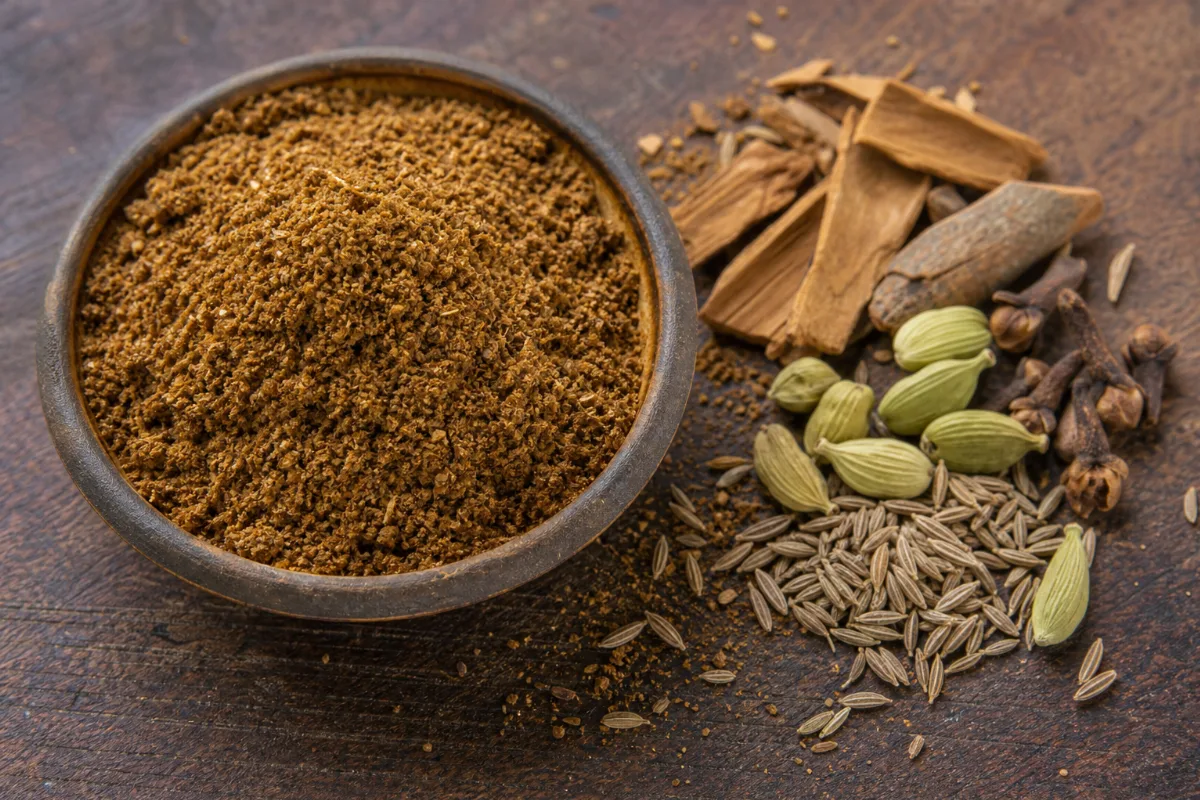
In the kitchen at a glance
Flavor:Warm / woodySweetEarthyHot / pungent
Aroma: Warm and sweet, with floral cardamom, earthy cumin and a gentle peppery bite.
Used in: curries, soups and stews, grilling and rubs, vegetables, rice and grains
Usual amount in food: No USDA entry and no source we opened gives a standard amount; one cooking source says to use it sparingly and add it near the end.
What it is
Garam masala is a blend of ground spices from the Indian subcontinent, used across Indian, Pakistani, Nepalese and Bangladeshi cooking. [1] The name is usually explained as "warm spice mix". One cooking writer stresses that the warmth is meant as a feeling in the body, not chili heat. [2]There is no single recipe. Each region, household and cook has a version, and no version is called more authentic than another. [1][2] The table shows what is often named, not a rule.
| Typical ingredient | Role in flavor | Link |
|---|---|---|
| Cardamom | Cool, floral lift [3] | More about Cardamom → |
| Cinnamon or cassia | Sweetness and warmth [2][3] | More about Cinnamon or cassia → |
| Cloves | Sweet, warm, strong [3] | More about Cloves → |
| Cumin | Earthy base [3] | More about Cumin → |
| Coriander seed | Lemony note and body [2] | More about Coriander seed → |
| Black pepper | Gentle bite [2][3] | More about Black pepper → |
| Nutmeg or mace | Depth and complexity [2] | Nutmeg, Mace |
| Bay leaf, fennel | Often added in some versions [1][3] | Bay leaf, Fennel seed |
Some recipes also add star anise, chili, nuts, onion, garlic or even a liquid to make a paste. [1] See Star anise and Chili.
Flavor and aroma
It is warm and layered rather than hot. Cinnamon and cloves bring sweetness, green cardamom is floral, cumin and coriander are earthy, and pepper adds a little bite. [3] The balance changes with the maker. [3]Toasting whole spices before grinding gives roasted, nutty notes that most ready-made blends lack. [3] The main aroma compounds are volatile, so long cooking drives them off. [3]
How it is used in cooking
- Ground, near the end: toast the whole spices gently, grind them, and stir the powder in near the end of cooking as a finishing spice. [1][2][3]
- Whole, at the start: whole spices, called khada masala, go into hot oil early and release flavor as they sizzle. [2][3]
- Dishes: curries, stews, marinades and pickles. [1] Cooks also use it in vegetable sautes, soups, on winter squash, as a dry rub for meat, and in desserts. [2]
- Substitutes: one cooking guide says curry powder works in a pinch but adds turmeric, so dishes turn yellow and earthier. It also gives equal parts cumin, coriander and cardamom with a pinch of cinnamon and clove as a rough stand-in. [3]
A little goes a long way. [2] The same guide says homemade blends are stronger, so use about half to three-quarters of what a store blend calls for. [3] That is one guide's view, not a tested rule.
Normal food amounts
USDA SR Legacy has no entry for garam masala, so we give no grams per teaspoon and no nutrient numbers. [9]| Measure | Grams | Source |
|---|---|---|
| 1 teaspoon | Not available | No USDA entry [9] |
| Typical recipe amount | Not found | The sources we opened say only "use sparingly" [2] |
We cannot say whether a blend is a "good source" of anything. A pinch is mostly flavor. Salt is not part of the usual spice list. [1] Some commercial mixes may add it, so check the label.
Buying, storing and preparing
- Forms: pre-ground powder, a paste in some recipes, or the whole spices you toast and grind yourself. [1][3]
- Quality: a good blend lists only spices. One guide advises wariness of fillers such as maltodextrin or anti-caking agents. [3]
- Fresh versus stale: ready-made blends are usually made from pre-ground spices that have already lost much aroma. [3]
- Storage: that guide advises an airtight container, cool and dark, away from the stove. It gives homemade ground blends as best within a few weeks and usable for several months, and sealed store blends as usable for about a year. [3] The same guide gives slightly different figures in different places, so treat these as rough.
- Adulteration: the same source says it happens in loosely regulated markets, and advises sealed, branded products. [3]
Health: what research says
Eating a spice blend in cooking is different from taking concentrated products. Garam masala is rarely studied as a blend. We found no source we opened that tests it for health effects, so the evidence belongs to the single spices.Food amounts vs supplements
| In normal cooking | In supplements and extracts | |
|---|---|---|
| Typical amount | No standard amount found [2][9] | Garam masala is not sold as a supplement in the sources we read |
| What studies mostly used | No study of the blend found | Studies on single spices, often extracts, are on their own pages |
| What we can say about benefit | Nothing about the blend as a whole | Not applicable |
| Main safety limit | Label allergens; possible lead in some ground spices [4][5] | Not applicable |
What the evidence shows
| Use | What the sources found | Strength of evidence | Form and population |
|---|---|---|---|
| Garam masala as a blend | No health study found | Insufficient evidence | Blend in food |
| Cinnamon (cassia) | Contains coumarin; Germany's BfR sets a daily limit and says cassia powder at a supplement dose can exceed it [6] | Established as a safety limit | Cassia powder; see Cinnamon |
| Black pepper | A BfR review says isolated piperine in bolus doses can raise levels of some drugs [8] | Mixed (human and animal studies) | Isolated piperine; see Black pepper |
| Nutmeg | Poison-centre cases came mostly from deliberate or accidental large ingestion [7] | Established as a safety concern | Large amounts; see Nutmeg |
| Cumin, coriander, cardamom, cloves | See their own pages | See each page | See each page |
The sources we read describe pepper and nutmeg problems at concentrated or large amounts, not at the pinch in a curry. [7][8]
Official statements
- BfR (Germany), 2012: tolerable coumarin intake 0.1 mg per kg per day. [6]
- FDA (US), 2023 date: sesame must be labeled as an allergen on packaged foods. [4]
- CDC (US), 2018: reports lead in spices and states no US permissible limit exists. [5]
- We found no official statement about garam masala itself.
Related pages
Health connections for Garam masala
What research links to this spice, and how strong the evidence is. Most studies use concentrated extracts or doses far above what you eat; each card says which.
Health effects of the blend as a whole
Not enough evidenceNo source we opened tested garam masala as a blend for any health effect.
Supplements: Not a supplement; the finding concerns food amounts of the blend.
Connected topics
Open a group to see how each topic connects and how strong the evidence is.
Root causes (2)
- Heavy Metal ExposureDocumented risk
A CDC-reported study found lead in some ground spices, including masala and curry blends; garam masala itself was not listed.
- Medication Side EffectsDocumented risk
Piperine from black pepper, in isolated bolus form, raised levels of some drugs; the finding is not for pepper in food and not for the blend.
Conditions & symptoms (2)
- Food AllergyDocumented risk
Spice mixes can list allergens such as sesame; US law requires sesame to be labeled on packaged foods.
- Lead PoisoningDocumented risk
Some ground spices tested high for lead; garam masala was not listed in the study and this says nothing about any brand.
Documented risks and interactions (5)
- Sesame allergen labeling. Some spice mixes list sesame, which US law requires on packaged-food labels since 2023.
- Lead in some ground spices. A North Carolina study found at least 1 mg/kg lead in about 29% of spice items; garam masala was not listed, but other masala and curry blends were.
- Cassia coumarin limit. If the blend uses cassia, coumarin adds to the daily total; BfR sets 0.1 mg per kg body weight per day.
- Nutmeg in large amounts. Poison-centre cases of nutmeg ingestion were mostly deliberate or accidental large amounts, including young children.
- Piperine and medicines. Isolated piperine as a bolus raised levels of some drugs in studies; animal studies at higher doses showed reproductive effects.
Frequently asked questions
Is garam masala hot?
Not in the sense of chili heat. The name means warm spices, and the warmth is meant as a feeling in the body. [2] Pepper adds a gentle bite, and some recipes add chili. [1][3]
How much is normal?
We found no standard amount. Cooks say to use it sparingly and stir it in near the end. [2] There is no USDA entry for grams per teaspoon. [9]
Is it safe in pregnancy?
The sources we read give no advice for the blend. Food amounts of its spices are not described as a problem there, but ask your midwife or doctor about large amounts or supplements.
Can I take it with medicines?
In cooking amounts, the sources we read describe no interaction for the blend. Isolated piperine from pepper can affect some drugs, but that is a concentrated form. [8]
Does it contain sesame or other allergens?
Recipes vary. US labels must list sesame, so read the ingredient list and the "Contains" line. [4]
Can I use curry powder instead?
In a pinch, yes, but it adds turmeric and an earthier taste. [3]
More details: evidence, limits and cautions
The details behind this page: cautions, limits of the evidence and where sources disagree. Open any note to read it.
Safety note at a glance
Safety in more detail
- Medicines: for the blend, the sources we read do not describe interactions. Piperine from black pepper can affect some drugs as an isolated bolus. [8] See the pages of the spices in it.
- Pregnancy: the sources we read give no blend-specific advice. Animal studies with high isolated piperine doses showed reproductive effects. [8] Ask your midwife or doctor about large amounts.
- Breastfeeding: the sources we read do not describe it for this blend.
- Children: a 15 kg child reaches the BfR coumarin limit with about 0.5 g of average cassia. [6] Nutmeg exposures in children under 13 were common in one poison-centre review. [7]
- Allergy: sesame is the ninth major US food allergen and must be labeled on packaged foods since 1 January 2023. FDA's example label shows "spices (sesame, wheat)" with a "Contains" line. [4] We found no source saying garam masala usually contains sesame, so read the whole label.
- Liver and kidney: cassia coumarin is a liver concern for sensitive people. [6] The sources we read do not describe kidney problems.
- Surgery: the sources we read do not describe a warning for this blend.
- Quality and contamination: a North Carolina study found at least 1 mg/kg lead in 111 of 386 spice items (28.8%). It did not list garam masala, but curry powder averaged 1.4 mg/kg over two samples and one kabsa blend sample reached 19 mg/kg. The authors say the US has no permissible lead limit for spices. [5] Causes named included polluted soil, lead dust from grinding machines, and deliberate additions for color or weight. [5]
- Amounts that cause trouble: the sources we read give none for the blend. BfR's limit is 0.1 mg coumarin per kg body weight per day. [6]
References
- Wikipedia — Garam masala. https://en.wikipedia.org/wiki/Garam_masala (accessed 2026-10-24)
- WFAE — Garam masala, a taste worth acquiring (2011). https://www.wfae.org/2011-04-27/garam-masala-a-taste-worth-acquiring (accessed 2026-10-24)
- Kvali Food — Garam masala definitive guide (commercial cooking guide; secondary source). https://kvalifood.com/article/garam-masala-definitive-guide/ (accessed 2026-10-24)
- FDA (US) — The FASTER Act: Sesame is the ninth major food allergen. https://www.fda.gov/food/food-allergies/faster-act-sesame-ninth-major-food-allergen (accessed 2026-10-24)
- CDC (US) — MMWR 2018;67(46): lead in spices, North Carolina. https://www.cdc.gov/mmwr/volumes/67/wr/mm6746a2.htm (accessed 2026-10-24)
- BfR (Germany) — FAQ on coumarin in cinnamon and other foods, 2012. https://www.bfr.bund.de/en/frequentlyaskedquestionsoncoumarinincinnamonandother_foods-8487.html (accessed 2026-10-24)
- Nutmeg poisonings: a retrospective review of 10 years experience from the Illinois Poison Center, 2001-2011. J Med Toxicol 2014; abstract read via Europe PMC. https://pubmed.ncbi.nlm.nih.gov/24452991/ (accessed 2026-10-24)
- Ziegenhagen R et al. (BfR) — Safety aspects of the use of isolated piperine ingested as a bolus. Foods 2021; abstract read via Europe PMC. https://pubmed.ncbi.nlm.nih.gov/34574230/ (accessed 2026-10-24)
- USDA FoodData Central, SR Legacy (April 2018) — the site's USDA data file lists no garam masala entry.