Celery seed: Flavor, Cooking Use and Health Facts
Celery seed is earthy and slightly bitter and used in pickles, slaws and celery salt; small trials suggest blood pressure effects from supplements, and celery allergy can be severe.
Content last updated . This page has not been medically reviewed.
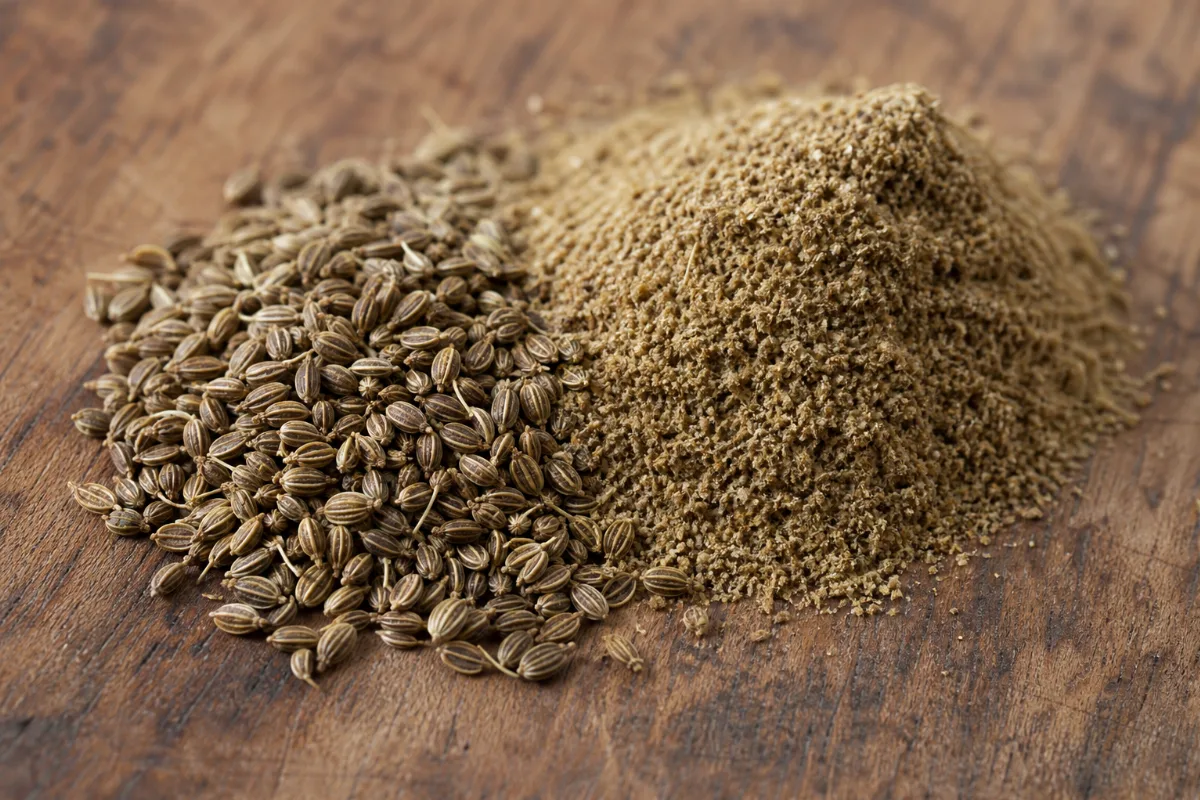
In the kitchen at a glance
Flavor:EarthyBitter
Aroma: Strong, green and celery-like, with a slightly citrusy edge.
Used in: pickling, vegetables, soups and stews, grilling and rubs, tea and drinks
Usual amount in food: USDA lists 2.0 g per teaspoon of celery seed; we found no source that sets a usual recipe amount.
What it is
Celery seed comes from Apium graveolens, the same species that gives stalk celery, leaf celery and celeriac. [1] The "seeds" are very small fruits, used whole or ground. [1] Celery is grown for its seeds in temperate countries. [1] The spice is not the same as lovage, a related plant in the carrot family. [1]Flavor and aroma
Celery seed tastes like concentrated celery with a slightly bitter edge. [2] Wikipedia names butylphthalide and sedanolide as the main taste and aroma compounds of celery. [1] A safety assessment of celery seed oil found it is about 61% limonene, the compound that smells of citrus peel, plus beta-selinene and senkyunolide A. [3] That is why a faint citrus note sits behind the green, earthy smell.The seed has a strong flavor, so a little goes a long way. [2] The sources we read do not describe how toasting changes it. It pairs well with cabbage, potatoes, tomato and vinegar-based dishes. [2]
How it is used in cooking
- Pickling and sauerkraut: whole seeds go into brines and cold vegetable ferments. [2]
- Cold salads: coleslaw and potato salad. [2]
- Sauces, dressings and dry rubs: one retailer guide recommends it in all three. [2]
- Celery salt: ground seed mixed with salt. It flavors Bloody Marys and Chicago-style hot dogs, and it is an ingredient in Old Bay seasoning. [1]
- Soda: the seed flavors Dr. Brown's Cel-Ray soda. [1]
Whole seed has a mild crunch and suits brines. Ground seed blends into dressings and sauces. [2]
Substitutes (from one retailer guide): minced fresh celery tops (2 tablespoons for 1/2 teaspoon of seed), celery salt (use less salt elsewhere), caraway in coleslaw, and dried celery, dill seed or fennel seed. The same guide advises against coriander because its flavor is very different. [2] This is one spice seller's advice, not a tested rule.
Normal food amounts
| Measure | Grams | Source |
|---|---|---|
| 1 teaspoon | 2.0 g | USDA [11] |
| 1 tablespoon | 6.5 g | USDA [11] |
| Typical recipe amount | Not found | We opened no source that states one |
What one teaspoon (2.0 g) provides, calculated from USDA values per 100 g:
| Nutrient | One teaspoon |
|---|---|
| Energy | about 8 kcal |
| Fiber | about 0.2 g |
| Calcium | about 35 mg |
| Iron | about 0.9 mg |
| Magnesium | about 9 mg |
| Manganese | about 0.15 mg |
The USDA SR Legacy data are from 2018, and real products vary. [11] We did not compare these numbers with official daily values, so we do not call celery seed a "good source" of anything. Most recipes use much less than a teaspoon per serving, so the nutrient contribution is small.
Buying, storing and preparing
- Forms: whole seed, ground seed, celery salt, and dried celery leaf (used as a herb). [1][2]
- Whole vs ground: one retailer guide says whole seed suits brines and ground seed suits smooth sauces. [2]
- Storage and shelf life: the sources we read give no storage rules for the seed. The usual cooks' advice is a cool, dark, airtight jar, but we found no source we could verify, so we give no shelf life.
- Celery salt: it contains salt, so reduce salt elsewhere in the recipe. [2]
- Quality problems: the sources we read do not describe adulteration of celery seed.
Health: what research says
Eating celery seed in cooking is different from taking concentrated products. Almost all human research uses seed preparations in capsules, not a pinch on food.Food amounts vs supplements
| In normal cooking | In supplements and extracts | |
|---|---|---|
| Typical amount | About 2.0 g per teaspoon (USDA); no usual recipe amount found [11] | One small trial used 150 mg a day for 12 weeks. A pooled analysis found larger effects with seed or preparations above 1,000 mg a day. This is what the studies used, not advice. [5][4] |
| What studies mostly used | We found no study of celery seed sprinkled on food | Celery seed or other celery preparations, in adults [4][5] |
| What we can say about benefit | Nothing can be said for food amounts | Some lower blood pressure and triglycerides in small trials, with large differences between studies [4][5] |
| Main safety limit | Allergy; sun-sensitive skin reactions are mainly linked to handling celery [6][7] | Not enough safety data in the sources we read; allergy applies to every form [6] |
What the evidence shows
| Use | What the sources found | Strength of evidence | Form and population |
|---|---|---|---|
| Blood pressure | A 2025 pooling of 10 trials (511 people) found lower systolic and diastolic pressure; the abstract calls efficacy uncertain. [4] | Promising but limited | Celery preparations, adults |
| Blood sugar and triglycerides | The same pooling found lower fasting glucose and triglycerides, and no overall effect on total cholesterol, LDL or HDL. [4] | Mixed | Celery preparations, adults |
| Metabolic syndrome | In a trial of 28 people, 150 mg a day of celery seed for 12 weeks was linked to lower blood pressure, triglycerides, VLDL and uric acid; insulin sensitivity did not change. [5] | Promising but limited (14 people per group) | Celery seed, adults with metabolic syndrome |
| Gout and uric acid | Celery seed extracts lowered uric acid and ankle swelling in mice and rats. [9] The one human uric acid result above is not a gout trial. [5] | Lab or animal only | Seed extracts, rodents |
| Arthritis and pain | A review describes a celery seed extract working in rodent models of arthritis. [8] | Lab or animal only | Extract, rodents |
| Celery seed as a food | No study found | Insufficient evidence | Food amounts |
For supplement forms, trials and interactions in depth, see the full herb guide: Celery seed.
Official statements
- EU (Regulation 1169/2011): celery and products thereof are on the list of allergens that must be declared on prepacked food. [10]
- EFSA FEEDAP Panel (feed additive opinion): celery seed oil is recognized as a food flavoring and should be treated as an irritant and sensitizer for people handling it. [3]
- We found no official statement on a safe amount of celery seed in the pages we opened.
Related pages
Health connections for Celery seed
What research links to this spice, and how strong the evidence is. Most studies use concentrated extracts or doses far above what you eat; each card says which.
Blood pressure
Preliminary or mixedA 2025 pooling of 10 trials (511 adults) found lower systolic and diastolic blood pressure with celery preparations, though the authors call efficacy uncertain.
Supplements: Finding is for supplement-type preparations; no study of seed used as a spice was found.
Triglycerides and fasting glucose
Preliminary or mixedThe same pooling found lower triglycerides and fasting glucose, and no overall change in total cholesterol, LDL or HDL.
Supplements: Supplement-type preparations in adults; not shown for food amounts.
Metabolic syndrome markers
Preliminary or mixedIn a trial of 28 adults, 150 mg a day of celery seed for 12 weeks was linked to lower blood pressure, triglycerides, VLDL and uric acid, with no change in insulin sensitivity.
Supplements: Capsule-type dose from one trial; not advice and not for food amounts.
Uric acid and gout (animals)
Lab or animal research onlyCelery seed extracts lowered uric acid and reduced ankle swelling in mice and rats. No gout trial in people was found.
Supplements: Lab and animal finding for extracts only.
Arthritis and pain models (animals)
Lab or animal research onlyA review describes a celery seed extract reducing arthritis and giving pain relief in rodent models.
Supplements: Lab and animal finding for one extract only.
Connected topics
Open a group to see how each topic connects and how strong the evidence is.
Health goals (2)
- Blood Pressure SupportPreliminary or mixed
Pooled small trials of celery preparations found lower blood pressure; the authors call efficacy uncertain, and no study used seed as a spice.
- Metabolic HealthPreliminary or mixed
One small trial in metabolic syndrome linked celery seed to lower blood pressure and triglycerides.
Body systems (3)
- Immune SystemDocumented risk
Celery allergy can be severe; celery and products thereof are a declared EU allergen.
- Cardiovascular SystemPreliminary or mixed
Blood pressure and triglyceride findings come from small trials of supplement-type celery preparations.
- Heart & CirculationPreliminary or mixed
Blood pressure and triglyceride findings come from small trials of supplement-type celery preparations.
Body parts (2)
- Blood VesselsPreliminary or mixed
Blood pressure was lower in pooled trials of celery preparations; evidence is limited.
- SkinDocumented risk
Celery furocoumarins can cause sun-triggered skin blistering, mainly with frequent handling or tanning-bed use.
Root causes (1)
- Medication Side EffectsDocumented risk
Because celery preparations lowered blood pressure in trials, people on blood pressure medicine should ask a pharmacist before using supplements. This is a precaution, not a documented interaction.
Biomarkers (2)
- TriglyceridesPreliminary or mixed
Triglycerides were lower in a pooled analysis and in one small celery seed trial; results varied.
- Blood GlucosePreliminary or mixed
Fasting glucose was lower in the pooled analysis, with a borderline interval; insulin sensitivity did not change in one celery seed trial.
Conditions & symptoms (4)
- AnaphylaxisDocumented risk
Of 79 people with celery allergy, 49 had systemic reactions; Api g 7 sensitization was linked to higher odds of severe reactions.
- Food AllergyDocumented risk
Celery allergy is common enough to be a declared EU allergen and can be severe.
- Essential HypertensionPreliminary or mixed
Pooled trials of celery preparations found lower blood pressure, but the authors call the evidence uncertain; this is not a treatment.
- Metabolic Syndrome XPreliminary or mixed
One small randomized trial (28 adults) linked celery seed to lower blood pressure, triglycerides and uric acid.
Documented risks and interactions (3)
- Celery allergy (documented risk). In 79 people with celery allergy, 49 had systemic reactions. Sensitization to mugwort pollen and to the protein Api g 7 was linked to severe reactions. Celery and products thereof must be declared as an allergen in the EU.
- Sun-sensitive skin reaction (documented risk). Celery contains furocoumarins and psoralens that can cause blistering of skin in sunlight; typical diet amounts are usually too low, but people who handle celery often or use tanning beds are at higher risk.
- Seed oil irritation and sensitization (documented risk). An EFSA panel concluded celery seed oil should be treated as an irritant to skin and eyes and as a skin and respiratory sensitizer for people handling it.
Frequently asked questions
Is celery seed sweet?
No. It tastes like concentrated celery, earthy with a slightly bitter edge. [2]
How much is normal?
USDA lists 2.0 g per teaspoon. [11] We found no source for a usual recipe amount; one guide pairs 1/2 teaspoon of seed with 2 tablespoons of minced celery tops as a swap. [2]
Is it safe in pregnancy?
The sources we opened do not describe pregnancy safety, so ask your midwife or doctor, especially about supplements.
Can I take it with medicines?
In food amounts, the sources we read name no problems. Supplements lowered blood pressure in pooled trials, so ask a pharmacist if you take blood pressure medicine. [4]
Can celery seed cause an allergic reaction?
Yes. Celery allergy can be severe, and celery salt and seed count as celery. [6][10]
Does it help gout?
Not shown in people. Rodent studies found lower uric acid, but no gout trial in people was found. [9]
More details: evidence, limits and cautions
The details behind this page: cautions, limits of the evidence and where sources disagree. Open any note to read it.
Safety note at a glance
Safety in more detail
- Medicines: the 2025 pooling found lower blood pressure, so ask a pharmacist if you take blood pressure medicine and plan to use supplements. [4] A review says one celery seed extract did not significantly affect the liver enzymes that clear many drugs. This is a statement about one extract only. [8]
- Pregnancy: the sources we opened do not describe pregnancy safety. Ask your midwife or doctor about supplements.
- Breastfeeding: the sources we opened do not describe it.
- Children: the sources we opened do not describe it.
- Allergy: in a study of 79 people with celery allergy, 49 had systemic reactions and 30 had mild oral or nose and eye symptoms. [6] People sensitized to mugwort pollen were at risk, and sensitization to one celery protein (Api g 7) was linked to roughly six times higher odds of a severe reaction. [6] Celery and products made from it are on the EU list of allergens that must be declared. [10] Cross-reactions with carrot and ragweed have been reported. [1]
- Liver and kidney: the sources we opened do not describe it.
- Surgery: the sources we opened do not describe it. Tell the surgical team about any supplement.
- Quality and contamination: the sources we opened do not describe it.
- Amounts that cause trouble: celery contains furocoumarins that can cause blistering of skin in sunlight. In a typical diet the amount is usually too small, but people who often handle celery, or use tanning beds, are at higher risk. [7] A safety assessment of the essential oil found it should be treated as a skin and eye irritant and a skin and respiratory sensitizer. [3]
References
- Wikipedia — Celery (covers celery seed uses, flavor compounds and allergy; cites McGee, Wilson and others). https://en.wikipedia.org/wiki/Celery_seed (accessed 2026-10-24)
- The Spice House — Celery Seed Substitute (retailer guide). https://www.thespicehouse.com/blogs/news/celery-seed-substitute (accessed 2026-10-24)
- EFSA FEEDAP Panel — Safety and efficacy of a feed additive consisting of an essential oil obtained from the fruit of Apium graveolens L. (celery seed oil). https://pmc.ncbi.nlm.nih.gov/articles/PMC11270010/ (accessed 2026-10-24)
- Effects of celery (Apium graveolens) on blood pressure, glycemic and lipid profile in adults: a systematic review and meta-analysis of randomized controlled trials. Front Nutr 2025; abstract read via Europe PMC. https://pubmed.ncbi.nlm.nih.gov/40765738/ (accessed 2026-10-24)
- Effect of celery seed administration on the components of metabolic syndrome, insulin sensitivity, and insulin secretion: a clinical trial. 2026; abstract read via Europe PMC. https://pubmed.ncbi.nlm.nih.gov/41599709/ (accessed 2026-10-24)
- New light on an old syndrome: role of Api g 7 in mugwort pollen-related celery allergy. J Allergy Clin Immunol 2024; abstract read via Europe PMC. https://pubmed.ncbi.nlm.nih.gov/38763171/ (accessed 2026-10-24)
- Not as bland as you may think: celery commonly induces phytophotodermatitis. Cutis 2025; abstract read via Europe PMC. https://pubmed.ncbi.nlm.nih.gov/40315466/ (accessed 2026-10-24)
- Celery seed and related extracts with antiarthritic, antiulcer, and antimicrobial activities. Prog Drug Res 2015; abstract read via Europe PMC. https://pubmed.ncbi.nlm.nih.gov/26462366/ (accessed 2026-10-24)
- Anti-gouty arthritis and anti-hyperuricemia properties of celery seed extracts in rodent models. Mol Med Rep 2019; abstract read via Europe PMC. https://pubmed.ncbi.nlm.nih.gov/31702020/ (accessed 2026-10-24)
- University of Manchester — EU legal requirements on food allergen labelling (lists celery among Annex II allergens of Regulation 1169/2011). https://sites.manchester.ac.uk/foodallergens/information-for-food-businesses/eu-legal-requirements-on-food-allergen-labelling/ (accessed 2026-10-24)
- USDA FoodData Central, SR Legacy (April 2018) — Spices, celery seed (fdc_id 170920), per-100 g values and household portions from the site's USDA data file.