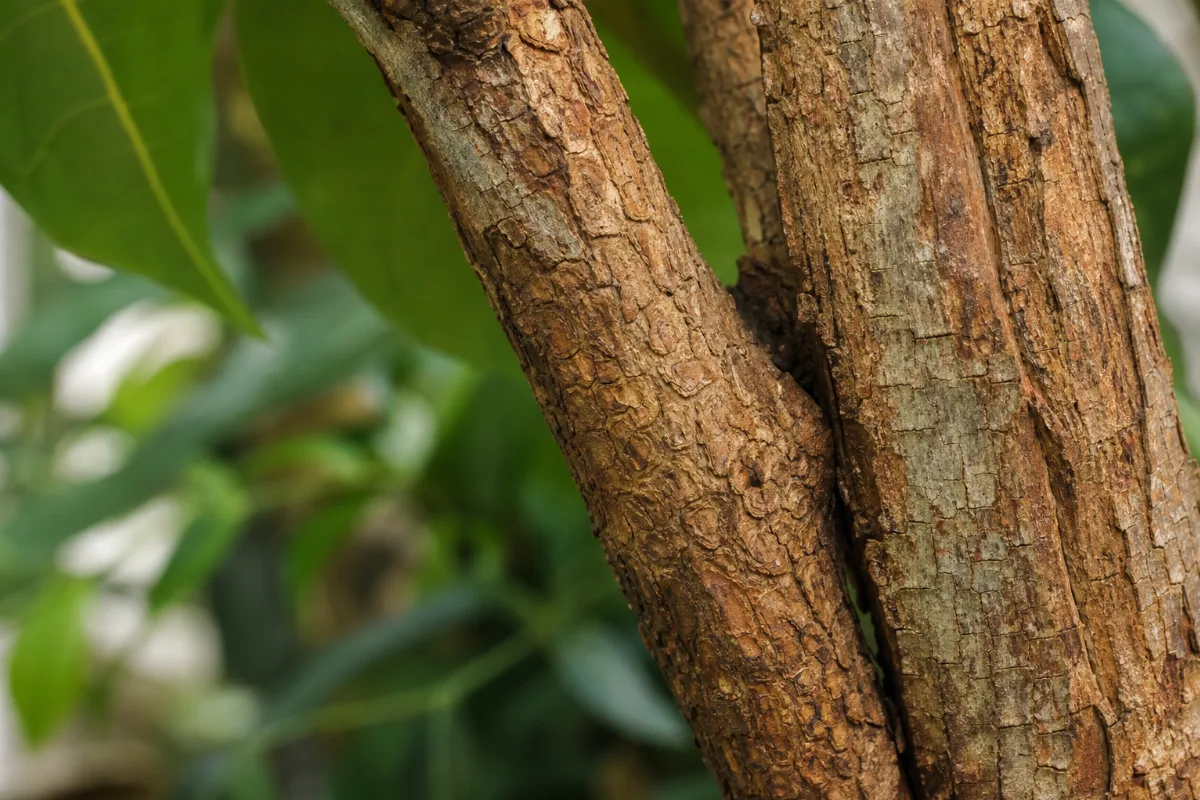
Herbs & Botanicals · Herbs · African tree bark sold for sexual performance and weight loss, with serious heart and blood pressure cautions
Yohimbe
Pausinystalia johimbe (K.Schum.) Pierre ex Beille (GBIF accepted name: Corynanthe johimbe K.Schum.) · also called Yohimbe, yohimbe bark, johimbi, yohimbine (main alkaloid)
Yohimbe is a West and Central African tree whose bark contains yohimbine, a stimulant-type compound that blocks alpha-2 receptors. The bark is sold in supplements for sexual performance, weight loss and sport. Purified yohimbine hydrochloride is a different product, used as a prescription-type drug. Research on bark supplements is very limited, their yohimbine content varies from none to a drug-sized amount, and yohimbine has been linked to heart rhythm and blood pressure problems, anxiety and seizures.
General information, not medical advice. Last substantive update · Not medically reviewed. A named clinician has not signed off on this page. How this page is made
About Yohimbe
Yohimbe is the bark of an African tree that contains yohimbine. It is promoted for sexual performance, weight loss and sport, but there is very little research on bark supplements, and yohimbine has documented heart, blood pressure, anxiety and other serious risks. Product content is unreliable.
What it is
Yohimbe is an evergreen tree native to central and western Africa. Its bark holds yohimbine, an indole alkaloid. Plant databases disagree on the name: GBIF lists Pausinystalia johimbe as a synonym of the accepted Corynanthe johimbe, while NCCIH writes Pausinystalia yohimbe.
Yohimbine blocks alpha-2 receptors and raises noradrenaline release. This is why it can raise heart rate, blood pressure and anxiety.
Two things that are not the same
Yohimbine hydrochloride is a purified compound used as a prescription-type drug. Yohimbe bark supplements contain an unpredictable amount of yohimbine, from none detected to 12.1 mg a serving in one US test, and some products seem to use synthetic or highly processed yohimbine.
Trial results for the drug should not be applied to bark products, and safety reports often cannot tell which product was taken.
What the research shows
Pooled analyses of small trials of purified yohimbine found a better erectile function response than placebo, but these trials are older and small. Evidence for weight loss and sport comes from two small trials and is insufficient. We found no trial of bark supplements.
NCCIH concludes there is not enough evidence to say yohimbe helps any condition.
At a glance
Traditional uses history, not proof
- Bark as an aphrodisiac and sexual performance enhancer in central and western Africa
- Bark as a mild hallucinogen (NCCIH)
Studied for research
- Erectile dysfunction with purified yohimbine, low
- Erectile dysfunction with bark supplements, insufficient
- Weight loss and body fat, insufficient
- Sport performance, insufficient
- Mood, insufficient (panic and anxiety are documented harms)
Main compounds
- Yohimbine (main active alkaloid)
- Rauwolscine and corynanthine (other bark alkaloids)
- Yohimbine hydrochloride (purified drug form)
Common forms
- Bark powder and capsules
- Bark extracts and blends, often with other stimulants
- Purified yohimbine hydrochloride (prescription-type drug, not a supplement)
Research links: NCCIH: Yohimbe · Cohen 2016 supplement content study (PubMed) · Research Library · Genes & Biomarkers Library
The plant and its history
- Accepted scientific name
- Corynanthe johimbe K.Schum. (GBIF accepted name); sold as Pausinystalia johimbe (K.Schum.) Pierre ex Beille
- Naming authority
- GBIF backbone (read 2026-10-25): Pausinystalia johimbe (K.Schum.) Pierre ex Beille, key 2909152, is a SYNONYM of the accepted Corynanthe johimbe K.Schum., key 2909155. NCCIH uses Pausinystalia yohimbe, a spelling GBIF lists as a different name (P. yohimba, key 8637691).
- Synonyms
- Pausinystalia johimbe; Pausinystalia yohimbe (NCCIH spelling)
- Common names
- Yohimbe (English); Johimbi (English (NCCIH)); Yohimbe bark (English)
- Botanical family
- Rubiaceae (coffee family)
- Classification
- Plantae > Tracheophyta > Magnoliopsida > Gentianales > Rubiaceae > Corynanthe > Corynanthe johimbe
- Native range
- NCCIH: evergreen tree native to central and western Africa.
- Habitat
- Not verified in the sources read.
- What the plant looks like
- Roots: Not verified.; Stems: Bark is the part used (NCCIH). Microscopic bark anatomy exists (Raman 2013), not read in detail.; Leaves: Leaves also contain yohimbine per one case report abstract; not verified.; Flowers: Not verified.; Fruit: Not verified.
- Cultivation
- Not verified.
- Harvest and processing
- Not verified.
- Look-alikes and adulterants
- Name: Other bark or fillers sold as yohimbe; Note: Of 12 raw bark samples, 3 were probably adulterated and 4 had impurities (Raman 2013).; Name: Rauwolfia (snakeroot) alkaloids; Note: Share the yohimban alkaloid structure with yohimbine; a different plant and not covered here.
- Sustainability and conservation
- Not assessed in the sources read.
Traditional use and history history, not clinical proof
| Tradition or era | Documented use | Source |
|---|---|---|
| Traditional use in central and western Africa | Bark used as an aphrodisiac and sexual performance enhancer, and as a mild hallucinogen. | s-nccih-yohimbe |
| Modern supplements | Promoted for erectile dysfunction, athletic performance, weight loss and mood. NCCIH says there is not enough evidence for any condition. | s-nccih-yohimbe |
| Regulation | Restricted or banned in many countries because of inaccurate labelling and serious side effects (NCCIH). Health Canada 2006 advisory treats yohimbine as a prescription substance. | s-healthcanada-2006 |
| Early regulator monographs (EMA/HMPC, Commission E) | Not verified. No EMA/HMPC document found. | s-nccih-yohimbe |
Traditional use shows how a plant was used. It does not show that a supplement works or is safe today.
What is inside, and how it may work
What the plant contains and how those compounds act in cells and animals. Laboratory and animal mechanisms are not proven effects in people.
Main compounds
| Compound | Family | Where it is concentrated | Activity studied | Level of evidence |
|---|---|---|---|---|
| Yohimbine PubChem 8969 | indole alkaloid (yohimban) | Bark Raw bark samples 0.1 to 0.91% (Raman 2013); supplements none detected to 12.1 mg per serving (Cohen 2016) | Blocks alpha-2 adrenergic receptors and raises noradrenaline release; the active alkaloid behind both effects and harms. 24 6 21 23 | Human data |
| Yohimbine hydrochloride PubChem 6169 | salt of yohimbine (purified drug form) | Not a plant part; purified compound Not applicable | Form used in drug trials, kept separate from bark supplements. 28 23 | Human data |
| Rauwolscine (alpha-yohimbine) PubChem 643606 | indole alkaloid, stereoisomer of yohimbine | Bark Not found in 39% of supplements | Co-occurring bark alkaloid; its absence suggests highly processed or synthetic yohimbine. 6 23 | Human data |
| Corynanthine PubChem 92766 | indole alkaloid, stereoisomer of yohimbine | Bark Not found in 39% of supplements | Co-occurring bark alkaloid; used as a marker for genuine bark. 6 23 | Human data |
Mechanisms, receptors and pathways
| Target or pathway | Gene or receptor | What was found | Level |
|---|---|---|---|
| Alpha-2 adrenergic blockade | Alpha-2 adrenergic receptors | Yohimbine blocks alpha-2 receptors, raising noradrenaline release. This explains rises in heart rate, blood pressure, adrenaline and anxiety seen in humans. 21 3 26 | Human data |
| Proposed fat release | Alpha-2 receptors on fat cells | Proposed basis of fat-loss claims; human trials do not show lasting weight loss. 22 5 | Lab |
Absorption, metabolism and elimination
- Absorption
- Oral bioavailability averaged 22.3% (SD 21.5) in healthy subjects; very variable.
- Distribution
- Steady-state volume of distribution about 32 L (IV 5 mg).
- Metabolism
- Cleared mainly by CYP2D6 to 11-hydroxy-yohimbine; clearance varied from 25 to 15,864 mL/min after 5 mg depending on CYP2D6 genotype; paroxetine cut clearance more than fivefold in extensive metabolisers; yohimbine did not change CYP3A activity.
- Elimination
- Terminal half-life about 91 minutes; metabolite 11-hydroxy-yohimbine about 347 minutes; very little yohimbine is excreted unchanged in urine.
- Bioavailability
- About 22% on average with wide spread.
Isolated compounds versus whole extracts
Prescription-type yohimbine hydrochloride is a single purified compound at a known amount. Bark supplements contain an unpredictable amount of yohimbine, sometimes none, plus other alkaloids, and some products appear to contain synthetic or highly processed yohimbine. Evidence for one form does not carry over to the other.
Nutritional composition
Yohimbe bark is not a food and has no nutritional role.
2 low certainty5 not enough evidence
What is Yohimbe good for?
The main proposed uses and how strong the human evidence is for each. None of these is shown to be worth the safety risks for people in the risk groups on the Safety tab.
Benefits, one by one
Each card is a research question, not a promise. Tap a goal to filter. Open a card to see the studies, doses and limits.
Erectile dysfunction (purified yohimbine, the prescription-type compound)
Low certaintyTwo pooled analyses of small trials found purified yohimbine worked better than placebo for erectile dysfunction. These trials did not test bark supplements, which are a different product.
3 studiesPurified yohimbine hydrochloride. Not bark supplements.
Studies, doses and limits
What the trials found
A 2021 meta-analysis of 8 randomized trials found yohimbine alone (OR 2.08) and in combination with other supplements (OR 6.35) gave a greater chance of improved erectile function than placebo. The same review found yohimbine alone did not significantly improve overall sexual function (P = .07). A 1998 meta-analysis of 7 placebo-controlled trials of yohimbine alone reported OR 3.85 in favour of yohimbine and called serious reactions infrequent and reversible. Both are small, older, mostly short trials. NCCIH says there is not enough evidence to reach conclusions for yohimbe as a supplement.
Results
Better than placebo for erectile function in pooled small trials of purified yohimbine.
Effect sizes as reported
Wibowo 2021: alone OR 2.08 (95% CI 1.30 to 3.32); combined OR 6.35 (3.01 to 13.41); pooled OR 2.87 (1.94 to 4.25). Ernst 1998: OR 3.85.
Why this rating
Pooled results favour yohimbine, but the trials are small and old, the combined arm mixes in other ingredients, and later safety reports are serious. The reviewers did not give a GRADE rating in the abstracts.
Form and dose studied
Purified yohimbine hydrochloride. Not bark supplements.
Who was studied
Men with erectile dysfunction in mostly older trials.
Limits
Abstracts only. Dose details were not read. Results cannot be carried over to yohimbe bark products.
Why researchers looked
Yohimbine blocks alpha-2 receptors, which can raise nerve signals that help erection. It was used as a drug for erectile dysfunction before newer medicines.
Traditional use
Yohimbe bark has been used in West and Central Africa as an aphrodisiac (NCCIH).
Proposed mechanism Pharmacological theory
Yohimbine blocks alpha-2 adrenergic receptors and raises noradrenaline release. This is the same action that raises blood pressure and heart rate.
A proposed mechanism does not show that the effect happens in people.
Open the Safety tab first. Yohimbine raised blood pressure, heart rate and anxiety in poison-centre data and has been linked to serious events.
Erectile dysfunction (yohimbe bark supplements)
Not enough evidenceWe found no good trial of yohimbe bark supplements for erectile dysfunction. The yohimbine in these products varies from none to a drug-sized amount, so the drug trials cannot be applied to them.
2 studiesBark powders, extracts and blends. Content unreliable.
Studies, doses and limits
What the trials found
NCCIH states there is very little research in people on yohimbe as a dietary supplement and not enough evidence for any condition, including erectile dysfunction. A test of 49 US brands found yohimbine per serving ranged from none detected to 12.1 mg, and for brands that gave a number the real content was 23% to 147% of the label.
Results
No usable human evidence for bark supplements.
Effect sizes as reported
No pooled data for bark supplements.
Why this rating
No controlled trials of bark supplements were found, and product content is unreliable.
Form and dose studied
Bark powders, extracts and blends. Content unreliable.
Who was studied
Not studied.
Limits
Our search was limited to PubMed and agency pages; a trial we missed is possible.
Why researchers looked
Bark supplements are sold as natural sexual-performance products.
Traditional use
Bark has been used traditionally as an aphrodisiac (NCCIH).
Proposed mechanism Pharmacological theory
Depends on the yohimbine the product happens to contain, which is unpredictable.
A proposed mechanism does not show that the effect happens in people.
Heart, blood pressure and anxiety risks apply. It is illegal in the US to market an over-the-counter product with yohimbine as a treatment for erectile dysfunction without FDA approval (NCCIH).
Weight loss and body fat
Not enough evidenceYohimbine is sold as a fat burner. The evidence is one small trial in 20 soccer players and a combination-product study. It does not show clear weight loss.
5 studiesPurified yohimbine tablets in the trial; mixed product in the second.
Studies, doses and limits
What the trials found
In a randomized trial of 20 male professional soccer players, 20 mg a day of yohimbine for 21 days did not change body mass or muscle mass, but body fat percentage fell from 9.3% to 7.1% (p < 0.05); there was no change in performance and no side effects were reported. A 12-person crossover study of a multi-ingredient fat-loss product that included yohimbine HCl found no difference from placebo in fat oxidation (p = 0.12). A 2011 review found no conclusive evidence of benefit for body mass.
Results
Possible small fat-percentage change in one tiny trial; no weight loss; combination product null.
Effect sizes as reported
Ostojic 2006: fat 7.1 vs 9.2% after 21 days. Alkhatib 2015: FAO between-condition p = 0.12.
Why this rating
One small trial in elite athletes plus a combination-product study that cannot isolate yohimbine.
Form and dose studied
Purified yohimbine tablets in the trial; mixed product in the second.
Who was studied
Male professional soccer players; healthy recreationally active adults.
Limits
Tiny samples, short, no long-term data.
Why researchers looked
Blocking alpha-2 receptors can free fat from fat cells in lab studies, so yohimbine is promoted for fat loss.
Traditional use
Not a traditional use (NCCIH lists weight loss as a promoted modern use).
Proposed mechanism Preliminary mechanism
Proposed: blocking alpha-2 receptors increases fat release. Not shown to give lasting weight loss in people.
A proposed mechanism does not show that the effect happens in people.
The soccer trial reported no side effects, but poison-centre data show frequent heart-rate, blood pressure and anxiety problems with yohimbine products; weight loss was a stated reason for use in 9% of those cases.
Sport performance and energy
Not enough evidenceOne single-dose study in 18 women found better sprint power after 2.5 mg of yohimbine HCl. Another trial found no performance change. Reviewers find no conclusive evidence.
3 studiesPurified yohimbine hydrochloride, not bark supplements.
Studies, doses and limits
What the trials found
In a crossover study of 18 active women, a single 2.5 mg dose of yohimbine hydrochloride raised mean power and total work, lowered fatigue index and lactate, and raised epinephrine and heart rate compared with placebo. In the 20-player soccer trial, 21 days of yohimbine did not change bench press, leg press, jump or sprint-type tests. Cimolai 2011 found no conclusive evidence for exercise tolerance or performance.
Results
Mixed: a small acute benefit in one single-dose study; no benefit after 3 weeks in another.
Effect sizes as reported
Barnes 2022: mean power p < 0.001 (effect size eta-squared 0.024); heart rate also higher.
Why this rating
Two small trials with different results and different designs.
Form and dose studied
Purified yohimbine hydrochloride, not bark supplements.
Who was studied
Active women; elite male soccer players.
Limits
Small, short, one-time dose; heart rate also rose.
Why researchers looked
Yohimbine raises adrenaline, which could help short bursts of effort.
Traditional use
Not a traditional use.
Proposed mechanism Preliminary mechanism
Higher adrenaline (epinephrine) was measured after yohimbine in the sprint study.
A proposed mechanism does not show that the effect happens in people.
Raised heart rate and adrenaline are the same effects that cause harm in people with heart or blood pressure problems. Sports bodies may restrict stimulants; current anti-doping status was not checked.
Mood and mental energy
Not enough evidenceYohimbe is promoted as a mood booster. The evidence we found points the other way: yohimbine causes nervousness and panic symptoms in lab tests and in poison-centre reports.
3 studiesInfusion in the lab study; products unknown in poison-centre cases.
Studies, doses and limits
What the trials found
NCCIH lists mood boosting as a promoted use with no supporting evidence. In a 32-person randomized challenge study, yohimbine infusion increased panic symptoms in healthy adults compared with placebo. In 238 poison-centre cases, anxiety or agitation occurred in 33%.
Results
No benefit shown; anxiety and panic symptoms are documented.
Effect sizes as reported
Vasa 2009: significant rise in panic symptoms with yohimbine vs placebo. Kearney 2010: anxiety/agitation 33%.
Why this rating
No trial of yohimbe for mood benefit was found; the available human data show harm signals.
Form and dose studied
Infusion in the lab study; products unknown in poison-centre cases.
Who was studied
Healthy adults in a laboratory; people who called poison centres.
Limits
The challenge study is not a test of supplements.
Why researchers looked
It raises noradrenaline, which is linked to alertness.
Traditional use
The bark was also used as a mild hallucinogen (NCCIH).
Proposed mechanism Pharmacological theory
Raised noradrenaline can cause anxiety and panic in some people.
A proposed mechanism does not show that the effect happens in people.
People with anxiety or panic disorders should not use yohimbine products.
Libido and overall sexual function
Low certaintyPurified yohimbine alone did not clearly improve overall sexual function in the pooled trials. Bark supplements have not been tested.
3 studiesPurified yohimbine and combinations. Bark not tested.
Studies, doses and limits
What the trials found
In the 2021 meta-analysis, the rate of improved sexual function was not significantly different from placebo for yohimbine alone (P = .07), though the pooled yohimbine arms (alone plus combined with other supplements) showed OR 2.65 (95% CI 1.43 to 4.92). The authors conclude yohimbine on its own does not improve sexual function unless combined with other treatments. NCCIH finds the evidence insufficient for yohimbe supplements.
Results
No clear benefit alone; combined-arm result cannot be credited to yohimbine.
Effect sizes as reported
Pooled OR 2.65 (1.43 to 4.92); yohimbine alone P = .07.
Why this rating
Few small trials, mixed results, and combined arms include other ingredients.
Form and dose studied
Purified yohimbine and combinations. Bark not tested.
Who was studied
Men with erectile dysfunction.
Limits
Abstract only; trials small and old.
Why researchers looked
Marketed as an aphrodisiac for desire as well as erection.
Traditional use
Bark used as an aphrodisiac and sexual performance enhancer (NCCIH).
Proposed mechanism Pharmacological theory
Not established for desire. Raised noradrenaline may add to arousal in some people; this is theory.
A proposed mechanism does not show that the effect happens in people.
See Safety tab. Priapism (a painful erection that will not go away) has been reported after yohimbe extract.
Traditional aphrodisiac and ceremonial use
Not enough evidenceIn Central and West Africa, yohimbe bark has been used to boost sexual desire and performance, and as a mild hallucinogen. Tradition is not proof that it works or is safe.
1 studiesNot verified.
Studies, doses and limits
What the trials found
No controlled human study of the traditional preparations was found. Details of how the bark is prepared traditionally were not verified in primary sources.
Results
Tradition only.
Effect sizes as reported
None.
Why this rating
No controlled evidence for traditional preparations.
Form and dose studied
Not verified.
Who was studied
Not studied.
Limits
Only NCCIH's one-line description was read.
Why researchers looked
The traditional use led to the isolation of yohimbine.
Traditional use
NCCIH: the bark has been used traditionally as an aphrodisiac and sexual performance enhancer, as well as a mild hallucinogen.
Proposed mechanism Traditional use
Not applicable (tradition).
A proposed mechanism does not show that the effect happens in people.
Traditional use does not make the bark safe for people with heart, blood pressure, kidney or mental-health conditions.
Connections to the rest of health
How Yohimbe connects to the rest of our health knowledge graph. Every link says what kind of connection it is. A safety link (for example to the liver) is a warning, not a benefit. A study that merely mentions a topic never creates a benefit link.
Explore every connection: goals, body systems, organs, symptoms, genes
A. Wellness goals
| Connected to | Kind of connection | Evidence status | Context | Studies |
|---|---|---|---|---|
| Mens Vitality | Demonstrated clinical effect | Low certainty | Erectile dysfunction (purified yohimbine, the prescription-type compound): Two pooled analyses of small trials found purified yohimbine worked better than placebo for erectile dysfunction. These trials did not test bark supplements, which are a different product. | 28 8 19 |
| Libido Support | Demonstrated clinical effect | Low certainty | Erectile dysfunction (purified yohimbine, the prescription-type compound): Two pooled analyses of small trials found purified yohimbine worked better than placebo for erectile dysfunction. These trials did not test bark supplements, which are a different product. | 28 8 19 |
| Mens Vitality | Traditional use | Not enough evidence | Erectile dysfunction (yohimbe bark supplements): We found no good trial of yohimbe bark supplements for erectile dysfunction. The yohimbine in these products varies from none to a drug-sized amount, so the drug trials cannot be applied to them. | 19 6 |
| Libido Support | Traditional use | Not enough evidence | Erectile dysfunction (yohimbe bark supplements): We found no good trial of yohimbe bark supplements for erectile dysfunction. The yohimbine in these products varies from none to a drug-sized amount, so the drug trials cannot be applied to them. Traditional aphrodisiac and ceremonial use: In Central and West Africa, yohimbe bark has been used to boost sexual desire and performance, and as a mild hallucinogen. Tradition is not proof that it works or is safe. | 19 6 |
| Weight Management | Potential benefit | Not enough evidence | Weight loss and body fat: Yohimbine is sold as a fat burner. The evidence is one small trial in 20 soccer players and a combination-product study. It does not show clear weight loss. | 22 1 5 19 13 |
| Metabolic Health | Potential benefit | Not enough evidence | Weight loss and body fat: Yohimbine is sold as a fat burner. The evidence is one small trial in 20 soccer players and a combination-product study. It does not show clear weight loss. | 22 1 5 19 13 |
| Peak Performance | Potential benefit | Not enough evidence | Sport performance and energy: One single-dose study in 18 women found better sprint power after 2.5 mg of yohimbine HCl. Another trial found no performance change. Reviewers find no conclusive evidence. | 3 22 5 |
| Energy Boost | Potential benefit | Not enough evidence | Sport performance and energy: One single-dose study in 18 women found better sprint power after 2.5 mg of yohimbine HCl. Another trial found no performance change. Reviewers find no conclusive evidence. | 3 22 5 |
| Physical Stamina | Potential benefit | Not enough evidence | Sport performance and energy: One single-dose study in 18 women found better sprint power after 2.5 mg of yohimbine HCl. Another trial found no performance change. Reviewers find no conclusive evidence. | 3 22 5 |
| Mood Balance | Adverse effect or risk | Not enough evidence | Mood and mental energy: Yohimbe is promoted as a mood booster. The evidence we found points the other way: yohimbine causes nervousness and panic symptoms in lab tests and in poison-centre reports. | 26 13 19 |
| Libido Support | Potential benefit | Low certainty | Libido and overall sexual function: Purified yohimbine alone did not clearly improve overall sexual function in the pooled trials. Bark supplements have not been tested. | 28 19 17 |
| Mens Vitality | Potential benefit | Low certainty | Libido and overall sexual function: Purified yohimbine alone did not clearly improve overall sexual function in the pooled trials. Bark supplements have not been tested. | 28 19 17 |
B. Body systems
| Connected to | Kind of connection | Evidence status | Context | Studies |
|---|---|---|---|---|
| Cardiovascular system | Adverse effect or risk | Moderate certainty | Fast heartbeat, high blood pressure and serious events in poison-centre data and case reports. Preparation or compound: Yohimbine products |
13 12 19 |
| Nervous system | Adverse effect or risk | Moderate certainty | Anxiety, agitation, panic symptoms; seizures listed by NCCIH. Preparation or compound: Yohimbine |
26 13 19 |
| Urinary system | Adverse effect or risk | Not enough evidence | One case of progressive kidney failure; Health Canada names kidney disease as a risk group. Preparation or compound: Yohimbine |
25 11 |
| Reproductive System | Biological association | Low certainty | Studied for: Erectile dysfunction (purified yohimbine, the prescription-type compound) Studied for: Erectile dysfunction (yohimbe bark supplements) | 28 8 19 6 17 |
| Metabolism Weight | Biological association | Not enough evidence | Studied for: Weight loss and body fat | 22 1 5 19 13 |
| Musculoskeletal System | Biological association | Not enough evidence | Studied for: Sport performance and energy | 3 22 5 |
| Nervous System | Biological association | Not enough evidence | Studied for: Mood and mental energy Studied for: Traditional aphrodisiac and ceremonial use | 26 13 19 |
I. Biomarkers
| Connected to | Kind of connection | Evidence status | Context | Studies |
|---|---|---|---|---|
| Erectile function improvement (response rate) | Biological association | Low certainty | Measured in trials: raised. A lab change is not the same as a health benefit. | 28 8 |
| Body fat percentage | Biological association | Not enough evidence | Measured in trials: lowered. A lab change is not the same as a health benefit. | 22 |
| Sprint power, blood lactate and epinephrine | Biological association | Not enough evidence | Measured in trials: mixed. A lab change is not the same as a health benefit. | 3 |
| Sexual function improvement (rating or response) | Biological association | Low certainty | Measured in trials: mixed. A lab change is not the same as a health benefit. | 28 |
J. Genes, receptors and enzymes
L. Active compounds
| Connected to | Kind of connection | Evidence status | Context | Studies |
|---|---|---|---|---|
| Yohimbine | Biological association | Human | Blocks alpha-2 adrenergic receptors and raises noradrenaline release; the active alkaloid behind both effects and harms. Preparation or compound: Bark |
24 6 21 23 |
| Yohimbine hydrochloride | Biological association | Human | Form used in drug trials, kept separate from bark supplements. Preparation or compound: Not a plant part; purified compound |
28 23 |
| Rauwolscine (alpha-yohimbine) | Biological association | Human | Co-occurring bark alkaloid; its absence suggests highly processed or synthetic yohimbine. Preparation or compound: Bark |
6 23 |
| Corynanthine | Biological association | Human | Co-occurring bark alkaloid; used as a marker for genuine bark. Preparation or compound: Bark |
6 23 |
Each connection is stored with the ingredient, the connected record, the kind of connection, the evidence status, the supporting studies, the preparation or compound involved, and a review date (last reviewed October 25, 2026).
Evidence at a glance: what changed in 4 lab markers
Tap a number to show only those markers. Counts are markers, not people.
The evidence
The research centre for Yohimbe. Every record here was checked against PubMed or the publisher's page; we never list a study we have not verified.
Evidence by outcome
Bars show how many studies we found for each outcome, not how well it works. People are added up across trials only (reviews are not added, to avoid double counting).
How we rate evidence
High certainty
Several well-run trials or reviews agree; further research is unlikely to change the picture much.
Moderate certainty
Good trials point the same way, but some doubt remains.
Low certainty
Small, short or inconsistent trials. The finding could change with better research.
Very low certainty
Very little or very weak human data. Treat as a possibility only.
Mixed findings
Trials or reviews disagree with each other.
Not enough evidence
Not enough human research to say either way.
Evidence against
Good research found no benefit, or found harm.
We take the reviewers' own risk-of-bias and GRADE statements where they exist, and otherwise judge from study size, design, consistency, directness and whether a product matches what is sold. Many publications do not make evidence high. Method note: We searched PubMed, read the abstract of every PubMed study cited, read the NCCIH yohimbe page and the Health Canada 2006 advisory, and checked the plant name in GBIF and NCBI Taxonomy and compounds in PubChem. Not verified: FDA, EMA/HMPC, LiverTox (only a search summary), LactMed and current anti-doping lists. Most studies were read as abstracts only. Certainty ratings are the compiler's reading.
Study library: every study we checked 29
| Study | Design | People | Product, dose, length | Result |
|---|---|---|---|---|
| Alkhatib 2015 Acute effectiveness of a 'fat-loss' product on substrate utilization, perception of hunger, mood state and rate of perceived exertion at rest and during exercise J Int Soc Sports Nutr · PMID 26612980 · DOI |
Controlled trial |
12 12 healthy active adults (crossover) |
Multi-ingredient product (green tea, yerba mate, guarana, caffeine, saw palmetto, fo-ti, eleuthero, cayenne and yohimbine HCl) mixed 1.5 g (3 capsules) Single dose · vs Placebo |
No difference between product and placebo in fat oxidation (p = 0.12); rating of effort lower with the product; hunger and mood not different. The effect cannot be assigned to yohimbine. FAO p = 0.12 between conditions (Not given) Methods, limits and fundingOutcomes: Fat oxidation, hunger, mood Limitations: Combination product, 12 people, one session. Funding and conflicts: Not stated in the abstract Read: abstract |
| Anderson 2013 Case study: two fatal case reports of acute yohimbine intoxication J Anal Toxicol · PMID 23846025 · DOI |
Case series |
2 Two fatal cases (medical examiners) |
Yohimbine (source of the doses not stated in the abstract) unspecified |
Whole blood yohimbine was 7,400 and 5,400 ng/mL; no other significant findings; both deaths ruled acute yohimbine intoxication (accidental). The abstract gives 40-400 ng/mL as the usual blood range after 5-15 mg. 7,400 and 5,400 ng/mL (Not applicable) Methods, limits and fundingOutcomes: Blood concentrations; cause of death Limitations: Two cases; no history of how much was taken. Read: abstract |
| Barnes 2022 Effects of Acute Yohimbine Hydrochloride Supplementation on Repeated Supramaximal Sprint Performance Int J Environ Res Public Health · PMID 35162339 · DOI |
Controlled trial |
18 18 physically active women (crossover) |
Yohimbine hydrochloride single dose not applicable 2.5 mg once, 20 min before exercise Single dose · vs Placebo |
Mean power and total work were higher and fatigue index and lactate lower after yohimbine than placebo; epinephrine and heart rate were higher. Mean power p < 0.001 (Not given) Methods, limits and fundingOutcomes: Sprint power, lactate, epinephrine Limitations: Single dose, 3 sprints, 18 women; no long-term data; higher heart rate also recorded. Funding and conflicts: Not stated in the abstract Read: abstract |
| Brown 2018 Heart Toxicity Related to Herbs and Dietary Supplements: Online Table of Case Reports. Part 4 of 5 J Diet Suppl · PMID 28981338 · DOI |
Case report review |
Published case reports to April 2016 | Herbs and supplements incl. yohimbe bark |
Heart-related problems in case reports were associated with a short list of herbs that included yohimbe (Pausinystalia johimbe). Not applicable (Not applicable) Methods, limits and fundingOutcomes: Heart-related toxicity Limitations: Review of case reports; details for yohimbe not in the abstract. Read: abstract |
| Cimolai 2011 Yohimbine use for physical enhancement and its potential toxicity J Diet Suppl · PMID 22432773 · DOI |
Narrative review |
Review | Yohimbine not applicable |
Excess doses may cause agitation, anxiety, hypertension and tachycardia; no conclusive evidence of benefit for bodybuilding, exercise tolerance, performance or body mass. Not applicable (Not applicable) Methods, limits and fundingOutcomes: Efficacy for body building and toxicity Limitations: Narrative review; 2011. Read: abstract |
| Cohen 2016 Pharmaceutical quantities of yohimbine found in dietary supplements in the USA Drug Test Anal · PMID 26391406 · DOI |
Laboratory analysis |
49 supplement brands labelled yohimbe or yohimbine from 7 US retailers | Yohimbe or yohimbine supplements bark extract or unspecified |
Yohimbine per serving ranged from none detected to 12.1 mg. 39% (19/49) had no rauwolscine or corynanthine, suggesting highly processed or synthetic yohimbine. Only 11/49 listed a yohimbine amount; actual content was 23% to 147% of label. 18% gave no information on adverse effects. Only 2/49 gave both accurate amount and adverse-effect information. None detected to 12.1 mg per serving (Not applicable) Methods, limits and fundingOutcomes: Yohimbine amount per serving; label accuracy; warnings Limitations: Brands sold in 2015-era US retail; may not match products today. Read: abstract |
| Corcoran 2025 Cardiovascular toxicity associated with supplement use Clin Toxicol (Phila) · PMID 40960841 · DOI |
Narrative review |
Review | Stimulant supplements incl. ephedra, synephrine and yohimbine not applicable |
Stimulant supplements, including yohimbine, can cause tachycardia, hypertension, hyperthermia, myocardial infarction and cardiac arrest; the author calls serious toxicity fortunately rare. Not applicable (Not applicable) Methods, limits and fundingOutcomes: Cardiovascular toxicity Limitations: Narrative review. Read: abstract |
| Ernst 1998 Yohimbine for erectile dysfunction: a systematic review and meta-analysis of randomized clinical trials J Urol · PMID 9649257 · DOI |
Meta-analysis |
Men with erectile dysfunction in 7 placebo-controlled trials | Yohimbine monotherapy vs placebo not applicable (purified compound) |
Yohimbine beat placebo; serious adverse reactions were infrequent and reversible (as reported by the authors). OR 3.85 (as printed in the abstract: 6.67 to 2.22) Methods, limits and fundingOutcomes: Erectile dysfunction response; adverse reactions Limitations: Published 1998; trials are old; abstract's interval is printed in reverse order; later safety reports are not covered. Read: abstract |
| GBIF GBIF backbone: Corynanthe johimbe K.Schum. (and synonym Pausinystalia johimbe) API record · Source |
Database record |
Not applicable | Not applicable Not applicable |
API read 2026-10-25: Pausinystalia johimbe (K.Schum.) Pierre ex Beille (key 2909152) is a SYNONYM of the accepted Corynanthe johimbe K.Schum. (key 2909155), family Rubiaceae. Not applicable Methods, limits and fundingOutcomes: Accepted name Limitations: One database; other sources (NCCIH) use Pausinystalia yohimbe. Read: full-text |
| Haller 2008 Dietary supplement adverse events: report of a one-year poison center surveillance project J Med Toxicol · PMID 18570167 · DOI |
Case series |
275 supplement calls to poison centres in 2006 | Dietary supplements incl. yohimbe products unspecified |
Yohimbe products accounted for 18% of supplement-related symptomatic cases; sympathomimetic toxicity was most common. Suspected drug-herb interactions included yohimbe with bupropion (1) and methamphetamine (3). Yohimbe 18% of symptomatic supplement cases (Not given) Methods, limits and fundingOutcomes: Symptomatic exposures and causality Limitations: Small surveillance project; author affiliation with a drug company noted in the record. Funding and conflicts: Done with FDA CFSAN collaboration; one author affiliated with Amgen Read: abstract |
| Health Canada 2006 Health Canada advisory 2006-16: unapproved products containing yohimbine or yohimbe bark Archived advisory (10 April 2006) · Source |
Authoritative guidance |
General public | Yohimbine and yohimbe bark products bark |
Advised against unapproved products with yohimbine or yohimbe bark; named serious reactions in people with high blood pressure or heart, kidney or liver disease; advised against use in pregnancy, nursing and children; says yohimbine is a prescription substance. Not applicable Methods, limits and fundingOutcomes: Regulatory advice Limitations: A 2006 archived advisory; current Canadian rules were not checked. Read: full-text |
| Hodapp 2022 Intracranial hemorrhage after a single dose of Yohimbine in a chronic user of clonidine Am J Emerg Med · PMID 36115742 · DOI |
Case report |
1 One 39-year-old woman |
Sexual-enhancement supplement labelled to contain yohimbine (content not tested) unspecified |
Blood pressure 198/93, then a basal ganglia bleed with facial droop and weakness; discharged after 16 days to rehabilitation with lasting deficits. She also took clonidine, bupropion and desvenlafaxine. The authors say a definite link cannot be proven because the product was not tested. Not applicable (Not applicable) Methods, limits and fundingOutcomes: Blood pressure, brain bleed Limitations: Single case with confounders and no product testing. Funding and conflicts: No conflicts declared Read: abstract |
| Kearney 2010 Adverse drug events associated with yohimbine-containing products: a retrospective review of the California Poison Control System reported cases Ann Pharmacother · PMID 20442348 · DOI |
Case series |
238 adult symptomatic cases reported 2000-2006 | Yohimbine-containing products (98.7% herbal) unspecified |
Common events: gastrointestinal distress 46%, tachycardia 43%, anxiety/agitation 33%, hypertension 25%. Severe outcomes (OR 5.81) and health-care facility management (OR 2.35) were more likely than average poison-centre exposures. Annual cases per 10,000 exposures rose from 1.8 (2000) to 8.0 (2006). Severe outcome OR 5.81; facility care OR 2.35 (5.81 (4.43-7.64); 2.35 (1.82-3.04)) Methods, limits and fundingOutcomes: Adverse events and outcome severity Limitations: Voluntary reports, no denominator of users, product content not tested. Read: abstract |
| Le Corre 1999 Biopharmaceutics and metabolism of yohimbine in humans Eur J Pharm Sci · PMID 10494000 · DOI |
Clinical trial |
Healthy subjects | Yohimbine 5 mg IV and 8 mg oral not applicable |
Mean oral bioavailability 22.3 +/- 21.5% (very variable); terminal half-life about 91 minutes; its metabolite 11-hydroxy-yohimbine about 347 minutes; one slow hydroxylator. Bioavailability 22.3% (SD 21.5) Methods, limits and fundingOutcomes: Bioavailability, half-life, metabolites Limitations: Small, old study. Read: abstract |
| Leutzendorff 2025 Single-dose and steady-state pharmacokinetics of clomipramine, yohimbine and clomipramine/yohimbine combination: A clinical drug-drug interaction study Br J Clin Pharmacol · PMID 39428980 · DOI |
Non randomised trial |
15 15 healthy men |
Clomipramine and yohimbine, alone and together not applicable |
Yohimbine exposure after repeated dosing was 137% of its single-drug level when taken with clomipramine (90% CI 112-168%); authors suggest CYP2D6 inhibition and classify the effect as absent to minor by EMA rules; no major adverse events. GMR 137% (90% CI 112-168%) Methods, limits and fundingOutcomes: Blood levels (AUC) and safety Limitations: Open-label, 15 healthy men; purified yohimbine. Funding and conflicts: Not stated in the abstract Read: abstract |
| Mueller-Schoell 2021 CYP2D6 phenotype explains reported yohimbine concentrations in four severe acute intoxications Arch Toxicol · PMID 34027562 · DOI |
Modelling study |
Re-analysis of four intoxication cases | Yohimbine not applicable |
Blood levels differed 22-fold (249-5,631 ng/mL) after presumed same dose; modelling suggests CYP2D6 metaboliser status can explain this. 22-fold range (Not applicable) Methods, limits and fundingOutcomes: Why blood levels differed Limitations: A model-based explanation, not a measured genotype in the cases. Funding and conflicts: Authors report no conflicts relevant to this work Read: abstract |
| Myers 2009 Refractory priapism associated with ingestion of yohimbe extract J Med Toxicol · PMID 19876857 · DOI |
Case report |
1 One patient |
Yohimbe extract (content not stated) bark extract |
Intractable priapism needing a surgical shunt after ingesting yohimbe extract. Not applicable (Not applicable) Methods, limits and fundingOutcomes: Priapism Limitations: Single case. Read: abstract |
| NCBI Taxonomy NCBI Taxonomy: Corynanthe johimbe (taxid 170026) API record · Source |
Database record |
Not applicable | Not applicable Not applicable |
Both 'Pausinystalia johimbe' and 'Corynanthe johimbe' resolve to taxid 170026, scientific name Corynanthe johimbe, rank species. Not applicable Methods, limits and fundingOutcomes: Accepted name Limitations: API read 2026-10-25. Read: full-text |
| NCCIH (NIH) 2025 Yohimbe: Usefulness and Safety (NCCIH) Web page (last updated May 2025) · Source |
Authoritative guidance |
General public | Yohimbe bark supplements and yohimbine bark |
Very little research on yohimbe as a supplement; not enough evidence for any condition; yohimbine linked to irregular heartbeat, blood pressure problems, heart attacks and seizures; content varies; avoid with MAOIs and tricyclic antidepressants; may be unsafe in pregnancy and breastfeeding. Not applicable Methods, limits and fundingOutcomes: Usefulness and safety summary Limitations: A short summary page, not a systematic review. Read: full-text |
| NIDDK LiverTox 2020 LiverTox: Yohimbine Web page (NBK548703) · Source |
Authoritative guidance |
General | Yohimbine not applicable |
A web-search summary states a likelihood score of E (unlikely to cause clinically apparent liver injury). The page itself was blocked by a browser check and was NOT opened by us. Score E (secondary report) Methods, limits and fundingOutcomes: Liver injury likelihood Limitations: Not opened directly; treat as unverified. Read: summary-only |
| Nowacka 2024 Multifaced Nature of Yohimbine-A Promising Therapeutic Potential or a Risk? Int J Mol Sci · PMID 39684567 · DOI |
Narrative review |
Review | Yohimbine not applicable |
Yohimbine mainly blocks alpha-2 adrenergic receptors; it has been explored for sport, erectile dysfunction and metabolic disorders; toxicological concerns exist, particularly at higher doses. Not applicable (Not applicable) Methods, limits and fundingOutcomes: Therapeutic potential and risks Limitations: Only the abstract was read. Funding and conflicts: No conflicts declared Read: abstract |
| Ostojic 2006 Yohimbine: the effects on body composition and exercise performance in soccer players Res Sports Med · PMID 17214405 · DOI |
Controlled trial |
20 20 male professional soccer players |
Yohimbine tablets not applicable 20 mg per day in two doses 21 days · vs Placebo (cellulose) |
No change in body mass, muscle mass or performance tests; percent body fat fell in the yohimbine group (9.3 to 7.1%, p < 0.05) and was lower than placebo after 21 days; no side effects reported. Fat 7.1 vs 9.2% (Not given) Methods, limits and fundingOutcomes: Body mass, fat, performance Limitations: 20 athletes; 3 weeks; with resistance training; small trial. Read: abstract |
| PubChem PubChem: yohimbine (CID 8969) and related alkaloids API record · Source |
Database record |
Not applicable | Not applicable Not applicable |
API read 2026-10-25: yohimbine CID 8969 (C21H26N2O3); yohimbine hydrochloride CID 6169; rauwolscine CID 643606; corynanthine CID 92766. Not applicable Methods, limits and fundingOutcomes: Compound identity Limitations: Identifiers only. Read: full-text |
| Raman 2013 Microscopic and UPLC-UV-MS analyses of authentic and commercial yohimbe (Pausinystalia johimbe) bark samples J Nat Med · PMID 22402817 · DOI |
Laboratory analysis |
12 commercial raw yohimbe bark products | Yohimbe bark raw materials bark |
Three samples were probably adulterated and four others had impurities; yohimbine was not detected in one sample and was 0.1-0.91% in the others. 0.1 to 0.91% yohimbine (Not applicable) Methods, limits and fundingOutcomes: Identity and yohimbine content Limitations: Twelve products; 2013. Read: abstract |
| Sandler 1993 Yohimbine-induced cutaneous drug eruption, progressive renal failure, and lupus-like syndrome Urology · PMID 8470320 · DOI |
Case report |
1 One 42-year-old man |
Yohimbine (prescription-type drug) not applicable |
A generalized red skin eruption, progressive kidney failure and a lupus-like syndrome developed after yohimbine; the authors found no earlier report of this link. Not applicable (Not applicable) Methods, limits and fundingOutcomes: Skin eruption, kidney function, lupus-like illness Limitations: Single 1993 case; only the abstract was read; no frequency can be drawn. Read: abstract |
| Vasa 2009 Effects of yohimbine and hydrocortisone on panic symptoms, autonomic responses, and attention to threat in healthy adults Psychopharmacology (Berl) · PMID 19266185 · DOI |
Controlled trial |
32 32 healthy adults |
Yohimbine by infusion (challenge test) not applicable Infusion (amount not in abstract) Single session · vs Placebo |
Panic symptoms increased in the yohimbine and yohimbine plus hydrocortisone groups but not placebo; yohimbine alone raised them more than the combination. Significant increase in panic symptoms (Not given) Methods, limits and fundingOutcomes: Panic symptoms Limitations: Laboratory challenge by infusion, not supplement use. Funding and conflicts: Not stated in the abstract Read: abstract |
| Vay 2020 Oral Yohimbine as a New Probe Drug to Predict CYP2D6 Activity: Results of a Fixed-Sequence Phase I Trial Clin Pharmacokinet · PMID 32060866 · DOI |
Clinical trial |
16 16 healthy volunteers (10 extensive, 2 intermediate, 4 poor CYP2D6 metabolisers) |
Yohimbine 5 mg and 50 microgram, with and without paroxetine not applicable |
Clearance was highly variable and depended on CYP2D6 genotype; paroxetine cut clearance more than fivefold in extensive metabolisers; yohimbine did not change CYP3A activity. More than fivefold lower clearance with paroxetine (Not given) Methods, limits and fundingOutcomes: Yohimbine clearance Limitations: Healthy volunteers, purified yohimbine. Funding and conflicts: Not stated in the abstract Read: abstract |
| Wibowo DNSA 2021 Yohimbine as a treatment for erectile dysfunction: A systematic review and meta-analysis Turk J Urol · PMID 35118966 · DOI |
Meta-analysis |
Men with erectile dysfunction in 8 randomized trials | Yohimbine (purified, alone or combined with other supplements) vs placebo or no treatment not applicable (purified compound) |
Yohimbine alone OR 2.08 and combined OR 6.35 for erectile function improvement vs placebo; rate of improved sexual function not significant for yohimbine alone (P = .07). Erectile function: yohimbine alone OR 2.08; combined OR 6.35; pooled OR 2.87 (Alone 1.30-3.32; combined 3.01-13.41; pooled 1.94-4.25) Methods, limits and fundingOutcomes: Erectile function improvement; sexual function Limitations: Abstract only; combined products mix other ingredients; small older trials; two databases searched. Funding and conflicts: No conflicts declared Read: abstract |
| Zhu 2021 Severe acute intoxication with yohimbine: Four simultaneous poisoning cases Forensic Sci Int · PMID 33529997 · DOI |
Case series |
4 Four men aged 47-65 poisoned at the same time |
Yohimbine (source not detailed in the abstract) unspecified |
Blood yohimbine was 459, 249 and 301 ng/mL in three survivors and 5,631 ng/mL in the man who died; autopsy and screening pointed to yohimbine poisoning as the likely cause. 249 to 5,631 ng/mL (Not applicable) Methods, limits and fundingOutcomes: Blood yohimbine; outcome Limitations: Four cases; source and exact dose unknown. Funding and conflicts: No interests declared Read: abstract |
What we do not know yet
- No controlled trial of yohimbe bark supplements for any benefit.
- No FDA yohimbe page or FDA adverse event counts found; no EMA/HMPC monograph found.
- LiverTox and LactMed were not opened directly.
- Rates of serious events are unknown; reports have confounders.
How new research is added
New studies are found by a saved PubMed search and placed in a review queue. A person reads each one before it changes any rating or safety wording.
Lab markers
What changed in blood or saliva tests during trials. A changed number is not the same as feeling or being healthier, and we give no "normal ranges".
Other 4
Erectile function improvement (response rate)
Raised in trials
The share of men whose erections improved in trials.
Low certaintyResults and what it means
Why it was measured
The main outcome in the erectile dysfunction trials.
Statistical vs. clinical meaning
A trial response rate, not a measure of long-term benefit or safety.
Safety implication
Benefit must be weighed against blood pressure and heart effects.
| Study | Result | People | Product |
|---|---|---|---|
| 28 | Yohimbine alone OR 2.08 vs placebo; combined OR 6.35 | Men with ED, 8 trials | Purified yohimbine, alone or combined |
Body fat percentage
Lowered in trials
The share of body weight that is fat.
Not enough evidenceResults and what it means
Why it was measured
Used to judge fat-loss claims.
Statistical vs. clinical meaning
One small trial; the method of measurement was not read.
Safety implication
None reported in that trial.
| Study | Result | People | Product |
|---|---|---|---|
| 22 | 9.3 to 7.1% in the yohimbine group; body mass unchanged | 20 male soccer players | Yohimbine 20 mg a day for 21 days |
Sprint power, blood lactate and epinephrine
Mixed results in trials
Short-burst cycling output, and blood levels of lactate and the stress hormone epinephrine.
Not enough evidenceResults and what it means
Why it was measured
Used to test sport-performance claims.
Statistical vs. clinical meaning
Acute lab effect in one study; not shown to help in real sport.
Safety implication
Higher heart rate and adrenaline are the safety concern.
| Study | Result | People | Product |
|---|---|---|---|
| 3 | Higher mean power and epinephrine, lower lactate and fatigue index; higher heart rate | 18 active women | Yohimbine HCl 2.5 mg, single dose |
Sexual function improvement (rating or response)
Mixed results in trials
A rating or yes/no response about overall sexual function in a trial.
Low certaintyResults and what it means
Why it was measured
Used to test claims beyond erection alone.
Statistical vs. clinical meaning
Self-reported and mixed.
Safety implication
None given in the abstract.
| Study | Result | People | Product |
|---|---|---|---|
| 28 | Yohimbine alone not significant (P = .07); pooled yohimbine arms OR 2.65 | Men with ED in trials | Purified yohimbine alone or combined |
Safety
What studies and official sources say about side effects, medicines and who should check first. Each point shows what kind of evidence it comes from.
Main points to know 8
- Heart, blood pressure and brain: the main concern. NCCIH says yohimbine has been associated with irregular heartbeat, blood pressure problems, heart attacks and seizures. In 238 California poison-centre cases, fast heartbeat occurred in 43% and high blood pressure in 25%. Yohimbine cases were more likely to have a severe outcome (OR 5.81) than the average poison-centre exposure. One case report describes a brain bleed with blood pressure 198/93 after a supplement labelled to contain yohimbine in a woman also taking clonidine and two antidepressants; the product was not tested, so cause cannot be proven. Authoritative guidance 19 13 12 7 4
- Anxiety, panic and agitation. Anxiety or agitation was reported in 33% of poison-centre cases. In a randomized lab study of 32 healthy adults, yohimbine by infusion increased panic symptoms compared with placebo. People with panic disorder, anxiety, PTSD or other psychiatric conditions should not use yohimbine products without medical advice. Controlled trial 13 26
- Label versus real yohimbine content. A test of 49 US brands found yohimbine from none detected to 12.1 mg per serving. Only 11 of 49 listed an amount, and those were 23% to 147% of the label. Some products probably contained synthetic or highly processed yohimbine (39% lacked the other bark alkaloids). Of 12 raw bark samples, 3 were probably adulterated and 4 had impurities. You cannot tell from the label how strong a product is. Blood levels also differ widely between people: in four poisonings, levels differed 22-fold. Laboratory research 6 24 16
- Severe and fatal poisoning, kidney, priapism and other case reports. Two fatal cases had blood yohimbine of 7,400 and 5,400 ng/mL, and a group of four poisoned men had 249 to 5,631 ng/mL, with one death. A 1993 case report described a skin rash, progressive kidney failure and a lupus-like illness after yohimbine. One case of priapism needing surgery followed yohimbe extract. Frequency of these events is unknown. NCCIH lists seizures among reported problems; we did not find a seizure case report in the abstracts read. Case report 2 29 25 17 19
- Bark supplements are not the same as prescription yohimbine. Yohimbine hydrochloride is a purified prescription-type drug (Health Canada calls yohimbine a prescription substance). Bark supplements may contain very little or an unpredictable amount. Safety and benefit results for one cannot be assumed for the other. Because of inaccurate labelling and serious side effects, NCCIH says yohimbe supplements have been restricted or banned in many countries. Authoritative guidance 19 11 6
- Interactions that raise the risk. NCCIH says not to use yohimbe with MAOI or tricyclic antidepressants. Case and poison-centre reports include yohimbe with bupropion, methamphetamine and clonidine. A drug-level trial found that clomipramine raised yohimbine exposure (137%). Paroxetine reduced yohimbine clearance more than fivefold in most volunteers. See the interactions list for the evidence type of each. Authoritative guidance 19 10 12 15 27
- Who should avoid it. Health Canada named people with high blood pressure or heart, kidney or liver disease; NCCIH and Health Canada advise against use in pregnancy and breastfeeding; Health Canada also names children. Anyone on antidepressants, blood pressure medicines or stimulants should ask a doctor or pharmacist first. Authoritative guidance 11 19
- Do not mix with other stimulants. Yohimbe is a stimulant-type ingredient. Reviews of supplement heart toxicity list yohimbine with ephedra and synephrine as stimulants that can cause fast heartbeat, high blood pressure, heart attack and cardiac arrest. Pre-workout and fat-burner blends often contain several such ingredients; no controlled trial tested combinations for safety. Authoritative guidance 7 1
Side effects 9
| Effect | How often | Severity and recovery | Evidence |
|---|---|---|---|
| Fast heartbeat (tachycardia) Voluntary reports, no user denominator. | 43% of 238 symptomatic poison-centre cases (not a rate among all users) | mild to serious Not stated | Case series 13 |
| High blood pressure One case with a brain bleed and a blood pressure of 198/93. | 25% of 238 poison-centre cases | moderate to serious Not stated | Case series 13 12 |
| Stomach and gut upset | 46% of 238 poison-centre cases | mild Not stated | Case series 13 |
| Anxiety, agitation, panic Lab study used an infusion. | 33% of 238 poison-centre cases; panic symptoms rose in a 32-person lab study | mild to moderate Not stated | Controlled trial 13 26 |
| Priapism (painful erection that will not go away) | Single case report; no frequency | serious Needed surgery in the report | Case report 17 |
| Skin eruption, kidney failure and lupus-like illness Drug yohimbine, not bark. | Single 1993 case report; no frequency | serious Not stated in the abstract | Case report 25 |
| Brain bleed with high blood pressure Product not tested; clonidine and antidepressants also taken. | Single case report; no frequency | serious Lasting deficits at discharge | Case report 12 |
| Death Very high blood levels (5,400 to 7,400 ng/mL in the fatal cases). | Case reports only; no frequency | fatal Not applicable | Case series 2 29 |
| Seizures Listed by NCCIH; no case report abstract read. | Not given | serious Not stated | Authoritative guidance 19 |
Liver
A web-search summary of the NIH LiverTox record for yohimbine says it is rated E (unlikely to cause clinically apparent liver injury) and that yohimbine has not been tied to enzyme rises or liver disease in small trials and case series. We could not open the LiverTox page itself (a browser check blocked it), so this is NOT verified. Health Canada still lists people with liver disease among those at risk of serious reactions. 20 11
How often. No frequency data. LiverTox not opened directly.
Monitoring. No agency monitoring advice found. People with liver disease should ask a doctor before use.
This is a safety connection. It is not evidence that Yohimbe supports liver health.
Medicines and supplements 5
| With | Why it matters | Importance | Evidence | What to do |
|---|---|---|---|---|
| MAO inhibitors and tricyclic antidepressants antidepressant | Both raise noradrenaline signalling; the combination may raise blood pressure and cause agitation (proposed). | NCCIH says not to use yohimbe with these drugs. | Authoritative guidance Low certainty 19 | Do not combine; ask a doctor or pharmacist. |
| Clomipramine (a tricyclic) and paroxetine (a CYP2D6-blocking antidepressant) antidepressant | Yohimbine is cleared through CYP2D6; blocking it raises yohimbine levels. | In 15 healthy men, yohimbine exposure after repeated dosing was 137% with clomipramine (EMA-style rating: absent to minor). In 16 volunteers paroxetine cut yohimbine clearance more than fivefold in extensive metabolisers. | Controlled trial Moderate certainty 15 27 | People on CYP2D6-blocking antidepressants should ask a pharmacist before any yohimbine product. |
| Clonidine and other blood-pressure medicines (alpha-2 or other antihypertensives) blood-pressure drug | Yohimbine blocks the alpha-2 receptors that clonidine acts on, and raises blood pressure itself. | One case: brain bleed after a yohimbine-labelled supplement in a woman taking clonidine, bupropion and desvenlafaxine. | Case report Very low certainty 12 | Avoid; ask a doctor. |
| Bupropion, methamphetamine and other stimulants stimulant | Additive nervous-system and heart stimulation. | Poison-centre project reported suspected yohimbe interactions with bupropion (1 case) and methamphetamine (3 cases). Reviews list yohimbine with ephedra and synephrine as stimulants with heart risks. | Case series Low certainty 10 7 | Avoid combining with stimulants, caffeine-heavy pre-workouts and fat burners. |
| Alcohol, tyramine-rich foods, diabetes medicines, anticoagulants other | Not studied in the sources we read. | Not found. | Authoritative guidance Not enough evidence 19 | No evidence either way. Ask a pharmacist. |
Who should check first 7
| Situation | Advice | Evidence |
|---|---|---|
| High blood pressure, heart disease, irregular heartbeat, stroke risk | Avoid. Health Canada names high blood pressure and heart disease; NCCIH lists heart and blood pressure harms. | Authoritative guidance 11 19 |
| Kidney disease | Avoid; Health Canada names kidney disease and a case report links yohimbine to progressive kidney failure. | Case report 11 25 |
| Liver disease | Health Canada names liver disease as a serious-reaction risk group; ask a doctor. | Authoritative guidance 11 20 |
| Anxiety, panic disorder, PTSD or other psychiatric conditions | Avoid; yohimbine causes panic symptoms and anxiety. | Controlled trial 26 13 |
| Pregnancy, breastfeeding and children | Avoid. NCCIH says oral use might be unsafe in pregnancy and breastfeeding; Health Canada advised against use in pregnancy, nursing and children. No human study was found, and no LactMed record was found. | Authoritative guidance 19 11 |
| Seizure disorders | Avoid; NCCIH lists seizures. | Authoritative guidance 19 |
| Taking antidepressants, blood-pressure medicines or stimulants | Ask a doctor or pharmacist; see interactions. | Authoritative guidance 19 12 |
Overdose, product quality and regulators
Summary. Yohimbine blocks alpha-2 receptors and raises noradrenaline, causing a sympathomimetic (adrenaline-like) syndrome. Overdose can cause severe poisoning and death.
Animal. Not reviewed.
Human doses studied. Trials used purified yohimbine from 2.5 mg single doses up to 20 mg a day for 21 days; doses of bark products are unreliable because content varies.
High dose or long term signals. Death cases had blood yohimbine of 5,400 to 7,400 ng/mL; the usual blood range after 5-15 mg is quoted as 40-400 ng/mL. Blood levels vary up to 22-fold between people, partly because of CYP2D6 differences.
Overdose response. Severe poisoning and death in case reports; no treatment guidance was read.
Genotoxicity. Not covered by the sources read.
Toxic plant parts. Bark is the source of yohimbine. Leaves also contain yohimbine according to one case report abstract (not verified).
Product content and identity are unreliable.
Label accuracy. Of 49 US brands, 11 listed a yohimbine amount; real content was 23% to 147% of the label. Range none detected to 12.1 mg per serving. 6
Adulteration of raw bark. Of 12 commercial raw bark samples, 3 were probably adulterated, 4 had impurities and 1 had no detectable yohimbine. 24
Synthetic or highly processed yohimbine. 39% of brands lacked the other bark alkaloids, suggesting synthetic or highly processed yohimbine. 6
| Body | Action | Date |
|---|---|---|
| NCCIH (US National Institutes of Health) (United States) | Not enough evidence for any condition. Risks documented. Illegal to market OTC yohimbine as an erectile-dysfunction treatment without FDA approval. Restricted or banned in many countries. Avoid with MAOIs and tricyclics; may be unsafe in pregnancy and breastfeeding. source | 2025-05 |
| Health Canada (Canada) | 2006 advisory: do not use unapproved products containing yohimbine or yohimbe bark; yohimbine is a prescription substance. source | 2006-04-10 |
When to get medical help
- Chest pain, racing or irregular heartbeat, fainting or shortness of breath: call emergency services.
- Sudden severe headache, weakness, trouble speaking or seeing, confusion or facial droop (possible brain bleed or stroke): call emergency services.
- Very high blood pressure readings with headache or vomiting.
- Seizure or convulsion.
- An erection lasting more than four hours or that is painful: go to an emergency room.
- Severe panic, agitation or tremors, or a very small amount of urine with swelling or rash: seek urgent care.
- Suspected overdose: call your local poison centre.
Stop the supplement and contact a clinician or emergency service. In the US, Poison Control is 1-800-222-1222.
General information only, not medical advice. Ask a clinician or pharmacist before use, especially with medicines, in pregnancy or with a health condition. See the Natural Remedy Safety guide.
Frequently asked questions
What is yohimbe?
Is yohimbe safe?
It carries real risks. NCCIH links yohimbine to irregular heartbeat, blood pressure problems, heart attacks and seizures. In 238 poison-centre cases, fast heartbeat occurred in 43%, anxiety in 33% and high blood pressure in 25%, and outcomes were more often severe than average. People with heart, blood pressure, kidney, liver or psychiatric conditions should avoid it.
Does yohimbe work for erectile dysfunction?
Is yohimbe bark the same as yohimbine?
Does the label tell me how much yohimbine is inside?
Often not. In a test of 49 US brands, only 11 listed an amount, and those held 23% to 147% of the label. Actual content ranged from none detected to 12.1 mg per serving.
Does yohimbe help with weight loss or sport?
Can yohimbe cause anxiety or panic attacks?
What medicines should not be mixed with yohimbe?
NCCIH says not to use it with MAOI or tricyclic antidepressants. A case report describes a brain bleed in a woman who took a yohimbine-labelled supplement while on clonidine and two antidepressants. Paroxetine, which blocks CYP2D6, cut yohimbine clearance in volunteers. Stimulant products add to the heart risks. Ask a pharmacist before combining anything.
Can yohimbe harm the kidneys or liver?
A 1993 case report linked yohimbine to progressive kidney failure with a rash and lupus-like illness; one case cannot show how common this is. A search summary of the LiverTox record rates liver injury as unlikely, but we could not open that page ourselves. Health Canada still names people with kidney or liver disease as at risk.
Is it safe in pregnancy or breastfeeding?
Is yohimbe legal or approved?
NCCIH says it is illegal in the US to market an over-the-counter product containing yohimbine as a treatment for erectile dysfunction without FDA approval, and that yohimbe supplements are restricted or banned in many countries. We found no EMA/HMPC monograph and could not confirm FDA statements; Health Canada's 2006 advisory warned against unapproved products.
When should I get urgent help?
Explore by health goal
Libido SupportMens VitalityWeight ManagementMetabolic HealthPeak PerformanceEnergy BoostPhysical StaminaMood Balance
Editorial transparency
- Written by
- AlternativeMed editorial team. Research compiled with AI assistance, then checked against PubMed records.
- Medical review
- None. This page has not been reviewed by a physician or pharmacist.
- First published
- 2026-10-25
- Last substantive update
- 2026-10-25
- How we research
- We searched PubMed, read the abstract of every PubMed study cited, read the NCCIH yohimbe page and the Health Canada 2006 advisory, and checked the plant name in GBIF and NCBI Taxonomy and compounds in PubChem. Not verified: FDA, EMA/HMPC, LiverTox (only a search summary), LactMed and current anti-doping lists. Most studies were read as abstracts only. Certainty ratings are the compiler's reading.
- How we rate evidence
- See "How we rate evidence" in the Evidence tab.
- Independence
- No product is promoted on this page. No affiliate links are shown.
Sources 29
Each source was opened and checked. Where we read only the abstract, it says so. The small numbers in the text point here.
- Alkhatib A, Seijo M, Larumbe E, Naclerio F. Acute effectiveness of a 'fat-loss' product on substrate utilization, perception of hunger, mood state and rate of perceived exertion at rest and during exercise. J Int Soc Sports Nutr. 2015. PMID 26612980. DOI 10.1186/s12970-015-0105-8. (abstract)
- Anderson C, Anderson D, Harre N, Wade N. Case study: two fatal case reports of acute yohimbine intoxication. J Anal Toxicol. 2013. PMID 23846025. DOI 10.1093/jat/bkt057. (abstract)
- Barnes ME, Cowan CR, Boag LE, et al.. Effects of Acute Yohimbine Hydrochloride Supplementation on Repeated Supramaximal Sprint Performance. Int J Environ Res Public Health. 2022. PMID 35162339. DOI 10.3390/ijerph19031316. (abstract)
- Brown AC. Heart Toxicity Related to Herbs and Dietary Supplements: Online Table of Case Reports. Part 4 of 5. J Diet Suppl. 2018. PMID 28981338. DOI 10.1080/19390211.2017.1356418. (abstract)
- Cimolai N, Cimolai T. Yohimbine use for physical enhancement and its potential toxicity. J Diet Suppl. 2011. PMID 22432773. DOI 10.3109/19390211.2011.615806. (abstract)
- Cohen PA, Wang YH, Maller G, et al.. Pharmaceutical quantities of yohimbine found in dietary supplements in the USA. Drug Test Anal. 2016. PMID 26391406. DOI 10.1002/dta.1849. (abstract)
- Corcoran J. Cardiovascular toxicity associated with supplement use. Clin Toxicol (Phila). 2025. PMID 40960841. DOI 10.1080/15563650.2025.2550983. (abstract)
- Ernst E, Pittler MH. Yohimbine for erectile dysfunction: a systematic review and meta-analysis of randomized clinical trials. J Urol. 1998. PMID 9649257. DOI 10.1016/s0022-5347(01)63942-9. (abstract)
- GBIF. GBIF backbone: Corynanthe johimbe K.Schum. (and synonym Pausinystalia johimbe). API record. . (full-text)
- Haller C, Kearney T, Bent S, et al.. Dietary supplement adverse events: report of a one-year poison center surveillance project. J Med Toxicol. 2008. PMID 18570167. DOI 10.1007/BF03160960. (abstract)
- Health Canada. Health Canada advisory 2006-16: unapproved products containing yohimbine or yohimbe bark. Archived advisory (10 April 2006). 2006. (full-text)
- Hodapp B, Haggerty A, Feldman R, Timpe J. Intracranial hemorrhage after a single dose of Yohimbine in a chronic user of clonidine. Am J Emerg Med. 2022. PMID 36115742. DOI 10.1016/j.ajem.2022.08.053. (abstract)
- Kearney T, Tu N, Haller C. Adverse drug events associated with yohimbine-containing products: a retrospective review of the California Poison Control System reported cases. Ann Pharmacother. 2010. PMID 20442348. DOI 10.1345/aph.1P060. (abstract)
- Le Corre P, Dollo G, Chevanne F, Le Verge R. Biopharmaceutics and metabolism of yohimbine in humans. Eur J Pharm Sci. 1999. PMID 10494000. DOI 10.1016/s0928-0987(99)00046-9. (abstract)
- Leutzendorff A, Al Jalali V, Bauer M, et al.. Single-dose and steady-state pharmacokinetics of clomipramine, yohimbine and clomipramine/yohimbine combination: A clinical drug-drug interaction study. Br J Clin Pharmacol. 2025. PMID 39428980. DOI 10.1111/bcp.16274. (abstract)
- Mueller-Schoell A, Michelet R, Weinelt F, et al.. CYP2D6 phenotype explains reported yohimbine concentrations in four severe acute intoxications. Arch Toxicol. 2021. PMID 34027562. DOI 10.1007/s00204-021-03082-4. (abstract)
- Myers A, Barrueto F Jr. Refractory priapism associated with ingestion of yohimbe extract. J Med Toxicol. 2009. PMID 19876857. DOI 10.1007/BF03178272. (abstract)
- NCBI Taxonomy. NCBI Taxonomy: Corynanthe johimbe (taxid 170026). API record. . (full-text)
- NCCIH (NIH). Yohimbe: Usefulness and Safety (NCCIH). Web page (last updated May 2025). 2025. (full-text)
- NIDDK LiverTox. LiverTox: Yohimbine. Web page (NBK548703). 2020. (summary-only)
- Nowacka A, Sniegocka M, Sniegocki M, et al.. Multifaced Nature of Yohimbine-A Promising Therapeutic Potential or a Risk?. Int J Mol Sci. 2024. PMID 39684567. DOI 10.3390/ijms252312856. (abstract)
- Ostojic SM. Yohimbine: the effects on body composition and exercise performance in soccer players. Res Sports Med. 2006. PMID 17214405. DOI 10.1080/15438620600987106. (abstract)
- PubChem. PubChem: yohimbine (CID 8969) and related alkaloids. API record. . (full-text)
- Raman V, Avula B, Galal AM, et al.. Microscopic and UPLC-UV-MS analyses of authentic and commercial yohimbe (Pausinystalia johimbe) bark samples. J Nat Med. 2013. PMID 22402817. DOI 10.1007/s11418-012-0642-2. (abstract)
- Sandler B, Aronson P. Yohimbine-induced cutaneous drug eruption, progressive renal failure, and lupus-like syndrome. Urology. 1993. PMID 8470320. DOI 10.1016/0090-4295(93)90592-x. (abstract)
- Vasa RA, Pine DS, Masten CL, et al.. Effects of yohimbine and hydrocortisone on panic symptoms, autonomic responses, and attention to threat in healthy adults. Psychopharmacology (Berl). 2009. PMID 19266185. DOI 10.1007/s00213-009-1475-x. (abstract)
- Vay M, Meyer MJ, Blank A, et al.. Oral Yohimbine as a New Probe Drug to Predict CYP2D6 Activity: Results of a Fixed-Sequence Phase I Trial. Clin Pharmacokinet. 2020. PMID 32060866. DOI 10.1007/s40262-020-00862-6. (abstract)
- Wibowo DNSA, Soebadi DM, Soebadi MA. Yohimbine as a treatment for erectile dysfunction: A systematic review and meta-analysis. Turk J Urol. 2021. PMID 35118966. DOI 10.5152/tud.2021.21206. (abstract)
- Zhu L, Han X, Zhu J, et al.. Severe acute intoxication with yohimbine: Four simultaneous poisoning cases. Forensic Sci Int. 2021. PMID 33529997. DOI 10.1016/j.forsciint.2021.110705. (abstract)