Herbs & Botanicals · Sacred ceremonial smudge herb
White sage
Salvia apiana · also called White sage, sacred sage, bee sage, California white sage
White sage is a silvery-leaved shrub from Southern California and Baja California. Many Native peoples burn it in sacred ceremonies, and it is sold worldwide as a smudge bundle. No human trial has tested it as a medicine, so there is no proof it treats anything. The main cautions are smoke in the air you breathe, especially with asthma, and the poaching of wild plants.
General information, not medical advice. Last substantive update · Not medically reviewed. A named clinician has not signed off on this page. Cultural content should be reviewed by a person with knowledge of Native perspectives before wide promotion. How this page is made
About White sage
White sage (Salvia apiana) is a sacred plant for many Native peoples of Southern California and a popular smudge bundle in shops. Research on it is sparse: a few lab studies and one plant review, and no human trials. This page is mostly about what is not known and how to be careful.
What it is
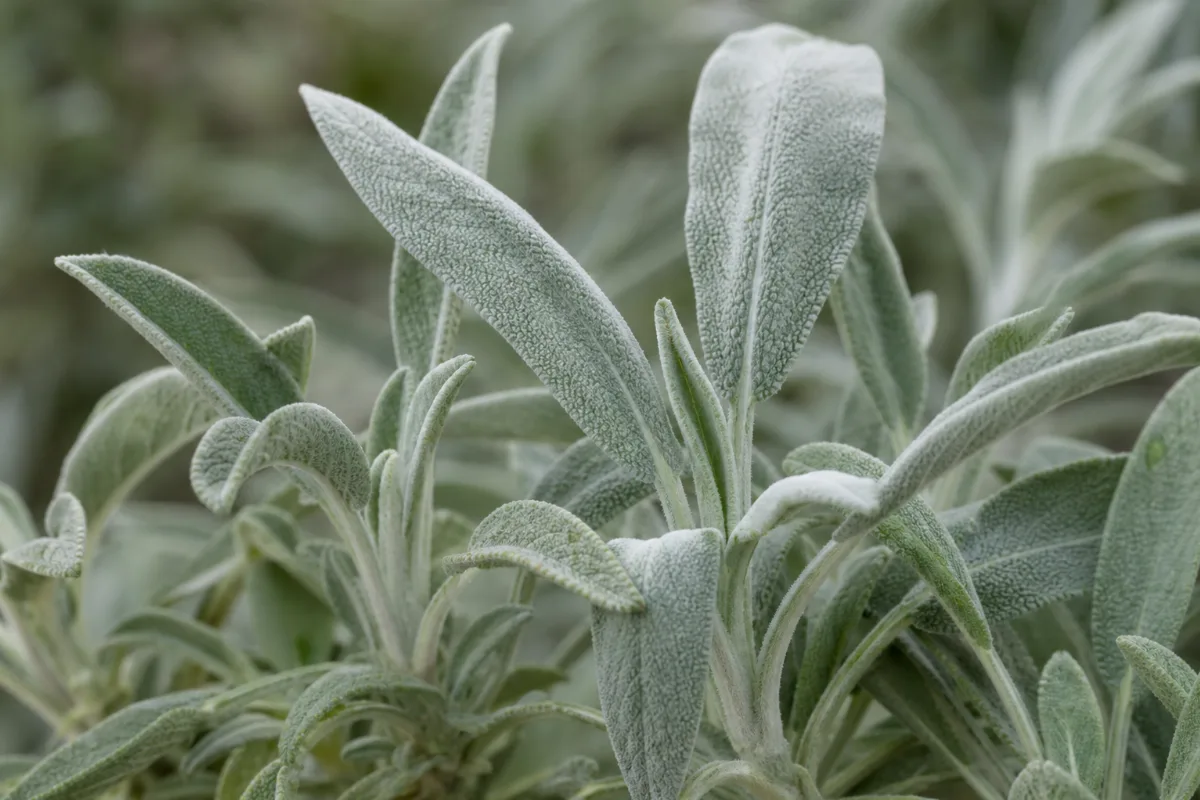
White sage (Salvia apiana) is an aromatic evergreen shrub of the chaparral in California and Baja California, in the mint family. Its leaves are silvery and strongly scented. It is also called sacred sage or bee sage.
For many Native peoples, including the Chumash, it is sacred and burned in purification ceremonies. That meaning is cultural and spiritual and belongs to those communities. It was also used as a calming, cold and sore-throat remedy, and as a tea.
What the evidence says
We found no human trials of white sage for any health use. What exists is tradition and lab work on extracts: they slowed some germs in dishes, reduced oxidation in cells and bound to nerve receptors in test tubes. Lab dishes are not people and the parts used (root, decoction, oil from lab-grown shoots) are not the same as the smoke or tea people use.
The popular claim that burning sage kills 94 percent of airborne bacteria traces to a 2007 study of wood and a different herb mixture that is not stated to contain sage. A fact-check says the study lacked a proper control. No good study of sage smoke exists.
It is not the same as common sage
Common sage (Salvia officinalis) is the kitchen and tea herb, with its own research and its own thujone warning. White sage is a different species with different chemistry. A chemistry study of authentic samples could tell the species apart, and an earlier summary says thujone was not detected in white sage; this was not re-checked. Research on one cannot be moved to the other. See the Sage profile.
What the oil is like
Oil from lab-grown white sage shoots was mostly 1,8-cineole (also the main compound in eucalyptus) with some camphor and pinenes. Oil from the wild or retail plant may differ. Essential oil is concentrated: do not swallow it, and keep it from children.
At a glance
Traditional uses history, not proof
- Chumash and other Native peoples: a ritual and medicinal plant, used as a calming remedy, a diuretic and a remedy for the common cold (plant review).
- Sore throats, coughs, chest colds, upper respiratory infections and poison oak rashes (2017 paper). Some tribes consider the plant sacred and burn the leaves as incense for purification ceremonies.
- Today: dried leaf bundles sold as smudge sticks for personal cleansing. Native communities say this wild-harvest trade harms the plant and their culture. Their ceremonial use is cultural and spiritual, not a health claim.
Studied for research
- Calming, colds and sore throat (traditional use), insufficient evidence in people
- Slowing germs in lab dishes, insufficient (lab only)
- Antioxidant and anti-inflammatory activity in cells, insufficient (lab only)
- Nerve-receptor and enzyme binding in test tubes, insufficient (lab only)
- Cleaning the air by burning it, insufficient (the popular study did not test sage)
Main compounds
- 1,8-cineole (eucalyptol), the main aroma compound in the essential oil
- Camphor, a smaller oil component that is poisonous when swallowed in quantity
- Phenolic terpenes such as carnosol, plus ursolic and oleanolic acids
- Thujone (the compound that makes common sage oil a seizure risk) was reported not detected in tested white sage samples, but this was not re-checked
Common forms
- Dried leaf bundles (smudge sticks), burned
- Loose dried leaf, for incense or tea
- Tea or decoction (traditional)
- Essential oil (not for swallowing)
- Lab extracts (not sold products)
Research links: Review of white sage: plant, chemistry and lab work (Planta Medica) · Case report: lung disease linked to burning sage and oils (Clinical Medicine) · Fact-check: does burning sage purify the air? (Science Feedback) · White sage in danger (Santa Barbara Independent, expert opinion) · Smudge sticks in Dutch shops (Plants) · Research Library · Genes & Biomarkers Library
The plant and its history
- Accepted scientific name
- Salvia apiana Jeps.
- Naming authority
- Jeps. (GBIF accepted name, key 2927016)
- Synonyms
- Audibertia polystachya Benth.; Audibertiella polystachya (Benth.) Briq.; Ramona polystachya (Benth.) Greene; Salvia apiana var. compacta Munz; Salvia apiana var. typica Munz; Salvia californica Jeps.
- Common names
- White sage (English); Sacred sage (English); Bee sage (English); California white sage (English)
- Botanical family
- Lamiaceae (mint family), the same family as common sage, rosemary, lavender and thyme.
- Classification
- Plantae > Tracheophyta > Magnoliopsida > Lamiales > Lamiaceae > Salvia > Salvia apiana
- Native range
- Southern California and northern Baja California; the 2017 paper says southern California and parts of Mexico. A newspaper column says it grows naturally only from San Luis Obispo County to northern Baja.
- Habitat
- Chaparral and coastal plains (Planta Medica review abstract).
- What the plant looks like
- Roots: Not part of the ceremonial use. A lab study used a root extract.; Stems: An aromatic evergreen subshrub (review abstract).; Leaves: The part burned in bundles; silvery-white leaves are the source of the name (general knowledge, not checked in the sources read).; Flowers: Not verified.; Fruit: Not relevant.
- Cultivation
- A newspaper column says it is easy to grow at home, even in containers, and that very little is farmed commercially. Not verified from a botanical source.
- Harvest and processing
- Leaves are cut, dried and tied into bundles. Not verified in detail.
- Look-alikes and adulterants
- Name: Common sage (Salvia officinalis); Note: A different species with different chemistry; research on one cannot be moved to the other. See the Sage profile.; Name: Other smudge-bundle plants such as Artemisia (mugwort, sagebrush); Note: Often sold as 'sage' but are different plants. Mixed bundles exist.; Name: Black sage (Salvia mellifera); Note: A California native Salvia included in the chemical authentication study.
- Sustainability and conservation
- Not formally verified. No IUCN or federal listing was found in the sources read. A newspaper column and news reports describe large-scale illegal wild harvest and loss of nearly half of the original habitat to development. A Dutch survey found no data on the pressure on wild populations and called for monitoring. An earlier summary says it is on United Plant Savers' to-watch list; this was not re-checked.
Traditional use and history history, not clinical proof
| Tradition or era | Documented use | Source |
|---|---|---|
| Chumash and other Native peoples of Southern California | A ritual and medicinal plant: calmative, diuretic and remedy for the common cold (Planta Medica review abstract); also for sore throats, coughs, chest colds and upper respiratory infections (2017 paper). Some tribes consider it sacred and burn the leaves as incense for purification ceremonies. | p33890254 |
| Today: New Age and commercial smudge sticks | White sage is the most common plant in smudge sticks sold in Dutch shops and is used for personal protection and cleansing. Native communities and conservation groups object to commercial wild harvest. | p39519920 |
Traditional use shows how a plant was used. It does not show that a supplement works or is safe today.
What is inside, and how it may work
What the plant contains and how those compounds act in cells and animals. Laboratory and animal mechanisms are not proven effects in people.
Main compounds
| Compound | Family | Where it is concentrated | Activity studied | Level of evidence |
|---|---|---|---|---|
| 1,8-Cineole PubChem 2758 | monoterpene oxide (essential oil) | Leaf (essential oil) Up to about 42 percent to 55 percent of oil from lab-grown shoots; 3 to 11 percent peak area in retail leaf samples (from an earlier summary, not re-checked). | Main oil compound; shared with eucalyptus. 8 9 | Laboratory research |
| Camphor PubChem 2537 | monoterpene ketone (essential oil) | Leaf (essential oil) A minor oil component in lab-grown shoots; trace to 6.8 percent in retail samples (earlier summary, not re-checked). | Poisonous when swallowed in quantity; the reason oil should be handled carefully. 8 | Laboratory research |
| Rosmarinic acid PubChem 5281792 | phenolic acid | Not confirmed for white sage in the abstracts read | Common in the mint family. The abstracts read did not report it for white sage, so its presence and amount here are unconfirmed. | Laboratory research |
| Carnosol PubChem 442009 | phenolic diterpene | Extract (ethanol) | Isolated from the ethanol extract; tested for cannabinoid and opioid binding. 13 | Laboratory research |
| Ursolic acid PubChem 64945 | triterpene | Extract (ethanol) | Isolated from the ethanol extract. 13 | Laboratory research |
| Oleanolic acid PubChem 10494 | triterpene | Extract (ethanol) | Isolated from the ethanol extract. 13 | Laboratory research |
| alpha-Thujone PubChem 261491 | monoterpene ketone | Not detected in tested white sage samples (earlier summary; not re-checked) | The compound that makes common sage oil a seizure risk; reported absent from tested white sage. Not confirmed in the full text; levels in retail products are unknown. 9 | Other |
Mechanisms, receptors and pathways
| Target or pathway | Gene or receptor | What was found | Level |
|---|---|---|---|
| Cannabinoid CB1 receptor binding | CNR1 | An aqueous ethanol extract showed 58.3 percent displacement in a binding assay. Test tube only. 13 | Laboratory research |
| Acetylcholinesterase inhibition | ACHE | Oil from lab-grown shoots blocked the enzyme by up to 60.0 percent. Test tube only. 8 | Laboratory research |
| Nitric oxide and lipid oxidation | A leaf decoction reduced nitric oxide in activated mouse macrophages and lipid oxidation in the lab. 2 | Laboratory research | |
| Bacterial and yeast growth | Root hexane extract and leaf decoction slowed several microbes in dishes. 4 2 | Laboratory research |
Absorption, metabolism and elimination
- Absorption
- No study of how white sage compounds are absorbed in people was found. The Planta Medica review says it compared ethnomedicinal claims with reports on bioavailability, but the abstract gives no figures.
- Distribution
- Unknown.
- Metabolism
- Unknown.
- Elimination
- Unknown.
- Bioavailability
- Unknown.
Isolated compounds versus whole extracts
White sage contains a mix of oil, terpenes and flavonoids, and lab results differ by plant part and extract type (root hexane, leaf decoction, ethanol extract, oil from cultures). None of these is the same as burning leaves in a bundle or drinking tea, so lab results cannot be carried over.
Nutritional composition
White sage is not a food or a nutrient source, so a nutrient table does not apply.
8 not enough evidence
What is White sage good for?
The uses people mention and how strong the human evidence is for each. "Insufficient" means there is not enough to judge: for white sage that means no human trials at all, only tradition and lab work. Smudging is a sacred practice for many Native peoples; it is described here as culture, not as a treatment.
Benefits, one by one
Each card is a research question, not a promise. Tap a goal to filter. Open a card to see the studies, doses and limits.
Calming and nerves (traditional use)
Not enough evidenceWhite sage has been used by the Chumash and other Native peoples as a calming remedy. No trial in people has tested it for calm, mood, sleep or stress, so we cannot say it works.
2 studiesTradition: leaf as a tea or burned as incense. Lab work: extracts. Th…
Studies, doses and limits
What the trials found
No trial in people has tested white sage for this. The 2022 review makes a critical assessment of the data and none of it is a human trial.
Results
No human result to report. Traditional use only.
Effect sizes as reported
No human numbers exist. Lab numbers are given in the study records.
Why this rating
Rated insufficient because there is no human research at all, only tradition and lab work.
Form and dose studied
Tradition: leaf as a tea or burned as incense. Lab work: extracts. These are different things and results cannot be moved between them.
Who was studied
None studied.
Limits
Everything here is tradition or lab work. Which plant part, how it was prepared and who used it varies by nation and is not recorded in the studies we read.
Why researchers looked
A plant review collected the traditional claims and compared them with what is known about the chemistry.
Traditional use
The review says the Chumash used white sage as a calmative, a diuretic and a remedy for the common cold. This is cultural and medicinal tradition, not proof of benefit. Burning it in purification ceremonies is a spiritual practice and is not a health claim.
Proposed mechanism Laboratory research
Not known in people. The review says extracts affect GABA, opioid and cannabinoid receptors in the lab, but it does not show that this calms a person.
A proposed mechanism does not show that the effect happens in people.
Do not use it in place of medical care for anxiety, low mood or sleep problems. Burning it adds smoke to the air you breathe (see Safety).
Nerve-receptor binding in the lab
Not enough evidenceIn test tubes, a white sage extract and some of its compounds attached to a cannabinoid receptor, and the review notes lab work on GABA and opioid receptors. A test-tube result does not show an effect in a person.
2 studiesAqueous ethanol extract (lab). Not the same as tea or smoke.
Studies, doses and limits
What the trials found
No trial in people has tested white sage for this. The abstract reports binding in a lab assay only.
Results
Moderate CB1 binding of one extract in a test tube. Nothing is known about whether it does anything in the body, or whether enough would reach the brain.
Effect sizes as reported
No human numbers exist. Lab numbers are given in the study records.
Why this rating
Rated insufficient because it rests on one lab screen and a narrative review. Binding to a receptor is not the same as a benefit.
Form and dose studied
Aqueous ethanol extract (lab). Not the same as tea or smoke.
Who was studied
None (test tube).
Limits
Single lab assay; no information on how much of any compound is absorbed by people.
Why researchers looked
Researchers screened the plant for effects on brain-related receptors because of its calming reputation.
Traditional use
Not a traditional claim; this is modern lab screening.
Proposed mechanism Laboratory research
The aqueous ethanol extract showed moderate CB1 (cannabinoid receptor) activity, with 58.3 percent displacement in the assay. Nine compounds were isolated and tested for cannabinoid and opioid binding.
A proposed mechanism does not show that the effect happens in people.
No human safety information. Do not assume it is the same as cannabis; the finding is only about receptor binding in a dish.
Essential oil and an enzyme linked to memory (lab)
Not enough evidenceThe oil of lab-grown white sage shoots blocked acetylcholinesterase, an enzyme that breaks down a memory-related brain chemical, in a test-tube assay. This has not been tested in people.
1 studiesEssential oil from tissue-culture shoots (lab). Essential oil is conc…
Studies, doses and limits
What the trials found
No trial in people has tested white sage for this. The oil came from lab-grown tissue culture, not from the wild plant.
Results
Enzyme blocking in a tube only.
Effect sizes as reported
No human numbers exist. Lab numbers are given in the study records.
Why this rating
Rated insufficient because it is one lab study of oil from tissue culture. Whether any of this reaches the brain in a person is unknown.
Form and dose studied
Essential oil from tissue-culture shoots (lab). Essential oil is concentrated; do not swallow it.
Who was studied
None (test tube).
Limits
Oil from culture, not wild plants; retail oil may differ.
Why researchers looked
Several Salvia species are tested for this enzyme because some medicines for Alzheimer's block it.
Traditional use
No traditional use of white sage for memory was found in the sources read.
Proposed mechanism Laboratory research
The oil, mostly 1,8-cineole with camphor and pinenes, blocked acetylcholinesterase by up to 60.0 percent in lab assays.
A proposed mechanism does not show that the effect happens in people.
Essential oil can be harmful when swallowed (see Safety).
Colds, coughs and sore throat (traditional use)
Not enough evidenceWhite sage has been used for sore throats, coughs, chest colds and upper respiratory infections. No trial in people supports this, so it rests on tradition only.
2 studiesTraditional forms include tea and burning the leaf. We did not find w…
Studies, doses and limits
What the trials found
No trial in people has tested white sage for this.
Results
Tradition only; no human result.
Effect sizes as reported
No human numbers exist. Lab numbers are given in the study records.
Why this rating
Rated insufficient: no human trials.
Form and dose studied
Traditional forms include tea and burning the leaf. We did not find what the traditions specify.
Who was studied
None studied.
Limits
Tradition cannot show the plant works.
Why researchers looked
Researchers list the traditional uses before testing the plant in the lab.
Traditional use
The 2017 paper's abstract says it has been used to treat sore throats, coughs, chest colds, upper respiratory infections and poison oak rashes. The 2022 review says the Chumash used it for the common cold.
Proposed mechanism Laboratory research
Unknown. Lab work (below) shows some germ-slowing activity in dishes, which is not the same as helping a cold.
A proposed mechanism does not show that the effect happens in people.
A cough or sore throat that lasts, or breathing trouble, needs a doctor. Smoke can irritate the airways (see Safety).
Slowing germ growth in lab dishes
Not enough evidenceIn lab dishes, white sage extracts slowed some bacteria and a yeast. Dishes are not people, so this does not show it treats an infection.
2 studiesRoot hexane extract; leaf decoction (lab). Neither is the same as a t…
Studies, doses and limits
What the trials found
No trial in people has tested white sage for this. A hexane extract of the root slowed Staphylococcus aureus, Streptococcus pyogenes, Enterococcus faecalis and Candida albicans but not E. coli or Candida tropicalis. A hot-water leaf decoction also slowed several bacteria.
Results
Growth slowed in dishes at the concentrations tested; nothing about use in people.
Effect sizes as reported
No human numbers exist. Lab numbers are given in the study records.
Why this rating
Rated insufficient: lab dishes only.
Form and dose studied
Root hexane extract; leaf decoction (lab). Neither is the same as a tea you drink or smoke.
Who was studied
None.
Limits
Different plant parts and extract types in each lab study; no human data.
Why researchers looked
Antibiotic resistance has made researchers screen plants for germ-slowing compounds.
Traditional use
Not a documented traditional claim in the sources read.
Proposed mechanism Laboratory research
Phenolic compounds and terpenes are suggested by the authors.
A proposed mechanism does not show that the effect happens in people.
Do not use it in place of antibiotics.
Antioxidant and anti-inflammatory activity in lab tests
Not enough evidenceA leaf decoction reduced fat oxidation and a nitric oxide inflammation marker in mouse immune cells in the lab. This has not been shown in people.
2 studiesHot-water decoction (lab).
Studies, doses and limits
What the trials found
No trial in people has tested white sage for this. The decoction reduced nitric oxide in activated mouse macrophage cells (EC50 = 50 ug/mL).
Results
Cell result in the lab; nothing in people.
Effect sizes as reported
No human numbers exist. Lab numbers are given in the study records.
Why this rating
Rated insufficient: one cell study.
Form and dose studied
Hot-water decoction (lab).
Who was studied
None.
Limits
Mouse cells; abstract only.
Why researchers looked
Plant phenolics are screened for antioxidant effects.
Traditional use
Not a documented traditional claim in the sources read.
Proposed mechanism Laboratory research
The authors link the effect to phenolic terpenes such as rosmanol and hydroxycarnosic acid.
A proposed mechanism does not show that the effect happens in people.
No human safety information from this work.
Killing cancer cells in the lab
Not enough evidenceA leaf decoction was toxic to several human cancer cell lines in the lab, with less effect on pig liver cells. This is not evidence of any cancer treatment, and being toxic to cells is also a warning sign for other cells.
1 studiesHot-water decoction (lab).
Studies, doses and limits
What the trials found
No trial in people has tested white sage for this.
Results
Toxic to liver, cervical and breast cancer cell lines at 41 to 60 ug/mL versus 362 ug/mL for pig liver cells.
Effect sizes as reported
No human numbers exist. Lab numbers are given in the study records.
Why this rating
Rated insufficient: cell lines only.
Form and dose studied
Hot-water decoction (lab).
Who was studied
None.
Limits
Cell lines; no animals or people.
Why researchers looked
Researchers test plant extracts on cancer cell lines as a first screen.
Traditional use
None documented.
Proposed mechanism Laboratory research
Not worked out.
A proposed mechanism does not show that the effect happens in people.
A cell-toxicity finding is not a treatment and is not evidence of safety.
Burning it to clean the air or kill germs
Not enough evidenceThe popular claim that burning sage kills 94 percent of airborne bacteria comes from a 2007 study of a different herb mixture. No good study of sage smoke was found.
2 studiesSmoke from bundles.
Studies, doses and limits
What the trials found
No human or room study of white sage smoke was found. The 2007 study used wood and a herb mixture (havan samagri) that is not stated to contain sage, and a fact-check found it lacked a proper control.
Results
The claim is not supported by the study usually cited.
Effect sizes as reported
No human numbers exist. Lab numbers are given in the study records.
Why this rating
Rated insufficient: no valid study of sage smoke.
Form and dose studied
Smoke from bundles.
Who was studied
None.
Limits
Burning also puts fine particles in the air (see Safety).
Why researchers looked
The claim is widely repeated online and in shops.
Traditional use
Smudging is a ceremonial practice; this claim is a modern wellness claim added to it.
Proposed mechanism Preliminary mechanism
None shown.
A proposed mechanism does not show that the effect happens in people.
Smoke is a possible irritant, so the claim should not be used as a reason to burn it indoors.
Connections to the rest of health
How White sage connects to the rest of our health knowledge graph. Every link says what kind of connection it is. A safety link (for example to the liver) is a warning, not a benefit. A study that merely mentions a topic never creates a benefit link.
Explore every connection: goals, body systems, organs, symptoms, genes
A. Wellness goals
| Connected to | Kind of connection | Evidence status | Context | Studies |
|---|---|---|---|---|
| Calm Relaxation | Traditional use | Not enough evidence | Calming and nerves (traditional use): White sage has been used by the Chumash and other Native peoples as a calming remedy. No trial in people has tested it for calm, mood, sleep or stress, so we cannot say it works. | 7 13 |
| Stress Reduction | Traditional use | Not enough evidence | Calming and nerves (traditional use): White sage has been used by the Chumash and other Native peoples as a calming remedy. No trial in people has tested it for calm, mood, sleep or stress, so we cannot say it works. | 7 13 |
| Calm Relaxation | Preliminary mechanism | Not enough evidence | Nerve-receptor binding in the lab: In test tubes, a white sage extract and some of its compounds attached to a cannabinoid receptor, and the review notes lab work on GABA and opioid receptors. A test-tube result does not show an effect in a person. | 13 7 |
| Memory Support | Preliminary mechanism | Not enough evidence | Essential oil and an enzyme linked to memory (lab): The oil of lab-grown white sage shoots blocked acetylcholinesterase, an enzyme that breaks down a memory-related brain chemical, in a test-tube assay. This has not been tested in people. | 8 |
| Brain Health | Preliminary mechanism | Not enough evidence | Essential oil and an enzyme linked to memory (lab): The oil of lab-grown white sage shoots blocked acetylcholinesterase, an enzyme that breaks down a memory-related brain chemical, in a test-tube assay. This has not been tested in people. | 8 |
| Immune Support | Traditional use | Not enough evidence | Colds, coughs and sore throat (traditional use): White sage has been used for sore throats, coughs, chest colds and upper respiratory infections. No trial in people supports this, so it rests on tradition only. | 13 7 |
| Breathing Support | Traditional use | Not enough evidence | Colds, coughs and sore throat (traditional use): White sage has been used for sore throats, coughs, chest colds and upper respiratory infections. No trial in people supports this, so it rests on tradition only. Burning it to clean the air or kill germs: The popular claim that burning sage kills 94 percent of airborne bacteria comes from a 2007 study of a different herb mixture. No good study of sage smoke was found. | 13 7 10 12 |
| Immune Support | Preliminary mechanism | Not enough evidence | Slowing germ growth in lab dishes: In lab dishes, white sage extracts slowed some bacteria and a yeast. Dishes are not people, so this does not show it treats an infection. Killing cancer cells in the lab: A leaf decoction was toxic to several human cancer cell lines in the lab, with less effect on pig liver cells. This is not evidence of any cancer treatment, and being toxic to cells is also a warning sign for other cells. | 4 2 |
| Inflammation Balance | Preliminary mechanism | Not enough evidence | Antioxidant and anti-inflammatory activity in lab tests: A leaf decoction reduced fat oxidation and a nitric oxide inflammation marker in mouse immune cells in the lab. This has not been shown in people. | 2 7 |
| Cellular Protection | Preliminary mechanism | Not enough evidence | Antioxidant and anti-inflammatory activity in lab tests: A leaf decoction reduced fat oxidation and a nitric oxide inflammation marker in mouse immune cells in the lab. This has not been shown in people. | 2 7 |
B. Body systems
| Connected to | Kind of connection | Evidence status | Context | Studies |
|---|---|---|---|---|
| Respiratory system | Adverse effect or risk | Very low certainty | Same evidence as above. Preparation or compound: Smoke from burning white sage bundles |
3 6 |
| Nervous System | Biological association | Not enough evidence | Studied for: Calming and nerves (traditional use) Studied for: Nerve-receptor binding in the lab | 7 13 8 |
| Respiratory System | Biological association | Not enough evidence | Studied for: Colds, coughs and sore throat (traditional use) Studied for: Burning it to clean the air or kill germs | 13 7 10 12 |
| Immune System | Biological association | Not enough evidence | Studied for: Colds, coughs and sore throat (traditional use) Studied for: Slowing germ growth in lab dishes | 13 7 4 2 |
C. Body parts and organs
| Connected to | Kind of connection | Evidence status | Context | Studies |
|---|---|---|---|---|
| Lungs | Adverse effect or risk | Very low certainty | Fine particles from smoke can irritate lungs; one case report linked regular burning of sage and oils to lung disease. No study measured white sage smoke. Preparation or compound: Smoke from burning white sage bundles |
3 6 |
J. Genes, receptors and enzymes
L. Active compounds
| Connected to | Kind of connection | Evidence status | Context | Studies |
|---|---|---|---|---|
| 1,8-Cineole | Biological association | In vitro | Main oil compound; shared with eucalyptus. Preparation or compound: Leaf (essential oil) |
8 9 |
| Camphor | Biological association | In vitro | Poisonous when swallowed in quantity; the reason oil should be handled carefully. Preparation or compound: Leaf (essential oil) |
8 |
| Rosmarinic acid | Biological association | In vitro | Common in the mint family. The abstracts read did not report it for white sage, so its presence and amount here are unconfirmed. Preparation or compound: Not confirmed for white sage in the abstracts read |
|
| Carnosol | Biological association | In vitro | Isolated from the ethanol extract; tested for cannabinoid and opioid binding. Preparation or compound: Extract (ethanol) |
13 |
| Ursolic acid | Biological association | In vitro | Isolated from the ethanol extract. Preparation or compound: Extract (ethanol) |
13 |
| Oleanolic acid | Biological association | In vitro | Isolated from the ethanol extract. Preparation or compound: Extract (ethanol) |
13 |
| alpha-Thujone | Biological association | Other | The compound that makes common sage oil a seizure risk; reported absent from tested white sage. Not confirmed in the full text; levels in retail products are unknown. Preparation or compound: Not detected in tested white sage samples (earlier summary; not re-checked) |
9 |
Each connection is stored with the ingredient, the connected record, the kind of connection, the evidence status, the supporting studies, the preparation or compound involved, and a review date (last reviewed October 25, 2026).
The evidence
The research centre for White sage. Every record here was checked against PubMed or the publisher's page; we never list a study we have not verified.
Evidence by outcome
Bars show how many studies we found for each outcome, not how well it works. People are added up across trials only (reviews are not added, to avoid double counting).
How we rate evidence
High certainty
Several well-run trials or reviews agree; further research is unlikely to change the picture much.
Moderate certainty
Good trials point the same way, but some doubt remains.
Low certainty
Small, short or inconsistent trials. The finding could change with better research.
Very low certainty
Very little or very weak human data. Treat as a possibility only.
Mixed findings
Trials or reviews disagree with each other.
Not enough evidence
Not enough human research to say either way.
Evidence against
Good research found no benefit, or found harm.
We take the reviewers' own risk-of-bias and GRADE statements where they exist, and otherwise judge from study size, design, consistency, directness and whether a product matches what is sold. Many publications do not make evidence high. Method note: We read PubMed abstracts for the lab papers, the plant review, the case report and the smudge-stick survey, read a fact-check, a news report and an expert's opinion column, and checked plant names in GBIF and NCBI and compounds in PubChem. Only abstracts were read. Not verified: the Health Canada page (could not be loaded this time), the EU sage monograph (a different species, not re-opened), and the claims on thujone and camphor in retail products. No regulator monograph, NCCIH, LiverTox or LactMed entry for white sage was found. Certainty ratings are the compiler's own reading, not formal grades. No study is cited that we could not verify.
Study library: every study we checked 14
| Study | Design | People | Product, dose, length | Result |
|---|---|---|---|---|
| ABC7 Los Angeles 2022 The white sage black market is contributing to the native plant's decimation in Southern California ABC7 Los Angeles (news) · Source |
News report |
Not applicable | Poached wild white sage whole plant |
Reports a preserve steward and the California Native Plant Society describing organised poaching, with an estimate of more than 15,000 pounds taken from one preserve region over about a decade, and the CNPS estimate that most white sage sold worldwide is wild-harvested. Native families describe harm to the plant and to their culture from commercialisation. Methods, limits and fundingOutcomes: Poaching and cultural harm Limitations: A news report with quoted estimates, not official records. Read: full-text |
| Afonso 2019 The Health-Benefits and Phytochemical Profile of Salvia apiana and Salvia farinacea var. Victoria Blue Decoctions. Antioxidants (Basel) · PMID 31349575 · DOI |
Laboratory research in-vitro |
Cell lines and bacteria in the lab (mouse immune cells, human cancer cell lines, pig liver cells) | Hot-water decoction of white sage (and of another sage species) unspecified (plant material not stated in the abstract) |
The white sage decoction was effective at preventing lipid peroxidation and at reducing nitric oxide in activated mouse immune cells (EC50 = 50 ug/mL). It was toxic to liver, cervical and breast cancer cell lines (GI50 41 to 60 ug/mL) with much less effect on pig liver cells (362 ug/mL). It slowed several bacteria. The authors link this to phenolic terpenes such as rosmanol. Methods, limits and fundingOutcomes: Lipid oxidation, nitric oxide production, cell toxicity, antibacterial activity Limitations: Lab cells and dishes only; none of this has been shown in people. Cell toxicity against cancer cells in a dish is not a cancer treatment. Abstract only. Funding and conflicts: Authors declare no conflict of interest. Read: abstract |
| Ayling-Smith 2025 Some sage advice: A case report of sage burning causing interstitial lung disease. Clin Med (Lond) · PMID 40494436 · DOI |
Case report |
1 One 41-year-old woman, never-smoker, with worsening breathlessness |
Smoke from burning sage and oils in fire pits for spiritual work (the sage species is not stated in the abstract) unspecified |
Scans showed respiratory bronchiolitis-associated interstitial lung disease. Lung washings showed green-pigmented macrophages, presumed to have taken up chlorophyll. She had no other lung risk factors. Stopping the burning led to a positive outcome. Methods, limits and fundingOutcomes: Lung imaging, lavage and course after stopping Limitations: One case; cannot show how common this is or prove cause. The species burned is not named in the abstract, so it is not shown to be white sage. Abstract only. Funding and conflicts: Authors declare no competing interests. Read: abstract |
| Cordova-Guerrero 2016 [Antibacterial and antifungal activity of Salvia apiana against clinically important microorganisms]. Rev Argent Microbiol · PMID 27595508 · DOI |
Laboratory research in-vitro |
Laboratory dishes (no people) | Hexane extract of white sage root root |
At the concentrations tested (27, 13.5, 6.8 and 3.4 mg/ml) the root extract slowed growth of Staphylococcus aureus, Streptococcus pyogenes, Enterococcus faecalis and Candida albicans. No significant effect on Escherichia coli or Candida tropicalis. Methods, limits and fundingOutcomes: Growth inhibition of bacteria and yeast Limitations: Lab dish only; the part tested was the root, which is not the leaf used in smudge bundles or tea. Written in Spanish; abstract read in English. Read: abstract |
| EMA Committee on Herbal Medicinal Products (HMPC) 2016 European Union herbal monograph on Salvia officinalis L., folium (common sage leaf) EMA/HMPC/277152/2015 · Source |
Authoritative guidance |
Adults; traditional use only | Common sage leaf (a different species from white sage) leaf |
For common sage leaf: hypersensitivity is a contraindication; pregnancy and breastfeeding not recommended because safety is not established; use under 18 not recommended; sage oil above the equivalent of about 15 g of leaf is reported to cause heat, fast heartbeat, vertigo and seizures. This does not cover white sage and is used here only to show what a regulator says about a related but different species. Methods, limits and fundingOutcomes: Contraindications, pregnancy, interactions, overdose for COMMON sage Limitations: Different species (Salvia officinalis). Quoted from our own earlier reading of the monograph for the common sage profile; not re-opened in this round. Read: summary-only |
| Health Canada 2021 Fine particulate matter (indoor air) Health Canada · Source |
Authoritative guidance |
General population | Fine particles from indoor sources such as candles and incense not applicable |
Our earlier summary records that Health Canada lists candle and incense smoke among indoor sources and says fine particles are most harmful to children with asthma, older adults and people with breathing or heart conditions. This was NOT re-checked: the page could not be loaded in this round. Methods, limits and fundingOutcomes: Health effects of fine particles Limitations: Summary-only; not re-opened. Not about sage specifically. Read: summary-only |
| Krol 2022 White Sage (Salvia apiana)-a Ritual and Medicinal Plant of the Chaparral: Plant Characteristics in Comparison with Other Salvia Species. Planta Med · PMID 33890254 · DOI |
Narrative review |
Not applicable (review of botany, chemistry and lab work) | White sage plant and extracts aerial parts (as described in the review; full text not read) |
The review says white sage is an evergreen subshrub of the chaparral in California and Baja California, traditionally used by the Chumash as a calmative, a diuretic and a remedy for the common cold. It reports lots of essential oil plus triterpenes, diterpenes and flavonoids, and antioxidant, antimicrobial and cytotoxic effects of extracts in the lab, and effects on GABA, opioid and cannabinoid receptors. The authors make a critical assessment of the data. Methods, limits and fundingOutcomes: Taxonomy, botany, chemistry, biological activity, ethnomedicine, bioavailability Limitations: Narrative review of mostly lab work; no human trials of white sage are described in the abstract. Only the abstract was read. Funding and conflicts: Authors declare no conflict of interest. Read: abstract |
| Krol 2023 Evaluation of the yield, chemical composition and biological properties of essential oil from bioreactor-grown cultures of Salvia apiana microshoots. Sci Rep · PMID 37130866 · DOI |
Laboratory research in-vitro |
Lab-grown shoot cultures (not wild or retail plants) | Essential oil from lab-grown white sage microshoots microshoot culture |
Oil from the cultures was mostly 1,8-cineole, beta-pinene, alpha-pinene, beta-myrcene and camphor (cineole up to about 42 percent in one system and about 55 percent in two others). The oil blocked acetylcholinesterase (up to 60.0 percent), hyaluronidase and tyrosinase in test-tube assays. Acetylcholinesterase inhibition up to 60.0 percent in the lab Methods, limits and fundingOutcomes: Oil yield and makeup; enzyme-inhibition tests Limitations: Oil from tissue-culture shoots, not from wild or farmed plants, so retail products may differ. Enzyme tests in a tube; no effect in people shown. Abstract only. Funding and conflicts: Authors declare no competing interests. Read: abstract |
| Lee 2022 Chemical Authentication and Speciation of Salvia Botanicals: An Investigation Utilizing GC/Q-ToF and Chemometrics. Foods · PMID 35885375 · DOI |
Other |
24 24 authentic plant samples of five Salvia species, including S. apiana and S. officinalis |
Chemical fingerprinting of leaf samples leaf |
The method told the five species apart with 100 percent accuracy in the authors' model, which supports checking the species of Salvia products. The thujone and 1,8-cineole figures our records attribute to this paper (no thujone detected in tested white sage; 3 to 11 percent peak area 1,8-cineole; camphor trace to 6.8 percent) are from an earlier summary and were not re-checked in the full text. Methods, limits and fundingOutcomes: Telling Salvia species apart by chemistry Limitations: Abstract and Europe PMC record read; compound figures in this profile are summary-only. Small number of samples. Read: summary-only |
| Nautiyal 2007 Medicinal smoke reduces airborne bacteria. J Ethnopharmacol · PMID 17913417 · DOI |
Other |
Closed rooms in India | Smoke from burning wood plus a mixture of herbs (havan samagri), not sage mixed herb mixture |
The authors report over 94 percent fewer airborne bacteria after 60 minutes of burning, kept up to 24 hours in the closed room. The herb mixture is not white sage and is not stated in the abstract to contain sage. Methods, limits and fundingOutcomes: Airborne bacteria counts Limitations: Not a study of sage. Science Feedback points out the design has no proper no-herb control run. It is often wrongly quoted as proof that burning sage cleans the air. Read: abstract |
| Pombo Geertsma 2024 Commercialized "Smudge Sticks" Used as Incense in the Netherlands: An Inventory of Plants and Trends Behind a New Age Fashion. Plants (Basel) · PMID 39519920 · DOI |
Survey |
29 smudge sticks bought in Dutch shops, 11 interviews and 33 questionnaires | Commercial smudge sticks (white sage was the most frequent plant) leaf bundles |
Salvia apiana was the plant most frequently found, along with North American Artemisia species. Smudge sticks were used for personal protection and cleansing. The authors found no data on the pressure on wild populations and call for scientific monitoring of the harvest. Methods, limits and fundingOutcomes: Which plants are in smudge sticks and why people use them Limitations: Small shop survey in one country; it does not measure how much white sage is taken from the wild. Funding and conflicts: Authors declare no conflict of interest. Read: abstract |
| Science Feedback (editor P. Waldron) 2020 Claim that burning sage purifies the air based on study that burned entirely different plants Science Feedback · Source |
Fact check |
Not applicable | Review of the 2007 airborne-bacteria study not applicable |
Says the havan samagri tested in 2007 does not contain sage, that no high-quality study has tested sage smoke for antibacterial effects, that the 2007 design lacked a proper control, and that soot from burning may add hazardous particles; people with heart or lung problems may be wise to avoid smudging smoke. Methods, limits and fundingOutcomes: Does the 'sage smoke kills 94 percent of bacteria' claim hold up? Limitations: A fact-check article, not a trial; the date is taken from the earlier summary and was not re-confirmed. Read: full-text |
| Srivedavyasasri 2017 Phytochemical and biological evaluation of Salvia apiana. Nat Prod Res · PMID 28025900 · DOI |
Laboratory research in-vitro |
Test-tube receptor binding assay (no people) | Aqueous ethanol extract of white sage and nine compounds isolated from it unspecified (plant material not stated in the abstract) |
The ethanol extract showed moderate CB1 receptor activity (58.3% displacement). Nine compounds were isolated (rosmadial, carnosol, 16-hydroxycarnosol, sageone, cirsimaritin, salvigenin, oleanolic acid, 3-beta,28-dihydroxy-urs-12-ene, ursolic acid). The abstract also repeats the traditional uses (sore throats, coughs, chest colds, upper respiratory infections, poison oak rashes) and says some Native American tribes consider the plant sacred and burn the leaves as incense. 58.3% CB1 displacement (extract) Methods, limits and fundingOutcomes: Cannabinoid (CB1) and opioid receptor binding; isolation of compounds Limitations: Receptor binding in a test tube; does not show any effect in people. Abstract only. Funding and conflicts: No conflict of interest reported by the authors. Read: abstract |
| Timbrook 2022 White sage in danger (opinion piece by J. Timbrook, curator emeritus of ethnography, Santa Barbara Museum of Natural History) Santa Barbara Independent (newspaper) · Source |
Expert opinion |
Not applicable | Wild white sage whole plant |
Says white sage grows naturally only from San Luis Obispo County to northern Baja California, that nearly half its original habitat is lost to development, and that large-scale illegal wild harvesting for smudge bundles is the most immediate threat. Quotes ranger estimates of more than 20,000 pounds stolen from one preserve in five years. Says taking wild plants from public land without a permit is illegal in California and that growing your own is an option. Methods, limits and fundingOutcomes: Wild harvest, habitat loss, cultural impact Limitations: One expert's opinion column, not a survey or official record. Figures are the author's and rangers' estimates. Read: full-text |
What we do not know yet
- What the evidence supports: nothing. There are no human trials of white sage, so every use is rated insufficient.
- What is uncertain: whether the smoke, tea or oil has any effect or any harm in people; the makeup of retail products; safety in pregnancy, breastfeeding, children and with medicines.
- No study measured white sage smoke in indoor air. Poaching figures come from news and an opinion column, not official records.
How new research is added
New studies are found by a saved PubMed search and are placed in a review queue. A person reads each one before it changes any evidence rating or safety wording. New publications never change ratings automatically.
Lab markers
What changed in blood or saliva tests during trials. A changed number is not the same as feeling or being healthier, and we give no "normal ranges".
Safety
What studies and official sources say about side effects, medicines and who should check first. Each point shows what kind of evidence it comes from.
Main points to know 5
- Burning white sage adds smoke particles to the air you breathe. Smoke from any burning plant adds fine particles to indoor air. Health Canada (summary only, not re-checked) says these are most harmful to children with asthma, older adults and people with heart or breathing conditions. No study has measured the smoke from a white sage bundle itself. A fact-check advises people with heart or lung problems to be cautious with smudging smoke. If you burn it, do so outdoors or with open windows and keep people with asthma away. Authoritative guidance 6 12
- One case of lung disease was linked to regularly burning sage and oils. A 2025 case report describes a never-smoking woman who developed a smoking-type lung disease (respiratory bronchiolitis-associated interstitial lung disease) after making fire pits with sage and oils for spiritual work. She improved after stopping. One case cannot show how common this is or prove cause, and the sage species is not named in the abstract. Case report 3
- The claim that sage smoke cleans the air is not supported. The popular figure of 94 percent fewer airborne bacteria comes from a 2007 study of wood and a herb mixture that is not stated to contain sage, and a fact-check says its design lacked a proper control. No good study of sage smoke exists, and smoke also releases soot. Other 10 12
- Essential oil is concentrated: do not swallow it, and be careful with camphor. White sage oil contains 1,8-cineole and some camphor in lab-grown samples. Camphor is poisonous when swallowed in quantity and the oil should be kept away from children. This is a general warning about the compounds, not a finding about white sage oil in people; no human safety study of the oil exists. Pharmacological theory 8
- No safety testing of white sage as a tea or medicine was found. We found no human trial, no regulator document and no poison-centre report on white sage taken by mouth. Not finding harm is not proof of safety. The tea is traditional only. Authoritative guidance 7
Side effects 2
| Effect | How often | Severity and recovery | Evidence |
|---|---|---|---|
| Interstitial lung disease after regularly burning sage and oils One case; species of sage not named in the abstract. | Not established | serious The woman in the report improved after she stopped the burning. | Case report 3 |
| Breathing irritation from smoke (cough, wheeze) in people with asthma or other lung or heart conditions General warning about fine particles from smoke, not a measurement of sage smoke. Health Canada page was not re-opened. | Not established | moderate Not studied for sage smoke. | Authoritative guidance 6 12 |
Liver
We found no report of liver injury from white sage and no LiverTox entry for it. A leaf decoction was far less toxic to pig liver cells than to cancer cells in a lab dish, which says nothing about safety in people. 2
How often. No frequency exists.
Monitoring. No monitoring advice was found.
This is a safety connection. It is not evidence that White sage supports liver health.
Medicines and supplements 2
| With | Why it matters | Importance | Evidence | What to do |
|---|---|---|---|---|
| Asthma and other breathing-condition medicines or conditions (smoke) condition | Fine particles from smoke can irritate the airways. | Not studied for sage smoke. General guidance on smoke particles applies. | Authoritative guidance Very low certainty 6 | If you have asthma or a lung or heart condition, avoid breathing the smoke and keep it out of rooms where you or others sleep. |
| Prescription medicines (general) prescription | None documented for white sage. Lab work shows receptor binding by an extract, which is theory only. | No interaction report, trial or regulator warning for white sage was found. This is a gap, not reassurance. | Pharmacological theory Not enough evidence 13 | If you take medicines and want to drink white sage tea or use the oil, ask a doctor or pharmacist first. |
Who should check first 4
| Situation | Advice | Evidence |
|---|---|---|
| Asthma, COPD, other lung disease or heart disease (smoke) | Avoid breathing smoke from burning bundles. This follows general advice on smoke particles, not a white sage rule. | Authoritative guidance 6 12 |
| Pregnancy and breastfeeding | No safety data exist for white sage. The EU monograph for common sage (a different species) says use in pregnancy and breastfeeding is not recommended because safety is not established. Avoid tea, extracts and oil unless a doctor agrees. | Authoritative guidance 5 |
| Babies and young children | Keep smoke and any oil away from babies and children. No safety data exist, and the regulator for common sage does not recommend use under 18. | Authoritative guidance 5 |
| Allergy to sage or other mint-family plants | Avoid it. No allergy study of white sage was found, so this is a general precaution. | Pharmacological theory |
Overdose, product quality and regulators
Summary. No poisoning data for white sage were found. The main concerns are smoke and the concentrated oil.
Animal. No animal toxicity study of white sage was found in the sources read.
Human doses studied. No human trial exists.
High dose or long term signals. One case report links long-term regular burning of sage and oils to lung disease.
Overdose response. Not described for white sage.
Genotoxicity. Not studied.
Toxic plant parts. No toxic plant part is documented. The leaf essential oil is the concentrated form and contains camphor; smoke is the main exposure.
Two quality problems: the species may be mislabelled, and much of the wild material for sale comes from poaching, so its source and handling are unknown. We found no survey of pesticides or metals in white sage products.
Species mix-ups. A chemistry study of 24 authentic samples of five Salvia species could tell white sage from common sage and others. Our earlier summary of it says no thujone was detected in the tested white sage and that common sage contains thujone; this was not re-checked in the full text. Different Salvia species cannot be swapped. 9
Source of the plant. Conservation groups quoted in news reports say most white sage sold worldwide is wild-harvested and that poaching is common. Buyers cannot tell from a label how a bundle was obtained. 1 14
What smudge sticks contain. In 29 Dutch smudge sticks, white sage was the most common plant, found alongside several North American Artemisia species. Mixed bundles may contain other plants. 11
| Body | Action | Date |
|---|
When to get medical help
- Trouble breathing, wheezing that does not settle, chest tightness or blue lips after smoke exposure
- A child who has swallowed any essential oil, with drowsiness, vomiting, seizures or breathing trouble (call poison control or emergency services)
- A cough or breathlessness that keeps getting worse
Stop the supplement and contact a clinician or emergency service. In the US, Poison Control is 1-800-222-1222.
General information only, not medical advice. Ask a clinician or pharmacist before use, especially with medicines, in pregnancy or with a health condition. See the Natural Remedy Safety guide.
Frequently asked questions
Does white sage have any proven health benefits?
Does burning sage clean the air or kill bacteria?
Is smudge smoke safe to breathe?
No study measured white sage smoke. Smoke from any burning plant adds fine particles, and Health Canada (not re-checked) says they are most harmful to people with asthma, lung or heart conditions. One case report linked regular burning of sage and oils to lung disease. Ventilation matters, and people with lung conditions may want to avoid it.
Can I burn white sage if I have asthma?
Is white sage safe in pregnancy or while breastfeeding?
No safety data exist for white sage. The EU monograph for common sage, a different species, does not recommend use in pregnancy or breastfeeding. It is safest to avoid tea, extracts and oil, and to keep away from smoke. Ask a doctor.
Does white sage contain thujone or camphor?
Is white sage the same as the sage in my kitchen?
No. Cooking sage is Salvia officinalis, a different species with its own research. White sage is Salvia apiana. See our Sage page for the kitchen herb.
Can I drink white sage tea?
Can white sage essential oil be swallowed?
No. Essential oil is concentrated, contains camphor, and has no human safety data. Keep it away from children.
Is white sage endangered?
Why do Native people ask outsiders not to buy white sage?
What is the difference between smudging and a health treatment?
Smudging is a ceremonial practice. It is not a medical treatment and has not been tested as one. See a doctor for symptoms.
Explore by health goal
Immune SupportCalm RelaxationBreathing SupportStress ReductionMemory SupportBrain HealthInflammation BalanceCellular Protection
Editorial transparency
- Written by
- AlternativeMed editorial team. Research compiled with AI assistance, then checked against PubMed records.
- Medical review
- None. This page has not been reviewed by a physician or pharmacist.
- First published
- 2026-10-25
- Last substantive update
- 2026-10-25
- How we research
- We read PubMed abstracts for the lab papers, the plant review, the case report and the smudge-stick survey, read a fact-check, a news report and an expert's opinion column, and checked plant names in GBIF and NCBI and compounds in PubChem. Only abstracts were read. Not verified: the Health Canada page (could not be loaded this time), the EU sage monograph (a different species, not re-opened), and the claims on thujone and camphor in retail products. No regulator monograph, NCCIH, LiverTox or LactMed entry for white sage was found. Certainty ratings are the compiler's own reading, not formal grades. No study is cited that we could not verify.
- How we rate evidence
- See "How we rate evidence" in the Evidence tab.
- Independence
- No product is promoted on this page. No affiliate links are shown. If one is added later it will be labelled and kept apart from the evidence.
Sources 14
Each source was opened and checked. Where we read only the abstract, it says so. The small numbers in the text point here.
- ABC7 Los Angeles. The white sage black market is contributing to the native plant's decimation in Southern California. ABC7 Los Angeles (news). 2022. (full-text)
- Afonso AF, Pereira OR, Fernandes ASF, et al.. The Health-Benefits and Phytochemical Profile of Salvia apiana and Salvia farinacea var. Victoria Blue Decoctions.. Antioxidants (Basel). 2019. PMID 31349575. DOI 10.3390/antiox8080241. (abstract)
- Ayling-Smith J, Attanoos R, Hutchinson NX. Some sage advice: A case report of sage burning causing interstitial lung disease.. Clin Med (Lond). 2025. PMID 40494436. DOI 10.1016/j.clinme.2025.100337. (abstract)
- Cordova-Guerrero I, Aragon-Martinez OH, Diaz-Rubio L, et al.. [Antibacterial and antifungal activity of Salvia apiana against clinically important microorganisms].. Rev Argent Microbiol. 2016. PMID 27595508. DOI 10.1016/j.ram.2016.05.007. (abstract)
- EMA Committee on Herbal Medicinal Products (HMPC). European Union herbal monograph on Salvia officinalis L., folium (common sage leaf). EMA/HMPC/277152/2015. 2016. (summary-only)
- Health Canada. Fine particulate matter (indoor air). Health Canada. 2021. (summary-only)
- Krol A, Kokotkiewicz A, Luczkiewicz M. White Sage (Salvia apiana)-a Ritual and Medicinal Plant of the Chaparral: Plant Characteristics in Comparison with Other Salvia Species.. Planta Med. 2022. PMID 33890254. DOI 10.1055/a-1453-0964. (abstract)
- Krol A, Kokotkiewicz A, Gorniak M, et al.. Evaluation of the yield, chemical composition and biological properties of essential oil from bioreactor-grown cultures of Salvia apiana microshoots.. Sci Rep. 2023. PMID 37130866. DOI 10.1038/s41598-023-33950-1. (abstract)
- Lee J, Wang M, Zhao J, et al.. Chemical Authentication and Speciation of Salvia Botanicals: An Investigation Utilizing GC/Q-ToF and Chemometrics.. Foods. 2022. PMID 35885375. DOI 10.3390/foods11142132. (summary-only)
- Nautiyal CS, Chauhan PS, Nene YL. Medicinal smoke reduces airborne bacteria.. J Ethnopharmacol. 2007. PMID 17913417. DOI 10.1016/j.jep.2007.08.038. (abstract)
- Pombo Geertsma I, Zandstra BE, Stefanaki A, et al.. Commercialized "Smudge Sticks" Used as Incense in the Netherlands: An Inventory of Plants and Trends Behind a New Age Fashion.. Plants (Basel). 2024. PMID 39519920. DOI 10.3390/plants13213003. (abstract)
- Science Feedback (editor P. Waldron). Claim that burning sage purifies the air based on study that burned entirely different plants. Science Feedback. 2020. (full-text)
- Srivedavyasasri R, Hayes T, Ross SA. Phytochemical and biological evaluation of Salvia apiana.. Nat Prod Res. 2017. PMID 28025900. DOI 10.1080/14786419.2016.1269096. (abstract)
- Timbrook J, Santa Barbara Independent. White sage in danger (opinion piece by J. Timbrook, curator emeritus of ethnography, Santa Barbara Museum of Natural History). Santa Barbara Independent (newspaper). 2022. (full-text)