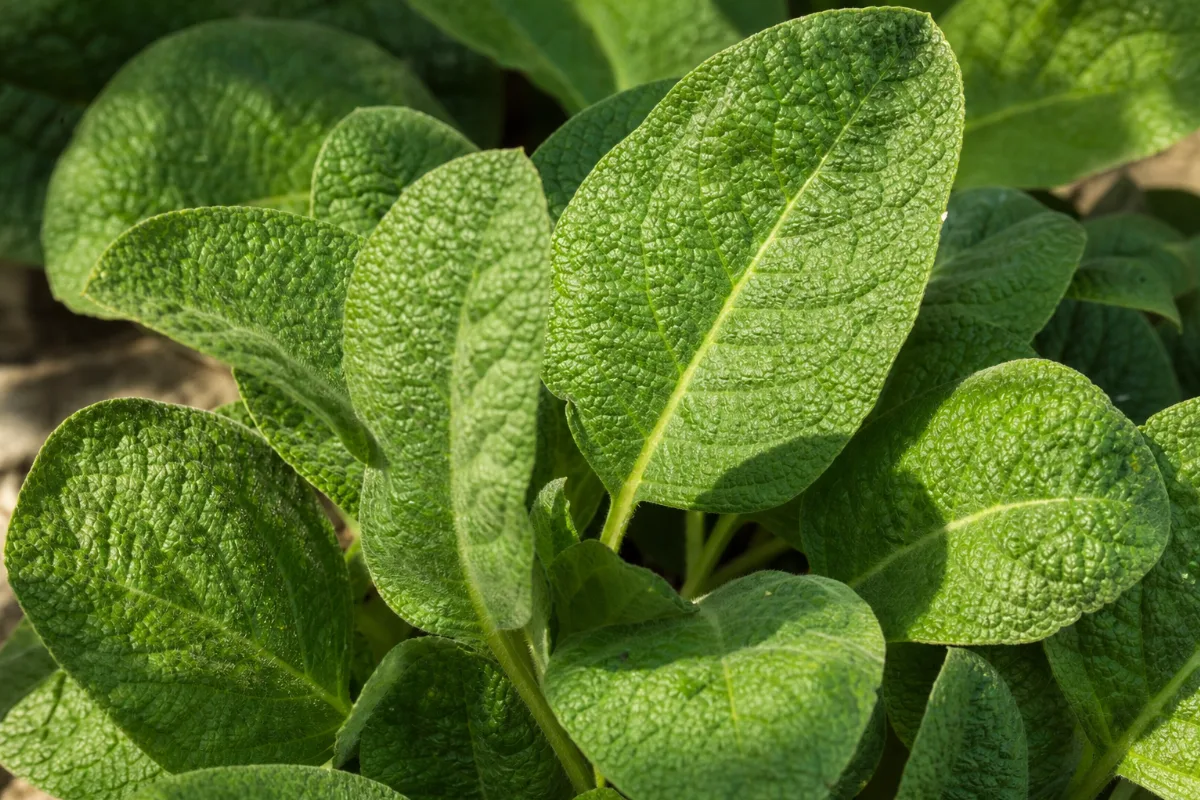
Herbs & Botanicals · Traditional chest-complaint leaf
Yerba santa
Eriodictyon californicum · also called Yerba santa, California yerba santa, holy herb, mountain balm, Santa herba (extract name)
Yerba santa is an evergreen shrub of the southwestern United States whose leaf has long been used for chest and breathing complaints. It is also sold as a tea, tincture and a branded weight-management extract. Human research is very thin: one small trial of one extract and no trials for coughs. Reliable safety data are missing, so avoid it in pregnancy or breastfeeding and ask a doctor or pharmacist if you take medicines.
General information, not medical advice. Last substantive update · Not medically reviewed. A named clinician has not signed off on this page. How this page is made
About Yerba santa
Yerba santa is a shrub whose leaf has been used traditionally for chest problems. Modern research is thin: one small weight trial of a branded extract, and lab, animal or other-species studies. Safety in medicinal amounts is not established.
What it is
Yerba santa (Eriodictyon californicum) is an evergreen shrub of the southwestern United States and northern Mexico. Its leaf is the part used. The name means 'holy herb' in Spanish.
The leaf is rich in flavonoids, including sterubin, eriodictyol and homoeriodictyol, and in a fragrant oil. Plants vary a lot: in one study the oil part 1,8-cineole ranged from 0.6 to 35.5 percent. Yerba santa is a different plant from yerba mate and yerba mansa.
Traditional and current uses
Indigenous peoples of the region used the leaf for centuries for breathing problems. A consumer reference says it may loosen chest mucus, but that there is no good scientific evidence for coughs, fever or other uses.
Today the leaf is also sold as tea, tincture and a branded weight-management extract. In the United States it is on the FDA list of permitted natural flavorings; that is a food rule, not approval as a medicine.
What the research shows
Human research is very sparse. We found one small 12-week placebo-controlled trial of a branded extract in overweight and obese women. Weight and body fat were lower in the obese subgroup, and the trial is industry-linked.
Other studies are on a different species (hair greying), a purified flavoring compound (taste masking and appetite), or lab and animal work (nerve cells, mouse obesity). These do not show that yerba santa tea or leaf works for any condition.
At a glance
Traditional uses history, not proof
- Indigenous peoples of the southwestern United States: leaf used for centuries for respiratory conditions (from a 2023 chemistry paper's abstract).
- Traditional medicine more broadly: respiratory infections and fever, per a consumer reference that finds no good scientific evidence for these uses.
Studied for research
- Body weight and fat (one branded extract), very low
- Antioxidant and energy claims, insufficient (lab only)
- Chest and breathing complaints, insufficient (traditional use only)
- Hair greying, against (no effect for this species)
- Bitter-taste masking (purified compound), very low
Main compounds
- Sterubin, a flavonoid; protected nerve cells in the lab and in rats
- Eriodictyol and homoeriodictyol, flavonoids; homoeriodictyol blocks bitter taste receptors
- Eriolic acid C and rosmarinic acid, leaf polyphenols
- 1,8-cineole and other essential-oil parts, which vary greatly between plants
Common forms
- Dried leaf and leaf tea
- Tincture or liquid extract
- Capsule or standardised extract (a branded Santa herba extract was used in the trial)
- Food flavoring
Research links: Santa herba extract and weight management (PubMed) · Chemical characterization of yerba santa (PubMed) · US natural flavoring substances rule (eCFR) · Research Library · Genes & Biomarkers Library
The plant and its history
- Accepted scientific name
- Eriodictyon californicum
- Naming authority
- (Hook. & Arn.) Greene
- Synonyms
- Eriodictyon glutinosum; Wigandia californica
- Common names
- Yerba santa (es/en); California yerba santa (en); Holy herb (en); Mountain balm (en); Santa herba (extract trade name) (en)
- Botanical family
- Namaceae (older sources, including the consumer monograph, use Hydrophyllaceae)
- Classification
- Plantae > Boraginales > Namaceae > Eriodictyon > Eriodictyon californicum
- Native range
- The genus Eriodictyon is native to the southwestern United States and northern Mexico (from the 2023 chemistry abstract, which covers the genus, not E. californicum alone).
- Habitat
- Not verified in this round.
- What the plant looks like
- Leaves: The leaf is the part used in the studies and in the consumer monograph.
- Cultivation
- A 2026 study grew ten accessions from seed in Ontario, Oregon, USA.
- Harvest and processing
- Not verified.
- Look-alikes and adulterants
- Name: Eriodictyon angustifolium (narrow-leaf yerba santa); Note: Different species; its extract reduced grey hairs while E. californicum did not. Sterubin differs in amount between the two.; Name: Eriodictyon parryi (poodle-dog bush); Note: Different species that can cause allergic contact dermatitis.; Name: Yerba mate, yerba mansa and other 'yerba' plants; Note: Unrelated plants with similar-sounding names.
- Sustainability and conservation
- Not checked.
Traditional use and history history, not clinical proof
| Tradition or era | Documented use | Source |
|---|---|---|
| Indigenous peoples of the southwestern United States | Leaf used for centuries for respiratory conditions. | Wang 2023 (p37473504) abstract. Specific tribes named in news summaries were NOT verified. |
| Traditional medicine, general | Used for respiratory infections, fever and other complaints. | Consumer monograph (s-vitally-yerba-santa), which says there is no good scientific evidence for these uses. |
| EU herbal assessment | No EMA/HMPC monograph found. | Not found; NOT verified. |
Traditional use shows how a plant was used. It does not show that a supplement works or is safe today.
What is inside, and how it may work
What the plant contains and how those compounds act in cells and animals. Laboratory and animal mechanisms are not proven effects in people.
Main compounds
| Compound | Family | Where it is concentrated | Activity studied | Level of evidence |
|---|---|---|---|---|
| Sterubin PubChem 1268276 | Flavanone | leaf Varies widely between plants and species; more in E. angustifolium than E. californicum in one study. | Protected nerve cells in lab tests and lowered inflammation markers in rats (purified compound). 6 9 12 11 | In vitro / animal |
| Eriodictyol PubChem 440735 | Flavanone | leaf Not given in the abstracts read. | Identified in the leaf; also formed when the body's CYP enzymes act on other flavonoids in lab tests. 11 4 | Laboratory research |
| Homoeriodictyol PubChem 73635 | Flavanone | leaf Not given in the abstracts read. | Blocks bitter taste receptors; the purified sodium salt has been tested as a flavoring and appetite aid. 11 14 7 | Human pilot (purified compound) |
| Eriolic acid C, rosmarinic acid, hesperetin, 6-methoxynaringenin | Phenolic acids and flavonoids | leaf Named as prominent polyphenols in cultivated plants; amounts not read. | Not studied for health effects here. 11 | Chemistry only |
| 1,8-Cineole and other essential-oil parts | Terpenes | leaf 1,8-cineole 0.6 to 35.5 percent of the oil in ten cultivated plants. | Not tested for health effects here. 11 | Chemistry only |
Mechanisms, receptors and pathways
| Target or pathway | Gene or receptor | What was found | Level |
|---|---|---|---|
| Adenosine A2A receptor | ADORA2A | A Santa herba extract bound this receptor in a lab binding test and raised worm movement by 7.5 percent. 10 | Laboratory research |
| Bitter taste receptors | TAS2R family | Homoeriodictyol sodium is described as a bitter-receptor antagonist; it reduced perceived bitterness in a small pilot in patients. 14 | Human (purified compound, very small) |
| Melanin synthesis (WNT/MITF/tyrosinase) | WNT, MITF, tyrosinase | Activated by E. angustifolium extract in cells; E. californicum had no effect on melanin synthesis. 12 | Laboratory research |
| Oxytosis/ferroptosis cell-death pathway | Not specified | Sterubin restored mitochondrial balance in stressed mouse nerve cells. 6 | Laboratory research |
| Fat metabolism genes | FAS, ACC, SREBP1c, CEBPα, PPARγ, PGC1α, CPT1α | The extract changed expression of these genes in fat and liver of obese mice. 8 | Animal research |
Absorption, metabolism and elimination
- Absorption
- No human data on absorption of yerba santa flavonoids were found.
- Distribution
- Not studied.
- Metabolism
- In the lab, human liver enzymes (mainly CYP1A2, less CYP3A4) turn several dietary flavonoids into eriodictyol. No study tested how the body handles yerba santa extract itself.
- Elimination
- Not studied.
- Bioavailability
- Unknown.
Isolated compounds versus whole extracts
Most of the interesting results use purified compounds (sterubin, homoeriodictyol sodium) or a branded extract, and plant chemistry differs widely by plant and species. A result for one compound, one extract or one species does not carry over to yerba santa leaf tea or other products.
Nutritional composition
Yerba santa is not a nutrient and there is no recommended intake. The leaf is used as a flavoring and in teas. Its flavonoids are not essential to health.
2 very low certainty3 not enough evidence1 evidence against
What is Yerba santa good for?
The main proposed uses and how strong the human evidence is for each. "Very low" means one small study or less, and "insufficient" means no human study. Please read the Safety tab before using yerba santa.
Benefits, one by one
Each card is a research question, not a promise. Tap a goal to filter. Open a card to see the studies, doses and limits.
Body weight and body fat (one branded extract)
Very low certaintyOne 12-week trial of a branded Santa herba (yerba santa) leaf extract found that women with obesity lost a little more weight and body fat than women on placebo. It is a single small, industry-linked trial, so the result is a lead, not a proven benefit.
2 studiesA branded Santa herba extract in a food supplement; the abstract does…
Studies, doses and limits
What the trials found
Mödinger 2021 gave Santa herba extract or placebo for 12 weeks to 24 overweight and 25 obese women (mean age 47.5). In the women with obesity, body weight (P = .042) and body fat (P = .044) were lower than with placebo, and leptin was lower by trend (P = .065). The abstract does not report a result for the overweight women. No other human trial of the leaf was found.
Results
Lower body weight and body fat versus placebo in the obese subgroup only. A separate mouse study (Jo 2025) reported about 10 percent less body weight and 15 percent less fat mass at the highest dose, with lower blood fats and liver enzymes; this is animal research.
Effect sizes as reported
P = .042 (weight) and P = .044 (body fat) in women with obesity; leptin P = .065 (trend). Sizes in kg are not given in the abstract.
Why this rating
One small trial, a subgroup result, an industry-linked extract, and only the abstract was read. No second trial has repeated it.
Form and dose studied
A branded Santa herba extract in a food supplement; the abstract does not state the amount. Results do not apply to tea or other forms.
Who was studied
Women aged about 47 who were overweight or obese. Nothing is known for men, children or other groups.
Limits
Small subgroup, short duration, extract-specific, authors tied to the ingredient maker, no effect on the overweight women reported, no long-term follow-up.
Why researchers looked
Yerba santa leaf is rich in flavonoids, and these plant compounds have been studied for obesity-related problems such as inflammation and metabolic imbalance.
Traditional use
Weight loss is not a traditional use. The traditional use of the leaf was for chest and breathing complaints.
Proposed mechanism Preliminary mechanism
The extract bound the adenosine A2A receptor and raised movement in a worm model in lab tests, and it scored high on a test-tube antioxidant test. A mouse study reported lower fat and leptin and changes in fat-related genes. None of this has been shown to happen in people.
A proposed mechanism does not show that the effect happens in people.
The abstract does not report side effects. See the Safety tab: reliable safety data for medicinal amounts are missing.
Antioxidant and energy claims (lab and animal work)
Not enough evidenceLab tests show the leaf extract has antioxidant capacity and can raise movement in worms. These are test-tube and animal results. They do not show a benefit for people.
1 studiesA branded extract in the lab. Not applicable to tea or leaf.
Studies, doses and limits
What the trials found
No human study measured energy, fatigue or antioxidant status in people taking yerba santa. The only human trial (Mödinger 2021) looked at weight and appetite.
Results
Lab and worm results only.
Effect sizes as reported
ORAC 819 trolox equivalents; worm movement +7.5 percent (lab model).
Why this rating
Only laboratory and animal-model work; no human test of this claim.
Form and dose studied
A branded extract in the lab. Not applicable to tea or leaf.
Who was studied
None (no human data).
Limits
Lab work cannot be carried over to people. Antioxidant capacity varies with the plant and the extraction.
Why researchers looked
Flavonoids such as sterubin and eriodictyol are antioxidants in the lab, so researchers looked at whether the extract could support energy and cell protection.
Traditional use
Not a traditional use.
Proposed mechanism Laboratory research
The extract scored 819 trolox equivalents on the ORAC antioxidant test, bound the adenosine A2A receptor in a binding assay and raised worm movement by 7.5 percent. Test-tube antioxidant scores are not proof of a health effect in the body.
A proposed mechanism does not show that the effect happens in people.
None identified from this work.
Coughs, colds and chest congestion (traditional use)
Not enough evidenceThe leaf was used by Indigenous peoples of the southwestern United States for breathing problems. No human trial tests this use, so the traditional claim is unproven.
3 studiesTraditionally a leaf tea or chewed leaf; no evidence-based amount exi…
Studies, doses and limits
What the trials found
We found no clinical trial of yerba santa for cough, cold or bronchitis. The consumer monograph states there is no good scientific evidence for these uses.
Results
No human results.
Effect sizes as reported
None.
Why this rating
Traditional use only; no trials.
Form and dose studied
Traditionally a leaf tea or chewed leaf; no evidence-based amount exists.
Who was studied
None studied.
Limits
Leaf chemistry differs widely between plants, so results from one batch may not apply to another.
Why researchers looked
The traditional use is old, and the leaf contains flavonoids and an essential oil that scientists have analysed.
Traditional use
Used for respiratory complaints for centuries, according to the 2023 chemistry paper; the consumer monograph says it is thought to loosen mucus in the chest but that there is no good scientific evidence for this use.
Proposed mechanism Traditional use
No tested mechanism for a breathing benefit. The leaf contains 1,8-cineole (0.6 to 35.5 percent in one study), an oil part that is also found in other chest-rub herbs, but this study did not test any breathing effect.
A proposed mechanism does not show that the effect happens in people.
Reliable safety information for medicinal amounts is missing. See the Safety tab.
Hair greying
Evidence againstA Japanese study found that a different species, Eriodictyon angustifolium, reduced grey hairs, but the extract of California yerba santa (E. californicum) did not raise melanin and showed no benefit.
1 studiesSkin-applied extracts of two different species; not a supplement.
Studies, doses and limits
What the trials found
Volunteers with grey beards applied extracts. Fewer grey beard hairs per year were seen only with E. angustifolium extract. The abstract does not describe any benefit from E. californicum.
Results
No benefit shown for E. californicum.
Effect sizes as reported
Not given in the abstract.
Why this rating
The one study of this species found no effect on melanin. The benefit was for another species.
Form and dose studied
Skin-applied extracts of two different species; not a supplement.
Who was studied
Volunteers with grey beard and head hair; numbers not stated in the abstract.
Limits
Company-linked study, only the abstract was read, sample sizes unknown, different species.
Why researchers looked
Sterubin, a flavonoid in yerba santa, was suspected to affect hair pigment.
Traditional use
Not a traditional use.
Proposed mechanism Laboratory research
E. angustifolium extract increased melanin in cultured melanoma cells through the WNT/MITF/tyrosinase pathway. E. californicum extract had no effect on melanin synthesis in the same tests.
A proposed mechanism does not show that the effect happens in people.
None reported in the abstract.
Bitter-taste masking and appetite (purified homoeriodictyol sodium)
Very low certaintyHomoeriodictyol, a flavonoid found in yerba santa, is used as a purified bitter-blocking flavoring. Two tiny studies of the purified compound, not the herb, found it lowered bitter taste sensitivity in chemotherapy patients and increased eating after a glucose drink in healthy adults.
2 studiesPurified Na-HED (30 mg in the appetite trials; a mouth rinse in the p…
Studies, doses and limits
What the trials found
Zehentner 2026: a pilot in women with gynecological cancer on carboplatin; an Na-HED rinse-and-spit solution reduced perceived caffeine bitterness (n = 15 in that test). Hochkogler 2017: two cross-over trials of 30 mg Na-HED in healthy adults (10 and 17 people); with 75 g glucose, energy intake rose 9.52 percent and protein intake 7.08 percent, and ghrelin rose.
Results
Less bitter taste sensitivity (pilot, cancer patients); more food eaten after glucose (healthy adults). Both used the purified compound, not yerba santa.
Effect sizes as reported
Energy intake +9.52 percent (SD 4.60) and protein intake +7.08 percent (SD 7.97) in study II. No numbers for bitterness in the abstract.
Why this rating
Very small studies, purified compound rather than the herb, flavor-company authors.
Form and dose studied
Purified Na-HED (30 mg in the appetite trials; a mouth rinse in the pilot). Does not apply to yerba santa tea or extract.
Who was studied
Eight to fifteen cancer patients; 27 healthy adults across two cross-over trials.
Limits
Tiny samples, single doses, flavor-industry links, no data on the whole herb. Cancer patients should not try this on their own.
Why researchers looked
The compound blocks bitter taste receptors, so it is tested for taste problems and low appetite.
Traditional use
Not a traditional use in the sources we read.
Proposed mechanism Preliminary mechanism
Homoeriodictyol sodium (Na-HED) is described as an antagonist of bitter taste receptors (TAS2Rs). In the appetite study, ghrelin rose with glucose and serotonin fell.
A proposed mechanism does not show that the effect happens in people.
People having chemotherapy should talk to their cancer team before using any product for taste changes.
Nerve-cell protection (sterubin, lab and animal work)
Not enough evidenceSterubin, a flavonoid found in yerba santa, protected nerve cells in the lab and improved memory-test measures in rats. No human study exists.
3 studiesPurified sterubin in the lab; not a herb dose.
Studies, doses and limits
What the trials found
None. No person has been given sterubin or yerba santa in a brain-health trial that we found.
Results
Lab and rat results only.
Effect sizes as reported
Not applicable.
Why this rating
Cell and rat studies only; purified sterubin, not the herb.
Form and dose studied
Purified sterubin in the lab; not a herb dose.
Who was studied
None (no human data).
Limits
Sterubin amounts vary greatly between plants and species, and the study used the pure compound.
Why researchers looked
Sterubin was found to block a cell-death pathway involved in ageing-related brain disease.
Traditional use
Not a traditional use.
Proposed mechanism Animal research
Sterubin restored mitochondrial balance in stressed mouse hippocampal cells, although the cells did not need mitochondria for the protection. In rats given scopolamine, sterubin (10 mg/kg for 14 days) lowered inflammation markers and oxidative stress and improved motor performance.
A proposed mechanism does not show that the effect happens in people.
None identified.
Connections to the rest of health
How Yerba santa connects to the rest of our health knowledge graph. Every link says what kind of connection it is. A safety link (for example to the liver) is a warning, not a benefit. A study that merely mentions a topic never creates a benefit link.
Explore every connection: goals, body systems, organs, symptoms, genes
A. Wellness goals
| Connected to | Kind of connection | Evidence status | Context | Studies |
|---|---|---|---|---|
| Weight management | Potential benefit | Very low certainty | One small industry-linked trial. Body weight and body fat (one branded extract): One 12-week trial of a branded Santa herba (yerba santa) leaf extract found that women with obesity lost a little more weight and body fat than women on placebo. It is a single small, industry-linked trial, so the result is a lead, not a proven benefit. Preparation or compound: Santa herba branded extract |
10 8 |
| Metabolic Health | Potential benefit | Very low certainty | Body weight and body fat (one branded extract): One 12-week trial of a branded Santa herba (yerba santa) leaf extract found that women with obesity lost a little more weight and body fat than women on placebo. It is a single small, industry-linked trial, so the result is a lead, not a proven benefit. | 10 8 |
| Energy Boost | Preliminary mechanism | Not enough evidence | Antioxidant and energy claims (lab and animal work): Lab tests show the leaf extract has antioxidant capacity and can raise movement in worms. These are test-tube and animal results. They do not show a benefit for people. | 10 |
| Healthy Aging | Preliminary mechanism | Not enough evidence | Antioxidant and energy claims (lab and animal work): Lab tests show the leaf extract has antioxidant capacity and can raise movement in worms. These are test-tube and animal results. They do not show a benefit for people. | 10 |
| Lung Support | Traditional use | Not enough evidence | Coughs, colds and chest congestion (traditional use): The leaf was used by Indigenous peoples of the southwestern United States for breathing problems. No human trial tests this use, so the traditional claim is unproven. | 1 13 11 |
| Immune Support | Traditional use | Not enough evidence | Coughs, colds and chest congestion (traditional use): The leaf was used by Indigenous peoples of the southwestern United States for breathing problems. No human trial tests this use, so the traditional claim is unproven. | 1 13 11 |
| Hair Support | Biological association | Evidence against | Hair greying: A Japanese study found that a different species, Eriodictyon angustifolium, reduced grey hairs, but the extract of California yerba santa (E. californicum) did not raise melanin and showed no benefit. | 12 |
| Healthy Aging | Biological association | Evidence against | Hair greying: A Japanese study found that a different species, Eriodictyon angustifolium, reduced grey hairs, but the extract of California yerba santa (E. californicum) did not raise melanin and showed no benefit. | 12 |
| Digestive Support | Preliminary mechanism | Very low certainty | Bitter-taste masking and appetite (purified homoeriodictyol sodium): Homoeriodictyol, a flavonoid found in yerba santa, is used as a purified bitter-blocking flavoring. Two tiny studies of the purified compound, not the herb, found it lowered bitter taste sensitivity in chemotherapy patients and increased eating after a glucose drink in healthy adults. | 14 7 |
| Brain Health | Preliminary mechanism | Not enough evidence | Nerve-cell protection (sterubin, lab and animal work): Sterubin, a flavonoid found in yerba santa, protected nerve cells in the lab and improved memory-test measures in rats. No human study exists. | 6 9 12 |
| Memory Support | Preliminary mechanism | Not enough evidence | Nerve-cell protection (sterubin, lab and animal work): Sterubin, a flavonoid found in yerba santa, protected nerve cells in the lab and improved memory-test measures in rats. No human study exists. | 6 9 12 |
B. Body systems
| Connected to | Kind of connection | Evidence status | Context | Studies |
|---|---|---|---|---|
| Respiratory system | Traditional use | Not enough evidence | Traditional breathing use; no trials. Preparation or compound: Leaf tea (traditional) |
1 |
| Skin | Adverse effect or risk | Very low certainty | Allergic contact dermatitis from a different species. Preparation or compound: Related species E. parryi |
5 |
| Metabolism Weight | Biological association | Very low certainty | Studied for: Body weight and body fat (one branded extract) Studied for: Antioxidant and energy claims (lab and animal work) | 10 8 |
| Respiratory System | Biological association | Not enough evidence | Studied for: Coughs, colds and chest congestion (traditional use) | 1 13 11 |
| Integumentary System | Biological association | Evidence against | Studied for: Hair greying | 12 |
| Digestive System | Biological association | Very low certainty | Studied for: Bitter-taste masking and appetite (purified homoeriodictyol sodium) | 14 7 |
| Nervous System | Biological association | Not enough evidence | Studied for: Nerve-cell protection (sterubin, lab and animal work) | 6 9 12 |
C. Body parts and organs
I. Biomarkers
| Connected to | Kind of connection | Evidence status | Context | Studies |
|---|---|---|---|---|
| Body weight | Biological association | Very low certainty | Measured in trials: lowered. A lab change is not the same as a health benefit. | 10 |
| Body fat | Biological association | Very low certainty | Measured in trials: lowered. A lab change is not the same as a health benefit. | 10 |
| Leptin | Biological association | Very low certainty | Measured in trials: lowered. A lab change is not the same as a health benefit. | 10 8 |
| Number of grey hairs | Biological association | Evidence against | Measured in trials: no-change. A lab change is not the same as a health benefit. | 12 |
| Ghrelin and energy eaten | Biological association | Very low certainty | Measured in trials: raised. A lab change is not the same as a health benefit. | 7 |
| Perceived bitterness (caffeine rating) | Biological association | Very low certainty | Measured in trials: lowered. A lab change is not the same as a health benefit. | 14 |
J. Genes, receptors and enzymes
| Connected to | Kind of connection | Evidence status | Context | Studies |
|---|---|---|---|---|
| Adenosine A2A receptor (ADORA2A) | Preliminary mechanism | In vitro | Bound by Santa herba extract in a lab assay. | 10 |
| Bitter taste receptors (TAS2R) | Preliminary mechanism | Human pilot | Targeted by homoeriodictyol sodium. | 14 |
| CYP1A2 / CYP3A4 | Preliminary mechanism | In vitro | Metabolise other flavonoids into eriodictyol in lab tests. | 4 |
L. Active compounds
| Connected to | Kind of connection | Evidence status | Context | Studies |
|---|---|---|---|---|
| Sterubin | Biological association | In vitro / animal | Protected nerve cells in lab tests and lowered inflammation markers in rats (purified compound). Preparation or compound: leaf |
6 9 12 11 |
| Eriodictyol | Biological association | In vitro | Identified in the leaf; also formed when the body's CYP enzymes act on other flavonoids in lab tests. Preparation or compound: leaf |
11 4 |
| Homoeriodictyol | Biological association | Human pilot (purified compound) | Blocks bitter taste receptors; the purified sodium salt has been tested as a flavoring and appetite aid. Preparation or compound: leaf |
11 14 7 |
| Eriolic acid C, rosmarinic acid, hesperetin, 6-methoxynaringenin | Biological association | Chemistry only | Not studied for health effects here. Preparation or compound: leaf |
11 |
| 1,8-Cineole and other essential-oil parts | Biological association | Chemistry only | Not tested for health effects here. Preparation or compound: leaf |
11 |
Each connection is stored with the ingredient, the connected record, the kind of connection, the evidence status, the supporting studies, the preparation or compound involved, and a review date (last reviewed October 25, 2026).
The evidence
The research centre for Yerba santa. Every record here was checked against PubMed or the publisher's page; we never list a study we have not verified.
Evidence by outcome
Bars show how many studies we found for each outcome, not how well it works. People are added up across trials only (reviews are not added, to avoid double counting).
How we rate evidence
High certainty
Several well-run trials or reviews agree; further research is unlikely to change the picture much.
Moderate certainty
Good trials point the same way, but some doubt remains.
Low certainty
Small, short or inconsistent trials. The finding could change with better research.
Very low certainty
Very little or very weak human data. Treat as a possibility only.
Mixed findings
Trials or reviews disagree with each other.
Not enough evidence
Not enough human research to say either way.
Evidence against
Good research found no benefit, or found harm.
We take the reviewers' own risk-of-bias and GRADE statements where they exist, and otherwise judge from study size, design, consistency, directness and whether a product matches what is sold. Many publications do not make evidence high. Method note: We started from an existing internal summary of yerba santa, then read PubMed abstracts for the weight trial, the chemistry papers, the purified-compound studies and the lab and animal work, checked the accepted name in GBIF and compounds in PubChem, and read a consumer drug-reference monograph. Only abstracts were read for the studies. Not verified: no EMA/HMPC monograph, NCCIH page, LiverTox or LactMed entry could be found; the FDA flavoring listing comes from the earlier summary and was not re-opened; the safety statements rest on one consumer reference. Certainty ratings are the compiler's own reading, not formal grades. No study is cited that we could not verify.
Study library: every study we checked 14
| Study | Design | People | Product, dose, length | Result |
|---|---|---|---|---|
| 2026 Yerba santa (consumer monograph licensed from Therapeutic Research Center, via vital.ly) · Source |
Authoritative guidance n/a |
unspecified |
Says yerba santa is commonly consumed in foods, but there is not enough reliable information to know whether larger amounts as medicine are safe by mouth or on the skin, or what the side effects might be. Not enough reliable information on pregnancy and breastfeeding; advises avoiding. It is not known whether it interacts with medicines; talk to a health professional if you take any. No known herb or food interactions. Says there is no good scientific evidence for the respiratory and other traditional uses. Methods, limits and fundingRead: full-text | |
| 2026 21 CFR 172.510 Natural flavoring substances (US eCFR) · Source |
Authoritative guidance n/a |
unspecified |
The existing summary states that yerba santa is on the US FDA list of permitted natural flavoring substances. Not re-opened in this round, so listed as summary-only. Methods, limits and fundingRead: summary-only | |
| 2026 GBIF Backbone: Eriodictyon californicum (Hook. & Arn.) Greene · Source |
Database record n/a |
unspecified |
GBIF species match (exact): accepted species, key 7629056, family Namaceae, order Boraginales. Methods, limits and fundingRead: full-text | |
| Breinholt 2002 In vitro investigation of cytochrome P450-mediated metabolism of dietary flavonoids. Food Chem Toxicol · PMID 11955666 · DOI |
Laboratory research in-vitro |
Human and mouse liver microsomes; recombinant CYP enzymes | Five dietary flavonoids (kaempferol, apigenin, naringenin, hesperetin, tamarixetin); eriodictyol appeared as a product not applicable not applicable not applicable · vs enzyme inhibitors |
Several flavonoids were turned into eriodictyol by CYP1A2 mostly, and more slowly by CYP3A4. Eriodictyol itself and yerba santa extract were not tested for drug-metabolism effects in this paper. Not applicable Methods, limits and fundingOutcomes: Which CYP enzymes metabolise flavonoids Limitations: Lab study; shows eriodictyol is a product of flavonoid metabolism, not that it changes how drugs are broken down. Funding and conflicts: Not stated in the abstract. Read: abstract |
| Czaplicki 2013 Contact dermatitis from Eriodictyon parryi: a novel cause of contact dermatitis in California. Wilderness Environ Med · PMID 23473793 · DOI |
Review |
General review of poodle-dog bush skin reactions | Eriodictyon parryi (poodle-dog bush), a different species unspecified not applicable not applicable · vs not applicable |
Reports that poodle-dog bush, a different Eriodictyon species, is a growing cause of allergic contact dermatitis in California, especially after fires. Not applicable Methods, limits and fundingOutcomes: Epidemiology, immunochemistry and treatment of the skin reaction Limitations: Different species from yerba santa (E. californicum). Only the abstract was read; it does not say E. californicum causes the same reaction. Funding and conflicts: Not stated in the abstract. Read: abstract |
| Goujon 2024 The Neuroprotective Flavonoids Sterubin and Fisetin Maintain Mitochondrial Health under Oxytotic/Ferroptotic Stress and Improve Bioenergetic Efficiency in HT22 Neuronal Cells. Antioxidants (Basel) · PMID 38671908 · DOI |
Laboratory research in-vitro |
HT22 mouse hippocampal nerve cells | Sterubin and fisetin (purified compounds) not applicable not stated in abstract not stated in abstract · vs untreated cells |
Both compounds restored mitochondrial balance in stressed nerve cells in the lab. The abstract says mitochondria were not needed for the protective effect. Cell results only. Methods, limits and fundingOutcomes: Cell stress, mitochondrial function Limitations: Mouse cell lines; says nothing about people eating or drinking yerba santa. Funding and conflicts: Authors declare no conflicts of interest. Read: abstract |
| Hochkogler 2017 Appetite-Inducing Effects of Homoeriodictyol: Two Randomized, Cross-Over Interventions. Mol Nutr Food Res · PMID 28834253 · DOI |
Controlled trial |
27 Healthy adults (10 in study I, 17 in study II) |
Homoeriodictyol sodium (NaHED), a purified bitter-masking flavanone not applicable (purified compound) 30 mg alone, or 30 mg with 75 g glucose single doses, cross-over · vs not stated in abstract |
With glucose, energy intake rose by 9.52 percent and protein intake by 7.08 percent and ghrelin rose; serotonin fell after both interventions. The authors say effects were stronger with glucose and that long-term studies are needed. About 9.5 percent more energy eaten with glucose (as reported). Methods, limits and fundingOutcomes: Hunger ratings, food eaten at a breakfast, gut and appetite hormones Limitations: Tiny single-dose studies; purified compound, not the herb; Symrise-affiliated authors. Funding and conflicts: Authors include Symrise AG affiliates. Read: abstract |
| Jo 2025 Therapeutic Potential of Santa Herba Extract in Obesity: Impact on Lipid Metabolism and Hormonal Balance. Food Sci Nutr · PMID 40535914 · DOI |
Animal research animal |
Mice fed a high-fat diet | Santa herba extract (SHE), rich in flavonoids leaf (extract; part not stated in abstract) 50, 100 or 200 mg/kg a day 12 weeks (after 4 weeks of high-fat diet) · vs high-fat-diet control and orlistat 30 mg/kg |
At 200 mg/kg, body weight fell about 10 percent, fat mass 15 percent and liver weight nearly 40 percent versus the high-fat group; HDL rose about 1.2-fold; LDL, ALT and AST fell to 0.8-, 0.5- and 0.6-fold; leptin fell to 0.6-fold. Mouse results only. Methods, limits and fundingOutcomes: Body weight, fat mass, liver weight, blood fats, liver enzymes, leptin, gene and protein changes in fat and liver Limitations: Mouse study; results cannot be assumed for people. Authors from companies and universities. Funding and conflicts: Authors state no conflicts of interest; some authors are affiliated with companies (KolmarBNH, FINE BS). Read: abstract |
| Kazmi 2023 Sterubin protects against chemically-induced Alzheimer's disease by reducing biomarkers of inflammation- IL-6/ IL-β/ TNF-α and oxidative stress- SOD/MDA in rats. Saudi J Biol Sci · PMID 36712184 · DOI |
Animal research animal |
Rats given scopolamine to impair memory | Sterubin (purified compound) not applicable 10 mg/kg 14 days · vs scopolamine-only rats |
Sterubin reversed oxidative-stress measures, improved motor performance and lowered inflammation markers in scopolamine-treated rats. Rat results only. Methods, limits and fundingOutcomes: Maze behaviour, oxidative stress and inflammation markers Limitations: Rat model of memory impairment, not Alzheimer's disease in people. Funding and conflicts: Authors declare no competing interests. Read: abstract |
| Mödinger 2021 A Food Supplement with Antioxidative Santa Herba Extract Modulates Energy Metabolism and Contributes to Weight Management. J Med Food · PMID 34255555 · DOI |
Controlled trial |
49 24 overweight and 25 obese women, mean age 47.5 years |
Santa herba extract (Eriodictyon californicum), a branded food-supplement extract leaf (extract; part not stated in abstract) not stated in abstract 12 weeks · vs placebo |
Clinical part: in women with obesity, body weight (P = .042) and body fat (P = .044) were lower than with placebo, and leptin was lower by trend (P = .065). The abstract does not say whether overweight women improved. Lab part: the extract bound the adenosine A2A receptor, raised worm (C. elegans) movement by 7.5 percent, and scored 819 trolox equivalents on an antioxidant test (ORAC). Lower weight and body fat vs placebo in the obese subgroup; no effect sizes in mg or kg given in the abstract. Methods, limits and fundingOutcomes: Body weight, body fat, leptin and appetite-related measures; plus lab tests (receptor binding, worm movement, antioxidant capacity) Limitations: Small trial, subgroup finding, only the abstract was read, dose not stated in the abstract. Authors are affiliated with BioTeSys GmbH and Mibelle Group Biochemistry, so the study is treated as industry-linked. Funding and conflicts: Authors affiliated with Mibelle Group Biochemistry and BioTeSys GmbH; funding statement not seen in the abstract. Registered as NCT03853603. Read: abstract |
| Shock 2026 Chemical Composition of Eriodictyon californicum (California Yerba Santa) Cultivated in Ontario, Oregon, USA. Molecules · PMID 42076034 · DOI |
Other in-vitro |
10 Ten cultivated accessions grown from seed in Oregon (five rich in sterubin, five rich in eriolic acid C) |
Leaf essential oil and polyphenols leaf not applicable not applicable · vs not applicable |
Main oil parts were 1,8-cineole (0.6 to 35.5 percent), (Z)-beta-ocimene, terpinen-4-ol, alpha-pinene and others. Fifteen polyphenols were found, led by eriolic acid C, rosmarinic acid, sterubin, homoeriodictyol, 6-methoxynaringenin, hesperetin and eriodictyol. Oil amounts varied widely between plants. Not applicable Methods, limits and fundingOutcomes: Essential oil and polyphenol content Limitations: Chemistry only; ten cultivated plants; no health outcome. Funding and conflicts: Authors declare no conflicts of interest. Read: abstract |
| Taguchi 2020 Eriodictyon angustifolium extract, but not Eriodictyon californicum extract, reduces human hair greying. Int J Cosmet Sci · PMID 32324292 · DOI |
Other |
Melanoma cells, keratinocytes and volunteers with grey beard and head hair (numbers not given in the abstract) | Extracts of E. angustifolium and E. californicum applied to the skin not stated in abstract not stated in abstract hair counts over a year · vs other species extract and control |
E. angustifolium extract raised melanin in cells and reduced grey hairs; E. californicum extract had no effect on melanin. Sterubin was the most abundant flavonoid in E. angustifolium and differed most in amount between the two species. Benefit seen only for E. angustifolium, not for E. californicum. Methods, limits and fundingOutcomes: Melanin production in cells; number of grey hairs Limitations: Abstract only; sample sizes not stated; authors are from a company (Hoyu Co., Ltd.) and a university. Mix of lab and human work. Funding and conflicts: Authors from Hoyu Co., Ltd. and Gifu University. Read: abstract |
| Wang 2023 Chemical characterization and quantitative determination of flavonoids and phenolic acids in yerba santa (Eriodictyon spp.) using UHPLC/DAD/Q-ToF. J Pharm Biomed Anal · PMID 37473504 · DOI |
Other in-vitro |
111 Plant samples: E. californicum (85), E. angustifolium (8), E. trichocalyx (5), E. crassifolium (9), E. tomentosum (2), E. traskiae (1), E. capitatum (1) |
Leaf chemistry analysis leaf not applicable not applicable · vs not applicable |
A validated method measured 14 compounds and identified 53 compounds. The plants are native to the Southwestern United States and northern Mexico. The method can be used for quality checks of raw material and products containing different Eriodictyon species. Not applicable Methods, limits and fundingOutcomes: Amounts of 14 flavonoids and phenolic acids; 53 compounds identified Limitations: Chemistry only; no health outcome. Funding and conflicts: Authors declare no conflict of interest. Read: abstract |
| Zehentner 2026 A homoeriodictyol sodium mouthwash reduces bitterness sensitivity in patients with gynecological cancer receiving carboplatin-based chemotherapy. Sci Rep · PMID 42230681 · DOI |
Other |
15 Women with gynecological cancer on carboplatin chemotherapy (pilot of 8 for diet and saliva; 15 in the mouth-rinse test) |
Homoeriodictyol sodium (Na-HED), a purified flavoring compound, as a rinse-and-spit solution not applicable (purified compound) single rinse single session · vs caffeine bitterness rating without the rinse |
The rinse reduced the perceived bitterness of caffeine in patients receiving carboplatin. The authors call the findings preliminary. Reduced perceived bitterness; no numbers in the abstract. Methods, limits and fundingOutcomes: Bitter-taste sensitivity and perceived bitterness of caffeine Limitations: Very small pilot, no control group described in the abstract, purified compound rather than the herb. Funding and conflicts: One author is affiliated with Symrise AG; the paper says the funder did not influence the work. Read: abstract |
What we do not know yet
- What the evidence supports: nothing is above very low certainty. One small branded-extract trial suggests lower weight and body fat in women with obesity.
- What is uncertain: whether that result holds in other people, other forms or the plain leaf; no trial tests coughs or colds.
- Safety gaps: no human safety study, no drug-interaction (CYP) study, no pregnancy or breastfeeding data, and no LiverTox, LactMed, NCCIH or EMA/HMPC page found.
- Allergy: no data on whether California yerba santa itself causes contact allergy like its relative poodle-dog bush.
How new research is added
New studies are found by a saved PubMed search and are placed in a review queue. A person reads each one before it changes any evidence rating or safety wording. New publications never change ratings automatically.
Lab markers
What changed in blood or saliva tests during trials. A changed number is not the same as feeling or being healthier, and we give no "normal ranges".
Metabolic 1
Body weight
Lowered in trials
Total body mass, measured on a scale.
Very low certaintyResults and what it means
Why it was measured
A simple, direct measure used in weight-management trials.
Statistical vs. clinical meaning
Statistically significant in a subgroup of one small trial. The size of the change is not in the abstract, so its real-life meaning cannot be judged.
Safety implication
None identified.
| Study | Result | People | Product |
|---|---|---|---|
| 10 | Body weight was lower than with placebo in women with obesity (P = .042). Amounts not given in the abstract. | 25 obese women (and 24 overweight women, no result reported) | Santa herba extract, 12 weeks |
Other 5
Body fat
Lowered in trials
The share or amount of the body that is fat, measured by a body-composition method.
Very low certaintyResults and what it means
Why it was measured
Shows whether weight change is fat or other tissue.
Statistical vs. clinical meaning
Same single subgroup. The method and size of change are not in the abstract.
Safety implication
None identified.
| Study | Result | People | Product |
|---|---|---|---|
| 10 | Body fat was lower than with placebo in women with obesity (P = .044). | 25 obese women | Santa herba extract, 12 weeks |
Leptin
Lowered in trials
A hormone made by fat tissue that signals fullness to the brain.
Very low certaintyResults and what it means
Why it was measured
Higher levels often go with more body fat; researchers watch it as a sign of hormonal balance.
Statistical vs. clinical meaning
The human result did not reach the usual cut-off (P = .05). A lower leptin level is not the same as a clinical benefit.
Safety implication
None identified.
Number of grey hairs
No clear change in trials
A count of grey hairs in a set area, used in cosmetic studies.
Evidence againstResults and what it means
Why it was measured
Used to see whether a skin-applied product slows greying.
Statistical vs. clinical meaning
Cosmetic outcome; benefit was for another species.
Safety implication
None identified.
| Study | Result | People | Product |
|---|---|---|---|
| 12 | E. californicum extract showed no effect on melanin synthesis, and fewer grey hairs were reported only with E. angustifolium extract. | Volunteers with grey beard hair | Skin-applied extracts of two species |
Ghrelin and energy eaten
Raised in trials
Ghrelin is a hormone that raises hunger. Energy eaten is the calories taken at a test meal.
Very low certaintyResults and what it means
Why it was measured
Used to test whether a compound raises appetite.
Statistical vs. clinical meaning
Single-dose effect in healthy people with a purified compound; the clinical use for older people with poor appetite is untested.
Safety implication
Not suitable as an appetite aid without medical advice for people who need to limit calories or sugar.
| Study | Result | People | Product |
|---|---|---|---|
| 7 | With 30 mg NaHED plus 75 g glucose, energy intake rose 9.52 percent and ghrelin rose; serotonin fell after both interventions. | 17 healthy adults (study II) | Homoeriodictyol sodium, purified compound, single dose |
Perceived bitterness (caffeine rating)
Lowered in trials
How bitter people rate a standard caffeine solution.
Very low certaintyResults and what it means
Why it was measured
Used to judge chemotherapy-related taste changes.
Statistical vs. clinical meaning
Preliminary pilot, no numbers in the abstract.
Safety implication
Patients should check with their cancer team before using any taste product.
| Study | Result | People | Product |
|---|---|---|---|
| 14 | The Na-HED rinse reduced the perceived bitterness of caffeine in patients receiving carboplatin. Numbers are not in the abstract. | 15 patients on carboplatin chemotherapy | Homoeriodictyol sodium rinse-and-spit |
Safety
What studies and official sources say about side effects, medicines and who should check first. Each point shows what kind of evidence it comes from.
Main points to know 5
- Safety of medicinal amounts is not established. Yerba santa is commonly eaten as a food flavoring. A consumer drug reference says there is not enough reliable information to know whether larger, medicinal amounts are safe by mouth or on the skin, or what the side effects are. No human safety study of the leaf was found. Absence of reports is not proof of safety. Authoritative guidance 1
- Pregnancy and breastfeeding: avoid. There is not enough reliable information on use in pregnancy or breastfeeding. The consumer reference advises staying on the safe side and avoiding it. We found no LactMed entry. Authoritative guidance 1
- Medicine interactions are unknown. The consumer reference says it is not known whether yerba santa interacts with medicines. We found no study of yerba santa and liver drug-processing enzymes (CYP). Talk to a doctor or pharmacist before using it if you take regular medicines, especially ones with narrow safety margins. Authoritative guidance 1 4
- Allergy: close relatives can cause skin reactions. A different species in the same genus, poodle-dog bush (Eriodictyon parryi), is a known cause of allergic contact dermatitis in California. We found no report that California yerba santa causes the same reaction, but people who react to plants in this group should be careful. Case report 5
- Products vary widely. Flavonoid and essential-oil content differs greatly between plants and species (for example 1,8-cineole ranged from 0.6 to 35.5 percent in cultivated plants), so two products may not match. Laboratory research 11 13
Side effects 3
| Effect | How often | Severity and recovery | Evidence |
|---|---|---|---|
| No adverse effects documented in the human studies we read The weight trial abstract does not report side effects. Only the abstract was read, and it was a small trial of one extract. | Not established | unknown unknown | Controlled trial 10 |
| Allergic contact dermatitis (skin rash) from a related species, E. parryi This is a different species. No report of the same reaction to E. californicum was found. | Not established | moderate unknown | Case report 5 |
| Side effects of medicinal amounts by mouth or on the skin The consumer reference says they are not known because reliable information is missing. | Not established | unknown unknown | Authoritative guidance 1 |
Liver
No LiverTox entry for yerba santa was found, and we found no case of liver injury. In mice given a high-fat diet, the extract lowered ALT and AST (animal result only). Not finding a liver report does not prove the leaf is safe for the liver. 8
How often. Unknown.
Monitoring. No specific monitoring advice exists. People with liver disease should ask a doctor before using it.
This is a safety connection. It is not evidence that Yerba santa supports liver health.
Medicines and supplements 4
| With | Why it matters | Importance | Evidence | What to do |
|---|---|---|---|---|
| Prescription and over-the-counter medicines (general) unknown | Unknown. No interaction study was found. | Unknown | Authoritative guidance Not enough evidence 1 | Talk to a doctor or pharmacist if you take any medicine. |
| Drugs processed by liver CYP enzymes (CYP1A2, CYP3A4 and others) theoretical (metabolism) | Flavonoids in general are broken down by CYP enzymes (mainly CYP1A2, less CYP3A4) in the lab, and eriodictyol is one of the products. Whether yerba santa flavonoids slow or speed other drugs has not been tested. | Unknown. A theoretical concern only. | Pharmacological theory Not enough evidence 4 | Do not assume it is safe with drugs that have narrow margins (blood thinners, some seizure and heart medicines) without asking a pharmacist. |
| Chemotherapy such as carboplatin unknown | The only study in chemotherapy patients used a purified flavoring compound as a mouth rinse, not the herb. | Unknown for the herb. | Controlled trial Not enough evidence 14 | Ask the cancer team before using any herb or taste product during treatment. |
| Herbs and supplements; foods none known | None known | The consumer reference lists no known herb or food interactions. | Authoritative guidance Not enough evidence 1 | This reflects a lack of study, not proof of no interaction. |
Who should check first 4
| Situation | Advice | Evidence |
|---|---|---|
| Pregnancy and breastfeeding | Avoid medicinal amounts. Not enough reliable information; the consumer reference advises avoiding it. | Authoritative guidance 1 |
| Known allergy to plants in the same group (Eriodictyon, poodle-dog bush) or to the leaf | Avoid, and stop if a rash or itching appears. | Case report 5 |
| Children | No safety data in children were found. Avoid medicinal use. | Authoritative guidance 1 |
| Taking regular medicines, or having liver disease or cancer treatment | Ask a doctor or pharmacist first. Interactions have not been studied. | Authoritative guidance 1 |
Overdose, product quality and regulators
Summary. No toxicity study of the leaf in people was found. A 12-week mouse study of the extract (up to 200 mg/kg) reported liver enzymes going down, not up, but it was not a safety study.
Animal. Jo 2025 reported lower ALT and AST in obese mice at 50 to 200 mg/kg for 12 weeks. No toxicity testing is described in the abstract.
Human doses studied. The 12-week human trial used a branded extract; the amount is not stated in the abstract.
High dose or long term signals. Unknown.
Overdose response. Unknown.
Genotoxicity. Not found.
Toxic plant parts. No toxic plant part is documented for E. californicum in the sources read. A related species, poodle-dog bush (E. parryi), can cause allergic skin reactions.
Plant chemistry varies widely between plants and between Eriodictyon species, so products may differ. No contamination study of yerba santa products was found.
. 11
. 13
| Body | Action | Date |
|---|
When to get medical help
- Rash, swelling, itching or trouble breathing after handling or taking it: stop and get medical help.
- Yellow skin or eyes, dark urine or severe stomach pain: stop and see a doctor.
- If you are pregnant, breastfeeding or on regular medicines and have used it, ask a doctor or pharmacist.
Stop the supplement and contact a clinician or emergency service. In the US, Poison Control is 1-800-222-1222.
General information only, not medical advice. Ask a clinician or pharmacist before use, especially with medicines, in pregnancy or with a health condition. See the Natural Remedy Safety guide.
Frequently asked questions
What is yerba santa?
Is yerba santa the same as yerba mate?
No. They are unrelated plants. Yerba mate (Ilex paraguariensis) contains caffeine; yerba santa (Eriodictyon californicum) is a different plant.
Does yerba santa help coughs and colds?
It was traditionally used this way, but we found no trial. A consumer reference says there is no good scientific evidence for it.
Does yerba santa help with weight loss?
One small 12-week trial of a branded extract found lower weight and body fat in women with obesity, but it is a single, industry-linked, unrepeated study.
Does yerba santa stop hair going grey?
Not the California yerba santa. The benefit was seen with a different species, and E. californicum extract had no effect on melanin.
What are sterubin and eriodictyol?
Can yerba santa hide bitter tastes?
Is yerba santa safe in pregnancy or while breastfeeding?
There is not enough reliable information, and a consumer reference advises avoiding it.
Does yerba santa interact with medicines?
Can yerba santa cause an allergic reaction?
A relative, poodle-dog bush, causes allergic skin rashes. No such report was found for yerba santa, but if you get a rash or itching, stop and see a doctor.
Is yerba santa safe for the liver?
No liver-injury cases or LiverTox entry were found. A mouse study reported lower liver enzymes, but that is not a safety test.
Explore by health goal
Healthy AgingWeight ManagementMetabolic HealthEnergy BoostLung SupportImmune SupportHair SupportDigestive SupportBrain HealthMemory Support
Editorial transparency
- Written by
- AlternativeMed editorial team. Research compiled with AI assistance, then checked against PubMed records.
- Medical review
- None. This page has not been reviewed by a physician or pharmacist.
- First published
- 2026-10-25
- Last substantive update
- 2026-10-25
- How we research
- We started from an existing internal summary of yerba santa, then read PubMed abstracts for the weight trial, the chemistry papers, the purified-compound studies and the lab and animal work, checked the accepted name in GBIF and compounds in PubChem, and read a consumer drug-reference monograph. Only abstracts were read for the studies. Not verified: no EMA/HMPC monograph, NCCIH page, LiverTox or LactMed entry could be found; the FDA flavoring listing comes from the earlier summary and was not re-opened; the safety statements rest on one consumer reference. Certainty ratings are the compiler's own reading, not formal grades. No study is cited that we could not verify.
- How we rate evidence
- See "How we rate evidence" in the Evidence tab.
- Independence
- No product is promoted on this page. No affiliate links are shown. If one is added later it will be labelled and kept apart from the evidence.
Sources 14
Each source was opened and checked. Where we read only the abstract, it says so. The small numbers in the text point here.
- . Yerba santa (consumer monograph licensed from Therapeutic Research Center, via vital.ly). . 2026. (full-text)
- . 21 CFR 172.510 Natural flavoring substances (US eCFR). . 2026. (summary-only)
- . GBIF Backbone: Eriodictyon californicum (Hook. & Arn.) Greene. . 2026. (full-text)
- Breinholt VM, Offord EA, Brouwer C, et al.. In vitro investigation of cytochrome P450-mediated metabolism of dietary flavonoids.. Food Chem Toxicol. 2002. PMID 11955666. DOI 10.1016/s0278-6915(01)00125-9. (abstract)
- Czaplicki CD. Contact dermatitis from Eriodictyon parryi: a novel cause of contact dermatitis in California.. Wilderness Environ Med. 2013. PMID 23473793. DOI 10.1016/j.wem.2013.01.003. (abstract)
- Goujon M, Liang Z, Soriano-Castell D, et al.. The Neuroprotective Flavonoids Sterubin and Fisetin Maintain Mitochondrial Health under Oxytotic/Ferroptotic Stress and Improve Bioenergetic Efficiency in HT22 Neuronal Cells.. Antioxidants (Basel). 2024. PMID 38671908. DOI 10.3390/antiox13040460. (abstract)
- Hochkogler CM, Liszt K, Lieder B, et al.. Appetite-Inducing Effects of Homoeriodictyol: Two Randomized, Cross-Over Interventions.. Mol Nutr Food Res. 2017. PMID 28834253. DOI 10.1002/mnfr.201700459. (abstract)
- Jo YH, Hong EM, Kim SB, et al.. Therapeutic Potential of Santa Herba Extract in Obesity: Impact on Lipid Metabolism and Hormonal Balance.. Food Sci Nutr. 2025. PMID 40535914. DOI 10.1002/fsn3.70479. (abstract)
- Kazmi I, Al-Abbasi FA, Afzal M, et al.. Sterubin protects against chemically-induced Alzheimer's disease by reducing biomarkers of inflammation- IL-6/ IL-β/ TNF-α and oxidative stress- SOD/MDA in rats.. Saudi J Biol Sci. 2023. PMID 36712184. DOI 10.1016/j.sjbs.2023.103560. (abstract)
- Mödinger Y, Schön C, Wilhelm M, et al.. A Food Supplement with Antioxidative Santa Herba Extract Modulates Energy Metabolism and Contributes to Weight Management.. J Med Food. 2021. PMID 34255555. DOI 10.1089/jmf.2021.0016. (abstract)
- Shock CC, Poudel A, Satyal P, et al.. Chemical Composition of Eriodictyon californicum (California Yerba Santa) Cultivated in Ontario, Oregon, USA.. Molecules. 2026. PMID 42076034. DOI 10.3390/molecules31081356. (abstract)
- Taguchi N, Hata T, Kamiya E, et al.. Eriodictyon angustifolium extract, but not Eriodictyon californicum extract, reduces human hair greying.. Int J Cosmet Sci. 2020. PMID 32324292. DOI 10.1111/ics.12620. (abstract)
- Wang M, Zhao J, Avula B, et al.. Chemical characterization and quantitative determination of flavonoids and phenolic acids in yerba santa (Eriodictyon spp.) using UHPLC/DAD/Q-ToF.. J Pharm Biomed Anal. 2023. PMID 37473504. DOI 10.1016/j.jpba.2023.115570. (abstract)
- Zehentner S, Mistlberger-Reiner A, Wachter E, et al.. A homoeriodictyol sodium mouthwash reduces bitterness sensitivity in patients with gynecological cancer receiving carboplatin-based chemotherapy.. Sci Rep. 2026. PMID 42230681. DOI 10.1038/s41598-026-53510-7. (abstract)