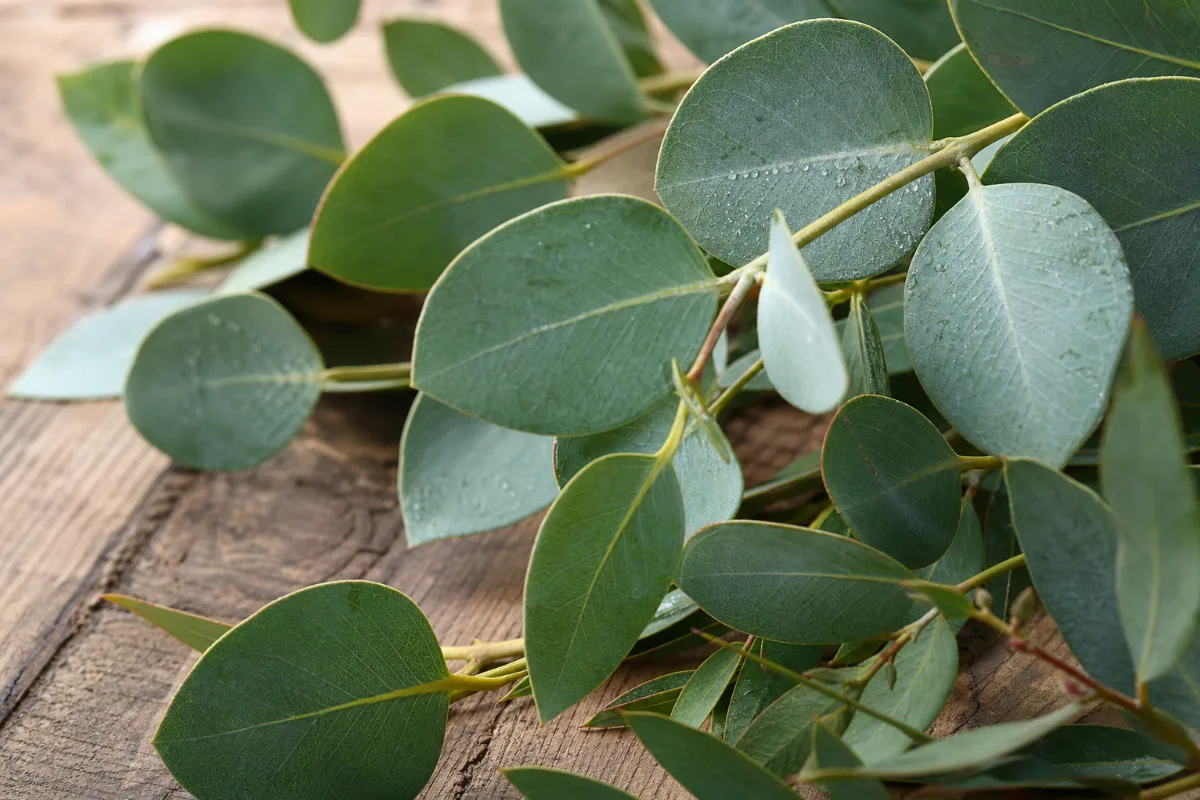
Herbs & Botanicals · Herbs · Leaf, essential oil and the chemical 1,8-cineole for cough, sinus and chest complaints
Eucalyptus (Eucalyptus globulus)
Eucalyptus globulus Labill. (family Myrtaceae); the EU oil monograph also covers E. polybractea and E. smithii · also called Blue gum, Tasmanian blue gum; eucalipto (Spanish); eucalyptus commun, gommier bleu (French); Eukalyptus, Blaugummibaum (German); eucalyptol is the chemical 1,8-cineole
Eucalyptus is a tall Australian tree. Its leaf (tea or steam), its essential oil (inhaled, rubbed on or put in baths) and its main chemical 1,8-cineole (taken as capsules) are used for coughs, colds and sinus and chest problems. The best human trials are for cineole capsules in sinus infection (moderate certainty), with weaker single trials for bronchitis, COPD and asthma, mostly from one German group and often paid for by the maker. The EU accepts the leaf and oil only as traditional medicines. The oil is dangerous if swallowed, especially by children, and must never go on or near the face of babies and young children. Ask a doctor or pharmacist about amounts.
General information, not medical advice. Last substantive update · Not medically reviewed. A named clinician has not signed off on this page. How this page is made
About Eucalyptus (Eucalyptus globulus)
Eucalyptus (mainly Eucalyptus globulus, the blue gum) gives three different things that should not be mixed up: the leaf (used as tea or steam), the essential oil (inhaled, rubbed on, or in baths), and 1,8-cineole, its main chemical, taken as capsules. The strongest human research is for cineole capsules in sinus infections (moderate certainty) and, with lower certainty, bronchitis, COPD and asthma, mostly from one German group and often paid for by the maker. The EU accepts the leaf and the oil only as traditional medicines for cough with a cold (and muscle pain for the oil). The oil is dangerous if swallowed, especially by children, and must not be used on or near the face of babies and young children.
What it is
Eucalyptus globulus Labill. is a tall evergreen tree of the myrtle family from south-eastern Australia and Tasmania, now grown in many warm countries. The EU also lists E. polybractea and E. smithii for the oil. The medicinal parts are the dried leaf and the oil steam-distilled from fresh leaves.
Different products give different results. Cineole capsules, eucalyptus oil, leaf tea, chest rubs, lozenges and mouthwashes are not interchangeable.
What makes it distinctive
The oil is mostly 1,8-cineole (also called eucalyptol), at least 70% under the European Pharmacopoeia specification quoted by the EU. In the lab cineole blocks inflammation signals, boosts an antiviral signal and acts on cold-sensing nerve channels, which may explain the cool, clearing feel.
Leaves hold only a small amount of oil, so a cup of tea carries far less cineole than the capsules used in trials.
Traditional and current uses
The EU accepts leaf tea or inhaled infusion for cough with a cold (2013), and the oil for cough with a cold and localised muscle pain (revised 2024). Both are based only on long use. Australian peoples used the oil long before Europe; European handbooks describe it from the 19th century.
Today the oil, chest rubs, lozenges, mouthwashes and cineole capsules are widely sold.
What the research shows
Cineole capsules beat placebo in sinus infection trials, and a 2023 review rates this moderate certainty. Single trials of the capsule in bronchitis, COPD and asthma are positive but low certainty, from one research group and funded by the maker. A 2022 review of eucalyptus for cough found only a minimal effect. Two small trials of inhaled oil found less pain, and a gum trial found better gum health.
No clinical study of the oil itself or of the leaf tea for cough was found.
At a glance
Traditional uses history, not proof
- Leaf tea or steam inhalation for cough and catarrh; EU traditional use for cough with a cold
- Essential oil for cough with a cold and, on the skin or in baths, for localised muscle pain (EU traditional use)
- Aboriginal Australian medicinal use of the oil, described in the EU report
- 19th and early 20th century handbooks list fever, asthma, tuberculosis, rheumatic complaints and antisepsis (EU reports)
Studied for research
- Acute sinus infection (cineole capsules), moderate certainty
- Acute bronchitis, COPD flare-ups and asthma (cineole capsules), low certainty
- Cough with colds (mostly combination products), low certainty, minimal effect
- Pain after surgery and in arthritis (inhaled oil), low certainty
- Gum inflammation (eucalyptus-extract gum), low certainty
- Leaf tea and oil for cough and muscle pain: traditional use only
Main compounds
- 1,8-Cineole (eucalyptol): at least 70% of the oil (EU specification)
- Alpha-pinene, limonene, p-cymene, alpha-terpineol, globulol
- Tannins, flavonoids and euglobals in the leaf
- Camphor should be absent (a quality problem in some products)
Common forms
- Leaf tea or infusion for inhaling (EU traditional use)
- Essential oil: inhaled, on skin or in baths (EU traditional use); oral forms exist in some countries
- Isolated 1,8-cineole in capsules (the trial product)
- Chest rubs, lozenges, mouthwashes and chewing gum (mixtures or special extracts)
Research links: EU herbal medicine page: eucalyptus oil (EMA) · EU herbal medicine page: eucalyptus leaf (EMA) · Review: eucalyptus for cough, 2022 · Review: herbal medicines for rhinosinusitis, 2023 · Eucalyptus oil poisoning in children, Melbourne series · Research Library · Genes & Biomarkers Library
The plant and its history
- Accepted scientific name
- Eucalyptus globulus Labill.
- Naming authority
- Labill. (Jacques-Julien Houtou de Labillardiere)
- Synonyms
- Eucalyptus gigantea Denham (listed as a synonym in GBIF); Eucalyptus globulus var. bicostata Maiden (GBIF synonym)
- Common names
- Tasmanian blue gum, southern blue gum, blue gum, bluegum eucalyptus (English); Eucalipto blanco (Spanish); Eucalyptus commun, gommier bleu (French); Blauer Eukalyptus, Blaugummibaum, Fieberbaum (German)
- Botanical family
- Myrtaceae
- Classification
- Plantae > Tracheophyta > Magnoliopsida > Myrtales > Myrtaceae > Eucalyptus > Eucalyptus globulus
- Native range
- Native to south-eastern Australia and Tasmania (EU reports); cultivated in the Mediterranean, North Africa, the Caucasus, Florida, California, Brazil, Mexico, Jamaica and India.
- Habitat
- A tall evergreen tree grown in plantations; the leaves of older branches are the medicinal part.
- What the plant looks like
- Roots: Not described in the sources read.; Stems: Tall tree. Not described further in the sources read.; Leaves: Mature leaves are long, narrow, bluish-green with brown spots and oil glands (EU report). Young and mature leaves differ in shape; the EU leaf drug is the dried leaves of older branches.; Flowers: Not described in the sources read.; Fruit: Not described in the sources read.
- Cultivation
- Grown commercially in many warm regions for pulp and oil (EU report). Cultivation details were not checked beyond that.
- Harvest and processing
- The essential oil is steam-distilled and rectified from fresh leaves or branch tips (European Pharmacopoeia definition quoted by the EU report). The EU leaf drug must hold a minimum amount of essential oil in the dried leaf.
- Look-alikes and adulterants
- Name: Eucalyptus radiata (narrow-leaved peppermint) and other cineole-rich species; Note: Also sold as eucalyptus oil. The EU oil monograph names E. globulus, E. polybractea and E. smithii. Cineole content differs by species (the EU leaf report says E. kochii and E. polybractea have the highest, 80 to 95%).; Name: Lemon eucalyptus (Corymbia citriodora); Note: A different plant. Its oil and the extract called PMD are used as insect repellent, not as a chest remedy. 'Oil of lemon eucalyptus' is not the same product (LactMed has a separate entry).; Name: 'Eucalyptus oil' that contains camphor; Note: Poisoning reports from India describe products labelled eucalyptus oil that contained camphor, likely made from camphor laurel.
- Sustainability and conservation
- Not assessed in the sources read. Widely planted.
The plant and the parts used

Traditional use and history history, not clinical proof
| Tradition or era | Documented use | Source |
|---|---|---|
| Aboriginal Australia | The EU oil report says the original inhabitants of Australia already used eucalyptus oil medicinally, citing a 2001 source; little reference is found in European materia medica before the second half of the 19th century. | EU assessment report on eucalyptus oil, EMA/HMPC/320282/2023 |
| Europe, 1873 | Kohler summarised the plant, its preparations, efficacy and safety, including effects on fever, nerve pain, asthma, lung tuberculosis and as an antiseptic. | EU assessment reports on leaf and oil |
| Germany, 1938 | Madaus described traditional uses in cough and cold, asthma, influenza, diabetes and rheumatic diseases from Australia, India and Brazil. The EU report notes 'uncertified' antidiabetic claims. | EU assessment report on eucalyptus oil |
| German pharmacy standard, 1996 | Eucalyptus leaf tea has regular use in Germany; a standard licence was published in 1996 and is used by pharmacies. | EU assessment report on eucalyptus leaf, EMA/HMPC/892615/2011 |
| European Union, 2013 and 2014 (revised 2024) | The EU HMPC adopted traditional-use monographs: leaf (2013) for cough with a cold; oil (2014, revision 1 in 2024) for cough with a cold and localised muscle pain. They are 'exclusively based upon long-standing use', not trial proof. | EU herbal monographs |
| Modern Germany, cineole capsules | Isolated 1,8-cineole in gastro-resistant capsules is a medicine for airway infections; the trials in this profile test that product. Its regulatory status as a prescription or over-the-counter medicine was not verified. | Fischer 2013, Worth 2009, Juergens 2020 (NOT verified as to legal status) |
Traditional use shows how a plant was used. It does not show that a supplement works or is safe today.
What is inside, and how it may work
What the plant contains and how those compounds act in cells and animals. Laboratory and animal mechanisms are not proven effects in people.
Main compounds
| Compound | Family | Where it is concentrated | Activity studied | Level of evidence |
|---|---|---|---|---|
| 1,8-Cineole (eucalyptol) PubChem 2758 | monoterpene (oxide) | leaf (essential oil) Essential oil: minimum 70% by the European Pharmacopoeia specification quoted in the EU report; the EU leaf report gives 54 to 95% across reports, with a lower 48.6% measured in one fresh-leaf E. globulus sample. Leaf holds roughly 1 to 3.5% oil. | The main active compound. Lab work shows it blocks inflammatory signals (TNF-alpha, IL-1 beta, NF-kB) and raises an antiviral signal (IRF3); it activates the cold-sensing TRPM8 nerve channel. Used as an isolated medicine in capsules. 27 7 5 18 22 28 | Laboratory research |
| alpha-Pinene PubChem 6654 | monoterpene | leaf (essential oil) 0.05 to 10.0% of the oil (Ph. Eur. range quoted by the EU report) | Minor oil component; no activity specific to eucalyptus tested in the sources read. 27 7 | Pharmacological theory |
| Limonene PubChem 22311 | monoterpene | leaf (essential oil) 0.05 to 15.0% of the oil (Ph. Eur. range quoted by the EU report) | Minor oil component; no activity specific to eucalyptus tested in the sources read. 27 7 | Pharmacological theory |
| p-Cymene PubChem 7463 | monoterpene | leaf (essential oil) Not stated in the sources read | Named as an oil component; no activity tested here. 27 | Pharmacological theory |
| alpha-Terpineol PubChem 17100 | monoterpene alcohol | leaf (essential oil) About 6.6% in one fresh-leaf oil sample (EU leaf report) | Minor oil component. 27 5 | Pharmacological theory |
| Globulol PubChem 12304985 | sesquiterpene alcohol | leaf (essential oil) About 10.9% in one fresh-leaf oil sample (EU leaf report) | Minor oil component; no activity tested here. 27 5 | Pharmacological theory |
| Aromadendrene PubChem 11095734 | sesquiterpene | leaf (essential oil) Not stated in the sources read | Named as a component of some oils; no activity tested here. 27 | Pharmacological theory |
| Camphor PubChem 2537 | monoterpene ketone | not a normal eucalyptus component Limit of 0.1% in the oil specification quoted by the EU report | Not an intended component. Its presence in 'eucalyptus oil' suggests adulteration and adds seizure risk. 27 7 | Authoritative guidance |
| Tannins, flavonoids and euglobals (non-volatile) | polyphenols and phloroglucinol derivatives | leaf E. globulus leaves have smaller amounts of tannin than many other species (EU leaf report) | Make up the non-oil part of the leaf and tea; no tested activity in the sources read. No PubChem identifiers checked. 5 | Pharmacological theory |
Mechanisms, receptors and pathways
| Target or pathway | Gene or receptor | What was found | Level |
|---|---|---|---|
| Inflammatory signalling | NF-kB; TNF-alpha, IL-1 beta, IL-6, IL-8 | In human monocytes in the lab, cineole at concentrations seen in blood lowered inflammatory messengers. Mostly from the authors who ran the cineole trials. 18 | Laboratory research |
| Antiviral signalling | IRF3 | Cineole raised IRF3 activity (an antiviral signal) while lowering NF-kB in cell lines, nasal stem cells and cultured human nasal tissue. 22 18 | Laboratory research |
| Airway nerve channels (cooling, cough) | TRPM8, TRPA1, P2X3 | A 2023 review reports eucalyptus activates TRPM8, blocks TRPA1 and lowers P2X3 in lab work, which may explain a cooling feel and less airway irritation. The review author received Procter and Gamble funding. 28 | Laboratory research |
| Cough reflex in animals | none identified | Cineole vapour did not significantly reduce citric-acid cough in conscious guinea pigs, while menthol and camphor did. 21 | Animal research |
| Liver drug-metabolism enzymes | CYP enzymes (cytochrome P450) | Cineole raised liver enzyme activity in rats (injection or inhalation) and shortened the effect of a sleeping drug; a 1970 five-person study suggested similar induction in people. The EU assessor called the human method weak. In test tubes, eucalyptus oil weakly blocked CYP3A4. 7 5 | Animal research |
| Mucus and airway fluid | mucin genes (MUC2, MUC19) | A review by the cineole trial authors says cineole lowers mucin genes and mucus overproduction in lab models. Not independently confirmed in the sources read. 18 | Laboratory research |
Absorption, metabolism and elimination
- Absorption
- Cineole is rapidly absorbed through the skin and mucous membranes and from the gut (EU leaf report). No pharmacokinetic study of the leaf tea or of eucalyptus oil was found; the EU documents say none were required.
- Distribution
- In rats, cineole crossed the placenta but not into milk. In nursing women, cineole taken by mouth appeared in breast milk in widely varying amounts that depended on timing (EU oil report quoting Kirsch 2012-2013).
- Metabolism
- 1,8-Cineole is broken down by the liver enzymes CYP3A4 and CYP3A5 in humans (Duisken 2005, quoted by the EU report). Main metabolites include 2-hydroxy- and 3-hydroxy-cineole.
- Elimination
- Hydroxy-cineoles are passed out in urine, partly as glucuronides (rat and rabbit data in the EU report). Half-life in people was not found in the sources read.
- Bioavailability
- No data for oil or tea. A cup of leaf tea would carry far less cineole than the capsules used in trials, and not all oil passes into the infusion (EU leaf report).
Isolated compounds versus whole extracts
The best human trials test one isolated compound, 1,8-cineole, in capsules. Eucalyptus oil is mostly cineole (at least 70%) plus other oil components. Leaf tea carries only a small fraction of that cineole, and rubs, lozenges and mouthwash are mixtures with menthol, camphor, thymol or other oils. Results for one cannot be carried to another: the EU report points out that the daily cineole in a tea at traditional amounts is well below the trial amounts. The EU monographs for oil and leaf rest on tradition, while the cineole capsule trials are used only as supporting evidence.
Nutritional composition
Eucalyptus is a medicinal and aroma plant, not a food. Leaf tea is a traditional medicine in some countries. 1,8-cineole also occurs in food herbs such as sage and rosemary (not covered here) and is used as a flavouring in lozenges (EU report). Nursing mothers who eat cineole-containing foods transfer small amounts to milk.
1 moderate certainty8 low certainty1 very low certainty4 not enough evidence
What is Eucalyptus (Eucalyptus globulus) good for?
Here is each use and how strong the evidence is. The best human trials are for isolated 1,8-cineole capsules, which are not the same as eucalyptus oil or tea. Many trials are from one research group and some were paid for by the capsule's maker.
Benefits, one by one
Each card is a research question, not a promise. Tap a goal to filter. Open a card to see the studies, doses and limits.
Acute sinus infection (isolated 1,8-cineole capsules)
Moderate certaintyTwo German trials found that 1,8-cineole capsules (the main chemical in eucalyptus oil, taken on its own) cleared sinus-infection symptoms faster than placebo or another herbal product over a week. A 2023 review of 47 trials rated cineole among the best herbal options for acute viral sinus infection, with moderate certainty. This is the cineole capsule, not eucalyptus oil or tea.
4 studiesIsolated cineole in capsules taken by mouth for about a week. Not the…
Studies, doses and limits
What the trials found
Kehrl 2004: 152 adults, 7 days, cineole vs placebo. Tesche 2008: 150 adults, cineole vs a five-herb combination (no placebo). The 2023 network meta-analysis (Hoang) pooled 47 trials of 18 herbal medicines and graded the evidence for acute post-viral rhinosinusitis.
Results
In Kehrl 2004 the symptom score fell from 15.6 to 3.0 with cineole by day 7, versus 9.2 with placebo. In Tesche 2008 cineole beat the five-herb product at days 4 and 7 (P < 0.0001), confirmed by sinus ultrasound.
Effect sizes as reported
Kehrl: day-7 score 3.0 vs 9.2. Tesche: day-7 score reduction 11.0 vs 8.0. Hoang: cineole among the most effective, moderate certainty (reviewers' GRADE).
Why this rating
The review rates it moderate (reviewers' own GRADE). I would not go higher: both trials come from one research group, the product's maker is linked to related trials, one trial had no placebo, sinus infections often improve alone, and the effect size is uncertain.
Form and dose studied
Isolated cineole in capsules taken by mouth for about a week. Not the same as eucalyptus oil, steam inhalation or leaf tea.
Who was studied
Adults with acute viral sinus infection without pus.
Limits
Short trials (7 days). Funding of the two trials is not stated in the abstracts; related trials by the same group were funded by the product's maker. No long-term or child data.
Why researchers looked
Colds often settle in the sinuses. A cineole capsule is sold in Germany for this, so trials were run in people with sinus infections that were not yet pus-forming.
Traditional use
Eucalyptus leaf and oil have long been used for stuffy noses and catarrh in Europe (EU assessment reports).
Proposed mechanism Laboratory research
Lab and animal work suggests 1,8-cineole lowers inflammation signals (TNF-alpha, IL-1 beta, NF-kB) and boosts an antiviral signal (IRF3) in cells, and eucalyptus acts on cold-sensing nerve channels (TRPM8, TRPA1). These are cell or animal findings and do not prove the same happens in people.
A proposed mechanism does not show that the effect happens in people.
Mild heartburn and a rash in two people in the Kehrl trial. Not for children with a history of seizures or under 2 years (EU).
Acute bronchitis (isolated 1,8-cineole capsules)
Low certaintyOne German trial of 242 adults with acute bronchitis found the cineole group improved more on a symptom score after 4 days, with fewer coughing fits. The trial was paid for by the capsule's maker, and acute bronchitis often clears alone.
2 studiesIsolated cineole capsules by mouth. Not eucalyptus oil or tea.
Studies, doses and limits
What the trials found
Fischer 2013: 242 adults, multi-centre, cineole capsules vs placebo for 10 days; main outcome the Bronchitis Sum Score.
Results
After 4 days the cineole group had a bigger improvement in the score (p = 0.0383) and fewer coughing fits (p = 0.0001).
Effect sizes as reported
Bronchitis sum score p = 0.0383 and cough-fit frequency p = 0.0001 at day 4; no confidence intervals in the abstract.
Why this rating
One trial, paid for by the maker (Cassella-med, stated in the paper's acknowledgements), no replication, p-values only, and a condition that usually improves by itself.
Form and dose studied
Isolated cineole capsules by mouth. Not eucalyptus oil or tea.
Who was studied
Adults with confirmed acute bronchitis.
Limits
Only one trial. The authors' enthusiastic conclusion ('great socioeconomic impact') goes beyond what one 10-day trial can show.
Why researchers looked
Acute bronchitis is a chest infection with cough and phlegm, usually caused by a virus. Cineole was tried because it is thought to loosen mucus and calm airway inflammation.
Traditional use
Eucalyptus has long been used for chest colds and cough in many countries.
Proposed mechanism Laboratory research
Lab and animal work suggests 1,8-cineole lowers inflammation signals (TNF-alpha, IL-1 beta, NF-kB) and boosts an antiviral signal (IRF3) in cells, and eucalyptus acts on cold-sensing nerve channels (TRPM8, TRPA1). These are cell or animal findings and do not prove the same happens in people.
A proposed mechanism does not show that the effect happens in people.
Cough lasting more than a week, fever, breathlessness or pus-coloured phlegm needs a doctor (EU monograph).
Cough with colds and bronchitis (eucalyptus products, mostly combinations)
Low certaintyA 2022 review of six trials (1,857 people) found eucalyptus products helped cough slightly more than placebo, but four of the six trials tested combination products, half of the trials had a high risk of bias, and the authors call the effect minimal and of uncertain clinical importance.
3 studiesMixed: combination formulas and a single-ingredient trial are lumped …
Studies, doses and limits
What the trials found
Her 2022 meta-analysis of 6 randomised trials. Pooled result: relative risk 1.45 for overall cough improvement and a weighted mean difference of 0.44 for fewer coughs. No serious adverse events; stomach upsets were common in both groups.
Results
Eucalyptus products slightly beat placebo for cough, with no serious harm seen.
Effect sizes as reported
RR 1.45 (95% CI 1.26 to 1.67) for improvement; WMD 0.44 (95% CI 0.28 to 0.60) for cough frequency.
Why this rating
Mixed products, half the trials at high risk of bias, and the authors themselves say the benefit is minimal and of uncertain importance.
Form and dose studied
Mixed: combination formulas and a single-ingredient trial are lumped together.
Who was studied
People with cough from upper airway infections and bronchitis.
Limits
Cannot give the result to eucalyptus oil, tea or cineole separately.
Why researchers looked
People use eucalyptus in lozenges, rubs and syrups for cough. This review asked whether eucalyptus really beats placebo.
Traditional use
Cough and cold use is the main traditional use of eucalyptus in Europe.
Proposed mechanism Laboratory research
Eucalyptus may act on cold-sensing nerve channels (TRPM8, TRPA1) that are linked to the cough reflex. A 1994 guinea-pig test found cineole vapour did not stop cough, while menthol and camphor did.
A proposed mechanism does not show that the effect happens in people.
Mild to moderate stomach symptoms were seen in treated and control groups.
Children's night-time cough and sleep (vapor rub ointment containing eucalyptus oil)
Very low certaintyOne US trial of 138 children aged 2 to 11 found parents rated a branded vapor rub (eucalyptus oil is one of its ingredients) best for night cough, stuffy nose and sleep, better than plain petroleum jelly or nothing. It was one night, parent-rated, and the smell cannot be hidden. The rub caused more skin or eye irritation. This is not a test of eucalyptus alone.
1 studiesA branded ointment applied to chest and neck. The EU says do not put …
Studies, doses and limits
What the trials found
Paul 2010: partly double-blind trial; ointment or plain petrolatum or no treatment applied to the chest and neck at bedtime; parents rated symptoms the next day.
Results
The vapor rub scored best on cough, congestion and sleep. Petrolatum was no better than no treatment. Irritant side effects were more common with the rub.
Effect sizes as reported
Significant differences between groups for cough, congestion and sleep difficulty; numbers not in the abstract.
Why this rating
A combination product, one night, parent-rated, unblinded by the smell, and the abstract does not list ingredients or funders.
Form and dose studied
A branded ointment applied to chest and neck. The EU says do not put eucalyptus oil or ointments on or near the face of babies and small children.
Who was studied
Children 2 to 11 with colds.
Limits
Not a test of eucalyptus alone. Younger children were not studied.
Why researchers looked
Parents often rub a chest ointment on a coughing child. The trial asked if the ointment helps more than a plain ointment or nothing.
Traditional use
Aromatic chest rubs have been used for colds for generations.
Proposed mechanism Pharmacological theory
A cooling smell may make breathing feel easier; the effect on real airflow was not shown.
A proposed mechanism does not show that the effect happens in people.
More irritation with the rub. See the Safety tab for infants and the face.
COPD flare-ups (isolated 1,8-cineole capsules added to usual medicines)
Low certaintyA German trial in 242 people with stable COPD found that adding cineole capsules to usual medicines for 6 winter months meant fewer, shorter and milder flare-ups than placebo, and some gains in lung function and breathlessness. The trial was funded by the capsule maker and has not been repeated.
2 studiesIsolated cineole capsules by mouth, on top of usual COPD medicines. N…
Studies, doses and limits
What the trials found
Worth 2009: 242 adults with stable COPD, 6 months in winter, cineole capsules vs placebo, plus usual medicines. A later review by the same group quotes a 38.5% fall in exacerbations.
Results
Flare-up frequency, severity and duration were lower with cineole. Lung function, breathlessness and quality of life improved more. Adverse events were similar between groups.
Effect sizes as reported
Significant difference on the combined flare-up outcome; numbers not in the abstract (the review by the trial's authors quotes -38.5%).
Why this rating
A single trial, funded by the maker (Cassella-med; read in the paper), not repeated by independent groups, and the 2020 review is by the same authors.
Form and dose studied
Isolated cineole capsules by mouth, on top of usual COPD medicines. Not eucalyptus oil or tea.
Who was studied
Adults with stable COPD, in winter.
Limits
One trial; numbers not in the abstract. A 2026 network meta-analysis of mucolytics in COPD appears in PubMed but I did not read it.
Why researchers looked
COPD flare-ups cause many hospital stays. Cineole was tried because it is thought to thin mucus and calm airway inflammation.
Traditional use
Eucalyptus has long been used for chronic chest complaints.
Proposed mechanism Laboratory research
Lab and animal work suggests 1,8-cineole lowers inflammation signals (TNF-alpha, IL-1 beta, NF-kB) and boosts an antiviral signal (IRF3) in cells, and eucalyptus acts on cold-sensing nerve channels (TRPM8, TRPA1). These are cell or animal findings and do not prove the same happens in people.
A proposed mechanism does not show that the effect happens in people.
Adverse events were similar to placebo in the trial. Tell your doctor before adding cineole to COPD medicines.
Asthma (isolated 1,8-cineole capsules added to usual medicines)
Low certaintyTwo German trials suggest cineole capsules may help some people with asthma: a 32-person trial in severe asthma found people could cut their steroid tablets by 36% versus 7% on placebo, and a 247-person trial found small gains in lung function, symptoms and quality of life. Both are small effects from one research group.
4 studiesIsolated cineole capsules by mouth. Not oil inhaled or on the skin.
Studies, doses and limits
What the trials found
Juergens 2003: 32 steroid-dependent adults, 12 weeks. Worth 2012: 247 adults with asthma, 6 months, cineole vs placebo plus usual medicines.
Results
Steroid dose cut: 36% with cineole vs 7% with placebo (P = 0.006); 12 of 16 vs 4 of 16 managed a reduction. In the larger trial the cineole group improved more on the combined outcome (p = 0.0027), including FEV1 (p = 0.0398).
Effect sizes as reported
Juergens: -36% vs -7% steroid dose. Worth: combined p = 0.0027; FEV1 p = 0.0398; symptoms p = 0.0325; quality of life p = 0.0475.
Why this rating
Small trials from the same group, funder not stated in the abstracts, and the sister COPD trial was funded by the maker. No independent confirmation.
Form and dose studied
Isolated cineole capsules by mouth. Not oil inhaled or on the skin.
Who was studied
Adults with asthma, including steroid-dependent severe asthma.
Limits
Never reduce asthma medicine on your own. Inhaling eucalyptus can irritate the voice box (see Safety).
Why researchers looked
Asthma involves airway inflammation. Cineole blocked inflammatory signals in lab tests, so it was tried as an add-on.
Traditional use
Eucalyptus has a long folk use in asthma (EU report), but it is also a recognised irritant for some airways.
Proposed mechanism Laboratory research
Lab and animal work suggests 1,8-cineole lowers inflammation signals (TNF-alpha, IL-1 beta, NF-kB) and boosts an antiviral signal (IRF3) in cells, and eucalyptus acts on cold-sensing nerve channels (TRPM8, TRPA1). These are cell or animal findings and do not prove the same happens in people.
A proposed mechanism does not show that the effect happens in people.
Never use cineole in place of asthma medicine. Vocal cord irritation from eucalyptus can mimic asthma.
Leaf tea or leaf steam for cough with a cold (traditional use)
Not enough evidenceThe EU accepts eucalyptus leaf tea, or an infusion to inhale, as a traditional medicine for cough with a cold, based on long use. No clinical trial of the leaf tea was found in the EU report. The trial results above are for a cineole capsule, not for tea.
2 studiesLeaf tea or infusion for inhaling. The EU does not recommend the tea …
Studies, doses and limits
What the trials found
No human trial of the leaf. The EU HMPC accepted the use as traditional only.
Results
No result to report.
Effect sizes as reported
None.
Why this rating
Only tradition, no trial. Cineole capsule results cannot be carried over to tea.
Form and dose studied
Leaf tea or infusion for inhaling. The EU does not recommend the tea under 12 and contraindicates it under 30 months.
Who was studied
Adolescents and adults (EU).
Limits
Traditional use does not show benefit.
Why researchers looked
Eucalyptus leaf tea has been a pharmacy standard in Germany since a 1996 licence.
Traditional use
Leaf tea and inhalation of the steam are described in European handbooks back to the 19th century.
Proposed mechanism Pharmacological theory
Leaves hold only 1.5 to 3.5% essential oil, so a cup of tea carries far less cineole than the capsules used in trials (EU report).
A proposed mechanism does not show that the effect happens in people.
Do not give to babies and very young children. See a doctor if you have shortness of breath, fever or pus-coloured phlegm.
Essential oil for cough with a cold (inhaled, on the chest, in baths; traditional use)
Not enough evidenceThe EU accepts eucalyptus essential oil as a traditional medicine for cough with a cold (and for muscle pain). No clinical study of the oil itself is described in the EU assessment report. The oil is strong and can poison a child if swallowed, so this is not a simple home remedy.
2 studiesOil in steam, as an ointment, as a bath additive, or by mouth in form…
Studies, doses and limits
What the trials found
The EU assessment report states: 'There are no clinical studies available' for the oil; it treats cineole trials as supportive.
Results
No trial result for the oil on cough.
Effect sizes as reported
None.
Why this rating
Tradition only; cineole capsule trials are a different product.
Form and dose studied
Oil in steam, as an ointment, as a bath additive, or by mouth in forms approved in some countries. The EU contraindicates it under 24 months.
Who was studied
Adults and children from the EU's lower age limits.
Limits
Cannot say if the oil works. Oil can irritate airways and skin.
Why researchers looked
The oil is the steam-distilled leaf oil, high in 1,8-cineole.
Traditional use
Aboriginal Australians used eucalyptus oil; European monographs date to 1873 (EU report).
Proposed mechanism Preliminary mechanism
Cooling and airway-nerve effects (TRPM8, TRPA1) are lab ideas only.
A proposed mechanism does not show that the effect happens in people.
See the Safety tab: poisoning, seizures, laryngospasm in young children, skin allergy.
Pain after knee replacement surgery (eucalyptus oil inhaled)
Low certaintyIn a Korean trial, people who breathed in eucalyptus oil for 30 minutes on three days after knee replacement reported less pain than people who breathed almond oil, and had lower blood pressure on day 2. Blood tests for inflammation (CRP, white cells) did not differ. Small trial, hard to blind because of the smell, and a correction to the paper was published in 2026.
1 studiesInhaled eucalyptus oil during exercise. Not skin rub, not capsules.
Studies, doses and limits
What the trials found
Jun 2013: randomised trial; patients inhaled eucalyptus or almond oil during 30 minutes of passive knee movement on 3 days; pain on a 0-10 type scale, blood pressure, heart rate, CRP and white cells were measured before and after.
Results
Pain was lower on all three days with eucalyptus (P < .001); systolic and diastolic blood pressure were lower on day 2; heart rate, CRP and white cell count did not differ.
Effect sizes as reported
Pain P < .001 on all three days; blood pressure P < .05 and P = .03 on day 2; no group size in the abstract.
Why this rating
One small trial, size not in the abstract, patients can smell the difference between the oils so blinding is weak, a published correction I did not read, and no inflammation-marker change.
Form and dose studied
Inhaled eucalyptus oil during exercise. Not skin rub, not capsules.
Who was studied
Adults after total knee replacement.
Limits
Short follow-up; surgery pain also eases with time and medicines.
Why researchers looked
Eucalyptus oil is said to reduce pain, swelling and inflammation, so it was tried as a nursing aid during knee exercise after surgery.
Traditional use
Eucalyptus oil is used traditionally for muscle and joint pain (EU).
Proposed mechanism Preliminary mechanism
Cooling effect via TRPM8 nerve channels is a lab idea; the inflammation blood tests in this trial did not change.
A proposed mechanism does not show that the effect happens in people.
Breathing in strong vapours can irritate the airways in some people (vocal cord dysfunction) and is not advised for babies.
Pain in rheumatoid arthritis (eucalyptus oil inhaled)
Low certaintyAn Iranian trial of 70 people with rheumatoid arthritis found that inhaling eucalyptus oil three times a day for a month lowered pain scores in weeks 3 and 4 and improved quality of life, compared with placebo inhalation. It is one small trial where the smell makes blinding difficult.
1 studiesInhaled eucalyptus oil, not applied to joints.
Studies, doses and limits
What the trials found
Varkaneh 2022: 70 adults, randomised, eucalyptus oil inhaled for 5 minutes three times a day for one month, vs placebo inhalation, both with routine treatment.
Results
Pain was not different at the start, week 1 and week 2, but was lower in weeks 3 and 4 (p < 0.05); quality of life improved (P < 0.001).
Effect sizes as reported
Between-group pain difference p < 0.001 overall (analysis of covariance); week 3-4 p < 0.05; effect sizes not in the abstract.
Why this rating
Small single trial with weak blinding because of smell; no objective joint measures; registered in an Iranian registry.
Form and dose studied
Inhaled eucalyptus oil, not applied to joints.
Who was studied
Adults with rheumatoid arthritis.
Limits
No joint swelling or blood markers reported in the abstract.
Why researchers looked
Rheumatoid arthritis pain is hard to control. A smell-based treatment was tested as an add-on to routine care.
Traditional use
Madaus (1938) listed rheumatic complaints among traditional uses (EU report).
Proposed mechanism Pharmacological theory
Not established.
A proposed mechanism does not show that the effect happens in people.
Inhaling oil is not for infants; see Safety.
Localised muscle pain (oil on the skin or in baths; traditional use)
Not enough evidenceThe EU accepts eucalyptus oil, rubbed in as a few drops or as a 10% ointment, or used as a bath additive, as a traditional medicine for muscle pain. This is based on long use. The EU report says there are no clinical studies of the oil. The two pain trials above used inhaled oil, which is different.
2 studiesOil rubbed on the skin, ointment, or bath additive (not repeated here…
Studies, doses and limits
What the trials found
No trial. The EU HMPC accepted the use as traditional on long-standing use alone.
Results
None to report.
Effect sizes as reported
None.
Why this rating
Only tradition; the EU says the use is 'exclusively based upon long-standing use'.
Form and dose studied
Oil rubbed on the skin, ointment, or bath additive (not repeated here). The EU contraindicates it under 24 months and does not recommend it for 2 to 3 years.
Who was studied
Adolescents and adults; children from 3 years in the EU monograph.
Limits
No evidence of benefit; irritation and allergy are possible.
Why researchers looked
Rubs and baths for aching muscles are a common household use.
Traditional use
Rheumatic complaints and localised muscle pain are traditional uses in European handbooks (Commission E 1986, ESCOP 2003, WHO 2002, cited by the EU report).
Proposed mechanism Preliminary mechanism
Cooling effect through nerve channels is an idea only.
A proposed mechanism does not show that the effect happens in people.
Do not apply to broken or irritated skin; wash hands before touching eyes (EU). Full hot baths are contraindicated in some conditions.
Gum inflammation and plaque (chewing gum with eucalyptus extract)
Low certaintyA Japanese trial of 97 adults with gum inflammation found that chewing gum with eucalyptus extract (0.4% or 0.6%) for 12 weeks improved plaque, gum index, bleeding and pocket depth compared with the same gum without extract. It is one trial with a published correction (erratum). It is a specific extract in gum, not a toothpaste or mouthwash.
1 studiesA named extract in sugar-free chewing gum. Not eucalyptus oil swallow…
Studies, doses and limits
What the trials found
Nagata 2008: double-masked randomised trial; 32 people high-concentration gum, 32 low-concentration, 33 placebo gum, for 12 weeks. Measures at weeks 0, 4, 8, 12 and 14.
Results
Both eucalyptus gums improved plaque, gum index, bleeding on probing and pocket depth versus placebo gum (P < 0.05); attachment level did not change significantly.
Effect sizes as reported
P < 0.05 for four measures; actual values not in the abstract.
Why this rating
One 12-week trial in healthy adults with mild gum inflammation, no replication, an erratum I did not read, funder not stated in the abstract.
Form and dose studied
A named extract in sugar-free chewing gum. Not eucalyptus oil swallowed or swished.
Who was studied
Healthy adults with gingivitis without deep pockets.
Limits
No long-term data; chewing gum may be unsuitable for some.
Why researchers looked
Eucalyptus extract slowed gum-disease bacteria in test tubes, so it was tested in chewing gum.
Traditional use
Not a traditional use.
Proposed mechanism Laboratory research
Antibacterial action against mouth bacteria was shown in lab tests (per the trial's background); not tested here.
A proposed mechanism does not show that the effect happens in people.
The abstract reports no side effects.
Plaque and gum inflammation (essential-oils mouthrinse; a multi-ingredient product)
Low certaintyA review of five studies found that a multi-oil mouthrinse reduced plaque and gum inflammation over six months better than an alcohol-only rinse. Products like this often list eucalyptus-derived eucalyptol among their oils, but the review abstract does not name the ingredients, so the benefit cannot be given to eucalyptus.
1 studiesMouth rinse, swished and spat out. Not eucalyptus oil swallowed.
Studies, doses and limits
What the trials found
Van Leeuwen 2014: systematic review and meta-analysis of five studies; four 6-month studies pooled. The authors rate the plaque data 'high' quality and the gum data 'moderate'.
Results
Plaque difference of means 0.39 (P < 0.00001) and gum inflammation 0.36 (P = 0.00001) in favour of the essential-oils rinse over the vehicle; a small amount of extra staining.
Effect sizes as reported
Plaque DIFFM 0.39; gingival index DIFFM 0.36; staining DIFFM -0.08.
Why this rating
The reviewers' own quality rating is high for plaque, but the product is a mixture and the abstract does not say eucalyptol was in it, so for eucalyptus I rate it low.
Form and dose studied
Mouth rinse, swished and spat out. Not eucalyptus oil swallowed.
Who was studied
Adults using the rinse beside daily tooth care.
Limits
Few studies; some rinses contain alcohol.
Why researchers looked
Essential-oil mouthwashes are widely used next to brushing.
Traditional use
Not a traditional use of eucalyptus.
Proposed mechanism Pharmacological theory
Several oils together are thought to disturb plaque bacteria; not established for eucalyptus alone.
A proposed mechanism does not show that the effect happens in people.
Never swallow mouthwash; keep away from children (eucalyptus oil poisoning is documented).
Fighting germs and inflammation (lab and animal findings)
Not enough evidenceIn test tubes and animals, eucalyptus oil and cineole slow some germs and calm inflammation signals. These findings have not been shown to help people, and most human trials (above) are for symptoms, not infections.
3 studiesNot applicable.
Studies, doses and limits
What the trials found
No human trial of this claim. Lab: Müller 2016 (cells and cultured nasal tissue); the EU report lists many animal and cell studies.
Results
None in people.
Effect sizes as reported
None.
Why this rating
Cell and animal findings only.
Form and dose studied
Not applicable.
Who was studied
None.
Limits
Lab results rarely predict effects in people.
Why researchers looked
Eucalyptus has been studied as an antiseptic and anti-inflammatory plant.
Traditional use
Antisepsis was among Köhler's 1873 uses (EU report).
Proposed mechanism Laboratory research
Cineole blocked inflammatory signals (TNF-alpha, IL-1 beta, NF-kB) and raised an antiviral signal (IRF3) in human cells and nasal tissue in the lab.
A proposed mechanism does not show that the effect happens in people.
Do not use eucalyptus oil as an antiseptic on wounds without medical advice.
Connections to the rest of health
How Eucalyptus (Eucalyptus globulus) connects to the rest of our health knowledge graph. Every link says what kind of connection it is. A safety link (for example to the liver) is a warning, not a benefit. A study that merely mentions a topic never creates a benefit link.
Explore every connection: goals, body systems, organs, symptoms, genes
A. Wellness goals
| Connected to | Kind of connection | Evidence status | Context | Studies |
|---|---|---|---|---|
| Immune Support | Potential benefit | Moderate certainty | Acute sinus infection (isolated 1,8-cineole capsules): Two German trials found that 1,8-cineole capsules (the main chemical in eucalyptus oil, taken on its own) cleared sinus-infection symptoms faster than placebo or another herbal product over a week. A 2023 review of 47 trials rated cineole among the best herbal options for acute viral sinus infection, with moderate certainty. This is the cineole capsule, not eucalyptus oil or tea. | 20 29 14 22 |
| Inflammation Balance | Potential benefit | Low certainty | Pain after knee replacement surgery (eucalyptus oil inhaled): In a Korean trial, people who breathed in eucalyptus oil for 30 minutes on three days after knee replacement reported less pain than people who breathed almond oil, and had lower blood pressure on day 2. Blood tests for inflammation (CRP, white cells) did not differ. Small trial, hard to blind because of the smell, and a correction to the paper was published in 2026. Pain in rheumatoid arthritis (eucalyptus oil inhaled): An Iranian trial of 70 people with rheumatoid arthritis found that inhaling eucalyptus oil three times a day for a month lowered pain scores in weeks 3 and 4 and improved quality of life, compared with placebo inhalation. It is one small trial where the smell makes blinding difficult. | 19 32 |
| Joint Support | Potential benefit | Low certainty | Pain in rheumatoid arthritis (eucalyptus oil inhaled): An Iranian trial of 70 people with rheumatoid arthritis found that inhaling eucalyptus oil three times a day for a month lowered pain scores in weeks 3 and 4 and improved quality of life, compared with placebo inhalation. It is one small trial where the smell makes blinding difficult. | 32 |
| Inflammation Balance | Traditional use | Not enough evidence | Localised muscle pain (oil on the skin or in baths; traditional use): The EU accepts eucalyptus oil, rubbed in as a few drops or as a 10% ointment, or used as a bath additive, as a traditional medicine for muscle pain. This is based on long use. The EU report says there are no clinical studies of the oil. The two pain trials above used inhaled oil, which is different. | 6 7 |
| Digestive Support | Potential benefit | Low certainty | Gum inflammation and plaque (chewing gum with eucalyptus extract): A Japanese trial of 97 adults with gum inflammation found that chewing gum with eucalyptus extract (0.4% or 0.6%) for 12 weeks improved plaque, gum index, bleeding and pocket depth compared with the same gum without extract. It is one trial with a published correction (erratum). It is a specific extract in gum, not a toothpaste or mouthwash. | 24 |
| Immune Support | Preliminary mechanism | Not enough evidence | Fighting germs and inflammation (lab and animal findings): In test tubes and animals, eucalyptus oil and cineole slow some germs and calm inflammation signals. These findings have not been shown to help people, and most human trials (above) are for symptoms, not infections. | 22 18 7 |
| Inflammation Balance | Preliminary mechanism | Not enough evidence | Fighting germs and inflammation (lab and animal findings): In test tubes and animals, eucalyptus oil and cineole slow some germs and calm inflammation signals. These findings have not been shown to help people, and most human trials (above) are for symptoms, not infections. | 22 18 7 |
B. Body systems
| Connected to | Kind of connection | Evidence status | Context | Studies |
|---|---|---|---|---|
| Nervous system | Adverse effect or risk | Low certainty | Seizures and drowsiness after oil exposure, mainly children; pooled analysis of 110 cases. Seizures and drowsiness after swallowing, inhaling or skin use, mainly in children. Preparation or compound: Eucalyptus essential oil (swallowed, inhaled or on skin) |
25 30 |
| Respiratory system | Adverse effect or risk | Very low certainty | Vocal cord dysfunction in one woman; laryngospasm risk in infants. Preparation or compound: Inhaled eucalyptus (leaf or oil) |
15 7 |
| Skin | Adverse effect or risk | Very low certainty | Contact eczema and allergy reported; frequency unknown. Preparation or compound: Eucalyptus oil on skin |
6 7 13 |
| Liver | Drug or supplement interaction | Not enough evidence | Liver enzyme induction in rats; one small volunteer study; EU says no interaction reported. Liver enzyme induction in rats and one small volunteer study; EU says no interaction reported. Preparation or compound: 1,8-cineole |
7 5 |
| Pregnancy and breastfeeding | Contraindication | Not enough evidence | Not recommended: no data. Cineole crosses the placenta in rats and passes into breast milk after oral intake. Preparation or compound: Oil, leaf |
6 4 7 |
| Respiratory system | Potential benefit | Moderate certainty | Faster symptom relief than placebo in two trials of acute sinus infection; moderate certainty in a 2023 review. Single trials in acute bronchitis, COPD flare-ups and asthma; low certainty. Preparation or compound: Isolated 1,8-cineole capsules |
20 29 14 8 34 35 17 |
| Respiratory system | Traditional use | Not enough evidence | EU traditional use for cough with a cold; no clinical studies of the leaf or the oil. Preparation or compound: Eucalyptus leaf tea and essential oil |
6 4 7 5 |
| Respiratory System | Biological association | Moderate certainty | Studied for: Acute sinus infection (isolated 1,8-cineole capsules) Studied for: Acute bronchitis (isolated 1,8-cineole capsules) | 20 29 14 22 8 18 12 21 28 26 34 17 35 15 4 5 6 7 |
| Musculoskeletal System | Biological association | Low certainty | Studied for: Pain after knee replacement surgery (eucalyptus oil inhaled) Studied for: Pain in rheumatoid arthritis (eucalyptus oil inhaled) | 19 32 6 7 |
| Nervous System | Biological association | Low certainty | Studied for: Pain after knee replacement surgery (eucalyptus oil inhaled) | 19 |
| Integumentary System | Biological association | Not enough evidence | Studied for: Localised muscle pain (oil on the skin or in baths; traditional use) | 6 7 |
| Digestive System | Biological association | Low certainty | Studied for: Gum inflammation and plaque (chewing gum with eucalyptus extract) Studied for: Plaque and gum inflammation (essential-oils mouthrinse; a multi-ingredient product) | 24 31 |
| Immune System | Biological association | Not enough evidence | Studied for: Fighting germs and inflammation (lab and animal findings) | 22 18 7 |
I. Biomarkers
| Connected to | Kind of connection | Evidence status | Context | Studies |
|---|---|---|---|---|
| Sinus infection symptom-sum score | Biological association | Moderate certainty | Measured in trials: lowered. A lab change is not the same as a health benefit. | 20 29 14 |
| Bronchitis Sum Score | Biological association | Low certainty | Measured in trials: lowered. A lab change is not the same as a health benefit. | 8 |
| Cough frequency | Biological association | Low certainty | Measured in trials: lowered. A lab change is not the same as a health benefit. | 12 |
| COPD flare-ups (frequency, severity, duration) | Biological association | Low certainty | Measured in trials: lowered. A lab change is not the same as a health benefit. | 34 18 |
| FEV1 (forced breath out in one second) | Biological association | Low certainty | Measured in trials: raised. A lab change is not the same as a health benefit. | 35 |
| Daily steroid tablet dose in severe asthma | Biological association | Low certainty | Measured in trials: lowered. A lab change is not the same as a health benefit. | 17 |
| Self-rated pain score | Biological association | Low certainty | Measured in trials: lowered. A lab change is not the same as a health benefit. | 19 32 |
| C-reactive protein (CRP) | Biological association | Low certainty | Measured in trials: no-change. A lab change is not the same as a health benefit. | 19 |
| Blood pressure | Biological association | Low certainty | Measured in trials: lowered. A lab change is not the same as a health benefit. | 19 |
| Dental plaque score | Biological association | Low certainty | Measured in trials: lowered. A lab change is not the same as a health benefit. | 24 31 |
| Gum inflammation and bleeding on probing | Biological association | Low certainty | Measured in trials: lowered. A lab change is not the same as a health benefit. | 24 31 |
J. Genes, receptors and enzymes
| Connected to | Kind of connection | Evidence status | Context | Studies |
|---|---|---|---|---|
| IRF3 (interferon regulatory factor 3) | Preliminary mechanism | In vitro | Antiviral signal raised by cineole in cells and cultured nasal tissue. | 22 |
| TRPM8, TRPA1 (TRP channels), P2X3 | Preliminary mechanism | In vitro | Cold-sensing and irritation channels on airway nerves; eucalyptus activates TRPM8 and blocks TRPA1 in lab work. | 28 |
| CYP3A4 and CYP3A5 | Preliminary mechanism | In vitro | Liver enzymes that break down 1,8-cineole; eucalyptus oil weakly blocked CYP3A4 in a lab test. | 7 |
| MUC2 and MUC19 (mucin genes) | Preliminary mechanism | In vitro | Lowered by cineole in lab models, per a review by the cineole trial authors. | 18 |
K. Biological pathways
L. Active compounds
| Connected to | Kind of connection | Evidence status | Context | Studies |
|---|---|---|---|---|
| 1,8-Cineole (eucalyptol) | Biological association | In vitro | The main active compound. Lab work shows it blocks inflammatory signals (TNF-alpha, IL-1 beta, NF-kB) and raises an antiviral signal (IRF3); it activates the cold-sensing TRPM8 nerve channel. Used as an isolated medicine in capsules. Preparation or compound: leaf (essential oil) |
27 7 5 18 22 28 |
| alpha-Pinene | Biological association | Pharmacological theory | Minor oil component; no activity specific to eucalyptus tested in the sources read. Preparation or compound: leaf (essential oil) |
27 7 |
| Limonene | Biological association | Pharmacological theory | Minor oil component; no activity specific to eucalyptus tested in the sources read. Preparation or compound: leaf (essential oil) |
27 7 |
| p-Cymene | Biological association | Pharmacological theory | Named as an oil component; no activity tested here. Preparation or compound: leaf (essential oil) |
27 |
| alpha-Terpineol | Biological association | Pharmacological theory | Minor oil component. Preparation or compound: leaf (essential oil) |
27 5 |
| Globulol | Biological association | Pharmacological theory | Minor oil component; no activity tested here. Preparation or compound: leaf (essential oil) |
27 5 |
| Aromadendrene | Biological association | Pharmacological theory | Named as a component of some oils; no activity tested here. Preparation or compound: leaf (essential oil) |
27 |
| Camphor | Biological association | Authoritative guidance | Not an intended component. Its presence in 'eucalyptus oil' suggests adulteration and adds seizure risk. Preparation or compound: not a normal eucalyptus component |
27 7 |
| Tannins, flavonoids and euglobals (non-volatile) | Biological association | Pharmacological theory | Make up the non-oil part of the leaf and tea; no tested activity in the sources read. No PubChem identifiers checked. Preparation or compound: leaf |
5 |
Each connection is stored with the ingredient, the connected record, the kind of connection, the evidence status, the supporting studies, the preparation or compound involved, and a review date (last reviewed October 25, 2026).
Evidence at a glance: what changed in 11 lab markers
Tap a number to show only those markers. Counts are markers, not people.
The evidence
The research centre for Eucalyptus (Eucalyptus globulus). Every record here was checked against PubMed or the publisher's page; we never list a study we have not verified.
Evidence by outcome
Bars show how many studies we found for each outcome, not how well it works. People are added up across trials only (reviews are not added, to avoid double counting).
How we rate evidence
High certainty
Several well-run trials or reviews agree; further research is unlikely to change the picture much.
Moderate certainty
Good trials point the same way, but some doubt remains.
Low certainty
Small, short or inconsistent trials. The finding could change with better research.
Very low certainty
Very little or very weak human data. Treat as a possibility only.
Mixed findings
Trials or reviews disagree with each other.
Not enough evidence
Not enough human research to say either way.
Evidence against
Good research found no benefit, or found harm.
We take the reviewers' own risk-of-bias and GRADE statements where they exist, and otherwise judge from study size, design, consistency, directness and whether a product matches what is sold. Many publications do not make evidence high. Method note: We searched PubMed and read the abstracts of every study cited. We read the EU herbal monograph for eucalyptus oil (2024) and for eucalyptus leaf (2013) in full and the EU assessment reports selectively. Funding was read in the paper text for three cineole papers. NCCIH has no page at the address tried; LiverTox and LactMed have no eucalyptus entry we could confirm; the FDA, Commission E, ESCOP and WHO positions are marked not verified. Certainty ratings are the compiler's own reading, except where we quote a review's own GRADE. No study is cited that we could not verify.
Study library: every study we checked 35
| Study | Design | People | Product, dose, length | Result |
|---|---|---|---|---|
| Boyle 2011 Clinically significant interaction between warfarin and popular cough lozenges 'Fisherman's Friend'. BMJ Case Rep · PMID 22675107 · DOI |
Case report |
1 A 67-year-old man taking warfarin (Scotland) |
Cough lozenges containing eucalyptus oil, menthol and liquorice (combination), about 1 month combination lozenge not stated in the abstract About 1 month · vs n/a |
Using the lozenges for about a month was followed by a clear fall of INR to below the target range, which stayed stable after stopping them. Probable interaction with a combination lozenge. Methods, limits and fundingOutcomes: Blood-clotting test (INR) Limitations: One case. The lozenge has several ingredients (the EU report names eucalyptus oil, menthol and liquorice), so eucalyptus cannot be blamed on its own; warfarin is cleared mostly by CYP2C9, not CYP3A4 (EU assessor's comment). Funding and conflicts: Authors declare no competing interests. Read: abstract |
| Day 1997 Eucalyptus oil poisoning among young children: mechanisms of access and the potential for prevention. Aust N Z J Public Health · PMID 9270157 · DOI |
Survey |
109 Parents of children under 5 with a real or suspected eucalyptus oil ingestion (Victoria) |
Eucalyptus oil in vaporiser solutions and medicine bottles essential oil n/a 9 months · vs n/a |
Eucalyptus oil was a leading cause of poisoning admissions in children under 5. Of 109 incidents, 90 involved vaporiser solutions, and 74% gained access via a home vaporiser, often at floor level. Home vaporiser units were the main route; prevention measures were listed. Methods, limits and fundingOutcomes: How children got access Limitations: Parent telephone survey; Victoria only; 1990s. Funding and conflicts: Not applicable. Read: abstract |
| Douros 2016 Herb-Induced Liver Injury in the Berlin Case-Control Surveillance Study. Int J Mol Sci · PMID 26784183 · DOI |
Case series |
198 198 hospital cases of liver injury in Berlin, 2002-2011 |
Herbal medicines (Eucalyptus globulus in one case) unspecified n/a n/a · vs n/a |
Ten of 198 cases were judged probably or possibly herbal; Eucalyptus globulus was named once as 'possible' (valerian five times). No liver failure or death. One possible case; the EU report found the details too thin (no product or dose; clarithromycin also taken). Methods, limits and fundingOutcomes: Which herbs were a possible cause Limitations: Possible causality does not prove harm. The EU assessor said the case does not support a liver-harm signal. Funding and conflicts: Not stated in the abstract. Read: abstract |
| European Medicines Agency 2013 Community herbal monograph on Eucalyptus globulus Labill., folium (Final) EMA · Source |
Authoritative guidance |
leaf |
Traditional use only: relief of cough with a cold, as leaf tea or as an infusion to inhale (and an alcohol tincture). Contraindicated in children under 30 months (laryngospasm) and with allergy. Not recommended under 12 for the tea (under 18 for the tincture) because of lack of data. Pregnancy and breastfeeding not recommended. Interactions: none reported. Undesirable effects: none known. Overdose: no case reported. Methods, limits and fundingLimitations: Read in full (6 pages). Traditional-use document; the doses are not repeated on this page. Funding and conflicts: Regulator document (no commercial funding). Read: full-text | |
| European Medicines Agency 2013 Assessment report on Eucalyptus globulus Labill., folium (Final) EMA · Source |
Authoritative guidance |
leaf |
Leaf tea has a long history in Europe (a German standard licence from 1996). No clinical trial of the leaf tea itself. Leaves hold about 1.5% essential oil or more (Ph. Eur. minimum). Notes that cineole probably induces liver drug-metabolising enzymes and that the dose in the Jori study equals about 14 g of leaves, so the EU did not put an interaction statement in the leaf monograph. Cineole crosses the placenta, but not into milk, in rats. Methods, limits and fundingLimitations: Read selectively (26 pages), text extracted by software. Funding and conflicts: Regulator document (no commercial funding). Read: full-text | |
| European Medicines Agency 2024 EU herbal monograph on Eucalyptus globulus Labill.; E. polybractea R.T. Baker; E. smithii R.T. Baker, aetheroleum (Final, Revision 1) EMA · Source |
Authoritative guidance |
leaf (essential oil) |
Traditional use only: relief of cough with a cold and relief of localised muscle pain (oil by mouth, inhaled, on skin, in baths). Contraindicated in children under 24 months (laryngospasm), in children with a history of seizures, and with allergy to the oil or cineole. Pregnancy and breastfeeding not recommended. Interactions: none reported. Side effects: allergic reactions including severe ones, stomach upset (by mouth), contact eczema (skin), frequency unknown. Overdose: stomach pain, vomiting, breathing problems, drowsiness, loss of consciousness, convulsions, constricted pupils. Methods, limits and fundingLimitations: Read in full (11 pages), text extracted by software. It is a traditional-use document, not proof of benefit; the doses are not repeated on this page. Funding and conflicts: Regulator document (no commercial funding). Read: full-text | |
| European Medicines Agency 2024 Assessment report on Eucalyptus globulus Labill.; E. polybractea; E. smithii, aetheroleum (Final, Revision 1) EMA · Source |
Authoritative guidance |
leaf (essential oil) |
No clinical studies of the oil itself; the cineole trials are treated as supportive. Reviews animal CYP-induction data and a small human study (Jori 1970), seizure and poisoning case series, skin allergy, breast-milk transfer of cineole, camphor adulteration of Indian 'eucalyptus oil', and advice not to apply to the face of babies (reflex glottis spasm). Methods, limits and fundingLimitations: Read selectively (safety, interaction, pharmacokinetic, regulatory and history sections of 49 pages), text extracted by software. Older studies are described second-hand. Funding and conflicts: Regulator document (no commercial funding). Read: full-text | |
| Fischer 2013 Efficacy of cineole in patients suffering from acute bronchitis: a placebo-controlled double-blind trial. Cough · PMID 24261680 · DOI |
Controlled trial |
242 Adults with confirmed acute bronchitis (multi-centre, Germany) |
Isolated 1,8-cineole capsules (not eucalyptus oil, not tea) isolated compound 200 mg three times a day (as reported) 10 days · vs Placebo |
After 4 days the cineole group improved more on the bronchitis score (p = 0.0383), and cough fits fell more (p = 0.0001). Significant difference in bronchitis score and cough-fit frequency at day 4. Methods, limits and fundingOutcomes: Bronchitis Sum Score (main), cough fits Limitations: One trial. The paper's own acknowledgements say it was funded by Cassella-med, the maker of the cineole product. Acute bronchitis usually gets better by itself; the abstract gives no confidence intervals. Funding and conflicts: Funded by a grant from Cassella-med (Cologne), maker of the cineole product; authors declare no competing interests (read in the paper's acknowledgements on Europe PMC). Registration: ISRCTN37784439 Read: abstract |
| Flaman 2001 Unintentional exposure of young children to camphor and eucalyptus oils. Paediatr Child Health · PMID 20084213 · DOI |
Case series |
251 Children who swallowed essential oil products, Toronto poison centre, 1995-1997 |
Eucalyptus oil, camphorated oil, a vaporising liquid and Vicks VapoRub (all swallowed) essential oil products n/a n/a · vs n/a |
251 children: 50 swallowed eucalyptus oil, 90 a vapor rub, 93 a vaporising liquid. Cough, vomiting and cough with vomiting were most common. Two had seizures and recovered. The literature search found 18 reports with vomiting, lethargy, coma and seizures; one child died. Essential oils can be harmful, even life-threatening, if swallowed by children. Methods, limits and fundingOutcomes: Symptoms; literature search Limitations: Poison-centre telephone data; includes combination products. Funding and conflicts: Not applicable. Read: abstract |
| GBIF backbone: ACCEPTED GBIF species match: Eucalyptus radiata A.Cunn. ex DC. · Source |
Authoritative guidance |
Accepted species name, family Myrtaceae. Not named in the EU oil monograph, which covers E. globulus, E. polybractea and E. smithii. Methods, limits and fundingLimitations: Name check only. Funding and conflicts: Regulator document (no commercial funding). Read: full-text | ||
| GBIF backbone: ACCEPTED GBIF species match: Eucalyptus globulus Labill. · Source |
Authoritative guidance |
Accepted species name, family Myrtaceae. Methods, limits and fundingLimitations: Name check only. Funding and conflicts: Regulator document (no commercial funding). Read: full-text | ||
| Her 2022 Efficacy and Safety of Eucalyptus for Relieving Cough: A Systematic Review and Meta-Analysis of Randomized Controlled Trials. J Integr Complement Med · PMID 35294302 · DOI |
Meta-analysis |
1857 People with cough from upper respiratory infections or bronchitis (6 randomised trials) |
Eucalyptus globulus products; four of six trials used combination formulas unspecified (products varied) not extracted not extracted · vs Placebo |
Eucalyptus products beat placebo for overall cough improvement (relative risk 1.45) and lowered cough frequency (weighted mean difference 0.44). Three of six trials were low risk of bias, three high risk. No serious adverse events; mild to moderate stomach symptoms were common in both groups. Overall cough improvement RR 1.45; cough frequency WMD 0.44. The authors call the efficacy 'minimal and of uncertain clinical importance'. (RR 1.45 (95% CI 1.26 to 1.67); WMD 0.44 (95% CI 0.28 to 0.60)) Methods, limits and fundingOutcomes: Improvement or resolution of overall cough, cough frequency, adverse events Limitations: Most trials tested combination formulas, so the effect cannot be given to eucalyptus alone. Half the trials were at high risk of bias. Funding and conflicts: Not stated in the abstract. Read: abstract |
| Higgins 2015 Eucalyptus oil: contact allergy and safety. Contact Dermatitis · PMID 25752915 · DOI |
Case report |
Skin allergy report (Australia) | Eucalyptus oil on skin essential oil, topical n/a n/a · vs n/a |
PubMed lists the title only; no abstract is available, so the findings were not read. Not read. Methods, limits and fundingOutcomes: Contact allergy Limitations: Title only. The EU assessment report cites other eucalyptus contact-allergy reports (eight reports in one review). Funding and conflicts: Not applicable. Read: summary-only |
| Hoang 2023 Herbal Medicines for Rhinosinusitis: A Systematic Review and Network Meta-analysis. Curr Allergy Asthma Rep · PMID 36609950 · DOI |
Meta-analysis |
Adults and children with common cold, acute or chronic rhinosinusitis (47 trials, 18 herbal medicines) | Cineole and other herbal medicines (network meta-analysis) isolated compound (cineole) not extracted not extracted · vs Placebo or other treatments |
For acute post-viral rhinosinusitis, cineole and Pelargonium sidoides were the most effective for controlling symptoms (moderate certainty). Some herbal medicines had adverse events of concern (not cineole in the abstract). Cineole ranked among the best for acute post-viral rhinosinusitis symptoms, moderate certainty (reviewers' GRADE). Methods, limits and fundingOutcomes: Symptom scores and quality of life, graded with GRADE Limitations: A ranking across many small trials. Several cineole trials come from one research group. The abstract gives no numbers for cineole. Funding and conflicts: Not stated in the abstract. Registration: PROSPERO CRD42022328265 Read: abstract |
| Huggins 2004 Eucalyptus as a specific irritant causing vocal cord dysfunction. Ann Allergy Asthma Immunol · PMID 15478393 · DOI |
Case report |
1 A 46-year-old woman (USA) |
Inhaled dried eucalyptus leaves (blind challenge) plant, inhaled n/a minutes · vs Water, ammonia, pine oil |
The vocal cords closed inappropriately within minutes of eucalyptus (and not with the other irritants). Allergy tests were negative, so the reaction looked like irritation, not allergy. This condition can mimic asthma. Eucalyptus triggered vocal cord dysfunction in one woman. Methods, limits and fundingOutcomes: Camera look at the vocal cords during inhalation Limitations: One person. Funding and conflicts: Not stated in the abstract. Read: abstract |
| Ittyachen 2019 Eucalyptus oil poisoning: two case reports. J Med Case Rep · PMID 31685016 · DOI |
Case report |
2 Two adult men in India who swallowed eucalyptus oil by mistake |
Swallowed eucalyptus oil essential oil, swallowed not stated n/a · vs n/a |
Both arrived with seizures and severe metabolic acidosis, were treated in intensive care and went home on day 4. The EU assessment report notes camphor was found in 'eucalyptus oil' in this report, suggesting adulteration. Seizures and acidosis in two adults; full recovery. Methods, limits and fundingOutcomes: Presentation and treatment Limitations: Two cases. The product was not a licensed medicine. Funding and conflicts: Authors declare no competing interests. Read: abstract |
| Juergens 2003 Anti-inflammatory activity of 1.8-cineol (eucalyptol) in bronchial asthma: a double-blind placebo-controlled trial. Respir Med · PMID 12645832 · DOI |
Controlled trial |
32 Adults with severe asthma needing steroid tablets (Germany) |
Isolated 1,8-cineole capsules isolated compound 200 mg three times a day (as reported) 12 weeks (after 2-month run-in) · vs Placebo |
Steroid dose was cut by 36% with cineole versus 7% with placebo (P = 0.006). Twelve of 16 on cineole and 4 of 16 on placebo managed to reduce steroids (P = 0.012). Steroid-sparing effect: 36% vs 7% reduction. Methods, limits and fundingOutcomes: How much the daily steroid tablet dose could be cut Limitations: Only 32 people. Funder not stated in the abstract. Not a replacement for asthma medicine. Funding and conflicts: Not stated in the abstract. Read: abstract |
| Juergens 2020 New Perspectives for Mucolytic, Anti-inflammatory and Adjunctive Therapy with 1,8-Cineole in COPD and Asthma: Review on the New Therapeutic Approach. Adv Ther · PMID 32200535 · DOI |
Narrative review |
Review of cell, animal and human work on 1,8-cineole | Isolated 1,8-cineole isolated compound not extracted not extracted · vs n/a |
Summarises lab work (NF-kB and cytokine blocking, IRF3 antiviral signalling, mucin genes) and the earlier asthma and COPD trials, including a 38.5% fall in COPD exacerbations. A summary by authors who ran the trials, not an independent review. Methods, limits and fundingOutcomes: Mechanisms and clinical findings in COPD and asthma Limitations: Not a systematic review. Funded by Cassella-med, which also paid the publication fees; two authors ran the main trials. Funding and conflicts: Funded by Cassella-med Ltd (study, service and open-access fees), read in the paper's funding statement on Europe PMC. Read: abstract |
| Jun 2013 Effect of eucalyptus oil inhalation on pain and inflammatory responses after total knee replacement: a randomized clinical trial. Evid Based Complement Alternat Med · PMID 23853660 · DOI |
Controlled trial |
Adults after knee replacement surgery (Korea) | Eucalyptus oil inhaled during 30 minutes of passive knee movement, 3 days essential oil, inhaled not stated in the abstract 3 days · vs Almond oil inhaled |
Pain was lower on all three days with eucalyptus (P < .001), and blood pressure was lower on day 2. Heart rate, CRP and white cell count did not differ. Lower pain scores; no difference in inflammation blood tests. Methods, limits and fundingOutcomes: Pain scale, blood pressure, heart rate, CRP, white cell count Limitations: Number of people not given in the abstract. The smell of eucalyptus versus almond oil is hard to mask, which may colour pain reports. A correction to the paper was published in 2026 (I did not read what it changed). Funding and conflicts: Not stated in the abstract. Read: abstract |
| Kehrl 2004 Therapy for acute nonpurulent rhinosinusitis with cineole: results of a double-blind, randomized, placebo-controlled trial. Laryngoscope · PMID 15064633 · DOI |
Controlled trial |
152 Adults with acute non-pus-forming sinus infection (Germany) |
Isolated 1,8-cineole capsules isolated compound 200 mg three times a day (two 100 mg capsules, as reported) 7 days · vs Placebo |
Symptom score fell from 15.6 at the start to 3.0 by day 7 with cineole, versus 9.2 with placebo (differences significant at days 4 and 7). Two people on cineole had mild heartburn or rash. Score at day 7: 3.0 (cineole) vs 9.2 (placebo). Methods, limits and fundingOutcomes: Symptom-sum score Limitations: One trial of 7 days. Sinus infections from viruses usually improve by themselves. Funder not stated in the abstract; the same research group and product appear in the other cineole trials. Funding and conflicts: Not stated in the abstract. Read: abstract |
| Laude 1994 The antitussive effects of menthol, camphor and cineole in conscious guinea-pigs. Pulm Pharmacol · PMID 7827436 · DOI |
Animal research animal |
13 Conscious guinea pigs |
Menthol, camphor and cineole vapours isolated compounds vapour 5 minutes · vs Air |
Menthol and camphor reduced cough; cineole at the concentrations tested had no significant effect. Cineole did not stop cough in this animal test. Methods, limits and fundingOutcomes: Cough after citric-acid challenge Limitations: Animal study from 1994; one set of concentrations. Funding and conflicts: Not stated in the abstract. Read: abstract |
| Müller 2016 1,8-Cineole potentiates IRF3-mediated antiviral response in human stem cells and in an ex vivo model of rhinosinusitis. Clin Sci (Lond) · PMID 27129189 · DOI |
Laboratory research in-vitro |
Human cell lines, nasal stem cells and human nasal tissue in the lab | Isolated 1,8-cineole isolated compound not extracted lab · vs Untreated cells |
Cineole raised IRF3 antiviral signalling and lowered NF-kB inflammatory signalling in cells and in cultured nasal tissue. Lab finding only. Methods, limits and fundingOutcomes: Antiviral (IRF3) and inflammatory (NF-kB) signals Limitations: Not a human trial. The abstract names the Soledum product; funder not stated. Funding and conflicts: Not stated in the abstract. Read: abstract |
| NCBI Taxonomy NCBI Taxonomy: Eucalyptus globulus (taxid 34317) · Source |
Authoritative guidance |
Taxid 34317, species, eudicots (checked through the NCBI E-utilities API). Methods, limits and fundingLimitations: Name check only. Funding and conflicts: Regulator document (no commercial funding). Read: full-text | ||
| Nagata 2008 Effect of eucalyptus extract chewing gum on periodontal health: a double-masked, randomized trial. J Periodontol · PMID 18672986 · DOI |
Controlled trial |
97 Healthy adults with gum inflammation but no deep pockets (Japan) |
Chewing gum with eucalyptus extract (0.4% or 0.6%) unspecified 90 mg/day (0.6% gum) or 60 mg/day (0.4% gum), as reported 12 weeks · vs Gum without eucalyptus extract |
Both eucalyptus gum groups improved more than placebo on plaque, gum index, bleeding and pocket depth (P < 0.05), but not on attachment level. Statistically better plaque, gingival index, bleeding and probing depth at 12 weeks. Methods, limits and fundingOutcomes: Plaque, gum index, bleeding on probing, pocket depth, attachment level Limitations: One 12-week trial. A correction (erratum) was published later (J Periodontol 2008;79(10):2010); I did not read what it changed. Funder not stated in the abstract. Not a toothpaste or mouthwash. Funding and conflicts: Not stated in the abstract. Read: abstract |
| Panda 2021 Clinico-laboratory characteristics and outcome of patients with eucalyptus oil-induced/provoked seizures: A case series and systematic review of the published patients. Trop Doct · PMID 34282989 · DOI |
Systematic review |
110 110 reported cases (49 children) of seizures after eucalyptus oil |
Eucalyptus oil by skin application, inhalation or swallowing essential oil n/a n/a · vs n/a |
Inhaling was the most common route. Generalised tonic-clonic seizures were the commonest type. Most people recovered fully. Adults were less likely than children to have prolonged or repeated seizures needing intensive care. Seizures can follow skin, inhaled or swallowed use; most recover. Methods, limits and fundingOutcomes: Type of seizure, treatment, outcome Limitations: Pooled case reports; product quality and amounts often unknown. Funding and conflicts: Not stated in the abstract. Read: abstract |
| Paul 2010 Vapor rub, petrolatum, and no treatment for children with nocturnal cough and cold symptoms. Pediatrics · PMID 21059712 · DOI |
Controlled trial |
138 Children aged 2 to 11 with night-time cough and cold symptoms (USA) |
Vapor rub ointment (a branded rub; combination product, includes eucalyptus oil among other ingredients) rubbed on chest and neck topical ointment single application at bedtime One night · vs Petrolatum ointment, or no treatment |
Parents rated the vapor rub best for cough, congestion and sleep; it beat no treatment on every score except runny nose, and beat petrolatum on cough, sleep and the combined score. Irritant side effects were more common with the rub. Rub scored best; petrolatum was no better than nothing. Methods, limits and fundingOutcomes: Parent-rated cough, congestion, sleep difficulty Limitations: A combination product, so no effect can be given to eucalyptus oil alone. Parent-rated, only partly blinded (the smell is hard to hide), one night of use. The abstract does not list the ingredients or funder. Funding and conflicts: Funding and ingredients not stated in the abstract (grants listed in PubMed are from the NIH clinical research centre programme). Manufacturer involvement not verified. Read: abstract |
| PubChem (NCBI) PubChem compound records: 1,8-cineole (CID 2758), alpha-pinene (6654), limonene (22311), p-cymene (7463), alpha-terpineol (17100), globulol (12304985), aromadendrene (11095734), camphor (2537) · Source |
Authoritative guidance |
Compound identifiers confirmed by name search through the PubChem PUG REST service. Methods, limits and fundingLimitations: Identifier check only. Funding and conflicts: Regulator document (no commercial funding). Read: full-text | ||
| Stinson 2023 Modulation of transient receptor potential (TRP) channels by plant derived substances used in over-the-counter cough and cold remedies. Respir Res · PMID 36755306 · DOI |
Systematic review in-vitro |
Lab and animal literature on menthol, camphor, eucalyptus, turpentine and thymol | Eucalyptus (and other plant substances) acting on nerve-ending channels mixed n/a n/a · vs n/a |
The review reports that eucalyptus activates the cold-sensing TRPM8 channel, blocks TRPA1 and lowers P2X3, which may explain a cooling feel and less airway irritation; it is a lab mechanism, not proof of benefit. Plausible mechanism, lab level. Methods, limits and fundingOutcomes: TRP channel effects Limitations: Review of lab work. Funding and conflicts: One author received funding from Procter & Gamble for this work (stated in the paper). Read: abstract |
| Tesche 2008 The value of herbal medicines in the treatment of acute non-purulent rhinosinusitis. Results of a double-blind, randomised, controlled trial. Eur Arch Otorhinolaryngol · PMID 18437408 · DOI |
Controlled trial |
150 Adults with acute viral sinus infection (Germany) |
Isolated 1,8-cineole vs a five-ingredient herbal combination isolated compound not stated in the abstract 7 days · vs A five-component herbal combination (not a placebo) |
Cineole lowered the score by 11.0 at day 7 versus 8.0 with the combination (P < 0.0001). The ultrasound result agreed. Cineole beat the other herbal product; both were safe for 7 days. Methods, limits and fundingOutcomes: Symptom-sum score; sinus ultrasound Limitations: No placebo group, so it shows cineole beat another herbal product, not placebo. Funder not stated in the abstract. Funding and conflicts: Not stated in the abstract. Read: abstract |
| Tibballs 1995 Clinical effects and management of eucalyptus oil ingestion in infants and young children. Med J Aust · PMID 7651249 · DOI |
Case series |
109 Children admitted to a Melbourne children's hospital after eucalyptus oil poisoning, 1981-1992 (mean age 23.5 months) |
Swallowed eucalyptus oil essential oil, swallowed 5 to 10 mL caused drowsiness in several; one child 75 mL n/a · vs n/a |
Effects were seen in 59%. Drowsiness or unconsciousness in 28%, vomiting in 37%, unsteadiness in 15%, lung problems in 11%. All recovered. Mean hospital stay 22 hours. Serious morbidity in infants and young children; all recovered. Methods, limits and fundingOutcomes: Symptoms, complications, hospital stay Limitations: Retrospective hospital series in one city. Doses were estimates. Funding and conflicts: Not applicable. Read: abstract |
| Van Leeuwen 2014 The effect of an essential-oils mouthrinse as compared to a vehicle solution on plaque and gingival inflammation: a systematic review and meta-analysis. Int J Dent Hyg · PMID 24720368 · DOI |
Meta-analysis |
Adults using mouthrinse next to normal tooth care (5 studies, four 6-month studies pooled) | Essential-oils mouthrinse (a combination; the abstract does not list the ingredients) vs an alcohol vehicle solution multi-oil mouthrinse not extracted 6 months · vs Alcohol vehicle solution; water control |
Over 6 months the essential-oils rinse gave better plaque control (difference of means 0.39) and less gum inflammation (0.36) than the vehicle. The authors rate the plaque data 'high' quality and the gum data 'moderate' quality. Plaque difference 0.39 (P < 0.00001); gingival index difference 0.36 (P = 0.00001); small extra staining. Methods, limits and fundingOutcomes: Plaque, gum inflammation (Loe and Silness index), tooth staining Limitations: Few studies. A multi-oil rinse; the abstract does not say eucalyptus (eucalyptol) was an ingredient, so the result cannot be given to eucalyptus alone. Funding and conflicts: Not stated in the abstract. Read: abstract |
| Varkaneh 2022 The effect of eucalyptus inhalation on pain and the quality of life in rheumatoid arthritis. Contemp Clin Trials Commun · PMID 36060153 · DOI |
Controlled trial |
70 Adults with rheumatoid arthritis (Iran) |
Eucalyptus oil inhaled for 5 minutes, 3 times a day (as reported) essential oil, inhaled 1 mL, 5 minutes, three times daily 1 month · vs Placebo inhalation |
Pain was lower than control only from weeks 3 and 4, and quality of life rose (P < 0.001). Both groups also used routine treatment. Lower pain in weeks 3 and 4; better quality of life. Methods, limits and fundingOutcomes: Pain (numerical scale), quality of life (SF-12) Limitations: Small single trial; the smell of eucalyptus is hard to blind; the abstract is unclear on the exact oil and species. Funding and conflicts: No conflicts of interest declared by the authors. Registration: IRCT20160110025929N15 Read: abstract |
| Webb 1993 Eucalyptus oil poisoning in childhood: 41 cases in south-east Queensland. J Paediatr Child Health · PMID 8240865 · DOI |
Case series |
41 Children under 14 with swallowed eucalyptus oil (Brisbane, 1984-1991) |
Swallowed eucalyptus oil essential oil, swallowed some above 30 mL n/a · vs n/a |
Eighty percent were symptom-free, including four children who swallowed more than 30 mL. No child needed advanced life support and the amount taken did not predict symptoms. The authors thought the oil may be less toxic than believed. Most children had no symptoms. Methods, limits and fundingOutcomes: Symptoms on arrival to hospital Limitations: Retrospective; an older report that sits against the other series. Shows that outcomes vary widely, not that it is safe. Funding and conflicts: Not applicable. Read: abstract |
| Worth 2009 Concomitant therapy with Cineole (Eucalyptole) reduces exacerbations in COPD: a placebo-controlled double-blind trial. Respir Res · PMID 19624838 · DOI |
Controlled trial |
242 Adults with stable COPD, taking their usual medicines (Germany) |
Isolated 1,8-cineole capsules added to usual treatment isolated compound 200 mg three times a day (as reported) 6 months (winter) · vs Placebo |
Flare-up frequency, severity and duration were lower with cineole than placebo. Lung function, breathlessness and quality of life improved more. Adverse events were similar in both groups. Significantly fewer and milder flare-ups; the review by the same group later quotes a 38.5% fall in exacerbations. Methods, limits and fundingOutcomes: Number, length and severity of flare-ups (main); lung function, breathlessness, quality of life Limitations: One trial. The paper's acknowledgements say it was funded by Cassella-med, the product's maker. Actual numbers are not in the abstract. Funding and conflicts: Funded by a grant from Cassella-med (read in the paper's acknowledgements); authors declare no competing interests. Registration: ISRCTN07600011 Read: abstract |
| Worth 2012 Patients with asthma benefit from concomitant therapy with cineole: a placebo-controlled, double-blind trial. J Asthma · PMID 22978309 · DOI |
Controlled trial |
247 Adults with confirmed asthma (Germany) |
Isolated 1,8-cineole capsules added to usual treatment isolated compound 200 mg three times a day (as reported) 6 months · vs Placebo |
The cineole group improved more on the combined measures (p = 0.0027): FEV1 p = 0.0398, symptoms p = 0.0325, asthma quality of life p = 0.0475. Small but significant gains on lung function, symptoms and quality of life. Methods, limits and fundingOutcomes: Combined: lung function, asthma symptoms, quality of life Limitations: One trial; p-values only in the abstract. The same group and product as the COPD trial. Funder not stated in the abstract. Funding and conflicts: Not stated in the abstract (the sister COPD trial was funded by Cassella-med). Read: abstract |
What we do not know yet
- What the evidence supports: cineole capsules shortened acute sinus infection symptoms in two trials, rated moderate certainty by a 2023 review.
- What is uncertain: the bronchitis, COPD and asthma trials are single trials by the same group, with maker funding; the 2022 cough review found only a minimal effect.
- What is missing: any clinical trial of eucalyptus leaf tea or of the oil itself for cough, and independent replication of the cineole trials.
- No human interaction study with modern methods; no study of bronchospasm in asthma; frequency of poisoning, seizures and allergy with licensed products is unknown.
- NCCIH, LiverTox, LactMed (for E. globulus), FDA, Commission E, ESCOP and WHO were not read directly.
- No mind, mood or sleep studies exist.
How new research is added
New studies are found by a saved PubMed search and are placed in a review queue. A person reads each one before it changes any evidence rating or safety wording. New publications never change ratings automatically.
Lab markers
What changed in blood or saliva tests during trials. A changed number is not the same as feeling or being healthier, and we give no "normal ranges".
Inflammatory 1
C-reactive protein (CRP)
No clear change in trials
A blood marker that rises with inflammation.
Low certaintyResults and what it means
Why it was measured
Used to test whether pain relief came with less inflammation.
Statistical vs. clinical meaning
Pain fell while inflammation markers did not, so the pain result may not reflect less inflammation.
Safety implication
None.
| Study | Result | People | Product |
|---|---|---|---|
| 19 | CRP and white cell count did not differ between eucalyptus and almond oil inhalation | Adults after total knee replacement | Eucalyptus oil inhaled, 3 days |
Other 10
Sinus infection symptom-sum score
Lowered in trials
A doctor-rated score adding up headache, face tenderness, blocked nose, discharge and general condition.
Moderate certaintyResults and what it means
Why it was measured
It is the main yardstick for how a sinus infection is going.
Statistical vs. clinical meaning
Large score changes in short trials; sinus infections often improve alone, and one comparator was another herbal product.
Safety implication
None.
| Study | Result | People | Product |
|---|---|---|---|
| 20 | Mean score 15.6 at the start; 6.9 at day 4 and 3.0 at day 7 with cineole, versus 12.2 and 9.2 with placebo | 152 adults with acute non-pus-forming sinus infection | Isolated cineole capsules vs placebo, 7 days |
| 29 | Reduction in score 6.7 (day 4) and 11.0 (day 7) with cineole, versus 3.6 and 8.0 with a five-herb product (P < 0.0001) | 150 adults with acute viral sinus infection | Cineole vs five-component herbal combination, 7 days |
Bronchitis Sum Score
Lowered in trials
A score adding up the main symptoms of acute bronchitis, such as cough, phlegm and chest pain.
Low certaintyResults and what it means
Why it was measured
Main outcome of the acute bronchitis trial.
Statistical vs. clinical meaning
Statistically significant; abstract gives no score values or confidence intervals.
Safety implication
None.
| Study | Result | People | Product |
|---|---|---|---|
| 8 | Cineole group improved more by day 4 (p = 0.0383); coughing fits fell more (p = 0.0001) | 242 adults with acute bronchitis | Cineole capsules vs placebo, 10 days |
Cough frequency
Lowered in trials
How often a person coughs, counted by diary or recorder.
Low certaintyResults and what it means
Why it was measured
Cough is the symptom people most want relieved.
Statistical vs. clinical meaning
The authors call the effect minimal and of uncertain clinical importance.
Safety implication
None.
| Study | Result | People | Product |
|---|---|---|---|
| 12 | Eucalyptus products lowered cough frequency vs placebo: weighted mean difference 0.44 (95% CI 0.28 to 0.60) | People with cough from respiratory infections (6 trials) | Eucalyptus products, mostly combinations, vs placebo |
COPD flare-ups (frequency, severity, duration)
Lowered in trials
Episodes when COPD symptoms suddenly worsen, often needing extra medicine or hospital care.
Low certaintyResults and what it means
Why it was measured
Flare-ups drive hospital stays and lung decline in COPD.
Statistical vs. clinical meaning
Numbers are not in the abstract; one funder-linked trial.
Safety implication
Adverse events were similar to placebo.
| Study | Result | People | Product |
|---|---|---|---|
| 34 | Frequency, severity and duration of flare-ups were significantly lower with cineole than placebo over 6 months; lung function and breathlessness improved | 242 adults with stable COPD | Cineole capsules plus usual medicines vs placebo, 6 months |
FEV1 (forced breath out in one second)
Raised in trials
The amount of air you can blow out in the first second, a basic lung-function test.
Low certaintyResults and what it means
Why it was measured
A common measure of how open the airways are.
Statistical vs. clinical meaning
Small but statistically significant gains in one trial; clinical importance not given in the abstract.
Safety implication
None.
| Study | Result | People | Product |
|---|---|---|---|
| 35 | FEV1 improved more with cineole than placebo (p = 0.0398); asthma symptoms p = 0.0325; quality of life p = 0.0475 | 247 adults with asthma | Cineole capsules plus usual medicines vs placebo, 6 months |
Daily steroid tablet dose in severe asthma
Lowered in trials
How much prednisolone tablet a person with severe asthma needs each day.
Low certaintyResults and what it means
Why it was measured
Needing less steroid shows less inflammation and avoids steroid side effects.
Statistical vs. clinical meaning
A small trial; steroid reductions must only be made by a doctor.
Safety implication
Do not cut steroid tablets on your own.
| Study | Result | People | Product |
|---|---|---|---|
| 17 | Daily prednisolone dose fell by 36% (mean 3.75 mg) with cineole versus 7% (mean 0.91 mg) with placebo (P = 0.006); 12 of 16 vs 4 of 16 cut their dose (P = 0.012) | 32 steroid-dependent adults with severe asthma | Cineole capsules vs placebo, 12 weeks |
Self-rated pain score
Lowered in trials
A scale on which a person rates pain from none to the worst.
Low certaintyResults and what it means
Why it was measured
Pain is what patients most want relieved.
Statistical vs. clinical meaning
Self-rated and open to smell-related bias.
Safety implication
None.
| Study | Result | People | Product |
|---|---|---|---|
| 19 | Pain lower on all 3 days after knee replacement with eucalyptus oil inhalation than with almond oil inhalation (P < .001) | Adults after total knee replacement | Eucalyptus oil vs almond oil inhaled for 30 minutes, 3 days |
| 32 | Pain lower than control in weeks 3 and 4 (p < 0.05); no difference in weeks 0 to 2 | 70 adults with rheumatoid arthritis | Eucalyptus oil inhaled vs placebo, 1 month |
Blood pressure
Lowered in trials
The pressure of blood in the arteries.
Low certaintyResults and what it means
Why it was measured
Pain and stress raise blood pressure.
Statistical vs. clinical meaning
Only day 2 of 3; a single small trial.
Safety implication
None.
| Study | Result | People | Product |
|---|---|---|---|
| 19 | Systolic (P < .05) and diastolic (P = .03) blood pressure lower on day 2 with eucalyptus than with almond oil | Adults after total knee replacement | Eucalyptus oil inhaled |
Dental plaque score
Lowered in trials
A score of how much sticky bacterial film is on the teeth.
Low certaintyResults and what it means
Why it was measured
Plaque causes gum disease and decay.
Statistical vs. clinical meaning
Plaque scores are a stand-in for gum health; the rinse result is for a mixture.
Safety implication
None.
| Study | Result | People | Product |
|---|---|---|---|
| 24 | Plaque improved more with eucalyptus-extract gum than placebo gum over 12 weeks (P < 0.05) | 97 adults with gingivitis | Eucalyptus-extract chewing gum vs plain gum, 12 weeks |
| 31 | Essential-oils mouthrinse vs vehicle: plaque difference of means 0.39 (P < 0.00001) | Four 6-month studies pooled | Multi-oil mouthrinse (combination), not eucalyptus alone |
Gum inflammation and bleeding on probing
Lowered in trials
Scores for red, swollen or bleeding gums.
Low certaintyResults and what it means
Why it was measured
Gum inflammation is the first sign of gum disease.
Statistical vs. clinical meaning
Clinical gum measures, but one gum trial and a mixed rinse.
Safety implication
None.
| Study | Result | People | Product |
|---|---|---|---|
| 24 | Gingival index, bleeding on probing and pocket depth improved vs placebo gum (P < 0.05); attachment level did not | 97 adults with gingivitis | Eucalyptus-extract chewing gum, 12 weeks |
| 31 | Loe and Silness gingival index lower by 0.36 (P = 0.00001) with the essential-oils rinse | Four 6-month studies pooled | Multi-oil mouthrinse (combination) |
Safety
What studies and official sources say about side effects, medicines and who should check first. Each point shows what kind of evidence it comes from.
Main points to know 9
- Swallowed eucalyptus oil can poison a child, with drowsiness, vomiting and seizures. Hospital and poison-centre reports describe young children who swallowed eucalyptus oil (often from a vaporiser or a bottle left within reach). In a Melbourne series of 109 children, 59% had symptoms: drowsiness or unconsciousness in 28%, vomiting in 37%, unsteadiness in 15%, lung problems in 11%; all recovered. A Queensland series found 80% of 41 children had no symptoms, and a Toronto poison-centre series found two seizures among 251 children who swallowed essential oil products. Outcomes vary widely, so any swallowing needs medical advice. Keep oil, rubs and vaporiser liquid out of reach. In adults, a few millilitres to far larger amounts have caused seizures, deep coma or death in reports; products sold as 'eucalyptus oil' in India have been found to contain camphor. Case series 30 33 9 2 16 7
- Never put eucalyptus oil or rubs on or near the face of a baby or young child. The EU contraindicates the oil in children under 24 months and the leaf tea or inhalation in children under 30 months, because strong-smelling oils can cause a reflex spasm of the voice box (laryngospasm) and even stop breathing briefly. The EU assessment reports also say ointments with eucalyptus should not be put on or near the face, especially the nose, of babies and very young children. Steam inhalation with hot water is not recommended under 3 years. Authoritative guidance 6 7 4 5
- Seizures have followed skin use, inhaling and swallowing. A pooled analysis of 110 reported cases (49 children) found seizures after eucalyptus oil applied to skin, breathed in or swallowed; inhalation was the commonest route. Most people recovered fully; adults were less likely than children to need intensive care. The EU contraindicates the oil in children with a past seizure (febrile or not). Many reports involve unlicensed products or mixtures with camphor and menthol, so the share caused by eucalyptus alone is unclear. Systematic review 25 6 7
- Asthma and airway irritation: take care, and do not swap it for asthma medicine. Breathing in eucalyptus can irritate the airways in some people. One woman had vocal cord dysfunction (the cords closing during breathing, which can look like asthma) triggered by eucalyptus in a blinded challenge, and allergy tests were negative, so it looked like irritation. The EU says to see a doctor if breathlessness, fever or pus-coloured phlegm appear. I found no study that measured bronchospasm in people with asthma using eucalyptus oil or steam. The cineole capsule trials in asthma did not report worsening in their abstracts, but those capsules are a different product. Case report 15 6 35
- Possible interactions with medicines through liver enzymes (unproven in people). In rats, cineole made liver enzymes work harder (enzyme induction), shortened the effect of a sleeping drug and raised drug-metabolism enzymes. In a small 1970 experiment in five volunteers who breathed cineole, blood levels of the test drug aminopyrine fell in four of five. The EU assessor called the method weak and said no conclusion can be drawn, so the EU monograph states 'none reported' for interactions. In the lab, eucalyptus oil weakly blocked a liver enzyme (CYP3A4) instead. One man on warfarin had a fall in his clotting test (INR) while using a lozenge with eucalyptus oil, menthol and liquorice, so eucalyptus cannot be blamed alone. Tell your doctor or pharmacist if you use eucalyptus oil regularly, especially with warfarin, seizure medicines or other drugs with a narrow safety margin. Animal research 7 5 1
- Skin allergy and irritation. The EU lists allergic reactions, including severe ones, and contact eczema, with unknown frequency. In the EU safety database, 4 serious allergy reports (among 49 single-ingredient cases) included an anaphylactic reaction in a child using a bath additive. Do not put the oil on broken or irritated skin, and avoid contact with the eyes. Authoritative guidance 6 7 13
- Pregnancy and breastfeeding: not recommended. The EU says safety in pregnancy and breastfeeding has not been established and use is not recommended. In rats cineole crossed the placenta but not into milk; in nursing women, cineole taken by mouth appeared in breast milk in varying amounts. These are gaps in data, not proof of harm. Authoritative guidance 6 4 5 7
- Liver: no clear signal in the sources read. One possible herb-related liver injury case involving Eucalyptus globulus was recorded among 198 liver injury cases in Berlin (product, dose and a co-taken antibiotic unknown; recovered in 30 days). The EU assessor concluded the case does not support a liver-harm signal. German monographs cited by the EU list severe liver disease as a reason not to take the oil by mouth. Case series 3 7
- Tea, oil, capsules and mouth products are different. Leaf tea carries a small amount of oil, the EU reports no adverse effects for it, and no overdose. Pure oil is strong and risky if swallowed. Isolated cineole capsules were tested in trials with mild stomach side effects. Mouthwash and gum are used in the mouth and not swallowed. Safety statements for one do not apply to the others. Authoritative guidance 4 5 6 20
Side effects 8
| Effect | How often | Severity and recovery | Evidence |
|---|---|---|---|
| Poisoning after swallowing (drowsiness, vomiting, unsteadiness, coma, breathing problems, seizures) Frequency cannot be given: reports come from hospital and poison-centre series. In one Melbourne series 59% of 109 children had effects; in a Queensland series 80% of 41 had none. | Not established | mild to life-threatening Most children and adults recovered; a few deaths are reported | Case series 30 33 9 16 7 |
| Seizures Occurred after skin use, inhaling and swallowing; many products were mixtures or adulterated. | Not established | serious Most recovered without lasting harm in pooled reports; one infant case had later seizures that may have had another cause | Systematic review 25 7 |
| Reflex voice-box spasm and brief stopped breathing in infants and toddlers (laryngospasm) The basis of the EU contraindication under 24 months (oil) and 30 months (leaf); described as a risk, not as counted cases. | Not established | potentially serious Not reported in the sources read | Authoritative guidance 6 7 5 |
| Allergic reactions, including severe ones, and contact eczema Frequency not known. A florist reacted to eucalyptus stem and leaf but not to the 2% oil in patch tests (reported in the EU report). | Not established | mild to serious Resolves after stopping in the cases described | Authoritative guidance 6 7 13 |
| Stomach upset: heartburn, abdominal pain, nausea, vomiting, diarrhoea In the sinus trial of isolated cineole 2 of 76 had heartburn or rash; the EU assessment report quotes heartburn in 9 of 110 and nausea/diarrhoea/heartburn in 3 of 110 in a 6-month cineole trial. These figures are for cineole capsules, not oil or tea. | Not established | mild Yes | Controlled trial 20 12 6 5 |
| Skin or eye irritation from rubs More irritant side effects with a vapor rub than with petrolatum or no treatment in children aged 2 to 11 (the abstract gives no counts). Wash hands before touching the eyes. | Not established | mild Yes | Controlled trial 26 6 |
| Voice-box irritation (vocal cord dysfunction) from inhaled eucalyptus One well-documented case; can mimic asthma. | Not established | moderate Not described | Case report 15 7 |
| Burns from hot-water steam inhalation The EU warns of burns from inhaling over hot water and says to keep the eyes out of the steam. | Not established | mild to moderate Not stated | Authoritative guidance 6 |
Liver
No clear case of liver damage from eucalyptus leaf, oil or cineole capsules was found. Among 198 liver injury cases in Berlin hospitals, one was rated 'possible' for Eucalyptus globulus (the product, dose and a co-taken antibiotic were not documented; liver tests normalised within 30 days after stopping; no liver failure). The EU assessor judged the case does not support a liver-harm signal. Animal toxicity studies mention liver changes only at very high doses. 3 7 5
How often. Not known. A single possible case is not a rate.
Monitoring. No routine liver blood tests are recommended in the EU documents read. Tell your doctor if you have liver disease; German monographs cited by the EU report advise against oral use in severe liver disease.
- Douros 2016, Berlin Case-Control Surveillance Study. One possible case of liver injury among 198; ALT 6.1 times the upper limit of normal; recovered in 30 days; causality 'possible' only. 3
This is a safety connection. It is not evidence that Eucalyptus (Eucalyptus globulus) supports liver health.
Medicines and supplements 8
| With | Why it matters | Importance | Evidence | What to do |
|---|---|---|---|---|
| Medicines cleared by liver enzymes (general); the best-studied example is aminopyrine, an old test drug drug | Cineole may induce liver enzymes (CYP) that break down medicines | Rat studies (Jori 1969/1972, Madyastha 1986) show liver enzyme induction after cineole by injection or inhalation. A 1970 volunteer study (5 people) found aminopyrine clearance rose in 4 of 5 after 10 days of inhaled cineole. The EU assessor said the method was not state of the art (one-point measurement) and no conclusion can be drawn. | Animal research Not enough evidence 7 5 | Possible, not proven. Tell your pharmacist if you use eucalyptus oil regularly. Avoid regular use alongside medicines with a narrow safety margin unless your doctor agrees. |
| Medicines that depend on the liver enzyme CYP3A4 drug | Lab tests show eucalyptus oil weakly blocks CYP3A4 and that 1,8-cineole is itself broken down by CYP3A4/3A5 in human liver | Weak blocking at high lab concentrations compared with levels in people; the EU assessor judged the clinical relevance unclear. This points the opposite way to the induction findings, so net effect cannot be predicted. | Laboratory research Not enough evidence 7 | No action beyond telling your pharmacist. |
| Warfarin drug | Unknown; a lozenge containing eucalyptus oil, menthol and liquorice was used | One 67-year-old man's INR fell below target during about a month of the lozenges and stabilised after stopping. The lozenge has several ingredients (liquorice also affects some drugs) and warfarin is cleared mostly by CYP2C9; cause not proven. | Case report Very low certainty 1 7 | If you take warfarin, tell your clinic before using eucalyptus products regularly. |
| Seizure medicines and drugs that lower the seizure threshold drug | Eucalyptus oil can trigger seizures; cineole may also change drug levels | No interaction study was read. The EU contraindicates the oil in children with a history of seizures. | Pharmacological theory Not enough evidence 6 25 | If you or your child have a seizure disorder, avoid eucalyptus oil and ask your doctor. |
| Sedatives and other depressants of the nervous system drug | Swallowed oil causes drowsiness; rat data show eucalyptus oil changes sleeping-drug effects | Not studied in people at normal use. | Animal research Not enough evidence 7 30 | Do not combine swallowed oil with sedatives. |
| Other skin creams and medicines applied on the same skin drug | Cineole increased skin absorption of a cancer drug through rat skin in a lab test | Rat study quoted in the EU report; no human data. | Animal research Not enough evidence 7 | Do not apply eucalyptus oil over medicated patches or creams without asking a pharmacist. |
| Herbs and supplements herb | None identified | The EU monographs state interactions 'none reported' for the oil and leaf. | Authoritative guidance Not enough evidence 6 4 | Tell your pharmacist about all herbs and supplements. |
| Food and alcohol food | No data | No data in the sources read. The leaf tincture contains ethanol (EU labelling note). | Authoritative guidance Not enough evidence 4 | No specific advice. |
Who should check first 8
| Situation | Advice | Evidence |
|---|---|---|
| Allergy to eucalyptus oil or 1,8-cineole | Do not use. EU contraindication. | Authoritative guidance 6 4 |
| Children under 24 months (oil) or under 30 months (leaf tea or inhalation) | Do not use. Risk of laryngospasm (EU). Never put on or near the face. | Authoritative guidance 6 4 7 5 |
| Children with a history of seizures (febrile or not) | Do not use the oil (EU contraindication). Eucalyptus oil is a documented seizure trigger. | Authoritative guidance 6 25 |
| Pregnancy and breastfeeding | Not recommended (EU): safety not established. Ask your doctor or midwife. | Authoritative guidance 6 4 5 |
| Broken or irritated skin; large skin injuries or open wounds | Do not apply oil. The EU contraindicates full hot baths with large skin injuries, open wounds, acute skin disease, high fever, severe infection, severe circulatory disturbance or heart failure. | Authoritative guidance 6 |
| Asthma or other lung disease | Not a replacement for prescribed medicine. Stop and seek advice if breathing gets worse; see a doctor for breathlessness, fever or pus-coloured phlegm (EU). | Authoritative guidance 6 4 15 |
| Inflamed or ulcerated stomach and gut, gall bladder disease, severe liver disease (oral use) | Use oral oil with caution or avoid (EU: caution in inflamed and ulcerated gut conditions; German monographs cited by the EU list gut, bile duct and severe liver disease as reasons not to use it). | Authoritative guidance 6 7 |
| Before surgery | No data on surgical risk in the sources read; tell your anaesthetist if you take it regularly because of possible liver-enzyme effects. | Pharmacological theory 7 |
Overdose, product quality and regulators
Summary. Pure eucalyptus oil is toxic if swallowed, especially by small children. The leaf tea is far weaker (leaves contain roughly 1.5 to 3.5% oil) and the EU reports no case of overdose with the leaf. Animal and cell tests of oil safety are limited: no guideline genotoxicity, carcinogenicity or reproductive studies exist for the oil.
Animal. Rat studies at high cineole doses showed liver enzyme induction; some oil tests in mice showed no harm to the fetus at one dose (135 mg/kg by injection). A fungal assay hinted at genotoxicity of one oil sample, so tests in mammal cells were called for by the EU assessor.
Human doses studied. Isolated cineole capsules were studied for up to 6 months in trials of asthma and COPD, with side effects similar to placebo in the COPD trial. Inhaled oil was studied for 3 days and 1 month. No dose advice is given here.
High dose or long term signals. In reports of children, a few millilitres swallowed have caused drowsiness; adults have survived large swallowed amounts with intensive care, and deaths are described. Frequent daily use for 20 years of a camphor-menthol-eucalyptus nasal product was linked to lipoid pneumonia in one case report (reported in the EU report).
Overdose response. EU oil monograph: swallowing more than recommended can cause abdominal pain, vomiting, diarrhoea, nausea, breathing problems, depression of the nervous system, loss of consciousness, convulsions, unsteadiness and constricted pupils. Skin overdose causes irritation. Call a poison centre or emergency service.
Genotoxicity. No guideline-conform tests of eucalyptus oil are available (EU). Cineole was not mutagenic in a bacterial test at one dose; the EU monographs state that adequate tests of genotoxicity, carcinogenicity and reproductive toxicity have not been performed.
Toxic plant parts. The leaf is the medicinal part. The concentrated essential oil is the toxic form. I found no source describing toxic seeds or bark of E. globulus for medicinal use. Eucalyptus wood dust is an occupational hazard (a 2026 review exists; not read).
Product quality is a real issue. Reports of poisoning in India involved unlicensed 'eucalyptus oil' that contained camphor, apparently made from the cineole fraction of camphor laurel. The European Pharmacopoeia oil specification quoted in the EU report allows at most 0.1% camphor and requires at least 70% 1,8-cineole.
Camphor in 'eucalyptus oil'. Two adult poisoning cases in India involved a product in which camphor was detected; the EU assessor called this possible 'fake eucalyptus oil' and noted seizure reports often involve mixtures with camphor and menthol. 16 7
Different eucalyptus species. Eucalyptus oils differ in cineole content by species: E. globulus, E. polybractea and E. smithii are covered by the EU monograph; E. radiata and lemon eucalyptus (Corymbia citriodora, a repellent plant) are different products and are not interchangeable. 6 7 10
Pesticides, heavy metals, residues in leaf and tea. No survey was found in the sources read. 5
| Body | Action | Date |
|---|---|---|
| European Medicines Agency, HMPC (oil) (European Union) | EU herbal monograph (traditional use) on eucalyptus oil (E. globulus, E. polybractea, E. smithii): cough with a cold; localised muscle pain. Final, Revision 1. source | 2024-11-20 |
| European Medicines Agency, HMPC (oil assessment report) (European Union) | Assessment report supporting the oil monograph; no clinical studies of the oil; cineole trials considered supportive. source | 2024-11-20 |
| European Medicines Agency, HMPC (leaf) (European Union) | Community herbal monograph (traditional use) on eucalyptus leaf (E. globulus): cough with a cold, as tea or inhaled infusion; tincture also listed. source | 2013-04-15 |
| European Medicines Agency, HMPC (leaf assessment report) (European Union) | Assessment report; no clinical studies of the leaf; German standard licence for the tea since 1996. source | 2013-04-15 |
When to get medical help
- A child (or anyone) has swallowed eucalyptus oil, rub or vaporiser liquid: call your poison centre or emergency service right away, even if they seem fine.
- Seizure, fits, unusual sleepiness, being hard to wake, unsteady walking, or confusion after any use.
- A baby or young child stops breathing for a moment, gasps, goes blue, or has noisy breathing after oil or rub was used near the face.
- Swelling of the face, lips or throat, wheeze, trouble breathing, or widespread hives (severe allergy).
- Breathing gets worse during or after inhaling steam, or the voice box seems to tighten.
- Cough with fever, breathlessness or pus-coloured phlegm, or cough or cold symptoms lasting more than a week (EU advice).
- Skin that becomes red, blistered or swollen after using oil.
Stop the supplement and contact a clinician or emergency service. In the US, Poison Control is 1-800-222-1222.
General information only, not medical advice. Ask a clinician or pharmacist before use, especially with medicines, in pregnancy or with a health condition. See the Natural Remedy Safety guide.
Frequently asked questions
Does eucalyptus work for cough?
Only a little. A 2022 review of six trials (1,857 people) found eucalyptus products beat placebo slightly, but mostly in combination products, and the authors called the effect minimal and of uncertain importance. The EU accepts the leaf tea and the oil as traditional cough-and-cold medicines on long use alone. If a cough lasts more than a week, or comes with fever, breathlessness or pus-coloured phlegm, see a doctor.
Does eucalyptus help a sinus infection?
Two German trials found 1,8-cineole capsules (the isolated main chemical) cleared acute sinus-infection symptoms faster than placebo or another herbal product in a week, and a 2023 review rated it among the best herbal options at moderate certainty. Both trials came from one research group, and most viral sinus infections improve alone. Eucalyptus oil and tea were not tested in these trials.
Can eucalyptus help asthma or COPD?
Trials of cineole capsules added to usual medicines found small gains in lung function and symptoms in asthma and fewer flare-ups in COPD. They were low certainty: single trials from one group, with at least one paid for by the maker. Cineole is not a replacement for inhalers or steroid tablets, and nobody should cut asthma medicine on their own.
What is the difference between eucalyptus tea, oil and cineole capsules?
Leaf tea holds only a little oil and has a history in Europe. The oil is strong, mostly cineole, and can poison if swallowed. The capsules hold just cineole and are what most trials tested. Chest rubs and lozenges are mixtures with menthol, camphor and other oils. Results and safety for one do not apply to the others.
Does eucalyptus oil relieve pain?
Two small trials found less pain after breathing in the oil (after knee surgery and in rheumatoid arthritis), but the smell makes blinding difficult and inflammation blood tests did not change. The EU accepts oil on the skin for muscle pain as a traditional use only; no clinical study of that was found.
Is eucalyptus good for teeth and gums?
One Japanese trial of 97 adults found chewing gum with eucalyptus extract improved plaque and gum inflammation over 12 weeks. A review found multi-oil mouthrinses reduce plaque, but the ingredients are not listed in its abstract, so the benefit cannot be given to eucalyptus. Mouthwash must not be swallowed.
Is eucalyptus oil dangerous for children?
Yes, if swallowed. Hospital series describe drowsiness, vomiting, unsteadiness, lung problems and seizures in toddlers; in one Melbourne series all 109 children recovered, but poison-centre and case reports include seizures and at least one death. Outcomes vary a lot, so any swallowing needs a call to a poison centre or emergency service. Keep oils, rubs and vaporiser liquid out of reach.
Can I put eucalyptus rub on a baby's chest or face?
No. The EU contraindicates the oil in children under 24 months and the leaf tea or inhalation under 30 months because strong-smelling oils can cause a reflex spasm of the voice box and even a pause in breathing. EU reports say ointments should not be applied on or near the face, especially the nose, of babies and young children. Ask a doctor or pharmacist.
Is eucalyptus safe if I have asthma?
It depends and it is not proven either way. One woman had vocal cord dysfunction (a throat reaction that mimics asthma) triggered by eucalyptus in a blinded test. I found no study of eucalyptus steam or oil causing bronchospasm in people with asthma. The cineole capsule trials in asthma were positive, but capsules are a different product. Stop if breathing gets worse and see a doctor.
Does eucalyptus interact with medicines?
Possibly, but unproven. In rats cineole made liver enzymes work harder, and in a 1970 study of five volunteers it lowered blood levels of a test drug; the EU assessor said no conclusion can be drawn and the EU monographs say no interactions have been reported. In the lab the oil weakly blocked another liver enzyme. One man on warfarin had a fall in his clotting test while using a lozenge with eucalyptus oil, menthol and liquorice. Tell your pharmacist, especially if you take warfarin or seizure medicine.
Is eucalyptus safe in pregnancy or breastfeeding?
Can eucalyptus cause allergy, and what about the liver?
Allergic reactions, including severe ones, and contact eczema are listed by the EU, with unknown frequency. Do not use if you are allergic to eucalyptus oil or cineole, and not on broken skin. For the liver, one possible case among 198 liver injuries in Berlin was recorded; the EU assessor said it did not support a liver-harm signal.
Explore by health goal
Inflammation BalanceImmune SupportJoint SupportDigestive Support
Editorial transparency
- Written by
- AlternativeMed editorial team. Research compiled with AI assistance, then checked against PubMed records.
- Medical review
- None. This page has not been reviewed by a physician or pharmacist.
- First published
- 2026-10-25
- Last substantive update
- 2026-10-25
- How we research
- We searched PubMed and read the abstracts of every study cited. We read the EU herbal monograph for eucalyptus oil (2024) and for eucalyptus leaf (2013) in full and the EU assessment reports selectively. Funding was read in the paper text for three cineole papers. NCCIH has no page at the address tried; LiverTox and LactMed have no eucalyptus entry we could confirm; the FDA, Commission E, ESCOP and WHO positions are marked not verified. Certainty ratings are the compiler's own reading, except where we quote a review's own GRADE. No study is cited that we could not verify.
- How we rate evidence
- See "How we rate evidence" in the Evidence tab.
- Independence
- No product is promoted on this page. No affiliate links are shown. If one is added later it will be labelled and kept apart from the evidence. Industry links of trials are flagged in the study records.
Sources 35
Each source was opened and checked. Where we read only the abstract, it says so. The small numbers in the text point here.
- Boyle S, Walters MR. Clinically significant interaction between warfarin and popular cough lozenges 'Fisherman's Friend'.. BMJ Case Rep. 2011. PMID 22675107. DOI 10.1136/bcr.09.2011.4791. (abstract)
- Day LM, Ozanne-Smith J, Parsons BJ, et al.. Eucalyptus oil poisoning among young children: mechanisms of access and the potential for prevention.. Aust N Z J Public Health. 1997. PMID 9270157. DOI 10.1111/j.1467-842x.1997.tb01703.x. (abstract)
- Douros A, Bronder E, Andersohn F, et al.. Herb-Induced Liver Injury in the Berlin Case-Control Surveillance Study.. Int J Mol Sci. 2016. PMID 26784183. DOI 10.3390/ijms17010114. (abstract)
- European Medicines Agency, HMPC (EMA/HMPC/892618/2011). Community herbal monograph on Eucalyptus globulus Labill., folium (Final). EMA. 2013. (full-text)
- European Medicines Agency, HMPC (EMA/HMPC/892615/2011). Assessment report on Eucalyptus globulus Labill., folium (Final). EMA. 2013. (full-text)
- European Medicines Agency, HMPC (EMA/HMPC/320292/2023). EU herbal monograph on Eucalyptus globulus Labill.; E. polybractea R.T. Baker; E. smithii R.T. Baker, aetheroleum (Final, Revision 1). EMA. 2024. (full-text)
- European Medicines Agency, HMPC (EMA/HMPC/320282/2023). Assessment report on Eucalyptus globulus Labill.; E. polybractea; E. smithii, aetheroleum (Final, Revision 1). EMA. 2024. (full-text)
- Fischer J, Dethlefsen U. Efficacy of cineole in patients suffering from acute bronchitis: a placebo-controlled double-blind trial.. Cough. 2013. PMID 24261680. DOI 10.1186/1745-9974-9-25. (abstract)
- Flaman Z, Pellechia-Clarke S, Bailey B, et al.. Unintentional exposure of young children to camphor and eucalyptus oils.. Paediatr Child Health. 2001. PMID 20084213. DOI 10.1093/pch/6.2.80. (abstract)
- GBIF backbone: ACCEPTED, exact match, usage key 3176655, family Myrtaceae. GBIF species match: Eucalyptus radiata A.Cunn. ex DC.. . . (full-text)
- GBIF backbone: ACCEPTED, exact match, usage key 3176787, family Myrtaceae. GBIF species match: Eucalyptus globulus Labill.. . . (full-text)
- Her L, Kanjanasilp J, Chaiyakunapruk N, et al.. Efficacy and Safety of Eucalyptus for Relieving Cough: A Systematic Review and Meta-Analysis of Randomized Controlled Trials.. J Integr Complement Med. 2022. PMID 35294302. DOI 10.1089/jicm.2021.0226. (abstract)
- Higgins C, Palmer A, Nixon R. Eucalyptus oil: contact allergy and safety.. Contact Dermatitis. 2015. PMID 25752915. DOI 10.1111/cod.12376. (summary-only)
- Hoang MP, Seresirikachorn K, Chitsuthipakorn W, et al.. Herbal Medicines for Rhinosinusitis: A Systematic Review and Network Meta-analysis.. Curr Allergy Asthma Rep. 2023. PMID 36609950. DOI 10.1007/s11882-022-01060-z. (abstract)
- Huggins JT, Kaplan A, Martin-Harris B, et al.. Eucalyptus as a specific irritant causing vocal cord dysfunction.. Ann Allergy Asthma Immunol. 2004. PMID 15478393. DOI 10.1016/S1081-1206(10)61505-0. (abstract)
- Ittyachen AM, George GR, Radhakrishnan M, et al.. Eucalyptus oil poisoning: two case reports.. J Med Case Rep. 2019. PMID 31685016. DOI 10.1186/s13256-019-2260-z. (abstract)
- Juergens UR, Dethlefsen U, Steinkamp G, et al.. Anti-inflammatory activity of 1.8-cineol (eucalyptol) in bronchial asthma: a double-blind placebo-controlled trial.. Respir Med. 2003. PMID 12645832. DOI 10.1053/rmed.2003.1432. (abstract)
- Juergens LJ, Worth H, Juergens UR. New Perspectives for Mucolytic, Anti-inflammatory and Adjunctive Therapy with 1,8-Cineole in COPD and Asthma: Review on the New Therapeutic Approach.. Adv Ther. 2020. PMID 32200535. DOI 10.1007/s12325-020-01279-0. (abstract)
- Jun YS, Kang P, Min SS, et al.. Effect of eucalyptus oil inhalation on pain and inflammatory responses after total knee replacement: a randomized clinical trial.. Evid Based Complement Alternat Med. 2013. PMID 23853660. DOI 10.1155/2013/502727. (abstract)
- Kehrl W, Sonnemann U, Dethlefsen U. Therapy for acute nonpurulent rhinosinusitis with cineole: results of a double-blind, randomized, placebo-controlled trial.. Laryngoscope. 2004. PMID 15064633. DOI 10.1097/00005537-200404000-00027. (abstract)
- Laude EA, Morice AH, Grattan TJ. The antitussive effects of menthol, camphor and cineole in conscious guinea-pigs.. Pulm Pharmacol. 1994. PMID 7827436. DOI 10.1006/pulp.1994.1021. (abstract)
- Müller J, Greiner JF, Zeuner M, et al.. 1,8-Cineole potentiates IRF3-mediated antiviral response in human stem cells and in an ex vivo model of rhinosinusitis.. Clin Sci (Lond). 2016. PMID 27129189. DOI 10.1042/CS20160218. (abstract)
- NCBI Taxonomy. NCBI Taxonomy: Eucalyptus globulus (taxid 34317). . . (full-text)
- Nagata H, Inagaki Y, Tanaka M, et al.. Effect of eucalyptus extract chewing gum on periodontal health: a double-masked, randomized trial.. J Periodontol. 2008. PMID 18672986. DOI 10.1902/jop.2008.070622. (abstract)
- Panda PK, Sharawat IK, Panda P, et al.. Clinico-laboratory characteristics and outcome of patients with eucalyptus oil-induced/provoked seizures: A case series and systematic review of the published patients.. Trop Doct. 2021. PMID 34282989. DOI 10.1177/00494755211032095. (abstract)
- Paul IM, Beiler JS, King TS, et al.. Vapor rub, petrolatum, and no treatment for children with nocturnal cough and cold symptoms.. Pediatrics. 2010. PMID 21059712. DOI 10.1542/peds.2010-1601. (abstract)
- PubChem (NCBI). PubChem compound records: 1,8-cineole (CID 2758), alpha-pinene (6654), limonene (22311), p-cymene (7463), alpha-terpineol (17100), globulol (12304985), aromadendrene (11095734), camphor (2537). . . (full-text)
- Stinson RJ, Morice AH, Sadofsky LR. Modulation of transient receptor potential (TRP) channels by plant derived substances used in over-the-counter cough and cold remedies.. Respir Res. 2023. PMID 36755306. DOI 10.1186/s12931-023-02347-z. (abstract)
- Tesche S, Metternich F, Sonnemann U, et al.. The value of herbal medicines in the treatment of acute non-purulent rhinosinusitis. Results of a double-blind, randomised, controlled trial.. Eur Arch Otorhinolaryngol. 2008. PMID 18437408. DOI 10.1007/s00405-008-0683-z. (abstract)
- Tibballs J. Clinical effects and management of eucalyptus oil ingestion in infants and young children.. Med J Aust. 1995. PMID 7651249. DOI 10.5694/j.1326-5377.1995.tb124516.x. (abstract)
- Van Leeuwen MP, Slot DE, Van der Weijden GA. The effect of an essential-oils mouthrinse as compared to a vehicle solution on plaque and gingival inflammation: a systematic review and meta-analysis.. Int J Dent Hyg. 2014. PMID 24720368. DOI 10.1111/idh.12069. (abstract)
- Varkaneh ZK, Karampourian A, Oshvandi K, et al.. The effect of eucalyptus inhalation on pain and the quality of life in rheumatoid arthritis.. Contemp Clin Trials Commun. 2022. PMID 36060153. DOI 10.1016/j.conctc.2022.100976. (abstract)
- Webb NJ, Pitt WR. Eucalyptus oil poisoning in childhood: 41 cases in south-east Queensland.. J Paediatr Child Health. 1993. PMID 8240865. DOI 10.1111/j.1440-1754.1993.tb00537.x. (abstract)
- Worth H, Schacher C, Dethlefsen U. Concomitant therapy with Cineole (Eucalyptole) reduces exacerbations in COPD: a placebo-controlled double-blind trial.. Respir Res. 2009. PMID 19624838. DOI 10.1186/1465-9921-10-69. (abstract)
- Worth H, Dethlefsen U. Patients with asthma benefit from concomitant therapy with cineole: a placebo-controlled, double-blind trial.. J Asthma. 2012. PMID 22978309. DOI 10.3109/02770903.2012.717657. (abstract)