Herbs & Botanicals · Ayurvedic blood sugar wood
Vijaysar
Pterocarpus marsupium · also called Indian kino tree, vijayasar, bijasal
Vijaysar is the heartwood of an Indian tree, used in Ayurveda for blood sugar, often as water left standing in a wooden cup. The research is small: one old trial with no comparison group and a few multi-herb trials. It is not proven. If you take diabetes medicine, talk to your doctor or pharmacist first, because blood sugar could drop too low.
General information, not medical advice. Last substantive update · Not medically reviewed. A named clinician has not signed off on this page. How this page is made
About Vijaysar
Vijaysar (Pterocarpus marsupium) is a tropical tree of India. Its heartwood is used in Ayurveda for blood sugar. Human evidence is thin and mostly from multi-herb products.
What it is
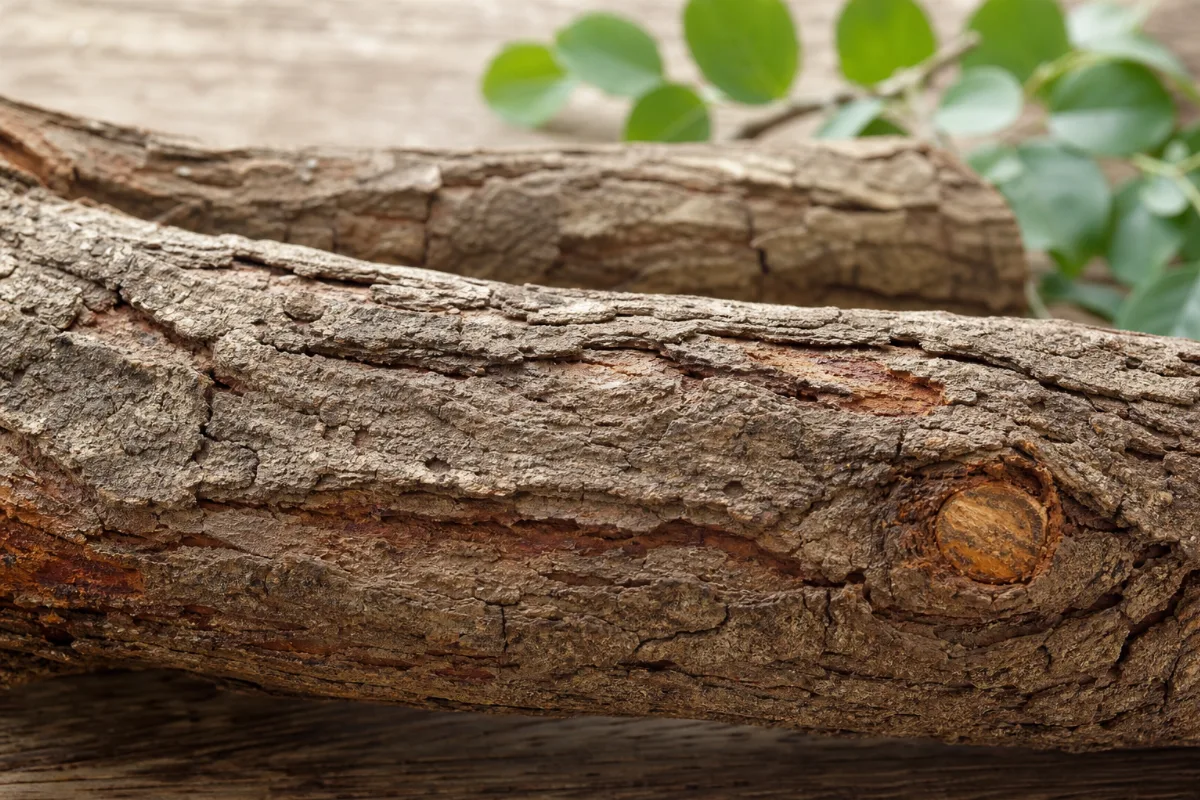
Vijaysar is the Indian kino tree, in the legume family. The heartwood is made into cups, chips or powder, and extracts are sold as capsules. Red sandalwood (Pterocarpus santalinus) is a different tree.
Cup, extract and mixes are different products
Water kept in a wooden cup, a standardised extract, a concentrated pterostilbene product and a seven-herb mix are not the same. Results for one do not carry over to the others.
What the research shows
A 1998 open trial in India saw lower blood sugar over 12 weeks without a comparison group. Two small multi-herb trials were encouraging but cannot be credited to vijaysar, and one was sponsor-funded. Lab and animal work is not proof for people.
What is missing
No placebo-controlled trial of vijaysar alone in diabetes, no study of the tumbler, and no human study with diabetes drugs were found.
At a glance
Traditional uses history, not proof
- Ayurveda: heartwood and bark for diabetes, including water stood in a heartwood cup (traditional use only).
Studied for research
- Type 2 diabetes blood sugar, very low certainty (one 1998 open trial; multi-herb trials)
- Inflammation marker PGE2, no effect found in healthy volunteers
Main compounds
- Pterostilbene
- Epicatechin
- Liquiritigenin
- Marsupsin (heartwood phenolics)
Common forms
- Heartwood cup or tumbler
- Bark or heartwood infusion
- Standardised extracts and capsules (not interchangeable)
- Part of multi-herb formulas
Research links: NIH NCCIH: Diabetes and Dietary Supplements · PubMed: 1998 ICMR open trial of Vijayasar · GBIF: Pterocarpus marsupium · Research Library · Genes & Biomarkers Library
The plant and its history
- Accepted scientific name
- Pterocarpus marsupium Roxb.
- Naming authority
- Roxb., Pl. Coromandel 2: 9 (1799) (GBIF, accepted)
- Synonyms
- Not listed here; see GBIF.
- Common names
- Vijaysar (English/Hindi); Indian kino tree (English/Hindi); Bijasal (English/Hindi); Vijayasar (English/Hindi)
- Botanical family
- Fabaceae (legume family)
- Classification
- Plantae > Tracheophyta > Magnoliopsida > Fabales > Fabaceae > Pterocarpus > Pterocarpus marsupium
- Native range
- Not verified from a source read; a 2026 paper describes it as a tropical deciduous tree with restricted, fragmented distribution in Nepal.
- Habitat
- Not verified.
- What the plant looks like
- Roots: Not verified.; Stems: Heartwood is the part used for cups and extracts; bark is also used.; Leaves: Not verified.; Flowers: Not verified.; Fruit: Not verified.
- Cultivation
- Not verified.
- Harvest and processing
- Not verified.
- Look-alikes and adulterants
- Name: Pterocarpus santalinus (red sandalwood); Note: Separate accepted species (GBIF). Different plant; do not assume the same effects.
- Sustainability and conservation
- A 2026 Nepal paper calls it endangered; our earlier record says a review gives IUCN vulnerable. IUCN page itself not read.
Traditional use and history history, not clinical proof
| Tradition or era | Documented use | Source |
|---|---|---|
| Ayurveda, India | Heartwood and bark used for diabetes, including water kept in a heartwood cup. Traditional use only. | s-pmc3687502 |
Traditional use shows how a plant was used. It does not show that a supplement works or is safe today.
What is inside, and how it may work
What the plant contains and how those compounds act in cells and animals. Laboratory and animal mechanisms are not proven effects in people.
Main compounds
| Compound | Family | Where it is concentrated | Activity studied | Level of evidence |
|---|---|---|---|---|
| Pterostilbene PubChem 5281727 | stilbene | Heartwood | Blocked COX-2 and PGE2 in lab cells; serum levels in volunteers stayed below effective level. 2 | Laboratory research |
| Epicatechin PubChem 72276 | flavan-3-ol | Bark / extract | Named as the main extract compound in a mouse study and proposed to explain glucose lowering. 11 | Animal research |
| Liquiritigenin PubChem 114829 | flavanone | Heartwood | Reported among heartwood compounds lowering glucose in rats (summary-only). 8 | Animal research |
| Marsupsin (and pterosupin) | phenolics | Heartwood | Reported to lower glucose in diabetic rats (summary-only). A PubChem record for marsupsin was not confirmed, so no CID is given. 8 9 | Animal research |
Mechanisms, receptors and pathways
| Target or pathway | Gene or receptor | What was found | Level |
|---|---|---|---|
| Glucose lowering | Not established | Rat and mouse studies show glucose lowering by heartwood compounds and by extract with glibenclamide; the mechanism in people is not known. 8 11 | Animal research |
| COX-2 / PGE2 | PTGS2 (COX-2) | Blocked in human blood cells in the lab; no effect on PGE2 in volunteers. 2 | Laboratory research |
Absorption, metabolism and elimination
- Absorption
- After one serving of an extract, serum pterostilbene rose but stayed about 5-fold below the lab-effective level.
- Distribution
- Not found.
- Metabolism
- Not found.
- Elimination
- Not found.
- Bioavailability
- Not established for the traditional heartwood or the tumbler method.
Isolated compounds versus whole extracts
Pterostilbene-rich concentrates differ from whole heartwood or a cup of soaked water. Safety and lab findings on one do not carry over to the other.
Nutritional composition
No nutrition table; vijaysar is used medicinally, not as a food.
1 low certainty3 very low certainty3 not enough evidence1 evidence against
What is Vijaysar good for?
The main studied uses and how strong the human evidence is. "Very low" and "insufficient" mean few, small, uncontrolled or mixed-product studies. None of these is a proven treatment. If you take diabetes medicine, ask your doctor or pharmacist before using vijaysar, and never stop prescribed medicine.
Benefits, one by one
Each card is a research question, not a promise. Tap a goal to filter. Open a card to see the studies, doses and limits.
Blood sugar in newly diagnosed type 2 diabetes (vijayasar extract)
Very low certaintyOne 1998 open trial in India, with no comparison group, found lower blood glucose and a small fall in HbA1c over 12 weeks in people with mild, newly found type 2 diabetes. No placebo-controlled trial of vijaysar on its own was found.
1 studiesExtract of vijayasar (Pterocarpus marsupium); amounts are not given h…
Studies, doses and limits
What the trials found
Open-label flexible-dose trial across four Indian centres (ICMR): 97 people started, 93 finished 12 weeks. No comparison group.
Results
Fasting glucose fell 32 mg/dl (from an average of 151) and after-meal glucose 45 mg/dl (from 216). HbA1c fell from 9.8% to 9.4%. Four people were withdrawn because after-meal glucose was too high. No change in lipids. No side effects reported.
Effect sizes as reported
Average HbA1c change 0.4 percentage points; glucose controlled in 67 of 97 (69%).
Why this rating
Single uncontrolled trial from 1998; changes could come from diet advice, closer follow-up or natural variation; no placebo group; abstract only.
Form and dose studied
Extract of vijayasar (Pterocarpus marsupium); amounts are not given here. Different extracts are not interchangeable.
Who was studied
Adults with newly diagnosed or untreated mild type 2 diabetes in India.
Limits
No placebo arm. The mean HbA1c of 9.4% at the end is still high. Four people got worse and left the trial.
Why researchers looked
Heartwood of the Indian kino tree is a well-known Ayurvedic remedy for diabetes, which led Indian researchers to test an extract.
Traditional use
Ayurveda has long used the heartwood and bark for madhumeha (a diabetes-like condition). Reviews describe this as traditional use.
Proposed mechanism Preliminary mechanism
Lab and rat studies suggest compounds such as epicatechin, marsupsin and pterostilbene may lower glucose. This has not been shown to be how it works in people.
A proposed mechanism does not show that the effect happens in people.
Vijaysar is not a replacement for diabetes medicine. If you take diabetes medicine, ask your doctor or pharmacist before adding it, because blood sugar can drop too low. Never stop prescribed medicine.
Blood sugar with a seven-herb product that includes vijaysar (GlycaCare-II)
Very low certaintyA maker-funded trial of a seven-herb mix (containing Pterocarpus marsupium among others) found blood sugar markers moved like those of metformin. Because it is a mix, the result cannot be credited to vijaysar.
1 studiesSeven-herb proprietary product; not vijaysar alone.
Studies, doses and limits
What the trials found
Randomized double-blind trial against metformin over 120 days in prediabetes (29 people in that group: 12 metformin, 17 herbal) and newly diagnosed type 2 diabetes. The product combined cinnamon, bitter melon, Pterocarpus marsupium, Gymnema, Salacia reticulata, jamun and piperine.
Results
HbA1c, fasting and after-meal glucose changed significantly (P<0.001); the authors report similar effect to metformin, and a larger fall in after-meal glucose in the newly diagnosed diabetes group. No adverse events were reported.
Effect sizes as reported
Not given as a single number here.
Why this rating
Seven ingredients in one product; small groups; all authors work for the company that made and funded it; abstract only.
Form and dose studied
Seven-herb proprietary product; not vijaysar alone.
Who was studied
Adults with prediabetes or newly diagnosed type 2 diabetes, India.
Limits
Cannot tell which herb did what. No placebo group. Industry-funded.
Why researchers looked
Vijaysar is a common ingredient in Ayurvedic and supplement blends for blood sugar.
Traditional use
Used in Ayurvedic multi-herb formulas for diabetes.
Proposed mechanism Insufficient
Unknown for the mix.
A proposed mechanism does not show that the effect happens in people.
Vijaysar is not a replacement for diabetes medicine. If you take diabetes medicine, ask your doctor or pharmacist before adding it, because blood sugar can drop too low. Never stop prescribed medicine. This product also contains other blood-sugar herbs, so the low-sugar risk may be bigger.
Preventing prediabetes from turning into diabetes (five-herb mix including vijaysar)
Very low certaintyIn a placebo-controlled trial, fewer people on a five-herb mix that includes vijaysar became diabetic over 6 months (8 versus 15 out of 57 in each group). Vijaysar's own part cannot be separated out.
1 studiesFive-herb mix; not vijaysar alone.
Studies, doses and limits
What the trials found
Randomized double-blind placebo-controlled trial, 114 adults with prediabetes in India, 6 months, all also given lifestyle management. Mix: Tinospora cordifolia, Pterocarpus marsupium, Gymnema sylvestre, ginger, bitter melon.
Results
8 of 57 became diabetic on the mix versus 15 of 57 on placebo (reported as 47% fewer). Glucose, HbA1c, insulin and HOMA-IR fell in the mix group. No adverse effects reported.
Effect sizes as reported
8/57 versus 15/57 converting to diabetes.
Why this rating
Small trial; five-herb mix; one study; funding not stated in the abstract.
Form and dose studied
Five-herb mix; not vijaysar alone.
Who was studied
Adults with prediabetes, India.
Limits
Result cannot be credited to vijaysar. Needs repeating.
Why researchers looked
Researchers tested whether an Ayurvedic mix could slow progress from prediabetes to diabetes.
Traditional use
Mixed herbal formulas are common in Ayurvedic practice.
Proposed mechanism Insufficient
Unknown for the mix.
A proposed mechanism does not show that the effect happens in people.
Vijaysar is not a replacement for diabetes medicine. If you take diabetes medicine, ask your doctor or pharmacist before adding it, because blood sugar can drop too low. Never stop prescribed medicine.
How vijaysar fits among Ayurvedic diabetes herbs
Not enough evidenceA large 2022 review of 199 trials of 98 Ayurvedic medicines found nine herbs lowered HbA1c; vijaysar (Pterocarpus marsupium) is not among the herbs the abstract names. That does not prove it fails, only that strong controlled evidence was not highlighted.
1 studiesn/a
Studies, doses and limits
What the trials found
Systematic review with meta-analysis of randomized trials in type 2 diabetes. Overall method reporting was poor.
Results
HbA1c fell with herbs including fenugreek, Tinospora, bitter melon and others. Vijaysar was not named in the abstract.
Effect sizes as reported
Not applicable.
Why this rating
Only the abstract was read; the full review may include vijaysar trials that the abstract does not name.
Form and dose studied
n/a
Who was studied
Adults with type 2 diabetes.
Limits
Whether any vijaysar trial was included was not checked.
Why researchers looked
Puts vijaysar's evidence in context.
Proposed mechanism Not applicable
n/a
A proposed mechanism does not show that the effect happens in people.
Drinking water kept in a vijaysar wooden tumbler
Not enough evidenceThe tumbler is a traditional practice. No study we found measured blood sugar in people using it, or measured what dissolves into the water.
2 studiesWooden cup or tumbler (traditional).
Studies, doses and limits
What the trials found
No human trial of the cup method found.
Results
None.
Effect sizes as reported
None.
Why this rating
No evidence either way; also cannot tell whether a cup sold online is really vijaysar wood (see Safety).
Form and dose studied
Wooden cup or tumbler (traditional).
Who was studied
n/a
Limits
No measurements.
Why researchers looked
A popular home method: water stored overnight in a cup carved from the heartwood.
Traditional use
Reviews describe water kept in a heartwood cup as an old method. This is tradition, not proof.
Proposed mechanism Insufficient
Unknown. How much of the active material reaches the water was not measured in sources we read.
A proposed mechanism does not show that the effect happens in people.
Vijaysar is not a replacement for diabetes medicine. If you take diabetes medicine, ask your doctor or pharmacist before adding it, because blood sugar can drop too low. Never stop prescribed medicine. Do not rely on a cup instead of medicine.
Glucose lowering in lab animals
Not enough evidenceCompounds from the heartwood and bark lowered glucose in rats and mice with chemically induced diabetes. This is animal work and does not show the same result in people.
2 studiesVarious extracts and isolated compounds.
Studies, doses and limits
What the trials found
Animal studies only.
Results
Lowered glucose in rats; extract plus glibenclamide lowered glucose more than either alone in mice.
Effect sizes as reported
None applicable to people.
Why this rating
Lab and animal work only.
Form and dose studied
Various extracts and isolated compounds.
Who was studied
Rodents.
Limits
Does not show the same in people.
Why researchers looked
Explains why vijaysar is studied.
Proposed mechanism Preliminary mechanism
Epicatechin, marsupsin, pterosupin, liquiritigenin and pterostilbene are the compounds usually named.
A proposed mechanism does not show that the effect happens in people.
The mouse result with glibenclamide is a reason for caution with diabetes medicine in people.
Inflammation marker (PGE2) in healthy volunteers
Evidence againstThe extract blocked an inflammation pathway in lab cells, but a single serving in healthy volunteers did not lower the marker. The level reached in blood was well below the lab-effective level.
1 studiesPterocarpus marsupium extract characterised by pterostilbene.
Studies, doses and limits
What the trials found
Lab cells plus a small trial in healthy volunteers (one serving, compared with baseline).
Results
PGE2 production did not fall in volunteers. Serum pterostilbene rose but was about 5-fold below the lab-effective concentration. Safety tests unchanged.
Effect sizes as reported
No change in PGE2.
Why this rating
Negative human result for this marker; the paper itself calls for dose-finding before any inflammation use is judged.
Form and dose studied
Pterocarpus marsupium extract characterised by pterostilbene.
Who was studied
Healthy volunteers.
Limits
Number of volunteers not taken from the abstract; healthy people, single exposure.
Why researchers looked
The extract contains pterostilbene, which blocks COX-2 in lab cells.
Proposed mechanism Laboratory research
Lab: COX-2 blocking in human blood cells.
A proposed mechanism does not show that the effect happens in people.
Short-term safety in healthy adults (concentrated extract)
Low certaintyIn a 2-month placebo-controlled trial of 60 healthy adults, a concentrated pterostilbene-rich extract caused no serious adverse events and no difference in blood, liver, kidney, thyroid or glucose tests. This is a safety result, not a benefit.
1 studiesSilbinol, an extract with 90% pterostilbene.
Studies, doses and limits
What the trials found
Randomized double-blind placebo-controlled trial, 60 healthy adults, 2 months.
Results
Lab values and vital signs stayed normal with no difference from placebo. Serum antioxidant enzymes did not differ; glutathione was relatively higher in the extract group but not significantly so by the abstract's wording.
Effect sizes as reported
No difference from placebo.
Why this rating
Healthy people; one concentrated product (not whole heartwood); two months; trial run by the maker.
Form and dose studied
Silbinol, an extract with 90% pterostilbene.
Who was studied
Healthy adults.
Limits
Says little about people with diabetes or on medicines, or about the traditional heartwood.
Why researchers looked
Makers needed safety data before selling the extract.
Proposed mechanism Not applicable
n/a
A proposed mechanism does not show that the effect happens in people.
Safety information, not a benefit.
Connections to the rest of health
How Vijaysar connects to the rest of our health knowledge graph. Every link says what kind of connection it is. A safety link (for example to the liver) is a warning, not a benefit. A study that merely mentions a topic never creates a benefit link.
Explore every connection: goals, body systems, organs, symptoms, genes
A. Wellness goals
| Connected to | Kind of connection | Evidence status | Context | Studies |
|---|---|---|---|---|
| Blood Sugar Balance | Potential benefit | Very low certainty | Blood sugar in newly diagnosed type 2 diabetes (vijayasar extract): One 1998 open trial in India, with no comparison group, found lower blood glucose and a small fall in HbA1c over 12 weeks in people with mild, newly found type 2 diabetes. No placebo-controlled trial of vijaysar on its own was found. Blood sugar with a seven-herb product that includes vijaysar (GlycaCare-II): A maker-funded trial of a seven-herb mix (containing Pterocarpus marsupium among others) found blood sugar markers moved like those of metformin. Because it is a mix, the result cannot be credited to vijaysar. | 3 6 10 |
| Blood Sugar Balance | Not enough evidence | How vijaysar fits among Ayurvedic diabetes herbs: A large 2022 review of 199 trials of 98 Ayurvedic medicines found nine herbs lowered HbA1c; vijaysar (Pterocarpus marsupium) is not among the herbs the abstract names. That does not prove it fails, only that strong controlled evidence was not highlighted. | 1 | |
| Blood Sugar Balance | Traditional use | Not enough evidence | Drinking water kept in a vijaysar wooden tumbler: The tumbler is a traditional practice. No study we found measured blood sugar in people using it, or measured what dissolves into the water. | 17 16 |
| Blood Sugar Balance | Not enough evidence | Glucose lowering in lab animals: Compounds from the heartwood and bark lowered glucose in rats and mice with chemically induced diabetes. This is animal work and does not show the same result in people. | 8 11 | |
| Inflammation Balance | Evidence against | Inflammation marker (PGE2) in healthy volunteers: The extract blocked an inflammation pathway in lab cells, but a single serving in healthy volunteers did not lower the marker. The level reached in blood was well below the lab-effective level. | 2 | |
| Preventive Wellness | Low certainty | Short-term safety in healthy adults (concentrated extract): In a 2-month placebo-controlled trial of 60 healthy adults, a concentrated pterostilbene-rich extract caused no serious adverse events and no difference in blood, liver, kidney, thyroid or glucose tests. This is a safety result, not a benefit. | 7 |
B. Body systems
| Connected to | Kind of connection | Evidence status | Context | Studies |
|---|---|---|---|---|
| Endocrine System | Biological association | Very low certainty | Studied for: Blood sugar in newly diagnosed type 2 diabetes (vijayasar extract) Studied for: Blood sugar with a seven-herb product that includes vijaysar (GlycaCare-II) | 3 6 10 1 17 16 8 11 2 7 |
E. Health conditions
| Connected to | Kind of connection | Evidence status | Context | Studies |
|---|---|---|---|---|
| Low blood sugar with diabetes medicine | Drug or supplement interaction | Very low certainty | Plausible added glucose lowering; animal data only. Preparation or compound: Pterocarpus marsupium extract |
11 |
| Type 2 diabetes | Potential benefit | Very low certainty | One uncontrolled 1998 trial; multi-herb trials. Preparation or compound: Vijayasar extract |
3 |
I. Biomarkers
| Connected to | Kind of connection | Evidence status | Context | Studies |
|---|---|---|---|---|
| Fasting blood glucose | Biological association | Very low certainty | Measured in trials: lowered. A lab change is not the same as a health benefit. | 3 |
| After-meal (postprandial) glucose | Biological association | Very low certainty | Measured in trials: lowered. A lab change is not the same as a health benefit. | 3 |
| HbA1c | Biological association | Very low certainty | Measured in trials: lowered. A lab change is not the same as a health benefit. | 3 10 |
| PGE2 (prostaglandin E2, an inflammation signal) | Biological association | Evidence against | Measured in trials: unchanged. A lab change is not the same as a health benefit. | 2 |
| Liver, kidney, blood and thyroid tests | Biological association | Low certainty | Measured in trials: unchanged. A lab change is not the same as a health benefit. | 7 |
J. Genes, receptors and enzymes
| Connected to | Kind of connection | Evidence status | Context | Studies |
|---|---|---|---|---|
| PTGS2 (COX-2) | Preliminary mechanism | In vitro | Lab blocking by the extract; no human effect found on PGE2. | 2 |
L. Active compounds
| Connected to | Kind of connection | Evidence status | Context | Studies |
|---|---|---|---|---|
| Pterostilbene | Biological association | In vitro | Blocked COX-2 and PGE2 in lab cells; serum levels in volunteers stayed below effective level. Preparation or compound: Heartwood |
2 |
| Epicatechin | Biological association | Animal | Named as the main extract compound in a mouse study and proposed to explain glucose lowering. Preparation or compound: Bark / extract |
11 |
| Liquiritigenin | Biological association | Animal | Reported among heartwood compounds lowering glucose in rats (summary-only). Preparation or compound: Heartwood |
8 |
| Marsupsin (and pterosupin) | Biological association | Animal | Reported to lower glucose in diabetic rats (summary-only). A PubChem record for marsupsin was not confirmed, so no CID is given. Preparation or compound: Heartwood |
8 9 |
Each connection is stored with the ingredient, the connected record, the kind of connection, the evidence status, the supporting studies, the preparation or compound involved, and a review date (last reviewed October 25, 2026).
The evidence
The research centre for Vijaysar. Every record here was checked against PubMed or the publisher's page; we never list a study we have not verified.
Evidence by outcome
Bars show how many studies we found for each outcome, not how well it works. People are added up across trials only (reviews are not added, to avoid double counting).
How we rate evidence
High certainty
Several well-run trials or reviews agree; further research is unlikely to change the picture much.
Moderate certainty
Good trials point the same way, but some doubt remains.
Low certainty
Small, short or inconsistent trials. The finding could change with better research.
Very low certainty
Very little or very weak human data. Treat as a possibility only.
Mixed findings
Trials or reviews disagree with each other.
Not enough evidence
Not enough human research to say either way.
Evidence against
Good research found no benefit, or found harm.
We take the reviewers' own risk-of-bias and GRADE statements where they exist, and otherwise judge from study size, design, consistency, directness and whether a product matches what is sold. Many publications do not make evidence high. Method note: We searched PubMed and built on our earlier research summary. Abstracts were read for the main trials; items marked summary-only were carried over and not re-opened. Regulator pages (EMA, WHO, FDA, LiverTox, LactMed) were not found or not opened and are marked not verified. Certainty ratings are the compiler's reading.
Study library: every study we checked 17
| Study | Design | People | Product, dose, length | Result |
|---|---|---|---|---|
| Chattopadhyay 2022 Effectiveness and Safety of Ayurvedic Medicines in Type 2 Diabetes Mellitus Management: A Systematic Review and Meta-Analysis. Front Pharmacol · PMID 35754481 · DOI |
Systematic review |
21191 Adults with type 2 diabetes; 199 randomized trials of 98 Ayurvedic medicines |
Ayurvedic medicines (many) various Not stated here · vs Control (placebo or usual care) |
Methods were often poorly reported. HbA1c fell with nine named herbs (for example Trigonella foenum-graecum, Tinospora cordifolia, Momordica charantia). Pterocarpus marsupium is not among the herbs the abstract names as lowering HbA1c. Adverse events were often not reported; when reported, mostly none or mild and gut-related. Fasting glucose lower by 4-56 mg/dl across a range of medicines Methods, limits and fundingOutcomes: HbA1c, fasting glucose, adverse events Limitations: Poor methodological reporting. Only the abstract was read, so whether vijaysar was assessed inside the review is not known. Funding and conflicts: No conflicts declared Read: abstract |
| Hougee 2005 Selective COX-2 inhibition by a Pterocarpus marsupium extract characterized by pterostilbene, and its activity in healthy human volunteers. Planta Med · PMID 15931573 · DOI |
Lab plus human trial human+in-vitro |
Human cells in the lab; healthy volunteers | Pterocarpus marsupium extract characterised by pterostilbene not stated Not stated here · vs Baseline |
In lab cells the extract blocked COX-2 and PGE2. In healthy volunteers one oral serving raised serum pterostilbene but to a level 5-fold below the lab-effective level, and did not lower PGE2 ex vivo. No extract-related adverse events; blood counts and chemistry unchanged. No fall in PGE2 in volunteers Methods, limits and fundingOutcomes: PGE2 production, serum pterostilbene, safety labs Limitations: Lab part is not a human result. Human part small and short; number of volunteers not taken from the abstract. Authors work for a nutrition company (Numico). Funding and conflicts: Company research group (Numico Research) Read: abstract |
| ICMR Collaborating Centres 1998 Flexible dose open trial of Vijayasar in cases of newly-diagnosed non-insulin-dependent diabetes mellitus. Indian J Med Res · PMID 9745215 |
Open label trial |
97 Adults in India with newly diagnosed or untreated type 2 diabetes, four centres |
Vijayasar (Pterocarpus marsupium) extract, flexible dose heartwood (extract; part not stated in abstract) Not stated here 12 weeks · vs None (single-arm, no comparison group) |
Of 93 who finished 12 weeks, fasting glucose fell by 32 mg/dl (from 151) and after-meal glucose by 45 mg/dl (from 216), P<0.001. Mean HbA1c fell from 9.8% to 9.4%. Glucose was judged controlled in 67 of 97 (69%). Four people were withdrawn because after-meal glucose was too high. No change in lipids. No side effects reported. Fasting -32 mg/dl; after-meal -45 mg/dl; HbA1c 9.8% to 9.4% Methods, limits and fundingOutcomes: Fasting and after-meal glucose, HbA1c, lipids, side effects Limitations: No comparison group, so changes may reflect diet advice or natural variation. Abstract read only; an erratum exists (Nov 1998). Authors are a group, not named. Plant part not stated in the abstract. Funding and conflicts: Not stated in abstract Read: abstract |
| Kunwar 2026 Predicting the Habitat Suitability for Endangered Tree Species Pterocarpus marsupium in Nepal, Using Ensemble Species Distribution Models. Ecol Evol · PMID 42437092 · DOI |
Modelling study n/a |
Tree habitat in Nepal | Pterocarpus marsupium (the tree) n/a Not stated here · vs None |
The paper calls the tree an endangered species with restricted, fragmented distribution in Nepal. It is a habitat model, not a Red List assessment. Methods, limits and fundingOutcomes: Habitat suitability Limitations: Nepal only; not an IUCN listing. Abstract only. Funding and conflicts: No conflicts declared Read: abstract |
| Majeed 2017 Evaluation of 90 day repeated dose oral toxicity and reproductive/developmental toxicity of 3'-hydroxypterostilbene in experimental animals. PLoS One · PMID 28257483 · DOI |
Animal study animal |
Rats | 3'-hydroxypterostilbene (one related compound, not the herb) isolated compound Not stated here · vs Control |
Summary-only (from our earlier record, not re-opened): our earlier note says no reproductive harm was seen in rats for this one related compound. That does not show the herb is safe in pregnancy. Methods, limits and fundingOutcomes: Toxicity, reproduction Limitations: Different compound from the herb; animal data. Funding and conflicts: Maker-linked authors (Sabinsa) Read: summary-only |
| Majeed 2021 A randomized, double-blind clinical trial of a herbal formulation (GlycaCare-II) for the management of type 2 diabetes in comparison with metformin. Diabetol Metab Syndr · PMID 34789340 · DOI |
Controlled trial |
Prediabetic adults (29: 12 on metformin, 17 on the herbal product) and newly diagnosed type 2 diabetes, India | GlycaCare-II: 7-ingredient herbal product (cinnamon, bitter melon, Pterocarpus marsupium, Gymnema, Salacia reticulata, jamun, piperine) mixed extracts Not stated here 120 days · vs Metformin |
Twice-daily treatment for 120 days changed HbA1c, fasting and after-meal glucose significantly (P<0.001). The abstract says the product was similar to metformin; in newly diagnosed diabetes it reduced after-meal glucose significantly more. No adverse events were reported. Similar to metformin on blood sugar markers Methods, limits and fundingOutcomes: HbA1c, fasting and after-meal glucose, lipids, liver and kidney tests Limitations: A seven-herb mix: the result cannot be credited to vijaysar. Small groups. Sponsor-linked (all authors work for the maker). Only the abstract was read; total sample size and other figures not taken from it. Funding and conflicts: Funded by Sami-Sabinsa Group/Sabinsa Corporation; all authors affiliated with the company. Funder helped review the manuscript. Read: abstract |
| Majeed 2023 A Short-Term Safety Evaluation of Silbinol(R) - an Extract from Pterocarpus marsupium in Healthy Adults - a Randomized, Double-Blind, Placebo-Controlled Study. J Evid Based Integr Med · PMID 37671486 · DOI |
Controlled trial |
60 Healthy adults (27 men, 33 women), Bangalore |
Silbinol: P. marsupium extract containing 90% pterostilbene (a concentrated product, not the traditional heartwood) heartwood or bark (the abstract says bark) Not stated here 2 months · vs Placebo |
Over two months, all lab values stayed in the normal range with no difference from placebo. No serious adverse events. Blood pressure, pulse and ECG did not differ. Serum antioxidant enzymes did not differ; glutathione was relatively higher in the extract group. No difference from placebo on safety tests Methods, limits and fundingOutcomes: Blood, lipid, glucose, thyroid, liver and kidney tests; vital signs; adverse events Limitations: Healthy people only, two months, one concentrated product. Maker-run trial. Funding and conflicts: Sami-Sabinsa Group / Sabinsa Corporation (the maker); registered CTRI/2019/08/020736 Read: abstract |
| Manickam 1997 Antihyperglycemic activity of phenolics from Pterocarpus marsupium. J Nat Prod · PMID 9214733 · DOI |
Animal study animal |
Rats with chemically induced diabetes | Marsupsin, pterosupin, liquiritigenin and pterostilbene from the heartwood heartwood Not stated here · vs Control |
Summary-only (taken from our earlier record; the abstract was not re-opened here): compounds from the heartwood lowered glucose in diabetic rats. Methods, limits and fundingOutcomes: Blood glucose Limitations: Animal study; not re-read for this profile. Funding and conflicts: Not checked Read: summary-only |
| Maurya 2004 Constituents of Pterocarpus marsupium: an ayurvedic crude drug. Phytochemistry · PMID 15081294 · DOI |
Phytochemistry n/a |
Plant material | Pterocarpus marsupium heartwood and bark Not stated here · vs None |
Summary-only (from our earlier record, not re-opened): a chemistry paper describing compounds from the plant. Methods, limits and fundingOutcomes: Chemical constituents Limitations: Chemistry only. Funding and conflicts: Not checked Read: summary-only |
| Nakanekar 2019 Ayurvedic polyherbal combination (PDBT) for prediabetes: A randomized double blind placebo controlled study. J Ayurveda Integr Med · PMID 30661947 · DOI |
Controlled trial |
114 Adults with prediabetes, India |
PDBT: polyherbal mix of Tinospora cordifolia, Pterocarpus marsupium, Gymnema sylvestre, ginger and bitter melon, plus lifestyle management mixed Not stated here 6 months · vs Placebo plus lifestyle management |
8 of 57 on the mix versus 15 of 57 on placebo became diabetic over 6 months (reported as a 47% risk reduction). Fasting and after-meal glucose, HbA1c, insulin and HOMA-IR fell in the intervention group. No adverse effects reported. 8 vs 15 conversions to diabetes (57 per group) Methods, limits and fundingOutcomes: Conversion to diabetes; glucose, HbA1c, insulin, HOMA-IR Limitations: Five-herb mix, so vijaysar's own part cannot be separated. Small trial. Only the abstract was read; funding not stated in it. Funding and conflicts: Not stated in abstract Read: abstract |
| Sharma 2022 Co-administration of Pterocarpus marsupium Extract and Glibenclamide Exhibits Better Effects in Regulating Hyperglycemia and Associated Changes in Alloxan-induced Diabetic Mice. Curr Top Med Chem · PMID 36366849 · DOI |
Animal study animal |
35 Alloxan-diabetic mice (7 per group, 5 groups) |
P. marsupium extract with glibenclamide not stated Not stated here · vs Glibenclamide alone, extract alone |
Glucose and fats were lowered more by the extract plus glibenclamide than by either alone. Epicatechin is named as the main extract compound. Combination better than either alone in mice Methods, limits and fundingOutcomes: Glucose, lipids, oxidative markers, liver structure Limitations: Mouse study only; does not show the same in people. Abstract only. Funding and conflicts: Not stated in abstract Read: abstract |
| s-gbif-pterocarpus-marsupium GBIF Backbone: Pterocarpus marsupium Roxb. (usageKey 5349309) · Source |
Reference database n/a |
Methods, limits and fundingRead: full-text | ||
| s-gbif-pterocarpus-santalinus GBIF Backbone: Pterocarpus santalinus L.f. (usageKey 5708628) · Source |
Reference database n/a |
Methods, limits and fundingRead: full-text | ||
| s-nccih-diabetes NCCIH: Diabetes and Dietary Supplements: What You Need To Know · Source |
Regulator guidance n/a |
Methods, limits and fundingRead: summary-only | ||
| s-no-regulator EMA/HMPC monograph, WHO monograph, FDA, LactMed, LiverTox for vijaysar · Source |
Regulator guidance n/a |
Methods, limits and fundingRead: not-found | ||
| s-pmc3687502 Traditional Indian medicines used for the management of diabetes mellitus (J Diabetes Res, 2013) · Source |
Narrative review n/a |
Methods, limits and fundingRead: summary-only | ||
| s-pmc8839240 Biotechnological Advances in Pharmacognosy and In Vitro Manipulation of Pterocarpus marsupium Roxb. (Plants, 2022) · Source |
Narrative review n/a |
Methods, limits and fundingRead: summary-only |
What we do not know yet
- What the evidence supports: a small fall in glucose in one uncontrolled trial. Nothing about vijaysar is rated above very low.
- No placebo-controlled trial of vijaysar alone; no tumbler study; no human drug-interaction or pregnancy data.
How new research is added
New studies are found by a saved PubMed search and are placed in a review queue. A person reads each one before it changes any rating or safety wording.
Lab markers
What changed in blood or saliva tests during trials. A changed number is not the same as feeling or being healthier, and we give no "normal ranges".
Metabolic 2
Fasting blood glucose
Lowered in trials
Blood sugar after not eating for several hours.
Very low certaintyResults and what it means
Why it was measured
Basic check of diabetes control.
Statistical vs. clinical meaning
A modest fall in an uncontrolled trial.
Safety implication
Anyone on diabetes medicine should check with a doctor or pharmacist before using it, because of low blood sugar risk.
| Study | Result | People | Product |
|---|---|---|---|
| 3 | Fell by 32 mg/dl from 151 mg/dl in 93 completers | Newly diagnosed type 2 diabetes, India | Vijayasar extract, 12 weeks, open trial |
HbA1c
Lowered in trials
Average blood sugar over about three months.
Very low certaintyResults and what it means
Why it was measured
The main long-term diabetes measure.
Statistical vs. clinical meaning
A 0.4-point fall is small and from an uncontrolled trial.
Safety implication
Anyone on diabetes medicine should check with a doctor or pharmacist before using it, because of low blood sugar risk.
Other 3
After-meal (postprandial) glucose
Lowered in trials
Blood sugar after eating.
Very low certaintyResults and what it means
Why it was measured
Often shows diabetes control earlier than fasting sugar.
Statistical vs. clinical meaning
Same caution: no comparison group.
Safety implication
Anyone on diabetes medicine should check with a doctor or pharmacist before using it, because of low blood sugar risk.
| Study | Result | People | Product |
|---|---|---|---|
| 3 | Fell by 45 mg/dl from 216 mg/dl in 93 completers; four people left because it was too high | Newly diagnosed type 2 diabetes | Vijayasar extract, 12 weeks |
PGE2 (prostaglandin E2, an inflammation signal)
Unchanged in trials
A chemical made in the body during inflammation.
Evidence againstResults and what it means
Why it was measured
Used to test anti-inflammatory activity.
Statistical vs. clinical meaning
No sign of effect in people at the level reached.
Safety implication
Anyone on diabetes medicine should check with a doctor or pharmacist before using it, because of low blood sugar risk.
| Study | Result | People | Product |
|---|---|---|---|
| 2 | No decrease in PGE2 ex vivo after one serving; pterostilbene in serum 5-fold below effective level | Healthy volunteers | Pterocarpus marsupium extract |
Liver, kidney, blood and thyroid tests
Unchanged in trials
Standard blood tests of organ function.
Low certaintyResults and what it means
Why it was measured
Safety check.
Statistical vs. clinical meaning
Reassuring for short use in healthy adults only.
Safety implication
Anyone on diabetes medicine should check with a doctor or pharmacist before using it, because of low blood sugar risk.
| Study | Result | People | Product |
|---|---|---|---|
| 7 | Stayed in normal range, no difference from placebo | 60 healthy adults | Pterostilbene-rich extract, 2 months |
Safety
What studies and official sources say about side effects, medicines and who should check first. Each point shows what kind of evidence it comes from.
Main points to know 3
- Never swap vijaysar for prescribed diabetes medicine. Vijaysar is traditionally used to lower blood sugar. Taken with diabetes tablets or insulin it could, in theory, push sugar too low. Do not stop or cut a prescribed medicine because of any herb. Tell your doctor or pharmacist about it. Theoretical 11 14
- Check what you are really buying. Red sandalwood (Pterocarpus santalinus) is a different tree. Reviews warn of adulterated Pterocarpus material, and wooden tumblers are hard to identify. Other 17 13
- Not enough is known for pregnancy, breastfeeding, children, or kidney and liver disease. No human study exists for these groups. Absence of data is not proof of safety. Evidence gap 5 7
Side effects 1
| Effect | How often | Severity and recovery | Evidence |
|---|---|---|---|
| No adverse effects reported in the trials we read The trials were small, short and mostly maker-linked. Four people in the 1998 trial left because their after-meal glucose got too high, which is a loss of control rather than a side effect. | Not counted; the 1998 trial and the 2023 safety trial each reported no side effects or no serious events | none reported Not applicable | Controlled trial 3 7 2 |
Liver
We found no human case report of liver injury from vijaysar in a short PubMed search. In 60 healthy adults, liver tests stayed normal over two months on a concentrated extract. The NIH LiverTox entry was not opened (our earlier record says it was blocked), so it is not verified. 7
How often. Unknown. Not finding reports in a short search is not proof of safety.
Monitoring. No agency advice found. If you have liver disease, ask your doctor first. Stop and seek care for yellow skin or eyes, dark urine or severe stomach pain.
This is a safety connection. It is not evidence that Vijaysar supports liver health.
Medicines and supplements 2
| With | Why it matters | Importance | Evidence | What to do |
|---|---|---|---|---|
| Diabetes medicines (for example glibenclamide, metformin, insulin) prescription | Both lower blood sugar. In diabetic mice, extract plus glibenclamide lowered glucose more than either alone. | Animal data plus the herb's reputation. No human interaction study or case report was found. Low blood sugar (shaking, sweating, confusion) is plausible. | Animal research Very low certainty 11 14 | Tell your doctor or pharmacist before using it. Keep checking your sugar. Never stop prescribed medicine. |
| Other blood-sugar herbs (gymnema, salacia, fenugreek, bitter melon, cinnamon) herb | Additive glucose lowering is plausible. Several trial products combined vijaysar with these herbs. | No study separated the effects. Theory only. | Theoretical Very low certainty 6 10 | Avoid stacking several blood-sugar herbs without advice. |
Who should check first 3
Overdose, product quality and regulators
Summary. No toxic dose or toxic plant part was found in the sources read. Data on the herb itself are thin.
Animal. A 90-day rat study and reproductive tests were done on 3'-hydroxypterostilbene, a related compound, not on the herb (summary-only). The result cannot be applied to vijaysar.
Human doses studied. Trials of two to three months in healthy adults and in people with type 2 diabetes. Amounts are not given here.
High dose or long term signals. No long-term human safety data found.
Overdose response. Not found.
Genotoxicity. Not found.
Toxic plant parts. None identified.
The main quality risk is substitution and unclear identity, not a measured contaminant.
Adulterated Pterocarpus material. A review warns that many adulterated Pterocarpus materials are sold and that some may be toxic or affect drug efficacy; it suggests DNA barcoding. Read only in part (summary-only). 17
Look-alike species. Pterocarpus santalinus (red sandalwood) is an accepted separate species in the same genus (GBIF). Its blood-sugar record is not the same as vijaysar's. 13
Wooden tumbler claims. We found no test of what dissolves from a tumbler into water, and no check that tumblers sold are genuine heartwood. 17
Conservation. A 2026 Nepal habitat paper calls the tree endangered there. Buying wild-cut heartwood may harm a threatened tree; IUCN status itself was not checked. 4
| Body | Action | Date |
|---|
When to get medical help
- Shaking, sweating, fast heartbeat, confusion or fainting (possible low blood sugar). Treat per your diabetes plan and call a doctor.
- Yellow skin or eyes, or dark urine.
- Swelling of lips or face, trouble breathing, or a widespread rash.
Stop the supplement and contact a clinician or emergency service. In the US, Poison Control is 1-800-222-1222.
General information only, not medical advice. Ask a clinician or pharmacist before use, especially with medicines, in pregnancy or with a health condition. See the Natural Remedy Safety guide.
Frequently asked questions
What is vijaysar?
Does vijaysar lower blood sugar?
Does it lower HbA1c?
Can I use it with diabetes medicine?
Does water from a wooden tumbler work?
Is red sandalwood the same plant?
What are the main compounds?
Is it safe for the liver and kidneys?
In 60 healthy adults, liver and kidney tests stayed normal over two months on a concentrated extract. We found no liver injury reports, but data are thin, and nothing is known for people with liver or kidney disease.
Is it safe in pregnancy or breastfeeding?
Not known. No human studies were found, so it is best avoided unless your doctor agrees.
Is the tree endangered?
Is it the same as Salacia or Gymnema?
How much should I take?
This page does not give amounts. Ask a doctor or pharmacist, especially if you have diabetes.
Explore by health goal
Editorial transparency
- Written by
- AlternativeMed editorial team. Research compiled with AI assistance, then checked against PubMed records.
- Medical review
- None. This page has not been reviewed by a physician or pharmacist.
- First published
- 2026-10-25
- Last substantive update
- 2026-10-25
- How we research
- We searched PubMed and built on our earlier research summary. Abstracts were read for the main trials; items marked summary-only were carried over and not re-opened. Regulator pages (EMA, WHO, FDA, LiverTox, LactMed) were not found or not opened and are marked not verified. Certainty ratings are the compiler's reading.
- How we rate evidence
- See "How we rate evidence" in the Evidence tab.
- Independence
- No product is promoted on this page. No affiliate links are shown.
Sources 17
Each source was opened and checked. Where we read only the abstract, it says so. The small numbers in the text point here.
- Chattopadhyay K, Wang H, Kaur J, et al.. Effectiveness and Safety of Ayurvedic Medicines in Type 2 Diabetes Mellitus Management: A Systematic Review and Meta-Analysis.. Front Pharmacol. 2022. PMID 35754481. DOI 10.3389/fphar.2022.821810. (abstract)
- Hougee S, Faber J, Sanders A, et al.. Selective COX-2 inhibition by a Pterocarpus marsupium extract characterized by pterostilbene, and its activity in healthy human volunteers.. Planta Med. 2005. PMID 15931573. DOI 10.1055/s-2005-864130. (abstract)
- ICMR Collaborating Centres. Flexible dose open trial of Vijayasar in cases of newly-diagnosed non-insulin-dependent diabetes mellitus.. Indian J Med Res. 1998. PMID 9745215. (abstract)
- Kunwar R, Chaudhari SK, Bhattarai S, et al.. Predicting the Habitat Suitability for Endangered Tree Species Pterocarpus marsupium in Nepal, Using Ensemble Species Distribution Models.. Ecol Evol. 2026. PMID 42437092. DOI 10.1002/ece3.73990. (abstract)
- Majeed M, et al.. Evaluation of 90 day repeated dose oral toxicity and reproductive/developmental toxicity of 3'-hydroxypterostilbene in experimental animals.. PLoS One. 2017. PMID 28257483. DOI 10.1371/journal.pone.0172770. (summary-only)
- Majeed M, Majeed A, Nagabhusahnam K, et al.. A randomized, double-blind clinical trial of a herbal formulation (GlycaCare-II) for the management of type 2 diabetes in comparison with metformin.. Diabetol Metab Syndr. 2021. PMID 34789340. DOI 10.1186/s13098-021-00746-0. (abstract)
- Majeed M, Nagabhushanam K, Paulose S, Mundkur L. A Short-Term Safety Evaluation of Silbinol(R) - an Extract from Pterocarpus marsupium in Healthy Adults - a Randomized, Double-Blind, Placebo-Controlled Study.. J Evid Based Integr Med. 2023. PMID 37671486. DOI 10.1177/2515690X231198312. (abstract)
- Manickam M, et al.. Antihyperglycemic activity of phenolics from Pterocarpus marsupium.. J Nat Prod. 1997. PMID 9214733. DOI 10.1021/np9607013. (summary-only)
- Maurya R, et al.. Constituents of Pterocarpus marsupium: an ayurvedic crude drug.. Phytochemistry. 2004. PMID 15081294. DOI 10.1016/j.phytochem.2004.01.021. (summary-only)
- Nakanekar A, Kohli K, Tatke P. Ayurvedic polyherbal combination (PDBT) for prediabetes: A randomized double blind placebo controlled study.. J Ayurveda Integr Med. 2019. PMID 30661947. DOI 10.1016/j.jaim.2018.05.004. (abstract)
- Sharma N, Kar A, Panda S, Yadav D. Co-administration of Pterocarpus marsupium Extract and Glibenclamide Exhibits Better Effects in Regulating Hyperglycemia and Associated Changes in Alloxan-induced Diabetic Mice.. Curr Top Med Chem. 2022. PMID 36366849. DOI 10.2174/1568026623666221108125036. (abstract)
- . GBIF Backbone: Pterocarpus marsupium Roxb. (usageKey 5349309). . . (full-text)
- . GBIF Backbone: Pterocarpus santalinus L.f. (usageKey 5708628). . . (full-text)
- . NCCIH: Diabetes and Dietary Supplements: What You Need To Know. . . (summary-only)
- . EMA/HMPC monograph, WHO monograph, FDA, LactMed, LiverTox for vijaysar. . . (not-found)
- . Traditional Indian medicines used for the management of diabetes mellitus (J Diabetes Res, 2013). . . (summary-only)
- . Biotechnological Advances in Pharmacognosy and In Vitro Manipulation of Pterocarpus marsupium Roxb. (Plants, 2022). . . (summary-only)