Herbs & Botanicals · Indian blood-sugar fruit and seed
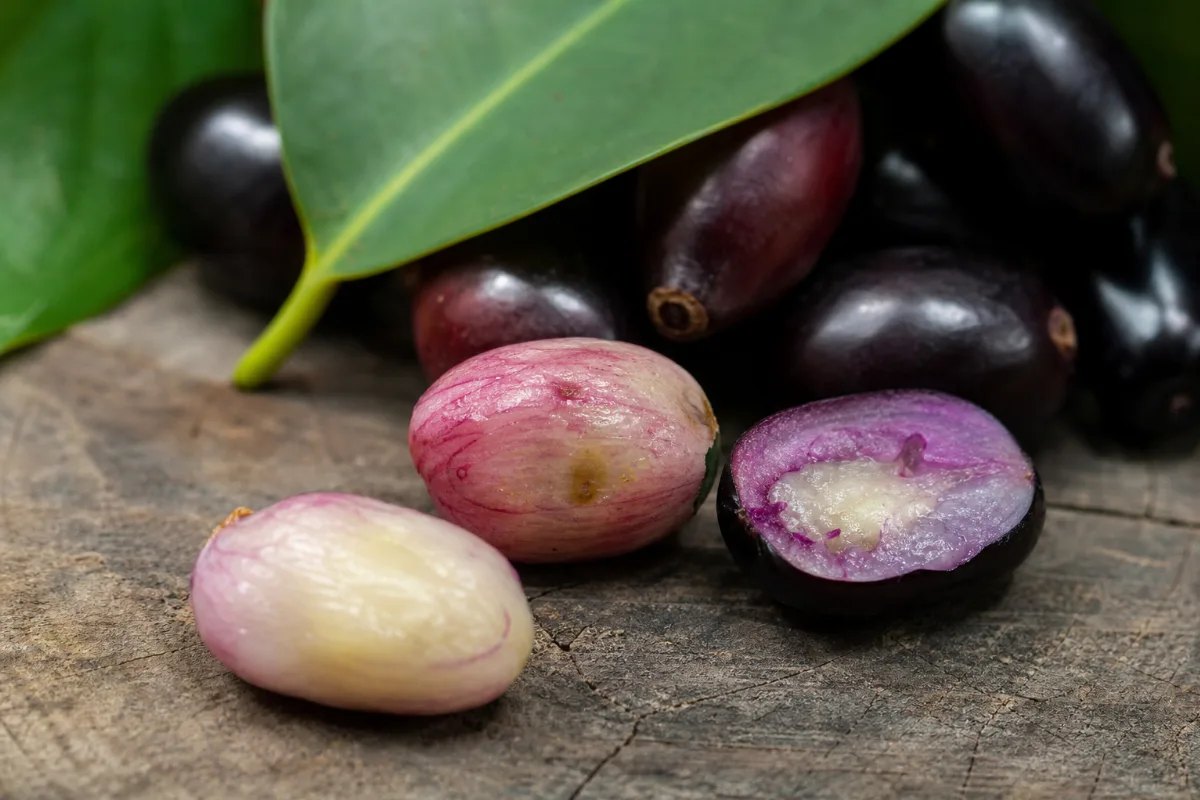
Jamun
Syzygium cumini · also called Java plum, black plum, jambolan, jambul
Jamun, or Java plum, is a dark purple fruit tree whose seed, leaf and bark are used in Ayurveda for high blood sugar. Small trials suggest at most a modest fall in fasting sugar, and the best-run trials of leaf tea found none. No good trial of the seed or fruit was found. The main caution is that it may add to diabetes medicines and cause low blood sugar.
General information, not medical advice. Last substantive update · Not medically reviewed. A named clinician has not signed off on this page. How this page is made
About Jamun
Jamun is the fruit tree Syzygium cumini. The seed, leaf and bark are used for diabetes in Ayurveda. Human research is small, old or industry-linked, and the plant part matters.
What it is
Jamun, also called Java plum, black plum or jambolan, is a tree in the myrtle family whose dark purple fruit is eaten as food. Older papers call it Eugenia jambolana or Syzygium jambolanum; the accepted name today is Syzygium cumini.
Our earlier summary lists ellagic acid and anthocyanins as key compounds, and older papers name 'jamboline'. We could not verify any of these in the sources we read.
What it is used for
In Ayurveda and Indian home use the dried, ground seed is the best-known form for high blood sugar. In Brazil the leaf is made into tea for the same purpose. Fruit is eaten fresh or as juice, and bark and seed are used for loose stools and mouth problems.
We found no EMA, NCCIH, MSK or LactMed entry, and did not read Indian or Ayurvedic pharmacopoeia entries.
Seed, fruit and leaf are not the same
The seed is the traditional blood-sugar form, but we found no randomised trial of seed powder on its own. The two controlled studies of jamun alone used leaf tea. In 27 adults with type 2 diabetes, 28 days of leaf tea changed fasting glucose no better than placebo, while the diabetes drug glyburide did. In 30 healthy young volunteers the tea did nothing to a glucose tolerance test.
A 2008 review called a proper trial of seed, seed kernel or fruit the missing test.
What the research shows
A 2026 meta-analysis pooled 13 trials in 802 adults with type 2 diabetes or prediabetes. Jamun and other plants of the same family together were linked to fasting sugar about 14 mg/dL lower, but with almost total disagreement between trials. HbA1c and after-meal sugar were not significantly changed, and the authors rated certainty low to very low. They call these plants promising but unproven add-ons, not alternatives to standard care.
The one clearly positive trial tested a seven-herb capsule (including Eugenia jambolana) against metformin in 69 adults for 120 days. It was funded by the maker, written by its staff and had no placebo group, so it cannot show what jamun added.
At a glance
Traditional uses history, not proof
- Diabetes and high blood sugar (Ayurveda, Indian and Brazilian folk use)
- Loose stools and mouth or gum problems (bark, seed)
- Fruit as a food
Studied for research
- Fasting blood sugar: small fall in pooled trials of jamun and related plants, low certainty
- HbA1c and after-meal sugar: no clear change
- Leaf tea: no effect in two small randomised studies
- Blood fats: no clear effect
- Seed powder and fruit alone: no randomised trial found
Main compounds
- Ellagic and gallic acid (not verified here)
- Anthocyanins in the fruit (not verified here)
- Flavonols such as quercetin and syringetin glucoside
- Jamboline (named in older papers, not verified)
Common forms
- Dried seed powder
- Fruit, juice or pulp
- Leaf tea
- Capsules and seed extracts
Research links: PubMed: Jamun and related Myrtaceae for blood sugar, meta-analysis (2026) · PubMed: Jamun leaf tea in type 2 diabetes, randomised trial (2006) · PubMed: Seed isolate and the thyroid in pregnant rats (2026) · PubMed: Jamun against diabetes, 125 years of research (2008) · PubMed: Are Ayurvedic herbs for diabetes effective? (2005) · Research Library · Genes & Biomarkers Library
The plant and its history
- Accepted scientific name
- Syzygium cumini (L.) Skeels
- Naming authority
- GBIF backbone: accepted species, exact match, confidence 100 (key 3183840), checked 2026-10-25.
- Synonyms
- Name: Syzygium jambolanum (Lam.) DC.; Note: GBIF lists it as a SYNONYM of S. cumini.; Name: Eugenia jambolana Lam.; Note: Older name still common in papers; GBIF match returned only the family level, so synonym status not confirmed here.
- Common names
- Jamun (Hindi/English); Java plum (English); Black plum (English); Jambolan (English/Portuguese); Jambul (English)
- Botanical family
- Myrtaceae (myrtle family).
- Classification
- Plantae > Myrtales > Myrtaceae > Syzygium > Syzygium cumini
- Native range
- Not verified in a source read. Widely described as a South Asian tree; do not rely on this.
- Habitat
- Not verified.
- What the plant looks like
- Roots: Not verified.; Stems: Not verified.; Leaves: Leaves are used as tea in Brazilian folk medicine (trial papers).; Flowers: Not verified.; Fruit: Dark purple-black berry eaten as food; seed kernel is the main Ayurvedic form (earlier summary).
- Cultivation
- Not verified.
- Harvest and processing
- Seeds are dried and ground to powder (earlier summary). Not verified in a source read.
- Look-alikes and adulterants
- Name: Syzygium jambos (rose apple); Note: Different species; a 2000 trial paper notes leaf tea of either S. cumini or S. jambos is used in Brazil.
- Sustainability and conservation
- Not verified.
Traditional use and history history, not clinical proof
| Tradition or era | Documented use | Source |
|---|---|---|
| Ayurveda and Indian folk medicine | Seed powder, fruit, leaf and bark for diabetes and other complaints. Our earlier summary states the seed is the main traditional form. | p18380393 |
| Pre-insulin Europe and later research | A 2008 review says about 100 case reports on jamun and diabetes were published before insulin was discovered, then research moved mostly to animal studies. Case-report quality was not assessed here. | p18380393 |
| Brazilian folk medicine | Leaf tea for diabetes, which prompted the Porto Alegre trials. | p10904184 |
| Regulators | No EMA/HMPC monograph found. NOT verified: Ayurvedic or Indian pharmacopoeia entries were not read. | s-regulators-none |
Traditional use shows how a plant was used. It does not show that a supplement works or is safe today.
What is inside, and how it may work
What the plant contains and how those compounds act in cells and animals. Laboratory and animal mechanisms are not proven effects in people.
Main compounds
| Compound | Family | Where it is concentrated | Activity studied | Level of evidence |
|---|---|---|---|---|
| Ellagic acid PubChem 5281855 | polyphenol (ellagitannin breakdown product) | Seed and fruit (per earlier summary) | Common plant polyphenol; jamun content NOT verified in a source read. 12 | Not verified |
| Gallic acid PubChem 370 | phenolic acid | Leaf and seed (per earlier summary) | Common plant phenolic; NOT verified in a source read. 12 | Not verified |
| Cyanidin / malvidin / petunidin / delphinidin | anthocyanidins | Fruit skin and pulp (per earlier summary) | Anthocyanins are the dark pigments of the fruit. CIDs: cyanidin 128861, malvidin 159287, petunidin 73386, delphinidin 128853. Jamun content NOT verified in a source read. 12 | Not verified |
| Quercetin PubChem 5280343 | flavonol | Leaf (per earlier summary) | Common flavonol; NOT verified in a source read. 12 | Not verified |
| Myricetin PubChem 5281672 | flavonol | Leaf (per earlier summary) | NOT verified in a source read. 12 | Not verified |
| Syringetin-3-O-glucoside (syringetin: CID 5281953) PubChem 5281953 | flavonol glycoside | Seed isolate | The rat study used a seed isolate enriched in this compound; its aglycone reached the thyroid in rats. 3 12 | Animal research |
| Jamboline (also called antimellin in older papers) | named glucoside/alkaloid in older literature | Seed | Often named as the 'active' antidiabetic compound. NOT verified: no PubChem record or source read confirmed its identity or action. | Not verified |
Mechanisms, receptors and pathways
| Target or pathway | Gene or receptor | What was found | Level |
|---|---|---|---|
| Adenosine deaminase and glucose (leaf extract) | Adenosine deaminase (ADA); DPP-IV/CD26 complex proposed | Aqueous leaf extract lowered ADA activity and glucose in blood samples from hyperglycemic people, in the test tube. Not a trial of taking jamun. 2 | Laboratory research |
| Thyroid iodide uptake (seed isolate) | Sodium/iodide symporter (NIS, SLC5A5) | A syringetin-glucoside-enriched seed isolate blocked iodide uptake in rat thyroid cells (IC50 18.42 ug/mL) and was about 3.4 times less potent in human thyroid cells (IC50 62.15 ug/mL); in pregnant rats TSH rose and thyroid hormones fell. 3 | Animal research |
| Drug metabolism and transport | CYP3A4 gene expression; P-glycoprotein | Jamun infusion raised CYP3A4 mRNA in liver cells and affected P-glycoprotein activity in Caco-2 cells. 7 | Laboratory research |
| Blood clotting (intrinsic pathway) | APTT | Aqueous leaf extract lengthened APTT in citrated human blood in the lab; PT was normal. 1 | Laboratory research |
Absorption, metabolism and elimination
- Absorption
- No human data found.
- Distribution
- No human data. In pregnant rats the seed aglycone syringetin reached the thyroid at about 440 nM.
- Metabolism
- Not established in people. Cell work suggests jamun infusion may change CYP3A4 expression.
- Elimination
- Not established.
- Bioavailability
- Unknown.
Isolated compounds versus whole extracts
The rat thyroid finding is for a chemically defined seed isolate, not whole seed powder; whole-seed safety in pregnancy is unstudied. The negative human trials used leaf tea; the positive one used a seven-extract product. Findings for one preparation should not be carried over to another.
Nutritional composition
The fruit is eaten as food. We found no source describing its nutrient content, so none is stated.
1 low certainty1 very low certainty3 not enough evidence
What is Jamun good for?
The main proposed uses and how strong the human evidence is for each. 'Insufficient' means there are no human studies or the results were not clear. Ratings are this profile's own reading, not formal grades.
Benefits, one by one
Each card is a research question, not a promise. Tap a goal to filter. Open a card to see the studies, doses and limits.
Fasting blood sugar in type 2 diabetes or prediabetes
Low certaintyA 2026 meta-analysis pooled 13 small trials of jamun and related Myrtaceae plants in 802 adults. Fasting blood sugar fell by about 14 mg/dL on average. Trial results varied enormously, and the pooled plants were not all jamun, so this is a hint of a short-term effect, not proof that jamun lowers blood sugar.
2 studiesNot given in the abstract. This page does not give amounts.
Studies, doses and limits
What the trials found
Meta-analysis, Foods 2026 (13 RCTs, 802 adults with type 2 diabetes or prediabetes; searches to Sept 2025): fasting plasma glucose mean difference -14.40 mg/dL (95% CI -23.12 to -5.67; I2 = 98.57%). The authors found low to very low certainty, no low-risk-of-bias trials and short follow-up, and called the interventions 'promising but unproven adjuncts'. The abstract does not separate jamun trials from other Myrtaceae trials or say which plant parts were pooled; subgroup differences by plant part were exploratory only. Separate single-trial evidence on jamun alone is not supportive: a 28-day double-blind trial of jamun LEAF tea in 27 people with type 2 diabetes found no change in fasting glucose, while glyburide lowered it (Teixeira 2006).
Results
A modest pooled fall in fasting glucose, with very high variation and low to very low certainty; not shown for jamun alone.
Effect sizes as reported
Fasting glucose -14.40 mg/dL (95% CI -23.12 to -5.67); I2 98.57%
Why this rating
Authors rate certainty low to very low: extreme heterogeneity (I2 about 98 percent), short trials, no low-risk trials, and a pool of several different plants and plant parts rather than jamun alone.
Form and dose studied
Not given in the abstract. This page does not give amounts.
Who was studied
Adults with type 2 diabetes or prediabetes.
Limits
Only the abstract was read. Pooling different plants, parts and products makes the result hard to apply to jamun seed, fruit or leaf specifically.
Why researchers looked
Jamun seed, fruit, leaf and bark are classic Indian (Ayurvedic) and Brazilian folk remedies for diabetes. It is one of the most commonly named plants for blood sugar.
Traditional use
In Ayurveda and Indian home use, dried ground seed is the best-known form. Brazilian folk use is mostly leaf tea. A long tradition is not evidence of benefit.
Proposed mechanism Preliminary mechanism
A 2008 historical review says many animal studies reported some blood sugar lowering, and a 2009 test-tube study of leaf extract on patients' blood reported lower activity of an enzyme linked to insulin action. These are animal and lab ideas; none has been shown to explain an effect in people.
A proposed mechanism does not show that the effect happens in people.
Anything that lowers blood sugar can add to diabetes medicines. See the Safety tab. It is not a replacement for diabetes care.
HbA1c and blood sugar after meals
Not enough evidenceThe same meta-analysis found no statistically clear change in HbA1c (the three-month sugar average) or in blood sugar after meals. So there is no good evidence that jamun improves longer-term sugar control.
1 studiesNot given in the abstract.
Studies, doses and limits
What the trials found
Foods 2026 meta-analysis: HbA1c mean difference -0.46 percentage points (95% CI -0.98 to 0.06; I2 = 99.20%), not statistically significant; postprandial glucose -12.99 mg/dL (95% CI -27.74 to 1.76; I2 = 97.93%), not significant. Pooled plants include other Myrtaceae, not only jamun.
Results
No statistically significant change in HbA1c or after-meal glucose.
Effect sizes as reported
HbA1c -0.46% (95% CI -0.98 to 0.06); postprandial glucose -12.99 mg/dL (95% CI -27.74 to 1.76)
Why this rating
Results were not significant and the intervals are wide and include both a useful fall and no change; heterogeneity above 97 percent.
Form and dose studied
Not given in the abstract.
Who was studied
Adults with type 2 diabetes or prediabetes.
Limits
Abstract only. A confidence interval that crosses zero does not prove that jamun has no effect, only that these trials could not show one.
Why researchers looked
HbA1c is the main measure doctors use to judge diabetes control over about three months.
Traditional use
Not applicable; HbA1c is a modern test.
Proposed mechanism Preliminary mechanism
No mechanism is claimed for these outcomes in the sources read.
A proposed mechanism does not show that the effect happens in people.
See the Safety tab.
Jamun seed and fruit specifically: human trials
Very low certaintyThe seed and fruit are the forms most often promoted, but in our PubMed searches we found no randomised trial of jamun seed powder or fruit on its own. The controlled human trials we found used leaf tea and showed no effect on blood sugar. The one positive trial used a seven-herb product made by the company that funded it.
6 studiesLeaf tea (Brazil trials); seven-extract capsule product (GlycaCare-II…
Studies, doses and limits
What the trials found
Teixeira 2006 (27 adults with type 2 diabetes, 28 days, double-blind, double-dummy; jamun LEAF tea vs glyburide vs placebo): fasting glucose fell with glyburide but not with the tea or placebo; weight (BMI), liver enzymes, kidney tests and blood fats did not differ. Teixeira 2000 (30 young volunteers without diabetes, leaf tea, glucose tolerance test): no effect on blood sugar; the same paper found no effect in normal or diabetic rats. GlycaCare-II (Majeed 2021; 69 adults; 120 days; seven extracts including Eugenia jambolana plus piperine; versus metformin, no placebo): HbA1c, fasting and after-meal glucose all fell (p < 0.001) and the authors said it was comparable to metformin; no adverse events were reported. The study is INDUSTRY-LINKED (funded by Sami-Sabinsa Group; all authors affiliated; funder reviewed the manuscript) and cannot show what jamun contributed. A 2008 historical review (Helmstadter) said a state-of-the-art clinical study of seed, kernel or fruit was still missing. A 2005 systematic review of Ayurvedic diabetes herbs (Shekelle; 54 articles) found evidence for Eugenia jambolana less extensive than for several other herbs. A 2009 lab study (Bopp) added leaf extract to blood samples and reported lower enzyme activity and glucose in the test tube; this is not a human trial.
Results
Leaf tea: no effect in two small randomised studies. Seed and fruit: no randomised trial found. Combination product: positive but industry-run and not specific to jamun.
Effect sizes as reported
Teixeira 2006: no significant change vs placebo (numbers not in abstract). GlycaCare-II: p < 0.001 for HbA1c, fasting and after-meal glucose within groups (numbers not in abstract).
Why this rating
Tiny studies, the right plant parts (seed, fruit) untested alone, the tested part (leaf) was negative, and the only positive trial was a company-run combination product without a placebo arm.
Form and dose studied
Leaf tea (Brazil trials); seven-extract capsule product (GlycaCare-II). No seed powder or fruit product trial found.
Who was studied
Adults with type 2 diabetes (27 people), young healthy adults (30 people), and adults with prediabetes or new diabetes (69 people, combination product).
Limits
Abstracts only. Possible Indian clinical studies in journals not indexed in PubMed were not searched. We cannot say seed or fruit do not work, only that no good trial shows that they do.
Why researchers looked
Reviewers have long said a proper trial of seed kernel or fruit is the missing test, because those parts are the traditional ones.
Traditional use
Dried seed powder is the main Ayurvedic form; fruit is eaten fresh or as juice or pulp.
Proposed mechanism Animal research
A 2008 historical review says many animal studies reported some success, but the 2000 Teixeira study found no effect of a leaf extract in normal or diabetic rats. Animal results are mixed.
A proposed mechanism does not show that the effect happens in people.
Do not stop or reduce diabetes medicines on the strength of any herb.
Other traditional uses (digestion, diarrhoea, mouth and skin)
Not enough evidenceJamun bark, leaf and seed are used in folk medicine for loose stools, mouth and gum problems, and skin conditions, partly because of their tannins. We found no human trial for any of these uses.
1 studiesNot applicable.
Studies, doses and limits
What the trials found
No human trial found in our searches for digestion, mouth, skin or any use other than blood sugar.
Results
No human evidence.
Effect sizes as reported
Not available.
Why this rating
No human studies were found.
Form and dose studied
Not applicable.
Who was studied
Not applicable.
Limits
We searched PubMed for human studies on adverse effects and uses besides diabetes and found none relevant. Journals outside PubMed were not searched.
Why researchers looked
Tannin-rich plant parts have long been used as astringents. This is traditional reasoning, not tested here.
Traditional use
Ayurvedic and South Asian folk use of bark, seed and fruit.
Proposed mechanism Pharmacological theory
Tannins bind proteins and tighten tissues, which is the usual explanation for astringent folk uses. This is general reasoning, not a finding from a jamun study we read.
A proposed mechanism does not show that the effect happens in people.
Tannin-rich products can constipate; see the Safety tab.
Blood fats and other lab markers
Not enough evidenceThe 2026 meta-analysis found no significant overall change in blood fats or in lab safety markers, so there is no good evidence that jamun improves cholesterol.
2 studiesNot given.
Studies, doses and limits
What the trials found
Foods 2026 meta-analysis: overall effects on lipid outcomes and laboratory safety markers were not significant (abstract gives no numbers). The 28-day leaf tea trial (Teixeira 2006, 27 people) found no difference in triglycerides, total, LDL or HDL cholesterol, liver enzymes or creatinine versus placebo.
Results
No significant effect on blood fats or safety markers in either source.
Effect sizes as reported
Not significant; numbers not in the abstracts.
Why this rating
Null results from a pooled analysis of mixed plants and one very small trial.
Form and dose studied
Not given.
Who was studied
Adults with type 2 diabetes or prediabetes.
Limits
Abstracts only.
Why researchers looked
Diabetes trials usually measure blood fats too.
Traditional use
Not applicable.
Proposed mechanism Preliminary mechanism
No mechanism for blood fats was read in the sources; lab-only work exists but was not used.
A proposed mechanism does not show that the effect happens in people.
The lack of change in liver and kidney markers is mildly reassuring but the trials were short and tiny.
Connections to the rest of health
How Jamun connects to the rest of our health knowledge graph. Every link says what kind of connection it is. A safety link (for example to the liver) is a warning, not a benefit. A study that merely mentions a topic never creates a benefit link.
Explore every connection: goals, body systems, organs, symptoms, genes
A. Wellness goals
| Connected to | Kind of connection | Evidence status | Context | Studies |
|---|---|---|---|---|
| Blood Sugar Balance | Potential benefit | Low certainty | Fasting blood sugar in type 2 diabetes or prediabetes: A 2026 meta-analysis pooled 13 small trials of jamun and related Myrtaceae plants in 802 adults. Fasting blood sugar fell by about 14 mg/dL on average. Trial results varied enormously, and the pooled plants were not all jamun, so this is a hint of a short-term effect, not proof that jamun lowers blood sugar. HbA1c and blood sugar after meals: The same meta-analysis found no statistically clear change in HbA1c (the three-month sugar average) or in blood sugar after meals. So there is no good evidence that jamun improves longer-term sugar control. | 4 10 9 6 5 8 2 |
| Metabolic Health | Potential benefit | Low certainty | Fasting blood sugar in type 2 diabetes or prediabetes: A 2026 meta-analysis pooled 13 small trials of jamun and related Myrtaceae plants in 802 adults. Fasting blood sugar fell by about 14 mg/dL on average. Trial results varied enormously, and the pooled plants were not all jamun, so this is a hint of a short-term effect, not proof that jamun lowers blood sugar. | 4 10 |
| Digestive Support | Traditional use | Not enough evidence | Other traditional uses (digestion, diarrhoea, mouth and skin): Jamun bark, leaf and seed are used in folk medicine for loose stools, mouth and gum problems, and skin conditions, partly because of their tannins. We found no human trial for any of these uses. | 5 |
| Cholesterol Balance | Potential benefit | Not enough evidence | Blood fats and other lab markers: The 2026 meta-analysis found no significant overall change in blood fats or in lab safety markers, so there is no good evidence that jamun improves cholesterol. | 4 10 |
B. Body systems
| Connected to | Kind of connection | Evidence status | Context | Studies |
|---|---|---|---|---|
| Blood Sugar Support | Biological association | Low certainty | Studied for: Fasting blood sugar in type 2 diabetes or prediabetes Studied for: HbA1c and blood sugar after meals | 4 10 9 6 5 8 2 |
| Digestive System | Biological association | Not enough evidence | Studied for: Other traditional uses (digestion, diarrhoea, mouth and skin) | 5 |
| Cardiovascular System | Biological association | Not enough evidence | Studied for: Blood fats and other lab markers | 4 10 |
D. Symptoms
| Connected to | Kind of connection | Evidence status | Context | Studies |
|---|---|---|---|---|
| Hypoglycemia | Drug or supplement interaction | Not enough evidence | Reasoned risk with diabetes medicines; no study. Preparation or compound: Seed, fruit, leaf |
4 |
I. Biomarkers
| Connected to | Kind of connection | Evidence status | Context | Studies |
|---|---|---|---|---|
| Fasting blood glucose | Biological association | Low certainty | Measured in trials: lowered. A lab change is not the same as a health benefit. | 4 10 |
| HbA1c | Biological association | Not enough evidence | Measured in trials: lowered. A lab change is not the same as a health benefit. | 4 6 |
| Blood sugar after meals | Biological association | Not enough evidence | Measured in trials: lowered. A lab change is not the same as a health benefit. | 4 9 |
| LDL cholesterol | Biological association | Not enough evidence | Measured in trials: lowered. A lab change is not the same as a health benefit. | 4 10 |
J. Genes, receptors and enzymes
| Connected to | Kind of connection | Evidence status | Context | Studies |
|---|---|---|---|---|
| SLC5A5 (sodium/iodide symporter, NIS) | Preliminary mechanism | Animal | Proposed route for thyroid disruption by a seed isolate in rats. | 3 |
| CYP3A4 | Preliminary mechanism | In vitro | Gene activity rose after jamun infusion in liver cells. | 7 |
| Adenosine deaminase | Preliminary mechanism | In vitro | Activity fell with leaf extract in patients' blood samples in the test tube. | 2 |
L. Active compounds
| Connected to | Kind of connection | Evidence status | Context | Studies |
|---|---|---|---|---|
| Ellagic acid | Biological association | Not verified | Common plant polyphenol; jamun content NOT verified in a source read. Preparation or compound: Seed and fruit (per earlier summary) |
12 |
| Gallic acid | Biological association | Not verified | Common plant phenolic; NOT verified in a source read. Preparation or compound: Leaf and seed (per earlier summary) |
12 |
| Cyanidin / malvidin / petunidin / delphinidin | Biological association | Not verified | Anthocyanins are the dark pigments of the fruit. CIDs: cyanidin 128861, malvidin 159287, petunidin 73386, delphinidin 128853. Jamun content NOT verified in a source read. Preparation or compound: Fruit skin and pulp (per earlier summary) |
12 |
| Quercetin | Biological association | Not verified | Common flavonol; NOT verified in a source read. Preparation or compound: Leaf (per earlier summary) |
12 |
| Myricetin | Biological association | Not verified | NOT verified in a source read. Preparation or compound: Leaf (per earlier summary) |
12 |
| Syringetin-3-O-glucoside (syringetin: CID 5281953) | Biological association | Animal | The rat study used a seed isolate enriched in this compound; its aglycone reached the thyroid in rats. Preparation or compound: Seed isolate |
3 12 |
| Jamboline (also called antimellin in older papers) | Biological association | Not verified | Often named as the 'active' antidiabetic compound. NOT verified: no PubChem record or source read confirmed its identity or action. Preparation or compound: Seed |
Each connection is stored with the ingredient, the connected record, the kind of connection, the evidence status, the supporting studies, the preparation or compound involved, and a review date (last reviewed October 25, 2026).
The evidence
The research centre for Jamun. Every record here was checked against PubMed or the publisher's page; we never list a study we have not verified.
Evidence by outcome
Bars show how many studies we found for each outcome, not how well it works. People are added up across trials only (reviews are not added, to avoid double counting).
How we rate evidence
High certainty
Several well-run trials or reviews agree; further research is unlikely to change the picture much.
Moderate certainty
Good trials point the same way, but some doubt remains.
Low certainty
Small, short or inconsistent trials. The finding could change with better research.
Very low certainty
Very little or very weak human data. Treat as a possibility only.
Mixed findings
Trials or reviews disagree with each other.
Not enough evidence
Not enough human research to say either way.
Evidence against
Good research found no benefit, or found harm.
We take the reviewers' own risk-of-bias and GRADE statements where they exist, and otherwise judge from study size, design, consistency, directness and whether a product matches what is sold. Many publications do not make evidence high. Method note: We started from our existing jamun summary, re-read PubMed abstracts for the main studies, and checked the GBIF accepted name and PubChem records. We could not find regulator pages for jamun. Only abstracts were read. Certainty ratings are the compiler's reading. No study is cited that we could not verify.
Study library: every study we checked 13
| Study | Design | People | Product, dose, length | Result |
|---|---|---|---|---|
| Adhyapak 2016 Investigation of adverse effects of interactions between herbal drugs and natural blood clotting mechanism J Thromb Thrombolysis · PMID 26340850 · DOI |
Laboratory research human blood (test tube) |
30 plant extracts added to citrated human blood in the lab | Methods, limits and fundingFunding and conflicts: Not stated. Read: abstract | |
| Bopp 2009 Syzygium cumini inhibits adenosine deaminase activity and reduces glucose levels in hyperglycemic patients Fundam Clin Pharmacol · PMID 19709327 · DOI |
Laboratory research |
Blood samples from hyperglycemic and normoglycemic people | Methods, limits and fundingFunding and conflicts: Research support, non-US government. Read: abstract | |
| Das 2026 Maternal thyroid axis perturbation following gestational exposure to a syringetin-3-O-glucoside-enriched Syzygium cumini seed isolate in Sprague Dawley rats: Evidence for a sodium/iodide symporter-directed mechanism Food Chem Toxicol · PMID 42361882 · DOI |
Animal research rat + cell lines |
Pregnant Sprague Dawley rats (doses 20 to 80 mg/kg/day, days 5 to 19 of pregnancy); rat and human thyroid cell lines | Methods, limits and fundingFunding and conflicts: No competing interests declared. Read: abstract | |
| Duangchan 2026 Efficacy and Safety of Syzygium cumini and Related Myrtaceae Interventions for Dysglycemia: A Systematic Review and Meta-Analysis of Randomized Controlled Trials Foods · PMID 42450449 · DOI |
Meta-analysis |
13 trials, 802 adults with type 2 diabetes or prediabetes | Methods, limits and fundingFunding and conflicts: No conflicts declared. Read: abstract | |
| Helmstadter A. 2008 Syzygium cumini (L.) SKEELS (Myrtaceae) against diabetes--125 years of research Pharmazie · PMID 18380393 |
Review n/a |
Historical and mixed literature review | Methods, limits and fundingFunding and conflicts: Not stated. Read: abstract | |
| Majeed 2021 A randomized, double-blind clinical trial of a herbal formulation (GlycaCare-II) for the management of type 2 diabetes in comparison with metformin Diabetol Metab Syndr · PMID 34789340 · DOI |
Controlled trial |
69 adults: 29 with prediabetes and 40 newly diagnosed with type 2 diabetes; 120 days | Methods, limits and fundingFunding and conflicts: INDUSTRY-LINKED: funded by Sami-Sabinsa Group; all authors are employees or affiliated; funder reviewed the manuscript and took part in the decision to publish. Read: abstract | |
| Mazzari ALDA 2022 In vitro effects of European and Latin-American medicinal plants in CYP3A4 gene expression, glutathione levels, and P-glycoprotein activity Front Pharmacol · PMID 36278236 · DOI |
Laboratory research cell lines |
Human liver (HepG2) and gut-type (Caco-2) cell lines | Methods, limits and fundingFunding and conflicts: No commercial or financial relationships declared. Read: abstract | |
| Shekelle 2005 Are Ayurvedic herbs for diabetes effective? J Fam Pract · PMID 16202376 |
Systematic review |
54 articles, 62 studies of Ayurvedic diabetes therapies | Methods, limits and fundingFunding and conflicts: Research support, US government. Read: abstract | |
| Teixeira 2000 Absence of antihyperglycemic effect of jambolan in experimental and clinical models J Ethnopharmacol · PMID 10904184 · DOI |
Controlled trial |
30 young volunteers without diabetes (glucose tolerance test), plus normal and diabetic rats | Methods, limits and fundingFunding and conflicts: Not stated in the abstract. Read: abstract | |
| Teixeira 2006 The efficacy of folk medicines in the management of type 2 diabetes mellitus: results of a randomized controlled trial of Syzygium cumini (L.) Skeels J Clin Pharm Ther · PMID 16476114 · DOI |
Controlled trial |
27 adults with type 2 diabetes, 28 days | Methods, limits and fundingFunding and conflicts: Research support, non-US government; no industry link seen in the abstract. Read: abstract | |
| s-gbif-cumini GBIF backbone: Syzygium cumini (L.) Skeels · Source |
Registry or database n/a |
Methods, limits and fundingRead: full-record | ||
| s-pubchem-compounds PubChem compound records: ellagic acid, gallic acid, cyanidin, malvidin, petunidin, delphinidin, quercetin, myricetin, syringetin · Source |
Registry or database n/a |
Methods, limits and fundingRead: full-record | ||
| s-regulators-none Regulator and database searches for jamun (EMA, NCCIH, MSK, LiverTox, LactMed) · Source |
Authoritative guidance n/a |
Methods, limits and fundingRead: not-found |
What we do not know yet
- No randomised trial of jamun seed powder or fruit alone.
- Existing pooled results mix jamun with other plants and plant parts.
- No interaction study with diabetes medicines.
- No human data on pregnancy, breastfeeding or children.
- No EMA, NCCIH or LactMed entry; Indian pharmacopoeia not read.
- Compound content and jamboline not verified.
How new research is added
New studies are found by a saved PubMed search and placed into the data files, then this page is rebuilt.
Lab markers
What changed in blood or saliva tests during trials. A changed number is not the same as feeling or being healthier, and we give no "normal ranges".
Metabolic 3
Fasting blood glucose
Lowered in trials
Blood sugar after at least eight hours without food.
Low certaintyResults and what it means
Why it was measured
The main day-to-day check of diabetes control.
Statistical vs. clinical meaning
A lab number, not a health outcome. A fall of this size matters little unless it is sustained and linked to fewer complications.
Safety implication
Falls in blood sugar can add to diabetes medicines; check with a doctor.
| Study | Result | People | Product |
|---|---|---|---|
| 4 | Mean difference -14.40 mg/dL (95% CI -23.12 to -5.67; I2 98.57%) | 802 adults with type 2 diabetes or prediabetes in 13 trials | Syzygium cumini and other Myrtaceae interventions vs controls |
| 10 | No change with jamun leaf tea or placebo; glyburide lowered it | 27 adults with type 2 diabetes | Jamun leaf tea for 28 days |
HbA1c
Lowered in trials
Average blood sugar over about three months.
Not enough evidenceResults and what it means
Why it was measured
The standard long-term diabetes control measure.
Statistical vs. clinical meaning
Pooled result not significant; the one positive study is a company-run combination product.
Safety implication
None specific.
| Study | Result | People | Product |
|---|---|---|---|
| 4 | Mean difference -0.46% (95% CI -0.98 to 0.06; not significant; I2 99.20%) | Adults with type 2 diabetes or prediabetes | Syzygium cumini and other Myrtaceae interventions |
| 6 | Reported significant fall (p < 0.001); numbers not in abstract | 69 adults, prediabetes or new type 2 diabetes | Seven-extract product including Eugenia jambolana, 120 days, vs metformin (industry-funded) |
LDL cholesterol
Lowered in trials
Cholesterol carried in LDL particles.
Not enough evidenceResults and what it means
Why it was measured
A standard blood-fat target.
Statistical vs. clinical meaning
No effect shown.
Safety implication
None specific.
Other 1
Blood sugar after meals
Lowered in trials
Blood sugar one to two hours after eating.
Not enough evidenceResults and what it means
Why it was measured
Shows how well the body handles a meal.
Statistical vs. clinical meaning
Not significant in the pooled result; leaf tea showed nothing in healthy people.
Safety implication
None specific.
Safety
What studies and official sources say about side effects, medicines and who should check first. Each point shows what kind of evidence it comes from.
Main points to know 4
- It may lower blood sugar and add to diabetes medicines. Jamun is mainly used to lower blood sugar. Pooled trials suggest a small fall in fasting glucose. In people taking insulin, glibenclamide/glyburide, metformin and similar medicines this could add up, so low blood sugar (hypoglycaemia) is a reasoned risk. No interaction study was found. Pharmacological theory 4
- Seed, fruit and leaf are different products. Most controlled trials used leaf tea and were negative. Seed powder is the usual traditional form but has no randomised trial. Fruit is a food. Safety findings for one part cannot be assumed for another. Human data 10 9
- Pregnancy: a rat study raises a thyroid concern. A chemically defined seed isolate disturbed thyroid hormones in pregnant rats at doses of 20 to 80 mg/kg a day. The effect in people is unknown, but the authors note seed preparations are used in pregnancy for high blood sugar, so pregnant women should ask a clinician first. Animal research 3
- Long-term safety is not established. The meta-analysis authors say current evidence does not support long-term safety. Meta-analysis 4
Side effects 4
| Effect | How often | Severity and recovery | Evidence |
|---|---|---|---|
| Stomach and bowel upset A historical review expects gastrointestinal disturbances at high amounts of seed or fruit; no trial frequency is available. | Not established | mild (expected, not measured) Not studied | Traditional use 5 |
| Constipation (tannin-rich plant parts) General tannin reasoning; we found no jamun report of constipation. Not verified. | Not established | mild; reasoned from tannin content, not shown for jamun Not studied | Pharmacological theory |
| Low blood sugar No hypoglycaemia was reported in the abstracts read, but the trials were small and the abstract of the meta-analysis does not describe adverse events. | Not established | can be serious with diabetes drugs Usually reversible if treated promptly | Pharmacological theory 4 |
| No adverse events reported in the combination-product trial Seven-extract product, industry-funded; absence of reports in a small trial does not prove safety. | 0 reported in 69 people over 120 days | n/a n/a | Controlled trial 6 |
Liver
No LiverTox entry for jamun was found. In the 28-day leaf tea trial, liver enzymes (AST, ALT, GGT, alkaline phosphatase) did not differ from placebo in 27 people. No human liver injury case report was found. Human liver safety of seed powder is unstudied. Cell work with jamun infusion showed changes in drug-metabolising gene activity but not liver injury. 10 7
How often. No frequency is available.
Monitoring. No agency advice found. Anyone who develops yellow skin or eyes, dark urine or pale stools should stop and see a doctor.
This is a safety connection. It is not evidence that Jamun supports liver health.
Medicines and supplements 4
| With | Why it matters | Importance | Evidence | What to do |
|---|---|---|---|---|
| Insulin, sulfonylureas (e.g. glyburide/glibenclamide), metformin and other diabetes medicines prescription | Jamun products may lower blood glucose, which could add to the medicine. | Possible low blood sugar. Size unknown: the pooled fall in fasting glucose was about 14 mg/dL and leaf tea showed none. | Pharmacological theory Not enough evidence 4 10 | If you take diabetes medicine, ask a pharmacist or doctor before using jamun and check blood sugar as advised. Never stop prescribed medicine to use it. |
| Blood thinners and bleeding disorders (warfarin, heparin, aspirin, haemophilia) prescription | In a test-tube study, an aqueous jamun leaf extract lengthened the clotting time of human blood (APTT 66.9 s vs 20.7 s control) with normal PT. | Unknown in people. No clinical report found; leaf extract only. | Laboratory research Not enough evidence 1 | Tell your doctor or pharmacist if you take blood thinners or have a bleeding problem, and before surgery. This is a lab signal, not a proven interaction. |
| Medicines handled by the liver enzyme CYP3A4 or the gut pump P-glycoprotein prescription | In liver and gut cell lines, a jamun infusion raised CYP3A4 gene activity and affected P-glycoprotein activity. | Unknown. Cell work only; no human pharmacokinetic study. | Laboratory research Not enough evidence 7 | Ask a pharmacist if you take medicines with narrow safety margins (for example transplant, HIV or cancer medicines). |
| Other blood-sugar herbs (gymnema, fenugreek, bitter melon, cinnamon) supplement | Stacking several glucose-lowering plants could add up. | Unknown. | Pharmacological theory Not enough evidence 4 | Do not combine several blood-sugar products without medical advice. |
Who should check first 6
| Situation | Advice | Evidence |
|---|---|---|
| Pregnancy | Avoid unless a clinician agrees. A rat study of a seed isolate found thyroid disruption; human effect unknown. | Animal research 3 |
| Breastfeeding | No data found (no LactMed entry). Avoid concentrated seed products unless a clinician agrees. Fruit as an ordinary food is different. | Authoritative guidance 13 |
| Diabetes treated with insulin or tablets, or low blood sugar episodes | Talk to your diabetes team first; monitor blood sugar. | Pharmacological theory 4 |
| Bleeding disorders, anticoagulants, or planned surgery | Ask your doctor; a leaf extract slowed clotting in the lab. | Laboratory research 1 |
| Thyroid disease | Ask your doctor, because of the pregnant-rat thyroid finding. Human relevance is unknown. | Animal research 3 |
| Children | No data found; not advised for concentrated products without a clinician. | Authoritative guidance 13 |
Overdose, product quality and regulators
Summary. No human poisoning report was found. Rat data on a seed isolate show thyroid effects in pregnancy; other animal safety work was not systematically read.
Animal. Pregnant rats given a syringetin-3-O-glucoside-enriched seed isolate (20, 40 or 80 mg/kg/day, days 5 to 19): TSH rose in a dose-dependent way, thyroid hormones fell, thyroglobulin rose six-fold at the high dose, and thyroid tissue changed. Reproductive measures and fetal body weight were unchanged; fetal findings were minor.
Human doses studied. Not stated in the abstracts read; this page gives no amounts.
High dose or long term signals. The thyroid signal in pregnant rats; long-term human safety unstudied (meta-analysis authors).
Overdose response. Not described.
Genotoxicity. Not found in sources read.
Toxic plant parts. None identified in sources read. Fruit is eaten as food.
Content of seed powders and capsules is not standardised and was not tested in any source read.
Product variation. The existing summary notes that content varies between capsule and powder products. No testing study was found. 13
Name mix-ups. Jamun is Syzygium cumini; older papers call it Eugenia jambolana or Syzygium jambolanum, accepted synonyms in GBIF. Syzygium jambos (rose apple) is a different species; a 2000 trial paper notes leaf tea of either species is used in Brazil. 11 9
| Body | Action | Date |
|---|
When to get medical help
- Shaky, sweaty, confused or faint (possible low blood sugar) while using jamun with diabetes medicines: treat low blood sugar and seek medical help.
- Unusual bleeding or bruising, or black stools.
- Yellow skin or eyes, very dark urine or pale stools.
- Signs of an underactive thyroid in pregnancy (extreme tiredness, cold intolerance, swelling): tell your doctor.
Stop the supplement and contact a clinician or emergency service. In the US, Poison Control is 1-800-222-1222.
General information only, not medical advice. Ask a clinician or pharmacist before use, especially with medicines, in pregnancy or with a health condition. See the Natural Remedy Safety guide.
Frequently asked questions
What is jamun?
Does jamun lower blood sugar?
Does it improve HbA1c?
No clear effect was found. The pooled change was not statistically significant, and the range includes both no change and a useful fall.
Is jamun seed better than the leaf or fruit?
Can jamun cause low blood sugar with diabetes medicines?
It is a reasoned risk because jamun may lower blood sugar. No interaction study was found. Ask your doctor or pharmacist and monitor blood sugar as advised.
Is jamun safe in pregnancy or breastfeeding?
Does it interact with blood thinners?
A test-tube study found a jamun leaf extract slowed clotting. No human report was found. Tell your doctor if you take blood thinners or have a bleeding problem.
Does it affect how other medicines work?
In cell studies a jamun infusion changed activity of a drug-handling liver gene (CYP3A4) and a gut pump. No human study exists. Ask a pharmacist if you take narrow-margin medicines.
Can jamun cause constipation?
Tannin-rich plant parts can, in general. We found no jamun report of constipation; a historical review expects stomach and bowel upset at high amounts.
Does it harm the liver?
No human liver injury report was found and no LiverTox entry exists. In a 28-day leaf-tea trial of 27 people, liver enzymes did not differ from placebo. Seed powder safety is unstudied.
Can jamun replace diabetes treatment?
No. The authors of the 2026 analysis call these plants unproven add-ons, not alternatives to standard care, and long-term safety is not supported by current evidence.
How much should I take?
This page does not give amounts, because the evidence is too weak to set them. Ask a doctor or pharmacist, especially if you take medicines or have diabetes or thyroid disease.
Explore by health goal
Blood Sugar BalanceMetabolic HealthDigestive SupportCholesterol Balance
Editorial transparency
- Written by
- AlternativeMed editorial team. Research compiled with AI assistance, then checked against PubMed records and plant and chemical databases.
- Medical review
- None. This page has not been reviewed by a physician or pharmacist.
- First published
- 2026-10-25
- Last substantive update
- 2026-10-25
- How we research
- We started from our existing jamun summary, re-read PubMed abstracts for the main studies, and checked the GBIF accepted name and PubChem records. We could not find regulator pages for jamun. Only abstracts were read. Certainty ratings are the compiler's reading. No study is cited that we could not verify.
- How we rate evidence
- See "How we rate evidence" in the Evidence tab.
- Independence
- No product is promoted on this page. No affiliate links are shown.
Sources 13
Each source was opened and checked. Where we read only the abstract, it says so. The small numbers in the text point here.
- Adhyapak MS, et al.. Investigation of adverse effects of interactions between herbal drugs and natural blood clotting mechanism. J Thromb Thrombolysis. 2016. PMID 26340850. DOI 10.1007/s11239-015-1269-4. (abstract)
- Bopp A, et al.. Syzygium cumini inhibits adenosine deaminase activity and reduces glucose levels in hyperglycemic patients. Fundam Clin Pharmacol. 2009. PMID 19709327. DOI 10.1111/j.1472-8206.2009.00700.x. (abstract)
- Das A, et al.. Maternal thyroid axis perturbation following gestational exposure to a syringetin-3-O-glucoside-enriched Syzygium cumini seed isolate in Sprague Dawley rats: Evidence for a sodium/iodide symporter-directed mechanism. Food Chem Toxicol. 2026. PMID 42361882. DOI 10.1016/j.fct.2026.116239. (abstract)
- Duangchan T, et al.. Efficacy and Safety of Syzygium cumini and Related Myrtaceae Interventions for Dysglycemia: A Systematic Review and Meta-Analysis of Randomized Controlled Trials. Foods. 2026. PMID 42450449. DOI 10.3390/foods15132332. (abstract)
- Helmstadter A.. Syzygium cumini (L.) SKEELS (Myrtaceae) against diabetes--125 years of research. Pharmazie. 2008. PMID 18380393. (abstract)
- Majeed M, et al.. A randomized, double-blind clinical trial of a herbal formulation (GlycaCare-II) for the management of type 2 diabetes in comparison with metformin. Diabetol Metab Syndr. 2021. PMID 34789340. DOI 10.1186/s13098-021-00746-0. (abstract)
- Mazzari ALDA, et al.. In vitro effects of European and Latin-American medicinal plants in CYP3A4 gene expression, glutathione levels, and P-glycoprotein activity. Front Pharmacol. 2022. PMID 36278236. DOI 10.3389/fphar.2022.826395. (abstract)
- Shekelle PG, et al.. Are Ayurvedic herbs for diabetes effective?. J Fam Pract. 2005. PMID 16202376. (abstract)
- Teixeira CC, et al.. Absence of antihyperglycemic effect of jambolan in experimental and clinical models. J Ethnopharmacol. 2000. PMID 10904184. DOI 10.1016/s0378-8741(00)00185-9. (abstract)
- Teixeira CC, et al.. The efficacy of folk medicines in the management of type 2 diabetes mellitus: results of a randomized controlled trial of Syzygium cumini (L.) Skeels. J Clin Pharm Ther. 2006. PMID 16476114. DOI 10.1111/j.1365-2710.2006.00700.x. (abstract)
- . GBIF backbone: Syzygium cumini (L.) Skeels. . . (full-record)
- . PubChem compound records: ellagic acid, gallic acid, cyanidin, malvidin, petunidin, delphinidin, quercetin, myricetin, syringetin. . . (full-record)
- . Regulator and database searches for jamun (EMA, NCCIH, MSK, LiverTox, LactMed). . . (not-found)