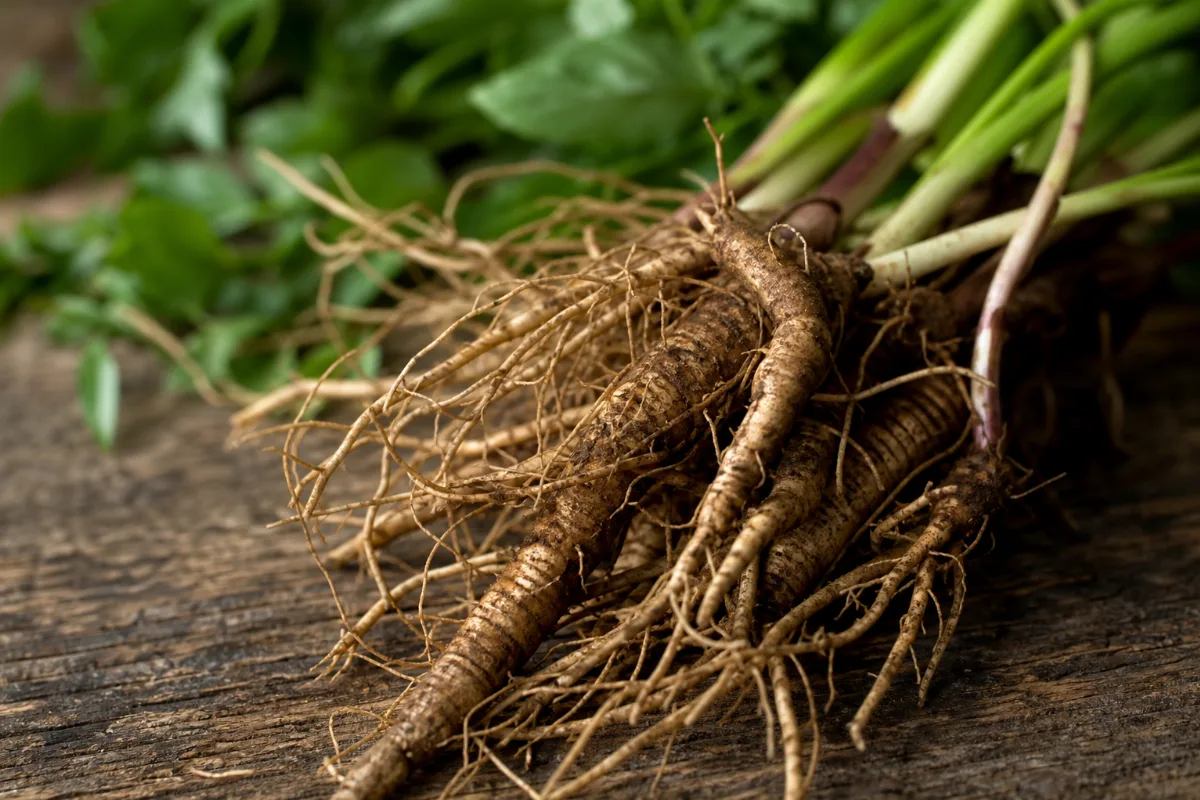
Herbs & Botanicals · Ayurvedic sleep and calming root
Tagara
Valeriana jatamansi (also written V. wallichii) · also called Tagara, Indian valerian, tagara churna, zhizhuxiang
Tagara is the root of a Himalayan plant used in Ayurveda for poor sleep and nervous tension. It is sometimes called Indian valerian. Two small trials found better sleep scores, but neither had a placebo group, so the benefit is not proven. Like European valerian, it may add to drowsiness from alcohol and sedatives, so ask a doctor or pharmacist before using it.
General information, not medical advice. Last substantive update · Not medically reviewed. A named clinician has not signed off on this page. How this page is made
About Tagara
Tagara is the Ayurvedic root of Valeriana jatamansi (also written V. wallichii). It is used for sleep and calm. Human evidence is thin, and most valerian research is on a different species. The key cautions are sedation with alcohol or sedatives, surgery, pregnancy and the risk of buying the wrong plant.
Safety first
Sedatives and alcohol: NIH says valerian should not be taken with alcohol or sedatives, and Memorial Sloan Kettering says it lengthens the sedation time of sleeping pills and similar medicines. No tagara study tested this, so the warning is carried over from European valerian.
Surgery: Memorial Sloan Kettering advises stopping valerian at least 1 week before surgery because it may interfere with general anaesthesia. Tell your surgeon and anaesthetist if you use tagara.
Pregnancy, breastfeeding and children: the EU regulator advises against valerian root medicines in pregnancy, breastfeeding and under age 12. Nothing was found for tagara itself. Avoid it unless a doctor agrees.
Liver: NIH reports very rare liver injury with valerian, most often with other herbal products. No case naming tagara was found. A 30-day trial reported normal liver blood tests but gave no values. The LiverTox entry could not be read, so it is not verified.
Wrong plant: in a 2023 study none of five tagara samples bought in Kerala markets was the right plant. Check that the label names Valeriana jatamansi (or V. wallichii) and the root.
Get urgent help for yellow skin or eyes, dark urine, severe drowsiness or confusion, or signs of allergy. Ask a doctor or pharmacist about amounts and your medicines.
Which plant? Tagara, valerian and jatamansi
Tagara is Valeriana jatamansi (Valeriana wallichii is an older name for it in GBIF). European valerian is Valeriana officinalis, a related but different species. Jatamansi is Nardostachys jatamansi, a different plant altogether. The three are often confused.
What applies to tagara: the two small Indian trials, the Chinese decoction trial and the reviews of V. jatamansi. What applies to European valerian: the large sleep meta-analyses, the EU monograph, and the NIH and Sloan Kettering safety pages. We use the valerian safety pages only as carried-over cautions. See our valerian page and our jatamansi page for those plants.
What it is
Tagara is the root and rhizome (underground stem) of a Himalayan plant. It is sold as a powder (churna), in blended Ayurvedic preparations and as extracts. Lab work points to compounds such as valepotriates, 6-methylapigenin and patchouli alcohol, but the mix differs a lot from plant to plant, so products may not behave the same way.
What the research shows
Sleep: a 2015 trial of 30 people and a 2024 trial of 50 people gave tagara powder for about a month and saw better sleep scores. Neither had a placebo group, and in the 2024 trial a different Ayurvedic capsule did better than tagara. A 2026 review calls the evidence for V. wallichii limited.
Anxiety: a small Chinese trial of a multi-herb decoction containing V. jatamansi found anxiety scores fell about as much as with a prescription medicine, with fewer side effects. It is not a test of tagara alone.
Everything else: brain protection, digestion, inflammation and cancer-cell effects come from animals and cells.
One 2026 review's abstract claims a pooled analysis of 12 trials. We could not verify that claim and it is not used.
At a glance
Traditional uses history, not proof
- Sleeplessness (anidra) in Ayurveda
- Nervous tension, 'neurosis' and epilepsy-like conditions (tradition, not proven)
- Indigestion, flu and mental disorders in Chinese ethnic medicines
- Described as a liver-protecting and pain-relieving root (tradition)
Studied for research
- Sleep problems (tagara powder): very low certainty
- Anxiety (multi-herb decoction with V. jatamansi): very low
- Sleep (European valerian, a different species): mixed
- Brain-cell protection, digestion, inflammation and cancer cells (lab and animals): insufficient
Main compounds
- Valepotriates (e.g. valtrate)
- 6-Methylapigenin
- Patchouli alcohol
- Iridoids
Common forms
- Dried root powder (churna)
- Decoction or blended Ayurvedic preparation
- Extract or iridoid-rich fraction (lab)
- Essential oil
Research links: Toolika 2015: tagara vs jatamansi in insomnia (PubMed) · Kedar 2024: tagara powder vs Mamsyadi Ghana capsule (PubMed) · Vendrame 2026: Ayurveda treatments for insomnia, review (PubMed) · Iqbal 2023: market samples of tagara (PubMed) · NCCIH: valerian usefulness and safety · Research Library · Genes & Biomarkers Library
The plant and its history
- Accepted scientific name
- Valeriana jatamansi Jones
- Naming authority
- GBIF species match, read 2026-10-25: ACCEPTED species. Valeriana wallichii DC. is listed as a SYNONYM of it.
- Synonyms
- Name: Valeriana wallichii DC.; Status: synonym in GBIF; still the name used in many Ayurvedic papers
- Common names
- Tagara (Sanskrit / Ayurveda); Indian valerian (English); Zhizhuxiang (Chinese folk name)
- Botanical family
- Caprifoliaceae (honeysuckle family) in GBIF; older books place valerians in Valerianaceae, the family named in the reviews we read.
- Classification
- Plantae > Caprifoliaceae > Valeriana > Valeriana jatamansi
- Native range
- Himalayan region, per the reviews read; exact countries not verified.
- Habitat
- Not verified.
- What the plant looks like
- Roots: The rhizome (underground stem) and roots are the part used; smell is characteristic (Iqbal 2023).; Stems: Not verified.; Leaves: Not verified.; Flowers: Not verified.; Fruit: Not verified.
- Cultivation
- Not covered.
- Harvest and processing
- Dried root and rhizome, powdered (churna) or boiled; not described in detail in the sources read.
- Look-alikes and adulterants
- Name: Valerian (Valeriana officinalis); Note: The common European valerian. A related species with its own research and monograph; its evidence cannot be assumed for tagara.; Name: Jatamansi (Nardostachys jatamansi); Note: A different Himalayan plant (spikenard) often paired with tagara in Ayurveda. Has its own page.; Name: Nymphoides macrospermum and other aquatic roots; Note: Found sold as 'tagara' in Kerala markets in 2023.
- Sustainability and conservation
- A 2026 review (abstract) calls V. jatamansi endangered or vulnerable, but this was not verified against IUCN and is not stated as fact.
Traditional use and history history, not clinical proof
| Tradition or era | Documented use | Source |
|---|---|---|
| Ayurveda | Tagara is a popular Ayurvedic herb for insomnia, epilepsy, neurosis, liver and pain; the Ayurvedic Pharmacopoeia of India names the rhizome of V. jatamansi as the official source. | p38505107 |
| Chinese ethnic medicines | 'Zhizhuxiang' was first described in Diannan Bencao and used for indigestion, flu and mental disorders by several ethnic groups. The plant is listed in the pharmacopoeias of sixteen countries. | p38821137 |
| Modern regulators | No EU monograph or US agency page exists for tagara itself; EMA, NCCIH and MSK cover European valerian. | s-ema-valerian |
Traditional use shows how a plant was used. It does not show that a supplement works or is safe today.
What is inside, and how it may work
What the plant contains and how those compounds act in cells and animals. Laboratory and animal mechanisms are not proven effects in people.
Main compounds
| Compound | Family | Where it is concentrated | Activity studied | Level of evidence |
|---|---|---|---|---|
| Valepotriates (e.g. valtrate) PubChem 442436 | iridoid | Root and rhizome 1.8 to 2.4% dry weight in one chemical type (2026 review). | Positive modulation of GABA-A receptors in lab work (2026 review). 13 12 | Laboratory research |
| 6-Methylapigenin PubChem 9965615 | flavonoid | Not specified | Acts at the benzodiazepine site of GABA-A receptors in lab work (IC50 0.3 micromolar, per the review). 13 12 | Laboratory research |
| Patchouli alcohol PubChem 10955174 | sesquiterpene | Root oil Varies hugely between plants. | Defines one chemical type, 0.4 to 63.7% of oil in the review; a major compound in oils from Himachal Pradesh plants. 13 12 15 | Chemistry |
| Valerenic acid PubChem 6440940 | sesquiterpene acid | Root of European valerian | The marker compound of V. officinalis. The tagara sources we read emphasise valepotriates, iridoids and patchouli alcohol; valerenic acid in tagara was NOT verified. 13 | Not verified for tagara |
Mechanisms, receptors and pathways
| Target or pathway | Gene or receptor | What was found | Level |
|---|---|---|---|
| GABA-A receptor signalling (calming system) | GABA-A receptor; benzodiazepine binding site | Valepotriates enhance and 6-methylapigenin binds the receptor in lab experiments (2026 review abstract; EC50 3 to 10 micromolar and IC50 0.3 micromolar). Not shown to happen at the levels reached by eating the root. 12 | Laboratory research |
| Central nervous system and tumour-cell effects of an iridoid-rich fraction | Multiple targets by network analysis | Described in the 2025 review as protective in nervous-system and cancer models; hypothesis only. 19 18 | Animal and in vitro |
| Sleep regulation, HPA axis, parasympathetic activity | Not specified | The 2026 narrative review says these ideas are hypothesis-generating and come from lab and animal models. 17 | Lab and animal |
Absorption, metabolism and elimination
- Absorption
- Not found. Reviews state pharmacokinetic data on V. jatamansi are lacking.
- Distribution
- Not covered.
- Metabolism
- Not covered.
- Elimination
- Not covered.
- Bioavailability
- Not covered.
Isolated compounds versus whole extracts
Human tagara trials used whole-root powder (churna) or a multi-herb preparation. Lab work uses isolated compounds, oils or iridoid-rich fractions. Because the chemistry varies a lot between plants, results for one preparation cannot be assumed for another.
Nutritional composition
Tagara is a medicinal root, not a food or a source of essential nutrients.
1 mixed findings2 very low certainty5 not enough evidence
What is Tagara good for?
The studied uses and how strong the evidence is. For tagara itself the human evidence is two small trials with no placebo group; most other results are from animals, cells or the European relative, valerian.
Benefits, one by one
Each card is a research question, not a promise. Tap a goal to filter. Open a card to see the studies, doses and limits.
Sleep problems (insomnia)
Very low certaintyTwo small Indian trials gave tagara root powder to people with insomnia and saw better sleep scores, but neither had a placebo group. Reviews call the evidence limited. Tagara has not been shown to help sleep better than a dummy pill.
4 studiesUsed traditionally as a root powder (churna) or in blended Ayurvedic …
Studies, doses and limits
What the trials found
Two small randomised trials in India of tagara root powder, one of 30 and one of 50 people, both without a placebo group. Both reported people sleeping better by the end of a month.
Results
Toolika 2015: 30 completers; tagara powder vs jatamansi powder (a different plant) for 1 month. Kedar 2024: 50 adults; tagara powder vs a different Ayurvedic capsule for 30 days.
Effect sizes as reported
2015: tagara group scores improved by 55% to 76% (sleep onset, duration, disturbed sleep, disturbed work) from their own starting point, all P < 0.001; the authors say tagara did better than jatamansi. 2024: both groups improved on ISI, ESS, PSQI and stress scores (P < 0.001 within group); the other capsule did better than tagara on ISI and ESS (P = 0.01).
Why this rating
Very low for tagara: tiny trials, no placebo, results measured against each person's own starting point. A 2026 narrative review calls evidence for V. wallichii limited and mostly from studies where sleep was a secondary outcome. Our rating of very low is our reading; the reviewers rate overall Ayurvedic certainty as low.
Form and dose studied
Used traditionally as a root powder (churna) or in blended Ayurvedic preparations. Amounts used in trials are not given here; ask a doctor or pharmacist.
Who was studied
Adults with insomnia in India (20 to 80 years in the larger trial).
Limits
No placebo group, very small, one month long, and one comparator was a different plant. Improvement could be expectation or natural change. The 2026 review of 11 Ayurvedic insomnia studies found few trials in older adults and no trial registration.
Why researchers looked
Tagara is a traditional Ayurvedic herb for sleeplessness (anidra) and is used in the same way as its European relative, valerian.
Traditional use
Used in Ayurveda for insomnia, nervous tension and epilepsy-like conditions (traditional, not proven).
Proposed mechanism Lab evidence
Lab work suggests compounds in the root such as valepotriates and 6-methylapigenin act on GABA signalling, the brain's calming system. This is lab and animal work only.
A proposed mechanism does not show that the effect happens in people.
Tagara has the same sedation cautions as valerian (alcohol, sedatives, driving). See the safety section.
Sleep: what European valerian shows (a different species)
Mixed findingsMost sleep research is on European valerian (Valeriana officinalis), a close relative, not on tagara. Reviews of that research give mixed results. It cannot be assumed to apply to tagara.
3 studiesEuropean valerian root is sold as tea, tincture and extract. Amounts …
Studies, doses and limits
What the trials found
Meta-analyses of European valerian: Bent 2006 (16 placebo-controlled trials, 1,093 people) found more people reported improved sleep (relative risk 1.8) but with publication bias and weak methods. Shinjyo 2020 (60 studies) calls valerian possibly safe and effective, and blames inconsistent results on variable extract quality. NIH says evidence for sleep is inconsistent and a 2017 sleep-medicine guideline recommended against valerian for chronic insomnia.
Results
V. officinalis only: Bent 2006 (16 RCTs), Shinjyo 2020 (60 studies; 10 pooled for sleep quality).
Effect sizes as reported
Bent 2006: relative risk of improved sleep 1.8 (95% CI 1.2 to 2.9), with publication bias. Shinjyo 2020: pooled numbers not in the abstract.
Why this rating
Mixed for European valerian (reviews differ; NIH calls it inconsistent). Not applicable to tagara by default.
Form and dose studied
European valerian root is sold as tea, tincture and extract. Amounts are not given here; ask a doctor or pharmacist.
Who was studied
Adults with sleep complaints in trials of V. officinalis.
Limits
Different species (V. officinalis). Preparations and doses varied between trials. See the valerian page for details.
Why researchers looked
Tagara is often described as 'Indian valerian' and used for the same purpose as European valerian.
Traditional use
Both are root-and-rhizome sleep herbs in their own medical traditions.
Proposed mechanism Lab evidence
Valerenic acid and other compounds in European valerian act on GABA in the lab. Valerenic acid is the marker compound of V. officinalis; the tagara sources we read emphasise other compounds (valepotriates, iridoids, patchouli alcohol).
A proposed mechanism does not show that the effect happens in people.
See the safety section; the same cautions are assumed for tagara.
Anxiety and nervous tension
Very low certaintyNo trial of tagara alone for anxiety was found. One small Chinese trial of a multi-herb decoction containing V. jatamansi found anxiety scores fell about as much as with a prescription medicine, with fewer side effects. Other findings are from animals and cells.
3 studiesDecoction in the trial; amounts not given here.
Studies, doses and limits
What the trials found
One randomised trial of a multi-herb decoction (60 people analysed) against the prescription medicine Deanxit; no placebo group.
Results
Bai 2017: 67 randomised, 60 analysed; decoction containing V. jatamansi rhizome and root vs Deanxit for 4 weeks.
Effect sizes as reported
HAMA anxiety scores and salivary cortisol fell in both groups with no significant difference between them; side effects were lower with the decoction (P < 0.01).
Why this rating
Very low: a combination decoction (effect cannot be credited to V. jatamansi), small, no placebo, abstract of a Chinese-language paper only. The 2024 review says research is mostly cells and animals with no good clinical trials.
Form and dose studied
Decoction in the trial; amounts not given here.
Who was studied
Adults with generalised anxiety disorder (traditional-medicine subtype).
Limits
Combination product; comparator was a medicine, not a placebo; small and short.
Why researchers looked
Valeriana jatamansi is used in Chinese and Ayurvedic medicine for nervous and mental disorders, and reviews list anti-anxiety effects in animals.
Traditional use
Traditional use for neurosis and mental disorders (Ayurveda; Chinese folk medicine 'zhizhuxiang').
Proposed mechanism Animal evidence
In animals and cells, extracts and an iridoid-rich fraction showed anti-anxiety and antidepressant-type effects; mechanisms include GABA signalling.
A proposed mechanism does not show that the effect happens in people.
Do not replace prescribed anxiety treatment with tagara. See the safety section.
Brain-cell protection and mood (lab)
Not enough evidenceIn cells and animals, V. jatamansi extracts and an iridoid-rich fraction protected nerve cells and showed antidepressant-type effects. This has not been tested in people.
3 studiesNot applicable.
Studies, doses and limits
What the trials found
No human trial found.
Results
Not applicable (lab and animal).
Effect sizes as reported
Not applicable.
Why this rating
Insufficient: lab and animal evidence only; reviewers state clinical trials, pharmacokinetics and mechanisms are lacking.
Form and dose studied
Not applicable.
Who was studied
Not applicable (animals, cells).
Limits
Lab results often do not carry over to people; plant chemistry varies a lot between plants.
Why researchers looked
Reviews highlight iridoids as the standout compounds for brain-related protection in lab studies.
Traditional use
Traditionally used for mental disorders and epilepsy-like conditions (not proven).
Proposed mechanism Lab evidence
Iridoid-rich extract protected the central nervous system in animal experiments; valepotriates and 6-methylapigenin act on GABA receptors in cell experiments.
A proposed mechanism does not show that the effect happens in people.
None specific.
Digestion and stomach problems (traditional and lab)
Not enough evidenceTraditional medicine uses the root for indigestion. Reviews describe stomach-protecting effects in animals. No human trial was found.
2 studiesNot applicable.
Studies, doses and limits
What the trials found
No human trial found.
Results
Not applicable.
Effect sizes as reported
Not applicable.
Why this rating
Insufficient: traditional and animal evidence only.
Form and dose studied
Not applicable.
Who was studied
Not applicable.
Limits
Animal and traditional evidence only.
Why researchers looked
Reviews describe traditional use for indigestion and gut disorders and call the plant promising for gut disorders in lab work.
Traditional use
Used for indigestion in Chinese ethnic medicine and Ayurveda.
Proposed mechanism Animal evidence
Gastroprotective effects in animal studies.
A proposed mechanism does not show that the effect happens in people.
None specific.
Cancer cells (lab only)
Not enough evidenceExtracts and compounds slowed cancer cells in dishes and in animals. This does not show the herb treats cancer in people. Do not use it in place of cancer treatment.
2 studiesNot applicable.
Studies, doses and limits
What the trials found
No human trial found.
Results
Not applicable.
Effect sizes as reported
Not applicable.
Why this rating
Insufficient: lab and animal evidence only. One review's phrase 'adjunct in cancer treatment' is a hypothesis.
Form and dose studied
Not applicable.
Who was studied
Not applicable.
Limits
Cell studies often use concentrations people cannot reach.
Why researchers looked
Reviews list cytotoxic and antitumour activity of iridoids and other compounds.
Traditional use
Not a traditional cancer remedy in the sources read.
Proposed mechanism Lab evidence
Cell-killing activity of iridoid-rich fractions in lab models.
A proposed mechanism does not show that the effect happens in people.
Do not delay or replace cancer treatment.
Inflammation and antioxidant effects (lab)
Not enough evidenceAntioxidant and anti-inflammatory effects are reported in lab and animal studies only.
2 studiesNot applicable.
Studies, doses and limits
What the trials found
No human trial found.
Results
Not applicable.
Effect sizes as reported
Not applicable.
Why this rating
Insufficient: lab and animal only.
Form and dose studied
Not applicable.
Who was studied
Not applicable.
Limits
Abstract-level evidence only.
Why researchers looked
Reviews list anti-inflammatory and antioxidant effects among the plant's lab findings.
Traditional use
Used traditionally for inflammatory conditions (Chinese ethnic medicine).
Proposed mechanism Lab evidence
Not specified in the abstracts.
A proposed mechanism does not show that the effect happens in people.
None specific.
Liver protection (traditional claim) and a short blood-test safety check
Not enough evidenceTagara is described as 'hepatoprotective' in Ayurveda, but no study shows it protects the liver. One 30-day trial checked liver blood tests and reported no problem, but it was small and short.
2 studiesNot applicable.
Studies, doses and limits
What the trials found
In the 2024 trial of 50 adults, liver function tests and serum creatinine before and after 30 days showed a 'good safety profile' in both groups, according to the abstract (no values given).
Results
Kedar 2024: 50 adults, tagara powder or another Ayurvedic capsule, 30 days.
Effect sizes as reported
Numbers not in abstract.
Why this rating
Insufficient as evidence of liver benefit; only a short safety check, with no values in the abstract.
Form and dose studied
Not applicable.
Who was studied
Adults with insomnia.
Limits
Short, small, no placebo, values not shown.
Why researchers looked
Ayurvedic texts list liver protection among tagara's uses; a 2024 trial also tracked liver and kidney tests as a safety check.
Traditional use
Described as hepatoprotective in Ayurveda (traditional claim).
Proposed mechanism Not applicable
Not specified.
A proposed mechanism does not show that the effect happens in people.
Liver injury has been reported rarely with common valerian; see safety section.
Connections to the rest of health
How Tagara connects to the rest of our health knowledge graph. Every link says what kind of connection it is. A safety link (for example to the liver) is a warning, not a benefit. A study that merely mentions a topic never creates a benefit link.
Explore every connection: goals, body systems, organs, symptoms, genes
A. Wellness goals
| Connected to | Kind of connection | Evidence status | Context | Studies |
|---|---|---|---|---|
| Better Sleep | Very low certainty | Sleep problems (insomnia): Two small Indian trials gave tagara root powder to people with insomnia and saw better sleep scores, but neither had a placebo group. Reviews call the evidence limited. Tagara has not been shown to help sleep better than a dummy pill. | 16 6 17 7 | |
| Sleep Quality | Very low certainty | Sleep problems (insomnia): Two small Indian trials gave tagara root powder to people with insomnia and saw better sleep scores, but neither had a placebo group. Reviews call the evidence limited. Tagara has not been shown to help sleep better than a dummy pill. | 16 6 17 7 | |
| Fall Asleep Faster | Very low certainty | Sleep problems (insomnia): Two small Indian trials gave tagara root powder to people with insomnia and saw better sleep scores, but neither had a placebo group. Reviews call the evidence limited. Tagara has not been shown to help sleep better than a dummy pill. | 16 6 17 7 | |
| Better Sleep | Mixed findings | Sleep: what European valerian shows (a different species): Most sleep research is on European valerian (Valeriana officinalis), a close relative, not on tagara. Reviews of that research give mixed results. It cannot be assumed to apply to tagara. | 2 14 10 | |
| Sleep Quality | Mixed findings | Sleep: what European valerian shows (a different species): Most sleep research is on European valerian (Valeriana officinalis), a close relative, not on tagara. Reviews of that research give mixed results. It cannot be assumed to apply to tagara. | 2 14 10 | |
| Anxiety Support | Preliminary mechanism | Very low certainty | Anxiety and nervous tension: No trial of tagara alone for anxiety was found. One small Chinese trial of a multi-herb decoction containing V. jatamansi found anxiety scores fell about as much as with a prescription medicine, with fewer side effects. Other findings are from animals and cells. | 1 18 19 |
| Calm Relaxation | Preliminary mechanism | Very low certainty | Anxiety and nervous tension: No trial of tagara alone for anxiety was found. One small Chinese trial of a multi-herb decoction containing V. jatamansi found anxiety scores fell about as much as with a prescription medicine, with fewer side effects. Other findings are from animals and cells. Brain-cell protection and mood (lab): In cells and animals, V. jatamansi extracts and an iridoid-rich fraction protected nerve cells and showed antidepressant-type effects. This has not been tested in people. | 1 18 19 12 |
B. Body systems
| Connected to | Kind of connection | Evidence status | Context | Studies |
|---|---|---|---|---|
| Liver | Adverse effect or risk | Documented risk | NCCIH and MSK describe rare liver injury reports with common valerian; none found for tagara. Preparation or compound: Valerian preparations (rare case reports; not shown for tagara) |
10 8 |
| Sleep Recovery | Biological association | Very low certainty | Studied for: Sleep problems (insomnia) Studied for: Sleep: what European valerian shows (a different species) | 16 6 17 7 2 14 10 |
| Nervous System | Biological association | Very low certainty | Studied for: Sleep problems (insomnia) Studied for: Anxiety and nervous tension | 16 6 17 7 1 18 19 12 |
| Stress Mood | Biological association | Very low certainty | Studied for: Anxiety and nervous tension Studied for: Brain-cell protection and mood (lab) | 1 18 19 12 |
| Digestive System | Biological association | Not enough evidence | Studied for: Digestion and stomach problems (traditional and lab) | 18 19 |
| Cellular Growth | Biological association | Not enough evidence | Studied for: Cancer cells (lab only) | 19 18 |
| Hepatic System | Biological association | Not enough evidence | Studied for: Liver protection (traditional claim) and a short blood-test safety check | 6 5 |
G. Root causes and contributing factors
| Connected to | Kind of connection | Evidence status | Context | Studies |
|---|---|---|---|---|
| Herb-drug interaction | Drug or supplement interaction | Documented risk | Added sedation with alcohol and sedatives (carried over from valerian). Preparation or compound: Valerian-type root |
10 8 |
I. Biomarkers
| Connected to | Kind of connection | Evidence status | Context | Studies |
|---|---|---|---|---|
| Sleep and insomnia symptom scores (ISI, PSQI, ESS, sleep diary) | Biological association | Very low certainty | Measured in trials: improved. A lab change is not the same as a health benefit. | 6 16 |
| Anxiety score (Hamilton scale, HAMA) | Biological association | Very low certainty | Measured in trials: decreased. A lab change is not the same as a health benefit. | 1 |
| Salivary cortisol | Biological association | Very low certainty | Measured in trials: decreased. A lab change is not the same as a health benefit. | 1 |
| Liver function tests and serum creatinine | Biological association | Not enough evidence | Measured in trials: no change reported. A lab change is not the same as a health benefit. | 6 |
K. Biological pathways
| Connected to | Kind of connection | Evidence status | Context | Studies |
|---|---|---|---|---|
| GABA-A receptor signalling | Preliminary mechanism | In vitro | Valepotriates and 6-methylapigenin in lab work. | 12 |
L. Active compounds
| Connected to | Kind of connection | Evidence status | Context | Studies |
|---|---|---|---|---|
| Valepotriates (e.g. valtrate) | Biological association | In vitro | Positive modulation of GABA-A receptors in lab work (2026 review). Preparation or compound: Root and rhizome |
13 12 |
| 6-Methylapigenin | Biological association | In vitro | Acts at the benzodiazepine site of GABA-A receptors in lab work (IC50 0.3 micromolar, per the review). Preparation or compound: Not specified |
13 12 |
| Patchouli alcohol | Biological association | Chemistry | Defines one chemical type, 0.4 to 63.7% of oil in the review; a major compound in oils from Himachal Pradesh plants. Preparation or compound: Root oil |
13 12 15 |
| Valerenic acid | Biological association | Not verified for tagara | The marker compound of V. officinalis. The tagara sources we read emphasise valepotriates, iridoids and patchouli alcohol; valerenic acid in tagara was NOT verified. Preparation or compound: Root of European valerian |
13 |
Each connection is stored with the ingredient, the connected record, the kind of connection, the evidence status, the supporting studies, the preparation or compound involved, and a review date (last reviewed October 25, 2026).
The evidence
The research centre for Tagara. Every record here was checked against PubMed or the publisher's page; we never list a study we have not verified.
Evidence by outcome
Bars show how many studies we found for each outcome, not how well it works. People are added up across trials only (reviews are not added, to avoid double counting).
How we rate evidence
High certainty
Several well-run trials or reviews agree; further research is unlikely to change the picture much.
Moderate certainty
Good trials point the same way, but some doubt remains.
Low certainty
Small, short or inconsistent trials. The finding could change with better research.
Very low certainty
Very little or very weak human data. Treat as a possibility only.
Mixed findings
Trials or reviews disagree with each other.
Not enough evidence
Not enough human research to say either way.
Evidence against
Good research found no benefit, or found harm.
We take the reviewers' own risk-of-bias and GRADE statements where they exist, and otherwise judge from study size, design, consistency, directness and whether a product matches what is sold. Many publications do not make evidence high. Method note: We read our existing herb summary, searched PubMed, read the abstract of each PubMed record cited, read the NCCIH, Memorial Sloan Kettering and EMA pages on valerian, and checked names in GBIF and NCBI Taxonomy and compounds in PubChem. Pages that could not be opened are marked not found or not verified.
Study library: every study we checked 19
| Study | Design | People | Product, dose, length | Result |
|---|---|---|---|---|
| Bai 2017 Clinical study on compound prescription with Valerianae Jatamansi Rhizoma et Radix in treatment of generalized anxiety disorder. Zhongguo Zhong Yao Za Zhi (China J Chinese Materia Medica) · PMID 29493163 · DOI |
RCT active comparator |
60 67 adults with generalised anxiety disorder (a traditional-medicine 'liver qi stagnation' type) randomised; 60 analysed (30 per group) |
Anxiolytic compound decoction containing V. jatamansi rhizome and root plus other herbs rhizome and root (in a multi-herb decoction) not stated in abstract 4 weeks · vs Deanxit (a prescription medicine), not a placebo |
HAMA scores, symptom scores and salivary cortisol fell in both groups over 4 weeks, with no significant difference between the decoction and Deanxit. Side effects were fewer in the decoction group (P < 0.01). No significant between-group difference (not in abstract) Methods, limits and fundingOutcomes: Hamilton Anxiety Scale (HAMA), traditional-medicine symptom score, salivary cortisol, side effects Limitations: A multi-herb decoction, so the effect cannot be credited to V. jatamansi. No placebo group. Small. Published in Chinese; abstract only read. Species identity: the abstract names V. jatamansi, not tagara products. Funding and conflicts: Funding not stated in abstract. Read: abstract (PubMed efetch) |
| Bent 2006 Valerian for sleep: a systematic review and meta-analysis. Am J Med · PMID 17145239 · DOI |
Meta-analysis |
1093 16 randomised placebo-controlled trials of valerian for sleep quality (1,093 patients) |
Valeriana officinalis root extracts (NOT tagara) root varied varied · vs placebo |
Six studies reporting improved sleep or not showed a benefit (relative risk 1.8), but there was evidence of publication bias and most studies had significant methodological problems. The authors say valerian 'might improve sleep quality without producing side effects'. RR 1.8 for improved sleep (1.2 to 2.9) Methods, limits and fundingOutcomes: Sleep quality (improved or not) Limitations: Older review; European valerian, not tagara; publication bias; doses and preparations varied. Funding and conflicts: Funding not stated in abstract. Read: abstract (PubMed efetch) |
| European Medicines Agency 2026 Valerianae radix - herbal medicinal product (EMA/HMPC public summary) EMA · Source |
Regulator page |
Public summary of the HMPC monograph on valerian root (Valeriana officinalis L.) | Valerian root (V. officinalis) root not applicable not applicable · vs not applicable |
Page read 2026-10-25 (summary updated 11 March 2026). Valerian root ethanolic dry extract: well-established use for mild nervous tension and sleep disorders; other preparations: traditional use only. Not for children under 12, or in pregnancy or breastfeeding. Do not drive or operate machinery. See a doctor or pharmacist if symptoms persist or worsen after 2 weeks. No medicine interactions described in the literature at the time of assessment. Side effects: nausea and abdominal cramps (frequency not known). Not applicable Methods, limits and fundingOutcomes: Medicinal uses, who should not use it, side effects Limitations: V. officinalis only; tagara has no EU monograph found. The 'no interactions' statement is from the literature at assessment time and conflicts in emphasis with NCCIH and MSK cautions about sedatives. Funding and conflicts: Public body or non-profit; no product promoted. Read: full page text |
| GBIF 2026 GBIF species match: Valeriana jatamansi and Valeriana wallichii GBIF API · Source |
Database record plant |
GBIF species match (read 2026-10-25): Valeriana jatamansi Jones, key 8213018, rank SPECIES, status ACCEPTED, family Caprifoliaceae, genus key 2888741. Valeriana wallichii DC. (key 4095731) is listed as a SYNONYM of it. Methods, limits and fundingOutcomes: Name check Limitations: Name only. Ayurvedic and botanical sources still use both names; some older sources treat them as different plants. Read: API response | ||
| Iqbal 2023 Comparative Pharmacognostic study of market samples of Tagara collected from five different markets of Kerala with the official source plant Valeriana jatamansi Jones ex Roxb. Ayu · PMID 38505107 · DOI |
Laboratory study plant |
5 Five tagara market samples from Kerala, plus a sample from Uttarakhand and several aquatic plants |
Market 'tagara' samples compared by microscopy with official V. jatamansi rhizome rhizome / root samples not applicable not applicable · vs Genuine V. jatamansi rhizome (Uttarakhand sample) |
None of the five Kerala market samples matched genuine V. jatamansi rhizome. They matched roots of the aquatic plant Nymphoides macrospermum. The Uttarakhand sample was genuine V. jatamansi. 5 of 5 Kerala samples were not V. jatamansi (not applicable) Methods, limits and fundingOutcomes: Macroscopic, microscopic, histochemical and powder microscopy Limitations: Small survey from one region; says nothing about samples elsewhere. Funding and conflicts: Funding not stated in abstract. Read: abstract (PubMed efetch) |
| Kedar 2024 Efficacy of Mamsyadi Ghana capsule in Insomnia Disorder - A randomized controlled trial. J Ayurveda Integr Med · PMID 39612525 · DOI |
RCT no placebo |
50 50 adults aged 20-80 with insomnia disorder (DSM-5), randomised to two groups |
Tagara churna (Valeriana wallichii root powder) in one group; Mamsyadi Ghana capsule (a different Ayurvedic formula) in the other root powder Doses stated in the abstract; not repeated here (not advice) 30 days · vs Mamsyadi Ghana capsule (the trial tested that capsule against tagara) |
Both groups improved on ISI, ESS, PSQI, DASS and sleep-diary measures (P < 0.001 within each group). The Mamsyadi Ghana capsule did better than tagara churna on ISI and ESS (P = 0.01, large effect size); PSQI, DASS and sleep diary were comparable. Liver and kidney blood tests showed 'a good safety profile' in both groups, according to the authors. Between-group difference favoured the other formula on ISI and ESS; numbers not in abstract (not in abstract) Methods, limits and fundingOutcomes: Insomnia Severity Index (ISI), Pittsburgh Sleep Quality Index (PSQI), Epworth Sleepiness Scale (ESS), sleep diary, DASS (depression, anxiety, stress); haemoglobin, liver function tests and serum creatinine before and after Limitations: No placebo arm: tagara was the comparison treatment, so this trial does not test tagara against nothing. Short (30 days). The abstract does not give the liver test values, only a summary statement. Funding and conflicts: Funding not stated in abstract. Read: abstract (PubMed efetch) |
| Kulkarni 2026 Ayurvedic Interventions for Primary Insomnia in the Elderly: A Systematic Review of Clinical Evidence and Research Gaps. Glob Adv Integr Med Health · PMID 42694495 · DOI |
Systematic review |
11 studies of Ayurvedic treatment for primary insomnia; only two targeted elderly people | Ayurvedic treatments including tagara, jatamansi, ashwagandha and polyherbal formulas, plus Shirodhara and Nasya not specified not applicable not applicable · vs not applicable |
Most studies reported benefit, but limits included small samples, lack of comparators and absent trial registration. High-quality trials in older people are scarce. Not applicable (not applicable) Methods, limits and fundingOutcomes: Insomnia outcomes; study quality Limitations: Systematic review of low-quality studies; tagara results are not separated in the abstract. Funding and conflicts: Funding not stated in abstract. Read: abstract (PubMed efetch) |
| Memorial Sloan Kettering Cancer Center 2023 Valerian: Purported Benefits, Side Effects & More (Memorial Sloan Kettering) MSK About Herbs · Source |
Regulator page |
Patient and clinician page on valerian; lists V. officinalis, V. jatamansi, V. fauriei and V. wallichii under scientific name | Valerian root (mainly V. officinalis) root not applicable not applicable · vs not applicable |
Page read 2026-10-25. Stop valerian at least 1 week before surgery because it may interfere with general anaesthesia; do not drive or operate machinery after taking it. Valerian lengthens sedation time of barbiturates, benzodiazepines and other nervous-system drugs. It cautions people with pancreatic, liver or gallbladder disease (case reports of liver damage) and pregnant or nursing people (animal experiments in mouse fetuses). An animal study suggests added liver harm with haloperidol; clinical relevance unknown. Possible CYP2D6, CYP3A4 and P-glycoprotein effects, though other studies suggest enzyme interactions are unlikely. The page says V. jatamansi and V. wallichii are used in traditional medicine for insomnia and anxiety. Not applicable Methods, limits and fundingOutcomes: Side effects, warnings, interactions Limitations: Written mainly about V. officinalis; warnings are carried over to tagara by relatedness, not tested for it. Funding and conflicts: Public body or non-profit; no product promoted. Read: full page text |
| NCBI 2026 NCBI Taxonomy search: Valeriana jatamansi NCBI Taxonomy · Source |
Database record plant |
An esearch of the taxonomy database for 'Valeriana jatamansi' returned a single record, TaxID 59170. The record page itself was not opened. Methods, limits and fundingOutcomes: Name check Limitations: ID from a search only. Read: API response | ||
| NCCIH 2025 Valerian: Usefulness and Safety (NCCIH) NCCIH · Source |
Regulator page |
Page about common valerian (Valeriana officinalis), not tagara | Valerian root and rhizome (V. officinalis) root and rhizome not applicable not applicable · vs not applicable |
Page read 2026-10-25. Evidence for sleep is inconsistent; the 2017 American Academy of Sleep Medicine guideline recommended against valerian for chronic insomnia in adults. Generally safe for short-term use by most adults; long-term safety unknown. Side effects: headache, stomach upset, mental dullness, excitability, uneasiness, vivid dreams; withdrawal symptoms possible if stopped abruptly after chronic use. In very rare cases liver injury was reported, most often with other herbals. It should not be taken with alcohol or sedatives. Little is known about safety in pregnancy or breastfeeding. Not applicable Methods, limits and fundingOutcomes: Usefulness and safety summary Limitations: About V. officinalis only; tagara is not mentioned. Funding and conflicts: Public body or non-profit; no product promoted. Read: full page text |
| NIH / NLM; WHO; BfArM 2026 LiverTox, LactMed, WHO and Commission E entries for tagara / Valeriana jatamansi LiverTox; LactMed |
Not found |
unspecified |
The NCBI Bookshelf LiverTox page returned a reCAPTCHA check on 2026-10-25 and could not be read; it was not retried. No LiverTox, LactMed, WHO or Commission E entry for tagara or Valeriana jatamansi was found, and we did not read the LiverTox or LactMed entries for common valerian. Methods, limits and fundingLimitations: Not found or not opened, so NOT verified. Read: not opened | |
| Nisar 2026 Chemotypic diversity and neuroactive potential of Valeriana jatamansi Jones: a systematic review on phytochemistry, pharmacology and standardisation challenges. Nat Prod Res · PMID 42439713 · DOI |
Systematic review mixed (mostly lab) |
Systematic review of V. jatamansi literature 1979 to May 2026 (312 studies, per abstract) | Valeriana jatamansi (Indian valerian), many plant types rhizome/root not applicable not applicable · vs not applicable |
Describes five chemical types defined by patchouli alcohol, maaliol, valepotriates, bornyl esters or sesquiterpenes, with 15 to 35% batch-to-batch variation in activity. Reports valepotriates modulating GABA-A receptors (EC50 3 to 10 micromolar) and 6-methylapigenin acting at the benzodiazepine site (lab values). The abstract also claims a meta-analysis of 12 RCTs (over 1,500 people) showing improved insomnia and anxiety. Not applicable (not applicable) Methods, limits and fundingOutcomes: Chemistry, GABA-related mechanisms, standardisation Limitations: We could not verify the claimed 12-trial meta-analysis. It conflicts with the other reviews we read (2024 to 2026), which found no placebo-controlled trials of tagara or V. jatamansi, and our PubMed search found only one small anxiety trial of a combination decoction. Only the abstract was read, so the trial claim is NOT verified and is not used for any rating. The chemical-variation findings are used with that caution. Funding and conflicts: Funding not stated in abstract. Read: abstract (PubMed efetch) |
| PubChem 2026 PubChem compound records: valerenic acid, valtrate, 6-methylapigenin, patchouli alcohol PubChem API · Source |
Database record chemical |
Read 2026-10-25: (-)-valerenic acid CID 6440940, C15H22O2; valtrate CID 442436, C22H30O8; 6-methylapigenin CID 9965615, C16H12O5; patchouli alcohol CID 10955174, C15H26O. Methods, limits and fundingOutcomes: Identifier check Limitations: Identifiers only. Which compounds are present in tagara products varies by plant type. Read: API response | ||
| Shinjyo 2020 Valerian Root in Treating Sleep Problems and Associated Disorders - A Systematic Review and Meta-Analysis. J Evid Based Integr Med · PMID 33086877 · DOI |
Meta-analysis |
6894 60 studies (n = 6,894) of European valerian; meta-analyses of sleep quality (10 studies, n = 1,065) and anxiety (8 studies, n = 535) |
Valeriana officinalis L. root preparations (NOT tagara) root/rhizome varied varied · vs placebo or other |
The authors conclude valerian 'could be a safe and effective herb' for sleep and associated disorders, say inconsistent results probably reflect variable extract quality, and found no severe adverse events in people aged 7 to 80. They note the quality of preparations and unstable constituents need better standardisation. Pooled numbers not in abstract (not in abstract) Methods, limits and fundingOutcomes: Subjective sleep quality; anxiety Limitations: Is about Valeriana officinalis, a different species from tagara; applies to tagara only as background. Authors recommend better standardisation. Other reviews (Bent 2006; NCCIH) call valerian evidence inconsistent. Funding and conflicts: Funding not stated in abstract. Read: abstract (PubMed efetch) |
| Singh 2015 Genetic and biochemical diversity among Valeriana jatamansi populations from Himachal Pradesh. ScientificWorldJournal · PMID 25741533 · DOI |
Laboratory study plant |
13 13 wild populations in Himachal Pradesh, India |
Essential oil (GC-MS) and DNA markers (RAPD) root/rhizome oil not applicable not applicable · vs not applicable |
Seven genetically distinct groups matched differences in oil chemistry. Oil yield ranged from 0.6% to 1.66% (v/w). Patchouli alcohol and viridiflorol, the two main valued compounds, were negatively correlated. Not applicable (not applicable) Methods, limits and fundingOutcomes: Oil yield and composition; genetic groups Limitations: Plant genetics and chemistry only; no health outcome. Funding and conflicts: Funding not stated in abstract. Read: abstract (PubMed efetch) |
| Toolika 2015 A comparative clinical study on the effect of Tagara (Valeriana wallichii DC.) and Jatamansi (Nardostachys jatamansi DC.) in the management of Anidra (primary insomnia). Ayu · PMID 26730138 · DOI |
RCT no placebo |
30 34 adults with primary insomnia were randomised; 30 finished (15 per group) |
Tagara churna (powder of Valeriana wallichii root), taken with milk root powder Dose stated in the abstract; not repeated here (not advice) 1 month · vs Jatamansi churna (Nardostachys jatamansi; a different plant) |
In the tagara group, scores improved by 76.00% (sleep onset), 55.17% (sleep duration), 69.58% (disturbed sleep) and 73.95% (disturbed daily work), all P < 0.001 against the group's own starting point. The jatamansi group also improved (61.34%, 48.25%, 53.08%, 43.85%). The authors say tagara did better than jatamansi. Within-group percentage improvement; no tagara-versus-placebo comparison (not stated in abstract) Methods, limits and fundingOutcomes: Sleep onset, sleep duration, disturbed sleep, disturbance of daily work (symptom scores) Limitations: No placebo group, so improvement cannot be credited to the herb (expectation, natural change). Very small. Open-label design is not described in the abstract. The comparator is a different plant. The abstract does not state how the groups were compared statistically. Funding and conflicts: Funding not stated in abstract. Read: abstract (PubMed efetch) |
| Vendrame 2026 Ayurveda Treatments for Insomnia: A Narrative Review. J Clin Med · PMID 42739755 · DOI |
Narrative review |
Narrative review of Ayurvedic insomnia treatments, literature 2016 to 2026 | Ayurvedic herbs and external therapies, including Valeriana wallichii root (for tagara) not applicable not applicable · vs not applicable |
The authors say the most rigorous data are for standardised ashwagandha root extract. Evidence for Bacopa monnieri and Valeriana wallichii 'is more limited and derives largely from studies in which sleep was a secondary outcome'. Overall certainty is low because of bias, indirect evidence, poor standardisation and no long-term safety data. Mechanism work (GABA signalling and others) is hypothesis-generating and mostly lab and animal. Not applicable (not applicable) Methods, limits and fundingOutcomes: Sleep outcomes; mechanisms; safety Limitations: A narrative (non-systematic) review; tagara is a small part of it; abstract only. Funding and conflicts: Funding not stated in abstract. Read: abstract (PubMed efetch) |
| Wang 2024 Research progress in the ethnopharmacology, phytochemistry, pharmacology, toxicology, and quality control of Valeriana jatamansi Jones. J Ethnopharmacol · PMID 38821137 · DOI |
Narrative review mixed (mostly lab and animal) |
Literature review of Valeriana jatamansi | Valeriana jatamansi (rhizome and root), extracts and compounds rhizome/root not applicable not applicable · vs not applicable |
Over 400 compounds identified (iridoids, volatile oils, lignans, flavonoids and others). Extracts and compounds showed antitumour, cytotoxic and antiviral activity in lab work. Traditional use for indigestion, flu and mental disorders. The authors conclude it is promising for anxiety and gut disorders but that research mainly uses cells and animals, with a lack of pharmacokinetic data, clinical trials and mechanism studies. Not applicable (not applicable) Methods, limits and fundingOutcomes: Traditional uses, chemistry, pharmacology, toxicity, quality control Limitations: Review; lab and animal evidence dominate; abstract only. Funding and conflicts: Funding not stated in abstract. Read: abstract (PubMed efetch) |
| Zhao 2025 Valeriana Jatamansi: An Overview of Phytochemistry, Pharmacology, Clinical Prospects, and Network Analysis of Drug Targets. Am J Chin Med · PMID 40582718 · DOI |
Narrative review mixed (mostly lab and animal) |
Review of studies published 2017 to 2023 | Valeriana jatamansi, mainly an iridoid-enriched fraction (IEFV) rhizome/root (extracts) not applicable not applicable · vs not applicable |
128 compounds identified (iridoids, sesquiterpenoids, volatile oils, lignans). Effects on the central nervous system, tumour cells, stomach lining, oxidation and inflammation are described in lab work. The authors say the plant 'holds potential as an adjunct in cancer treatment', which is a hypothesis from lab studies, not a human finding. Not applicable (not applicable) Methods, limits and fundingOutcomes: Phytochemistry, pharmacology, mechanisms Limitations: Review of mostly cell and animal studies; abstract only. Funding and conflicts: Funding not stated in abstract. Read: abstract (PubMed efetch) |
What we do not know yet
- No placebo-controlled trial of tagara alone for any use was found.
- Most sleep and safety evidence is for European valerian, a different species.
- Pregnancy, breastfeeding, children, liver and drug-interaction safety are untested for tagara.
- One review's claim of a 12-trial meta-analysis could not be verified.
- LiverTox, LactMed and WHO entries were not found or could not be opened: not verified.
How new research is added
New studies are found by a saved PubMed search and placed in a review queue. A person reads each one before it changes any rating or safety wording.
Lab markers
What changed in blood or saliva tests during trials. A changed number is not the same as feeling or being healthier, and we give no "normal ranges".
Other 4
Sleep and insomnia symptom scores (ISI, PSQI, ESS, sleep diary)
Improved in trials
Questionnaires and diaries that score how long it takes to fall asleep, how long and well a person sleeps, and daytime sleepiness.
Very low certaintyResults and what it means
Why it was measured
Insomnia is judged mostly by how a person feels and reports sleep.
Statistical vs. clinical meaning
Self-reported scales; with no placebo group, the changes cannot be credited to the herb.
Safety implication
Sedation: see safety section.
| Study | Result | People | Product |
|---|---|---|---|
| 6 | Both tagara powder and a different Ayurvedic capsule improved ISI, ESS, PSQI and DASS within each group (P < 0.001); the other capsule did better than tagara on ISI and ESS (P = 0.01). No placebo group. | 50 adults with insomnia disorder, 30 days | Tagara churna (V. wallichii root powder) vs Mamsyadi Ghana capsule |
| 16 | Symptom scores improved 55% to 76% in the tagara group from baseline (P < 0.001); no placebo comparison. | 30 completers with primary insomnia, 1 month | Tagara churna vs jatamansi churna (different plant) |
Anxiety score (Hamilton scale, HAMA)
Decreased in trials
A clinician-rated questionnaire that scores anxiety symptoms.
Very low certaintyResults and what it means
Why it was measured
Used to judge anxiety treatments.
Statistical vs. clinical meaning
Combination product, no placebo.
Safety implication
None found.
| Study | Result | People | Product |
|---|---|---|---|
| 1 | HAMA fell over 4 weeks in both groups with no significant difference between the decoction and Deanxit. | 60 adults with generalised anxiety disorder | Multi-herb decoction containing V. jatamansi rhizome and root vs Deanxit |
Salivary cortisol
Decreased in trials
Cortisol measured in saliva, a stress-hormone marker.
Very low certaintyResults and what it means
Why it was measured
Used as a physical marker of stress and anxiety.
Statistical vs. clinical meaning
A supporting marker, not a health outcome in itself.
Safety implication
None found.
| Study | Result | People | Product |
|---|---|---|---|
| 1 | Salivary cortisol fell at 2 and 4 weeks in both groups (P < 0.05, P < 0.01); no significant between-group difference. | 60 adults with generalised anxiety disorder | Multi-herb decoction containing V. jatamansi vs Deanxit |
Liver function tests and serum creatinine
No change reported in trials
Blood tests of liver enzymes and kidney function.
Not enough evidenceResults and what it means
Why it was measured
Used as a safety check for liver or kidney harm.
Statistical vs. clinical meaning
Short study; does not rule out rare liver injury.
Safety implication
See safety section.
| Study | Result | People | Product |
|---|---|---|---|
| 6 | Authors report a good safety profile for both groups; no values given in the abstract. | 50 adults, 30 days | Tagara churna (V. wallichii root powder) or Mamsyadi Ghana capsule |
Safety
What studies and official sources say about side effects, medicines and who should check first. Each point shows what kind of evidence it comes from.
Main points to know 4
- Sedatives and alcohol: do not combine. Warning is carried over from European valerian; not tested for tagara.. NCCIH says valerian should not be taken with alcohol or sedatives, and Memorial Sloan Kettering says valerian lengthens the sedation time of barbiturates, benzodiazepines and other nervous-system drugs. No tagara study tested this. Tagara is used for the same purpose as valerian, so the same caution is sensible. Do not drive or use machinery after taking it. Authoritative guidance 10 8
- Stop before surgery: carried over from valerian.. Memorial Sloan Kettering advises stopping valerian at least 1 week before surgery because it may interfere with general anaesthesia. Tell your surgeon and anaesthetist about any tagara or valerian product. Nothing specific to tagara was found. Authoritative guidance 8
- Pregnancy, breastfeeding and children: avoid. No tagara safety data.. The EU regulator advises against valerian root medicines in children under 12 and in pregnancy and breastfeeding. NCCIH says little is known about safety in pregnancy and breastfeeding, and MSK advises pregnant or nursing people to avoid valerian. Nothing was found for tagara. Authoritative guidance 3 10 8
- Wrong plant: market 'tagara' may not be tagara.. In a 2023 study, none of five tagara samples bought in Kerala markets was V. jatamansi; they matched roots of an aquatic plant (Nymphoides). A sample from Uttarakhand was genuine. A product labelled tagara may therefore be something else. Also, 'Indian valerian' is not European valerian, and tagara is a different plant from jatamansi (spikenard) even though the two are often used together in Ayurveda. Laboratory 5
Side effects 4
| Effect | How often | Severity and recovery | Evidence |
|---|---|---|---|
| Headache, stomach upset, mental dullness, excitability, uneasiness, vivid dreams (European valerian) Carried over from European valerian (Valeriana officinalis); not tested for tagara. | Not established | mild Not stated | Authoritative guidance 10 |
| Nausea and abdominal cramps (European valerian root medicines) Frequency not known (EMA). | Not established | mild Not stated | Authoritative guidance 3 |
| Withdrawal symptoms (anxiety, irritability, heart disturbances, insomnia, rarely hallucinations) if stopped abruptly after long use (European valerian) Carried over from European valerian (Valeriana officinalis); not tested for tagara. | Not established | not stated Not stated | Authoritative guidance 10 |
| Tagara trials: the 2015 and 2024 abstracts did not report side effects; the 2024 trial reported a good safety profile on liver and kidney blood tests Small, short, no placebo; absence of reported harm is not proof of safety. | Not established | not stated Not stated | Controlled trial 6 16 |
Liver
NCCIH says that in very rare cases liver injury was reported with valerian, most often in combination with other herbal products, and that long-term effects on the liver are unknown. MSK mentions case reports of liver damage and advises caution in liver, pancreas or gallbladder disease. Both are about European valerian. No liver case naming tagara was found. A 30-day trial of tagara powder in 50 adults reported normal safety on liver tests, without giving values. The LiverTox page could not be opened (reCAPTCHA), so the LiverTox rating for valerian is NOT verified. 10 8 6 11
How often. Unknown; rare reports cannot give a rate.
Monitoring. No agency monitoring advice found. People with liver disease, or who take liver-affecting medicines, should ask a doctor first. Stop and get care for yellow skin or eyes, dark urine, pale stools or upper right belly pain.
This is a safety connection. It is not evidence that Tagara supports liver health.
Medicines and supplements 5
| With | Why it matters | Importance | Evidence | What to do |
|---|---|---|---|---|
| Alcohol, sleeping pills, benzodiazepines, barbiturates and other sedating medicines drug | Additive sedation expected; MSK says valerian lengthens sedation time of these drugs. | Extra drowsiness, slowed thinking, risk when driving. | Authoritative guidance Low certainty 10 8 | Do not combine without a prescriber's advice. Carried over from European valerian (Valeriana officinalis); not tested for tagara. |
| Haloperidol drug | An animal study cited by MSK suggests added liver harm. | Unknown in people. | Animal research Very low certainty 8 | Ask a prescriber. Carried over from European valerian (Valeriana officinalis); not tested for tagara. |
| Medicines cleared by liver enzymes CYP2D6 and CYP3A4, and P-glycoprotein substrates drug | MSK says valerian may inhibit these, but other human studies suggest enzyme interactions are unlikely. | Unclear. | Mixed Very low certainty 8 | Tell your pharmacist you take it. Carried over from European valerian (Valeriana officinalis); not tested for tagara. |
| General anaesthesia procedure | Possible interaction with anaesthetic drugs (MSK). | Unknown size. | Authoritative guidance Low certainty 8 | Stop at least 1 week before surgery, as MSK advises for valerian, and tell the anaesthetist. |
| Other calming herbs (for example kava, passionflower, hops, jatamansi) herb | Added calming effect is plausible. | Not studied. | Theoretical Not enough evidence 16 | Avoid stacking calming herbs without advice. In the 2015 trial tagara was compared with, not combined with, jatamansi. |
Who should check first 5
| Situation | Advice | Evidence |
|---|---|---|
| Pregnancy and breastfeeding | Avoid; the EU regulator advises against valerian root medicines. No tagara data. | Authoritative guidance 3 8 |
| Children under 12 | Avoid (EMA advice for valerian). | Authoritative guidance 3 |
| Liver, pancreas or gallbladder disease | Ask a doctor first (MSK caution for valerian). | Authoritative guidance 8 |
| Planned surgery | Stop at least 1 week before (MSK advice for valerian). | Authoritative guidance 8 |
| Driving or operating machinery | Avoid right after taking it (EMA, MSK). | Authoritative guidance 3 8 |
Overdose, product quality and regulators
Summary. No formal toxicity study of tagara root in people was read. The 2024 review of V. jatamansi lists toxicity as a topic but its abstract gives no figures.
Animal. Not given in the abstract read.
Human doses studied. Tagara powder was used for 1 month in two small trials; amounts are not repeated here.
High dose or long term signals. None found. Long-term safety is unknown.
Overdose response. Not found. Seek care for severe drowsiness, confusion or yellow skin or eyes.
Genotoxicity. Not found in the sources read.
Toxic plant parts. None identified; the part used is the root and rhizome. Do not use look-alike aquatic roots sold as tagara.
The main documented problem is substitution: market 'tagara' in Kerala was another plant. Chemical content also differs widely between genuine plants.
Substitution. Five Kerala market samples were roots of an aquatic plant (Nymphoides macrospermum), not V. jatamansi; the Uttarakhand sample was genuine. 5
Chemical variation. A 2026 systematic review (abstract only) describes five chemical types with 15 to 35% batch variation in activity; a 2015 study found seven genetically distinct groups of plants in one Indian state. 12 15
| Body | Action | Date |
|---|---|---|
| EMA / HMPC (EU) (European Union) | Valerian root (Valeriana officinalis L.) monograph: well-established use for mild nervous tension and sleep disorders with ethanolic dry extract; not for children under 12 or in pregnancy or breastfeeding. No monograph for tagara or V. jatamansi found. source | 2026 |
| NCCIH (US) (United States) | Valerian page: evidence for sleep inconsistent; avoid with alcohol or sedatives; rare liver injury reports. About V. officinalis. source | 2025 |
| Memorial Sloan Kettering (United States) | Valerian page: stop 1 week before surgery; sedative, liver and pregnancy cautions. Lists V. jatamansi and V. wallichii as traditional-use relatives. source | 2023 |
When to get medical help
- Yellow skin or eyes, dark urine, pale stools or pain in the upper right belly
- Extreme drowsiness, confusion or trouble waking after taking it with alcohol or sedatives
- Swelling of the face or lips, hives or trouble breathing (allergic reaction)
Stop the supplement and contact a clinician or emergency service. In the US, Poison Control is 1-800-222-1222.
General information only, not medical advice. Ask a clinician or pharmacist before use, especially with medicines, in pregnancy or with a health condition. See the Natural Remedy Safety guide.
Frequently asked questions
What is tagara?
Is tagara the same as valerian?
Is tagara the same as jatamansi?
No. Jatamansi is Nardostachys jatamansi, a different plant. They are often used together in Ayurveda, and a 2015 trial compared the two.
Does tagara help you sleep?
Does tagara help anxiety?
Can I take tagara with sleeping pills or alcohol?
Should I stop tagara before surgery?
Memorial Sloan Kettering advises stopping valerian at least 1 week before surgery. Tell your surgeon and anaesthetist about any tagara use.
Is tagara safe in pregnancy or breastfeeding?
Can tagara harm the liver?
Could the tagara I buy be a different plant?
Yes. In a 2023 study none of five Kerala market samples was V. jatamansi. Look for a label that names the plant, the root and the maker.
Do all tagara products work the same way?
How much tagara should I take?
We do not give amounts. The trials used root powder, but amounts do not carry over to other products. Ask a doctor or pharmacist about amounts and your medicines.
Explore by health goal
Better SleepSleep QualityCalm RelaxationFall Asleep FasterAnxiety Support
Editorial transparency
- Written by
- AlternativeMed editorial team. Research compiled with AI assistance, then checked against PubMed records.
- Medical review
- None. This page has not been reviewed by a physician or pharmacist.
- First published
- 2026-10-25
- Last substantive update
- 2026-10-25
- How we research
- We read our existing herb summary, searched PubMed, read the abstract of each PubMed record cited, read the NCCIH, Memorial Sloan Kettering and EMA pages on valerian, and checked names in GBIF and NCBI Taxonomy and compounds in PubChem. Pages that could not be opened are marked not found or not verified.
- How we rate evidence
- See "How we rate evidence" in the Evidence tab.
- Independence
- No product is promoted on this page. No affiliate links are shown.
Sources 19
Each source was opened and checked. Where we read only the abstract, it says so. The small numbers in the text point here.
- Bai JS, Zhang QC, Guo DD, Zheng HZ, Shi JL, Guo JY. Clinical study on compound prescription with Valerianae Jatamansi Rhizoma et Radix in treatment of generalized anxiety disorder.. Zhongguo Zhong Yao Za Zhi (China J Chinese Materia Medica). 2017. PMID 29493163. DOI 10.19540/j.cnki.cjcmm.20170919.007. (abstract (PubMed efetch))
- Bent S, Padula A, Moore D, Patterson M, Mehling W. Valerian for sleep: a systematic review and meta-analysis.. Am J Med. 2006. PMID 17145239. DOI 10.1016/j.amjmed.2006.02.026. (abstract (PubMed efetch))
- European Medicines Agency, HMPC. Valerianae radix - herbal medicinal product (EMA/HMPC public summary). EMA. 2026. (full page text)
- GBIF. GBIF species match: Valeriana jatamansi and Valeriana wallichii. GBIF API. 2026. (API response)
- Iqbal PM, Harinarayanan CM, Palengara V. Comparative Pharmacognostic study of market samples of Tagara collected from five different markets of Kerala with the official source plant Valeriana jatamansi Jones ex Roxb.. Ayu. 2023. PMID 38505107. DOI 10.4103/ayu.ayu_361_21. (abstract (PubMed efetch))
- Kedar NA, Tubaki BR, Krishna Priya G, Manasa M. Efficacy of Mamsyadi Ghana capsule in Insomnia Disorder - A randomized controlled trial.. J Ayurveda Integr Med. 2024. PMID 39612525. DOI 10.1016/j.jaim.2024.100970. (abstract (PubMed efetch))
- Kulkarni SP, Parwe S, Kulkarni PS, Tonde SS. Ayurvedic Interventions for Primary Insomnia in the Elderly: A Systematic Review of Clinical Evidence and Research Gaps.. Glob Adv Integr Med Health. 2026. PMID 42694495. DOI 10.1177/27536130261440317. (abstract (PubMed efetch))
- Memorial Sloan Kettering Cancer Center. Valerian: Purported Benefits, Side Effects & More (Memorial Sloan Kettering). MSK About Herbs. 2023. (full page text)
- NCBI. NCBI Taxonomy search: Valeriana jatamansi. NCBI Taxonomy. 2026. (API response)
- NCCIH, NIH. Valerian: Usefulness and Safety (NCCIH). NCCIH. 2025. (full page text)
- NIH / NLM; WHO; BfArM. LiverTox, LactMed, WHO and Commission E entries for tagara / Valeriana jatamansi. LiverTox; LactMed. 2026. (not opened)
- Nisar S, Jan N, Hassan I, Andleeb L, Shabir PA. Chemotypic diversity and neuroactive potential of Valeriana jatamansi Jones: a systematic review on phytochemistry, pharmacology and standardisation challenges.. Nat Prod Res. 2026. PMID 42439713. DOI 10.1080/14786419.2026.2697332. (abstract (PubMed efetch))
- PubChem. PubChem compound records: valerenic acid, valtrate, 6-methylapigenin, patchouli alcohol. PubChem API. 2026. (API response)
- Shinjyo N, Waddell G, Green J. Valerian Root in Treating Sleep Problems and Associated Disorders - A Systematic Review and Meta-Analysis.. J Evid Based Integr Med. 2020. PMID 33086877. DOI 10.1177/2515690X20967323. (abstract (PubMed efetch))
- Singh SK, Katoch R, Kapila RK. Genetic and biochemical diversity among Valeriana jatamansi populations from Himachal Pradesh.. ScientificWorldJournal. 2015. PMID 25741533. DOI 10.1155/2015/863913. (abstract (PubMed efetch))
- Toolika E, Bhat NP, Shetty SK. A comparative clinical study on the effect of Tagara (Valeriana wallichii DC.) and Jatamansi (Nardostachys jatamansi DC.) in the management of Anidra (primary insomnia).. Ayu. 2015. PMID 26730138. DOI 10.4103/0974-8520.169008. (abstract (PubMed efetch))
- Vendrame M, Chai V. Ayurveda Treatments for Insomnia: A Narrative Review.. J Clin Med. 2026. PMID 42739755. DOI 10.3390/jcm15176750. (abstract (PubMed efetch))
- Wang Z, Shi Y, Zhang X, Sun J, Guo D, Luan F. Research progress in the ethnopharmacology, phytochemistry, pharmacology, toxicology, and quality control of Valeriana jatamansi Jones.. J Ethnopharmacol. 2024. PMID 38821137. DOI 10.1016/j.jep.2024.118403. (abstract (PubMed efetch))
- Zhao S, Ji X, Li J, Han D, Yang L, Huang Y. Valeriana Jatamansi: An Overview of Phytochemistry, Pharmacology, Clinical Prospects, and Network Analysis of Drug Targets.. Am J Chin Med. 2025. PMID 40582718. DOI 10.1142/S0192415X25500399. (abstract (PubMed efetch))