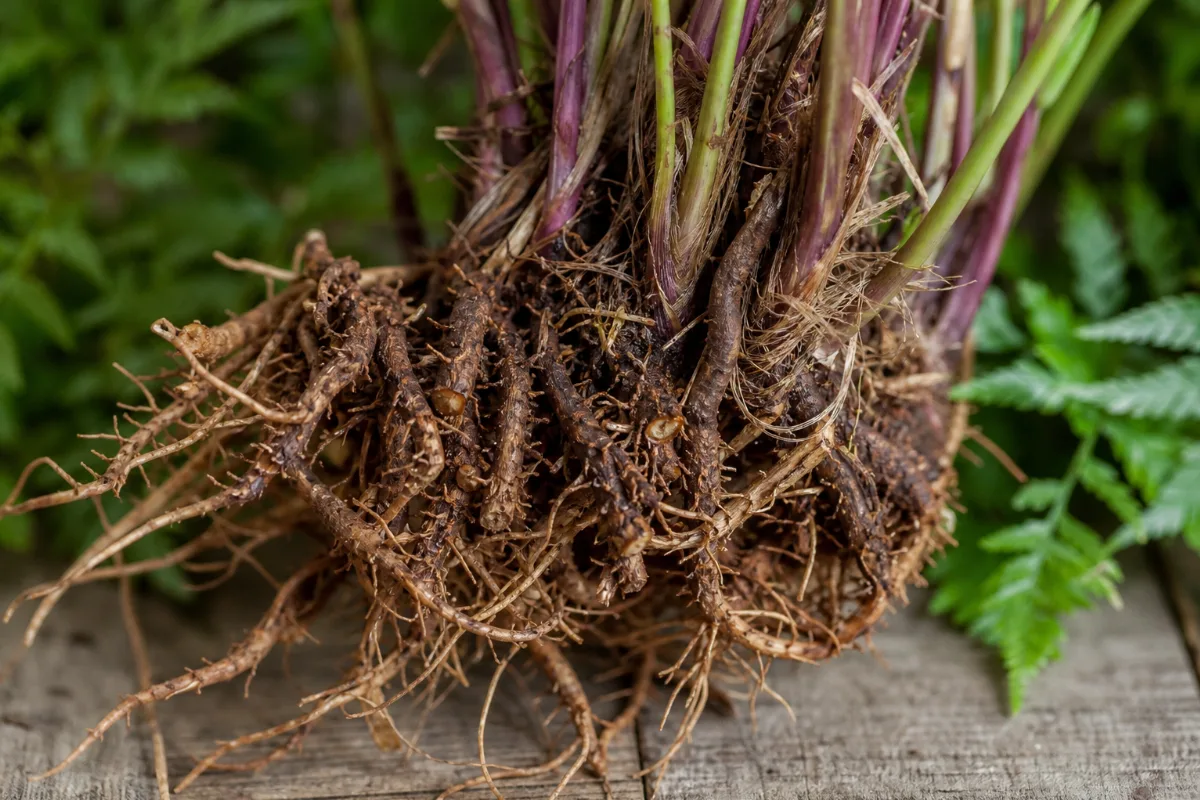
Herbs & Botanicals · Herbs · A Himalayan root used in Ayurveda for sleep and nerves, with very little human research and a critically endangered wild plant
Jatamansi
Nardostachys jatamansi (D.Don) DC. (rhizome) · also called Indian spikenard, muskroot, jatamansi, Sumbul-ut-teeb (Unani); Nardostachys grandiflora (synonym). Not the same as valerian or American spikenard.
Jatamansi is a small Himalayan plant. The rhizome (underground stem) is used in Ayurvedic, Unani and Chinese medicine as a calming herb, as powder, medicated oil or extract. Its main compounds are sesquiterpenes such as jatamansone and nardosinone. Human research is thin: one small placebo-controlled trial on blood pressure, one small insomnia comparison with no placebo, and one open-label oil trial in breast cancer patients. The rest is rodent and lab work. The wild plant is listed as critically endangered and controlled under CITES Appendix II, and the rhizome is often confused with valerian relatives.
General information, not medical advice. Last substantive update · Not medically reviewed. A named clinician has not signed off on this page. How this page is made
About Jatamansi
Jatamansi is a Himalayan rhizome used for centuries in Ayurvedic, Unani and Chinese medicine for sleep, nerves and the heart. Modern research is small: one 4-week blood pressure trial of 40 people, one small insomnia comparison without a placebo, and one open-label oil trial. Most other findings come from mice, rats and lab dishes. The wild plant is critically endangered, and old studies may have tested a look-alike such as Valeriana jatamansi. Safety data in people are almost absent.
What it is
Jatamansi (Nardostachys jatamansi) is a small, hairy, perennial plant of alpine and sub-alpine Himalayan slopes in Bhutan, China, India, Myanmar and Nepal. It grows at about 3,800 to 5,200 metres. The part used is the rhizome. It belongs to the honeysuckle family (Caprifoliaceae), the same group as valerian, and older papers place it in Valerianaceae.
Its main compounds are sesquiterpenes such as jatamansone (valeranone) and nardosinone. It is a different plant from valerian (Valeriana officinalis), from Tagara (Valeriana wallichii) and from American spikenard (Aralia), and results for those should not be borrowed for jatamansi.
What the research shows
Three human studies were found. A single-blind, placebo-controlled trial in 40 adults with stage 1 high blood pressure reported a fall of about 10 mmHg after 4 weeks. A comparison in 30 insomnia patients showed better sleep scores on jatamansi powder, but without a placebo, and valerian-type powder did better. An open-label trial in 70 breast cancer patients reported less distress when forehead oil treatment was added; the authors declare a patent interest.
Everything else is mouse, rat or lab work: anti-anxiety, antidepressant-like, memory, liver and enzyme findings. These show what the plant does in animals and dishes, not whether it helps people. A 2020 review also warns that many earlier studies may have used Valeriana jatamansi by mistake.
Conservation: a critically endangered wild plant
Jatamansi is described in conservation papers as Critically Endangered (IUCN) and is in CITES Appendix II. TRAFFIC says 100 to 500 tonnes of rhizomes are traded a year from Nepal alone, that harvest gives at least 15,000 people in nine districts about a quarter of their income, and that overharvesting and habitat loss are driving declines. A 2023 study found rising, unsustainable harvest in parts of Nepal, and that official and CITES-reported trade figures did not match real trade.
TRAFFIC itself says only 'Threatened' for the IUCN status, and we could not open the IUCN or CITES pages ourselves, so the exact wording is secondhand. Buying wild-harvested rhizome adds to the pressure. If you use it, look for products that say the material is cultivated or certified as sustainably harvested; we have not evaluated any such certification.
At a glance
Traditional uses history, not proof
- Sleeplessness and nervous complaints (Ayurveda)
- Hysteria and epilepsy (Ayurveda)
- Heart conditions (Unani)
- Digestive and neuropsychiatric disorders (Chinese, Tibetan and other systems)
- Perfume and incense
Studied for research
- Blood pressure, low
- Anxiety and distress (oil trial), very low
- Sleep (small comparison, no placebo), very low
- Mood (mice), insufficient
- Memory (mice), insufficient
- Liver protection (rats), insufficient
- Other lab and animal activities, insufficient
Main compounds
- Jatamansone (valeranone)
- Nardosinone
- Desoxo-narchinol A
- Phenolic acids such as protocatechuic and syringic acid
Common forms
- Dried rhizome powder
- Extracts
- Medicated oil (Jatamansi Taila) applied to the forehead
- Essential oil
Research links: Blood pressure trial (PubMed) · Insomnia comparison with Tagara (PubMed) · Oil trial in breast cancer (PubMed) · Review of challenges and plant identity (PubMed) · Trade sustainability in Nepal (PubMed) · TRAFFIC: Jatamansi trade from Nepal · Research Library · Genes & Biomarkers Library
The plant and its history
- Accepted scientific name
- Nardostachys jatamansi (D.Don) DC.
- Naming authority
- GBIF (read 2026-10-25): ACCEPTED species, key 4095989, family Caprifoliaceae, order Dipsacales. NCBI Taxonomy returned taxid 179860. POWO was not read.
- Synonyms
- Nardostachys grandiflora Wall. (homotypic synonym in GBIF); Nardostachys grandiflora DC. (a synonym record in GBIF, but another GBIF record lists the same name as accepted)
- Common names
- Jatamansi (Sanskrit/Hindi (as used in English)); Indian spikenard (English); Spikenard (English); Muskroot (English); Sumbul-ut-teeb (Unani (Arabic/Urdu))
- Botanical family
- Caprifoliaceae (honeysuckle family, including the valerian group). Many older papers call it Valerianaceae.
- Classification
- Plantae > Not read > Not read > Dipsacales > Caprifoliaceae > Nardostachys > Nardostachys jatamansi
- Native range
- Bhutan, China, India, Myanmar and Nepal, at alpine and sub-alpine altitudes of about 3,810 to 5,155 m (2025 Bhutan paper).
- Habitat
- Rocky outcrops, alpine meadows, juniper scrub, dwarf rhododendron forest, open pine forest and glacial flats in a monsoon climate.
- What the plant looks like
- Roots: The rhizome is the part used in medicine.; Stems: A small, hairy, perennial, rhizomatous herb described as dwarf (2024 review).; Leaves: Not verified.; Flowers: Flowering in June to July in Bhutan (2025 paper).; Fruit: Not verified.
- Cultivation
- Not verified. The Dhiman review proposes in-vitro propagation to supply authentic material.
- Harvest and processing
- Wild-harvested rhizomes are dried. In Nepal, 100 to 500 tonnes a year are traded (TRAFFIC).
- Look-alikes and adulterants
- Name: Valeriana jatamansi (Jones ex Roxb.); Note: Shares the name jatamansi and gives very similar chemical profiles in many studies; a 2020 review suspects that some studies used it by mistake.; Name: Selinum vaginatum (bhootkeshi); Note: Used as a substitute; roots look and smell alike; different phenolic acids.; Name: Valeriana officinalis and Valeriana wallichii (Tagara); Note: Related calming roots; separate species compared in lab and in one insomnia study.; Name: Nardostachys chinensis; Note: A separate species with its own reviews; results should not be merged with N. jatamansi.; Name: Aralia racemosa (American spikenard); Note: Unrelated plant sharing the name spikenard. NOT verified in the sources read; family and use not checked here.
- Sustainability and conservation
- Critically Endangered (IUCN, criteria A2cd per secondary sources) and CITES Appendix II. Heavy wild harvest for medicine, cosmetics, incense and religious use; habitat loss; population declines. In Nepal, trade is rising and unsustainable in specific areas; official and CITES-reported figures did not match estimated trade. Sustainable harvest and cultivation are being tried. See the safety file for the statuses and what we could not verify.
The plant and the parts used

Traditional use and history history, not clinical proof
| Tradition or era | Documented use | Source |
|---|---|---|
| Ayurveda (India) | Rhizome used as a bitter tonic, stimulant and antispasmodic, and for epilepsy and hysteria; jatamansi and Tagara are the classic rhizomes for sleeplessness. | p38042505 |
| Unani medicine | Sumbul-ut-teeb is described in Avicenna's Kitab al-Adwiya al-Qalbiya as a drug for the heart. | p33066862 |
| Chinese, Tibetan, Nepalese, Bhutanese, Indian and Japanese systems | Used for digestive and neuropsychiatric disorders and, in China, often in formulas with other herbs. | p34339792 |
| Ancient texts (claimed) | One review says the plant is described in the Ayurvedic classics, the Old Testament, Ben-Cao-Shi-Yi and Homer's Iliad. NOT verified: we did not read those texts. | p31533076 |
| Perfume and incense | Listed in our earlier graph entry as a traditional perfume and incense material; not re-checked. | p38042505 |
Traditional use shows how a plant was used. It does not show that a supplement works or is safe today.
What is inside, and how it may work
What the plant contains and how those compounds act in cells and animals. Laboratory and animal mechanisms are not proven effects in people.
Main compounds
| Compound | Family | Where it is concentrated | Activity studied | Level of evidence |
|---|---|---|---|---|
| Jatamansone (valeranone) PubChem 10198387 | sesquiterpene ketone | Rhizome Not extracted | Linked in a 2024 review to anti-hypertensive, anti-arrhythmic, anti-asthmatic, nematicidal and antibacterial effects. 19 18 | Review |
| Nardosinone PubChem 168136 | sesquiterpenoid | Rhizome Not extracted | Studied in mice for Parkinson symptoms and reviewed for several activities; not read in detail. 19 25 | Review |
| Desoxo-narchinol A PubChem 56835056 | sesquiterpenoid | Rhizome Not extracted | Anti-inflammatory activity; reversed the effect of fluoxetine on the serotonin transporter in cells; measured in rat blood after oral dosing. 19 11 12 | Laboratory research |
| Nardosinonediol | sesquiterpenoid | Rhizome Not extracted | Described as antidepressant and cardioprotective in the pharmacokinetic paper's introduction; rat blood levels measured. 11 | Animal research |
| Chlorogenic acid PubChem 1794427 | phenolic acid | Water-soluble fraction (NJFr.01) Not extracted | Reversed the fluoxetine effect on SERT in cells. 12 19 | Laboratory research |
| Protocatechuic acid and syringic acid PubChem 72 | phenolic acids | Rhizome methanol extract Not extracted | The only two of four phenolic acids found in N. jatamansi by HPLC in a comparison with Selinum vaginatum (protocatechuic acid CID 72; syringic acid CID 10742). 17 19 | Laboratory research |
Mechanisms, receptors and pathways
| Target or pathway | Gene or receptor | What was found | Level |
|---|---|---|---|
| GABA-benzodiazepine receptor system | GABA-A receptor (benzodiazepine site) | In mice the anti-anxiety effect of an extract was blocked by flumazenil and picrotoxin, and brain GABA and monoamines rose. 20 | Animal research |
| Monoamine oxidase and GABA-B | MAO-A (MAOA), MAO-B (MAOB), GABA-B | In mice an ethanol extract lowered whole-brain MAO-A and MAO-B activity, and a GABA-B agonist reversed the antidepressant-like effect. 5 | Animal research |
| Serotonin transporter | SERT (SLC6A4) | A water-soluble fraction raised SERT activity in cells; chlorogenic acid and desoxo-narchinol A reversed fluoxetine's blocking effect. 12 | Laboratory research |
| Acetylcholinesterase | AChE (ACHE) | Essential oil blocked AChE with an IC50 of 67.15 ug/mL, stronger than two Valeriana species, and reduced rat cortical neuron firing in dishes. 3 | Laboratory research |
| Oxidative stress | Not specific | Extracts showed antioxidant activity in chemical tests; mouse memory authors link benefit to antioxidant action (not proven). 17 9 | Laboratory research |
Absorption, metabolism and elimination
- Absorption
- No human data. In rats, two sesquiterpenoids (desoxo-narchinol A and nardosinonediol) reached peak blood level within about 5 to 8 minutes after oral dosing.
- Distribution
- A radio-labelled extract in mice and rabbits collected mainly in kidneys, liver and blood after 1 hour, with very little in the brain (0.1). The authors suspect poor blood-brain barrier crossing.
- Metabolism
- Not studied in people.
- Elimination
- The labelled extract cleared from rabbit blood within 24 hours.
- Bioavailability
- Unknown in people.
Isolated compounds versus whole extracts
In rats, blood exposure to desoxo-narchinol A and nardosinonediol was lower from the whole extract than from the pure compounds (AUC 133.90 versus 156.34, and 4.15 versus 6.42, units as in the abstract). In the serotonin transporter work, the activity sat in a water-soluble fraction and in particular compounds, not the whole extract. Human trials used whole powder or oil, so results for isolated compounds should not be applied to the herb.
Nutritional composition
Jatamansi is not a nutrient source and has no recommended intake.
1 low certainty2 very low certainty4 not enough evidence
What is Jatamansi good for?
The main proposed uses and how strong the human evidence is for each. For most, there is no human trial of jatamansi at all.
Benefits, one by one
Each card is a research question, not a promise. Tap a goal to filter. Open a card to see the studies, doses and limits.
Anxiety and psychological distress
Very low certaintyOne open-label trial in 70 breast cancer patients found less distress when forehead oil treatment with jatamansi oil was added to Ayurvedic medicines. The design cannot show the oil itself did it. In mice, an extract acted like a mild anti-anxiety drug.
2 studiesMedicated oil on the forehead (Shirodhara) in the trial; extract by m…
Studies, doses and limits
What the trials found
One open-label, randomised trial of 70 adults with triple-negative breast cancer (Pune, India): 35 had oral Ayurvedic medicines plus Jatamansi Taila Shirodhara, 35 had the oral medicines alone. The authors report relief of sleep disturbance, poor concentration and fearfulness straight after the session and better quality-of-life scores. The abstract gives no numbers. No placebo, no blinding, and the oil was applied to the skin, not swallowed.
Results
Reported as less distress in the oil group. Could not be separated from the ritual of the treatment, from the oral medicines, or from the attention the patients received. The authors' conflict statement says the oil is part of a patent application for a cancer treatment kit.
Effect sizes as reported
Not available: the abstract gives no figures.
Why this rating
One unblinded trial with no numbers in the abstract, a different route (skin), a combined treatment, and a declared patent interest. Rodent data cannot be translated to people.
Form and dose studied
Medicated oil on the forehead (Shirodhara) in the trial; extract by mouth in the animal work. Amounts are not covered here.
Who was studied
Adults with breast cancer who had finished standard treatment (trial); mice (lab).
Limits
Open-label, no placebo, patent interest, no numbers in the abstract, oil route not comparable to capsules or powder.
Why researchers looked
Jatamansi rhizome is described in Ayurveda as calming and as a tonic for the nerves, hysteria and mental weakness.
Traditional use
Ayurvedic and Unani texts use the rhizome (powder or medicated oil) for the nervous system. The oil is poured on the forehead in the Shirodhara treatment.
Proposed mechanism Animal research
In mice, a root extract raised brain GABA and monoamines, and its anti-anxiety effect was blocked by flumazenil and picrotoxin, which points to the GABA-benzodiazepine receptor system. This is animal work and has not been shown in people.
A proposed mechanism does not show that the effect happens in people.
Rodent work suggests a sedative-type action (see the sleep entry). People taking sedatives or anxiety medicines should ask a doctor or pharmacist first.
Sleep and insomnia
Very low certaintyA small Ayurvedic hospital comparison of 30 people with primary insomnia found sleep scores improved on jatamansi powder, but there was no placebo, and valerian-type Tagara powder did better. In rodents, the rhizome powder shortened the time to fall asleep and lengthened sleep.
2 studiesPowder with milk in the trial; rhizome powder in animals. Amounts are…
Studies, doses and limits
What the trials found
One comparison of 34 adults with primary insomnia (30 finished, 15 per group) given jatamansi powder or Tagara powder (Valeriana wallichii) with milk for one month. Jatamansi scores improved on sleep onset (61.34 percent), sleep duration (48.25 percent), disturbed sleep (53.08 percent) and disturbance of routine work (43.85 percent), all p<0.001 against its own baseline. The Tagara group improved more. There was no placebo group.
Results
Improvement within the group, no placebo-controlled result. The herb cannot be credited with the change.
Effect sizes as reported
Percent improvement from baseline within group, as above; no between-group figures and no confidence intervals in the abstract.
Why this rating
No placebo, only 30 completers, symptom-score outcome, and a different herb as comparator. Animal data show a sedative signal but do not prove benefit in people.
Form and dose studied
Powder with milk in the trial; rhizome powder in animals. Amounts are not covered here.
Who was studied
Adults with primary insomnia at an Ayurveda hospital (India); rats and mice.
Limits
No placebo; tiny trial; no objective sleep measurement; valerian-type comparator; unauthenticated plant material is a general problem for this species.
Why researchers looked
The rhizome is traditionally recommended for insomnia and mental conditions.
Traditional use
In Ayurveda, jatamansi and Tagara (Valeriana wallichii) are rhizomes used for sleeplessness (Anidra).
Proposed mechanism Animal research
In rats and mice, rhizome powder reduced activity and made pentobarbital-induced sleep start sooner and last longer, without disturbing coordination on the rota-rod. This shows a sedative-type (CNS depressant) action in rodents.
A proposed mechanism does not show that the effect happens in people.
A sedative-type action in rodents means drowsiness is plausible, and caution with alcohol, sleep aids, sedatives and driving is reasonable. Human sedation was not measured in the studies we read.
Mood and depression-like behaviour
Not enough evidenceIn mice, jatamansi extracts reduced depression-like behaviour in standard tests, comparable to two antidepressants. No human trial for depression was found.
2 studiesEthanol and methanol rhizome/root extracts in mice.
Studies, doses and limits
What the trials found
None found.
Results
Mouse tail-suspension and forced-swim immobility fell with ethanolic extract (100, 200, 400 mg/kg for 14 days), comparable to imipramine and sertraline. A methanol extract and a water-soluble fraction also had antidepressant-like effects in a second study.
Effect sizes as reported
No human data. Mouse figures are not extracted.
Why this rating
Animal and cell work only; tail suspension and forced swim tests are rough models; the two mechanisms reported differ.
Form and dose studied
Ethanol and methanol rhizome/root extracts in mice.
Who was studied
Mice.
Limits
No human trial; no independent replication seen; sample authenticity is a recurring concern (see the safety file).
Why researchers looked
Chinese and Ayurvedic traditions use the rhizome for nervous and mental complaints, and screening studies tested it for antidepressant-like activity.
Traditional use
Used in Chinese, Tibetan, Nepalese, Bhutanese, Indian and Japanese systems for digestive and nerve conditions.
Proposed mechanism Animal research
One mouse study found lower brain MAO-A and MAO-B (enzymes that break down mood chemicals) and a GABA-B link. A later study found a water-soluble fraction raised activity of the serotonin transporter in cells, the opposite direction to how common antidepressants work. Which constituents matter is not settled.
A proposed mechanism does not show that the effect happens in people.
Do not replace a prescribed antidepressant with jatamansi. If you take an antidepressant (especially an MAO inhibitor or an SSRI), the animal MAO and serotonin-transporter findings are a reason to ask a pharmacist. This is theory, not a recorded interaction.
Memory and brain protection
Not enough evidenceIn mice, an ethanol extract improved learning and reversed drug-induced and age-related forgetting. No human memory trial was found.
2 studiesEthanolic root extract (mice); essential oil (lab dish).
Studies, doses and limits
What the trials found
None found.
Results
In young and aged mice, the 200 mg/kg dose of an ethanolic root extract improved scores on the elevated plus maze and passive-avoidance tests and reversed amnesia caused by diazepam, scopolamine and ageing.
Effect sizes as reported
No human data; mouse statistics not extracted.
Why this rating
Animal and lab work only.
Form and dose studied
Ethanolic root extract (mice); essential oil (lab dish).
Who was studied
Mice; rat neurons in a dish.
Limits
Single-lab mouse study from 2006; no human memory outcomes; essential-oil lab findings are a different preparation.
Why researchers looked
Ayurveda describes jatamansi as a tonic for the mind, and a 2006 mouse study tested it as a memory enhancer.
Traditional use
Listed for mental weakness in Ayurvedic sources (as summarised in modern reviews).
Proposed mechanism Animal research
The mouse authors suggest cholinergic and antioxidant effects. Essential oil of the plant also blocked acetylcholinesterase in the lab, more strongly than two valerian species in the same test. Neither effect has been shown in people.
A proposed mechanism does not show that the effect happens in people.
No safety data in people. Sedative-type drugs can themselves impair memory and concentration, so any effect in people could go either way.
Blood pressure
Low certaintyOne small single-blind trial in 40 adults with stage 1 high blood pressure reported lower blood pressure after 4 weeks on jatamansi powder than on placebo. It needs repeating before anyone can rely on it.
2 studiesCapsules of powdered plant, 3 g a day in the trial. Amounts for the p…
Studies, doses and limits
What the trials found
One randomised, single-blind, placebo-controlled trial (40 adults aged 35-70, stage 1 hypertension, using 2 or fewer blood pressure medicines; Bangalore, India; 4 weeks). The herb group fell from 144.20 to 134.30 mmHg systolic and 94.9 to 83.10 mmHg diastolic (both p<0.001); placebo changed little and not significantly. A quality-of-life score also improved in the herb group only.
Results
Lower blood pressure in the herb group within 4 weeks. The abstract does not report the herb-versus-placebo difference or its confidence interval, adverse events, or the exact plant part and authentication.
Effect sizes as reported
Within-group change: about -9.9 mmHg systolic and -11.8 mmHg diastolic with the herb versus about -1.4 and -0.3 mmHg with placebo (our subtraction of the abstract means). Authors report p<0.001 for the herb and p=0.148 and 0.186 for placebo.
Why this rating
One small, short, single-blind trial from a single centre, with no safety reporting in the abstract and a plant of uncertain authentication. No independent replication found. No systematic review exists.
Form and dose studied
Capsules of powdered plant, 3 g a day in the trial. Amounts for the public are not set here.
Who was studied
Adults with stage 1 hypertension on 2 or fewer blood pressure medicines.
Limits
Single-blind; 4 weeks; 40 people; within-group statistics only; no long-term data; the authors call for dose and duration studies.
Why researchers looked
Unani medicine has used the plant for the heart since the time of Avicenna, and a review links jatamansone to anti-hypertensive and anti-arrhythmic effects.
Traditional use
Sumbul-ut-teeb in Unani medicine; one of the drugs Ibn-e-Sina listed for heart disease, per the trial's introduction.
Proposed mechanism Pharmacological theory
Not established. A 2024 review links jatamansone to anti-hypertensive and anti-arrhythmic effects; the underlying studies were not read here.
A proposed mechanism does not show that the effect happens in people.
Anyone with high blood pressure should keep taking prescribed medicines and be monitored by a doctor. A possible extra drop when combined with blood pressure medicines (theory, with the trial as indirect support).
Liver protection (rats)
Not enough evidenceIn rats given a liver toxin, a pre-treatment with an ethanol extract of the rhizome lowered liver enzymes and improved survival. No human study was found.
1 studies50% ethanol rhizome extract (rats).
Studies, doses and limits
What the trials found
None found.
Results
In rats, 800 mg/kg of a 50% ethanol rhizome extract for 3 days before thioacetamide significantly lowered serum transaminases and alkaline phosphatase and increased survival after an LD90 dose of the toxin.
Effect sizes as reported
No human data.
Why this rating
One rat study from 2000 (animal only).
Form and dose studied
50% ethanol rhizome extract (rats).
Who was studied
Rats.
Limits
Pre-treatment before a toxin is not how people would use it; protection in rats says nothing about injury risk in people.
Why researchers looked
Reviews list liver-protective activity among the plant's reported actions.
Traditional use
Not described beyond listings in modern reviews.
Proposed mechanism Animal research
Not shown in the study read.
A proposed mechanism does not show that the effect happens in people.
This is a protective effect in rats, not evidence that the herb is safe for the liver. No human liver reports were found either way; see the safety file.
Other lab and animal activities (antioxidant, anti-seizure, blood sugar enzymes, antimicrobial and others)
Not enough evidenceReviews list a long set of activities seen in dishes and animals: antioxidant, anti-seizure, anti-Parkinson, anti-diabetic, antifungal, antibacterial and anti-oestrogenic effects. None has a human trial behind it.
3 studiesVarious extracts, oils and isolated compounds in dishes and animals.
Studies, doses and limits
What the trials found
None found for these activities.
Results
Lab and animal results only. A 2021 review says toxicity studies in the genus showed no or low toxicity except at high doses; a 2020 review says animal toxicology and clinical trials were lacking for N. jatamansi itself.
Effect sizes as reported
No human data.
Why this rating
Lab and animal findings only; the reviews are narrative.
Form and dose studied
Various extracts, oils and isolated compounds in dishes and animals.
Who was studied
Cells, rodents.
Limits
Plant identity uncertainty in older work; many studies use high doses or isolated compounds that people would not get from the whole herb.
Why researchers looked
Reviews list many reported actions from lab and animal work, and the plant is rich in sesquiterpenes such as jatamansone and nardosinone.
Traditional use
Used for epilepsy, hysteria and as a bitter tonic in Ayurveda; for nerve and digestive disorders in Chinese and Tibetan medicine.
Proposed mechanism Laboratory research
A 2024 review lists antifungal, liver-protective, CNS, anticonvulsant, neuroprotective, anti-Parkinson, antioxidant, anti-diabetic, tranquilising, anti-oestrogenic, anti-hypertensive, anti-arrhythmic, anti-asthmatic and antibacterial activity. Our earlier graph entry also notes a 2025 lab-and-computer study of sugar-digesting enzyme blocking (PMID 41601970; not re-read here).
A proposed mechanism does not show that the effect happens in people.
The anti-oestrogenic claim comes from animal work and is a reason for extra caution in pregnancy and hormone-sensitive conditions (theory only).
Connections to the rest of health
How Jatamansi connects to the rest of our health knowledge graph. Every link says what kind of connection it is. A safety link (for example to the liver) is a warning, not a benefit. A study that merely mentions a topic never creates a benefit link.
Explore every connection: goals, body systems, organs, symptoms, genes
A. Wellness goals
| Connected to | Kind of connection | Evidence status | Context | Studies |
|---|---|---|---|---|
| Anxiety Support | Preliminary mechanism | Very low certainty | Anxiety and psychological distress: One open-label trial in 70 breast cancer patients found less distress when forehead oil treatment with jatamansi oil was added to Ayurvedic medicines. The design cannot show the oil itself did it. In mice, an extract acted like a mild anti-anxiety drug. | 21 20 |
| Calm Relaxation | Preliminary mechanism | Very low certainty | Anxiety and psychological distress: One open-label trial in 70 breast cancer patients found less distress when forehead oil treatment with jatamansi oil was added to Ayurvedic medicines. The design cannot show the oil itself did it. In mice, an extract acted like a mild anti-anxiety drug. | 21 20 |
| Stress Reduction | Preliminary mechanism | Very low certainty | Anxiety and psychological distress: One open-label trial in 70 breast cancer patients found less distress when forehead oil treatment with jatamansi oil was added to Ayurvedic medicines. The design cannot show the oil itself did it. In mice, an extract acted like a mild anti-anxiety drug. | 21 20 |
| Better Sleep | Traditional use | Very low certainty | Sleep and insomnia: A small Ayurvedic hospital comparison of 30 people with primary insomnia found sleep scores improved on jatamansi powder, but there was no placebo, and valerian-type Tagara powder did better. In rodents, the rhizome powder shortened the time to fall asleep and lengthened sleep. | 24 16 |
| Sleep Quality | Traditional use | Very low certainty | Sleep and insomnia: A small Ayurvedic hospital comparison of 30 people with primary insomnia found sleep scores improved on jatamansi powder, but there was no placebo, and valerian-type Tagara powder did better. In rodents, the rhizome powder shortened the time to fall asleep and lengthened sleep. | 24 16 |
| Mood Balance | Preliminary mechanism | Not enough evidence | Mood and depression-like behaviour: In mice, jatamansi extracts reduced depression-like behaviour in standard tests, comparable to two antidepressants. No human trial for depression was found. | 5 12 |
| Memory Support | Preliminary mechanism | Not enough evidence | Memory and brain protection: In mice, an ethanol extract improved learning and reversed drug-induced and age-related forgetting. No human memory trial was found. | 9 3 |
| Brain Health | Preliminary mechanism | Not enough evidence | Memory and brain protection: In mice, an ethanol extract improved learning and reversed drug-induced and age-related forgetting. No human memory trial was found. | 9 3 |
| Cognitive Performance | Preliminary mechanism | Not enough evidence | Memory and brain protection: In mice, an ethanol extract improved learning and reversed drug-induced and age-related forgetting. No human memory trial was found. | 9 3 |
| Blood Pressure Support | Potential benefit | Low certainty | Blood pressure: One small single-blind trial in 40 adults with stage 1 high blood pressure reported lower blood pressure after 4 weeks on jatamansi powder than on placebo. It needs repeating before anyone can rely on it. | 2 18 |
| Heart Health | Potential benefit | Low certainty | Blood pressure: One small single-blind trial in 40 adults with stage 1 high blood pressure reported lower blood pressure after 4 weeks on jatamansi powder than on placebo. It needs repeating before anyone can rely on it. | 2 18 |
| Liver Support | Preliminary mechanism | Not enough evidence | Liver protection (rats): In rats given a liver toxin, a pre-treatment with an ethanol extract of the rhizome lowered liver enzymes and improved survival. No human study was found. | 1 |
| Blood Sugar Balance | Preliminary mechanism | Not enough evidence | Other lab and animal activities (antioxidant, anti-seizure, blood sugar enzymes, antimicrobial and others): Reviews list a long set of activities seen in dishes and animals: antioxidant, anti-seizure, anti-Parkinson, anti-diabetic, antifungal, antibacterial and anti-oestrogenic effects. None has a human trial behind it. | 18 25 4 |
| Inflammation Balance | Preliminary mechanism | Not enough evidence | Other lab and animal activities (antioxidant, anti-seizure, blood sugar enzymes, antimicrobial and others): Reviews list a long set of activities seen in dishes and animals: antioxidant, anti-seizure, anti-Parkinson, anti-diabetic, antifungal, antibacterial and anti-oestrogenic effects. None has a human trial behind it. | 18 25 4 |
B. Body systems
| Connected to | Kind of connection | Evidence status | Context | Studies |
|---|---|---|---|---|
| Nervous system | Adverse effect or risk | Not enough evidence | Sedative-type action in rodents; drowsiness plausible, not recorded in people. Preparation or compound: Rhizome powder or extract |
16 20 |
| Cardiovascular system | Drug or supplement interaction | Low certainty | Blood pressure fell in one trial; possible extra effect with blood pressure medicines. Preparation or compound: Rhizome powder (capsules) |
2 |
| Liver | Biological association | Not enough evidence | Protective in rats against a toxin; DNA damage in a liver cell line at high concentrations; no human data. Preparation or compound: Rhizome extract |
1 7 |
| Nervous system | Traditional use | Not enough evidence | Traditional calming use; one oil trial and one insomnia comparison without placebo; sedative-type action in rodents. Preparation or compound: Rhizome (powder, oil, extract) |
21 24 16 |
| Cardiovascular system | Potential benefit | Low certainty | One small single-blind trial reported lower blood pressure in stage 1 hypertension. Preparation or compound: Rhizome powder (capsules) |
2 |
| Nervous System | Biological association | Very low certainty | Studied for: Anxiety and psychological distress Studied for: Sleep and insomnia | 21 20 24 16 5 12 9 3 18 25 4 |
| Stress Mood | Biological association | Very low certainty | Studied for: Anxiety and psychological distress Studied for: Mood and depression-like behaviour | 21 20 5 12 |
| Sleep Recovery | Biological association | Very low certainty | Studied for: Sleep and insomnia | 24 16 |
| Cardiovascular System | Biological association | Low certainty | Studied for: Blood pressure | 2 18 |
| Hepatic System | Biological association | Not enough evidence | Studied for: Liver protection (rats) | 1 |
| Endocrine System | Biological association | Not enough evidence | Studied for: Other lab and animal activities (antioxidant, anti-seizure, blood sugar enzymes, antimicrobial and others) | 18 25 4 |
I. Biomarkers
| Connected to | Kind of connection | Evidence status | Context | Studies |
|---|---|---|---|---|
| Systolic blood pressure | Biological association | Low certainty | Measured in trials: lowered. A lab change is not the same as a health benefit. | 2 |
| Diastolic blood pressure | Biological association | Low certainty | Measured in trials: lowered. A lab change is not the same as a health benefit. | 2 |
J. Genes, receptors and enzymes
| Connected to | Kind of connection | Evidence status | Context | Studies |
|---|---|---|---|---|
| GABA-A receptor (benzodiazepine site) | Preliminary mechanism | Animal | Mouse anti-anxiety effect was blocked by flumazenil. | 20 |
| MAO-A and MAO-B | Preliminary mechanism | Animal | Lower activity in mouse brain after extract. | 5 |
| Acetylcholinesterase (AChE) | Preliminary mechanism | Lab | Blocked by essential oil in the lab. | 3 |
K. Biological pathways
| Connected to | Kind of connection | Evidence status | Context | Studies |
|---|---|---|---|---|
| Serotonin transporter (SERT, SLC6A4) | Preliminary mechanism | Lab | Activity raised by a water-soluble fraction in cells. | 12 |
L. Active compounds
| Connected to | Kind of connection | Evidence status | Context | Studies |
|---|---|---|---|---|
| Jatamansone (valeranone) | Biological association | Review | Linked in a 2024 review to anti-hypertensive, anti-arrhythmic, anti-asthmatic, nematicidal and antibacterial effects. Preparation or compound: Rhizome |
19 18 |
| Nardosinone | Biological association | Review | Studied in mice for Parkinson symptoms and reviewed for several activities; not read in detail. Preparation or compound: Rhizome |
19 25 |
| Desoxo-narchinol A | Biological association | In vitro | Anti-inflammatory activity; reversed the effect of fluoxetine on the serotonin transporter in cells; measured in rat blood after oral dosing. Preparation or compound: Rhizome |
19 11 12 |
| Nardosinonediol | Biological association | Animal | Described as antidepressant and cardioprotective in the pharmacokinetic paper's introduction; rat blood levels measured. Preparation or compound: Rhizome |
11 |
| Chlorogenic acid | Biological association | In vitro | Reversed the fluoxetine effect on SERT in cells. Preparation or compound: Water-soluble fraction (NJFr.01) |
12 19 |
| Protocatechuic acid and syringic acid | Biological association | In vitro | The only two of four phenolic acids found in N. jatamansi by HPLC in a comparison with Selinum vaginatum (protocatechuic acid CID 72; syringic acid CID 10742). Preparation or compound: Rhizome methanol extract |
17 19 |
Each connection is stored with the ingredient, the connected record, the kind of connection, the evidence status, the supporting studies, the preparation or compound involved, and a review date (last reviewed October 25, 2026).
Evidence at a glance: what changed in 2 lab markers
Tap a number to show only those markers. Counts are markers, not people.
The evidence
The research centre for Jatamansi. Every record here was checked against PubMed or the publisher's page; we never list a study we have not verified.
Evidence by outcome
Bars show how many studies we found for each outcome, not how well it works. People are added up across trials only (reviews are not added, to avoid double counting).
How we rate evidence
High certainty
Several well-run trials or reviews agree; further research is unlikely to change the picture much.
Moderate certainty
Good trials point the same way, but some doubt remains.
Low certainty
Small, short or inconsistent trials. The finding could change with better research.
Very low certainty
Very little or very weak human data. Treat as a possibility only.
Mixed findings
Trials or reviews disagree with each other.
Not enough evidence
Not enough human research to say either way.
Evidence against
Good research found no benefit, or found harm.
We take the reviewers' own risk-of-bias and GRADE statements where they exist, and otherwise judge from study size, design, consistency, directness and whether a product matches what is sold. Many publications do not make evidence high. Method note: We started from our earlier evidence summary for jatamansi, searched PubMed, read the abstract of every PubMed study cited, read the full text of a 2025 conservation paper and the TRAFFIC project page, and checked plant names in GBIF and NCBI Taxonomy and compounds in PubChem. Not found or not read: NCCIH (page not found), EU monograph (not found; EMA search blocked), LiverTox and LactMed (one search, no result), IUCN and CITES pages (blocked or not read), FDA and WHO. All studies were read as abstracts only except the two conservation sources. Certainty ratings are the compiler's reading.
Study library: every study we checked 25
| Study | Design | People | Product, dose, length | Result |
|---|---|---|---|---|
| Ali 2000 Nardostachys jatamansi protects against liver damage induced by thioacetamide in rats. J Ethnopharmacol · PMID 10940571 · DOI |
Animal research animal |
Rats given the liver toxin thioacetamide | 50% ethanolic extract of N. jatamansi rhizome rhizome 800 mg/kg by mouth 3 days before the toxin · vs Toxin-only group |
Pretreatment significantly lowered the raised transaminases and alkaline phosphatase and raised survival after a lethal-range dose of the toxin (LD90). Significant; numbers not in the abstract. Methods, limits and fundingOutcomes: Serum transaminases and alkaline phosphatase; survival Limitations: Rat study from 2000; protection against a toxin is not evidence of safety or benefit in people. Funding and conflicts: Not stated. Read: abstract |
| Bhat 2020 Efficacy of Nardostachys jatamansi (D.Don) DC in essential hypertension: A randomized controlled study. Complement Ther Med · PMID 33066862 · DOI |
Controlled trial |
40 Adults aged 35-70 with stage 1 essential hypertension, using 2 or fewer blood pressure medicines (India, Unani medicine institute) |
N. jatamansi powder in capsules not stated in the abstract (called Sumbul-ut-teeb in Unani medicine) 3 g a day (1 capsule 3 times a day) 4 weeks · vs Placebo |
Treatment group: systolic 144.20 to 134.30 mmHg, diastolic 94.9 to 83.10 mmHg (both p<0.001). Placebo: systolic 143.40 to 142 mmHg (p=0.148), diastolic 95.10 to 94.80 mmHg (p=0.186). MINICHAL fell from 10.85 to 6.20 with the herb and from 11.05 to 10.85 with placebo (a lower score means better quality of life). Within-group changes only are given in the abstract; no between-group difference or confidence interval for the difference is reported. Methods, limits and fundingOutcomes: Systolic and diastolic blood pressure weekly; MINICHAL quality-of-life score Limitations: Single-blind (patients blinded, assessors not stated), 40 people, 4 weeks, one centre. Product not standardised or authenticated in the abstract (see the authentication problem in the identity file). Adverse events not reported in the abstract. Authors call for dose and duration studies. Funding and conflicts: Not stated in the abstract. Authors are from the institute that runs the Unani medicine department. Read: abstract |
| Cornara 2020 Comparative and Functional Screening of Three Species Traditionally used as Antidepressants: Valeriana officinalis L., Valeriana jatamansi Jones ex Roxb. and Nardostachys jatamansi (D.Don) DC. Plants (Basel) · PMID 32764268 · DOI |
Laboratory research in-vitro |
Root and rhizome micromorphology, DNA barcoding, essential-oil chemistry, enzyme and rat cortical neuron tests | Essential oils of the three species roots/rhizomes IC50 values only n/a · vs Comparison between the three species |
N. jatamansi oil inhibited acetylcholinesterase most strongly (IC50 67.15 ug/mL, versus 127.30 for V. officinalis and 246.84 for V. jatamansi) and reduced firing and bursting of rat cortical neurons (IC50 18.8 and 11.1 ug/mL). Authors say their approach can help avoid adulteration of herbal drugs. IC50 values as stated. Methods, limits and fundingOutcomes: AChE inhibition; neuron firing and bursting rates (microelectrode arrays) Limitations: Lab study. Shows the three species differ chemically and in potency, which supports keeping them apart; says nothing about effects in people. Funding and conflicts: No conflicts declared. Read: abstract |
| Dhiman 2020 Nardostachys jatamansi (D.Don) DC.-Challenges and opportunities of harnessing the untapped medicinal plant from the Himalayas. J Ethnopharmacol · PMID 31533076 · DOI |
Narrative review n/a |
Review of reports on N. jatamansi chemistry, pharmacology and products | N. jatamansi rhizome and other parts n/a n/a · vs n/a |
States that the plant is critically endangered; that many earlier studies on dried samples show profiles closely resembling Valeriana jatamansi, so the samples may not have been N. jatamansi; and that animal toxicology and human clinical trials were lacking in the studies reviewed. None (narrative review). Methods, limits and fundingOutcomes: Nomenclature, distribution, pharmacology, gaps Limitations: Review published before the 2020 hypertension trial and the 2025 oil trial; authors are Indian plant-biotechnology scientists who propose in-vitro propagation. Funding and conflicts: Not stated. Read: abstract |
| Dhingra 2008 Inhibition of MAO and GABA: probable mechanisms for antidepressant-like activity of Nardostachys jatamansi DC. in mice. Indian J Exp Biol · PMID 18512329 |
Animal research animal |
Young Swiss albino mice | Ethanolic extract of N. jatamansi root (abstract says the plant extract; part not stated) 100, 200, 400 mg/kg by mouth 14 days · vs Imipramine 15 mg/kg; sertraline 20 mg/kg |
The extract shortened immobility in both tests, comparable to imipramine and sertraline, and lowered whole-brain MAO-A and MAO-B activity. A GABA-B agonist reversed the effect. Comparable to the two antidepressants in the tests named. Methods, limits and fundingOutcomes: Tail suspension and forced swim tests; brain MAO-A and MAO-B Limitations: Mouse behaviour tests are only a rough model of depression. No human data. Funding and conflicts: Not stated in the abstract. Read: abstract |
| EMA 2026 EMA/HMPC: no monograph for jatamansi found EMA · Source |
Not found n/a |
No EU herbal monograph for Nardostachys jatamansi was found. The EMA search page returned HTTP 401 and a guessed monograph address returned 404, so the EMA list itself was not read. Methods, limits and fundingLimitations: Treat as not found, not as proof that none exists. Read: not-found | ||
| Etebari 2012 Evaluation of DNA damage of hydro-alcoholic and aqueous extract of Echium amoenum and Nardostachys jatamansi. J Res Med Sci · PMID 23798947 |
Laboratory research in-vitro |
Human liver cancer cells (HepG2), comet assay, 24 hours | Aqueous and hydro-alcoholic extracts of N. jatamansi not stated in the abstract 5 mg/ml (aqueous) and 10 mg/ml (hydro-alcoholic) were the lowest genotoxic concentrations 24 hours · vs Untreated cells |
Both N. jatamansi extracts caused DNA damage at 5 and 10 mg/ml respectively. Authors say the herbs should be used cautiously. Genotoxic at the concentrations named. Methods, limits and fundingOutcomes: DNA damage (comet length, tail DNA, tail moment) Limitations: Cell-culture test at high concentrations; amounts reaching human cells after eating the herb are unknown. Not repeated in animals or people in anything we read. Funding and conflicts: None declared. Read: abstract |
| GBIF 2026 GBIF Backbone: Nardostachys jatamansi (D.Don) DC. GBIF · Source |
Database record n/a |
API read 2026-10-25 (species/match): ACCEPTED species, usageKey 4095989, family Caprifoliaceae, order Dipsacales, exact match. Nardostachys grandiflora Wall. is a homotypic synonym (key 8629715). One record for N. grandiflora DC. (key 186118364) is a synonym of N. jatamansi, but another record for N. grandiflora DC. (key 101341602) is listed as ACCEPTED, so the backbone is not fully consistent. Methods, limits and fundingLimitations: Database snapshot only. Read: full-text | ||
| Joshi 2006 Nardostachys jatamansi improves learning and memory in mice. J Med Food · PMID 16579738 · DOI |
Animal research animal |
Young and aged mice | Ethanolic extract of N. jatamansi roots root 50, 100, 200 mg/kg by mouth 8 days · vs Control; diazepam- and scopolamine-induced amnesia models |
The 200 mg/kg dose improved learning and memory in young mice and reversed amnesia caused by diazepam, scopolamine and ageing. Significant at 200 mg/kg; exact statistics not extracted from the abstract. Methods, limits and fundingOutcomes: Elevated plus maze and passive avoidance tests Limitations: Mouse study only. Authors suggest cholinergic and antioxidant mechanisms, which they did not prove. Funding and conflicts: Not stated in the abstract. Read: abstract |
| Journal of Threatened Taxa 2025 Potential distribution, habitat composition, preference and threats to Spikenard Nardostachys jatamansi in Sakteng Wildlife Sanctuary, Bhutan Journal of Threatened Taxa · Source |
Field survey n/a |
Full text read 2026-10-25. States that the species is in CITES Appendix II and the Red Data Book of Indian Plants; cites a Critically Endangered listing under IUCN criteria A2cd (citing Chauhan 2021); its abstract says heavy harvesting of the rhizome for medicine and religious purposes led to the Critically Endangered category 'as per the IUCN Red List Assessment, 2025'. Says the genus has one species, native to Bhutan, China, India, Myanmar and Nepal, at 3,810 to 5,155 m. Lists Schedule II of Bhutan's Forest and Nature Conservation Act 2023. Methods, limits and fundingLimitations: Second-hand for CITES and IUCN statuses; Red List and CITES pages themselves were not read. Read: full-text | ||
| Le 2018 Pharmacokinetic study comparing pure desoxo-narchinol A and nardosinonediol with extracts from Nardostachys jatamansi. J Chromatogr B · PMID 30391729 · DOI |
Animal research animal |
Rats (oral) | Pure desoxo-narchinol A, pure nardosinonediol, or Nardostachyos Radix et Rhizoma extract root and rhizome Not extracted Single dose · vs Pure compound versus extract |
Both compounds reached peak blood level within about 5 to 8 minutes in rats. AUC was lower from the extract than from the pure compound (desoxo-narchinol A 133.90 versus 156.34; nardosinonediol 4.15 versus 6.42; units as given in the abstract). Descriptive; no statistical test in the abstract. Methods, limits and fundingOutcomes: Plasma levels (Tmax, AUC) Limitations: Rat data on two of many constituents. No human pharmacokinetics. Funding and conflicts: Not stated. Read: abstract |
| Li 2021 Antidepressant activities and regulative effects on serotonin transporter of Nardostachys jatamansi DC. J Ethnopharmacol · PMID 33220358 · DOI |
Animal research animal |
Mice (tail suspension, open field) and cell assays on the serotonin transporter (SERT) | Total methanol extract of N. jatamansi and a water-soluble fraction not stated in the abstract Not extracted Not extracted · vs Not extracted |
The total extract and a water-soluble fraction (NJFr.01) showed antidepressant-like effects in mice. The fraction raised SERT activity in cells, and chlorogenic acid and desoxo-narchinol A reversed the blocking effect of fluoxetine on SERT. Not extracted. Methods, limits and fundingOutcomes: Antidepressant-like behaviour in mice; SERT activity in cells; chemical identification of 21 constituents Limitations: Mouse and cell work. Raising SERT activity is the opposite direction to how common antidepressants (which block SERT) work, so the finding is unusual and unconfirmed. Funding and conflicts: Not stated in the abstract. Read: abstract |
| NCBI 2026 NCBI Taxonomy: Nardostachys jatamansi NCBI · Source |
Database record n/a |
E-utilities search of db=taxonomy for 'Nardostachys jatamansi' returned taxid 179860 (one hit) on 2026-10-25. Methods, limits and fundingLimitations: Only the identifier was read, not the lineage page. Read: summary-only | ||
| NCCIH 2026 NCCIH: no page for jatamansi found NCCIH · Source |
Not found n/a |
The NCCIH address for jatamansi returned HTTP 404 on 2026-10-25; no NCCIH fact sheet for jatamansi or spikenard was found. Methods, limits and fundingLimitations: Absence of a fact sheet is not a safety statement. Read: not-found | ||
| NIH 2026 LiverTox and LactMed: no entry for jatamansi found NIH · Source |
Not found n/a |
A search of NCBI Bookshelf for Nardostachys, jatamansi or spikenard together with LiverTox or LactMed returned 0 results on 2026-10-25. Methods, limits and fundingLimitations: Search of the index only; the LiverTox A-Z list was not browsed. Read: not-found | ||
| Panara 2022 Central nervous system depressant activity of Jatamansi (Nardostachys jatamansi DC.) rhizome. Ayu · PMID 35813358 · DOI |
Animal research animal |
18 Rats (open field, 6 per group) and mice (rota-rod and pentobarbital sleep tests, 6 per group) |
N. jatamansi rhizome powder rhizome Not extracted (abstract names it as the test drug) Not extracted · vs Water (control); diazepam (standard) |
Rhizome powder lowered horizontal activity (p<0.001), shortened the time to sleep onset (p<0.01) and lengthened sleep time (p<0.05) in mice, without a significant effect on gross behaviour or rota-rod performance. Significant at the p-levels given; no effect sizes in the abstract. Methods, limits and fundingOutcomes: Behaviour, locomotor activity, rota-rod coordination, pentobarbital-induced sleep Limitations: Animal study, small groups (6). Shows sedative-type action in rodents, not sleep benefit or safety in people. Funding and conflicts: No conflicts stated. Read: abstract |
| Pandey 2013 An important Indian traditional drug of ayurveda jatamansi and its substitute bhootkeshi: chemical profiling and antioxidant activity. Evid Based Complement Alternat Med · PMID 23573115 · DOI |
Chemical analysis in-vitro |
Root samples of N. jatamansi and Selinum vaginatum (bhootkeshi), India | Methanol extracts of the two roots root n/a n/a · vs n/a |
The two roots look alike and have a similar odour, so they are often confused. N. jatamansi had stronger antioxidant activity and contained only protocatechuic and syringic acids; chlorogenic and ferulic acids were found only in S. vaginatum. N. jatamansi higher in both antioxidant tests. Methods, limits and fundingOutcomes: Antioxidant tests (DPPH, TAC); HPLC of phenolic acids Limitations: Small chemical comparison; does not measure how often the substitute appears in the market. Funding and conflicts: Not stated. Read: abstract |
| Pathak 2024 Nardostachys jatamansi: Phytochemistry, ethnomedicinal uses, and pharmacological activities: A comprehensive review. Fitoterapia · PMID 38042505 · DOI |
Narrative review n/a |
Narrative review of traditional use, chemistry and lab/animal pharmacology | N. jatamansi rhizome rhizome n/a n/a · vs n/a |
Lists rhizome use in Ayurveda as a bitter tonic, stimulant, antispasmodic and for epilepsy and hysteria, and reports antifungal, liver-protective, CNS, anticonvulsant, neuroprotective, antioxidant, antidiabetic, tranquilising, anti-oestrogenic, anti-hypertensive, anti-arrhythmic, anti-asthmatic and antibacterial activity, with jatamansone linked to some of these. None (narrative review). Methods, limits and fundingOutcomes: Traditional uses and reported pharmacology Limitations: Narrative, not systematic; no clinical grading. Most listed activities come from lab and animal work. Funding and conflicts: No conflicts declared. Read: abstract |
| PubChem 2026 PubChem compound records for jatamansi constituents PubChem · Source |
Database record n/a |
PUG REST name lookups on 2026-10-25: jatamansone CID 10198387 (C15H26O); valeranone CID 171455 (C15H26O, a different stereo-isomer record); nardosinone CID 168136 (C15H22O3); desoxo-narchinol A CID 56835056 (C12H16O2); chlorogenic acid CID 1794427; protocatechuic acid CID 72; syringic acid CID 10742. Methods, limits and fundingLimitations: PubChem lists jatamansone and valeranone as separate stereo-isomer records; a 1978 paper title treats valeranone as the sesquiterpene isolated from the plant. Not verified whether the two names are the same compound. Read: summary-only | ||
| Razack 2018 Anxiolytic actions of Nardostachys jatamansi via GABA benzodiazepine channel complex mechanism and its biodistribution studies. Metab Brain Dis · PMID 29934858 · DOI |
Animal research animal |
Mice (behaviour and brain chemistry); rabbits and mice (biodistribution of a radio-labelled extract) | N. jatamansi extract (NJE) not stated in the abstract 250 mg/kg by mouth 3, 7 and 14 days (effect seen at 7 days) · vs Diazepam 1 mg/kg; flumazenil and picrotoxin used to block the effect |
At 7 days the extract produced effects comparable to diazepam and raised brain GABA and monoamines. The anxiolytic effect was blocked by flumazenil and picrotoxin, which points to the GABA-benzodiazepine receptor system. After 1 hour the labelled extract was mainly in kidneys, liver and blood; very little reached the brain (0.1). Comparable to diazepam in the tests named. Methods, limits and fundingOutcomes: Elevated plus maze, open field, light-dark box, Vogel conflict test; brain GABA and monoamines Limitations: Mouse study. The labelled material was a modified extract, so brain-entry data are indirect. Does not show an anxiety effect in people. Funding and conflicts: Not stated in the abstract. Read: abstract |
| Sardeshmukh 2025 Mind relaxation effect of Jatamansi Taila Shirodhara on psychological distress in Triple Negative Breast Cancer patients - results of an open-labelled, randomised controlled clinical trial. J Ayurveda Integr Med · PMID 39874651 · DOI |
Controlled trial |
70 Adults aged 20-70 with triple-negative breast cancer who had finished conventional treatment and chose Ayurvedic treatment (Pune, India) |
Jatamansi Taila (medicated oil) poured on the forehead (Shirodhara), added to oral Ayurvedic medicines rhizome oil (plant part not stated in the abstract) Not given in the abstract Not given in the abstract · vs Oral Ayurvedic medicines alone (35 per group) |
Authors report relief of sleep disturbance, poor concentration and fearfulness right after the session and better quality-of-life scores in the oil group. The abstract gives no numbers, p-values or confidence intervals. Methods, limits and fundingOutcomes: Anxiety and distress symptoms; QLQ-C30 and QLQ-BR23 quality-of-life scores Limitations: Open-label (no blinding, no placebo); the oil was applied to the skin, not swallowed; the effect of the oil cannot be separated from the ritual of the treatment; oral medicines contain other herbs and minerals; result wording is promotional. Funding and conflicts: Conflict of interest statement: Jatamansi Taila is partly included in a patent application for an Ayurvedic herbo-mineral kit for this cancer type (Indian patent application and a PCT application). Read: abstract |
| Smith-Hall 2023 The sustainability of trade in wild plants-A data-integration approach tested on critically endangered Nardostachys jatamansi. PNAS Nexus · PMID 37954162 · DOI |
Modelling and interviews n/a |
Nepal: spatial modelling plus structured interviews with traders, wholesalers and processors | N. jatamansi rhizome (wild trade) rhizome n/a n/a · vs n/a |
Found rising trade and unsustainable harvest in specific parts of Nepal; official government and CITES-reported figures did not match estimated trade levels. Changing harvest practice to allow regeneration could allow higher sustainable harvest. Not extracted. Methods, limits and fundingOutcomes: Traded volume compared with three sustainable-harvest scenarios; accuracy of official and CITES trade data Limitations: Nepal only. One author is from TRAFFIC International. Funding and conflicts: Authors include TRAFFIC International staff; funding not extracted. Read: abstract |
| TRAFFIC 2026 Jatamansi trade from Nepal (TRAFFIC project page) TRAFFIC · Source |
Conservation report n/a |
Read 2026-10-25. Says 100 to 500 tonnes of Jatamansi rhizomes are traded a year from Nepal for medicine and cosmetics; harvest in nine districts gives at least 15,000 people an average of 25 percent of their yearly income; populations are declining from habitat loss and overharvesting; concern led to inclusion in CITES Appendix II, and the IUCN Red List classifies the species as Threatened (the page does not say Critically Endangered). Methods, limits and fundingLimitations: Advocacy organisation page; names the species Nardostachys grandiflora; the IUCN wording differs from the 2025 JoTT paper. Read: full-text | ||
| Toolika 2015 A comparative clinical study on the effect of Tagara (Valeriana wallichii DC.) and Jatamansi (Nardostachys jatamansi DC.) in the management of Anidra (primary insomnia). Ayu · PMID 26730138 · DOI |
Clinical trial comparative |
34 Adults with primary insomnia, Ayurveda hospital in Hassan, India; 30 finished (15 per group) |
Jatamansi churna (powder of N. jatamansi) taken with milk rhizome powder 4 g three times a day with milk 1 month · vs Tagara churna (Valeriana wallichii powder); no placebo |
Jatamansi group improved by 61.34 percent (sleep onset), 48.25 percent (duration), 53.08 percent (disturbed sleep) and 43.85 percent (routine work), all p<0.001 versus its own baseline. The Tagara group improved more on every item. Before-and-after change within the group; no between-group test or confidence interval in the abstract. Methods, limits and fundingOutcomes: Initiation of sleep, duration of sleep, disturbed sleep, disturbance in routine work (symptom scores) Limitations: No placebo group, so the improvement cannot be credited to the herb (people often improve with any attention or treatment). Only 30 completers. Comparator is a different species, not an inactive pill. Sleep was scored by symptom questionnaire, not a sleep lab. Funding and conflicts: Not stated; conflict statement not in the abstract. Read: abstract |
| Wang 2021 A review on traditional uses, phytochemistry, pharmacology, toxicology and the analytical methods of the genus Nardostachys. J Ethnopharmacol · PMID 34339792 · DOI |
Narrative review n/a |
Review of the genus Nardostachys (literature 1962 to March 2021, English and Chinese sources) | Nardostachys species root and rhizome n/a n/a · vs n/a |
Reports that crude extracts and main constituents act mainly on the nervous, digestive, cardiovascular and skin systems and that in vivo and in vitro toxicity studies showed no or low toxicity except at high doses. Sesquiterpenoids are the main active group. None (narrative review). Methods, limits and fundingOutcomes: Traditional use, chemistry, pharmacology, toxicology, analysis Limitations: Genus-level review; includes other species (such as N. chinensis). Gives no frequency or human safety data. Dhiman 2020 disagrees that animal toxicology exists for N. jatamansi. Funding and conflicts: No conflicts stated in the abstract. Read: abstract |
What we do not know yet
- No placebo-controlled trial for sleep, anxiety, mood or memory.
- The one blood pressure trial has not been repeated, and its abstract gives no between-group statistics or side effects.
- No safety trial, case reports, interaction or driving studies.
- No data on pregnancy, breastfeeding or children.
- Plant identity in older studies is uncertain; products are known to be mixed up with look-alikes.
- CITES and IUCN statuses were read secondhand; EU monograph, FDA and WHO were not found or not checked.
How new research is added
New studies are found by a saved PubMed search and placed in a review queue. A person reads each one before it changes any rating or safety wording.
Lab markers
What changed in blood or saliva tests during trials. A changed number is not the same as feeling or being healthier, and we give no "normal ranges".
Other 2
Systolic blood pressure
Lowered in trials
The higher number in a blood pressure reading, taken when the heart beats.
Low certaintyResults and what it means
Why it was measured
Used as the main outcome in the only blood pressure trial.
Statistical vs. clinical meaning
A statistically significant drop within the herb group in one small trial. A fall of about 10 mmHg would be meaningful if confirmed, but one 4-week single-blind trial of 40 people cannot confirm it.
Safety implication
People on blood pressure medicines could see an extra drop; trial participants already took up to two such medicines. Ask a doctor before combining. Do not stop prescribed medicines.
| Study | Result | People | Product |
|---|---|---|---|
| 2 | 144.20 to 134.30 mmHg in the jatamansi group (p<0.001); 143.40 to 142 mmHg in placebo (p=0.148). Between-group difference not given. | 40 adults aged 35-70 with stage 1 hypertension, 2 or fewer blood pressure medicines | 3 g a day of N. jatamansi powder in capsules for 4 weeks versus placebo (single-blind) |
Diastolic blood pressure
Lowered in trials
The lower number in a blood pressure reading, taken between heartbeats.
Low certaintyResults and what it means
Why it was measured
Second blood pressure outcome in the same trial.
Statistical vs. clinical meaning
Same limits as systolic: one small, short, single-blind trial; no between-group statistics in the abstract.
Safety implication
People on blood pressure medicines could see an extra drop; trial participants already took up to two such medicines. Ask a doctor before combining. Do not stop prescribed medicines.
| Study | Result | People | Product |
|---|---|---|---|
| 2 | 94.9 to 83.10 mmHg in the jatamansi group (p<0.001); 95.10 to 94.80 mmHg in placebo (p=0.186). Between-group difference not given. | 40 adults aged 35-70 with stage 1 hypertension | 3 g a day of N. jatamansi powder in capsules for 4 weeks versus placebo (single-blind) |
Safety
What studies and official sources say about side effects, medicines and who should check first. Each point shows what kind of evidence it comes from.
Main points to know 5
- Almost no human safety data. We found no safety study, no adverse-event report, no case report of harm and no regulator monograph (EMA, NCCIH, LiverTox, LactMed) for jatamansi. The two human trials we read did not report side effects in their abstracts. A 2021 review says toxicity tests in the plant genus showed no or low toxicity except at high doses; a 2020 review says animal toxicology and clinical trials were lacking for N. jatamansi itself. Lack of reports is not proof of safety. Authoritative guidance 14 6 15 25 4
- Sedative-type action in animals: drowsiness, driving, alcohol. In rats and mice, rhizome powder reduced activity and put mice to sleep faster and for longer; in mice an extract acted through the GABA-benzodiazepine receptor system like a mild anti-anxiety drug. People have not been tested for sedation. Drowsiness is plausible, so take care with driving, machinery, alcohol and other sedating medicines until you know how it affects you, and ask a pharmacist. Animal research 16 20
- Possible extra drop in blood pressure. In the one placebo-controlled trial, blood pressure fell in people with stage 1 hypertension who already took up to two blood pressure medicines. If you take blood pressure medicine or have low blood pressure, tell your doctor before using jatamansi. Do not stop prescribed medicines. Controlled trial 2
- Pregnancy, breastfeeding and children: no data. No source we read covers pregnancy, breastfeeding or children. An animal-based review lists anti-oestrogenic activity. Until data exist, the cautious course is to avoid use unless a doctor agrees. Pharmacological theory 18
- Wild plant: many products may not be what the label says. Reviews and chemistry papers report that jatamansi is confused with Valeriana jatamansi and with Selinum vaginatum (bhootkeshi), and that older studies may have used the wrong plant. A product that names the species and the part used is better than one that does not, but no label check can guarantee identity. Narrative review 4 17 3
Side effects 3
| Effect | How often | Severity and recovery | Evidence |
|---|---|---|---|
| No adverse events reported in the human studies read The abstracts of the three human studies do not report adverse events; this is not the same as none occurring. Frequencies cannot be estimated. | Not established | Not stated Not stated | Controlled trial 2 24 21 |
| Drowsiness or lower alertness (expected from animal work, not documented in people) Rodent CNS-depressant action. Treat as a plausible effect to watch for. | Not established | Not stated Not stated | Animal research 16 20 |
| Lower blood pressure beyond what is wanted (possible with blood pressure medicines) Blood pressure fell by roughly 10 mmHg in the trial group; symptoms of low pressure were not reported in the abstract. | Not established | Not stated Not stated | Controlled trial 2 |
Liver
We found no human case of liver injury from jatamansi and no LiverTox entry. In rats, a rhizome extract lowered liver enzymes after a liver toxin (a protective finding, not a safety finding). A lab test in human liver cancer cells (HepG2) found DNA damage at 5 mg/ml (aqueous) and 10 mg/ml (hydro-alcoholic) extract, so the authors advise caution. We do not know what amounts reach human liver cells after eating the herb. 15 1 7
How often. No human case reports found; frequency unknown.
Monitoring. No agency monitoring advice found. People with liver disease should ask a doctor before using it.
This is a safety connection. It is not evidence that Jatamansi supports liver health.
Medicines and supplements 5
| With | Why it matters | Importance | Evidence | What to do |
|---|---|---|---|---|
| Sedatives, sleep aids, anti-anxiety medicines (such as benzodiazepines), alcohol and other calming herbs (valerian, kava, passionflower) central nervous system depressants | Rodent studies show a sedative-type action and an anti-anxiety effect that was blocked by flumazenil and picrotoxin, so jatamansi acts on the same GABA-benzodiazepine system as these drugs in mice. | Added drowsiness is plausible. No interaction was recorded in people. | Animal research Not enough evidence 16 20 | Ask a pharmacist or doctor before combining. Take care with driving and alcohol. |
| Blood pressure medicines antihypertensive drugs | Blood pressure fell in the herb group of a placebo-controlled trial; the mechanism is unknown. | An extra drop is possible. The trial included people who already took up to two blood pressure medicines, but its abstract gives no information on low-pressure events or interactions. | Controlled trial Not enough evidence 2 | Tell your doctor; blood pressure may need checking. Do not stop prescribed medicines. |
| Antidepressants, especially MAO inhibitors and SSRIs antidepressants | In mice, an ethanol extract lowered brain MAO-A and MAO-B activity; in cells a water-soluble fraction raised serotonin transporter activity. | Unknown. These are lab findings, not human interaction reports. | Animal research Not enough evidence 5 12 | Ask a pharmacist before combining. |
| Hormone therapy and hormone-sensitive conditions hormonal | A 2024 review lists anti-oestrogenic activity in animals. | Unknown. Theory only. | Pharmacological theory Not enough evidence 18 | Ask a doctor if you have a hormone-sensitive condition. |
| Medicines cleared by liver enzymes (CYP system) and blood thinners drug metabolism | No CYP, P-gp or blood-clotting study of jatamansi was found. | Unknown. Absence of data is not evidence of no interaction. | Authoritative guidance Not enough evidence 15 | Tell your pharmacist you use it, as you would for any herb. |
Who should check first 4
| Situation | Advice | Evidence |
|---|---|---|
| Pregnancy and breastfeeding | No safety data. Avoid unless a doctor agrees; an animal-based review lists anti-oestrogenic activity. | Pharmacological theory 18 15 |
| Children | No data found. Avoid unless a doctor advises. | Authoritative guidance 6 |
| Low blood pressure, or using blood pressure medicines | Ask a doctor first; blood pressure fell in the one trial. | Controlled trial 2 |
| Before surgery or while using sedating medicines | Because of the rodent sedative action, tell the surgical team and pharmacist. This is a precaution from theory, not an agency rule. | Pharmacological theory 16 |
Overdose, product quality and regulators
Summary. No human overdose or poisoning report was found. Animal and cell evidence is limited and partly conflicting.
Animal. A 2021 review reports that in vivo and in vitro toxicity studies of Nardostachys plants showed no or low toxicity except at high doses. A 2020 review reports that animal toxicology studies of N. jatamansi were absent in the work it covered. We did not read an LD50 figure.
Human doses studied. Not covered here. The trials used powder for 1 to 4 weeks and oil on the forehead.
High dose or long term signals. Genotoxicity: DNA damage in HepG2 cells at 5 and 10 mg/ml extract (comet assay). Long-term human use has not been studied.
Overdose response. No overdose report found.
Genotoxicity. Positive in one lab comet assay (aqueous and hydro-alcoholic extract); not tested in animals or people in anything we read.
Toxic plant parts. No toxic plant part is identified in the sources read. The rhizome and root are the parts used.
The largest quality risk is the wrong plant. Reviews and chemistry papers report that the rhizome is confused with Valeriana jatamansi, with Selinum vaginatum (bhootkeshi) and, in lab work, compared with Valeriana officinalis. No study of heavy metals, pesticides or microbes in jatamansi products was found.
Mix-up with Valeriana jatamansi. A 2020 review says many earlier studies on dried samples showed phytochemical profiles and activities very similar to Valeriana jatamansi, and that both share the vernacular name jatamansi, so the samples may not have been two separate species. It calls for chemical and DNA markers. 4
Substitute Selinum vaginatum (bhootkeshi). The two roots look alike and smell alike and are often confused. N. jatamansi had stronger antioxidant activity and only protocatechuic and syringic acids among the phenolic acids tested; chlorogenic and ferulic acids were found only in Selinum vaginatum. 17
Telling the three plants apart. DNA barcoding, root micromorphology and essential-oil chemistry were used to compare Valeriana officinalis, Valeriana jatamansi and N. jatamansi; the authors present the approach as a way to avoid adulteration. N. jatamansi oil was the strongest on acetylcholinesterase and neuron firing in the lab. 3
Wild harvest and scarcity. The plant is heavily harvested in the wild and trade data are unreliable. Scarcity may raise the chance of substitution, but none of the sources we read measured how often substitutes are sold. 22 23
| Body | Action | Date |
|---|---|---|
| Government of Bhutan (Forest and Nature Conservation Act 2023) (Bhutan) | Species listed in Schedule II of the Act, as stated in the 2025 paper. source | 2023 |
| NIH NCCIH (United States) | No fact sheet for jatamansi found. source | |
| NIH LiverTox and LactMed (United States) | No entry found for jatamansi, Nardostachys or spikenard. source |
When to get medical help
- Fainting, severe dizziness, a very slow heartbeat, or cold clammy skin (low blood pressure).
- Extreme drowsiness, confusion or trouble waking, especially if taken with sedatives or alcohol.
- Hives, swelling of the face, lips or throat, wheezing or trouble breathing (allergic reaction).
- Yellow skin or eyes, dark urine or pale stools (possible liver problem, from general medical guidance, not from a jatamansi report).
- These signs are general warning signs; no jatamansi source we read lists them. Stop use and seek medical care.
Stop the supplement and contact a clinician or emergency service. In the US, Poison Control is 1-800-222-1222.
General information only, not medical advice. Ask a clinician or pharmacist before use, especially with medicines, in pregnancy or with a health condition. See the Natural Remedy Safety guide.
Frequently asked questions
What is jatamansi?
Does jatamansi help with sleep?
Does jatamansi help anxiety?
Evidence is very low. An open-label trial in 70 breast cancer patients reported less distress when forehead oil treatment was added to Ayurvedic medicines, but with no placebo and a declared patent interest. In mice an extract acted like a mild anti-anxiety drug. Swallowed forms were not tested for anxiety in people.
Can jatamansi lower blood pressure?
One small single-blind, placebo-controlled trial of 40 adults with stage 1 hypertension reported lower systolic and diastolic pressure after 4 weeks. It has not been repeated and gives no between-group statistics in its abstract. If you have high blood pressure, keep taking prescribed medicines and ask your doctor.
Does it work for depression or memory?
Is jatamansi the same as valerian?
No. Both are in the honeysuckle family and are used for calming, but they are different species. A 2020 review warns that many jatamansi studies may have used Valeriana jatamansi. In lab tests the oils of N. jatamansi, Valeriana officinalis and Valeriana jatamansi differed in potency, and DNA barcoding can tell them apart.
What is the difference between jatamansi and spikenard?
Is jatamansi endangered?
Is it safe? What are the side effects?
No safety studies, case reports or regulator monographs were found. The human studies we read did not report side effects in their abstracts. Drowsiness and lower blood pressure are plausible, from rodent and trial data. A lab test found DNA damage in liver cells at high concentrations. This is not a clean bill of health.
Is it safe in pregnancy or breastfeeding, or for children?
Can I drive or drink alcohol with it?
What medicines might interact?
How do I know the product is real jatamansi?
Explore by health goal
Anxiety SupportCalm RelaxationStress ReductionBetter SleepSleep QualityMood BalanceMemory SupportBrain HealthCognitive PerformanceBlood Pressure SupportHeart HealthLiver SupportBlood Sugar BalanceInflammation Balance
Editorial transparency
- Written by
- AlternativeMed editorial team. Research compiled with AI assistance, then checked against PubMed records.
- Medical review
- None. This page has not been reviewed by a physician or pharmacist.
- First published
- 2026-10-25
- Last substantive update
- 2026-10-25
- How we research
- We started from our earlier evidence summary for jatamansi, searched PubMed, read the abstract of every PubMed study cited, read the full text of a 2025 conservation paper and the TRAFFIC project page, and checked plant names in GBIF and NCBI Taxonomy and compounds in PubChem. Not found or not read: NCCIH (page not found), EU monograph (not found; EMA search blocked), LiverTox and LactMed (one search, no result), IUCN and CITES pages (blocked or not read), FDA and WHO. All studies were read as abstracts only except the two conservation sources. Certainty ratings are the compiler's reading.
- How we rate evidence
- See "How we rate evidence" in the Evidence tab.
- Independence
- No product is promoted on this page. No affiliate links are shown.
Sources 25
Each source was opened and checked. Where we read only the abstract, it says so. The small numbers in the text point here.
- Ali S, Ansari KA, Jafry MA, et al.. Nardostachys jatamansi protects against liver damage induced by thioacetamide in rats.. J Ethnopharmacol. 2000. PMID 10940571. DOI 10.1016/s0378-8741(99)00153-1. (abstract)
- Bhat MDA, Malik SA. Efficacy of Nardostachys jatamansi (D.Don) DC in essential hypertension: A randomized controlled study.. Complement Ther Med. 2020. PMID 33066862. DOI 10.1016/j.ctim.2020.102532. (abstract)
- Cornara L, Ambu G, Trombetta D, et al.. Comparative and Functional Screening of Three Species Traditionally used as Antidepressants: Valeriana officinalis L., Valeriana jatamansi Jones ex Roxb. and Nardostachys jatamansi (D.Don) DC.. Plants (Basel). 2020. PMID 32764268. DOI 10.3390/plants9080994. (abstract)
- Dhiman N, Bhattacharya A. Nardostachys jatamansi (D.Don) DC.-Challenges and opportunities of harnessing the untapped medicinal plant from the Himalayas.. J Ethnopharmacol. 2020. PMID 31533076. DOI 10.1016/j.jep.2019.112211. (abstract)
- Dhingra D, Goyal PK. Inhibition of MAO and GABA: probable mechanisms for antidepressant-like activity of Nardostachys jatamansi DC. in mice.. Indian J Exp Biol. 2008. PMID 18512329. (abstract)
- EMA. EMA/HMPC: no monograph for jatamansi found. EMA. 2026. (not-found)
- Etebari M, Zolfaghari B, Jafarian-Dehkordi A, et al.. Evaluation of DNA damage of hydro-alcoholic and aqueous extract of Echium amoenum and Nardostachys jatamansi.. J Res Med Sci. 2012. PMID 23798947. (abstract)
- GBIF. GBIF Backbone: Nardostachys jatamansi (D.Don) DC.. GBIF. 2026. (full-text)
- Joshi H, Parle M. Nardostachys jatamansi improves learning and memory in mice.. J Med Food. 2006. PMID 16579738. DOI 10.1089/jmf.2006.9.113. (abstract)
- Journal of Threatened Taxa. Potential distribution, habitat composition, preference and threats to Spikenard Nardostachys jatamansi in Sakteng Wildlife Sanctuary, Bhutan. Journal of Threatened Taxa. 2025. (full-text)
- Le VNH, Zhao Y, Cho CW, et al.. Pharmacokinetic study comparing pure desoxo-narchinol A and nardosinonediol with extracts from Nardostachys jatamansi.. J Chromatogr B. 2018. PMID 30391729. DOI 10.1016/j.jchromb.2018.10.003. (abstract)
- Li R, Wang ZM, Wang Y, et al.. Antidepressant activities and regulative effects on serotonin transporter of Nardostachys jatamansi DC.. J Ethnopharmacol. 2021. PMID 33220358. DOI 10.1016/j.jep.2020.113601. (abstract)
- NCBI. NCBI Taxonomy: Nardostachys jatamansi. NCBI. 2026. (summary-only)
- NCCIH. NCCIH: no page for jatamansi found. NCCIH. 2026. (not-found)
- NIH. LiverTox and LactMed: no entry for jatamansi found. NIH. 2026. (not-found)
- Panara K, Nariya M, Karra N. Central nervous system depressant activity of Jatamansi (Nardostachys jatamansi DC.) rhizome.. Ayu. 2022. PMID 35813358. DOI 10.4103/ayu.AYU_251_20. (abstract)
- Pandey MM, Katara A, Pandey G, et al.. An important Indian traditional drug of ayurveda jatamansi and its substitute bhootkeshi: chemical profiling and antioxidant activity.. Evid Based Complement Alternat Med. 2013. PMID 23573115. DOI 10.1155/2013/142517. (abstract)
- Pathak S, Godela R. Nardostachys jatamansi: Phytochemistry, ethnomedicinal uses, and pharmacological activities: A comprehensive review.. Fitoterapia. 2024. PMID 38042505. DOI 10.1016/j.fitote.2023.105764. (abstract)
- PubChem. PubChem compound records for jatamansi constituents. PubChem. 2026. (summary-only)
- Razack S, Kandikattu HK, Venuprasad MP, et al.. Anxiolytic actions of Nardostachys jatamansi via GABA benzodiazepine channel complex mechanism and its biodistribution studies.. Metab Brain Dis. 2018. PMID 29934858. DOI 10.1007/s11011-018-0261-z. (abstract)
- Sardeshmukh S, Deshmukh V, Godse V, et al.. Mind relaxation effect of Jatamansi Taila Shirodhara on psychological distress in Triple Negative Breast Cancer patients - results of an open-labelled, randomised controlled clinical trial.. J Ayurveda Integr Med. 2025. PMID 39874651. DOI 10.1016/j.jaim.2024.101069. (abstract)
- Smith-Hall C, Pyakurel D, Meilby H, et al.. The sustainability of trade in wild plants-A data-integration approach tested on critically endangered Nardostachys jatamansi.. PNAS Nexus. 2023. PMID 37954162. DOI 10.1093/pnasnexus/pgad328. (abstract)
- TRAFFIC. Jatamansi trade from Nepal (TRAFFIC project page). TRAFFIC. 2026. (full-text)
- Toolika E, Bhat NP, Shetty SK. A comparative clinical study on the effect of Tagara (Valeriana wallichii DC.) and Jatamansi (Nardostachys jatamansi DC.) in the management of Anidra (primary insomnia).. Ayu. 2015. PMID 26730138. DOI 10.4103/0974-8520.169008. (abstract)
- Wang M, Yang TT, Rao Y, et al.. A review on traditional uses, phytochemistry, pharmacology, toxicology and the analytical methods of the genus Nardostachys.. J Ethnopharmacol. 2021. PMID 34339792. DOI 10.1016/j.jep.2021.114446. (abstract)