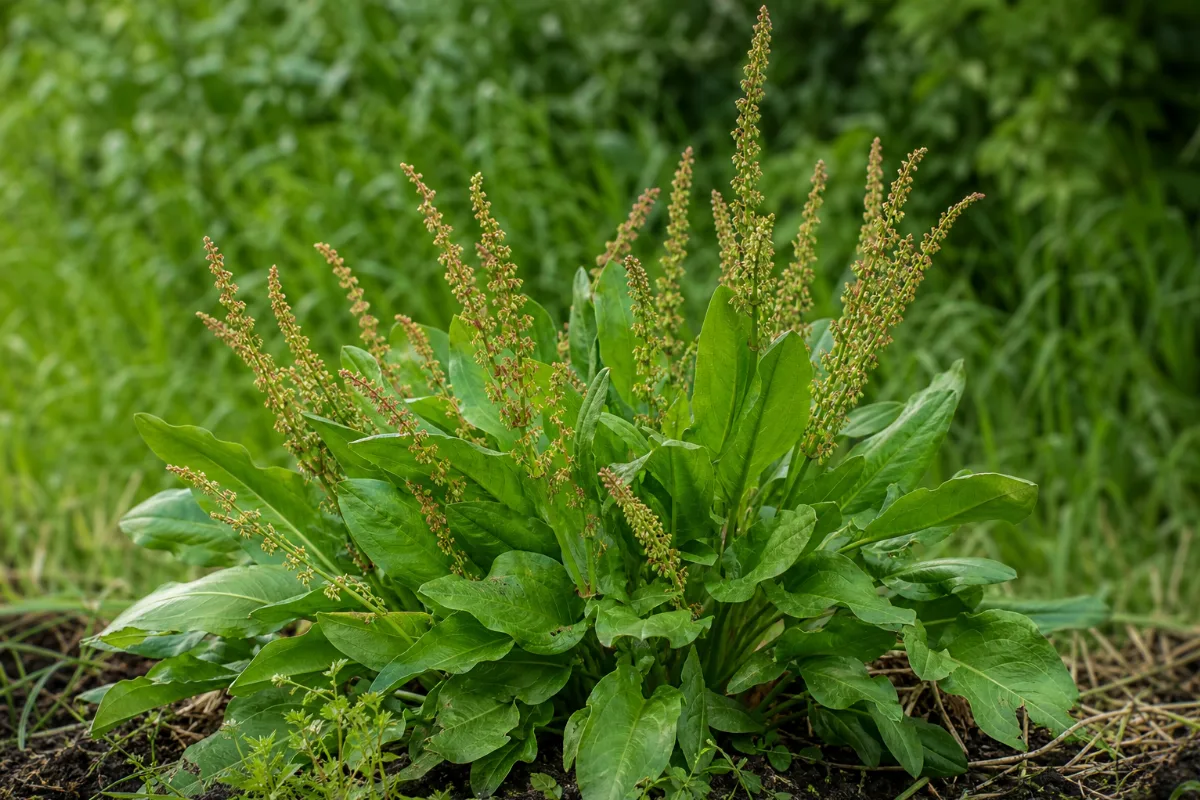
Herbs & Botanicals · Sour salad leaf, high in oxalate
Sorrel
Rumex acetosa · also called Common sorrel, garden sorrel, sorrel herb (Rumicis herba)
Sorrel (common sorrel, Rumex acetosa) is a leafy plant with a sour, lemony taste. It is eaten in salads and soups, and its dried leaf is one of five herbs in the German sinus remedy Sinupret. The sinus trials tested the five-herb mix, so they cannot show what sorrel does alone, and no study of sorrel on its own was found. The key caution is oxalate: sorrel is rich in it, which matters for kidney stones and kidney disease, and a fatal poisoning after sorrel soup has been reported.
General information, not medical advice. Last substantive update · Not medically reviewed. A named clinician has not signed off on this page. How this page is made
About Sorrel
Sorrel (common sorrel, Rumex acetosa) is a leafy plant with a sour, lemony taste. It is eaten in salads and soups, and its dried leaf is one of five herbs in the German sinus remedy Sinupret. The sinus trials tested the five-herb mix, so they cannot show what sorrel does alone, and no study of sorrel on its own was found. The key caution is oxalate: sorrel is rich in it, which matters for kidney stones and kidney disease, and a fatal poisoning after sorrel soup has been reported. Do not confuse it with sheep sorrel (Rumex acetosella, in Essiac), wood sorrel (Oxalis) or the hibiscus 'sorrel' drink. Ask a doctor or pharmacist about amounts.
What it is
Common sorrel, Rumex acetosa, is a leafy plant in the knotweed family (Polygonaceae), the same family as rhubarb. It is eaten as a sour green in salads and soups. The leaf is also the 'sorrel herb' (Rumicis herba) used in herbal medicine.
The accepted name was checked in the GBIF and NCBI taxonomy databases.
Four plants called sorrel
Common sorrel (Rumex acetosa) is the plant on this page. Sheep sorrel (Rumex acetosella) is a related, smaller plant that is an ingredient of the Essiac herbal blend. In one study of 510 Ontario women with breast cancer, Essiac did not improve quality of life or mood, and lab work only shows antioxidant effects, so it is not proof of a cancer treatment.
Wood sorrel is a clover-like plant of a different genus, Oxalis, also sour from oxalic acid. In the Caribbean and West Africa, 'sorrel' is a red drink made from hibiscus (roselle, Hibiscus sabdariffa), which is a different plant altogether. Safety and research for one do not apply to the others.
What it has been studied for
All human trials used Sinupret, a standardised extract of five herbs: gentian root, cowslip flower, sorrel herb, elder flower and vervain, in a 1:3:3:3:3 ratio. The results favour the mix in acute sinus infection and not clearly in chronic infection. Nothing separates sorrel's own part.
Sorrel is also studied in the laboratory. Its anthraquinones slowed stomach bacteria (H. pylori) in test tubes, but no human study followed.
At a glance
Traditional uses history, not proof
- Eaten as a sour leafy vegetable in salads and soups
- Plants called sorrel or dock (Rumex genus) have been used for centuries for skin conditions and to stop bleeding (genus-level report, not proof)
- German herbal medicine: sorrel herb is one of five herbs in the Sinupret sinus and airway remedy, in use for about 70 years
Studied for research
- Acute viral sinus infection in adults, low certainty (five-herb mix that includes sorrel; sorrel alone not tested)
- Chronic sinus infection, low certainty (the main result was negative)
- Acute sinus infection in children, very low certainty (one open-label trial of a related five-plant extract)
- Stomach bacteria (H. pylori), laboratory only
Main compounds
- Oxalic acid (oxalate): gives the sour taste; the main safety issue
- Anthraquinones (emodin, chrysophanol, physcion): studied in the laboratory
- Flavonoids and tannins: reported for Rumex plants in general
Common forms
- Fresh leaves as food (salad, soup)
- Standardised dry extract of five herbs in tablets (Sinupret), the only form tested in human trials
- Tea or home infusion: not covered by the sources we read
Research links: NIDDK: Eating, Diet and Nutrition for Kidney Stones · Systematic review of Sinupret (BNO-101) in sinusitis, Forschende Komplementarmedizin 2006 · Fatal oxalic acid poisoning from sorrel soup, Lancet 1989 (title only) · Research Library · Genes & Biomarkers Library
The plant and its history
- Accepted scientific name
- Rumex acetosa L. (common sorrel, garden sorrel)
- Naming authority
- L. (Linnaeus)
- Synonyms
- Not listed here: GBIF treats Rumex acetosa as the accepted name; its synonym list was not read.
- Common names
- Common sorrel (English); Garden sorrel (English); Sorrel herb (Rumicis herba) (Latin/pharmacy)
- Botanical family
- Polygonaceae (the buckwheat or knotweed family), order Caryophyllales; the family also holds rhubarb and docks.
- Classification
- Plantae > Caryophyllales > Polygonaceae > Rumex > Rumex acetosa
- Native range
- Not verified from a source read. Reviews say the genus Rumex grows across Europe, Asia, Africa and North America.
- Habitat
- Not verified in a source read.
- What the plant looks like
- Roots: Not part of the main food use; one field study measured nickel in the roots.; Stems: Not verified.; Leaves: The leaf is eaten as a sour salad green or in soup, and is the herb (Rumicis herba) in Sinupret.; Flowers: Not verified.; Fruit: Not verified.
- Cultivation
- Not verified.
- Harvest and processing
- Not verified.
- Look-alikes and adulterants
- Name: Sheep sorrel (Rumex acetosella); Note: A smaller plant of the same genus and an ingredient of the Essiac blend. The one human study we read (510 Ontario women with breast cancer, retrospective) found no benefit from Essiac on quality of life or mood. Lab work shows antioxidant activity only. This is not the plant of this page.; Name: Wood sorrel (genus Oxalis); Note: A clover-like plant with a sour taste, also high in oxalic acid, but a different genus. Its botanical family was not verified in a source we read.; Name: Hibiscus 'sorrel' drink (Hibiscus sabdariffa); Note: In the Caribbean and West Africa 'sorrel' is a red drink from hibiscus calyces. A different plant, with its own page here.; Name: Other docks (curly dock R. crispus, bitter dock R. obtusifolius); Note: Same genus; also oxalate-rich. Animal poisoning reports come from these.
- Sustainability and conservation
- Not verified.
Traditional use and history history, not clinical proof
| Tradition or era | Documented use | Source |
|---|---|---|
| Food and traditional use across the Rumex genus | Plants called sorrel or dock have been eaten and used for centuries for skin conditions and to stop bleeding after injury. | p35710954 |
| German herbal medicine | Sorrel herb is one of five herbs in Sinupret, used in Germany for about 70 years as a mucoactive remedy for respiratory infections. | p16645287 |
| Wikipedia-only or general claims (culinary use as a sour salad leaf, soup) | Used as a sour leaf in salads and soups; not verified from a primary source read, except that the 1989 poisoning report involved sorrel soup. | p2574796 |
Traditional use shows how a plant was used. It does not show that a supplement works or is safe today.
What is inside, and how it may work
What the plant contains and how those compounds act in cells and animals. Laboratory and animal mechanisms are not proven effects in people.
Main compounds
| Compound | Family | Where it is concentrated | Activity studied | Level of evidence |
|---|---|---|---|---|
| Oxalic acid / oxalate PubChem 971 | organic acid | Leaves Not found for common sorrel. Rumex samples in a sheep outbreak held 6.6 to 11.1% by dry weight (curly dock area, other species). | Gives the sour taste. Binds calcium; main component of most kidney stones. 7 17 14 | Human observational |
| Emodin PubChem 3220 | anthraquinone | Whole plant (isolated) Not found | Slowed H. pylori growth in the laboratory. 6 | Laboratory research |
| Chrysophanol PubChem 10208 | anthraquinone | Whole plant (isolated) Not found | Slowed H. pylori growth in the laboratory. 6 | Laboratory research |
| Physcion PubChem 10639 | anthraquinone | Whole plant (isolated) Not found | Slowed H. pylori growth in the laboratory. 6 | Laboratory research |
| Emodin-, chrysophanol- and physcion-8-O-glucosides | anthraquinone glucosides | Whole plant (isolated) Not found | Also slowed H. pylori growth in the laboratory (PubChem IDs not looked up). 6 | Laboratory research |
| Flavonoids and tannins | polyphenols | Genus level Not found for R. acetosa | Reviews list flavonoids and tannins among Rumex compounds with lab antioxidant activity; specific compounds in R. acetosa were not confirmed here. 14 11 | Laboratory research |
Mechanisms, receptors and pathways
| Target or pathway | Gene or receptor | What was found | Level |
|---|---|---|---|
| Calcium binding by oxalate | Not applicable | Oxalate-rich Rumex plants lowered blood calcium in a foal and caused oxalate poisoning in sheep; in people calcium oxalate makes up about 80% of kidney stones. 9 17 7 | Animal research |
| H. pylori urease enzyme | Bacterial urease | Anthraquinones from R. acetosa moderately blocked urease and docked to it in a computer model. 6 | Laboratory research |
Absorption, metabolism and elimination
- Absorption
- No human data. A review notes poor absorption and fast metabolism of key Rumex compounds.
- Distribution
- Not found.
- Metabolism
- Not found. The body also makes oxalate itself, about 10 to 25 mg a day by one estimate.
- Elimination
- Not found.
- Bioavailability
- Described as poor for key Rumex compounds at genus level (review).
Isolated compounds versus whole extracts
The sinus trials tested a five-herb extract; the lab work tested isolated anthraquinones. Neither tests sorrel leaf as eaten. Results from one form should not be assumed for another.
Nutritional composition
A nutrient table was not built for sorrel. It is eaten as a sour leafy green; its oxalate load is the main nutrition point.
2 low certainty1 very low certainty3 not enough evidence
What is Sorrel good for?
The main studied uses and how strong the human evidence is for each. 'Low' is the best rating any use reached here, and it applies to a five-herb mix, not to sorrel alone. 'Very low' and 'insufficient' mean one weak trial or only laboratory work. Several ratings are this profile's own reading, not formal grades. Sinus infections that are severe, last long, or come with high fever need a doctor.
Benefits, one by one
Each card is a research question, not a promise. Tap a goal to filter. Open a card to see the studies, doses and limits.
Acute viral sinus infection in adults (five-herb mix that includes sorrel)
Low certaintyTwo pooled placebo-controlled trials in 589 adults found faster improvement of sinus symptoms with a five-herb extract (Sinupret, BNO 1016) than with placebo. Sorrel herb is one of the five plants, so these trials cannot show what sorrel does on its own.
5 studiesAll human trials tested the standardised dry extract of five herbs in…
Studies, doses and limits
What the trials found
Pooled analysis of two randomised placebo-controlled trials (589 adults, 15 days): symptom score fell from 10.02 to 2.47 with the extract and from 9.87 to 3.63 with placebo. A single trial reported relief about two days earlier than placebo (number needed to treat for healing: 8). A 2006 systematic review of older trials found 'cured' in 61.1% vs 34.5% on placebo when added to antibiotics.
Results
Statistically better than placebo on the doctor-rated symptom score (difference 1.16 points, p < 0.0001) and on patient quality of life (p = 0.0015). Two later systematic reviews call BNO 1016 promising or 'might be helpful' and ask for more trials.
Effect sizes as reported
Difference in major symptom score 1.16 points at the end of treatment; number needed to treat for healing 8.
Why this rating
Several placebo-controlled trials point the same way, but the product is a five-plant mix, the trials were industry-linked, reviews describe mixed quality, and nothing isolates sorrel. For sorrel alone the evidence is insufficient.
Form and dose studied
All human trials tested the standardised dry extract of five herbs in coated tablets; none tested sorrel leaf, tea or soup.
Who was studied
Adults with acute viral rhinosinusitis, symptoms for up to 3 days (one trial).
Limits
Manufacturer-linked trials; only abstracts read; the result belongs to the mix, not to sorrel.
Why researchers looked
Sorrel herb is one of five plants in the German herbal product Sinupret, which has been used for sinus and airway complaints for decades.
Traditional use
The mix has been used in Germany for about 70 years as a 'mucoactive' remedy for respiratory infections, according to a 2006 systematic review.
Proposed mechanism Unknown
How the mix might work was not covered by the studies we read. No test of sorrel alone for sinus symptoms was found.
A proposed mechanism does not show that the effect happens in people.
No serious adverse events were reported in the 2012 trial. Pregnant and breastfeeding women were reportedly excluded (summary-only), so safety there is unknown.
Acute sinus infection in children aged 6 to 11 (five-plant extract BNO 1012)
Very low certaintyAn open-label trial in 292 children found that adding a five-plant extract to usual symptom care eased runny nose and congestion sooner and led to fewer antibiotic prescriptions than usual care alone. It was not blinded and the abstract does not name the plants.
1 studiesFive-plant extract added to standard symptomatic care.
Studies, doses and limits
What the trials found
One open-label randomised multicentre trial, 292 children aged 6 to 11, extract added to standard care versus standard care only.
Results
Clinically significant fall in runny nose, congestion and post-nasal drip at the second visit (p < 0.005); a 'therapeutic benefit' of three days in the first week; antibiotic prescriptions 1.81-fold lower.
Effect sizes as reported
3 days therapeutic benefit; antibiotic prescribing 1.81-fold lower.
Why this rating
Single open-label trial with no placebo, so patients and doctors knew who got the extract; a mix of plants, not sorrel alone.
Form and dose studied
Five-plant extract added to standard symptomatic care.
Who was studied
Children aged 6 to 11 with acute viral or post-viral rhinosinusitis.
Limits
Open-label; abstract only; plants not named in the abstract; follow-up short.
Why researchers looked
Doctors look for ways to treat viral sinus infections in children without antibiotics that are not needed.
Traditional use
BNO 1012 is the children's product of the same family as Sinupret, according to our existing summary.
Proposed mechanism Unknown
Not covered in the abstract.
A proposed mechanism does not show that the effect happens in people.
Do not give herbal products to a child without asking a doctor or pharmacist.
Long-lasting (chronic) sinus infection (five-herb extract BNO 1016)
Low certaintyA 12-week placebo-controlled trial in 929 adults did not show the extract beat placebo on its main measure. Benefit appeared only in subgroups chosen after the results were seen.
1 studiesFive-herb dry extract at two dose levels, versus placebo.
Studies, doses and limits
What the trials found
Randomised placebo-controlled trial, 929 adults, 12 weeks, two dose levels.
Results
Not superior to placebo on the main symptom score. Secondary measures leaned towards the extract. In post-hoc subgroups (higher baseline score, specialist-diagnosed, disease over a year) the extract did better.
Effect sizes as reported
Primary endpoint not met; subgroup effects not quantified in the abstract.
Why this rating
The main result was negative. Subgroup findings were chosen after the fact, and the extract is a five-herb mix.
Form and dose studied
Five-herb dry extract at two dose levels, versus placebo.
Who was studied
Adults with chronic rhinosinusitis.
Limits
Post-hoc subgroups; manufacturer-linked; sorrel not separated.
Why researchers looked
Chronic sinus infection is long-lasting and hard to treat, so a well-tolerated herbal option was tested.
Traditional use
Same Sinupret-type mix as above.
Proposed mechanism Unknown
Not covered in the abstract.
A proposed mechanism does not show that the effect happens in people.
The authors describe safety and tolerability as good.
Helicobacter pylori bacteria (laboratory only)
Not enough evidenceSix compounds isolated from common sorrel slowed the growth of stomach bacteria (H. pylori) in test tubes. No animal or human results were found, so this says nothing yet about eating sorrel.
2 studiesIsolated compounds from whole plant; not a food or tea.
Studies, doses and limits
What the trials found
None.
Results
MIC (lowest growth-stopping concentration) 3.13 to 25 micromolar on two H. pylori strains.
Effect sizes as reported
MIC 3.13 to 25 micromolar.
Why this rating
Test-tube study only.
Form and dose studied
Isolated compounds from whole plant; not a food or tea.
Who was studied
None (laboratory).
Limits
No animals or people; the concentrations tested may not be reachable by eating the leaf.
Why researchers looked
Researchers look for natural compounds against H. pylori because antibiotic resistance is rising.
Traditional use
Not described in the study.
Proposed mechanism Laboratory research
The compounds were three anthraquinones (emodin, chrysophanol, physcion) and their glucosides. They also moderately blocked the bacterial urease enzyme and docked to it in a computer model.
A proposed mechanism does not show that the effect happens in people.
Anthraquinones are the same compounds a review links to adverse effects in Rumex plants (details not read).
Antioxidant, anti-inflammatory and other effects in cells and animals (Rumex genus)
Not enough evidenceReviews of Rumex plants describe antioxidant, anti-inflammatory and antimicrobial effects in cells and animals, mostly for other species than common sorrel. They are not proof that eating sorrel helps people.
2 studiesVarious extracts and isolates.
Studies, doses and limits
What the trials found
The review authors note insufficient clinical evidence.
Results
No human outcomes.
Effect sizes as reported
Not applicable.
Why this rating
Lab and animal work, mostly on other Rumex species.
Form and dose studied
Various extracts and isolates.
Who was studied
None (laboratory and animal).
Limits
Not specific to R. acetosa; no standardised extracts.
Why researchers looked
Rumex plants are rich in anthraquinones, flavonoids and tannins, which are active in the lab.
Traditional use
See the traditional skin and bleeding use below.
Proposed mechanism Laboratory research
Genus-level lab findings; the reviews also note poor absorption of key compounds.
A proposed mechanism does not show that the effect happens in people.
The same reviews flag oxalate and anthraquinone adverse effects.
Traditional use for skin conditions and to stop bleeding (Rumex genus)
Not enough evidencePlants called sorrel or dock have been used as food and, for centuries, for skin conditions and to stop bleeding after injury. Tradition is not evidence that they work.
1 studiesNot covered.
Studies, doses and limits
What the trials found
None found.
Results
No controlled human studies found.
Effect sizes as reported
Not applicable.
Why this rating
Traditional reports only, and not specific to common sorrel.
Form and dose studied
Not covered.
Who was studied
Not covered.
Limits
Genus-level; no studies of effect.
Why researchers looked
Folk use across many regions.
Traditional use
A genus review reports use of Rumex species called 'sorrel' or 'dock' for skin diseases and stopping bleeding.
Proposed mechanism Unknown
Not established.
A proposed mechanism does not show that the effect happens in people.
Do not put sorrel on open wounds or stop medical care for bleeding.
Connections to the rest of health
How Sorrel connects to the rest of our health knowledge graph. Every link says what kind of connection it is. A safety link (for example to the liver) is a warning, not a benefit. A study that merely mentions a topic never creates a benefit link.
Explore every connection: goals, body systems, organs, symptoms, genes
A. Wellness goals
| Connected to | Kind of connection | Evidence status | Context | Studies |
|---|---|---|---|---|
| Breathing Support | Potential benefit | Low certainty | Acute viral sinus infection in adults (five-herb mix that includes sorrel): Two pooled placebo-controlled trials in 589 adults found faster improvement of sinus symptoms with a five-herb extract (Sinupret, BNO 1016) than with placebo. Sorrel herb is one of the five plants, so these trials cannot show what sorrel does on its own. Acute sinus infection in children aged 6 to 11 (five-plant extract BNO 1012): An open-label trial in 292 children found that adding a five-plant extract to usual symptom care eased runny nose and congestion sooner and led to fewer antibiotic prescriptions than usual care alone. It was not blinded and the abstract does not name the plants. | 5 4 13 1 8 18 |
| Breathing Support | Low certainty | Long-lasting (chronic) sinus infection (five-herb extract BNO 1016): A 12-week placebo-controlled trial in 929 adults did not show the extract beat placebo on its main measure. Benefit appeared only in subgroups chosen after the results were seen. | 16 | |
| Digestive Support | Preliminary mechanism | Not enough evidence | Helicobacter pylori bacteria (laboratory only): Six compounds isolated from common sorrel slowed the growth of stomach bacteria (H. pylori) in test tubes. No animal or human results were found, so this says nothing yet about eating sorrel. | 6 14 |
| Healthy Skin | Traditional use | Not enough evidence | Traditional use for skin conditions and to stop bleeding (Rumex genus): Plants called sorrel or dock have been used as food and, for centuries, for skin conditions and to stop bleeding after injury. Tradition is not evidence that they work. | 11 |
B. Body systems
| Connected to | Kind of connection | Evidence status | Context | Studies |
|---|---|---|---|---|
| Respiratory system | Low certainty | Evidence is for the mix in sinus infection, not for sorrel alone. Evidence is for the five-herb Sinupret mix in sinus infection, not for sorrel alone. Preparation or compound: Five-herb Sinupret extract |
5 16 | |
| Respiratory System | Biological association | Low certainty | Studied for: Acute viral sinus infection in adults (five-herb mix that includes sorrel) Studied for: Acute sinus infection in children aged 6 to 11 (five-plant extract BNO 1012) | 5 4 13 1 8 18 16 |
| Digestive System | Biological association | Not enough evidence | Studied for: Helicobacter pylori bacteria (laboratory only) | 6 14 |
| Integumentary System | Biological association | Not enough evidence | Studied for: Traditional use for skin conditions and to stop bleeding (Rumex genus) | 11 |
C. Body parts and organs
| Connected to | Kind of connection | Evidence status | Context | Studies |
|---|---|---|---|---|
| Kidneys | Documented risk | High oxalate can form kidney stones and in rare cases injure kidneys. Safety relationship, not a benefit. High oxalate can form kidney stones; a fatal sorrel soup poisoning was reported. Safety warning, not a benefit. Preparation or compound: Fresh leaves (food); oxalic acid |
7 2 3 |
I. Biomarkers
| Connected to | Kind of connection | Evidence status | Context | Studies |
|---|---|---|---|---|
| Major Symptom Score for sinus infection (doctor-rated) | Biological association | Low certainty | Measured in trials: lowered. A lab change is not the same as a health benefit. | 5 16 |
| Antibiotic prescriptions in children with sinus infection | Biological association | Very low certainty | Measured in trials: lowered. A lab change is not the same as a health benefit. | 18 |
| H. pylori growth in the laboratory (MIC) | Biological association | Not enough evidence | Measured in trials: lowered. A lab change is not the same as a health benefit. | 6 |
L. Active compounds
| Connected to | Kind of connection | Evidence status | Context | Studies |
|---|---|---|---|---|
| Oxalic acid / oxalate | Biological association | Human observational | Gives the sour taste. Binds calcium; main component of most kidney stones. Preparation or compound: Leaves |
7 17 14 |
| Emodin | Biological association | In vitro | Slowed H. pylori growth in the laboratory. Preparation or compound: Whole plant (isolated) |
6 |
| Chrysophanol | Biological association | In vitro | Slowed H. pylori growth in the laboratory. Preparation or compound: Whole plant (isolated) |
6 |
| Physcion | Biological association | In vitro | Slowed H. pylori growth in the laboratory. Preparation or compound: Whole plant (isolated) |
6 |
| Emodin-, chrysophanol- and physcion-8-O-glucosides | Biological association | In vitro | Also slowed H. pylori growth in the laboratory (PubChem IDs not looked up). Preparation or compound: Whole plant (isolated) |
6 |
| Flavonoids and tannins | Biological association | In vitro | Reviews list flavonoids and tannins among Rumex compounds with lab antioxidant activity; specific compounds in R. acetosa were not confirmed here. Preparation or compound: Genus level |
14 11 |
Each connection is stored with the ingredient, the connected record, the kind of connection, the evidence status, the supporting studies, the preparation or compound involved, and a review date (last reviewed October 25, 2026).
Evidence at a glance: what changed in 3 lab markers
Tap a number to show only those markers. Counts are markers, not people.
The evidence
The research centre for Sorrel. Every record here was checked against PubMed or the publisher's page; we never list a study we have not verified.
Evidence by outcome
Bars show how many studies we found for each outcome, not how well it works. People are added up across trials only (reviews are not added, to avoid double counting).
How we rate evidence
High certainty
Several well-run trials or reviews agree; further research is unlikely to change the picture much.
Moderate certainty
Good trials point the same way, but some doubt remains.
Low certainty
Small, short or inconsistent trials. The finding could change with better research.
Very low certainty
Very little or very weak human data. Treat as a possibility only.
Mixed findings
Trials or reviews disagree with each other.
Not enough evidence
Not enough human research to say either way.
Evidence against
Good research found no benefit, or found harm.
We take the reviewers' own risk-of-bias and GRADE statements where they exist, and otherwise judge from study size, design, consistency, directness and whether a product matches what is sold. Many publications do not make evidence high. Method note: We built this page from our existing sorrel summary and checked PubMed abstracts, the GBIF and NCBI taxonomy records and PubChem. Only abstracts were read; the 1989 poisoning report was seen by title only, and the NIDDK page was not re-opened. Regulator pages for sorrel were not found or not checked and are marked not verified. Certainty ratings are the compiler's own reading, not formal grades. No study is cited that we could not verify.
Study library: every study we checked 25
| Study | Design | People | Product, dose, length | Result |
|---|---|---|---|---|
| Choulakis 2025 Traditional herbal medicine in the treatment of acute and chronic rhinosinusitis: a systematic review Rhinology · PMID 40202087 · DOI |
Systematic review |
Patients with acute or chronic rhinosinusitis, 33 clinical studies of eleven herbal preparations | Herbal preparations including BNO-1016 mixed Various Various · vs Various |
BNO-1016 'presents significant evidence' in acute rhinosinusitis. The reviewers call results for specific products promising and say they should be examined further. Not a pooled number in abstract (Not given in abstract) Methods, limits and fundingOutcomes: Symptoms of rhinosinusitis Limitations: Only the abstract was read. The abstract does not give a formal certainty grade or say how many of the 33 studies tested BNO-1016. Funding and conflicts: No funding statement read. Read: abstract |
| Farre 1989 Fatal oxalic acid poisoning from sorrel soup Lancet · PMID 2574796 |
Case report |
1 A person who ate sorrel soup (details not read) |
Sorrel soup (food) leaf (assumed from 'sorrel'; species not read) Not read Not read · vs None |
Title and indexing only: the record reports a fatal case of oxalic acid poisoning after sorrel soup. The amount eaten, the species and the course of illness were NOT read. Not read (Not read) Methods, limits and fundingOutcomes: Fatal oxalic acid poisoning Limitations: Only the title and indexing could be read; PubMed shows no abstract. Do not infer an amount or a threshold from this report. The species of sorrel is not confirmed. Funding and conflicts: None Read: title-only |
| Jankowski 2026 Acute renal failure after dietary change - a case report BMC Nephrology · PMID 41877053 · DOI |
Case report |
1 59-year-old previously kidney-healthy woman who ate one meal of fresh Swiss chard during a vegetarian diet change |
Fresh Swiss chard (NOT sorrel) leaf One meal Single meal · vs None |
Acute kidney failure with calcium oxalate crystals blocking the kidney tubules. With a low-oxalate diet kidney function improved, and after a year on that diet she was back to baseline. Single case (Not applicable) Methods, limits and fundingOutcomes: Kidney function; kidney biopsy Limitations: Only the abstract was read. Swiss chard, not sorrel: used only to show how a high-oxalate leafy vegetable can injure kidneys. Funding and conflicts: None stated Read: abstract |
| Jund 2012 Clinical efficacy of a dry extract of five herbal drugs in acute viral rhinosinusitis Rhinology · PMID 23193534 · DOI |
Controlled trial |
Adults with acute viral rhinosinusitis, symptoms for up to 3 days | BNO 1016 dry extract of five herbs (coated tablets) five-herb mix (includes sorrel herb) Not given in abstract 15 days · vs Placebo |
Clinically relevant, significant difference in mean score versus placebo. Symptom relief came about two days earlier than with placebo. Number needed to treat for healing was 8. No serious adverse events were reported. NNT 8; relief about 2 days earlier (Not given in abstract) Methods, limits and fundingOutcomes: Mean Major Symptom Score at end of treatment; response rates; ultrasound Limitations: Only the abstract was read. Number of patients not stated in the abstract. Combination product. Funding and conflicts: Registered (NCT01146860). Abstract lists non-US government research support; manufacturer links not stated in the abstract. Read: abstract |
| Jund 2015 Herbal drug BNO 1016 is safe and effective in the treatment of acute viral rhinosinusitis Acta Oto-Laryngologica · PMID 25496178 · DOI |
Controlled trial |
589 Adults with acute viral rhinosinusitis (pooled analysis of two similar trials) |
BNO 1016 (Sinupret extract): dry extract of five herbs including sorrel herb five-herb mix (includes sorrel herb) 3 x 160 mg a day (as given in the abstract) 15 days · vs Placebo |
Score fell from 10.02 to 2.47 with BNO 1016 and from 9.87 to 3.63 with placebo. The between-group difference at the end was 1.16 points (p < 0.0001), and quality of life also favoured BNO 1016 (p = 0.0015). Difference in symptom score 1.16 points at end of treatment (Not given in abstract) Methods, limits and fundingOutcomes: Mean Major Symptom Score at end of treatment; quality of life Limitations: Only the abstract was read. Combination product: results cannot be assigned to sorrel. Our existing summary says pregnant and breastfeeding women were excluded (summary-only; not confirmed in the abstract). Funding and conflicts: Abstract lists 'Research Support, Non-U.S. Gov't'; our existing summary says the manufacturer funded the trials. Treat as industry-linked. Read: abstract |
| Kang 2023 Anti-Helicobacter pylori Activity of Six Major Compounds Isolated from Rumex acetosa ACS Omega · PMID 38024697 · DOI |
Laboratory lab |
Two H. pylori strains in the laboratory | Six compounds isolated from whole Rumex acetosa: emodin, chrysophanol, physcion and their 8-O-glucosides whole plant Not applicable (test tube) Not applicable · vs Not stated |
All six compounds slowed H. pylori growth, with MIC values from 3.13 to 25 micromolar. They also moderately blocked the bacterial urease enzyme. Test-tube and computer work only. MIC 3.13 to 25 micromolar (Not applicable) Methods, limits and fundingOutcomes: Minimum inhibitory concentration (MIC); urease inhibition; docking Limitations: Only the abstract was read. Laboratory only; nothing was tested in animals or people. The paper is also the source for which anthraquinones R. acetosa contains. Funding and conflicts: None read Read: abstract |
| Karr 2024 Oxalates: Dietary Oxalates and Kidney Inflammation: A Literature Review Integrative Medicine · PMID 38911445 |
Narrative review |
General literature on dietary oxalate and kidney disease | Dietary oxalate (general) various Not applicable Not applicable · vs Not applicable |
About 80% of kidney stones are calcium oxalate. The body makes some oxalate itself (about 10 to 25 mg a day by one estimate), including from vitamin C breakdown. Poor oxalate-degrading gut bacteria and malabsorptive disease add to the risk. The authors also ask how cooking changes food oxalate. About 80% of stones are calcium oxalate (Not applicable) Methods, limits and fundingOutcomes: Role of oxalate in kidney stones and kidney inflammation Limitations: Only the abstract was read. A narrative review, not a systematic one. Does not mention sorrel by name in the abstract. Funding and conflicts: None stated Read: abstract |
| Koch 2016 [A Systematic Review of Phytotherapy for Acute Rhinosinusitis] Forschende Komplementarmedizin · PMID 27404100 · DOI |
Systematic review |
Adults and children with acute rhinosinusitis; 7 trials of six preparations | Pelargonium, Myrtol, BNO 1016, BNO 101 and others mixed Various Various · vs Placebo or other |
BNO 1016 and BNO 101 'might be helpful'. Risk of bias varied between trials and the reviewers call for more research given few trials of mixed quality. Not given (Not given) Methods, limits and fundingOutcomes: Acute rhinosinusitis symptoms Limitations: Only the abstract was read. German-language title; searches ended September 2015. Funding and conflicts: No funding statement read. Read: abstract |
| Laan 2000 [Hypocalcemia in a four-week-old foal] Tijdschrift voor Diergeneeskunde · PMID 10758637 |
Case report animal |
1 One foal |
Rumex plants eaten (genus; species not stated) leaf (assumed) Not stated Not stated · vs None |
Eating Rumex plants probably led, through oxalic acid, to low blood calcium in a four-week-old foal, which had stiff muscles. It recovered within hours after intravenous calcium. Single animal case (Not applicable) Methods, limits and fundingOutcomes: Blood calcium Limitations: Only the abstract was read. Animal case; not sorrel specifically and not people. Funding and conflicts: None Read: abstract |
| Leonard 2006 Essiac tea: scavenging of reactive oxygen species and effects on DNA damage Journal of Ethnopharmacology · PMID 16226859 · DOI |
Laboratory lab |
Test tube and a mouse cell line | Essiac tea (burdock, SHEEP sorrel Rumex acetosella, slippery elm, Indian rhubarb) mixed Not applicable Not applicable · vs Not stated |
Essiac extract scavenged free radicals and reduced induced DNA damage and fat oxidation in the laboratory. Laboratory only; not evidence it treats cancer. Up to 84% less hydroxyl radical signal at the strongest preparation (Not applicable) Methods, limits and fundingOutcomes: Free-radical scavenging, DNA damage, lipid peroxidation Limitations: Only the abstract was read. Different species, a four-herb mix, test tube only. Funding and conflicts: None read Read: abstract |
| Li 2022 The genus Rumex (Polygonaceae): an ethnobotanical, phytochemical and pharmacological review Natural Products and Bioprospecting · PMID 35710954 · DOI |
Narrative review other |
Rumex genus | Rumex species various Not applicable Not applicable · vs Not applicable |
Some Rumex species called 'sorrel' or 'dock' have been used as food and, for centuries, for skin diseases and to stop bleeding after injury. 29 species have been studied; compounds include anthraquinones, flavonoids, tannins and others, with lab activity described. Not specific to R. acetosa. Not applicable (Not applicable) Methods, limits and fundingOutcomes: Traditional use, chemistry, pharmacology Limitations: Only the abstract was read. Traditional use and lab findings are not proof of benefit in people. Funding and conflicts: None stated Read: abstract |
| Martinez Garcia 2019 [Nutritional intervention in the control of gallstones and renal lithiasis] Nutricion Hospitalaria · PMID 31368343 · DOI |
Narrative review |
People with gallstones or kidney stones | Diet advice (general) various Not applicable Not applicable · vs Not applicable |
Calcium oxalate is the most frequent kidney stone. For oxalate stones the review advises less meat, moderate spinach, Swiss chard, asparagus and chocolate, less sodium, and a high water intake. Oxalate-degrading probiotics may reduce gut absorption, but more study is needed. Not applicable (Not applicable) Methods, limits and fundingOutcomes: Diet and stones Limitations: Only the abstract was read. Spanish-language review; sorrel is not named in the abstract. Funding and conflicts: None stated Read: abstract |
| Melzer 2006 Systematic review of clinical data with BNO-101 (Sinupret) in the treatment of sinusitis Forschende Komplementarmedizin · PMID 16645287 · DOI |
Systematic review |
About 900 patients, mostly young adult men, in 6 controlled sinusitis trials | BNO-101 (Sinupret): Gentianae radix, Primulae flos, Rumicis herba (sorrel herb), Sambuci flos and Verbenae herba, ratio 1:3:3:3:3 five-herb mix (includes sorrel herb) Not given in abstract 2 weeks (in the pooled trials) · vs Placebo or ambroxol |
Versus placebo (2 trials, 159 vs 160 patients, both added to antibiotics) the mix was significantly better: 'cured' 61.1% vs 34.5%, with less drain obstruction, headache and X-ray signs (all p < 0.05). Against ambroxol the abstract shows no clear difference. 'Cured' 61.1% vs 34.5% (placebo comparison) (Not given in abstract) Methods, limits and fundingOutcomes: Patient-rated cure, drain obstruction, headache, radiological signs Limitations: Only the abstract was read. Older trials, mostly young men, both placebo trials were add-on to antibiotics. Combination product. The abstract is the source for the five-herb recipe. Funding and conflicts: Research support from a non-US-government source listed; manufacturer links not stated in the abstract. Read: abstract |
| Mohamed Gohar 2025 Rumex Species: Phytochemistry, Pharmacology and Nutritional Potential for Food and Health Applications Food Science & Nutrition · PMID 41426507 · DOI |
Narrative review other |
Rumex genus (about 193 species) | Rumex species, extracts and isolates various Not applicable Not applicable · vs Not applicable |
Rumex plants contain anthraquinones, flavonoids, tannins, naphthalenes and stilbenes. Antioxidant, anti-inflammatory, antimicrobial and other effects are described in cells and animals, mainly for other species (R. dentatus, R. vesicarius, R. crispus). The review discusses oxalate accumulation and anthraquinone-related adverse effects, and notes limited clinical evidence and poor bioavailability of key compounds. Not applicable (Not applicable) Methods, limits and fundingOutcomes: Phytochemistry, pharmacology, toxicology Limitations: Only the abstract was read. Genus-level. The abstract gives no figures for Rumex acetosa. Funding and conflicts: None stated Read: abstract |
| Naseem 2023 Effect of Growth Stages and Lactic Acid Fermentation on Anti-Nutrients and Nutritional Attributes of Spinach (Spinacia oleracea) Microorganisms · PMID 37764187 · DOI |
Laboratory other |
Spinach powder at three growth stages (food chemistry, not people) | Spinach (NOT sorrel) leaf Not applicable Not applicable · vs Unfermented |
Describes oxalates and other anti-nutrients as able to hinder nutrient absorption in spinach, and found fermentation lowered them. Shown here only as a general statement about oxalate-rich leaves; it says nothing about sorrel. Not applicable (Not applicable) Methods, limits and fundingOutcomes: Anti-nutrients including oxalate Limitations: Only the abstract was read. Food-chemistry study of spinach; no calcium-absorption measurement in people. Funding and conflicts: None stated Read: abstract |
| Palm 2017 Assessment of efficacy and safety of the herbal medicinal product BNO 1016 in chronic rhinosinusitis Rhinology · PMID 28214913 · DOI |
Controlled trial |
929 Adults with chronic rhinosinusitis |
BNO 1016 (Sinupret extract) at two dose levels five-herb mix (includes sorrel herb) Two dose levels (not given in abstract) 12 weeks · vs Placebo |
The extract was not better than placebo on the main measure. Secondary measures showed a trend in its favour. In after-the-fact subgroup analyses (higher baseline score, disease diagnosed by a specialist, disease lasting over a year) patients did benefit. Safety and tolerability were described as good. Primary endpoint not met; benefit only in post-hoc subgroups (Not given in abstract) Methods, limits and fundingOutcomes: Mean Major Symptom Score at weeks 8 and 12 Limitations: Only the abstract was read. Subgroup results were decided after the data were seen and are weaker evidence. Combination product. Funding and conflicts: Not stated in abstract; our existing summary says manufacturer-funded. Treat as industry-linked. Read: abstract |
| Panciera 1990 Acute oxalate poisoning attributable to ingestion of curly dock (Rumex crispus) in sheep Journal of the American Veterinary Medical Association · PMID 2365622 |
Case report animal |
100 100 ewes, 10 affected |
Curly dock (Rumex crispus), grazed (NOT sorrel) leaf Not stated Within 40 hours · vs None |
Ten of 100 ewes became ill with drooling, tremors and collapse, with low blood calcium and kidney damage; two died. Rumex samples contained 6.6 to 11.1% oxalic acid on a dry-weight basis. 6.6 to 11.1% oxalic acid (dry weight) in Rumex samples (Not applicable) Methods, limits and fundingOutcomes: Illness, blood calcium, kidney findings Limitations: Only the abstract was read. A different Rumex species (curly dock) in sheep. The oxalic-acid figure is not a figure for common sorrel. Funding and conflicts: None Read: abstract |
| Popovych 2020 An open-label, multicentre, randomized comparative study of efficacy, safety and tolerability of the 5 plant-extract BNO 1012 in the Delayed Antibiotic Prescription Method in children, aged 6 to 11 years with acute viral and post-viral rhinosinusitis American Journal of Otolaryngology · PMID 32593046 · DOI |
Controlled trial |
292 Children aged 6 to 11 with acute viral or post-viral rhinosinusitis |
BNO 1012 (five-plant extract) added to standard symptomatic care five-plant extract (the abstract does not name the plants; our existing summary treats it as a Sinupret-family extract) Not given in abstract First week of treatment reported · vs Standard symptomatic care only (no placebo) |
Added to standard care, the extract gave a clinically significant fall in runny nose, congestion and post-nasal drip at the second visit (p < 0.005). In the first week the extract group had a 'therapeutic benefit' of three days. Antibiotic prescriptions were 1.81-fold lower. 3 days' therapeutic benefit; antibiotic prescribing 1.81-fold lower (Not given in abstract) Methods, limits and fundingOutcomes: Doctor-rated congestion and runny nose; self-rated runny nose and headache; 'therapeutic benefit' in days; antibiotic prescriptions Limitations: Only the abstract was read. Open-label (no placebo, patients and doctors knew the treatment), so results are weaker and may be biased. BNO 1012 is a children's product; the abstract does not name the five plants. Funding and conflicts: Not stated in abstract; authors' links to the manufacturer not checked. Read: abstract |
| Romeh 2025 Accumulation of heavy metals in soil, medicinal plants and agricultural crops irrigated with drain water. Case study of Bahr El-Baqar Drain, Egypt Marine Pollution Bulletin · PMID 40367881 · DOI |
Field survey other |
Soil, water and plants along an Egyptian drain | Rumex acetosa ROOTS among several plants root Not applicable Not applicable · vs Not applicable |
Rumex acetosa roots showed extreme nickel uptake (bioaccumulation factor 248.43) where plants were irrigated with polluted drain water. Shows the plant can take up metals from polluted soil; it does not measure leaves sold as food or products. Nickel bioaccumulation factor 248.43 (roots) (Not applicable) Methods, limits and fundingOutcomes: Metal uptake Limitations: Only the abstract was read. One polluted site in Egypt; roots, not leaves. Funding and conflicts: None read Read: abstract |
| Salgado 2023 Oxalate in Foods: Extraction Conditions, Analytical Methods, Occurrence, and Health Implications Foods · PMID 37685134 · DOI |
Narrative review |
Foods and people at risk of high oxalate intake | Dietary oxalate (general) various Not applicable Not applicable · vs Not applicable |
Oxalate is an 'antinutrient' found especially in green leafy vegetables. It has been linked to high urine oxalate, kidney stones and, in severe cases, systemic oxalosis. The reviewers say it matters most for kidney-stone patients and ask whether high-oxalate foods are truly problematic for everyone. Not applicable (Not applicable) Methods, limits and fundingOutcomes: Oxalate levels in food and links with kidney stones and oxalosis Limitations: Only the abstract was read. The abstract does not give oxalate levels for sorrel; the review's food tables were not read. Funding and conflicts: None stated Read: abstract |
| Umar 2009 The effect of aqueous extracts of Hibiscus sabdariffa (Sorrel) calyces on heamatological profile and organ pathological changes in Trypanasoma congolense - infected rats African Journal of Traditional, Complementary and Alternative Medicines · PMID 20606781 |
Animal research animal |
Rats | Hibiscus sabdariffa calyx extract (the plant called 'sorrel' as a drink; NOT Rumex acetosa) calyx Not applicable 3 weeks · vs Untreated |
Cited only to show that the name 'sorrel' is also used for Hibiscus sabdariffa (roselle). Rat study, not about common sorrel. Not applicable (Not applicable) Methods, limits and fundingOutcomes: Blood counts, parasite levels Limitations: Only the abstract was read. Different plant. Funding and conflicts: None read Read: abstract |
| Zick 2006 Trial of Essiac to ascertain its effect in women with breast cancer (TEA-BC) Journal of Alternative and Complementary Medicine · PMID 17212569 · DOI |
Cohort study |
510 Women in Ontario with primary breast cancer diagnosed in 2003 |
Essiac, a blend that includes SHEEP sorrel (Rumex acetosella), burdock root, Indian rhubarb and slippery elm bark (NOT common sorrel) mixed Not stated Retrospective · vs Never-users |
Apart from two subscales, Essiac did not significantly change quality of life or mood. On those two subscales (physical well-being, relationship with doctor) users did worse than non-users; the authors point out users may have been sicker. No benefit shown (Not given in abstract) Methods, limits and fundingOutcomes: Health-related quality of life, mood, adverse events Limitations: Only the abstract was read. Retrospective cohort (not a trial despite the title), different species (sheep sorrel) in a four-herb mix. Funding and conflicts: Research support non-US government listed. Read: abstract |
| s-gbif-rumex-acetosa GBIF Backbone: Rumex acetosa L. (usageKey 2888951) · Source |
Reference database n/a |
Methods, limits and fundingRead: full-text | ||
| s-ncbi-taxonomy-rumex-acetosa NCBI Taxonomy: Rumex acetosa (taxid 41241) · Source |
Reference database n/a |
Methods, limits and fundingRead: full-text | ||
| s-niddk-kidney-stones NIDDK (NIH): Eating, Diet, & Nutrition for Kidney Stones (2017) · Source |
Authoritative guidance n/a |
Methods, limits and fundingRead: summary-only |
What we do not know yet
- What the evidence supports: a five-herb mix that includes sorrel probably helps acute viral sinus infection a little (low certainty), and oxalate in sorrel is a real kidney caution.
- What is uncertain: whether sorrel itself contributes anything to the mix, and how much oxalate common sorrel contains compared with spinach or rhubarb.
- No human study of sorrel leaf, tea or soup was found for any health use.
- The 1989 fatal sorrel soup case could be read only by title: amounts, species and the person's health are unknown.
- No human data on calcium absorption, gout, liver effects, interactions, pregnancy, breastfeeding or children for sorrel itself.
- EMA, NCCIH, LiverTox and LactMed entries for sorrel were not found or not checked; the NIDDK advice is taken from our existing record (summary-only).
- Only abstracts were read for every study. Dose and product comparison are not covered; for amounts, ask a doctor or pharmacist.
How new research is added
New studies are found by a saved PubMed search and placed in a review queue. A person reads each one before it changes any evidence rating or safety wording. New publications never change ratings automatically.
Lab markers
What changed in blood or saliva tests during trials. A changed number is not the same as feeling or being healthier, and we give no "normal ranges".
Other 3
Major Symptom Score for sinus infection (doctor-rated)
Lowered in trials
A doctor-rated score of the main sinus symptoms (such as facial pain, congestion and discharge). Lower is better.
Low certaintyResults and what it means
Why it was measured
The main outcome in the Sinupret-extract trials.
Statistical vs. clinical meaning
A change of about one point on a score that fell by roughly six to eight points in both groups is small; the result is statistically clear in acute infection but its everyday importance is uncertain.
Safety implication
None specific.
| Study | Result | People | Product |
|---|---|---|---|
| 5 | Fell from 10.02 to 2.47 with the extract and from 9.87 to 3.63 with placebo; difference at the end 1.16 points (p < 0.0001) | 589 adults with acute viral rhinosinusitis (two pooled trials) | Five-herb extract BNO 1016 (includes sorrel herb), 15 days |
| 16 | Not better than placebo at weeks 8 and 12 (main result); better only in after-the-fact subgroups | 929 adults with chronic rhinosinusitis | Five-herb extract BNO 1016, two dose levels, 12 weeks |
Antibiotic prescriptions in children with sinus infection
Lowered in trials
How often a doctor prescribed an antibiotic during the study.
Very low certaintyResults and what it means
Why it was measured
Most acute sinus infections are viral and do not need antibiotics.
Statistical vs. clinical meaning
Prescribing decisions can be influenced when doctors know which treatment a child received, so open-label results are less reliable.
Safety implication
None specific.
| Study | Result | People | Product |
|---|---|---|---|
| 18 | 1.81-fold fewer antibiotic prescriptions with the extract added to standard care | 292 children aged 6 to 11 | Five-plant extract BNO 1012 plus standard care vs standard care, open-label |
H. pylori growth in the laboratory (MIC)
Lowered in trials
The lowest concentration of a compound that stops bacteria growing in a dish.
Not enough evidenceResults and what it means
Why it was measured
A first screen for anti-bacterial compounds.
Statistical vs. clinical meaning
A test-tube result; it does not show a medicine or food would clear the infection.
Safety implication
None specific.
| Study | Result | People | Product |
|---|---|---|---|
| 6 | MIC 3.13 to 25 micromolar across six anthraquinones from Rumex acetosa on two strains | Bacteria in a dish | Isolated compounds |
Safety
What studies and official sources say about side effects, medicines and who should check first. Each point shows what kind of evidence it comes from.
Main points to know 3
- Sorrel is high in oxalate: people with kidney stones, kidney disease or a stone history should ask first. Sorrel and other Rumex plants accumulate oxalate. About 80% of kidney stones are calcium oxalate, and a review describes oxalate build-up as a clinical concern in Rumex plants. NIDDK advises people who have had calcium oxalate stones to consider limiting high-oxalate foods such as rhubarb and spinach (summary-only). We did not find an oxalate figure for common sorrel in the sources we read, so we cannot say how it compares with spinach. Narrative review 7 14 25
- Large amounts have caused poisoning: a fatal case after sorrel soup was reported. A 1989 Lancet report describes a fatal oxalic acid poisoning after sorrel soup. We could read only the title, so we do not know how much was eaten, the species or the person's health. It shows that a very high-oxalate leafy food can be dangerous in large amounts, not that ordinary salad portions are. Do not drink or eat large amounts of sorrel or concentrated sorrel juice. Case report 2
- Do not confuse common sorrel with sheep sorrel (Essiac), wood sorrel or the hibiscus 'sorrel' drink. Four different things are called sorrel. Common sorrel is Rumex acetosa (this page). Sheep sorrel is Rumex acetosella, an ingredient of the Essiac herbal blend. Wood sorrel is a different genus, Oxalis. 'Sorrel' in the Caribbean is a drink made from Hibiscus sabdariffa (roselle). Safety and research for one do not carry over to the others. Other 22 21
Side effects 4
| Effect | How often | Severity and recovery | Evidence |
|---|---|---|---|
| Kidney injury or kidney stones from high oxalate intake The kidney-failure case involved Swiss chard, not sorrel; it shows the mechanism for oxalate-rich leaves in general. No sorrel-specific kidney case apart from the 1989 fatal poisoning was found. | Not established | serious In a Swiss chard case report kidney function recovered over a year on a low-oxalate diet. | Case report 3 7 |
| Low blood calcium and kidney damage from oxalate (animals) Animal reports from other Rumex species. Rumex samples held 6.6 to 11.1% oxalic acid by dry weight in the sheep outbreak. Not a human figure and not for common sorrel. | 10 of 100 ewes affected in one outbreak (curly dock) | serious The foal recovered within hours with intravenous calcium; two ewes died. | Other 9 17 |
| Possible anthraquinone-related effects A review lists anthraquinone-associated adverse effects for Rumex plants without giving details in the abstract. Rumex acetosa contains the anthraquinones emodin, chrysophanol and physcion. We did not find human cases linked to common sorrel. | Not established | unknown Unknown | Narrative review 14 6 |
| Side effects of the five-herb extract (Sinupret) Applies to the standardised mix, not to sorrel alone or to sorrel food. | No serious adverse events in the 2012 acute trial; safety described as good in the chronic trial | mild Not described | Controlled trial 4 16 |
Liver
We found no published case of liver injury linked to common sorrel. A LiverTox entry for sorrel was not found (not verified). The Sinupret-extract trials describe good safety, but liver tests are not reported in the abstracts we read. 16
How often. No frequency found.
Monitoring. No agency monitoring advice was found.
This is a safety connection. It is not evidence that Sorrel supports liver health.
Medicines and supplements 3
| With | Why it matters | Importance | Evidence | What to do |
|---|---|---|---|---|
| Calcium supplements and calcium-rich meals supplement | Theory: oxalate binds calcium in the gut and in the blood. In animals, eating Rumex plants lowered blood calcium (foal, sheep). | No human study of sorrel and calcium absorption was found. Reviews describe oxalate as an antinutrient that can hinder nutrient absorption in leafy vegetables. | Theory Very low certainty 20 15 9 | If you have low calcium, osteoporosis or take calcium for stones, tell your doctor or dietitian that you eat sorrel regularly. |
| High-dose vitamin C supplements supplement | Theory: the body turns vitamin C into oxalate, so both together add to the oxalate load. | A review notes vitamin C breakdown can create up to about 30 mg of oxalate a day. No study combined it with sorrel. | Theory Very low certainty 7 | People prone to kidney stones should ask their kidney team about both. |
| Prescription medicines prescription | No drug interaction with common sorrel was found in the sources read. | Absence of reports is not proof of safety. | None found Not enough evidence 14 | Tell your pharmacist about any herbal product you use. |
Who should check first 3
| Situation | Advice | Evidence |
|---|---|---|
| Kidney stones (especially calcium oxalate), a stone history, kidney disease or kidney failure | Ask your kidney team or doctor before eating sorrel in large amounts or using any sorrel product. | Authoritative guidance 25 7 12 |
| Gout | We found no source linking sorrel to gout, so we cannot give gout-specific advice. Some people with gout also have kidney stones or kidney disease, so ask your doctor. | None found |
| Low calcium or osteoporosis | Oxalate may reduce calcium availability in theory; ask your doctor about regular, large servings. | Theory 20 |
Overdose, product quality and regulators
Summary. The main toxic ingredient in common sorrel is oxalic acid (oxalate). Poisoning has been reported from large amounts of sorrel-type plants; ordinary small servings are the usual way sorrel is eaten.
Animal. Eating Rumex plants led to low blood calcium in a foal and to oxalate poisoning in 10 of 100 ewes grazing curly dock. Rumex samples held 6.6 to 11.1% oxalic acid by dry weight. These are other Rumex species.
Human doses studied. No sorrel-alone trial. The Sinupret-extract trials gave a standardised five-herb extract for up to 12 weeks; that tells us nothing about sorrel food.
High dose or long term signals. A fatal oxalic acid poisoning after sorrel soup (1989; details unread) and an acute kidney failure after one Swiss chard meal (not sorrel).
Overdose response. Oxalate poisoning is a medical emergency. Signs and treatment were not described in the abstracts read.
Genotoxicity. Not found.
Toxic plant parts. The leaves are the part eaten and contain oxalate. Other Rumex species (including curly dock) are also oxalate-rich. Whether roots or seeds of R. acetosa are toxic was not found in our sources.
No survey of heavy metals, pesticides or substitution in sorrel food or herbal products was found. A field study found common sorrel roots took up very large amounts of nickel from polluted irrigation water.
Metal uptake from polluted soil. Rumex acetosa roots showed extreme nickel uptake (bioaccumulation factor 248.43) on land irrigated with polluted drain water in Egypt. Leaves were not reported in the abstract. 19
Look-alike plants and names. Sheep sorrel, curly dock, wood sorrel and hibiscus are all sold or called 'sorrel' or 'dock' in places. Product labels may not say which plant is inside. 22 21
| Body | Action | Date |
|---|
When to get medical help
- Vomiting, stomach pain, weakness, muscle spasms or tremors, little or no urine, or blood in the urine after eating a large amount of sorrel: get medical help now (oxalate poisoning is an emergency).
- Sudden severe pain in the side or back, with nausea or blood in the urine (possible kidney stone): see a doctor promptly.
- Swelling, much less urine or new tiredness in someone with kidney disease: contact the kidney team.
Stop the supplement and contact a clinician or emergency service. In the US, Poison Control is 1-800-222-1222.
General information only, not medical advice. Ask a clinician or pharmacist before use, especially with medicines, in pregnancy or with a health condition. See the Natural Remedy Safety guide.
Frequently asked questions
What is sorrel?
Common sorrel (Rumex acetosa) is a leafy green with a sour, lemony taste. It is eaten in salads and soups, and the leaf is also used as a herb in herbal medicine.
Is sorrel the same as sheep sorrel, wood sorrel or the hibiscus sorrel drink?
What is sorrel used for?
Does sorrel help sinus infections?
Is Sinupret the same as sorrel?
No. Sinupret contains sorrel herb plus gentian root, cowslip flower, elder flower and vervain. Results from the mix cannot be credited to sorrel alone.
Is sorrel safe for kidney stones or kidney disease?
Can sorrel poison you?
Does sorrel block calcium?
Is sorrel safe in pregnancy or for children?
Is sorrel good for gout?
We found no study linking sorrel to gout, so we cannot say. If you have gout, especially with kidney problems, ask your doctor about oxalate-rich foods.
Does sorrel kill H. pylori?
Only in the laboratory. Compounds from sorrel slowed H. pylori in test tubes. No animal or human study was found, so it is not a treatment.
Where can I read more about the amounts to eat?
This page gives no amounts because no study tested sorrel food. Ask a doctor, dietitian or pharmacist, especially if you have kidney problems.
Explore by health goal
Editorial transparency
- Written by
- AlternativeMed editorial team. Research compiled with AI assistance, then checked against PubMed records.
- Medical review
- None. This page has not been reviewed by a physician or pharmacist.
- First published
- 2026-10-25
- Last substantive update
- 2026-10-25
- How we research
- We built this page from our existing sorrel summary and checked PubMed abstracts, the GBIF and NCBI taxonomy records and PubChem. Only abstracts were read; the 1989 poisoning report was seen by title only, and the NIDDK page was not re-opened. Regulator pages for sorrel were not found or not checked and are marked not verified. Certainty ratings are the compiler's own reading, not formal grades. No study is cited that we could not verify.
- How we rate evidence
- See "How we rate evidence" in the Evidence tab.
- Independence
- No product is promoted on this page. No affiliate links are shown. If one is added later it will be labelled and kept apart from the evidence.
Sources 25
Each source was opened and checked. Where we read only the abstract, it says so. The small numbers in the text point here.
- Choulakis K, Karatzanis A, Skoulakis C, Vlastos IM, Prokopakis E. Traditional herbal medicine in the treatment of acute and chronic rhinosinusitis: a systematic review. Rhinology. 2025. PMID 40202087. DOI 10.4193/Rhin23.526. (abstract)
- Farre M, Xirgu J, Salgado A, Peracaula R, Reig R, Sanz P, et al.. Fatal oxalic acid poisoning from sorrel soup. Lancet. 1989. PMID 2574796. (title-only)
- Jankowski E, Reindl J, Hauptmann L, Wiech T, Wolf G, Busch M, et al.. Acute renal failure after dietary change - a case report. BMC Nephrology. 2026. PMID 41877053. DOI 10.1186/s12882-026-04906-0. (abstract)
- Jund R, Mondigler M, Steindl H, Stammer H, Stierna P, et al.. Clinical efficacy of a dry extract of five herbal drugs in acute viral rhinosinusitis. Rhinology. 2012. PMID 23193534. DOI 10.4193/Rhino.12.015. (abstract)
- Jund R, Mondigler M, Stammer H, Stierna P, Bachert C. Herbal drug BNO 1016 is safe and effective in the treatment of acute viral rhinosinusitis. Acta Oto-Laryngologica. 2015. PMID 25496178. DOI 10.3109/00016489.2014.952047. (abstract)
- Kang DM, Khalil AAK, Park WS, Kim HJ, Akter KM, Bae JY, et al.. Anti-Helicobacter pylori Activity of Six Major Compounds Isolated from Rumex acetosa. ACS Omega. 2023. PMID 38024697. DOI 10.1021/acsomega.3c05282. (abstract)
- Karr T, Guptha LS, Bell K, Thenell J. Oxalates: Dietary Oxalates and Kidney Inflammation: A Literature Review. Integrative Medicine. 2024. PMID 38911445. (abstract)
- Koch AK, Klose P, Lauche R, Cramer H. [A Systematic Review of Phytotherapy for Acute Rhinosinusitis]. Forschende Komplementarmedizin. 2016. PMID 27404100. DOI 10.1159/000447467. (abstract)
- Laan TT, Spoorenberg JF, van der Kolk JH. [Hypocalcemia in a four-week-old foal]. Tijdschrift voor Diergeneeskunde. 2000. PMID 10758637. (abstract)
- Leonard SS, Keil D, Mehlman T, Proper S, Shi X, et al.. Essiac tea: scavenging of reactive oxygen species and effects on DNA damage. Journal of Ethnopharmacology. 2006. PMID 16226859. DOI 10.1016/j.jep.2005.09.013. (abstract)
- Li JJ, Li YX, Li N, Zhu HT, Wang D, Zhang YJ, et al.. The genus Rumex (Polygonaceae): an ethnobotanical, phytochemical and pharmacological review. Natural Products and Bioprospecting. 2022. PMID 35710954. DOI 10.1007/s13659-022-00346-z. (abstract)
- Martinez Garcia RM, Jimenez Ortega AI, Salas-Gonzalez MD, Bermejo Lopez LM, et al.. [Nutritional intervention in the control of gallstones and renal lithiasis]. Nutricion Hospitalaria. 2019. PMID 31368343. DOI 10.20960/nh.02813. (abstract)
- Melzer J, Saller R, Schapowal A, Brignoli R. Systematic review of clinical data with BNO-101 (Sinupret) in the treatment of sinusitis. Forschende Komplementarmedizin. 2006. PMID 16645287. DOI 10.1159/000091969. (abstract)
- Mohamed Gohar M, Ezzat SM, Yeskaliyeva B, Elhawary SS, Kirollos FN, Khouchlaa A, et al.. Rumex Species: Phytochemistry, Pharmacology and Nutritional Potential for Food and Health Applications. Food Science & Nutrition. 2025. PMID 41426507. DOI 10.1002/fsn3.71300. (abstract)
- Naseem A, Akhtar S, Ismail T, Qamar M, et al.. Effect of Growth Stages and Lactic Acid Fermentation on Anti-Nutrients and Nutritional Attributes of Spinach (Spinacia oleracea). Microorganisms. 2023. PMID 37764187. DOI 10.3390/microorganisms11092343. (abstract)
- Palm J, Steiner I, Abramov-Sommariva D, Ammendola A, Mitzenheim S, Steindl H, et al.. Assessment of efficacy and safety of the herbal medicinal product BNO 1016 in chronic rhinosinusitis. Rhinology. 2017. PMID 28214913. DOI 10.4193/Rhin16.103. (abstract)
- Panciera RJ, Martin T, Burrows GE, Taylor DS, Rice LE, et al.. Acute oxalate poisoning attributable to ingestion of curly dock (Rumex crispus) in sheep. Journal of the American Veterinary Medical Association. 1990. PMID 2365622. (abstract)
- Popovych VI, Beketova HV, Koshel IV, Tsodikova OA, Kriuchko TA, Abaturov AE, et al.. An open-label, multicentre, randomized comparative study of efficacy, safety and tolerability of the 5 plant-extract BNO 1012 in the Delayed Antibiotic Prescription Method in children, aged 6 to 11 years with acute viral and post-viral rhinosinusitis. American Journal of Otolaryngology. 2020. PMID 32593046. DOI 10.1016/j.amjoto.2020.102564. (abstract)
- Romeh AAA, Negm AM, ELhelbawy MA. Accumulation of heavy metals in soil, medicinal plants and agricultural crops irrigated with drain water. Case study of Bahr El-Baqar Drain, Egypt. Marine Pollution Bulletin. 2025. PMID 40367881. DOI 10.1016/j.marpolbul.2025.118105. (abstract)
- Salgado N, Silva MA, Figueira ME, Costa HS, Albuquerque TG, et al.. Oxalate in Foods: Extraction Conditions, Analytical Methods, Occurrence, and Health Implications. Foods. 2023. PMID 37685134. DOI 10.3390/foods12173201. (abstract)
- Umar IA, Maryoms NG, Daikwo E, Gidado A, et al.. The effect of aqueous extracts of Hibiscus sabdariffa (Sorrel) calyces on heamatological profile and organ pathological changes in Trypanasoma congolense - infected rats. African Journal of Traditional, Complementary and Alternative Medicines. 2009. PMID 20606781. (abstract)
- Zick SM, Sen A, Feng Y, Green J, Olatunde S, et al.. Trial of Essiac to ascertain its effect in women with breast cancer (TEA-BC). Journal of Alternative and Complementary Medicine. 2006. PMID 17212569. DOI 10.1089/acm.2006.12.971. (abstract)
- . GBIF Backbone: Rumex acetosa L. (usageKey 2888951). . . (full-text)
- . NCBI Taxonomy: Rumex acetosa (taxid 41241). . . (full-text)
- . NIDDK (NIH): Eating, Diet, & Nutrition for Kidney Stones (2017). . . (summary-only)