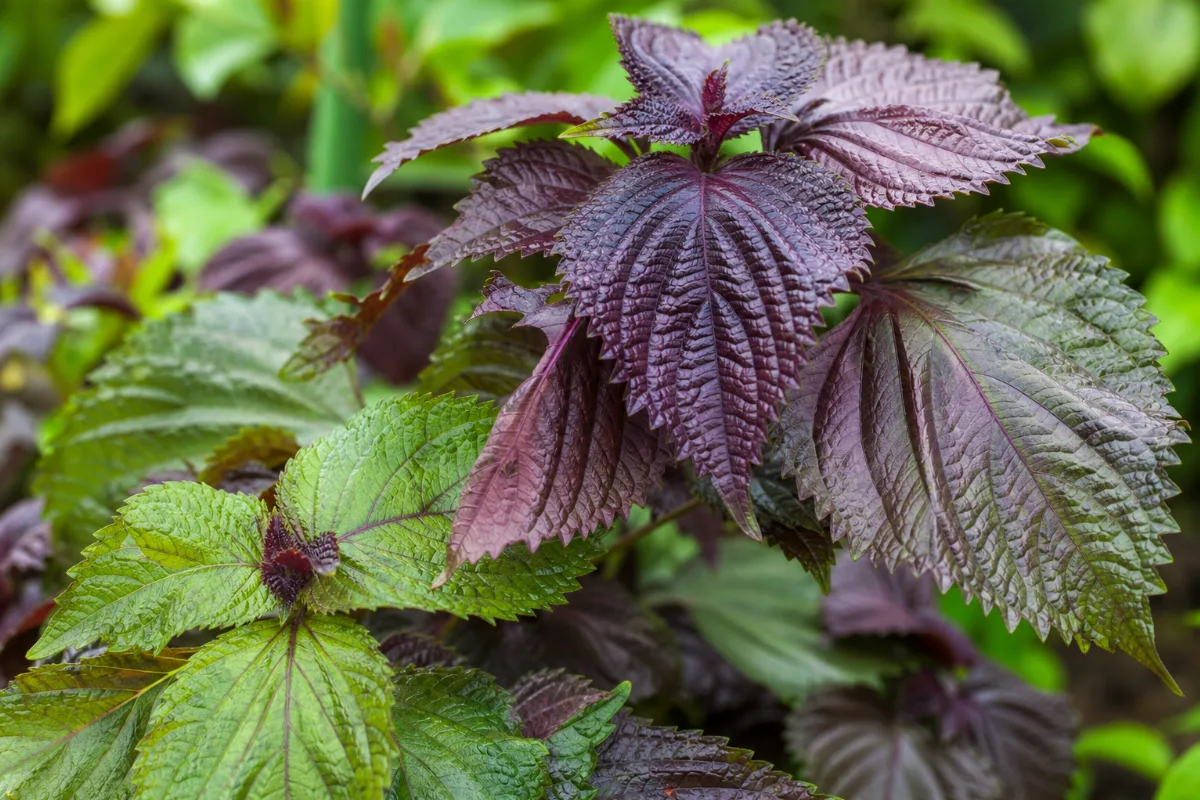
Herbs & Botanicals · Asian culinary leaf and traditional herb
Perilla
Perilla frutescens · also called Shiso, purple mint, beefsteak plant, egoma
Perilla, or shiso, is a leafy mint-family plant eaten across East Asia and used in traditional Chinese medicine for colds. Small trials of leaf extracts looked at hay fever, gut discomfort and thinking scores, but the evidence is thin and rated low or very low. The key cautions are seed allergy, which can be serious, and no safety data in pregnancy.
General information, not medical advice. Last substantive update · Not medically reviewed. A named clinician has not signed off on this page. How this page is made
About Perilla
Perilla (Perilla frutescens), also called shiso, is a leafy plant in the mint family. The leaves are eaten in East Asia and the dried leaf is a traditional Chinese remedy for colds. Small trials of leaf extracts looked at hay fever, gut comfort and thinking scores. All are rated low or very low. Seed allergy can be serious, and perilla ketone in the leaf oil poisons cattle.
What it is
Perilla frutescens is a mint-family plant grown across China, Japan and Korea. The leaf is eaten fresh as a garnish and vegetable, and the seeds are pressed for an omega-3-rich oil.
Chinese medicine records three parts: the stem, the dried leaf (su ye) and the ripe fruit. Different varieties and chemical types exist, so products can differ a lot.
What makes it distinctive
The leaf holds rosmarinic acid and luteolin, which are studied for allergy and inflammation, and volatile oils such as perillaldehyde and perilla ketone. The seed oil is 54 to 64% alpha-linolenic acid, an omega-3 fat.
Rosmarinic acid is also found in many other mint-family herbs. In one small study it was absorbed, but only a small share appeared in urine.
What it is used for
The best-studied use is hay fever, based on one 21-day trial from 2004. Other single trials looked at gut discomfort, thinking scores in cognitive impairment, and bone markers with seed oil.
Traditional uses for colds are not backed by trials, and we found no source for nausea in pregnancy.
How strong is the research
Every use rests on one or two small trials. Several were run or funded by the company behind the extract, and the hay fever result has not been repeated in a larger trial that we found.
Seed oil and leaf extracts are different products, so one does not support the other. Lab and animal findings about the leaf compounds do not show a human benefit.
At a glance
Traditional uses history, not proof
- In Chinese medicine the dried leaf, stem and ripe fruit are three recorded medicinal parts, and the leaf is a traditional remedy for the common cold.
- Used as a folk medicine for intestinal complaints and allergies, and eaten as a vegetable and garnish in East Asian cooking.
Studied for research
- Hay fever symptoms, low certainty (one very small trial of a rosmarinic-acid-rich leaf extract).
- Bloating and gut discomfort, very low certainty (one pilot trial and one uncontrolled study).
- Thinking scores in cognitive impairment, low certainty (one industry-funded trial).
- Bone breakdown markers with seed oil, low certainty (one small trial).
- Colds and nausea in pregnancy: traditional use only, no trial found.
Main compounds
- Rosmarinic acid and luteolin, the main leaf polyphenols.
- Perillaldehyde and perilla ketone in the leaf oil; perilla ketone is a lung toxin in cattle.
- Alpha-linolenic acid, an omega-3 fat that makes up over half of the seed oil.
Common forms
- Fresh leaf eaten as a vegetable or garnish.
- Dried leaf (su ye) used as a traditional decoction.
- Standardised leaf extracts used in the trials, and seed oil as a separate product.
Research links: 2004 trial of a rosmarinic-acid perilla extract for hay fever (PubMed) · 2025 review of perilla chemistry, safety and uses (Foods) · 2026 trial of a purple perilla leaf extract in cognitive impairment (PubMed) · Research Library · Genes & Biomarkers Library
The plant and its history
- Accepted scientific name
- Perilla frutescens (L.) Britton
- Naming authority
- (L.) Britton
- Common names
- Perilla (English); Shiso (Japanese / English); Purple mint (English); Beefsteak plant (English); Egoma (Japanese); Su ye (dried leaf) (Chinese)
- Botanical family
- Lamiaceae (mint family), the same family as basil, rosemary and sage.
- Classification
- Plantae > Tracheophyta > Magnoliopsida > Lamiales > Lamiaceae > Perilla > Perilla frutescens
- Native range
- Not verified in a source read; widely grown in East Asia (China, Japan, Korea) according to the papers.
- Habitat
- Not verified in a source read.
- What the plant looks like
- Roots: Not described in sources read.; Stems: Dried stem (Perillae Caulis) is a recorded medicinal part in Chinese materia medica.; Leaves: Leaves are eaten as a vegetable and garnish; dried leaf is Perillae Folium (su ye).; Flowers: Not described in sources read.; Fruit: Ripe fruit/seed (Perillae Fructus) is a recorded medicinal part and the source of the seed oil.
- Cultivation
- Not verified from a source read.
- Harvest and processing
- Leaf is eaten fresh or dried; seed is pressed for oil. Details not read.
- Look-alikes and adulterants
- Name: Other Perilla varieties and chemotypes; Note: Chemistry differs by variety and chemotype (perilla ketone, alpha-asarone, dillapiole types), so products are not interchangeable.; Name: Other mint-family herbs (basil, mint); Note: Related plants with different compounds and different safety profiles; check the Latin name.
- Sustainability and conservation
- Not assessed here.
Traditional use and history history, not clinical proof
| Tradition or era | Documented use | Source |
|---|---|---|
| Traditional Chinese medicine | The stem, dried leaf and ripe fruit are three recorded medicinal parts. The leaf is a traditional remedy for the common cold and is used as a folk medicine for intestinal disorders and allergies. | s-chemcentj-2013 |
| East Asian cooking | Leaf is eaten as a vegetable and garnish; seeds and seed oil are food products. Reviews describe wide use in functional foods, teas and beverages. | p40238536 |
Traditional use shows how a plant was used. It does not show that a supplement works or is safe today.
What is inside, and how it may work
What the plant contains and how those compounds act in cells and animals. Laboratory and animal mechanisms are not proven effects in people.
Main compounds
| Compound | Family | Where it is concentrated | Activity studied | Level of evidence |
|---|---|---|---|---|
| Rosmarinic acid PubChem 5281792 | phenolic acid | Leaf Content varies by plant part (measured in the 2013 paper; values not used here). | Anti-allergic and antioxidant in mice and cells; the hay fever trial used an extract enriched for it. 16 11 1 | Controlled trial |
| Luteolin PubChem 5280445 | flavonoid | Leaf | Antioxidant, anti-inflammatory and antiviral in lab models (review). 18 | Laboratory research |
| Perillaldehyde PubChem 16441 | monoterpene aldehyde | Leaf volatile oil | The characteristic flavour compound; antimicrobial in lab work; liver toxicity in animals at higher exposure (review). 18 | Animal research |
| Perilla ketone PubChem 68381 | furan ketone | Leaf volatile oil (perilla ketone chemotype) Dominant in some oil samples (80.76% of one sample's volatiles in the 2025 review). | Lung toxin in cattle and sheep; also lab anti-inflammatory and antimicrobial activity. 7 3 17 19 | Animal research |
| Alpha-linolenic acid (ALA) PubChem 5280934 | omega-3 fatty acid | Seed oil 54 to 64% of seed oil fatty acids (2025 review). | Raised red-cell ALA and was linked to a bone-breakdown marker fall in one trial. 18 9 | Controlled trial |
Mechanisms, receptors and pathways
| Target or pathway | Gene or receptor | What was found | Level |
|---|---|---|---|
| Neutrophil and eosinophil infiltration into the nose | Not specified | The hay fever trial found fewer neutrophils and eosinophils in nasal rinse fluid; the authors link this to rosmarinic acid reducing white-cell infiltration and to its antioxidant action (mouse model). 16 12 | Human data |
| IgE, histamine, IL-1 beta, IL-6, TNF-alpha, NF-kappa B and caspase-1 | NF-kappa B / Rel A; caspase-1 | In ovalbumin-sensitised mice and activated human mast cells, the leaf extract and rosmarinic acid reduced these allergy signals. 11 | Animal research |
| Lung-cell activation of perilla ketone | Not specified | Lung cells convert perilla ketone into reactive forms that bind proteins and cause cell death (cattle review). 7 | Animal research |
| Bone resorption | TRACP-5b (marker) | Seed oil was linked to lower TRACP-5b; the mechanism is not shown. 9 | Human data |
Absorption, metabolism and elimination
- Absorption
- After a single intake of perilla extract in six men, rosmarinic acid and methylated rosmarinic acid reached blood within about 0.5 to 2 hours, mostly as conjugated forms.
- Distribution
- Not found.
- Metabolism
- Rosmarinic acid was methylated and partly broken down to caffeic, ferulic and coumaric acid forms.
- Elimination
- About 6.3% of the dose appeared in urine as rosmarinic acid and related compounds, about 75% of that within 6 hours.
- Bioavailability
- Not measured directly; only a small share was recovered in urine.
Isolated compounds versus whole extracts
The hay fever trial used an extract enriched for rosmarinic acid; the cognition trial used a standardised ethanol leaf extract; the bone trial used seed oil; the gut trial used a proprietary extract. None tested fresh leaf, tea or whole dried leaf, so results should not be assumed to apply to cooking or tea.
Nutritional composition
Perilla leaf is mostly eaten in small amounts as a garnish or vegetable. Its seed oil is unusual for its very high alpha-linolenic acid share. A nutrient table was not read for the leaf.
3 low certainty1 very low certainty3 not enough evidence
What is Perilla good for?
The main studied uses are hay fever, gut discomfort and thinking scores, plus seed oil and bone markers. Every rating is low, very low or insufficient.
Benefits, one by one
Each card is a research question, not a promise. Tap a goal to filter. Open a card to see the studies, doses and limits.
Seasonal hay fever symptoms (itchy nose and eyes)
Low certaintyOne very small placebo-controlled trial of a rosmarinic-acid-rich perilla leaf extract found more people with milder itchy nose, watery eyes and itchy eyes than on placebo, and fewer inflammatory cells in nasal rinse fluid. It has not been confirmed in larger trials we could find.
4 studiesA rosmarinic-acid-enriched perilla extract (plant part not stated in …
Studies, doses and limits
What the trials found
Takano 2004 randomised 29 adults with mild seasonal allergic rhinoconjunctivitis to a rosmarinic-acid-enriched Perilla frutescens extract (two amounts) or placebo for 21 days. Osakabe 2004 reports the same trial plus mouse work. A 2020 systematic review of supplements for allergic rhinitis named a vitamin D3, quercetin and perilla combination as promising, but perilla could not be separated from the other ingredients and the authors call good-quality evidence scarce.
Results
Responder rates for itchy nose, watery eyes, itchy eyes and total symptoms were higher than on placebo (P<0.05). Neutrophils and eosinophils in nasal rinse fluid were lower than placebo (P<0.05). No adverse events and no abnormal routine blood tests were reported.
Effect sizes as reported
Reported as P-values only in the abstract; no symptom-score sizes were given.
Why this rating
One trial of about 10 people per group, 21 days, one hay fever season, industry-linked authors, abstract-level reading, and no independent repeat found.
Form and dose studied
A rosmarinic-acid-enriched perilla extract (plant part not stated in the abstract). This is not the same as fresh leaf, tea or seed oil. Ask a doctor or pharmacist about amounts.
Who was studied
Adults with mild seasonal allergic rhinoconjunctivitis, Japan.
Limits
Very small; short; single season; no larger trial found; the extract was a specific product.
Why researchers looked
Rosmarinic acid is a main leaf compound, and lab and animal work suggests it calms allergic inflammation.
Traditional use
In traditional Chinese practice the dried leaf is used as a folk medicine for allergies and intestinal complaints, and for colds.
Proposed mechanism Animal research
In mice, the leaf extract and rosmarinic acid lowered IgE, histamine and inflammatory signals. The human paper proposes that fewer neutrophils and eosinophils reaching the nose is part of the effect. This is not proven in people.
A proposed mechanism does not show that the effect happens in people.
No adverse events were reported in this small trial. Perilla seed and leaf can themselves cause allergy in some people; see safety.
Bloating, gas and mild stomach discomfort
Very low certaintyA 4-week pilot trial in 50 adults found gut symptoms improved with a perilla extract, but placebo also improved one symptom and a clear difference from placebo showed only in a subgroup of women. A two-herb perilla-and-ginger product also looked helpful in an uncontrolled study.
2 studiesA proprietary perilla extract (plant part not stated) and a perilla l…
Studies, doses and limits
What the trials found
Buchwald-Werner 2014 randomised 50 adults with gut discomfort and slow bowel movements to a proprietary perilla extract or placebo for 4 weeks (trial NCT01931930). Di Pierro 2020 reviewed records of patients with functional dyspepsia who took a perilla-leaf-plus-ginger product, with no comparison group.
Results
In the perilla group, bloating (-0.44 points, p=0.0003), gas, rumbling, fullness and abdominal discomfort all improved over time; in the placebo group only abdominal discomfort improved (-0.31, p=0.0345). In women a combined bloating and discomfort score was better than placebo (95% CI 0.003 to 0.77; p=0.048). In the dyspepsia record review the authors report fewer symptoms from week 1, with mild side effects (gas, bloating, stomach burning, trouble sleeping) lasting 3 to 4 days.
Effect sizes as reported
Changes inside groups on a 5-point scale as above; the only between-group difference was the women-only subscore.
Why this rating
Pilot of 50 people; mostly within-group changes; the between-group difference was in a subgroup with a confidence interval near zero; the dyspepsia study had no control group and mixed two herbs; the first trial is industry-linked.
Form and dose studied
A proprietary perilla extract (plant part not stated) and a perilla leaf plus ginger root product. Ask a doctor or pharmacist about amounts.
Who was studied
Healthy adults aged 30 to 70 with gut discomfort; patients with functional dyspepsia.
Limits
Small, short, high placebo response in gut studies, products not comparable.
Why researchers looked
Lab work suggested a perilla extract can relax gut muscle and calm inflammation; perilla leaf is also a traditional food herb eaten with fish and rice.
Traditional use
The dried leaf is used in traditional Chinese practice for intestinal complaints.
Proposed mechanism Laboratory research
Lab and tissue work (cited in the trial paper) suggested prokinetic, antispasmodic and anti-inflammatory effects. Not shown in people.
A proposed mechanism does not show that the effect happens in people.
The combination product caused short-lived gas, bloating, stomach burning and sleep trouble in some patients.
Thinking and memory scores in people with cognitive impairment
Low certaintyOne 2026 trial of 100 adults found a standardised purple perilla leaf extract improved thinking-test scores more than placebo over 12 weeks, though both groups improved and blood markers did not differ.
1 studiesA single standardised purple perilla leaf extract. Ask a doctor or ph…
Studies, doses and limits
What the trials found
Baek 2026 randomised 100 adults with cognitive impairment (50 extract, 50 placebo) to a standardised ethanol extract of Perilla frutescens var. acuta leaves for 12 weeks.
Results
The extract group improved more than placebo on the K-MMSE-2 total, its attention-and-calculation and language sub-scores, the ADAS-Cog total and several ADAS-Cog sub-scores. Both groups improved. Plasma amyloid beta and BDNF did not differ. No clinically significant safety changes.
Effect sizes as reported
Statistically significant between-group differences; score sizes not given in the abstract.
Why this rating
One randomised trial of 100 people, 12 weeks; funded by the extract maker whose employees are authors; large placebo response; abstract-level reading; no replication.
Form and dose studied
A single standardised purple perilla leaf extract. Ask a doctor or pharmacist about amounts.
Who was studied
Korean adults with cognitive impairment.
Limits
Short; one extract; no dementia diagnosis outcomes; biomarkers did not change.
Why researchers looked
Leaf polyphenols such as rosmarinic acid and luteolin are antioxidant and anti-inflammatory in the lab.
Traditional use
Not a documented traditional use in the sources we read.
Proposed mechanism Preliminary mechanism
Lab and animal work links leaf compounds to antioxidant and nerve-protective effects. The trial did not show a change in plasma amyloid beta or BDNF, so the way it might work in people is unknown.
A proposed mechanism does not show that the effect happens in people.
No clinically significant safety changes in the trial's blood tests.
Bone breakdown markers (seed oil)
Low certaintyA 12-month trial of perilla seed oil (a rich source of alpha-linolenic acid, an omega-3) in 52 healthy adults found a heel-bone ultrasound measure and a bone-breakdown marker moved in a better direction than with olive oil. This is the seed oil, not the leaf.
2 studiesPerilla seed oil, a different product from leaf. Ask a doctor or phar…
Studies, doses and limits
What the trials found
Matsuzaki 2023 randomised 52 healthy Japanese adults (mean age 54) to perilla seed oil or olive oil for 12 months.
Results
Compared with olive oil: heel ultrasound %YAM higher, serum TRACP-5b (bone breakdown) lower, BALP (bone building) unchanged; red-cell alpha-linolenic acid and an antioxidant ratio rose.
Effect sizes as reported
P-values only in the abstract.
Why this rating
One small trial of 52 people; surrogate bone measures, no fractures; abstract-level reading; funding not seen.
Form and dose studied
Perilla seed oil, a different product from leaf. Ask a doctor or pharmacist about amounts.
Who was studied
Healthy Japanese adults.
Limits
Heel ultrasound is a rough measure; single trial.
Why researchers looked
Omega-3 fats have been linked to bone density, and perilla seed oil is unusually high in alpha-linolenic acid (54 to 64% of its fats per a 2025 review).
Traditional use
The ripe fruit (seed) is a recorded traditional medicine part, but not specifically for bone.
Proposed mechanism Preliminary mechanism
The authors suggest less bone resorption and higher alpha-linolenic acid in cell membranes. Not proven.
A proposed mechanism does not show that the effect happens in people.
Seeds and seed products can cause allergy; high-omega-3 oils may affect bleeding in theory. See safety.
Colds, cough and chest complaints (traditional use)
Not enough evidencePerilla leaf is a traditional Chinese remedy for the common cold. We found no modern trial for colds, so this rests on tradition.
2 studiesTraditionally a decoction of dried leaf. Ask a doctor or pharmacist a…
Studies, doses and limits
What the trials found
No human trial for colds was found in the sources we read.
Results
None to report.
Effect sizes as reported
Not applicable
Why this rating
Traditional use only; no human trial found.
Form and dose studied
Traditionally a decoction of dried leaf. Ask a doctor or pharmacist about amounts.
Who was studied
Not studied.
Limits
Tradition is not proof of benefit.
Why researchers looked
It is one of the best-known traditional uses of the dried leaf and stem.
Traditional use
A 2013 paper states the plant is traditionally used for the common cold and that the stem, leaf and ripe fruit are the three recorded medicinal parts in Chinese materia medica.
Proposed mechanism Laboratory research
Lab work reports antiviral and anti-inflammatory activity of leaf extracts and compounds, including against a coronavirus in cell culture. Not shown in people.
A proposed mechanism does not show that the effect happens in people.
See safety for allergy, skin and pregnancy cautions.
Nausea in pregnancy (traditional use, not verified)
Not enough evidencePerilla is described in some traditional medicine for settling the stomach in pregnancy. We did not find a source we could read that documents this, and we found no human study.
2 studiesNot applicable. Ask a doctor or midwife before using any herb in preg…
Studies, doses and limits
What the trials found
No human study found. A perilla and ginger product reduced nausea among other symptoms in an uncontrolled dyspepsia series (not pregnant women).
Results
None to report for pregnancy.
Effect sizes as reported
Not applicable
Why this rating
No human study in pregnancy; traditional claim not verified in a source read.
Form and dose studied
Not applicable. Ask a doctor or midwife before using any herb in pregnancy.
Who was studied
Pregnant women: not studied.
Limits
Safety data in pregnancy are missing, which is a reason for caution rather than evidence of benefit.
Why researchers looked
Readers often ask about it, but we found no source documenting it.
Traditional use
NOT verified: none of the sources we read mention nausea or pregnancy use. A consumer reference advises avoiding perilla in pregnancy because of a lack of safety data (summary-only).
Proposed mechanism Pharmacological theory
No mechanism studied for this use.
A proposed mechanism does not show that the effect happens in people.
Avoid unless a clinician advises (see safety).
Antioxidant and anti-inflammatory activity (lab and animal only)
Not enough evidenceLeaf compounds such as rosmarinic acid, luteolin and perillaldehyde show antioxidant, anti-inflammatory, antiviral and other effects in cells and animals. These do not show a benefit in people.
2 studiesNot applicable.
Studies, doses and limits
What the trials found
Only the hay fever, gut and thinking trials above exist in people.
Results
Lab and animal findings only.
Effect sizes as reported
Not applicable
Why this rating
Cell and animal work does not show a human benefit.
Form and dose studied
Not applicable.
Who was studied
Not applicable.
Limits
Lab concentrations may not be reached by eating or drinking the plant.
Why researchers looked
The plant is rich in polyphenols and volatile oils.
Traditional use
Leaf and seed are eaten as food in East Asia.
Proposed mechanism Laboratory research
Reviews describe effects on inflammation pathways and oxidation in lab models. Rosmarinic acid is found in many other herbs too.
A proposed mechanism does not show that the effect happens in people.
Perilla ketone and perillaldehyde also show toxicity in animal work; see safety.
Connections to the rest of health
How Perilla connects to the rest of our health knowledge graph. Every link says what kind of connection it is. A safety link (for example to the liver) is a warning, not a benefit. A study that merely mentions a topic never creates a benefit link.
Explore every connection: goals, body systems, organs, symptoms, genes
A. Wellness goals
| Connected to | Kind of connection | Evidence status | Context | Studies |
|---|---|---|---|---|
| Immune Support | Potential benefit | Low certainty | Seasonal hay fever symptoms (itchy nose and eyes): One very small placebo-controlled trial of a rosmarinic-acid-rich perilla leaf extract found more people with milder itchy nose, watery eyes and itchy eyes than on placebo, and fewer inflammatory cells in nasal rinse fluid. It has not been confirmed in larger trials we could find. | 16 12 11 13 |
| Inflammation Balance | Potential benefit | Low certainty | Seasonal hay fever symptoms (itchy nose and eyes): One very small placebo-controlled trial of a rosmarinic-acid-rich perilla leaf extract found more people with milder itchy nose, watery eyes and itchy eyes than on placebo, and fewer inflammatory cells in nasal rinse fluid. It has not been confirmed in larger trials we could find. | 16 12 11 13 |
| Digestive Support | Potential benefit | Very low certainty | Bloating, gas and mild stomach discomfort: A 4-week pilot trial in 50 adults found gut symptoms improved with a perilla extract, but placebo also improved one symptom and a clear difference from placebo showed only in a subgroup of women. A two-herb perilla-and-ginger product also looked helpful in an uncontrolled study. | 4 6 |
| Gut Health | Potential benefit | Very low certainty | Bloating, gas and mild stomach discomfort: A 4-week pilot trial in 50 adults found gut symptoms improved with a perilla extract, but placebo also improved one symptom and a clear difference from placebo showed only in a subgroup of women. A two-herb perilla-and-ginger product also looked helpful in an uncontrolled study. | 4 6 |
| Cognitive Performance | Potential benefit | Low certainty | Thinking and memory scores in people with cognitive impairment: One 2026 trial of 100 adults found a standardised purple perilla leaf extract improved thinking-test scores more than placebo over 12 weeks, though both groups improved and blood markers did not differ. | 2 |
| Brain Health | Potential benefit | Low certainty | Thinking and memory scores in people with cognitive impairment: One 2026 trial of 100 adults found a standardised purple perilla leaf extract improved thinking-test scores more than placebo over 12 weeks, though both groups improved and blood markers did not differ. | 2 |
| Memory Support | Potential benefit | Low certainty | Thinking and memory scores in people with cognitive impairment: One 2026 trial of 100 adults found a standardised purple perilla leaf extract improved thinking-test scores more than placebo over 12 weeks, though both groups improved and blood markers did not differ. | 2 |
| Healthy Aging | Potential benefit | Low certainty | Bone breakdown markers (seed oil): A 12-month trial of perilla seed oil (a rich source of alpha-linolenic acid, an omega-3) in 52 healthy adults found a heel-bone ultrasound measure and a bone-breakdown marker moved in a better direction than with olive oil. This is the seed oil, not the leaf. | 9 18 |
| Immune Support | Traditional use | Not enough evidence | Colds, cough and chest complaints (traditional use): Perilla leaf is a traditional Chinese remedy for the common cold. We found no modern trial for colds, so this rests on tradition. | 5 18 |
| Digestive Support | Traditional use | Not enough evidence | Nausea in pregnancy (traditional use, not verified): Perilla is described in some traditional medicine for settling the stomach in pregnancy. We did not find a source we could read that documents this, and we found no human study. | 6 14 |
| Womens Wellness | Traditional use | Not enough evidence | Nausea in pregnancy (traditional use, not verified): Perilla is described in some traditional medicine for settling the stomach in pregnancy. We did not find a source we could read that documents this, and we found no human study. | 6 14 |
| Inflammation Balance | Preliminary mechanism | Not enough evidence | Antioxidant and anti-inflammatory activity (lab and animal only): Leaf compounds such as rosmarinic acid, luteolin and perillaldehyde show antioxidant, anti-inflammatory, antiviral and other effects in cells and animals. These do not show a benefit in people. | 18 17 |
B. Body systems
| Connected to | Kind of connection | Evidence status | Context | Studies |
|---|---|---|---|---|
| Lungs | Adverse effect or risk | Not enough evidence | Lung oedema in cattle and sheep from perilla ketone; occupational asthma from roasted seed fumes in people. Preparation or compound: Perilla ketone (animal) and seed fumes (human) |
7 3 18 |
| Allergy | Adverse effect or risk | Low certainty | Seed anaphylaxis in children and a case of egoma allergy. Preparation or compound: Seed and egoma |
8 15 |
| Blood and clotting | Drug or supplement interaction | Not enough evidence | Theory only; no perilla bleeding study. Preparation or compound: Seed oil (alpha-linolenic acid) |
18 |
| Immune System | Biological association | Low certainty | Studied for: Seasonal hay fever symptoms (itchy nose and eyes) Studied for: Colds, cough and chest complaints (traditional use) | 16 12 11 13 5 18 17 |
| Respiratory System | Biological association | Low certainty | Studied for: Seasonal hay fever symptoms (itchy nose and eyes) Studied for: Colds, cough and chest complaints (traditional use) | 16 12 11 13 5 18 |
| Digestive System | Biological association | Very low certainty | Studied for: Bloating, gas and mild stomach discomfort Studied for: Nausea in pregnancy (traditional use, not verified) | 4 6 14 |
| Nervous System | Biological association | Low certainty | Studied for: Thinking and memory scores in people with cognitive impairment | 2 |
| Musculoskeletal System | Biological association | Low certainty | Studied for: Bone breakdown markers (seed oil) | 9 18 |
| Reproductive System | Biological association | Not enough evidence | Studied for: Nausea in pregnancy (traditional use, not verified) | 6 14 |
D. Symptoms
| Connected to | Kind of connection | Evidence status | Context | Studies |
|---|---|---|---|---|
| Hay fever (seasonal allergic rhinitis) | Potential benefit | Low certainty | One small 21-day trial of a rosmarinic-acid-rich leaf extract reported more responders than placebo. Preparation or compound: Rosmarinic-acid-enriched perilla extract |
16 |
| Seed and egoma food allergy | Adverse effect or risk | Low certainty | Seed anaphylaxis in children and a case of egoma allergy. Preparation or compound: Perilla seed, egoma |
8 15 |
I. Biomarkers
| Connected to | Kind of connection | Evidence status | Context | Studies |
|---|---|---|---|---|
| Hay fever symptom responder rate (diary) | Biological association | Low certainty | Measured in trials: raised. A lab change is not the same as a health benefit. | 16 |
| Neutrophils and eosinophils in nasal rinse fluid | Biological association | Low certainty | Measured in trials: lowered. A lab change is not the same as a health benefit. | 16 |
| Bloating and gut symptom scores (5-point diary) | Biological association | Very low certainty | Measured in trials: lowered. A lab change is not the same as a health benefit. | 4 |
| Cognitive test scores (K-MMSE-2 and ADAS-Cog) | Biological association | Low certainty | Measured in trials: mixed. A lab change is not the same as a health benefit. | 2 |
| Plasma amyloid beta and BDNF | Biological association | Low certainty | Measured in trials: no-change. A lab change is not the same as a health benefit. | 2 |
| TRACP-5b (bone breakdown marker) | Biological association | Low certainty | Measured in trials: lowered. A lab change is not the same as a health benefit. | 9 |
| Red-cell alpha-linolenic acid | Biological association | Low certainty | Measured in trials: raised. A lab change is not the same as a health benefit. | 9 |
J. Genes, receptors and enzymes
| Connected to | Kind of connection | Evidence status | Context | Studies |
|---|---|---|---|---|
| IL-1 beta, IL-6, TNF-alpha (inflammation signals) | Preliminary mechanism | Animal | Lowered by the extract and rosmarinic acid in mice and mast cells; not shown in people. | 11 |
K. Biological pathways
| Connected to | Kind of connection | Evidence status | Context | Studies |
|---|---|---|---|---|
| NF-kappa B | Preliminary mechanism | In vitro | Inhibited in activated human mast cells in dishes. | 11 |
L. Active compounds
| Connected to | Kind of connection | Evidence status | Context | Studies |
|---|---|---|---|---|
| Rosmarinic acid | Biological association | Rct | Anti-allergic and antioxidant in mice and cells; the hay fever trial used an extract enriched for it. Preparation or compound: Leaf |
16 11 1 |
| Luteolin | Biological association | In vitro | Antioxidant, anti-inflammatory and antiviral in lab models (review). Preparation or compound: Leaf |
18 |
| Perillaldehyde | Biological association | Animal | The characteristic flavour compound; antimicrobial in lab work; liver toxicity in animals at higher exposure (review). Preparation or compound: Leaf volatile oil |
18 |
| Perilla ketone | Biological association | Animal | Lung toxin in cattle and sheep; also lab anti-inflammatory and antimicrobial activity. Preparation or compound: Leaf volatile oil (perilla ketone chemotype) |
7 3 17 19 |
| Alpha-linolenic acid (ALA) | Biological association | Rct | Raised red-cell ALA and was linked to a bone-breakdown marker fall in one trial. Preparation or compound: Seed oil |
18 9 |
Each connection is stored with the ingredient, the connected record, the kind of connection, the evidence status, the supporting studies, the preparation or compound involved, and a review date (last reviewed October 25, 2026).
Evidence at a glance: what changed in 7 lab markers
Tap a number to show only those markers. Counts are markers, not people.
The evidence
The research centre for Perilla. Every record here was checked against PubMed or the publisher's page; we never list a study we have not verified.
Evidence by outcome
Bars show how many studies we found for each outcome, not how well it works. People are added up across trials only (reviews are not added, to avoid double counting).
How we rate evidence
High certainty
Several well-run trials or reviews agree; further research is unlikely to change the picture much.
Moderate certainty
Good trials point the same way, but some doubt remains.
Low certainty
Small, short or inconsistent trials. The finding could change with better research.
Very low certainty
Very little or very weak human data. Treat as a possibility only.
Mixed findings
Trials or reviews disagree with each other.
Not enough evidence
Not enough human research to say either way.
Evidence against
Good research found no benefit, or found harm.
We take the reviewers' own risk-of-bias and GRADE statements where they exist, and otherwise judge from study size, design, consistency, directness and whether a product matches what is sold. Many publications do not make evidence high. Method note: We searched PubMed, GBIF and PubChem, and recorded each study's design, people, product and result. Where we read only an abstract, we say so. Two web pages did not load and are marked as carried over.
Study library: every study we checked 22
| Study | Design | People | Product, dose, length | Result |
|---|---|---|---|---|
| Baba 2005 Absorption, metabolism, degradation and urinary excretion of rosmarinic acid after intake of Perilla frutescens extract in humans European Journal of Nutrition · PMID 15309457 · DOI |
Other |
6 Six healthy men |
Perilla extract containing a set amount of rosmarinic acid (single intake) extract Amount given in the abstract; not repeated here. Single intake, 10-day gap crossover · vs Placebo |
Rosmarinic acid and its methylated form were absorbed and mostly appeared as conjugated forms in blood. Peak levels came about 0.5 to 2 hours after intake. About 6.3% of the dose appeared in urine as rosmarinic acid and related breakdown products, about 75% of that within 6 hours. Urine recovery 6.3 +/- 2.2% of the dose. Methods, limits and fundingOutcomes: Rosmarinic acid and metabolites in blood and urine Limitations: Six men, one dose, one extract. Funding and conflicts: Authors from Meiji Seika Kaisha (industry). Read: abstract |
| Baek 2026 Efficacy and Safety of Standardized Ethanol Extract of Purple Perilla (Perilla frutescens Britton var. acuta Kudo) Leaves in Cognitive Impairment: A Randomized, Double-Blind, Placebo-Controlled Clinical Trial Nutrients · PMID 41901135 · DOI |
Controlled trial |
100 Adults with cognitive impairment (50 extract, 50 placebo) |
Standardised ethanol extract of purple perilla leaves leaf Amount given in the abstract; not repeated here. 12 weeks · vs Placebo |
Both groups improved, but the extract group improved more on the K-MMSE-2 total, two of its sub-scores, the ADAS-Cog total and several ADAS-Cog sub-scores. Plasma amyloid beta and BDNF did not differ between groups. No clinically significant safety changes. Between-group differences were reported as statistically significant; the abstract gives no score sizes. Methods, limits and fundingOutcomes: K-MMSE-2 and ADAS-Cog scores (primary); plasma amyloid beta and BDNF (secondary); safety tests Limitations: Single 12-week trial; both groups improved, so placebo effect is large; score sizes and dropouts not seen in the abstract. Funding and conflicts: Industry-funded: three authors are employed by Borambio Co., Ltd., which funded the trial. Read: abstract |
| Bernard 1995 Comparison of the pulmonary dysfunction caused by cardiogenic and noncardiogenic pulmonary edema Chest · PMID 7656636 · DOI |
Animal research animal |
Awake instrumented sheep | Perilla ketone given into a vein to cause lung-leak (noncardiogenic) oedema isolated compound Intravenous; not applicable to eating the plant Hours (experiment) · vs Cardiogenic oedema model |
Perilla ketone infusion produced lung oedema with similar X-ray scores, lower lung compliance and a wider oxygen gradient, without a rise in capillary pressure. Not applicable Methods, limits and fundingOutcomes: Lung water flow, chest X-ray scores, oxygen gradient, lung stiffness Limitations: Animal model using a drug-like intravenous exposure; shows the compound can cause lung oedema but says nothing about the amount in a leaf or tea. Funding and conflicts: Not stated. Read: abstract |
| Buchwald-Werner 2014 Perilla extract improves gastrointestinal discomfort in a randomized placebo controlled double blind human pilot study BMC Complementary and Alternative Medicine · PMID 24885816 · DOI |
Controlled trial |
50 Healthy adults aged 30 to 70 with gut discomfort and reduced bowel movements |
Proprietary Perilla frutescens extract not stated in the abstract Amount given in the abstract; not repeated here. 4 weeks after a 2-week run-in · vs Placebo |
Within the perilla group every symptom improved over time (for example bloating -0.44 points, p=0.0003). In the placebo group only abdominal discomfort improved (-0.31, p=0.0345). In women, a combined bloating-and-discomfort score was better than placebo (95% CI 0.003 to 0.77; p=0.048). The clear between-group difference was found only in a women-only subgroup, with a confidence interval touching zero. Methods, limits and fundingOutcomes: Daily 5-point scores for bloating, gas, rumbling, fullness and abdominal discomfort Limitations: Pilot of 50 people, 4 weeks. Most results are changes inside one group, which placebo effects can explain. Plant part not stated. Funding and conflicts: Lead author works for Vital Solutions GmbH, the company behind the extract; treat as industry-linked. Registration: NCT01931930 Read: abstract |
| Chemistry Central Journal authors (as listed on PubMed 23548079) 2013 Rosmarinic acid content and volatile constituents in parts of Perilla frutescens Chemistry Central Journal · PMID 23548079 |
Other in-vitro |
Lab analysis of plant parts | Perillae Caulis (stem), Perillae Folium (leaf), Perillae Fructus (fruit/seed) stem, leaf, fruit Not applicable Not applicable · vs Not applicable |
Background section: the plant is a traditional medicine used for the common cold. The stem, leaf and ripe fruit are the three recorded medicinal parts. The leaf is used as a folk medicine for intestinal disorders and allergies in traditional Chinese practice. Not applicable Methods, limits and fundingOutcomes: Rosmarinic acid and volatile oil content by part Limitations: Introduction text read; the lab results were not used here. Funding and conflicts: Not read. Read: full-text |
| Di Pierro 2020 Effectiveness of a nutraceutical supplement containing highly standardized perilla and ginger extracts in patients with functional dyspepsia Minerva Gastroenterologica e Dietologica · PMID 32283883 · DOI |
Case series |
Patients with functional dyspepsia (number not given in the abstract) | Combination: standardised ginger root extract plus a multi-fraction Perilla frutescens leaf botanical (contains polyphenols and perilla ketone) leaf (plus ginger root) Amount given in the abstract; not repeated here. Not stated in the abstract · vs None (single-group) |
Authors report fewer symptoms from week 1 (pain, heartburn, reflux, nausea, early fullness) and mild, short side effects (gas, bloating, stomach burning, trouble falling asleep) lasting 3 to 4 days. Not given in the abstract. Methods, limits and fundingOutcomes: Dyspepsia symptoms Limitations: Retrospective, no control group, a two-herb product, so the perilla part cannot be separated. Funding and conflicts: Author affiliation is a supplement research company; funding not read. Read: abstract |
| Doster 2010 Bovine atypical interstitial pneumonia Veterinary Clinics of North America: Food Animal Practice · PMID 20619192 · DOI |
Narrative review animal |
Cattle | Perilla ketone (a plant compound), alongside 3-methylindole and 4-ipomeanol not stated Not applicable Not applicable · vs Not applicable |
Naturally occurring compounds, including perilla ketone, are changed by lung cells into reactive forms that damage bronchiolar and alveolar cells and produce a lung disease that cannot be told apart from natural atypical interstitial pneumonia in cattle. Not applicable Methods, limits and fundingOutcomes: Causes of atypical interstitial pneumonia in cattle Limitations: Veterinary review of cattle; does not describe human cases. Funding and conflicts: Not stated. Read: abstract |
| Jeong 2026 Advancing allergen characterization in Perilla seed: an oil body purification approach Allergy, Asthma & Clinical Immunology · PMID 41618458 · DOI |
Other |
Blood samples from children allergic to perilla seed | Perilla seed proteins seed Not applicable Not applicable · vs Not applicable |
The abstract states perilla seed is a leading cause of seed-induced anaphylaxis in Korean children. Oleosin proteins of 14 to 15 kDa (and probably a 33 kDa form) were the main allergens. Not applicable Methods, limits and fundingOutcomes: IgE binding to seed proteins Limitations: Lab study of allergen proteins; does not give how common the allergy is. Funding and conflicts: No competing interests declared. Read: abstract |
| Matsuzaki 2023 Perilla seed oil improves bone health by inhibiting bone resorption in healthy Japanese adults: A 12-month, randomized, double-blind, placebo-controlled trial Phytotherapy Research · PMID 36637040 · DOI |
Controlled trial |
52 Healthy Japanese adults, mean age 54 (27 seed oil, 25 olive oil placebo) |
Perilla seed oil (rich in alpha-linolenic acid) seed oil Daily amount given in the abstract; not repeated here 12 months · vs Olive oil |
Compared with olive oil, the seed oil group had a higher %YAM and lower TRACP-5b (a bone-breakdown marker) at 12 months. BALP (bone building) was unchanged. Red-cell alpha-linolenic acid and an antioxidant/oxidant ratio rose. P-values only in the abstract. Methods, limits and fundingOutcomes: Heel ultrasound bone measure (%YAM); bone turnover markers TRACP-5b and BALP; red-cell fatty acids; antioxidant markers Limitations: Small, one country. Heel ultrasound is a rough measure, not a fracture outcome. This is the seed oil, not leaf. Funding and conflicts: Funding not stated in the abstract. Read: abstract |
| Merck Veterinary Manual 2024 Perilla ketone toxicosis (purple mint toxicosis) in cattle (Merck Veterinary Manual) Merck Veterinary Manual · Source |
Consumer reference animal |
Cattle | Purple mint (Perilla frutescens) as a grazed plant whole plant Not applicable Not applicable · vs Not applicable |
Per our earlier summary: leaves and seeds contain perilla ketone, which causes severe lung disease in cattle. The page returned no text today, so this is carried over and NOT re-verified; p20619192 is the verified source. Not applicable Methods, limits and fundingOutcomes: Livestock poisoning Limitations: Not re-read today. Funding and conflicts: None Read: summary-only |
| Oh 2011 Effect of Perilla frutescens var. acuta Kudo and rosmarinic acid on allergic inflammatory reactions Experimental Biology and Medicine · PMID 21239739 · DOI |
Animal research animal |
Mice sensitised to ovalbumin and human mast cells in dishes | 30% ethanol extract of Perilla frutescens var. acuta leaf, and rosmarinic acid leaf Not applicable to people Not applicable · vs Untreated sensitised mice |
The extract and rosmarinic acid reduced rubbing, IgE, histamine and inflammatory signals in sensitised mice and calmed activated human mast cells in dishes. Not applicable Methods, limits and fundingOutcomes: Nose, ear and eye rubbing, IgE, histamine, cytokines, mast cell and eosinophil counts Limitations: Mouse and cell work; does not show a benefit in people. Funding and conflicts: Not stated in the abstract. Read: abstract |
| Osakabe 2004 Anti-inflammatory and anti-allergic effect of rosmarinic acid (RA); inhibition of seasonal allergic rhinoconjunctivitis (SAR) and its mechanism BioFactors · PMID 15630183 · DOI |
Controlled trial |
Seasonal allergic rhinoconjunctivitis patients (same trial as p14988517) plus a mouse ear-swelling model | Rosmarinic acid / perilla extract leaf (not stated) Amount given in the abstract; not repeated here. 21 days (people) · vs Placebo |
Restates the human result (fewer symptoms and fewer neutrophils and eosinophils in nasal rinse fluid than placebo). Mouse work shows topical rosmarinic acid reduced swelling and oxidative markers. Not given in the abstract. Methods, limits and fundingOutcomes: Symptoms and nasal rinse cells in people; ear swelling and oxidation markers in mice Limitations: This is a report of the same human trial, not a second trial. Mouse findings are animal data only. Funding and conflicts: Lead author is from Meiji Seika Kaisha (industry affiliation in the abstract record). Read: abstract |
| Pellow 2020 Health supplements for allergic rhinitis: A mixed-methods systematic review Complementary Therapies in Medicine · PMID 10.1016/j.ctim.2020.102425 |
Systematic review abstract |
Allergic rhinitis; 48 randomised trials and 10 observational studies reviewed | Many supplements; one combination of vitamin D3, quercetin and Perilla frutescens not specified in the abstract Not applicable Various · vs Allergic rhinitis outcomes |
Not given in the abstract. Perilla was only part of a combination, so its own effect cannot be separated. The abstract does not name the individual perilla studies. Methods, limits and fundingOutcomes: Of many supplements, the authors named a vitamin D3, quercetin and Perilla frutescens combination as one of the promising combination formulas. They stress that good-quality evidence is scarce and advise shared decision-making. Limitations: No conflict declared by the authors. Funding and conflicts: human Read: https://pubmed.ncbi.nlm.nih.gov/32507438/ |
| RxList 2026 Perilla (RxList supplement monograph) RxList consumer reference · Source |
Consumer reference |
General readers | Perilla products leaf, seed Not applicable Not applicable · vs Not applicable |
Per our earlier summary of this page: advises avoiding perilla in pregnancy and breastfeeding because reliable safety information is lacking, and notes seed allergy and skin rash. The page did not load for us on 2026-10-25 (no text returned), so this is carried over from our earlier summary and NOT re-verified. Not applicable Methods, limits and fundingOutcomes: Safety and use summary Limitations: Not re-read today; a consumer reference, not a regulator. Funding and conflicts: None Read: summary-only |
| Shirota 2024 A child case of Egoma (Perilla frutescens) allergy due to school lunch, probably caused by percutaneous sensitization Arerugi · PMID 38749713 · DOI |
Case report |
1 7-year-old girl with childhood eczema |
Egoma (Perilla frutescens) food leaf/seed food item (not specified) Not applicable Single exposure · vs None |
Vomiting, facial swelling and oral discomfort after eating egoma at school lunch; oral food challenge positive; antibodies bound a protein of about 26 kDa. Authors think skin contact at home (grandfather grew egoma) sensitised her. Not applicable Methods, limits and fundingOutcomes: Allergic reaction and oral challenge Limitations: One child; Japanese-language paper, abstract read in English. Egoma is the same species used as seed-oil perilla. Funding and conflicts: None noted. Read: abstract |
| Takano 2004 Extract of Perilla frutescens enriched for rosmarinic acid, a polyphenolic phytochemical, inhibits seasonal allergic rhinoconjunctivitis in humans Experimental Biology and Medicine · PMID 14988517 · DOI |
Controlled trial |
29 Adults with mild seasonal allergic rhinoconjunctivitis (grouped as 10 high-amount, 9 low-amount, 10 placebo) |
Perilla frutescens extract enriched for rosmarinic acid leaf (not stated in the abstract) Amount given in the abstract; not repeated here. 21 days · vs Placebo |
Compared with placebo, the extract raised the share of responders for itchy nose, watery eyes, itchy eyes and total symptoms (P<0.05). Neutrophils and eosinophils in nasal rinse fluid were lower than placebo (P<0.05). No adverse events and no abnormal routine blood tests were reported. Responder rates and cell counts are given as P-values only in the abstract. Methods, limits and fundingOutcomes: Daily symptom diary; cells and chemicals in nasal rinse fluid; blood IgE and routine blood tests Limitations: Very small (about 10 per group), 21 days, one season. Plant part not named in the abstract. Not shown to be repeated by an independent group in the sources we read. Funding and conflicts: Funding not stated in the abstract. Co-authors on the linked reports are from the food company Meiji Seika (see p15630183 and p15309457), so treat as possibly industry-linked. Read: abstract |
| Wang 2022 Advances in the Pharmacological Activities and Effects of Perilla Ketone and Isoegomaketone Evidence-Based Complementary and Alternative Medicine · PMID 36337585 · DOI |
Narrative review in-vitro |
Review of lab work | Perilla ketone and isoegomaketone (isolated compounds) leaf essential oil Not applicable Not applicable · vs Not applicable |
Describes anticancer, antifungal, anti-inflammatory and other activity in the lab. The abstract does not discuss toxicity. Not applicable Methods, limits and fundingOutcomes: Pharmacology Limitations: Abstract only; lab-focused; says nothing on human safety. Funding and conflicts: No conflicts declared. Read: abstract |
| Yi 2025 Comprehensive Review of Perilla frutescens: Chemical Composition, Pharmacological Mechanisms, and Industrial Applications in Food and Health Products Foods · PMID 40238536 · DOI |
Narrative review animal |
Review of lab, animal and some human work | Whole plant, leaf extracts, seed oil leaf, seed Not applicable Not applicable · vs Not applicable |
Lists leaf compounds (perillaldehyde, limonene, luteolin, apigenin, rosmarinic acid). Seed oil is 54 to 64% alpha-linolenic acid. Safety section: perilla ketone has potent lung toxicity; perillaldehyde is GRAS but has liver toxicity in animals at higher exposure; roasted seed fumes caused occupational asthma; oleosins are the main seed allergens; a dog study of the oil found a no-effect level but possible liver and spleen changes. Not applicable Methods, limits and fundingOutcomes: Chemistry, pharmacology, safety Limitations: A review; most pharmacology cited is lab or animal. We read the safety section in full and the rest in part. Funding and conflicts: No conflicts declared. Read: full-text |
| Yu 2024 Rapid discrimination and quantification of chemotypes in Perillae folium using FT-NIR spectroscopy and GC-MS combined with chemometrics Food Chemistry: X · PMID 39444435 · DOI |
Other in-vitro |
Perillae Folium samples | Perillae Folium (dried leaf) leaf Not applicable Not applicable · vs Not applicable |
Perilla leaf comes in different chemotypes: a perilla ketone type (the most common), an alpha-asarone type and a dillapiole type. Near-infrared testing sorted them with over 90% accuracy. Not applicable Methods, limits and fundingOutcomes: Chemotype classification Limitations: Lab method paper; shows that leaf chemistry varies, not that any type is harmful. Funding and conflicts: No competing interests declared. Read: abstract |
| s-gbif-perilla-frutescens GBIF Backbone: Perilla frutescens (L.) Britton (species match, usageKey 5341394) · Source |
Reference database n/a |
Methods, limits and fundingRead: full-text | ||
| s-lactmed-livertox-ema Regulator searches: LactMed, LiverTox, EMA (no perilla entry found) · Source |
Reference database n/a |
Methods, limits and fundingRead: summary-only | ||
| s-pubchem-perilla-compounds PubChem name lookups: rosmarinic acid 5281792, luteolin 5280445, perillaldehyde 16441, alpha-linolenic acid 5280934, perilla ketone 68381 · Source |
Reference database n/a |
Methods, limits and fundingRead: full-text |
What we do not know yet
- No second human trial of the rosmarinic-acid extract for hay fever was found.
- No trial of fresh leaf, tea or dried leaf for any use.
- No source for traditional nausea-in-pregnancy use, and no pregnancy safety data.
- Contact dermatitis and some regulatory points are not verified; no study of perilla on drug-handling enzymes or bleeding.
How new research is added
New studies are found by a saved PubMed search and placed in a review queue. A person reads each one before it is added.
Lab markers
What changed in blood or saliva tests during trials. A changed number is not the same as feeling or being healthier, and we give no "normal ranges".
Other 7
Hay fever symptom responder rate (diary)
Raised in trials
The share of people whose self-recorded symptoms fell enough to count as a response.
Low certaintyResults and what it means
Why it was measured
Main outcome in the rosmarinic acid trial.
Statistical vs. clinical meaning
Statistically more responders; the clinical size is not given.
Safety implication
None specific.
| Study | Result | People | Product |
|---|---|---|---|
| 16 | More responders than placebo for itchy nose, watery eyes, itchy eyes and total symptoms (P<0.05). Sizes not given in the abstract. | 29 adults with mild seasonal allergic rhinoconjunctivitis | Rosmarinic-acid-enriched perilla extract vs placebo, 21 days |
Neutrophils and eosinophils in nasal rinse fluid
Lowered in trials
Counts of two kinds of white blood cell found in fluid washed from the nose.
Low certaintyResults and what it means
Why it was measured
Shows how much allergic inflammation is reaching the nose.
Statistical vs. clinical meaning
A measured change in inflammation cells; not itself proof of feeling better.
Safety implication
None specific.
| Study | Result | People | Product |
|---|---|---|---|
| 16 | Both cell counts lower than placebo (P<0.05). Values not given in the abstract. | Adults with mild seasonal allergic rhinoconjunctivitis | Rosmarinic-acid-enriched perilla extract vs placebo, 21 days |
Bloating and gut symptom scores (5-point diary)
Lowered in trials
Self-rated daily scores for bloating, gas, rumbling, fullness and abdominal discomfort.
Very low certaintyResults and what it means
Why it was measured
The outcome of the gut discomfort pilot.
Statistical vs. clinical meaning
Most changes were inside one group, so placebo response may explain much of it.
Safety implication
None specific.
| Study | Result | People | Product |
|---|---|---|---|
| 4 | Perilla group: bloating -0.44, gas -0.30, rumbling -0.55, fullness -0.36, discomfort -0.54 points (all p<0.05). Placebo: only discomfort improved (-0.31). In women a combined subscore beat placebo (p=0.048). | 50 adults with gut discomfort | Proprietary perilla extract vs placebo, 4 weeks |
Cognitive test scores (K-MMSE-2 and ADAS-Cog)
Mixed results in trials
Paper tests of memory, attention and language. A higher K-MMSE-2 score and a lower ADAS-Cog score are better.
Low certaintyResults and what it means
Why it was measured
Primary outcomes of the 2026 leaf extract trial.
Statistical vs. clinical meaning
Statistical difference beyond placebo; practical size unknown.
Safety implication
None specific.
| Study | Result | People | Product |
|---|---|---|---|
| 2 | Both groups improved; the extract group improved more on K-MMSE-2 and ADAS-Cog totals and several sub-scores (statistically significant). Sizes not given in the abstract. | 100 adults with cognitive impairment | Standardised purple perilla leaf extract vs placebo, 12 weeks |
Plasma amyloid beta and BDNF
No clear change in trials
Blood levels of a protein linked to Alzheimer's disease (amyloid beta) and a nerve growth factor (BDNF).
Low certaintyResults and what it means
Why it was measured
Secondary biochemical outcomes in the leaf extract trial.
Statistical vs. clinical meaning
The test-score gains were not matched by these blood markers.
Safety implication
None specific.
| Study | Result | People | Product |
|---|---|---|---|
| 2 | No statistically significant difference between groups. | 100 adults with cognitive impairment | Standardised purple perilla leaf extract vs placebo, 12 weeks |
TRACP-5b (bone breakdown marker)
Lowered in trials
A blood enzyme that rises when bone is being broken down faster.
Low certaintyResults and what it means
Why it was measured
Main bone marker in the seed oil trial.
Statistical vs. clinical meaning
A marker change, not fewer fractures.
Safety implication
None specific.
| Study | Result | People | Product |
|---|---|---|---|
| 9 | Lower than the olive oil group at 12 months; BALP (bone building) unchanged; heel %YAM higher. | 52 healthy Japanese adults | Perilla seed oil vs olive oil, 12 months |
Red-cell alpha-linolenic acid
Raised in trials
How much alpha-linolenic acid sits in red blood cell membranes, a sign the oil was absorbed.
Low certaintyResults and what it means
Why it was measured
Shows intake from the seed oil.
Statistical vs. clinical meaning
Shows the fat was absorbed; not itself a health outcome.
Safety implication
Higher omega-3 intake may matter for people on blood thinners (theory).
| Study | Result | People | Product |
|---|---|---|---|
| 9 | Higher than the olive oil group at 12 months. | 52 healthy Japanese adults | Perilla seed oil vs olive oil, 12 months |
Safety
What studies and official sources say about side effects, medicines and who should check first. Each point shows what kind of evidence it comes from.
Main points to know 4
- Perilla ketone damages the lungs of cattle and sheep; human risk from normal food use is unknown. Perilla ketone, a compound in the leaf oil, causes a severe lung disease (atypical interstitial pneumonia with lung oedema) in cattle that graze the plant, and caused lung oedema in sheep given it into a vein. We found no human poisoning case in our searches. Leaf chemistry varies: perilla ketone is the most common type in dried leaf, but other types (alpha-asarone, dillapiole) exist, so a leaf product's perilla ketone content is not predictable from the label. Animal research 7 3 19 10
- Perilla seed and leaf can cause allergy, including serious reactions. A 2026 paper says perilla seed is a leading cause of seed-induced anaphylaxis in Korean children. A Japanese child developed vomiting, facial swelling and mouth discomfort from egoma (the same species) and may have been sensitised through skin contact. Roasted seed fumes have caused occupational asthma (2025 review). People with sesame or other seed allergy should be cautious (a sesame skin test was also positive in the child). Case report 8 15 18
- Pregnancy and breastfeeding: no reliable safety data. We found no study of perilla leaf extract in pregnancy or breastfeeding, and no LactMed entry. A consumer reference advises avoiding it for lack of data (carried over, not re-read). Traditional use for nausea in pregnancy is not documented in any source we read. Ask a doctor or midwife first. Authoritative guidance 14 21
- Seed oil is rich in omega-3 fats, so a blood-thinning effect is possible in theory. Perilla seed oil is 54 to 64% alpha-linolenic acid (2025 review). Omega-3 fats can affect platelets in theory. We found no perilla study of bleeding or of use with warfarin. If you take blood thinners or have surgery planned, ask your doctor or pharmacist. Pharmacological theory 18
Side effects 5
| Effect | How often | Severity and recovery | Evidence |
|---|---|---|---|
| Allergic reactions (vomiting, face swelling, mouth discomfort, anaphylaxis) to seed or egoma One child case plus a lab study of children's antibodies; how common it is was not given in the abstracts. | Not established | moderate to severe Not stated | Case report 15 8 |
| Asthma from breathing roasted seed fumes A narrative review reports occupational asthma cases; the original reports were not read. | Not established | unknown Not stated | Systematic review 18 |
| Skin rash or contact dermatitis NOT independently verified: carried over from our earlier summary of a consumer reference. The egoma child case suggests skin contact can sensitise, but that case was a food reaction. | Not established | unknown Not stated | Authoritative guidance 14 |
| Mild, short-lived gas, bloating, stomach burning and trouble sleeping From a perilla-plus-ginger product, so not clearly due to perilla. | Not established | mild Settled in 3 to 4 days | Case series 6 |
| No adverse events reported in two small controlled trials 21 days (29 people) and 12 weeks (100 people); too small and short to rule out rare harms. | Not established | none reported Not applicable | Controlled trial 16 2 |
Liver
We found no human case report of liver injury from perilla. In animals, a 2025 review says perillaldehyde showed liver toxicity at higher exposure, and a dog study of the seed oil found a no-effect level but possible liver and spleen changes. The 2026 leaf extract trial reported no clinically significant safety changes. NCBI Books returned no LiverTox entry for perilla. 18 2 21
How often. No frequency of human liver injury was found.
Monitoring. No agency monitoring advice was found. If you have liver disease, ask a doctor before using concentrated perilla products.
This is a safety connection. It is not evidence that Perilla supports liver health.
Medicines and supplements 4
| With | Why it matters | Importance | Evidence | What to do |
|---|---|---|---|---|
| Warfarin, other blood thinners and antiplatelet drugs (such as aspirin) prescription | Seed oil is very high in alpha-linolenic acid, an omega-3 fat that can affect platelets in theory. | No perilla interaction study. Bleeding risk is plausible but unproven. | Pharmacological theory Not enough evidence 18 | Ask your doctor or pharmacist before combining, and before surgery. |
| Medicines broken down by liver enzymes (CYP enzymes) and drug transporters prescription | Perilla leaf holds many terpenes and polyphenols that could affect these enzymes in theory. Our searches found no human or lab study that tests perilla leaf or extract on drug-handling enzymes. | Unknown. | Pharmacological theory Not enough evidence 21 | If you take a medicine with a narrow safety margin, ask your pharmacist before using concentrated extracts. |
| Allergy medicines (antihistamines, nasal steroids) prescription | Both aim at allergic inflammation. | The hay fever trial did not test combinations; no interaction reported. | Pharmacological theory Not enough evidence 16 | Do not stop prescribed allergy treatment for an herb. |
| Diabetes medicines prescription | Reviews report blood-sugar-lowering effects of leaf extracts in animals. | No human data; unknown. | Animal research Not enough evidence 18 | If you use insulin or sulfonylureas, check your sugar and ask your pharmacist. |
Who should check first 4
| Situation | Advice | Evidence |
|---|---|---|
| Known allergy to perilla, egoma, shiso or its seeds | Avoid seed, seed oil and leaf products. Carry your usual allergy plan. | Case report 15 8 |
| Pregnancy and breastfeeding | Avoid concentrated perilla products unless a clinician advises; reliable safety data are missing. | Authoritative guidance 14 |
| Taking blood thinners or facing surgery (seed oil) | Ask your doctor or pharmacist first; effect on bleeding is unstudied for perilla. | Pharmacological theory 18 |
| Children | No safety trials of leaf extracts in children were found; seed allergy is a particular concern in children. | Case report 8 |
Overdose, product quality and regulators
Summary. Perilla ketone, found in the leaf oil, is a proven lung toxin in cattle and in sheep experiments. How this applies to people eating leaf as a garnish or vegetable is unknown; we found no human case.
Animal. Atypical interstitial pneumonia in cattle is linked to perilla ketone being converted by lung cells into reactive forms that injure bronchiolar and alveolar cells (Doster 2010). Intravenous perilla ketone caused noncardiogenic lung oedema in sheep (Bernard 1995). A 2025 review also reports animal liver toxicity of perillaldehyde and possible liver and spleen changes from the seed oil in dogs.
Human doses studied. The leaf extract trials were 21 days and 12 weeks with no adverse events reported. They were not designed to find rare harm.
High dose or long term signals. Long-term human safety of concentrated leaf products is unknown. A 2025 review cites an estimated safe leaf intake derived from perilla ketone; we did not verify its basis and do not repeat it as advice.
Overdose response. No human overdose case found.
Genotoxicity. Not assessed in the sources we read.
Toxic plant parts. Perilla ketone is reported in the leaf and seed material of the 'perilla ketone' chemotype (cattle poisoning from grazed purple mint). Seed and seed fumes are allergenic. Stems and fruit are used in Chinese medicine but their safety was not compared.
The main issue is chemical variability and mislabelled species or parts, plus heavy metals and pesticide limits that vary by country.
Chemotype variation (perilla ketone type, alpha-asarone type, dillapiole type). Dried leaf comes in different chemotypes, with the perilla ketone type the most common. A buyer cannot tell the type from the name. 19
Heavy metals, pesticides and adulteration. The 2025 review lists Chinese Pharmacopoeia testing for heavy metals and pesticide limits that differ between the EU, China and Japan, and notes adulteration can be detected by mass spectrometry. No specific contamination incident was found. 18
| Body | Action | Date |
|---|
When to get medical help
- Swelling of lips, tongue or face, wheezing, trouble breathing or fainting soon after eating perilla or its seed products (possible anaphylaxis): get emergency help.
- Sudden shortness of breath or cough after breathing seed fumes.
- Widespread rash, blisters or severe itching after handling the plant.
- Unusual bleeding or bruising if you use seed oil with blood thinners.
- Yellow skin or eyes, dark urine or severe stomach pain.
Stop the supplement and contact a clinician or emergency service. In the US, Poison Control is 1-800-222-1222.
General information only, not medical advice. Ask a clinician or pharmacist before use, especially with medicines, in pregnancy or with a health condition. See the Natural Remedy Safety guide.
Frequently asked questions
What is perilla?
Is perilla the same as shiso?
Does perilla help hay fever?
Does perilla help digestion?
Can perilla improve memory?
A 2026 trial of 100 adults with cognitive impairment found higher test scores than placebo after 12 weeks, but both groups improved and the maker funded it. It needs repeating.
What is perilla ketone and should I worry?
Perilla ketone is a compound in the leaf oil that causes severe lung disease in cattle that eat the plant and lung oedema in sheep experiments. We found no human poisoning case, and leaf chemistry varies by type. Eating small amounts of leaf as food is not shown to be harmful, but concentrated products are less predictable.
Can perilla cause an allergy?
Can perilla cause a skin rash?
Is perilla safe in pregnancy or breastfeeding?
Does perilla seed oil thin the blood?
The seed oil is 54 to 64% omega-3 alpha-linolenic acid, which can affect platelets in theory. We found no perilla study of bleeding. Ask your doctor or pharmacist if you take warfarin or similar medicines.
Does perilla interact with medicines?
Explore by health goal
Immune SupportInflammation BalanceDigestive SupportGut HealthCognitive PerformanceBrain HealthMemory SupportHealthy AgingWomens Wellness
Editorial transparency
- Written by
- AlternativeMed editorial team. Research compiled with AI assistance, then checked against the sources cited.
- Medical review
- None. This page has not been reviewed by a physician or pharmacist.
- First published
- 2026-10-25
- Last substantive update
- 2026-10-25
- How we research
- We searched PubMed, GBIF and PubChem, and recorded each study's design, people, product and result. Where we read only an abstract, we say so. Two web pages did not load and are marked as carried over.
- How we rate evidence
- See "How we rate evidence" in the Evidence tab.
- Independence
- No product is promoted on this page. No affiliate links are shown. If one is added later it will be labelled clearly.
Sources 22
Each source was opened and checked. Where we read only the abstract, it says so. The small numbers in the text point here.
- Baba S, Osakabe N, Natsume M, et al.. Absorption, metabolism, degradation and urinary excretion of rosmarinic acid after intake of Perilla frutescens extract in humans. European Journal of Nutrition. 2005. PMID 15309457. DOI 10.1007/s00394-004-0482-2. (abstract)
- Baek HI, Joo JC, Kim SK, et al.. Efficacy and Safety of Standardized Ethanol Extract of Purple Perilla (Perilla frutescens Britton var. acuta Kudo) Leaves in Cognitive Impairment: A Randomized, Double-Blind, Placebo-Controlled Clinical Trial. Nutrients. 2026. PMID 41901135. DOI 10.3390/nu18060960. (abstract)
- Bernard GR, Pou NA, Coggeshall JW, et al.. Comparison of the pulmonary dysfunction caused by cardiogenic and noncardiogenic pulmonary edema. Chest. 1995. PMID 7656636. DOI 10.1378/chest.108.3.798. (abstract)
- Buchwald-Werner S, Fujii H, Reule C, Schoen C. Perilla extract improves gastrointestinal discomfort in a randomized placebo controlled double blind human pilot study. BMC Complementary and Alternative Medicine. 2014. PMID 24885816. DOI 10.1186/1472-6882-14-173. (abstract)
- Chemistry Central Journal authors (as listed on PubMed 23548079). Rosmarinic acid content and volatile constituents in parts of Perilla frutescens. Chemistry Central Journal. 2013. PMID 23548079. (full-text)
- Di Pierro F, Giovannone M, Saponara M, Ivaldi L. Effectiveness of a nutraceutical supplement containing highly standardized perilla and ginger extracts in patients with functional dyspepsia. Minerva Gastroenterologica e Dietologica. 2020. PMID 32283883. DOI 10.23736/S1121-421X.19.02650-3. (abstract)
- Doster AR. Bovine atypical interstitial pneumonia. Veterinary Clinics of North America: Food Animal Practice. 2010. PMID 20619192. DOI 10.1016/j.cvfa.2010.03.002. (abstract)
- Jeong K, Kim E, Gantulga P, et al.. Advancing allergen characterization in Perilla seed: an oil body purification approach. Allergy, Asthma & Clinical Immunology. 2026. PMID 41618458. DOI 10.1186/s13223-026-01012-6. (abstract)
- Matsuzaki K, Hossain S, Wakatsuki H, et al.. Perilla seed oil improves bone health by inhibiting bone resorption in healthy Japanese adults: A 12-month, randomized, double-blind, placebo-controlled trial. Phytotherapy Research. 2023. PMID 36637040. DOI 10.1002/ptr.7728. (abstract)
- Merck Veterinary Manual. Perilla ketone toxicosis (purple mint toxicosis) in cattle (Merck Veterinary Manual). Merck Veterinary Manual. 2024. (summary-only)
- Oh HA, Park CS, Ahn HJ, et al.. Effect of Perilla frutescens var. acuta Kudo and rosmarinic acid on allergic inflammatory reactions. Experimental Biology and Medicine. 2011. PMID 21239739. DOI 10.1258/ebm.2010.010252. (abstract)
- Osakabe N, Takano H, Sanbongi C, et al.. Anti-inflammatory and anti-allergic effect of rosmarinic acid (RA); inhibition of seasonal allergic rhinoconjunctivitis (SAR) and its mechanism. BioFactors. 2004. PMID 15630183. DOI 10.1002/biof.552210125. (abstract)
- Pellow J, Nolte A, Temane A, Solomon EM. Health supplements for allergic rhinitis: A mixed-methods systematic review. Complementary Therapies in Medicine. 2020. PMID 10.1016/j.ctim.2020.102425. (https://pubmed.ncbi.nlm.nih.gov/32507438/)
- RxList. Perilla (RxList supplement monograph). RxList consumer reference. 2026. (summary-only)
- Shirota J, Sakuma H, Mashiyama F, et al.. A child case of Egoma (Perilla frutescens) allergy due to school lunch, probably caused by percutaneous sensitization. Arerugi. 2024. PMID 38749713. DOI 10.15036/arerugi.73.290. (abstract)
- Takano H, Osakabe N, Sanbongi C, et al.. Extract of Perilla frutescens enriched for rosmarinic acid, a polyphenolic phytochemical, inhibits seasonal allergic rhinoconjunctivitis in humans. Experimental Biology and Medicine. 2004. PMID 14988517. DOI 10.1177/153537020422900305. (abstract)
- Wang R, Zhang Q, Feng C, et al.. Advances in the Pharmacological Activities and Effects of Perilla Ketone and Isoegomaketone. Evidence-Based Complementary and Alternative Medicine. 2022. PMID 36337585. DOI 10.1155/2022/8809792. (abstract)
- Yi D, Wang Z, Peng M. Comprehensive Review of Perilla frutescens: Chemical Composition, Pharmacological Mechanisms, and Industrial Applications in Food and Health Products. Foods. 2025. PMID 40238536. DOI 10.3390/foods14071252. (full-text)
- Yu DX, Qu C, Xu JY, et al.. Rapid discrimination and quantification of chemotypes in Perillae folium using FT-NIR spectroscopy and GC-MS combined with chemometrics. Food Chemistry: X. 2024. PMID 39444435. DOI 10.1016/j.fochx.2024.101881. (abstract)
- . GBIF Backbone: Perilla frutescens (L.) Britton (species match, usageKey 5341394). . . (full-text)
- . Regulator searches: LactMed, LiverTox, EMA (no perilla entry found). . . (summary-only)
- . PubChem name lookups: rosmarinic acid 5281792, luteolin 5280445, perillaldehyde 16441, alpha-linolenic acid 5280934, perilla ketone 68381. . . (full-text)