Pelargonium (Umckaloabo) (Pelargonium sidoides): Uses, Evidence and Safety
Pelargonium (Umckaloabo, Pelargonium sidoides): Southern African traditional use, Cochrane and EU findings on colds and bronchitis, and the disputed liver reports.
Content last updated . This page has not been medically reviewed.
Safety first. Supplements can cause side effects and interact with medicines. Read mushroom safety and interactions before you use any mushroom product.
What is Pelargonium (Umckaloabo) good for?
What the body uses it for, and how strong the evidence is. A normal job in the body is not proof that extra supplements add benefit; each card says which.
Acute bronchitis symptoms
Preliminary or mixedTrials of a liquid extract in adults and children reported better symptom outcomes than placebo, but the evidence quality is low.
Supplements: Low-quality evidence; results apply to the specific liquid extract studied, not to every product.
Common cold symptoms
Preliminary or mixedThe EU accepts pelargonium root for cold symptoms based on long-standing use, not on clinical trial evidence.
Supplements: Traditional-use category; evidence is thin.
Sinusitis symptoms
Preliminary or mixedOne study of 103 adults reported more complete symptom resolution at day 21.
Supplements: Single trial; cannot be treated as established.
Traditional use in Southern Africa
Not enough evidenceThe plant has long been used traditionally in Southern Africa for respiratory and stomach disorders. This is tradition, not proof.
Supplements: Tradition does not show benefit.
Connected topics
Open a group to see how each topic connects and how strong the evidence is.
Health goals (3)
- Breathing SupportPreliminary or mixed
Low-quality Cochrane evidence suggests the liquid extract may ease acute bronchitis symptoms; tablets did not show the same result. EU regulators accept use for cold symptoms on the basis of long-standing use, not trials.
- Lung SupportPreliminary or mixed
Studied for acute infections of the airways, not for general lung health. Low-quality Cochrane evidence suggests the liquid extract may ease acute bronchitis symptoms; tablets did not show the same result. EU regulators accept use for cold symptoms on the basis of long-standing use, not trials.
- Seasonal WellnessPreliminary or mixed
Used for cold symptoms in the EU on the basis of long-standing use; Cochrane found very low-quality evidence for colds, from one study.
Body systems (4)
- Hepatic / Liver SystemDocumented risk
Liver problems have been reported with pelargonium root medicines, frequency not known. A 2012 review of 13 reports could not establish that the plant caused them.
- Liver & DetoxDocumented risk
Liver problems have been reported with pelargonium root medicines, frequency not known. A 2012 review of 13 reports could not establish that the plant caused them.
- Respiratory HealthPreliminary or mixed
Low-quality Cochrane evidence suggests the liquid extract may ease acute bronchitis symptoms; tablets did not show the same result. EU regulators accept use for cold symptoms on the basis of long-standing use, not trials.
- Respiratory SystemPreliminary or mixed
Low-quality Cochrane evidence suggests the liquid extract may ease acute bronchitis symptoms; tablets did not show the same result. EU regulators accept use for cold symptoms on the basis of long-standing use, not trials.
Body parts (2)
- LiverDocumented risk
Liver problems have been reported, frequency not known; whether the plant caused them is disputed. Stop and see a doctor if liver warning signs appear.
- LungsPreliminary or mixed
Studied for acute bronchitis and other airway infections, with low-quality evidence of symptom relief for the liquid extract.
Functional actions (1)
- Respiratory SupportPreliminary or mixed
Low-quality Cochrane evidence suggests the liquid extract may ease acute bronchitis symptoms; tablets did not show the same result. EU regulators accept use for cold symptoms on the basis of long-standing use, not trials.
Conditions & symptoms (4)
- Acute BronchitisPreliminary or mixed
Low-quality Cochrane evidence that the liquid extract may ease symptoms in adults and children; EU regulators called bronchitis studies inconclusive.
- Drug-Induced Liver DiseaseDocumented risk
Liver problems have been reported with unknown frequency; a 2012 review of 13 reports could not establish the plant as the cause.
- Common ColdPreliminary or mixed
EU accepts use for cold symptoms from long-standing use; Cochrane found very low-quality evidence from one study.
- SinusitisPreliminary or mixed
One adult study showed benefit at day 21; very low-quality evidence.
Documented risks and interactions (4)
- Possible liver problems. Liver problems have been reported with pelargonium root medicines. How often is not known, and whether the plant caused them is disputed.
- Allergic reactions and mild side effects. Very rare effects include mild stomach and bowel complaints, difficulty swallowing, mild nose and gum bleeding, and allergic reactions.
- Age limits. The EU public summary says use is for people aged 6 years and older, and to see a doctor if symptoms last more than 1 week or get worse.
- Pregnancy and breastfeeding. The site page reports the EU monograph says safety is not established and use is not recommended. We could not read the monograph text ourselves.
Safety first: liver problems have been reported with pelargonium root medicines. The EU herbal committee's monograph (HMPC, 2024) says hepatotoxicity and hepatitis cases were reported in association with the medicine, lists their frequency as not known, and says that if signs of liver toxicity occur the medicine should be stopped immediately and a doctor consulted. [1] Whether the plant itself caused those cases is disputed (see Safety). Warning signs are on Liver Safety and Supplements. Allergic reactions, including anaphylaxis, are also listed; call 911 (US) for swelling of the face or throat or trouble breathing. [1]
What it is
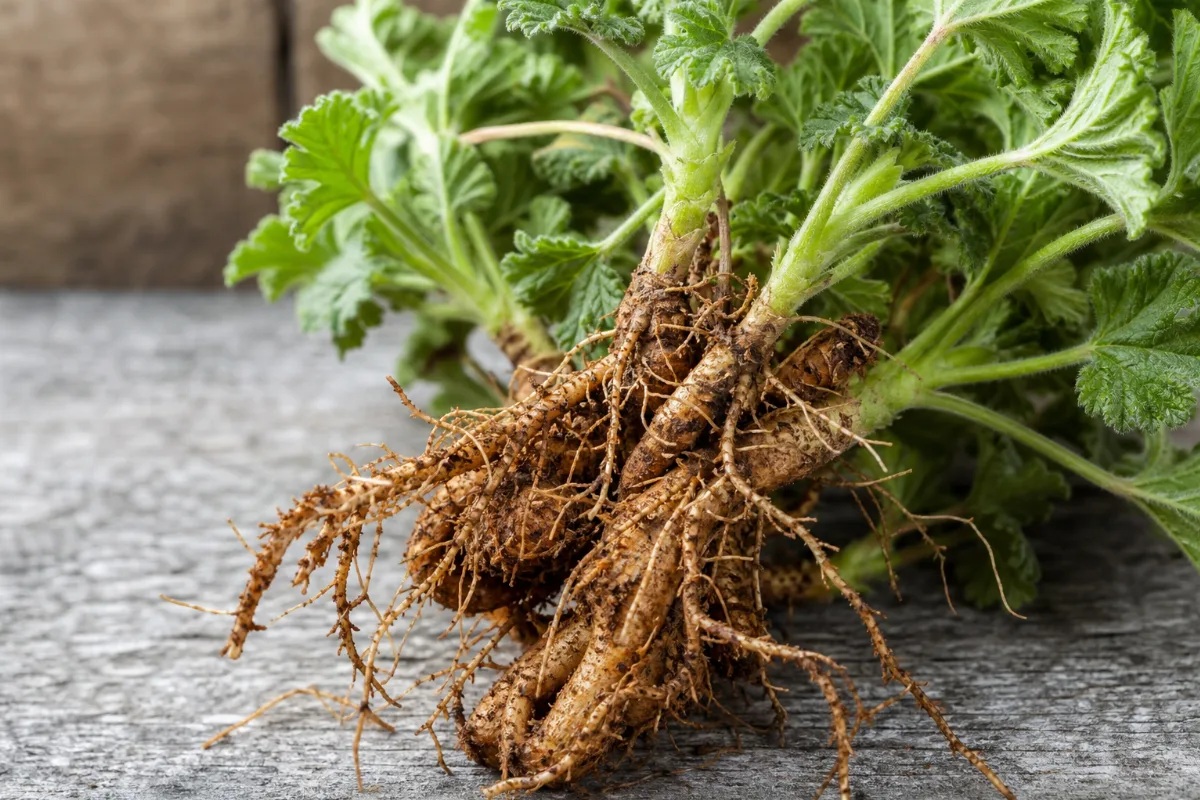
Pelargonium root is the root of Pelargonium sidoides DC. and the related Pelargonium reniforme Curt. [2] GBIF accepts Pelargonium sidoides DC., family Geraniaceae. [3] This page covers only the root preparations the EU committee assessed, which are liquid or dry extracts made with a solvent such as ethanol. [2] The Cochrane review also calls it Umckaloabo. [4] Results for one extract do not carry over to teas, tinctures or other preparations. We give no identification, gathering or preparation help.Traditional use
This is tradition, not proof. A 2026 systematic review says P. sidoides has a long history of traditional use among indigenous peoples of Southern Africa for respiratory and gastrointestinal disorders. [5] The abstract we read does not name particular peoples or describe the practices. The EU committee separately uses "traditional use" as a regulatory category: it means the effectiveness is plausible and there is evidence of safe use for at least 30 years (including at least 15 in the EU), without enough clinical trial evidence. [2]What research shows
| Use | What the source found | Strength of evidence | Who and what was studied |
|---|---|---|---|
| Acute bronchitis, adults | Cochrane (2013): three trials (746 patients) showed effectiveness for most outcomes with the liquid preparation but not tablets. [4] | Promising but limited; low-quality evidence | Adults; liquid versus tablet extract mattered |
| Acute bronchitis, children | Three trials (819 children) showed similar results. [4] | Promising but limited; low-quality evidence | Children |
| Sinusitis | One study of 103 adults showed significant effects at day 21. [4] | Insufficient (very low quality) | Adults; one study |
| Common cold | One study showed efficacy after 10 days but not five days. [4] | Insufficient (very low quality) | One study |
| Common cold, EU regulatory view | HMPC concluded pelargonium root preparations can be used for symptoms of the common cold on the basis of long-standing use. It also reviewed three bronchitis studies against placebo, saw a possible effect on symptoms such as cough, and said firm conclusions could not be drawn because of weaknesses in study design. [2] | Traditional use (regulatory category) | EU-assessed liquid and dry extracts |
The Cochrane review concluded that pelargonium "may be effective" for rhinosinusitis and the common cold in adults, but doubt exists, and that adverse events were more common with pelargonium, though none were serious. [4] A 2026 systematic review concluded that available clinical data support the use of root preparations for acute bronchitis, rhinosinusitis and tonsillopharyngitis, but that is the authors' conclusion from a broad review that also covers chemistry and cultivation. [5] We treat it as one more view, not a stronger finding than Cochrane's.
Safety
- Liver: the monograph's warning is above. A 2012 analysis of 13 spontaneous reports of liver disease attributed to the plant used a liver-specific causality scale and found causality could not be established in any case, because of other drugs, illnesses and poor data quality. The authors concluded the data did not show liver toxicity. [6] The regulators' wording remains cautious, so both facts are shown: reports exist, and causality is debated.
- Other effects: the EU summary lists, as very rare, mild stomach complaints, difficulty swallowing, mild nasal and gum bleeding and allergic reactions. [2]
- Age: the 2018 EU public summary said pelargonium root medicines should be used only from age 6 years. [2] The 2024 monograph says oral use under 3 years is not recommended because of concerns requiring medical advice. [1] See Children and Teens.
- Pregnancy and breastfeeding: the monograph says safety has not been established and use is not recommended. [1] See Pregnancy and Breastfeeding.
- Medicines: the monograph lists interactions as "None reported", which is not the same as none possible. [1] Ask a pharmacist, and read How Interactions Work.
- Alcohol: the monograph requires ethanol labeling for liquid extracts that contain ethanol. [1]
- Surgery, kidney conditions, older adults: not described in the sources we read. Tell the surgical team about any herbal medicine: Supplements Before Surgery. Bleeding is listed in the EU documents as nasal and gum bleeding only.
- Duration: the monograph says to consult a doctor if symptoms last longer than 1 week. [1]
We quote no amounts; the monograph's figures apply to specific licensed products, and a clinician or pharmacist decides what suits a person. For quality, see Quality Testing and Certifications. Related herbs: Ivy Leaf, Elecampane and Cough and Sore Throat Remedies.
Frequently asked questions
What is Umckaloabo?
The Cochrane review uses it as another name for Pelargonium sidoides, a herbal remedy thought to be effective for acute respiratory infections. [4]
Does pelargonium work for bronchitis?
Cochrane found low-quality evidence of benefit in adults and children, mainly for the liquid preparation. [4]
Can pelargonium harm the liver?
Liver problems have been reported and are listed by the EU committee with unknown frequency. A 2012 analysis found causality could not be established in 13 reports. [1][6]
Is it safe in pregnancy or for young children?
The EU monograph does not recommend it in pregnancy or breastfeeding, or orally under 3 years. [1]
How did the EU committee classify it?
As a traditional herbal medicine for symptoms of the common cold, based on long-standing use. [2]
References
- EMA (EU), HMPC, European Union herbal monograph on Pelargonium sidoides DC; Pelargonium reniforme Curt., radix, Final Revision 2, EMA/HMPC/648100/2022, 29 May 2024. Read 2026-10-22.
- EMA (EU), HMPC, Pelargonii radix (pelargonium root): herbal medicinal product summary. Summary for the public EMA/421085/2018, published 2018. Read 2026-10-22.
- GBIF Backbone Taxonomy, Pelargonium sidoides match record. Read 2026-10-22.
- Pelargonium sidoides extract for treating acute respiratory tract infections. Cochrane Database Syst Rev. 2013. Read 2026-10-22.
- Pelargonium sidoides: from ethnopharmacology to evidence-based medicine: a systematic review. Phytomedicine. 2026. Read 2026-10-22.
- Initially purported hepatotoxicity by Pelargonium sidoides: the dilemma of pharmacovigilance and proposals for improvement. Ann Hepatol. 2012. Read 2026-10-22.