Herbs & Botanicals · Herbs · Root and its extract TGP, mostly low-certainty evidence from add-on trials
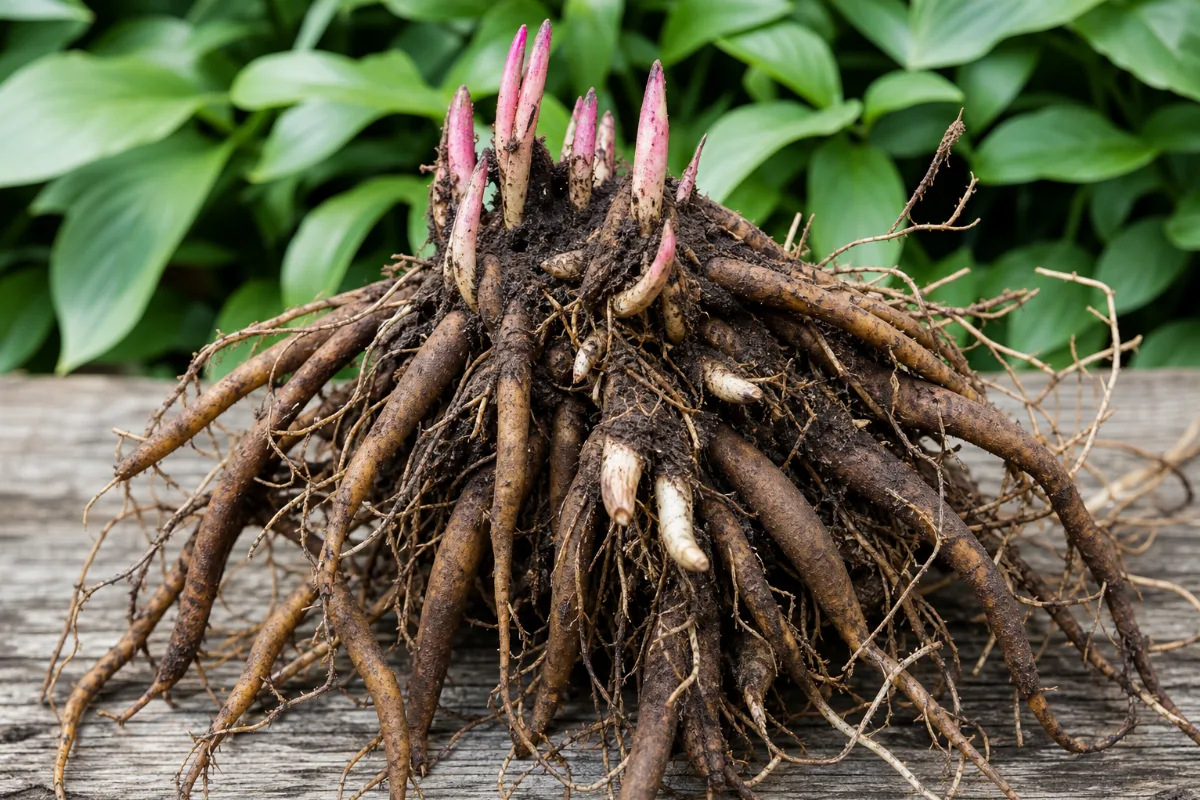
White Peony Root
Paeonia lactiflora Pall. · also called White peony root, bai shao, shaoyao, Chinese peony, peonia (Spanish); extract: total glucosides of paeony (TGP)
White peony root (bai shao) comes from a garden-type perennial of the peony family. In China an extract of the root, total glucosides of paeony (TGP), is used as an add-on to arthritis and other autoimmune medicines. This profile keeps white peony root, red peony root (chi shao), moutan (tree peony bark), the TGP extract and peony-licorice formulas apart, because they are different products.
General information, not medical advice. Last substantive update · Not medically reviewed. A named clinician has not signed off on this page. How this page is made
About White Peony Root
Peony root products studied in people are mostly TGP (an extract of white peony root) added to arthritis or immune drugs, and peony-licorice formulas. Reviews of Chinese trials point to benefit in rheumatoid arthritis, ankylosing spondylitis, Sjogren's, lupus, psoriasis, hives and oral lichen planus, but quality is low. Diarrhea is the main side effect. There is no EU herbal monograph.
What it is
White peony root (Paeonia lactiflora Pall., bai shao) is the root of a peony in the family Paeoniaceae. GBIF and NCBI Taxonomy accept the name.
Red peony root (chi shao) and moutan (Paeonia x suffruticosa) are different products. TGP is a concentrated extract of the root, not the same as a tea or powder. Each result on this page names the product studied.
Traditional and current uses
Reviews describe white peony root as a Chinese medicine for pain, inflammation and immune disorders for 1000 years or more. Peony formulas are also traditional for cramps and painful periods.
Today TGP is used in China as an add-on to drugs for autoimmune and inflammatory conditions. A review says it is used in over 1000 Chinese hospitals. These are traditional or practice statements, not proof of benefit.
What is in it and how it works
TGP contains about 15 compounds, mostly paeoniflorin (over 40%) and albiflorin. In animal and lab studies they calm inflammation signals in immune cells.
Whether this explains any benefit in people is not known. A human study showed paeoniflorin and albiflorin are absorbed from a peony-licorice formula.
What the research shows
Pooled trials of TGP added to usual drugs found better scores and lower inflammation blood markers in rheumatoid arthritis, ankylosing spondylitis, Sjogren's, lupus, psoriasis and chronic hives. The largest single trial (448 people) found more complete responses in oral lichen planus. Quality is low and most trials are Chinese and not blinded.
Formula trials are mixed: a peony-licorice formula improved symptoms of drug-raised prolactin but not blood prolactin in the best placebo trial; one small red peony-licorice trial reduced dialysis cramps. A four-herb formula with peony helped painful periods in poor-quality trials. No trial of plain white peony root was found.
At a glance
Traditional uses history, not proof
- Traditional Chinese medicine: white peony root used for pain, inflammation and immune disorders for 1000 years or more, according to review abstracts.
- Peony-based formulas used for cramps, painful periods and spasms (genus review abstract). Traditional use, not proof of benefit.
Studied for research
- Rheumatoid arthritis, TGP added to drugs, low
- Ankylosing spondylitis, low
- Sjogren's syndrome, low
- Lupus, low
- Psoriasis, low
- Chronic hives, low
- Oral lichen planus, low
- Recurrent mouth ulcers, very low
- Drug-raised prolactin (formula), mixed
- Dialysis cramps (red peony formula), very low
- Nerve pain after shingles (formula), very low
- Painful periods (formula), low
- Fewer liver side effects of arthritis drugs, low
Main compounds
- Paeoniflorin, over 40% of TGP
- Albiflorin
- Other monoterpene glycosides such as benzoylpaeoniflorin
- Paeonol, studied in the genus (mainly linked to moutan)
Common forms
- White peony root (bai shao)
- TGP extract
- Peony-licorice decoction (Shaoyao-Gancao)
- Multi-herb formulas such as Siwutang
- Red peony root (chi shao), a separate product
Research links: European Medicines Agency statement on white peony root (no EU monograph) · NCCIH: no peony page found · Research Library · Genes & Biomarkers Library
The plant and its history
- Accepted scientific name
- Paeonia lactiflora Pall.
- Naming authority
- Pall.
- Common names
- White peony (en); Chinese peony (en); Bai shao (white peony root, Paeoniae Radix Alba) (zh); Shaoyao (zh); Shakuyaku (ja); Peonia (es)
- Botanical family
- Paeoniaceae (the peony family; the only genus is Paeonia)
- Classification
- Plantae > Tracheophyta > Magnoliopsida > Saxifragales > Paeoniaceae > Paeonia > Paeonia lactiflora
- Native range
- The genus is spread across Asia, southern Europe and North America (Li 2021, abstract). The range of this species was not verified.
- Habitat
- Not verified.
- What the plant looks like
- Roots: The root is the medicinal part; botanical description not verified.; Stems: Not verified; Leaves: Not verified; Flowers: Not verified; Fruit: Not verified
- Cultivation
- Not verified.
- Harvest and processing
- Not verified. TCM separates white peony (bai shao) and red peony (chi shao); how they differ in processing was not verified here.
- Look-alikes and adulterants
- Name: Red peony root (chi shao, Paeoniae Radix Rubra); Note: EMA lists it under Paeonia lactiflora Pall. and Paeonia veitchii Lynch. Used in the dialysis cramp trial. Not the same as white peony.; Name: Moutan (tree peony, Paeonia x suffruticosa Andrews); Note: A different accepted name in GBIF (key 7155259). Its bark is a different medicine; paeonol is a compound studied from Paeonia. Not interchangeable with white peony root.; Name: Garden peonies and other Paeonia species; Note: Many ornamental peonies exist; do not use garden plants as medicine.; Name: Total glucosides of paeony (TGP); Note: A concentrated extract used as a drug in China, not the raw root.
- Sustainability and conservation
- Not checked.
Traditional use and history history, not clinical proof
| Tradition or era | Documented use | Source |
|---|---|---|
| Traditional Chinese medicine | White peony root (bai shao) is described as used for pain, inflammation and immune disorders for more than 1000 years (Zhang 2020) and for more than 2000 years in local and traditional medicine for inflammatory autoimmune conditions (Jiang 2020). The genus review lists traditional use for blood stasis, painful or absent periods, spasms, epilepsy and gastritis, mostly using roots and root bark. | p32371143 |
| Modern drug development in China | TGP was developed from the root as a preparation for autoimmune conditions; a review says it is used in more than 1000 hospitals in China (Zhang 2020, authors are paeoniflorin researchers). | p31836457 |
| European regulation | The EMA HMPC prepared a statement and concluded that requirements for a European Union herbal monograph on white peony root were not fulfilled (adopted 31 January 2017). | s-ema-hmpc-paeoniae-alba |
| Other history (Kampo, Western herbalism) | Not verified. Kampo uses a peony-licorice formula (shakuyakukanzoto) for muscle cramps and abdominal pain per one trial abstract. | p26211516 |
Traditional use shows how a plant was used. It does not show that a supplement works or is safe today.
What is inside, and how it may work
What the plant contains and how those compounds act in cells and animals. Laboratory and animal mechanisms are not proven effects in people.
Main compounds
| Compound | Family | Where it is concentrated | Activity studied | Level of evidence |
|---|---|---|---|---|
| Paeoniflorin PubChem 442534 | Monoterpene glycoside | root More than 40% of TGP (Zhang 2020) | Main active component of TGP; anti-inflammatory and immune-regulating in animal and lab models. 22 9 | Animal research |
| Albiflorin PubChem 24868421 | Monoterpene glycoside | root | Second most common TGP constituent after paeoniflorin; detected in human plasma after a peony-licorice formula. 9 20 | Human data |
| Hydroxy-paeoniflorin, benzoylpaeoniflorin and others PubChem 21631106 | Monoterpene glycosides | root | TGP contains about 15 compounds; these are named as components in a review abstract. Activities not read. 22 9 | Laboratory research |
| Paeonol PubChem 11092 | Phenol | Not verified (named as a Paeonia compound tested clinically) | The genus review lists paeonol with paeoniflorin and TGP as compounds tested in clinical trials. Its main plant source was not verified here; it is mainly linked to moutan, not white peony root. 11 | Laboratory research |
Mechanisms, receptors and pathways
| Target or pathway | Gene or receptor | What was found | Level |
|---|---|---|---|
| NF-kB, MAPK and PI3K/Akt signalling | NF-kB, MAPK, PI3K/Akt | Reviews say TGP regulates these pathways in autoimmune models; many studies did not test TGP components. 9 | Animal research |
| Immune cell balance | Th1 and Th17 related pathways, JAK2/STAT3, GPCR, TGF-beta/Smads (paeoniflorin) | Paeoniflorin restored regulatory cell subsets and reduced inflammation mediators in animal models of arthritis, psoriasis and autoimmune encephalomyelitis. 22 | Animal research |
| Prolactin lowering | Not identified | LactMed (summary only) says paeoniflorin is thought to lower prolactin; human results are mixed (see benefits). 19 16 25 | Human data |
Absorption, metabolism and elimination
- Absorption
- Paeoniflorin and albiflorin were detected in plasma early after a single oral dose of a peony-licorice formula in healthy volunteers (Sadakane 2015). No numbers in the abstract.
- Distribution
- Not found in the sources read.
- Metabolism
- Not found in the sources read.
- Elimination
- Not found.
- Bioavailability
- Not found in the sources read.
Isolated compounds versus whole extracts
Most human trials test TGP, an extract, added to usual drugs. Others test two-herb formulas with licorice, including one with red peony. None tests whole white peony root or tea on its own in the studies read, so results cannot be carried across forms. A review also notes that TGP has no standard preparation method.
Nutritional composition
Peony root is a medicinal herb, not a food source of nutrients; no nutrient data were read.
1 mixed findings9 low certainty3 very low certainty
What is White Peony Root good for?
The main studied uses and how strong the human evidence is for each. "Low" means small or poor-quality studies, "very low" means one small trial, "mixed" means studies disagree. Almost all rows are for the TGP extract or a formula added to usual medicine, not for the plain root. Nothing is above low.
Benefits, one by one
Each card is a research question, not a promise. Tap a goal to filter. Open a card to see the studies, doses and limits.
Rheumatoid arthritis (TGP added to usual drugs)
Low certaintyPooled Chinese trials suggest that adding TGP to arthritis drugs lowered joint activity scores and inflammation blood tests, and was linked to fewer liver problems from the drugs. The trials were small and low quality, so this is low-certainty evidence.
4 studiesTotal glucosides of paeony (TGP), an extract of white peony root. TGP…
Studies, doses and limits
What the trials found
A 2023 review of 63 trials (5,293 people, five kinds of inflammatory arthritis) found that TGP may improve the disease activity score (DAS28) and lower ESR, CRP, rheumatoid factor, TNF-alpha and IL-6 in rheumatoid arthritis (Yang 2023). A review of 8 trials of TGP added to methotrexate plus leflunomide found better response (RR 1.10) and lower ESR, CRP and rheumatoid factor (Huang 2019). A safety review of 39 studies (3,680 people) found fewer liver adverse effects (RR 0.31) and less leukopenia (RR 0.41) when TGP was added (Liu 2021).
Results
Add-on TGP: better response and lower inflammation blood markers, fewer drug side effects on liver and white cells. No head-to-head test of TGP alone against a standard arthritis drug was found in the abstracts read.
Effect sizes as reported
Response RR 1.10 (95% CI 1.04-1.16); ESR -2.80 mm/h (-5.08 to -0.52); CRP -4.17 mg/L (-7.84 to -0.51); rheumatoid factor -12.09 IU/mL (-14.05 to -10.14); liver adverse effects RR 0.31 (0.23-0.41), all as reported in the reviews.
Why this rating
The reviewers call the trials low in quality and few, none gave a GRADE rating in the abstracts read, and almost all are Chinese trials. We rate it low.
Form and dose studied
Total glucosides of paeony (TGP), an extract of white peony root. TGP is an extract used as a drug in China (a review notes there is no single standard way of making it); it is not the same as the whole root, a tea or a decoction. Amounts are not covered here; ask a doctor or pharmacist.
Who was studied
Adults with active rheumatoid arthritis, taking methotrexate, leflunomide or other arthritis drugs.
Limits
Mostly unblinded or poorly described trials; effect always as an add-on; blood-test changes are not proof of less joint damage.
Why researchers looked
TGP is used in China as an add-on to disease-modifying arthritis drugs, and researchers wanted to know if it helps symptoms or protects the liver.
Traditional use
White peony root (bai shao, Paeoniae Radix Alba) is a long-used Chinese medicine root; reviews describe use for pain, inflammation and immune disorders for 1000 to 2000 years (Zhang 2020; Jiang 2020, abstracts). Traditional use, not proof of benefit.
Proposed mechanism Preliminary mechanism
Lab and animal work suggests paeoniflorin and TGP calm immune cells and inflammation signals (NF-kB, MAPK, PI3K/Akt pathways). This has not been shown to be the reason for any benefit in people.
A proposed mechanism does not show that the effect happens in people.
Fewer liver and white-cell side effects were reported with TGP, but diarrhea is more likely. Diarrhea and stomach upset were the most common side effects in the trials; see the safety section.
Ankylosing spondylitis (TGP added to usual drugs)
Low certaintyIn 23 trials TGP added to arthritis drugs or anti-inflammatory pills gave better symptom scores, lower inflammation markers and shorter morning stiffness, with fewer side effects. The trials were small and of limited quality.
2 studiesTotal glucosides of paeony (TGP), an extract of white peony root. TGP…
Studies, doses and limits
What the trials found
A review of 23 randomized trials found better symptom improvement, lower ESR and CRP, shorter morning stiffness and fewer adverse events with TGP; the Schober spine-flexibility test showed no difference (Huang 2019b). The 2023 five-arthritis review found the same direction for ASDAS, ESR, CRP, TNF-alpha and IL-6 (Yang 2023).
Results
Add-on benefit on symptoms and blood markers; no difference on one spine test.
Effect sizes as reported
Adverse events lower (95% CI 0.48-0.79); other numbers not given in the abstract.
Why this rating
Trials were small and of limited quality per the authors; no GRADE given.
Form and dose studied
Total glucosides of paeony (TGP), an extract of white peony root. TGP is an extract used as a drug in China (a review notes there is no single standard way of making it); it is not the same as the whole root, a tea or a decoction. Amounts are not covered here; ask a doctor or pharmacist.
Who was studied
Adults with ankylosing spondylitis.
Limits
Combination with other drugs in every trial; unclear blinding.
Why researchers looked
Standard treatments for this spinal arthritis can affect the liver, so TGP was tested as a helper.
Traditional use
White peony root (bai shao, Paeoniae Radix Alba) is a long-used Chinese medicine root; reviews describe use for pain, inflammation and immune disorders for 1000 to 2000 years (Zhang 2020; Jiang 2020, abstracts). Traditional use, not proof of benefit.
Proposed mechanism Preliminary mechanism
Lab and animal work suggests paeoniflorin and TGP calm immune cells and inflammation signals (NF-kB, MAPK, PI3K/Akt pathways). This has not been shown to be the reason for any benefit in people.
A proposed mechanism does not show that the effect happens in people.
Diarrhea and stomach upset were the most common side effects in the trials; see the safety section.
Sjogren's syndrome (dry eyes and mouth)
Low certaintyNine trials suggest TGP raises tear production compared with placebo, and added to immune-suppressing drugs it improves tears, saliva and inflammation markers. The advantage faded over time and was not seen with methotrexate. The evidence is low in certainty.
2 studiesTotal glucosides of paeony (TGP), an extract of white peony root. TGP…
Studies, doses and limits
What the trials found
A review of 9 trials (770 people) found better Schirmer test (tear flow) than placebo; added to immunosuppressants it improved salivary flow, Schirmer test, ESR, CRP, rheumatoid factor and immunoglobulins, with benefit shown with hydroxychloroquine but not methotrexate (Feng 2019). A second review of 7 trials (632 people) of TGP plus hydroxychloroquine found better symptom relief, salivary flow and Schirmer test than hydroxychloroquine alone (Zhang 2023).
Results
Better tear and saliva measures as an add-on; benefit shrank over time; gastrointestinal upset was the main side effect.
Effect sizes as reported
Significant results (P<=0.01) for several measures; exact effect sizes not given in the abstracts.
Why this rating
Small trials; reviewers ask for larger multi-centre trials; no GRADE given.
Form and dose studied
Total glucosides of paeony (TGP), an extract of white peony root. TGP is an extract used as a drug in China (a review notes there is no single standard way of making it); it is not the same as the whole root, a tea or a decoction. Amounts are not covered here; ask a doctor or pharmacist.
Who was studied
Adults with primary Sjogren's syndrome.
Limits
Small trials; benefit weakened over time; placebo comparison existed for tear flow only.
Why researchers looked
Sjogren's syndrome is an autoimmune dry eye and dry mouth condition, and TGP is used as an immune-modulating add-on in China.
Traditional use
White peony root (bai shao, Paeoniae Radix Alba) is a long-used Chinese medicine root; reviews describe use for pain, inflammation and immune disorders for 1000 to 2000 years (Zhang 2020; Jiang 2020, abstracts). Traditional use, not proof of benefit.
Proposed mechanism Preliminary mechanism
Lab and animal work suggests paeoniflorin and TGP calm immune cells and inflammation signals (NF-kB, MAPK, PI3K/Akt pathways). This has not been shown to be the reason for any benefit in people.
A proposed mechanism does not show that the effect happens in people.
Diarrhea and stomach upset were the most common side effects in the trials; see the safety section.
Systemic lupus erythematosus (TGP added to usual drugs)
Low certaintyAdding TGP to lupus drugs was linked in 23 trials to lower disease activity and fewer side effects, and possibly less steroid use. The reviewers call the evidence moderate to low and the trials poor in quality.
1 studiesTotal glucosides of paeony (TGP), an extract of white peony root. TGP…
Studies, doses and limits
What the trials found
A 2022 review of 23 trials with GRADE (about 1,573 people) found lower disease activity with TGP added to glucocorticoids plus cyclophosphamide, hydroxychloroquine or tacrolimus, fewer adverse reactions with cyclophosphamide (RR 0.37), and better complement and immunoglobulin measures. The certainty was moderate to low (Gong 2022).
Results
Lower disease-activity scores as an add-on.
Effect sizes as reported
SMD -1.98 (95% CI -2.50 to -1.46) with cyclophosphamide; -0.65 (-1.04 to -0.26) with hydroxychloroquine.
Why this rating
Authors' own GRADE: moderate to low; poor trial methods. We rate it low.
Form and dose studied
Total glucosides of paeony (TGP), an extract of white peony root. TGP is an extract used as a drug in China (a review notes there is no single standard way of making it); it is not the same as the whole root, a tea or a decoction. Amounts are not covered here; ask a doctor or pharmacist.
Who was studied
Adults with lupus, on standard drugs.
Limits
Poor methods; combination with other drugs.
Why researchers looked
TGP is used with steroids and other lupus drugs in China, so reviewers pooled the trials.
Traditional use
White peony root (bai shao, Paeoniae Radix Alba) is a long-used Chinese medicine root; reviews describe use for pain, inflammation and immune disorders for 1000 to 2000 years (Zhang 2020; Jiang 2020, abstracts). Traditional use, not proof of benefit.
Proposed mechanism Preliminary mechanism
Lab and animal work suggests paeoniflorin and TGP calm immune cells and inflammation signals (NF-kB, MAPK, PI3K/Akt pathways). This has not been shown to be the reason for any benefit in people.
A proposed mechanism does not show that the effect happens in people.
Diarrhea and stomach upset were the most common side effects in the trials; see the safety section.
Psoriasis (TGP capsules)
Low certaintyThirty trials found TGP alone was no better than other single treatments, but added to other treatments it improved response and lowered recurrence. Trial quality was low.
2 studiesTotal glucosides of paeony (TGP), an extract of white peony root. TGP…
Studies, doses and limits
What the trials found
A 2019 review of 30 trials (2,802 people) found no difference between TGP alone and other monotherapies (RR 0.93), but better effective rate (RR 1.31), PASI (-3.40) and recurrence (RR 0.42) when TGP was added to other therapies (Zheng 2019). The 2023 five-arthritis review reported a better PASI in psoriatic arthritis (Yang 2023).
Results
Add-on benefit; no advantage as a stand-alone treatment.
Effect sizes as reported
Add-on effective rate RR 1.31 (95% CI 1.26-1.37); PASI -3.40 (-4.22 to -2.57); recurrence RR 0.42 (0.24-0.74).
Why this rating
Authors say methodological quality was generally low.
Form and dose studied
Total glucosides of paeony (TGP), an extract of white peony root. TGP is an extract used as a drug in China (a review notes there is no single standard way of making it); it is not the same as the whole root, a tea or a decoction. Amounts are not covered here; ask a doctor or pharmacist.
Who was studied
Adults with psoriasis.
Limits
Low-quality trials; mixed comparators.
Why researchers looked
TGP is used for psoriasis in China as an immune-modulating capsule.
Traditional use
White peony root (bai shao, Paeoniae Radix Alba) is a long-used Chinese medicine root; reviews describe use for pain, inflammation and immune disorders for 1000 to 2000 years (Zhang 2020; Jiang 2020, abstracts). Traditional use, not proof of benefit.
Proposed mechanism Preliminary mechanism
Lab and animal work suggests paeoniflorin and TGP calm immune cells and inflammation signals (NF-kB, MAPK, PI3K/Akt pathways). This has not been shown to be the reason for any benefit in people.
A proposed mechanism does not show that the effect happens in people.
Diarrhea and stomach upset were the most common side effects in the trials; see the safety section.
Chronic hives (TGP added to antihistamines)
Low certaintyThirty trials suggest adding TGP to antihistamines improved cure rate and lowered recurrence, but diarrhea was about six times more common. The reviewers rate the evidence moderate to low.
1 studiesTotal glucosides of paeony (TGP), an extract of white peony root. TGP…
Studies, doses and limits
What the trials found
A 2022 review of 30 trials (2,973 people) found better cure rate (RR 1.54), total efficacy (RR 1.33), urticaria activity score, recurrence (RR 0.31) and lower IgE; diarrhea was more frequent (RR 6.19). Quality was suboptimal; evidence moderate to low (Li 2022).
Results
Better cure and recurrence as an add-on, with more diarrhea.
Effect sizes as reported
Cure RR 1.54 (95% CI 1.39-1.71); recurrence RR 0.31 (0.20-0.46); diarrhea RR 6.19 (3.39-11.29).
Why this rating
Authors' GRADE: moderate to low; suboptimal methods. We rate it low.
Form and dose studied
Total glucosides of paeony (TGP), an extract of white peony root. TGP is an extract used as a drug in China (a review notes there is no single standard way of making it); it is not the same as the whole root, a tea or a decoction. Amounts are not covered here; ask a doctor or pharmacist.
Who was studied
Adolescents and adults with chronic urticaria on H1-antihistamines.
Limits
Suboptimal methodology; lab IgE is a marker, not a symptom.
Why researchers looked
Hives that keep returning are hard to treat, so TGP was tested as an add-on.
Traditional use
White peony root (bai shao, Paeoniae Radix Alba) is a long-used Chinese medicine root; reviews describe use for pain, inflammation and immune disorders for 1000 to 2000 years (Zhang 2020; Jiang 2020, abstracts). Traditional use, not proof of benefit.
Proposed mechanism Preliminary mechanism
Lab and animal work suggests paeoniflorin and TGP calm immune cells and inflammation signals (NF-kB, MAPK, PI3K/Akt pathways). This has not been shown to be the reason for any benefit in people.
A proposed mechanism does not show that the effect happens in people.
Diarrhea much more common with TGP.
Oral lichen planus (TGP added to prednisone)
Low certaintyThe largest trial (448 people) found that adding TGP to a short prednisone taper led to more complete responses after 12 months. It was open-label, with no placebo, so the result is still only low certainty.
1 studiesTotal glucosides of paeony (TGP), an extract of white peony root. TGP…
Studies, doses and limits
What the trials found
In a multicentre pragmatic randomized trial in 5 Chinese centres, complete response was 53.9% with TGP versus 34.4% without (hazard ratio 2.07), and overall response at 12 months 70.6% versus 44.4% (OR 2.99). Sleep quality improved more with TGP. Diarrhea was 5.5% vs 0.9%; no severe events (Deng 2026).
Results
More and faster complete responses in an unblinded add-on trial.
Effect sizes as reported
CR HR 2.07 (95% CI 1.52-2.82); overall response OR 2.99 (2.01-4.44).
Why this rating
One large trial; open-label, no placebo, active control that was a short steroid taper; no GRADE given.
Form and dose studied
Total glucosides of paeony (TGP), an extract of white peony root. TGP is an extract used as a drug in China (a review notes there is no single standard way of making it); it is not the same as the whole root, a tea or a decoction. Amounts are not covered here; ask a doctor or pharmacist.
Who was studied
Adults with symptomatic refractory oral lichen planus.
Limits
Unblinded; one country; single trial.
Why researchers looked
This chronic mouth condition is hard to treat; TGP is used as an immune-modulating add-on in China.
Traditional use
White peony root (bai shao, Paeoniae Radix Alba) is a long-used Chinese medicine root; reviews describe use for pain, inflammation and immune disorders for 1000 to 2000 years (Zhang 2020; Jiang 2020, abstracts). Traditional use, not proof of benefit.
Proposed mechanism Preliminary mechanism
Lab and animal work suggests paeoniflorin and TGP calm immune cells and inflammation signals (NF-kB, MAPK, PI3K/Akt pathways). This has not been shown to be the reason for any benefit in people.
A proposed mechanism does not show that the effect happens in people.
Diarrhea more common (5.5% vs 0.9%).
Recurrent mouth ulcers (aphthous ulcers)
Very low certaintyOne small placebo-controlled trial (79 people) found longer ulcer-free periods with 24 weeks of TGP, lasting after stopping. One trial is not enough.
1 studiesTotal glucosides of paeony (TGP), an extract of white peony root. TGP…
Studies, doses and limits
What the trials found
In a double-blind placebo-controlled single-centre trial, the monthly ulcer-free interval was longer with TGP than with placebo at weeks 25-36 (p<0.001), with fewer and smaller ulcers; 18% dropped out (Liu 2023).
Results
Longer ulcer-free time versus placebo in one small trial.
Effect sizes as reported
Median ulcer-free interval in the TGP group 9.6 days at baseline, 18.5 in weeks 13-24, 24.7 after stopping.
Why this rating
A single small single-centre trial with substantial dropout.
Form and dose studied
Total glucosides of paeony (TGP), an extract of white peony root. TGP is an extract used as a drug in China (a review notes there is no single standard way of making it); it is not the same as the whole root, a tea or a decoction. Amounts are not covered here; ask a doctor or pharmacist.
Who was studied
Adults with frequent recurrent aphthous ulcers.
Limits
Single centre; 79 people; 18% dropout.
Why researchers looked
Frequent mouth ulcers have few treatments, so TGP was tested against placebo.
Traditional use
White peony root (bai shao, Paeoniae Radix Alba) is a long-used Chinese medicine root; reviews describe use for pain, inflammation and immune disorders for 1000 to 2000 years (Zhang 2020; Jiang 2020, abstracts). Traditional use, not proof of benefit.
Proposed mechanism Preliminary mechanism
Lab and animal work suggests paeoniflorin and TGP calm immune cells and inflammation signals (NF-kB, MAPK, PI3K/Akt pathways). This has not been shown to be the reason for any benefit in people.
A proposed mechanism does not show that the effect happens in people.
Diarrhea and stomach upset were the most common side effects in the trials; see the safety section.
High prolactin caused by antipsychotic drugs (peony-licorice formula)
Mixed findingsThis is a combination formula (peony plus licorice), not peony alone. Trials found this formula improved prolactin-related symptoms such as missing periods in women on antipsychotics. Lab prolactin fell in the pooled review but not in the best placebo trial, so the picture is mixed.
2 studiesPeony-Glycyrrhiza decoction; the abstracts do not say which peony spe…
Studies, doses and limits
What the trials found
A 2018 review of 5 trials (450 people) found lower serum prolactin (WMD -32.69 ng/mL), no change in psychiatric symptoms and similar side effects, with very high heterogeneity (Zheng 2018). A later 16-week double-blind placebo-controlled trial in 99 women found better prolactin-related symptoms and more women with periods returning at week 8, but similar blood prolactin levels in both groups (Man 2016).
Results
Symptoms better; blood prolactin lower in the pooled review but unchanged in the placebo trial.
Effect sizes as reported
Prolactin WMD -32.69 ng/mL (95% CI -41.66 to -23.72; I2 97%).
Why this rating
The review and the best placebo trial disagree on prolactin; very high heterogeneity; reviewers' GRADE ranged from very low to high by outcome.
Form and dose studied
Peony-Glycyrrhiza decoction; the abstracts do not say which peony species. Amounts are not covered here.
Who was studied
Women and adults with schizophrenia on antipsychotics.
Limits
Combination product; heterogeneity; mostly small Chinese trials.
Why researchers looked
Antipsychotic drugs often raise prolactin; a peony-licorice decoction is used in China to lower it.
Traditional use
Peony root is also used in TCM formulas, often with licorice, for cramps, pain and menstrual complaints; the genus review lists blood stasis, painful periods, absent periods, spasms and gastritis as traditional uses (Li 2021, abstract). Traditional use, not proof of benefit.
Proposed mechanism Preliminary mechanism
Lab and animal work on paeoniflorin suggests effects on inflammation, pain signals and hormone pathways; this has not been shown to explain any human result below. LactMed (not read, see safety) says paeoniflorin is thought to lower prolactin.
A proposed mechanism does not show that the effect happens in people.
Licorice is a separate ingredient with its own cautions; see the licorice page. Do not change antipsychotic treatment without the prescriber.
Muscle cramps in dialysis patients (red peony-licorice formula)
Very low certaintyThis is a combination formula (peony plus licorice), not peony alone. One open crossover trial in 60 dialysis patients found fewer cramps with Shaoyao-Gancao decoction, which in this trial used red peony root, not white. One small unblinded, company-funded trial is not enough to judge.
1 studiesShaoyao-Gancao Decoction: red peony root plus licorice root. Amounts …
Studies, doses and limits
What the trials found
In a randomized crossover trial of 62 haemodialysis patients (60 completed), cramp frequency fell more with the decoction than with usual care alone (sequence difference -2.08, 95% CI -3.16 to -1.00). Pre-dialysis potassium fell modestly (-0.27, 95% CI -0.45 to -0.09). The study had no placebo and had a company funder (Li 2025).
Results
Fewer cramps than usual care in one unblinded trial.
Effect sizes as reported
Frequency difference -2.08 (95% CI -3.16 to -1.00).
Why this rating
One trial, open-label crossover, no placebo, funded by a TCM company, red peony not white.
Form and dose studied
Shaoyao-Gancao Decoction: red peony root plus licorice root. Amounts not covered.
Who was studied
Adults on maintenance haemodialysis.
Limits
One trial; unblinded; company funded; potassium change needs monitoring in dialysis.
Why researchers looked
The formula is traditionally used for cramps and spasm.
Traditional use
Peony root is also used in TCM formulas, often with licorice, for cramps, pain and menstrual complaints; the genus review lists blood stasis, painful periods, absent periods, spasms and gastritis as traditional uses (Li 2021, abstract). Traditional use, not proof of benefit.
Proposed mechanism Preliminary mechanism
Lab and animal work on paeoniflorin suggests effects on inflammation, pain signals and hormone pathways; this has not been shown to explain any human result below.
A proposed mechanism does not show that the effect happens in people.
Potassium fell modestly in dialysis patients; do not take with kidney disease or potassium problems without the dialysis team.
Pain after shingles (postherpetic neuralgia, peony-licorice formula)
Very low certaintyThis is a combination formula (peony plus licorice), not peony alone. A 2026 review of 15 trials found better pain and sleep when the formula was added to usual medicine. Results varied enormously between trials, so the certainty is very low.
1 studiesShaoyao-Gancao Decoction added to conventional Western medicine.
Studies, doses and limits
What the trials found
A review of 15 Chinese trials (1,188 people) found a higher response rate (OR 5.42), lower pain on a 10-point scale (MD -1.33) and better sleep (PSQI MD -2.23) when added to usual treatment, with fewer adverse events (OR 0.34). Heterogeneity for pain was very high (I2 97%) (Zhao 2026).
Results
Less pain and better sleep as an add-on, with very inconsistent trials.
Effect sizes as reported
Response OR 5.42 (95% CI 3.40-8.64); pain MD -1.33 (-1.68 to -0.99).
Why this rating
Very high heterogeneity, short trials (14-28 days), combination product, likely unblinded Chinese trials; no GRADE in the abstract.
Form and dose studied
Shaoyao-Gancao Decoction added to conventional Western medicine.
Who was studied
Adults with postherpetic neuralgia.
Limits
Very high heterogeneity; no placebo mentioned.
Why researchers looked
The formula is traditionally used for pain and spasm.
Traditional use
Peony root is also used in TCM formulas, often with licorice, for cramps, pain and menstrual complaints; the genus review lists blood stasis, painful periods, absent periods, spasms and gastritis as traditional uses (Li 2021, abstract). Traditional use, not proof of benefit.
Proposed mechanism Preliminary mechanism
Lab and animal work on paeoniflorin suggests effects on inflammation, pain signals and hormone pathways; this has not been shown to explain any human result below.
A proposed mechanism does not show that the effect happens in people.
No unusual events reported beyond fewer than the comparison group.
Painful periods (Siwutang, a four-herb formula with peony)
Low certaintyA four-herb formula that includes peony reduced period pain more than conventional medicine in poor-quality Chinese trials. It is not peony alone, and the reviewers rate the evidence low.
1 studiesSiwutang and derived formulas; peony is one of four herbs; the peony …
Studies, doses and limits
What the trials found
A 2020 review of 38 trials (3,982 people) found lower pain (VAS MD -2.61, 3 trials) and better response rate (RR 1.28) than conventional medicine; against placebo only one trial existed and the result was unclear; fewer adverse events (RR 0.17, 3 trials). The authors rate the evidence low because of high risk of bias (Li 2020). No trial of peony alone for period pain, or for PCOS, was found.
Results
Better than conventional medicine in poor-quality trials; no clear placebo result.
Effect sizes as reported
Response RR 1.28 (95% CI 1.22-1.34); pain VAS MD -2.61 (-3.72 to -1.51).
Why this rating
Authors' own rating: low, because of risk of bias.
Form and dose studied
Siwutang and derived formulas; peony is one of four herbs; the peony type is not stated in the abstract.
Who was studied
Women with primary dysmenorrhea.
Limits
Poor trial quality; formula effects cannot be pinned on peony.
Why researchers looked
Siwutang is a common traditional treatment for period pain in China.
Traditional use
Peony root is also used in TCM formulas, often with licorice, for cramps, pain and menstrual complaints; the genus review lists blood stasis, painful periods, absent periods, spasms and gastritis as traditional uses (Li 2021, abstract). Traditional use, not proof of benefit.
Proposed mechanism Preliminary mechanism
Lab and animal work on paeoniflorin suggests effects on inflammation, pain signals and hormone pathways; this has not been shown to explain any human result below.
A proposed mechanism does not show that the effect happens in people.
Fewer adverse events than conventional medicine in 5 studies.
Fewer liver problems from arthritis drugs (TGP added)
Low certaintyPooled trials in arthritis found fewer liver adverse effects when TGP was added to methotrexate or leflunomide. This is a safety result from trials of other drugs; there is no trial in healthy people or in people with fatty liver disease in the studies we read.
3 studiesTGP with methotrexate and/or leflunomide.
Studies, doses and limits
What the trials found
A 39-study review (3,680 people) found fewer liver adverse effects when TGP was added (RR 0.31) (Liu 2021); an 8-trial review found fewer adverse events, liver toxicity in particular (RR 0.55) (Huang 2019); and an ankylosing spondylitis review found fewer adverse events with TGP (Huang 2019b).
Results
Fewer reported liver adverse effects when TGP was added to arthritis drugs.
Effect sizes as reported
Liver adverse effects RR 0.31 (95% CI 0.23-0.41) (Liu 2021); adverse events RR 0.55 (0.38-0.80) (Huang 2019).
Why this rating
Low-quality Chinese trials; reviews call for more study; not a trial of liver disease. Liver monitoring still applies to the drugs.
Form and dose studied
TGP with methotrexate and/or leflunomide.
Who was studied
Adults with arthritis taking liver-affecting drugs.
Limits
Not a substitute for liver tests while on these drugs; not tested in liver disease itself.
Why researchers looked
Methotrexate and leflunomide can raise liver tests, so TGP was tested for protection.
Traditional use
White peony root (bai shao, Paeoniae Radix Alba) is a long-used Chinese medicine root; reviews describe use for pain, inflammation and immune disorders for 1000 to 2000 years (Zhang 2020; Jiang 2020, abstracts). Traditional use, not proof of benefit.
Proposed mechanism Animal research
Lab and animal studies suggest paeoniflorin has anti-inflammatory effects in the liver; this is not shown to be the reason in people.
A proposed mechanism does not show that the effect happens in people.
Never stop liver blood tests that a doctor orders because of a supplement.
Connections to the rest of health
How White Peony Root connects to the rest of our health knowledge graph. Every link says what kind of connection it is. A safety link (for example to the liver) is a warning, not a benefit. A study that merely mentions a topic never creates a benefit link.
Explore every connection: goals, body systems, organs, symptoms, genes
A. Wellness goals
| Connected to | Kind of connection | Evidence status | Context | Studies |
|---|---|---|---|---|
| Joint Support | Potential benefit | Low certainty | Rheumatoid arthritis (TGP added to usual drugs): Pooled Chinese trials suggest that adding TGP to arthritis drugs lowered joint activity scores and inflammation blood tests, and was linked to fewer liver problems from the drugs. The trials were small and low quality, so this is low-certainty evidence. Ankylosing spondylitis (TGP added to usual drugs): In 23 trials TGP added to arthritis drugs or anti-inflammatory pills gave better symptom scores, lower inflammation markers and shorter morning stiffness, with fewer side effects. The trials were small and of limited quality. | 21 7 14 22 8 24 |
| Inflammation Balance | Potential benefit | Low certainty | Rheumatoid arthritis (TGP added to usual drugs): Pooled Chinese trials suggest that adding TGP to arthritis drugs lowered joint activity scores and inflammation blood tests, and was linked to fewer liver problems from the drugs. The trials were small and low quality, so this is low-certainty evidence. Ankylosing spondylitis (TGP added to usual drugs): In 23 trials TGP added to arthritis drugs or anti-inflammatory pills gave better symptom scores, lower inflammation markers and shorter morning stiffness, with fewer side effects. The trials were small and of limited quality. | 21 7 14 22 8 4 23 6 26 |
| Immune Support | Potential benefit | Low certainty | Rheumatoid arthritis (TGP added to usual drugs): Pooled Chinese trials suggest that adding TGP to arthritis drugs lowered joint activity scores and inflammation blood tests, and was linked to fewer liver problems from the drugs. The trials were small and low quality, so this is low-certainty evidence. Sjogren's syndrome (dry eyes and mouth): Nine trials suggest TGP raises tear production compared with placebo, and added to immune-suppressing drugs it improves tears, saliva and inflammation markers. The advantage faded over time and was not seen with methotrexate. The evidence is low in certainty. | 21 7 14 22 4 23 6 12 15 |
| Healthy Skin | Potential benefit | Low certainty | Psoriasis (TGP capsules): Thirty trials found TGP alone was no better than other single treatments, but added to other treatments it improved response and lowered recurrence. Trial quality was low. Chronic hives (TGP added to antihistamines): Thirty trials suggest adding TGP to antihistamines improved cure rate and lowered recurrence, but diarrhea was about six times more common. The reviewers rate the evidence moderate to low. | 26 21 12 |
| Immune Support | Demonstrated clinical effect | Low certainty | Oral lichen planus (TGP added to prednisone): The largest trial (448 people) found that adding TGP to a short prednisone taper led to more complete responses after 12 months. It was open-label, with no placebo, so the result is still only low certainty. | 1 |
| Inflammation Balance | Demonstrated clinical effect | Low certainty | Oral lichen planus (TGP added to prednisone): The largest trial (448 people) found that adding TGP to a short prednisone taper led to more complete responses after 12 months. It was open-label, with no placebo, so the result is still only low certainty. | 1 |
| Digestive Support | Potential benefit | Very low certainty | Recurrent mouth ulcers (aphthous ulcers): One small placebo-controlled trial (79 people) found longer ulcer-free periods with 24 weeks of TGP, lasting after stopping. One trial is not enough. | 15 |
| Hormone Balance | Potential benefit | Mixed findings | High prolactin caused by antipsychotic drugs (peony-licorice formula): This is a combination formula (peony plus licorice), not peony alone. Trials found this formula improved prolactin-related symptoms such as missing periods in women on antipsychotics. Lab prolactin fell in the pooled review but not in the best placebo trial, so the picture is mixed. | 25 16 |
| Womens Wellness | Potential benefit | Mixed findings | High prolactin caused by antipsychotic drugs (peony-licorice formula): This is a combination formula (peony plus licorice), not peony alone. Trials found this formula improved prolactin-related symptoms such as missing periods in women on antipsychotics. Lab prolactin fell in the pooled review but not in the best placebo trial, so the picture is mixed. Painful periods (Siwutang, a four-herb formula with peony): A four-herb formula that includes peony reduced period pain more than conventional medicine in poor-quality Chinese trials. It is not peony alone, and the reviewers rate the evidence low. | 25 16 10 |
| Muscle Recovery | Potential benefit | Very low certainty | Muscle cramps in dialysis patients (red peony-licorice formula): This is a combination formula (peony plus licorice), not peony alone. One open crossover trial in 60 dialysis patients found fewer cramps with Shaoyao-Gancao decoction, which in this trial used red peony root, not white. One small unblinded, company-funded trial is not enough to judge. | 13 |
| Better Sleep | Potential benefit | Very low certainty | Pain after shingles (postherpetic neuralgia, peony-licorice formula): This is a combination formula (peony plus licorice), not peony alone. A 2026 review of 15 trials found better pain and sleep when the formula was added to usual medicine. Results varied enormously between trials, so the certainty is very low. | 24 |
| Liver Support | Potential benefit | Low certainty | Fewer liver problems from arthritis drugs (TGP added): Pooled trials in arthritis found fewer liver adverse effects when TGP was added to methotrexate or leflunomide. This is a safety result from trials of other drugs; there is no trial in healthy people or in people with fatty liver disease in the studies we read. | 14 7 8 |
B. Body systems
| Connected to | Kind of connection | Evidence status | Context | Studies |
|---|---|---|---|---|
| Digestive system | Adverse effect or risk | Low certainty | Diarrhea and stomach upset were the main side effects across several reviews and one large trial. Preparation or compound: TGP (white peony root extract) |
12 1 4 |
| Endocrine system | Drug or supplement interaction | Mixed findings | Possible prolactin lowering; pooled review says yes, placebo trial no change in blood level. Possible prolactin lowering; mixed human results. Preparation or compound: Peony-licorice decoction |
25 16 |
| Blood and circulation | Drug or supplement interaction | Not enough evidence | Theoretical added effect with blood thinners; nothing measured. Preparation or compound: Peony root (theory) |
11 |
| Immune System | Biological association | Low certainty | Studied for: Rheumatoid arthritis (TGP added to usual drugs) Studied for: Ankylosing spondylitis (TGP added to usual drugs) | 21 7 14 22 8 4 23 6 26 12 1 15 |
| Musculoskeletal System | Biological association | Low certainty | Studied for: Rheumatoid arthritis (TGP added to usual drugs) Studied for: Ankylosing spondylitis (TGP added to usual drugs) | 21 7 14 22 8 13 |
| Integumentary System | Biological association | Low certainty | Studied for: Psoriasis (TGP capsules) Studied for: Chronic hives (TGP added to antihistamines) | 26 21 12 |
| Digestive System | Biological association | Very low certainty | Studied for: Recurrent mouth ulcers (aphthous ulcers) | 15 |
| Endocrine System | Biological association | Mixed findings | Studied for: High prolactin caused by antipsychotic drugs (peony-licorice formula) | 25 16 |
| Reproductive System | Biological association | Mixed findings | Studied for: High prolactin caused by antipsychotic drugs (peony-licorice formula) Studied for: Painful periods (Siwutang, a four-herb formula with peony) | 25 16 10 |
| Nervous System | Biological association | Very low certainty | Studied for: Pain after shingles (postherpetic neuralgia, peony-licorice formula) | 24 |
| Hepatic System | Biological association | Low certainty | Studied for: Fewer liver problems from arthritis drugs (TGP added) | 14 7 8 |
I. Biomarkers
| Connected to | Kind of connection | Evidence status | Context | Studies |
|---|---|---|---|---|
| C-reactive protein (CRP) | Biological association | Low certainty | Measured in trials: lowered. A lab change is not the same as a health benefit. | 7 21 8 |
| Erythrocyte sedimentation rate (ESR) | Biological association | Low certainty | Measured in trials: lowered. A lab change is not the same as a health benefit. | 7 4 8 |
| Total IgE | Biological association | Low certainty | Measured in trials: lowered. A lab change is not the same as a health benefit. | 12 |
| Prolactin | Biological association | Mixed findings | Measured in trials: mixed. A lab change is not the same as a health benefit. | 25 16 |
| Blood potassium (pre-dialysis) | Biological association | Very low certainty | Measured in trials: lowered. A lab change is not the same as a health benefit. | 13 |
K. Biological pathways
L. Active compounds
| Connected to | Kind of connection | Evidence status | Context | Studies |
|---|---|---|---|---|
| Paeoniflorin | Biological association | Animal | Main active component of TGP; anti-inflammatory and immune-regulating in animal and lab models. Preparation or compound: root |
22 9 |
| Albiflorin | Biological association | Human | Second most common TGP constituent after paeoniflorin; detected in human plasma after a peony-licorice formula. Preparation or compound: root |
9 20 |
| Hydroxy-paeoniflorin, benzoylpaeoniflorin and others | Biological association | In vitro | TGP contains about 15 compounds; these are named as components in a review abstract. Activities not read. Preparation or compound: root |
22 9 |
| Paeonol | Biological association | In vitro | The genus review lists paeonol with paeoniflorin and TGP as compounds tested in clinical trials. Its main plant source was not verified here; it is mainly linked to moutan, not white peony root. Preparation or compound: Not verified (named as a Paeonia compound tested clinically) |
11 |
Each connection is stored with the ingredient, the connected record, the kind of connection, the evidence status, the supporting studies, the preparation or compound involved, and a review date (last reviewed October 25, 2026).
Evidence at a glance: what changed in 5 lab markers
Tap a number to show only those markers. Counts are markers, not people.
The evidence
The research centre for White Peony Root. Every record here was checked against PubMed or the publisher's page; we never list a study we have not verified.
Evidence by outcome
Bars show how many studies we found for each outcome, not how well it works. People are added up across trials only (reviews are not added, to avoid double counting).
How we rate evidence
High certainty
Several well-run trials or reviews agree; further research is unlikely to change the picture much.
Moderate certainty
Good trials point the same way, but some doubt remains.
Low certainty
Small, short or inconsistent trials. The finding could change with better research.
Very low certainty
Very little or very weak human data. Treat as a possibility only.
Mixed findings
Trials or reviews disagree with each other.
Not enough evidence
Not enough human research to say either way.
Evidence against
Good research found no benefit, or found harm.
We take the reviewers' own risk-of-bias and GRADE statements where they exist, and otherwise judge from study size, design, consistency, directness and whether a product matches what is sold. Many publications do not make evidence high. Method note: We searched PubMed, checked each study record, read abstracts, checked plant names in GBIF and NCBI Taxonomy and compounds in PubChem, and read the EMA white peony statement. NCCIH, LiverTox and LactMed could not be read directly. Full texts were not read for most studies.
Study library: every study we checked 26
| Study | Design | People | Product, dose, length | Result |
|---|---|---|---|---|
| Deng 2026 Clinical effectiveness and safety of total glucosides of paeony as an immunomodulator in patients with refractory oral lichen planus: A multicenter, pragmatic, randomized controlled trial. Phytomedicine · PMID 41539096 · DOI |
Controlled trial |
448 Adults with symptomatic refractory oral lichen planus (5 Chinese centres) |
Total glucosides (glycosides) of paeony (TGP), an extract of white peony root (Paeonia lactiflora Pall.) added to tapering prednisone and oral hygiene root not extracted 12 months · vs tapering prednisone plus oral hygiene (open, active control, no placebo) |
Complete response 53.9% vs 34.4% (HR 2.07); overall response at 12 months 70.6% vs 44.4% (OR 2.99). Diarrhea 5.5% vs 0.9%; no severe events or stopped treatment. CR HR 2.07; overall response OR 2.99 (CR HR 1.52-2.82; response OR 2.01-4.44) Methods, limits and fundingOutcomes: Time to and rate of complete response; sleep quality; safety Limitations: Pragmatic open design without placebo; single country Funding and conflicts: No conflicts declared Registration: ChiCTR-IPR-16010156 Read: abstract |
| European Medicines Agency EMA/HMPC public statement and assessment report on red peony root (Paeoniae radix rubra; Paeonia lactiflora Pall. and Paeonia veitchii Lynch) EMA public statement · Source |
Authoritative guidance not applicable |
Red peony root | Paeoniae radix rubra root not applicable not applicable · vs not applicable |
A search result summary says HMPC concluded the monograph requirements were not fulfilled for red peony root too, and lists a European Pharmacopoeia draft minimum of 1.8% paeoniflorin. Not read by us. Methods, limits and fundingLimitations: NOT verified: only the search-result description was read, not the document. Read: summary-only |
| European Medicines Agency 2017 Public statement on Paeonia lactiflora Pallas, radix (Paeoniae radix alba), EMA/HMPC/150787/2015 EMA public statement (final, adopted 31 January 2017) · Source |
Authoritative guidance not applicable |
White peony root | Paeoniae radix alba root not applicable not applicable · vs not applicable |
HMPC concluded the requirements for an EU herbal monograph for well-established or traditional use of white peony root were not fulfilled (recognised efficacy and acceptable safety; specified strength and posology; traditional-use period; sufficient traditional-use data showing it is not harmful). No monograph exists. Methods, limits and fundingLimitations: Statement read in full text from the PDF; the supporting assessment report was not read. Read: full-text |
| Feng 2019 The Effectiveness and Safety of Total Glucosides of Paeony in Primary Sjögren's Syndrome: A Systematic Review and Meta-Analysis. Front Pharmacol · PMID 31178729 · DOI |
Meta-analysis |
770 Adults with primary Sjogren's syndrome |
Total glucosides (glycosides) of paeony (TGP), an extract of white peony root (Paeonia lactiflora Pall.), alone versus placebo or with immunosuppressants (hydroxychloroquine, methotrexate) root not extracted not given in abstract · vs placebo, or immunosuppressant alone |
9 RCTs. TGP beat placebo on the Schirmer test. Added to immunosuppressants it improved tear and saliva flow and inflammation markers; the advantage faded over time. Benefit with hydroxychloroquine, not shown with methotrexate. Most common adverse events were diarrhea or stomach discomfort; no severe events in the TGP group. Significant for Schirmer test vs placebo; several markers vs immunosuppressant alone Methods, limits and fundingOutcomes: Schirmer test (tear production), salivary flow, ESR, CRP, immunoglobulins, adverse events Limitations: Authors call for large high-quality trials Funding and conflicts: No competing interests stated in the abstract Read: abstract |
| GBIF 2026 GBIF backbone: Paeonia lactiflora Pall. GBIF species API · Source |
Database not applicable |
root not applicable not applicable · vs not applicable |
Accepted name Paeonia lactiflora Pall., family Paeoniaceae, GBIF key 3083486 (queried 2026-10-25). NCBI Taxonomy id 35924. Paeonia x suffruticosa Andrews (moutan) is a separate accepted name, key 7155259. Methods, limits and fundingLimitations: Taxonomy only. Read: full-text | |
| Gong 2022 Efficacy and safety of total glucosides of paeony in the treatment of systemic lupus erythematosus: A systematic review and meta-analysis. Front Pharmacol · PMID 36569311 · DOI |
Meta-analysis |
1573 Adults with systemic lupus erythematosus |
Total glucosides (glycosides) of paeony (TGP), an extract of white peony root (Paeonia lactiflora Pall.) added to glucocorticoids with cyclophosphamide, hydroxychloroquine or tacrolimus root not extracted not given in abstract · vs same drugs without TGP |
23 articles. Lower disease activity scores and fewer adverse reactions with TGP added; GRADE certainty moderate to low per authors. May lower the steroid and cyclophosphamide amounts used. Disease activity SMD -0.65 to -1.98 across drug groups; adverse reactions RR 0.37 (with cyclophosphamide) (e.g. with cyclophosphamide SMD -2.50 to -1.46) Methods, limits and fundingOutcomes: SLE disease activity, complement, immunoglobulins, adverse reactions Limitations: Authors say evidence quality is poor; need high-quality RCTs Funding and conflicts: No competing interests declared Registration: PROSPERO CRD42021272481 Read: abstract |
| Huang 2019 Efficacy and safety of total glucosides of paeony combined with methotrexate and leflunomide for active rheumatoid arthritis: a meta-analysis. Drug Des Devel Ther · PMID 31354242 · DOI |
Meta-analysis |
Adults with active rheumatoid arthritis | Total glucosides (glycosides) of paeony (TGP), an extract of white peony root (Paeonia lactiflora Pall.) added to methotrexate plus leflunomide root not extracted not given in abstract · vs methotrexate plus leflunomide |
8 RCTs. Better response (RR 1.10), lower ESR, CRP and rheumatoid factor, and fewer adverse events, liver toxicity in particular (RR 0.55), with TGP. Cholesterol numbers leaned favourable but several intervals were not clearly significant. Response RR 1.10; ESR -2.80 mm/h; CRP -4.17 mg/L; adverse events RR 0.55 (Response 1.04-1.16; ESR -5.08 to -0.52; CRP -7.84 to -0.51; adverse events 0.38-0.80) Methods, limits and fundingOutcomes: Response rate, ESR, CRP, rheumatoid factor, blood fats, adverse events Limitations: Authors call for larger high-quality trials; lipid effect needs confirmation Funding and conflicts: No conflicts declared Read: abstract |
| Huang 2019 Synergistic and Hepatoprotective Effect of Total Glucosides of Paeony on Ankylosing Spondylitis: A Systematic Review and Meta-Analysis. Front Pharmacol · PMID 30941036 · DOI |
Meta-analysis |
Adults with ankylosing spondylitis | Total glucosides (glycosides) of paeony (TGP), an extract of white peony root (Paeonia lactiflora Pall.) with DMARDs and/or NSAIDs root not extracted not given in abstract · vs conventional treatment without TGP |
23 RCTs. Better symptom improvement, lower ESR and CRP, shorter morning stiffness, fewer adverse events with TGP. Schober test showed no difference. Adverse events reduced; other pooled results significant (Adverse events 0.48-0.79) Methods, limits and fundingOutcomes: Symptom improvement, ESR, CRP, morning stiffness, adverse events Limitations: Authors call for larger trials of better quality Funding and conflicts: Not stated in abstract Read: abstract |
| Jiang 2020 Total glucosides of paeony: A review of its phytochemistry, role in autoimmune diseases, and mechanisms of action. J Ethnopharmacol · PMID 32371143 · DOI |
Narrative review review |
Review of TGP in autoimmune disease | TGP and white peony root (Paeoniae Radix Alba, baishao) root not extracted n/a · vs n/a |
Narrative review. About 15 compounds identified in TGP, mostly paeoniflorin and albiflorin. Acts on NF-kB, MAPK and PI3K/Akt signalling. There is no standardised TGP preparation method and quality control is insufficient; many pharmacology studies did not test TGP components. n/a Methods, limits and fundingOutcomes: Phytochemistry, clinical use, mechanisms Limitations: Narrative review; non-systematic Funding and conflicts: No competing interests stated in abstract Read: abstract |
| Li 2020 Chinese herbal formula siwutang for treating primary dysmenorrhea: A systematic review and meta-analysis of randomized controlled trials. Maturitas · PMID 32631585 · DOI |
Meta-analysis |
3982 Women with primary dysmenorrhea (painful periods) |
Siwutang (a four-herb TCM formula that contains peony among other herbs) and derived formulas root (peony type not stated in abstract) with other herbs not extracted varies · vs conventional medicine, placebo or no treatment |
38 RCTs, generally poor quality. Against placebo the result was unclear (1 RCT). Versus conventional medicine, pain was lower (VAS MD -2.61 in 3 RCTs) and response rate higher (RR 1.28). Adverse events fewer in 5 studies. Level of evidence low. Response RR 1.28; VAS MD -2.61 (RR 1.22-1.34; MD -3.72 to -1.51) Methods, limits and fundingOutcomes: Pain (VAS), response rate, adverse events Limitations: Formula, not peony alone; poor trial quality Funding and conflicts: Not stated in abstract Registration: PROSPERO CRD42019136230 Read: abstract |
| Li 2021 Genus Paeonia: A comprehensive review on traditional uses, phytochemistry, pharmacological activities, clinical application, and toxicology. J Ethnopharmacol · PMID 33346027 · DOI |
Narrative review review |
Review of the whole genus Paeonia | Genus Paeonia roots and root bark root and root bark not extracted n/a · vs n/a |
451 compounds isolated from the genus. Traditional use for blood stasis, dysmenorrhea, amenorrhea, spasms and gastritis. Based on available toxicology tests Paeonia was considered to have no obvious toxicity. TCM theory treats shaoyao as incompatible with Veratrum nigrum root. n/a Methods, limits and fundingOutcomes: Traditional uses, compounds, toxicology Limitations: Genus-wide review; not specific to white peony root Funding and conflicts: Not stated in abstract Read: abstract |
| Li 2022 Efficacy and safety of total glucosides of paeony as an add-on treatment in adolescents and adults with chronic urticaria: A systematic review and meta-analysis. Front Pharmacol · PMID 36263138 · DOI |
Meta-analysis |
2973 Adolescents and adults with chronic urticaria (hives) |
Total glucosides (glycosides) of paeony (TGP), an extract of white peony root (Paeonia lactiflora Pall.) added to H1-antihistamine root not extracted not given in abstract · vs H1-antihistamine alone |
30 studies, methodological quality suboptimal. Better cure rate (RR 1.54), lower recurrence (RR 0.31) and IgE with TGP. Diarrhea was much more common with TGP (RR 6.19). Evidence quality moderate to low. Cure RR 1.54; recurrence RR 0.31; diarrhea RR 6.19 (Cure 1.39-1.71; recurrence 0.20-0.46; diarrhea 3.39-11.29) Methods, limits and fundingOutcomes: Cure rate, urticaria activity score, recurrence, IgE, adverse events Limitations: Suboptimal trial quality; long-term trials needed Funding and conflicts: No competing interests declared Read: abstract |
| Li 2025 Shaoyao-Gancao decoction for the treatment of muscle cramps in maintenance hemodialysis: A prospective randomized crossover controlled trial. J Ethnopharmacol · PMID 40204247 · DOI |
Controlled trial |
62 Adults on maintenance haemodialysis with muscle cramps (60 completed) |
Shaoyao-Gancao Decoction (a two-herb combination of red peony root, Paeoniae Radix Rubra, and licorice) red peony root + licorice root not extracted 4 weeks, crossover · vs usual dialysis care (no placebo) |
Cramp frequency fell more with the decoction (difference between sequences -2.08, 95% CI -3.16 to -1.00). A modest fall in pre-dialysis potassium was seen (difference -0.27, 95% CI -0.45 to -0.09). The authors describe it as well tolerated. Cramp frequency difference -2.08 (-3.16 to -1.00) Methods, limits and fundingOutcomes: Cramp frequency and severity; safety labs Limitations: Open crossover, no placebo, 60 people; red peony not white; combination product Funding and conflicts: Funding from PingAn Tsumura TCM Technology Co. (a company) declared Read: abstract |
| Liu 2021 Clinical safety of total glucosides of paeony adjuvant therapy for rheumatoid arthritis treatment: a systematic review and meta-analysis. BMC Complement Med Ther · PMID 33771151 · DOI |
Meta-analysis |
3680 Adults with rheumatoid arthritis |
Total glucosides (glycosides) of paeony (TGP), an extract of white peony root (Paeonia lactiflora Pall.) added to methotrexate, leflunomide, tripterygium glycosides, meloxicam, sulfasalazine, iguratimod or prednisone root not extracted not given in abstract · vs same drugs without TGP |
39 studies (RCTs and a cohort study). Fewer liver adverse effects (RR 0.31) and fewer cases of leukopenia (RR 0.41) when TGP was added. Only the TGP plus leflunomide and TGP plus methotrexate and leflunomide subgroups were significant for liver effects. Hepatic adverse effect RR 0.31; leukopenia RR 0.41 (95% CI 0.23-0.41; 95% CI 0.26-0.66) Methods, limits and fundingOutcomes: Safety: liver adverse effects and leukopenia (low white cell count) Limitations: Authors say safety needs more study in experiments; trial quality not rated in the abstract Funding and conflicts: No competing interests declared Read: abstract |
| Liu 2023 Efficacy and safety of total glucosides of paeony in the treatment of recurrent aphthous ulcers: a single-center, double-blind, randomized, placebo-controlled clinical trial. Front Pharmacol · PMID 37601076 · DOI |
Controlled trial |
79 Adults with frequent recurrent aphthous ulcers (single centre) |
Total glucosides (glycosides) of paeony (TGP), an extract of white peony root (Paeonia lactiflora Pall.) root (Paeoniae Radix Alba) not extracted 24 weeks treatment, 36 weeks follow-up · vs placebo |
The monthly ulcer-free interval was longer with TGP than with placebo at weeks 25-36 (p<0.001); in the TGP group it rose from a median of 9.6 days at baseline to 18.5 days in weeks 13-24 and 24.7 days after stopping. Dropout rate 18.18%. Ulcer-free interval longer, p<0.001 at weeks 25-36 Methods, limits and fundingOutcomes: Monthly ulcer-free interval, ulcer number and area Limitations: Small, single centre, 18% dropout Funding and conflicts: No competing interests declared Registration: ChiCTR1900025623 Read: abstract |
| Man 2016 Peony-Glycyrrhiza Decoction for Antipsychotic-Related Hyperprolactinemia in Women With Schizophrenia: A Randomized Controlled Trial. J Clin Psychopharmacol · PMID 27755159 · DOI |
Controlled trial |
99 Women with schizophrenia on antipsychotics and symptomatic hyperprolactinaemia |
Peony-Glycyrrhiza decoction (peony plus licorice combination; peony species not stated in the abstract) root (peony species not stated) not extracted 16 weeks · vs placebo |
Better prolactin-related symptom scores, more women with menstrual resumption at week 8; but serum prolactin levels were similar between groups. Symptom improvement without a prolactin-level change Methods, limits and fundingOutcomes: Prolactin-related symptoms, abnormal movements, psychosis, blood prolactin Limitations: Single trial; combination product; mechanism unclear Funding and conflicts: Not stated in abstract Registration: NCT01852331 Read: abstract |
| NCCIH 2026 NCCIH: no peony page found NCCIH website · Source |
Authoritative guidance not applicable |
root not applicable not applicable · vs not applicable |
The address nccih.nih.gov/health/peony returned page-not-found on 2026-10-25 and a site search for peony showed nothing. Treated as: no NCCIH peony fact sheet found. Methods, limits and fundingLimitations: Absence of a page is not a safety statement. Read: summary-only | |
| NIDDK LiverTox 2026 LiverTox: no peony entry found LiverTox · Source |
Authoritative guidance not applicable |
root not applicable not applicable · vs not applicable |
A web search did not surface a LiverTox entry for peony or white peony root. Bookshelf could not be searched directly. Methods, limits and fundingLimitations: NOT verified: absence of a search result only. Read: summary-only | |
| National Library of Medicine 2024 LactMed: Peony (Drugs and Lactation Database, NLM) LactMed · Source |
Authoritative guidance not applicable |
root not applicable not applicable · vs not applicable |
A search-result summary says LactMed (revised 15 December 2024) thinks paeoniflorin may lower serum prolactin, that no data exist on peony in breast milk or on infants, and that it is probably best avoided while breastfeeding. Methods, limits and fundingLimitations: NOT verified: the NCBI Bookshelf page was blocked by a browser check; we did not read it. Read: summary-only | |
| Sadakane 2015 Pharmacokinetic Profiles of Active Components After Oral Administration of a Kampo Medicine, Shakuyakukanzoto, to Healthy Adult Japanese Volunteers. J Pharm Sci · PMID 26211516 · DOI |
Controlled trial |
Healthy Japanese volunteers | Shakuyakukanzoto (Kampo version of peony plus licorice decoction), single oral dose root (peony) + licorice not extracted single dose, crossover · vs two dose levels |
Paeoniflorin and albiflorin were detected in plasma early after the dose; first human demonstration that these components are absorbed from this formula. No numbers in the abstract. Detected in plasma Methods, limits and fundingOutcomes: Plasma levels of albiflorin, paeoniflorin and licorice compounds Limitations: Open-label, healthy people only; combination product Funding and conflicts: Not stated in abstract Read: abstract |
| Yang 2023 Efficacy and safety of total glucosides of paeony in the treatment of 5 types of inflammatory arthritis: A systematic review and meta-analysis. Pharmacol Res · PMID 37402434 · DOI |
Meta-analysis |
5293 Adults and children with rheumatoid arthritis, ankylosing spondylitis, osteoarthritis, juvenile idiopathic arthritis or psoriatic arthritis |
Total glucosides (glycosides) of paeony (TGP), an extract of white peony root (Paeonia lactiflora Pall.) root not extracted not given in abstract · vs usual treatment without TGP (as described in abstract: RCTs of TGP) |
63 RCTs. TGP may improve disease scores and inflammation markers in ankylosing spondylitis and rheumatoid arthritis, and some measures in psoriatic arthritis, osteoarthritis and JIA. Adding TGP did not increase adverse events and may reduce them. Improvements in several scores and blood markers; numbers not given in the abstract Methods, limits and fundingOutcomes: Disease activity, ESR, CRP, TNF-alpha, IL-6, pain scores, adverse events Limitations: Authors call the trials low quality and few; larger multi-centre trials needed Funding and conflicts: No competing interests declared Read: abstract |
| Zhang 2020 Anti-inflammatory and immunoregulatory effects of paeoniflorin and total glucosides of paeony. Pharmacol Ther · PMID 31836457 · DOI |
Narrative review review |
Review of paeoniflorin and TGP in immune disease | Paeoniflorin and TGP from Paeonia lactiflora root root not extracted n/a · vs n/a |
Narrative review by a group that studies paeoniflorin. Paeoniflorin makes up more than 40% of TGP. In animal models of arthritis, psoriasis and autoimmune encephalomyelitis it reduced inflammation. Reports TGP used in more than 1000 hospitals in China. n/a Methods, limits and fundingOutcomes: Mechanisms in autoimmune disease Limitations: Authors are paeoniflorin researchers; mostly animal and lab data Funding and conflicts: No conflicts declared Read: abstract |
| Zhang 2023 Combined use of total glucosides of paeony and hydroxychloroquine in primary Sjögren's syndrome: A systematic review. Immun Inflamm Dis · PMID 37904705 · DOI |
Systematic review |
632 Adults with primary Sjogren's syndrome |
Total glucosides (glycosides) of paeony (TGP), an extract of white peony root (Paeonia lactiflora Pall.) plus hydroxychloroquine root not extracted not given in abstract · vs hydroxychloroquine alone |
7 RCTs. Better symptom relief, salivary flow and Schirmer test with TGP plus hydroxychloroquine; no significant difference in adverse events; diarrhea and vomiting were the more frequent reactions; no severe events. Significant for symptom relief, IgM, IgA, salivary flow, Schirmer test Methods, limits and fundingOutcomes: Dry mouth/eyes, Schirmer test, salivary flow, ESR, immunoglobulins, adverse events Limitations: Small trials; study quality not rated in the abstract Funding and conflicts: No conflict of interest declared Read: abstract |
| Zhao 2026 Shaoyao Gancao decoction for neuropathic pain: a systematic review and meta-analysis of postherpetic neuralgia. Am J Transl Res · PMID 42631154 · DOI |
Meta-analysis |
1188 Adults with postherpetic neuralgia |
Shaoyao-Gancao Decoction (peony plus licorice combination) added to conventional medicine root (peony type not stated) not extracted 14-28 days · vs conventional medicine alone |
15 RCTs. Higher response rate (OR 5.42), lower pain (VAS MD -1.33), better sleep, fewer adverse events (OR 0.34). Very high heterogeneity (I2 97% for VAS). Response OR 5.42; VAS MD -1.33 (OR 3.40-8.64; MD -1.68 to -0.99) Methods, limits and fundingOutcomes: Response rate, pain VAS, sleep, adverse events Limitations: Very high heterogeneity; combination product; Chinese trials Funding and conflicts: None declared Read: abstract |
| Zheng 2018 Adjunctive Peony-Glycyrrhiza decoction for antipsychotic-induced hyperprolactinaemia: a meta-analysis of randomised controlled trials. Gen Psychiatr · PMID 30582119 · DOI |
Meta-analysis |
450 Adults with schizophrenia and antipsychotic-induced hyperprolactinaemia |
Peony-Glycyrrhiza decoction (a two-herb TCM combination of peony and licorice; peony species not stated in the abstract) added to antipsychotics root (peony species not stated) not extracted not given in abstract · vs antipsychotic plus placebo or alone |
5 RCTs. Lower prolactin with the decoction (WMD -32.69 ng/mL); no change in psychiatric symptoms; similar stop rates and adverse reactions. GRADE per outcome ranged from very low to high. Prolactin WMD -32.69 ng/mL (95% CI -41.66 to -23.72 (I2 97%)) Methods, limits and fundingOutcomes: Serum prolactin, prolactin-related symptoms, psychiatric symptoms, adverse events Limitations: High heterogeneity; mostly not double-blind; combination product Funding and conflicts: No competing interests declared Registration: PROSPERO 42016037017 Read: abstract |
| Zheng 2019 Total glucosides of paeony for the treatment of psoriasis: A systematic review and meta-analysis of randomized controlled trials. Phytomedicine · PMID 31100680 · DOI |
Meta-analysis |
2802 Adults with psoriasis |
Total glucosides (glycosides) of paeony (TGP), an extract of white peony root (Paeonia lactiflora Pall.) capsules, alone or added to other psoriasis treatments root not extracted not given in abstract · vs other treatments without TGP |
30 RCTs, generally low methodological quality. TGP alone was no different from other single treatments (RR 0.93). Added to other treatments it improved the effective rate (RR 1.31), PASI and recurrence (RR 0.42). Add-on effective rate RR 1.31; PASI -3.40; recurrence RR 0.42 (Add-on 1.26-1.37; PASI -4.22 to -2.57; recurrence 0.24-0.74) Methods, limits and fundingOutcomes: Effective rate, PASI, adverse reactions, recurrence, inflammation markers Limitations: Low methodological quality; mechanism not shown Funding and conflicts: Not stated in abstract Read: abstract |
What we do not know yet
- What the evidence supports: nothing is above low certainty. TGP added to usual drugs is low for several immune conditions; formulas are mixed or very low.
- What is uncertain: most trials are Chinese, poorly blinded, and read here as review abstracts; peony species is often not stated; formulas also contain licorice.
- What is missing: trials of plain white peony root, interaction studies with blood thinners, pregnancy and breastfeeding data, long-term safety beyond 12 months, and any verified LiverTox or NCCIH entry.
How new research is added
New studies are found by a saved PubMed search and placed in a review queue. A person reads each one before it changes any rating or safety wording.
Lab markers
What changed in blood or saliva tests during trials. A changed number is not the same as feeling or being healthier, and we give no "normal ranges".
Hormonal 1
Prolactin
Mixed results in trials
A pituitary hormone that supports milk production; high levels can stop periods.
Mixed findingsResults and what it means
Why it was measured
Checks antipsychotic-induced hyperprolactinaemia.
Statistical vs. clinical meaning
A pooled lab change with huge heterogeneity versus a placebo trial with no change; symptoms may improve by another route.
Safety implication
Prolactin-lowering is also why breastfeeding women are advised to avoid peony (LactMed, not read).
| Study | Result | People | Product |
|---|---|---|---|
| 25 | WMD -32.69 ng/mL (95% CI -41.66 to -23.72), I2 97% | Adults with schizophrenia and high prolactin | Peony-Glycyrrhiza decoction plus antipsychotic |
| 16 | Serum prolactin similar in both groups at the end, despite better symptom scores | 99 women | Peony-Glycyrrhiza decoction vs placebo, 16 weeks |
Inflammatory 2
C-reactive protein (CRP)
Lowered in trials
A blood marker of inflammation.
Low certaintyResults and what it means
Why it was measured
Used to track inflammation in arthritis.
Statistical vs. clinical meaning
A lab marker moved; this does not prove fewer joint problems.
Safety implication
None specific.
| Study | Result | People | Product |
|---|---|---|---|
| 7 | CRP -4.17 mg/L (95% CI -7.84 to -0.51) with TGP added to methotrexate plus leflunomide | Adults with active rheumatoid arthritis | TGP plus methotrexate and leflunomide |
Erythrocyte sedimentation rate (ESR)
Lowered in trials
A blood test that rises with inflammation.
Low certaintyResults and what it means
Other 2
Total IgE
Lowered in trials
An antibody linked to allergic-type reactions.
Low certaintyResults and what it means
Why it was measured
Often raised in allergic skin conditions.
Statistical vs. clinical meaning
A lab marker; not the same as fewer hives.
Safety implication
None specific.
| Study | Result | People | Product |
|---|---|---|---|
| 12 | IgE SMD -1.96 (95% CI -3.02 to -0.90) with TGP plus antihistamine versus antihistamine alone | Chronic urticaria | TGP add-on |
Blood potassium (pre-dialysis)
Lowered in trials
A mineral level that affects heart rhythm and muscles.
Very low certaintyResults and what it means
Why it was measured
Safety check in the dialysis cramp trial.
Statistical vs. clinical meaning
Authors call it modest and within the ideal range; licorice may contribute.
Safety implication
People with potassium problems should not self-treat.
| Study | Result | People | Product |
|---|---|---|---|
| 13 | Pre-dialysis potassium difference -0.27 (95% CI -0.45 to -0.09) | Haemodialysis patients with cramps | Shaoyao-Gancao Decoction (red peony plus licorice) vs usual care |
Safety
What studies and official sources say about side effects, medicines and who should check first. Each point shows what kind of evidence it comes from.
Main points to know 4
- In trials, TGP was generally tolerated; diarrhea was the main side effect. Reviews of TGP added to usual medicine found diarrhea and stomach upset to be the most common adverse events (Sjogren's trials), diarrhea about six times more common in chronic hives (RR 6.19), and 5.5% versus 0.9% in the large oral lichen planus trial, with no severe events or stopped treatment there. Many reviews also report fewer adverse events overall because TGP was linked to fewer drug liver and white-cell problems. These trials were not built to detect rare harms. Meta-analysis 4 12 1 23
- Peony-licorice formulas carry licorice's cautions too. Several trials used two-herb formulas that include licorice root. Effects and side effects cannot be assigned to peony alone. In the dialysis cramp trial, blood potassium fell modestly. Controlled trial 13 25
- Do not replace prescribed treatment for an autoimmune disease. TGP studies add it to the usual drugs, never in place of them. Stopping or changing methotrexate, steroids or other prescribed drugs because of a supplement could let the disease flare. Authoritative guidance 21
- Pregnancy and breastfeeding: no human safety data found. No pregnancy trial was found in the sources read. A search-result summary of LactMed (page not read) says peony is probably best avoided while breastfeeding because paeoniflorin may lower prolactin and no milk data exist. Authoritative guidance 19
Side effects 3
| Effect | How often | Severity and recovery | Evidence |
|---|---|---|---|
| Diarrhea Also reported in Sjogren's reviews. | 5.5% with TGP vs 0.9% without in one 448-person trial; RR 6.19 (95% CI 3.39-11.29) in a review for chronic hives | mild to moderate Not stated | Meta-analysis 1 12 |
| Stomach discomfort and vomiting Named as the more common reactions with TGP; no severe events were reported in the TGP groups. | Not established | mild Not stated | Meta-analysis 4 23 |
| Lower blood potassium before dialysis (red peony plus licorice formula) Difference -0.27; authors say values stayed in an ideal range. Licorice is also known elsewhere to affect potassium; not tested separately here. | Not established | lab change Not stated | Controlled trial 13 |
Liver
We did not find a human case report of liver injury from white peony root or TGP in the sources read. A LiverTox entry was not found (not verified, search only). In trials of arthritis drugs, TGP added to methotrexate or leflunomide was linked to FEWER liver adverse effects (RR 0.31 in one review of 39 studies; RR 0.55 in another of 8 trials). That result comes from low-quality Chinese trials and is not a guarantee. People on liver-affecting drugs should keep having the blood tests their doctor orders. 14 7 18
How often. No frequency of liver injury from peony can be given; no case reports were found in what we read.
Monitoring. No monitoring guidance for peony itself was found. Follow the drug monitoring that goes with methotrexate or leflunomide.
This is a safety connection. It is not evidence that White Peony Root supports liver health.
Medicines and supplements 7
| With | Why it matters | Importance | Evidence | What to do |
|---|---|---|---|---|
| Warfarin, heparin, aspirin, clopidogrel and other blood thinners anticoagulant | Theoretical only: peony root is traditionally used for 'blood stasis', so an effect on clotting is imaginable. We found no study read here that measured bleeding or clotting with white peony or TGP. | Unknown; theoretical added bleeding risk | Pharmacological theory Not enough evidence 11 | Ask a doctor or pharmacist before combining. No bleeding report and no interaction study was found. |
| Prolactin-affecting and hormone medicines, including antipsychotics, dopamine drugs and hormonal contraceptives hormone | Peony-licorice formulas were studied to lower prolactin on top of antipsychotics; a pooled review found lower prolactin but the best placebo trial found none. Whether peony alters estrogen, testosterone or other hormones in people was not found. | Unknown; possible small prolactin effect | Meta-analysis Mixed findings 25 16 | Tell the prescriber. Do not change hormone or antipsychotic treatment on your own. |
| Immunosuppressants and arthritis drugs (methotrexate, leflunomide, hydroxychloroquine, steroids, cyclophosphamide) immunosuppressant | In the trials TGP was given alongside these drugs under supervision, with fewer liver and white-cell side effects. Those trials were not designed as drug-interaction studies and gave no blood-level data in the abstracts. | Studied combination; drug levels not reported | Meta-analysis Low certainty 14 7 6 | Only combine under the prescribing doctor's care. |
| Diarrhea-causing drugs and laxatives other | Diarrhea was the leading TGP side effect, so added stool-loosening effects are plausible. | Possible added diarrhea | Meta-analysis Low certainty 12 1 | Watch for dehydration. |
| Veratrum nigrum root (li lu) in traditional Chinese medicine traditional-incompatibility | Traditional Chinese medicine theory lists shaoyao (peony root) as incompatible with Veratrum nigrum root. This is a traditional rule as reported in a review abstract, not a tested interaction. | Traditional rule only | Traditional use Not enough evidence 11 | Do not combine unless a trained practitioner advises. Other traditional incompatibilities were not verified. |
| Licorice root (in peony-licorice formulas) herb | Peony and licorice are given together in the formulas studied. Licorice can affect potassium and blood pressure by well-known actions described on the licorice page; the peony trials did not separate them. | Formula trials cannot isolate peony | Controlled trial Very low certainty 13 25 | Treat formula safety as the safety of both herbs. |
| Drugs processed by liver enzymes or transporters cyp | Human drug-interaction data for peony were not found in the searches. A human study showed paeoniflorin is absorbed from a peony-licorice formula, but did not test enzymes. | Unknown | Pharmacological theory Not enough evidence 20 | Ask a pharmacist if you take narrow-margin drugs. |
Who should check first 7
| Situation | Advice | Evidence |
|---|---|---|
| Taking blood thinners, bleeding disorders, or planned surgery | Ask a doctor first. No bleeding case was found; this is a precaution only. | Pharmacological theory 11 |
| Pregnancy | No human safety data found. Avoid unless a doctor advises. | Authoritative guidance 3 |
| Breastfeeding | LactMed (summary only, page not read) suggests avoiding it, since it may lower prolactin and there are no milk data. | Authoritative guidance 19 |
| Children | One review covered juvenile arthritis trials of TGP, but no safe amount or long-term data were read. Ask a paediatrician. | Meta-analysis 21 |
| Ongoing diarrhea or digestive disease | Diarrhea is the main side effect; ask a doctor first. | Meta-analysis 12 1 |
| Kidney disease, dialysis or potassium problems | A formula with licorice lowered potassium in dialysis patients; use only with the kidney team. | Controlled trial 13 |
| Hormone-sensitive conditions, high or low prolactin | A possible prolactin effect; no human data on estrogen or testosterone were found. Ask a doctor. | Meta-analysis 25 |
Overdose, product quality and regulators
Summary. A genus review of Paeonia concluded, from available toxicology tests, that Paeonia has no obvious toxicity (abstract only; the tests are not described here).
Animal. Not read in detail; the genus review is the only source.
Human doses studied. Trials of TGP ran for up to 12 months in the largest trial. Amounts are not discussed here.
High dose or long term signals. No toxic signal in the abstracts read; long-term use beyond 12 months was not found.
Overdose response. No overdose reports found in the sources read.
Genotoxicity. Not found.
Toxic plant parts. No toxic part identified; the root is the medicinal part. Other Paeonia species and parts (for example moutan bark, seeds, flowers) were not assessed for white peony.
We found no survey of heavy metals, pesticides or adulteration in retail peony products.
Different peony products are not the same. White peony root (bai shao), red peony root (chi shao, from P. lactiflora and P. veitchii per EMA) and moutan (Paeonia x suffruticosa) are separate crude drugs; TGP is an extract and a review says there is no single standardised preparation method and quality control is insufficient. 9 2 5
Quality marker. A search summary mentions a draft European Pharmacopoeia minimum paeoniflorin content for red peony root; not read and not applied to supplements. 2
| Body | Action | Date |
|---|---|---|
| European Medicines Agency (HMPC) (European Union) | Final public statement on white peony root (Paeoniae radix alba), EMA/HMPC/150787/2015, adopted 31 January 2017: the requirements for an EU herbal monograph (traditional or well-established use) were not fulfilled. No EU monograph exists. source | 2017-01-31 |
| NCCIH (US National Center for Complementary and Integrative Health) (United States) | No peony fact sheet found (the nccih.nih.gov/health/peony address returned page-not-found). source | 2026-10-25 |
When to get medical help
- Severe or lasting diarrhea, or signs of dehydration (very dry mouth, dizziness, little urine).
- Unusual bleeding, black or bloody stools, or easy bruising, especially if you take blood thinners.
- Yellow skin or eyes, dark urine or severe tiredness, especially with arthritis drugs.
- Swelling of the face or lips, hives or trouble breathing after taking it.
- A disease flare (joint swelling, rash, eye or mouth dryness getting worse) after changing medicines.
- Pregnancy: any bleeding or cramping.
Stop the supplement and contact a clinician or emergency service. In the US, Poison Control is 1-800-222-1222.
General information only, not medical advice. Ask a clinician or pharmacist before use, especially with medicines, in pregnancy or with a health condition. See the Natural Remedy Safety guide.
Frequently asked questions
Does white peony help rheumatoid arthritis?
Is white peony the same as red peony or moutan?
What is TGP?
What are the side effects?
Is it safe for the liver?
Does it interact with blood thinners?
This is theoretical. We found no study that measured bleeding or clotting. Ask a doctor or pharmacist before combining it with warfarin or similar drugs.
Can I take it while pregnant or breastfeeding?
No safety data were found for pregnancy. A summary of LactMed, which we could not read directly, says peony may lower prolactin and is probably best avoided while breastfeeding.
Does it affect hormones?
Does it help Sjogren's syndrome?
Does it help period pain or PCOS?
A four-herb formula containing peony beat conventional medicine for period pain in poor-quality trials. No trial of peony alone, or for PCOS, was found.
Does the EU approve it?
Can it replace my arthritis or autoimmune medicine?
No. The trials add it to usual treatment. Do not stop or change prescribed medicine without your doctor.
Explore by health goal
Inflammation BalanceImmune SupportJoint SupportHealthy SkinWomens WellnessDigestive SupportHormone BalanceMuscle RecoveryBetter SleepLiver Support
Editorial transparency
- Written by
- AlternativeMed editorial team. Research compiled with AI assistance, then checked against PubMed records.
- Medical review
- None. This page has not been reviewed by a physician or pharmacist.
- First published
- 2026-10-25
- Last substantive update
- 2026-10-25
- How we research
- We searched PubMed, checked each study record, read abstracts, checked plant names in GBIF and NCBI Taxonomy and compounds in PubChem, and read the EMA white peony statement. NCCIH, LiverTox and LactMed could not be read directly. Full texts were not read for most studies.
- How we rate evidence
- See "How we rate evidence" in the Evidence tab.
- Independence
- No product is promoted on this page. No affiliate links are shown. If one is added later it will be labelled and kept apart from the evidence.
Sources 26
Each source was opened and checked. Where we read only the abstract, it says so. The small numbers in the text point here.
- Deng Y, Zhou L, Li N, et al.. Clinical effectiveness and safety of total glucosides of paeony as an immunomodulator in patients with refractory oral lichen planus: A multicenter, pragmatic, randomized controlled trial.. Phytomedicine. 2026. PMID 41539096. DOI 10.1016/j.phymed.2026.157770. (abstract)
- European Medicines Agency, HMPC. EMA/HMPC public statement and assessment report on red peony root (Paeoniae radix rubra; Paeonia lactiflora Pall. and Paeonia veitchii Lynch). EMA public statement. . (summary-only)
- European Medicines Agency, HMPC. Public statement on Paeonia lactiflora Pallas, radix (Paeoniae radix alba), EMA/HMPC/150787/2015. EMA public statement (final, adopted 31 January 2017). 2017. (full-text)
- Feng Z, Zhang BQ, Zhu YM, et al.. The Effectiveness and Safety of Total Glucosides of Paeony in Primary Sjögren's Syndrome: A Systematic Review and Meta-Analysis.. Front Pharmacol. 2019. PMID 31178729. DOI 10.3389/fphar.2019.00550. (abstract)
- GBIF. GBIF backbone: Paeonia lactiflora Pall.. GBIF species API. 2026. (full-text)
- Gong X, Li H, Guo H, et al.. Efficacy and safety of total glucosides of paeony in the treatment of systemic lupus erythematosus: A systematic review and meta-analysis.. Front Pharmacol. 2022. PMID 36569311. DOI 10.3389/fphar.2022.932874. (abstract)
- Huang Y, Wang H, Chen Z, et al.. Efficacy and safety of total glucosides of paeony combined with methotrexate and leflunomide for active rheumatoid arthritis: a meta-analysis.. Drug Des Devel Ther. 2019. PMID 31354242. DOI 10.2147/DDDT.S207226. (abstract)
- Huang Y, Wang H, Chen Z, et al.. Synergistic and Hepatoprotective Effect of Total Glucosides of Paeony on Ankylosing Spondylitis: A Systematic Review and Meta-Analysis.. Front Pharmacol. 2019. PMID 30941036. DOI 10.3389/fphar.2019.00231. (abstract)
- Jiang H, Li J, Wang L, et al.. Total glucosides of paeony: A review of its phytochemistry, role in autoimmune diseases, and mechanisms of action.. J Ethnopharmacol. 2020. PMID 32371143. DOI 10.1016/j.jep.2020.112913. (abstract)
- Li G, Liu A, Lin M, et al.. Chinese herbal formula siwutang for treating primary dysmenorrhea: A systematic review and meta-analysis of randomized controlled trials.. Maturitas. 2020. PMID 32631585. DOI 10.1016/j.maturitas.2020.03.009. (abstract)
- Li P, Shen J, Wang Z, et al.. Genus Paeonia: A comprehensive review on traditional uses, phytochemistry, pharmacological activities, clinical application, and toxicology.. J Ethnopharmacol. 2021. PMID 33346027. DOI 10.1016/j.jep.2020.113708. (abstract)
- Li M, Li Y, Xiang L, et al.. Efficacy and safety of total glucosides of paeony as an add-on treatment in adolescents and adults with chronic urticaria: A systematic review and meta-analysis.. Front Pharmacol. 2022. PMID 36263138. DOI 10.3389/fphar.2022.961371. (abstract)
- Li C, Lin Q, Xu P, et al.. Shaoyao-Gancao decoction for the treatment of muscle cramps in maintenance hemodialysis: A prospective randomized crossover controlled trial.. J Ethnopharmacol. 2025. PMID 40204247. DOI 10.1016/j.jep.2025.119758. (abstract)
- Liu B, Meng X, Ma Y, et al.. Clinical safety of total glucosides of paeony adjuvant therapy for rheumatoid arthritis treatment: a systematic review and meta-analysis.. BMC Complement Med Ther. 2021. PMID 33771151. DOI 10.1186/s12906-021-03252-y. (abstract)
- Liu Z, Guo X, Li S, et al.. Efficacy and safety of total glucosides of paeony in the treatment of recurrent aphthous ulcers: a single-center, double-blind, randomized, placebo-controlled clinical trial.. Front Pharmacol. 2023. PMID 37601076. DOI 10.3389/fphar.2023.1209075. (abstract)
- Man SC, Li XB, Wang HH, et al.. Peony-Glycyrrhiza Decoction for Antipsychotic-Related Hyperprolactinemia in Women With Schizophrenia: A Randomized Controlled Trial.. J Clin Psychopharmacol. 2016. PMID 27755159. DOI 10.1097/JCP.0000000000000607. (abstract)
- NCCIH. NCCIH: no peony page found. NCCIH website. 2026. (summary-only)
- NIDDK LiverTox. LiverTox: no peony entry found. LiverTox. 2026. (summary-only)
- National Library of Medicine. LactMed: Peony (Drugs and Lactation Database, NLM). LactMed. 2024. (summary-only)
- Sadakane C, Watanabe J, Fukutake M, et al.. Pharmacokinetic Profiles of Active Components After Oral Administration of a Kampo Medicine, Shakuyakukanzoto, to Healthy Adult Japanese Volunteers.. J Pharm Sci. 2015. PMID 26211516. DOI 10.1002/jps.24596. (abstract)
- Yang K, Zeng L, Long Z, et al.. Efficacy and safety of total glucosides of paeony in the treatment of 5 types of inflammatory arthritis: A systematic review and meta-analysis.. Pharmacol Res. 2023. PMID 37402434. DOI 10.1016/j.phrs.2023.106842. (abstract)
- Zhang L, Wei W. Anti-inflammatory and immunoregulatory effects of paeoniflorin and total glucosides of paeony.. Pharmacol Ther. 2020. PMID 31836457. DOI 10.1016/j.pharmthera.2019.107452. (abstract)
- Zhang A, Chen S, Lin R. Combined use of total glucosides of paeony and hydroxychloroquine in primary Sjögren's syndrome: A systematic review.. Immun Inflamm Dis. 2023. PMID 37904705. DOI 10.1002/iid3.1044. (abstract)
- Zhao J, Wang F, Wang F, et al.. Shaoyao Gancao decoction for neuropathic pain: a systematic review and meta-analysis of postherpetic neuralgia.. Am J Transl Res. 2026. PMID 42631154. DOI 10.62347/AEVA1650. (abstract)
- Zheng W, Cai DB, Li HY, et al.. Adjunctive Peony-Glycyrrhiza decoction for antipsychotic-induced hyperprolactinaemia: a meta-analysis of randomised controlled trials.. Gen Psychiatr. 2018. PMID 30582119. DOI 10.1136/gpsych-2018-100003. (abstract)
- Zheng Q, Jiang W, Sun X, et al.. Total glucosides of paeony for the treatment of psoriasis: A systematic review and meta-analysis of randomized controlled trials.. Phytomedicine. 2019. PMID 31100680. DOI 10.1016/j.phymed.2019.152940. (abstract)