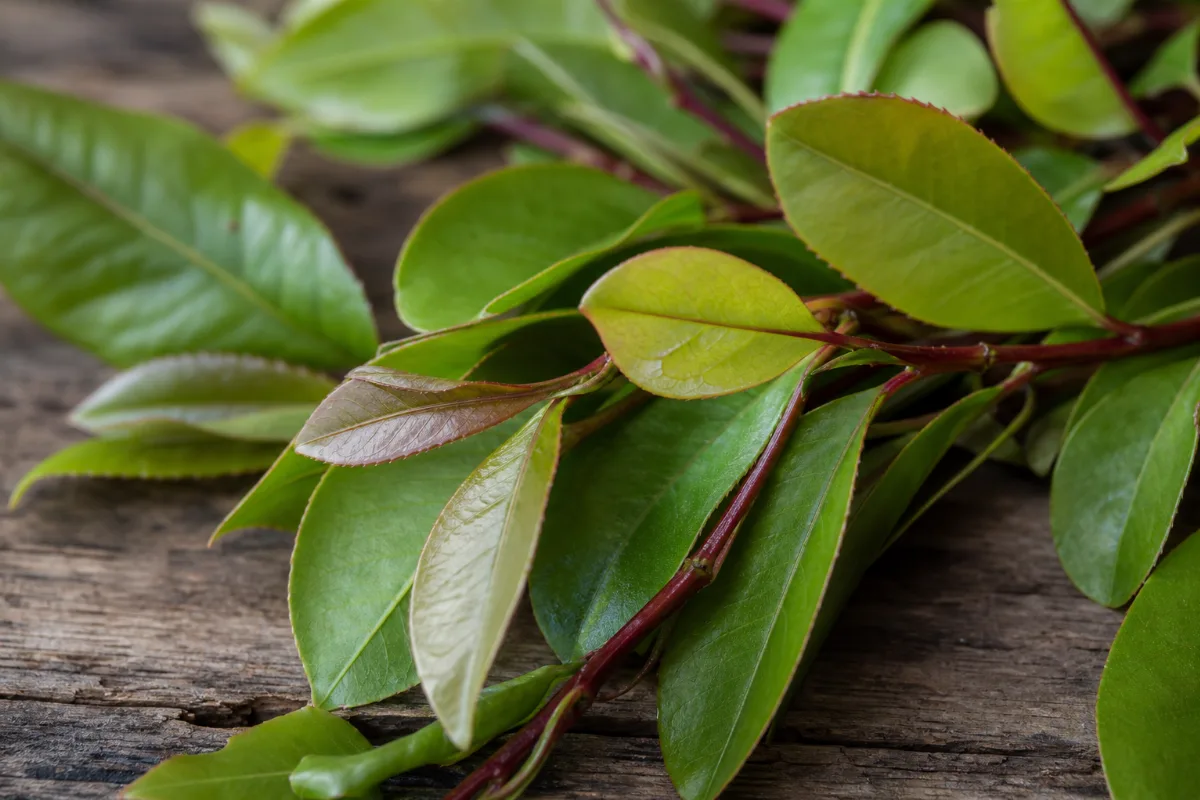
Herbs & Botanicals · Chewed stimulant leaf, controlled drug
Khat
Catha edulis · also called Qat, kat, chat, miraa, quaadka
Khat is a shrub whose fresh leaves and shoots are chewed in East Africa and Yemen for a stimulant lift. Its main chemical, cathinone, is a controlled drug in the US and illegal in many countries. It has no accepted medical use. Studies link heavy chewing with heart attack, dependence, mental health problems, liver disease, gum disease and low birth weight in babies.
General information, not medical advice. Last substantive update · Not medically reviewed. A named clinician has not signed off on this page. How this page is made
About Khat
Khat (Catha edulis) is a shrub of East Africa and the Arabian Peninsula whose fresh leaves are chewed for a stimulant effect. Cathinone, its main chemical, is a Schedule I controlled substance in the US. No health use is accepted, and studies link heavy use with heart, mind, liver, mouth and pregnancy harms.
What it is
Khat is an evergreen shrub in the staff-tree family. People chew fresh leaves and shoots and hold the wad in the cheek, often in social sessions that last hours.
It is a custom in parts of East Africa and Yemen and is also used by migrant communities elsewhere. A 2024 review found about 1 in 5 people in Ethiopia currently chew it, and men far more than women.
What makes it distinctive
The leaf holds cathinone and cathine, stimulants that work like amphetamine in lab studies. Cathinone is strongest in freshly cut leaf and fades as leaf ages, so strength is unpredictable.
Most absorption is through the mouth lining, which is why chewing is the usual way.
What it is used for
People chew khat for alertness, energy and euphoria, and as part of social life. No medical use is accepted and we found no trial showing a health benefit.
How strong is the research
Most human findings come from case-control studies, surveys and case reports. They show links with harm, such as heart attack, but cannot prove cause.
Experts disagree about the link with mental illness. The DEA and one 2007 review take different views on how far the evidence goes.
At a glance
Traditional uses history, not proof
- Chewed for centuries in social "khat sessions" in East Africa and the Arabian Peninsula, for alertness and a sense of well-being.
- This is a social custom. No health use is accepted for it.
Studied for research
- No health benefit is established. Studies look at khat's effects and risks instead.
- Stimulant alertness effect: amphetamine-like in lab work; human data thin (insufficient).
- Thinking, sleep and mood: studies point to harm, not benefit (low certainty).
Main compounds
- Cathinone, the main stimulant, highest in fresh leaf.
- Cathine, a weaker stimulant that lasts longer in the body.
- Norephedrine, formed in the body from cathinone.
Common forms
- Fresh leaves and shoots chewed and held in the cheek.
- Dried khat, sometimes brewed as tea or made into a paste.
- Graba, a dried form made in Ethiopia.
Research links: 2005 case-control study of khat and heart attack, Yemen (PubMed) · 2023 meta-analysis of khat use in pregnancy (PubMed) · 2018 case-control study of khat and chronic liver disease (PubMed) · Research Library · Genes & Biomarkers Library
The plant and its history
- Accepted scientific name
- Catha edulis Forssk.
- Naming authority
- Forssk.
- Common names
- Khat (English); Qat (Arabic / English); Kat (English); Chat (Amharic / English); Miraa (Kenya); Quaadka (Somali)
- Botanical family
- Celastraceae (the staff-tree family).
- Classification
- Plantae > Tracheophyta > Magnoliopsida > Celastrales > Celastraceae > Catha > Catha edulis
- Native range
- Chewed in East Africa and the Arabian Peninsula (Yemen), per the papers read; native range itself not verified.
- Habitat
- Not verified in a source read.
- What the plant looks like
- Roots: Not described in sources read.; Stems: Young shoots are chewed.; Leaves: Fresh leaves and shoots are the part chewed; they are most potent when freshly cut.; Flowers: Not described in sources read.; Fruit: Not described in sources read.
- Cultivation
- Not verified from a source read.
- Harvest and processing
- Fresh bundles are chewed; dried khat can be brewed as tea, made into a paste, smoked or sprinkled on food, and "graba" is a dried form made in Ethiopia (DEA, summary-only).
- Look-alikes and adulterants
- Name: Synthetic cathinones ("bath salts"); Note: Man-made drugs chemically related to cathinone; they are not khat and are reported to be more dangerous (Valente 2014).
- Sustainability and conservation
- Not assessed here.
Traditional use and history history, not clinical proof
| Tradition or era | Documented use | Source |
|---|---|---|
| East Africa and the Arabian Peninsula | Chewed as a social and cultural custom for centuries, in "khat sessions", for alertness and a sense of well-being. | p18561890 |
| Modern drug control | Cathinone was identified as the main psychoactive compound in khat leaves and later became the model for synthetic cathinones. | p24317389 |
Traditional use shows how a plant was used. It does not show that a supplement works or is safe today.
What is inside, and how it may work
What the plant contains and how those compounds act in cells and animals. Laboratory and animal mechanisms are not proven effects in people.
Main compounds
| Compound | Family | Where it is concentrated | Activity studied | Level of evidence |
|---|---|---|---|---|
| Cathinone PubChem 62258 | alkaloid (phenylalkylamine) | Fresh leaf and shoot Highest in freshly cut leaf and falls with age (DEA, summary-only); values not used. | Main stimulant; amphetamine-like in lab and animal work. Half-life about 1.5 hours after chewing in four volunteers. 13 16 8 18 | Human pharmacokinetics |
| Cathine (norpseudoephedrine) PubChem 441457 | alkaloid (phenylalkylamine) | Leaf Stable as leaf ages (DEA, summary-only); values not used. | Weaker stimulant; half-life about 5.2 hours in four volunteers. 13 16 8 | Human pharmacokinetics |
| Norephedrine | alkaloid | Formed in the body from cathinone | Metabolite of cathinone that shaped its blood levels (human). PubChem id not checked. 16 | Human pharmacokinetics |
Mechanisms, receptors and pathways
| Target or pathway | Gene or receptor | What was found | Level |
|---|---|---|---|
| Brain stimulant (amphetamine-like) pathways | Not specified in the abstracts read | In the majority of lab and animal studies, cathinone and cathine acted like amphetamine. Whole-khat studies in people are few. 8 18 | Animal research |
| Heart rate and blood pressure | Sympathetic nervous system | Cathinone has sympathomimetic effects that raise heart rate and blood pressure; the Yemen heart attack study proposed this as the link. 3 | Human data |
Absorption, metabolism and elimination
- Absorption
- Most alkaloid is absorbed through the lining of the mouth (cathinone about 59%, cathine about 84%); chewing extracts nearly all of it from the leaf (only about 9.1% left in the residue).
- Distribution
- Not found.
- Metabolism
- Cathinone is partly converted to norephedrine, which shapes its blood profile.
- Elimination
- Half-life: cathinone about 1.5 hours, cathine about 5.2 hours.
- Bioavailability
- Not measured directly.
Isolated compounds versus whole extracts
Most research is on isolated cathinone and cathine in the lab or in animals. Whole-leaf studies in people are few, and the 2008 review warns it is not yet proven that whole khat equals amphetamine. Synthetic cathinones are a different, more dangerous group.
Nutritional composition
Khat is not a food or nutrient source. Long-term chewing is linked with appetite loss in the DEA summary; a 2024 review of Ethiopian studies on undernutrition was found but not read.
5 low certainty2 not enough evidence
What is Khat good for?
Khat has no accepted health use. The rows below are the effects people have studied, each rated for how strong the evidence is that the effect exists. None is a recommendation.
Benefits, one by one
Each card is a research question, not a promise. Tap a goal to filter. Open a card to see the studies, doses and limits.
Stimulant effect (alertness, energy, euphoria)
Not enough evidenceChewing fresh khat produces an amphetamine-like lift in alertness and mood that lasts for a few hours. This is a drug effect, not a health benefit, and khat has no accepted medical use.
3 studiesFresh leaf chewed; amounts not given here and not advised.
Studies, doses and limits
What the trials found
A 2008 review of 284 articles found most work was on cathinone and was in the lab or in animals; both cathinone and cathine acted like amphetamine. The authors say whole khat needs better study in people. A small human study of four volunteers who chewed leaves found the alkaloids were absorbed mainly through the mouth lining and psychophysical tests were essentially unaffected at a quarter of a typical session. Our earlier summary of the DEA fact sheet says effects last roughly 90 minutes to 3 hours.
Results
Amphetamine-like effects are described, but human data on the whole leaf are thin.
Effect sizes as reported
No effect sizes in the sources read.
Why this rating
Mostly lab and animal work on isolated alkaloids; the one human study had four people and showed no measurable change in psychophysical tests.
Form and dose studied
Fresh leaf chewed; amounts not given here and not advised.
Who was studied
Adults in East Africa and Arabia; a few volunteers in Germany.
Limits
Not a health benefit. Alkaloid strength varies with freshness.
Why researchers looked
Cathinone and cathine, the main alkaloids, act on the brain in ways similar to amphetamine.
Traditional use
Fresh leaves and shoots are chewed in East Africa and the Arabian Peninsula, often in social sessions, for alertness and a sense of well-being.
Proposed mechanism Animal research
Cathinone and cathine release and block the reuptake of brain chemicals such as dopamine in lab and animal work, like amphetamine. Whole khat is much less studied than the isolated alkaloids.
A proposed mechanism does not show that the effect happens in people.
Stimulant effects come with real risks: see the Safety tab. This page gives no advice on use.
Thinking, learning and memory
Low certaintyLong-term khat use has been linked to poorer scores on tests of learning, memory and coordination. This is a harm signal, not a benefit.
1 studiesFresh leaf chewed (people); extract (rodents).
Studies, doses and limits
What the trials found
A 2021 systematic review found 14 studies (9 in people, 5 in rodents). In people, long-term use was linked to deficits in learning, motor speed and coordination, response inhibition, cognitive flexibility, working memory and conflict resolution. Rodents given extract daily had dose-related problems in learning and memory. The authors note gaps in the research.
Results
Deficits in several thinking domains with long-term use (association).
Effect sizes as reported
No pooled effect sizes in the abstract.
Why this rating
Few human studies, mostly observational, and the reviewers flag gaps; cause not shown.
Form and dose studied
Fresh leaf chewed (people); extract (rodents).
Who was studied
Long-term chewers in several countries.
Limits
Small human literature; confounding by sleep loss, other substances and social factors is likely.
Why researchers looked
People who chew regularly are often studied for effects on thinking.
Traditional use
Not applicable.
Proposed mechanism Human data
Stimulant effects on brain circuits; the review did not settle the mechanism.
A proposed mechanism does not show that the effect happens in people.
Direction is harm, not benefit.
Mood, mania and psychosis
Low certaintyReports link heavy khat use with mania, paranoia and psychosis. Experts disagree on whether khat is the cause.
3 studiesFresh leaf.
Studies, doses and limits
What the trials found
Our earlier summary of the DEA fact sheet lists manic behaviour, delusions, suicidal depression and paranoid psychosis with chronic abuse. A 2007 critical review of case reports and studies from 1945 to 2006 judged the quality of the studies and said better research is needed to show a causal link; it also says the debate carries elements of a "moral panic". A 2022 narrative review lists depression and hallucination among reported effects.
Results
Association reported; cause not established.
Effect sizes as reported
Not given in the sources read.
Why this rating
Case reports and weak designs; a critical review questions the causal claim, so we rate this low and flag the disagreement.
Form and dose studied
Fresh leaf.
Who was studied
Chewers, including migrant communities in Europe.
Limits
Confounding by trauma, migration stress and other drug use is discussed in the literature.
Why researchers looked
Case reports and community concern led to reviews of whether khat causes mental illness.
Traditional use
Not applicable.
Proposed mechanism Pharmacological theory
Stimulant effects on dopamine are one proposed route (pharmacological theory).
A proposed mechanism does not show that the effect happens in people.
If you or someone you know has paranoia, hallucinations or suicidal thoughts, seek urgent help.
Dependence and compulsive use
Low certaintyKhat can lead to psychological dependence in some people, with after-effects such as poor concentration, numbness and sleeplessness.
3 studiesFresh leaf.
Studies, doses and limits
What the trials found
Our earlier summary of the DEA fact sheet says khat can lead to psychological dependence. A 2022 Ethiopian study used a khat dependence scale in people who used several substances and found it predicted poor sleep. A 2024 meta-analysis of 26 Ethiopian studies found 19.55% of people currently chew khat, which shows how widespread the habit is, not how many are dependent.
Results
Dependence is documented; no rates of dependence were read.
Effect sizes as reported
Not given.
Why this rating
Regulatory description and cross-sectional data; no dependence rate or treatment trial read.
Form and dose studied
Fresh leaf.
Who was studied
Ethiopia, Yemen and migrant communities.
Limits
Prevalence studies do not show how many chewers become dependent.
Why researchers looked
Chewing is habitual for millions of people, so dependence is a public health question.
Traditional use
Daily chewing sessions are a social custom in some regions, which complicates the picture.
Proposed mechanism Pharmacological theory
Stimulant reward pathways (animal and pharmacological theory).
A proposed mechanism does not show that the effect happens in people.
Dependence is a safety issue; see the Safety tab.
Sleep
Low certaintyKhat is a stimulant, and sleeplessness is a commonly reported after-effect. Studies link khat dependence with poor sleep.
2 studiesFresh leaf.
Studies, doses and limits
What the trials found
A 2022 cross-sectional study of 326 community polysubstance users in Ethiopia found 56.4% had sleep disturbance; a higher khat dependence score predicted poor sleep (adjusted odds ratio 1.39, 95% CI 1.13 to 1.72). A 2022 narrative review lists insomnia as a reported effect.
Results
Poor sleep is associated with higher khat dependence.
Effect sizes as reported
AOR 1.39 (1.13 to 1.72)
Why this rating
Cross-sectional design in people using several substances; khat alone cannot be isolated.
Form and dose studied
Fresh leaf.
Who was studied
Polysubstance users aged 18 to 43, Ethiopia.
Limits
Cannot show cause; other drugs and conditions affect sleep.
Why researchers looked
Stimulants delay sleep; chewing sessions often run into the evening.
Traditional use
Not applicable.
Proposed mechanism Pharmacological theory
Stimulant wakefulness effect (pharmacological theory).
A proposed mechanism does not show that the effect happens in people.
Direction is harm, not benefit.
Medical or health use
Not enough evidenceNo regulator accepts a medical use for khat. The US DEA lists cathinone as a Schedule I drug, a class with no accepted medical use in the US.
2 studiesNot applicable.
Studies, doses and limits
What the trials found
Our earlier summary of the DEA fact sheet states there is no accepted medical use. We found no randomised trial of khat for any condition.
Results
No benefit shown.
Effect sizes as reported
Not applicable.
Why this rating
No trials; regulatory position is against medical use.
Form and dose studied
Not applicable.
Who was studied
Not applicable.
Limits
Social custom is not evidence of benefit.
Why researchers looked
People ask whether chewing khat helps fatigue or hunger.
Traditional use
In East Africa and Yemen, khat is chewed socially and to stay alert or work long hours; this is custom, not treatment.
Proposed mechanism Pharmacological theory
Not applicable.
A proposed mechanism does not show that the effect happens in people.
Do not use khat to treat any condition.
How the body takes up khat alkaloids
Low certaintyWhen leaves are chewed, most of the stimulant alkaloids pass through the lining of the mouth. Cathinone clears fast and cathine more slowly.
1 studiesChewed fresh leaf.
Studies, doses and limits
What the trials found
In four volunteers who chewed leaves equal to a quarter of a typical session, about 59% of cathinone and 84% of cathine was absorbed through the mouth, the cathinone half-life was about 1.5 hours and cathine about 5.2 hours, and no severe reactions were seen.
Results
Pharmacokinetic data from four people.
Effect sizes as reported
Half-life cathinone 1.5 +/- 0.8 h; cathine 5.2 +/- 3.4 h.
Why this rating
Four people, a reduced chewing amount.
Form and dose studied
Chewed fresh leaf.
Who was studied
Four healthy volunteers.
Limits
Tiny study; typical sessions are larger.
Why researchers looked
Explains why chewing, not swallowing, is the usual way.
Traditional use
Chewing sessions of several hours are common.
Proposed mechanism Pharmacological theory
Absorption through oral mucosa, then conversion of cathinone to norephedrine (human).
A proposed mechanism does not show that the effect happens in people.
Not a benefit.
Connections to the rest of health
How Khat connects to the rest of our health knowledge graph. Every link says what kind of connection it is. A safety link (for example to the liver) is a warning, not a benefit. A study that merely mentions a topic never creates a benefit link.
Explore every connection: goals, body systems, organs, symptoms, genes
A. Wellness goals
| Connected to | Kind of connection | Evidence status | Context | Studies |
|---|---|---|---|---|
| Energy Boost | Biological association | Not enough evidence | Stimulant effect (alertness, energy, euphoria): Chewing fresh khat produces an amphetamine-like lift in alertness and mood that lasts for a few hours. This is a drug effect, not a health benefit, and khat has no accepted medical use. | 8 16 17 |
| Cognitive Performance | Adverse effect or risk | Low certainty | Thinking, learning and memory: Long-term khat use has been linked to poorer scores on tests of learning, memory and coordination. This is a harm signal, not a benefit. | 1 |
| Memory Support | Adverse effect or risk | Low certainty | Thinking, learning and memory: Long-term khat use has been linked to poorer scores on tests of learning, memory and coordination. This is a harm signal, not a benefit. | 1 |
| Mood Balance | Adverse effect or risk | Low certainty | Mood, mania and psychosis: Reports link heavy khat use with mania, paranoia and psychosis. Experts disagree on whether khat is the cause. Dependence and compulsive use: Khat can lead to psychological dependence in some people, with after-effects such as poor concentration, numbness and sleeplessness. | 17 19 5 12 7 |
| Better Sleep | Adverse effect or risk | Low certainty | Sleep: Khat is a stimulant, and sleeplessness is a commonly reported after-effect. Studies link khat dependence with poor sleep. | 12 5 |
| Sleep Quality | Adverse effect or risk | Low certainty | Sleep: Khat is a stimulant, and sleeplessness is a commonly reported after-effect. Studies link khat dependence with poor sleep. | 12 5 |
B. Body systems
| Connected to | Kind of connection | Evidence status | Context | Studies |
|---|---|---|---|---|
| Heart and circulation | Adverse effect or risk | Low certainty | Heart attack, high blood pressure and rhythm problems linked to chewing in observational studies. Preparation or compound: Chewed fresh leaf; cathinone |
3 6 |
| Liver | Adverse effect or risk | Low certainty | Chronic liver disease (case-control) and autoimmune-type hepatitis (case reports). Preparation or compound: Chewed fresh leaf |
14 10 |
| Brain and nerves | Adverse effect or risk | Low certainty | Dependence, thinking deficits, sleep and mood problems. Preparation or compound: Cathinone and cathine |
17 1 12 |
| Nervous System | Biological association | Not enough evidence | Studied for: Stimulant effect (alertness, energy, euphoria) Studied for: Thinking, learning and memory | 8 16 17 1 19 5 |
| Stress Mood | Biological association | Low certainty | Studied for: Mood, mania and psychosis Studied for: Dependence and compulsive use | 17 19 5 12 7 |
| Sleep Recovery | Biological association | Low certainty | Studied for: Sleep | 12 5 |
D. Symptoms
| Connected to | Kind of connection | Evidence status | Context | Studies |
|---|---|---|---|---|
| Heart attack | Adverse effect or risk | Low certainty | A Yemen case-control study linked chewing with higher odds of heart attack. Preparation or compound: Chewed fresh leaf |
3 |
| Low birth weight | Adverse effect or risk | Low certainty | Meta-analysis linked khat use in pregnancy to low birth weight (OR 2.51). Preparation or compound: Chewed fresh leaf |
21 |
I. Biomarkers
| Connected to | Kind of connection | Evidence status | Context | Studies |
|---|---|---|---|---|
| Cognitive test performance | Biological association | Low certainty | Measured in trials: lowered. A lab change is not the same as a health benefit. | 1 |
| Sleep disturbance (questionnaire) | Biological association | Low certainty | Measured in trials: raised. A lab change is not the same as a health benefit. | 12 |
| Blood levels of cathinone and cathine | Biological association | Low certainty | Measured in trials: raised. A lab change is not the same as a health benefit. | 16 |
J. Genes, receptors and enzymes
| Connected to | Kind of connection | Evidence status | Context | Studies |
|---|---|---|---|---|
| TP53, ARID1A, PIK3CA, MLH1 mutations in oral cancers | Preliminary mechanism | Human observational | Found in oral cancers of khat users in one study with no comparison to non-user cancers; does not show khat caused them. | 4 |
L. Active compounds
| Connected to | Kind of connection | Evidence status | Context | Studies |
|---|---|---|---|---|
| Cathinone | Biological association | Human pharmacokinetics | Main stimulant; amphetamine-like in lab and animal work. Half-life about 1.5 hours after chewing in four volunteers. Preparation or compound: Fresh leaf and shoot |
13 16 8 18 |
| Cathine (norpseudoephedrine) | Biological association | Human pharmacokinetics | Weaker stimulant; half-life about 5.2 hours in four volunteers. Preparation or compound: Leaf |
13 16 8 |
| Norephedrine | Biological association | Human pharmacokinetics | Metabolite of cathinone that shaped its blood levels (human). PubChem id not checked. Preparation or compound: Formed in the body from cathinone |
16 |
Each connection is stored with the ingredient, the connected record, the kind of connection, the evidence status, the supporting studies, the preparation or compound involved, and a review date (last reviewed October 25, 2026).
Evidence at a glance: what changed in 3 lab markers
Tap a number to show only those markers. Counts are markers, not people.
The evidence
The research centre for Khat. Every record here was checked against PubMed or the publisher's page; we never list a study we have not verified.
Evidence by outcome
Bars show how many studies we found for each outcome, not how well it works. People are added up across trials only (reviews are not added, to avoid double counting).
How we rate evidence
High certainty
Several well-run trials or reviews agree; further research is unlikely to change the picture much.
Moderate certainty
Good trials point the same way, but some doubt remains.
Low certainty
Small, short or inconsistent trials. The finding could change with better research.
Very low certainty
Very little or very weak human data. Treat as a possibility only.
Mixed findings
Trials or reviews disagree with each other.
Not enough evidence
Not enough human research to say either way.
Evidence against
Good research found no benefit, or found harm.
We take the reviewers' own risk-of-bias and GRADE statements where they exist, and otherwise judge from study size, design, consistency, directness and whether a product matches what is sold. Many publications do not make evidence high. Method note: We searched PubMed, GBIF and PubChem, and recorded each study's design, people and result. Where we read only an abstract, we say so. The DEA fact sheet and a 2025 heart review could not be re-opened and are marked as carried over.
Study library: every study we checked 21
| Study | Design | People | Product, dose, length | Result |
|---|---|---|---|---|
| Ahmed 2021 Khat and neurobehavioral functions: A systematic review PLoS One · PMID 34111184 · DOI |
Systematic review |
14 studies (9 human, 5 rodent) | Khat use fresh leaf (human); extract (rodent) Not applicable Not applicable · vs Not applicable |
Long-term khat use in people was linked to deficits in learning, motor speed and coordination, set-shifting, cognitive flexibility, working memory and conflict resolution. Rodents given khat extract daily showed dose-related problems in learning and memory. Narrative; no pooled effect sizes in the abstract. Methods, limits and fundingOutcomes: Learning, memory, motor and thinking skills Limitations: Few human studies; the authors note gaps in the literature. Funding and conflicts: No competing interests declared. Read: abstract |
| Al-Maweri 2017 Oral hygiene and periodontal health status among khat chewers. A case-control study Journal of Clinical and Experimental Dentistry · PMID 28512538 · DOI |
Case control |
382 310 Yemeni male khat chewers and 72 matched non-chewers |
Khat chewing (self-reported) fresh leaf Not applicable (observational) Not applicable · vs Non-chewers |
Chewers had higher plaque, attachment loss and gum recession scores. Gum inflammation and pocket depth did not differ overall. Recession was worse on the chewing side. Longer duration and higher frequency of chewing were linked to worse measures. Group differences P < 0.05 for plaque, attachment loss, recession Methods, limits and fundingOutcomes: Plaque, gum and attachment measures Limitations: Men only; far fewer controls than chewers; self-reported habits. Funding and conflicts: No conflicts declared. Read: abstract |
| Al-Motarreb 2005 Khat chewing is a risk factor for acute myocardial infarction: a case-control study British Journal of Clinical Pharmacology · PMID 15842556 · DOI |
Case control |
200 100 heart attack patients and 100 matched controls, Sana'a, Yemen |
Khat chewing (self-reported) fresh leaf Not given in the abstract Not applicable (observational) · vs Matched hospital outpatients |
Chewing was more common in heart attack patients (odds ratio 5.0, 95% CI 1.9 to 13.1). Heavy chewers had a 39-fold higher risk. OR 5.0 (1.9 to 13.1) (1.9 to 13.1) Methods, limits and fundingOutcomes: Link between khat chewing and heart attack Limitations: One hospital; self-reported chewing; smoking and other factors may not be fully separated out. Observational, so it shows an association, not proof of cause. Funding and conflicts: Not stated in the abstract. Read: abstract |
| Alshahrani 2021 Oral cancer among Khat users: finding evidence from DNA analysis of nine cancer-related gene mutations BMC Oral Health · PMID 34876124 · DOI |
Cross sectional |
113 83 khat users (short and long term) with oral squamous cell carcinoma and 30 healthy controls |
Khat use (history) fresh leaf Not applicable Short term under 15 years; long term over 15 years · vs 30 healthy controls |
Khat users with oral cancer carried many mutations (for example TP53 in about 83 to 88%). The authors conclude khat is mutagenic and carcinogenic. Gene mutation rates; no comparison with oral cancers in non-users. Methods, limits and fundingOutcomes: Mutations in nine cancer-related genes Limitations: The abstract describes khat users grouped by oral cancer diagnosis, compared with healthy controls, and does not compare cancers in non-users. So it cannot show that khat caused the cancers. The authors' strong conclusion goes beyond this design. Funding and conflicts: No competing interests declared. Read: abstract |
| Alshoabi 2022 Risks of khat chewing on the cardiovascular, nervous, gastrointestinal, and genitourinary systems: A narrative review Journal of Family Medicine and Primary Care · PMID 35309607 · DOI |
Narrative review |
PubMed literature on khat chewing | Khat chewing fresh leaf Not applicable Not applicable · vs Not applicable |
The review lists higher blood pressure and heart rate, heart attack risk, insomnia, stress, depression, hallucination, stroke risk, poor oral hygiene, gum disease, mouth ulcers, loss of appetite, gastritis, constipation, liver risk, poor urination, lower sperm motility and count, and low birth weight. Narrative; no pooled numbers. Methods, limits and fundingOutcomes: Body-wide effects of chewing Limitations: Narrative review with simple inclusion rules; study quality is not graded. Funding and conflicts: No conflicts declared. Read: abstract |
| Authors not recorded in our earlier summary 2025 Understanding the Intricacies of Khat-Associated Cardiovascular Disease Journal of Clinical Medicine · Source |
Narrative review |
Studies of khat and heart disease | Khat chewing fresh leaf Not applicable Not applicable · vs Not applicable |
Per our earlier summary: links chewing with high blood pressure, acute coronary syndrome, cardiomyopathy and abnormal heart rhythms, but rates the evidence weak to moderate and mostly observational. Not applicable Methods, limits and fundingOutcomes: Cardiovascular outcomes Limitations: Summary-only: not re-opened in this session. Funding and conflicts: Not recorded. Read: summary-only |
| Ayano 2024 Epidemiology of Khat (Catha edulis) Chewing in Ethiopia: A Systematic Review and meta-analysis Journal of Psychoactive Drugs · PMID 36508190 · DOI |
Meta-analysis |
26 studies in Ethiopia | Khat chewing fresh leaf Not applicable Not applicable · vs Not applicable |
Pooled current use was 19.55% (95% CI 14.62 to 25.64) and lifetime use 26.14%. Current use was higher in men (23.72%) than in women (8.45%). Current use 19.55% (14.62 to 25.64) Methods, limits and fundingOutcomes: How common khat chewing is Limitations: Prevalence only; shows how common the habit is, not its health effects. Funding and conflicts: Not stated in the abstract. Read: abstract |
| Feyissa 2008 A review of the neuropharmacological properties of khat Prog Neuropsychopharmacol Biol Psychiatry · PMID 18561890 · DOI |
Narrative review mixed |
Studies of khat and cathinone (284 English articles, 1959-2007) | Khat and its alkaloids cathinone and cathine fresh leaf Not applicable Not applicable · vs Not applicable |
Most studies looked at cathinone. Few tested whole khat. Cathinone and cathine acted like amphetamine in most studies. Review; no effect sizes. Methods, limits and fundingOutcomes: Brain effects of khat Limitations: Mostly lab and animal work; calls for better studies of whole khat in people before khat is labelled a "natural amphetamine". Funding and conflicts: Not stated in the abstract. Read: abstract |
| GBIF Secretariat 2026 GBIF backbone: Catha edulis Forssk. GBIF species match API · Source |
Database record |
Taxonomy record | Not applicable Not applicable Not applicable Not applicable · vs Not applicable |
Accepted species, usage key 7979745, family Celastraceae, order Celastrales (strict match, EXACT, confidence 98, checked 2026-10-25). Not applicable Methods, limits and fundingOutcomes: Accepted name Limitations: Database record only. Funding and conflicts: Not applicable Read: full-text |
| Hagen 2025 Khat-associated Autoimmune Hepatitis: A Review with RUCAM Analysis Journal of Clinical and Translational Hepatology · PMID 40951535 · DOI |
Narrative review |
Published cases of khat-associated autoimmune hepatitis | Khat use fresh leaf Not applicable Not applicable · vs Not applicable |
Reports link khat to autoimmune hepatitis, with raised autoimmune markers, typical biopsy findings, and recovery after stopping khat or after steroid treatment, without relapse. The authors scored cases with the RUCAM causality tool. Case review; no pooled numbers in the abstract. Methods, limits and fundingOutcomes: Cases of autoimmune-type liver injury linked to khat Limitations: Case reports only; the abstract does not give case numbers or RUCAM scores. Funding and conflicts: One author is editor-in-chief of the journal; no other conflicts declared. Read: abstract |
| Khawaja 2008 Khat (Catha edulis) chewing during pregnancy in Yemen: findings from a national population survey Maternal and Child Health Journal · PMID 17551820 · DOI |
Survey |
7343 Ever-married women in the 1997 Yemen survey |
Khat chewing in pregnancy (self-reported) fresh leaf Not applicable Not applicable · vs Not applicable |
About 40.7% of women with a recent birth reported chewing khat while pregnant. Older age, no education, rural living and low wealth were linked to chewing. Prevalence 40.7% Methods, limits and fundingOutcomes: How common khat chewing in pregnancy was Limitations: Measured how common the habit was, not effects on babies. Funding and conflicts: Not stated in the abstract. Read: abstract |
| Manzar 2022 Poor Sleep in Community-Dwelling Polysubstance Users: Association With Khat Dependence, Metacognition, and Socio-Demographic Factors Frontiers in Psychiatry · PMID 35619616 · DOI |
Cross sectional |
326 Community polysubstance users aged 18 to 43, Mizan, Ethiopia |
Khat dependence score (SDS-Khat) fresh leaf Not applicable Not applicable · vs Not applicable |
56.4% had sleep disturbance. A higher khat dependence score predicted poor sleep (adjusted OR 1.39, 95% CI 1.13 to 1.72). AOR 1.39 (1.13 to 1.72) (1.13 to 1.72) Methods, limits and fundingOutcomes: Sleep disturbance Limitations: Cross-sectional; users of several substances, so khat cannot be separated out cleanly. Funding and conflicts: Not stated in the abstract. Read: abstract |
| NCBI PubChem 2026 PubChem: cathinone (CID 62258) and cathine (CID 441457) PubChem PUG REST · Source |
Database record |
Compound records | Cathinone; cathine Not applicable Not applicable Not applicable · vs Not applicable |
Cathinone C9H11NO, (2S)-2-amino-1-phenylpropan-1-one, CID 62258. Cathine C9H13NO, (1S,2S)-2-amino-1-phenylpropan-1-ol, CID 441457 (checked 2026-10-25). Not applicable Methods, limits and fundingOutcomes: Identity of the alkaloids Limitations: Database record only. Funding and conflicts: Not applicable Read: full-text |
| Orlien 2018 Khat chewing increases the risk for developing chronic liver disease: A hospital-based case-control study Hepatology · PMID 29369368 · DOI |
Case control |
450 150 adults with chronic liver disease and 300 without, two hospitals in Harar, Ethiopia |
Khat chewing (self-reported, in "khat years") fresh leaf 1 khat year = 200 g fresh khat daily for a year Not applicable (observational) · vs Hospital attendees without liver disease |
Crude odds ratio 2.64 (95% CI 1.56 to 4.58). In men, after adjusting for age, alcohol and hepatitis B/C, odds rose with exposure: 3.58 (low), 5.90 (moderate), 13.03 (high, CI 3.61 to 47.02). Crude OR 2.64 (1.56 to 4.58) (1.56 to 4.58) Methods, limits and fundingOutcomes: Chronic liver disease Limitations: Hospital-based; self-reported use; the authors say the pattern suggests a cause but a case-control study cannot prove it. Funding and conflicts: Not stated in the abstract. Read: abstract |
| Soufi 1991 Khat and oral cancer Journal of Laryngology and Otology · PMID 1919319 · DOI |
Case series |
28 28 head and neck cancer patients in the Asir region, Saudi Arabia |
Khat chewing (history) fresh leaf Not applicable Use of 25 years or longer · vs None |
Ten of 28 had chewed khat; eight had oral cancers. All were non-smokers who had chewed for 25 years or longer. The authors say the correlation warrants attention. 10 of 28 patients Methods, limits and fundingOutcomes: Khat history in head and neck cancer patients Limitations: Small, old case series with no control group. Funding and conflicts: Not stated in the abstract. Read: abstract |
| Toennes 2003 Pharmacokinetics of cathinone, cathine and norephedrine after the chewing of khat leaves British Journal of Clinical Pharmacology · PMID 12848785 · DOI |
Pharmacokinetic study |
4 Four volunteers |
Chewed khat leaves (one-quarter of a typical session) fresh leaf Not repeated here Blood sampled up to 80 hours · vs None |
Most absorption was through the lining of the mouth (cathinone about 59%, cathine about 84%). Cathinone half-life was about 1.5 hours and cathine about 5.2 hours. Cathinone is partly converted to norephedrine. No severe reactions. Cathinone half-life 1.5 +/- 0.8 h Methods, limits and fundingOutcomes: How the khat alkaloids are absorbed and cleared Limitations: Four people only, at a quarter of a typical session. Funding and conflicts: Not stated in the abstract. Read: abstract |
| U.S. Drug Enforcement Administration 2025 Khat (Catha edulis) drug fact sheet DEA Diversion Control · Source |
Authoritative guidance |
Regulatory fact sheet | Khat; cathinone; cathine fresh leaf; dried khat Not applicable Not applicable · vs Not applicable |
Per our earlier summary: cathinone is the main stimulant and is structurally similar to d-amphetamine; cathinone is Schedule I and cathine Schedule IV in the US (December 2025 scheduling as recorded); effects last roughly 90 minutes to 3 hours; reported harms include dependence, raised blood pressure, arrhythmias, insomnia, mania, psychosis, appetite loss and gum disease. Strength falls as cut leaf ages. Not applicable Methods, limits and fundingOutcomes: Legal status, chemistry and reported harms Limitations: Summary-only: the DEA PDF could not be re-opened in this session (connection refused), so wording is carried from our earlier read and should be re-checked. Funding and conflicts: Government agency. Read: summary-only |
| Valente 2014 Khat and synthetic cathinones: a review Archives of Toxicology · PMID 24317389 · DOI |
Narrative review mixed |
Khat and synthetic cathinone literature | Khat; cathinone and derivatives fresh leaf Not applicable Not applicable · vs Not applicable |
Cathinone is the main psychoactive compound of khat leaves and has amphetamine-like properties. Synthetic versions are chemically related and share stimulant and sympathomimetic features. Review. Methods, limits and fundingOutcomes: Chemistry and toxicity Limitations: Synthetic cathinones are a different group of drugs from khat leaf. Funding and conflicts: Not stated in the abstract. Read: abstract |
| Warfa 2007 Khat use and mental illness: a critical review Social Science & Medicine · PMID 17544193 · DOI |
Narrative review |
Case reports and studies on khat and mental illness, 1945-2006 | Khat chewing fresh leaf Not applicable Not applicable · vs Not applicable |
The authors checked the quality of the studies and said better research is needed to show a link with psychiatric disorders. They also argue the debate carries elements of a "moral panic". No numbers in the abstract. Methods, limits and fundingOutcomes: Whether khat use causes mental illness Limitations: A critical review, so it questions the evidence rather than settling it. Funding and conflicts: Not stated in the abstract. Read: abstract |
| World Health Organization 2006 WHO Expert Committee on Drug Dependence: thirty-fourth report (includes a khat evaluation) WHO Technical Report Series 942 · Source |
Authoritative guidance |
Expert committee report | Khat fresh leaf Not applicable Not applicable · vs Not applicable |
The WHO catalogue entry says the report summarises evaluations of seven substances, including khat. We did NOT read the khat recommendation, so it is not stated here. Catalogue entries disagree on whether this is the 33rd or 34th report. Not applicable Methods, limits and fundingOutcomes: Need for international control Limitations: NOT verified: only the catalogue entry was seen. Funding and conflicts: Not applicable Read: summary-only |
| Yitayih 2023 The effects of khat use during pregnancy on perinatal and maternal outcomes: a meta-analysis Archives of Women's Mental Health · PMID 36689029 · DOI |
Meta-analysis |
Pregnant women who used khat vs. those who did not (studies to Jan 2022) | Khat use in pregnancy fresh leaf Not applicable Not applicable · vs Women not using khat |
Khat use was linked to low birth weight (OR 2.51, 95% CI 1.60 to 3.94), congenital anomalies (OR 3.17, 1.30 to 7.73), early rupture of membranes (OR 1.99, 1.59 to 2.50), perinatal death (OR 1.95, 1.26 to 3.03) and lower 5-minute Apgar scores (-1.7, -2.32 to -1.07). It was also linked to maternal stress and anaemia. Stillbirth and preterm birth did not differ significantly. LBW OR 2.51 (1.60 to 3.94) (1.60 to 3.94) Methods, limits and fundingOutcomes: Birth and maternal outcomes Limitations: The authors call the studies scarce and inconsistent; observational data, so cause is not proven. Funding and conflicts: Not stated in the abstract. Read: abstract |
What we do not know yet
- No randomised trial of khat for any purpose was found.
- Legal status outside the US and the WHO recommendation were not verified.
- Dependence rates and treatments are unknown from the sources read.
- Whether khat causes psychosis is unresolved.
How new research is added
New studies are found by a saved PubMed search and placed in a review queue. A person reads each one before it is added.
Lab markers
What changed in blood or saliva tests during trials. A changed number is not the same as feeling or being healthier, and we give no "normal ranges".
Other 3
Cognitive test performance
Lowered in trials
Scores on tests of learning, memory, speed and attention.
Low certaintyResults and what it means
Why it was measured
To see whether long-term chewing affects thinking.
Statistical vs. clinical meaning
Group differences in tests; the clinical size is not given.
Safety implication
Harm signal.
| Study | Result | People | Product |
|---|---|---|---|
| 1 | Deficits in learning, motor speed, response inhibition, cognitive flexibility, working memory and conflict resolution in long-term users (no scores in the abstract). | 9 human studies in a systematic review | Long-term khat use |
Sleep disturbance (questionnaire)
Raised in trials
Self-reported poor sleep on a brief sleep questionnaire.
Low certaintyResults and what it means
Why it was measured
Stimulants can disturb sleep.
Statistical vs. clinical meaning
Statistically clear association in one cross-sectional study.
Safety implication
Poor sleep can worsen mood and health.
| Study | Result | People | Product |
|---|---|---|---|
| 12 | 56.4% of polysubstance users had sleep disturbance; higher khat dependence score predicted poor sleep (AOR 1.39, 95% CI 1.13 to 1.72). | 326 community polysubstance users, Ethiopia | Khat dependence score (SDS-Khat) |
Blood levels of cathinone and cathine
Raised in trials
How much of each alkaloid is in blood over time after chewing.
Low certaintyResults and what it means
Why it was measured
Shows absorption and how long the drug stays in the body.
Statistical vs. clinical meaning
Describes drug handling only; not a health outcome.
Safety implication
Cathine lingers longer than cathinone.
| Study | Result | People | Product |
|---|---|---|---|
| 16 | Cathinone half-life 1.5 +/- 0.8 h; cathine 5.2 +/- 3.4 h; cathinone partly converted to norephedrine; measured up to 80 hours. | 4 volunteers | Chewed khat leaves (one quarter of a typical session) |
Safety
What studies and official sources say about side effects, medicines and who should check first. Each point shows what kind of evidence it comes from.
Main points to know 5
- Khat is a controlled stimulant; this page is information, not advice. Cathinone, the main stimulant in fresh khat, is a Schedule I controlled substance in the US, and cathine is Schedule IV, as recorded from the DEA fact sheet (summary-only). Khat is illegal in many countries and legal in others. We did not verify other countries' laws, so check the law where you are. Authoritative guidance 17
- Heart attack and blood pressure. A Yemen study of 100 heart-attack patients and 100 matched controls found chewing was linked to heart attack (odds ratio 5.0, 95% CI 1.9 to 13.1), rising with heavier chewing. A 2025 review links chewing with high blood pressure, acute coronary syndrome, heart muscle disease and abnormal rhythms but calls the evidence weak to moderate and mostly observational. Case control 3 6 5
- Dependence and mental health. Khat can cause psychological dependence. Mania, paranoia and psychosis are reported with heavy use, though a critical review says the causal link is not proven. Authoritative guidance 17 19
- Pregnancy. A 2023 meta-analysis linked khat use in pregnancy to low birth weight (OR 2.51), congenital anomalies (OR 3.17), early rupture of membranes, perinatal death and lower Apgar scores. The authors call the studies scarce and inconsistent. Meta-analysis 21
- Liver, mouth and gums. A hospital study in Ethiopia found a dose-related link with chronic liver disease, and case reports describe autoimmune-type hepatitis. Chewers show more gum recession and plaque, and small reports link long-term chewing with oral cancer, though the cause is not proven. Case control 14 10 2 15 4
Side effects 10
| Effect | How often | Severity and recovery | Evidence |
|---|---|---|---|
| Heart attack, high blood pressure, faster heart rate, abnormal rhythms Observational; the stimulant action on heart rate and blood pressure is the proposed reason. | Not established | severe Not stated | Case control 3 6 17 |
| Stroke risk Listed in a narrative review; study quality not graded. | Not established | severe Not stated | Narrative review 5 |
| Dependence, poor concentration, numbness Frequency of dependence not found. | Not established | moderate Not stated | Authoritative guidance 17 |
| Mania, delusions, paranoia, depression Whether khat causes these is debated. | Not established | severe Not stated | Case report 17 19 5 |
| Insomnia and poor sleep Higher dependence score linked to poor sleep (AOR 1.39). | Not established | moderate Not stated | Cross sectional 12 5 |
| Memory, learning and coordination problems with long-term use Few human studies. | Not established | moderate Not stated | Systematic review 1 |
| Gum recession, plaque, mouth ulcers, tooth decay Yemeni men; control group small. | Not established | mild to moderate Not stated | Case control 2 5 |
| Oral cancer (possible link) Small old case series and one genetic study without a non-user cancer comparison; not proof of cause. | Not established | severe Not stated | Case series 15 4 |
| Appetite loss, stomach and bowel problems Reported with chronic use. | Not established | mild to moderate Not stated | Authoritative guidance 17 5 |
| Lower sperm motility and count, weak urination Reported in a narrative review; not verified in the primary studies here. | Not established | moderate Not stated | Narrative review 5 |
Liver
A 2018 case-control study in Harar, Ethiopia (150 people with chronic liver disease, 300 without) found chewing linked to chronic liver disease (crude OR 2.64, 95% CI 1.56 to 4.58). In men, after adjusting for age, alcohol and hepatitis B/C, risk rose with exposure (adjusted OR 3.58, 5.90 and 13.03 for low, moderate and high). A 2025 review collects case reports of autoimmune-type hepatitis linked to khat, with recovery after stopping or after steroids. We did not find a LiverTox entry for khat (not retried). 14 10
How often. No frequency of liver injury was found.
Monitoring. No official monitoring advice was found. Anyone with yellow skin or eyes, dark urine or pain in the upper right belly should see a doctor.
- Hagen and Wu 2025 review of published cases. Cases of autoimmune hepatitis with raised autoimmune markers and typical biopsy findings; recovery after stopping khat or on steroids without relapse. Case numbers and RUCAM scores were not in the abstract.
This is a safety connection. It is not evidence that Khat supports liver health.
Medicines and supplements 2
| With | Why it matters | Importance | Evidence | What to do |
|---|---|---|---|---|
| Blood pressure and heart medicines, and other stimulants (caffeine, decongestants, amphetamines, other cathinones) prescription and over-the-counter | Khat's stimulant action raises heart rate and blood pressure, which could add to other stimulants or work against blood pressure medicines. | No interaction study was read; this is a plausible risk from the drug's effects. | Pharmacological theory Not enough evidence 3 18 | Tell your doctor or pharmacist about any khat use. |
| Alcohol, tobacco and other drugs recreational | The Ethiopian liver study adjusted for alcohol, and sleep and dependence studies involved users of several substances. | Combined use makes each effect hard to separate and may add to liver, heart and sleep risk; no formal interaction study was read. | Observational Not enough evidence 14 12 | Say so honestly to your clinician. |
Who should check first 3
| Situation | Advice | Evidence |
|---|---|---|
| Pregnancy and breastfeeding | Avoid. Meta-analysis links khat use to low birth weight and other poor outcomes. Breastfeeding data were not found. | Meta-analysis 21 11 |
| Heart disease, high blood pressure, past stroke or abnormal heart rhythm | Avoid; khat can raise heart rate and blood pressure and is linked to heart attack. | Case control 3 6 |
| Liver disease, mental illness (psychosis, mania, severe depression), substance dependence, sleep problems | Avoid; each is linked to khat in the studies above. | Case control 14 17 12 |
Overdose, product quality and regulators
Summary. Khat is a stimulant with heart, mind, liver, mouth and pregnancy risks. Strength is unpredictable.
Animal. Rodents given khat extract showed dose-related problems in learning and memory and hyperactivity (systematic review).
Human doses studied. Not given; no safe amount is stated. The one pharmacology study gave volunteers one quarter of a typical session and saw no severe reactions.
High dose or long term signals. Long-term and heavy use is linked with heart attack, liver disease, gum disease, poor thinking scores and dependence. Cathinone is highest in freshly cut leaf and falls with age while cathine stays stable; dried khat can still hold cathinone for months or years (DEA, summary-only).
Overdose response. No overdose figures were read. Synthetic cathinones ("bath salts") are a separate, more dangerous group with reported deaths; they are not khat.
Genotoxicity. A genetic study of oral cancers in khat users reported many mutations, but it had no non-user cancer comparison; not established.
Toxic plant parts. Fresh leaves and young shoots hold the most cathinone.
The main issue is unpredictable strength, because cathinone breaks down as leaves age, and unknown purity of imported bundles.
Variable alkaloid content. Cathinone is highest in fresh cut leaf and falls with age; cathine stays stable. Dried khat can still contain cathinone for months or years. 17
| Body | Action | Date |
|---|
When to get medical help
- Chest pain, shortness of breath, fainting or a very fast or irregular heartbeat: get emergency help.
- Sudden weakness, trouble speaking or face drooping (possible stroke): get emergency help.
- Hallucinations, severe paranoia, violent behaviour or thoughts of suicide: get urgent help.
- Yellow skin or eyes, dark urine or severe belly pain: see a doctor promptly.
Stop the supplement and contact a clinician or emergency service. In the US, Poison Control is 1-800-222-1222.
General information only, not medical advice. Ask a clinician or pharmacist before use, especially with medicines, in pregnancy or with a health condition. See the Natural Remedy Safety guide.
Frequently asked questions
What is khat?
What is in khat?
Is khat legal?
Has the WHO assessed khat?
Its expert committee on drug dependence evaluated khat in 2006 per the WHO catalogue. We did not read the recommendation, so we do not state it.
Is khat addictive?
Does khat affect the heart?
Can khat cause psychosis?
Does khat harm the liver?
What does khat do to the mouth and teeth?
Is khat safe in pregnancy?
Does khat affect sleep?
Are synthetic cathinones the same as khat?
No. Synthetic cathinones ("bath salts") are man-made drugs related to cathinone and have caused reported deaths. They are a separate group.
Where can I get help to cut down?
Speak to a doctor or a local addiction service. We found no trial of treatments for khat dependence.
Explore by health goal
Mood BalanceEnergy BoostCognitive PerformanceMemory SupportBetter SleepSleep Quality
Editorial transparency
- Written by
- AlternativeMed editorial team. Research compiled with AI assistance, then checked against the sources cited.
- Medical review
- None. This page has not been reviewed by a physician or pharmacist.
- First published
- 2026-10-25
- Last substantive update
- 2026-10-25
- How we research
- We searched PubMed, GBIF and PubChem, and recorded each study's design, people and result. Where we read only an abstract, we say so. The DEA fact sheet and a 2025 heart review could not be re-opened and are marked as carried over.
- How we rate evidence
- See "How we rate evidence" in the Evidence tab.
- Independence
- No product is promoted on this page. No affiliate links are shown. This is an information page, not advice to use khat.
Sources 21
Each source was opened and checked. Where we read only the abstract, it says so. The small numbers in the text point here.
- Ahmed A, Ruiz MJ, Cohen Kadosh K, et al.. Khat and neurobehavioral functions: A systematic review. PLoS One. 2021. PMID 34111184. DOI 10.1371/journal.pone.0252900. (abstract)
- Al-Maweri SA, AlAkhali M. Oral hygiene and periodontal health status among khat chewers. A case-control study. Journal of Clinical and Experimental Dentistry. 2017. PMID 28512538. DOI 10.4317/jced.53520. (abstract)
- Al-Motarreb A, Briancon S, Al-Jaber N, et al.. Khat chewing is a risk factor for acute myocardial infarction: a case-control study. British Journal of Clinical Pharmacology. 2005. PMID 15842556. DOI 10.1111/j.1365-2125.2005.02358.x. (abstract)
- Alshahrani SA, Al-Qahtani WS, Almufareh NA, et al.. Oral cancer among Khat users: finding evidence from DNA analysis of nine cancer-related gene mutations. BMC Oral Health. 2021. PMID 34876124. DOI 10.1186/s12903-021-01981-7. (abstract)
- Alshoabi SA, Hamid AM, Gameraddin MB, et al.. Risks of khat chewing on the cardiovascular, nervous, gastrointestinal, and genitourinary systems: A narrative review. Journal of Family Medicine and Primary Care. 2022. PMID 35309607. DOI 10.4103/jfmpc.jfmpc_1254_21. (abstract)
- Authors not recorded in our earlier summary. Understanding the Intricacies of Khat-Associated Cardiovascular Disease. Journal of Clinical Medicine. 2025. (summary-only)
- Ayano G, Ayalew M, Bedaso A, et al.. Epidemiology of Khat (Catha edulis) Chewing in Ethiopia: A Systematic Review and meta-analysis. Journal of Psychoactive Drugs. 2024. PMID 36508190. DOI 10.1080/02791072.2022.2155735. (abstract)
- Feyissa AM, Kelly JP. A review of the neuropharmacological properties of khat. Prog Neuropsychopharmacol Biol Psychiatry. 2008. PMID 18561890. DOI 10.1016/j.pnpbp.2007.12.033. (abstract)
- GBIF Secretariat. GBIF backbone: Catha edulis Forssk.. GBIF species match API. 2026. (full-text)
- Hagen R, Wu GY. Khat-associated Autoimmune Hepatitis: A Review with RUCAM Analysis. Journal of Clinical and Translational Hepatology. 2025. PMID 40951535. DOI 10.14218/JCTH.2025.00180. (abstract)
- Khawaja M, Al-Nsour M, Saad G. Khat (Catha edulis) chewing during pregnancy in Yemen: findings from a national population survey. Maternal and Child Health Journal. 2008. PMID 17551820. DOI 10.1007/s10995-007-0231-2. (abstract)
- Manzar MD, Alghadir AH, Khan M, et al.. Poor Sleep in Community-Dwelling Polysubstance Users: Association With Khat Dependence, Metacognition, and Socio-Demographic Factors. Frontiers in Psychiatry. 2022. PMID 35619616. DOI 10.3389/fpsyt.2022.792460. (abstract)
- NCBI PubChem. PubChem: cathinone (CID 62258) and cathine (CID 441457). PubChem PUG REST. 2026. (full-text)
- Orlien SMS, Sandven I, Berhe NB, et al.. Khat chewing increases the risk for developing chronic liver disease: A hospital-based case-control study. Hepatology. 2018. PMID 29369368. DOI 10.1002/hep.29809. (abstract)
- Soufi HE, Kameswaran M, Malatani T. Khat and oral cancer. Journal of Laryngology and Otology. 1991. PMID 1919319. DOI 10.1017/s0022215100116913. (abstract)
- Toennes SW, Harder S, Schramm M, et al.. Pharmacokinetics of cathinone, cathine and norephedrine after the chewing of khat leaves. British Journal of Clinical Pharmacology. 2003. PMID 12848785. DOI 10.1046/j.1365-2125.2003.01834.x. (abstract)
- U.S. Drug Enforcement Administration, Diversion Control Division. Khat (Catha edulis) drug fact sheet. DEA Diversion Control. 2025. (summary-only)
- Valente MJ, Guedes de Pinho P, de Lourdes Bastos M, et al.. Khat and synthetic cathinones: a review. Archives of Toxicology. 2014. PMID 24317389. DOI 10.1007/s00204-013-1163-9. (abstract)
- Warfa N, Klein A, Bhui K, et al.. Khat use and mental illness: a critical review. Social Science & Medicine. 2007. PMID 17544193. DOI 10.1016/j.socscimed.2007.04.038. (abstract)
- World Health Organization. WHO Expert Committee on Drug Dependence: thirty-fourth report (includes a khat evaluation). WHO Technical Report Series 942. 2006. (summary-only)
- Yitayih Y, Vanderplasschen W, Vandewalle S, et al.. The effects of khat use during pregnancy on perinatal and maternal outcomes: a meta-analysis. Archives of Women's Mental Health. 2023. PMID 36689029. DOI 10.1007/s00737-023-01293-5. (abstract)