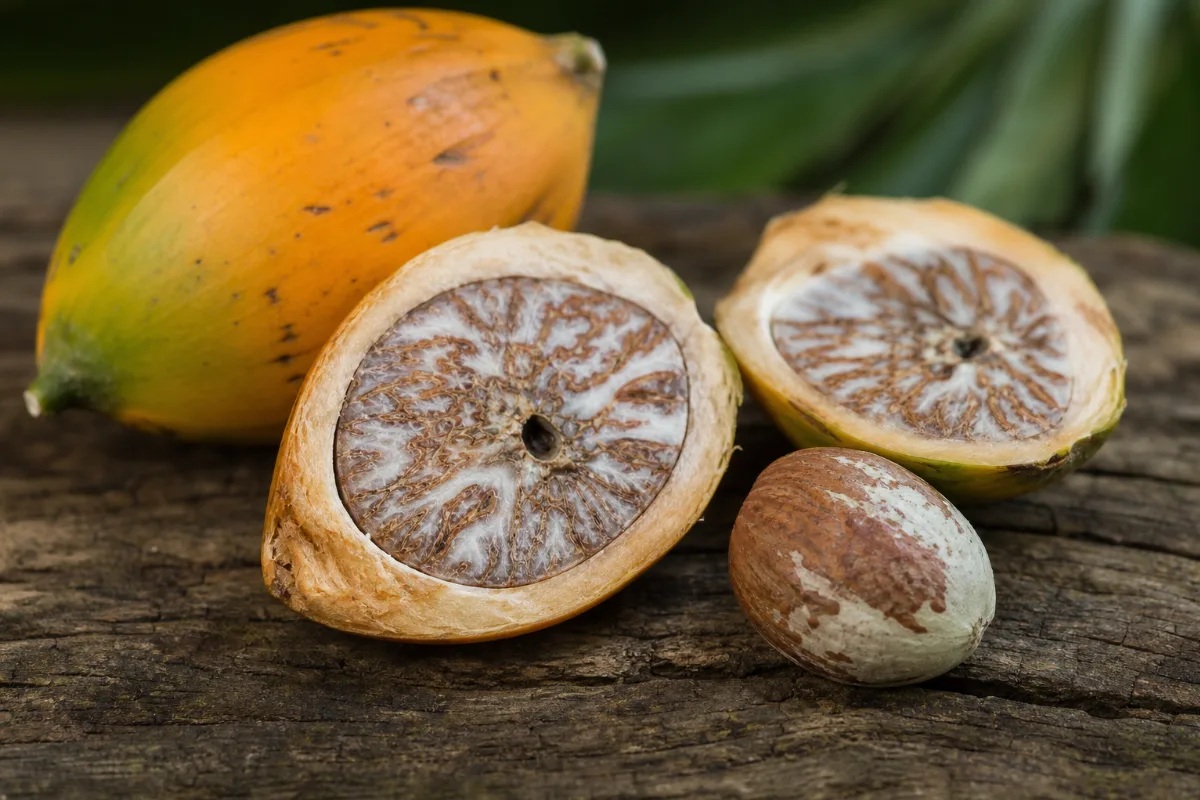
Herbs & Botanicals · Chewed nut with serious cancer risk
Betel nut
Areca catechu · also called Areca nut, betel nut, bing lang (Arecae Semen in Chinese medicine); the chewed mixture is called betel quid
Betel nut, or areca nut, is the seed of a palm that is chewed by around 600 million people, often in a mixture called betel quid. It also has a place in traditional Chinese medicine. Studies of possible uses (alertness, memory, schizophrenia symptoms) are very small or observational. Most important: WHO's cancer agency classes areca nut and betel quid as carcinogenic to humans, and chewing is linked to mouth scarring and dependence.
General information, not medical advice. Last substantive update · Not medically reviewed. A named clinician has not signed off on this page. How this page is made
About Betel nut
Betel nut (areca nut) is the seed of the palm Areca catechu. It is chewed on its own or in betel quid. WHO's cancer agency found areca nut and betel quid carcinogenic to humans, and chewing is linked to oral cancer, mouth scarring, dependence, and in observational studies to heart disease, diabetes and low birth weight. Human research on benefits is limited to a few very small or observational studies.
Cancer and the mouth
Leukoplakia and oral submucous fibrosis are the two main precancer conditions caused by areca nut chewing. In cell studies, areca compounds raised inflammation and oxidative stress and altered cancer-related pathways. Arecoline is considered the most potent fibrosis-driving agent in lab work.
Risk falls after quitting for oral and pharyngeal cancer, but former users stayed above never users for years in some analyses. An Indian study found those who quit chewing 10 or more years ago had 0.58 times the odds of buccal cancer compared with those who kept chewing. Chewing with areca nut carried almost double the odds of chewing without it (OR 1.86). Nurse-led support programmes looked feasible and possibly effective, though the authors urge caution.
Medicines, pregnancy and contamination
Two case reports describe severe movement side effects in people on antipsychotic injections after heavy betel nut use. A 70-person survey found no excess movement symptoms in chewers, so the evidence is mixed. Arecoline is a muscarinic agonist, so effects against anticholinergic medicines and alongside cholinergic medicines or MAO-inhibitor antidepressants are plausible; one consumer reference lists moderate interactions, but we found no agency confirmation.
In pregnancy, a systematic review of 8 studies (15,270 women) found chewing associated with low birth weight (OR 1.75, 95% CI 1.35 to 2.27). A smokeless tobacco review found no significant link for the betel nut subgroup, so the evidence is mixed. Breastfeeding has not been studied.
A 2026 laboratory study of 14 chewing products found aflatoxin B1 in 13 of 14, including non-tobacco products.
What regulators say
The US FDA lists betel nut (Areca catechu) among substances it has determined do not meet the criteria for GRAS use in food (memoranda of 2016 and 2020; text not read). Taiwan's health ministry drafted a bill in 2024 to bar sales to minors and pregnant women; whether it passed was not found. A 2023 review says no internationally accepted policy framework exists for areca nut.
We found no European Medicines Agency monograph, no NCCIH fact sheet, no LiverTox or LactMed entry, and no UK regulator statement. Not found does not prove none exists.
What it is
Areca catechu L. is a palm in the family Arecaceae; the accepted name was checked in GBIF and NCBI Taxonomy. The chewed 'nut' is the dried ripe seed (Arecae Semen); the husk and flower are also used in traditional Chinese medicine.
Betel nut (the seed) is different from betel quid (the chewed mixture, which may include other ingredients and tobacco) and from Chinese medicinal use of the processed seed. The main active alkaloid is arecoline, a muscarinic agonist that may also act like an MAO-A inhibitor.
How strong is the evidence for possible uses?
Very weak. The Alzheimer's memory studies (12 and 15 people) used pure arecoline by drip and showed no clear benefit. The schizophrenia signal is one survey of 70 people that cannot show cause. Traditional uses in digestion and worms rest on lab-level claims in a single Chinese review abstract, whose authors include people at a Hainan binglang research institute.
This page does not give advice on using betel nut. Ask a doctor or pharmacist about any medicine questions.
At a glance
Traditional uses history, not proof
- Chewed as part of betel quid across South Asia, Southeast Asia and the Pacific; about 600 million people chew areca nut (2025 review).
- The seed (Arecae Semen) is a major remedy in traditional Chinese medicine, ranked first of the four major southern medicines; the husk and flower are also used (2025 review).
- Traditional Chinese medicine uses include gut movement and worms; a 2025 review lists these as lab-level effects with no human trial in the abstract.
Studied for research
- Alertness and stimulant feel (arecoline), very low certainty
- Memory in Alzheimer's disease (arecoline drip), very low
- Schizophrenia symptoms in chewers (one survey), very low
- Mood, digestion and worms, insufficient evidence
Main compounds
- Arecoline, the main psychoactive alkaloid
- Arecaidine, guvacine and guvacoline (other betel alkaloids)
- Tannins and other polyphenols
Common forms
- Raw or dried nut
- Betel quid with or without tobacco (regional mixes)
- Packaged chewing mixes such as gutka and pan masala
- Seed used in traditional Chinese medicine
Research links: WHO: IARC finds betel-quid and areca-nut chewing carcinogenic to humans (2003) · Areca Nut and Oral Cancer: Evidence from Studies Conducted in Humans (J Dent Res 2022) · Systematic review of areca (betel nut) use and adverse pregnancy outcomes (2019) · FDA: post-market determinations that a substance is not GRAS (betel nut listed) · Research Library · Genes & Biomarkers Library
The plant and its history
- Accepted scientific name
- Areca catechu
- Naming authority
- L.
- Common names
- Betel nut (English); Areca nut (English); Arecae Semen (seed, traditional Chinese medicine name) (Latin/Chinese pharmacy); Bing lang (binglang) (Chinese)
- Botanical family
- Arecaceae (the palm family)
- Classification
- Plantae > Arecales > Arecaceae > Areca > Areca catechu
- Native range
- Not stated in the sources read for this profile. Use is reported across South Asia, East Asia, Southeast Asia and the Pacific; the 2025 Chinese review calls the seed one of the four major southern medicines of China.
- Habitat
- A palm (family Arecaceae). Habitat detail was not checked.
- What the plant looks like
- Roots: Not checked.; Stems: Palm; not described further in the sources read.; Leaves: Not checked.; Flowers: Male flower buds (Arecae Flos) are used in traditional Chinese medicine.; Fruit: The chewed 'nut' is the dried ripe seed (Arecae Semen); the fruit pericarp (Arecae Pericarpium) is also used in traditional Chinese medicine.
- Cultivation
- Not checked.
- Harvest and processing
- Chewing forms include the raw or dried nut, betel quid with or without tobacco, and packaged mixes such as gutka and pan masala (Mahesh 2026). Processing was not reviewed.
- Look-alikes and adulterants
- Name: Betel leaf (Piper betle); Note: A different plant that is often wrapped around the nut in quid; not the same as the nut and not assessed here. Not checked in a source read.; Name: Chewing tobacco mixes; Note: Gutka, khaini and similar products may contain tobacco as well as areca nut.
- Sustainability and conservation
- Not checked.
Traditional use and history history, not clinical proof
| Tradition or era | Documented use | Source |
|---|---|---|
| Traditional Chinese medicine | Arecae Semen, the dried ripe seed, ranks first among the four major southern medicines; the pericarp and flower are also used. | p41507738 |
| Widespread chewing across Asia and the Pacific | About 600 million people chew areca nut today; betel nut is described as the fourth most commonly used psychoactive substance worldwide after nicotine, alcohol and caffeine. | p40863067 |
| Modern regulation | IARC concluded in 2003 that areca nut and betel quid are carcinogenic to humans. | s-who-iarc-2003 |
| Early clinical research | In the 1980s and 1990s researchers gave arecoline by drip to people with Alzheimer's disease. | p3048224 |
Traditional use shows how a plant was used. It does not show that a supplement works or is safe today.
What is inside, and how it may work
What the plant contains and how those compounds act in cells and animals. Laboratory and animal mechanisms are not proven effects in people.
Main compounds
| Compound | Family | Where it is concentrated | Activity studied | Level of evidence |
|---|---|---|---|---|
| Arecoline PubChem 2230 | pyridine alkaloid (muscarinic agonist) | Seed | Main psychoactive alkaloid; activates muscarinic receptors; in animals raises dopamine signalling; proposed as an MAO-A inhibitor; the most potent fibrosis-driving agent in lab work. 36 20 14 24 | Human data |
| Arecaidine PubChem 10355 | alkaloid | Seed | One of nine betel alkaloids with muscarinic and nicotinic action per Coppola 2012; no further activity data read. 36 6 | Review |
| Guvacine PubChem 3532 | alkaloid | Seed | Betel alkaloid named in a schizophrenia review; no activity data read. 36 6 | Review |
| Guvacoline PubChem 160492 | alkaloid | Seed | Betel alkaloid named in a schizophrenia review; no activity data read. 36 6 | Review |
| Tannins and other polyphenols, flavonoids | polyphenols | Seed | Listed as ingredients (Kazemi 2025; Chen 2025). No role in cancer or benefits was established in the sources read. CID not looked up because this is a group. 14 4 | Review |
Mechanisms, receptors and pathways
| Target or pathway | Gene or receptor | What was found | Level |
|---|---|---|---|
| Muscarinic acetylcholine receptors | muscarinic receptors (CHRM family) | Arecoline is a muscarinic agonist; infusions in people produce dose-dependent signs of central cholinergic stimulation. 24 20 | Human data |
| Dopamine reward circuit | mesocorticolimbic dopamine transmission | In animal studies arecoline increases dopamine transmission, which may contribute to dependence. 20 | Animal research |
| Monoamine oxidase A | MAO-A (MAOA) | Reviews propose that arecoline acts like an MAO-A inhibitor, raising dopamine and serotonin. 15 3 | Pharmacological theory |
| Nicotinic receptors | nicotinic acetylcholine receptors | Arecoline acts as a nicotinic agonist in frog egg cells; only negligible nicotine is found in the nut. 15 | Laboratory research |
| Fibrosis signalling | TGF-beta1, CCN2, alpha-SMA | In cell cultures and mice, areca nut extract or arecoline turns fibroblasts into contractile scar-forming cells and raises collagen. 14 | Laboratory research |
| Inflammation, oxidative stress and cell growth | IL-1 beta, IL-6, IL-8, COX-2, PGE2, NOTCH1, Akt, p53 | In 20 cell studies, areca compounds raised inflammatory mediators and oxidative DNA damage and altered cancer-related pathways. 2 | Laboratory research |
Absorption, metabolism and elimination
- Absorption
- Chewing studies were not read. After intravenous arecoline in people with Alzheimer's disease, plasma levels were measurable (mean 0.31 ng/ml at the memory-optimising dose).
- Distribution
- Volume of distribution 205 L (SD 170) after intravenous arecoline in 15 people.
- Metabolism
- Not covered in the abstracts read.
- Elimination
- Mean plasma half-lives 0.95 (SD 0.54) and 9.3 (SD 4.5) minutes as reported; clearance 13.6 L/min (SD 5.8). The optimal dose varied fourfold between people because of differing kinetics.
- Bioavailability
- Not established for chewing.
Isolated compounds versus whole extracts
The human trials gave pure arecoline hydrobromide by drip in a hospital. Chewing the nut or quid delivers a mixture of nine alkaloids, polyphenols and often lime, leaf or tobacco, with no controlled dosing. Findings from one cannot be moved to the other, and the cancer evidence comes from chewing the whole nut or quid.
Nutritional composition
Areca nut is not a nutrient and has no recognised nutritional role. Chewing is associated with anaemia in pregnancy in one hospital study.
3 very low certainty4 not enough evidence
What is Betel nut good for?
The uses people ask about and how strong the human evidence is for each. None is proven, and all must be read with the safety section: none of the sources read reports a benefit shown to outweigh the cancer, scarring and dependence risks.
Benefits, one by one
Each card is a research question, not a promise. Tap a goal to filter. Open a card to see the studies, doses and limits.
Alertness, stimulant feel and mood lift
Very low certaintyPeople chew betel nut for a stimulant effect. No controlled trial of betel nut in healthy adults was found. The best human data are from the pure compound arecoline given by drip in people with Alzheimer's disease, where low doses raised activity and mood slightly.
3 studiesThe trial used arecoline hydrobromide by drip; this says nothing abou…
Studies, doses and limits
What the trials found
No randomised trial of chewing the nut for alertness was found. Tariot 1988 (12 people with Alzheimer-type dementia, double-blind, randomised) gave arecoline by drip: at lower doses there was psychomotor activation and slightly better affect; at the highest dose there was more psychomotor slowing. The Osborne 2017 review describes the nut as a complex mix of neuroactive compounds acting on all major brain chemical systems.
Results
Low-dose arecoline infusion: more activity and slightly better mood in 12 patients. Chewing itself: not tested in a trial.
Effect sizes as reported
No effect sizes reported in the abstracts.
Why this rating
Only 12 patients, a pure compound by drip rather than the nut, no trial in healthy people, and the same actions drive dependence.
Form and dose studied
The trial used arecoline hydrobromide by drip; this says nothing about the safety or effect of chewing.
Who was studied
People with Alzheimer-type dementia (drip study); chewers in surveys.
Limits
The stimulant effect cannot be separated from the dependence process. No trial of attention or reaction time in chewers was found.
Why researchers looked
A stimulant feel is a reason chewers report, and the same actions are linked to dependence in reviews.
Traditional use
Chewed for generations across South Asia, Southeast Asia and the Pacific; about 600 million people chew areca nut (Kazemi 2025 review).
Proposed mechanism Pharmacological theory
Arecoline, the main alkaloid, activates muscarinic receptors and in animals raises dopamine signalling in reward circuits. Review authors link these actions to dependence.
A proposed mechanism does not show that the effect happens in people.
Areca nut is classed as carcinogenic to humans and chewing is linked to dependence, so none of these uses is a reason to chew it. The sources read do not report any benefit that outweighs the cancer risk.
Memory in Alzheimer's disease (arecoline by drip, not chewing)
Very low certaintyIn the 1980s and 1990s researchers gave arecoline directly into a vein to see if it helped memory in Alzheimer's disease. It did not clearly help, and the effective dose varied a lot between people.
2 studiesIntravenous arecoline hydrobromide in a hospital research setting. No…
Studies, doses and limits
What the trials found
Tariot 1988: in 12 patients, two-hour infusions at 1, 2 and 4 mg per hour versus placebo gave dose-dependent hormone and body effects of cholinergic stimulation, no statistically significant gain on most memory tasks, and only marginal gains in picture recognition and word-finding at the lower doses. Asthana 1996: in 15 people with mild to moderate Alzheimer's disease, the best dose varied fourfold between people, and arecoline's half-life was under 10 minutes.
Results
No clear memory improvement at any dose in the randomised comparison.
Effect sizes as reported
Most cognitive tasks: not significant. Plasma half-lives about 0.95 and 9.3 minutes (as reported by Asthana).
Why this rating
Two small, old studies (12 and 15 people) of the pure compound; one gave no clear benefit and the other was mainly about drug levels.
Form and dose studied
Intravenous arecoline hydrobromide in a hospital research setting. Not comparable to chewing the nut.
Who was studied
Adults with mild to moderate Alzheimer's disease.
Limits
Very short dosing; no later large trial of arecoline for Alzheimer's disease was found in our search. Newer cholinergic treatments are different medicines.
Why researchers looked
Arecoline activates muscarinic acetylcholine receptors, and cholinergic activation was studied as a way to help memory in dementia.
Traditional use
None; this is a laboratory medicine use, not a traditional one.
Proposed mechanism Pharmacological theory
Arecoline is a muscarinic acetylcholine agonist that crosses into the brain. It leaves the blood within minutes.
A proposed mechanism does not show that the effect happens in people.
Cholinergic effects limit use of arecoline as a drug; chewing the nut also carries cancer and dependence risk.
Symptoms of schizophrenia (an observational signal, with safety warnings)
Very low certaintyIn one small survey in Palau, people with schizophrenia who chewed betel nut scored lower on symptom scales than those who did not. That shows an association only. A separate pair of case reports describes severe movement side effects in people on antipsychotic medicine who chewed heavily.
3 studiesSelf-chosen habitual chewing; amounts and mixtures not standardised.
Studies, doses and limits
What the trials found
Sullivan 2000: cross-sectional, 70 people with schizophrenia (40 chewers, 30 non-chewers). Chewers scored lower on the positive (P=0.001) and negative (P=0.002) PANSS sub-scales; no significant difference in movement side effects or tardive dyskinesia. Coppola 2012 review reports lower positive symptoms in male high consumers. Deahl 1989: two patients on depot antipsychotic injections developed severe extrapyramidal symptoms after heavy betel nut use.
Results
Lower PANSS scores in chewers in one cross-sectional study; two case reports of severe movement side effects with heavy chewing.
Effect sizes as reported
P=0.001 (positive) and P=0.002 (negative) between chewers and non-chewers; no confidence intervals in the abstract.
Why this rating
Cross-sectional, so cause and effect cannot be told apart; chewers may differ in other ways; the case reports point the other way on movement symptoms.
Form and dose studied
Self-chosen habitual chewing; amounts and mixtures not standardised.
Who was studied
Adults with schizophrenia in Palau (survey); two chronic patients (case reports).
Limits
No randomised trial of betel nut or arecoline for schizophrenia symptoms was found. A search for trials of arecoline and cognition in schizophrenia returned only animal and lab studies.
Why researchers looked
Betel alkaloids act on muscarinic and nicotinic receptors, and some researchers asked if they might help symptoms that standard medicines leave untreated.
Traditional use
Chewing is common in the regions where many people with schizophrenia live (Sullivan 2000).
Proposed mechanism Pharmacological theory
Muscarinic and nicotinic activation by betel alkaloids; the antipsychotic idea is a proposal in a review.
A proposed mechanism does not show that the effect happens in people.
Case reports link heavy chewing with severe movement side effects in people on antipsychotics. Cancer and dependence risks apply. Areca nut is classed as carcinogenic to humans and chewing is linked to dependence, so none of these uses is a reason to chew it. The sources read do not report any benefit that outweighs the cancer risk.
Mood and depression
Not enough evidenceThere is no human trial of betel nut for mood. A 2025 Chinese review lists antidepressant effects among lab findings. Reviews on dependence suggest arecoline may act like an MAO-A inhibitor, and a reduction in daily chewing was seen in depressed patients who took antidepressants.
3 studiesNot applicable.
Studies, doses and limits
What the trials found
No randomised trial of betel nut for depression or anxiety was found. Ko 2020 reports that daily chewing fell in patients with depression after antidepressant treatment (in a review of mechanisms). Chen JZ 2025 (a Chinese review) lists antidepressant effects among lab pharmacology findings, with no human data in the abstract.
Results
No human trial results to report.
Effect sizes as reported
None.
Why this rating
No trial in people; mechanism proposals and lab-level claims only.
Form and dose studied
Not applicable.
Who was studied
Not applicable.
Limits
This line is mostly about mood medicines helping people stop chewing, not betel nut helping mood.
Why researchers looked
Review authors propose that dependence and mood regulation share brain chemistry.
Traditional use
Not documented in sources read.
Proposed mechanism Preliminary mechanism
Arecoline may inhibit monoamine oxidase A, raising serotonin and dopamine; this is a review proposal.
A proposed mechanism does not show that the effect happens in people.
MAO-inhibitor antidepressants are listed as a possible interaction by one consumer reference (see Safety).
Digestion and gut movement (traditional use)
Not enough evidenceIn traditional Chinese medicine the seed (Arecae Semen) is a major remedy. A 2025 review lists gut-movement promotion among lab effects. No human trial was found.
1 studiesNot specified.
Studies, doses and limits
What the trials found
No clinical trial was found. The 2025 Chinese review lists promotion of gastrointestinal motility as a pharmacological effect of the plant parts and notes toxic side effects.
Results
No human results.
Effect sizes as reported
None.
Why this rating
Traditional use and lab-level claims only; abstract in Chinese read.
Form and dose studied
Not specified.
Who was studied
Not applicable.
Limits
Abstract only; no human data.
Why researchers looked
The seed ranks first among China's four major southern medicines, according to the 2025 review.
Traditional use
Arecae Semen is one of the main traditional Chinese medicines; the pericarp and the flower are also used (Chen 2025).
Proposed mechanism Laboratory research
The mechanism is not described in the abstract read.
A proposed mechanism does not show that the effect happens in people.
The same review mentions toxic side effects. Areca nut is classed as carcinogenic to humans and chewing is linked to dependence, so none of these uses is a reason to chew it. The sources read do not report any benefit that outweighs the cancer risk.
Intestinal worms (anthelmintic use)
Not enough evidenceThe seed has a traditional use against intestinal worms, and animal and lab studies exist. No controlled human trial was found.
1 studiesNot specified.
Studies, doses and limits
What the trials found
A PubMed search for human trials of areca for worms found only animal and lab studies (not cited here because only their titles were seen). The 2025 review lists anthelmintic effects with no human trial in the abstract.
Results
No human results.
Effect sizes as reported
None.
Why this rating
No human trial; animal and lab work only.
Form and dose studied
Not specified.
Who was studied
Not applicable.
Limits
We read no animal paper in detail.
Why researchers looked
Anthelmintic effects are listed in the 2025 review among reported lab effects.
Traditional use
Traditional Chinese medicine use of the seed for worms; also mentioned for veterinary parasites in lab studies.
Proposed mechanism Animal research
The mechanism is not described in the sources read.
A proposed mechanism does not show that the effect happens in people.
Safe use for worms is not established; modern anthelmintic medicines exist and should be discussed with a doctor.
Fat-lowering, antioxidant and antibacterial claims (lab only)
Not enough evidenceThe 2025 review lists lipid-lowering, antioxidant and antibacterial effects of plant parts in lab and animal work. No human trial confirms any of them.
2 studiesNot applicable.
Studies, doses and limits
What the trials found
No human trials were found. Lab studies of areca nut compounds on human oral cancer cells actually show raised inflammation and oxidative stress (Ayna 2026), pointing toward harm, not benefit.
Results
No human results.
Effect sizes as reported
None.
Why this rating
Lab and animal level only; some lab results point to harm.
Form and dose studied
Not applicable.
Who was studied
Not applicable.
Limits
Cell studies do not predict human effects.
Why researchers looked
The 2025 review says the plant is rich in alkaloids and polyphenols.
Traditional use
Not documented in sources read.
Proposed mechanism Laboratory research
The nut contains alkaloids, flavonoids and tannins (Kazemi 2025); the review does not tie these claims to one compound.
A proposed mechanism does not show that the effect happens in people.
Areca nut is classed as carcinogenic to humans and chewing is linked to dependence, so none of these uses is a reason to chew it. The sources read do not report any benefit that outweighs the cancer risk.
Connections to the rest of health
How Betel nut connects to the rest of our health knowledge graph. Every link says what kind of connection it is. A safety link (for example to the liver) is a warning, not a benefit. A study that merely mentions a topic never creates a benefit link.
Explore every connection: goals, body systems, organs, symptoms, genes
A. Wellness goals
| Connected to | Kind of connection | Evidence status | Context | Studies |
|---|---|---|---|---|
| Energy Boost | Preliminary mechanism | Very low certainty | Alertness, stimulant feel and mood lift: People chew betel nut for a stimulant effect. No controlled trial of betel nut in healthy adults was found. The best human data are from the pure compound arecoline given by drip in people with Alzheimer's disease, where low doses raised activity and mood slightly. | 24 20 14 |
| Mental Clarity | Preliminary mechanism | Very low certainty | Alertness, stimulant feel and mood lift: People chew betel nut for a stimulant effect. No controlled trial of betel nut in healthy adults was found. The best human data are from the pure compound arecoline given by drip in people with Alzheimer's disease, where low doses raised activity and mood slightly. | 24 20 14 |
| Memory Support | Preliminary mechanism | Very low certainty | Memory in Alzheimer's disease (arecoline by drip, not chewing): In the 1980s and 1990s researchers gave arecoline directly into a vein to see if it helped memory in Alzheimer's disease. It did not clearly help, and the effective dose varied a lot between people. | 24 1 |
| Brain Health | Preliminary mechanism | Very low certainty | Memory in Alzheimer's disease (arecoline by drip, not chewing): In the 1980s and 1990s researchers gave arecoline directly into a vein to see if it helped memory in Alzheimer's disease. It did not clearly help, and the effective dose varied a lot between people. | 24 1 |
| Mood Balance | Biological association | Very low certainty | Symptoms of schizophrenia (an observational signal, with safety warnings): In one small survey in Palau, people with schizophrenia who chewed betel nut scored lower on symptom scales than those who did not. That shows an association only. A separate pair of case reports describes severe movement side effects in people on antipsychotic medicine who chewed heavily. | 23 6 8 |
| Mood Balance | Preliminary mechanism | Not enough evidence | Mood and depression: There is no human trial of betel nut for mood. A 2025 Chinese review lists antidepressant effects among lab findings. Reviews on dependence suggest arecoline may act like an MAO-A inhibitor, and a reduction in daily chewing was seen in depressed patients who took antidepressants. | 15 4 3 |
| Anxiety Support | Preliminary mechanism | Not enough evidence | Mood and depression: There is no human trial of betel nut for mood. A 2025 Chinese review lists antidepressant effects among lab findings. Reviews on dependence suggest arecoline may act like an MAO-A inhibitor, and a reduction in daily chewing was seen in depressed patients who took antidepressants. | 15 4 3 |
| Digestive Support | Traditional use | Not enough evidence | Digestion and gut movement (traditional use): In traditional Chinese medicine the seed (Arecae Semen) is a major remedy. A 2025 review lists gut-movement promotion among lab effects. No human trial was found. | 4 |
| Gut Health | Traditional use | Not enough evidence | Intestinal worms (anthelmintic use): The seed has a traditional use against intestinal worms, and animal and lab studies exist. No controlled human trial was found. | 4 |
| Cholesterol Balance | Preliminary mechanism | Not enough evidence | Fat-lowering, antioxidant and antibacterial claims (lab only): The 2025 review lists lipid-lowering, antioxidant and antibacterial effects of plant parts in lab and animal work. No human trial confirms any of them. | 4 2 |
| Cellular Protection | Preliminary mechanism | Not enough evidence | Fat-lowering, antioxidant and antibacterial claims (lab only): The 2025 review lists lipid-lowering, antioxidant and antibacterial effects of plant parts in lab and animal work. No human trial confirms any of them. | 4 2 |
B. Body systems
| Connected to | Kind of connection | Evidence status | Context | Studies |
|---|---|---|---|---|
| Nervous system | Biological association | Very low certainty | Stimulant and cholinergic effects; symptom signal in schizophrenia survey. Studied for: Alertness, stimulant feel and mood lift Preparation or compound: Arecoline |
24 23 20 14 1 6 8 |
| Stress Mood | Biological association | Not enough evidence | Studied for: Mood and depression | 15 4 3 |
| Digestive System | Biological association | Not enough evidence | Studied for: Digestion and gut movement (traditional use) Studied for: Intestinal worms (anthelmintic use) | 4 |
| Metabolism Weight | Biological association | Not enough evidence | Studied for: Fat-lowering, antioxidant and antibacterial claims (lab only) | 4 2 |
C. Body parts and organs
| Connected to | Kind of connection | Evidence status | Context | Studies |
|---|---|---|---|---|
| Mouth (oral cavity) | Adverse effect or risk | High certainty | Oral cancer RR 7.9; OSF in about 5% of chewers. Preparation or compound: Areca nut and betel quid, with or without tobacco |
25 27 28 |
| Oesophagus | Adverse effect or risk | Moderate certainty | IARC links oesophageal cancer to quid with tobacco. Preparation or compound: Betel quid with tobacco |
28 11 |
| Heart | Adverse effect or risk | Low certainty | CVD RR 1.2; arrhythmia and ischaemic heart disease associations. Preparation or compound: Betel quid |
26 12 |
| Brain | Adverse effect or risk | Moderate certainty | Dependence; altered brain activity and working spatial memory in dependent chewers. Preparation or compound: Arecoline |
20 15 |
| Pancreas | Adverse effect or risk | Low certainty | Type 2 diabetes OR 1.45 in 3 Taiwanese studies. Preparation or compound: Areca nut chewing |
16 26 |
| Reproductive organs (pregnancy) | Adverse effect or risk | Low certainty | Low birth weight OR 1.75 in 8 studies; mixed evidence. Preparation or compound: Betel nut in pregnancy |
7 17 9 |
G. Root causes and contributing factors
| Connected to | Kind of connection | Evidence status | Context | Studies |
|---|---|---|---|---|
| Substance dependence | Adverse effect or risk | Moderate certainty | 20% to 90% of current users depend. Preparation or compound: Arecoline |
20 15 |
| Medication interactions | Drug or supplement interaction | Very low certainty | Case reports and theory. Preparation or compound: Betel nut with antipsychotic, anticholinergic, cholinergic, MAOI medicines |
8 32 |
I. Biomarkers
| Connected to | Kind of connection | Evidence status | Context | Studies |
|---|---|---|---|---|
| PANSS symptom scores (schizophrenia) | Biological association | Very low certainty | Measured in trials: lowered. A lab change is not the same as a health benefit. | 23 8 |
| Psychomotor activity and mood during arecoline drip | Biological association | Very low certainty | Measured in trials: mixed. A lab change is not the same as a health benefit. | 24 |
J. Genes, receptors and enzymes
K. Biological pathways
| Connected to | Kind of connection | Evidence status | Context | Studies |
|---|---|---|---|---|
| TGF-beta1 fibrosis signalling | Preliminary mechanism | In vitro | Arecoline-driven fibrosis in cells and mice. | 14 |
L. Active compounds
| Connected to | Kind of connection | Evidence status | Context | Studies |
|---|---|---|---|---|
| Arecoline | Biological association | Human | Main psychoactive alkaloid; activates muscarinic receptors; in animals raises dopamine signalling; proposed as an MAO-A inhibitor; the most potent fibrosis-driving agent in lab work. Preparation or compound: Seed |
36 20 14 24 |
| Arecaidine | Biological association | Review | One of nine betel alkaloids with muscarinic and nicotinic action per Coppola 2012; no further activity data read. Preparation or compound: Seed |
36 6 |
| Guvacine | Biological association | Review | Betel alkaloid named in a schizophrenia review; no activity data read. Preparation or compound: Seed |
36 6 |
| Guvacoline | Biological association | Review | Betel alkaloid named in a schizophrenia review; no activity data read. Preparation or compound: Seed |
36 6 |
| Tannins and other polyphenols, flavonoids | Biological association | Review | Listed as ingredients (Kazemi 2025; Chen 2025). No role in cancer or benefits was established in the sources read. CID not looked up because this is a group. Preparation or compound: Seed |
14 4 |
Each connection is stored with the ingredient, the connected record, the kind of connection, the evidence status, the supporting studies, the preparation or compound involved, and a review date (last reviewed October 25, 2026).
Evidence at a glance: what changed in 2 lab markers
Tap a number to show only those markers. Counts are markers, not people.
The evidence
The research centre for Betel nut. Every record here was checked against PubMed or the publisher's page; we never list a study we have not verified.
Evidence by outcome
Bars show how many studies we found for each outcome, not how well it works. People are added up across trials only (reviews are not added, to avoid double counting).
How we rate evidence
High certainty
Several well-run trials or reviews agree; further research is unlikely to change the picture much.
Moderate certainty
Good trials point the same way, but some doubt remains.
Low certainty
Small, short or inconsistent trials. The finding could change with better research.
Very low certainty
Very little or very weak human data. Treat as a possibility only.
Mixed findings
Trials or reviews disagree with each other.
Not enough evidence
Not enough human research to say either way.
Evidence against
Good research found no benefit, or found harm.
We take the reviewers' own risk-of-bias and GRADE statements where they exist, and otherwise judge from study size, design, consistency, directness and whether a product matches what is sold. Many publications do not make evidence high. Method note: We searched PubMed and read abstracts of 27 PubMed papers; read the WHO news release, an FDA listing page and a Taipei Times article; checked the plant name in GBIF and NCBI Taxonomy and compound IDs in PubChem. NCCIH, EMA, LiverTox and LactMed entries were not found.
Study library: every study we checked 38
| Study | Design | People | Product, dose, length | Result |
|---|---|---|---|---|
| Asthana 1996 Clinical pharmacokinetics of arecoline in subjects with Alzheimer's disease. Clinical Pharmacology & Therapeutics · PMID 8841150 · DOI |
Controlled trial |
15 15 people with mild to moderate Alzheimer's disease |
Arecoline by intravenous infusion (not chewing) pure alkaloid 0.5 to 40 mg per day escalation (as reported) up to 2 weeks · vs placebo (crossover phase) |
The optimal dose varied fourfold between people. Mean plasma half-lives were 0.95 (SD 0.54) and 9.3 (SD 4.5) minutes as reported. Clearance 13.6 (SD 5.8) L/min; volume of distribution 205 (SD 170) L. At the memory-optimising dose the mean plasma level was 0.31 (SD 0.14) ng/ml. A one-week randomised, placebo-controlled crossover phase was run; its outcome numbers are not in the abstract. Arecoline leaves the blood within minutes to under 10 minutes Methods, limits and fundingOutcomes: Plasma arecoline levels; psychometric tests to find an optimal dose Limitations: Small study of the pure compound; effect numbers of the crossover phase not in the abstract. Funding and conflicts: Not stated in the abstract. Read: abstract |
| Ayna 2026 Molecular effects of areca nut-derived compounds on human oral cancer cells: a systematic review of in vitro evidence. Journal of Oral Biology and Craniofacial Research · PMID 42694992 · DOI |
Systematic review in-vitro |
20 cell-culture studies | Areca nut extract and alkaloids nut (seed) n/a n/a · vs n/a |
Areca nut compounds raised inflammatory mediators (IL-1 beta, IL-6, IL-8, COX-2, PGE2), changed cell-cycle control, raised oxidative stress and oxidative DNA damage, and activated cancer-related pathways. Authors conclude this supports the carcinogenic role. p21 findings were contradictory. Cell-level support for carcinogenic role Methods, limits and fundingOutcomes: Inflammation, growth and oxidative stress signals in human oral cancer cells Limitations: Cell studies only. Funding and conflicts: No conflict declared. Read: abstract |
| Chakraborty 2026 Targeting monoamine oxidases for the treatment of betel quid dependence: a potential pharmacological and neurobiological approach. Frontiers in Pharmacology · PMID 42491089 · DOI |
Narrative review human + lab |
Review of MAO-A and betel quid dependence | Arecoline nut (seed) n/a n/a · vs n/a |
The review says arecoline appears to act as a monoamine oxidase A inhibitor, possibly strongest in users who add tobacco. It proposes timed MAO inhibitors as a cessation idea and says current treatment mainly relies on behavioural and educational approaches. Hypothesis, not tested in trials Methods, limits and fundingOutcomes: MAO-A activity and dependence Limitations: Hypothesis-generating review. Funding and conflicts: No conflict declared. Read: abstract |
| Chen 2025 [Research progress on Areca catechu]. Zhongguo Zhong Yao Za Zhi (China Journal of Chinese Materia Medica) · PMID 41507738 · DOI |
Narrative review lab + animal (as listed) |
Chinese-language review of the seed (Arecae Semen), pericarp and flower | Areca catechu parts used in traditional Chinese medicine seed, pericarp, flower n/a n/a · vs n/a |
Says Arecae Semen (dried ripe seed) ranks first among the four major southern medicines of China. Lists reported lab effects: promoting gut movement, antidepressant, antioxidant, lipid-lowering, anthelmintic and antibacterial; and notes toxic side effects. The abstract gives no human trial results. Two authors are linked to a Hainan binglang research institute (an industry-adjacent link). Lab-level claims only Methods, limits and fundingOutcomes: Chemistry, pharmacology, toxicity Limitations: Chinese-language abstract only was read; no human trial data in the abstract; possible industry link. Funding and conflicts: Two authors at the Hainan Huachuang Binglang Research Institute. Read: abstract |
| Chen 2026 Benefits and risks of herbal medicine use during pregnancy on offspring outcomes: A systematic review and meta-analysis of randomized controlled trials and observational studies. Pharmacological Research · PMID 41519415 · DOI |
Meta-analysis |
111 studies of herbal medicine in pregnancy (39 RCTs, 72 observational) | Many herbs; betel quid was one exploratory subgroup betel quid n/a n/a · vs n/a |
Overall, adjusted observational studies did not show significant links with major adverse offspring outcomes. Exploratory analyses of individual herbs suggested that betel quid (with low birth weight) may be linked to increased risk, but the authors say the signals rest on few studies and need caution. Betel quid flagged as a possible low birth weight signal Methods, limits and fundingOutcomes: Offspring outcomes Limitations: Exploratory subgroup from a review of many herbs; weak evidence. Funding and conflicts: Not stated in the abstract. Read: abstract |
| Coppola 2012 Potential action of betel alkaloids on positive and negative symptoms of schizophrenia: a review. Nordic Journal of Psychiatry · PMID 21859398 · DOI |
Narrative review |
Clinical literature since 1980 on betel alkaloids and schizophrenia | Betel alkaloids (arecoline, arecaidine, guvacine, guvacoline) nut (seed) n/a n/a · vs n/a |
The review says the plant contains nine alkaloids with muscarinic and nicotinic action that could have an antipsychotic effect. Its stated conclusion: male high consumers of betel had significantly lower positive symptoms than low consumers or non-users. Possible signal from observational data Methods, limits and fundingOutcomes: Positive, negative and cognitive symptoms Limitations: Abstract gives no numbers; relies on the same small observational studies. Funding and conflicts: Not stated. Read: abstract |
| De Silva 2019 Systematic review of areca (betel nut) use and adverse pregnancy outcomes. International Journal of Gynecology & Obstetrics · PMID 31520411 · DOI |
Systematic review |
15270 8 studies, 15,270 pregnant women, all in the Asia-Pacific region |
Betel nut use in pregnancy nut (seed) n/a n/a · vs n/a |
Meta-analysis found a significant association between betel nut use and low birth weight: pooled OR 1.75 (95% CI 1.35 to 2.27). Preterm birth, low birth weight and anaemia were most commonly studied. The authors say prospective studies are needed to confirm the association. Higher odds of low birth weight (1.35 to 2.27) Methods, limits and fundingOutcomes: Preterm birth, low birth weight, anaemia Limitations: Only eight studies, all Asia-Pacific; observational. Funding and conflicts: Not stated in the abstract. Read: abstract |
| Deahl 1989 Betel nut-induced extrapyramidal syndrome: an unusual drug interaction. Movement Disorders · PMID 2572964 · DOI |
Case report |
2 Two chronic schizophrenia patients on depot neuroleptics |
Heavy betel nut consumption nut (seed) n/a n/a · vs n/a |
Both developed severe extrapyramidal symptoms after a period of heavy betel nut consumption. The author proposed that arecoline antagonised the anticholinergic medicine procyclidine. Two case reports of severe movement side effects Methods, limits and fundingOutcomes: Extrapyramidal symptoms (movement side effects) Limitations: Two cases; mechanism proposed, not proven. Funding and conflicts: Not stated. Read: abstract |
| Disastra 2026 Areca Nut Chewing as a Modifiable Risk Factor for Maternal Anemia, Prematurity and Fetal Low Birth Weight: A Cross Sectional Study in Teluk Wondama, West Papua. International Journal of Women's Health · PMID 41736763 · DOI |
Cross sectional |
263 263 pregnant women at one hospital in West Papua, Indonesia |
Areca nut chewing nut (seed) n/a n/a · vs n/a |
Chewing was associated with maternal anaemia (OR 11.4; 95% CI 4.38 to 29.65), low birth weight (OR 10.89; 5.69 to 20.84) and prematurity (OR 10.67; 5.50 to 20.68). Rates in the whole group were very high (anaemia 65.4%, low birth weight 43.3%, prematurity 41.4%). Strong association in one hospital sample (5.69 to 20.84) Methods, limits and fundingOutcomes: Maternal anaemia (Hb under 11 g/dl), low birth weight (under 2,500 g), prematurity (before 37 weeks) Limitations: One hospital; chewing taken from medical records; very wide intervals; other causes of anaemia and low birth weight were not ruled out. Funding and conflicts: No conflict declared. Read: abstract |
| Gupta 2014 Systematic review and meta-analysis of association of smokeless tobacco and of betel quid without tobacco with incidence of oral cancer in South Asia and the Pacific. PLoS One · PMID 25411778 · DOI |
Meta-analysis |
15 case-control studies (4,648 cases, 7,847 controls) of betel quid without tobacco; also smokeless tobacco studies | Betel quid without tobacco nut (seed) in quid n/a n/a · vs n/a |
Betel quid without tobacco: pooled adjusted OR 2.82 (95% CI 2.35 to 3.40) for oral cancer. Authors say this is presumably due to the carcinogenicity of areca nut. No significant publication bias was found. Roughly 2.8 times the odds of oral cancer (2.35 to 3.40) Methods, limits and fundingOutcomes: Oral cancer incidence Limitations: Case-control studies; tobacco use types were not always separated. Funding and conflicts: No competing interests declared. Read: abstract |
| Gupta 2022 Risk Reversal of Oral, Pharyngeal and Oesophageal Cancers after Cessation of Betel Quid Users: A Systematic Review and Meta-Analysis. Annals of Global Health · PMID 35087705 · DOI |
Meta-analysis |
14 studies of former versus current users of betel quid without tobacco (BQ-T) or with tobacco (BQ+T) | Betel quid with and without tobacco nut (seed) in quid n/a n/a · vs n/a |
BQ-T and oral cancer: meta-RR 5.61 (95% CI 2.24 to 14.04) in former users versus 7.89 (3.90 to 15.98) in current users, a 28.9% risk reversal. Pharyngeal cancer: 2.50 (1.43 to 4.38) former versus 4.81 (2.05 to 11.30) current, a 48% reversal. Oesophageal cancer: no appreciable difference between current and former users. BQ+T and oral cancer: in better-quality studies, risk was modestly lower in former users; for people who quit under 10 years ago meta-RR 1.21 (0.90 to 1.63), over 10 years 0.72 (0.48 to 1.07). Risk falls after quitting for oral and pharyngeal cancer, but stays above never-users for years (See results) Methods, limits and fundingOutcomes: Oral, pharyngeal and oesophageal cancer risk in former versus current users Limitations: Observational studies; small number of studies per comparison; wide intervals. Funding and conflicts: Not stated in the abstract (several authors are linked to WHO/IARC-related bodies). Read: abstract |
| Itaki 2024 Association between habitual betel quid chewing and risk of adverse cardiovascular outcomes: A systematic review. Tropical Medicine & International Health · PMID 38556799 · DOI |
Systematic review |
19 human studies of habitual betel quid chewing | Betel quid chewing nut (seed) in quid n/a n/a · vs n/a |
Habitual chewing was associated with hypertension, atherosclerosis, inflammation and ischaemic heart disease, and was a risk factor for arrhythmias. It was an independent risk factor for cardiovascular disease in women. Long-term use was linked with higher all-cause mortality and higher overall cardiovascular risk. Narrative synthesis only; no pooled numbers in the abstract. Consistent association with heart and circulation problems Methods, limits and fundingOutcomes: Cardiovascular outcomes Limitations: Narrative synthesis of observational studies; PubMed only, English only. Funding and conflicts: Not stated in the abstract. Read: abstract |
| Jones 2024 Interventions for managing oral submucous fibrosis. Cochrane Database of Systematic Reviews · PMID 38415846 · DOI |
Systematic review |
2176 30 randomised trials, 2,176 adults with biopsy-confirmed oral submucous fibrosis |
Drugs, surgery and other treatments for OSF n/a n/a n/a · vs n/a |
24 of 30 trials were at high risk of bias. Moderate-certainty evidence that antioxidants given by mouth probably improve mouth opening slightly at 3 to 6 months (mean difference 8.83 mm, 95% CI 8.22 to 9.45) and burning pain. Evidence was low or very low certainty for all other comparisons. The authors say there was insufficient evidence on adverse effects and call for better trials. The main risk factor for OSF is areca nut chewing; habit stopping is the mainstay of care. Treatments for the scarring have only limited evidence (8.22 to 9.45) Methods, limits and fundingOutcomes: Mouth opening; burning pain; adverse effects Limitations: Mostly high risk of bias; these are treatment trials, not tests of chewing itself. Funding and conflicts: Not stated here. Read: abstract |
| Kazemi 2025 The Areca Nut and Oral Submucosal Fibrosis: A Narrative Review. Dentistry Journal · PMID 40863067 · DOI |
Narrative review human + animal + in-vitro |
Review of human, animal and cell research on areca nut and oral submucosal fibrosis (OSF) | Areca nut and arecoline nut (seed) n/a n/a · vs n/a |
About 600 million people chew areca nut; about 5% of chewers develop OSF; at least 4% of OSF patients develop oral cancer. OSF limits mouth opening, chewing, swallowing and speech. Arecoline is considered the most potent fibrosis-driving agent; in cells and mice it triggers fibrosis signals (TGF-beta1, CCN2). Treatment options are limited and mostly symptomatic. OSF is an areca nut-induced scarring disorder Methods, limits and fundingOutcomes: OSF causes, progression, treatment options Limitations: Narrative review, not a systematic search; much of the mechanism work is cell and mouse research. Funding and conflicts: No conflicts declared. Read: abstract |
| Ko 2020 Betel quid dependence mechanism and potential cessation therapy. Progress in Neuro-Psychopharmacology & Biological Psychiatry · PMID 32454163 · DOI |
Systematic review |
Systematic review of mechanisms of betel quid dependence (BQD) | Betel quid; arecoline nut (seed) n/a n/a · vs n/a |
Reports that 600 million people chew betel quid and 20% to 90% of current users are dependent. Arecoline may act like a monoamine oxidase-A (MAO-A) inhibitor; areca nut use increases brain serotonin and noradrenaline. Arecoline is a nicotinic receptor agonist in oocyte experiments, while negligible nicotine is found in the nut. No pharmacological cessation solution exists; MAO-A inhibitors and SSRIs are suggested as targets for trials. Mechanism proposal; dependence common among chewers (20% to 90% of current users) Methods, limits and fundingOutcomes: Mechanisms of dependence; possible cessation drugs Limitations: Mechanisms are proposals from lab and imaging work; no treatment trial. Funding and conflicts: Not stated in the abstract. Read: abstract |
| Liu 2024 Type 2 diabetes associated with areca nut usage: A systematic review and meta-analysis. Preventive Medicine · PMID 38428680 · DOI |
Meta-analysis |
3 population-based studies in Taiwan | Areca nut chewing nut (seed) n/a n/a · vs n/a |
Current or ex-chewers combined versus never chewers: OR 1.45 (95% CI 1.30 to 1.62). Ex-chewers OR 1.53 (1.45 to 1.62). There was no evidence of higher risk for current chewers alone. Male current and ex-chewers OR 1.55 (1.49 to 1.61); insufficient evidence for women. Link with type 2 diabetes in Taiwan studies (1.30 to 1.62) Methods, limits and fundingOutcomes: Type 2 diabetes Limitations: Only three Taiwanese studies; ex-chewers may have quit because of illness. Funding and conflicts: No conflict declared. Read: abstract |
| Mahajan 2024 The invisible enemy: A systematic review and meta-analysis of maternal smokeless tobacco use as a risk factor for low birth weight. PLoS One · PMID 39775175 · DOI |
Meta-analysis |
733061 33 studies of maternal smokeless tobacco use; 18 pooled (733,061 participants) |
Smokeless tobacco in general; subgroups for betel nut, betel quid, khat betel nut as a subgroup n/a n/a · vs n/a |
All smokeless tobacco pooled: OR 2.25 (95% CI 1.63 to 3.11). Subgroups: mishri OR 10.98 (2.03 to 59.34); betel nut (n=8,007) OR 1.02 (0.84 to 1.25), not significant; betel quid (n=483) OR 1.51 (0.47 to 4.89), not significant; khat OR 1.41 (0.64 to 3.09), not significant. Betel nut subgroup showed no link with low birth weight in this review (0.84 to 1.25 (betel nut subgroup)) Methods, limits and fundingOutcomes: Low birth weight Limitations: This review is about smokeless tobacco as a group; the betel subgroups are small and not the review's main question. It conflicts with the De Silva review. Funding and conflicts: Not stated in the abstract. Read: abstract |
| Mahesh 2026 Microbial and Mycotoxin Contamination in Packaged and Unpackaged Smokeless Tobacco and Non-tobacco Chewing Products in India. Journal of International Society of Preventive & Community Dentistry · PMID 42253915 · DOI |
Product analysis product |
14 14 products from four regions of India (gutka, khaini, pan masala, loose tobacco, areca nut mixes) |
Chewing products product n/a n/a · vs n/a |
Aflatoxin B1 was found in 13 of 14 samples (0.085 to 0.459 ng/ml). Fungal counts ranged from 1.2 x 10^4 to 5.5 x 10^4 CFU/g, including Aspergillus flavus. Non-tobacco pan masalas also showed notable contamination. Contamination found in nearly all samples tested (0.085 to 0.459 ng/ml aflatoxin B1) Methods, limits and fundingOutcomes: Bacteria, fungi and aflatoxin B1 Limitations: Only 14 samples; the plain areca nut was not tested separately. Funding and conflicts: Not stated in the abstract. Read: abstract |
| N 2026 Nurse-led tobacco and areca-nut cessation interventions for oral potentially malignant disorders: a systematic review. BMC Oral Health · PMID 42426750 · DOI |
Systematic review |
7856 18 studies (10 RCTs) of adults with oral potentially malignant disorders |
Nurse-led counselling / motivational interviewing / referral n/a n/a n/a · vs usual care |
Abstinence 28% to 52% with nurse-led support versus 12% to 25% with usual care; lesion regression 46% to 65% in intervention groups. Risk of bias low to moderate; findings synthesised narratively because of heterogeneity, and the authors urge caution. Cessation support looks feasible and possibly effective Methods, limits and fundingOutcomes: Abstinence; lesion regression Limitations: Heterogeneous studies; narrative synthesis; combined tobacco and areca nut. Funding and conflicts: Not stated in the abstract. Read: abstract |
| Osborne 2017 Intoxication and substance use disorder to Areca catechu nut containing betel quid: A review of epidemiological evidence, pharmacological basis and social factors influencing quitting strategies. Drug and Alcohol Dependence · PMID 28787696 · DOI |
Systematic review |
Epidemiological studies of dependence in chewers of areca nut-containing betel quid | Areca nut betel quid, with and without tobacco nut (seed) n/a n/a · vs n/a |
Nine epidemiological studies show clear evidence of abuse and dependence in tobacco-free and tobacco-containing chewers; dependence is greater if tobacco is added and rises with how often people chew. Dependence on areca nut plus lime was linked to altered brain structure and activity and poorer working spatial memory. Only arecoline (a muscarinic agonist) has had limited pharmacological study; in animals it increases dopamine transmission. No pharmacological replacement therapy exists, and social acceptance limits counselling programmes. Dependence is real and documented Methods, limits and fundingOutcomes: Abuse and dependence; pharmacology of intoxication Limitations: The pharmacology comes mainly from animal work. Funding and conflicts: Not stated in the abstract. Read: abstract |
| Pullat 2026 The impact of tobacco cessation on buccal mucosa cancer risk: A multi-centre case-control study in India. International Journal of Cancer · PMID 41657059 · DOI |
Case control |
4622 2,320 buccal mucosa cancer cases and 2,302 controls at five Indian cancer centres |
Chewing with and without areca nut (mostly tobacco chewing) nut (seed) in chewing mixes n/a n/a · vs n/a |
Those who quit chewing 10 or more years ago had 0.58 (95% CI 0.43 to 0.81) the odds of the cancer compared with those who kept chewing. Chewing with areca nut carried almost double the risk of chewing without it (OR 1.86, 95% CI 1.53 to 2.26); the pattern of falling risk after quitting was similar. Lower risk with long-term quitting; areca nut roughly doubled the odds (1.53 to 2.26) Methods, limits and fundingOutcomes: Buccal mucosa cancer odds after quitting Limitations: Case-control study; centred on tobacco chewing. Funding and conflicts: No conflict declared. Read: abstract |
| Shao 2026 Understanding betel nut addiction: a review of harmful consequences, underlying neurobiology, and emerging intervention strategies. Translational Psychiatry · PMID 41663357 · DOI |
Narrative review |
Review of betel nut addiction | Betel nut / arecoline nut (seed) n/a n/a · vs n/a |
Describes betel nut as the fourth most commonly used psychoactive substance worldwide; links chewing with oral cancer, cardiovascular disease and metabolic syndrome. Arecoline is said to drive addiction through cholinergic, dopaminergic and glutamatergic systems. Possible interventions (nicotinic receptor modulators, neurofeedback, cognitive-behavioural therapy, public health policy) are described as showing potential, not as proven. Review of harms and addiction mechanisms Methods, limits and fundingOutcomes: Harms, neurobiology and interventions Limitations: Narrative review; abstract only was read. Funding and conflicts: No conflict declared. Read: abstract |
| Sullivan 2000 Effects of chewing betel nut (Areca catechu) on the symptoms of people with schizophrenia in Palau, Micronesia. British Journal of Psychiatry · PMID 11026959 · DOI |
Cross sectional |
70 70 people with schizophrenia in Palau: 40 chewers, 30 non-chewers |
Betel nut chewing (self-chosen habit) nut (seed) n/a n/a · vs n/a |
Chewers scored significantly lower than non-chewers on the positive (P=0.001) and negative (P=0.002) PANSS sub-scales. No significant differences in extrapyramidal symptoms or tardive dyskinesia. The authors called for longitudinal research. Lower symptom scores in chewers (association only) (P=0.001 and P=0.002) Methods, limits and fundingOutcomes: PANSS positive and negative symptom scores; extrapyramidal symptoms and tardive dyskinesia Limitations: Cross-sectional, so cause and effect cannot be separated; chewers may differ from non-chewers in other ways; no information on cancer or dependence outcomes. Funding and conflicts: Not stated in the abstract. Read: abstract |
| Tariot 1988 Multiple-dose arecoline infusions in Alzheimer's disease. Archives of General Psychiatry · PMID 3048224 · DOI |
Controlled trial |
12 12 patients with Alzheimer-type dementia |
Arecoline hydrobromide by intravenous infusion (not chewing) pure alkaloid 1, 2 and 4 mg per hour (as reported) 2-hour infusions · vs placebo |
Two-hour infusions of placebo and arecoline at 1, 2 and 4 mg/h, double-blind, randomised. Dose-dependent physiologic and hormonal effects of central cholinergic stimulation; generally well tolerated. No statistically significant improvement on most cognitive tasks at any dose; marginal improvement in picture recognition and word-finding ratings at lower doses. Psychomotor activation and slightly improved affect at lower doses; increasing psychomotor retardation at the highest dose. No clear memory benefit Methods, limits and fundingOutcomes: Cognitive tests; psychomotor activity; affect Limitations: Twelve patients; short infusions of the pure compound, so it cannot be applied to chewing the nut. Funding and conflicts: Not stated in the abstract. Read: abstract |
| Warnakulasuriya 2022 Areca Nut and Oral Cancer: Evidence from Studies Conducted in Humans. Journal of Dental Research · PMID 35459408 · DOI |
Systematic review |
Review of human studies of areca nut or betel quid chewing and oral cancer (South Asia, East Asia, Pacific) | Areca nut / betel quid chewing nut (seed) n/a n/a · vs n/a |
Pooled adjusted relative risk of oral cancer for betel quid chewers versus never users 7.9 (95% CI 7.1 to 8.7), taken from a high-quality meta-analysis. Risk rose with the number of quids per day and years of chewing. Population attributable fraction: 53.7% in Taiwan and 49.5% in India. Leukoplakia and oral submucous fibrosis are the two main precancer conditions. Ex-chewers seemed to have lower risk than current chewers, but no randomised trial of stopping exists. Strongly higher oral cancer risk in chewers (7.1 to 8.7) Methods, limits and fundingOutcomes: Oral cancer risk; oral potentially malignant disorders Limitations: A narrative summary of existing studies; observational data only; stopping has not been tested in randomised trials. Funding and conflicts: No conflicts declared in the abstract. Read: abstract |
| Yamada 2013 Chewing betel quid and the risk of metabolic disease, cardiovascular disease, and all-cause mortality: a meta-analysis. PLoS One · PMID 23940623 · DOI |
Meta-analysis |
388134 17 Asian studies (5 cohort, 12 case-control); 388,134 people |
Betel quid chewing (with or without tobacco; not always separated) nut (seed) in quid n/a n/a · vs n/a |
Adjusted relative risk, chewers versus non-chewers: obesity 1.47 (P<0.001); metabolic syndrome 1.51 (P=0.01); diabetes 1.47 (P<0.001); hypertension 1.45 (P=0.06, not significant at the usual level); cardiovascular disease 1.2 (P=0.02); all-cause mortality 1.21 (P=0.02). Seven studies showed dose-response relationships. Higher risk of metabolic and heart disease and death in chewers (not given in the abstract) Methods, limits and fundingOutcomes: Obesity, metabolic syndrome, diabetes, hypertension, cardiovascular disease, all-cause mortality Limitations: Observational; tobacco, alcohol and diet may confound; association not proof of cause. Funding and conflicts: No competing interests declared. Read: abstract |
| Yuwanati 2023 Prevalence of oral submucous fibrosis among areca nut chewers: A systematic review and meta-analysis. Oral Diseases · PMID 35503720 · DOI |
Meta-analysis |
53213 15 studies; 929 cases of oral submucous fibrosis among 53,213 areca nut chewers (mostly China and India) |
Areca nut chewing nut (seed) n/a n/a · vs n/a |
Pooled prevalence of OSMF among chewers 5% (95% CI 3% to 8%). All studies were rated satisfactory in quality, but diagnosis method, age, sex and habits need further scrutiny. About 5 in 100 chewers had the condition (0.03 to 0.08) Methods, limits and fundingOutcomes: Prevalence of oral submucous fibrosis (OSMF) Limitations: Different diagnosis methods; the authors call for larger studies. Funding and conflicts: Not stated in the abstract. Read: abstract |
| n/a 2003 WHO news release: IARC Monographs Programme finds betel-quid and areca-nut chewing carcinogenic to humans (7 August 2003) WHO · Source |
Authoritative guidance n/a |
n/a | n/a n/a n/a n/a · vs n/a |
Betel quid with tobacco: carcinogenic to humans (oral, pharyngeal and oesophageal cancer; 1985 finding). Betel quid without tobacco: newly classified as carcinogenic to humans (oral cancer). Areca nut: newly classified as carcinogenic to humans; linked to oral submucous fibrosis, a precancer condition. The release does not state the monograph volume or the words Group 1. Methods, limits and fundingOutcomes: Betel quid with tobacco: carcinogenic to humans (oral, pharyngeal and oesophageal cancer; 1985 finding). Betel quid without tobacco: newly classified as carcinogenic to humans (oral cancer). Areca nut: newly classified as carcinogenic to humans; linked to oral submucous fibrosis, a precancer condition. The release does not state the monograph volume or the words Group 1. Limitations: A 2003 press release, not the monograph itself. The monograph PDFs could not be opened in the earlier check. The words 'Group 1' come from the 2022 J Dent Res review, which says areca nut has been evaluated as a Group 1 carcinogen. Read: full-text |
| n/a 2023 Chatterjee N, Gupte HA: Areca nut use among adolescents: How do we prevent and control this problem? (Journal of Global Health 2023;13:03022) Journal of Global Health · Source |
Narrative review n/a |
n/a | n/a n/a n/a n/a · vs n/a |
Reports about 224 million areca nut consumers in India and 18% of 15- to 18-year-olds using it; says policymakers are reluctant to treat it as a public health problem because it is a major revenue crop; says no internationally accepted policy or framework exists for control of areca nut; notes unrestricted use by children and adolescents in South Asia and the Pacific. Methods, limits and fundingOutcomes: Reports about 224 million areca nut consumers in India and 18% of 15- to 18-year-olds using it; says policymakers are reluctant to treat it as a public health problem because it is a major revenue crop; says no internationally accepted policy or framework exists for control of areca nut; notes unrestricted use by children and adolescents in South Asia and the Pacific. Limitations: Read through a page summary tool, not the full text by us. It gives no country-by-country legal status. Read: full-text |
| n/a 2024 Taipei Times (via Liberty Times): Health ministry drafts bill to ban sale of betel nuts to children, pregnant women (8 December 2024) Taipei Times · Source |
News report n/a |
n/a | n/a n/a n/a n/a · vs n/a |
Reports that Taiwan's Ministry of Health and Welfare drafted a betel nut hazard prevention act: no sales to minors and pregnant women, betel nut banned where children and young people gather, no-sale zones, and health standards for pesticide residues and heavy metals. It was still a draft, possibly an ancillary law or executive order. Methods, limits and fundingOutcomes: Reports that Taiwan's Ministry of Health and Welfare drafted a betel nut hazard prevention act: no sales to minors and pregnant women, betel nut banned where children and young people gather, no-sale zones, and health standards for pesticide residues and heavy metals. It was still a draft, possibly an ancillary law or executive order. Limitations: A news report on a draft bill. Whether it later became law was not found. A web-search summary mentioned fines up to NT$250,000, but the article read does not mention fines. Read: full-text |
| n/a 2025 FDA: Post-market Determinations that the Use of a Substance is Not GRAS (content current 8 May 2025), entries for betel nut (Areca catechu) FDA · Source |
Authoritative guidance n/a |
n/a | n/a n/a n/a n/a · vs n/a |
The page lists two FDA scientific memoranda on betel nut (Areca catechu), dated 28 March 2016 and 5 May 2020, among determinations that a substance's use in food does not meet the statutory criteria for GRAS (generally recognized as safe). Methods, limits and fundingOutcomes: The page lists two FDA scientific memoranda on betel nut (Areca catechu), dated 28 March 2016 and 5 May 2020, among determinations that a substance's use in food does not meet the statutory criteria for GRAS (generally recognized as safe). Limitations: The memo texts were not opened, so the reasoning is not known. A web-search summary said FDA's position is that betel nut is not approved as a food additive and has no GRAS basis; that wording was not read on the FDA page by us. Read: listing-only |
| n/a 2026 RxList (consumer drug reference): Betel nut RxList · Source |
Consumer reference n/a |
n/a | n/a n/a n/a n/a · vs n/a |
Lists moderate interactions with anticholinergic medicines, cholinergic (including Alzheimer's) medicines and MAO-inhibitor antidepressants, and advice about pregnancy and breastfeeding. Methods, limits and fundingOutcomes: Lists moderate interactions with anticholinergic medicines, cholinergic (including Alzheimer's) medicines and MAO-inhibitor antidepressants, and advice about pregnancy and breastfeeding. Limitations: Taken from our earlier research notes (summary-only); the page was not re-opened for this profile. Consumer reference, not an official agency. Read: summary-only |
| n/a 2026 NCCIH (NIH) page for betel nut: not found NCCIH · Source |
Authoritative guidance n/a |
n/a | n/a n/a n/a n/a · vs n/a |
The address https://www.nccih.nih.gov/health/betel-nut returned HTTP 404 on 2026-10-25. No NCCIH betel nut or areca nut fact sheet was found. Methods, limits and fundingOutcomes: The address https://www.nccih.nih.gov/health/betel-nut returned HTTP 404 on 2026-10-25. No NCCIH betel nut or areca nut fact sheet was found. Limitations: Absence of a page found, not a statement from NCCIH. Read: not-found |
| n/a 2026 EMA / HMPC: search for areca (not found) EMA · Source |
Authoritative guidance n/a |
n/a | n/a n/a n/a n/a · vs n/a |
A search of the EMA site returned no herbal monograph or assessment report mentioning areca in the page text we received. Methods, limits and fundingOutcomes: A search of the EMA site returned no herbal monograph or assessment report mentioning areca in the page text we received. Limitations: The EMA search page is script-driven, so a missing hit is not proof that no document exists. Read: not-found |
| n/a 2026 LiverTox and LactMed (NCBI Bookshelf): search for areca / betel (not found) NCBI Bookshelf · Source |
Authoritative guidance n/a |
n/a | n/a n/a n/a n/a · vs n/a |
A Bookshelf search for areca or betel with LactMed returned 0 records. The LiverTox search query returned an error and was not confirmed. No LiverTox or LactMed entry was found. Methods, limits and fundingOutcomes: A Bookshelf search for areca or betel with LactMed returned 0 records. The LiverTox search query returned an error and was not confirmed. No LiverTox or LactMed entry was found. Limitations: Not found is not proof that no entry exists. Read: not-found |
| n/a 2026 PubChem compound records for the four betel alkaloids (retrieved 2026-10-25) PubChem · Source |
Database record n/a |
n/a | n/a n/a n/a n/a · vs n/a |
CIDs and formulas: arecoline 2230 (C8H13NO2); arecaidine 10355 (C7H11NO2); guvacine 3532 (C6H9NO2); guvacoline 160492 (C7H11NO2). Methods, limits and fundingOutcomes: CIDs and formulas: arecoline 2230 (C8H13NO2); arecaidine 10355 (C7H11NO2); guvacine 3532 (C6H9NO2); guvacoline 160492 (C7H11NO2). Limitations: Identity records only; no activity data used from PubChem. Read: full-text |
| n/a 2026 GBIF Backbone Taxonomy: Areca catechu L. (species match, retrieved 2026-10-25) GBIF · Source |
Database record n/a |
n/a | n/a n/a n/a n/a · vs n/a |
GBIF key 2736531: Areca catechu L., status ACCEPTED, family Arecaceae, order Arecales, exact match. Methods, limits and fundingOutcomes: GBIF key 2736531: Areca catechu L., status ACCEPTED, family Arecaceae, order Arecales, exact match. Limitations: Synonyms were not retrieved. Read: full-text |
| n/a 2026 NCBI Taxonomy: Areca catechu (taxid 184783) NCBI · Source |
Database record n/a |
n/a | n/a n/a n/a n/a · vs n/a |
NCBI Taxonomy id 184783, rank species, division monocots. Methods, limits and fundingOutcomes: NCBI Taxonomy id 184783, rank species, division monocots. Limitations: Lineage beyond rank and division was not read. Read: full-text |
What we do not know yet
- No randomised trial of chewing betel nut exists; harm data are observational.
- Possible benefits come from very small, old or observational studies; no later large trials of arecoline were found.
- No EMA, NCCIH, LiverTox, LactMed or UK regulator statements were found; FDA memo texts and the outcome of Taiwan's draft law were not read.
- Evidence on pregnancy is mixed and mostly observational; breastfeeding is unstudied.
- Interactions are known from two case reports and theory; one consumer reference was summary-only.
How new research is added
New studies are found by a saved PubMed search and are placed in a review queue. A person reads each one before it changes any evidence rating.
Lab markers
What changed in blood or saliva tests during trials. A changed number is not the same as feeling or being healthier, and we give no "normal ranges".
Other 2
PANSS symptom scores (schizophrenia)
Lowered in trials
The Positive and Negative Syndrome Scale is a clinician-rated checklist of schizophrenia symptoms. Lower scores mean fewer symptoms.
Very low certaintyResults and what it means
Why it was measured
It is the standard way to compare symptom severity in schizophrenia studies.
Statistical vs. clinical meaning
Statistically significant between groups, but the groups were not randomised, so this cannot show that chewing lowers symptoms.
Safety implication
No difference in movement side effects or tardive dyskinesia in this study; case reports of severe movement side effects exist (Deahl 1989).
| Study | Result | People | Product |
|---|---|---|---|
| 23 | Positive sub-scale lower in chewers (P=0.001); negative sub-scale lower (P=0.002). Scores not given in the abstract. | 70 people with schizophrenia in Palau: 40 chewers, 30 non-chewers | Habitual betel nut chewing (observed, not assigned) |
Psychomotor activity and mood during arecoline drip
Mixed results in trials
Observed changes in activity, movement speed and mood while a drug is given.
Very low certaintyResults and what it means
Why it was measured
It shows whether a brain-active compound is stimulating or slowing.
Statistical vs. clinical meaning
Dose-dependent effects were reported as reliable, but the study was small.
Safety implication
Effects reflect central cholinergic stimulation.
| Study | Result | People | Product |
|---|---|---|---|
| 24 | Psychomotor activation and slightly improved affect at the lower doses; increasing psychomotor retardation at the highest dose (4 mg/h). No numbers in the abstract. | 12 patients with Alzheimer-type dementia | Arecoline hydrobromide by drip at 1, 2 and 4 mg/h versus placebo |
Safety
What studies and official sources say about side effects, medicines and who should check first. Each point shows what kind of evidence it comes from.
Main points to know 9
- Classified as carcinogenic to humans. WHO's cancer agency (IARC) found areca nut, betel quid without tobacco and betel quid with tobacco carcinogenic to humans. A 2022 review describes areca nut as a Group 1 carcinogen. Betel quid with tobacco is linked by IARC to oral, pharyngeal and oesophageal cancer; areca nut and betel quid without tobacco to oral cancer. Authoritative guidance 28 25
- Oral cancer risk is large and rises with use. A high-quality meta-analysis summarised in 2022 gave a pooled adjusted relative risk of 7.9 (95% CI 7.1 to 8.7) for oral cancer in betel quid chewers versus never users, rising with the number of quids per day and the years of chewing. A separate meta-analysis found betel quid without tobacco had an adjusted odds ratio of 2.82 (95% CI 2.35 to 3.40). About half of oral cancers in Taiwan and India are attributed to betel quid (population attributable fraction 53.7% and 49.5%). An Indian case-control study found chewing with areca nut carried almost double the odds of chewing without it (OR 1.86, 95% CI 1.53 to 2.26). Meta-analysis 25 10 21
- Oral submucous fibrosis (OSF), a scarring of the mouth lining. About 5% of areca nut chewers (pooled prevalence, 95% CI 3% to 8%) develop OSF, which limits mouth opening and makes chewing, swallowing and speech hard. At least 4% of OSF patients develop oral cancer. A Cochrane review found only limited evidence for any treatment; stopping the habit is described as the mainstay of care. Meta-analysis 27 14 13
- Dependence. A systematic review of nine epidemiological studies found clear evidence of abuse and dependence in chewers of tobacco-free and tobacco-containing quid, greater with tobacco and with more frequent chewing. Another review reports that 20% to 90% of current users are dependent. No medicine has been shown to treat the dependence. Systematic review 20 15 22
- Heart, blood sugar and weight. A meta-analysis of 17 Asian studies found higher risk in chewers for obesity (RR 1.47), metabolic syndrome (1.51), diabetes (1.47), cardiovascular disease (1.2) and all-cause death (1.21); the hypertension result (1.45) was not significant at the usual level (P=0.06). A 2024 review of 19 studies and a 2024 diabetes meta-analysis point the same way. These are associations in observational studies. Meta-analysis 26 12 16
- Pregnancy. A systematic review of eight studies (15,270 women) found chewing in pregnancy associated with low birth weight (pooled OR 1.75, 95% CI 1.35 to 2.27). The picture is mixed: a smokeless tobacco review found no significant link for the betel nut subgroup (OR 1.02, 95% CI 0.84 to 1.25). One hospital study in West Papua found very high odds for anaemia, low birth weight and prematurity. See Contraindications. Systematic review 7 17 9
- Possible medicine interactions. Two case reports describe severe movement side effects in people on antipsychotic injections who chewed heavily. Arecoline stimulates muscarinic receptors, so effects against anticholinergic medicines are plausible. One consumer reference lists moderate interactions with anticholinergics, cholinergic and Alzheimer's medicines, and MAO-inhibitor antidepressants. Most of this is theory or case reports. Case report 8 32 15
- No benefit shown to outweigh the cancer risk. The possible benefits that have been studied (alertness, memory in Alzheimer's disease by drip, schizophrenia symptoms, traditional digestive and worm uses) rest on very small, old or observational work. None of the sources read reports a benefit shown to outweigh the cancer, scarring and dependence risks. Synthesis 24 23 4 25
- Regulation. The US FDA lists betel nut among substances determined not to meet GRAS criteria for use in food (memoranda of 2016 and 2020; text not read). Taiwan's health ministry drafted a bill in 2024 to bar sales to minors and pregnant women (draft; outcome not found). No EMA monograph, NCCIH fact sheet, LiverTox or LactMed entry was found. Authoritative guidance 31 30 33 34 35
Side effects 9
| Effect | How often | Severity and recovery | Evidence |
|---|---|---|---|
| Oral cancer Dose-response with quids per day and years of chewing. | Pooled adjusted RR 7.9 (95% CI 7.1 to 8.7) for chewers versus never users | severe Not reversible once cancer develops; risk falls somewhat after quitting | Meta-analysis 25 10 |
| Oral submucous fibrosis At least 4% of patients develop oral cancer (Kazemi 2025). | About 5% of chewers (95% CI 3% to 8%) | severe Treatments give limited benefit; scarring is described as progressive | Meta-analysis 27 14 13 |
| Oral leukoplakia and other precancer patches Leukoplakia and OSF are named as the two main precancer conditions caused by areca nut. | No rate in the abstract | moderate to severe Lesion regression 46% to 65% in cessation programmes (low-to-moderate bias studies, narrative synthesis) | Systematic review 25 19 |
| Pharyngeal and oesophageal cancer The IARC press release links oesophageal cancer to betel quid with tobacco. | Pharyngeal: meta-RR 4.81 (95% CI 2.05 to 11.30) in current users of betel quid without tobacco; oesophageal cancer is linked by IARC to quid with tobacco | severe Pharyngeal risk was 48% lower in former users; no appreciable difference for oesophageal cancer | Meta-analysis 11 28 |
| Dependence and withdrawal Higher chewing frequency and tobacco in the quid raise dependence. | 20% to 90% of current users depending on the study | moderate Quitting is possible; no medicine proven | Systematic review 20 15 |
| Heart and blood vessel disease, high blood pressure Observational; arrhythmia risk is also reported in the 2024 review. | CVD RR 1.2 (P=0.02); hypertension RR 1.45 (P=0.06) | moderate to severe Not assessed | Meta-analysis 26 12 |
| Diabetes, metabolic syndrome, obesity In the Taiwan diabetes analysis the link was seen in ex-chewers and combined groups but not in current chewers alone. | Diabetes RR 1.47; metabolic syndrome RR 1.51; obesity RR 1.47 | moderate Not assessed | Meta-analysis 26 16 |
| Movement side effects with antipsychotic medicine Mixed evidence; see Interactions. | Two case reports; no excess found in a 70-person survey | moderate to severe Not stated in the abstract | Case report 8 23 |
| Whole-body cholinergic effects of arecoline (research drip) Dose-dependent body and hormone effects and, at the highest dose, slowing of movement. This was a drip of the pure compound under supervision. | Dose-dependent effects described in the 12 patients | mild to moderate Not stated | Controlled trial 24 |
Liver
No LiverTox entry for areca or betel was found in a Bookshelf search (the LiverTox query itself returned an error, so absence is not confirmed). No human case series of liver injury from areca nut was read. A web-search summary mentioned liver cancer in an IARC context, but we did not read it and do not state it as fact. 35
How often. No rate. Human liver data were not found in this search.
Monitoring. No agency monitoring advice was found.
This is a safety connection. It is not evidence that Betel nut supports liver health.
Medicines and supplements 5
| With | Why it matters | Importance | Evidence | What to do |
|---|---|---|---|---|
| Antipsychotic injections or tablets, with or without anticholinergic medicine (such as procyclidine) prescription | Arecoline may oppose the effect of anticholinergic medicines used to control movement side effects of antipsychotics (author's proposal). | Two case reports of severe extrapyramidal symptoms after heavy betel nut use. In contrast, a 70-person survey found no excess extrapyramidal symptoms or tardive dyskinesia in chewers. | Case report Very low certainty 8 23 | Tell the prescribing doctor about any betel nut use. Do not stop or change medicine without medical advice. |
| Anticholinergic medicines prescription | Arecoline is a muscarinic receptor agonist (opposite action). | Theory, with one consumer reference listing a moderate interaction. | Pharmacological theory Very low certainty 20 32 | Ask a pharmacist or doctor before combining. |
| Cholinergic medicines, including dementia medicines such as cholinesterase inhibitors prescription | Both increase cholinergic activity (additive effects are plausible). | A consumer reference lists a moderate interaction (summary-only). No clinical study was read. | Pharmacological theory Very low certainty 32 24 | Ask a pharmacist or doctor before combining. |
| MAO-inhibitor antidepressants prescription | Two reviews propose that arecoline itself inhibits monoamine oxidase A. | A hypothesis from reviews; no interaction study was read. One consumer reference lists a moderate interaction (summary-only). | Pharmacological theory Very low certainty 15 3 32 | Tell the prescribing doctor about any betel nut use. |
| Tobacco (added to quid) substance | Tobacco adds its own cancer and dependence risks. | Dependence is greater when tobacco is in the quid, and IARC links quid with tobacco to pharyngeal and oesophageal cancer too. | Systematic review Moderate certainty 20 28 | Nothing about tobacco makes areca nut itself low-risk: areca nut alone is classed as carcinogenic. |
Who should check first 6
| Situation | Advice | Evidence |
|---|---|---|
| Pregnancy | Avoid. Studies link chewing with low birth weight, preterm birth and anaemia, though the evidence is observational and mixed (one meta-analysis subgroup was not significant). One consumer reference advises against use. | Systematic review 7 17 9 5 32 |
| Breastfeeding | No LactMed entry or agency advice was found. Not studied. | Authoritative guidance 35 |
| Children and teenagers | Avoid. Use by young people is reported to be common in some regions and policy frameworks are limited; the risks above accumulate with years of chewing. | Narrative review 29 25 |
| Existing mouth patches, scarring or difficulty opening the mouth | See a dentist or doctor. Continued use lets precancer conditions progress to cancer. | Systematic review 25 14 |
| Heart disease, high blood pressure, diabetes or metabolic syndrome | Chewers are associated with higher risk; a diabetes meta-analysis advises chewers to monitor diabetes biomarkers. Tell a clinician. | Meta-analysis 26 16 |
| People taking antipsychotic, anticholinergic, cholinergic or MAO-inhibitor medicines | Tell the prescriber; see Interactions. | Case report 8 32 |
Overdose, product quality and regulators
Summary. The seed (called a nut) is the part chewed. Harm in the sources read is chronic: cancer, scarring, dependence and metabolic disease from years of use. Acute toxicity from chewing was not covered in the sources read.
Animal. A 2026 systematic review of cell studies shows areca compounds raise inflammatory and oxidative stress signals in human oral cancer cells. Mouse and animal studies were only seen in summary and are not relied on.
Human doses studied. Not stated: no dose-ranging study of chewing was read. The drip studies of pure arecoline (1, 2 and 4 mg per hour in Tariot 1988) are research doses, not chewing amounts.
High dose or long term signals. Risk of oral cancer rose with quids per day and years of chewing (Warnakulasuriya 2022).
Overdose response. Not covered. In the drip study, the highest arecoline rate slowed movement and the lower rates stimulated it.
Genotoxicity. Cell studies report oxidative DNA damage (Ayna 2026). Not otherwise reviewed.
Toxic plant parts. The 2025 Chinese review notes toxic side effects of the seed, pericarp and flower products without details in the abstract. Arecoline is described as the most potent fibrosis-driving agent.
A 2026 laboratory study of 14 chewing products in India found aflatoxin B1 in 13 of 14, and moulds including Aspergillus flavus in all types, including non-tobacco products and areca nut mixes.
Aflatoxin B1 and moulds. AFB1 in 13 of 14 samples (0.085 to 0.459 ng/ml); fungal counts 1.2 x 10^4 to 5.5 x 10^4 CFU/g; Bacillus species also found. Non-tobacco pan masalas also showed notable contamination. 18
Taiwan draft standards. A 2024 draft bill reported by the Taipei Times includes health standards for residual pesticides and heavy metals in betel nut. 30
| Body | Action | Date |
|---|---|---|
| WHO International Agency for Research on Cancer (via WHO news release) (International) | Areca nut, betel quid without tobacco and betel quid with tobacco found carcinogenic to humans; betel quid with tobacco linked to oral, pharyngeal and oesophageal cancer. source | 2003-08-07 |
| US Food and Drug Administration (United States) | Lists scientific memoranda on betel nut (Areca catechu) dated 28 March 2016 and 5 May 2020 among determinations that use of a substance in food is not GRAS. A search summary says FDA considers betel nut not approved as a food additive; we did not read that wording on an FDA page. source | 2025-05-08 |
| Taiwan Ministry of Health and Welfare (Taiwan) | Drafted a betel nut hazard prevention act: no sales to minors and pregnant women, bans where children and young people gather, no-sale zones, and health standards for pesticide residues and heavy metals. Still a draft in the report read. source | 2024-12-08 |
| International policy (International) | A 2023 review says no internationally accepted policy or framework exists for control of areca nut, and that policymakers are reluctant to treat it as a public health problem because it is a major revenue crop. source | 2023 |
When to get medical help
- A mouth sore, white or red patch, or lump that does not heal in about two weeks, or a hard neck swelling: see a doctor or dentist soon (general medical advice).
- Growing difficulty opening the mouth, burning with food, or trouble chewing or swallowing: these are features of oral submucous fibrosis (Kazemi 2025). See a dentist or doctor.
- Chest pain, fainting, a very fast or irregular heartbeat, or sudden breathlessness: call emergency services (general advice; cardiovascular risk is described in the 2024 review).
- Severe new movement problems (stiffness, restlessness, tremor) in someone on antipsychotic medicine who chews: contact the prescriber urgently (Deahl 1989).
- Pregnant and chewing: tell the midwife or doctor early.
Stop the supplement and contact a clinician or emergency service. In the US, Poison Control is 1-800-222-1222.
General information only, not medical advice. Ask a clinician or pharmacist before use, especially with medicines, in pregnancy or with a health condition. See the Natural Remedy Safety guide.
Frequently asked questions
What is betel nut?
Is betel nut the same as betel quid?
Does betel nut cause cancer?
What is oral submucous fibrosis?
Is betel nut addictive?
Does it affect the heart or blood sugar?
Is it safe in pregnancy?
Does it interact with medicines?
Can arecoline help schizophrenia or Alzheimer's disease?
Does it kill worms or help digestion?
Used traditionally in Chinese medicine, but only lab-level claims were found; no controlled human trial.
What do regulators say?
Explore by health goal
Mood BalanceEnergy BoostMental ClarityMemory SupportBrain HealthAnxiety SupportDigestive SupportGut HealthCholesterol BalanceCellular Protection
Editorial transparency
- Written by
- AlternativeMed editorial team. Research compiled with AI assistance, then checked against PubMed records.
- Medical review
- None. This page has not been reviewed by a physician or pharmacist.
- First published
- 2026-10-25
- Last substantive update
- 2026-10-25
- How we research
- We searched PubMed and read abstracts of 27 PubMed papers; read the WHO news release, an FDA listing page and a Taipei Times article; checked the plant name in GBIF and NCBI Taxonomy and compound IDs in PubChem. NCCIH, EMA, LiverTox and LactMed entries were not found.
- How we rate evidence
- See "How we rate evidence" in the Evidence tab.
- Independence
- No product is promoted on this page. No affiliate links are shown, and none will be added for betel nut.
Sources 38
Each source was opened and checked. Where we read only the abstract, it says so. The small numbers in the text point here.
- Asthana S, Greig NH, Holloway HW, et al. Clinical pharmacokinetics of arecoline in subjects with Alzheimer's disease.. Clinical Pharmacology & Therapeutics. 1996. PMID 8841150. DOI 10.1016/S0009-9236(96)90054-5. (abstract)
- Ayna VKP, Tampubolon IA, Widowati K, et al. Molecular effects of areca nut-derived compounds on human oral cancer cells: a systematic review of in vitro evidence.. Journal of Oral Biology and Craniofacial Research. 2026. PMID 42694992. DOI 10.1016/j.jobcr.2026.101502. (abstract)
- Chakraborty S, Choudhury AH, Sharma I, et al. Targeting monoamine oxidases for the treatment of betel quid dependence: a potential pharmacological and neurobiological approach.. Frontiers in Pharmacology. 2026. PMID 42491089. DOI 10.3389/fphar.2026.1853911. (abstract)
- Chen JZ, Pan XY, Guo T, et al. [Research progress on Areca catechu].. Zhongguo Zhong Yao Za Zhi (China Journal of Chinese Materia Medica). 2025. PMID 41507738. DOI 10.19540/j.cnki.cjcmm.20250605.202. (abstract)
- Chen C, Li Y, Wang W, et al. Benefits and risks of herbal medicine use during pregnancy on offspring outcomes: A systematic review and meta-analysis of randomized controlled trials and observational studies.. Pharmacological Research. 2026. PMID 41519415. DOI 10.1016/j.phrs.2026.108092. (abstract)
- Coppola M, Mondola R. Potential action of betel alkaloids on positive and negative symptoms of schizophrenia: a review.. Nordic Journal of Psychiatry. 2012. PMID 21859398. DOI 10.3109/08039488.2011.605172. (abstract)
- De Silva M, Panisi L, Brownfoot FC, et al. Systematic review of areca (betel nut) use and adverse pregnancy outcomes.. International Journal of Gynecology & Obstetrics. 2019. PMID 31520411. DOI 10.1002/ijgo.12971. (abstract)
- Deahl M. Betel nut-induced extrapyramidal syndrome: an unusual drug interaction.. Movement Disorders. 1989. PMID 2572964. DOI 10.1002/mds.870040406. (abstract)
- Disastra YP, Aziz MA, Nurdiawan W, et al. Areca Nut Chewing as a Modifiable Risk Factor for Maternal Anemia, Prematurity and Fetal Low Birth Weight: A Cross Sectional Study in Teluk Wondama, West Papua.. International Journal of Women's Health. 2026. PMID 41736763. DOI 10.2147/IJWH.S577577. (abstract)
- Gupta B, Johnson NW. Systematic review and meta-analysis of association of smokeless tobacco and of betel quid without tobacco with incidence of oral cancer in South Asia and the Pacific.. PLoS One. 2014. PMID 25411778. DOI 10.1371/journal.pone.0113385. (abstract)
- Gupta R, Mariano LC, Nethan ST, et al. Risk Reversal of Oral, Pharyngeal and Oesophageal Cancers after Cessation of Betel Quid Users: A Systematic Review and Meta-Analysis.. Annals of Global Health. 2022. PMID 35087705. DOI 10.5334/aogh.3643. (abstract)
- Itaki R, Taufa S. Association between habitual betel quid chewing and risk of adverse cardiovascular outcomes: A systematic review.. Tropical Medicine & International Health. 2024. PMID 38556799. DOI 10.1111/tmi.13988. (abstract)
- Jones A, Veale B, Li T, et al. Interventions for managing oral submucous fibrosis.. Cochrane Database of Systematic Reviews. 2024. PMID 38415846. DOI 10.1002/14651858.CD007156.pub3. (abstract)
- Kazemi K, Fadl A, Sperandio FF, et al. The Areca Nut and Oral Submucosal Fibrosis: A Narrative Review.. Dentistry Journal. 2025. PMID 40863067. DOI 10.3390/dj13080364. (abstract)
- Ko AM, Lee CH, Ko AM, et al. Betel quid dependence mechanism and potential cessation therapy.. Progress in Neuro-Psychopharmacology & Biological Psychiatry. 2020. PMID 32454163. DOI 10.1016/j.pnpbp.2020.109982. (abstract)
- Liu WY, Jiesisibieke ZL, Chien CW, et al. Type 2 diabetes associated with areca nut usage: A systematic review and meta-analysis.. Preventive Medicine. 2024. PMID 38428680. DOI 10.1016/j.ypmed.2024.107922. (abstract)
- Mahajan A, Gupta B, Tong M. The invisible enemy: A systematic review and meta-analysis of maternal smokeless tobacco use as a risk factor for low birth weight.. PLoS One. 2024. PMID 39775175. DOI 10.1371/journal.pone.0312297. (abstract)
- Mahesh S, Jain M, Srivastava R, et al. Microbial and Mycotoxin Contamination in Packaged and Unpackaged Smokeless Tobacco and Non-tobacco Chewing Products in India.. Journal of International Society of Preventive & Community Dentistry. 2026. PMID 42253915. DOI 10.4103/jispcd.jispcd_145_25. (abstract)
- N T, N BD, J C HS, et al. Nurse-led tobacco and areca-nut cessation interventions for oral potentially malignant disorders: a systematic review.. BMC Oral Health. 2026. PMID 42426750. DOI 10.1186/s12903-026-08970-8. (abstract)
- Osborne PG, Ko YC, Wu MT, et al. Intoxication and substance use disorder to Areca catechu nut containing betel quid: A review of epidemiological evidence, pharmacological basis and social factors influencing quitting strategies.. Drug and Alcohol Dependence. 2017. PMID 28787696. DOI 10.1016/j.drugalcdep.2017.06.039. (abstract)
- Pullat GB, Bohrmann B, George GS, et al. The impact of tobacco cessation on buccal mucosa cancer risk: A multi-centre case-control study in India.. International Journal of Cancer. 2026. PMID 41657059. DOI 10.1002/ijc.70372. (abstract)
- Shao M, Zhuang L, Xie S, et al. Understanding betel nut addiction: a review of harmful consequences, underlying neurobiology, and emerging intervention strategies.. Translational Psychiatry. 2026. PMID 41663357. DOI 10.1038/s41398-026-03875-0. (abstract)
- Sullivan RJ, Allen JS, Otto C, et al. Effects of chewing betel nut (Areca catechu) on the symptoms of people with schizophrenia in Palau, Micronesia.. British Journal of Psychiatry. 2000. PMID 11026959. DOI 10.1192/bjp.177.2.174. (abstract)
- Tariot PN, Cohen RM, Welkowitz JA, et al. Multiple-dose arecoline infusions in Alzheimer's disease.. Archives of General Psychiatry. 1988. PMID 3048224. DOI 10.1001/archpsyc.1988.01800340023003. (abstract)
- Warnakulasuriya S, Chen THH. Areca Nut and Oral Cancer: Evidence from Studies Conducted in Humans.. Journal of Dental Research. 2022. PMID 35459408. DOI 10.1177/00220345221092751. (abstract)
- Yamada T, Hara K, Kadowaki T. Chewing betel quid and the risk of metabolic disease, cardiovascular disease, and all-cause mortality: a meta-analysis.. PLoS One. 2013. PMID 23940623. DOI 10.1371/journal.pone.0070679. (abstract)
- Yuwanati M, Ramadoss R, Kudo Y, et al. Prevalence of oral submucous fibrosis among areca nut chewers: A systematic review and meta-analysis.. Oral Diseases. 2023. PMID 35503720. DOI 10.1111/odi.14235. (abstract)
- n/a. WHO news release: IARC Monographs Programme finds betel-quid and areca-nut chewing carcinogenic to humans (7 August 2003). WHO. 2003. (full-text)
- n/a. Chatterjee N, Gupte HA: Areca nut use among adolescents: How do we prevent and control this problem? (Journal of Global Health 2023;13:03022). Journal of Global Health. 2023. (full-text)
- n/a. Taipei Times (via Liberty Times): Health ministry drafts bill to ban sale of betel nuts to children, pregnant women (8 December 2024). Taipei Times. 2024. (full-text)
- n/a. FDA: Post-market Determinations that the Use of a Substance is Not GRAS (content current 8 May 2025), entries for betel nut (Areca catechu). FDA. 2025. (listing-only)
- n/a. RxList (consumer drug reference): Betel nut. RxList. 2026. (summary-only)
- n/a. NCCIH (NIH) page for betel nut: not found. NCCIH. 2026. (not-found)
- n/a. EMA / HMPC: search for areca (not found). EMA. 2026. (not-found)
- n/a. LiverTox and LactMed (NCBI Bookshelf): search for areca / betel (not found). NCBI Bookshelf. 2026. (not-found)
- n/a. PubChem compound records for the four betel alkaloids (retrieved 2026-10-25). PubChem. 2026. (full-text)
- n/a. GBIF Backbone Taxonomy: Areca catechu L. (species match, retrieved 2026-10-25). GBIF. 2026. (full-text)
- n/a. NCBI Taxonomy: Areca catechu (taxid 184783). NCBI. 2026. (full-text)