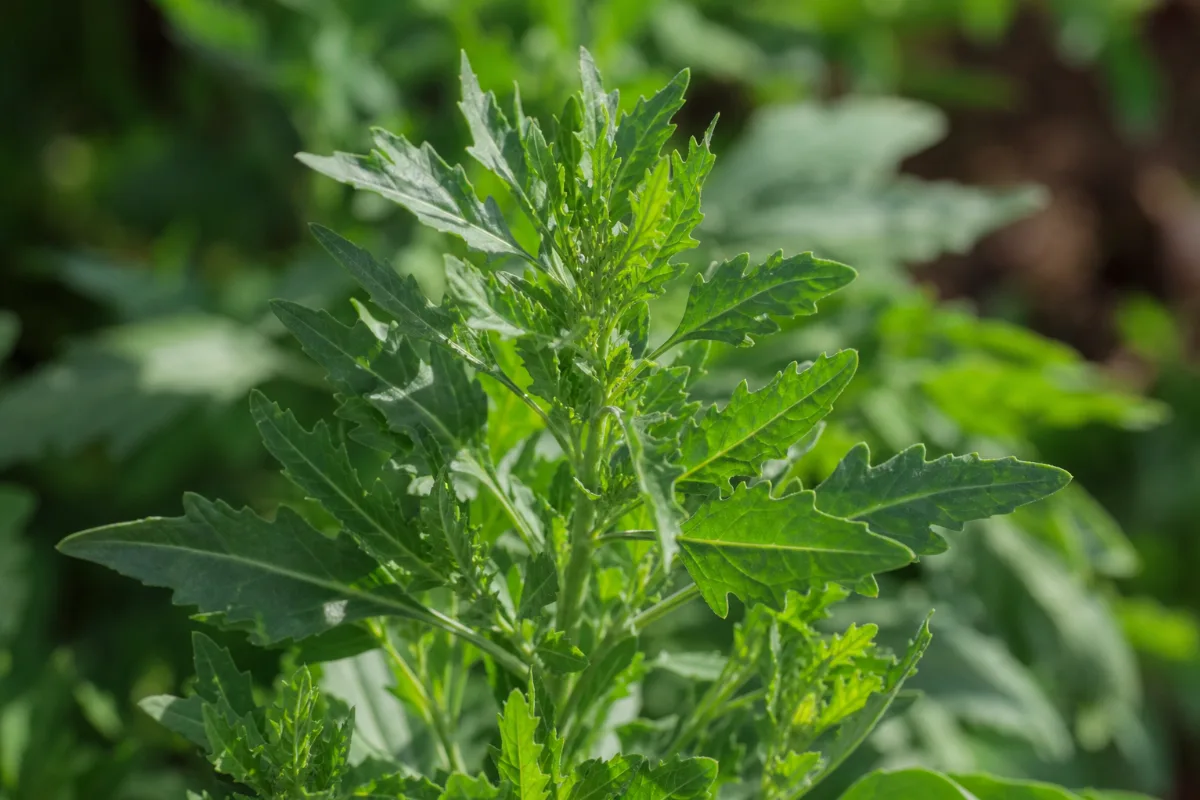
Herbs & Botanicals · Mexican herb with a toxic oil
Epazote
Dysphania ambrosioides · also called Wormseed, paico, apazote, M'khinza
Epazote is a pungent leafy herb used in Mexican cooking, and a folk remedy for stomach pain and intestinal worms. The evidence for any health benefit is very thin: one small children's worm trial, a negative adult study, and lab work. The key caution: the essential oil (chenopodium or wormseed oil) is poisonous and has killed people, and strong teas have killed children. Never take the oil.
General information, not medical advice. Last substantive update · Not medically reviewed. A named clinician has not signed off on this page. How this page is made
About Epazote
Epazote (Dysphania ambrosioides, older name Chenopodium ambrosioides) is a Mexican cooking herb and a traditional worm remedy. Its essential oil is rich in ascaridole, which is toxic. Deaths are documented after the oil and after strong infusions given to children. Evidence of benefit is insufficient: one small children's worm trial and a negative adult study, plus lab work. TRAMIL advises against oral medicinal use in pregnancy, breastfeeding, young children, and liver or kidney disease. No human safety study of the leaf as food was found. Ask a doctor or pharmacist about amounts.
What it is
Epazote is a strong-smelling herb used in Mexican kitchens, often with beans. Its accepted botanical name is Dysphania ambrosioides; many papers still call it Chenopodium ambrosioides. It belongs to the amaranth family.
It is also called wormseed, paico and, in Morocco, M'khinza.
What makes it distinctive
The oil contains ascaridole, a compound with a peroxide bridge that kills some parasites in the lab and is also the toxic part of the oil. Oils from different plants differ: one Moroccan oil held 17.7% ascaridole, while a Bulgarian oil was a thymol-carvacrol type with almost none.
In one lab test, most of the worm-killing power of the tea came from water-soluble substances other than ascaridole.
Historical and current uses
In Mexico it is a cooking herb. Across Latin America and the Caribbean, teas of the leaves and tops have been used for stomach pain, diarrhoea and intestinal worms. The oil was once used as a worm medicine and fell out of use after deaths. In Morocco it is a fever remedy, which has led to child poisonings.
What the research shows
For worms, TRAMIL reports a randomised trial in 60 children where fresh juice and albendazole cleared roundworm at similar rates (59.5% and 58.3%), and an adult field study with no effect. We read these only through TRAMIL. Evidence is insufficient.
Everything else, including antimicrobial, antioxidant, anti-inflammatory and anticancer findings, is from test tubes or animals. Reviews say clinical trials are needed. No trial of epazote as a cooking herb was found.
At a glance
Traditional uses history, not proof
- Cooked with beans and in Mexican dishes
- Infusion for stomach pain, diarrhoea and intestinal worms
- Fever remedy for children in Morocco (linked to deaths)
- Crushed leaves on skin ulcers
Studied for research
- Intestinal worms: insufficient evidence, one small trial and one negative study
- Parasite-killing activity of ascaridole: lab and animal only
- Antimicrobial and antioxidant activity: lab only
- Anti-inflammatory activity: one crude lab test
- Gas with beans: traditional, no trial
- Skin ulcers: traditional, no human trial
Main compounds
- Ascaridole (toxic, in the essential oil)
- alpha-Terpinene, p-cymene
- Thymol and carvacrol in some plants
Common forms
- Fresh or dried leaf (cooking)
- Infusion or decoction
- Fresh juice (one children's trial)
- Essential oil (wormseed oil): toxic, do not take
Research links: Fatal oil poisoning case (Gac Med Mex 1996) · Fatal child case (Cureus 2024) · Two child poisonings (Pan Afr Med J 2018) · TRAMIL plant record · Research Library · Genes & Biomarkers Library
The plant and its history
- Accepted scientific name
- Dysphania ambrosioides (L.) Mosyakin & Clemants
- Naming authority
- (L.) Mosyakin & Clemants
- Synonyms
- Chenopodium ambrosioides L.
- Common names
- Epazote (Spanish/Nahuatl); Wormseed (English); Paico (Spanish); Apazote (Spanish); M'khinza (Moroccan Arabic)
- Botanical family
- Amaranthaceae (amaranth family; formerly placed in Chenopodiaceae, as several abstracts still show).
- Classification
- Plantae > Tracheophyta > Magnoliopsida > Caryophyllales > Amaranthaceae > Dysphania > Dysphania ambrosioides
- Native range
- Not verified here. Grown and used across Latin America, the Caribbean and Morocco per the sources read.
- Habitat
- Not verified.
- What the plant looks like
- Roots: Not verified.; Stems: Not verified.; Leaves: Leaves and flowering tops are the culinary and medicinal parts.; Flowers: Not verified.; Fruit: Not verified.
- Cultivation
- Not verified.
- Harvest and processing
- The oil is distilled from the plant; which parts were used was not verified.
- Look-alikes and adulterants
- Name: Chenopodium graveolens (also called epazote); Note: A close relative used the same way; the 1996 fatal oil case involved this species.; Name: Quinoa (Chenopodium quinoa); Note: A food crop in the same plant group, not interchangeable.
- Sustainability and conservation
- Not assessed.
Traditional use and history history, not clinical proof
| Tradition or era | Documented use | Source |
|---|---|---|
| Mexican and Latin American cooking and folk medicine | Cooked with beans and in Mexican dishes. Infusions used for stomach pain, diarrhoea and intestinal worms; juice and decoctions for parasites; crushed leaves on skin ulcers (TRAMIL surveys). | s-tramil |
| Moroccan traditional medicine (M'khinza) | Used for diabetes, digestive problems, fever, cough and flu, per a 2024 review. Used as a fever remedy for children in the poisoning cases. | p37552317 |
| Former pharmaceutical use of chenopodium oil | The oil was once used to treat worms, then dropped because of human deaths (per a 2004 paper). | p15138003 |
Traditional use shows how a plant was used. It does not show that a supplement works or is safe today.
What is inside, and how it may work
What the plant contains and how those compounds act in cells and animals. Laboratory and animal mechanisms are not proven effects in people.
Main compounds
| Compound | Family | Where it is concentrated | Activity studied | Level of evidence |
|---|---|---|---|---|
| Ascaridole PubChem 10545 | monoterpene endoperoxide | essential oil 17.7% of one Moroccan oil; almost absent in a Bulgarian oil | Main toxic and antiparasitic compound of the oil. Lab activity against several parasites. 1 5 13 | In vitro / animal |
| alpha-Terpinene PubChem 7462 | monoterpene | essential oil 53.4% of one Moroccan oil | Major oil component in that sample; activity not separately studied here. 5 14 | Composition only |
| Thymol and carvacrol | phenolic monoterpenes | essential oil (Bulgarian chemotype) 19.45% and 14.30% in the Bulgarian oil | Antimicrobial in the lab; PubChem not checked. 12 | In vitro |
Mechanisms, receptors and pathways
| Target or pathway | Gene or receptor | What was found | Level |
|---|---|---|---|
| Reactive oxygen release from the peroxide bridge | not applicable | Proposed way ascaridole harms parasite cells. 1 | In vitro / animal |
| Nematode (worm) killing by infusion | not applicable | About 90% of the infusion's worm-killing came from a water-soluble substance other than ascaridole; ascaridole reduced rat gut muscle contraction. 10 | In vitro / animal |
| Chromosome damage in human blood cells | not applicable | Decoction and infusion increased chromosome changes in cell culture. 7 | In vitro |
Absorption, metabolism and elimination
- Absorption
- No human data found.
- Distribution
- No data found.
- Metabolism
- No data found.
- Elimination
- No data found.
- Bioavailability
- Not established.
Isolated compounds versus whole extracts
Ascaridole drives the oil's toxicity. A 2004 lab paper found most worm-killing in the infusion came from other water-soluble substances and suggested infusions are safer than the oil, but infusions have also been linked to child deaths.
Nutritional composition
No nutrient data were gathered for this profile.
7 not enough evidence
What is Epazote good for?
What epazote has been studied for and how strong the human evidence is. For epazote, almost all of it is from the lab, and the safety cautions matter more than the benefits.
Benefits, one by one
Each card is a research question, not a promise. Tap a goal to filter. Open a card to see the studies, doses and limits.
Intestinal worms (traditional use)
Not enough evidenceInfusions and juice of the leafy plant are a folk remedy for roundworm, pinworm and hookworm. One small children's trial reported a similar clearance rate to albendazole, but a field study in adults found no effect. The evidence is thin and conflicting.
2 studiesNothing here compares products or gives amounts. Ask a doctor or phar…
Studies, doses and limits
What the trials found
Two reports, both read only through the TRAMIL summary: a randomised trial in 60 children (3-14 years) comparing fresh juice with albendazole, and a field study in adults.
Results
In the children's trial, Ascaris clearance was 59.5% with juice and 58.3% with albendazole; Hymenolepis nana clearance was 100% with juice. Adverse reactions were 23.3% in both groups. The adult field study found no effect on hookworm, whipworm or roundworm.
Effect sizes as reported
Percentages as reported by TRAMIL; no confidence intervals or p-values were available.
Why this rating
One small trial and one negative field study, both read second-hand; no original papers opened; results conflict across populations and preparations.
Form and dose studied
Nothing here compares products or gives amounts. Ask a doctor or pharmacist about amounts.
Who was studied
Children aged 3-14 with Ascaris or Hymenolepis (trial); adults (field study).
Limits
Original papers not read. Group sizes are small. Not a replacement for tested worm medicines.
Why researchers looked
Traditional anthelmintic (worm-expelling) use across Latin America and the Caribbean.
Traditional use
Infusion or decoction of aerial parts for diarrhoea, stomach pain and intestinal parasites (TRAMIL surveys).
Proposed mechanism In vitro and animal
Ascaridole paralyses some worms in lab tests, but about 90% of the infusion's worm-killing activity in one lab test came from other water-soluble substances.
A proposed mechanism does not show that the effect happens in people.
Epazote oil and strong infusions have caused deaths, especially in children. Worm infections need a proper diagnosis and treatment from a clinician.
Parasite-killing activity of ascaridole (lab)
Not enough evidenceIn test tubes and animals, ascaridole and epazote extracts act against several parasites and microbes. This has not been shown to work safely in people.
3 studiesNothing here compares products or gives amounts. Ask a doctor or phar…
Studies, doses and limits
What the trials found
None for pure ascaridole.
Results
A 2026 systematic review lists activity against leishmania, malaria and trypanosome parasites in experimental models, and says the pure compound is under-studied and safety work is needed.
Effect sizes as reported
Qualitative.
Why this rating
Lab and animal work only; the review authors themselves call for clinical studies.
Form and dose studied
Nothing here compares products or gives amounts. Ask a doctor or pharmacist about amounts.
Who was studied
None (cells, animals).
Limits
Pure ascaridole is rarely tested; oil composition varies by plant.
Why researchers looked
Ascaridole contains a peroxide bridge, a feature it shares in part with artemisinin.
Traditional use
Not applicable.
Proposed mechanism Preliminary mechanism
Proposed: the peroxide group releases reactive oxygen, stressing parasite cells.
A proposed mechanism does not show that the effect happens in people.
Ascaridole is the toxic component of the oil. Activity in the lab is not a reason to take the oil.
Antimicrobial and antioxidant activity (lab)
Not enough evidenceEssential oils from epazote slowed some bacteria in test tubes and showed average to moderate antioxidant activity. Oils differ a lot between plants, and none of this has been tested in people.
3 studiesNothing here compares products or gives amounts. Ask a doctor or phar…
Studies, doses and limits
What the trials found
None.
Results
A Moroccan oil (alpha-terpinene 53.4%, ascaridole 17.7%) had average antioxidant and concentration-dependent antibacterial activity; a Bulgarian thymol-carvacrol oil inhibited S. aureus, E. coli and L. monocytogenes.
Effect sizes as reported
Qualitative.
Why this rating
Test-tube data on oils of different chemical types; no human data.
Form and dose studied
Nothing here compares products or gives amounts. Ask a doctor or pharmacist about amounts.
Who was studied
None (lab).
Limits
Two very different oil types. Lab strength does not predict benefit in people.
Why researchers looked
Epazote oils are rich in terpenes that often show activity in lab tests.
Traditional use
Used as a wash and for infections in folk medicine, per reviews.
Proposed mechanism Laboratory research
Terpenes such as ascaridole, alpha-terpinene, thymol and carvacrol act on microbes in lab tests.
A proposed mechanism does not show that the effect happens in people.
The oil is toxic when swallowed. Lab antimicrobial results are not a reason to use it.
Anti-inflammatory activity (lab)
Not enough evidenceOne lab test found a Bulgarian epazote oil blocked protein denaturation, a crude anti-inflammatory model, at levels similar to ibuprofen. No human data.
2 studiesNothing here compares products or gives amounts. Ask a doctor or phar…
Studies, doses and limits
What the trials found
None.
Results
IC50 67-77 ug/ml in the albumin test, comparable to ibuprofen in that test only.
Effect sizes as reported
IC50 67-77 ug/ml.
Why this rating
One crude test-tube assay.
Form and dose studied
Nothing here compares products or gives amounts. Ask a doctor or pharmacist about amounts.
Who was studied
None (lab).
Limits
A single oil type; not a clinical model.
Why researchers looked
Traditional use for pain and fever.
Traditional use
Used for headaches, abdominal discomfort, joint problems and fever in Moroccan folk medicine.
Proposed mechanism Laboratory research
Albumin denaturation assay, a test-tube model.
A proposed mechanism does not show that the effect happens in people.
Using the herb for fever in children has led to deaths (see Safety tab).
Cooking with beans and digestion
Not enough evidenceEpazote is traditionally cooked with beans, partly to reduce gas and aid digestion. We found no trial testing this.
1 studiesNothing here compares products or gives amounts. Ask a doctor or phar…
Studies, doses and limits
What the trials found
None found.
Results
No trial or measurement of gas or bloating with epazote was found.
Effect sizes as reported
None.
Why this rating
Culinary tradition only.
Form and dose studied
Nothing here compares products or gives amounts. Ask a doctor or pharmacist about amounts.
Who was studied
None.
Limits
No study located; the tradition is widely repeated.
Why researchers looked
Long-standing Mexican kitchen tradition.
Traditional use
Added to black beans and other dishes in Mexico and Central America; also used for stomach pain.
Proposed mechanism Unknown
Unknown.
A proposed mechanism does not show that the effect happens in people.
Leaf in food differs from medicinal doses or oil, but no human safety study of culinary use was found either.
Skin ulcers (crushed leaves on the skin)
Not enough evidenceCrushed leaves are used on skin ulcers in folk medicine. TRAMIL rates this use on traditional use and rabbit skin tests; no human trial was found.
1 studiesNothing here compares products or gives amounts. Ask a doctor or phar…
Studies, doses and limits
What the trials found
None found.
Results
Rabbit skin tests showed no irritation signs for the oil and leaf preparations (per TRAMIL).
Effect sizes as reported
Qualitative.
Why this rating
Traditional use plus animal skin tests; no human trial.
Form and dose studied
Nothing here compares products or gives amounts. Ask a doctor or pharmacist about amounts.
Who was studied
None.
Limits
Secondary summary only.
Why researchers looked
Folk use documented in TRAMIL surveys.
Traditional use
Aerial parts pressed and applied locally.
Proposed mechanism Unknown
Not established.
A proposed mechanism does not show that the effect happens in people.
TRAMIL says to see a doctor if an ulcer persists, and to use strict hygiene.
Other lab claims (anticancer, antidiabetic and more)
Not enough evidenceReviews list many lab effects, including anticancer and antidiabetic activity. They say the mechanisms are not well understood and that clinical trials are needed.
3 studiesNothing here compares products or gives amounts. Ask a doctor or phar…
Studies, doses and limits
What the trials found
None.
Results
The 2024 and 2025 reviews list lab, animal and computer findings only; the 2024 mouse study found no deaths and normal blood chemistry at the doses used for extracts.
Effect sizes as reported
Qualitative.
Why this rating
Lab, animal and computer studies only.
Form and dose studied
Nothing here compares products or gives amounts. Ask a doctor or pharmacist about amounts.
Who was studied
None (cells, animals).
Limits
Reviews are narrative; one used AI to screen papers.
Why researchers looked
Broad folk use.
Traditional use
Used for diabetes, fever, cough, fertility and more in Moroccan medicine (review).
Proposed mechanism Preliminary mechanism
Largely unknown.
A proposed mechanism does not show that the effect happens in people.
Lab activity is not evidence of safety or benefit in people.
Connections to the rest of health
How Epazote connects to the rest of our health knowledge graph. Every link says what kind of connection it is. A safety link (for example to the liver) is a warning, not a benefit. A study that merely mentions a topic never creates a benefit link.
Explore every connection: goals, body systems, organs, symptoms, genes
A. Wellness goals
| Connected to | Kind of connection | Evidence status | Context | Studies |
|---|---|---|---|---|
| Digestive Support | Not enough evidence | Intestinal worms (traditional use): Infusions and juice of the leafy plant are a folk remedy for roundworm, pinworm and hookworm. One small children's trial reported a similar clearance rate to albendazole, but a field study in adults found no effect. The evidence is thin and conflicting. | 15 10 | |
| Digestive Support | Not enough evidence | Parasite-killing activity of ascaridole (lab): In test tubes and animals, ascaridole and epazote extracts act against several parasites and microbes. This has not been shown to work safely in people. | 1 8 13 | |
| Immune Support | Not enough evidence | Antimicrobial and antioxidant activity (lab): Essential oils from epazote slowed some bacteria in test tubes and showed average to moderate antioxidant activity. Oils differ a lot between plants, and none of this has been tested in people. | 5 12 14 | |
| Joint Comfort | Not enough evidence | Anti-inflammatory activity (lab): One lab test found a Bulgarian epazote oil blocked protein denaturation, a crude anti-inflammatory model, at levels similar to ibuprofen. No human data. | 12 9 | |
| Digestive Support | Not enough evidence | Cooking with beans and digestion: Epazote is traditionally cooked with beans, partly to reduce gas and aid digestion. We found no trial testing this. | 15 | |
| Skin Health | Not enough evidence | Skin ulcers (crushed leaves on the skin): Crushed leaves are used on skin ulcers in folk medicine. TRAMIL rates this use on traditional use and rabbit skin tests; no human trial was found. | 15 | |
| General Wellness | Not enough evidence | Other lab claims (anticancer, antidiabetic and more): Reviews list many lab effects, including anticancer and antidiabetic activity. They say the mechanisms are not well understood and that clinical trials are needed. | 8 9 3 |
B. Body systems
| Connected to | Kind of connection | Evidence status | Context | Studies |
|---|---|---|---|---|
| Digestive System | Biological association | Not enough evidence | Studied for: Intestinal worms (traditional use) Studied for: Parasite-killing activity of ascaridole (lab) | 15 10 1 8 13 |
| Immune System | Biological association | Not enough evidence | Studied for: Antimicrobial and antioxidant activity (lab) Studied for: Anti-inflammatory activity (lab) | 5 12 14 9 8 3 |
| Skin Hair Beauty | Biological association | Not enough evidence | Studied for: Skin ulcers (crushed leaves on the skin) | 15 |
E. Health conditions
| Connected to | Kind of connection | Evidence status | Context | Studies |
|---|---|---|---|---|
| Intestinal worms | Traditional use | Not enough evidence | One small children's trial and one negative adult study, via TRAMIL. Preparation or compound: Juice or infusion of aerial parts |
15 |
| Pregnancy | Authoritative guidance | TRAMIL: oral medicinal use can cause miscarriage. Preparation or compound: Oral medicinal use |
15 |
I. Biomarkers
| Connected to | Kind of connection | Evidence status | Context | Studies |
|---|---|---|---|---|
| Roundworm (Ascaris) clearance | Biological association | Measured in trials: increase. A lab change is not the same as a health benefit. | ||
| Albumin denaturation (lab model) | Biological association | Measured in trials: decrease. A lab change is not the same as a health benefit. |
L. Active compounds
| Connected to | Kind of connection | Evidence status | Context | Studies |
|---|---|---|---|---|
| Ascaridole | Biological association | In vitro / animal | Main toxic and antiparasitic compound of the oil. Lab activity against several parasites. Preparation or compound: essential oil |
1 5 13 |
| alpha-Terpinene | Biological association | Composition only | Major oil component in that sample; activity not separately studied here. Preparation or compound: essential oil |
5 14 |
| Thymol and carvacrol | Biological association | In vitro | Antimicrobial in the lab; PubChem not checked. Preparation or compound: essential oil (Bulgarian chemotype) |
12 |
Each connection is stored with the ingredient, the connected record, the kind of connection, the evidence status, the supporting studies, the preparation or compound involved, and a review date (last reviewed October 25, 2026).
The evidence
The research centre for Epazote. Every record here was checked against PubMed or the publisher's page; we never list a study we have not verified.
Evidence by outcome
Bars show how many studies we found for each outcome, not how well it works. People are added up across trials only (reviews are not added, to avoid double counting).
How we rate evidence
High certainty
Several well-run trials or reviews agree; further research is unlikely to change the picture much.
Moderate certainty
Good trials point the same way, but some doubt remains.
Low certainty
Small, short or inconsistent trials. The finding could change with better research.
Very low certainty
Very little or very weak human data. Treat as a possibility only.
Mixed findings
Trials or reviews disagree with each other.
Not enough evidence
Not enough human research to say either way.
Evidence against
Good research found no benefit, or found harm.
We take the reviewers' own risk-of-bias and GRADE statements where they exist, and otherwise judge from study size, design, consistency, directness and whether a product matches what is sold. Many publications do not make evidence high. Method note: We searched PubMed and checked GBIF, PubChem and TRAMIL for epazote. Most sources were abstracts only. No study is cited that we could not verify.
Study library: every study we checked 15
| Study | Design | People | Product, dose, length | Result |
|---|---|---|---|---|
| Abadia 2026 Chemistry and biological properties of Ascaridole: A systematic review Fitoterapia · PMID 41213362 · DOI |
Systematic review lab and animal |
Lab and animal studies of ascaridole | Ascaridole (mainly from Dysphania ambrosioides) essential oil constituent not extracted not extracted · vs see results |
Ascaridole showed antiparasitic (leishmania, malaria, trypanosome), anticancer, antimicrobial and anti-inflammatory activity in experimental models. The proposed mechanism is oxygen-radical release from its peroxide bridge. The authors say few studies tested the pure compound, and call for safety work before any therapeutic use. Qualitative; no pooled numbers (not applicable) Methods, limits and fundingOutcomes: Antiparasitic, anticancer, antimicrobial, anti-inflammatory activity; mechanism Limitations: Lab and animal evidence only. Abstract read only. Funding and conflicts: declared none (per abstract) Read: abstract |
| Badinga LPCL 2018 M'khinza-related intoxication: about two observations (Pan Afr Med J, in French) Pan Afr Med J · PMID 30918546 · DOI |
Case report human (children) |
A 5-month-old infant and a 10-year-old girl, Rabat, Morocco | Infusion of Dysphania ambrosioides (M'Khinza) of undetermined strength, given as a fever remedy infusion (plant part not stated) not extracted not extracted · vs see results |
The infant had toxic encephalopathy and the girl severe dehydration with acute gastroenteritis. Both died in under 12 hours. The authors urge doctors to consider M'Khinza poisoning and warn against treating it as harmless. Two fatal cases (not applicable) Methods, limits and fundingOutcomes: Presentation and outcome Limitations: Two cases; doses unknown. Funding and conflicts: declared none (per abstract) Read: abstract |
| Drioua 2024 Comprehensive phytochemical and toxicological analysis of Chenopodium ambrosioides (L.) fractions Open Life Sci · PMID 38947765 · DOI |
Animal research mouse |
Mice, 28-day oral study at 200 mg/kg | Extracts and fractions of C. ambrosioides aerial parts (Morocco) aerial parts not extracted not extracted · vs see results |
No deaths or weight changes; some organ-weight changes; blood tests in normal range. The authors suggest the fractions were safe at the doses used. Qualitative; no pooled numbers (not applicable) Methods, limits and fundingOutcomes: Acute and subacute toxicity, blood chemistry Limitations: Mice; extracts, not the oil; authors conclude "safe" but organ-weight changes were seen. Does not apply to the essential oil or to children. Funding and conflicts: declared none (per abstract) Read: abstract |
| Elhaddadi 2024 A Fatal Case Report of Chenopodium ambrosioides L. (M'khinza) Intoxication Cureus · PMID 38883026 · DOI |
Case report human (child) |
4-year-old girl, Morocco | Repeated high-dose infusions of Chenopodium ambrosioides (M'khinza) given for fever infusion (plant part not stated in abstract) not extracted not extracted · vs see results |
A four-year-old was brought in with a disorder of consciousness four hours after repeated high-dose infusions given for a fever. The authors say use can cause serious, even fatal, nerve, gut, liver or kidney effects, especially in infants and children. The abstract shown does not give the full course; the case is described as fatal in the title. Single fatal case (not applicable) Methods, limits and fundingOutcomes: Presentation and outcome Limitations: Single case; abstract does not give the full clinical details or amount. Funding and conflicts: declared none (per abstract) Read: abstract |
| Ez-Zriouli 2023 Chemical Composition, Antioxidant and Antibacterial Activities and Acute Toxicity of Cedrus atlantica, Chenopodium ambrosioides and Eucalyptus camaldulensis Essential Oils Molecules · PMID 37049738 · DOI |
Lab lab and rat |
Lab tests and a rat toxicity test | Essential oil of Chenopodium ambrosioides (Morocco) plant part not stated in abstract (oil yield given per dry matter) not extracted not extracted · vs see results |
The epazote oil was rich in alpha-terpinene (53.4%), ascaridole (17.7%) and p-cymene (12.1%). Antioxidant activity was average. Antibacterial effects depended on concentration. In rats the LD50 of the three oils was 500 mg/kg body weight. Qualitative; no pooled numbers (not applicable) Methods, limits and fundingOutcomes: Oil composition, antioxidant and antibacterial tests, LD50 in rats Limitations: Lab and rat work; says nothing about people. Funding and conflicts: declared none (per abstract) Read: abstract |
| GBIF 2026 GBIF species match: Dysphania ambrosioides (L.) Mosyakin & Clemants GBIF API · Source |
Database record Dysphania ambrosioides |
not applicable | taxonomy not applicable not applicable not applicable · vs not applicable |
ACCEPTED, key 5568446, family Amaranthaceae, order Caryophyllales (exact match, confidence 99), checked 2026-10-25. not applicable (not applicable) Methods, limits and fundingOutcomes: Accepted name and family Limitations: Database record. Funding and conflicts: not applicable Read: API response |
| Gadano 2002 In vitro genotoxic evaluation of the medicinal plant Chenopodium ambrosioides L. J Ethnopharmacol · PMID 12020922 · DOI |
Lab human cells in culture |
Human blood cells (lymphocytes) in culture | Decoction and infusion of Chenopodium ambrosioides ("paico") aerial parts not extracted not extracted · vs see results |
Both preparations increased the share of cells with chromosome changes and sister chromatid exchanges, and lowered the mitotic index, suggesting possible genotoxic effects. Authors think different active substances are involved. Qualitative; no pooled numbers (not applicable) Methods, limits and fundingOutcomes: Chromosome damage, sister chromatid exchange, mitotic index Limitations: Cell culture only; whether this happens in people drinking the herb is not known. Funding and conflicts: declared none (per abstract) Read: abstract |
| Heredia Severino 2025 Essential Oils and Extracts from Epazote (Dysphania ambrosioides): A Phytochemical Treasure with Multiple Applications Plants (Basel) · PMID 40647909 · DOI |
Narrative review review of lab and animal work |
Review of mostly lab studies (Scopus search, AI-assisted screening) | Essential oils and extracts of Dysphania ambrosioides aerial parts not extracted not extracted · vs see results |
Lists antiparasitic (worms, protozoa, malaria), antimicrobial, antioxidant and anticancer activity in lab studies. The authors say the mechanisms are poorly understood and that safety and efficacy must be tested in clinical trials. Qualitative; no pooled numbers (not applicable) Methods, limits and fundingOutcomes: Antiparasitic, antimicrobial, antioxidant, anticancer activity Limitations: Narrative review using an AI tool to screen papers; mostly lab data. Funding and conflicts: declared none (per abstract) Read: abstract |
| Kandsi 2024 Dysphania ambrosioides (L.) Mosyakin and Clemants: bridging traditional knowledge, photochemistry, preclinical investigations, and toxicological validation for health benefits Naunyn Schmiedebergs Arch Pharmacol · PMID 37552317 · DOI |
Narrative review review of lab and animal work |
Review of lab, animal and computer studies | Dysphania ambrosioides (M'Khinza), Moroccan traditional use aerial parts not extracted not extracted · vs see results |
Traditional use includes diabetes, digestive problems, fever, cough and flu. Preclinical work suggests antioxidant, anti-inflammatory, antiparasitic and other activities. The authors say toxicity is dose-dependent and more pharmacology is needed before clinical trials. Qualitative; no pooled numbers (not applicable) Methods, limits and fundingOutcomes: Traditional uses, over 96 compounds, preclinical activity, toxicity Limitations: Narrative; lab and animal evidence. Funding and conflicts: declared none (per abstract) Read: abstract |
| MacDonald 2004 Ascaridole-less infusions of Chenopodium ambrosioides contain a nematocide(s) that is(are) not toxic to mammalian smooth muscle J Ethnopharmacol · PMID 15138003 · DOI |
Lab lab (C. elegans, rat tissue) |
Worm (C. elegans) tests and rat gut muscle | Infusions and ascaridole from Chenopodium ambrosioides aerial parts infusion not extracted not extracted · vs see results |
Almost 90% of the infusion's worm-killing activity came from a water-soluble substance other than ascaridole. Ascaridole reduced rat gut muscle contraction at worm-killing concentrations; the infusion without it did not. The authors suggest the traditional infusion may be safer than the essential oil. Qualitative; no pooled numbers (not applicable) Methods, limits and fundingOutcomes: Nematocidal activity; effect on gut smooth muscle Limitations: Lab worm and rat tissue only; not a human safety test. Funding and conflicts: declared none (per abstract) Read: abstract |
| Montoya-Cabrera 1996 Fatal poisoning caused by oil of epazote, Chenopodium graveolens (Gac Med Mex, in Spanish) Gac Med Mex · PMID 8964384 |
Case report human (child), related species |
A 2-year-9-month-old girl given 40 ml of the oil on a healer's advice | Volatile (essential) oil sold as epazote oil; plant identified as Chenopodium graveolens oil (distilled) not extracted not extracted · vs see results |
Vomiting, deep coma, seizures, dilated pupils, stopped breathing, acid blood, shock, death. Brain swelling and nerve-cell death, pneumonia, gut inflammation, bile-duct inflammation, mild pancreatitis and kidney-tube damage at post-mortem. The oil held 39 mg/ml ascaridole (1,560 mg in the dose given), which the authors called 26 times the dose once used to treat worms and above a reported lethal human dose of 1,000 mg. Single fatal case (not applicable) Methods, limits and fundingOutcomes: Clinical course, post-mortem findings, ascaridole content of the oil Limitations: One child. The plant was C. graveolens, a close relative, not C. ambrosioides. Abstract only. Funding and conflicts: declared none (per abstract) Read: abstract |
| Nacheva 2026 Chemical Composition and Biological Activity of Essential Oil from Dysphania ambrosioides from Bulgaria Molecules · PMID 41900046 · DOI |
Lab lab |
Lab tests | Essential oil of Dysphania ambrosioides grown in Bulgaria essential oil not extracted not extracted · vs see results |
A thymol-carvacrol type oil (thymol 19.45%, carvacrol 14.30%), unlike the ascaridole-rich oils usually reported. It inhibited S. aureus, E. coli and L. monocytogenes in the lab, had moderate antioxidant activity, and blocked albumin denaturation at IC50 67-77 ug/ml, comparable to ibuprofen in that test. Qualitative; no pooled numbers (not applicable) Methods, limits and fundingOutcomes: Composition, antimicrobial, antioxidant and anti-inflammatory (albumin) tests Limitations: Test-tube assays; albumin denaturation is only a crude anti-inflammatory model. Funding and conflicts: declared none (per abstract) Read: abstract |
| PubChem 2026 PubChem: Ascaridole (CID 10545) PubChem API · Source |
Database record compound |
not applicable | taxonomy not applicable not applicable not applicable · vs not applicable |
Ascaridole, CID 10545, formula C10H16O2 (checked 2026-10-25). not applicable (not applicable) Methods, limits and fundingOutcomes: Compound identity Limitations: Database record. Funding and conflicts: not applicable Read: API response |
| PubChem 2026 PubChem: alpha-Terpinene (CID 7462) PubChem API · Source |
Database record compound |
not applicable | taxonomy not applicable not applicable not applicable · vs not applicable |
alpha-Terpinene, CID 7462, formula C10H16 (checked 2026-10-25). not applicable (not applicable) Methods, limits and fundingOutcomes: Compound identity Limitations: Database record. Funding and conflicts: not applicable Read: API response |
| TRAMIL 2026 Dysphania ambrosioides (plant record), TRAMIL Caribbean folk-plant programme TRAMIL (tramil.net) · Source |
Regulatory or expert monograph human and animal reports, summarised |
Folk-plant surveys, a review of the literature, toxicity and clinical reports | Epazote aerial parts, juice, infusion, decoction, essential oil aerial parts; oil not extracted not extracted · vs see results |
Lists oil toxicity (nausea, vomiting, nervous system depression, liver and kidney damage, deafness, visual, heart and breathing problems); a single 5 ml oral dose of the oil reported lethal in adults. Oral use contraindicated in liver disease, kidney failure, weak or elderly people; not for pregnancy (can cause miscarriage), breastfeeding or children under 5. No data on safety of medicinal use in pregnancy, breastfeeding or children. Reports one randomised trial in 60 children (juice vs albendazole; Ascaris clearance 59.5% vs 58.3%, adverse reactions 23.3% in both groups) and a field study in adults that found no effect on three worm types. Expert summary of other studies (not applicable) Methods, limits and fundingOutcomes: Uses, preparation, toxicity, contraindications, biological activity Limitations: Secondary summary: the trial papers and the 5 ml lethal-dose source were not opened. A Caribbean folk-plant programme, not a drug regulator. Funding and conflicts: not applicable Read: full text (summary page) |
What we do not know yet
- No original paper on epazote and worms was opened; the worm trials come from a TRAMIL summary.
- No human study of epazote leaf eaten as food was found.
- No drug interaction, liver-record (LiverTox), EMA, NCCIH or LactMed document for epazote was found.
- Funding and conflicts of interest were not read for the studies.
How new research is added
New studies are found by a saved PubMed search and are placed in a review queue. A person reads each one before it changes any evidence rating or safety wording.
Lab markers
What changed in blood or saliva tests during trials. A changed number is not the same as feeling or being healthier, and we give no "normal ranges".
Other 2
Roundworm (Ascaris) clearance
Increase in trials
Whether the worm infection is cleared, judged by eggs in stool.
Results and what it means
Why it was measured
Main outcome of the children's trial.
| Study | Result | People | Product |
|---|---|---|---|
| 15 | Clearance 59.5% with juice vs 58.3% with albendazole (as summarised by TRAMIL) | 60 children aged 3-14 (two groups of 30 across Ascaris/H. nana) | Epazote aerial-part juice, 3 days vs albendazole |
Albumin denaturation (lab model)
Decrease in trials
A test-tube measure of whether a substance protects a protein from breaking down, used as a crude screen for anti-inflammatory activity.
Results and what it means
Why it was measured
Used in the Bulgarian oil study.
| Study | Result | People | Product |
|---|---|---|---|
| 12 | IC50 67-77 ug/ml, comparable to ibuprofen in this test | Test tube | Dysphania ambrosioides essential oil (thymol-carvacrol type) |
Safety
What studies and official sources say about side effects, medicines and who should check first. Each point shows what kind of evidence it comes from.
Main points to know 4
- The essential oil (chenopodium or wormseed oil) is dangerous and has killed people. Case reports and TRAMIL describe vomiting, deep coma, seizures, breathing stopping, liver and kidney damage and death after the oil. A toddler died after 40 ml given on a healer's advice. TRAMIL reports 5 ml as lethal in adults. Do not take the oil. Case report 11 15
- Strong or repeated infusions have killed children. In Morocco, a 5-month-old, a 4-year-old and a 10-year-old became gravely ill or died after infusions given for fever. Strengths were not known. TRAMIL says not for children under 5. Case report 4 2 15
- Cooking leaf versus medicine: the line is not well studied. Epazote leaf is a common food herb in Mexico. No human safety study of food use was found, so we cannot say where food use ends and risk begins. The cases above involved the oil or medicinal-strength infusions. Authoritative guidance 15
- Pregnancy and breastfeeding. TRAMIL says oral use is not for pregnancy because it can cause miscarriage, nor for breastfeeding. No controlled human data exist. Authoritative guidance 15
Side effects 3
| Effect | How often | Severity and recovery | Evidence |
|---|---|---|---|
| Nausea, vomiting, drowsiness, coma, seizures (nervous system and stomach effects) Case reports show that harm happens, not how often. | Not given. | severe to fatal (oil, strong infusions) Not reversible in the fatal cases | Case report 11 4 2 |
| Liver, kidney, hearing, vision, heart and breathing problems Listed by TRAMIL for the oil; the 1996 child case showed kidney-tube damage and bile-duct inflammation at post-mortem. | Not given. | severe Unknown | Authoritative guidance 15 |
| Adverse reactions after juice in a children's trial Second-hand report; types of reaction not given. | 23.3% in both the juice and the albendazole groups (per TRAMIL). | not stated Not stated | Authoritative guidance 15 |
Liver
No LiverTox record for epazote was found. TRAMIL lists liver damage among effects of the oil and says oral use is contraindicated in liver disease. The 1996 fatal child case showed bile-duct inflammation at post-mortem. 15 11
How often. Unknown.
Monitoring. No agency monitoring advice was found.
- .
This is a safety connection. It is not evidence that Epazote supports liver health.
Medicines and supplements 2
| With | Why it matters | Importance | Evidence | What to do |
|---|---|---|---|---|
| Medicines for liver or kidney conditions, and anything cleared by the liver or kidneys prescription | No interaction study was found. The concern is the oil's liver and kidney toxicity. | Unknown. | Authoritative guidance Not enough evidence 15 | Ask your doctor or pharmacist before using any epazote product if you take medicines. |
| Sedatives, sleep or seizure medicines prescription | Theoretical: the oil depresses the nervous system in poisoning cases. | Unknown; no study found. | Theoretical Not enough evidence 11 | Avoid the oil. Ask a pharmacist about any medicinal use. |
Who should check first 5
| Situation | Advice | Evidence |
|---|---|---|
| Pregnancy | Avoid oral medicinal use. TRAMIL says it can cause miscarriage. Ask your doctor about food use. | Authoritative guidance 15 |
| Breastfeeding | Avoid oral medicinal use; no safety data. | Authoritative guidance 15 |
| Children, especially under 5 | Do not give infusions or oil. Children have died from infusions given for fever. | Case report 4 2 15 |
| Liver disease or kidney failure | TRAMIL contraindicates oral use. | Authoritative guidance 15 |
| Weak or elderly people | TRAMIL contraindicates oral medicinal use. | Authoritative guidance 15 |
Overdose, product quality and regulators
Summary. The toxic part is the essential oil, whose main active compound is ascaridole. Poisoning has also followed strong infusions. The oil is dangerous at small amounts: TRAMIL reports 5 ml as lethal in adults.
Animal. Rats: oil LD50 of 500 mg/kg (one Moroccan oil). Mice: extracts at 200 mg/kg for 28 days caused no deaths. TRAMIL gives a mouse lethal figure for ascaridole in the oil.
Human doses studied. Not given here. No safe upper amount has been established.
High dose or long term signals. Brain swelling, coma, seizures, acid blood, shock, liver and kidney damage in fatal cases.
Overdose response. Medical emergency. Call poison control or emergency services.
Genotoxicity. Decoction and infusion increased chromosome damage in human blood cells in the lab (cell culture only).
Toxic plant parts. Essential oil; strong infusions of the plant (parts not specified in the case reports).
No pesticide, metal or adulteration testing of epazote products was found. Oil strength varies: ascaridole was 17.7% in one oil and almost absent in a Bulgarian thymol-carvacrol type.
Variable composition. Different plants make oils of different chemical type, so strength and risk differ. 5 12
| Body | Action | Date |
|---|---|---|
| TRAMIL (Caribbean folk-plant programme) (Caribbean / Latin America) | Rates oral use for stomach pain, diarrhoea and intestinal parasites; contraindicated in liver disease, kidney failure, weak or elderly people, pregnancy, breastfeeding and under age 5; warns the oil is toxic. source | 2026-10-25 |
When to get medical help
- Vomiting, unusual sleepiness, confusion, fits or trouble breathing after epazote oil or a strong infusion: call emergency services or poison control now.
- A child who has drunk epazote tea or oil and becomes drowsy or hard to wake: emergency help now.
- Yellow skin or eyes, dark urine, or very little urine: see a doctor urgently.
- Pregnant and bleeding or cramping after using epazote medicinally: contact your doctor right away.
Stop the supplement and contact a clinician or emergency service. In the US, Poison Control is 1-800-222-1222.
General information only, not medical advice. Ask a clinician or pharmacist before use, especially with medicines, in pregnancy or with a health condition. See the Natural Remedy Safety guide.
Frequently asked questions
What is epazote?
Epazote is a pungent leafy herb used in Mexican cooking, also called wormseed or paico. Its botanical name is Dysphania ambrosioides.
Is epazote safe to eat in cooking?
Is epazote oil dangerous?
Can epazote tea harm children?
Does epazote get rid of intestinal worms?
The evidence is insufficient. One small children's trial reported a clearance rate similar to albendazole, and an adult field study found no effect. See a doctor for proper diagnosis and treatment.
Is epazote safe in pregnancy?
TRAMIL says oral medicinal use is not for pregnancy because it can cause miscarriage, and not for breastfeeding. Ask your doctor about any use.
Does epazote really reduce gas from beans?
It is cooked with beans partly for this reason, but we found no trial testing it.
Is epazote bad for the liver or kidneys?
What is ascaridole?
Do epazote products differ in strength?
Does epazote have antibacterial or anticancer effects?
Is epazote the same as Mexican oregano?
No. They are different plants. Epazote has a strong, pungent smell and a toxic oil, so it should not be swapped for other herbs.
Explore by health goal
Digestive SupportImmune SupportJoint ComfortSkin HealthGeneral Wellness
Editorial transparency
- Written by
- AlternativeMed editorial team. Research compiled with AI assistance, then checked against PubMed records.
- Medical review
- None. This page has not been reviewed by a physician or pharmacist.
- First published
- 2026-10-25
- Last substantive update
- 2026-10-25
- How we research
- We searched PubMed and checked GBIF, PubChem and TRAMIL for epazote. Most sources were abstracts only. No study is cited that we could not verify.
- How we rate evidence
- See "How we rate evidence" in the Evidence tab.
- Independence
- No product is promoted on this page. No affiliate links are shown. If one is added later it will be labelled and kept apart from the evidence.
Sources 15
Each source was opened and checked. Where we read only the abstract, it says so. The small numbers in the text point here.
- Abadia ACM, Gnoatto SCB. Chemistry and biological properties of Ascaridole: A systematic review. Fitoterapia. 2026. PMID 41213362. DOI 10.1016/j.fitote.2025.106982. (abstract)
- Badinga LPCL, Mekaoui N, Karboubi L, Dakhama BSB. M'khinza-related intoxication: about two observations (Pan Afr Med J, in French). Pan Afr Med J. 2018. PMID 30918546. DOI 10.11604/pamj.2018.31.18.15987. (abstract)
- Drioua S, Ameggouz M, Assouguem A, et al.. Comprehensive phytochemical and toxicological analysis of Chenopodium ambrosioides (L.) fractions. Open Life Sci. 2024. PMID 38947765. DOI 10.1515/biol-2022-0895. (abstract)
- Elhaddadi H, Hamami A, Elouali A, Babakhouya A, Rkain M. A Fatal Case Report of Chenopodium ambrosioides L. (M'khinza) Intoxication. Cureus. 2024. PMID 38883026. DOI 10.7759/cureus.60351. (abstract)
- Ez-Zriouli R, ElYacoubi H, Imtara H, et al.. Chemical Composition, Antioxidant and Antibacterial Activities and Acute Toxicity of Cedrus atlantica, Chenopodium ambrosioides and Eucalyptus camaldulensis Essential Oils. Molecules. 2023. PMID 37049738. DOI 10.3390/molecules28072974. (abstract)
- GBIF. GBIF species match: Dysphania ambrosioides (L.) Mosyakin & Clemants. GBIF API. 2026. (API response)
- Gadano A, Gurni A, Lopez P, Ferraro G, Carballo M. In vitro genotoxic evaluation of the medicinal plant Chenopodium ambrosioides L.. J Ethnopharmacol. 2002. PMID 12020922. DOI 10.1016/s0378-8741(01)00418-4. (abstract)
- Heredia Severino A, Fernandez-Lopez J, Borras-Rocher F, Viuda-Martos M. Essential Oils and Extracts from Epazote (Dysphania ambrosioides): A Phytochemical Treasure with Multiple Applications. Plants (Basel). 2025. PMID 40647909. DOI 10.3390/plants14131903. (abstract)
- Kandsi F, Lafdil FZ, El Hachlafi N, et al.. Dysphania ambrosioides (L.) Mosyakin and Clemants: bridging traditional knowledge, photochemistry, preclinical investigations, and toxicological validation for health benefits. Naunyn Schmiedebergs Arch Pharmacol. 2024. PMID 37552317. DOI 10.1007/s00210-023-02658-4. (abstract)
- MacDonald D, VanCrey K, Harrison P, et al.. Ascaridole-less infusions of Chenopodium ambrosioides contain a nematocide(s) that is(are) not toxic to mammalian smooth muscle. J Ethnopharmacol. 2004. PMID 15138003. DOI 10.1016/j.jep.2004.02.018. (abstract)
- Montoya-Cabrera MA, Escalante-Galindo P, Meckes-Fisher M, et al.. Fatal poisoning caused by oil of epazote, Chenopodium graveolens (Gac Med Mex, in Spanish). Gac Med Mex. 1996. PMID 8964384. (abstract)
- Nacheva A, Bojilov D, Manolov S, et al.. Chemical Composition and Biological Activity of Essential Oil from Dysphania ambrosioides from Bulgaria. Molecules. 2026. PMID 41900046. DOI 10.3390/molecules31060946. (abstract)
- PubChem. PubChem: Ascaridole (CID 10545). PubChem API. 2026. (API response)
- PubChem. PubChem: alpha-Terpinene (CID 7462). PubChem API. 2026. (API response)
- TRAMIL. Dysphania ambrosioides (plant record), TRAMIL Caribbean folk-plant programme. TRAMIL (tramil.net). 2026. (full text (summary page))