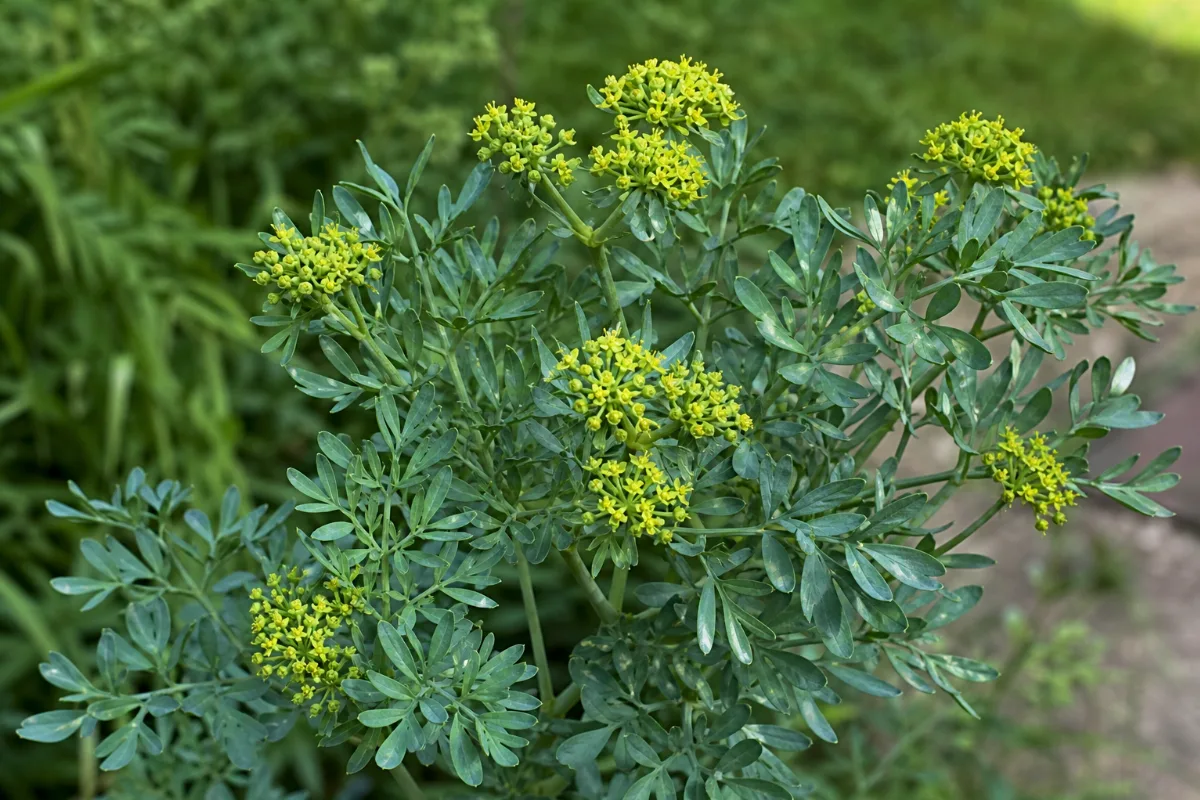
Herbs & Botanicals · Poisonous traditional garden herb
Rue
Ruta graveolens · also called Common rue, herb of grace, ruda
Rue is a strong-smelling garden herb used in folk medicine for period problems, pain and the heart. Touching it and then going in the sun can cause severe burns. Swallowed, it has caused liver and kidney harm and deaths, and it is unsafe in pregnancy. We found no human trials showing it works.
General information, not medical advice. Last substantive update · Not medically reviewed. A named clinician has not signed off on this page. How this page is made
About Rue
Rue is a garden herb with a long folk-medicine history and well-documented dangers. Human evidence of benefit is almost absent.
Safety first
Skin: touching fresh rue and then being in the sun or a tanning bed can cause blistering burns. Reports include a 2-year-old, a man's hand, and a woman with burns over about 85% of her body. Wash the skin and stay out of the sun after any contact, and get medical care for blisters.
Pregnancy: do not use. Rue is named among herbal abortifacients that have caused serious illness and death.
Swallowed: case reports describe liver, kidney, heart and clotting problems, and a Hong Kong poison atlas lists multi-organ failure and death in severe cases.
What it is
Rue is Ruta graveolens, a perennial in the citrus family. It contains psoralen-type furanocoumarins (bergapten, xanthotoxin), the flavonoid rutin, alkaloids such as graveoline, and an essential oil rich in the ketone 2-undecanone (methyl nonyl ketone).
It is not Syrian rue (Peganum harmala), not goat's rue and not Ruta chalepensis, a separate species. Reports from Latin America often say 'ruda' without separating the two Ruta species.
What the research shows
We found no human treatment trial of rue as a herb. Uses are traditional or based on lab work. A 2026 review calls for standardised extracts and clinical studies, and says safe doses are not defined.
Lab findings on microbes and cancer cells do not show benefit in people. Trials of homeopathic Ruta dilutions exist but are not the herb and were not reviewed.
Regulatory status
United States: rue is listed as generally recognised as safe only as a food flavouring at no more than 2 parts per million. That is not approval as a medicine.
We could not verify positions of the EMA (no herbal monograph found), NCCIH, LiverTox, LactMed or Health Canada.
At a glance
Traditional uses history, not proof
- Irregular periods
- Fever, headache, toothache
- Bruises and sprains
- Heart complaints (belief)
- Infant eczema
Studied for research
- Irregular periods: insufficient
- Pain and fibromyalgia: insufficient
- Heart protection: against (harm reported)
- Germ-killing and cancer cells: lab only
- Insect repellent: against (burns)
Main compounds
- Bergapten
- Xanthotoxin
- Rutin
- Graveoline
- 2-Undecanone
Common forms
- Fresh garden plant
- Tea or decoction
- Plant extract
- Essential oil
Research links: Eickhorst 2007: rue and sun reaction (PubMed) · Pérez-Camelo 2022: tanning bed burns (PubMed) · Seak 2007: rue poisoning (PubMed) · Serhiienko 2026: rue review (PubMed) · Research Library · Genes & Biomarkers Library
The plant and its history
- Accepted scientific name
- Ruta graveolens L.
- Naming authority
- GBIF species match API, read 2026-10-25: ACCEPTED, key 3190382, family Rutaceae. NCBI Taxonomy search returned ID 37565.
- Common names
- Rue, common rue, herb-of-grace (English); Ruda (Spanish); 芸香 (yún xiāng) (Chinese)
- Botanical family
- Rutaceae (citrus family)
- Classification
- Plantae > Rutaceae > Ruta > Ruta graveolens
- Native range
- Not verified in the sources read. Reviews describe Ruta as mostly Mediterranean.
- Habitat
- Common garden herb; found in rural settings in the United States (2007 case report).
- What the plant looks like
- Roots: Not verified.; Stems: Perennial herb up to about 1 m tall (Hong Kong atlas).; Leaves: Bipinnate to tripinnate, greyish or bluish green, 6 to 12 cm (Hong Kong atlas).; Flowers: Golden yellow, about 2 cm, four petals (Hong Kong atlas).; Fruit: 6 to 10 mm capsule with glands (Hong Kong atlas).
- Cultivation
- Not covered.
- Harvest and processing
- Not covered.
- Look-alikes and adulterants
- Name: Ruta chalepensis L. (fringed rue); Note: A separate accepted species in GBIF (key 3190381). Reports often say 'ruda' without separating the two.; Name: Syrian rue (Peganum harmala); Note: A different plant in a different family (GBIF: Tetradiclidaceae); not covered on this page.; Name: Goat's rue (Galega officinalis); Note: A different plant (a legume) with a different use; not rue.
- Sustainability and conservation
- Not covered.
Traditional use and history history, not clinical proof
| Tradition or era | Documented use | Source |
|---|---|---|
| Traditional Chinese medicine | Fever from colds, toothache, headache, bruises and sprains, irregular menstruation, infant eczema. | p39758226 |
| European, Asian, African and South American traditional medicine | Digestive, nervous, heart, breathing and reproductive complaints. | p42680583 |
| Taiwan | Believed to protect the heart; a decoction led to poisoning. | p17364636 |
| Colombia (cultural belief) | Used in an elixir for bad luck, envy and anguish; risks unknown. | p35169530 |
| Ruta in general | Abortifacient and emmenagogue, lung disease, infections. | p34443352 |
Traditional use shows how a plant was used. It does not show that a supplement works or is safe today.
What is inside, and how it may work
What the plant contains and how those compounds act in cells and animals. Laboratory and animal mechanisms are not proven effects in people.
Main compounds
| Compound | Family | Where it is concentrated | Activity studied | Level of evidence |
|---|---|---|---|---|
| Bergapten (5-methoxypsoralen) PubChem 2355 | furanocoumarin (psoralen) | Aerial parts (per reviews) | Psoralens react with UV light on skin. 3 7 12 | Case report |
| Xanthotoxin (8-methoxypsoralen) PubChem 4114 | furanocoumarin (psoralen) | Aerial parts (per reviews) | Photosensitising psoralen. 7 12 | Case report |
| Rutin PubChem 5280805 | flavonoid glycoside | Aerial parts | Antioxidant in the lab; also found in many other plants. 19 12 | Laboratory research |
| Graveoline PubChem 353825 | quinolone alkaloid | Aerial parts | Alkaloids are blamed with furanocoumarins for toxic effects (2026 review). 19 12 | Laboratory research |
| 2-Undecanone (methyl nonyl ketone) PubChem 8163 | aliphatic ketone | Essential oil | Main ketone in Ruta oils; listed by the Hong Kong atlas as a toxic volatile oil. 13 8 12 | Laboratory research |
| 2-Nonanone PubChem 13187 | aliphatic ketone | Essential oil | Second main ketone in Ruta oils. 13 12 | Laboratory research |
| Chalepensin PubChem 128834 | furanocoumarin | Several Rutaceae plants | Inhibited Cyp2a and induced Cyp2b in mice. 9 12 | Animal research |
| Rutamarin PubChem 26948 | furanocoumarin | Not verified | Listed for identity only; no source on activity read. 12 | Laboratory research |
| Skimmianine PubChem 6760 | furoquinoline alkaloid | Whole plant | Listed by the Hong Kong atlas; inhibited serotonin-induced blood-pressure rises in an animal study. 8 12 | Animal research |
Mechanisms, receptors and pathways
| Target or pathway | Gene or receptor | What was found | Level |
|---|---|---|---|
| Phototoxic skin reaction | Not applicable | Psoralens from rue plus UVA cause a non-allergic photoirritant reaction. 3 7 | Human data |
| Organ toxicity | Not identified | Mechanism for liver, kidney and other toxic features is unknown; coumarins are suspected. 8 4 | Human data |
| Liver enzymes | Cyp2a, Cyp2b (mouse), CAR | Chalepensin lowered Cyp2a and raised Cyp2b activity in mice. 9 | Animal research |
| Cancer cell survival | Akt (cell study) | Extract blocked Akt activation in cancer cells (summary-only). 14 | Laboratory research |
Absorption, metabolism and elimination
- Absorption
- Not covered in the sources read.
- Distribution
- Not covered.
- Metabolism
- Not covered for people; a mouse study covers chalepensin and enzymes.
- Elimination
- Not covered.
- Bioavailability
- Not covered.
Isolated compounds versus whole extracts
Whole-plant contact and decoctions caused the harms in case reports. Isolated compounds (chalepensin, psoralens) were used in mechanism work. We cannot say which compound causes which harm.
Nutritional composition
Not a nutrient. Use as a bitter garden herb or flavouring is regulated in the US at 2 ppm (food additive rule).
5 not enough evidence2 evidence against
What is Rue good for?
The traditional and studied uses and how strong the evidence is. None are shown to work in people, and several are linked to harm.
Benefits, one by one
Each card is a research question, not a promise. Tap a goal to filter. Open a card to see the studies, doses and limits.
Irregular periods (traditional use)
Not enough evidenceRue has been used in traditional medicine for irregular periods. We found no human trial. The same traditional use is linked to harm in pregnancy.
3 studiesNot applicable.
Studies, doses and limits
What the trials found
No trials in people were found in the sources read.
Results
None.
Effect sizes as reported
None.
Why this rating
Traditional use only; no human trial found. Safety risks are well documented.
Form and dose studied
Not applicable.
Who was studied
Not applicable.
Limits
Traditional use does not show that it works.
Why researchers looked
Traditional Chinese medicine lists irregular menstruation among its uses; Ruta oils have long been used as emmenagogue and abortifacient.
Traditional use
Listed in traditional Chinese medicine for irregular menstruation (2024 review).
Proposed mechanism Pharmacological theory
Not tested in people. Furanocoumarins and alkaloids are blamed for the uterine and toxic effects in reviews.
A proposed mechanism does not show that the effect happens in people.
Rue can burn the skin with sunlight, can harm the liver and kidneys, and is unsafe in pregnancy. See the Safety tab first.
Pain and fibromyalgia (traditional prescribing)
Not enough evidenceIn one report a rue product was prescribed for fibromyalgia and the patient got a sun-triggered skin reaction. No benefit was shown.
2 studiesUnknown.
Studies, doses and limits
What the trials found
No trial. The only human report we found is a case of skin injury after rue was prescribed for fibromyalgia (title only was available).
Results
Skin reaction in the report; no pain result.
Effect sizes as reported
None.
Why this rating
Only a case report of harm; traditional claims.
Form and dose studied
Unknown.
Who was studied
One patient.
Limits
Title-only record; no benefit data.
Why researchers looked
Rue is used in folk and traditional medicine for bruises, sprains and aches.
Traditional use
Traditional Chinese medicine uses it for bruises, sprains, headache and toothache (2024 review).
Proposed mechanism Pharmacological theory
Not tested.
A proposed mechanism does not show that the effect happens in people.
Rue can burn the skin with sunlight, can harm the liver and kidneys, and is unsafe in pregnancy. See the Safety tab first.
Heart protection and palpitations (traditional belief)
Evidence againstRue is wrongly believed in some places to protect the heart. In the one case we found, a woman who drank a rue decoction for palpitations became seriously ill.
2 studiesA decoction of the plant (details in the Safety tab).
Studies, doses and limits
What the trials found
No trial. A case report describes slow heartbeat, kidney failure and a clotting problem after three days of a rue decoction.
Results
Harm, not benefit.
Effect sizes as reported
None.
Why this rating
The only human report describes harm.
Form and dose studied
A decoction of the plant (details in the Safety tab).
Who was studied
78-year-old woman.
Limits
One case.
Why researchers looked
Used in Taiwan and elsewhere for heart protection.
Traditional use
Described as a medicinal herb used for heart protection in Taiwan.
Proposed mechanism Pharmacological theory
Not tested.
A proposed mechanism does not show that the effect happens in people.
Rue can burn the skin with sunlight, can harm the liver and kidneys, and is unsafe in pregnancy. See the Safety tab first.
Fever, headache, toothache and infant eczema (traditional Chinese medicine)
Not enough evidenceTraditional Chinese medicine lists these uses. No human studies were found. Do not use fresh rue on a child's skin.
2 studiesNot applicable.
Studies, doses and limits
What the trials found
No human trial found.
Results
None.
Effect sizes as reported
None.
Why this rating
Traditional use only.
Form and dose studied
Not applicable.
Who was studied
Not applicable.
Limits
A child touched rue and had a burn with systemic upset in one report.
Why researchers looked
Listed uses of Ruta graveolens in Chinese materia medica.
Traditional use
Fever from colds, wind-fire toothache, headache, bruises and sprains, irregular menstruation and infantile eczema.
Proposed mechanism Pharmacological theory
Not tested in people.
A proposed mechanism does not show that the effect happens in people.
Rue can burn the skin with sunlight, can harm the liver and kidneys, and is unsafe in pregnancy. See the Safety tab first.
Germ-killing activity in the lab
Not enough evidenceRue extracts and oils slowed some microbes in laboratory tests. This has not been tested as a treatment in people.
2 studiesOils and extracts in the lab.
Studies, doses and limits
What the trials found
None in people.
Results
Activity reported in lab tests (no numbers read).
Effect sizes as reported
None.
Why this rating
Test-tube evidence only.
Form and dose studied
Oils and extracts in the lab.
Who was studied
Not applicable.
Limits
Lab activity often does not carry over to people.
Why researchers looked
Essential oil and extracts are tested against microbes.
Traditional use
Ruta species are used traditionally for infections.
Proposed mechanism Laboratory research
Ketones such as 2-undecanone in the oil and other compounds act on microbes in test conditions.
A proposed mechanism does not show that the effect happens in people.
Rue can burn the skin with sunlight, can harm the liver and kidneys, and is unsafe in pregnancy. See the Safety tab first.
Effects on cancer cells in dishes
Not enough evidenceAn extract reduced the survival of cancer cells in a dish. Nothing is known about people.
2 studiesExtract in cell culture.
Studies, doses and limits
What the trials found
None in people.
Results
Cell survival reduced in cell culture.
Effect sizes as reported
None.
Why this rating
Cell studies only; summary-only.
Form and dose studied
Extract in cell culture.
Who was studied
Cell lines.
Limits
The same compounds that harm skin and organs may be responsible.
Why researchers looked
Cell studies look for anticancer compounds in plants.
Traditional use
Not a traditional anticancer herb in the sources read.
Proposed mechanism Laboratory research
Reported to cause DNA damage pathways and block Akt activation in cells (summary only).
A proposed mechanism does not show that the effect happens in people.
Rue can burn the skin with sunlight, can harm the liver and kidneys, and is unsafe in pregnancy. See the Safety tab first.
Use as an insect repellent (not advised)
Evidence againstRue has been used against insects. A skin specialist report says it should not be used this way because of the burns it can cause.
1 studiesFresh plant on skin.
Studies, doses and limits
What the trials found
No trial. One case report links rue to a sun-triggered skin reaction and advises against using it as a repellent.
Results
Harm reported.
Effect sizes as reported
None.
Why this rating
Documented skin harm.
Form and dose studied
Fresh plant on skin.
Who was studied
Adult case.
Limits
One case.
Why researchers looked
Folk use in gardens.
Traditional use
Garden and folk use.
Proposed mechanism Pharmacological theory
Strong smelling oils.
A proposed mechanism does not show that the effect happens in people.
Rue can burn the skin with sunlight, can harm the liver and kidneys, and is unsafe in pregnancy. See the Safety tab first.
Connections to the rest of health
How Rue connects to the rest of our health knowledge graph. Every link says what kind of connection it is. A safety link (for example to the liver) is a warning, not a benefit. A study that merely mentions a topic never creates a benefit link.
Explore every connection: goals, body systems, organs, symptoms, genes
A. Wellness goals
| Connected to | Kind of connection | Evidence status | Context | Studies |
|---|---|---|---|---|
| Womens Wellness | Traditional use | Not enough evidence | Irregular periods (traditional use): Rue has been used in traditional medicine for irregular periods. We found no human trial. The same traditional use is linked to harm in pregnancy. | 10 13 19 |
| Heart Health | Adverse effect or risk | Evidence against | Heart protection and palpitations (traditional belief): Rue is wrongly believed in some places to protect the heart. In the one case we found, a woman who drank a rue decoction for palpitations became seriously ill. | 18 8 |
| Immune Support | Preliminary mechanism | Not enough evidence | Germ-killing activity in the lab: Rue extracts and oils slowed some microbes in laboratory tests. This has not been tested as a treatment in people. | 13 19 |
B. Body systems
| Connected to | Kind of connection | Evidence status | Context | Studies |
|---|---|---|---|---|
| Reproductive system | Contraindication | Documented | Organ failure and deaths in a poison-centre series. Preparation or compound: Infusions |
2 4 |
| Reproductive System | Biological association | Not enough evidence | Studied for: Irregular periods (traditional use) | 10 13 19 |
| Musculoskeletal System | Biological association | Not enough evidence | Studied for: Pain and fibromyalgia (traditional prescribing) | 1 10 |
| Cardiovascular System | Biological association | Evidence against | Studied for: Heart protection and palpitations (traditional belief) | 18 8 |
| Integumentary System | Biological association | Not enough evidence | Studied for: Fever, headache, toothache and infant eczema (traditional Chinese medicine) Studied for: Use as an insect repellent (not advised) | 10 5 3 |
| Immune System | Biological association | Not enough evidence | Studied for: Germ-killing activity in the lab Studied for: Effects on cancer cells in dishes | 13 19 14 |
C. Body parts and organs
| Connected to | Kind of connection | Evidence status | Context | Studies |
|---|---|---|---|---|
| Skin | Adverse effect or risk | Documented | Phytophotodermatitis and burns in several case reports. Preparation or compound: Fresh plant contact with psoralens and UV light |
15 3 5 17 |
| Liver | Adverse effect or risk | Documented | Toxic hepatitis and liver impairment in case reports. Preparation or compound: Swallowed decoctions and herbal medicine |
16 8 |
| Kidneys | Adverse effect or risk | Documented | Acute kidney failure in the Taiwan case. Preparation or compound: Decoction |
18 |
J. Genes, receptors and enzymes
| Connected to | Kind of connection | Evidence status | Context | Studies |
|---|---|---|---|---|
| CYP2A (mouse Cyp2a5), CYP2B, CAR | Preliminary mechanism | Animal | Affected by chalepensin in mice. | 9 |
L. Active compounds
| Connected to | Kind of connection | Evidence status | Context | Studies |
|---|---|---|---|---|
| Bergapten (5-methoxypsoralen) | Biological association | Case report | Psoralens react with UV light on skin. Preparation or compound: Aerial parts (per reviews) |
3 7 12 |
| Xanthotoxin (8-methoxypsoralen) | Biological association | Case report | Photosensitising psoralen. Preparation or compound: Aerial parts (per reviews) |
7 12 |
| Rutin | Biological association | In vitro | Antioxidant in the lab; also found in many other plants. Preparation or compound: Aerial parts |
19 12 |
| Graveoline | Biological association | In vitro | Alkaloids are blamed with furanocoumarins for toxic effects (2026 review). Preparation or compound: Aerial parts |
19 12 |
| 2-Undecanone (methyl nonyl ketone) | Biological association | In vitro | Main ketone in Ruta oils; listed by the Hong Kong atlas as a toxic volatile oil. Preparation or compound: Essential oil |
13 8 12 |
| 2-Nonanone | Biological association | In vitro | Second main ketone in Ruta oils. Preparation or compound: Essential oil |
13 12 |
| Chalepensin | Biological association | Animal | Inhibited Cyp2a and induced Cyp2b in mice. Preparation or compound: Several Rutaceae plants |
9 12 |
| Rutamarin | Biological association | In vitro | Listed for identity only; no source on activity read. Preparation or compound: Not verified |
12 |
| Skimmianine | Biological association | Animal | Listed by the Hong Kong atlas; inhibited serotonin-induced blood-pressure rises in an animal study. Preparation or compound: Whole plant |
8 12 |
Each connection is stored with the ingredient, the connected record, the kind of connection, the evidence status, the supporting studies, the preparation or compound involved, and a review date (last reviewed October 25, 2026).
The evidence
The research centre for Rue. Every record here was checked against PubMed or the publisher's page; we never list a study we have not verified.
Evidence by outcome
Bars show how many studies we found for each outcome, not how well it works. People are added up across trials only (reviews are not added, to avoid double counting).
How we rate evidence
High certainty
Several well-run trials or reviews agree; further research is unlikely to change the picture much.
Moderate certainty
Good trials point the same way, but some doubt remains.
Low certainty
Small, short or inconsistent trials. The finding could change with better research.
Very low certainty
Very little or very weak human data. Treat as a possibility only.
Mixed findings
Trials or reviews disagree with each other.
Not enough evidence
Not enough human research to say either way.
Evidence against
Good research found no benefit, or found harm.
We take the reviewers' own risk-of-bias and GRADE statements where they exist, and otherwise judge from study size, design, consistency, directness and whether a product matches what is sold. Many publications do not make evidence high. Method note: We read our existing herb summary, searched PubMed, read the abstract of each PubMed record cited (one is title-only), and checked names in GBIF and compounds in PubChem. Regulator pages that could not be opened are marked not verified.
Study library: every study we checked 20
| Study | Design | People | Product, dose, length | Result |
|---|---|---|---|---|
| Arias-Santiago 2009 Phytophotodermatitis due to Ruta graveolens prescribed for fibromyalgia Rheumatology (Oxford) · PMID 19671699 · DOI |
Case report |
1 Patient with fibromyalgia (Spain) |
Ruta graveolens, prescribed unspecified Not relevant here Not given here |
Title only was available: the title states that a rue product prescribed for fibromyalgia caused phytophotodermatitis. No abstract. Methods, limits and fundingOutcomes: Skin reaction Limitations: Abstract not available; only the title and journal record were read. Read: title-only |
| Ciganda 2003 Herbal infusions used for induced abortion J Toxicol Clin Toxicol · PMID 12807304 · DOI |
Case series |
86 Calls to the Montevideo Poison Centre, 1986 to 1999, about herbal infusions drunk with abortive intent (86 cases, 30 plant species) |
Herbal infusions; 'ruda' (Ruta chalepensis/graveolens) most often involved unspecified Not relevant here Not given here |
Multiple organ failure occurred in people who drank ruda (alone or with parsley or fennel) and some other products. Four deaths followed ruda (2 alone, 2 with parsley and fennel). Some of those with organ failure had also tried instruments on themselves. Authors: results are not conclusive. 4 deaths after ruda in the series Methods, limits and fundingOutcomes: Organ failure, deaths Limitations: The report names the plant 'ruda (Ruta chalepensis/graveolens)', so it does not separate the two species. Retrospective phone-call survey; other factors involved. Read: abstract |
| Eickhorst 2007 Rue the herb: Ruta graveolens--associated phytophototoxicity Dermatitis · PMID 17303046 · DOI |
Case report |
1 Adult with skin reaction after contact with rue (USA) |
Fresh rue plant (skin contact) then UVA light aerial parts Not relevant here Not given here |
Impressive photoirritant reaction when psoralens from rue touched skin that was then exposed to UVA. Authors say rue should not be used as an insect repellent. Single case; no numbers in abstract. Methods, limits and fundingOutcomes: Skin reaction Limitations: One case; full text not read. Read: abstract |
| Feng 2023 Toxicities of herbal abortifacients Am J Emerg Med · PMID 36924751 · DOI |
Narrative review review |
Review of self-managed abortion with herbs and their toxicities | Herbal abortifacients including rue unspecified Not given here Not given here |
Rue is named with pennyroyal, blue cohosh and quinine as herbal abortifacients with significant illness and death. Liver, heart, kidney and blood toxicity need attention in people with significant exposure. Methods, limits and fundingOutcomes: Organ toxicity Limitations: Narrative review; abstract read plus our earlier summary of the full text (summary-only for details). Funding and conflicts: No conflicts declared. Read: abstract |
| Furniss 2007 Herb of grace: an unusual cause of phytophotodermatitis mimicking burn injury J Burn Care Res · PMID 17667834 · DOI |
Case report |
1 2-year-old child (UK) after contact with rue |
Fresh rue plant (skin contact) plus sunlight aerial parts Not relevant here Not given here |
Acute phytophotodermatitis with systemic upset after contact with the herb. Authors urge publicity about the hazard of rue in gardens where children play. Methods, limits and fundingOutcomes: Skin burn and systemic upset Limitations: One case. Read: abstract |
| GBIF 2026 GBIF species match: Ruta graveolens L. GBIF · Source |
Authoritative guidance n/a |
Ruta graveolens unspecified Not given here |
API read 2026-10-25: Ruta graveolens L., ACCEPTED, key 3190382, family Rutaceae. Ruta chalepensis L. is a separate ACCEPTED species (key 3190381). Peganum harmala L. is ACCEPTED (key 3189912), family listed as Tetradiclidaceae. Methods, limits and fundingLimitations: Name database record only. Read: full-text | |
| Grosu Dumitrescu 2024 New Insights Concerning Phytophotodermatitis Induced by Phototoxic Plants Life (Basel) · PMID 39202761 · DOI |
Narrative review review |
Review of phytophotodermatitis | Phototoxic plants (furanocoumarins, psoralens) unspecified Not given here Not given here |
Describes how plant furanocoumarins and psoralens plus UV light cause erythema, fluid blisters, oedema and later darkening of the skin; a non-immune reaction. Methods, limits and fundingOutcomes: Mechanism of the reaction Limitations: Not specific to rue; there is an erratum (2025). Abstract only. Read: abstract |
| Hospital Authority (Hong Kong) 2018 Atlas of Poisonous Plants in Hong Kong: Ruta graveolens Hospital Authority (Hong Kong), Toxicology Reference Laboratory · Source |
Authoritative guidance |
Ruta graveolens unspecified Not given here |
Whole plant is the poisonous part. Skin contact: irritant contact dermatitis. Swallowed: vomiting, abdominal pain, miscarriage, dizziness, convulsion, liver and kidney impairment; multi-organ failure and death in severe cases. Major toxins unidentified; volatile oils (2-undecanone, 2-undecanol, pinene, cineole) and skimmianine listed. 300 g over 3 days has been reported to cause toxicity. Management is supportive. Methods, limits and fundingLimitations: Clinical toxicology atlas page; mechanism for the main toxic features is stated as unknown. Read: full-text | |
| Lo 2012 A dual function of the furanocoumarin chalepensin in inhibiting Cyp2a and inducing Cyp2b in mice Arch Toxicol · PMID 22790670 · DOI |
Animal research animal |
Mice | Chalepensin (a furanocoumarin found in several Rutaceae plants) isolated compound Not given here Not given here |
Seven days of chalepensin lowered Cyp2a and raised Cyp2b activity in mouse liver; Cyp1a, 2c, 2e1 and 3a were not affected. Methods, limits and fundingOutcomes: Liver enzyme activity Limitations: Mouse study of one isolated compound; says 'several Rutaceae plants', not rue specifically. Read: abstract |
| Luo 2024 Traditional Uses, Phytochemistry, Pharmacology and Toxicology of Ruta graveolens L.: A Critical Review and Future Perspectives Drug Des Devel Ther · PMID 39758226 · DOI |
Narrative review review |
Review of 113 publications | Ruta graveolens unspecified Not given here Not given here |
Traditional Chinese medicine use for fever from colds, toothache, headache, bruises and sprains, irregular menstruation and infant eczema. The authors found no earlier systematic review. Methods, limits and fundingOutcomes: Traditional uses overview Limitations: Abstract read only; no clinical data reported in the abstract. Funding and conflicts: No conflicts declared. Read: abstract |
| NCBI 2026 NCBI Taxonomy: Ruta graveolens NCBI · Source |
Authoritative guidance n/a |
Ruta graveolens unspecified Not given here |
Taxonomy search returned one record, ID 37565 (read 2026-10-25). Methods, limits and fundingLimitations: Search result only. Read: full-text | |
| NCBI PubChem 2026 PubChem compound records (bergapten, xanthotoxin, rutin, graveoline, 2-undecanone, 2-nonanone, rutamarin, chalepensin, skimmianine) NCBI PubChem · Source |
Authoritative guidance n/a |
Ruta graveolens unspecified Not given here |
CIDs matched by name through the PubChem API on 2026-10-25: bergapten 2355, xanthotoxin 4114 (listed as 8-methoxypsoralen), rutin 5280805, graveoline 353825, 2-undecanone 8163, 2-nonanone 13187, rutamarin 26948, chalepensin 128834, skimmianine 6760. Methods, limits and fundingLimitations: Matched by name; whether each is present in a given product is not shown. Read: full-text | |
| Nahar 2021 Ruta Essential Oils: Composition and Bioactivities Molecules · PMID 34443352 · DOI |
Narrative review review |
Review of essential oils of Ruta species | Ruta essential oils (R. chalepensis, R. graveolens, R. montana) aerial parts Not given here Not given here |
Oils are rich in aliphatic ketones such as 2-undecanone (methyl nonyl ketone) and 2-nonanone and low in terpenes. Ruta species have been used as abortifacient and emmenagogue, and for lung disease and infections. Methods, limits and fundingOutcomes: Composition Limitations: Covers three species together; abstract read only. Funding and conflicts: No conflicts declared. Read: abstract |
| Not read in full 2011 Ruta graveolens extract induces DNA damage pathways and blocks Akt activation to inhibit cancer cell proliferation and survival Journal not re-verified (Europe PMC record) · PMID 21273604 |
Laboratory research in-vitro |
Cancer cell lines | Ruta graveolens extract unspecified Not given here Not given here |
Extract reduced the survival of cancer cells in dishes. Taken from our earlier summary; not re-opened. Methods, limits and fundingOutcomes: Cell survival Limitations: Cell study; no human data. Journal name not recorded. Read: summary-only |
| Pérez-Camelo 2022 Tanning Beds, Rue, and Major Burns: An Alarming Association Plast Reconstr Surg Glob Open · PMID 35169530 · DOI |
Case report |
1 Adult in Colombia who used rue before a tanning bed |
Rue (cultural use) then tanning bed UV unspecified Not relevant here Not given here |
Second-degree burns over about 85% of the body surface; about two and a half months of debridement and bandaging before discharge; purple pigmentation a month later, mainly on the legs. About 85% total body surface area burned Methods, limits and fundingOutcomes: Burn area, healing Limitations: One case. Funding and conflicts: No financial interest declared. Read: abstract |
| Rabaev 2011 Toxic hepatitis due to the use of Ruta herbal medicine (Hebrew) Harefuah · PMID 21574354 |
Case report |
1 Patient in Israel |
Ruta herbal medicine unspecified Not relevant here Not given here |
Case report of toxic hepatitis (liver inflammation) attributed to Ruta herbal medicine. Methods, limits and fundingOutcomes: Liver Limitations: Hebrew-language report with a very short abstract; species and amount not stated; one case. Read: abstract |
| Radotra 2018 A Phytophototoxic Injury at a Burns Unit: The Ungraceful After-Effects of the Common Rue Plant J Burn Care Res · PMID 29931352 · DOI |
Case report |
1 50-year-old man (UK), hand injury 2 days after contact with common rue |
Fresh rue plant (skin contact) plus sunlight aerial parts Not relevant here Not given here |
Skin loss to the hand treated with dressings. Authors advise avoiding sun for 48 hours after injury and say injuries to hands, feet, face or genitals should go to a burns service. Methods, limits and fundingOutcomes: Skin loss Limitations: One case; the authors call such injuries 'very rare' but give no frequency. Read: abstract |
| Seak 2007 Ruta Graveolens intoxication Clin Toxicol (Phila) · PMID 17364636 · DOI |
Case report |
1 78-year-old woman in Taiwan |
Decoction of Ruta graveolens taken for 3 days for palpitations and 'heart protection' unspecified Not relevant here Not given here |
Slow heartbeat (bradycardia), acute kidney failure with high potassium, and a clotting problem. Treated with haemodialysis; slow heartbeat and low blood pressure improved after three days. Methods, limits and fundingOutcomes: Heart rate, kidney, clotting Limitations: One case. The authors say rue may cause multi-organ toxicity. Read: abstract |
| Serhiienko 2026 Ruta graveolens L. in Evidence-Based Phytotherapy: Pharmacological Activities, Bioactive Compounds and Safety Phytother Res · PMID 42680583 · DOI |
Systematic review review |
Review of ethnomedical, chemical, pharmacological and toxicological data | Ruta graveolens extracts unspecified Not given here Not given here |
Over 160 compounds identified. Activity from antimicrobial to antitumor in the lab. Because of furanocoumarins and alkaloids, extracts have phototoxic, abortifacient, hepatotoxic and nephrotoxic effects. The authors call for standardised extracts, toxicology and clinical studies. Methods, limits and fundingOutcomes: Overview Limitations: Narrative PRISMA-style search; abstract read only. Read: abstract |
| US Code of Federal Regulations (via Cornell Law School LII) 2026 21 CFR 184.1698 Rue (US food additive rule) US Code of Federal Regulations (via Cornell Law School LII) · Source |
Authoritative guidance |
Ruta graveolens unspecified Not given here |
Lists Ruta montana, R. graveolens, R. bracteosa and R. calepensis under 'affirmed as generally recognized as safe' for use in food at concentrations not to exceed 2 parts per million. Methods, limits and fundingLimitations: Read through a third-party mirror (Cornell LII) on 2026-10-25; this is a flavouring limit, not an approval of rue as a medicine or supplement. Read: full-text |
What we do not know yet
- No human treatment trial of rue as a herb.
- No frequency data for harm.
- No safe amount defined.
- No human interaction studies.
- EMA, NCCIH, LiverTox, LactMed and Health Canada not verified.
How new research is added
New studies are found by a saved PubMed search and placed in a review queue. A person reads each one before it changes any rating or safety wording.
Lab markers
What changed in blood or saliva tests during trials. A changed number is not the same as feeling or being healthier, and we give no "normal ranges".
Safety
What studies and official sources say about side effects, medicines and who should check first. Each point shows what kind of evidence it comes from.
Main points to know 4
- Touching the fresh plant, then going in the sun, can cause severe burns. Psoralens in rue react with UV light. Case reports describe blistering burns in a 2-year-old child, a man's hand, and a woman with burns over about 85% of her body after using rue before a tanning bed. The reaction can show up a day or two later. Do not use rue on the skin as an insect repellent. Case report 3 15 5 17
- Do not use in pregnancy. Rue has been used as an abortifacient and is named among herbal abortifacients with serious illness and death. A Montevideo poison-centre series found multiple organ failure and four deaths after 'ruda'. It is unsafe for the pregnant person and the baby. Case series 2 4 19
- Swallowed rue can harm the liver, kidneys and heart. Case reports describe slow heartbeat, kidney failure and clotting problems after a three-day rue decoction, and toxic hepatitis after Ruta medicine. The Hong Kong poison atlas lists liver and kidney impairment, convulsions and death in severe cases. Treatment is supportive. Case report 18 16 8 19
- Almost no human evidence of benefit. We found no human treatment trial of rue as a herb. Uses are traditional or from lab work. Safe amounts have not been set, so the risk is unmanaged. Narrative review 19 10
Side effects 5
| Effect | How often | Severity and recovery | Evidence |
|---|---|---|---|
| Phytophotodermatitis: redness, blisters and burns where skin touched rue then met sun or a tanning bed, followed by darkened skin Frequency not given in the sources. One report calls rue injuries 'very rare' but gives no number. Sunlight should be avoided for 48 hours after injury, per one burns-unit report. | Not established | moderate to severe Burn healing took about two and a half months in the worst case; dark patches followed | Case report 15 3 5 17 |
| Irritant contact dermatitis from the plant's oils Separate from the sunlight reaction. | Not established | mild to moderate Not stated | Authoritative guidance 8 |
| Vomiting, belly pain, dizziness and convulsions when swallowed Listed poisoning features. | Not established | moderate to severe Not stated | Authoritative guidance 8 |
| Slow heartbeat, low blood pressure, kidney failure with high potassium, clotting problem One 78-year-old woman who drank a rue decoction for three days. | Not established | severe Improved after haemodialysis and intensive care in one case | Case report 18 8 |
| Toxic hepatitis (liver inflammation) Details of species and amount are not given in the abstract. | Not established | moderate to severe Not stated in the abstract | Case report 16 |
Liver
Liver harm is documented only in case reports and poison-centre material. A Hebrew case report attributes toxic hepatitis to Ruta herbal medicine, the Taiwan case had liver impairment, and the Hong Kong atlas lists liver impairment. A 2026 review says extracts have hepatotoxic effects. The cause is unknown; coumarin compounds are suspected. 16 8 19
How often. No frequency data.
Monitoring. No agency monitoring advice found. LiverTox: no rue entry found (NOT verified).
- p21574354. Toxic hepatitis attributed to Ruta herbal medicine, Israel (abstract only).
- s-hk-atlas-rue. Taiwan case with liver impairment after a 3-day decoction.
This is a safety connection. It is not evidence that Rue supports liver health.
Medicines and supplements 5
| With | Why it matters | Importance | Evidence | What to do |
|---|---|---|---|---|
| Tanning beds, sun, UV light treatment (PUVA) other | Psoralens plus UV light injure skin. | Documented in a case: burns over about 85% of the body after rue and a tanning bed. | Case report Low certainty 15 7 | Do not combine rue with UV exposure. Avoid sun after any contact. |
| Photosensitising medicines (for example some antibiotics) prescription | Additive light sensitivity is a theoretical concern with psoralens. | No study or case with rue found. | Pharmacological theory Not enough evidence 7 | Ask a pharmacist before any contact with rue if you take a medicine that warns about sun sensitivity. |
| Medicines handled by liver enzymes prescription | Chalepensin, a furanocoumarin found in several Rutaceae plants, blocked Cyp2a and raised Cyp2b in mice. | Mouse study of one compound; no human interaction study with rue. | Animal research Not enough evidence 9 | Ask a pharmacist. |
| Blood thinners and medicines for heart rate, blood pressure, kidney or liver prescription | A rue decoction was followed by clotting problem, slow heartbeat and kidney failure in one case; additive effects are possible. | One case, no controlled study. | Case report Not enough evidence 18 | Do not take rue with these medicines; ask a doctor. |
| Other uterine-acting or toxic herbs (pennyroyal, blue cohosh, parsley and fennel in infusions) herb | Organ failure occurred in the Montevideo series after ruda alone or with parsley and fennel. | Mixed products; cannot separate effects. | Case series Not enough evidence 2 4 | Do not combine. |
Who should check first 5
| Situation | Advice | Evidence |
|---|---|---|
| Pregnancy and trying to conceive | Avoid completely. Rue is named among herbal abortifacients with serious illness and deaths. | Case series 2 4 19 |
| Breastfeeding | No data found; LactMed entry not found (NOT verified). Avoid. | Authoritative guidance |
| Children | A 2-year-old had a burn with systemic upset after contact. Keep children away from garden rue. | Case report 5 |
| Liver disease, kidney disease, heart rhythm problems, bleeding disorders | Avoid; documented organ toxicity. | Case report 18 16 |
| Sunbathing, tanning beds, UV treatment | Do not use rue on the skin before UV exposure. | Case report 15 |
Overdose, product quality and regulators
Summary. Rue is a poisonous plant in the Hong Kong atlas. Major toxins are unidentified; furanocoumarins and alkaloids are blamed in reviews.
Animal. Not reviewed here; the 2026 review reports hepatotoxic and nephrotoxic effects of extracts.
Human doses studied. No safe dose exists. Reported poisoning amounts: a decoction made from 50 g of plant twice daily for 3 days (Taiwan case), and 300 g over 3 days (Hong Kong atlas). These are not advice.
High dose or long term signals. Kidney, liver, heart and clotting effects in cases.
Overdose response. Supportive treatment (Hong Kong atlas). Call a poison centre or doctor.
Genotoxicity. Bergapten-type furocoumarins are linked to skin cancer risk with long psoriasis treatment according to an EMA veterinary document found in search; not read, NOT verified.
Toxic plant parts. Whole plant (Hong Kong atlas). Fresh plant contact causes the skin reaction.
Name confusion is a real risk: 'ruda' in Latin America often means Ruta chalepensis or R. graveolens, and reports do not separate them. Syrian rue (Peganum harmala) and goat's rue (Galega officinalis) are different plants with different risks.
Species mix-up. The Montevideo series names the plant 'ruda (Ruta chalepensis/graveolens)'. GBIF treats the two Ruta species as separate accepted species. 2 6
| Body | Action | Date |
|---|---|---|
| US Food and Drug Administration (21 CFR 184.1698) (United States) | Rue (Ruta montana, graveolens, bracteosa, calepensis) is affirmed as generally recognised as safe as a food flavouring at no more than 2 parts per million. This is not approval as a medicine or supplement. source |
When to get medical help
- Blisters, severe pain or large red areas on skin after touching rue and being in the sun: seek medical care; keep out of the sun.
- After swallowing rue: repeated vomiting, belly pain, confusion, convulsions, very slow heartbeat, fainting, passing little urine, bleeding, or yellow skin or eyes: go to emergency care or call your local poison centre (US: 1-800-222-1222).
- Exposure during pregnancy, or bleeding or pain in pregnancy: see a doctor now.
Stop the supplement and contact a clinician or emergency service. In the US, Poison Control is 1-800-222-1222.
General information only, not medical advice. Ask a clinician or pharmacist before use, especially with medicines, in pregnancy or with a health condition. See the Natural Remedy Safety guide.
Frequently asked questions
What is rue?
Can rue burn your skin?
Is rue safe in pregnancy?
Does rue harm the liver or kidneys?
Is rue good for the heart?
No. It is believed to be in some places, but the one case we found describes slow heartbeat, kidney failure and a clotting problem after a rue decoction.
Does rue help period problems?
Is there human evidence that rue works?
Can I use rue as an insect repellent?
A skin specialist report says no, because of the burns it can cause.
What are the main compounds?
Is rue the same as Syrian rue or Ruta chalepensis?
Is rue legal in food?
In the US it is allowed as a flavouring at up to 2 parts per million. We could not verify EMA, NCCIH or Health Canada positions.
Explore by health goal
Editorial transparency
- Written by
- AlternativeMed editorial team. Research compiled with AI assistance, then checked against PubMed records.
- Medical review
- None. This page has not been reviewed by a physician or pharmacist.
- First published
- 2026-10-25
- Last substantive update
- 2026-10-25
- How we research
- We read our existing herb summary, searched PubMed, read the abstract of each PubMed record cited (one is title-only), and checked names in GBIF and compounds in PubChem. Regulator pages that could not be opened are marked not verified.
- How we rate evidence
- See "How we rate evidence" in the Evidence tab.
- Independence
- No product is promoted on this page. No affiliate links are shown.
Sources 20
Each source was opened and checked. Where we read only the abstract, it says so. The small numbers in the text point here.
- Arias-Santiago SA, Fernández-Pugnaire MA, Almazán-Fernández FM, et al.. Phytophotodermatitis due to Ruta graveolens prescribed for fibromyalgia. Rheumatology (Oxford). 2009. PMID 19671699. DOI 10.1093/rheumatology/kep234. (title-only)
- Ciganda C, Laborde A. Herbal infusions used for induced abortion. J Toxicol Clin Toxicol. 2003. PMID 12807304. DOI 10.1081/clt-120021104. (abstract)
- Eickhorst K, DeLeo V, Csaposs J. Rue the herb: Ruta graveolens--associated phytophototoxicity. Dermatitis. 2007. PMID 17303046. DOI 10.2310/6620.2007.06033. (abstract)
- Feng C, Fay KE, Burns MM. Toxicities of herbal abortifacients. Am J Emerg Med. 2023. PMID 36924751. DOI 10.1016/j.ajem.2023.03.005. (abstract)
- Furniss D, Adams T. Herb of grace: an unusual cause of phytophotodermatitis mimicking burn injury. J Burn Care Res. 2007. PMID 17667834. DOI 10.1097/BCR.0B013E318148CB82. (abstract)
- GBIF. GBIF species match: Ruta graveolens L.. GBIF. 2026. (full-text)
- Grosu Dumitrescu C, Jîjie AR, Manea HC, et al.. New Insights Concerning Phytophotodermatitis Induced by Phototoxic Plants. Life (Basel). 2024. PMID 39202761. DOI 10.3390/life14081019. (abstract)
- Hospital Authority (Hong Kong), Toxicology Reference Laboratory. Atlas of Poisonous Plants in Hong Kong: Ruta graveolens. Hospital Authority (Hong Kong), Toxicology Reference Laboratory. 2018. (full-text)
- Lo WS, Lim YP, Chen CC, et al.. A dual function of the furanocoumarin chalepensin in inhibiting Cyp2a and inducing Cyp2b in mice. Arch Toxicol. 2012. PMID 22790670. DOI 10.1007/s00204-012-0902-7. (abstract)
- Luo P, Feng X, Liu S, Jiang Y. Traditional Uses, Phytochemistry, Pharmacology and Toxicology of Ruta graveolens L.: A Critical Review and Future Perspectives. Drug Des Devel Ther. 2024. PMID 39758226. DOI 10.2147/DDDT.S494417. (abstract)
- NCBI. NCBI Taxonomy: Ruta graveolens. NCBI. 2026. (full-text)
- NCBI PubChem. PubChem compound records (bergapten, xanthotoxin, rutin, graveoline, 2-undecanone, 2-nonanone, rutamarin, chalepensin, skimmianine). NCBI PubChem. 2026. (full-text)
- Nahar L, El-Seedi HR, Khalifa SAM, et al.. Ruta Essential Oils: Composition and Bioactivities. Molecules. 2021. PMID 34443352. DOI 10.3390/molecules26164766. (abstract)
- Not read in full. Ruta graveolens extract induces DNA damage pathways and blocks Akt activation to inhibit cancer cell proliferation and survival. Journal not re-verified (Europe PMC record). 2011. PMID 21273604. (summary-only)
- Pérez-Camelo JS, Barrios V, Gómez-Ortega V. Tanning Beds, Rue, and Major Burns: An Alarming Association. Plast Reconstr Surg Glob Open. 2022. PMID 35169530. DOI 10.1097/GOX.0000000000004106. (abstract)
- Rabaev E, Zeller L, Biton A, Barski L. Toxic hepatitis due to the use of Ruta herbal medicine (Hebrew). Harefuah. 2011. PMID 21574354. (abstract)
- Radotra I, Gardiner S, Barnes D. A Phytophototoxic Injury at a Burns Unit: The Ungraceful After-Effects of the Common Rue Plant. J Burn Care Res. 2018. PMID 29931352. DOI 10.1093/jbcr/irx040. (abstract)
- Seak CJ, Lin CC. Ruta Graveolens intoxication. Clin Toxicol (Phila). 2007. PMID 17364636. DOI 10.1080/15563650600956667. (abstract)
- Serhiienko T, Georgiyants V, Ivanauskas L, et al.. Ruta graveolens L. in Evidence-Based Phytotherapy: Pharmacological Activities, Bioactive Compounds and Safety. Phytother Res. 2026. PMID 42680583. DOI 10.1002/ptr.70434. (abstract)
- US Code of Federal Regulations (via Cornell Law School LII). 21 CFR 184.1698 Rue (US food additive rule). US Code of Federal Regulations (via Cornell Law School LII). 2026. (full-text)