Herbs & Botanicals · Amazonian bark tonic
Chuchuhuasi
Maytenus macrocarpa (Monteverdia) · also called Chuchuhuasha
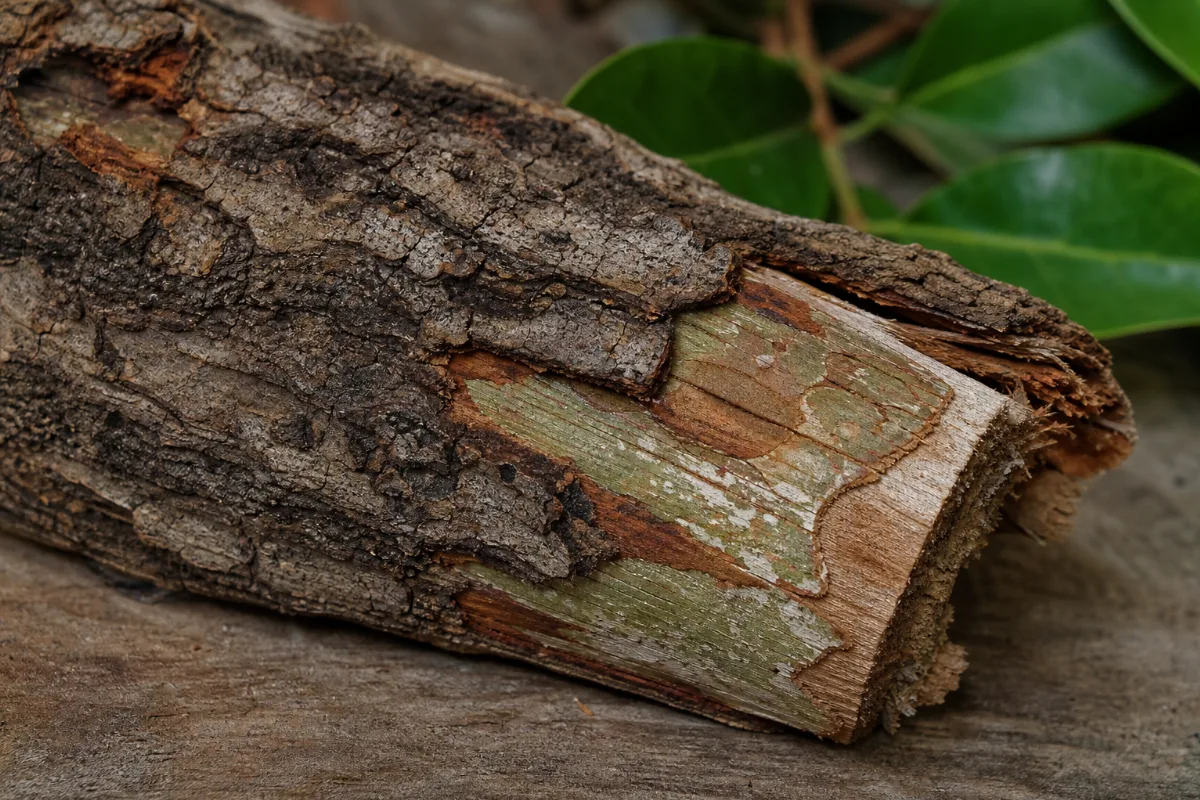
Chuchuhuasi is the bark and root of an Amazon rainforest tree, usually soaked in rum and drunk as a tonic for arthritis and colds. No human trial has tested it, so no benefit is shown. Safety is unknown, and it contains plant compounds that harm cells in the lab. Avoid it in pregnancy and breastfeeding, and ask a doctor or pharmacist before use.
General information, not medical advice. Last substantive update · Not medically reviewed. A named clinician has not signed off on this page. How this page is made
About Chuchuhuasi
Chuchuhuasi is the bark and root of an Amazonian tree, usually written Maytenus macrocarpa and now placed in the genus Monteverdia. It is a traditional rheumatism and cold tonic, usually taken as a rum macerate.
What it is
Chuchuhuasi is a tree of Amazon lowland forest in the staff-vine family. The name may refer to more than one species, so products can differ.
The bark contains triterpene compounds such as celastrol, pristimerin and tingenone. Celastrol is better known from the thunder god vine, a different plant.
Traditional use
In Peru and nearby regions, bark or root is boiled or soaked in sugar-cane rum. It is used for rheumatism, colds and bronchitis, as a tonic, and after childbirth.
Traditional use shows what people have tried. It does not show that it works or is safe.
What the research shows
Evidence is extremely thin. A 2019 review found no human trials. The research is test-tube and cell work, plus a few rat studies of the pure compound celastrol.
A root-bark extract stopped bacteria growing in a dish, and some root compounds killed cancer cell lines. Several compounds also harmed normal cells, so these are not signs of a safe treatment.
At a glance
Traditional uses history, not proof
- Rheumatism and joint pain
- Colds and bronchitis
- General and postpartum tonic
Studied for research
- Joint pain: tradition only, no human trial
- Germ-killing: test tube only
- Cancer cell killing: lab cells only
Main compounds
- Celastrol
- Pristimerin
- Tingenone
Common forms
- Bark or root decoction
- Rum or alcohol macerate
- Tincture
- Capsules or powder
Research links: Phytochemistry and pharmacology review (2019) · Root-bark germ test (2007) · Macrocarpins cell study (2000) · Celastrol toxicity review, other plant (2023) · Research Library · Genes & Biomarkers Library
The plant and its history
- Accepted scientific name
- Monteverdia macrocarpa (Ruiz & Pav.) Biral (GBIF accepted; widely still written Maytenus macrocarpa)
- Naming authority
- (Ruiz & Pav.) Biral
- Synonyms
- Maytenus macrocarpa (Ruiz & Pav.) Briq.; Maytenus krukovii A.C.Sm. (GBIF: synonym of Monteverdia krukovii)
- Common names
- Chuchuhuasi (Quechua / Peruvian Spanish); Chuchuhuasha (Spanish variant)
- Botanical family
- Celastraceae (staff-vine family), the same family as the thunder god vine genus Tripterygium (GBIF).
- Classification
- Plantae > Tracheophyta > Magnoliopsida > Celastrales > Celastraceae > Monteverdia > Monteverdia macrocarpa
- Native range
- Amazonian lowland rainforest, with some trees up to about 2000 m (2019 review).
- Habitat
- Mostly flood-plain forest (M. macrocarpa); upland forest for M. amazonica (2019 review).
- What the plant looks like
- Roots: Root and stem bark are the parts used.; Stems: Tree.; Leaves: Not verified.; Flowers: Not verified.; Fruit: Not verified.
- Cultivation
- Not verified. The review says harvesting has depleted trees near villages.
- Harvest and processing
- Bark and root decocted or macerated in sugar-cane rum (2019 review).
- Look-alikes and adulterants
- Name: Maytenus amazonica; Note: The vernacular name may refer to this species too; chemistry may differ.
- Sustainability and conservation
- Local depletion noted in the review; formal status not assessed.
Traditional use and history history, not clinical proof
| Tradition or era | Documented use | Source |
|---|---|---|
| Amazonian folk medicine, Peru | Bark and root decoctions or rum macerates mainly for rheumatism; also colds, bronchitis, wounds, diarrhoea, as a tonic and after childbirth. | p31226757 |
Traditional use shows how a plant was used. It does not show that a supplement works or is safe today.
What is inside, and how it may work
What the plant contains and how those compounds act in cells and animals. Laboratory and animal mechanisms are not proven effects in people.
Main compounds
| Compound | Family | Where it is concentrated | Activity studied | Level of evidence |
|---|---|---|---|---|
| Celastrol PubChem 122724 | pentacyclic triterpene (quinone methide) | stem bark exudate / root (per the review) Amount in the bark not stated in the sources read. | Lowered IL-1, TNF-alpha and NF-kappa B signals in cell and rat work (review). Toxic effects reported in work on another plant. 4 9 6 | In vitro and animal |
| Pristimerin PubChem 159516 | pentacyclic triterpene | stem bark exudate / root (per the review) Amount in the bark not stated in the sources read. | Killed cancer cell lines and malaria parasites in the lab, but also harmed normal blood cells. 4 6 | In vitro and animal |
| Tingenone PubChem 101520 | pentacyclic triterpene | stem bark exudate / root (per the review) Amount in the bark not stated in the sources read. | Listed as a bark compound; activity not detailed in the sources read. 4 6 | In vitro and animal |
| Macrocarpins A-D | nor-triterpenes | stem bark exudate / root (per the review) Amount in the bark not stated in the sources read. | Cytotoxic to four tumour cell lines in the lab (IC50 0.4-5.2 microM). 1 | In vitro and animal |
Mechanisms, receptors and pathways
| Target or pathway | Gene or receptor | What was found | Level |
|---|---|---|---|
| Inflammation signals | IL-1, TNF-alpha, NF-kappa B | Celastrol lowered these in cells and rats (reported in the review; not measured in chuchuhuasi bark). 4 | In vitro and animal |
| Immune suppression (theory) | T-cell and cytokine pathways | Immune suppression is reported for Tripterygium, a different celastrol-containing plant; not shown for chuchuhuasi. 8 | Different plant |
| Growth of bacteria | not applicable | Root-bark ethanol extract inhibited all strains tested. 3 | Laboratory research |
Absorption, metabolism and elimination
- Absorption
- No data.
- Distribution
- No data.
- Metabolism
- No data.
- Elimination
- No data.
- Bioavailability
- No data. The review notes most compounds are large, fat-loving molecules.
Isolated compounds versus whole extracts
Most pharmacology used isolated compounds (celastrol, pristimerin, macrocarpins) or ethanol extracts, not the rum macerates or decoctions people actually use. Toxicity data for celastrol come from another plant.
Nutritional composition
Chuchuhuasi is a medicinal bark, not a nutrient source.
3 very low certainty4 not enough evidence
What is Chuchuhuasi good for?
What chuchuhuasi is claimed to do and what the research shows. Nothing here is proven in people. 'Insufficient' means there is no human research to judge.
Benefits, one by one
Each card is a research question, not a promise. Tap a goal to filter. Open a card to see the studies, doses and limits.
Rheumatism and joint pain (traditional use)
Not enough evidenceAcross the Amazon, root and stem-bark preparations are used mainly for rheumatism. No human trial has tested this. The 2019 review says the evidence is not enough to treat it as an evidence-based drug.
2 studiesTraditional bark or root decoctions and rum or alcohol macerates exis…
Studies, doses and limits
What the trials found
No human trial of any kind was found in the review or in our PubMed searches. The review itself calls for in-vivo and human work.
Results
Insufficient: tradition only, plus lab findings.
Effect sizes as reported
No effect sizes: no human trial was found.
Why this rating
Only traditional use and cell or rat findings. No human data, so no certainty rating above insufficient is possible.
Form and dose studied
Traditional bark or root decoctions and rum or alcohol macerates exist; strength varies and is not standardised. No amount is suggested here.
Who was studied
Adults in traditional Amazonian use.
Limits
Review read in full; the lab work it summarises was not re-opened. Celastrol amounts in the bark were not stated, and celastrol work in rats was done with the pure compound, not bark.
Why researchers looked
It is the most common traditional use of the tree.
Traditional use
The 2019 review says bark and root decoctions or rum macerates are used for rheumatism almost everywhere in Amazonia.
Proposed mechanism In vitro and animal
Celastrol, a compound reported in the bark, lowered inflammation signals (IL-1, TNF-alpha, NF-kappa B) in cell tests and rats according to the review. Other bark compounds gave weak or mixed results.
A proposed mechanism does not show that the effect happens in people.
Strength is unknown and safety is not established; see the Safety tab. Ask a doctor or pharmacist about amounts.
Colds and bronchitis (traditional use)
Not enough evidenceSome Amazonian communities drink a bark macerate in rum for colds and bronchitis. No study has tested it in people with a chest infection.
2 studiesTraditional bark or root decoctions and rum or alcohol macerates exis…
Studies, doses and limits
What the trials found
No human trial of any kind was found in the review or in our PubMed searches.
Results
Insufficient.
Effect sizes as reported
No effect sizes: no human trial was found.
Why this rating
No human or animal test of colds or bronchitis. Test-tube germ killing is not the same as treating a cold, which is usually viral.
Form and dose studied
Traditional bark or root decoctions and rum or alcohol macerates exist; strength varies and is not standardised. No amount is suggested here.
Who was studied
Traditional use in adults.
Limits
A test-tube result does not show the preparation helps a chest infection.
Why researchers looked
Traditional use in Peru for colds and bronchitis.
Traditional use
The review describes a bark-and-rum preparation taken over a course of days for colds and bronchitis, and uses for wounds and diarrhoea.
Proposed mechanism Laboratory research
A root-bark ethanol extract stopped the growth of several bacteria and a yeast in a test tube; stem-bark extract was inactive in the work summarised.
A proposed mechanism does not show that the effect happens in people.
The traditional preparations contain alcohol. Strength is unknown and safety is not established; see the Safety tab. Ask a doctor or pharmacist about amounts.
General and postpartum tonic (traditional use)
Not enough evidenceChuchuhuasi is also called a health tonic and has been used after childbirth and to help broken bones heal. These are traditional claims; none has been tested.
2 studiesTraditional bark or root decoctions and rum or alcohol macerates exis…
Studies, doses and limits
What the trials found
No human trial of any kind was found in the review or in our PubMed searches.
Results
Insufficient: tradition only.
Effect sizes as reported
No effect sizes: no human trial was found.
Why this rating
Folk-medicine reports only.
Form and dose studied
Traditional bark or root decoctions and rum or alcohol macerates exist; strength varies and is not standardised. No amount is suggested here.
Who was studied
Traditional users, including after childbirth.
Limits
Postpartum use is a safety concern, not a recommendation: safety in breastfeeding is not established.
Why researchers looked
Tonic uses are described in Amazonian folk medicine.
Traditional use
The 2019 review lists use as a health and postpartum tonic, for bone healing, and for women's ailments.
Proposed mechanism None
No mechanism has been tested for a tonic effect.
A proposed mechanism does not show that the effect happens in people.
Traditional postpartum use does not make it safe in pregnancy or breastfeeding. See the Safety tab.
Germ-killing in the test tube
Very low certaintyA root-bark extract stopped the growth of all nine bacteria and one yeast tested in a lab, at moderate strength. This has not been tested in people.
2 studiesTraditional bark or root decoctions and rum or alcohol macerates exis…
Studies, doses and limits
What the trials found
No human trial of any kind was found in the review or in our PubMed searches.
Results
Test-tube activity only.
Effect sizes as reported
No effect sizes: no human trial was found.
Why this rating
Cell-free lab test; MIC 125-250 microg/ml; no animal or human data.
Form and dose studied
Traditional bark or root decoctions and rum or alcohol macerates exist; strength varies and is not standardised. No amount is suggested here.
Who was studied
None - lab.
Limits
Test-tube only; the review notes root and stem bark differ.
Why researchers looked
Local use for infections and colds.
Traditional use
Used for colds, bronchitis and wounds.
Proposed mechanism Laboratory research
Root-bark ethanol extract inhibited every strain tested; the review notes stem bark behaved differently from root bark.
A proposed mechanism does not show that the effect happens in people.
Not applicable to eating or drinking the bark.
Killing cancer cells in the lab
Very low certaintyCompounds from the roots (macrocarpins) and the bark compound pristimerin killed cancer cell lines in the lab. Several also harmed normal cells, so this is not a cancer treatment.
2 studiesTraditional bark or root decoctions and rum or alcohol macerates exis…
Studies, doses and limits
What the trials found
No human trial of any kind was found in the review or in our PubMed searches.
Results
Lab cell lines only.
Effect sizes as reported
No effect sizes: no human trial was found.
Why this rating
Cell-line results routinely fail in animals and people; the compounds were also toxic to normal cells.
Form and dose studied
Traditional bark or root decoctions and rum or alcohol macerates exist; strength varies and is not standardised. No amount is suggested here.
Who was studied
None - lab.
Limits
Toxic to normal cells too. Do not replace cancer care.
Why researchers looked
Many triterpenes in the bark are cell-toxic.
Traditional use
Skin-cancer use is mentioned in folk medicine.
Proposed mechanism Laboratory research
Macrocarpins A, B, D and a derivative were cytotoxic to four tumour cell lines (IC50 0.4 to 5.2 microM). Pristimerin was active at sub-micromolar to low-micromolar levels but was also toxic to normal blood cells in the same range, so the review calls it relatively unselective.
A proposed mechanism does not show that the effect happens in people.
Do not use as a cancer treatment; the active compounds harm normal cells in the lab.
Malaria and leishmania parasites (lab)
Very low certaintyBark extracts and pristimerin acted against malaria and leishmania parasites in the lab, but pristimerin was also toxic to human cells at a level close to its active level.
1 studiesTraditional bark or root decoctions and rum or alcohol macerates exis…
Studies, doses and limits
What the trials found
No human trial of any kind was found in the review or in our PubMed searches.
Results
Lab only.
Effect sizes as reported
No effect sizes: no human trial was found.
Why this rating
Lab only; toxicity to human cells noted.
Form and dose studied
Traditional bark or root decoctions and rum or alcohol macerates exist; strength varies and is not standardised. No amount is suggested here.
Who was studied
None - lab.
Limits
Computer docking is not proof; no animal data in sources read.
Why researchers looked
Used traditionally for parasitic diseases.
Traditional use
The review says root and bark are widely used for rheumatism and parasitic disease.
Proposed mechanism Laboratory research
Lab and computer-docking work only.
A proposed mechanism does not show that the effect happens in people.
Do not use to treat malaria; seek medical care.
Aphrodisiac and anti-diarrhoea use (traditional)
Not enough evidenceFolk medicine also uses chuchuhuasi as an aphrodisiac and for diarrhoea. Neither has been tested.
1 studiesTraditional bark or root decoctions and rum or alcohol macerates exis…
Studies, doses and limits
What the trials found
No human trial of any kind was found in the review or in our PubMed searches.
Results
Traditional only.
Effect sizes as reported
No effect sizes: no human trial was found.
Why this rating
Folk-medicine report only.
Form and dose studied
Traditional bark or root decoctions and rum or alcohol macerates exist; strength varies and is not standardised. No amount is suggested here.
Who was studied
Traditional users.
Limits
No data.
Why researchers looked
Folk use.
Traditional use
Listed in the 2019 review from ethnopharmacology reports.
Proposed mechanism None
No mechanism tested.
A proposed mechanism does not show that the effect happens in people.
Strength is unknown and safety is not established; see the Safety tab. Ask a doctor or pharmacist about amounts.
Connections to the rest of health
How Chuchuhuasi connects to the rest of our health knowledge graph. Every link says what kind of connection it is. A safety link (for example to the liver) is a warning, not a benefit. A study that merely mentions a topic never creates a benefit link.
Explore every connection: goals, body systems, organs, symptoms, genes
A. Wellness goals
| Connected to | Kind of connection | Evidence status | Context | Studies |
|---|---|---|---|---|
| Joint Support | Traditional use | Not enough evidence | Rheumatism and joint pain (traditional use): Across the Amazon, root and stem-bark preparations are used mainly for rheumatism. No human trial has tested this. The 2019 review says the evidence is not enough to treat it as an evidence-based drug. | 4 5 |
| Mobility Support | Traditional use | Not enough evidence | Rheumatism and joint pain (traditional use): Across the Amazon, root and stem-bark preparations are used mainly for rheumatism. No human trial has tested this. The 2019 review says the evidence is not enough to treat it as an evidence-based drug. | 4 5 |
| Immune Support | Traditional use | Not enough evidence | Colds and bronchitis (traditional use): Some Amazonian communities drink a bark macerate in rum for colds and bronchitis. No study has tested it in people with a chest infection. | 4 3 |
| Lung Support | Traditional use | Not enough evidence | Colds and bronchitis (traditional use): Some Amazonian communities drink a bark macerate in rum for colds and bronchitis. No study has tested it in people with a chest infection. | 4 3 |
| Daily Vitality | Traditional use | Not enough evidence | General and postpartum tonic (traditional use): Chuchuhuasi is also called a health tonic and has been used after childbirth and to help broken bones heal. These are traditional claims; none has been tested. | 4 5 |
| Holistic Balance | Traditional use | Not enough evidence | General and postpartum tonic (traditional use): Chuchuhuasi is also called a health tonic and has been used after childbirth and to help broken bones heal. These are traditional claims; none has been tested. | 4 5 |
| Immune Support | Very low certainty | Germ-killing in the test tube: A root-bark extract stopped the growth of all nine bacteria and one yeast tested in a lab, at moderate strength. This has not been tested in people. Malaria and leishmania parasites (lab): Bark extracts and pristimerin acted against malaria and leishmania parasites in the lab, but pristimerin was also toxic to human cells at a level close to its active level. | 3 4 | |
| Cellular Protection | Very low certainty | Killing cancer cells in the lab: Compounds from the roots (macrocarpins) and the bark compound pristimerin killed cancer cell lines in the lab. Several also harmed normal cells, so this is not a cancer treatment. | 1 4 | |
| Libido Support | Traditional use | Not enough evidence | Aphrodisiac and anti-diarrhoea use (traditional): Folk medicine also uses chuchuhuasi as an aphrodisiac and for diarrhoea. Neither has been tested. | 4 |
| Digestive Support | Traditional use | Not enough evidence | Aphrodisiac and anti-diarrhoea use (traditional): Folk medicine also uses chuchuhuasi as an aphrodisiac and for diarrhoea. Neither has been tested. | 4 |
B. Body systems
| Connected to | Kind of connection | Evidence status | Context | Studies |
|---|---|---|---|---|
| Musculoskeletal System | Biological association | Not enough evidence | Studied for: Rheumatism and joint pain (traditional use) | 4 5 |
| Respiratory System | Biological association | Not enough evidence | Studied for: Colds and bronchitis (traditional use) | 4 3 |
| Whole Body Balance | Biological association | Not enough evidence | Studied for: General and postpartum tonic (traditional use) | 4 5 |
| Immune System | Biological association | Very low certainty | Studied for: Germ-killing in the test tube Studied for: Malaria and leishmania parasites (lab) | 3 4 |
| Cellular Growth | Biological association | Very low certainty | Studied for: Killing cancer cells in the lab | 1 4 |
| Digestive System | Biological association | Not enough evidence | Studied for: Aphrodisiac and anti-diarrhoea use (traditional) | 4 |
E. Health conditions
| Connected to | Kind of connection | Evidence status | Context | Studies |
|---|---|---|---|---|
| Rheumatism | Traditional use | Not enough evidence | Traditional use only; no human trial. Preparation or compound: Bark or root decoction, rum macerate (traditional) |
4 |
K. Biological pathways
| Connected to | Kind of connection | Evidence status | Context | Studies |
|---|---|---|---|---|
| Preliminary mechanism | 4 |
L. Active compounds
| Connected to | Kind of connection | Evidence status | Context | Studies |
|---|---|---|---|---|
| Celastrol | In vitro and animal | Immune and toxicity findings come mostly from another plant. Preparation or compound: Compound reported in the bark |
4 9 | |
| Celastrol | Biological association | In vitro and animal | Lowered IL-1, TNF-alpha and NF-kappa B signals in cell and rat work (review). Toxic effects reported in work on another plant. Preparation or compound: stem bark exudate / root (per the review) |
4 9 6 |
| Pristimerin | Biological association | In vitro and animal | Killed cancer cell lines and malaria parasites in the lab, but also harmed normal blood cells. Preparation or compound: stem bark exudate / root (per the review) |
4 6 |
| Tingenone | Biological association | In vitro and animal | Listed as a bark compound; activity not detailed in the sources read. Preparation or compound: stem bark exudate / root (per the review) |
4 6 |
| Macrocarpins A-D | Biological association | In vitro and animal | Cytotoxic to four tumour cell lines in the lab (IC50 0.4-5.2 microM). Preparation or compound: stem bark exudate / root (per the review) |
1 |
Each connection is stored with the ingredient, the connected record, the kind of connection, the evidence status, the supporting studies, the preparation or compound involved, and a review date (last reviewed October 25, 2026).
The evidence
The research centre for Chuchuhuasi. Every record here was checked against PubMed or the publisher's page; we never list a study we have not verified.
Evidence by outcome
Bars show how many studies we found for each outcome, not how well it works. People are added up across trials only (reviews are not added, to avoid double counting).
How we rate evidence
High certainty
Several well-run trials or reviews agree; further research is unlikely to change the picture much.
Moderate certainty
Good trials point the same way, but some doubt remains.
Low certainty
Small, short or inconsistent trials. The finding could change with better research.
Very low certainty
Very little or very weak human data. Treat as a possibility only.
Mixed findings
Trials or reviews disagree with each other.
Not enough evidence
Not enough human research to say either way.
Evidence against
Good research found no benefit, or found harm.
We take the reviewers' own risk-of-bias and GRADE statements where they exist, and otherwise judge from study size, design, consistency, directness and whether a product matches what is sold. Many publications do not make evidence high. Method note: We started from our existing summary, then checked each cited paper in PubMed and the names in GBIF. Reference and regulator pages we could not open are marked second-hand. No study is cited that we could not verify.
Study library: every study we checked 9
| Study | Design | People | Product, dose, length | Result |
|---|---|---|---|---|
| Chavez 2000 Macrocarpins A-D, new cytotoxic nor-triterpenes from Maytenus macrocarpa. Bioorganic & Medicinal Chemistry Letters · PMID 10782680 · DOI |
Laboratory study (cell lines) lab (cell lines) |
Four tumour cell lines | Compounds isolated from roots of M. macrocarpa root not given here |
Three of the new compounds and one derivative were cytotoxic to four tumour cell lines, with IC50 values of 0.4 to 5.2 microM. IC50 0.4-5.2 microM Methods, limits and fundingOutcomes: Cell toxicity (IC50) Limitations: Cell-line chemistry only. Cell-killing compounds can also harm normal cells. Funding and conflicts: not stated in the abstract Read: abstract |
| GBIF 2026 GBIF species match: Maytenus macrocarpa and Maytenus krukovii GBIF · Source |
Database record not applicable |
bark not given here |
API checked 2026-10-25: Maytenus macrocarpa (Ruiz & Pav.) Briq. is a SYNONYM of Monteverdia macrocarpa (accepted key 9772192); Maytenus krukovii A.C.Sm. is a SYNONYM of Monteverdia krukovii (accepted key 9716196). Family Celastraceae. See results Methods, limits and fundingOutcomes: Accepted names, family Limitations: Taxonomic record, not a trial. NCBI taxonomy not checked. Funding and conflicts: not applicable Read: full-text | |
| Kloucek 2007 Antimicrobial activity of some medicinal barks used in Peruvian Amazon. Journal of Ethnopharmacology · PMID 17178202 · DOI |
Laboratory study (test tube) lab (in vitro) |
Nine bacteria and one yeast | Ethanol extract of Maytenus macrocarpa root bark root bark not given here |
The root-bark extract inhibited all strains tested, with MICs of 125 to 250 microg/ml, the broadest range among six Peruvian barks. MIC 125-250 microg/ml Methods, limits and fundingOutcomes: Growth inhibition (MIC) Limitations: Test-tube only; says nothing about use in people. Funding and conflicts: not stated in the abstract Read: abstract |
| Malanik 2019 Maytenus macrocarpa (Ruiz & Pav.) Briq.: Phytochemistry and Pharmacological Activity. Molecules · PMID 31226757 · DOI |
Narrative review review |
Reviewed literature on chuchuhuasi (M. macrocarpa) | Roots, stem bark, leaves and isolated compounds root, stem bark, leaves not given here |
Roots, bark and leaves are used mainly for rheumatism, and less often for wounds, bronchitis and diarrhoea. Mainly triterpenes and sesquiterpenes were isolated. Extracts and compounds showed antibacterial, antiviral, antiparasitic, anti-inflammatory and cytotoxic activity in vitro. The review reports no human trials. Only one safety study in animals was found (leaf extract in rats, injected, not the usual route, which the authors criticise). Narrative review; no pooled effect Methods, limits and fundingOutcomes: Traditional use, chemistry, lab pharmacology, toxicity Limitations: Narrative, not systematic. Mostly cell tests. Authors themselves say evidence is insufficient to register it as an evidence-based drug. Funding and conflicts: authors declare no conflict of interest Read: full-text |
| Natural Medicines 2025 Natural Medicines: Chuchuhuasi monograph (consumer drug reference) Natural Medicines (via vital.ly) · Source |
Consumer reference consumer reference |
Chuchuhuasi bark not given here |
Per our earlier summary: no good scientific evidence for any use; safety and side effects by mouth unknown; avoid in pregnancy and breastfeeding because safety is unknown. See results Methods, limits and fundingOutcomes: Evidence and safety summary Limitations: SECOND-HAND: read when our earlier summary was made and not re-opened for this page. Paywalled reference. Funding and conflicts: not applicable Read: summary-only | |
| PubChem 2026 PubChem compound records: celastrol, pristimerin, tingenone PubChem · Source |
Database record not applicable |
not given here |
API checked 2026-10-25: celastrol CID 122724 (C29H38O4); pristimerin CID 159516 (C30H40O4); tingenone CID 101520 (C28H36O3). See results Methods, limits and fundingOutcomes: Compound identity Limitations: Identity only. Funding and conflicts: not applicable Read: full-text | |
| Ru 2019 Adverse Events Associated With Treatment of Tripterygium wilfordii Hook F: A Quantitative Evidence Synthesis. Frontiers in Pharmacology · PMID 31780926 · DOI |
Systematic review and meta analysis human (different plant) |
2437 2437 people given Tripterygium glycosides in 46 studies |
Tripterygium wilfordii glycosides (a different plant) root (Tripterygium) not given here |
Across 46 studies the overall rate of side effects was 30.75% (95% CI 21.18-40.33, I2 97%) and of severe side effects 4.68% (95% CI 0.00-12.72). Organ problems included gut, reproductive, liver, kidney, blood and skin toxicity. Any adverse event 30.75%; severe 4.68% Methods, limits and fundingOutcomes: Adverse events Limitations: Different plant and a purified preparation, so it cannot be applied to chuchuhuasi. Very high heterogeneity (I2 97%). Funding and conflicts: not stated in the abstract Read: abstract |
| Shan 2023 A comprehensive review of Tripterygium wilfordii hook. f. in the treatment of rheumatic and autoimmune diseases: Bioactive compounds, mechanisms of action, and future directions. Frontiers in Pharmacology · PMID 38027004 · DOI |
Narrative review review (different plant) |
Reviewed literature on thunder god vine in autoimmune disease | Tripterygium wilfordii preparations and compounds root (Tripterygium) not given here |
Tripterygium preparations are reported to have anti-inflammatory, immune-modulating and immunosuppressive effects, with possible liver and kidney toxicity that needs assessment. Narrative review; no pooled effect Methods, limits and fundingOutcomes: Immune effects and toxicity Limitations: A DIFFERENT plant. Shows what celastrol-containing plants can do; not shown for chuchuhuasi. Funding and conflicts: authors declare no commercial conflicts Read: abstract |
| Song 2023 A comprehensive review on celastrol, triptolide and triptonide: Insights on their pharmacological activity, toxicity, combination therapy, new dosage form and novel drug delivery routes. Biomedicine & Pharmacotherapy · PMID 37062220 · DOI |
Narrative review review (different plant) |
Reviewed lab, animal and some clinical literature on compounds from Tripterygium wilfordii (a different plant) | Celastrol, triptolide, triptonide (from thunder god vine) root (Tripterygium) not given here |
The review reports anti-inflammatory, immune and other effects, and also toxic effects on the liver, kidney, bile-duct cells, heart, ear and reproductive system. It says more clinical trials are needed to judge safety. Narrative review; no pooled effect Methods, limits and fundingOutcomes: Pharmacology and toxicity of celastrol-type compounds Limitations: About a DIFFERENT plant (Tripterygium wilfordii). It does not measure chuchuhuasi bark, which may contain much less celastrol. Funding and conflicts: authors declare no competing interests Read: abstract |
What we do not know yet
- No human trial, case report or pharmacokinetic study.
- No measurement of celastrol or pristimerin in common products.
- No test of immune effects or drug interactions for chuchuhuasi itself.
- No standard for species identity or alcohol strength.
- No human trials of any kind.
How new research is added
New studies are found by a saved PubMed search and placed in a review queue. A person reads each one before it changes any evidence rating or safety wording.
Lab markers
What changed in blood or saliva tests during trials. A changed number is not the same as feeling or being healthier, and we give no "normal ranges".
Safety
What studies and official sources say about side effects, medicines and who should check first. Each point shows what kind of evidence it comes from.
Main points to know 5
- No human safety data. The 2019 review found no human trials and no toxicity or pharmacokinetic studies in people. The only safety animal study (a leaf extract, injected into rats) was criticised by the review authors. A consumer reference says safety and side effects by mouth are unknown. Safety is therefore not established. Review 4 5
- Pregnancy and breastfeeding: avoid. No safety data. The consumer reference advises avoiding it in pregnancy and breastfeeding. Traditional postpartum use exists but is not evidence of safety. The related celastrol-type compounds have reproductive toxicity in lab and animal work. Consumer reference plus related compound review 5 9
- Alcohol-based preparations. The usual traditional form is a rum or alcohol macerate. It contains alcohol, which matters for pregnancy, liver disease, recovery from alcohol use, driving, and medicines that react with alcohol. Traditional use description 4
- Possible immune effects (theory from a related compound). Celastrol, a compound reported in the bark, is also found in Tripterygium wilfordii, a different plant with immune-suppressing effects and serious toxicity. Chuchuhuasi's content is not measured, so this is a theoretical concern, not a proven effect. Mechanistic, different plant 8 9
- Cell-toxic compounds. Pristimerin and other triterpenes killed normal human blood cells in the same range as cancer cells in lab tests, so they are not selective. Lab (cell) 4
Side effects 2
| Effect | How often | Severity and recovery | Evidence |
|---|---|---|---|
| No adverse-effect profile established No human case reports or trials were found, so no side-effect rates exist. | Not established | unknown unknown | Insufficient 4 5 |
| Tripterygium (related celastrol plant): side effects in about 3 in 10 people, severe in about 1 in 20 This is a different plant and a purified product. It shows what celastrol-containing medicines can do, not what chuchuhuasi does. | 30.75% any, 4.68% severe (meta-analysis of a purified preparation of another plant) | varied unknown | Different plant, human 7 |
Liver
No case of liver injury from chuchuhuasi was found. Celastrol-type compounds from a related plant, Tripterygium, are reported to be toxic to the liver in lab, animal and human reports, and alcohol macerates add their own liver load. We could not check LiverTox for chuchuhuasi (not listed in our earlier search). 9 7
How often. Unknown. Not studied.
Monitoring. No agency advice found. Yellow skin or eyes, dark urine, severe itching or upper-right belly pain after any herb or alcohol macerate should be checked by a doctor promptly.
This is a safety connection. It is not evidence that Chuchuhuasi supports liver health.
Medicines and supplements 4
| With | Why it matters | Importance | Evidence | What to do |
|---|---|---|---|---|
| Immunosuppressants and arthritis drugs (methotrexate, ciclosporin, steroids, biologics) prescription | Theory only: celastrol-type compounds can suppress immune activity in other plants. | Unknown for chuchuhuasi. | Theoretical Not enough evidence 8 | Tell the doctor or pharmacist before combining; stacking immune effects or liver strain is untested. |
| Alcohol-sensitive medicines (metronidazole, disulfiram, sedatives, opioids, paracetamol in heavy use) prescription | The traditional macerate contains alcohol. | Alcohol interactions are well known for the medicines named; the amount of alcohol in a given product is not known. | General alcohol pharmacology Low certainty 4 | Ask a pharmacist about any alcohol-containing herbal product. |
| Liver-affecting medicines and supplements prescription | Possible added liver strain from celastrol-type compounds (theory). | Unknown. | Theoretical Not enough evidence 9 | Ask a doctor, especially with existing liver disease. |
| CYP enzymes and transporters prescription | No study. | Unknown. | No data Not enough evidence 4 | Ask a pharmacist if on narrow-margin medicines. |
Who should check first 5
| Situation | Advice | Evidence |
|---|---|---|
| Pregnancy and breastfeeding | Avoid. Safety is unknown, and related compounds show reproductive toxicity in lab work. Traditional postpartum use is not evidence of safety. | Consumer reference; traditional caution 5 9 |
| Children | No data; avoid. | No data 4 |
| Liver disease, alcohol-use problems, or people avoiding alcohol | Alcohol macerates are not suitable; ask a doctor. | General 4 |
| Weakened immune system, organ transplant, or autoimmune disease treatment | Ask the treating doctor first; immune effects are possible in theory. | Theoretical 8 |
| Cancer treatment | Do not use it in place of treatment. Interactions with cancer drugs are untested. | Lab 4 |
Overdose, product quality and regulators
Summary. Root and stem bark are the traditional parts. The only animal safety study read was an injected leaf extract in rats that the review authors criticised; it noted a negative effect on heart rate at the highest dose. The review authors assume traditional doses are probably safe but say more work is needed. This is an opinion, not a safety study.
Animal. One study, rats, leaf ethanol extract injected into the belly: slowed heart rate at the top dose studied. Not the usual route.
Human doses studied. No human studies.
High dose or long term signals. Not studied. Related compounds from Tripterygium are toxic to liver, kidney, heart, ear and reproductive organs in lab and animal work.
Overdose response. Not described.
Genotoxicity. Not found.
Toxic plant parts. Bark and root are used. Leaves and other parts are less studied.
Names are confused: 'chuchuhuasi' may mean Maytenus macrocarpa or M. amazonica (and sometimes M. krukovii), and their chemistry may differ. Heavy-metal, pesticide, microbe and alcohol-strength testing of products is not described in the sources read. Bark harvesting has also depleted trees near villages.
Species confusion. The review notes the vernacular name may refer to more than one Maytenus species, and GBIF now places the names under Monteverdia. 4 2
| Body | Action | Date |
|---|
When to get medical help
- Yellow skin or eyes, dark urine, or severe itching
- Severe stomach pain, repeated vomiting or black stools
- Fast, slow or uneven heartbeat, or fainting
- Fever or repeated infections while taking it with immune-lowering drugs
- Pregnancy, or signs of an allergic reaction (swelling, trouble breathing)
Stop the supplement and contact a clinician or emergency service. In the US, Poison Control is 1-800-222-1222.
General information only, not medical advice. Ask a clinician or pharmacist before use, especially with medicines, in pregnancy or with a health condition. See the Natural Remedy Safety guide.
Frequently asked questions
What is chuchuhuasi?
Does chuchuhuasi help arthritis?
Nobody knows. It is the main traditional use, but no human trial exists. Only lab and animal findings about celastrol suggest it could lower inflammation.
Is there any human research?
We found none. The 2019 review lists no human trials, and the evidence is lab work.
Is chuchuhuasi safe?
Is it safe in pregnancy or breastfeeding?
Does the rum matter?
Yes. The usual macerate contains alcohol, which matters in pregnancy, liver disease, recovery from alcohol problems, driving, and with alcohol-sensitive medicines.
Can it weaken the immune system?
Can it harm the liver?
Does it interact with medicines?
Does it kill cancer?
Is chuchuhuasi the same as thunder god vine?
How do I know what is in a product?
Species mix-ups are possible and compound content is not standardised. Look for named species and independent testing, and ask a doctor or pharmacist about amounts.
Explore by health goal
Immune SupportJoint SupportMobility SupportLung SupportDaily VitalityHolistic BalanceCellular ProtectionLibido SupportDigestive Support
Editorial transparency
- Written by
- AlternativeMed editorial team. Research compiled with AI assistance, then checked against PubMed records.
- Medical review
- None. This page has not been reviewed by a physician or pharmacist.
- First published
- 2026-10-25
- Last substantive update
- 2026-10-25
- How we research
- We started from our existing summary, then checked each cited paper in PubMed and the names in GBIF. Reference and regulator pages we could not open are marked second-hand. No study is cited that we could not verify.
- How we rate evidence
- See "How we rate evidence" in the Evidence tab.
- Independence
- No product is promoted on this page. No affiliate links are shown. If one is added later it will be labelled and kept apart from the evidence.
Sources 9
Each source was opened and checked. Where we read only the abstract, it says so. The small numbers in the text point here.
- Chavez H, Rodriguez G, Estevez-Braun A, et al.. Macrocarpins A-D, new cytotoxic nor-triterpenes from Maytenus macrocarpa.. Bioorganic & Medicinal Chemistry Letters. 2000. PMID 10782680. DOI 10.1016/s0960-894x(00)00082-2. (abstract)
- GBIF. GBIF species match: Maytenus macrocarpa and Maytenus krukovii. GBIF. 2026. (full-text)
- Kloucek P, Svobodova B, Polesny Z, et al.. Antimicrobial activity of some medicinal barks used in Peruvian Amazon.. Journal of Ethnopharmacology. 2007. PMID 17178202. DOI 10.1016/j.jep.2006.11.010. (abstract)
- Malanik M, Treml J, Rjaskova V, et al.. Maytenus macrocarpa (Ruiz & Pav.) Briq.: Phytochemistry and Pharmacological Activity.. Molecules. 2019. PMID 31226757. DOI 10.3390/molecules24122288. (full-text)
- Natural Medicines. Natural Medicines: Chuchuhuasi monograph (consumer drug reference). Natural Medicines (via vital.ly). 2025. (summary-only)
- PubChem. PubChem compound records: celastrol, pristimerin, tingenone. PubChem. 2026. (full-text)
- Ru Y, Luo Y, Zhou Y, et al.. Adverse Events Associated With Treatment of Tripterygium wilfordii Hook F: A Quantitative Evidence Synthesis.. Frontiers in Pharmacology. 2019. PMID 31780926. DOI 10.3389/fphar.2019.01250. (abstract)
- Shan Y, Zhao J, Wei K, et al.. A comprehensive review of Tripterygium wilfordii hook. f. in the treatment of rheumatic and autoimmune diseases: Bioactive compounds, mechanisms of action, and future directions.. Frontiers in Pharmacology. 2023. PMID 38027004. DOI 10.3389/fphar.2023.1282610. (abstract)
- Song J, He GN, Dai L. A comprehensive review on celastrol, triptolide and triptonide: Insights on their pharmacological activity, toxicity, combination therapy, new dosage form and novel drug delivery routes.. Biomedicine & Pharmacotherapy. 2023. PMID 37062220. DOI 10.1016/j.biopha.2023.114705. (abstract)